Arabs & Arabian Records Aggregator. Chronicler. Milestones of the 25 Countries of the Arabic Speaking World (official / co-official). AGCC. MENA. Global. Ist's to Top 10's. Records. Read & Enjoy./ www.arabianrecords.org
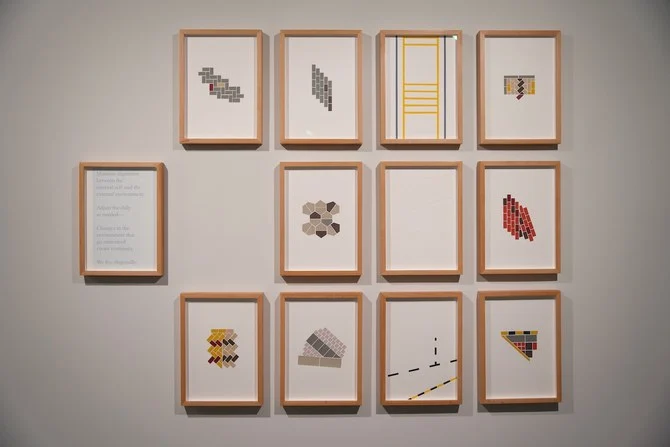
Artists from the Middle East are showcasing their work at an exhibition titled “Perceptible Rhythms/Alternative Temporalitie” in Washington, running until April 28.
Sarah Abu Abdallah
The Saudi artist’s “Fortitude” explores issues of obscurity and value, probing the social and cultural conditions of contemporary Saudi Arabia.
Artists from the Middle East are showcasing their work at an exhibition titled “Perceptible Rhythms/Alternative Temporalitie” in Washington, running until April 28.
The leading Iranian-born artist’s “Study for a Monument” presents bronze-cast reproductions of flora native to modern Iraq whose environment has been decimated by decades of political and ecological turmoil.
He replaces his countryman Nayef Al Hajraf, whose term is coming to an end.
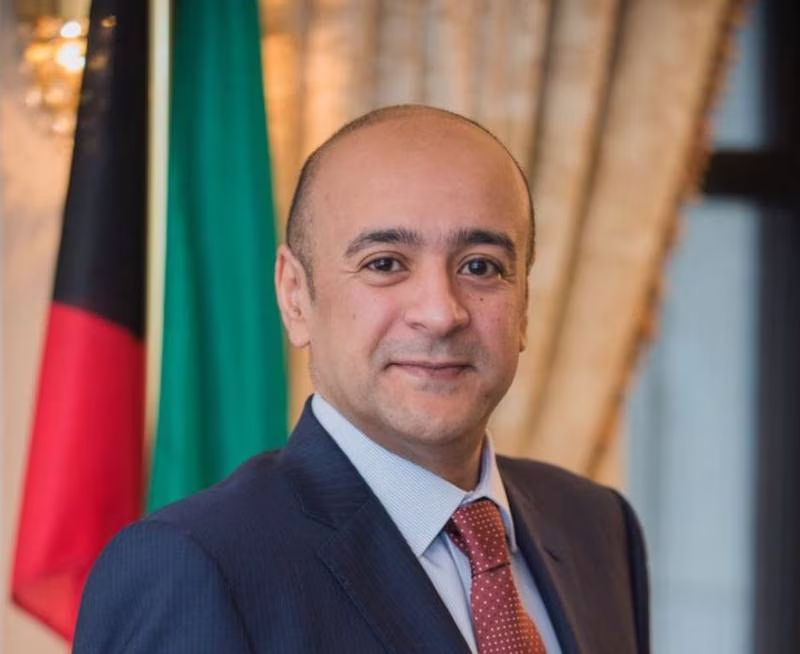
Jasem Al Budaiwi, Kuwait’s ambassador to the US, has been appointed as the new Secretary General of the Gulf Co-operation Council, succeeding Nayef Al Hajrafwhose term ends on Tuesday.
The GCC said Mr Al Hajraf welcomed the new secretary general and “wished him success”.
Mr Al Hajraf, who took office on February 1, 2020, was previously Kuwait’s minister of finance.
Mr Al Budaiwi, who will take up his new post on Wednesday, began his diplomatic career with Kuwait’s Ministry of Foreign Affairs in 1992 as diplomatic attache in the office of the deputy prime minister and minister of foreign affairs.
He was posted to Kuwait’s US embassy in June 2001, where he was promoted to first secretary in 2004, counsellor in 2007 and deputy chief of mission in October 2011.
He was appointed ambassador to Korea in 2013 and served in the post until 2016.
He then served as Kuwait’s ambassador to Belgium and head of mission to Nato until last year, when he was appointed ambassador to the US.
In December, leaders of the GCC agreed that Kuwait should retain the position of secretary general of the council for a second consecutive term during their annual summit in Riyadh.
Mr Al Budaiwi will be the GCC’s third secretary general from Kuwait after Mr Al Hajraf and Abdullah Yaqoub Bishara, who was the first person to hold the post after the council was established. Mr Bishara’s tenure was to last 11 years, making him the longest-serving chief among the six to have held the position.
Mr Al Hajraf has been making farewell visits to GCC states in recent weeks and meeting their leaders and foreign ministers.
The GCC was established in 1981 to promote economic, security, cultural and social co-operation between its six member states, Saudi Arabia, Bahrain, Kuwait, Oman, Qatar, Saudi Arabia and the UAE. The countries hold a summit every year.
The GCC’s Supreme Council is made up of the heads of the member states.
UAE Founding Father, the late Sheikh Zayed bin Sultan Al Nahyan, hosted the council’s first meeting in Abu Dhabi on May 25 and 26, 1981.
Saudi Arabia Football Federation president will be part of powerful arm of world football’s governing body.
Saudi Arabia on Wednesday returned to the powerful Fifa Council with their federation head Yasser Al Misehal getting elected at the AFC Congress held in Bahrain.
Who is Yasser Al Misehal?
Al Misehal is the president of the Saudi Arabian Football Federation (SAFF), and has presided over a period of unprecedented change and progress in Saudi football, under the patronage of Saudi Crown Prince Mohammed bin Salman.
The men’s national team pulled off one of the biggest shocks in tournament history when they beat tournament favourites Argentina at the World Cup in Qatar late last year, a feat Al Misehal described in a December interview with The National as “one of the most historical moments for the Saudi nation “.
A member of both Fifa’s and the Asian Football Confederation’s Disciplinary Committees, Al Misehal also served as chairman of the Saudi Pro League from June 2016 to October 2017.
According to his LinkedIn page, Al Misehal studied Sport Management at Sorbonne University Abu Dhabi from 2014 to 2015 and has a Bachelor’s degree in finance from King Fahad University of Petroleum and Minerals.
An avid sports fan since childhood, Al Misehal is an honorary member of Al Ettifaq Football Club.
How has he changed Saudi football?
Under Al Misehal’s patronage Saudi football has undergone major changes. Saudi age-group sides have enjoyed recent success, with the Under-23s clinching the Asian Cup in Uzbekistan in June, and the U20s triumphing at the Arab Cup on home soil in August.
According to the SAFF, the organisation is responsible for the development and up-skilling of more than 3,000 national coaches – more than at any time in the country’s history – and 1,700 referees across the kingdom.
In the past three years, Saudi Arabia has invested heavily in women’s football as both grass-roots player development and the establishment in 2021 of a first women’s national team. The kingdom has also introduced an inaugural women’s football league and girls’ school league.
Latest figures show there are now 520 registered players across 25 clubs in the league, and almost 50,000 girls in the inaugural schools’ league.
Meanwhile, the Saudi Pro League is able to attract superstars like Cristiano Ronaldo, who in December joined Riyadh-based Al Nassr on what is believed to be the most lucrative contract in world football.
What is the Fifa Council?
The Fifa Council is the main decision-making body of the organisation, outside the Fifa Congress. The council is a supervisory body that sets the vision for the organisation and for global football.
It has members from six confederations, with the AFC getting seven spots in the 37-member council.
Al Misehal’s elevation to the Fifa Council restores Saudi Arabia’s presence in the decision-making position at world football’s governing body after an absence of 21 years. Al Misehal will automatically become a member of the Asian Executive Office, too.
What next for Saudi Arabia?
Saudi Arabia has grand plans for football. On Wednesday, the country won the hosting rights for the 2027 AFC Asian Cup. Saudi Arabia was the only country left in the race after India withdrew their candidature as potential hosts .
The 2023 Asian Cup will be hosted by Qatar. It was previously set to be held in China but the country withdrew because of its Covid-19 guidelines. Qatar won the tournament’s last edition, in 2019, which was hosted by the UAE.
Saudi Arabia is also looking host the 2026 women’s Asian Cup, which will be another milestone in the journey of women’s sports in the kingdom.
However, the biggest target is said to be a bid for the hosting rights of the 2030 Fifa World Cup, with Saudi Arabia reported to be considering a joint proposal with Egypt and Greece.
Yasser Al Misehal, right, president of the Saudi Arabian Football Federation, with national team coach Herve Renard during a training session ahead of the 2022 Fifa World Cup in Qatar. EPA
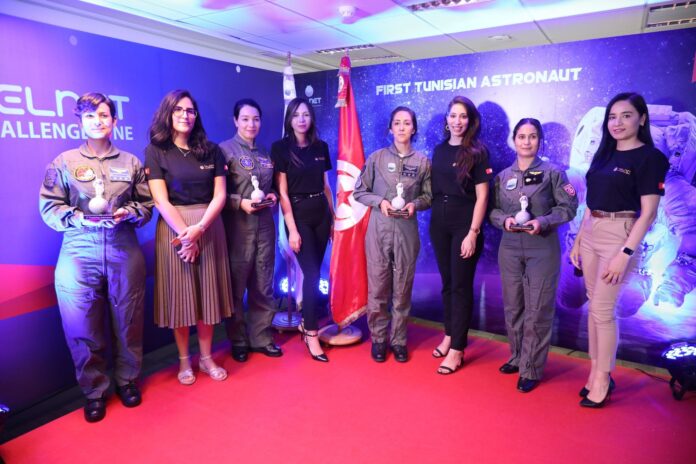
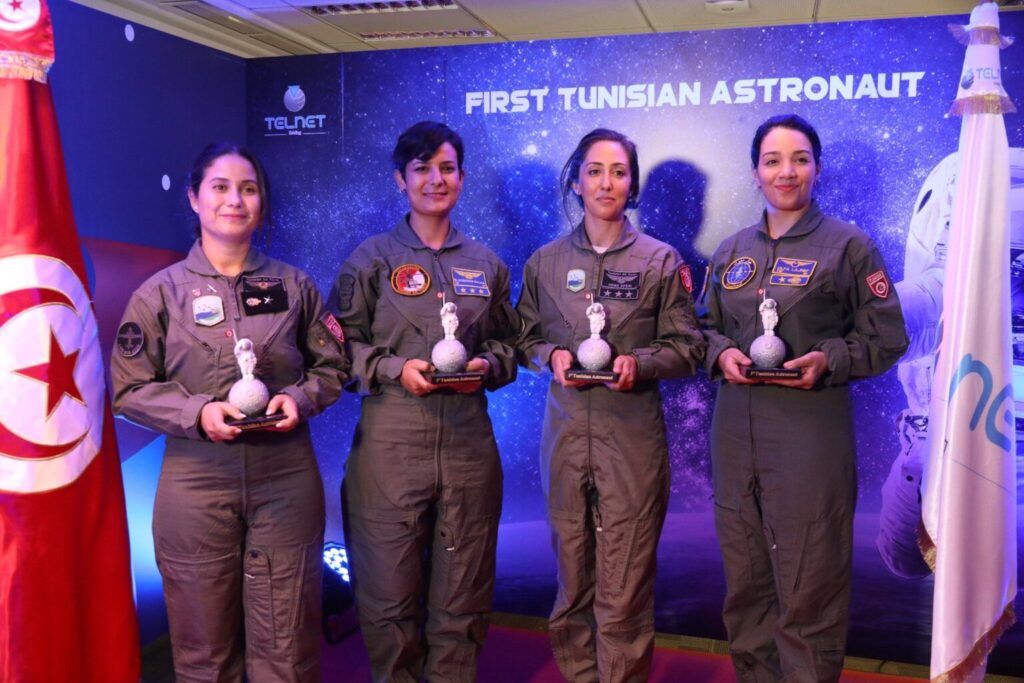
Eight Tunisian women have been selected as candidates for the first Tunisian and African female astronaut project. This selection came at Telnet’s Headquarters as Tunisia celebrated Women’s day. It is as a result of a partnership in August 2021 between Tunisia and Roscosmos to launch a Tunisian female citizen to the International Space Station (ISS) in the foreseeable future. As a result, according to Telnet’s Director-General, the ISS mission will be in 2024.
All the selected women are fighter pilots who graduated from the Borj Al-Amri Aviation School. Furthermore, they are Tunisian Air Force Corps members and have extensive experience in several challenging missions as a result. This is because the selection process requires strict conditions in terms of scientific, physiological and physical demands.
Among those names are: Hala Awassa, Ibtihal Youssef, Wafa El-Baldi-El-Yomna Dalali, Olfa Lajnef, Rahma Trabelsi, Hind Safferi and Malika Mabrouk.
During the unveiling, the current occupants of the ISS sent a message to the Tunisian candidates, expressing their support for the project and their expectations to welcome the first Tunisian astronaut in her upcoming mission. The female candidates also expressed their willingness to take up this historic challenge, raise the Tunisian national flag on the ISS and contribute to scientific advances in the service of humanity.
The candidates will subsequently undergo extensive physical and medical tests in Tunisia and abroad, from which two of the candidates will further travel to Russia. The candidates who travel to Russia will then undergo specific space-related training at one of the Russian Space agency’s training centres. This training will last for a year, after which will come the mission to the International Space Station.
Mohamed Frikha noted that all the candidates are the pride of the Tunisian woman and represent her in the best way. He added that their candidacy for this mission is a testament to their courage and willingness to honour the country and make history in a field as complicated as Space. Frikha also added that the astronauts will handle a scientific mission in Physics and Medicine and that the mission will contribute to the service of humanity. Finally, Frikha stated that the project received the support and encouragement of Tunisia at the highest level.
Tunisia is a party to and has ratified the Agreement on the Rescue of Astronauts, the Return of Astronauts and the Return of Objects Launched into Outer Space (Rescue and Return Agreement). The country is also a party to the Outer Space Treaty and the Liability Convention.
In a remote area in the Valley of Jordan, schoolgirls planned for their future debunking the stereotypical roles that society prescribed for women.
In a remote area in the Valley of Jordan, schoolgirls planned for their future debunking the stereotypical roles that society prescribed for women. Some of the girls dreamt of being “spokesperson” of the government. It was the first time Jordan had a government’s spokesperson. And she was a woman: Asma Khader.
The many times in which Khader have inspired women and girls are the moments she recalls with a warm smile. “Girls start to see that their role is not being wives only. They can be ministers and official spokespersons and get involved in politics,” says Khader. In 2003, she was the State’s Minister and the government’s spokesperson. “I was on the TV and the radio everyday talking to the public,” says Khader. She remembers holding press conferences every Monday’s morning in a public space where anyone could attend.
In a region where women could be trapped in the midst of stereotypes, cultural ones and those implied by outsiders, political and social empowerment are necessities when dealing with women’s rights advocacy. It’s a continuous battle in which women celebrate victories and overcome challenges and obstacles. With her dark short hair and formal attire, Khader is one of the warriors in this battle. A mother of three daughters and one son and a grandmother, she raised her kids on principal: gender equality. “The only son was not getting the privilege to enjoy being the only boy,” laughs Khader.
In the midst of busy Amman, Khader is in her office working tirelessly. She had to stop practicing law because of her current position as Commissioner and Vice President at the Independent Election Commission. She helped to launch, established and led several organizations promoting human rights and freedom of expression. I have visited and witnessed the works of two of them: Al-Mizan Legal Group and Sisterhood Is Global Institute Jordan. Both of the groups are nationally active and have a great impact on people’s lives. I have met several active members of SIGI in the different chapters in cities and towns all working together on women’s rights issues.
Born in 1952, Khader has been a pioneer of women and girls’ rights advocacy since her childhood. She was the eldest of her siblings. In most Arab communities, it’s a tradition to identify parents by the name of their eldest child. For several years, Khader’s parents were known to be “Abu Asma” and “Umm Asma,” Asma’s father and Asma’s mother, until a change happened.
“I was shocked when everybody started to call my parents Abu Sameer and Umm Sameer after my brother was born,” says Khader and she chuckles. “They were known as Abu Asma and Umm Asma because I was the first child and then my sister and my sister. After three children, the boy was born. And in one second everybody started calling them Abu Sameer and Umm Sameer.” It was a matter of a name, but had deep meaning of discrimination against girls.
The spark of activism was ignited focusing on gender roles in childhood. “I started to prefer going out and playing with children: with boys mainly,” says Khader. Soon, her father noticed her rebellious spirit. He was supportive and backed her activism. Khader mentions that when he noticed her passion in defending girls’ rights at a young age he told her: “You should be sure that I love you and I am proud of you. And I am sure you will be a good citizen, a good person in the society.”
“My father was a very open minded person, very educated, a believer in women and men, and a fighter against discrimination,” reiterating the importance of her father’s support in her life. “My mother was worried but she didn’t prevent me from being active. As a mother I can understand why she was worried all the time.”
Khader’s journey began. At a time when it was rare for women to be involved in politics, Khader took to the streets with her male colleagues protesting against Israeli’s airstrikes on a small village in Khalil near Hebron. She was only 13-years-old chanting while being carried on the shoulders of other protestors. She encouraged her colleagues from the girls’ school to join the demonstration.
That was her early engagement in public life. However, she was active in school, helping and defending other students. “And I think that was the root of my profession later, to be a lawyer,” mentions Khader.
While being in high school, Khader was also active in helping Palestinian refugees. Arts fill Khader’s office, accompanied by her memories. As a member of the Palestinian Women Union, in the late 1960s, Khader travelled to other countries to present Palestine in Folklore activities such as arts and traditional Dabkeh dance, and exhibiting handmade crafts made by women, especially those of the refugee camps.
Surrounded by crowds of people, mainly women, Khader announced: “We are not presenting women as victims.” Khader is one of the three judges of Manara Award for Gender Equality in Jordan, Lebanon and Palestine. She is representing her home country, Jordan.
As she entered the room, women and few men gathered around to greet her and I was one of them. A woman journalist sitting beside me was pleased to see Khader on a seat close to us. “Your excellency, this is my article,” said the journalist while flipping the pages of a magazine to show her the piece.
Despite being occupied with the event, Khader got engaged in a conversation with the journalist. During the event Khader listened to comments and questions, and answered in a professional manner. Being in a non-governmental event and listening to Khader took my imagination to a time when I was not in Jordan: when she was a government’s official having to answer the public.
The challenge that most activists go throw is making their voice heard through the official channels. Having an official who was an activist could change the equation. It meant having reforms and changes within. Lobbying is something that women’s rights groups in several countries spend a lot of time and energy on. Similarly, in Jordan, a constitutional monarchy, in which non-governmental organizations, opposition and other groups have a chance to demand changes through the existing channels. At times, it is necessary to work with the government in order to achieve rights, gender equality in particular.
Being in a leading position, Khader used her role as a government official and minister to work for gender equality. “When you are in a position where you can impact a decision, it’s very important,” says Khader speaking of her experience in the government. For instance, she was able to push to have shelters, by law, in order to protect vulnerable women. In addition to that, health insurance law was introduced that entitles working women to have the right in including their families in their health insurance plans. Khader also had a stance against death penalty that was frozen until 2014. She was also able to give licenses to independent media organizations, and thus enhancing freedom of expression condition in the country.
“It’s very important to see how problems and achievements and challenges are from the different points of view,” says Khader. “I realize that if there is good lobbying — a group who are really preparing their case well — then the ministries will discuss it and take it seriously. This was also an empowering experience: to be more active in civil society later and to know how to deal with issues and to be more effective.”
Khader graduated from Damascus University with a law degree in the early 1970s. At that time, there was no faculty of law in Jordan, and therefore, Khader had to travel to Syria. When she returned after successfully graduating, her father died. “It was a sudden death before me being a lawyer,” says Khader and her eyes are tearful. I look around to find a framed letter on her desk. “He wrote this letter to me.”
“I have always pictured you a lawyer…defending the oppressed, and serving the motherland with awareness…I wish you success and prosperity,” Khader’s father wrote. While the father didn’t see his daughter a lawyer, he was certain that she would be and that she would defend human rights. He was right with what he pictured for her.
A life filled with activism and Khader talks with pride about every battle she fought. Taking serious risks is not a choice, but is a necessity in some campaigns such as the one against what’s known as honour crimes. For instance, Khader mentions incidents in which she was threatened that her daughters would be “raped.” Her daughters were safe and she wasn’t deterred from continuing in her work despite the threats.
“Everybody now is fighting honour crimes in the country and the laws were changed and the special court was established and efforts happened,” says Khader. This would not have happened if women’s rights activists and advocates, like Khader, stopped due to threats and obstacles facing them. “Everybody now from the leadership of the country to many officials of the country to even the public opinion [have a stance against honour crimes],” says Khader. “After 20, 30 years, they are changed. So sometimes, it is a long process.”
Based on decades of experience, Khader has advice: to not lose hope if the process is taking a long time. “Reaching leading positions is not easy and is not going to happen smoothly without hard work and seriousness and knowledge based approach to challenge all the obstacles and being ready to spend years after some of the demands, some of the rights and some of the dreams, and some of the achievements you are trying to reach,” insists Khader.
Yusur is a journalist currently working in Jordan. She is board member of Canadian Voice of Women for Peace. This Project was carried out with the aid of a grant from the International Development Research Centre (IDRC), Ottawa, Canada.
A small ring around the main artery may cure patients with leaking heart valves. Researchers have documented its effect on animals and they hope they will make it possible to use the technology on humans.
A leaking heart valve – or in technical terms, aortic insufficiency – is a condition in which the valve between the left ventricle of the heart and the main artery cannot close completely. The disease can have varying levels of severity and can be caused by congenital malformations or calcification, among other things.
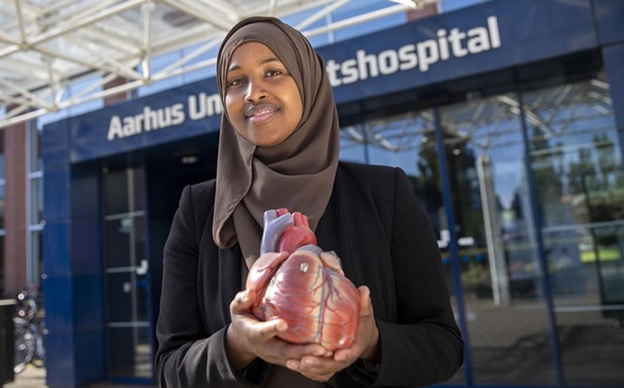
Mariam Noor has developed a small ring that seems to be able to cure leaking heart valves. This can change the way we do cardiovascular surgery. Photo: Lars Kruse, AU Foto.
When the aortic valve leaks, some of the blood returns to the heart, which means the heart has to work harder. In the worst cases, this can lead to heart failure, and this is why it’s important to treat the condition. Doctors usually treat the condition by repairing the diseased heart valve or replacing it with an artificial valve.
Both involve a risk of complications, and therefore engineers from Aarhus University have been working for several years to develop new surgical technology for heart patients.
“A prosthetic heart valve is an effective form of treatment, but it’s also a relatively complicated surgical procedure that brings with it a number of risks and complications in the long term. Now we have found a solution that can make it easier to treat patiens,” says Mariam Noor, a PhD student at the Department of Electrical and Computer Engineering at Aarhus University and the Department of Cardiothoracic and Vascular Surgery at Aarhus University Hospital.
Ring prevents blood from returning to the heart
Mariam Noor has spent the last three years designing and developing a ring that can give patients with aortic insufficiency good treatment results, and she has invented something that may have impact on the world of surgery.
“Instead of replacing the defective valve, my treatment concept is to enclose it in the main artery so it prevents blood from returning to the heart. I’ve developed a new type of ring that tightens around the aortic root to prevent this,” she says.
In fact, for several years now, cardiologists have been using a type of ring to stabilise the function of the heart valves, but this has not been without its disadvantages.
The traditional ring is round and relatively rigid, and this limits its operation. Furthermore, placing the ring in the body is a challenge because surgeons have to cut the aorta and remove the coronary arteries.
The new ring developed by Mariam Noor is made of an elastic material that can mould itself to the body’s tissue. It also has an opening, which makes it easy to place it correctly.
“The surgical procedure is significantly less invasive, and with the help of diagnostic imaging and 3D printing, we can adjust the ring’s rigidity and strength to the individual patient’s anatomy. This gives us some fantastic options, and the technology has been promising during animal trials,” says Mariam Noor.
Lots of physics in the main artery
Mariam Noor has especially focused on the material properties and design of the ring in order to better retain the dynamics in the cardiovascular system.
“I look at surgical issues through the lens of an engineer, because there’s a lot of physics and mathematics in our cardiovascular system. My approach has been to understand how the aorta works and then transfer this knowledge to design a ring that can recreate normal anatomical conditions in patients,” she says.
The ring consists of a silicone core surrounded by suture-like material. In order to document the effect, in collaboration with her colleagues, Mariam Noor has, carried out her experiments in a heart simulator, whereby it is possible to control the pump function, temperature and flow.
“We can simulate the action of the heart in a very precise environment that closely resembles the human body. This means we can closely study what happens with the ring in the frequency area of every, single heartbeat. It’s been interesting, and we have obtained an incredibly detailed knowledge base to continue working with,” she says.
The researchers have subsequently carried out a costly study to see how the ring expands in the body when the heart pumps, and Mariam Noor was positively surprised.
“We looked at the geometric pattern of the main artery in a pig with a ring and in a pig without it, and we could see that we can actually preserve the natural dynamics. These results look really promising,” she says.
She emphasises that there are a few years’ of clinical approval procedures ahead before the heart ring can benefit patients. (source: Aarhus University)
Mariam Noor has developed a small ring that seems to be able to cure leaking heart valves. This can change the way we do cardiovascular surgery. Photo: Lars Kruse, AU Foto.
Moussa Abadi and his French wife Odette hid hundreds of children from the Nazis in homes, convents and orphanages across southern France.
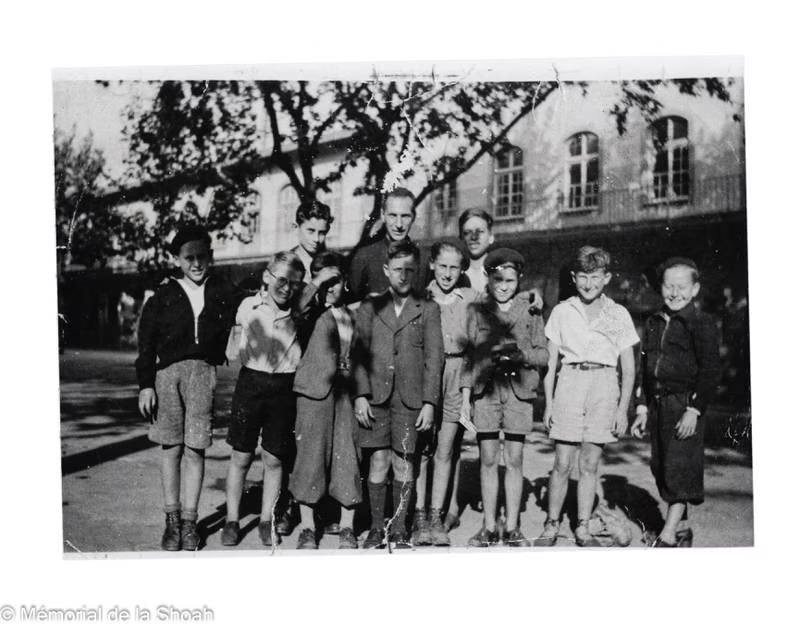
A group of Jewish boys hidden at the Don Bosco school in Nice pictured with their teacher in September 1943. Memorial de la Shoah/Coll.Serge Klarsfeld
Andree Poch-Karsenti was not even three years old when her parents were rounded up at their home in the southern French city of Nice, on a quiet street above the Mediterranean Sea.
She escaped the clutches of the Gestapo, playing obliviously with her neighbour Jacques on the other side of the street.
Her parents and aunts would not survive the war, after being sent to concentration camps in Drancy and then Auschwitz.
But thanks to a clandestine network set up by a brave Jewish couple — a French doctor and a Syrian man from Damascus — Andree avoided the Gestapo.
Moussa Abadi was born to a religious family in the Jewish Quarter of Damascus in 1910. He attended a school run by French priests, which would fuel his eventual move to Paris in the 1920s.
When the Nazis invaded Paris in 1940, Moussa fled south, leaving the capital on a bike with one change of clothes.
He arrived in Nice, later to be occupied by the Italians, where thousands of Jewish families sought refuge. Damascus urged him to return home but he refused.
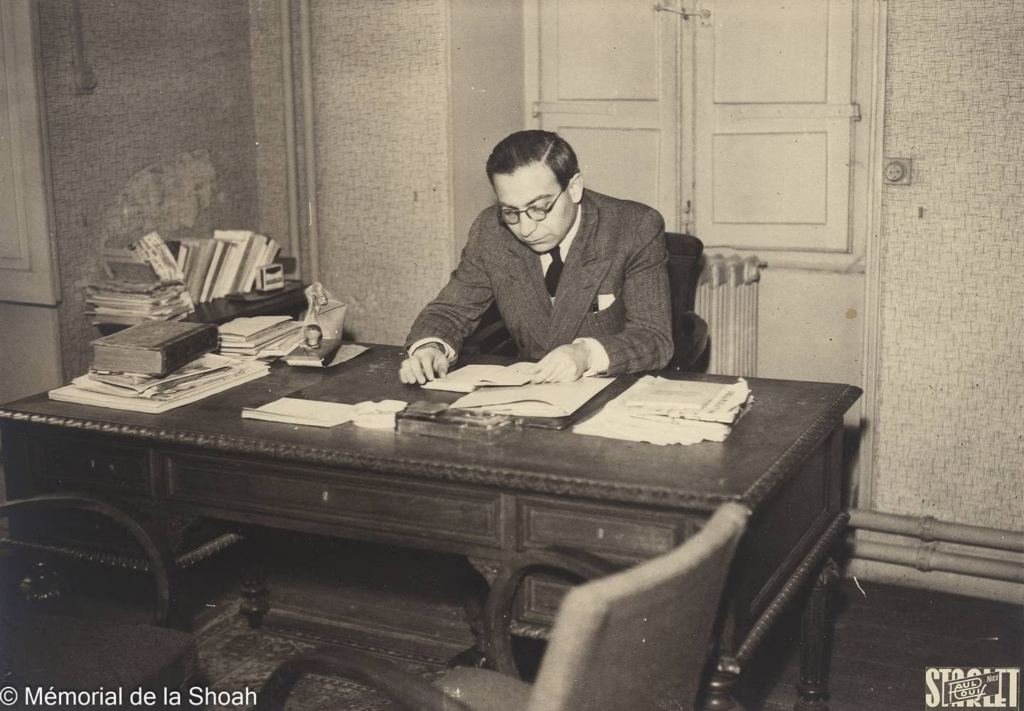
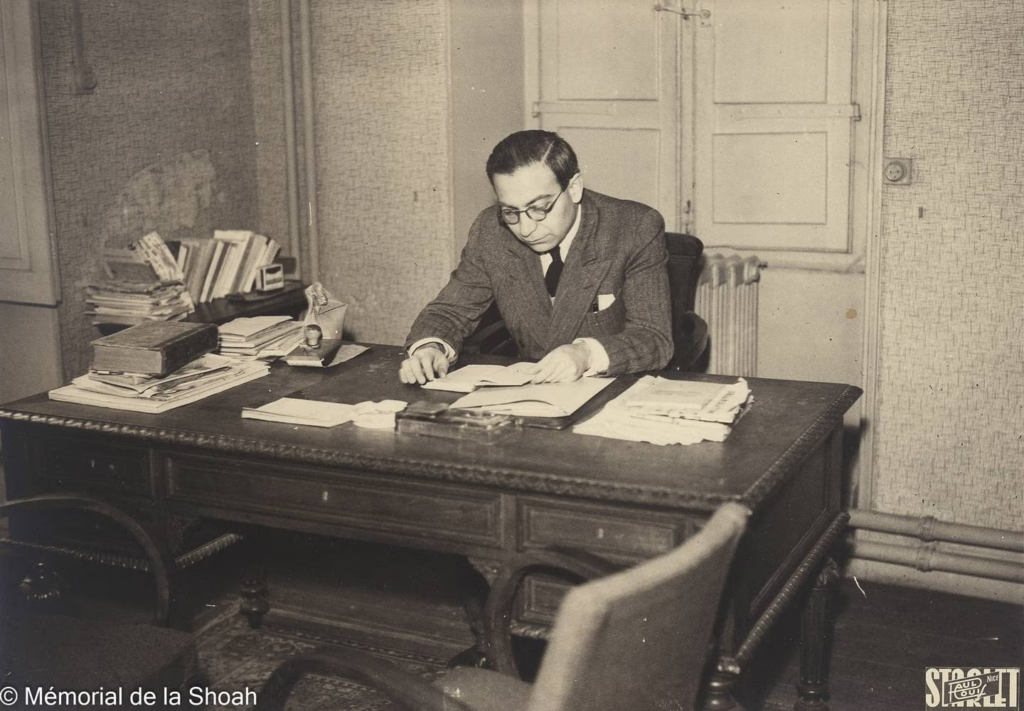
Moussa Abadi at his office in Nice in 1947. Memorial de la Shoah/Coll.Odette Abadi
One day, under a “postcard-blue sky”, Moussa saw a young Jewish woman being beaten to death by a French policeman on the seafront promenade.
While the Nazis ruled the north, the Italians kept the Jewish population relatively safe ― for a time.
But Moussa knew the Germans could push south. Even under the French authorities, round-ups in early 1942 sent thousands of Jewish families to their deaths.
Moussa later met an Italian priest who told him of Jewish children being massacred by the Nazis.
These two encounters pushed him to take the biggest risk of his life, alongside the woman who would later become his wife, Odette Rosenstock.
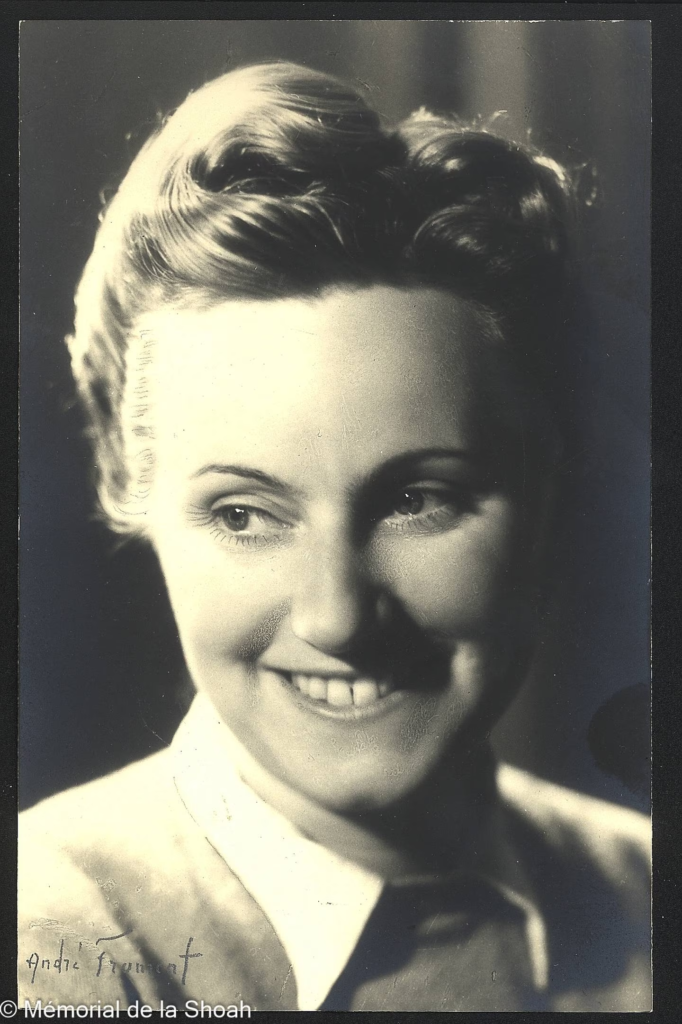
Odette Abadi pictured in 1947 or 1948. Memorial de la Shoah / Collection Odette Abadi.
Andree was one of the hundreds of children who were hidden by Moussa and Odette as part of the Marcel Network, established by the couple in 1943 after the German invasion of Nice.
Within a year, they saved 527 Jewish children with the aid of local families, Christian clergy and children’s homes. Many of them would be later honoured by Israel as one of the “Righteous Among the Nations” for their bravery.
Andree is now 82, and lives near Paris. But for decades, she knew nothing of the couple who helped her escape the Nazis.
“I knew that I was hidden with the Rous [family] and that my parents were deported, but I didn’t know the rest of the story. No one had spoken to me about it,” she tells The National.
Andree was taken in by her neighbours, the Rous, and hidden in a mountain village until the spring of 1944, when the Gestapo arrived to take on resistance members.
She was then taken back to Nice and put in a children’s home by Odette and Moussa.
It wasn’t until 1995 that fate would bring them together, when her brother came across a list of children hidden during the war.
Odette was looking for them. Andree called Odette and found the couple living not far from her home in Vincennes.
“They were an extraordinary couple, who led an extraordinary life,” she says.
“They could have gone into hiding but they decided to risk their lives to save children condemned to death. They are courage personified.”
The couple would meet with some of the hidden children later in life, gathering at restaurants in Paris and meeting their grandchildren.
On rare occasions, they would invite them to their modest apartment in the 12th arrondissement.
Odette, a French doctor from Paris, had met Moussa in 1939. After fleeing to Nice, she began working at a clinic for Jewish children on the Boulevard Dubouchage, where she would tell families: “If the Germans come, we can hide your children.”
They had no money and no connections. Both Jewish, they were at risk of deportation and death.
“Every morning when I drank my coffee with Odette, I didn’t know whether I would find her safe that evening, or even whether I would be alive,” Moussa later wrote.
He met the Bishop of Nice, Paul Remond, imploring him to help save children from the Nazis.
The bishop gave Moussa an office in his home, on the ground floor so he could escape if and when the Germans came.
It was here that Moussa made thousands of fake documents, baptism certificates and ration cards. In the garden, he buried files that would help reunite the children with their families at the end of the war.
Odette enlisted the help of local children’s homes and Protestant priests near the synagogue on Rue Dubouchage, who appealed to local families for help.
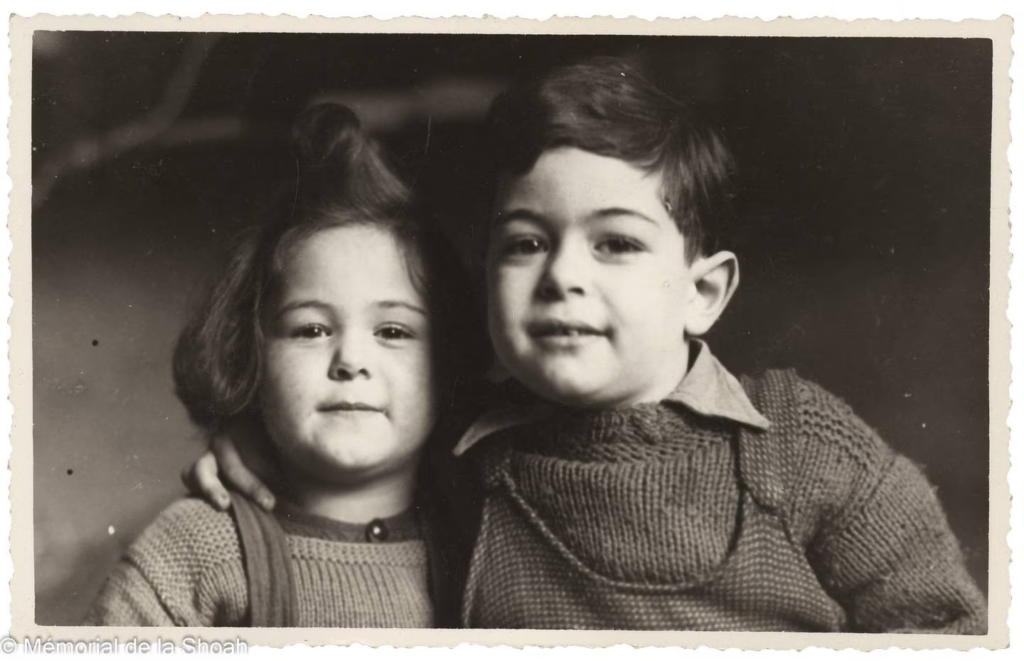
Armand and Eve Herscovici, hidden by the Marcel Network, pictured in 1943 or 1944. Memorial de la Shoah / Collection Odette Abadi
Children were taken to a “depersonalisation” house where they learnt their new identities, drummed into them before they were sent into hiding.
Some of them were so small they couldn’t speak French or understand why their names had changed.
Some children hidden together would take turns sleeping, terrified they would reveal their real identities as they slept.
“We had to teach them 10 times,” Odette recalled in an interview.
“They carried secrets that were too heavy for children,” Moussa said.
Daniel Czerwona-Jagoda was one child hidden by the network, placed in a convent at the age of five.
When the war ended, his father searched Nice for weeks by bike, looking for his son at each convent in the city.
He finally found his son thanks to a Polish nun.
“Yes, Daniel is here, but his name is now Daniel Blanchi,” she told him.
Now 84, Daniel wrote poetry later in life and signed it with three surnames — Czerwona-Jagoda, Blanchi and Chervonaz. The last he chose as an adult, fearing another war may break out.
“Odette and Moussa, I was really touched by what they did,” his daughter Sarah told The National.
She paid tribute to the couple and her father in a show inspired by his life and childhood memories, where “small children had to act like grown-ups. Little, by little, they had to change who they were because their lives were on the line”.
Despite his experience, her father has taught her to be positive, that you must always move forward, but his experience has stayed with him.
“There were little flashes,” Sarah says. “If we had to be quiet, we had to be completely quiet and still. It was as if it could endanger the whole family, that there might be a knock at the door.
“But there was always a reason, never a complaint. It was never negative.”
‘You owe us nothing’
The Catholic church gave Odette and Moussa false titles to allow them to escape arrest and visit children hidden across the diocese.
Odette would call on the children, posing as a social worker, while Moussa remained at the bishop’s office making documents.
Only two children hidden by the network were arrested, after their hiding place was betrayed.
Odette saw them on a bus, and was shooed away by one of the children when she realised they were surrounded by plain-clothes police.
She was arrested two days later and deported to Auschwitz.
As a doctor, she worked at the camp clinic and was privy to many horrors out of reach of other inmates, trying to save sick prisoners from being chosen by Josef Mengele, who was known as the “Angel of Death” for his experiments on prisoners.
Odette was later sent to Bergen-Belsen until the liberation.
Moussa was left in Nice to run the network alone, also evading capture by the Nazis. He started going to Catholic Mass at a different church every few hours to try to stay under the radar.
After the war, Odette would confess she fared better than Moussa, saying it was sometimes harder for those who were not deported.
Moussa and Odette told almost no one of their heroic efforts that earned them several of France’s highest honours.
Moussa went on to become a renowned theatre radio critic and wrote two books on Jewish life in a Damascene ghetto, while Odette rose up the ranks in medicine and later worked at a school for deaf children.
They refused to speak publicly until they were in their 80s, when the stirrings of Holocaust denial began in France.
“When we meet hidden children again, the question they ask most often is, ‘How can we thank you?’” Moussa told the French Senate in 1995.
“My response will be brief. You have nothing to thank us for, because you owe us nothing. It is we who are in your debt.”
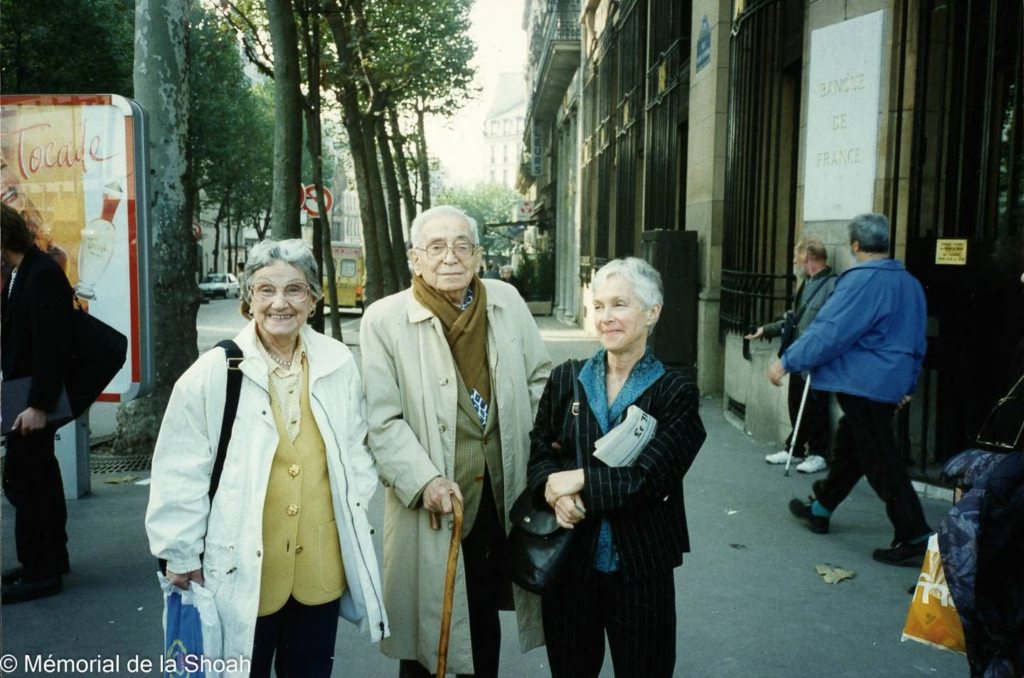
Odette Abadi, left, Moussa Abadi and friend Betty Saville in Paris in 1994. Memorial de la Shoah / Collection Odette Abadi
Moussa kept in contact with his family from Syria, visiting his cousin in Argentina where he confided in some family members of his wartime past but swore them to secrecy.
“I felt as impressed in the way one would if they spoke to Clark Kent. He was a superhero, a real superhero,” his cousin’s grandson Carlos told The National.
“They only spoke about it because they felt they had to. He wanted to take it with him to his grave.”
Moussa’s health declined in the last years of his life, until he was almost blind. He died of stomach cancer in 1997.
Odette spent the last two years of her life collecting all of the documents, finishing the transcription of a book he dictated to her as his eyesight failed.
She died by suicide in 1999, writing that she had died along with Moussa.
“They were a couple of the kind we don’t see today,“ says Andree. “They loved each other. She did everything she could so his memory would endure. She always put him first.”
Andree now runs the “Friends and Children of Abadi” association, which serves to tell the story of the Marcel Network.
“Because Odette and Moussa had never said anything, no one knew about them. We want to continue their memory and that of the Holocaust. As long as I’m able, this is what I will do.”
Jeddah’s inaugural Islamic Arts Biennale celebrates the legacy of Islamic art in a place close to Makkah, the fountainhead and cradle of Islam.
Saudi Arabia witnessed a historic moment with the opening of the inaugural Islamic Arts Biennale, which presented historic and contemporary works of Islamic art from around the world.
On the evening of Jan. 22, the Western Hajj Terminal at King Abdulaziz International Airport in Jeddah was filled with crowds of people waiting in eager anticipation. This was not the usual throng of pilgrims that use the terminal each year to travel to Makkah for the annual Hajj pilgrimage, but one awaiting the beginning of another voyage — a metaphorical one into the realm of Islamic art through the first-ever Islamic Arts Biennale hosted by the Kingdom.
The crowd gathered under the impressive canopies of the Hajj Terminal, designed by Skidmore, Owings & Merrill, which won the 1983 Aga Khan Award for Architecture.
The biennial event, which includes many newly-commissioned and never-before-seen works of art, marked a historic moment not just for Saudi Arabia and the Diriyah Biennale Foundation that staged the event, but for the legacy of Islamic art, which has witnessed hardly any large-scale international exhibitions since the 1976 World of Islam Festival in London.
Jeddah’s inaugural Islamic Arts Biennale celebrates the legacy of Islamic art in a place close to Makkah, the fountainhead and cradle of Islam, while forging a dialogue between the past, present and future through contemporary artworks by 60 established and emerging artists from Saudi Arabia and around the world, and with over 60 new commissions and 280 historical artifacts.
The effect is illuminating, mystical and enlightening in that this biennial, like its theme “Awwal Bait” which means “First House” in Arabic, celebrates the beauty and heritage of Islamic art in the birthplace of Islam.
“The Islamic Biennale, staged in this location at the Western Hajj Terminal, has meaning and anticipation for the future,” Saad Alrashid, a leading Saudi scholar, archaeologist and one of the curators of the event, told Arab News.
“Jeddah is the gate of the Haramain and has a deep history. There is an accumulation of strata of civilization in Saudi Arabia and throughout the ages this area was the crossroads of civilization between East and West and up to the North. Staging the Islamic Biennale here presents to the world the idea of connection between all Muslims and everybody that comes and goes from Saudi Arabia geographically, historically and politically.”
In the same vein, the theme “Awwal Bait” explores how the Holy Kaaba in Makkah and the Prophet’s Mosque in Madinah aim to inspire Muslims both culturally and metaphysically to explore their sense of belonging and ponder the definition of home.
“At its core, the Biennale is about giving contemporary objects a home by giving them a lineage and giving historic objects a home by giving them a future,” Sumayya Vally, artistic director of the Biennale, told Arab News.
“Seeing the Biennale come to life through the voices and perspectives of our artists has been profound,” she added. “Each of them has boldly and sensitively taken on the opportunity of this platform to contribute to an emerging discourse on Islamic arts that we hope will continue.”
Staging the Islamic Arts Biennale was the result of a global effort. More than 18 local and international institutions, including the General Presidency for the Affairs of the Two Holy Mosques, alongside artifacts loaned by other prestigious international institutions with an interest in Islamic Arts, such as Benaki Museum in Athens, the History of Science Museum at the University of Oxford, the Louvre in Paris and the Victoria and Albert Museum in London.
The Biennale was curated by a multi-disciplinary group of specialists, including Omniya Abdel Barr, an Egyptian architect and Barakat Trust Fellow at the V&A, and Julian Raby, director emeritus of the National Museum of Asian Art at the Smithsonian Institution in Washington, DC.
“It was challenging to find objects that have survived that were made in Makkah and Madinah,” said Abdel Barr to Arab News. “We searched within collections to see how we could create a conversation between historic objects while also keeping in mind the contemporary context and this was the most interesting part.”
Regionally, the Diriyah Biennale Foundation has secured loans for the exhibition from institutions such as the King Abdulaziz Library, the National Museum, King Faisal Center for Research and Islamic Studies and King Saud University — all in Riyadh — and Makkah’s Museum of Antiquities and Heritage, the General Presidency for the Affairs of the Two Holy Mosques and Umm Al-Qura University. From the wider region, works have been loaned from the Al-Sabah Collection and Dar Al-Athar Al-Islamiyyah in Kuwait, the Museum of Islamic Art, Cairo, and the Museum of Islamic Art, Doha, among others.
The viewing experience is mystical, like a pilgrimage in itself. It begins in darkness with American Lebanese artist Joseph Namy’s commission “Cosmic Breath” presenting recorded calls to prayer from countries around the world played together, working as if in unison with the installation across the room by Saudi artist Nora Alissa, titled “Epiphamania: The First Light,” which depicts various black and white shots of pilgrims around the Kaaba shot impressively from beneath her abaya. Nearby is an Islamic astrolabe that is positioned towards Makkah. The trio of works mark the first example in the carefully curated show, demonstrating the dialogue generated from historic and contemporary Islamic works of art.
The structure of the Biennale is divided into four galleries and two pavilions that house artworks regarding daily Islamic rituals and Hajj. These sections intend to evoke both personal and collective emotions about the spiritual life of Muslims around the world.
Large-scale, newly-commissioned works are found outside around the terminal’s expansive and evocative canopies, amid rays of sunlight and views of Jeddah that periodically include airplanes taking off high into the sky. The works outside communicate with nature and the Aga Khan award-winning architecture of the terminal itself.
Outside are also the pavilions of Makkah and Madinah, which present material from the Two Holy Mosques, Masjid Al-Haram and from the Hujra Al-Sharifa in Madinah. The focus here is on the initial journey that the Prophet Mohammad and his followers took from Makkah to Madinah to escape persecution. The objects on display, once again a mixture of historic and contemporary, shed light on the sense of universal belonging that ensues from the Muslim pilgrimage and journey home afterward.
Surrounding the pavilions are works by artists including Dima Srouji, Shahpour Pouyan, Moath Alofi, Reem Al-Faisal, Alia Farid, and Leen Ajlan.
Of note is Bricklab’s architectural installation “Air Pilgrims Accommodation 1958” inspired by Jeddah’s historic Hajj housing, which Vally describes as a site that “gathered people from all over the world to stay in one place — a place for cultural production and trade.”
“The idea emanating from the works outside is for them to generate invitations for gathering, for discussion and exchange,” Vally told Arab News.
This is reflected in Tanzanian artist Lubna Chowdhary’s “The Endless Iftar” which is a 40-meter-long table inspired by rituals of eating and gathering from around the world during Ramadan.
Also positioned outside is “My Place is the Placeless” by Iranian London-based artist Shahpour Pouyan, presenting three large-scale differently colored architectural domes that represent the three major traces in the artist’s DNA after he took a test that revealed his origins go beyond his native Iran to include Scandinavia, Central and South Asia, and the Middle East.
“It’s about human interconnectedness in an effort to break down ethnic labels and identities,” Pouyan explained to Arab News.
Like the other works on show, Pouyan’s work reflects not just on Islamic culture but on its universality, its ability to connect beyond the Middle East and offer a unifying force that goes beyond religion, nationality and culture.
As Alrashid states: “Islam is a communication of knowledge and culture.”
He added: “Since the 2030 Vision we sense that we are more welcoming just like the Makkans in the past welcomed visitors during Hajj.
“We are showing the whole world how they can enjoy Islamic art,” he said. “The Biennale is not just an exhibition or something from the past — it continues through culture, through integration with the multiculturalism of Muslims.”
Perhaps the most powerful theme of the exhibition is the idea of Islam and its art across the ages as a physical and metaphorical unifying element that continues to connect diverse cultures and people throughout the world. It is also a way, as Vally stressed to Arab News, “to define what it means to be Muslim from our own perspective, through our own art and culture to the rest of the world and to show how Islam has the power to unite us all, even non-Muslims, through its history, traditions and spiritual practices.”
source/content: arabnews.com (headline edited)
___________
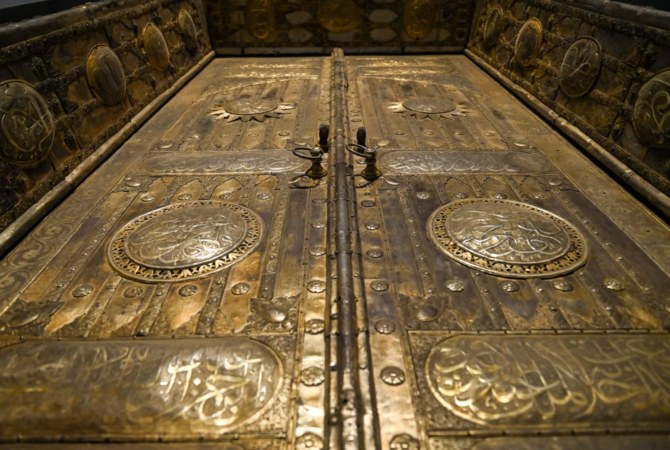
Ka’bah Door made by Shaikh Mahmoud Yousuf Badr for King Abdulaziz bin Abdulrahman Al Saud in 1947. (AN Photo by Ali Khamaj)
Unanimous vote ‘opens new chapter in Kingdom’s evolving history’.
Saudi Arabia will chair UNESCO’s World Heritage Committee following a unanimous decision at the organization’s headquarters in Paris.
The committee will be chaired by Princess Haifa bint Abdulaziz Al-Mogrin, the Kingdom’s permanent representative to UNESCO, and chairperson of the organization’s programs and external relations committee.
The Paris meeting also agreed that Saudi Arabia will host the committee’s 45th session, which will be held in Riyadh from Sept. 10-25.
The selection was approved during the 18th session of the World Heritage Committee, which was held in the presence of all member states of the committee.
Princess Haifa tweeted: “In completion of the Kingdom’s prominent role in supporting and preserving human heritage, I am proud today of accrediting Saudi Arabia as chairman of the UNESCO World Heritage Committee, and for hosting of the 45th session of the World Heritage Committee for the first time in September.”
The permanent delegation of the Kingdom to UNESCO tweeted: “Saudi Arabia is home to 6 millennial world heritage sites and 11 intangible heritage elements, Saudi Arabia will proudly host the 45th session of UNESCO’s World Heritage Committee in September— it’s a new chapter in our evolving history.”
The decision is the culmination of efforts led by the Kingdom in UNESCO, in light of unlimited support to the cultural sector by King Salman and Crown Prince Mohammed bin Salman, as well as the support and directives of Culture Minister Prince Badr bin Abdullah bin Farhan.
Princess Haifa praised the decision and said that it is simply the result of the Kingdom’s prominent role in supporting heritage, and its extended endeavors toward documenting human heritage alongside the member states of the committee, as well as achieving the goals of UNESCO in general, and the goals of the World Heritage Committee in particular.
The UNESCO World Heritage Committee, composed of representatives of 21 states elected by the General Assembly, examines the proposals of states wishing to place their sites on the World Heritage List, assists experts to report on the sites, and provides the final assessment of the decision of the proposed sites on the list.
The Kingdom has two other members of UNESCO’s main committees, as well as its membership in the World Heritage Committee: membership of the Executive Council and membership of the Intergovernmental Committee for the Safeguarding of the Intangible Cultural Heritage, which highlights the Kingdom’s role as a pivotal and international center of action in the organization’s decision-making.
source/content: arabnews.com (headline edited)
_________
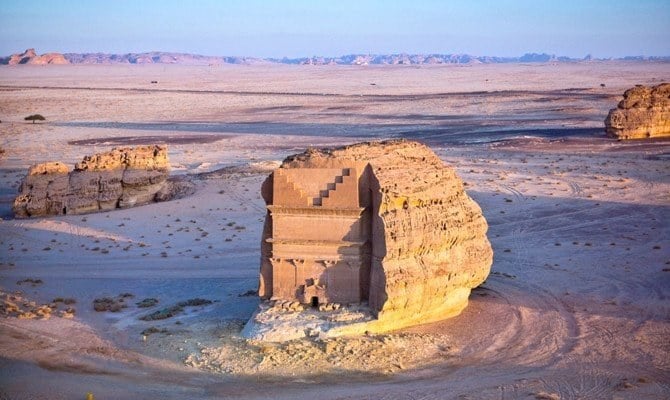
Madain Saleh became Saudi Arabia’s first UNESCO World Heritage Site in 2008. (SPA)
The opening of this year’s Cairo International Book Fair, set for 25 January, comes against a backdrop of a surge in the demand for historical and other non-fiction offerings, as well as uncertainty over an expected rise in prices.
Publishers have already announced an expected considerable hike in the price of books, no less than 50 percent for some titles and much more for others, which they attribute to the tripling in paper prices in less than six months due to the currency devaluation.
“We want to maximise our reach to as many readers with limited budgets as possible,” said Yehiya Fekri of Al-Maraya. Bigger publishers, including Al-Shorouk, Al-Massraiya Al-Lebananiya and Al-Karma, have promised very big discounts on as many titles as possible and special packages for titles that were put out for the book fairs of the past two years.
However, the pricing issue is no less controversial than that of genre. The domination of fiction during over 20 years, which allowed for many new novelists to make an imprint on the contemporary Egyptian and Arab literature scene, is being challenged.
This year, publishers say there is a growing interest in non-fiction, old and new titles alike.
Abdallah Sakr, director of publishing at Al-Mahroussa argued that the limited number of new titles of some branches of non-fiction, “particularly theory,” and the parallel interest of readers prompted his publishing house to gather, revise and reprint the three volumes of prominent 20th century intellectual Louis Awad, Tarikh alfekr almasry (“History of Egyptian Intellect”).
“Those are three big volumes that we worked on for three consecutive years as they were originally published by different publishers with some considerable intervals,” Sakr said.
Sherif Bakr, of Al-Arabi, said that there is a “definite interest in philosophy.” This is why, he added, Al-Arabi decided to publish Arabic translations of titles like Philosophy and Football and Socrates on Sneakers, which he expects to do very well in this year’s book fair.
“Non-fiction, in general, is making a strong come-back; I think we saw a glimpse of this last year with the first post COVID-19 book fair; but clearly this year our list of publications was designed to allow for a considerable number of non-fiction titles,” said Nora Rashad, director of publishing at Al-Massriya Al-Lebenaniya Publishing House.
They had embraced the domination of fiction over the past two decades. However, she added, this year more than last year, non-fiction is gaining ground. “I am not sure where this is coming from because there has always been some really interesting titles coming up in the non-fiction space but it might be a post pandemic thing with people looking for titles that offers some answers to questions they thought about during the pandemic,” she said.
For this year’s book fair, Al-Massriyah Al-Lebnaniyah is offering several non-fiction titles including Ezzat Al-Kamhawi’s Al-Tahi Yaktol Walkateb Yantaher (“The Cook Kills and the Author Commits Suicide”) which is a literary reflection on life and the works of prominent authors and the legacy of some important cooks.
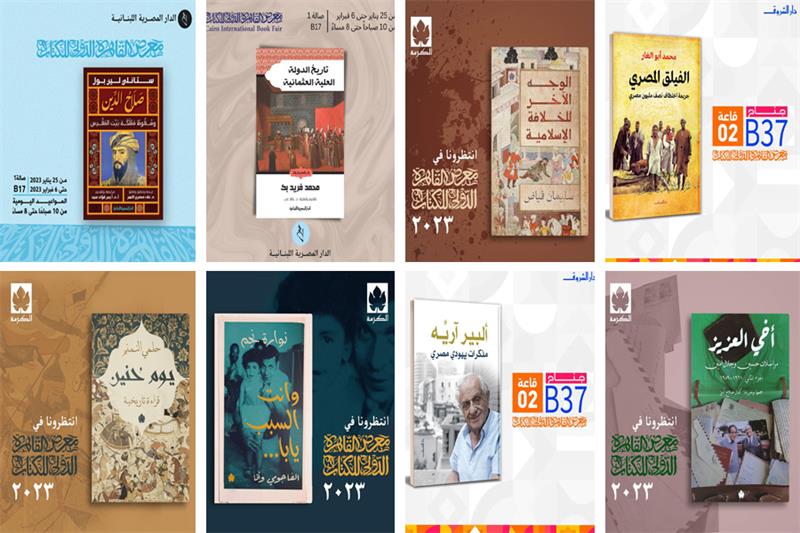
History is also getting a lot of attention this year. With an introduction from Khaled Azzab, a prominent researcher, Al-Massriyah Al-Lebenaniyah is putting out a new edition of Mohamed Farid’s late 19th century Tarikh Al-Dawla Alaliyah Alothmaniyah (“History of the Sublime Ottoman State”) and an Arabic translation of Stanley Lane Paul’s Saladin and the Fall of the Kingdom of Jerusalem.
However, this passion for history is not just a new development that goes hand-in-hand with this year’s renewed interest in non-fiction. According to several publishing houses, this desire for alternative narratives of history has been going on for well over a decade.
Al-Karma has been on with several reprints of history books. For this year, it is putting out a new edition of Souliman Fayyad’s Al-Wagh Al-Akhar Llkhelafa Al-Islamiyah (“The Other Face of Islamic Khalifat”) that challenges the dominant incomplete narratives of almost strictly prosperous Islamic rule to shed light on the images of coercion and discrimination that some faced under the rule of Muslim Khalifas. Another walk in the history lane comes from Al-Karma with Helmy Al-Namnam’s title Yaom Honein – Qiraa Tarikhiya (A History Take on the Battle of Honein). This books promises to be controversial as it addresses an often marginalised battle that Muslims, under Prophet Muhammad, had to go through in a preemptive tactic.
Al-Shorouk, which had previously dedicated an entire series to modern and contemporary history, is also coming in with the most recent title of Mohamed Aboul-Ghar’s Al-Filaq Al-Masry (“The Egyptian Legion”). Typical of the history volumes written by Aboul-Ghar, this book offers a lengthy research work that documents the forced conscription of Egyptian men from villages all across the country to work with the British army during World War I. It details the incredible socio-economic and political consequences that contributed to the start of the 1919 Revolution that called for the independence of Egypt from the British occupation. In a sense, this book could well be part of the rich set of volumes that Al-Shorouk has been putting out for four consecutive years in a bid to re-visit the 1919 Revolution.
Al-Maraya, too, is going to this year’s book fair with several history titles including Nossous Wakirat Hawl Tarikh Al-Capt from the 10th to the 19th centuries (“Texts and Narratives from the History of Copts: 10th to 19th Centuries”) by Magdi Girgus, who was just awarded a prize from the Swairas Culture Foundation for his book Al-Moalem Ibrahim Al-Gohary (“Master Ibrahim Al-Gohary”) on the life and history of one of the most controversial Coptic figures, which was put out last year by Al-Maraya.
Al-Arabi, for its part, is putting out a series of history books under the title of “Papers from History.” “This project is the labour of years of hard work and it includes some translated titles and some titles written in Arabic,” said Bakr. Of these papers there is Mozakerat Aila Massiyhiya bayn Al-Qahira waRas Ghareb (“Memoires of a Christian Family Between Cairo and Ras Ghareb”) by Iliyah Mahfouz Bashir. The book tracks the history of the family of a man who was born to a Christian family in the 1930s in Ras Gharb, next to the Red Sea, where the father was working for an oil company before he retired and dragged the entire family to Cairo.
Also in history, there is also a wide range of memoires, biographies and letter collections. Al-Karma is putting out part two of its massively successful book Akhi Al-Aziz – Morassalat Hussein and Galal 1961-1989 (“Dear Brother – Correspondence of Hussein and Galal Amin – 1961-1989”). Like the first volume that shared parts of letters exchanged by the Amin brothers, a prominent diplomat and intellectual and a prominent economist and writer, the second volume shares reflections on life, politics and culture that were included in letters that they sent to one another as they lived in Egypt and abroad.
Al-Karma is also putting two books that offers alternative narratives on the lives of two key figures of Egypt’s contemporary non-classic poetry: Salah Jahine, the celebrated figure of this year’s book fair, and Ahmed Fouad Nigm. Mona Kattan – Soura Shakhessiya Lezawgat Shaar (“Mona Katta – A portrait of the Spouse of a Poet”) introduces the second wife of Jahine in a narrative that sheds a lot of light on the prominent poet/cartoonist. Meanwhile, Wenta Al-Sabab ya Baba” (“It is All Because of You, Dad”) is the narrative of Nigm’s daughter Nawara, who shares reflections on the father-daughter relationship and the impact thereof on the life of the daughter.
Meawhile, Al-Shorouk is putting out what promises to be one of the most interesting titles of the book fair, Albert Arie -Mozkerat Yahoudi Masry (“Albert Arie – the Memoires of an Egyptian Jew”). The memoires of Arie, who passed away in the spring of last year at the age of 92, offers an incredible insight on the history of Egyptian Jewry in Egypt before and after the 1948 War, including the national affinity that some, including Arie himself, held to the country. It also offers an image of life in Egypt, specifically in Cairo, where Aries was born and lived all his life.
On Cairo, Al-Shorouk is also putting out its Wassat Albald – Maware Elhekayat (“Downtown – Beyond the Stories”), an essential collection of photos that documents the architectural splendor of Cairo. Meanwhile, Al-Ain is putting out Al-Qahera Waomranha (“The urban History of Cairo”) by Nezar Al-Sayyad, a prominent Egyptian-American architectural historian.
Novels with historical inspirations have also been quite fashionable for the past few years. Following a very successful first novel, Yaacoub (“Jacob”) with Al-Shorouk last year, Afifi is putting out his second take with the same publisher at a historical novel Salam Ala Ibrahim (“Peace Be on Abraham”). Like Jacob – which tells a history mixed with fiction in the life of a prominent but highly controversial Egyptian Coptic figure during the French Expedition – Peace Be on Abraham applies the same technique in recalling the history of Mohamed Ali’s son Ibrahim. For its part, Al-Maraya is offering Magued Wahib’s Alam Yahouzah (“The Pains of Judas”) that mixes fiction with history in the account of Judas Iscariot who betrayed Jesus.
Other fiction titles that are expected to get considerable attention at this year’s book fair include Ahmed Samir’s second novel Rassail Al-Ganna (“Letters of Heavens”), Mahmoud Abdel-Shakour’s Alwan Aghostos (“The Colours of August”) from Dawwen and Adel Essmat’s Ayyam Adiya (“Ordinary days”) from AlKotobKhan.
Classics still have a big space in the book fair. Al-Massriyah Al-Lebenaniyah is putting out more reprints of the titles by Ihssan Abdel-Koddous, who, according to Rashad, “did really very well in last year’s book fair.” Al-Diwan is also coming up with more of its Naguib Mahfouz editions, Al-Karma is on with its reprints of Khairy Shalaby and Al-Shorouk is on with its reprints of Tawfik Al-Hakim.
However, according to Bakr, the demand now is for very different types of fiction. So, he said, while novels recalling big political events or documenting certain historical eras or reflecting on personal experiences remain in demand, there is also “a firmly growing demand for criminal novels – including detective novels.” The fact that there is a bigger taste for translated books, “and for that matter better quality translations, allowed for many titles of this genre to be published to please the appetite of a considerable audience of readers in Egypt and elsewhere in the Arab world.”
Meanwhile, according to Sakr, comic books are also “picking up really well.”
“In the past five years Al-Mahroussa has put out over 40 titles that have been essentially very well received by young people – aging from 15 to 30, but also younger and older.” For the book fair this year, Sakr said, Al-Mahroussa is putting out three new comics, including Magdi Al-Shafai’s Al-Gassous Al-Engelizi (“The English Spy”) that depicts early elements of the revolt of Egyptians against British Occupation.
There are over 1,000 publishers who are taking part in this year’s book fair, including 44 publishers from Jordan, this year’s guest of honour.