UNITED ARAB EMIRATES (U.A.E) : Abu Dhabi Arabic Language Centre (ALC) Launches Music Book Collection at Frankfurt Book Fair 2022

 The Abu Dhabi Arabic Language Centre (ALC) launched a series of music books at Frankfurt Book Fair 2022.

Consisting of a number of publications, the series is a notable addition to the ALC’s roster of publications and focusses on Emirati and Arab singing and music.

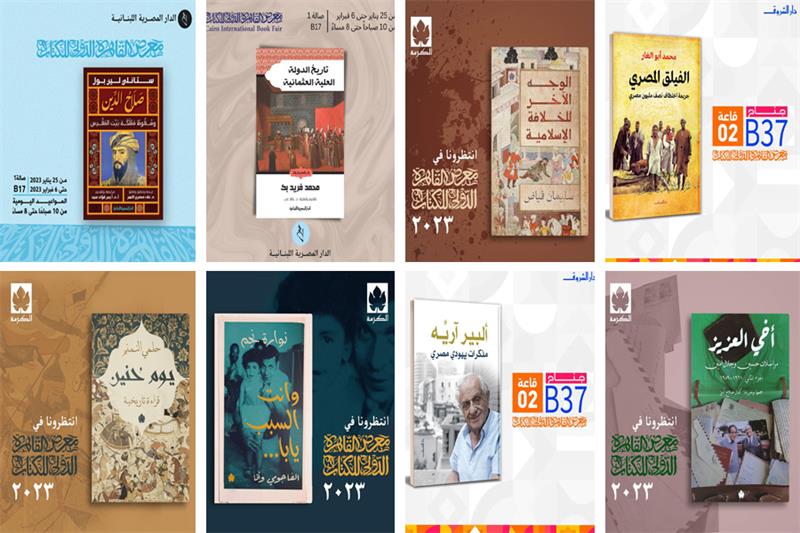
It includes biographies of artists Eid Al-Faraj and Ibrahim Jumaa written by author Ibrahim Al-Hashemi, a book on Umm Kulthum’s reasons for selecting the poems she sang, alongside a variety of other titles, including educational books.

The launch ceremony was attended by Dr. Ali bin Tamim, Chairman of the ALC, and Saeed Hamdan Al Tunaiji, Acting Executive Director of the ALC and Director of the Abu Dhabi International Book Fair (ADIBF), along with media representatives and book enthusiasts.

“The Abu Dhabi Arabic Language Centre continues to drive the advancement of the Arabic language and enrich the Arabic library with original titles in an effort to encourage creativity and support authors,” said Al Tunaiji. “The series of music books we have launched is a means to shed renewed light on music and singing in the region. For the first time, the series presents biographies of musical pioneers in the UAE, in addition to documenting traditional performing arts and exploring new perspectives on Arabic singing by experts.”

The series includes two books from the ‘Pioneers Among Us’ initiative, where poet and writer Ibrahim Al-Hashemi documents the life of Eid Al-Faraj, a singer, composer, and poet. The first biography of its kind for this artist, it chronicles Al-Faraj’s journey from birth through childhood, education, and various stages of his career until the present time, illustrated by a collection of photographs.

In the second book, Ibrahim Jumaa: The Etheric Melody of the Sea, Al-Hashemi presents the life and achievements of a pioneer of music and composition in the UAE, and documents the songs and poems he wrote, composed, and presented at festivals and special occasions. The publication features photographs from Jumaa’s life, showcasing the awards and honours he received during his career.

“This music book collection completes the book series we previously launched at the Abu Dhabi Arabic Language Centre,” added Al Tunaiji. “These works, wherein Emirati authors document the lives and professional careers of UAE musical pioneers, will greatly enrich the regional cultural scene and promote more in-depth research into the UAE’s musical heritage. The series offers a new perspective on Arab musical heritage, which is sure to spark new dialogue around it.”

The collection includes Dr. Hamad bin Sarai’s book Wahhabi Art: Kinetic and Verbal Performance from Emirati Folklore, which consists of field research documenting a form of folk performance art closely related to the agricultural environment, through interviews with people who practice the art form.

Meanwhile, the Encyclopaedia of Sung Poems, compiled by researcher Dr. Hammad Al Khatri, includes poems sung in the UAE, which are usually closer to popular taste and extend deep into the history of the community. The poems address phenomena and symbols from the surrounding environment and embody authentic Emirati vocabulary that expresses the culture of the people.

In the book Folk Songs for Children and Women in the United Arab Emirates, Dr. Fatima Al Mazrouei tries to remedy the lack of documentation of traditional folk songs, especially in the emirate of Abu Dhabi, where she collected many songs for her book which were never previously featured in published songbooks. The author also sought to collect children’s songs – often referred to as ‘Al-Ragousat’ in Abu Dhabi – in addition to songs about names, especially girls’ names.

Writing about the connection between Umm Kulthum and Arabic poetry, Dr. Ahmed Youssef Ali’s book Umm Kulthum: Poetry and Singing chronicles the legendary singer’s efforts to elevate Arabic song by performing the works of some of the greatest poets of her time and before. Umm Kulthum had a modest upbringing, only receiving religious education and being taught traditional culture, but her exceptional taste allowed her to select the poetic texts that would best serve her songs, sometimes rearranging the verses for the greatest effect.

Egyptian composer and researcher Hassan Zaki Shehata sheds light on four composers whose works have achieved tremendous success and fame in his book Rhythms of Light: A Musical Biography of Four of the Geniuses of Oriental Melody, where he analyses the works of Ahmed Sedqi, Abdel Azim Abdel Haq, Mahmoud Al Sharif, and Ali Ismail.

The collection also presents two books by composer and music researcher Muhammad Saeed Hegab. ‘The Flute: A Morsel of Cane with a Scent of Legends traces the history of the flute in an attempt to separate reality from the myths that were associated with the instrument in ancient times. The author lists the various forms of the flute and the phonetic differences between them, highlights the importance of the flute in different cultures, and explains how the instrument is manufactured and played. Meanwhile, Hegab’s The World of Bowed Instruments traces the history of string-based, bow-using instruments back to their beginnings and explores the evolution of the various families of bowed instruments. The book focusses on the instruments’ use in the musical traditions of the Arab region and similar traditions in neighbouring cultures, offering an overview of how they are made and played.

In Iraqi Musical Heritage and Civilisational Communication, Dr. Muhammad Hussein Kamer, a professor of sciences and musical theory and an expert in the al-gouza and Iraqi maqam instruments, explores the subjects of cultural communication, the connection between modern and traditional music, music education, and music learning in schools. The author discusses traditional Iraqi music, focussing on the al-gouza instrument, and offers detailed studies on the Iraqi maqam, its history, types, and characteristics.

Music researcher Bassam Abdel-Sattar’s educational book The Qanun Instrument includes an introduction to the oriental instrument and its components, highlights its role in the traditional school of music, details its musical range. The publication includes lessons and technical exercises for playing the instrument, as well as a practical guide directed at musicians who play the qanun or are looking to learn it.

The collection also features The Medium in the Rules and Theories of Arabic Music, a theoretical and applied study of the rules and theories of Arabic music, written by Egyptian author Ahmed Youssef Al-Taweel, Professor and Vice Dean of the Higher Institute of Arabic Music at the Academy of Arts.

The History of Music in Arabia and Andalusia, written by Julian Ribera and translated by Hussein Hassan, is being reprinted. The book highlights the role of the Muslims of Andalusia in preserving music and passing it down to later generations, where its legacy inspired numerous European musicians.

source/content: wam.ae (headline edited)

______________

________________________________________________

ABU DHABI, UNITED ARAB EMIRATES (U.A.E)

EGYPT: Egyptian Doctors among Top Five Foreign Physicians who joined UK Medical System in 2021: British General Medical Council (GMC) Report

Egyptian doctors ranked among the top five ‘joiner doctors’ who joined the UK medical workforce in 2021, according to a report released the British General Medical Council (GMC).

The GMC, a UK public body responsible for maintaining the official register of medical practitioners within the kingdom, said that Indian, Pakistani, Nigerian and Sudanese doctors were the other four nationalities in the top five who joined the kingdom’s medical system that year.

The GMC report also found that the number of Egyptian – as well as Chinese and Sudanese – doctors who joined the UK’s medical system tripled between 2017 and 2021.

It explained that the number of Egyptian doctors who joined the UK medical workforce was 435 in 2017 and increased to 765 in 2018. But, these numbers, it added, increased by almost 200 percent in the following three years on average, registering 1,301 in 2019, 1,220 in 2020, and 1,312 in 2021.

More IMGs – less UK and European

The GMC report analysed statistics related to the UK medical workforce and discussed various challenges that faced the kingdom’s medical system in 2022.

It found that the number of international medical graduates (IMGs) who joined the UK workforce in 2021 exceeded the numbers of graduates from UK and European Economic Area (EEA) who joined the kingdom’s workforce.

These increasing numbers of IMGs came primarily from doctors from South Asia, the Middle East and Africa, the report found.

Doctors from these three regions comprised 84 percent of all ‘IMG joiners’ in 2021 at 8,900 doctors, a number which actually exceeded the number of 8,200 UK graduates who joined the country’s workforce in the same year, the report added.

According to the GMC report, the ‘joiner doctor’ category includes doctors who obtained a license to practice medicine in the year before applying for a job in the UK medical system.

The single fastest route to becoming a ‘joiner doctor’ is through enrollment in the UK’s medical graduate programmes, the GMC report found.

Egyptian doctors: Challenges and solutions

In recent decades, Egyptian doctors have faced increasing financial difficulties due to low pay as well as an increasing workload amid population growth.

According to a March 2019 study released by the ministries of health and higher education, the numbers of doctors who held a license to practice medicine in Egypt were estimated at 212,000 in 2018, with 82,000 of them – or 38 percent of the total – working in hospitals, both public and private.

The study also found there was an average of 8.6 doctors for every 10,000 citizen – or one doctor for every 1,162 citizen, when the global average was 23 doctors for every 10,000 citizen – or one doctor for every 434.

The Egyptian Medical Syndicate, which represents the country’s doctors, said in a report in April of this year that the doctor-to-citizen ratio improved to 9.2 doctors for every 10,000 citizen by March 2022 but remained far short of the global average.

The syndicate also said that 11,536 doctors resigned from the Egyptian public health sector from 2019 through March 2022.

Though these numbers do not represent more than five percent of the total of practicing physicians in the country, still, they have pushed many in the public to call on the government to improve the work conditions and  salaries for doctors in order to stop any “doctors exodus” – real or not –  and prevent any acute shortages that could impact the health system adversely.

The government has responded to these public calls by increasing the number of medicine faculties in the last few years in order to graduate more physicians.

It has also increased spending on the health sector to EGP 128 billion in the budget for the FY 2022/23 up from EGP 108 billion in 2021/2022 – an 18.5 percent increase.

In 2021, the government, as per President Abdel-Fattah El-Sisi’s directives, raised salaries and allowances for doctors and nurses in the public health sector by 75 percent.

Last August, President El-Sisi also instructed the government to offer financial incentive package for medical staff to improve their work conditions and raise their incomes.

source/content: english.ahram.org.eg (headline edited)

____________

Egyptian doctors check a patient s X-ray at the infectious diseases unit of the Imbaba Hospital in Cairo, during the novel coronavirus pandemic crisis. (AFP)

_________

EGYPT

SAUDI ARABIA : King Faisal University Bags Patent for Increasing Shelf Life of Dates

The Saudi Authority for Intellectual Property has awarded King Faisal University a patent for an alternative solution for sterilization of dates to increase their shelf life from one month to 100 days.

Dr. Fahd bin Abdulrahman Al-Asmari, assistant professor in microbiology and food safety at the university’s department of food and nutrition sciences, said: “This achievement is eco-friendly since it only relies on natural materials that do not harm humans or the environment.

“A photosensitization technique is used in this process, where dates are sprayed with photosensitizers, to be later exposed to light with a specified wavelength within the visible range.

“During the process, light waves (photons) react with photosensitizers, causing a reaction between the photons and the nanoparticles of the latter. The products of such reaction are high energy and oxidizing materials, which are used to kill microbes.”

The Kingdom ranks among the top date-producing countries in the world, and Al-Asmari described the fruit as a “strategic product” for the country.

The production and storage of dates encounter several challenges including environmental factors and microbes.

Al-Asmari pointed out that a few years ago his team noticed fungi nucleus growing on dates with higher sugar content, which were lost shortly after storage. This led the team to investigate alternative eco-friendly and efficient ways to preserve dates.

But initial experiments proved unproductive. “We noticed change in the color and texture of the preserved dates, rendering them non-consumable,” Al-Asmari added.

However, after many other attempts a breakthrough was found.

“We found a new method that relies on adopting a unique approach using natural materials. This method is eco-friendly and not harmful. In addition, it is a great alternative to the use of sterilizing chemicals in some date factories.

“This alternative method processes dates by photosensitization, where dates are sprayed with natural photosensitizers. Dates become sensitive to light rays, and they are exposed to intense light known as the visible spectrum,” he added.

As a result, the shelf life of dates can be extended by as much as three times.

He said: “This invention will prolong the dates validity period, improve their quality, and raise the competence of their marketing outside the Kingdom.”

The university has now been awarded 12 patents this year.

source/content: arabnews.com (headline edited)

____________

The production and storage of dates encounter several challenges including environmental factors and microbes. (Shutterstock)

__________________

SAUDI ARABIA

MOROCCO: Ilias Senhaji Awarded ‘Top Model of Universe 2022’

The next edition of Top Model of Universe will be held in Marrakech.

Morocco’s young model Ilias Senhaji has won the title of “Top Model of the Universe 2022’’ in a competition held in Istanbul to select the future faces of the fashion world.

A statement by the organizers added that the 17-year-old Russian-Moroccan model is the face of the Moroccan fashion house Calamain and was first discovered at the Morocco Fashion Week in Marrakech in June 2022.

The next edition of “Top Model of Universe’’ will be held in Marrakech, says the statement.

Also present at the event was the popular Moroccan designer Wafaa Idrissi.

The iconic Moroccan caftan designer debuted a new collection during the event consisting of “beautiful white caftans with gold embroidery thread, accented with pearls and Swarovski crystals, handmade by Moroccan artisans.”

Idrissi recently  showcased a set of inspiring caftan designs at The Oriental Fashion Show. Most of her designs were laced with golden and vibrant motifs, with one of her pieces also featuring a veil. 

Moroccan women have also excelled in several international beauty pageants.

Morocco’s Marwa Lahlou was crowned Miss Arab USA in August. Lahlou graduated with a honors degree from the University of New Haven with an MBA in International Business Management and Marketing. Additionally, the model speaks Arabic, English, French, and Spanish.

On October 16, Moroccan-Spanish model Sarah Loinaz was crowned Miss Universe Spain 2021 at the Los Olivos Beach Resort in Costa Adeje, Tenerife, Canary Islands.

The 23- year-old model also competed at the Miss Universe 2021 pageant held in Israel.

source/content: moroccoworldnews.com (headline edited)

____________

______________

MOROCCO

SAUDI ARABIA: Over 100 Historical Islamic sites in Madinah to be Restored by 2025

The projects include restorations of the site of the Battle of the (Trench), Al-Faqir well, and Al-Qiblatayn Mosque

More than 100 sites in Madinah with connections to the life of the Prophet Muhammad and other important events in Islamic history will be restored and developed as part of a three-year package of projects that was announced by Saudi authorities on Wednesday and will run until 2025.

Unveiled during a ceremony inaugurated by Governor of Madinah Prince Faisal bin Salman, the projects include restorations of the site of the Battle of the (Trench), Al-Faqir well, and Al-Qiblatayn Mosque.

An agreement has also been signed for renovations at Uthman bin Affan well and Sayed Al-Shuhada Square, and work is underway on studies for restoration work at more than 100 other historical Islamic sites in Madinah.

During the ceremony, which was organized by Al-Madinah Region Development Authority, the Saudi Heritage Authority, and the Pilgrims Experience Program, heritage chiefs also announced that eight Islamic historical sites in Madinah have already been restored to their former glory: Al-Ghamama Mosque, Abu Bakr Al-Siddiq Mosque, Umar ibn Al-Khattab Mosque, Al-Saqiya Mosque, Banu Anif Mosque, Al-Rayah Mosque, Ghars Well, and the fort at Arwa bin Al-Zubair Castle.

Tawfiq Al-Rabiah, the minister of Hajj and Umrah and chairman of the Islamic Historical Sites Committee, thanked the governor of Madinah and said the committee is working to turn the desire of the Saudi leadership to preserve Islamic heritage into a reality that can be enjoyed by pilgrims and other visitors.

He added that the “Kingdom seeks, through projects, to rehabilitate and activate historical sites, to open its doors to pilgrims and visitors from all over the world, enabling them to enjoy a rich cultural experience” through which they can explore Islamic historical treasures and learn about authentic Saudi culture.

Find out more about the eight sites that have been renovated:

Al-Ghamama Mosque:

Located near the Prophet’s Mosque, it was built by Umar bin Abdul Aziz at a place where the Prophet Muhammad worshipped during Eid and prayed for rain. The site was also used by Uthman bin Affan for the same purpose.

Abu Bakr Al-Siddiq Mosque:

Built using a wonderful architectural style, this is the second of two sites where the Prophet Muhammad performed Eid prayers during his lifetime. First caliph of the Rashidun Caliphate Abu Bakr Al-Siddiq also prayed here during Eid, hence its name. It was built by Umar bin Abdul Aziz.

Umar ibn Al-Khattab Mosque:

Located in Al-Musallah, this mosque was named after Umar ibn Al-Khattab, the second caliph of the Rashidun Caliphate.

Al-Saqiya Mosque:

The name of this mosque came from its proximity to the Saqia well.

Banu Anif Mosque:

Originally built from basalt and located southwest of Quba Mosque, only about two meters of its walls remained before it was renovated.

Ghars Well:

A well from which the Prophet Muhammad drew water. He asked that when he died, his body be washed in water from the well before burial.

Al-Rayah Mosque:

Built by Caliph Umar bin Abdul Aziz on the site where the Prophet Muhammad prayed while supervising the digging of the trench ahead of the Battle of the (Trench).

The fort at Arwa bin Al-Zubair castle:

A defensive fortress built of volcanic rock, used for military protection.

source/content: arabnews.com (headline edited)

___________

_________________

SAUDI ARABIA

QATAR: Lusail Bus Depot – Guinness World Records for ‘Largest Electric Bus Depot’

The Ministry of Transport announced via a tweet on 18 October 2022 that the Lusail Bus Depot has entered the Guinness World Records for the largest electric bus depot.

The bus depot that was inaugurated on 18 October 2022 has a capacity of 478 electric buses and is a fulfilment of The Public Works Authority – Ashghal and the Ministry of Transport of Qatar.

Powered by 11,000 units of solar panels the bus depot entered the records on 16 September 2022 as per Guinness World Records.

source/content: iloveqatar.net (headline edited)

______________

Source: Ministry of Transport/ Guinness World Records / Cover image credit: Ministry of Transport

__________

QATAR

ALGERIAN ANCESTRY: France’s Karim Benzema 2022 Ballon D’Or: The Undreamt-of Award

Just when every single one of his supporters thought he would always be remembered as a cult hero and nothing else, Karim Benzema has reached the pinnacle of the sport 14 years after signing for Real Madrid labeled as the next Ronaldo Nazario. Overcoming ferocious criticism from his own fanbase and from some of his coaches during this time, Benzema carried Real Madrid to an improbable Champions League & LaLiga double all while scoring 44 goals in 46 appearances in the 2021-2022 season.

Karim Benzema has won the 2022 Ballon D’Or no less than 13 years after signing for Real Madrid. It has not been an easy path for Benzema as he had to change his style of play and prove many of his doubters wrong along the way. In those 13 years, he went from being a young, misfit player who struggled in his early days in Madrid to becoming a captain and a true leader for the biggest club in world football.

Here’s how he did it.

I. Struggles: From “The Next Ronaldo Nazario” to “The Next Anelka”

Saying that Benzema never was one of the world’s greatest strikers would be wrong. From 2009 to 2022, the French attacker went through struggles on and off the field but always showed that the talent to be one of the best was there. Real Madrid president Florentino Pérez saw that promise and raw potential and decided to visit Benzema’s home in Lyon to secure his signing in the summer of 2009.

“I was hanging out with my friends and my family called me and said: “You need to come home, Florentino is here.” I opened the door, I saw him there and I just didn’t say anything,” revealed Benzema a decade later.

Still, Benzema failed to establish himself as a regular starter for Madrid until Gonzalo Higuaín suffered a back injury in 2011. José Mourinho, who was the team’s coach back in the day, signed Emmanuel Adebayor on loan because he didn’t feel the 24-year-old Benzema could lead his offense. Mourinho even said that he would rather go hunting “with a hound” [Higuaín] but that he would have to go “with a cat.”

Thing is, Mourinho was right. Benzema was struggling on the pitch and appeared to be careless and apathetic during his first few seasons in the Spanish capital.

My first season in Madrid, my first six months or so were very tough. I was by myself; I didn’t speak Spanish and that made it all more difficult. Furthermore, I just got to a new world, another team, another style of football. Luckily, I didn’t give up,” he said when asked about that time in an interview published this past summer.

That’s the main reason why most fans and members of the media often compared him to former Real Madrid attacker Nicolas Anelka, who signed for the club in 1999 when he was 20 years old. Anelka left Madrid after just one season having displayed some of the symptoms which kept Benzema out of the team’s starting lineup a decade later. Anelka went on to have a very solid career, but Madrid didn’t reap the benefits.

With Benzema, Florentino Pérez remained patient –perhaps the fact that he was his personal gamble gave the Frenchman a longer leash– and decided to keep trusting his potential knowing that Real Madrid had another historically great player who could lead the team towards the most successful period in the history of the club.


II. Stability without stardom: Cristiano’s Sidekick and the BBC years

While Benzema showed real moments of brilliance during Mourinho’s tenure in the Spanish capital (2010-2013), even scoring 28 goals across all competitions during the 2011-12 season, he always was behind Gonzalo Higuaín in the depth chart.

When Mourinho left the club in 2013, Real Madrid decided to sell the Argentinian striker to Napoli and gave Benzema the chance to be an undisputed starter under new coach Carlo Ancelotti and alongside two great scorers like Cristiano Ronaldo and new signing Gareth Bale. The ‘BBC’ was born.

Ancelotti then created a new role for Benzema, the role he played for most of his career: The 9.5. the French striker wasn’t playing as a false nine, but he was a playmaker through the center-forward position. There, Benzema would often receive the ball and assist to either Ronaldo or Bale while drifting to both flanks to create space for them to finish plays in the center of the attacking line. Ronaldo and Bale were ruthless finishers during these years, but Benzema deserves credit for making their jobs way easier.

When Cristiano Ronaldo played for Real Madrid, he scored 50 to 60 goals a year. So, my moves were to give him an advantage on the field, generate spaces, because I passed the ball well in the opponent’s area. He was much more effective than I was,” said Benzema earlier this year.

The team won La Décima (their tenth Champions League trophy) and the Copa del Rey during that first season. Ancelotti left the club a year later, but his successor Zinedine Zidane kept the same offensive system going and conquered a historic three-peat with Benzema being the facilitator for Ronaldo and Bale.

Even if Benzema wasn’t focusing on scoring goals, he still found the back of the net 28 times in just 34 appearances back in 2015-16. He was delivering. Zidane being his childhood hero and one of football’s greatest players of all time, the French attacker spent time after every training session working and polishing his game with his coach, with his idol.

Everything changed in 2017-18. Real Madrid struggled immensely throughout the season and didn’t even compete for LaLiga against Barcelona. Benzema had one of his worst campaigns as a Real Madrid player and scored only 12 goals. Somehow, the team managed to win the third consecutive Champions League title and completing the aforementioned three-peat, but both Cristiano Ronaldo and Zidane felt like it was the end of an era and decided to leave the club.

Every year is the same. I play football to make history. Sometimes people don’t get what I do on the field but I’m here to help my teammates. Of course, I always want to score goals, but sometimes that’s not possible,” said Benzema in 2018, the first campaign without Cristiano Ronaldo and the first time he scored 30 goals in his career. After years of being a playmaker for Ronaldo, Real Madrid needed Benzema to score. He delivered.

III. Mentoring the new generation during Real Madrid’s rebuild

Benzema faced ferocious criticism from his own fanbase during the first few months of the 2018-19 season. The fans at the Santiago Bernabéu appeared to think that he was to blame for the team’s struggles last year. He was never a fan favorite. In 2016, the crowd whistled when he was about to take a penalty-kick, singing Álvaro Morata’s name as they wanted the homegrown attacker to take it instead.

When Ronaldo left the club, Benzema accepted the challenge and realized the fact that he had to score more goals. He rose to the occasion while other attackers like Marco Asensio or even Gareth Bale appeared unwilling to embrace more responsibilities in the offense.

That first season was terrible for the club, even if Benzema scored 30 goals and delivered 9 assists. Zidane’s successor Julen Lopetegui was sacked after just a couple of months and former Real Madrid player and current Castilla coach Santiago Solari was appointed as an interim coach for the remainder of the season, until Zidane made his return to the club just a year after his resignation.

Benzema kept doing his thing and scoring at a solid rate during those seasons but now he was also a mentor for two talented prospects signed from Brazilian football: Vinicius Junior and Rodrygo Goes.

It wasn’t a very successful era for Madrid, but they did conquer the 2019-20 LaLiga title with brilliant performances from goalkeeper Thibaut Courtois and Benzema himself in the condensed schedule after the Covid pandemic.

In the summer of 2021, Zidane left the club for good and a familiar face returned to the Bernabéu. Ancelotti was back. What followed during the next few months will be remembered as one of the most memorable seasons in the history of the club.


IV. Benzema unchained: Carrying Madrid towards a historic double

44 goals in 46 appearances. 15 goals in the Champions League. A hat-trick to rescue his team and advance to the next round in the return leg against Paris Saint-Germain. A hat-trick against Chelsea in the first leg of the Quarterfinals at Stamford Bridge. 10 goals in the 7 do-or-die knockout games in the biggest club competition in the world. Greatness.

Benzema overperformed his xG (expected goals) in 12 goals last season. Courtois and Vinicius were also instrumental in the team’s success and performed better than the French striker in the Champions League Final, but Benzema was historically great all season long with his scoring but also with his playmaking, which helped Vinicius become the player he is today.

It took Benzema a while to get where he stands today, and it would be fair to say that nobody saw this kind of greatness coming from him. In fact, Florentino Perez would have likely replaced him with other strikers had he not been his protégé, his personal signing. None of that matters now. Benzema stayed and he delivered big time in a season where his team needed him the most.

He was hands down the best player in the world of football during the 2021-22 season. He earned every bit of this Ballon D’Or and every single madridista should be proud of him and proud of having him wearing the captain’s armband. They saw Benzema grow into the player, the leader, the captain, the mentor and the man he is today.

I play for the ones who like and understand football.” Benzema transcended that quote last season and played for every single football viewer around the world, casual or not. He finally earned global recognition.

Karim Benzema is now a Ballon D’Or winner. The world’s greatest

source/content: managingmadrid.com / Lucas Navarrete (headline edited)

______________

@francefootball

_______________________

FRENCH / ALGERIAN

SAUDI ARABIA: 5 Researchers from Saudi University Named in Stanford’s ‘World’s Top 2% Scientists’ list

Stanford University, one of the world’s leading research and teaching institutions, published its annual “World’s Top 2% Scientists” list — featuring the most widely cited scientists in different disciplines — this week.

It included five faculty members from Riyadh’s Imam Mohammad bin Saud Islamic University: Dr. Rafiq Muhammad Choudhry and the late Dr. Hisham El-Dessouky from the department of engineering; Dr. Kamal Abdul Jawad Buradah and Dr. Ahmed Al-Khayyat from the department of science; and Dr. Qaisar Abbas from the department of computer science.

_________________

Highlight:

The ‘World’s Top 2% Scientists’ list includes Dr. Rafiq Muhammad Choudhry and the late Dr. Hisham El-Dessouky from the department of engineering; Dr. Kamal Abdul Jawad Buradah and Dr. Ahmed Al-Khayyat from the department of science; and Dr. Qaisar Abbas from the department of computer science.

______________

The university’s president, Dr. Ahmed bin Salem Al-Amri, said that the university’s recognition is a sign of the support that education and research receives from the Kingdom’s leaders.

“The leadership gives special attention to scientific research as a key pillar of the university’s success and a developmental and community-based necessity to transform universities into (places) that serve the development of the knowledge economy, by improving scientific research and its quality and outcomes in order to positively impact the economy and society,” he said.

In recent years, the university has dedicated “specialized programs and quality initiatives as part of its strategic plan to achieve the goals of scientific research and innovation,” and to improve the Kingdom’s ranking in the Global Competitiveness Index, thus achieving the goals of Saudi Vision 2030, Al-Amri explained.

source/content: arabnews.com (headline edited)

___________

Stanford University, one of the world’s leading research and teaching institutions, published its annual “World’s Top 2% Scientists” list. (Reuters/File Photo)

_________________

SAUDI ARABIA

UNITED ARAB EMIRATES(U.A.E) : Mohamed Hadi Al Hussaini, Minister of State for Financial Affairs Elected Chairman of the Development Committee of the World Bank Group(WBG) and International Monetary Fund (WBG-IMF)

 Mohamed Hadi Al Hussaini, Minister of State for Financial Affairs, has been elected as Chairman of the Development Committee (DC) of the World Bank Group (WBG) and the International Monetary Fund (IMF), which aims to achieve international cooperation and consensus on issues related to development. The DC is a joint ministerial committee of the Boards of Governors of the Bank and the Fund.

During his two-year tenure, the minister will work with the committee’s members that include ministers, and the Board of Governors of the WBG and IMF to complete and manage the committee’s programmes related to sustainable and comprehensive economic development, in order to build and develop the economies of developing countries.

Al Hussaini thanked the member states and the WBG for electing him as the Committee Chairman, stressing the United Arab Emirates’ keenness on cooperating and coordinating with its strategic partners and all international organisations to enable comprehensive and sustainable development at all levels.

A ministerial-level forum that represents the member countries of the World Bank Group and the International Monetary Fund, the Development Committee was established in 1974 and was previously known as the ‘Joint Ministerial Committee of the Boards of Governors of the Bank and Fund’. It comprises 25 members from the finance or development ministries that are members of the WBG and the IMF.

The Committee is mandated to address a wide range of issues, including, but not limited to, the role of the IMF and WBG, in confronting future crises, digitalisation, the green economy, trade, industrial policies, and poverty.

source/content: wam.ae (headline edited)

____________

___________________________________

UNITED ARAB EMIRATES (U.A.E.)

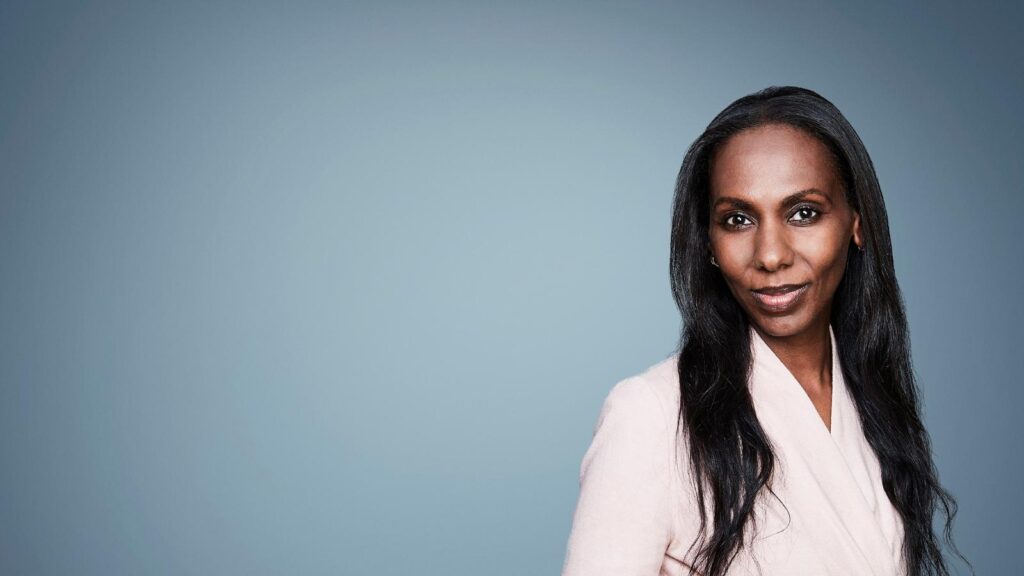
TUNISIA: Tunisian-American Astroparticle Physicist Lina Necib Wins 2023 Valley Prize for Work on Dark Matter

As a child in Tunisia, Lina Necib watched the 1997 film “Contact” and decided to become an astrophysicist. Now at MIT, she studies dark matter’s shadowy clues.

Lina Necib is on the hunt for something invisible.

“It’s a little bit like detective work,” she says. “We have a lot of observational types of evidence, and we’re trying to put all of it together into one picture.”

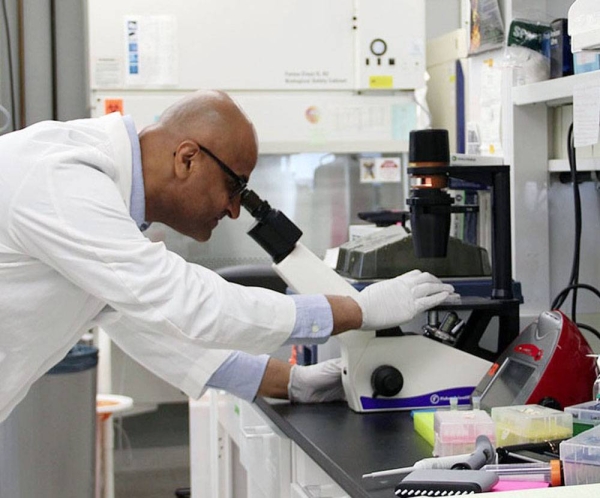
Necib, an assistant professor of physics at the Massachusetts Institute of Technology, studies dark matter, the elusive stuff that makes up most of the universe’s mass but doesn’t reflect, emit, or absorb light. For her work, Necib has won the 2023 APS Valley Prize, which recognizes early-career physicists for research expected to have a dramatic impact in the field.

In 2020, Necib and her colleagues reported their discovery of a massive stellar stream, a ribbon of stars left over when a galaxy is torn and stretched, orbiting on the outskirts of the Milky Way. Dark matter tugs at these streams, leaving behind fingerprints — evidence of its existence.

Necib believes the stream, dubbed “Nyx” after the Greek goddess of night, might be the remnant of a dwarf galaxy that collided with the much larger Milky Way billions of years ago. To study the stream, her team merged particle physics with cosmological simulations, data from star catalogs, and machine learning — a groundbreaking combination of tools. They published their results in Nature Astronomy.

Necib credits a few other physicists for her successes — “in particular, several women,” including Anna Frebel and Tracy Slatyer at MIT and Mariangela Lisanti at Princeton University.

Mentors as much as colleagues, these women helped Necib adjust to her new faculty role at MIT, which she started during the pandemic and with a newborn baby, she says.

Necib grew up in Tunisia, a small country on Africa’s northern coast, where she says she regularly faced sexist expectations for girls’ behavior and ambitions. One night, when Necib was 8 years old, her family settled in for a movie. The selection? “Contact,” starring Jodie Foster, who plays a scientist searching for aliens. The film opened Necib’s eyes not only to the field of astrophysics, but to a world in which a woman could do astrophysics.

By the end of the movie, Necib had made up her mind: “I’m going to do that!”

She set her sights on college in the U.S. As an undergraduate at Boston University, she leapt into diverse research opportunities, conducting resonance testing of graphene and even joining the search for the Higgs boson at CERN. Her interest in dark matter grew.

During her senior year, at an open house hosted by MIT’s physics doctoral program, Necib struck up a conversation with Jesse Thaler, a theoretical particle physicist. By the end of the chat, Necib knew she wanted to be at MIT.

Necib ultimately asked Thaler to be her dissertation advisor. “He was so enthusiastic about the work that he did. He loved it so much — it was kind of contagious,” she says. “Having an advisor who really put in the time and effort to help me become the physicist that I am changed my life.” Necib earned her doctorate in 2017.

Now in her second year as an assistant professor at MIT, Necib hopes to change cultural attitudes about science careers in Tunisia, where certain professions are given more weight. She wryly summarizes this ranking, starting with the best: “Doctor, engineer, lawyer, failure.”

To topple these perceptions, Necib recently teamed up with Rostom Mbarek, another Tunisian physicist and the Neil Gehrels Prize Postdoctoral Fellow at the Joint Space-Science Institute. The duo just launched an astrophysics podcast entirely in Tunisian Arabic.

In her MIT classroom, Necib strives to debunk outdated perspectives on who does physics.

“I did this experiment last year in one of my first-year physics classes where I asked my students to name physicists,” she recalls. “And all the names they came up with were Nobel Prize winners, but they were also all the same old, Albert Einstein-like examples.”

After that session, Necib had her class learn about more recent work, including the contributions of women and scientists of color to the field.

One of Necib’s “students” is particularly young. Her 17-month-old son can’t yet say “dark matter,” but he has the children’s book “Astrophysics for Babies,” and they go on excursions to Boston’s Museum of Science. He’s a bit young for the exhibits — “he’s just impressed with the escalator,” she says — but she hopes that early exposure will instill in him a love for science.

Meanwhile, her search for dark matter continues. She says that, if someone else solves the mystery of dark matter before she does, it won’t phase her. For her, being a physicist is “really about the people,” like her colleagues, mentors, and students.

“I know amazing people that are doing incredible work,” she says. “Feeling that my work is recognized fills me with so much joy. I hope to pay it forward.”

www.lnecib.com

Liz Boatman is a staff writer for APS News.

source/content: aps.org (APS News), (headline edited)

___________

Lina Necib / Credit: David Sella

__________________________

AMERICAN / TUNISIAN