Arabs & Arabian Records Aggregator. Chronicler. Milestones of the 25 Countries of the Arabic Speaking World (official / co-official). AGCC. MENA. Global. Ist's to Top 10's. Records. Read & Enjoy./ www.arabianrecords.org
Iraq is hosting the eight-nation football tournament for the first time in more than 40 years.
The Gulf Cup began with fanfare on Friday in Iraq’s southern city of Basra, sparking hopes of a bright future for the country’s embattled football prospects.
For Iraqis, hosting the biennial event will turn a new page in the troubled history of their country, boost relations with Gulf neighbours and represent a crucial move towards full national recovery.
Iraqi Prime Minister Mohammed Shia Al Sudani formally kicked off the tournament, hailing it as a “historic moment” which demonstrates “brotherhood among the Arab brothers in the Gulf”.
“Dear sport fans, thanks for your presence,” he said. “On your behalf and in the name of Iraq, we welcome the brothers, the visitors, the teams and the fans in the land in Iraq, the land of Mesopotamia and Basra.
“We wish all teams success and enjoyment to the fans.”
Mr Al Sudani was joined by Fifa President Gianni Infantino, Iraq’s Speaker of Parliament Muhammad Al Halbousi and the heads of the Gulf football federations.
As the sun set over the port city, the mood in and around Basra International Stadium was festive and electric with anticipation.
By the afternoon, more than 10,000 foreign fans had arrived in the city, located a short distance from Iraq’s borders with Kuwait and Iran, an official from Basra’s provincial government said.
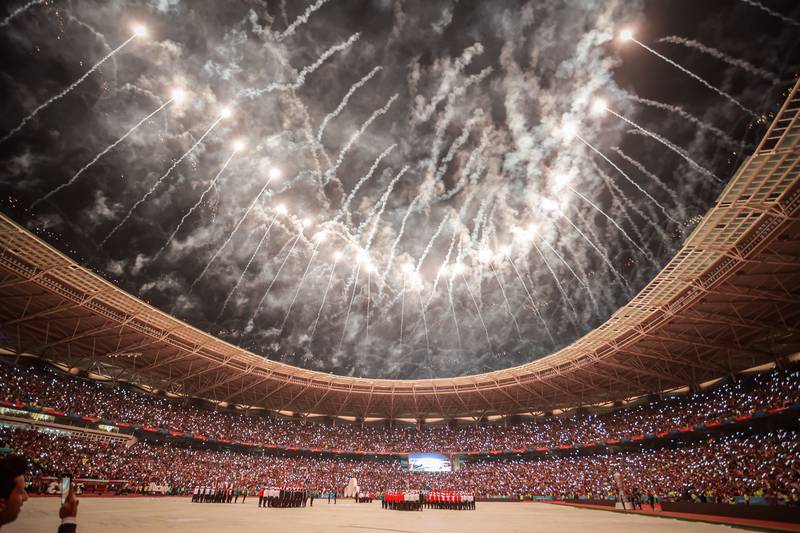
Thousands of people gathered at the stadium, known as the Trunk of the Palm, its design inspired by the southern city’s palm trees. It was filled to its 65,000-person capacity with more soaking up the atmosphere outside.
Some fans pushed the guards back at one gate, breaking into the stadium perimeter, but no large disruption was caused.
As the ceremony began, poet Hazim Jabir, actress Enas Talib, actor Jawad Al Shakarchi and singer Hussam Alrassam took to the field, dressed in elaborate costumes in a performance that told the story of the city’s rich history and culture.
Once the ceremony wrapped up, the tone in the stadium shifted from excitement to intense focus as Iraq and Oman faced off in the first game of the tournament.
Travel to the stadium before the ceremony and opening matches snarled up traffic in the city. Others walked to the stadium, waving the Iraqi flag or wrapping it around their shoulders. Songs welcoming the participating teams blared from cars.
Those who couldn’t secure tickets packed the public square to see the opening ceremony on a big screen.
“Thank God the opening ceremony was very beautiful and well organised; I didn’t expect that, to be honest,” Ali Ibrahim told The National as he joined hundreds of fans in the city’s Tayaran Square.
Mr Ibrahim, 23, and his cousin were draped in the Iraqi flag.
“We are very proud of our Basra, which has become an international city now,” he said.
“It is really amazing to see the tournament eventually kicked off after waiting so many years,” Dhirgham Amir told The National.
Mr Amir, 20, came with his brother and sister to Al Tayaran Square.
“This will definitely change how Iraq looks like to the whole world as a dangerous place ravaged with terrorism,” he said, putting his nine-year old sister on his shoulders.
“A bright future mainly in sport is waiting Iraq,” he added.
The biennial Arabian Gulf Cup first took place in 1970. The last time it was held in Iraq was in 1979, when the hosts were crowned champions. Iraq also won in 1984 and 1988.
The event features teams from the Gulf Co-operation Council countries — Kuwait, Saudi Arabia, Bahrain, Oman, Qatar and UAE — as well as Iraq and Yemen.
The most recent event was held in 2019 in Qatar and was won by Bahrain.
A bright future
“It is a step forward to retain Iraq’s normal position in the fields of sport, culture and society,” Basra Governor Asaad Al Eidani said before the start of the tournament. “It is a message to the whole world that we are capable.”
The UN Assistance Mission for Iraq echoed those sentiments.
“By hosting the cup, Iraq showcases the unifying power of sports and its ability to harbour peaceful and respectful competition. We wish Iraq and its people a successful tournament,” the agency wrote on Twitter.
The eight teams playing in the tournament are divided into two groups.
Group A consists of Iraq, Saudi Arabia, Oman and Yemen, while Group B features the UAE, Bahrain, Kuwait and Qatar.
The winners and runners-up of each group proceed to the semi-finals on January 16 — where the winners of Group A play the runners-up of Group B, and the Group B winners take on the runners-up from Group A.
On January 19, the winners of the semi-finals meet in the Gulf Cup final.
Fireworks light up the sky over the Basra International Stadium during the opening ceremony of the 25th Arabian Gulf Cup in Basra, southern Iraq, on Friday, January 6. Getty
A team from the King Abdullah University of Science and Technology and Al-Hasa-based Palms and Dates Center has been awarded the 2022 International Date Palm Innovative Technology Excellence Prize.
Presented by the National Center for Palm and Dates, the award was made in recognition of the team’s fiber-optic distributed acoustic sensor, which is used in the early detection of red palm weevils in date palm trees.
Tackling infestations of red palm weevils has been a long-standing problem across the Middle East, Southeast Asia, Europe and other parts of the world.
The winning team comprised Dr. Islam Ashry, Dr. Chun Hong Kang and Prof. Boon S. Ooi from the KAUST Photonics Laboratory and Dr. Yousef Alfehaid and Eng. Abdulmonem Alshawaf from the PDC, which operates under the Ministry of Environment, Water and Agriculture.
HIGHLIGHTS
• Infestations of red palm weevils a major problem across the Middle East.
• Researchers from KAUST-PDC collect $53,000 in prize money.
As well as the prestige, the team collected SR200,000 ($53,000) in prize money. The award was announced at the 3rd International Dates Conference and Exhibition, which ran from Dec. 7-10 in Riyadh. Their design beat off the challenge of 65 other submissions for the prize.
Ashry said the team was honored to have won such a prestigious award and paid tribute to his colleagues at the Photonics Laboratory and the PDC who helped in the development, testing and deployment of the technology.
“This recognition motivates us to continue improving, optimizing and advancing this technology to a new level,” he said.
According to the NCPD, the event provided “a unique combination of scientific research and commercial strategy to exchange scientific knowledge and innovative technologies to enhance the safe production and commercialization of these extraordinary super-fruits.”
The Kingdom is home to some 33 million date palm trees, producing about 1 million tons of dates a year, or 20 percent of global production. In the Middle East region alone about $8 million is spent every year fighting infestations of weevils.
“Our RPW-detecting technology uses a fiber-optic distributed acoustic sensor,” Ashry said. “It is the first of its kind and offers a more scalable approach (than) other detection methods, such as microphone probe, computer-based tomography and visual inspection.”
Kang said the team’s system used fiber-optic cables wound around individual tree trunks.
“Acoustic signals generated by the weevil larvae inside a trunk can be picked up by the cable and transmitted back to an interrogator system,” he said.
“The collected signals are then analyzed and processed through a machine learning algorithm to identify each tree’s infestation status.”
Ashry and Kang are now working with various organizations within the Kingdom, including the PDC, MEWA, NEOM, the Royal Commission for AlUla and the Tabuk Agricultural Development Co., on the deployment of their technology.
These test applications will help to improve the sensitivity of the sensor systems so they can be used on large-scale farms.
“Our research efforts align well with … Saudi Vision 2030 in terms of diversifying the economy, especially for the date palm sector,” Ashry said.
Ooi said: “Our technology offers a unique and low-cost solution to protect the large number of date palm trees in the country through early infestation detection.”
source/content: arabnews.com (headline edited)
____________
(L to R): KAUST Research Scientist Dr. Islam Ashry and Prof. Boon S. Ooi receive the 2022 International Date Palm Innovative Technology Excellence Prize from the NCPD on behalf of their team. (Supplied)
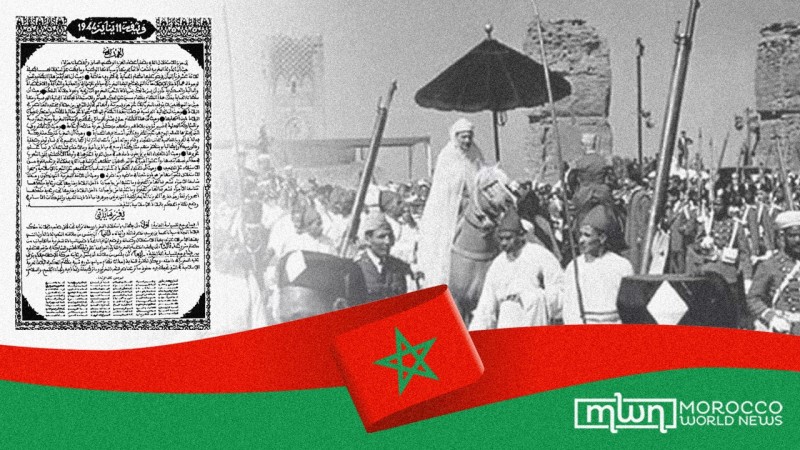
Published on January 11, 1944, the Independence Proclamation laid the groundwork for generations of Moroccan nationalist claims against French and Spanish occupation.
Every January 11, Moroccans celebrate Morocco’s Independence Proclamation or the Independence Manifesto, commemorating the bravery of Moroccans who signed a manifesto to urge colonists to leave their Moroccan lands.
On January 11, 1944, dozens of Moroccan nationalists signed the manifesto that called for the country’s full independence and sovereignty over its territories occupied by foreign powers.
A turning point for Moroccan nationalism
Seen as a turning point in Morocco’s history, the proclamation was signed in consultations with the late Sultan Mohammed V, the grandfather of King Mohammed VI, to demand Morocco’s full-throated independence from French and Spanish colonizers.
Following the Sultan’s review, the document was presented to colonial authorities and to the representations of three countries: the US, UK, and the former Soviet Union.
The manifesto documented Morocco’s eagerness to continue its fight against colonizers, stressing the importance of the country’s right to exercise national sovereignty and self-determination.
It also shed light on the strong ties between the throne and the Moroccan people, a sizable majority of whom were ready and eager to sacrifice their lives for their homeland, causing panic among French colonial authorities and troops.
Demonization and oppression campaign
Following the publication of the manifesto, French authorities tried to pressure Sultan Mohammed V into condemning the proclamation. Having failed in their bid to get the Sultan to disown the leaders of Moroccan nationalism, the colonial authorities resorted to organizing a purge and demonization campaign, accusing Moroccan nationalists and intellectuals of spying for Nazi Germany.
Withstanding this campaign of oppression and intimidation from colonial forces, both the Sultan and Moroccan nationalists continued their fierce struggle to defend the country’s legitimate right to independence and self-determination.
In response, French authorities forced the Sultan into exile to Corsica along with his family members on the eve of Eid al-Adha, in August 1953, and then to Madagascar in 1954.
The goal was to shatter Morocco’s dreams of independence, but forcefully exiling their legitimate Sultan only intensified Moroccans’ eagerness for national sovereignty and resilience against colonial oppression.
The decision to send the Sultan to exile was thus greeted with more nationwide uproar and frustration, with waves of nationalist protests demanding the return of the Sultan and his family amid the continued struggle for national independence.
The pressure was strong enough to force French colonizers into agreeing to the return of Sultan Mohammed V to Morocco on November 16.
A few days after his return, the Moroccan delivered a speech announcing the end of the trusteeship and protectorate system and “the advent of freedom of independence.”
The speech was excitedly celebrated across Morocco, laying the groundwork for Moroccan independence from France on March 2, 1956.
That same year, Morocco recovered Tangier and other parts of the northern regions from Spanish rule.
The following years, especially in 1959, 1969, and 1975, Morocco further reclaimed its territorial integrity with the withdrawal of Spain from the Tarfaya, Sidi Ifni, and Saqia al Hamra, and Oued Eddahab regions in the country’s southern provinces.
Continued Struggle
Seven decades after gaining independence from France and nearly five decades after reclaiming its southern provinces from Spanish rule, Morocco’s struggle for independence is still ongoing in the face of separatist challenges in the southern provinces known as Western Sahara.
After Mohammed V passed away, his son, the late King Hassan II, continued the fight for full-fledged territorial integrity. The King famously organized and oversaw the resounding success of one of the most famed milestones of Moroccan nationalism: Al Massira El Khadrae or the Green March in November 1975.
The Green March contributed to the full withdrawal of Spain from southern Morocco after the late monarch made a televised speech calling on Moroccans to mobilize to liberate the Moroccan Sahara.
“We have to do one thing, dear people, and that is to undertake a peaceful march from the north to the east, and from the west to the south. It behooves us to act as one man in order to join the Sahara,” King Hassan II said in his speech. Thousands of Moroccans were galvanized by the speech and participated in the Green March.
As Morocco celebrated the 47th anniversary of the Green March last year, King Mohammed VI highlighted the importance of the March’s legacy and the critical need for Morocco to fully reclaim its southern provinces.
In his speech on the occasion, King Mohammed VI called on Moroccans of all walks of life to continue to be “faithful to the spirit of the Green March and to its everlasting oath.”
As Moroccan sovereignty continues to be challenged by the Polisario Front, a separatist group financed and armed by Algeria, Moroccans have to remain mobilized and vigilant in order to “defend Morocco’s unity and achieve greater progress,” the monarch stressed.
Sharjah HQ of waste management operator Beeah aims to lay foundations for a greener future.
A striking Sharjah building in the shape of a sand dune is primed to be a beacon of sustainability and serve as a fitting legacy for renowned architect Zaha Hadid.
The headquarters of waste management operator Beeah was the last project designed by Zaha Hadid before her death in 2016.
Her team constructed a modern masterpiece across 9,000 square metres, using sustainable materials to create a building with 40 per cent of its power provided by the sun.
Illuminated, sweeping staircases take visitors up to an art gallery on the first floor, with screens showing a time-lapse video to explain the building’s five year construction.
Now open to full capacity of 500 workers, the building is breaking new ground in how to provide a sustainable working environment.
Green vision
“We aim to operate as sustainably as possible, and used recycled materials in the construction of the building,” said Nada Taryam, managing director of Beeah HQ, which manages waste management across the country.
“Native plants have been used in the landscaping and reduced the amount of water consumption.
“A power pack stores excess energy from the photovoltaic panels, so we have a holistic strategy to achieve sustainability.
“Every project has its own specific requirements when energy comes into play, but the basis on which we have built this design can be learnt from.
“All of these sustainability measures can be taken and applied to other projects.”
The building’s high thermal mass allows heat to be absorbed during the day and dissipated at night to encourage cooling, while its curved structure allows the flow of natural sunlight to reduce the energy required for lighting.
An artificial intelligence system enables the building near the Alsajaa industrial area to learn to become more efficient as more people use it.
Its developers say it conforms to the highest standards of energy efficiency in the world.
Windows are positioned to reduce solar glare, while special glass cuts radiant thermal energy to keep the building cooler during summer.
While the glass limits the entry of infrared and ultraviolet light, solar panels supported by Tesla-made battery packs capture the power of the sun and store it to run the building’s air conditioning system.
The building’s components and management systems are integrated to maintain and improve its efficiencies.
Conference rooms are equipped with technology to automatically transcribe meeting minutes and email them to participants.
The building is the third in the UAE to be designed by Zaha Hadid architects, following the Sheikh Zayed Bridge, opened in Abu Dhabi in 2010, and The Opus hotel and apartments complex opened in Business Bay, Dubai, in 2018.
“As it learns from its occupancy, this building could potentially become one of the most sustainable buildings in the UAE,” said Ms Taryam.
“Certain decisions were taken, such as using glass reinforced panels on the ceiling which refract the sunlight so contribute to its efficiency and temperature control.
Defying convention
“There is a misconception about what these kind of buildings should look like, and we have defied that.
“There isn’t a rule book to say green buildings should be lined with solar panels. We have proved we can integrate architecture as well as sustainability to create something iconic.
“Zaha Hadid has something that distinguishes her from any other architect of her time. Every project of hers has its own context, but her ideas are adapted for each specific project.”
The headquarters of Sharjah waste management operator Beeah was the last project designed by Iraqi architect Zaha Hadid before her death in 2016. All photos: Andrew Scott / The National
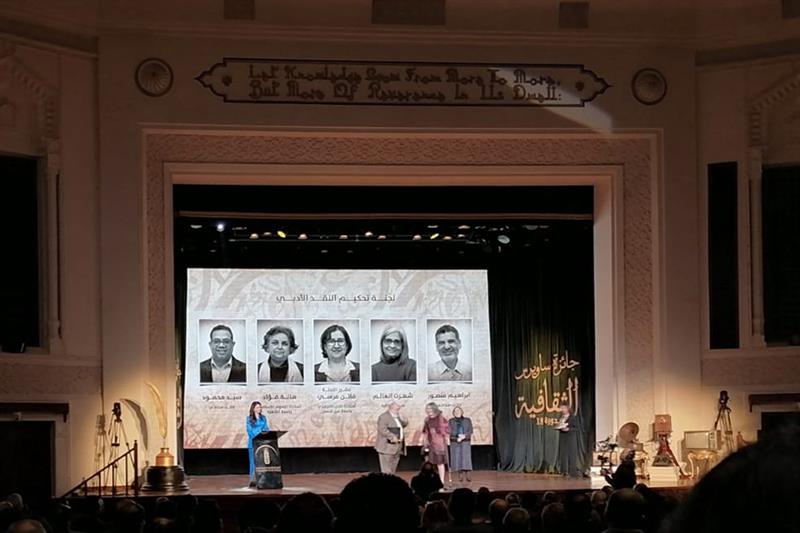
Why doesn’t the crocodile fly? : Meet the winners of Sawiris’ 18th Cultural Award, celebrated on 08th January 2023.
The annual event was held at Ewart Memorial Hall of the Tahrir Cultural Center, downtown Cairo.
The event was attended by many cultural and literature figures and artists and included a performance by the popular musical troupe Masar Igbari.
A New Prize
The event kicked off at 7 pm with a short speech by movie star Mahmoud Hemeda, followed by a mini-documentary celebrating 20 years of Sawiris Foundation’s contribution to social development through influencing the lives of about 700,000 people throughout Egypt.
Renowned Doctor and scholar Mohamed Abul-Ghar, member of the award’s board of trustees, introduced a special prize that went to the posthumously released book of late journalist Mohamed Abul-Gheit, titled ” I am Coming, Light”. Prominent writer Mohamed Shoeir, deputy of Akhbar El-Adab magazine, was the one who suggested that the prize go to Abul-Gheit’s book even though it hadn’t been on the list of entries for the competition. Abul-Gheit had been a celebrated journalist who passed away this December after a battle with cancer. The prize, which is worth EPG 150,000, will be given to his wife and child.
Children Books
The prize for Best Children’s book under 12 years old was a tie between writer Ahmed Korany’s book Lemaza La yateer Al Timsah (Why Doesn’t the Crocodile Fly?), illustrated by Nemma Zidan, and writer Ashraf Abul-Yazid’s book Qetati Toalef Ketaba ( My Cat Writes a Book).
Critic and Narrative books
The prize for Best Critic and Narrative writings was also a tie between renowned poet Bahaa Jaheen, for his book Al Molk Wal Malek (The Creation and Creator), and writer Magdy Gergis for his book Al-Moalem Ibrahim Al-Gohary.
Play Script
The first prize for best play script went to playwright Ahmed Nabih for his play Nozhet El-Sindbad fi Dawayer Baghdad (Sinbad’s Voyage in the Circles of Baghdad). The second prize for best play script went to playwright Emad Motawaa for his play Mosiqa Hadiaa (Soft Music).
Screen Play
The prize for Best Screenplay, youth section, went to screenwriter Mohamed Al-Samman for his script Ardioon (Earth People).
The prize for Best Screenplay, older generation, went to screenwriters Ahmed Hawari and Ibrahim Al-Battout for their script Hekayet Risha w Samaka (The Story of a Feather and a Fish)
Best Novel and Short stories
The first prize for best Novel and Short stories, youth section, went to writer Mohamed Sorour for his short stories Thalath Fekhakh le Zeab Awar (Three Traps for a One Eyed Wolf). The second prize for best Novel and Short stories, youth section, went to writer Mohamed El-Barmy for his short stories Lel Mohebein Wal Awghad wa Qotaa Al Toroq ( For the Lovers, the Bastards and the Villains)
The first Prize for best Novel, youth section, went to novelist Sharl Aql for his novel Ahmar Lareng (Larenge Red ).
The second Prize for best Novel, youth section, went to novelist Ahmed Ibrahim Ismail for his novel Abu Gamea.
The first prize for Novel and Short stories, older generation, went to novelist Shady Louis for his novel Tarikh Mogaz lel Khalifa wa Sharq Al Qahera (A Brief History of Al Khalifa District and East Cairo). The novelist, however, announced later last night that although grateful for winning such an award, he will give it back.
The second prize for Novel and Short stories, older generation, went to writer Ahmed Abdel-Latif for his short stories The Kingdom of Mark Zuckerberg and his Fictional Birds.
The official names for the new minerals are elaliite and elkinstantonite.
Canadian researchers said the rock was found in rural Somalia two years ago, but locals believe it is much older.
They call the stone Nightfall, and say it is documented in poems, songs and dances that stretch back five generations. It is used today to sharpen knives.
A huge meteorite that fell to Earth contains two minerals never seen before on our planet, scientists say.
Canadian researchers said the rock was found in rural Somalia two years ago, but locals believe it is much older.
They call the stone Nightfall, and say it is documented in poems, songs and dances that stretch back five generations. It is used today to sharpen knives.
The official names for the new minerals are elaliite and elkinstantonite.
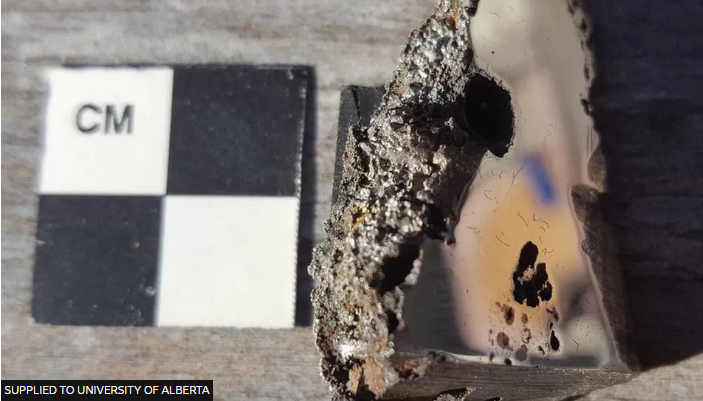
They were identified by scientists at the University of Alberta who looked at a 70g fragment from the 15-tonne meteorite, which is said to be the ninth-biggest to reach our planet and is about 90% iron and nickel.
The name “elaliite” honours the fact that the meteorite was unearthed in the district of El Ali in Somalia, and “elkinstantonite” is named after Nasa expert Lindy Elkins-Tanton.
“Lindy has done a lot of work on how the cores of planets form, how these iron nickel cores form, and the closest analogue we have are iron meteorites. So it made sense to name a mineral after her and recognise her contributions to science,” said Prof Chris Herd who curates the University of Alberta’s meteorite collection.
A third, as-yet unidentified mineral, is being analysed by the university’s researchers who now hope to get their hands on more of the meteorite – not only to see what else they might discover, but also how it could be used on Earth.
“Whenever there’s a new material that’s known, material scientists are interested too because of the potential uses in a wide range of things in society,” Prof Herd said of the “exciting” research.
source/content: the-star.co.ke (Star) / BBC News, Africa (headline edited)
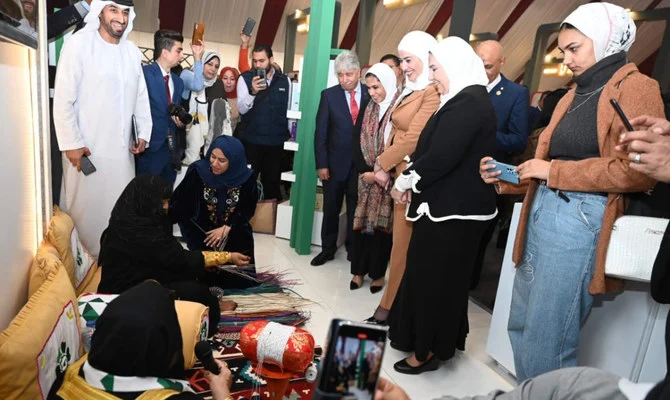
The first Arab exhibition for productive families, Bayt Al-Arab (House of the Arabs) opened in Cairo in the presence of Ahmed Aboul Gheit, the Arab League secretary-general, and several Egyptian and Arab officials, including a high-ranking Saudi delegation.
The products at the exhibition reflect the identity of the 12 participating Arab countries.
It offers an important opportunity to learn about the richness of the cultures of these countries in craftwork and handicrafts in order to protect these industries from extinction.
The number of participants featuring at the exhibition is about 150, of which 70 are Egyptian and 80 from other Arab countries.
The exhibition, which continues until Jan. 11, opens areas for the exchange of expertise between craftsmen, producers and exhibitors.
Saeed Al-Zahrani, head of the Saudi delegation, shared with the audience at the opening ceremony a number of success stories, and said the participation of the Social Development Bank aimed at supporting and empowering micro-enterprises for family businesses, which are considered a fundamental pillar of the Kingdom’s Vision 2030.
At the Saudi pavilion, visitors were drawn to the heritage products of various regions of the Kingdom, such as Al-Sadu weaving, Al-Qat Al-Asiri, and the manufacture of Al-Masleh, in addition to the products of many Saudi family businesses displayed within the Tagseed (incarnation) initiative, which is marketed for home projects in all international and local exhibitions.
Nevin Al-Kilani, Egypt’s culture minister, said that the participation of dozens of families from Egypt and the Arab world was “the best evidence of Egypt’s keenness to support heritage both locally and regionally.”
Raef Al-Khouli, an official involved in the organization of the exhibition, told Arab News: “The Arab House exhibition in the Dome Palace is a wonderful opportunity to visit because there are many handicrafts from all Arab countries, which are sold at very reasonable prices, because all who are present are the owners of the profession or craft, and are not merchants.”
At the entrance, Al-Khouli said, visitors can register their names and phone numbers, and will receive entry for free, taking a dedicated bus to the exhibition venue.
Al-Khouli added: “At the Saudi pavilion there is a wonderful medal that the visitors can buy. It is a commemorative medal for the door of the Kaaba and the door of the Prophet’s Mosque.
“On the sidelines, there is a large theater and artistic performances are held in it throughout the day,” Al-Khouli said, adding that visiting families could bring children as well, because there is a play area and many drawing and coloring activities.
source/content: arabnews.com (headline edited)
___________
The first Arab exhibition for productive families, which continues in Egyptian capital Cairo until Jan. 11, opens areas for the exchange of expertise between craftsmen, producers and exhibitors. (Supplied)
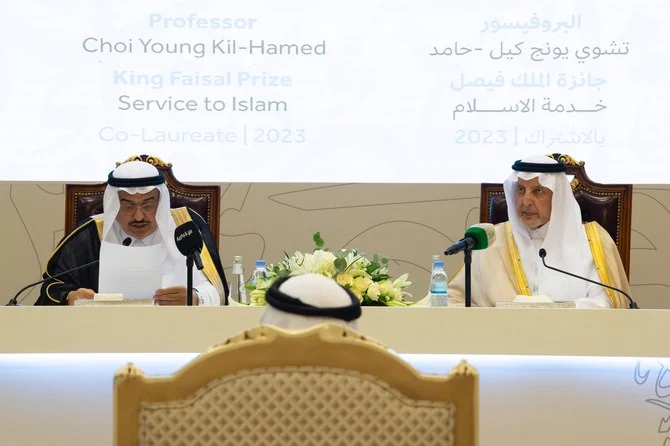
An Emirati, a Moroccan, a South Korean, two British, and three Americans are among those to have won the King Faisal Prize for 2023.
In its 45th edition, the prestigious award recognizes COVID-19 vaccine developers, nanotechnology scientists, and eminent figures in each of its Arabic Language and Literature, Islamic Studies, and Service to Islam categories.
Announcing the winners on Thursday, the King Faisal Prize General Secretariat said: “The selection committees of the 2023 King Faisal Prize, after meticulous deliberations that were held from Monday to Wednesday (Jan. 2-4, 2023), have reached the decisions for the prize’s five categories: Service to Islam, Islamic Studies, Arabic language & Literature, Medicine, and Science.”
The King Faisal Prize for Service to Islam 2023 is awarded jointly to Shaikh Nasser bin Abdullah of the UAE and Prof. Choi Young Kil-Hamed from South Korea.
The King Faisal Prize for Islamic Studies for 2023, on the topic of Islamic architecture, is awarded to Prof. Robert Hillenbrand from the UK.
This year’s King Faisal Prize for Arabic Language and Literature, on the topic of classical Arabic narrative and modern theories, is awarded to Morocco’s Prof. Abdelfattah Kilito.
The King Faisal Prize for Medicine for 2023, focusing on pandemics and vaccine development, is awarded jointly to Prof. Dan Hung Barouch from the US and Prof. Sarah Catherine Gilbert from the UK.
The King Faisal Prize for Science for this year in chemistry is awarded jointly to Prof. Jackie Yi-Ru Ying and Prof. Chad Alexander Mirkin, both from the US.
This year, two female scientists were announced winners of the King Faisal Prize in the Medicine and Science categories. The woman behind the Oxford–AstraZeneca COVID-19 vaccine, Prof. Gilbert, who is the Said chair of vaccinology at the Nuffield Department of Medicine at Oxford University, co-created the jab, which has been used in more than 180 countries, saving countless lives due to its efficiency, low cost, and accessibility.
Prof. Ying is the senior fellow and director at NanoBio Lab, Agency for Science, Technology, and Research.
She is a professor at the Massachusetts Institute of Technology and was chosen for her work on the synthesis of various advanced nanomaterials and systems, and their applications in catalysis, energy conversion, and biomedicine.
The King Faisal Prize was established in 1977. Since then, 275 recipients from 43 countries have been honored, of whom 21 have gone on to win a Nobel Prize. This year’s awards will be presented at a ceremony later in 2023.
The prize was granted for the first time in 1979 in three categories: Service to Islam, Islamic studies, and Arabic language and literature. Two additional categories were introduced in 1981: Medicine and science. The first medicine prize was awarded in 1982, and in science two years later.
source/content: arabnews.com (headline edited)
___________
King Faisal Prize General Secretariat announced King Faisal Prize winners for 2023. (Supplied)
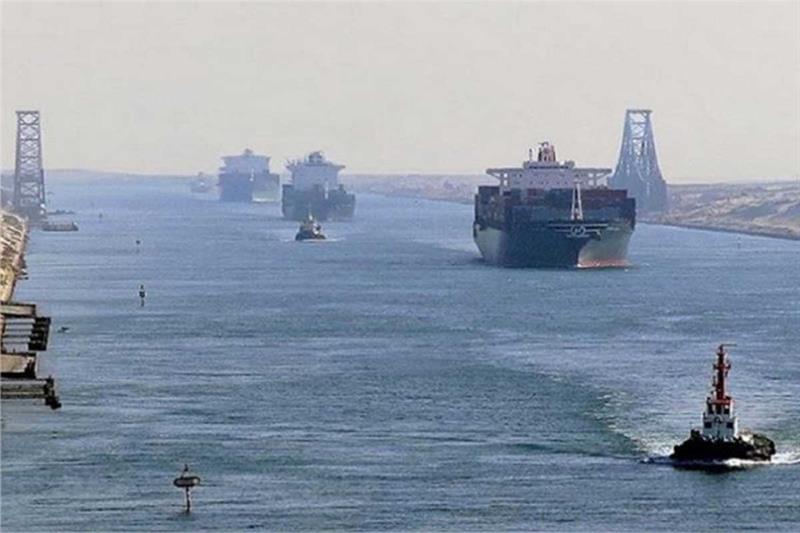
Egypt’s Suez Canal Authority (SCA) was named as the best Arab government institution in the second edition of the Arab Government Excellence Award.
SCA Chairman Osama Rabie received the award on Thursday during a ceremony held at the Arab League (AL) premises in Cairo to announce the winners of Arab Government Excellence Awards.
This Arab competition is organised under the auspices of Sheikh Mohammed bin Rashid, the ruler of Dubai and Prime Minister of the UAE.
The 72-kilometre-long Suez Canal – which connects the Mediterranean and the Red Seas – is the shortest maritime route between Asia and Europe and is the fastest crossing from the Atlantic Ocean to the Indian Ocean.
Around 12 percent of the world’s trade passes through the canal.
The world’s longest man-made canal without locks is one of Egypt’s main sources of foreign currency.
In 2022, the Suez Canal’s revenue hit a record $7.9 billion, up from $6.3 billion in the previous year.
The total number of vessels that crossed the canal this year reached 23,400, up from 21,700 in 2021.
Meanwhile, total cargoes that crossed the canal this year hit a record high of 1,420 billion tons, up from 1,220 billion tons in 2021.
The Egyptian Ministry of Communications and Information Technology was also picked as the best Arab ministry
In our continuing series on inspiring life stories across continents, we learn what made her leave a career in medical science for a ‘cuisine lab called the kitchen’.
When Lamees Ibrahim left Baghdad in the 1970s, certain parts of the city, not least the riverside strip of fish restaurants along Abu Nawas, became a fixed ideal in her memory.
After an interval of three decades, a return to the flat bank of the Tigris in 2004 was an unexpected low point in a thoroughly disturbing homecoming.
The street once the “pomegranate of Baghdad” was no longer filled with diners being entertained by poets and musicians, engulfed in the aroma of arguably Iraq’s national dish, masgouf.
Instead, Dr Ibrahim stood shaken as she took in a rubble-strewn wasteland populated by a handful of struggling fish sellers.
Yet one sense was still powerfully triggered by the fresh carp grilling over the charred wood.
“It was not in very good shape,” she tells The National. “There were only bits of its old self left, but the smell was still amazing. There are certain scents that you smell and you think, ‘Wow, this is Baghdad.’ It is very, very specific. If you enjoy samak masgouf once, you will never forget it.”
Dr Ibrahim had made a long, hazardous journey from her home in London, where she moved decades earlier: marrying, earning a PhD in Pathology, raising four children.
Her husband was with her as she set out from Jordan in a car just after Fajr prayers that day, to “feel” her land, see her extended family, and show her eldest child, Maysa, her ancestral roots.
But the Baghdad conjured up by the smell of the barbecued fish was gone; the deserted, bombed-out streets were not at all familiar to her. They did, however, bring back one particularly strong recollection from childhood.
Sometimes in the summer months, the young Lamees would gather with her three siblings around their father to be regaled by stories about Iraq.
“I remember one day when he said: ‘Look, we built this country, the Iraqis, and we have to keep doing that. If every one of us contributed their own brick then the wall would go up and up, and we should keep on building.’ I never forgot that,” Dr Ibrahim said, “and I felt that we had to add our little brick to the wall. We had to make Iraq keep going.”
She returned to London on a mission to help rebuild Iraq in some way for the younger generations that would never have a chance to experience what it had been in the golden years.
The need to describe the country’s rich history and accomplishments was urgent, but whatever she put down on paper seemed inextricably tied to cooking. So it was that she came to realise it would be through food that she could preserve connections to things past.
“I wanted to write something, I needed to write, I had to write,” she says. “So I started. Eventually, it became a cookbook with a bit of history and anecdotes about culture, about civilisation.
“My background has nothing to do with cooking. It’s not cuisines of any kind, but I have a passion for Iraq. It’s my motherland, my country.”
When the 21-year-old Lamees had come to London in the early 1970s, it was to pursue a postgraduate medical degree at King’s College and then head back to her beloved Baghdad. Soon after arriving, she married and her life, she says, became busy but limited as she immersed herself in studying and research projects.
“You go to college, you study, you attend lectures, you come home, you open the books, read, read, read, have some dinner, and go back to college,” she says.
“I didn’t know that I was homesick until one day during Ramadan I saw an elderly woman going into King’s College Hospital with her black abaya and veil. I said to her ‘marhaba hajji’ and she was shocked. She hugged me, and I went home, crying all the way.
“I cried because I had a goal. I wanted to get a degree, and the sooner I got it, the sooner I could go back home. Unfortunately, that didn’t happen.”
She was haunted by her homeland, by such memories as the heady perfume of jasmine and the days in her youth when the children would pick the flowers and turn them into long necklaces.
But the months turned into years, and years into decades. At first, returning to Baghdad was difficult as the academic successes mounted and her family grew. It became impossible when Saddam Hussein came to power, with Dr Ibrahim fearing that she would be detained were she to attempt a visit, and never see her three daughters and son again.
Her father died and then, on news of the death of her mother, Dr Ibrahim made the fateful trip when she found a country that was “not what I was expecting, of course. It was demolished, devastated.”
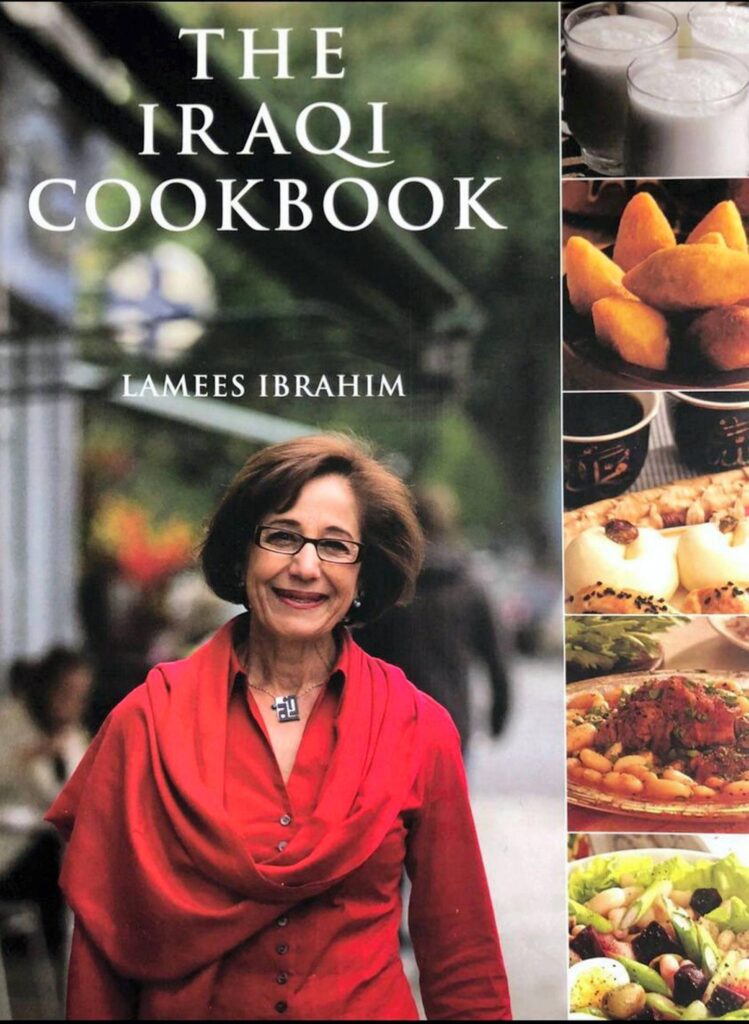
The resulting homage, The Iraqi Cookbook, was published in 2009, a labour of love with the name of each dish painstakingly recorded in Arabic. Samak masgouf, of course, features, and Dr Ibrahim advises in the foreword that all visitors to Iraq should try it in one of the cafes and restaurants on the bank of the Tigris.
“I came back to London with one idea in mind, which is something that as a girl I grew up to learn,” she says. “I must do something for my country. I need to tell my children what my country is like, our history, our culture, our ability to do what we did in the old days.”
She is speaking by Zoom from her home in Richmond-Upon-Thames, her voice at times faltering and cracking with emotion as she talks about dedicating herself to bringing Iraq to the diaspora.
“Iraq to me is very important, very important,” Dr Ibrahim says. “It is in my blood. It’s in my genes. It’s my history.”
The book sold out in the UK and the US, and was reprinted by popular demand. Bit by bit, the time-consuming process of writing and re-writing, working with publishers and photographers, the press interviews had taken Dr Ibrahim away from her career in pathology.
“And I never went back,” she says. “I’m still very interested. I read a lot about Covid. I follow the research, but I’m not going back to that lab. I have a cuisine lab called the kitchen.”
With the emergence of the pandemic, Dr Ibrahim revisited experiments that she had begun as a teenager when she would try to make her mother’s recipes without meat. Sometimes it was successful, she acknowledges, sometimes not.
As a child, though, she had never been as fond of lamb as her siblings were. The family cat adored her, loitering under the table at lunchtimes for the morsels of the daily stew that Lamees would sneak down to her.
During lockdown, her own children became “guinea pigs” for her avant-garde creations as Dr Ibrahim collected together an array of vegan offerings that would appeal to a young audience interested in preserving the planet.
“Dishes don’t need to have meat to have the taste and flavour, for it to smell like an Iraqi dish,” she says. “Iraqi cooking can be vegan, as well as meat and fish-centric.
“If you can preserve the taste of the flavour of the dish, go for it. Many Iraqi dishes are, in fact, vegan but we ate them before ever knowing the word ‘vegan’.”
When one of Dr Ibrahim’s friends called to see how she was faring with the tight coronavirus restrictions in the capital, she told him she had been busily cooking all the recipes to be photographed for The Iraqi Vegan Cookbook. Curious, he wanted to know whether she was including any kubba, knowing that Dr Ibrahim had devoted an entire chapter to its many meaty variants in her first book.
On learning that the new book would contain Kubbet Jeriesh, Kubbet Halab and another recipe that Dr Ibrahim made from lentils, he answered: “Only three?”
His grandmother, he said, had never enjoyed meat in her kubba so the family reinvented the dish to suit her preferences, stuffing the shells with pine nuts, onion, spices and parsley.
“If all these years ago we had vegan Iraqis, we have plenty today,” Dr Ibrahim says, smiling.
The Iraqi Vegan Cookbook had been due out on December 31, but the release has been delayed not least because of the queues of hauliers that built up in Calais and Dover as a result of Brexit and the French shutdown of the border when the new strain of the coronavirus emerged in the UK.
Rescheduled for release at the end of January, Dr Ibrahim hopes that sharing more of the oldest cuisine in the world will counter some of the negative perceptions that persist about Iraq today.
“Iraq is positive,” she says. “Iraq is full of history, full of culture. This is the cradle of civilisation. I don’t like to talk about what’s going on now. I would like to talk about the positivity of all of our achievements.
“I feel nowadays, if I add that little brick, then I have added something which I would be proud of as an Iraqi living in the West. Living in Iraq, we can build from within. We are living in the West – all my children are also living in the West, but we add our bricks from our side, from outside the country.”
Dr Ibrahim is modest about her contribution to the wall that her father told her about all those years ago, hesitating to use the word achievement. If her writing can be described as such, she says, she wants to make clear that it was never about her. It was always for Iraq.
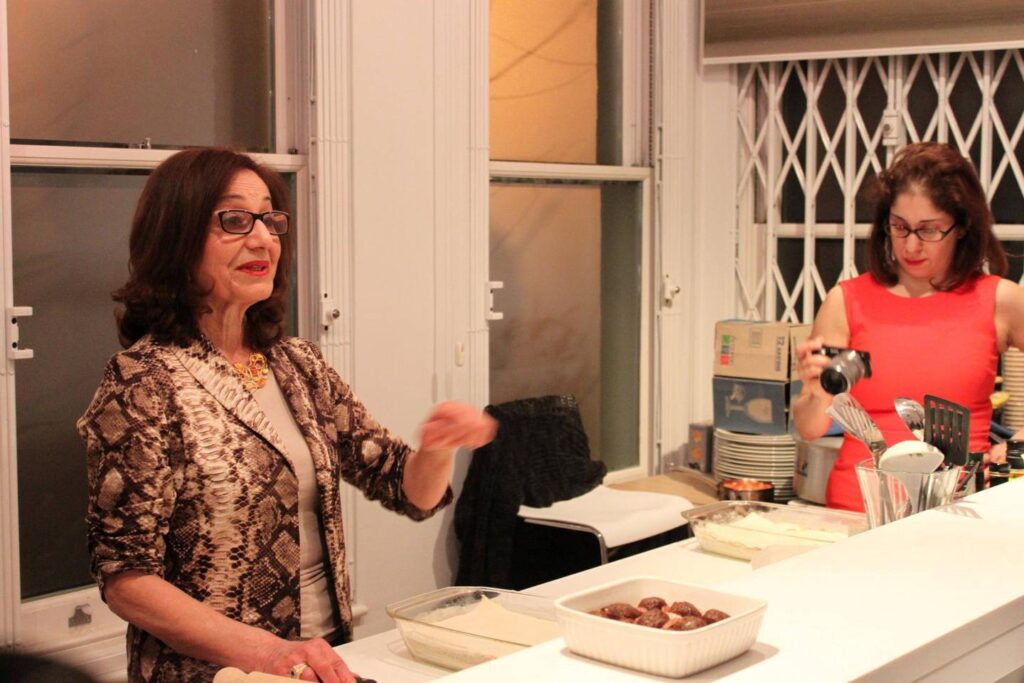
Dr Lamees Ibrahim has dedicated herself to bringing the country of her birth to the diaspora: ‘Iraq is very important to me. It is in my blood. It is in my genes. It is my history,’ she says. Courtesy of The Mosaic RoomsThe homage to Dr Ibrahim’s homeland, ‘The Iraqi Cookbook’, was published in 2009, a labour of love with the name of each dish painstakingly recorded in Arabic. Courtesy Lamees Ibrahim