Arabs & Arabian Records Aggregator. Chronicler. Milestones of the 25 Countries of the Arabic Speaking World (official / co-official). AGCC. MENA. Global. Ist's to Top 10's. Records. Read & Enjoy./ www.arabianrecords.org
The Sheikh Zayed Book Award (SZBA) of the Abu Dhabi Arabic Language Centre (ALC), part of the Department of Culture and Tourism – Abu Dhabi (DCT Abu Dhabi), has revealed the longlists for its 17th edition (2022/2023) in the Literature, Children’s Literature, and Young Author categories.
The announcement was made as the SZBA judging committees begin the evaluation process for all the longlisted entries.
The Young Author category saw 954 submissions this year, an increase of more than 8 percent from the 881 received last year. The Young Author recorded the highest growth in number of submissions among all categories, and now accounts for 30 percent of total nominations across all categories.
The Literature category received 688 submissions this year, ranking second in terms of submissions, while the Children’s Literature category saw 386 participations, up nearly 63 percent from the 236 submissions registered last year.
The Children’s Literature category received 12 submissions from nine Arab countries: UAE, Saudi Arabia, Egypt, Lebanon, Syria, Jordan, Bahrain, Kuwait, and Iraq. These included:
“La Ahad Yal’ab Ma’ai” (No One Plays With Me) by Mohammed Alohaly from Saudi Arabia, issued by Al Hudhud Publishing and Distribution in 2022.
“Lu’bat al-Nujoom” (The Star Game) by Afra Mahmood from the UAE, issued by Al Hudhud Publishing and Distribution in 2022.
“Min al-Fajr ila al-Ghuroob maa’ Toyour Ghabat Alkharuwb” (From Dawn to Dusk with the Birds of the Carob Forest) by Flora Majdalawi from Jordan, issued by Majdalawi Masterpieces Books in 2022.
“Mala Narah” (What We Don’t See) by Shaima Alwatani from Bahrain, issued by Afkar for Culture & Publishing in 2021.
“Aba’at Abi” (My Father’s Gown) by Basemah Alwazzan from Kuwait, issued by National Council for Culture, Arts and Literature in 2022.
“Jaddi wa al WhatsApp” (My Grandfather and WhatsApp) by Parween Habib from Bahrain, issued by Dar Al Saqi in 2022.
“lastu Wahedan” (I Am Not Alone) by Rami Tawil from Syria, issued by Dar Al Saqi in 2021.
“Rabieon Samet” (Silent Spring) by Razan Al Naeemy from Iraq, issued by Qindeel printing, publishing & distribution in 2022.
“Abhathu an Shai’”(I Am Looking for Something) by Sahar Naja Mahfouz from Lebanon, issued by Dar Kiwi Stories in 2022.
” Einstein: Asrar Alkoutaa 99” (Einstein and the Secrets of the 99th Element) by Sharif Saleh from Egypt, issued by Wow for Publishing & Educational Services in 2022.
“Rehla Dafeaa Molawana” (A Colourful Warm Journey) by Doha Jawad from Syria, issued by Dar Ashjar Publishing & Distribution in 2020.
“Al Sorra Al Ajeebah” (The Wonder Bundle) by Nadia AlNajjar from the UAE, issued by Alfulk Translation & Publishing in 2022.
The longlist for the Young Author category ranged from theses to literary works and included 12 titles, submitted from eight Arab countries: Tunisia, Egypt, Algeria, UAE, Iraq, Oman, Lebanon, and Saudi Arabia. The works on the longlist are:
“Madeeh Al Ikhtilaf: Derasat fi Falsafat Al Ketabawa Siasat Alhawiya ” (Praise of Difference: Studies in the Philosophy of Writing and Identity Politics) by Mohamed Bekkaye from Algeria, issued by Al Rawafed Culture and Nadim Edition in 2022.
“Al Khetab Al Kasasi fi Ayyam Al Arab fi Al Jahileya: Kiraah Tadawouleyah Hijajeyah (Narrative Discourse in the Days of Arabs in the Pre-Islamic Era: A Pragmatic and Argumentative Examination) by Dr. Abdessattar Al Jamai from Tunisia, issued by Dar Kunouz Al-Marefa Publishing & Distribution in 2021.
“Al Badawi Al Abiad” (The White Nomad) by Mutaz Albader from Saudi Arabia, issued by Dar Al Tanweer Publishing & Printing in 2021.
“Aroos Al Kamar, Hekayat Al Holm Al Afriki” (The Comoros Bride: An African Dream Tale) by Mohammad Tarazi from Lebanon, issued by Arab Scientific Publishers Inc. in 2021.
“Al Wahl wa Al Noujoom” (Dirt and Stars) by Ahmad Lutfi from Egypt, issued by Aseer AlKotb in 2022.
“Al Tajreeb fi Al Khetab Al Sheary Al Emarati Al Mouaaser” (Experimentation in Contemporary Emirati Poetic Discourse) by Dr. Hessa Abdulla Al Ketbi from the UAE, issued by Sharjah Department of Culture in 2021.
“Haraket Alfadh Al Hadarh Al Arabieyah min Bayan Al Jahedh to Aked iben Abd Rabbeh” (The Movement of Words in the Arab Civilization: From the Statement of Al Jahiz to the Unique Contract of Ibn Abd Rabbeh) by Dr. Ali bin Hamad Al Riyami from the Sultanate of Oman, issued by Alaan Publishers & Distributors & The Omani Society for Writers & Literati in 2022.
“Nehayat Al Sahra’a” (The End of the Desert) by Said Khatibi from Algeria, issued by Hachette Antoine / Nofal in 2022.
“Fawka Jisr Al Joumhoureyah” (Over the Republic Bridge) by Shahid Alrawi from Iraq, issued by Dar Alhikma Publishing & Distribution in 2020.
“Al Belad Al Tounnouseaya fi Oyoun Al Rahhalah Al Alman” (Tunisia in the Eyes of German Travelers (1535-1881 AD) by Dr. Atef Salem from Tunisia, issued by Editions Arabesques in 2021.
“Naqd Al Naqd Wa Tajalleyatoh Fi Al Tourath Al Nakdi Wa Al Balaghi Al Arabi” (Criticism of Criticism and Its Manifestations in the Arabic Rhetoric and Critical Heritage) by Dr. Issam Benchellel from Algeria, issued by Difaf Publishing & El-lkhtilef Publishing in 2021.
“Fareedah Wa Sedi Al Mathloum” (Farida and My Oppressed Master) by Heba Ahmad Hassab from Egypt, issued by Al Mahrousa Center for Publishing, Press Service, and Information in 2021.
As for the Literature category, 12 titles made it onto the longlist by novelists, writers and poets representing eight countries: Egypt, Morocco, Syria, Tunisia, Saudi Arabia, Lebanon, Sudan and Iraq. The titles are:
“Almer: Akhtam Al Madeenah Al Fadelah: (Almer: Seals of the Utopian City) by Abdelillah Benarafa from Morocco, issued by Dar Al Adab Publishing & Distribution in 2022.
“Hijab Al Saher” (A Magician’s Veil) by Ahmed Al Shahawi from Egypt, issued by Al-Dar Al-Masriah Al-Lubnaniah in 2022.
“Aseer Nish: Rakan bin Falah bin Hethlain” (Prisoner of Nish: Rakan bin Falah bin Hethlain) by Ahmed Hamad AlSubait from Saudi Arabia, issued by United Takween Group Press, Publishing & Distribution in 2022.
“Rasasa fi Al Raas” (A Bullet in the Head) by Ibrahim Issa from Egypt, issued by AlKarma Books in 2021.
“Hourrass Al Houzn” (Guardians of Sadness) by Amir Tag Elsir from Sudan, issued by Hachette Antoine / Nofal in 2022.
“Al-Qata’i: Thoulatheyat Ibn Tulun” (Al-Qata’i: Ibn Tulun’s Trilogy) by Reem Bassiouney from Egypt, issued by Nahdet Misr Publishing in 2022.
“Abnaa Hura” (The Sons of Hura) by Abdelrahim Kamal from Egypt, issued by AlKarma Books in 2021.
“Ifrah ya Qulbi” (Rejoice, My Heart) by Alawiya Sobh from Lebanon, issued by Dar Al Adab Publishing & Distribution in 2022.
“Ila Ayn Ayyathouha Al Kaseedah” (Whereto, O Poem? An Autobiography) by Ali Jaafar Alallaq from Iraq, issued by Alaan Publishing in 2022.
“Antakia Wa Molouk Al Khafaa” (Antioch and the Kings of Secrecy) by Lina Hawyan Alhasan from Syria, issued by Dar Al Tanweer Publishing & Distribution in 2021.
“ Moujazafat Al Aref” (Knowledgeable Risk) (Poetic Work) by Mohammed Ibrahim Yaghob from Saudi Arabia, issued by Tashkeel Publishing & Distribution in 2022.
“Kullo Aoushbaten Sawtouha wa Kullo Ghaimaten Kathalek” (To Every Grass Leave Its Sound, and to Every Cloud as Well) (Poetic Work) by Mohamed Ghozi from Tunisia, issued by Contraste Editions in 2022.
The Sheikh Zayed Book Award will soon be announcing the longlisted titles for the remaining categories in the 17th edition.
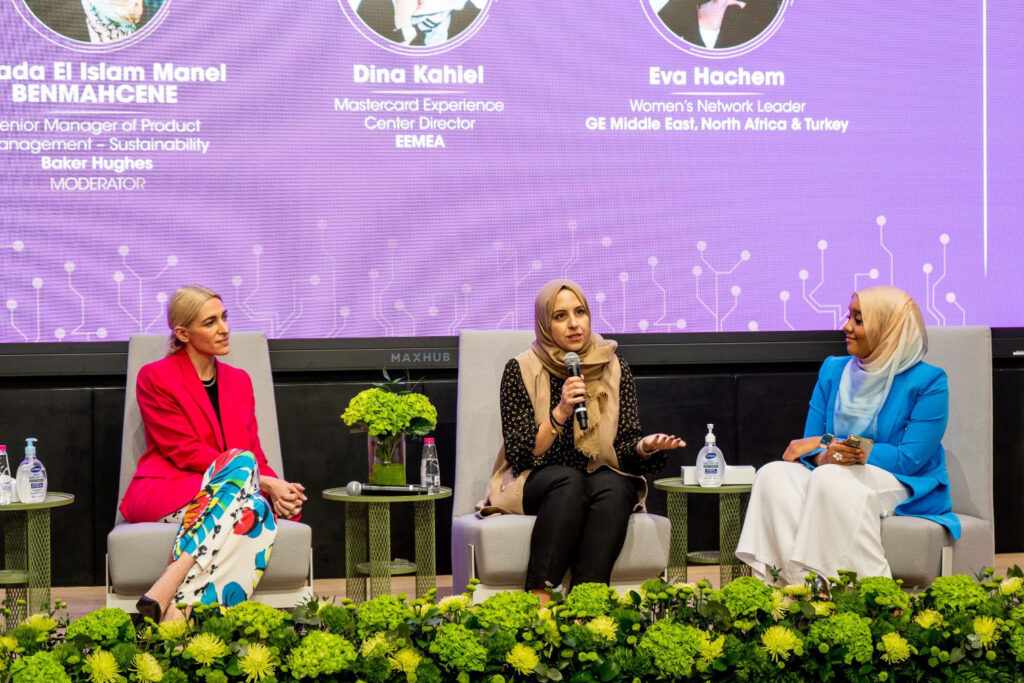
Ohood bint Khalfan Al Roumi, Minister of State for Government Development and The Future, honoured the winners of the Women in Tech MENA Awards, during a ceremony held in partnership between the Sharjah Research, Technology and Innovation Park (SRTIP) and Women in Tech.
The award, which is one of seven regional awards covering various areas of the globe, celebrates talented women from around the world who innovate, inspire and transform the technology sector.
Held under the theme, “Women in Green”, the event was attended by Hussain Al Mahmoudi, CEO of STRIP, and several leading experts, entrepreneurs and the award’s female nominees.
The awards were introduced by Ayumi Moore Aoki, Founder and CEO of Women in Tech, who affirmed the need to increase the presence of women in technology.
The eight winners were:
-The Uplifting Syrian Women Initiative in the Most Impactful Initiative Award;
-Fatma Atawna, CEO of Siraj in the Best Ally Award;
-Aida Kandil, CEO of MyTindy in the Start-up Award;
-Wesam Sarhan, Co-Founder of Colibri Care in the ID and E Disruptor’s Award;
-Mirna Arif, Country General Manager of Microsoft in the Global Leadership Award;
-Dr. Fatmah Boothman, Associate Professor at the King AbdulAziz University in the Lifetime Achievement Award;
-Amna Usman Choudhry, Financial Economist and Strategist for Blockchain at Metaverse and Web 3.0 in the Woman in Web3 Award
– Uditi Sharma, Founder and Executive Director in the Aspiring Teen Award.
Al Roumi highlighted the key role of women in shaping the future of technology, noting that the UAE has devoted significant attention to empowering women to actively engage in shaping the future of vital sectors, especially the technology sector.
She also highlighted the UAE’s pioneering experience in empowering Emirati women in technology, as they account for 56 percent of Emirati government university graduates in science, technology, engineering and mathematics (STEM).
Al Roumi added that the Women in Tech Award recognises women who lead the technology sector and inspires other women to actively participate in this vital sector, stressing that the partnership between the Sharjah Research, Technology and Innovation Park and Women in Tech is a leading model of global partnerships aimed at encouraging women to participate in various fields of technology.
She also congratulated the winners of the award’s eight categories and commended their achievements, which reflect the overall capacities of women and inspires other women to strive for excellence in the technology sector.
In his welcome address, Al Mahmoudi said, “Hosting the Women in Tech MENA Awards is a milestone moment for us, because it reflects our deep commitment to gender equity and women’s empowerment. We are happy to say that more than 50 percent of the SRTIP workforce are women, some holding senior positions in technology, engineering and labs. Our commitment is also evident in our scheme for women entrepreneurs at SRTIP, under which we grant them subsidies and special benefits.”
“To make the Women in Tech MENA Awards a memorable event, we have lined up high-profile speakers who will enhance the prestige of the event with their insights and shared experiences. The keynotes and panels will offer a rich harvest of ideas, which would go a long way in promoting women’s empowerment in the UAE and the region,” he added.
Panel discussions held before the presentation of the awards provided interesting insights into the role of women in technology. The panel on “Gender equity and climate change, an intersectional approach to sustainability” explored how women and other underserved groups are disproportionately impacted by the global climate crisis, and are uniquely positioned to help achieve sustainability. The panel’s participants were Nadia Mannell, General Partner at Seed South Capital; Geraldine Wessing, Chief Political Analyst at Shell; Cecelia Carlsward, Founding Partner at Violet Hill and Co, and Tatiana Abella, Founder and Managing Director of Goumbook FZE.
A second panel on “Driving inclusion through innovation” discussed how the MENA region is driving innovation while considering human diversity and building inclusive economies.
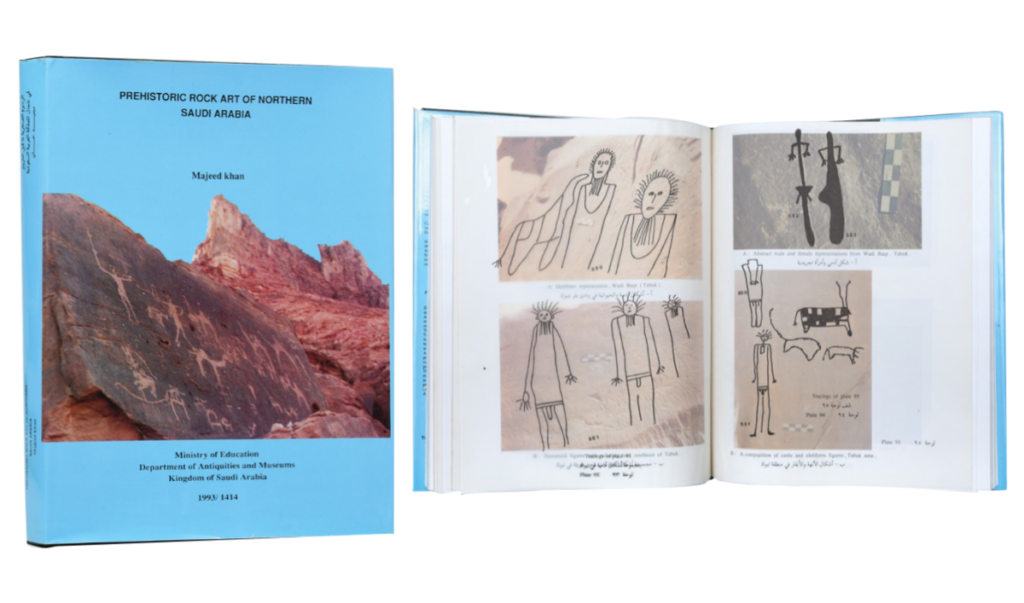
Rare first-edition copy of “Prehistoric Rock Art of Northern Saudi Arabia” was on sale at Sharjah International Book Fair
There was little or no recognition of the Kingdom’s ancient past before Majeed Khan’s book was published in 1993
In May 1976, Majeed Khan, a young graduate of the University of Sindh, Pakistan, traveled to Saudi Arabia to join the Ministry of Tourism as an archaeological consultant, advising on the development of museums and the conduct of archaeological investigations in the country.
It was to prove an inspired appointment.
Back then, with Saudi Arabia riding the wave of the first great oil boom and focused necessarily on its rapidly evolving future, archaeology in the Kingdom was in its infancy.
But in Khan the country had found a champion for one of its greatest heritage treasures — ancient rock art, thousands of examples of which are strewn across the landscape and which attest to a history of human culture that stretches back 10,000 years.
Khan, who lives in Riyadh, and at the age of 80 still works as a consultant to the Ministry of Culture’s Antiquities Department, has devoted his entire working life to a subject that continues to fascinate and surprise him to this day.
He received another surprise last month when he learned that his seminal book, “Prehistoric Rock Art of Northern Saudi Arabia,” published by the Saudi Ministry of Education’s Department of Antiquities and Museums in 1993, was now considered a collector’s item.
A first-edition copy was offered for sale for £1,250 ($1,448) by a specialist London book dealer at the UAE’s Sharjah International Book Fair, which ran from Nov. 2 to 13.
That, Khan felt, was a lot of money. But on the other hand, “it was the first research book on rock art published in any Arab country,” he said. At the time it came out, “there was no rock art taught in any Saudi university and no real rock art research in Saudi Arabia.”
Furthermore, there was little or no recognition in the wider world of Saudi Arabia’s ancient past — a past that is now being embraced enthusiastically as the backbone of major tourism projects, such as AlUla and Diriyah, designed to bring in millions of visitors a year to the Kingdom.
For example, in the supposedly comprehensive 1998 Cambridge Illustrated History of Prehistoric Art, published in 1998, there was not a single mention of Saudi Arabia — an oversight that would be dramatically exposed by Khan’s work.
To describe Khan as a pioneer in his field is to understate the impact he has had on the understanding of the extent and importance of the ancient past of the Kingdom.
Over the past four decades he has published dozens of research papers. The first, which he co-authored, was on “The Lower Miocene Fauna of Assarrar, Eastern Arabia,” published in Atlal, the Journal of Saudi Arabian Archaeology, in 1981.
His first book, which came out in 1993, shortly before his groundbreaking work on the prehistoric rock art of Saudi Arabia, was “The Origin and Evolution of Ancient Arabian Inscriptions,” also published by the Ministry of Education.
But it was to petroglyphs that he would devote the greater part of his energies, an academic commitment that in 2015 culminated in the rock art in the Hail region of Saudi Arabia being inscribed by UNESCO as a World Heritage Site.
Along with two colleagues from the then-named Saudi Commission for Tourism and Antiquities, Jamal Omar and vice-president Prof. Ali Al-Ghabban, it was Khan’s name that appeared on the nomination text that saw the twin sites near Jubbah and Shuwaymis in the northern province of Hail recognized by UNESCO as being of “outstanding universal value.”
As Khan told Arab News in January 2021, “it was for me the most emotional moment of my 40 years of research.”
Not that he is resting on his laurels. Hail is not the only region in Saudi Arabia where rock art can be found, and “these days I am working on the rock-art site of Hima, Najran, to see it, too, placed on the UNESCO World Heritage List.”
There are more than 2,000 rock-art sites around Saudi Arabia. But the greatest concentration of Neolithic petroglyphs, or rock carvings, and the oldest known examples, dating back 10,000 years, is to be found in the north of the country at two sites 300 kilometers apart in the Hail Province.
The ancient forebears of today’s Saudis had no paper, pens, or written language with which to record their time on earth.
But with the rocks of their dramatic landscapes as their canvas, thousands of years ago the ancient peoples of the land that would become Saudi Arabia found a way to leave their mark on history, with an astonishing pictorial representation of a now forgotten world, painstakingly pecked, chiseled and engraved out of the sandstone rocks of the region.
The first of the two Hail sites is at Jabal Umm Sinman, a rocky outcrop to the west of the town of Jubbah, some 90 kilometers northwest of the city of Hail and 680 kilometers from the capital, Riyadh.
The town’s origins date back to the dawn of Arab civilization, when the hills of Umm Sinman overlooked a freshwater lake, which eventually would be lost beneath the sands of the surrounding Nefud desert some 6,000 years ago.
It was on these hills, in the words of the UNESCO nomination document co-authored by Khan, that the ancestors of today’s Saudi Arabians “left the marks of their presence, their religions, social, cultural, intellectual and philosophical perspectives of their beliefs about life and death, metaphysical and cosmological ideologies.”
The rock art of Jubbah, said Khan, “represented all phases of human presence from the Neolithic, 10,000 years before the present, until the recent past,” and reflected a time when the climate and landscape were very different from today.
Etched upon the rocks, often at mysteriously inaccessible heights, are the trappings of a lost world: A parade of dancers, long-forgotten gods and goddesses, mythological figures, half-human, half-beast, and animals including sheep, ibex, camels, horses, wolves, ostriches and — reflecting a time when prey roamed abundant on the once lush plains of Arabia — lions.
“The type of animals (pictured) suggested changes in climate and environment,” said Khan. “Large ox figures indicated a cool and humid climate, while the absence of ox figures and the appearance of camel petroglyphs represented hot and dry conditions..
“Both at Jubbah and Shuwaymis this change in fauna and flora clearly represented gradual but drastic change in society and climate in the prehistoric and pre-Islamic era.”
Importantly, he said, similarities in themes and depictions in other parts of the world, including Africa, India, Australia, Europe and America, showed that “Saudi Arabia was part of world heritage and cultural traditions.”
Like other peoples around the world, “ancient Arab artists were drawing the animals with which they were living and depicting their social activities, like dancing and religious rituals.”
The second of the twin Hail sites is at Jabal Al-Manjor and Raat, 220 kilometers southwest of Jubbah near the village of Shuwaymis. Remarkably, its treasures were discovered only 20 years ago, a remarkable story in which, naturally, Khan played a leading role.
In 2002, Aramco World, the magazine of the Saudi national oil company, reported that in March the previous year a bedouin grazing his camels had stumbled on strange marks on a remote cluster of rocks. He happened to mention his find to a teacher from the local town of Shuwaymis. He alerted the authorities and they called in Khan.
“Yes, the story is correct,” Khan said. “I met both the bedouin and Mr. Saad Rawsan, the director of archaeology in the Hail region, who took us to the sites for further investigations and research.”
Together, he discovered, the twin sites told the story of over 9,000 years of human history, from the earliest pictorial records of hunting to the development of writing, religion and the domestication of animals including cattle, horses and camels.
As the UNESCO documents record, these sites justify their inscription on the World Heritage List because they feature “large numbers of petroglyphs of exceptional quality attributed to between 6,000 and 9,000 years of human history, followed in the last 3,000 years by very early development of writing that reflects the bedouin culture, ending in Qur’anic verses.”
Furthermore, the Jubbah and Shuwaymis sites comprise “the world’s largest and most magnificent surviving corpus of Neolithic petroglyphs.”
Neolithic rock art is found at many locations across Eurasia and North Africa, “but nowhere in such dense concentration or with such consistently high visual quality” as in this remote part of northwestern Saudi Arabia.
Peter Harrington, the London specialist book dealer that brought Khan’s book to Sharjah for the book fair, described it as “a pioneering monograph … the first and sole edition of this seminal work, which addresses a hitherto neglected subject, challenges the received wisdom that influences in rock art in the region originated from Mesopotamia, the Levant, and the Nile Valley, helped to put the Kingdom’s ancient past on the map of modern knowledge, and paved the way to the listing in 2015 of the rock art of the Hail region as a UNESCO World Heritage site.”
“I am extremely surprised to see the cost of my book,” Khan said after Arab News broke the news to him of the price being asked for the out-of-print volume at the Sharjah International Book Fair, although he had some news of his own.
“The ministry is printing it again.”
That, however, is unlikely to prove a deterrent for collectors always keen to snap up rare first editions of books dealing with the region’s history — and there are few histories as fascinating as that of the rock art of Saudi Arabia, and few books as significant in the growing appreciation of the Kingdom’s past as Khan’s 30-year-old volume.
The 44th CIFF’s closing ceremony took place on the stage of the Cairo Opera House on Tuesday evening.
Awards of the 44th Cairo International Film Festival are as follows:
International Competition
The Golden Pyramid Award Alam by Firas Khoury (France, Tunisia, Palestine, Saudi Arabia, Qatar)
The Silver Pyramid Award, Special Jury Award, for Best Director Love According to Dalva by Emmanuelle Nicot (Belgium, France)
The Bronze Pyramid Award For Best First or Second Feature Bread and Salt by Damian Kocu (Poland)
Naguib Mahfouz Award For Best Screenplay A Man (Japan), screenplay by Kosuke Mukai
Best Actor Award Maher El Khair for his role in The Dame by (France, Lebanon, Sudan, Qatar, Germany, Serbia)
Best Actor Award Mahmoud Bakry for his role in Alam (France, Tunisia, Palestine, Saudi Arabia, Qatar)
Best Actress Award Zelda Samson for her role in Love According to Dalva (Belgium, France)
Henry Barakat Award for Best Artistic Contribution (Awarded to the Cinematographer) 19B, cinematography by Mostafa El Kashef (Egypt)
The Horizons of Arab Cinema Competition
Saad Eldin Wahba Award for Best Arabic Film Mother Valley by Carlos Chahine (France, Lebanon)
Salah Abu Seif Award Riverbed by Bassem Breche (Lebanon, Qatar)
Best Non-Fiction Film Award Far From the Nile by Sherief Elkatsha (Egypt, USA)
Best Acting Performance Award Carole Abood for her role in Riverbed ( Lebanon, Qatar)
Special Mention for Film I’m Coming Home by Yassine Redissi (Tunisia)
Special Mention for Best Actress Lyna Khoudri for her role in Houria (France, Belgium)
International Critics’ Week Competition
Shadi Abdel Salam Award for Best Film PAMFIR by Dmytro Sukholytkyy-Sobchuk (Ukraine, France, Poland, Chile, Luxembourg)
Fathy Farag Award Joyland by Saim Sadiq (Pakistan)
Special Mention Victim by Michal Blaško (Slovakia, Czech, Germany)
Short Film Competition
Youssef Chahine Award for Best Short Film Rosemary A.D. (After Dad) by Ethan Barrett (USA)
The Special Jury Award My Girlfriend by Kawthar Younis (Egypt)
Special Mention One F*cking Wish by Piotr Jasiński (Czech)
Special Mention Riverbed by Bassem Breche (Lebanon, Qatar)
CIFF Cash Awards
Best Arab Film Award (USD 10,000) 19B by Ahmad Abdalla, Produced by Mohamed Hefzy (Egypt)
Youssef Chahine Award for Best Short Film (EGP 10,000) Rosemary A.D. by Ethan Barrett (USA)
Youssef Cherif Rizkallah Award (Audience Award, USD 15,000) Alam by Firas Khoury produced by Marie Pierre Macia, Claire Gadéa and distributed in Egypt by Mad-Solutions (France, Tunisia, Palestine, Saudi Arabia, Qatar)
At least eight Somali American women won races in Tuesday’s U.S. midterm elections, results show.
Ilhan Omar, the most prominent Somali American politician, held on to her U.S. House of Representatives seat in Minnesota’s 5th Congressional District. This will be the third term for Omar, who was first elected in 2018.
In Minnesota state races, Zaynab Mohamed was elected to the Senate, becoming the first woman of Somali descent elected to the chamber, according to MPR News. Meanwhile, Hodan Hassan defended her seat in the state House of Representatives.
Other Somali American women running for offices in Minnesota were victorious, including Fathia Feerayarre, who won a seat on the Minneapolis Public Schools board.
In neighboring North Dakota, Hamida Dakane also made history, becoming the first woman of Somali descent elected to the state House. Born in northeastern Kenya’s Somali region, Dakane, who won Fargo’s District 10, came to the U.S. in 2011.
In Maine, Deqa Dhalac, who made history last year as the first Somali American mayor for a U.S. city, South Portland, has now been elected to the state House after handily defeating Republican opponent Michael Dougherty. Mana Abdi, who was running unopposed for a seat representing Lewiston, Maine, joins her in the House.
In Ohio, Munira Abdullahi and Ismail Mohamed, a man, won seats in the state House. Minnesota and Ohio have among the largest Somali American populations in the U.S.
Speaking to her supporters Tuesday night, Omar highlighted the significance of victories achieved by Somali American women.
“There was a time when we believed that women with a hijab could not get elected,” she said. “Tonight, Minnesota is electing three new women who are wearing hijab. That shows if you trust in yourself, if your people trust you, stand with you, everything is possible.”
Mohamed, one of the hijab-wearing Minnesota winners, expressed hope that more Somali Americans will run for office.
“I’m very happy with this victory tonight, thank God,” she told VOA Somali. “This is a victory for me, for my family and for the Somali people. God willing, a lot of men and women will follow me and will come through.”
Shukri Olow, who lost a state House seat outside Seattle, Washington, told VOA Somali that she was inspired to run by the women before her, including Omar, Hassan and Dhalac.
In an interview with VOA Somali, Dhalac confirmed that when she visited Washington in 2018, Olow asked her questions about running for office.
“She said she wanted to run for the open seats in her area or seats that will be open in the future in Washington state,” Dhalac recounted. “I encouraged her to do it. Many women say we will do this, we will do this tomorrow, we will do this next year. I said to her, if you want to compete, just do it.”
The success of Somali American female candidates in the U.S. eclipses that of female aspirants for elected office in Somalia.
Female politicians in Somalia are so disenfranchised that in 2016, Somalia’s federal and regional leaders had to start allocating a specific quota of seats in parliament. But women still were never given the opportunity to get the 30% quota promised.
In 2016, Somali women occupied 24% of the 329 seats in the two houses of parliament. In 2022, female candidates secured only 20%, well short of the 30% quota.
Fawzia Yusuf Haji Adam, the only female presidential candidate in the May 15 presidential election, got just a single vote — her own.
“I did not get the support I’m sure [Somali American women] are getting when they stand [for office], because here the culture and other factors are causing a lack of encouragement [for women],” she said.
Adam welcomed the success of Somali American women.
“This is a victory for Somali women in the diaspora,” she said. “I congratulate them, I encourage them, and we are proud of them.”
She said women in the diaspora, including those in the United States, Europe, and Canada, have opportunities that women in Somalia do not have.
“What made it possible is, first, the places they live in, where men and women are viewed equally, where they get encouragement from the schools, from the university, and from the parents, and they can see achievements by other women,” she said.
“Over there, the neighborhood they live in is going to elect them when they see the person is trustworthy, honest, working and clean. White and Black would vote for that.”
Harun Maruf contributed reporting from Washington.
source/content: voanews.com (headline edited)
___________
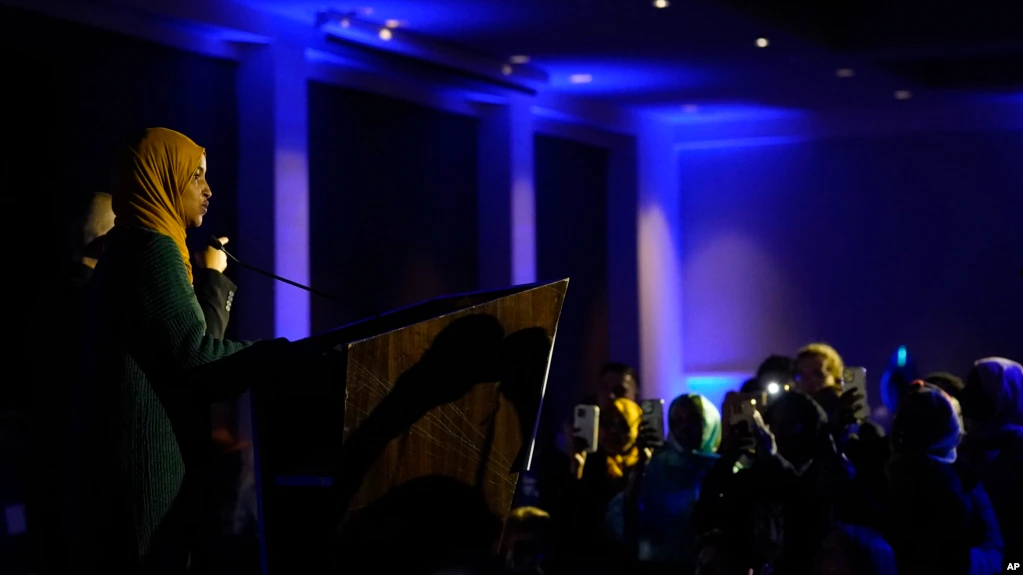
Democratic Congresswoman Ilhan Omar speaks to supporters at an election night party after winning reelection early Wednesday morning, Nov. 9, 2022, in St. Paul, Minnesota.
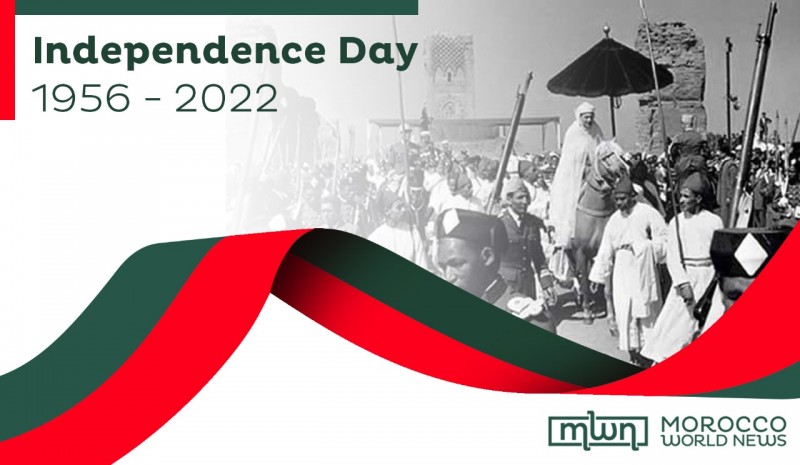
November 18: A Reminder of Morocco’s Long Fight for Independence.
The day marks a celebration of Moroccan bravery in the face of the French and Spanish colonial regimes.
On November 18, Moroccans will celebrate the 67th anniversary of Morocco’s independence. The date, which once commemorated King Mohammed V’s ascension to the throne in 1927, celebrates nowadays the country’s long fight for freedom and independence against the French and Spanish protectorate.
The colonial history dates back to March 30, 1912, with the signing of the Treaty of Fez, laying the foundation for the French protectorate and the division of Moroccan territories between Paris and Madrid with Spain controlling the northern and southern provinces with the exclusion of Tangier, which became an international zone in 1923.
However, Tangier’s special status was temporarily revoked between June 14, 1940, and August 31, 1945, as Spanish dictator and general Francisco Franco occupiedthe international zone.
As for the Ceuta and Melilla enclaves, they have remained under Spanish control since the 17th and 15th centuries, respectively.
A fierce fight
Since the establishment of the French and Spanish protectorate regimes in Morocco, local communities led numerous revolutionary missions fighting back the expansion of the colonial forces.
The establishment of the Republic of the Rif by Abdelkrim al Khattabi in 1921 and its continuity until 1926 strongly reflected the Moroccan will for independence. Despite being defeated by the Spanish Army of Africa with the support of French forces, the republic remained a prominent example of Moroccan-led resistance movements.
In November 1925, the Moroccan nationalist movement was initiated to put an end to the oppressive colonial regimes. The movement was instrumental in voicing Moroccan demands in not only urban and rural centers but also on the international stage.
In January 1944, 66 members of the Moroccan national movement signed the country’s Manifesto of Independence and presented it to the French and Spanish colonial authorities, as well as representations of the US, Great Britain, and the Soviet Union.
The manifesto was a turning point in Morocco’s struggle for independence. Aware of the threat that the declaration represented to the continuity of the French protectorate in the North African country, French colonial forces worked on pressuring Sultan Mohammed V to condemn the proclamation, while leading a purge of Moroccan nationalists and intellectuals and accusing some of the signatories of spying for Nazi Germany.
This was a time when Muslim and Jewish nationalists were discussing the prospect of establishing a modern and free Morocco that can equally celebrate both communities and reverse discriminatory measures forced by colonial authorities such as the Berber Dahir and Vichy’s anti-Jewish policies.
Despite facing fierce oppression from French colonial forces, the Moroccan nationalists continued to voice their demand for self-determination.
The movement further worked in coordination with Sultan Mohammed V to obtain freedom. The Sultan’s calls for independence eventually led to his forced exile along with his family members on the eve of Eid al-Adha in August 1953 to Corsica, and then to Madagascar in 1954.
The Sultan’s forced exile fueled public uproar with many nationalists organizing protests and calling for the return of the Sultan and his family as well as the right of the people to self-determine their fate.
Faced with rising pressure from the Moroccan public for independence, France allowed the return of Sultan Mohammed V to his homeland on November 16, 1955.
Two days later, the monarch delivered an iconic speech, stating, “We are delighted to announce the end of the trusteeship system and protectorate and the advent of freedom and independence.”
Incomplete independence
By late 1955, Mohammed V agreed to the gradual restoration of the country’s territorial integrity in line with agreements reached with France.
On March 2, 1956, Morocco officially gained independence from the French regime. That same year, Morocco re-integrated Tangier and the northern part of Morocco that was under Spanish rule.
However, the Ceuta and Melilla enclaves, as well as the country’s south remained under the Spanish regime at the time.
Morocco gradually recovered its territorial integrity in the south with the withdrawal of Spain from Tarfaya in 1958, Sidi Infni in 1969, and Saqia al Hamra and Oued Eddahab region in 1975.
A significant part of the Moroccan recovery of southern territories was led by the late King Hassan II (1961-1999) who orchestrated the Green March that contributed to the full withdrawal of Spain from southern Morocco.
After over six decades of fighting for independence, Morocco regained the majority of its territories with the exception of the Ceuta and Melilla enclaves that remain under Spanish rule.
The country’s southern provinces, known as Western Sahara, are also subject to disputes with the eastern neighbor and the Polisario Front, a self-proclaimed separatist group challenging Morocco’s territorial integrity and sovereignty of the region.
Today, Rabat continues to defend its territorial integrity in international gatherings with the support of friendly states.
With the biggest show in football 24 hours away, Arab News takes a look at the 12-year journey to make Qatar 2022 happen.
The first FIFA World Cup to take place in the Arab world will kick off Sunday in Doha when the host nation take on Ecuador in the tournament’s opening match at Al-Bayt Stadium.
The journey from winning the nomination on Dec. 2, 2010 to the big kick off on Nov. 20, 2022 has not been without challenges and controversies, but for the teams and fans who have landed in Qatar, and for millions around the world, the moment of truth has arrived.
As in Russia four years ago, there will be four Arab nations taking part in the tournament. This time around they are Qatar, Saudi Arabia, Morocco and Tunisia.
Qatar and Saudi Arabia are among a record six Asian Football Confederation members taking part, along with Japan, South Korea, Iran and Australia.
Of the Arab nations, Qatar have an immediate chance to get three points on the board against Ecuador — arguably the easiest of their three matches in group A, which also includes the Netherlands and Senegal.
A win would leave the Asian champions requiring perhaps just a single point from their two other matches to become only the fourth Arab nation — after Morocco (1986), Saudi Arabia (1994), and Algeria (2014) — to reach the knockout stages of a World Cup.
Saudi Arabia have the toughest start of the Arab nations, taking on Argentina in their Group C opener, before facing Poland and Mexico in two matches that are only marginally less difficult.
A strong Morocco squad will have high hopes of causing an upset in Group F against Belgium Canada and Croatia, while Tunisia were dealt a tough hand when placed with champions France, Denmark and Canada in Group D.
While the Arab teams might struggle to progress beyond the group stages, it is a mission they should embrace. Players like Qatar’s Akram Afifi and Almoez Ali, Saudi’s Salem Al-Dawsari, and Tunisia’s Hannibal Mejbri could introduce themselves to a whole new audience.
Others, like Seville keeper Yasssine Bounou, and his Moroccan colleagues Achraf Hakimi of PSG and Hakim Ziyech of Chelsea are already familiar to audiences worldwide.
Standout matches for the Arab contingent will be Qatar’s showdown with the Netherlands on Nov. 29; Saudi’s second Group C fixture against Poland, which could provide their best chance of an upset; Tunisia’s clash with champions France; and Morocco’s final Group F match against Canada, potentially a match in which they could seal their progress to the round of 16 if they already have points on the board.
Elsewhere, there will be titanic clashes (Spain vs. Germany), international “derbies” (England vs. Wales), politically charged matches (Iran vs. USA) and revenge missions (Ghana vs. Uruguay)
Among the favorites for the trophy will be France and Brazil, both of whom have named fearsome squads, as well as Euro 2020 finalists England and South American champions Argentina.
The latter have become many people’s sentimental favorites, with a swell of emotion building behind Lionel Messi’s bid to end a glorious career with the trophy he craves the most.
Win it on Dec. 18, in what would be the Argentine maestro’s 1000th professional game, and the title of greatest footballer of all time will no longer be debated.
Messi’s rival for the title of greatest player of his generation, Cristiano Ronaldo, will also be playing in what is surely his last World Cup. And while things have not gone smoothly for the Portugal captain at Manchester United this season, his army of fans will no doubt be watching to see if he can pull one last rabbit out of the hat.
With Messi and Ronaldo walking into the sunset at the end of Qatar 2022, the position of world’s best player is up for grabs. The contender most likely to fill the void is Kylian Mbappe.
Already a world champion, the Frenchman has long been many people’s choice as the world’s “next” best player, and though he has continued to excel for club and country, the fact that he has remained at Paris Saint-Germain and, crucially, failed to land the coveted Champions League for them, means the jury is still out.
And then there is Neymar. This World Cup could well be the final chance for the Brazilian teammate of Messi and Mbappe at PSG to prove that he belongs among the greats after two World Cups plagued by injuries and underwhelming performances.
Other veterans including Ballon d’Or winner Karim Benzema, Uruguay’s Luis Suarez, Poland’s Robert Lewandowski and Croatia’s Luka Modric will also have the chance to bid their fans a fond farewell at the highest level.
Among a new generation of players to watch in Qatar are the likes of Brazil’s Vinicius Jr, Raphinha and Bruno Guimaraes; France’s Eduardo Camavinga and Aurelien Tchouameni; Uruguay’s Darwin Nunez; Germany’s Jamal Musiala; and the brilliant 19-year-old Spaniard Pedri.
The stage is set, the curtain rises on Sunday night.
source/content: arabnews.com (headline edited)
__________
The first FIFA World Cup to take place in the Arab world will kick off Sunday in Doha when the host nation take on Ecuador in the tournament’s opening match. (Reuters/File Photo)
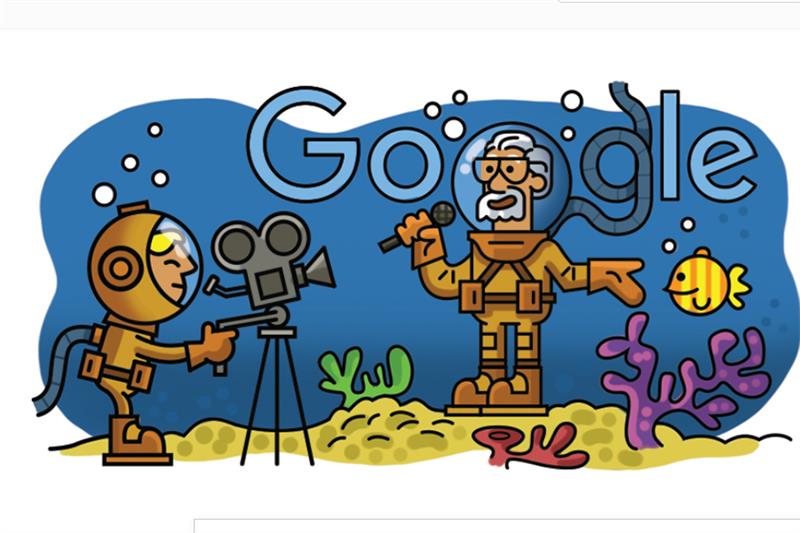
Google search engine celebrated the late Hamed Gohar’s 115th birth anniversary on 15 November with a Google Doodle.
The Egyptian scientist, marine biologist and TV host, Gohar is considered the founding father of oceanography in Egypt and the Arab world.
Born on 15 November 1907, he studied medicine at Cairo University in 1925 before shifting to biology. He then received his master’s degree in oceanography from Cambridge University in 1931.
The note under the doodle adds that “Gohar discovered that dugong, a sea mammal that was thought to be extinct in the region, still existed in the Red Sea. He continued studying underwater life for 25 years at the Hurghada marine biological station.”
He worked with the Arabic Language Academy to create scientific dictionaries in Arabic and served as an adviser to the United Nations’ Secretary General and helped organize the first International Conference on Law of the Sea in Geneva.
The general public knows Gohar for his educational show called “The Sea World” which he hosted on national television for 18 years. The programme highlighted underwater scenery and natural sea life, bringing the viewers closer to marine biology.
1. Al Alam Palace, Muscat One of the country’s most easily identifiable and iconic landmarks, Al Alam Palace is the centrepiece of old Muscat, and one of the residences of the Sultan of Oman. The palace, with its signature gold and blue façade, tapering marble columns and intricately latticed windows, in many ways signifies Omani values and culture: it is simultaneously an edifice of tradition, history, elegance and simplicity…positive qualities that have made the welcoming and hospitable nature of Oman renowned the world over.
2. Royal Opera House Muscat Built to showcase the diversity of artistic creations from the Sultanate, the region and the world and provide a great space for culture, social and economic development and its implications, ROHM is the brainchild of the late His Majesty Sultan Qaboos bin Said bin Taimour, and was opened in 2011. One of the Middle East’s first opera houses, according to the Ministry of Tourism,
1. Al Alam Palace, Muscat One of the country’s most easily identifiable and iconic landmarks, Al Alam Palace is the centrepiece of old Muscat, and one of the residences of the Sultan of Oman. The palace, with its signature gold and blue façade, tapering marble columns and intricately latticed windows, in many ways signifies Omani values and culture: it is simultaneously an edifice of tradition, history, elegance and simplicity…positive qualities that have made the welcoming and hospitable nature of Oman renowned the world over.
2. Royal Opera House Muscat Built to showcase the diversity of artistic creations from the Sultanate, the region and the world and provide a great space for culture, social and economic development and its implications, ROHM is the brainchild of the late His Majesty Sultan Qaboos bin Said bin Taimour, and was opened in 2011. One of the Middle East’s first opera houses, according to the Ministry of Tourism,ix01
3. Muttrah Souq Probably the oldest souq of its kind in the Arab world, Muttrah Souq stands as a symbol of traditional Omani trade.A wide range of curios in silver, gold, precious gems and textiles are displayed in stalls deep inside the souq.Through the centuries, frankincense, oud and other scents prized in the Middle East have been sold and traded here.Silver lamps, urns and even antique Arabic manuscripts in traditional calligraphic script await your discovery.This is also the best place to find khanjars of different designs.
4. Corniches Have a long walk along the Muttrah Corniche from the Fish Roundabout to Riyam Park. The busy walkway is crowded with tourists, expats, and locals enjoying the oceanic views and the proximity to the historic Muttrah Souq. After your walk, you can linger at one of the numerous restaurants and cafes. Al Ghubra Corniche is a lush green stretch situated at Al Izdihar Street, near Al Ghubra lake garden, which is fast becoming a popular destination for family picnics because of its safe, quite ambiance. If you stop in the garden after your stroll, be ready to pack up your stuff before 11pm to avoid getting showered by the water sprinklers. Shatti Corniche is located on Shatti Street, locally known as ‘love street,’ this walkway is in a very happening area. With its beautiful palms, BBQ areas, and plenty of restaurants and cafes, it is perfect for an afternoon chill or for a lively evening watching all the sporty cars in Muscat cruising up and down the lane. Seeb Corniche is a beautifully developed 8-kilometre corniche located between Mabela and the Seeb fish market. It’s been renovated and adorned with trees and flowers along the interlocked walkway which also features a kids’ playground. This quiet place is a must-visit in the cool evenings.
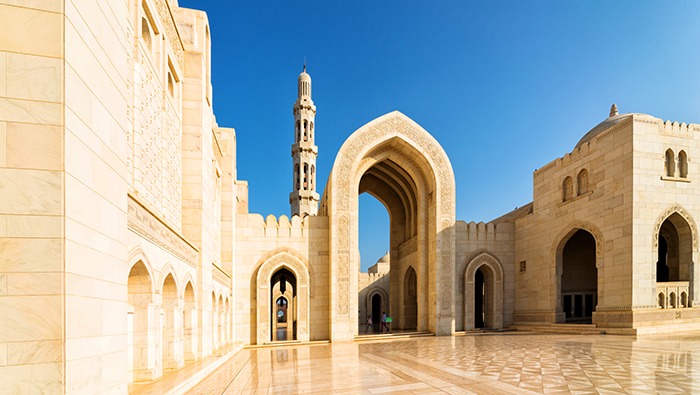
5. Sultan Qaboos Grand Mosque It is one of the largest mosques in the Sultanate of Oman, and is an architectural and artistic marvel that reflects the beauty of Islamic, Oriental and Omani art. According to Oman News Agency (ONA), Sultan Qaboos Grand Mosque is characterised by its square shape, in the centre of which is the main dome, which reaches a height of 50 metres, and is bordered by five minarets which represent the five pillars of Islam. The height of the main minaret reaches 91.5 metres, while the height of other minarets reach 45 metres.
6. Khabourah Castle Khabourah being located on the coast saw much activity through trade and commerce, requiring the need for fortifications against those who would attempt to raid and plunder the area for its wealth. In contrast, though, Khabourah Castle was not used as fortification, but a court where local disputes were brought to light. Renovations to the castle were made in 1994, using materials sourced locally from the surrounding areas.
7. Muscat Gate Museum It is located above Muscat Modern Gate, and tells the story of Oman’s long history, focusing on the history of Muscat. It describes the UNESCO world heritage listed Falaj irrigation system that Oman is famous for, as well as the nation’s distinctive architecture. According to Oman’s Ministry of Tourism, “The Muscat Gate Museum takes the visitor on a journey through the various stages of development and growth of the city over time, from a commercial port to a prosperous modern capital.” Located on Al Saidiya Street, Muscat Gate was earlier an official entrance for the old city of Muscat, which used to be shut after sunset. The museum is located atop the gate, from where you can enjoy the stunning views. Opened in January 2001, the museum contains displays about Oman’s history from the Neolithic times to the present.It has a number of special exhibits on Muscat’s water springs, the ancient wells, underground channels, the souqs, houses, mosques, harbours and forts.
8. Al Minzifah, Ibra The ruins of Al Minzifah, located a short distance from Ibra, the regional capital, provide indication of what life in Oman was like for some in the early 18th century. The houses, many of which date from the period of prosperity, are of two or occasionally three stories, built from local stone, cemented and plastered with local juss. Care should be taken not to move the structures of these fragile buildings.
9.Al Ayn and Bat Tombs Another of Oman’s UNESCO World Heritage Sites, Bat, Al Ayn and Al Khutm constitute a settlement and its accompanying necropolis that remain remarkably well-preserved given they were originally Bronze Age settlements. The tombs of Al Ayn are located some 30km north-east of the settlement of Bat, and feature 21 places of burial which seem to form up in an almost straight line. Built in a rather peculiar beehive-like structure, the tombs were constructed from limestone blocks and assembled with plaster made locally.
10. Duqm Rock Garden Entering the Rock Garden makes you feel as if you’ve fallen off the face of the earth and landed on another planet.The rocks that lend the garden its name have been shaped by millennia of wind-based erosion, and do lend the area a distinctly other-worldly quality which is only enhanced by the quiet surroundings.
11. Sharqiyah Sands Earlier known as Wahiba Sands, extends from North and South Al Sharqiyah Governorate to Al Wusta Governorate. With diverse terrain along with different species of flora and fauna, the golden dunes of the Sharqiyah Sands desert holds a special place in the hearts of those who live in Oman or come here as tourists. It extends over an area of up to about ten thousand square kilometres. According to Oman’s Ministry of Tourism, “The sand colour ranges from red to brown as far as the eye can see. It is the original homeland of the Bedouins. This area attracts many desert adventure fans, and is preferred by visitors owing to its ease of accessibility and availability of nearby services, which make it a first class tourist attraction.”
12. Kumzar, Musandam Travelling to Kumzar involves sailing through Musandam’s stunning fjords, which have earned this region the epithet ‘the Norway of Arabia’.The town overlooks the Straits of Hormuz, one of the world’s busiest shipping lanes, a fact reflected in the unique language spoken by its inhabitants, Kumzari,” says the Ministry of Tourism. “The town’s population currently stands at around five thousand, with its own school, hospital, power station and desalination plant. The inhabitants live largely by fishing for nine months of the year, netting barracuda, tuna, kingfish and hamour.
13. Sultan Qaboos Mosque, Nizwa Built to blend in yet stand out from the surrounding area, the Sultan Qaboos Mosque in Nizwa, the capital of the Dakhiliyah region, was built in 2009, and spans an area of 80,000 square metres.The mosque is capable of accommodating up to 10,500 worshippers, and with Nizwa being an historic centre of learning and knowledge in the Gulf, is a fitting location for the largest mosque in Oman, after the Sultan Qaboos Grand Mosque in Muscat.
14. Ayn Jarziz, Dhofar Travel to Oman’s southern region in the summer, and experiences amazing weather seldom seen elsewhere. While the rest of the Gulf witnesses peak temperatures, the Dhofar’s Khareef season brings with it refreshing rains and cool breezes, which turn the entire landscape green and bring people from across the world.
15. Al Ayjah Bridge, Sur Also known as the Khor Al Batah bridge, and considered to be Oman’s only suspension bridge, this 240 metre long bridge was opened in 2009, and helped link Sur to the neighbouring settlement of Al Ayjah. Travelling to Kumzar involves sailing through Musandam’s stunning fjords, which have earned this region the epithet ‘the Norway of Arabia’. Many visit the country’s northern bastion to enjoy the rugged natural beauty, as well as the clear blue waters that are just begging to be dove into.
16. Mirbat, Dhofar The former capital of the Dhofar region, Mirbat was an important port when it came to trading frankincense, and is a wonderful destination featuring many historical sites, delicious seafood and a lovely, serene landscape. It has many natural tourist sites, historical monuments and buildings of ancient architecture, most notably the castle of Mirbat, which is one of the most important historical and archaeological sites in the wilayat. It overlooks the coast of the ancient port of Mirbat and dates back to the ninth century AD. The castle sits on a cliff and offers superb views of the crashing waves along the coast line.
17.Salut, Ad Dakhiliyah The ruins of Salut are about an hour’s drive from Nizwa, the capital of the Dakhiliyah region, and feature some of the first permanent settlements built in the country. While in the area, also visit Salut Castle, where a number of relics from the archaeological site have been painstakingly restored and installed.
18. Land of Frankincense, Dhofar Located in the south of the country, the Land of Frankincense is a UNESCO World Heritage Site in Salalah that consists of four separate sites.Farmers harvested the nuggets of the frankincense resin from the trees that grew in the groves of Wadi Dawkah, where they would be loaded onto caravans that stopped over at the oasis of Shisr, also known as Wubar. From there, the bags would be transported to the twin ports of Al Baleed and Khor Rori, to be loaded onto ships which would sail onward to destinations such as Egypt, Rome and China.
19. Barr Al Hikman Located about 500 kilometres south of Muscat, Barr Al Hikman in Al Wusta Governorate is considered one of the most important bird migration stations both in Oman and the region. Many birds congregate here, especially water birds coming from as far as Siberia’s northern shores. In addition to being a sanctuary for birds and fish of all kinds, the existence of coral reefs off its shores make it a favourite destination for divers. More than 1 million shorebirds flock to Barr Al Hikman and Masirah Island every year, according to experts.
20. Bilad Sayt Bilad Sayt is a quaint village seated at the foot of towering and dramatic Hajar mountain ranges. With its picture-postcard perfection of terraced fields and sun-baked houses, it’s one of the prettiest villages in Oman. The villagers prefer visitors to park outside and walk in or simply view the village from a distance. A little haze blanketed the village that was built up on a hill with closely clustered homes made of mud and stone. The village is surrounded by date palms within it is terraced green fields making it look like a dream village. Jagged brown mountains surrounded and loomed over Bilad Sayt, dwarfing the whole village.
21. Masirah Island Masirah Island in the Governorate of South A’Sharqiyah is a popular tourist destination. Known for kite-surfing, bird-watching, the uninhabited beaches, the magnificent sea views and rugged terrains, Masirah draws visitors throughout the year. The beaches are home to sea turtles. The tourists are attracted mostly by the turtles scattered along the beaches of Masirah. 22. Bimmah Sinkhole With its emerald-green waters and serene surroundings, the Bimmah sinkhole is located some 120km from Muscat.Tourists who get to see the sinkhole and its pristine waters are more than welcome to descend to the bottom through a concrete staircase that has been erected for just this purpose.
23. Dates Oman is known for its unique hospitality and it is common for visitors to be invited for Omani coffee and dates when travelling through the country. Be it any household or an office, guests are welcomed with home-grown dates and traditionally brewed drinks called ‘Kahwa. One can find many date palm fields across many governorates in the Sultanate and farmers grow more than 250 indigenous varieties of dates. Khalas, Khunaizi, and Fargh are some of the best dates grown in Oman. While Al Khalas is believed to be of the best quality, other varieties like Nagal, Ash Patash, Bunaranja, Mmajdool, Hilali al Hassa, Barni, and Mathloob are quite in demand. 24. Ain Al Thawarah hot springs Close to the Nakhal Fort, along a winding road framed by palm trees as far as the eye can see, are the Ain Al Thawarah hot springs. This spring is used as a trusted water supply, and there is even a small pool to enjoy the therapeutic properties of the mineral water. Beyond the date plantations that surround Nakhal Fort, this hot spring emerges from the wadi walls and is directed into a falaj (irrigation channel) for the irrigation of the surrounding plantations.
25. Bahla Fort Bahla Fort is situated at the foot of the Jebel Akhdar highlands in Oman and is a UNESCO-listed fort.The fort underwent massive restoration efforts and reopened in 2012. According to UNESCO, “ Bahla is an outstanding example of a fortified oasis settlement of the medieval Islamic period, exhibiting the water engineering skill of the early inhabitants for agricultural and domestic purposes. The pre-gunpowder style fort with rounded towers and castellated parapets, together with the perimeter wall of stone and mud brick technology demonstrates the status and influence of the ruling elite.”
26.Jabal Shams About 3,500 metres above sea level, in the Wilayat of Al Hamra in Governorate of Al Dakhiliyah is another tourist attraction. It has a unique temperature ranging between 0 in winter and 25°C to 35°C in summer. It is a part of the Al Hajar Mountains range. Life at the summit is something else. While being there, you can enjoy camping, and watching the sunrise and sunset. You can also visit the historical village of “Goul,” which is entirely built with rocks and mud, uniquely sitting on the edge of Jabal Shams, overlooking vast areas of farms. The village is called “Oman’s Grand Canyon” due to the fact that it overlooks a towering canyon called “Shurfat Al Nakhr.”
27.Wadi Bani Khalid Located some 200 km from Muscat, Wadi Bani Khalid is a traveller’s paradise that encapsulates the unique, sometimes unbelievable, natural beauty of Oman. Often thought to be a harsh, unforgiving desert, Oman is anything but, and areas like Wadi Bani Khalid go a long way in proving that the Sultanate has a diverse and varied natural beauty.
28.Wadi Shab Wadi Shab in Tiwi in the Wilayat of Sur is a famous tourist destination especially in summer. In the midst of awe-inspiring mountains, naturally carved into the most beautiful shapes by the water, there are shallow lakes surrounded by huge boulders, overlooked by narrow rugged trekking pathways attached to the mountains.
29.Wadi Al Hoqain About 150 km from the Governorate of Muscat, is one of the beautiful wadis in the Wilayat of Al Rustaq which runs throughout the year.
30. Wadi Daiqah Dam It is in the Wilayat of Qurayat and is also one of the key tourist attractions.
31. Wadi Al Arbiyeen It is in Rustaq and is considered one of the most spectacular wadis in Oman. The deep pools at the edge of Al Hajar mountains, the palm trees, mango orchards, and banana farms make it a must visit place for visitors. Wadi Al Hawqayn is another picturesque wadi located between Muscat Governorate and Wilayat Rustaq. It had year-round flowing springs and streams, as well as cool waterfalls and palm trees. On the road to Sur from Bidbid lies the lush green Wadi Bani Khalid.
32. Manah The wilayat of Manah is in the Governorate of Al Dakhiliyah, 160km away from Muscat. It is known for its old ruined villages along with the modern houses, mosques, and towers. The wilayat has eight villages: Harat Al Bilad, Mu’ammad, Al Ma’arra, Izz, Al Faiqain, Al Mahiyul, Abu Nakhilah and Mitan. There are several archaeological sites and buildings of which Al Fiqain Castle is the most prominent one.
33. Jabal Akhdar Situated 2,330m above sea level, the temperature is cool here, while the rest of the Gulf experiences scorching heat. You can see beautiful green terraced gardens, and if you love trekking, it’s a paradise for you. Apart from the pomegranates you can see olives, figs, walnuts, and peaches on street stalls and in every house and farm. On the other hand in March and April you can pluck the fresh roses from gardens. You can also see a rose factory where rosewater and perfume is still made using traditional methods.
34. The Land of Frankincense Located in the coastal area of Salalah between Dhariz and Hafa, Al Baleed is one of the ancient cities of Oman and was known to be one of an important commercial port.The Land of Frankincense is one of many UNESCO World Heritage Sites located in Oman and was once the centre of the ancient world’s thriving frankincense trade. Heaps of rubbles can be found scattered all around the main site where the excavation work is still under process. 35. Khareef season The Khareef season is characterised by its cloudy and rainy weather due to the density of clouds and the temperature dropping to less than 30 degrees Celsius in the city of Salalah, while it drops more in the high mountainous areas surrounded by fog associated with light rain. Salalah is transformed into a beautiful oasis due to the light drizzles that cool the air. 36. Bandar Al Khayran Tucked between captivating sandy mountains 21-kilometres up hilly Qantab Road from Muscat, Bandar Al Khayran is an idyllic retreat with crystal clear waters and a soft sand beach that will make you feel a world away. 37. Al Hoota Cave Some 250km away from Muscat is the spectacular Al Hoota Cave amidst plateaus and rugged mountain peaks. Known for its natural formation of stalactites and stalagmites, Al Hoota Cave offers a fascinating insight into the cave that is more than 2 million years old.
38. Ras Al Jinz Turtle Reserve Turtle nesting tours at Ras Al Jinz allow visitors to witness the spectacle in an intimate fashion without fear of interrupting the creatures. The turtle sanctuary at Ras Al Jinz combines an interactive museum with research laboratories and a wide range of amenities for visitors to learn all about the wonders of these ancient creatures in a family-friendly environment. 39. Khor Rori Khawr Rawrī or Khor Rori is a bar-built estuary (or river mouth lagoon) at the mouth of Wādī Darbāt in the Dhofar Governorate, Oman, near Taqah.It is a major breeding ground for birds,and used to act as an important harbour for frankincense trade when it was an open estuary. Khor Rori is best known for the ruins of the ancient fortified port city of Sumhuram on the eastern bank. There are also archeological ruins on the two promontories at the mouth of Khor Rori. It is considered the most attractive to tourists as it contains Khawr Ruri port, famously known as Samharam.
40. Khawr Sham Khawr Sham is located in Khasab and the lagoon covers 20 kilometres. Many villages overlook Khawr Sham, which can be reached only by sea in traditional vessels. Khawr Sham is considered a tourist destination for hiking, camping and watching dolphins. According to Oman’s Ministry of Tourism, “In the middle of Khawr Sham is a small island called Al Telegraph Island, as in 1860 it was used as a base to connect to the telegraph cable.” 41. Daymaniyat Islands Rich in many types of coral reefs, including rare corals, The Daymaniyat Islands Reserve, lies 18 km off the shores of Barka and is 70km west of Muscat. The Ministry of Heritage and Tourism, describing the reserve, said in a statement, “The reserve is a group of nine islands with a total area of 100 hectares. It is distinguished by its beautiful beaches, white sands and clear blue waters. It also includes rare groups of coral reefs and large numbers of sea turtles which take shelter in the islands to lay eggs and nest. There are countless migratory and settlement birds too which can be seen here.” 42. Horse Racing Horse breeding has been a long-treasured passion for Omanis and has always been an interest among Arab nobility. Horse racing is a sport enjoyed by all in Oman. “Interest in horses in Oman is one of the most cherished pastimes for the Omanis,” said the Ministry of Tourism. “Horses symbolise integrity and pride. Because of the horse’s high status and appreciation by Muslims, Oman has been famous since ancient times for raising, breeding, acquiring and caring for horses. Horse racing is a favourite pastime for Omanis. Horse races are held annually, and include the Royal Horse Race, organised by the Royal Stables, and horse racing in the Omani governorates.”
43. Camels Oman has a deep-rooted connection with camels, it is one of the countries in the Gulf region that has accorded a special status for camels. Known as the ‘Ship of the Desert’, camels have an extraordinary ability to withstand thirst and endure long journeys to remote places.
44. Khanjar Of all the symbols and artefacts traditionally associated with Oman’s history, heritage, and culture, few have been so dear to locals and expatriates alike as the khanjar. A classic example of Omani tradition and reputation as one of the jewels of Arabia, the khanjar is a dagger worn for the most exalted and ceremonial of occasions, and residents in the country have not hesitated to express their praise for it.
45. Nizwa Fort Nizwa Fort was recently ranked first in terms of the number of visitors among the castles of the Sultanate. One of the main attractions of the city, Nizwa Fort, an impressive construct under whose shadow the major part of old Nizwa lies. In the olden days, it served as a bastion for noblemen and peasants alike to take shelter from raiders and bandits who attempted to plunder the countryside.
46. Shuwa Shuwa is a traditional Omani meat dish cooked in an underground oven during Eid.
47. Handicraft Oman’s handicrafts that are mostly home-based and done by using simple tools have a huge demand among tourists who buy these artefacts as souvenirs. Showcasing the Sultanate’s rich culture and heritage, these handcrafted products include pottery items, products made of palm fronds, silverware and more. According to Oman’s Ministry of Tourism, “Omani arts and crafts are revered treasures that need to be preserved and popularised. Arts and crafts also serve as the main source of vocation of the citizens in the interior regions of the country. Handicraft industry, if developed properly, can provide huge employment opportunities to artisans that include women and people belonging to interior regions of the country.
48. Wadi Darbat Wadi Darbat is one of the most beautiful wadis in the Governorate of Dhofar due to its stunning views due to greenery, lush orchards, constant flow of water, and seasonal waterfalls. Wadi Darbat is located in the east of the wilayat of Taqah at a distance of 7 kilometers, where Sidr trees and many large shady trees are spread on its sides. Derbat is known to represent a natural park due to its combined elements such as mountains, waterfalls, caves, and flat plains on both the sides, which allows wildlife such as the nests of endemic and migratory birds and various wild animals to exist.
49.Qalhat Once the capital of ancient Oman, the city of Qalhat was recently placed on the UNESCO list of World Heritage Sites for its historical significance and its role in Oman’s evolution between the 11th and 15th centuries. “The Ancient City of Qalhat presents a unique testimony to the Kingdom of Hormuz, as it prospered from the 11th to 16th century CE,” UNESCO informed in a statement. “Ancient Qalhat presents exceptional evidence of a major trade hub, which came under the rule of the Princes of Hormuz and profited from its geo-political position in the region.”
50.Rub Al Khali Home to towering dunes there are many stories of famous explorers having travelled to Rub Al Khali. One of the largest sand deserts in the world, the Rub Al Khali (Empty Quarter) is teeming with wildlife, ranging from reptiles to various birds of prey and smaller mammals. 51. Dolphin Watching Several places in Oman are known for their dolphin habitats. The capital, Muscat, is of course known for dolphin watching, but other areas like the Dimaniyat and Masirah Islands are also popular, as both are great places from which you can spot dolphins, as is Musannah, which is roughly halfway between Muscat and Sohar.
52. Al Hamra Al Hamra is a well-preserved old town in Ad Dakhiliyah, Oman. Walking through its warren of alleys and stone steps is like going back in time. It is home to a number of villages including the mountainside village of Misfat Al Abryeen, with the village of Ghul to the northwest of the town, and Bimah to the north-northeast.The town and province lie on the southern slopes of the Akhdar Mountains.
Guinness World Records, the global authority on record-breaking achievements, announced on Friday that its 2023 edition, available now in stores and online in the Middle East, features 50 records from the Arab world.
Read on for some of the latest achievements from the region.
01. Saudi Arabia
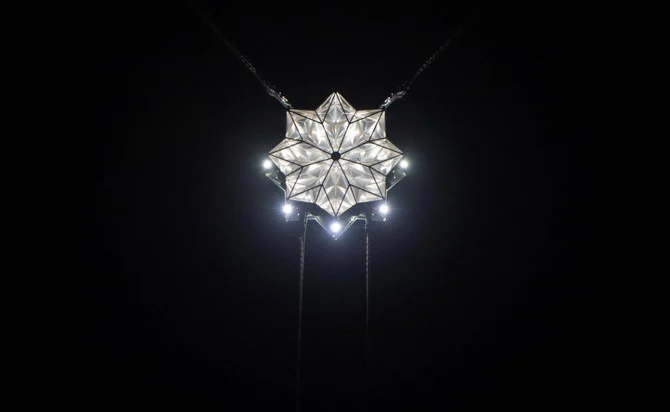
The Kingdom is flexing its muscles with a set of achievements including the largest LED structure and brightest suspended ornament by Noor Riyadh Festival and the largest Lego brick Formula One car by the Saudi Arabia Motor Federation.
02. UAE
wam.ae
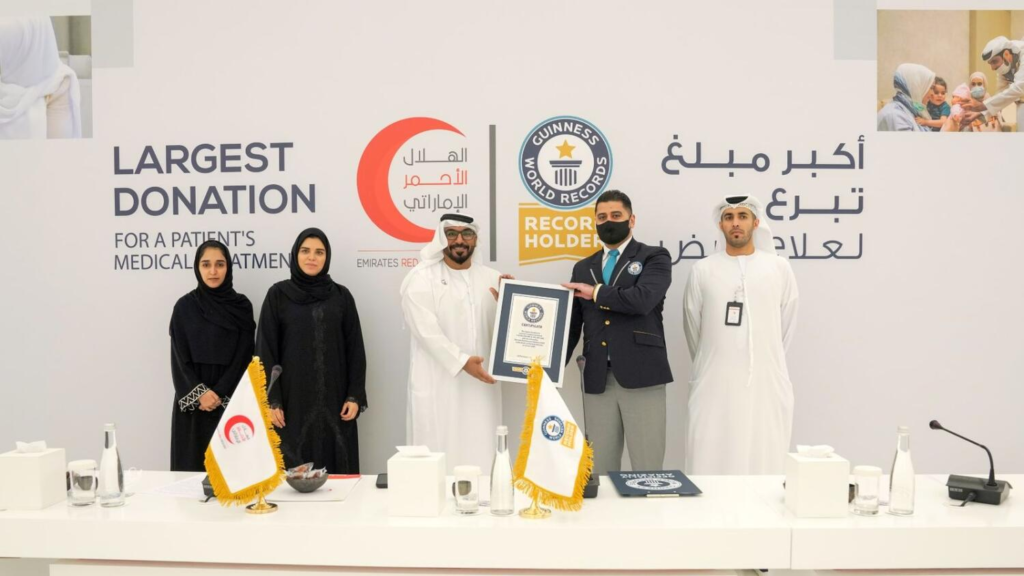
From the UAE, the new book covers a number of humanitarian record-breaking initiatives such as the largest donation for a patient’s medical treatment by the charity organization Emirates Red Crescent and the most awareness ribbons made in one hour by the Emirates Oncology Society, an organization dedicated to promoting multidimensional care for cancer patients.
03. Iraq
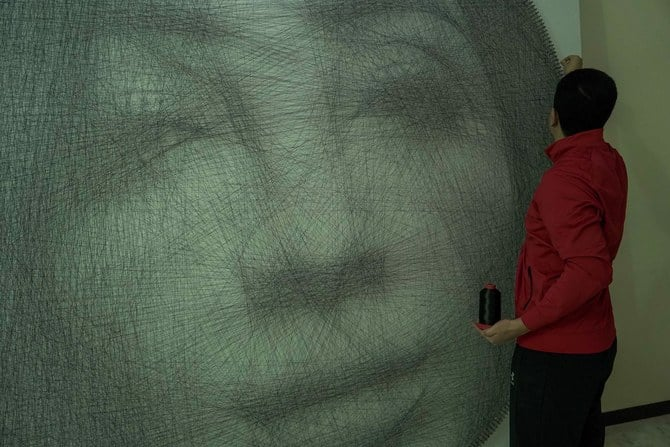
There are three achievements from Iraq: the largest pin-and-thread art by artist Saeed Howidi, the most eggs balanced on the back of a hand (18 eggs) and the tallest stack of M&M’s by Ibrahim Sadeq.
04. Egypt
Mohamed Shehata achieved the widest arm span on a living person (male) and the widest hand span on a living person (male), while Mahmoud Ayoub was featured for achieving the most finger-tip push-ups (one arm) in one minute.
05. Kuwait
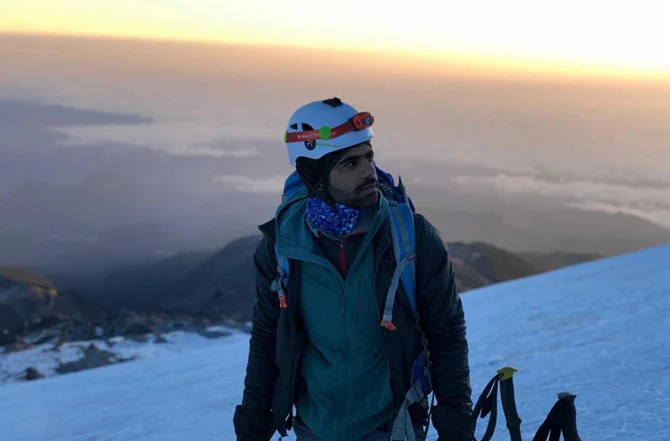
Yousef Al-Refaie became the youngest person to climb the Seven Volcanic Summits (male). Kuwait was also featured for the longest indoor slide achieved by LOOPZ.
06. Algeria
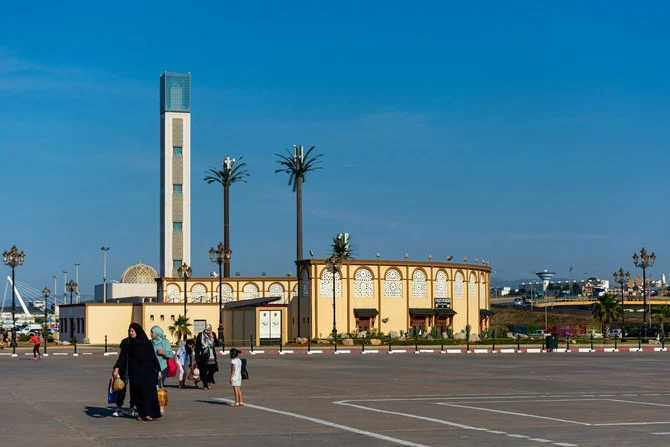
From Algeria, the trade center Algiers International Fair created the largest bowl of couscous, and Djamaa el Djazaïr, also known as the Great Mosque of Algiers, broke the record for the tallest minaret, the tower used to project the Muslim call to prayer.