Arabs & Arabian Records Aggregator. Chronicler. Milestones of the 25 Countries of the Arabic Speaking World (official / co-official). AGCC. MENA. Global. Ist's to Top 10's. Records. Read & Enjoy./ www.arabianrecords.org
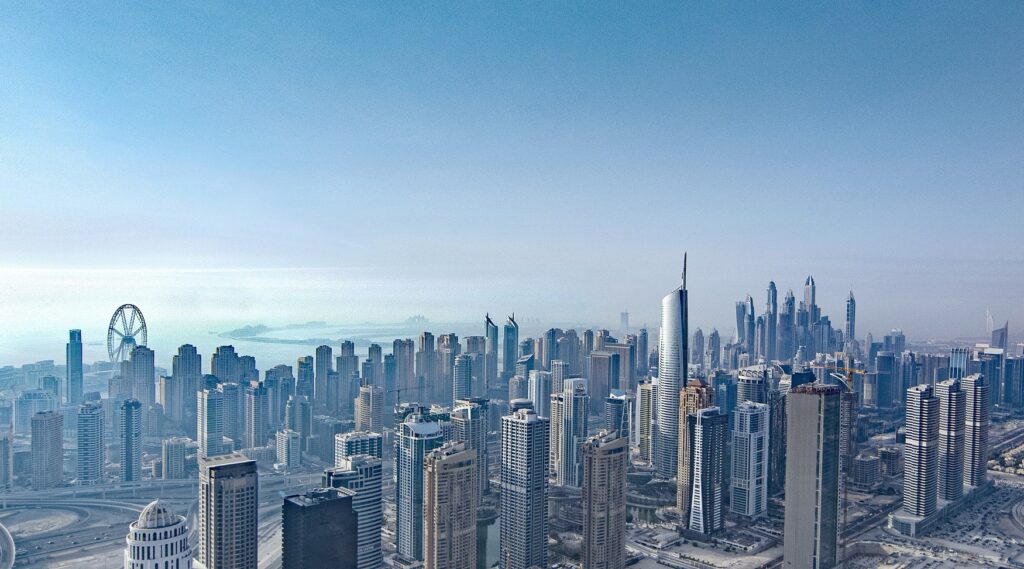
DMCC – the world’s flagship Free Zone and Government of Dubai Authority on commodities trade and enterprise – has been named Global Free Zone of the Year 2022 by the Financial Times’ fDi Magazine for the eighth consecutive year.
The award, among the most prestigious of accolades a free zone can earn, is decided by the Financial Times Specialist editorial team and a panel of independent judges against a comprehensive set of criteria and a review of the free zones’ ecosystems.
The methodology focuses on metrics that demonstrate core growth of the free zones, both in terms of the increase in small and large tenants, and how effectively each free zone provides ecosystems and related initiatives that support growth, business and marketing strategy, infrastructure improvements, COVID-response and promotion of sustainability.
Reflecting the leading business district and trade hub that DMCC has created for businesses of all sizes, as well as its central focus on sustainability and social impact, DMCC also received: Large Tenant Free Zone of the Year – Global; Large Tenant Free Zone of the year – Middle East; Middle East Free Zone of the Year; SME Free Zone of the Year – Middle East; Excellence Award for ESG Practices – Global; and Excellence Award for Infrastructure Development – Global.
Ahmed bin Sulayem, Executive Chairman and Chief Executive Officer, DMCC, said, “Since DMCC was established in 2002, we have had two core goals – create a global gateway for trade, and comprehensively enhance the ease of doing business for our member companies. This simple yet critical strategy has underpinned our exceptional growth and is why our business district is now home to over 21,000 global businesses of all sizes and sectors.
“As we continue to accelerate our growth and break performance records across all our business verticals, I would like to thank Financial Times’ fDI Magazine for once again recognising DMCC’s achievements on the global stage.”
The film’s soundtrack was provided by the Qatar Philharmonic Orchestra, a member of Qatar Foundation.
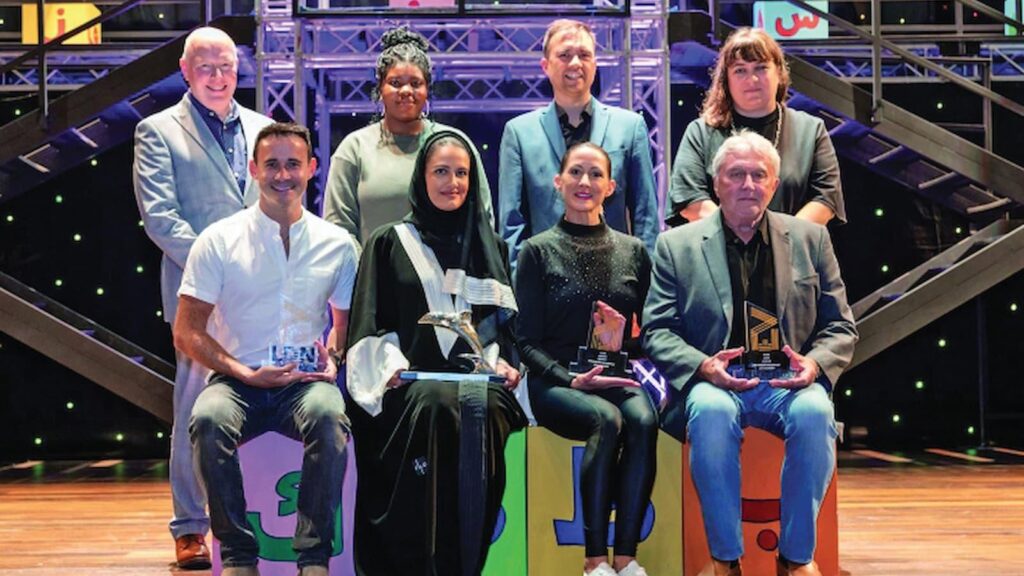
Qatar Foundation’s musical theatre film ‘Showtime!’ won two awards at the Cannes International Film Festival in the categories of social media and short films.
‘Showtime!’ also won an award from Ofcom in London in the categories of cinematography, sound, and directing as well as a prize at the New York Festival for short films.
Established by Qatar Foundation, the initiative is rooted in the very fact that there is a vacuum in drama and musical programmes in Qatar Foundation schools. This prompted Qatar Foundation to embark on a musical theatre teaching process for students of all ages across Qatar.
The purpose of the show is to promote creativity in the field of performing arts and cultivate a culture of theatrical and musical performances in pre-university schools in the foundation.
Within a year, the project was ready to be showcased before the world, however, the effects of the Covid-19 pandemic hampered its smooth execution.
Qatar Foundation along with the help of The Edge Picture Company, took the stage to streets and filmed choreographed musical performances and successfully broadcasted it online.
The musical elements were led by West End choreographer Christopher Piper, and father and daughter team Steve Griffith as musical director, Jane Griffith as choreographer along with international Film Director Andrew Lancaster.
The creative team was led by 20 crew members and a cast of 55, occupied entirely by Qatar Foundation school staff and pupils with ages ranging from seven to 55 years old. It was considered the first musical theatre experience for many of the cast members.
Some of the locations utilised for the filming process included Qatar National Convention Centre, Qatar Science and Technology Park, Ceremonial Court, Oxygen Park, and Qatar National Library in Education City.
Other acknowledgements
The Doha Film Institute (DFI)-granted movie ‘Cotton Queen’ by Qatar-based Sudanese filmmaker Suzannah Mirghani claimed the ArteKino Award at Cannes Film Festival’s L’Atelier 2022.
In this arm, 16 directors whose projects bear a promising production are invited to the Festival de Cannes. Along with their producers, the directors are presented with the opportunity to meet potential partners, which acts as a key step in finalising their project and starting the making of their film.
In an Instagram story posted by DFI, Mirghani said, “This is my very first feature, thank you for taking a risk on me, thank you for taking a risk on Sudan. We do not have many films from Sudan as you know, you can count them on two hands in the history of Sudanese film and fiction feature films.”
“And those made by women, zero. Thank you for supporting us.”
Morocco recently has stepped up efforts to restore and protect its cultural heritage.
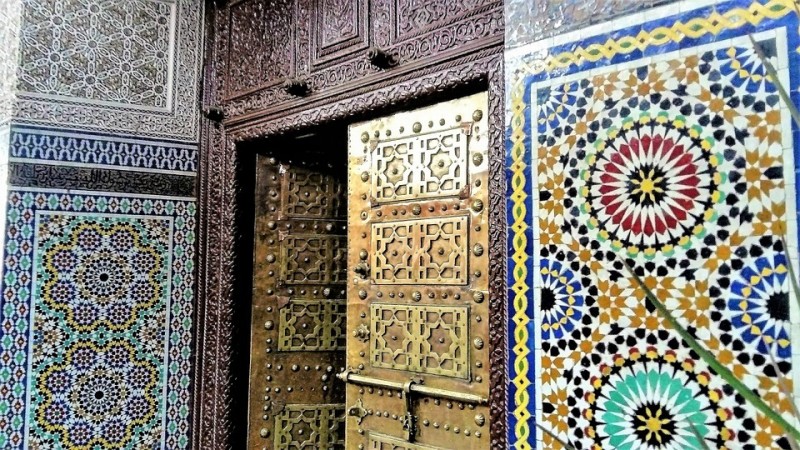
Following a series of complaints about the cultural appropriation of Moroccan Zellige (mosaic), on Friday, Morocco’s Ministry of Culture announced the official patenting of Zellige of Fez by the World Intellectual Property Organization.
In 2015, Morocco registered the Zellige of Fez in the Vienna Classification of Figurative Elements of the World Intellectual Property Organization in an effort to preserve its national heritage.
Celebrating the new patent, the Moroccan ministry took to social media to share the news, stating “Zellij is one of the most artistic forms that express the originality of Moroccan architecture.”
The ministry’s post added that the Zellige “industry dates back to the tenth century AD, when it flourished during the Marinid era in the honorable Kingdom before moving to neighboring tribes during the following centuries.”
Given the global popularity of Zellige of Fez due to its quality, originality, and multicolored feature, the Moroccan ministry says that “the city of Fez [is] the owner of this art and the main center for its production and industry due to its special clay that is not found in other places.”
In addition to gaining global appeal among designers, interior architects, celebrities, and even international organizations , Moroccan Zellige has been studied by Moroccan and foreign experts in the fields of engineering, arts, social sciences, and mathematics including Rushita Choksey and Jean Constant.
Despite the existence of an extensive literature body asserting the Moroccan origin of the Zellige, the clay artwork remains subject to external claims.
Earlier this week, Morocco filed a complaint against Adidas for producing and promoting new Algerian jerseys with Zellige patterns. Adidas claimed that the patterns were inspired by El Mechouar palace in Tlemcen.
Soon after Moroccan social media users learned about Adidas’ news, the brand’s post was flooded with comments from Moroccan users who denounced the company’s act. Moroccan users added social media hashtags such as #Moroccan culture, #Moroccan Zellige, and #No theft of Moroccan heritage to spread the word.
Some internet users also stressed the Moroccan origin of the El Mechouar’s architecture stating that the Algerian-based palace was built by Sultan Youssef Ibn Tachfin during the Almoravid dynasty and renovated in 2010 with Moroccan calligraphy, mosaic, and plaster art.
In response to the social media backlash between Moroccan and Algerian users, Morocco’s Ministry of Culture filed a complaint against the multinational firm, condemning the “cultural appropriation [and the] attempted robbery of a form of traditional Moroccan cultural heritage.”
Still, Moroccan-Algerian clashes over the origins of popular products such as couscous, caftan, and mosaics are likely to persist after the patenting of the Zellige of Fez. These debates, which mostly take place in the digital space, reflect the decades-long tensions between Rabat and Algiers centered on the Western Sahara dispute.
The rising diplomatic tensions and small-scale online clashes between the North African neighbors, however, do not fully reflect the relations between the two nations’ peoples, as many Moroccan and Algerian families have shared history and lineage.
The festival includes 3 million items manufactured by more than 1,500 international brands.
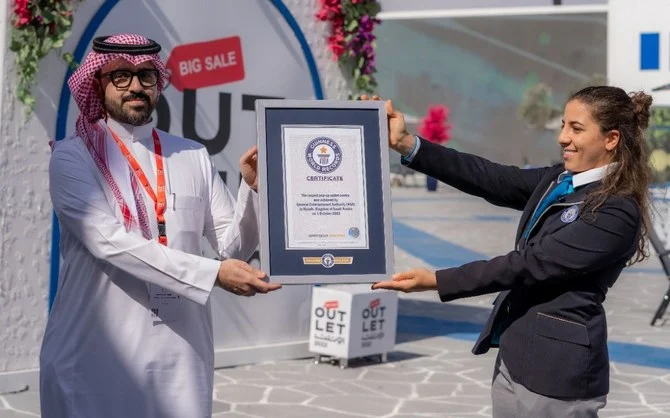
The Outlet 2022 shopping festival, being organized by the General Entertainment Authority, has won Guinness World Records recognition as the largest pop-outlet center.
Covering an area of 146,623 square meters, festival activities started on Saturday in Riyadh. It includes 3 million items, manufactured by more than 1,500 international brands, and discounts of up to 70 percent on fashion, accessories, and cosmetic products designed by international experts.
Farah Ahmed, who lives in Al-Rehab neighborhood where the outlet is located, described it as “impressive,” while Mohammed Al-Bugami, a Saudi private-sector employee, praised the “top organization” he witnessed on the first day.
“I have no words to describe how great and well-organized this festival is. I would like to thank the organizers for their efforts in making this shopping festival a reality,” he said.
Entry to the festival is free and outlet sections include home accessories, leather-made items, bridal gowns, suitcases, and electronics.
The fashion section includes products by names such as Zara, Massimo Dutti, GAP, Ralph Lauren, Diesel, Lacoste, Roberto Cavalli, Versace, and Mango. Additionally, visitors can choose between various sports shoe brands, including Adidas, Puma, and Nike.
GEA chairman, Turki Al-Asheikh, thanked Kuwaiti actresses Hayat Al-Fahad and Suad Abdullah, and Saudi actor Bashir Al-Ghunaim for taking part in the official festival promo that gained millions of views.
The GEA aims to encourage private-sector organizations to develop entertainment activities in the Kingdom. It was established in line with Saudi Vision 2030 to organize and develop the entertainment sector in the country and provide options and entertainment opportunities for all segments of society.
source/content: arabnews.com (headline edited)
__________
The “Outlet 2022” shopping festival, being organized by the General Entertainment Authority (GEA), has won Guinness World Records recognition. (Supplied)
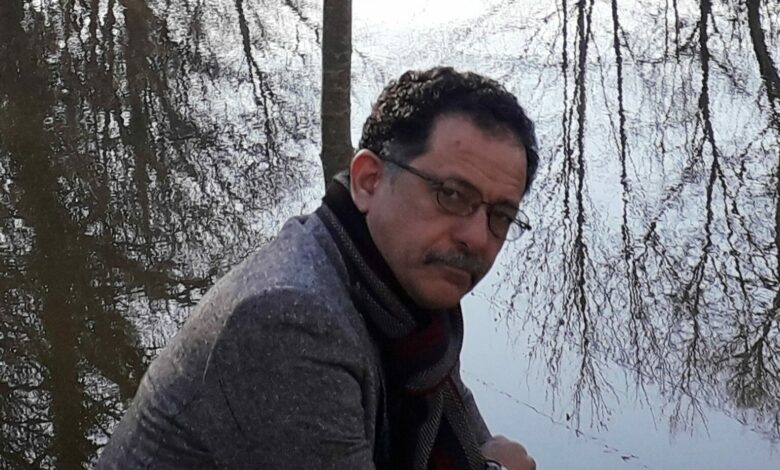
France has made the Yemeni writer Ali Al-Muqri a knight of the French Order of Arts and Letters.
Al-Muqri recently received a letter from Roselyne Bachelot-Narquin, the French minister of culture, telling him that he was among the honorees chosen as members of the order this year.
Al-Muqri has been living in France at the invitation of the Arab World Institute since 2015, after fleeing the war in his home country. He had lived in Sana’a, the capital, which is now controlled by the Houthi rebel movement. People close to Al-Muqri have warned him he risked being pursued by the Houthis if he returned to Yemen.
The Order of Arts and Letters, one of four “ministerial orders” in France, is awarded to people who have distinguished themselves through artistic or literary creation or by contributing to the influence of arts and letters in France and the world. It has three ranks: commander, officer, and knight (chevalier).
Al-Muqri said in a telephone interview with Al-Fanar Media that he had not been aware of his candidacy for this order and was surprised by the letter.
He believes that his being named for the prestigious French order is “a tribute to Arabic literature, and a reward for writing a literary work that has its own narrative and cultural characteristics.”
He said Arabic literature was marginalized because it was rarely translated and he hoped his award would shed more light on it.
Novels and Prize Nominations
Ali Al-Muqri began his literary career as a cultural editor for several Yemeni publications before beginning to write prose, poetry and novels himself. His works have been translated into French, English, Italian, Kurdish and Persian.
“Black Taste, Black Odour” and “The Handsome Jew” were longlisted for the International Prize for Arabic Fiction in 2009 and 2011, and “Hurma”, in its French translation, won an honourable mention from the Arab World Institute Prize for Fiction and the French prize for Arabic literature. “Adani Incense” was shortlisted for the 2015 Sheikh Zayed Book Award.
Between Home and Exile
Despite his years in self-imposed exile in Paris and his freedom to write, “far from the guilt feelings that affected his literary works,” Al-Muqri said he still “experiences the hardships of alienation far from his homeland.”
“I live in double exile, and I miss every detail of my life in Yemen,” he said. “Where is the writing corner in my house in Sana’a, where I used to write my literary works, my books piled around me? I miss my habits and my rituals that were the primary motivator and the inspiration for my writing.”
Al-Muqri said that particular places in Yemen and the way of eating and drinking there gave a feeling of continuity that he misses.
The issues of Yemeni life inspired more than one of his novels, which he attributes to his constant endeavor to “explore the human self and evoke the causes of its anxiety through exposure to the problems facing people, whether they are in freedom of expression or because of discrimination against a person because of his colour, his sexual identity or because he was marginalized by a dictatorial authority.”
Al-Muqri said that he could write more in Yemen than he can in France. The war took him forcefully from his country and made him feel alienated and unable to get hold of the things that inspired and motivated him to write.
But that feeling has not prevented his ability to integrate with French society, he said. Thanks to his personal experience and knowledge of European culture, he has been able to adapt and engage in his new life in the host country.
Yemeni Literature in Wartime
Al-Muqri said most Yemeni writers and authors had lost their jobs because of the war and many of them had resorted to other types of work so they could continue to live.
Most were no longer able to obtain the basic requirements of life, such as electricity, clean water, or a regular salary. Al-Muqri said the absence of these things “makes any writer or author unable to write and think.”
The war has greatly hindered literary life in his country, Al-Muqri said, but it remains active despite the restrictions and censorship imposed by the authorities.
Al-Muqri said he was working on a new novel. He hopes to continue writing “in freedom and safety” and to return to Yemen after the situation stabilizes.
Ali Al-Muqri has lived in France since 2015. He hopes the honour he has won there will draw more attention to Arabic literature in translation. (Photo courtesy of Ali Al-Maqri)
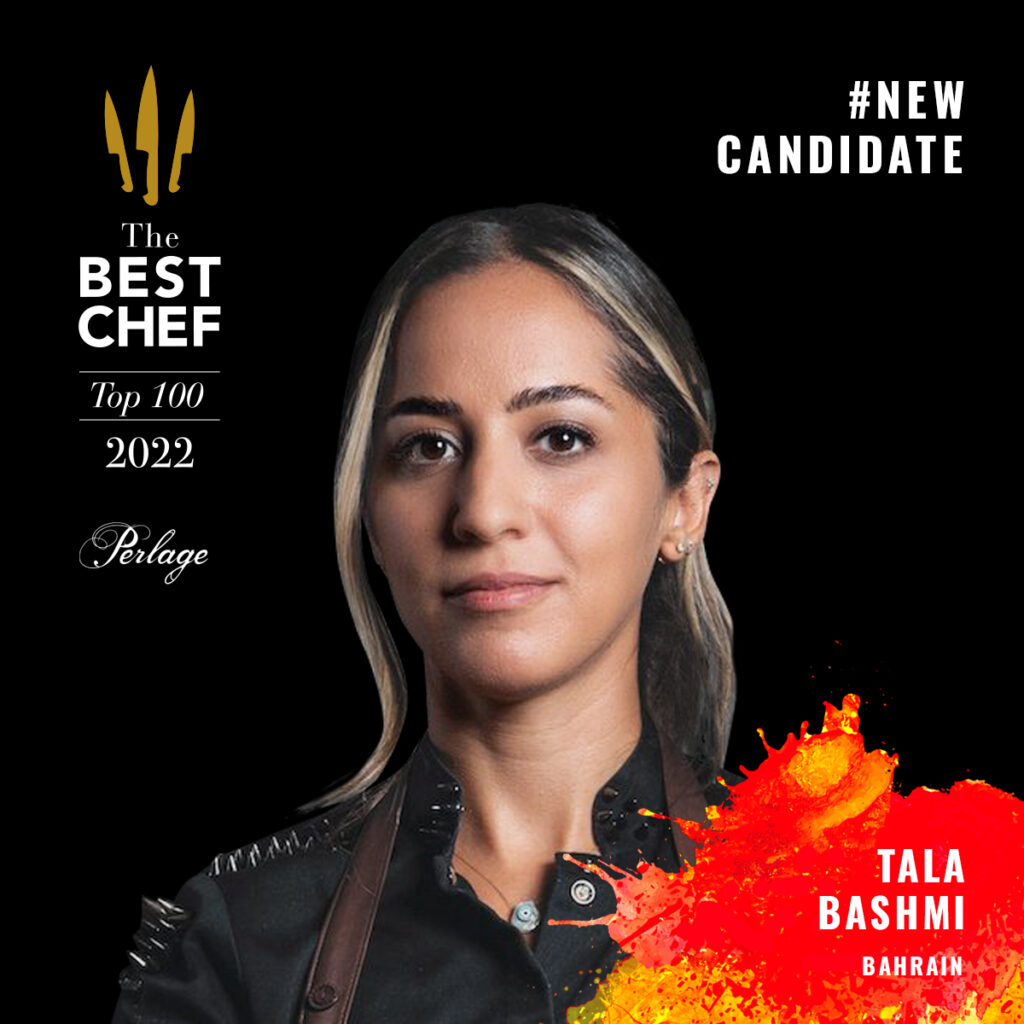
Massimo Bottura, Niko Romito, Yannick Alleno, Heston Blumenthal, Clare Smyth and Anne-Sophie Pic are the big culinary names she’s ranked alongside on the top 100 list for this year’s The Best Chef Awards.
“The people on this list are actual living legends in the culinary field, so for me to be on it at all is amazing,” she tells The National.
“What I’m currently doing is trying to put Middle Eastern cuisine on a global scale, so for me to be the only Arab on this list means I’m taking one step forward to doing that and to give our cuisine its moment in the spotlight and its culinary renaissance.”
Not only is Bashmi the only Arab, she’s also one of only 18 women who have made it on to this list of 100 culinary talents across the globe.
She ranked 93rd, but says the number didn’t “really matter” to her. “Going into this, I had no idea if I was going to make this list,” she says. “I’m from a small island that doesn’t get much exposure, so for me to get this is amazing.”
At the event, which was held at the Crystal Gallery of the Palacio de Cibeles, in Spain’s capital, she met some of her all-time heroes. This includes Andoni Luis Aduriz, a Spanish chef who ranked number five and picked up the award for The Best Science Chef Award. Bashmi describes him as “humble, down to earth and very focused on what matters in this industry rather than distractions around, which I really admire”.
Spain’s Dabiz Munoz picked up the top accolade of The Best Chef for a second consecutive year for his work at DiverXO restaurant in Madrid. Noma’s Rene Redzepi came second, while Spain’s Joan Roca i Fontane rounded out the top three.
Bashmi, who heads The Gulf Hotel Bahrain’s well-regarded restaurant Fusions by Tala, is no stranger to culinary accolades, having picked up her award for Best Female Chef in the region in Abu Dhabi this February. Her restaurant also ranked 39th on the first list of Mena’s 50 Best Restaurants.
She inherited an interest in cuisine and cultural identity from her father through his in-depth knowledge of the ingredients used. She then used this interest to launch Baked by T, before joining the Culinary Arts Academy in Lucerne, Switzerland.
Staying in the central European country, she had roles at the Grand Hotel Les Trois Rois in Basel and the Michelin-starred restaurant Prisma in Vitznau, where she learnt more about restaurant operations, as well as working in fast-paced kitchen environments.
Since returning to the Mena region, Bashmi has competed on MBC’s Top Chef Middle East television show in 2020, where she reached the finals.
In 2017, she took over the helm at Fusions by Tala, where she makes modern interpretations of Bahraini dishes, including the standout bamia, a traditional okra and meat stew, for which she uses Wagyu beef cheek, crispy okra glass and tomato broth rice.
“I try to appeal to every audience from every country, in a sense of bringing them back to a state of nostalgia,” she has previously said of her approach. Bashmi might do this through any of our senses, such as when she adds a campfire aroma to the Saudi-Bahraini dessert aseeda to evoke memories of camping, whether in the desert or the forest.
“I feel like this is still the beginning for me,” she says of her latest achievement. “People haven’t seen what came before, what led to today, so every time something is achieved, it’s a new beginning and opens new doors to opportunities I hadn’t even thought of.
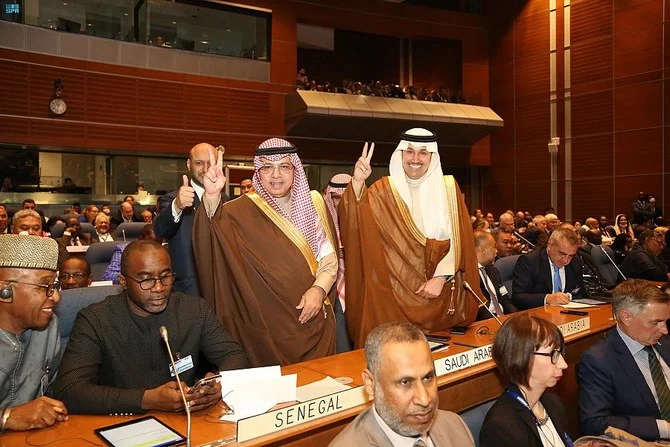
Saudi Arabia was elected to the membership of the Council of the International Civil Aviation Organization until 2025 during voting at the ICAO 41st general assembly in Montreal, Canada.
The Kingdom was re-elected after a voting process with the participation of 193 UN member states.
The council has 36 members, including the US, France, Singapore and the UK, “thus providing a voice to the Arab and Islamic countries,” the Saudi Press Agency reported on Saturday.
Saudi Minister of Transport and Logistics Saleh bin Nasser Al-Jasser praised the importance of the election for the Kingdom, saying: “Since the establishment of the first airline in 1945, the Kingdom has proven its commitment and tireless work toward the aviation sector, both domestically and internationally.”
He added that the Kingdom is now working in line with the vision of Crown Prince Mohammed bin Salman by consolidating its global leadership role in the sector.
Al-Jasser said that the election “represents a broad tribute to the tireless efforts being made by the Kingdom to be a center for air linkage between the three continents to achieve the objectives of the national strategy for transport and logistics services.”
source/content: arabnews.com (headline edited)
___________
Saudi Minister of Transport and Logistics Saleh Al-Jasser attends 41st International Civil Aviation Organization General Assembly in Canada. (SPA)
Mohammad Abdullah Al Gergawi, Minister of Cabinet Affairs, Chairman of the Committee leading Great Arab Minds, and Secretary-General of the Mohammed Bin Rashid Al Maktoum Global Initiatives (MBRGI), highlighted the details of “The Great Arab Minds” initiative.
Launched by His Highness Sheikh Mohammed bin Rashid Al Maktoum, Vice President, Prime Minister and Ruler of Dubai, in January 2022, the initiative is the Arab world’s largest movement designed to search for exceptional talents among Arab scientists, thinkers, and innovators across key fields.
The Great Arab Minds initiative, under the MBRGI, aims to identify, support and acknowledge leading thinkers in the region, amplify their impact and inspire future generations. One of its main purposes is to reduce the emigration of Arab scientists, specialists, intellectuals, doctors, and engineers.
He affirmed that “The Great Arab Minds” initiative reflect His Highness’ vision in reigniting the Arab World’s Civilisation Drive, support great Arab minds and acknowledge their work and achievements, in service of humanity.
Mohammad Al Gergawi pointed out the importance of the Arab Reading Challenge initiative launched by His Highness Sheikh Mohammed bin Rashid Al Maktoum, among many other development projects, serving more than 91 million beneficiaries.
A study conducted by KPMG, showed that ignorance costs the Arab world more than US$2 trillion. The Great Arab Minds initiative aims to change this reality and contribute to shaping a brighter future for Arab generations.
During an event organised in the Museum of the Future to announce the details of the initiative, Mohammad Al Gergawi witnessed the signing of four partnerships between “The Great Arab Minds” initiative and KPMG, LinkedIn, Meta, and Majarra.
The initiative’s mission is to search for exceptional talents among Arab scientists, thinkers, and innovators across key fields, aiming to identify, support and acknowledge leading thinkers in the region, amplify their impact and inspire future generations.
Over a 5-year period, “The Great Arab Minds” will reward scientists, thought leaders, scholars, and innovators across 6 categories: Natural Sciences (Physics and Chemistry), Medicine, Literature and Arts, Economics, Technology and Engineering, and Architecture & Design.
The initiative includes the “Mohammed bin Rashid Medal for Great Arab Minds”, which will be awarded to 6 winners of six categories each year.
The Great Arab Minds initiative aims to facilitate the recognition of Arab thought leaders, scholars, scientists, geniuses, and transforming their ideas to real-life breakthroughs and solutions. It also aims at empowering cluster of Arab scientists and thinkers and building a network of Arab thinkers, scientists, and exceptional talents in various fields to work as one team to drive the Arab world’s intellectual renaissance.
Winner of the Audience Award at Venice Film Festival’s Orizzonti Extra Section, ‘Nezouh’ follows a Syrian family on the verge of becoming refugees.
Syrian film ‘Nezouh’ starring Kinda Alloush and Samer Al Masri, and directed by Syrian filmmaker Soudade Kaadan, won the Audience Award at Venice Film Festival’s Orizzonti Extra Section, supported by Armani Beauty. This is Kaadan’s second win at the festival after ‘The Day I Lost My Shadow’ (2018), her first feature-length film and the winner of Best Debut Film.
The film stars the Cairo-based Syrian actress Alloush, known for her roles in Egyptian and Syrian dramas. She was first introduced to Egyptian audiences in 2009 with her role in ‘Welad El A’am’ and has since starred in multiple films and series including ‘El Maslaha’ (2012), and ‘El Asliyyin (2017). She’s also part of the cast of ‘The Swimmers’ (2022) which debuted at Toronto Film Festival.
‘Nezouh’ is set in war-torn Damascus and tells the story of a Syrian family at a crossroads choosing between fleeing or clinging on to their home. The father, played by Samer Al Masri, refuses to become a refugee while his fourteen-year-old daughter yearns for freedom. The film is inspired by the filmmaker’s personal journey away from Damascus and the effect of the conflict on Syrian women’s social reality.
Saudi engineer Mishaal Ashemimry is the newly elected vice president of the International Astronautical Federation, becoming the first Saudi woman to hold the position after receiving 14 majority votes from international representatives.
Her role as one of the federation’s 12 vice presidents enables her to further the development of the space sector globally and consolidate the direction of the IAF.
As a Saudi woman and the first aerospace engineer in the Gulf Cooperation Council, her position strategically places the Kingdom at the forefront of the industry and highlights the country as a global leader in the field.
Since September 2021, Ashemimry has served as special advisor to the CEO of the Saudi Space Commission Mohammed Al-Tamimi, a position in which she consults on developing a national space strategy, creates and leads space programs, and advises leadership on direction and execution.
Ashemimry was previously a space nuclear technology consultant at the aerospace and defense company Northrop Grumman. She also conducted research funded by the NASA Marshall Space Flight Center during her time as a research assistant at the Florida Institute of Technology
At 26 years old, the engineer was also president and CEO of her own aerospace company, MISHAAL Aerospace, established in 2010.
The company developed space rockets, designed and launched its own line of cost-effective rockets titled the “M-rocket” series, completed static tests for hybrid rocket propulsion systems and provided global consultation.
In 2015, Ashemimry won the Inspirational Woman of the Year Award at the Arab Women Awards and in 2018 was awarded for her scientific achievements by King Salman.
She received her bachelor’s degree in applied mathematics and aerospace engineering in 2006 and her master’s degree in aerospace engineering in 2007, both from the Florida Institute of technology.
She is a certified Nitrox, rescue and open water diver, a commercial pilot and is trained in real space flight conditions of zero-gravity.
Ashemimry is an expert in aerodynamics, missile and rocket stage separation analysis, vehicle design, wind tunnel testing, simulations and analysis, and computational tool development.