Arabs & Arabian Records Aggregator. Chronicler. Milestones of the 25 Countries of the Arabic Speaking World (official / co-official). AGCC. MENA. Global. Ist's to Top 10's. Records. Read & Enjoy./ www.arabianrecords.org
The award recognises AUC’s Rare and Special Books Library as a leading institution in the preservation and restoration of Arabic historical documents.
The American University in Cairo’s Rare and Special Books Library was awarded UNESCO Jikji Memory of The World Prize. This prestigious award places the American University in Cairo next to some of the world’s leading history conservation entities. The award ceremony is set to take place this coming September in Cheongju-si, South Korea.
Founded in 1992, the AUC Rare and Special Books Library plays a fundamental role in restoring and preserving Egyptian history. Starting with just a few collector’s items, the RBSCL then developed to contain historic maps of Egypt, archives of oral recordings, historical magazines and periodicals, and historical AUC archives.
The UNESCO Jikji Memory of the World Prize is a USD 30,000 grant, given every two years, that honours institutions that have made notable contributions to the preservation and accessibility of documented history. The prize also pays close attention to the degree of expertise in treating said documents and the presence of special circumstances in procuring them.
Funded by the Republic of Korea, the prize was created to commemorate the inscription of the ‘Buljo jikji simche yojeol’, the oldest movable metal print in the world.
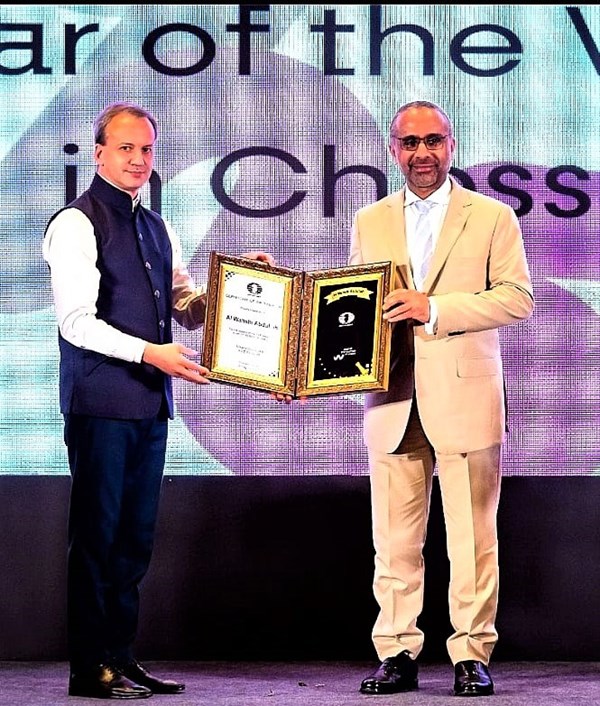
Saudi Arabia has become the first Arab country awarded a place on the advisory board of the International Chess Federation, the Saudi Press Agency reported.
The seat will be filled by Abdullah Al-Wahshi, the president of the Saudi Chess Federation.
“The weight of the Kingdom of Saudi Arabia and its position in all fields has a role in joining this advisory council, as our country has previously organized ably and with great success for a period of time,” said Al-Wahshi as he thanked the country’s leaders for their unwavering support for all sports and activities.
“From 2017 to 2019, the King Salman International Cup Rapid and Blitz Championship marked an unprecedented (chess) event with the participation of most countries of the world. This achievement raised the status of Saudi chess, leading to the Kingdom’s participation in the World Chess Olympiad in India and obtaining four international … titles.”
The advisory board, the International Chess Federation’s highest advisory authority, oversees all of the organization’s decisions and regulations.
source/content: arabnews.com
____________
Arkady Dvorkovic, President of the International Chess Federation with Abdullah Bin Salem Al-Washi, President, Saudi Chess Federation / pix: trixabia.com
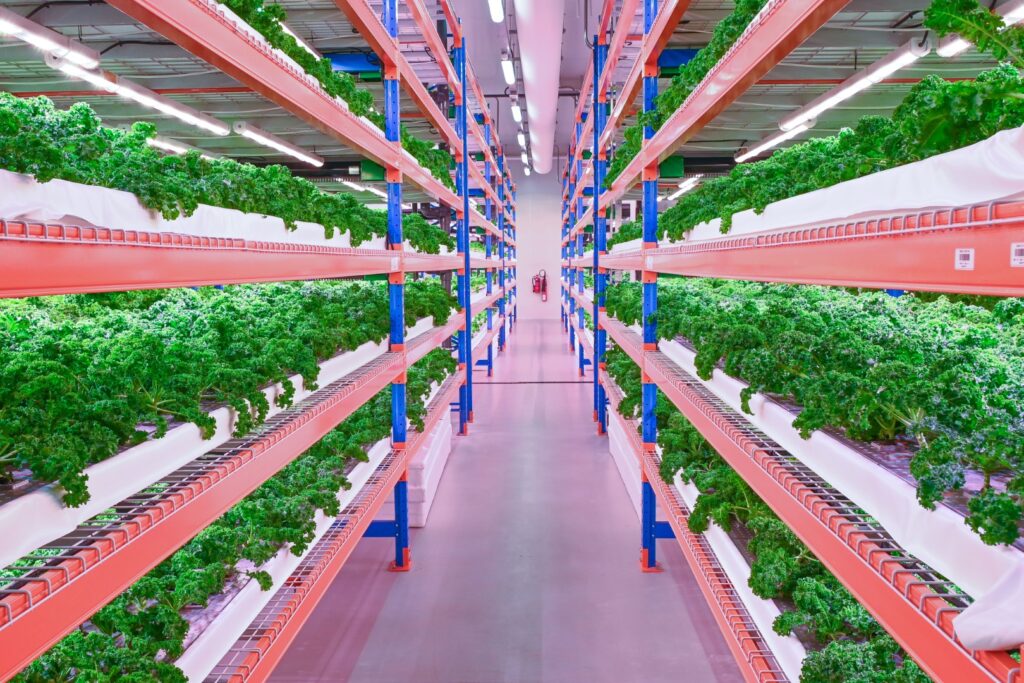
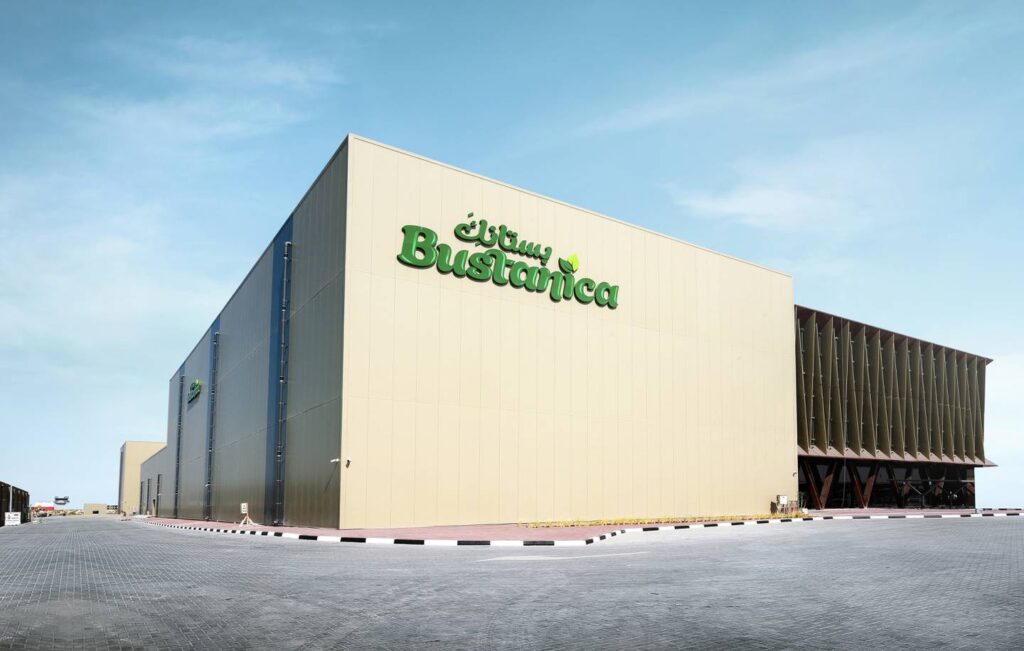
The $40m Bustanica hydroponic farm near DWC will produce more than a million kilos of greens annually with 95% less water than conventional farming.
Emirates has opened the world’s largest vertical farming plant in Dubai, a $40 million (Dh147m) joint venture with US-based Crop One, as the UAE continues to bolster its food and water security.
Bustanica, the 330,000 square-foot hydroponic farm located near Al Maktoum International Airport (DWC), is set to grow more than a million kilograms of leafy greens annually, or about 3,000kg per day, Emirates said in a statement on Monday.
Using 95 per cent less water than traditional farming and saving 250 million litres of water, Bustanica will grow fresh produce without pesticides, herbicides or chemicals.
“Long-term food security and self-sufficiency are vital to the economic growth of any country, and the UAE is no exception,” said Sheikh Ahmed bin Saeed Al Maktoum, chairman and chief executive of Emirates Group.
“Bustanica ushers in a new era of innovation and investments, which are important steps for sustainable growth and align with our country’s well-defined food and water security strategies.”
Bustanica is the first facility for Emirates Crop One, a joint venture between Emirates’ flight catering unit and indoor vertical farming firm Crop One.
Emirates Flight Catering, a subsidiary of Emirates group, supplies in-flight food for Emirates and other airlines at Dubai International Airport.
Vertical farming is a technique with a significantly smaller carbon footprint than traditional agriculture. This method grows plants using mineral nutrient solutions, in water and without soil. They are grown in a fully controlled environment — everything from temperature, humidity, lighting, water and nutrients is precisely monitored, maximising growth and yield.
The new farm is in line with the UAE’s National Food Strategy 2051 agenda for reliable year-round crop production and stable supply chain that is independent of weather and attacks by pests or fungus.
Bustanica will rely on machine learning, artificial intelligence and advanced methods — and a specialised in-house team of agronomy experts, engineers, horticulturists and plant scientists — to grow fresh produce.
Passengers on Emirates and other airlines can start consuming these leafy greens, including lettuces, arugula, mixed salad greens and spinach, onboard flights from this month.
UAE consumers will also soon be able to add these greens to their shopping carts at the nearest supermarkets, according to the statement.
Bustanica also plans to expand into the production and sale of fruits and other vegetables.
Bustanica will secure Emirates Flight Catering’s supply chain and reduce its carbon footprint by bringing production closer to consumption and “reducing the food journey from farm to fork”, Sheikh Ahmed said.
The plant opened after “significant planning and construction” and navigating the unforeseen challenges of the Covid-19 pandemic, Craig Ratajczyk, chief executive of Crop One, said.
“It’s our mission to cultivate a sustainable future to meet global demand for fresh, local food, and this first large format farm is the manifestation of that commitment. This new facility serves as a model for what’s possible around the globe.”
The UAE has been accelerating its support of AgriTech companies to reduce reliance on food imports, which is thought to make up nearly 90 per cent of food consumed in the country. Abu Dhabi has launched a number of initiatives, including $41m in grants and incentives worth $545m to support expansion.
UAE residents are already seeing evidence of recent efforts to localise agriculture: locally harvested produce at the market or on dining menus is now a common sight. Much of this has surfaced over the past few years as vertical and hydroponic farming ventures, research and cloud-seeding bear fruit.
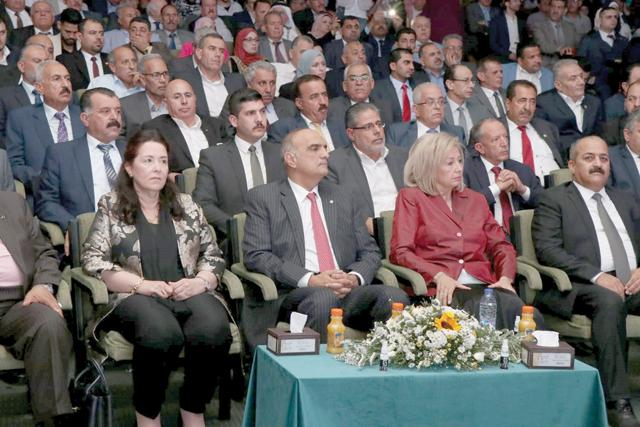
Deputising for His Majesty King Abdullah, Prime Minister Bisher Khasawneh on Sunday attended the ceremony of Irbid: the Arab Capital of Culture for 2022.
During the event, held at Al Yarmouk University, Khasawneh conveyed His Majesty’s greetings and thanks to those who put efforts towards making this national event — the launching of Irbid as the Arab Capital of Culture for 2022 — successful, the Jordan News Agency, Petra, reported.
The premier, who is also head of the higher national committee for celebrating Irbid: The Arab Capital of Culture for 2022, highlighted the Kingdom’s efforts to “embrace the culture and intellectual elite”, as well as “supporting innovators towards instilling a serious national culture”.
The selection of Irbid as the Arab Capital of Culture is a national event that is being celebrated by the whole Kingdom, he added.
He noted that nominating Irbid as the Arab Capital of Culture for 2022 and Madaba as the Arab Tourism Capital for 2022 coincides with the bicentennial to celebrate the Kingdom, as well as is accompanied by Jordan’s efforts towards a new start titled as “moving towards future” through three paths: Political modernisation, economic modernisation vision and upgrading the public sector.
The selection of Irbid is in line with the Kingdom’s modernisation and reform trends, which consider the cultural scene among its key pillars, he said, noting that the selection of Irbid is a source of pride for Jordanians and is aligned with the northern city’s nature as well as its historical and cultural status.
He also expressed hope that the event would contribute to uncovering the innovative capabilities in Irbid and across the Kingdom, as well as offer an opportunity to feature the qualitative value of the local and Arab cultural and intellectual scene.
The event was attended by a number of ministers, Arab culture ministers, guest delegations, and senators and deputies, among other officials.
Culture Minister Haifa Najjar said that proclaiming Irbid as the Arab Capital of Culture for 2022 by the Arab League Educational, Cultural and Scientific Organisation (ALECSO) illustrates confidence in Jordan and the country’s intellectuals, noting that the selection requires scaling up efforts to bring further innovation through joint action.
Mohamed Ould Amar, director general of ALECSO, said that Jordan’s comprehensive cultural renaissance under the leadership of His Majesty King Abdullah has contributed to Irbid’s well-deserved status, noting that the organisation is following up the activities of Irbid: The capital of Arab Culture for 2022, Petra added.
He also commended the participation of figures from Jerusalem, describing the holy city as the eternal capital of Arab culture at the 2022 Irbid event, highlighting that their participation is of special character, as Jordan has shown historical stances in defending Jerusalem and its cultural components.
At the end of the ceremony, Palestinian Culture Minister Atef Abu Saif handed over the banner of the Arab Capital of Culture to Najjar, marking the selection of Irbid as the Capital of Arab Culture for 2022 following Bethlehem, the Capital of Arab Culture for 2021.
source/content: jordantimes.com (headline edited)
____________
Deputising for His Majesty King Abdullah, Prime Minister Bisher Al Khasawneh attends the ceremony of Irbid: The Arab Capital of Culture for 2022 at Yarmouk University on Sunday (Petra photo)
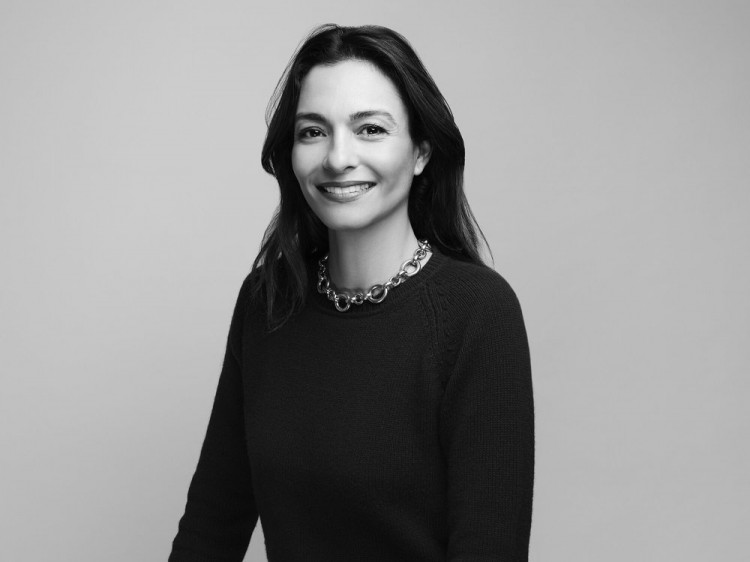
Tunisian-French Nadia Dhouib has been named the new General Manager of Paco Rabanne. The former Galeries Lafayette Champs-Elysees managing director succeeds Bastien Daguzan, who served in the role for five years.
Dhouib will report to Vincent Thilloy, chief brands officer of Paco Rabanne and Jean Paul Gaultier, another fragrance brand owned by Spanish firm Puig.
Dhouib, founder of RethinkRetail Advisory, has aided designers in their shift from Galeries to RethinkRetail.Advisory. “Retail isn’t dead – it’s boring,” she explained to Vogue Arabia at her Galeries appointment, saying that she wanted to create an experience for clients. Keep an eye on this place to observe the transformation she brings to Paco Rabanne’s property.
The maison was founded in 1966 and rapidly developed an avant-garde and current identity. Its Spanish founder, Francisco Rabaneda y Cuervo, was the son of Balenciaga’s head seamstress. He fled Spain’s Civil War for France, where he took the name Paco Rabanne. He began his career as an architect before transitioning to avant-garde accessory design and creating one-of-a-kind pieces for haute couture houses. In 1966, he started his eponymous label, which featured outfits comprised of moulded plastics, hammered metal, aluminum jersey, and knitted fur. His eponymous chainmail gowns—as worn by Françoise Hardy—remain emblematic of the house to this day.
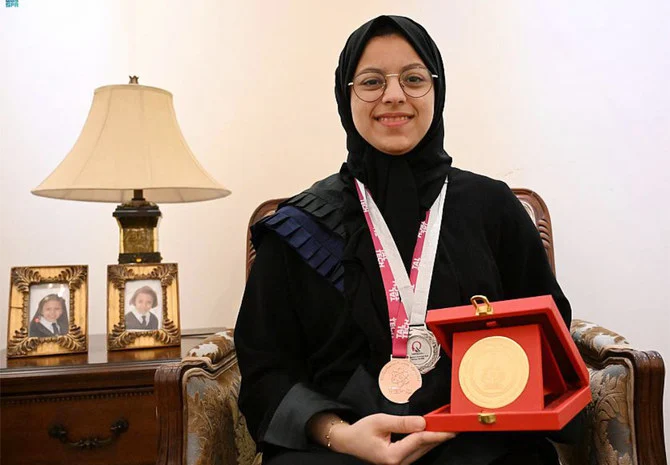
Prizewinning Saudi student Lama Al-Ahdal, who has been scooping medals at Physics Olympiads, says her competition success motivates her to continue with her passion and achieve great things for the Kingdom.
She won gold at the Gulf Physics Olympiad, a bronze at the International Physics Olympiad, and a bronze at the Nordic-Baltic Physics Olympiad.
Al-Ahdal spoke to the Saudi Press Agency about the beginning of her journey in the Physics Olympiad through the Mawhoob Competition, which she took part in several times.
It was her participation in 2018 that led to her nomination to attend training forums, a path that would eventually lead her to victory.
“I started attending basic courses in Jeddah, through which I qualified and passed the required tests. I was nominated for the Winter Forum at Princess Nourah University in Riyadh, then trained with the physics team, from which a number of students in the Kingdom would qualify to form the Saudi team for the Physics Olympiad.
“At the beginning of 2019, we underwent intense eight-hour training, both remotely and at King Abdullah University of Science and Technology, to prepare for international competitions. I learned how to calculate the strength of the Earth’s magnetic field using a string and two pieces of magnets, how electricity can be generated by heating two pieces of metal, how to measure the thickness of a candy wrapper using a laser, and other scientific experiments.
“The top five students were then nominated to represent the Kingdom, and thankfully I made it and snatched the gold medal in the Gulf Physics Olympiad, the bronze medal in the Nordic-Baltic Physics Olympiad, and the bronze medal in the International Physics Olympiad.”
Joining the Saudi physics team and undergoing training helped her to discover that physics was a beautiful subject. “I learned a lot from it and the Olympiad experience.”
Her participation increased her skills and developed her thinking by getting to know competitors from different countries.
“I also developed my time management skills since the training continued even during school days. My father and mother had a major role in helping me achieve my goals and encouraging me to try new things to gain more skills and learn more,” she said.
Setting a specific goal and working to achieve it was the most important thing that motivated her to take up the challenge and try new things.
Her father, Abdul Rahman Al-Ahdal, said his daughter’s journey was full of scientific challenges.
“She has always been a talented child and a bright student, with a promising future ahead of her. God blessed her with a group of highly experienced trainers and supervisors. It is important to focus and draw a plan and work to achieve it.
“I thank King Abdulaziz and His Companions Foundation for Giftedness and Creativity, and everyone responsible for helping the sons and daughters of the Kingdom partake in forums of creativity, innovation and scientific Olympiad, and other scientific activities.”
In-person and virtual festival showcases films from Arab world and diaspora.
The Arab American National Museum in Dearborn, Michigan, will kick off the Arab Film Festival on Friday.
Home to one of the largest Arab-American communities in the country, some consider Dearborn to be the “Arab capital” of the US and the museum has been devoted to documenting, preserving and presenting the history, culture and contributions of the community since 2005.
The annual festival will run from August 12 to 21, with a line-up featuring comedy shorts and documentaries tackling America’s Israel bias.
“As a young Arab American myself, I never really saw my story, my family story reflected in the music I listened to or the films that I watched or the textbooks in my classroom,” said Dave Serio, curator of education at the museum.
“So our goal really is to kind of inspire Arab Americans to see their stories, their perspective, people that look like them, names that they might have, on the big screen.”
Beginning in 2005, it is one of the museum’s longest-running programmes and offers a range of windows into Arab cinematic creativity and storytelling.
One of the films in this year’s set is When Beirut Was Beirut from writer-director Alessandra El Chanti. The short is a “poetic hybrid documentary” that focuses on an imagined conversation between three famous buildings in the Lebanese capital and what they witnessed during the country’s civil war.
“I wonder what inanimate objects could say, because they also have stories, too,” Ms El Chanti, a Lebanese citizen who now lives in Doha, Qatar, told The National.
“I feel like we always go to Lebanon and we’re just passers-by — we recognise that there are war-torn buildings, you can see the bullet holes.
The film, which began production in 2020, was produced entirely over Zoom by an all-Lebanese team of six artists.
Many of the films at this year’s festival will be making their US or Michigan state debut, Mr Serio said.
Ms El Chanti hopes members of the Lebanese diaspora watching her film at the festival walk away feeling “there’s a lot that you should learn about your country that you don’t know about — it literally could be from the perspective of anything and everything”.
Yasmina Tawil, the director of film programming at the Arab Film and Media Institute — one of the festival’s sponsors — told The National that while Arab film festivals such as this are considered “niche” in the entertainment industry, they can build towards more inclusion in the mainstream.
“We’re not a Sundance, we’re not a Cannes.
“But when a distributor goes to pick up a film, [the festivals] will add to the credence and the hype of the film. And I would at least hope that distributors would look at that as a sign of one of their big audiences … already knows about and really likes the film enough to programme it in their festival.”
“They’ll get picked up for distribution in the Middle East, in Europe and then maybe not make it over here [to the US]. Or if a torrented copy does, it might not have English subtitles and things like that.”
She added that her institute’s mission is, in part, to serve as a “caretaker” for Arab films in America.
The museum has offered both virtual and in-person attendance options, opening its mission to viewers across state and national borders.
“The Arab-American community is ridiculously talented,” said Mr Serio. “And our film festival is just honoured to be able to showcase a fraction of the amazing work that the Arab-American community is working on.”
source/content: thenationalnews.com (edited)
__________
Poster for the 2022 Arab Film Festival at Dearborn, Michigan’s Arab American National Museum. All photos: Arab American National Museum
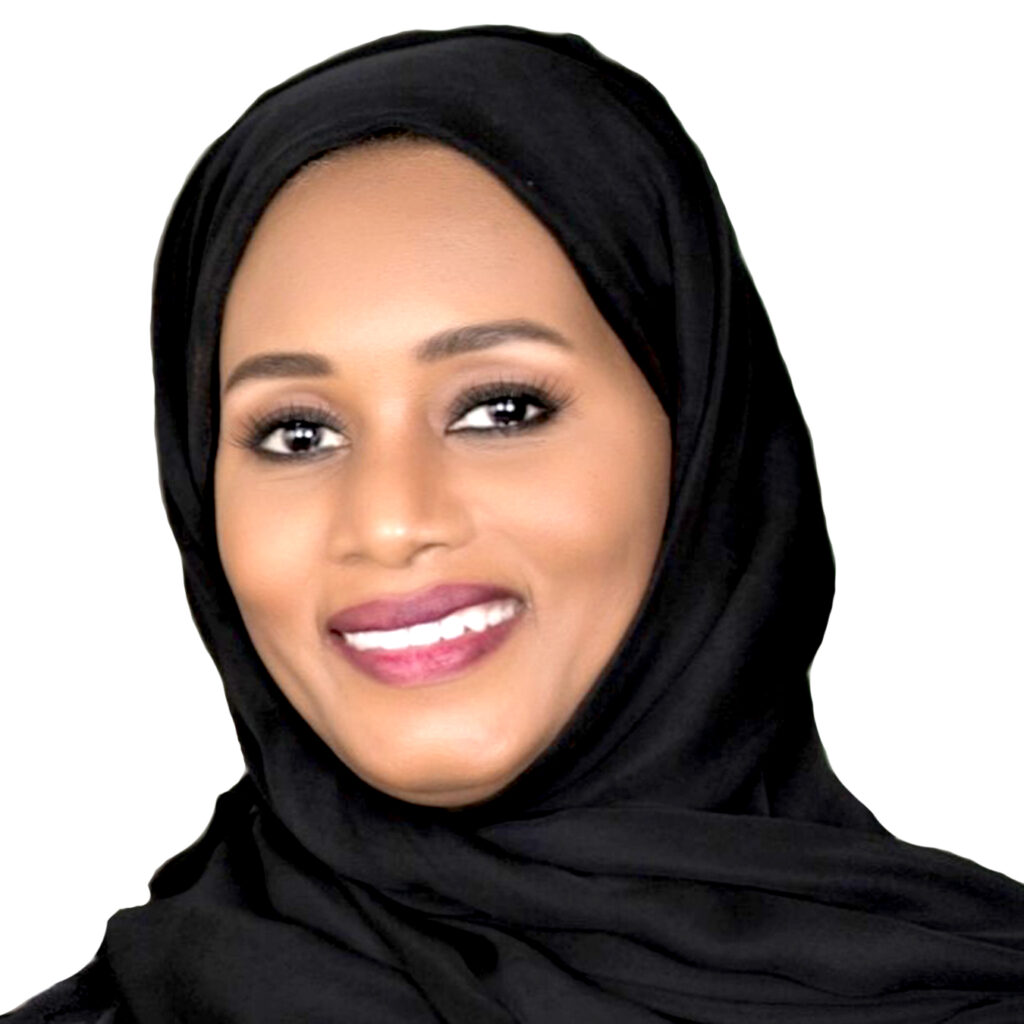
Tarifa Ajeif Al Zaabi Ph.D, has been appointed as the new Director-General of the International Center for Biosaline Agriculture (ICBA), becoming the first Emirati to hold the position since ICBA’s foundation in 1999.
Dr. Tarifa Ajeif Al Zaabi joined the Centre in August 2019 as Deputy Director-General and has served as Acting Director-General since November 2020.
A graduate of the UAE Government Leaders Programme (Executive Leadership), she has delivered executive training and development programs for government officials in various countries as part of the UAE Government’s initiatives to transfer knowledge and develop executive government capacities.
She holds a Ph.D. in Education from the British University in Dubai and an Executive MBA from the University of Sharjah. She has 25 years of experience in executive leadership and management, strategy development, innovation support, research, and national and international capacity development.
ICBA has become a global center of excellence focusing on developing tailored solutions for marginal environments facing the problems of salinity, water scarcity and drought. The Centre has partners in more than 50 countries, which has allowed it to draw on a wide variety of expertise to achieve a greater impact on the ground. The Centre has also conducted research and development activities and projects in about 40 countries in Central Asia, the Middle East, North Africa, South Asia, the South Caucasus and sub-Saharan Africa.
source/contents: wam.ae (headline edited)
________________
International Center for Biosaline Agriculture (ICBA),
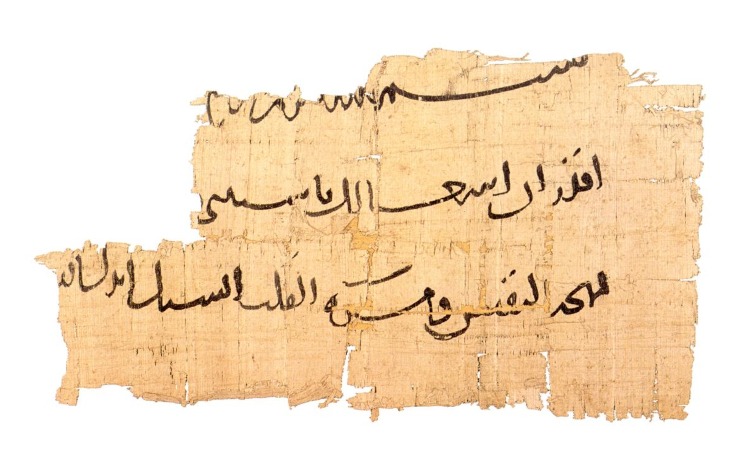
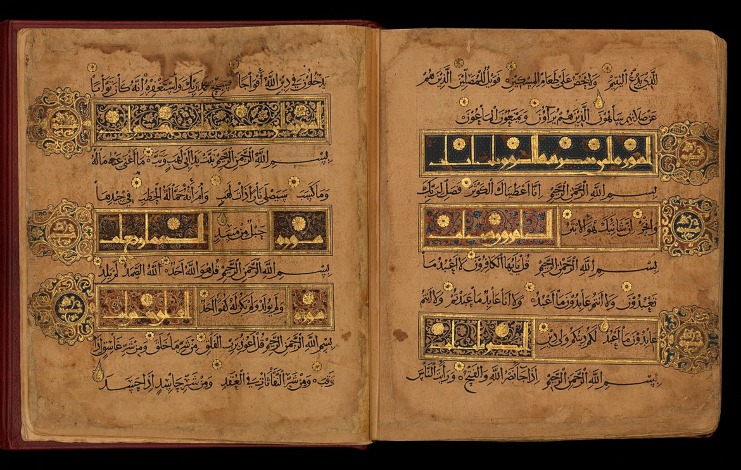
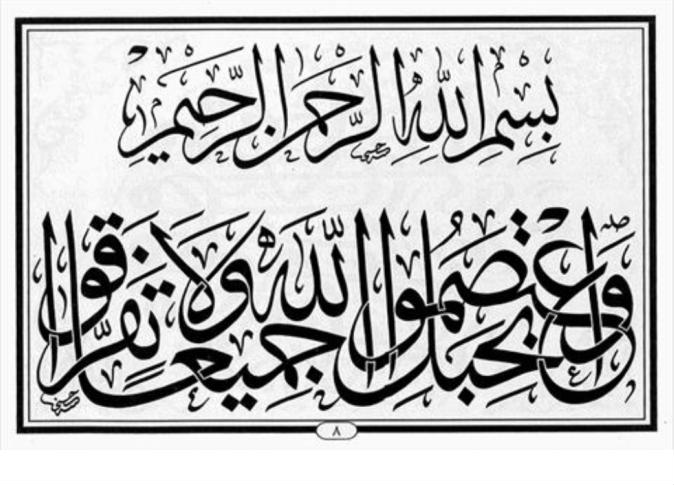
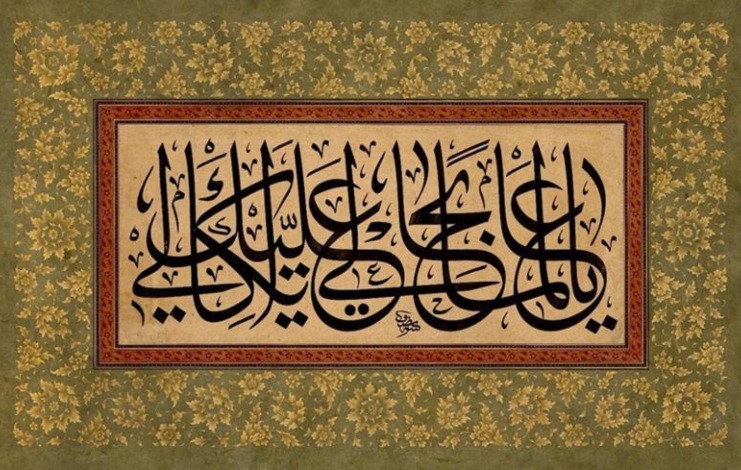
Arabic Calligraphy, the art of creating decorative handwriting or lettering, is one of the oldest art forms from the Arab region; one that has not only thrived with time but also evolved into a unique form of expression. It survived through several tumultuous periods that threatened its existence, from civil wars to an invasion by the Mongol Empire that destroyed Baghdad.
Even though the writing wasn’t as focused on in the past, with many Arabs preferring to memorize poetry and other forms of text and pass them down verbally, that changed significantly later. Calligraphy would flourish to include the preservation of the Quran, adorn mosques as well as the palaces of kings, and by royal scribes when writing decrees, among other things.
In celebration of World Calligraphy Day, we decided to dive into the past and look back at some of the most well-known and prominent calligraphers from the Arab world.
Ibn Muqla
One of the biggest names in developing and improving Arabic calligraphy, born in 885 AD in Baghdad, Iraq, during the Abbasid Caliphate, he started out as a tax collector before rising through the ranks and becoming the Caliph’s Vizier three different times.
At this time, the Kufi style dominated the calligraphy scene, but Ibn Muqla invented new art styles that superseded the previous ones. Ibn Muqla was the one who invented the Thuluth and Al-Mansoub styles, as well as the foundations and rules for others, such as Naskh. The Naskh and Thuluth got further development throughout the centuries that followed, and calligraphers still use them today.
While the Kufic style was rigid in its overall design, Naskh had a more cursive structure but wasn’t as popular and as used at the time, Ibn Muqla changed that by improving on it and using it in official decrees, and private correspondence.
Ibn Muqla’s Thuluth style was new with its letters having long vertical lines with broad spacing. Its name translates to “one-third”, in reference to the maximum height for the letters on the same line must not exceed one-third of the ‘alif.
As for the Al-Mansoubstyle, it mainly focused on three measurements: the size of the period meaning the “Noqta”, the circle with a diameter equal to the height of the alif (the first letter in the Arabic language) and, and the height of the alif.
Little is known when exactly Ibn Al-Bawwab was born. However, we know of his existence and his body of work thanks to the survival of many of his manuscripts, Qurans, and texts referring to him by name.
With his name literally translating to “son of the doorman,” he didn’t grow up in a wealthy family and had to work to make a name for himself. He did so by learning about law and theology and working in several professions, such as a home decorator. However, he would later settle on working in book illumination and calligraphy.
Over years of hard work, he became renowned as a master calligrapher; fluent in six different styles in the field, perfecting the Al-Mansoub style and developing the Reyhani, Naskh, Tawqi, and Muhaqaq styles significantly.
Housed at the Chester Beatty Library in Dublin, Ireland, is the sole surviving Qur’an penned by Ibn al-Bawwab gifted to the country by Ottoman Sultan Selim I.
Originally from Syria, Mohammad Hosni Al-Baba was born in 1894 and is considered one of the last classical calligraphers. Al-Baba received his initial formal training with the Turkish master, Istanbul-based Yousef Rasa, who had renovated the Umayyad Mosque in Damascus, Syria. Al-Baba would later study under another renowned calligrapher, Mehmed Showki Afendi, author of the work “The Thuluth & Naskh Mashqs.”
He would later travel to Cairo, Egypt, becoming one of the leaders in Islamic and Arabic calligraphy, turning his home into a hub for artists, calligraphers, and poets. Al-Baba would be famous for improvements to the lettering in the Thuluth style, the linear structure of Arabic script, and was appointed by King Farouk as the first professor to be a master at the Royal Institute of Calligraphy.
His children would continue his legacy but in different fields since many grew up surrounded by artists when they visited Al-Baba’s home. The most famous of his children are actress Soad Hosni, dubbed “Cinderella of Egyptian Cinema,” and Najat Al Saghira, who became an actress and singer.
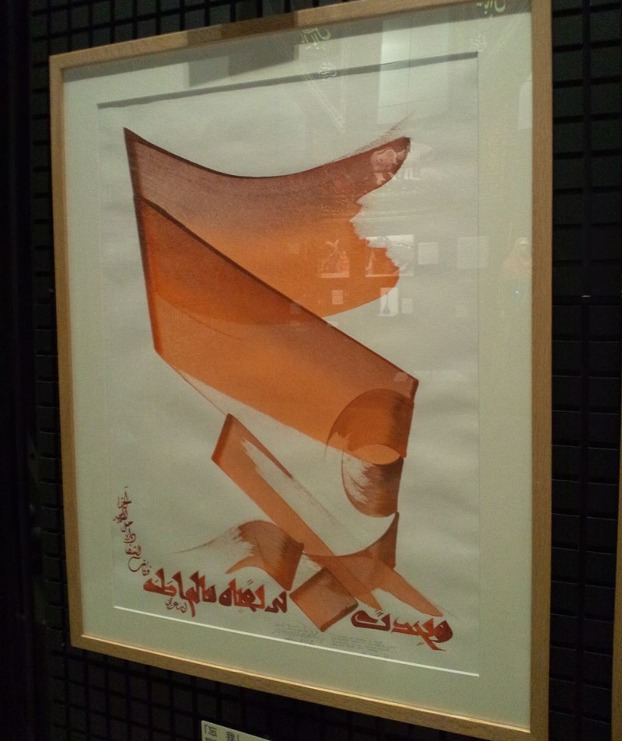
Born in 1944, Iraqi painter and calligrapher Hassan Massoudy continues to be one of the biggest inspirations for many modern artists today. French writer Michel Tournier even considered him as the “greatest living calligrapher” in 1989.
Massoudy grew up in Baghdad, Iraq, until 1969, when he fled to Paris, France, entering the École des Beaux-Arts, where he studied figurative painting. At the time, he looked for a job to pay for his studying, finally finding one as a calligrapher in Arabic magazines, writing their headlines.
While he wasn’t famous for a traditional calligraphy style, his distinct and elaborate designs made him stand out among the rest of the artists of his time. Massoudy would delve into the world of theater, collaborating with artists and choreographers, creating different productions focusing on the harmony of dance, calligraphy, and dance routines.
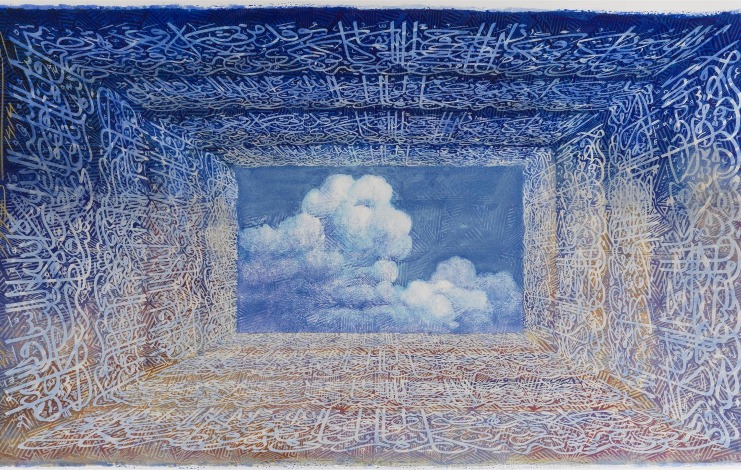
Studying abroad but seeking inspiration from his traditional roots, Tunisian artist and calligrapher Nja Mahdaoui invented the world of Arabic calligraphy as a graphic style, creating what was called “Calligrams.”
Born in 1937 in Tunis, Tunisia, he first started learning art history and painting at the Carthage National Museum. He later traveled to Rome, Italy, where he continued to study painting and learned more about philosophy at the Santa Andrea Academy. He also moved to Paris, France, where he went to the Cité Internationale des Arts and École du Louvre before returning to his home country in 1977.
His calligraphic style focuses mainly on the designs he creates as a whole rather than the composition of words since his “calligrams” resemble Arabic letters but have no literal meaning, leading to many naming him the “inventor of abstract calligraphy.” People can see Mahadaoui’s work on several materials used as a canvas, including jewelry, drums, leather, paintings, walls, glass, and so much more.
A UNESCO Crafts Prize laureate, Mahdaoui, graced the Facebook campus in 2018 by painting one of their halls using Arabic calligraphy in his unique style as part of the “FB AIR program,” turning their hall into a vividly colorful masterpiece.
Egyptian artist and calligrapher Ahmed Mustafa was born in 1943 in Alexandria, Egypt, graduating from the Faculty of Fine Arts at Alexandria University in 1966 before traveling to the UK on a scholarship to the Central School of Art and Design in London, England, where he earned his Ph.D. in 1989.
Inspired by his Islamic roots, his calligraphic works mainly focused on quotes from the Quran, among other sources. Working on several materials as his canvas, Mustafa has designs on glass and carpets, among others.
Mustafa also set up the Fe-Noon Ahmed Moustafa Research Centre for Arab Art and Design in London in 1983. He lectures and creates workshops globally as well as does commissions, one of which was presented by Queen Elizabeth II to Pakistan for the country’s fiftieth anniversary in 1997.
The following year, the Vatican invited him to do an exhibition at the Pontifical Gregorian University in Rome, Italy. World media at the time announced it as the first achievement of its kind in the history of Muslim-Christian relations.
A Libyan pharmacologist treating HIV patients in South Africa and a Tunisian scientist purifying water in Malaysia.
This is the story of two world-renowned scientists who left their homelands of Libya and Tunisia and went on to achieve great success in South Africa and Malaysia.
Libyan pharmacologist Mohamed Irhuma studied in South Africa but faced a range of challenges when his home country went through its 2011 revolution. He’s achieved success in South African HIV AIDS pharmacology, including award-winning work on drug treatments.
Tunisian chemical engineer Mohamed Kheireddine Aroua is a world expert in material separation, inventing a life-changing water purification machine which benefits remote villages.
Both stories illustrate some of the complexities of being an Arab abroad, and the journeys of two remarkable scientists.