Arabs & Arabian Records Aggregator. Chronicler. Milestones of the 25 Countries of the Arabic Speaking World (official / co-official). AGCC. MENA. Global. Ist's to Top 10's. Records. Read & Enjoy./ www.arabianrecords.org
After his recent achievement, El Bakkali became the “king of steeplechase.”.
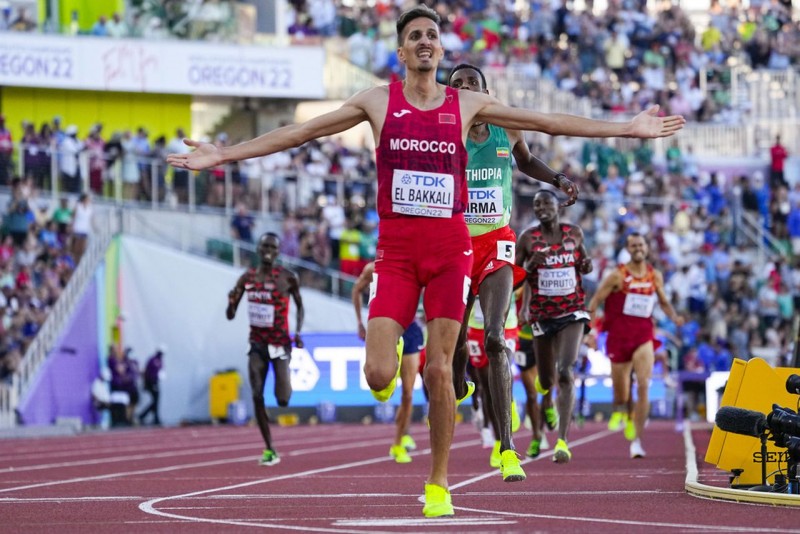
King Mohammed VI sent on Tuesday a message to Moroccan steeplechase runner Soufiane El Bakkali, congratulating him on winning the gold medal at the World Athletics Championships held in Eugene, US.
The Moroccan athlete brought Morocco its first gold in the 3,000m steeplechase in this year’s World Championships, ending Kenya’s 15-year reign in the discipline at the international competition.
The King expressed his appreciation for El Bakkali’s achievement, saying that the Moroccan athlete “was able, thanks to his competitive spirit and patriotism, to achieve this well-deserved victory.”
“As we commend this well-deserved global crown, with which you raised the flag of Morocco in this prestigious international event, we wish you success in your rich sporting career, covered by our generous sympathy and satisfaction,” the King added.
A teary-eyed El Bakkali raised the Moroccan flag after his triumph, telling the media he was dedicating this win to King Mohammed VI, his parents, and to all the Moroccans who have shown him endless support and encouragement.
Several international media reporting on El Bakkali’s recent achievement described him as the “king of steelechase” after claiming world title.
He added, “After the semi-final I had a good look at the strategy of the Kenyan athletes. I was on my own, the only Moroccan in the race, but I did not limit myself to winning silver nor bronze. Instead I managed to come first in two world league meetings and now the World Championship.”
El Bakkali began earning his first medals at international events at the 2017 World Championship in London, where he placed second, before finishing first in the 2018 Mediterranean Games in Spain.
In August 2021, Soufiane El Bakkali gave Moroccans a moment of pride after his historic achievement at the Olympics, ending Kenya’s dominance over the men’s 3,000m steeplechase and winning the gold medal at Tokyo 2020.
As a site of historical significance with a prominent role in Islamic history, today it sees a number of visitors who come to perform their prayers.
Madinah is home to a number of mosques and historic Islamic sites, a veritable tourist destination where visitors can explore places from Prophet Muhammad’s life.
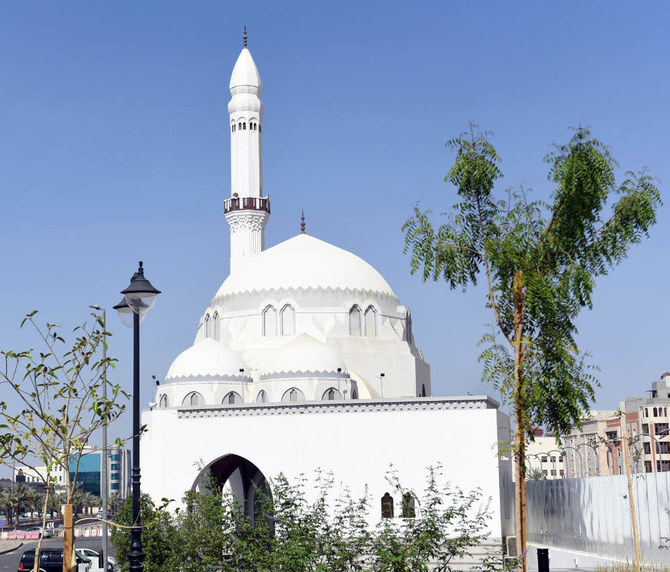
Al-Jum’ah Mosque is one such place, linked to the migration of Prophet Muhammad from Makkah to Madinah.
The mosque is the site where the prophet stopped in the Wadi Ranuna region and performed the Jum’ah, or Friday, prayer.
Al-Jum’ah Mosque holds different names, such as Al-Wadi Mosque and Atikah Mosque.
As a site of historical significance with a prominent role in Islamic history, today it sees a number of visitors who come to perform their prayers.
It is situated southwest of Madinah, near Wadi Ranuna, 900 meters north of the Quba Mosque and 6 kilometers from the Prophet’s Mosque.
It was built with rocks initially then demolished and renovated several times. Before the last expansion, the mosque was built over a small mound, with one dome made of red bricks. Then it was rebuilt and expanded to accommodate 650 pilgrims.
The mosque also includes a minaret, a main dome in the middle of a praying area and four small domes on its sides.
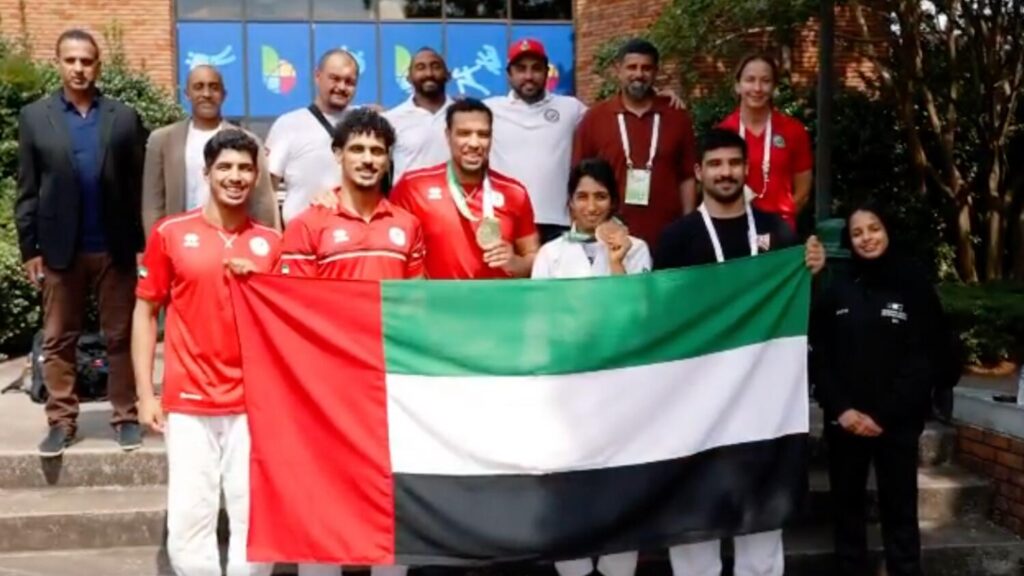
The UAE national jiu-jitsu team of five athletes has added two medals in the 11th edition of the World Games hosted by Birmingham, USA, from 7 to 17 July, 2022, bringing its total harvest to five medals (two gold medals, two bronze and one silver).
UAE’s Faisal Al Ketbi captured the gold medal in the 85kg category, while the 19-year old Shamma Al Kalbani won the bronze in the open weight division, becoming the first Emirati athlete to achieve such a global landmark victory.
A jiu-jitsu squad of five athletes from the UAE qualified for the games, building on an impressive performance at the 2017 Games in Warsaw, Poland. Last time out, Al Ketbi won the gold medal in the under-94kg.
Abdel Moneim Al Hashemi, Chairman of the UAEJJF, and Senior Vice President of the International Jiu-Jitsu Federation (JJIF), called the UAE team to offer his congratulations.
Fahad Ali Al Shamsi, Secretary General of the UAE Jiu-Jitsu Federation (UAEJJF), attended the award-giving ceremony, and congratulated Faisal Al Ketbi and Shamma Al Kalbani on the winning.
Tariq Al-Bahri, Director of the Abu Dhabi Professional Jiu-Jitsu Association, Mubarak Al Menhali, Director of the Technical Department, UAE Jiu Jitsu Federation’s (UAEJJF), and Joachim Thumfart, Director-General of the Jiu-Jitsu International Federation (JJIF), watched the closing day competitions.
Considered a global showpiece for sports yet to be included in the Olympic Games, the prestigious World Games 2022 featured approximately 3,600 participants from 100 nations competing across more than 30 sports.
The Emirati stars included Faisal Al Ketbi (85kg), Muhammad Al Amri (77kg), Muhammad Al Suwaidi (69kg), Shamma Al Kalbani (63kg) and Balqees Abdelkareem (48 kg).
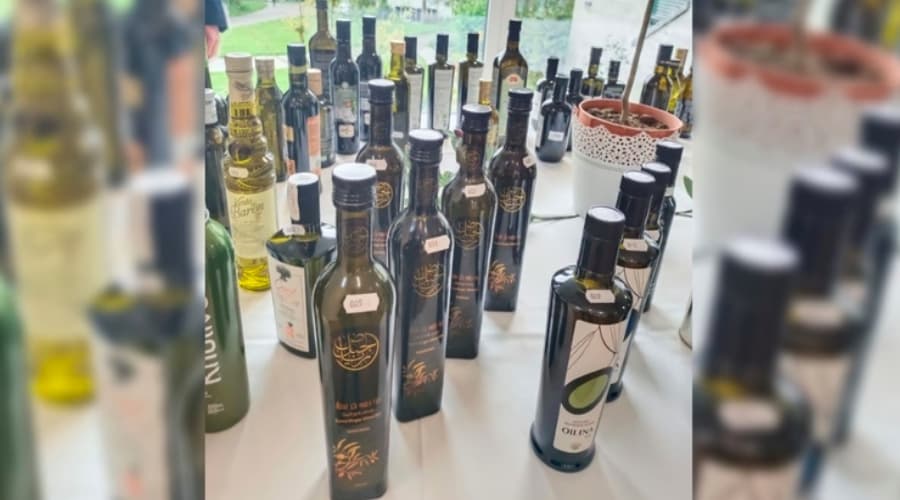
Olive oil of the Royal Court Affairs (RCA), represented by the Royal Gardens and Farms, have won five medals at the London International Olive Oil Competitions.
The olive oil products of Riyad al Jabal Farm in Jabal Akhdar were awarded two gold, two silver and a bronze, confirming the continuation of a high-profile record in international competitions. The prizes will be handed over to the winners at a ceremony on July 11, said a report.
Hilal bin Mohammed al Waeli, Head of Horse and Camel Affairs, Farms and Royal Gardens, said, “Omani olive oil products continue to shine and lead, as it deservedly won a total of 12 international awards this year through participations in three competitions.”
He added that these achievements are a clear evidence of the quality of the extra virgin olive oil produced at the Riyad al Jabal Farm.
“All stages of its production, starting from choosing the site for planting olive trees, the technical and scientific care of agricultural process, to the accurate harvesting methods and extraction utilising the best modern methods are managed by a highly skilled and dedicated workforce.”
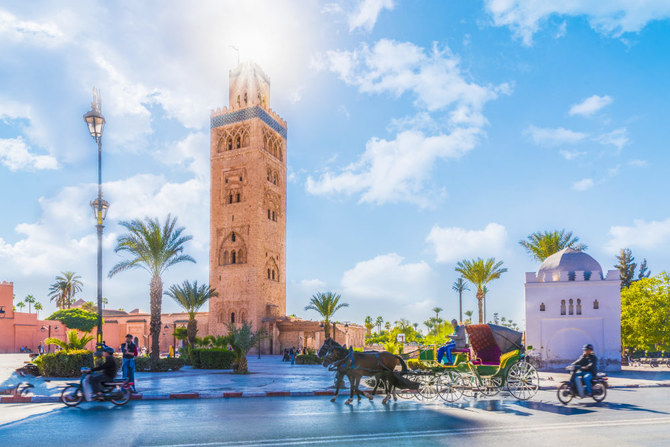
Time Out magazine ranks Marrakech 7th among top 53 cities. List also includes Dubai, Abu Dhabi, Doha
Marrakech has been ranked seventh in a new list of the world’s 53 best cities, compiled by British events magazine Time Out.
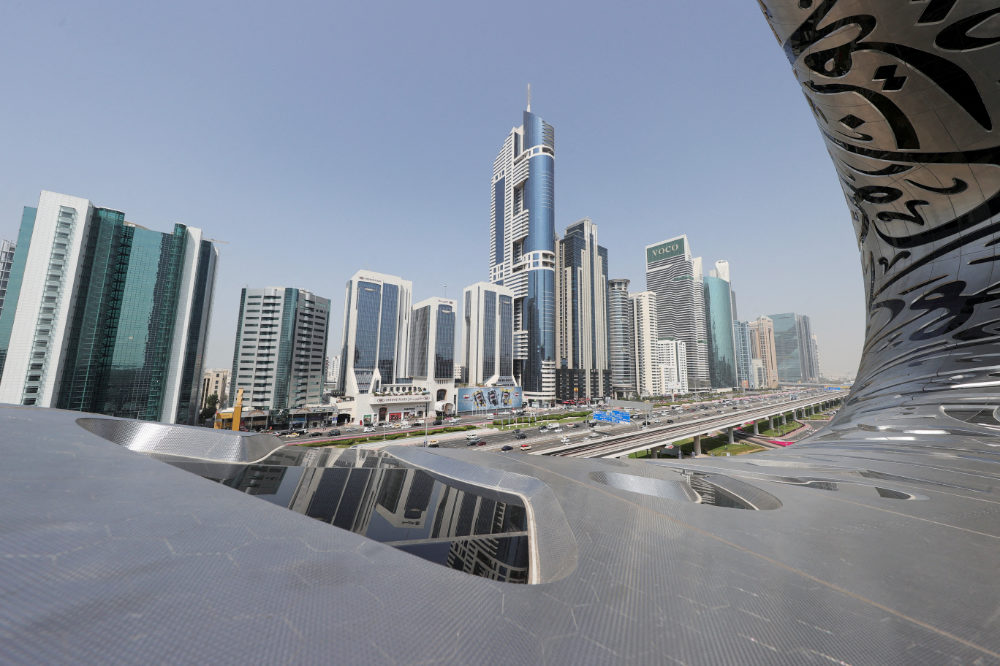
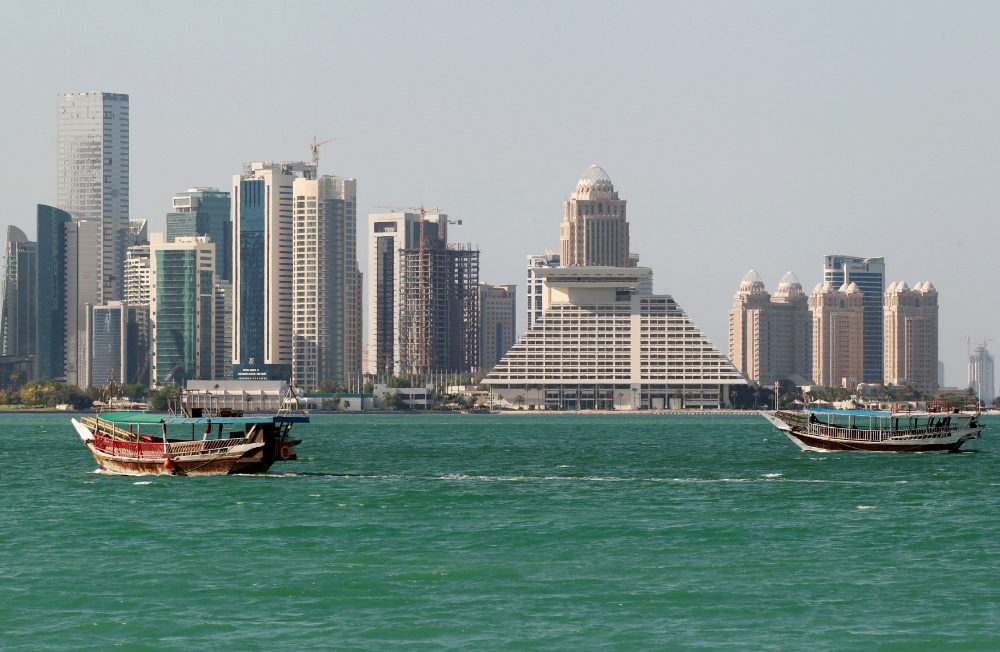
Dubai (40), Abu Dhabi (45) and Doha (53) were the other Arab cities receiving plaudits for their offerings in nightlife, liveability, and practical issues such as walkability and sustainability.
The magazine’s annual ranking this year was the first since 2019 to not revolve around resilience to the COVID-19 pandemic, instead focusing on the fun and practical frills that each city has to offer.
Time Out said it had “added extra weight to the things that make cities great places to visit as well as to live.”
It added: “Our top cities this year are the ones with thriving nightlife, amazing food and drink, and art, culture and museums galore.
“We’ve highlighted places that aren’t boring or overly expensive or overrated, and we’ve ensured that our top picks also score well for practical stuff like walkability, good public transport and safety, as well as sustainability.”
The editors were charmed by the “community, creativity and faith in the future” that made Marrakech “come roaring out of the pandemic with a new lease of life.”
Time Out spoke to local guides and experts to get a feel for what is particularly excellent about each urban hub.
Highlighting the new international storytelling festival in February, it said post-pandemic Marrakech has attracted “big players like La Mamounia” that were “sporting sassy new looks.”
The Moroccan cultural capital was described as “thriving,” with the magazine pointing to a range of exhibitions.
It added that El-Fenn had launched “the hottest Sunday music nights in town,” with visitors desperate to return.
Time Out said Dubai “has all the stuff you’d want from a travel destination — from incredible restaurants and buzzing nightlife to some of the world’s best shopping and simply stunning beaches.”
It also pointed to its modernity and cleanliness, highlighting that 97 percent of the locals say the city is clean.
Dubbed “a city of superlatives,” Time Out pointed to the emirate boasting the world’s highest infinity pool, tallest building and largest manmade island. Dubai heard the phrase “go big or go home” and truly took it to heart.
But while those “world’s largest” structures are static, the city is anything but. A vibrant events scene has introduced the newly opened Museum of the Future, with Time Out recommending that you follow your visit “with a beach club crawl along the rapidly expanding Palm West strip and a DJ set at Electric Pawn Shop.”
Time Out noted that Emirati capital Abu Dhabi is also the “unofficial arts and culture capital” of the UAE.
Pointing out that the city’s safety and cleanliness made it popular with expats, the magazine referenced the constant stream of exciting things to do, “from cutting-edge restaurant openings to major new museums including the Guggenheim Abu Dhabi and the National History Museum Abu Dhabi,” both of which are on the horizon.
Local expert Heather Cichowski, from Time Out Abu Dhabi, said the city “ranks among the least dirty, stressful and rude. In short, it’s an all-round comfortable and pleasant place to live and work.”
Like Dubai and Abu Dhabi, Doha was similarly praised for its cleanliness, but locals and expats have also lapped up the Qatari capital’s stream of events and activities.
As Doha gears up to host this year’s FIFA World Cup, the pinnacle of the world’s most popular sport, the city has been promoting its local events for every taste and persuasion.
Time Out said: “There’s loads of great stuff to see and do here, whether you fancy heading out to one of the city’s many cafés for breakfast (and we mean many, Doha’s coffee-and-cake culture is absolutely thriving), touring public art spots from Al Sadd Metro Station to Katara Cultural Village, or visiting a bar after hours.”
Boasting a slower and less stressful pace of life, the city is pouring attention into its arts scene.
The magazine said from now until the turn of 2023, some 17 new exhibitions are set to open, including an “immersive light installation from Pipiliotti Rist at the National Museum of Qatar,” which it described as “particularly stunning.”
source/content: arabnews.com
_____________
Marrakech. (Shutterstock)A view of the downtown skyline is seen from the Museum of the Future in Dubai, United Arab Emirates, February 23, 2022. (REUTERS)Buildings are seen on a coast line in Doha, Qatar. (REUTERS)
Dr Samiha Sinan worked as an internal medicine doctor for 43 years in several Saudi hospitals
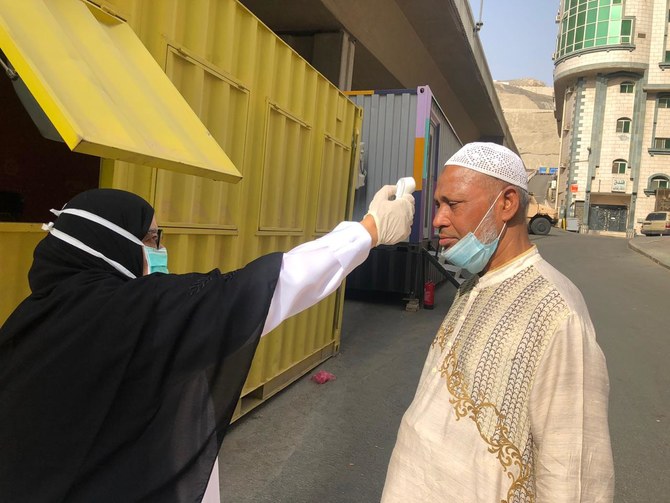
Saudi Minister of Health Fahad Al-Jalajel has named 65-year-old retired doctor and volunteer Dr. Samiha Sinan the “Mother of Volunteers.”
“One retires from office work, not from serving pilgrims,” Al-Jalajel said, praising Sinan’s efforts in providing health care to pilgrims.
Sinan told Arab News that volunteering to serve pilgrims is a work of great honor if done sincerely and honestly.
She worked as an internal medicine doctor for 43 years in several Saudi hospitals, retiring four years ago.
As soon as the pandemic hit across the world, placing great pressure on the health sector, Sinan jumped back into the field to help out.
“I am still able to give, and I tried to think of how a person could serve their religion, country and king, so I submitted a request on the volunteer platform at the Ministry of Health. I was afraid I would be rejected given my age, but my instinct told me to apply because I wanted to give and serve. The Ministry of Health approved my request, and I immediately decided to get back in the field and fight the pandemic,” she said.
Sinan added: “The Makkah health authorities tried to put my comfort first and asked me to work in a small medical clinic in Makkah, but I refused since the pandemic was growing stronger. I headed directly to a COVID-19 center in an isolated area in Al-Masfalah, in Makkah. No one was allowed to enter or leave, but we worked in a comfortable environment thanks to the measures the state had taken to support citizens. I volunteered there for two years, 12 hours a day, seven days a week.”
Even though COVID-19 has witnessed a steady decline in the Kingdom over the past few months, Sinan still volunteers in one of the squares at the Grand Mosque by providing medical care to injured pilgrims.
source/content: arabnews.com (headline edited)
________
Dr Samiha Sinan volunteers by providing medical care to injured pilgrims at the Grand Mosque. (Supplied)
Analysts expect up to 157,000 to take up citizenship in next two years as 2015 cohort becomes eligible.
Seven years after arriving in Germany at the height of a refugee crisis, tens of thousands of Syrians are on the verge of receiving German passports in what experts regard as a success for their integration.
The number of Syrians taking up German citizenship trebled to more than 19,000 last year, the government said, after some refugees who excelled in integration and language courses managed to beat the usual eight-year waiting period.
Analysts believe as many as 157,000 more could follow in the next two years as the rest of the 2015 group becomes eligible.
“Overall, we can see that the integration of large numbers of refugees has made rapid progress,” said Jan Schneider of the government-backed Expert Council on Integration and Migration.
“We have observed an above-average level of interest in naturalisation among Syrian refugees. At the same time, many of them are starting to fulfil the necessary criteria.”
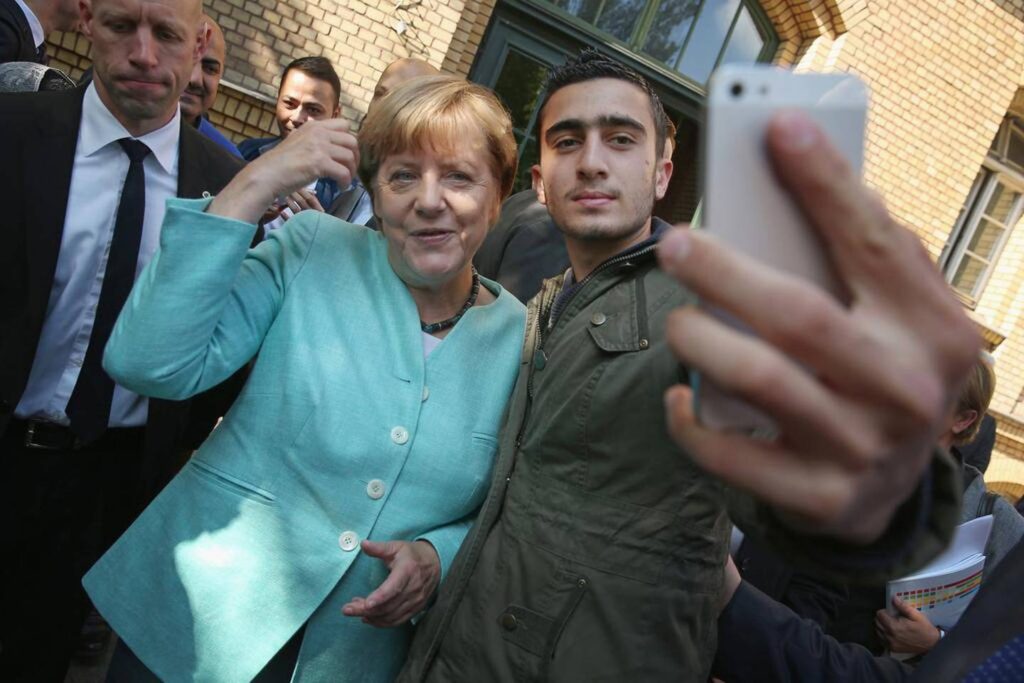
The intake of hundreds of thousands of Syrians in 2015 was a politically divisive decision by former chancellor Angela Merkel that was bitterly opposed by some Germans.
In the chaos of that summer’s refugee crisis, many Syrians fleeing war arrived at German railway stations and were initially put up in camp beds and gyms as humanitarian workers struggled to cope with the numbers.
Many refugees also arrived from Afghanistan, Iraq and other countries, but Syrians made up the largest number and helped to change the face of a Muslim community in Germany historically dominated by Turkish groups.
The backlash to the 2015 intake fuelled the rise of the far-right Alternative for Germany (AfD) party, and debates over crime, integration and national identity dominated German politics in the subsequent years.
Nonetheless, Mrs Merkel said shortly before leaving office that her much-derided statement in 2015 that “we will manage it” had proved correct, praising the work of local authorities and volunteers in integrating people.
Alongside reports, often seized upon by the right, of violent crimes by refugees, have been more positive stories including of Syrians in Germany helping Ukrainians who fled the war with Russia.
A 34-page report by the expert council said their integration into the labour market was progressing well and the number of social security claimants was down.
However, it said women were less likely to have had jobs or learnt German and that employment had suffered a setback during the coronavirus pandemic when refugees in casual jobs were more likely to be laid off.
Mr Schneider said language courses had paid off especially well because many Syrians were able to complete the naturalisation process in six years.
People can take the six-year shortcut if they can show exceptionally good language skills, perform notably well in their work or education, or have a strong record of volunteer work.
The report said the most conservative estimate was that about 20,000 Syrians a year would take up German citizenship from this year onwards, but that this could rise to many more than 50,000 if they apply at a high rate.
Syrians made up more than one in seven of all naturalised German citizens last year, with 19,100 of them joined by 4,420 Iraqis, 4,020 Iranians and 3,175 Afghans as well as many Turks, Poles and Romanians.
As well as the residency and language requirements, people must pass a citizenship test, be able to support themselves financially, swear loyalty to the democratic order and generally have to give up their old passport.
Mr Schneider said there could be delays if high demand from Syrians continues to exert pressure on short-staffed immigration authorities.
Afghan refugees described frustration at Germany’s famously meticulous bureaucracy as they sought protection for their relatives after the fall of Kabul last year.
“Waiting times are already very long in some places and the authorities are often short of staff,” Mr Schneider said. “They are facing significant challenges.”
Chancellor Olaf Scholz’s government has promised to cut the waiting time for prospective German citizens to five years of residency with a possible three-year shortcut, instead of eight and six.
It has also committed to relaxing rules on dual citizenship, which is currently permitted only for European Union citizens, people born with two nationalities and in limited cases where special permission is given.
source/content: thenationalnews.com
____________
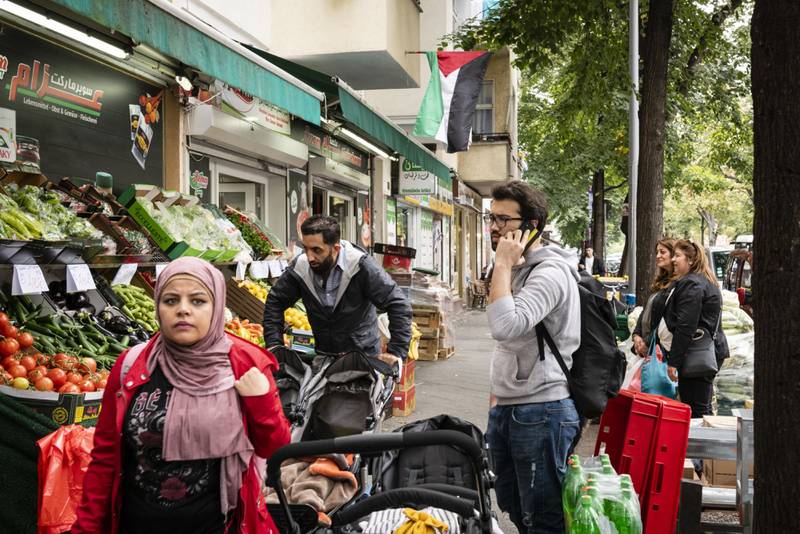
Former chancellor Angela Merkel made the divisive decision to open Germany’s borders to Syrian refugees in 2015. Getty / thenationalnews.comPedestrians pass a food store on Sonnenallee in Berlin, Germany, on Monday, Sept. 13, 2021. Refugees from Syria have changed the cultural makeup of Germany’s capital in a way not seen since the 1960s and Sonnenallee, known locally as “Arab Street,” may be the closest thing to home for many Syrians. Photographer: Jacobia Dahm/Bloomberg / thenationalnews.com
Medical pioneer was one of the first women from the country to study abroad.
The life of doctor Saniya Habboub is being celebrated by Google’s Doodle on Friday, commemorating her graduation from medical school on June 10, 1931.
Born in 1901 to a Lebanese leather merchant and Turkish mother, Habboub was one of the first female doctors from Lebanon to study medicine abroad, in the US.
When she returned to Beirut she opened her own practice, inspiring other Lebanese girls and women to get an education of their own, according to Google’s description.
In 1926, Habboub was one of the first three students to graduate from the American Junior College for Women in Beirut, going on to study at the American University of Beirut.
In 1931, she received her degree in gynaecology and obstetrics from the Women’s Medical College in Pennsylvania and, in gratitude, left future students with a scholarship in her name.
She started her own practice two years later, in Bab Idriss, and went on to co-found the Lebanese Red Cross Association, as well as served as a board member for the Muslim Orphan’s Home, the Young Women’s Muslim Association and Maqassed Hospital.
In 1982, in honour of her devotion to medical services, the Lebanese government awarded her with a Health Medal of Merit, and there’s even a street in Beirut named after her.
Habboub died aged 82 in September 1983.
“Dr Saniya was an inspiring figure who paved the way for future generations of women to come,” Google says.
Dr William Stoltzfus, former president of Beirut University College, described her life as a “get-started signal” for the professional lives of many Arab women, according to Al–Raida, the bi-annual journal published by the Arab Institute for Women.
The Doodle can be seen on devices across the Middle East and North Africa.
source/content: thenationalnews.com
___________
Dr Saniya Habboub died in 1983 aged 82. Photo: Public DomainGoogle Doodle of Dr Saniya Habboub. Photo: Google
July 10 marks the death anniversary of the late iconic international Egyptian actor Omar Sharif.
On this occasion Egypt Today looks back at some of the milestones that led to his international debut.
Sharif’s childhood
Born in Alexandria as Michel Dimitri Chalhoub on April 10, 1932, he was of Lebanese descent, but was born and bred in Egypt. His parents were of good social standards; his father in the wood business and his mother a notable society hostess who often hosted King Farouk to play cards.
Growing up, Sharif easily became multilingual as he was brought up by his French speaking mother and attended an English boarding school and Victoria College; he also became fluent in Italian, Portuguese and Spanish.
After graduating from Cairo University with a mathematics and physics degree, he attempted to follow his father’s path of work but quickly receded and went on to London to the Royal Academy of Dramatic Art.
Sharif realized his passion for acting at the tender age of 13 when he participated in his English boarding school’s theatre program.
This horrified his father, since it would stop his son from following in his footsteps and becoming a timber merchant. Later, Sharif’s talent overcame all obstacles and he became a world-renowned actor.
The immortal cinematic and romantic couple Sharif and Hamama
In 1954, Sharif starred in “The Desert’s Devil” (Shaytan al-Saharaa), but his break was the same year when he acted in “Struggle in the Valley” (Sira’ Fi al-Waady) alongside his wife, the late great Egyptian actress Faten Hamama.
The love story of Hamama and Sharif began when they worked together in Youssef Chahine’s “Struggle in the Valley.”
Despite being born Catholic, he changed his name and converted to Islam to marry her in 1955. A marriage that lasted for 20 years, the famed couple were the symbol of love to all the Egyptian audience.
They portrayed their love in a number of successful movies that will live on for years after their death; movies that taught us the true meaning of love, such as “Ayamna el Helwa” (Our Beautiful Days), “Nahr El Hob” (River of Love), “ Saydet el Kasr” (The Palace Lady), “Sra’a fe El Mena” (Struggle in the Port), among others.
El Sherif’s international Stardom
He achieved international stardom in 1962 by acting in Lawrence of Arabia alongside Peter O’Toole.
He maintained his status as a foreign heartthrob by leading in films like Dr. Zhivago and Funny Girl, which caused outrage in Egypt due to the romance with his leading co-star, Barbara Streisand, who won an Oscar for her role.
Funny Girl was based on a play with the same title also starring Streisand. This musical comedy drama is a biographic, based on the life of Fanny Brice, a famous female Jewish comedian of the 1900s who dreams of stardom in New York City’s Broadway.
Against all odds she rises to the top and falls for Nick Arnstein, played by Sharif, a businessman and compulsive gambler.
While the 60s were the best and busiest years of Sharif’s acting career, they were the ones which took a toll on his marriage with Hamama, and the couple shocked their fans by getting a divorce in 1974.
A resonating talent
His impeccable acting skills speak for themselves, but his mastery of contract bridge also precedes him. He wrote books on bridge, his favorite card game, and even established the Omar Sharif Bridge Circus.
However, his addiction to gambling eventually caused him money troubles, which led to his acting flops and his downward spiral.
Living alone and with little money, Sharif spent his later days living in hotels in Paris and London until he made a brief comeback with his role in the 2003 French film “Monsieur Ibrahim.”
The film received positive reviews, and Sharid even won the audience award for Best Actor at the Venice Film Festival.
Sharif was always keen to support and encourage young talents such as the famed Egyptian actor Mohamed Ramadan, who had a small role in Sharif’s only Egyptian soap opera “Hanan w Hanin” ( Tenderness and Nostalgia).
Ramadan previously announced in a number of TV interviews that Sharif encouraged him a lot and praised his acting talent, predicting at that time that he will be a superstar in the future.
“When I first met Omar Sharif, he greeted me as if I was family. He was someone who really loved people; when he found out that we were [both] Egyptian, we bonded instantly.
The main piece of advice he gave me was to start in Egypt and get that experience under my belt before trying to have a career internationally,” recounted the Egyptian rising international actor Amir El-Masry in an interview with Egypt Today.
The End
Sharif moved back to Egypt to spend his final days while struggling with Alzheimer’s disease. Sharif passed away at the age of 83 due to a heart attack on July 10, 2015. Sharif is a cheerful, handsome, talented and iconic artist who will remain forever alive in the hearts of his audience around the world.
The Jamarat Bridge project is a massive structure built to save pilgrims’ lives and facilitate a crucial Hajj ritual.
Pilgrims gather in this place to throw stones at the devil in a symbolic act as part of their Hajj. Without this act, their pilgrimage is incomplete and considered to be unaccepted.
The concept of stoning the devil began when Prophet Ibrahim intended to sacrifice his son Ismael upon Allah’s order. The devil tried to dissuade the prophet three times from carrying out the order.
On each of the three occasions, the prophet pelted the devil with seven small pebbles to drive him away, after which the devil disappeared. This act has become a symbolic ritual and an integral part of Hajj.
It takes place over two or three days, from the 10th day of Dhul Hijjah until before sunset on the 13th.
The three pillars were previously built of stone and mud with low barriers surrounding them. They were then covered with cement, with the size of the pillars remaining unchanged for years.
However, the increasing number of pilgrims called for a project to help manage the hundreds of thousands of worshippers gathering in one place.
According to Mohammed Idris, former vice dean of The Custodian of the Two Holy Mosques Institute for Hajj and Umrah Research, the three pillars were surrounded by circular walls until 1975.
“A substantial enlargement of the area took place in 1987, and other expansions followed to upgrade the Jamarat area’s capacity to ease pilgrim movement and avoid accidents. The exit points and entrances to the pillars were amended, and the curved paths to the Jamarat were made straight,” he told Arab News.
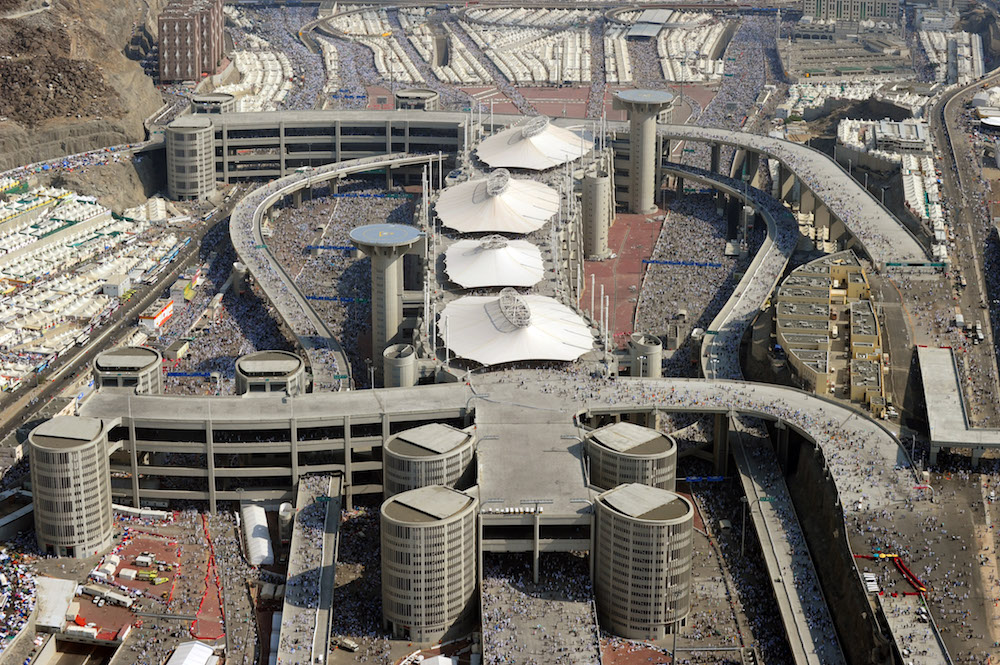
The Jamarat Bridge was originally a pedestrian structure built in 1963 to facilitate the stoning ritual. Since then, it has been expanded several times to accommodate the increasing number of pilgrims.
A substantial enlargement of the bridge took place in 1974, and other expansions followed to upgrade the bridge’s capacity to ease pilgrim movement and avoid accidents.
Despite this, the structure witnessed several deadly incidents owing to actions of pilgrims who violated instructions, thereby sparking stampedes and deaths.
In 1990, over 1,400 pilgrims were killed by trampling and suffocation in Al-Ma’aisim pedestrian tunnel, which led from Makkah to Mina. Between 1994 and 2006, more than 1,030 pilgrims were killed in stampedes while trying to stone the pillars. Around 470 others were injured.
The worst stoning-related incident in recent memory occurred on Sept. 25, 2015, when more than 700 pilgrims died and another 800 were injured when pilgrims surged toward the intersection of Street 204 and Street 223.
A doctor at an emergency department of a Mina hospital told Arab News at the time that most of the pilgrims died of asphyxiation.
A Saudi interior ministry spokesman had blamed the stampede on “unprecedented high numbers of pilgrims” as compared to previous years, plus the fact that a majority of the victims had descended onto a pathway during a time that they were not allowed to enter it.
Witnesses to the tragedy had confirmed that a large group of Iranian pilgrims passed through Souq Al-Arab Street and refused to return, ignoring Hajj guidelines.
__________
FASTFACTS
• Stampedes and surges caused thousands of deaths at the Jamarat Bridge before the infrastructure was upgraded.
• The project, to alleviate overcrowding and avoid tragedies, cost $1.12 billion.
_________
Regardless of the causes of the tragedies, they prompted the Saudi government to devise a solution that could save lives. After the 2015 incident, Saudi Arabia’s King Salman offered condolences and immediately ordered an urgent review of the Hajj plan.
Over four years, Saudi authorities studied and researched the site before the old structure was completely removed and replaced by the existing engineering marvel known as the Jamarat Bridge.
The new project details were approved by top engineering and architectural committees consisting of local experts and highly experienced US, German, and British engineers. The opinion of senior Muslim scholars was taken into consideration for the religious position on the project details.
“In 2005, the circular walls around the pillars were reshaped, making them elliptical to facilitate the movement of the pilgrims,” Idris told Arab News.
“ In 2007 the old Jamarat project was discarded, and work on the new project began. A year later, one floor as per the project was fully constructed. In 2009, the second floor was made ready to serve pilgrims. By 2010, the entire planned construction was fully complete.”
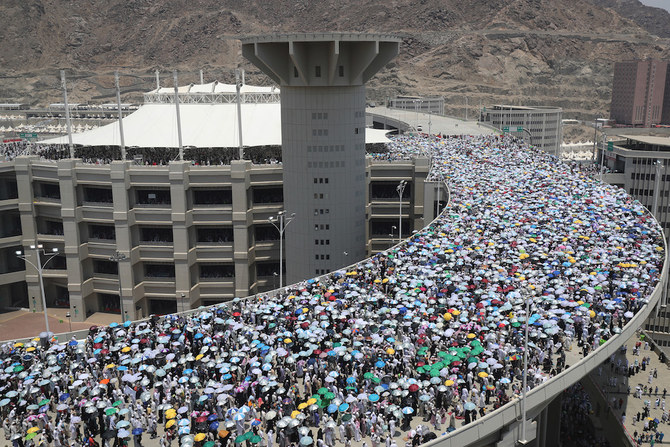
The bridge, which was constructed over three years by more than 11,000 workers, is 950 meters long and has six floors, including the basement, with a height of 12 meters per floor. Each floor can absorb up to 120,000 pilgrims per hour.
Its foundation was constructed to withstand 12 floors to accommodate 5 million pilgrims by 2030.
On the fifth level, umbrellas cover the site of the three Jamarat to enhance the comfort of pilgrims and protect them from the sun and heat.
The Hajj infrastructure showpiece, which has won several local and global awards, was built at a cost of over SR4.2 billion ($1.12 billion).
It has 12 entrances, 12 exit roads from four directions, two tunnels, 19 ramps, escalators, emergency exits, helipads, six service buildings, and an air-conditioning system with water sprinklers to cool the atmosphere and reduce the area’s temperature to 29 degrees Celsius.
The building also contains three electric stations and a standby generator that automatically supplies electricity in case of any temporary power cut.
Unlike the old circular shape of the walls around the three pillars, the new oval design has contributed to a better pilgrim flow. It has also assisted in increasing the bridge’s capacity for pilgrim numbers.
The new bridge was designed by Dar Al-Handasah and constructed by the Saudi Binladin Group. It features a wider and column-free interior space, longer Jamrah pillars, additional ramps and tunnels for easier access, large canopies to cover each of the three pillars to protect pilgrims from the sun, and ramps adjacent to the pillars to speed up evacuation in the event of an emergency.
No casualties have been reported at the Jamarat sites in six years. However, both Saudi Hajj and health authorities are prepared for any scenario. This year, 17 emergency centers will be present at Jamarat Bridge to assist in any emergencies — from crowd surges and falls to illness — that pilgrims may face on their Hajj journey.
source/contents: arabnews.com (headline edited)
___________
The walkway leading to the symbolic stoning of the devil, the oval design has contributed to better pilgrim flow and boosted the structure’s capacity for accommodating people. (AFP)A substantial enlargement of the bridge took place in 1974, and other expansions followed to upgrade the bridge’s capacity to ease pilgrim movement and avoid accidents. (AFP/File Photo)