Arabs & Arabian Records Aggregator. Chronicler. Milestones of the 25 Countries of the Arabic Speaking World (official / co-official). AGCC. MENA. Global. Ist's to Top 10's. Records. Read & Enjoy./ www.arabianrecords.org
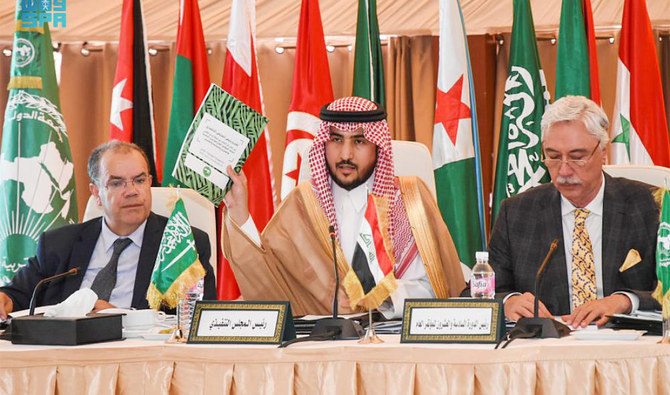
Saudi Arabia has been unanimously re-elected to chair the executive council of the Tunis-based Arab League Educational, Cultural and Scientific Organization until 2024.
The decision was made by members of ALECSO’s executive council after the 26th session of the general conference, which concluded its activities.
Council members expressed their appreciation for the positive results achieved and the complementary work of the executive council during the past 10 months.
The Arab ministers praised the initiative of the Saudi representative and chairman of ALECSO’s executive council, Hani Al-Moqbil, to develop the council’s road map, which was put together with a transparent methodology based on the involvement of countries in building a common Arab vision to support and enable the organization to achieve its goals.
Al-Moqbil extended his appreciation to King Salman and Crown Prince Mohammed bin Salman for their constant support, empowerment, and care, which was reflected in the Saudi role and its presidency of the executive council to contribute to a beneficial impact and supportive action for the development of ALECSO.
He also thanked Culture Minister Prince Badr bin Abdullah bin Farhan, who is also the chairman of the National Committee for Education, Culture, and Science, for his support, guidance, supervision, and harnessing of capabilities which gave direct and significant support throughout the Saudi presidency which helped it in serving its goals with all Arab countries.
Al-Moqbil also thanked the Arab countries and members of the ALECSO executive council for their re-election of the Kingdom and for renewing their confidence in the results that had been achieved during the past 10 months.
Al-Moqbil said: “Saudi Arabia, in its presidency of the executive council, worked to oversee the interests of the countries by listening to their proposals, observations, and visions to ensure that they are reflected on the ground and implemented in stages. The countries will work with greater effort and higher interest in taking care of the organization’s interests.”
source/content: arabnews.com (edited)
___________
The decision to re-elect the Kingdom came after the appreciation of the general conference for the efforts made by the executive council under the Kingdom’s stewardship. (SPA)
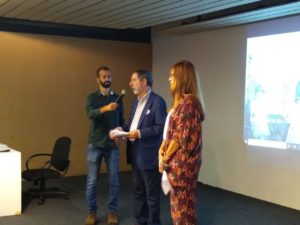
In a partnership with the Arab Brazilian Chamber, the Immigration Museum held an event celebrating the Day of the Arab Community in Brazil on Saturday (26). The program featured a project and a survey presentation and short-film screenings, as well as many tales of immigration.
On Saturday (26) the Immigration Museum in São Paulo was the venue for Arab descendants to look back at the stories of their ancestors. The museum held in partnership with the Arab Brazilian Chamber of Commerce (ABCC) an event celebrating the Day of the Arab Community in Brazil, whose official date is March 25.
The program featured the launch of a link that provides access to records of the history of Arab immigration, the presentation of data from a survey on the Arab presence in Brazil, and the screening of short films. The focus of the event was the recollection of life stories of parents and grandparents. They were present both in documentaries and speeches by the leaders and members of the projects presented.
Unlike the Europeans, who came to Brazil with government subsidies to work in farms, the Arabs moved here on their own, especially in search of opportunities. Most of them worked with commerce. The date of the Day of the Arab Community in Brazil was chosen after the name of the 25 de Março Street in São Paulo, where they established their first shops.
In the event at the museum, ABCC president Osmar Chohfi told a brief story about his two grandfathers who came to Brazil from Syria, where they were peddlers. One of them opened a store, while the other first worked as a traveling salesman. “All of us Syrian and Lebanese and Palestinian descendants have stories similar to my families’,” he said.
ABCC cultural director Silvia Antibas also recalled facts from her own family. Her father’s suitcase from when he was a traveling salesman had been donated to the Immigration Museum. She said that upon arrival, an immigrant would receive instructions on the local currency and goods to sell. “My father did that when he was seven. He was told about the currency and set off to sell balloons. He had landed in Niterói,” she said.
The coordinator of the Digitization Project of the Memory of Arab Immigration in Brazil, Heloisa Dib, called the attendees to help keep the stories of immigration alive by preserving pictures, documents and journals. The materials contain information on how the immigrants traveled, how they lived in their countries of origin, what they did back there. “We only know what they told us, and that was not much,” she says.
The attendees got to learn the size of the Arab community in Brazil. ABCC and H2R Pesquisas Avançadas director Alessandra Frisso said they account for 6% of the Brazilian population and amount to 12 million people. The data comes from a survey carried out by H2R and research firm IBOPE Inteligência commissioned by the ABCC. The Arabs and descendants play a leading role in the Brazilian society, the survey says. Amongst the leaders of associations in Brazil, the Arabs account for 26%.
Launch of project
The event marked the official launch of the access to 100,000 pieces digitized by the Digitization Project of Arab Immigration in Brazil. They are pictures and journal pages created by the first Arab immigrants to Brazil that were digitized by the project. Researchers and interested parties can access the collection catalog on this link and request the materials by sending an email to reference@usek.edu.lb.
The initiative is part of a project by the Holy Spirit University of Kaslik (USEK) in Lebanon aimed at preserving the memory of Arab immigration in Latin America through the Latin American Studies and Cultures Center (CECAL) directed by historian Roberto Khatlab. In Brazil, USEK has partnered up with the ABCC to take the project forward. The access to the collection of materials from other countries in Latin America is open, too.
Films
In the short-film screenings the attendees got to know more about the history of Arab immigration in Brazil. The films brought stories about Arab ancestors and the history of immigration. The films were selected in a contest held by the ABCC. On Sunday, as part of the celebration, the play Cartas libanesas [Lebanese Letters] will stream on the YouTube channel of the Immigration Museum.
Immigration Museum
Immigration Museum executive director Alessandra Almeida said she hopes that the partnership with the ABCC in the celebrations of the Day of the Arab Community in Brazil goes on. “I hope that in the coming years we continue to host this event, given the celebration that the Arabs have given to the development of Brazil,” she said.
The Immigration Museum’s Research, Preservation and Reference Center manager Henrique Trindade Abreu said that the Arabs weren’t so present at the Immigrant Inn – a building in São Paulo that used to welcome the immigrants to São Paulo and now hosts the museum – but hundreds of them stayed there.
Translated by Guilherme Miranda
source/contents: anba.com.br (edited)
___________
Osmar Chohfi, President, ABCC (C) and representatives of the museum
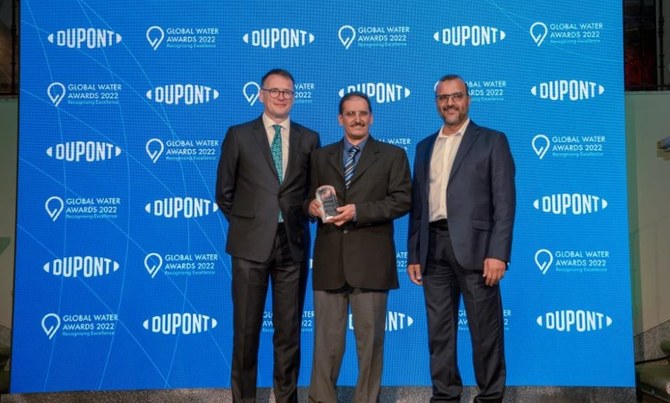
The Saudi Ministry of Environment, Water and Agriculture has gained international recognition by winning the Public Water Agency of the Year Award, announced during the Global Water Summit in Madrid.
Deputy Minister for Water Abdul Aziz Al-Shaibani and Deputy Minister for Economic Affairs and Privatization Abdulrahman Alzughaibi accepted the award
Al-Shaibani told Arab News that the award was given in recognition of the Kingdom’s efforts in implementing a national water strategy, reforming the sector, enacting a new water law, integrating management of water resources, and engaging the private sector.
The Global Water Summit in Spain allows leaders and decision-makers to exchange ideas, and share information on progress and trends in the industry.
Industry leaders and investors from around the world, as well as government representatives, took part in the forum, considered among the most prominent events for the water industry worldwide.
Since 2006, the UK-based consultancy Global Water Intelligence has presented awards at the summit, recognizing achievements by water companies, high-tech firms, public agencies and project developers.
During the conference, leaders of the Kingdom’s water sector highlighted its initiatives and solutions in support of innovation and development in the industry.
They also discussed the summit themes aimed at achieving zero carbon emissions, ensuring the sustainability and reliability of freshwater resources worldwide, mitigating the impact of climate change, and increasing job opportunities and growth in the industry.
Conference sessions included extensive discussions on global best practices for ensuring efficient water use, the latest technologies for desalinating and reusing water, and the role of artificial intelligence in the sustainability of the water sector.
source/content: arabnews.com (edited)
__________
DM for Economic Affairs and Privatization Abdulrahman Alzughaibi, right, DM for Water Abdul Aziz Al-Shaibani, center, and Global Water Intelligence’s Christopher Gasson. (Supplied/MEWA)
Moroccan side RS Berkane won their second African Confederation Cup title in three years after beating South Africa’s Orlando Pirates 5-4 on penalties following a 1-1 draw at Nigeria’s Godswill Akpabio Stadium on Friday 20th May.
Brahim El Bahraoui scored the winning penalty after Pirates keeper Richard Ofori, who had scored his side’s fourth spot kick, failed to save any of Berkane’s efforts.
Winger Thembinkosi Lorch turned from hero to zero as Pirates missed out on their maiden Confederation Cup triumph after also losing in the 2015 final.
He scored a bizarre 117th-minute equaliser to cancel out Youssef El Fahli’s penalty in the first half of extra time but had his effort blocked by keeper Hamza Hamiani in the shootout.
Hamiani was Berkane’s standout performer, producing some superb saves to keep his side in the game as Pirates looked the better side throughout.
Berkane lost on penalties to Egypt’s Zamalek in the 2019 final but won the trophy a year later. Another Moroccan side, Raja Casablanca, clinched the title last year.
Key saves
Hamiani kept out a low, angled effort from striker Kwame Peprah on 34 minutes before producing an even better save to smother a close-range effort from Deon Kavendji early in the second half, denying Orlando a certain goal.
He also comfortably collected a tame shot from Lorch, who was well-positioned to score following some slack defending.
Berkane, who rarely threatened, took the lead in the 97th minute when Pirates substitute Thabang Monare, who had just been on the pitch for a few minutes, clumsily stuck out a leg to foul an opponent following a corner.
El Fahli sent keeper Ofori the wrong way with a low effort as Berkane thought they had the match dead and buried.
But Pirates did not give up, with Tshegofatso Mabasa heading just wide from a corner before Lorch brought them level three minutes from the end of extra time.
After his initial effort was blocked by the defence, Mabasa collected the loose ball just inside the area and sent a stray pass that somehow eluded all defenders and found its way into the bottom corner past Hamiani, who had been unsighted by his own defence.
But Berkane had the last laugh in the shootout, converting all of their kicks, as Moroccan teams made it a hat-trick of straight Confederation Cup triumphs.
source/content: english.ahram.org.eg
_____________
Morocco s RS Berkane beat Orlando Pirates in the African Confederation Cup final on Friday (Photo: Pirates official Twitter account)
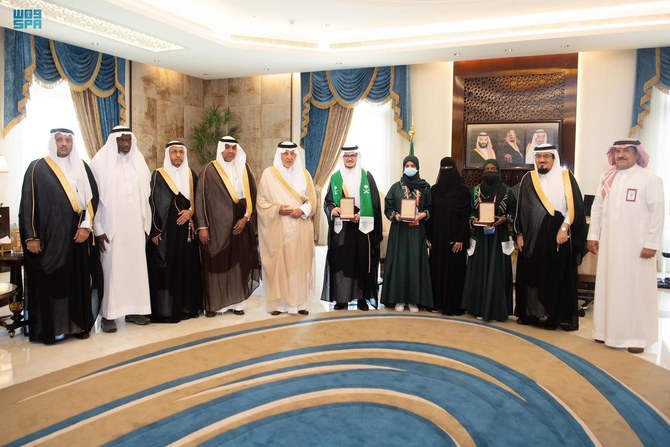
The Governor of Makkah region, Prince Khalid Al-Faisal, has honored successful students from Makkah and Jeddah who attended a science fair in the US earlier this month.
Prince Khalid congratulated three winning students who took prizes at the Regeneron International Science and Engineering Fair (ISEF), which was held from May 7 to 13.
Student Mawaddah Omar, hailing from Makkah, won third place in social and behavioral sciences, Youssef Khoja, from Jeddah, won a special award in embedded systems, and Rafaa Qanash won fourth place in engineering technologies.
The Saudi Embassy in the US tweeted: “Congratulations to our young #Saudi scientists Represented by @mawhiba and @tc_mohe, the student delegation won 6 awards at #ISEF2022, the second time this record is achieved in the Kingdom’s 16th year of participation.”
This year’s ISEF exhibition attracted more than 2,000 students from public education systems in over 85 countries.
The Saudi Center for International Communication tweeted: “Saudi students made history with an impressive success at the Regeneron International Scientific and Engineering Fair 2022 in Georgia, #USA. KSA has won 22 major awards, meaning 62 percent of the total number of prizes. #ISEF_2022.”
Saudi students have won 83 prizes at ISEF events, including 53 major prizes and 30 special prizes. Mawhiba also presented special annual international prizes in the competition for students from 20 countries.
source/content: arabnews.com (edited)
___________
Students Mawaddah Omar, Youssef Khoja, and Rafaa Qanash were honored by Prince Khalid Al-Faisal. (SPA)
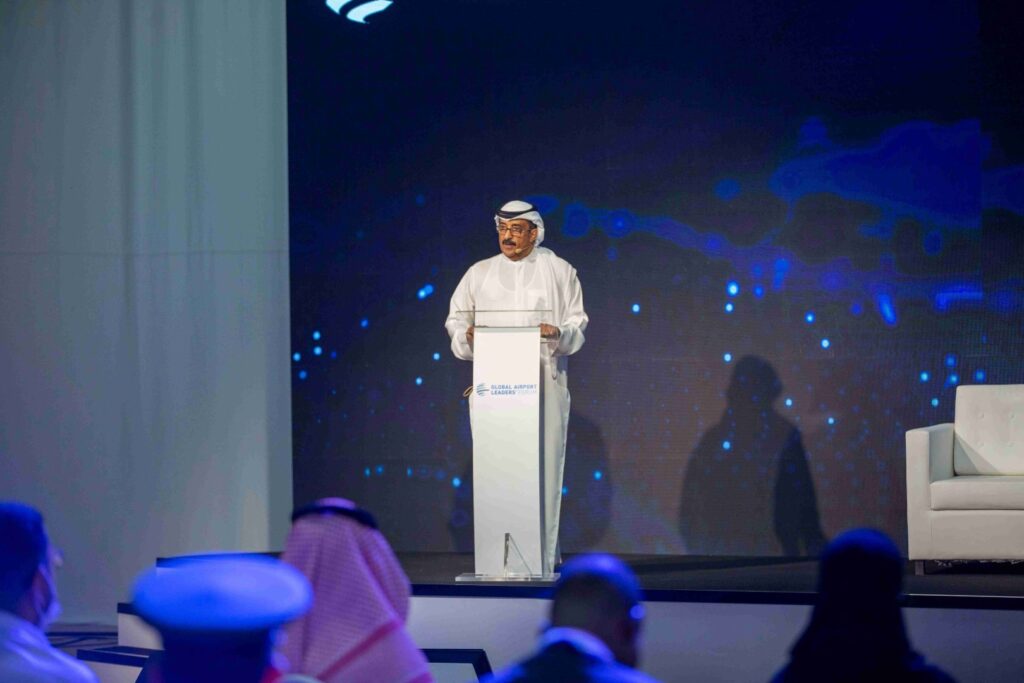
Dubai Airport is on the right track, having retained its position as the world’s busiest international airport with 29.1 million passengers, and just last week, announcing its busiest quarter since 2020, said Jamal al Hai, Deputy CEO of Dubai Airports.
Jamal al Hai made this statement while delivering the welcome address at the Airport Innovation and Development Conference at the Gulf Airport Leaders’ Forum (GALF) held alongside the 21st edition of the Airport Show in Dubai.
Welcoming the delegates, he said the GALF is organised in person after two years of the pandemic, marking a new healed era of aviation.
“This is, in fact, the outcome of a successful handling of the crisis and what you see in Dubai today is the outcome of a flawless response to the pandemic achieved through a balance between protecting the health and well-being of the people while minimising the impact on business and economy.”
Delivering the welcome address, Ibrahim Ahli, Deputy CEO of Dubai Air Navigation Services (dans) said Dubai is galloping in all economic and social sectors, attracting businesses, talents, investors and tourists in hordes. Dubai is fast becoming the Future City of the world, driven by the maximum embrace of technology, relaxed regulations and reforms. All this will result in increased traffic, and it underscores the need for enhancing the safety, capacity and efficiency of the airspace of Dubai, where dans plays a crucial role.
Khalid Aljabir, Senior Vice President, Operations, dans, read out Ahli’s speech in his absence.
“We had proved our mettle when dans efficiently managed more than 1,338 aircraft movements daily through Dubai airports, before the COVID-19 pandemic. dans manages the air traffic through Dubai International, which has ranked first in the world for international passengers since 2014, and it had handled about 1.115 billion passengers on more than 7.47 million flights since the airport started operating in 1960,” he said.
“We take pride in implementing the region’s first procedures for Enhanced Wake Turbulence Separation (eWTS) Minima within the controlled zone. The Dubai RECAT-Enhanced Wake Turbulence Separation is part of the vision to make Dubai the airport for the world, enhance its airspace and the efficiency of airports along with the profitability of carriers.”
In his keynote address titled “Standardising Regulations Regionally and Globally”, Mohammed Faisal al Dossari, Senior Director, Air Navigation and Aerodromes Department, UAE General Civil Aviation Authority (GCAA), said that post-COVID the industry must work across all aspects of aviation to standardize regulations and spur growth.
The UAE is expected to develop draft regulations on Vertiport in the first quarter of 2023 and publish them in the fourth quarter of 2023 to be implemented in the first quarter of 2024.
Al Dossari said the number of GCAA registered commercial drone organisations is increasing. “Up to 2022, we have registered 20,000 private drone users, 870 commercial drones, and 181 commercial drone organisations to operate drones.”
Future developments include Unmanned Traffic Management, Scheduled UA operations, Night Operations, Multiple Unmanned Aircraft Operations, Autonomous Unmanned Aircraft Operations, Urban Air Mobility, Unmanned Aircraft Delivery, High-Speed Unmanned Aircraft and High Altitude Unmanned Aircraft.
Yahya Abdalla Al Hammadi, CEO, Global Air Navigation Services (GANS), in his keynote address “Disrupting ATM to support the recovery of the industry,” said Air Traffic Control could play a huge role in reducing carbon emissions by adopting new technologies that can help airlines plan more efficient routes and work with other stakeholders to help reduce the overall carbon footprint.
The Airport Show, the world’s largest annual airport event, was opened by H.H. Sheikh Ahmed bin Saeed Al Maktoum, President of the Dubai Civil Aviation Authority, Chairman of Dubai Airports, and Chairman and Chief Executive of Emirates Airline and Group, under whose patronage the event is held.
Organised by RX Global, the world’s largest airport industry B2B platform has a sharp focus on sustainability to help the aviation industry achieve a more sustainable airport industry that aims to reduce the carbon footprint year on year.
The Airport Show is supported by Dubai Airports, Dubai Police, Dubai Civil Aviation Authority (DCAA), dnata (part of Emirates Airline and Group), Dubai Aviation Engineering Projects (DAEP), Global Air Navigation Services (GANS), and dans.
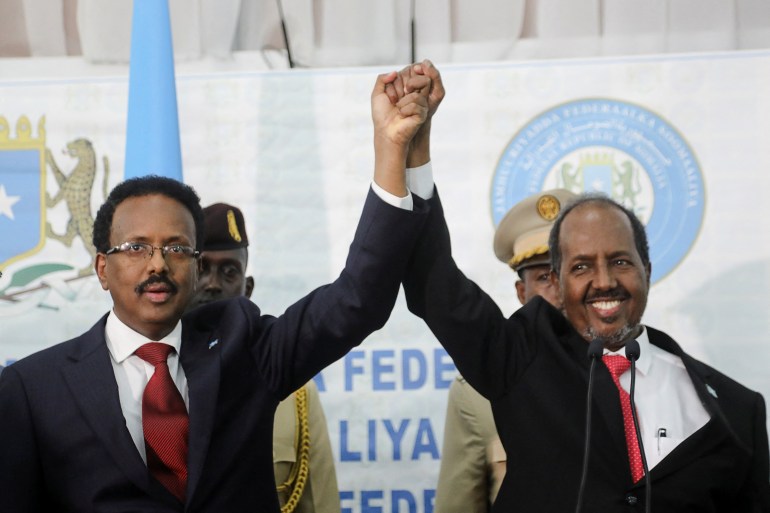
Hassan Sheikh Mohamud elected president for the second time, defeating incumbent President Mohamed Abdullahi Mohamed in a final round.
Somali legislators have elected former leader Hassan Sheikh Mohamud as the country’s next president, following a long-overdue election on Sunday in the troubled Horn of Africa nation.
Hassan Sheikh Mohamud, who served as Somalia’s president between 2012 and 2017, won the contest in the capital, Mogadishu, amid a security lockdown imposed by authorities to prevent deadly rebel attacks.
After a marathon poll, involving 36 candidates, that was broadcast live on state TV, parliamentary officials counted more than 165 votes in favour of Mohamud, more than the number required to defeat incumbent President Mohamed Abdullahi Mohamed.
Supporters of Somalia’s new leader defied the curfew to pour onto the streets of Mogadishu, cheering and firing guns as it became clear that Mohamud had won the vote.
Many hope the election will draw a line under a political crisis that has lasted well over a year, after Mohamed’s term ended in February 2021 without an election.
Mohamed, who is also known as Farmaajo, conceded defeat, and Mohamud was immediately sworn in.
The new president struck a conciliatory tone in his acceptance speech from the airport compound in Mogadishu, which was patrolled by African Union (AU) peacekeepers.
“It is indeed commendable that the president is here standing by my side,” Mohamud said, referring to the former leader, who had sat with him as ballots were counted.
“We have to move ahead, we do not need grudges. No avenging,” he said.
War, drought
The 66-year-old Mohamud is the leader of the Union for Peace and Development party, which commands a majority of seats in both legislative chambers.
A member of the Hawiye clan, one of Somalia’s largest, Mohamud is regarded by some as a statesman with a conciliatory approach. He is also well-known for his work as a civic leader and education promoter, including for his role as one of the founders of Mogadishu’s SIMAD University.
source/content: aljazeera.com (edited)
______________
Somalia’s newly elected President Hassan Sheikh Mohamud, right, holds hands with incumbent President Mohamed Abdullahi Mohamed, left after winning the elections in Mogadishu, Somalia, May 16, 2022 [Feisal Omar/ Reuters]
The award saw a high turnout from authors around the world, with more than 3,000 applications submitted from more than 55 countries, including 20 Arab countries.
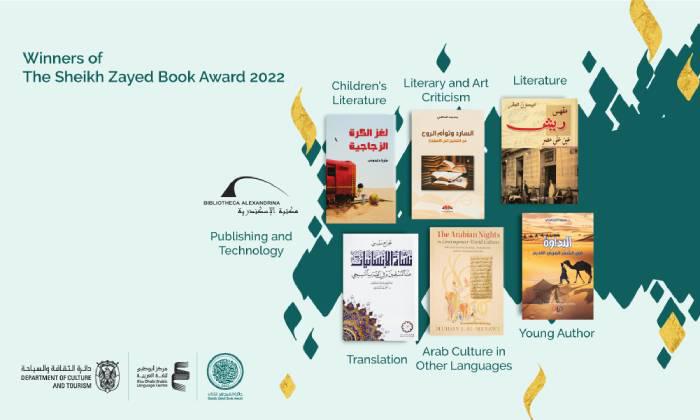
Sheikh Zayed Book Award (SZBA) announced on Monday the winners for its 16th edition across seven categories, selecting six literary figures, intellectuals and translators, along with Egypt’s Bibliotheca Alexandrina, for top honours.
Over the years, the Sheikh Zayed Book Award has managed to expand and become one of the most prestigious events in the Arab world, allowing for the development of cultural dialogue and the creation of new opportunities for authors and translators around the world.
This year’s winner in the young author category is Tunisian professor Mohamed al-Maztouri with his book Al Badawa fi al She’er al Arabi al Qadeem (Bedouinism in Ancient Arabic Poetry).
“The author of this book, Mohamed al-Maztouri, presents a serious academic study of bedouinism in ancient Arabic poetry,” the Zayed programme commented.
Adding that Maztouri “discusses its diverse concepts and many manifestations, describing it as a culture with special landmarks and a lifestyle inseparable from its place, environment, and geography.”
From pre-Islamic times the Arabian Peninsula has been home to world-class poetry that is deeply connected to values of bravery, nobility, eloquence and at times sensitivity.
Throughout the centuries, poetry’s popularity has only grown in the region, attracting new audiences in both the Arabian Peninsula and other Arab countries in North Africa and the Levant.
Today, the trend has been further boosted by Emirati initiatives and competitions.
The translation award went to Egyptian translator and author Ahmed Aladawi for his translation of the American author, George Makdisi, book “ The Rise of Humanism in Classical Islam and the Christian West” into Arabic.
Each winner receives a life-changing prize of AED 750,000 (USD 204,190/GBP165,220).
Winners will also be honoured in a ceremony at the Abu Dhabi International Book Fair later this year.
The Cultural Personality of the Year winner will be presented with a gold medal and a certificate of merit, as well as a Dh1 million prize.
source/content: thearabweekly.com
______________________
Full list of winners of the Sheikh Zayed Book Award 2022:
Literature
Maq’ha Riche, Ain Ala Massr (Eye on Egypt: Cafe Riche) by Maisoon Saqer. Published by Nahdet Misr Publishing
Children’s Literature
Loghz al Kora al Zujajiya (The Mystery of the Glass Ball) by Maria Daadoush. Published by Dar Al-Saqi
Young Author
Al Badawa fi al She’er al Arabi al Qadeem (Bedouinism in Ancient Arabic Poetry) by Mohamed Al-Maztouri. Issued by the Faculty of Literature, Arts and Humanities at Manouba University and the GLD Foundation
Translation
Nash’at al Insaniyat Einda al Muslimeen wa fi al Gharb al Maseehi (The Rise of Humanism in Classical Islam and the Christian West) by Ahmed Aladawi. Published by Madarat for Research and Publishing.
Art and Literary Criticism
Al Sarid wa Taw’am al Rooh: Min al Tamtheel ila al Istinaa (The Narrator and the Soulmate: From Acting to Faking) by Mohamed Aldahi. Issued by Le Centre Culturel du Livre.
Arab Culture in Other Languages
The Arabian Nights in Contemporary World Cultures: Global Commodification, Translation, and the Culture Industry by Muhsin J. Al-Musawi. Cambridge University Press.
Vatican envoy to UN presents royal couple with 2022 Path to Peace award at gala event
Queen Rania praised for focus on education, prioritization of young people
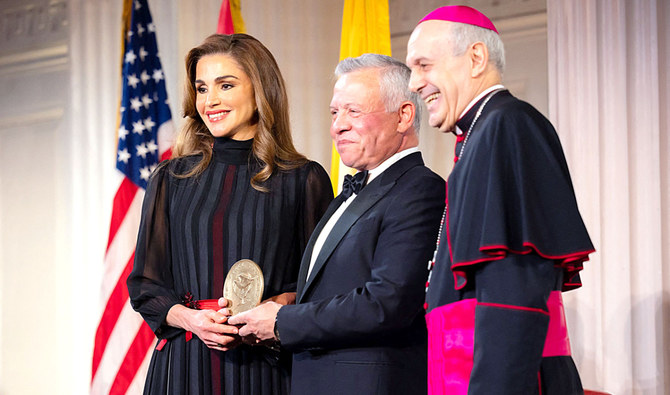
The Vatican’s Path to Peace Foundation has presented Jordan’s King Abdullah and Queen Rania with the 2022 Path to Peace award for their promotion of interfaith harmony and dialogue.
Commending the royal couple for a “years-long effort” in promoting peace and interfaith cooperation in the Middle East, Vatican Ambassador to the UN Archbishop Gabriele Caccia made the presentation at the foundation’s 29th annual gala in New York.
The envoy singled out the queen’s focus on education and the prioritization of young people in her work.
He said: “She has long shown concern for the questions of education, connectivity, and cross-cultural dialogue, as well as sustainability, the environment, and migration, which places young people at the heart of solutions and is imbued with a sense of hope.”
King Abdullah said he accepted the award on behalf of “Jordanians, men and women, young people and elders, Muslims and Christians alike.”
Noting that Jerusalem was also home to many Arab Christians, part of the oldest Christian community in the world, he noted that “our journey to peace must travel through Jerusalem,” describing the city as “key to the future and stability that we all seek.”
He added: “Jerusalem should be an anchor for peace and coexistence, not for fear and violence.
“The (world’s most difficult challenges) will be met by drawing on our faith in God, our common humanity, and our will to jointly defeat poverty and despair, and end occupation and injustice.
“(Also), to help refugees everywhere return home, ready to rebuild shattered communities, and renew the hope that young people everywhere so desperately need.”
The monarch called on the international community to work toward a just and lasting peace in the Holy Land through a two-state solution with East Jerusalem as the capital of an “independent, sovereign, and viable Palestinian state … living side-by-side with Israel.”
source/content: arabnews.com (edited)
_________
Jordan’s King Abdullah and Queen Rania receive the Path to Peace Award in New York for their promotion of interfaith harmony and dialogue. (AFP)
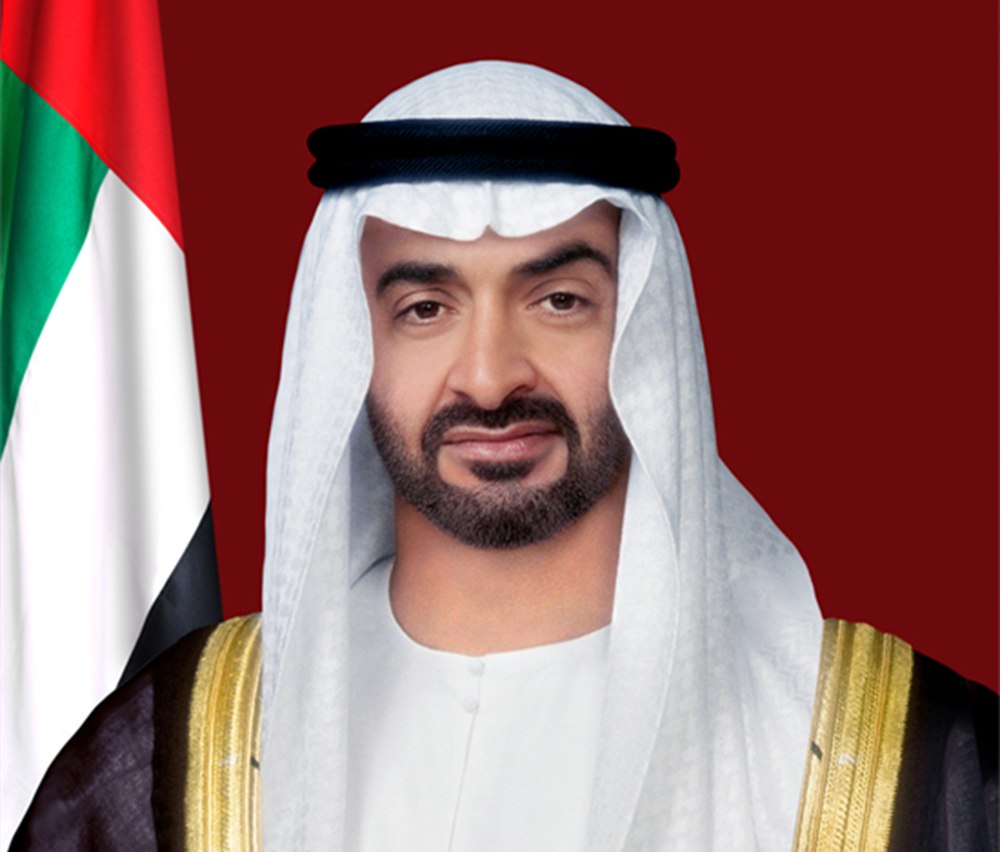
The Federal Supreme Council today unanimously elected His Highness Sheikh Mohamed bin Zayed Al Nahyan as President of the United Arab Emirates.
The Council held a meeting today at Al Mushrif Palace in Abu Dhabi, chaired by Huis Highness Sheikh Mohammed bin Rashid Al Maktoum , Vice President, Prime Minister and Ruler of Dubai.
The meeting was attended by His Highness Sheikh Mohamed bin Zayed Al Nahyan; H.H. Dr. Sheikh Sultan bin Muhammad Al Qasimi, Supreme Council Member and Ruler of Sharjah; H.H. Sheikh Humaid bin Rashid Al Nuaimi, Supreme Council Member and Ruler of Ajman; H.H. Sheikh Hamad bin Mohammed Al Sharqi, Supreme Council Member and Ruler of Fujairah; H.H. Sheikh Saud bin Rashid Al Mu’alla, Supreme Council Member and Ruler of Umm Al Qaiwain; and H.H. Sheikh Saud bin Saqr Al Qasimi, Supreme Council Member and Ruler of Ras Al Khaimah.
A statement issued by the Ministry of Presidential Affairs said that according to Article 51 of the Constitution, His Highness Sheikh Mohamed bin Zayed Al Nahyan was unanimously elected as the President of the UAE to succeed the late Sheikh Khalifa bin Zayed Al Nahyan .
Their Highnesses, the Supreme Council Members and Rulers of the Emirates have reaffirmed their keenness to continue implementing the authentic values and principles laid down by the late deceased, Sheikh Khalifa, following on from the founding father, the late Sheikh Zayed bin Sultan Al Nahyan. These have consolidated the UAE’s status at both regional and global levels.
The Federal Supreme Council expressed its full confidence that the people of the UAE will remain, as Sheikh Zayed and the founders believed, “a faithful guardian of the Union and its gains at all levels”.
Their Highnesses wished H.H. Sheikh Mohamed bin Zayed Al Nahyan success in serving his people and country.
Sheikh Mohamed bin Zayed expressed his appreciation for the precious trust placed in him by his brothers, Their Highnesses the Supreme Council Members and Rulers of the Emirates, praying to the Almighty to guide and help him to bear the responsibility of this great trust and to fulfil its tasks of serving his country and people.