Arabs & Arabian Records Aggregator. Chronicler. Milestones of the 25 Countries of the Arabic Speaking World (official / co-official). AGCC. MENA. Global. Ist's to Top 10's. Records. Read & Enjoy./ www.arabianrecords.org
There will be a ceremony honoring the winners held under the patronage of His Highness Prince Badr bin Abdullah bin Farhan, minister of culture
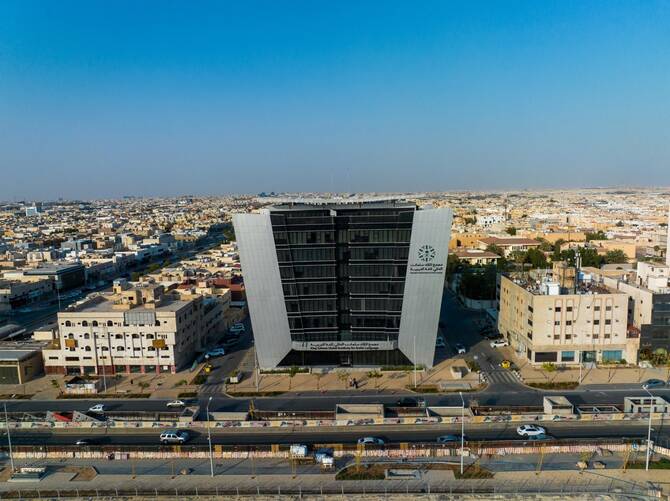
The King Salman Global Academy for the Arabic Language announced the names of the winners of its awards celebrating efforts to serve the language.
Mahmoud Al-Batal won an award for his work in teaching Arabic in the US, which included carrying out in-depth research into linguistics, much of which has been published in peer-reviewed studies.
The Saudi-based Manahij International Foundation received an award recognizing its development of educational materials and curricula for early years language learning and Arabic for non-native speakers.
Manahij was also highlighted for developing training packages for teachers, and praised for its “originality, methodology and innovation” in the field, the Saudi Press Agency reported.
Algerian Ahmed Khorssi was recognized with an award for his contributions to the language by developing more than 30 computer programs including tools for correcting pronunciation.
He has published more than 15 studies in peer-reviewed journals and international conferences.
King Abdulaziz City for Science and Technology won an award for developing systems including an audio database, an automatic speech recognition system in local dialects, and other advanced tools.
Ramzi Mounir Baalbaki, from Lebanon, won an award that recognized his academic career that has spanned four decades
Baalbaki has authored 12 books and more than 80 research papers in Arabic and English in peer-reviewed scientific journals.
Saad Abdel Aziz Maslouh, from Egypt, received an award recognizing a lifetime of academic achievements including the publication of 33 books and 29 research papers.
The Arabic Education Training Center for Gulf States, in the UAE, was awarded for developing evaluation tools and other educational content.
Mazen Abdulqader Mohammed Al-Mubarak, from Syria, won an award for his extensive scholarly work including the well-known book “Towards Linguistic Awareness.”
The National Coalition for Arabic Language in Morocco also received an award for promoting linguistic awareness in Moroccan society through lectures, seminars and intellectual forums.
There will be a ceremony honoring the winners held under the patronage of His Highness Prince Badr bin Abdullah bin Farhan, minister of culture and chairman of the board of trustees of the academy, next Sunday in Riyadh.
source/content: arabnews.com (headline edited)
_____________
The King Salman Global Academy for the Arabic Language’s headquarters in Riyadh. (OIC)
“All of my friends who have met him still love him. He has made a huge impact on them just from that one day they saw him.”
Ahmed Ismail Hussein was known as the “King of Oud” because he was the master of the 11- or 13-stringed instrument.
Born in the late 1920s in Somalia, Hussein began playing the oud professionally in the ’40s after falling in love with it in his teens. He was instrumental in making qaraami — singing or speaking while playing the oud or drums — one of the most popular genres of music in Somalia.
In February this year, after a career spanning more than seven decades, Hussein retired. He was considered a founder of modern Somali music. A concert was held in his honor in London. — Hussein moved to the UK in 1974 — with artists whom he handpicked.
Despite his retirement, Hussein, who also went by the name “Hudeydi,” had no intention of slowing down entirely; he had plans to travel to Turkey and Djibouti.
But then he fell ill. Earlier this month, he was taken to Charing Cross Hospital in London. His condition deteriorated, and on April 8 he died from the coronavirus, a week before what would have been his 92nd birthday.
Nadifa Mohamed, a British author, said she spoke to Hussein a few days before his death, when he didn’t even seem to have symptoms. “I think the decline was quite quick from him developing symptoms to him being quite ill in hospital. It was quite shocking,” she told BuzzFeed News.
Despite his age, Hussein was otherwise a fit and healthy person, Mohamed said. “Everyone was like, ‘He was 92 he had a good life’ — but nothing. There was no warning,” she said. “It wasn’t as if he was sick.”
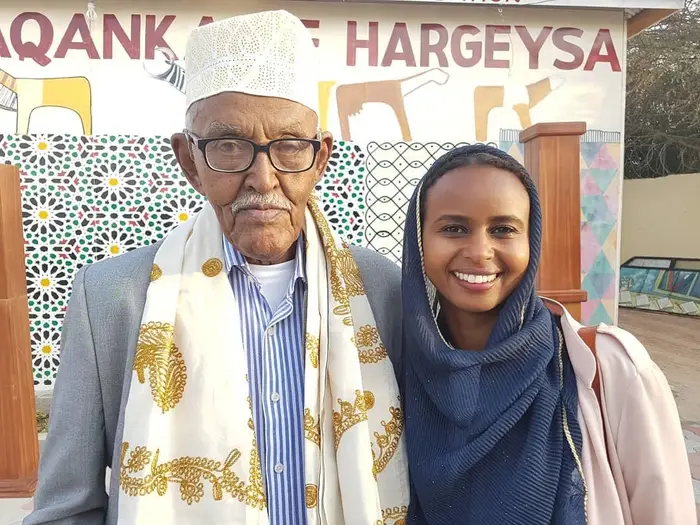
Mohamed said she had been friends with Hussein since 2012, when they met at the annual Hargeisa International Book Fair in Somaliland, a disputed territory that neighbors Somalia. More so than his musical genius, his sense of humor is what really stood out for Mohamed. “He was funny,” she said. “I think that’s the first thing I noticed.” (His nickname was Hudeydi, but he told the BBC in 2003 that he was also known as “‘the King’ because of my hot rhythms. I was always into rock ‘n’ roll and Elvis Presley”)
“Having a friend who is 50 years older than you is unusual, but I think his sense of humor was so young and easy to engage with,” Mohamed said. “And he was very warm. You could turn up to his door. You could bring whoever you wanted. He would feed you. He would make tea or coffee for you, tell you stories. He was very accepting of people, which was very unusual.”
Hussein, she said, had a charm that would make everyone love him from the moment they met him. “It’s the way that I could turn up with a friend to play an instrument or something else, and he’d give me a big hug as he opened the door and he would go to my friend — whoever it may be — and do the same.
Usually when grieving, Somalis tend to visit the home of the deceased’s next of kin for days to offer their condolences and pray. But this is currently impossible during the lockdowns in place across the world.
After Hussein’s death, tributes poured in from Somalis around the world. On the day of his burial, people held absentee funeral prayers .
Inaalilaahi waa Inaa Ileyhi Raajicuun. Deeply saddened by the passing of Ahmed I Hussein ‘Hudeydi’ – one of the greatest Somali musicians of all time; AKA The King of Oud. My deepest condolences to Hudeydi’s family, fans, Somalis across the world,& his fellow Somali artists. pic.twitter.com/WPiRg75Avv
In a statement, the Kayd Somali Arts and Culture organization said Hussein’s “iconic legacy lives on through his music and in the memories of all of those of us who adored him and continue to do so.”
source/content: buzzfeed.com (headline edited)
_______________
Ahmed Ismail Hussein (left) and Nadifa Mohamed (right), a friend. / Courtesy of Nadifa Mohamed
Astrophile magazine reimagines how science could speak to readers across the Arab world
It reminds young Saudis and Arabs that science is not foreign, but is part of their own story
Saudi science communicator Reyam Alahmadi is bringing the cosmos closer to home. At just 25, the Madinah-born innovator has launched Astrophile, the Kingdom’s first Arabic astronomy magazine, to make space science accessible, accurate, and part of everyday conversation across the Arab world.
“What began as a personal fascination with the cosmos evolved into a full-fledged movement to revive Arab contributions to astronomy, and to give today’s generation the tools and language to rediscover them,” she told Arab News.
“The Arab world truly needed something like Astrophile. There wasn’t a single comprehensive Arabic astronomy platform, which left a huge gap in accurate knowledge. That gap led to misconceptions about space, and that’s what we wanted to fix.”
When Astrophile launched, the magazine did not simply translate international astronomy news, but also reimagined how science could speak to readers across the Arab world.
Through storytelling, visual design, and educational offerings, Alahmadi built a brand that feels both modern and deeply cultural. Every article blends cosmic wonder with accessible language, transforming scientific terms into relatable concepts.
“I believe the wonder of space belongs to everyone,” she said. “So I share what I learn in the simplest way possible, not with overwhelming numbers or formulas, but through storytelling and curiosity. My goal is to make readers feel the beauty of the universe, not the heaviness of its equations.”
In a region where complex STEM subjects often feel distant, Alahmadi’s approach bridges the emotional and intellectual, transforming astronomy into a shared cultural experience.
For Alahmadi, Astrophile is more than a publication, it is a revival. She sees it as part of a wider effort to reclaim the Arab world’s historic leadership in astronomy, from scholars who once mapped the stars to modern-day dreamers shaping the space economy.
“Astronomy, chemistry, and physics, many of these sciences were born from Arab minds,” she said. “Reviving that heritage isn’t nostalgia; it’s responsibility. We’re continuing what our ancestors began, adapting their legacy to today’s society.”
By publishing in both Arabic and English, Astrophile bridges global and regional audiences. It reminds young Saudis and Arabs that science is not foreign, but is part of their own story.
Her vision, she said, is to “restore curiosity as a national habit.”
Behind Astrophile’s elegant visuals and clean scientific precision lies a deeper challenge: language itself.
“One of the hardest parts is translation,” Alahmadi said. “Some technical terms, especially about rockets or engineering, simply don’t exist in Arabic. It can be frustrating, but also exciting; it gives us space to innovate linguistically.”
As well as science writing, each issue of the magazine also involves linguistic invention, as her team refines and localizes terminology to suit Arabic readers without losing scientific accuracy.
“In a way, it feels like exploration on two fronts,” she said. “We explore space, and at the same time, we explore our language.”
That approach has given Astrophile a distinctive voice: poetic, informed, and proudly Saudi, blending design aesthetics with factual clarity.
In just a few years, Astrophile has evolved from a passion project into a respected reference point for young science enthusiasts, teachers, and even regional media outlets seeking verified space updates in Arabic.
Under Alahmadi’s leadership, the magazine has tackled global milestones such as the James Webb Space Telescope, the Artemis lunar missions, and Saudi Arabia’s astronaut program, translating these topics into stories that resonate with Arab identity and vision.
Her message is consistent: Science is not distant, it is personal.
“My vision is for Astrophile to become the leading reference for every Arabic-speaking space enthusiast,” she said. “I want it to inspire a generation who see space as part of their world, not beyond it.”
Alahmadi’s blend of scientific precision and cultural sensitivity has positioned her as a voice for both innovation and inclusion, proving that women in Saudi Arabia are not only joining, but also shaping global scientific conversations.
Her journey also reflects a broader transformation within the Kingdom, where young women are leading initiatives that merge research, creativity, and public engagement.
As part of the new wave of Saudi science communicators, Alahmadi represents the next phase of Vision 2030’s knowledge economy, where education and innovation converge to build cultural and intellectual self-reliance.
“Vision 2030 gave people like me permission to dream bigger,” she said. “It showed us that the Saudi youth can lead global conversations, not just follow them.”
Through her work, Alahmadi has made the cosmos feel closer, in both words and ownership. She believes every child who reads Astrophile could become the next scientist, engineer, or astronaut to carry Saudi Arabia’s ambitions beyond Earth.
Looking ahead, she plans to expand Astrophile into a regional science communication hub, combining digital platforms, educational workshops, and multimedia storytelling.
Her long-term goal is simple, yet profound: to make Arabic the language of discovery again.
“Science belongs to everyone,” she said. “But when we tell it in our own language, we don’t just understand it, we own it.”
As the night sky continues to inspire humankind, young innovators such as Alahmadi are proving that Saudi Arabia’s brightest stars are not just above, but right here, building the future.
Achievement reflects ‘our growing role in shaping the future of global medicine,’ CEO Dr. Majid Al-Fayyad says
Procedure involved removing a 4.5-centimeter brain tumor with robotic arms from a 68-year-old man who had been experiencing severe headaches
In a historic leap for robotic medicine, the King Faisal Specialist Hospital and Research Centre in Riyadh has performed the world’s first robotic intracranial tumor resection.
This groundbreaking achievement sets a new global standard in neurosurgical precision and recovery.
The procedure involved removing a 4.5-centimeter brain tumor with robotic arms from a 68-year-old man who had been experiencing severe headaches and loss of concentration.
Remarkably, the patient was discharged fully conscious within 24 hours — a recovery time nearly four times faster than that of traditional brain surgeries.
Dr. Homoud Al-Dahash, KFSHRC consultant for skull base tumors and lead surgeon, stated that the robotic system provided exceptional precision and control, which enabled surgeons to navigate critical neurovascular structures with a high level of safety.
“The patient’s same-day discharge, fully conscious and without complications, represents a new benchmark for neurosurgical innovation,” he added.
Guided by a 3D optical system, the one-hour surgery enabled surgeons to operate with a clear, magnified view of the brain.
Advanced image-guided navigation technology ensured precise tumor removal while protecting vital areas of the brain.
KFSHRC CEO Dr. Majid Al-Fayyadh linked the milestone to the hospital’s ongoing transformation journey.
“This achievement reflects KFSHRC’s growing role in shaping the future of global medicine,” he said.
“It aligns perfectly with our vision, where innovation and patient-centered care define the future of healthcare.”
Before the advent of robotic neurosurgery, similar procedures required manual removal under a surgical microscope, where precision depended heavily on human steadiness and visual clarity.
Robotic systems now provide enhanced instrument stability, tremor elimination, and superior visualization — redefining global standards of safety and precision in neurosurgical care.
This landmark procedure adds to KFSHRC’s expanding portfolio of robotic surgical breakthroughs.
The institution previously performed the world’s first robotic heart transplant and robotic liver transplant, earning international acclaim and solidifying its standing among the world’s leading centers for robotic and minimally invasive surgery.
KFSHRC has been ranked first in the Middle East and North Africa and 15th globally among the world’s top 250 academic medical centers for 2025.
It was also recognized as the most valuable healthcare brand in the Middle East by Brand Finance 2024 and listed among Newsweek’s World’s Best Hospitals 2025, Best Smart Hospitals 2025, and Best Specialized Hospitals 2026.
These accolades reaffirm its position as a global leader in innovation-driven patient care.
source/content: arabnews.com (headline edited)
___________
King Faisal Specialist Hospital and Research Centre in Riyadh has performed the world’s first robotic intracranial tumor resection. (SPA
While researching connections between African Americans and the Sudan, University of Washington history professor came upon a name from the school’s past: Andrew Brimmer.
Born in Louisiana in the 1920s, Brimmer made his way to the Pacific Northwest when he joined the U.S. Navy during World War II and came to Bremerton, Washington. From there, he earned two degrees from the UW, where he studied economics before moving on to Harvard Business School.
Then, in 1966, Brimmer’s phone rang.
“I got a call in my office from [William] Marvin Watson who’s [President Lyndon B.] Johnson’s appointment secretary who said ‘the boss wants to see you,’ Brimmer recalled, according to The History Makers. “And I went over to the White House.”
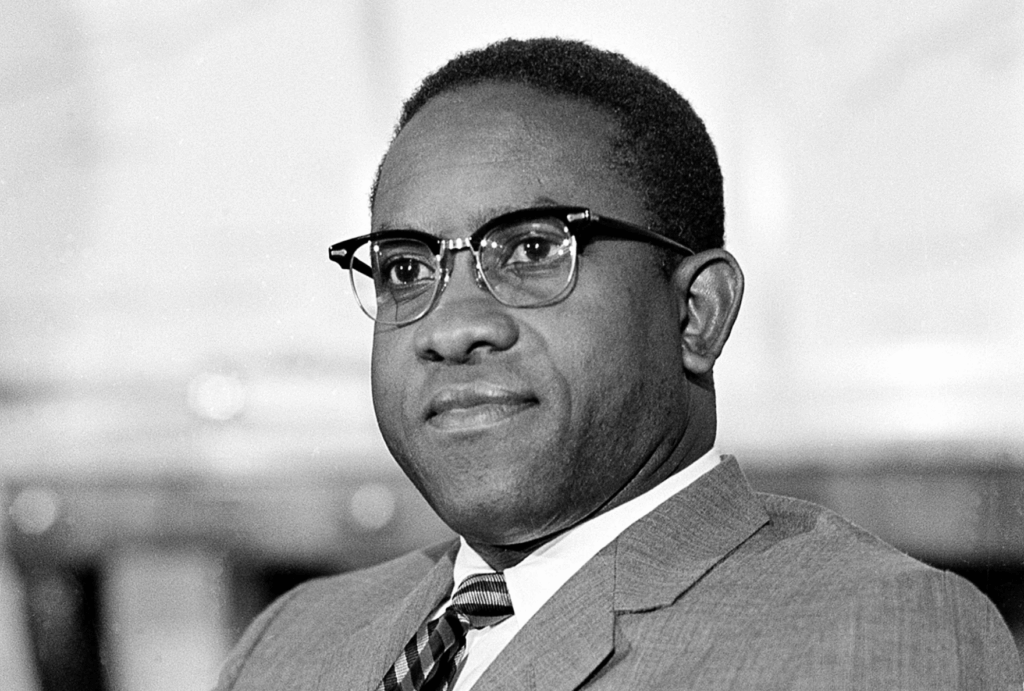
Johnson was about to appoint him to the board of governors for the Federal Reserve, a powerful position that helps set the country’s economic policy. He would become the first African American in that role.
Brimmer’s trailblazing career in public service — and a connection to the Sudan — is something that’s fascinated Tounsel, who heads the African Studies Program at UW.
“As an African American, I asked myself, ‘Well, you know, whose shoulders am I standing on? You know, whose kind of genealogy am I a part of?’ I can’t be the only African American ever, right, who’s been interested in modern Sudan and has traveled to the Sudan? And so that really kind of sparked my interest,” Tounsel said.
“Historically, the Sudan has always had a really important role in African American pride.,” Tounsel continued.
“There was an ancient civilization just south of Egypt called Kush. And people like historian Michael Gomez have talked about the fact that Kush represented this example, of a kind of, pre-transatlantic slave trade example of African glory. The whole ‘We come from kings and queens’ narrative. But it’s one thing for ancient Sudan to have such a prominent place in kind of African American thought, but what about modern Sudan?”
Sudan won its independence from Great Britain and Egypt in 1956. Brimmer was subsequently invited to join a U.S. delegation to travel to the Sudan to explore the idea of building the country’s first post-colonial national bank.
As part of his research, Tounsel got a chance to page through Brimmer’s diary, in which Brimmer describes how many of the Sudanese were taken aback when they met him. Here was someone who looked like them, Brimmer wrote, but came from such a different place.
“You’ve got this, you know, Black man from Jim Crow, Louisiana, engaging with these, you know, formerly colonized, but now newly independent Sudanese citizens,” Tounsel said. “And so I just think that those moments in the archive where he’s talking about that are just so rich.”
Calling Brimmer a “kind of economic genius,” Tounsel described him as a civil servant who entered into and navigated corridors of power.
“Throughout his career, he was really keen on exploring Black economics, in particular,” said Tounsel, reflecting on Brimmer’s contributions as a member of the Reserve’s Board of Governors.
“He was not what, you know, Cornel West has called, kind of, ‘a Black face in a high place’…who is good for the optics, but is not really thinking about how one can use their power and influence in that role to help those disenfranchised people who look like them.”
Brimmer lived to be 86 years old before he died in 2012.
Tounsel profiled Brimmer in his latest book, Bounds of Blackness: African Americans, Sudan, and the Politics of Solidarity, which is due out later this year.
source/content: knkx.org /NPR – Emil Moffat, Freddie Monares (headline edited)
____________
Dr. Andrew F. Brimmer, Harvard graduate and the only Black member of the Board of Governors of the Federal Reserve System, is shown in New York City in 1970.
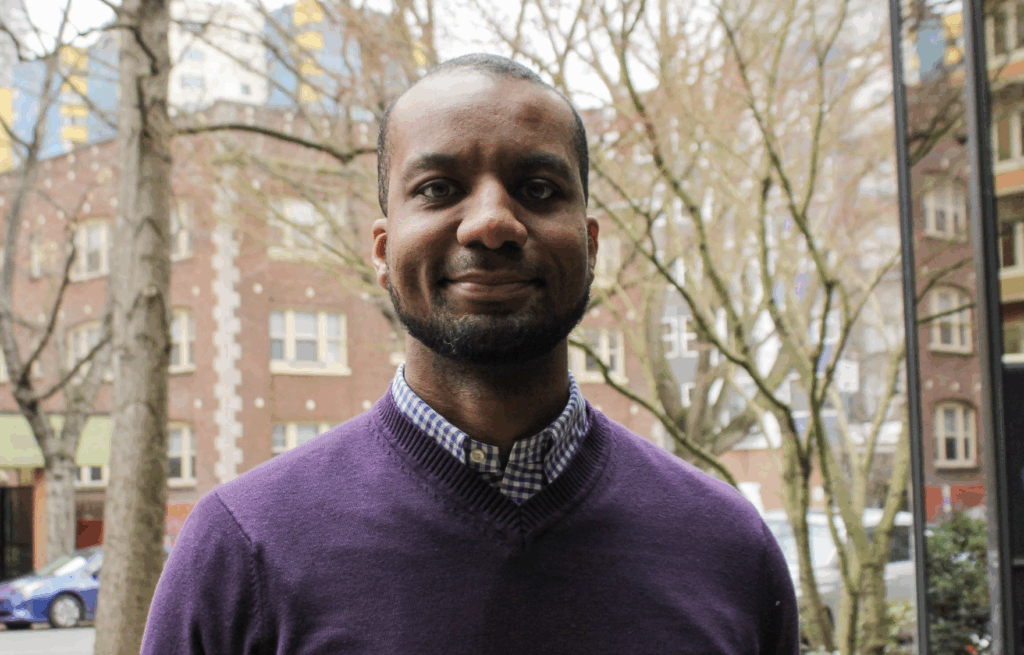
Emil Moffatt / KNKXUW History Professor Christopher Tounsel has written extensively on the connection between African-Americans and Sudan
Amid the global race to find effective COVID-19 treatments, an Egyptian research team has achieved a breakthrough that could reshape how middle- and low-income countries combat the virus.
The study, titled EVERST, was published on 20 October in Scientific Reports, a leading international journal under the Nature group.
According to the study, Egyptian scientists reported promising results in treating moderate COVID-19 pneumonia with safe, locally available, and affordable drugs.
The research, led by Professor Dr Mohamed Abdelsalam El-Gohary, brought together a multidisciplinary team of doctors and scientists from Egyptian and international institutions.
Over two years, the team evaluated the safety and effectiveness of four treatment regimens combining repurposed antiviral drugs — Sofosbuvir/Daclatasvir, Sofosbuvir/Ledipasvir, Ivermectin, and Hydroxychloroquine — in 310 Egyptian patients with moderate COVID-19 infections.
“Our goal was to find a practical, homegrown solution that saves lives without overburdening healthcare systems,” Professor El-Gohary told Ahram Online. “Egypt produces these medications locally, which means they are accessible and affordable for millions.”
The findings showed that two specific combinations —Sofosbuvir/Daclatasvir with Ivermectin and Sofosbuvir/Ledipasvir with Hydroxychloroquine —helped patients recover faster, shortened hospital stays, and provided remarkable protection of lung tissues on CT scans.
Patients treated with these regimens returned home significantly earlier than those who received standard care.
“This reduction in hospitalization time has major implications,” El-Gohary explained. “It not only improves patient recovery but also reduces pressure on hospitals and public health budgets, a critical factor during pandemics.”
The new combination regimen also showed improved CT scan results for pneumonia, a crucial step in preventing post-COVID complications, a growing concern worldwide.
Equally important, the study confirmed that the new treatment combinations were safe and well tolerated, with no major side effects compared with existing protocols. The only factor linked to higher mortality was advanced age.
The EVERST study, which underwent extensive international peer review before publication, reinforces Egypt’s growing role in global medical research and innovation. It also highlights the potential of repurposing affordable antiviral drugs to address emerging diseases.
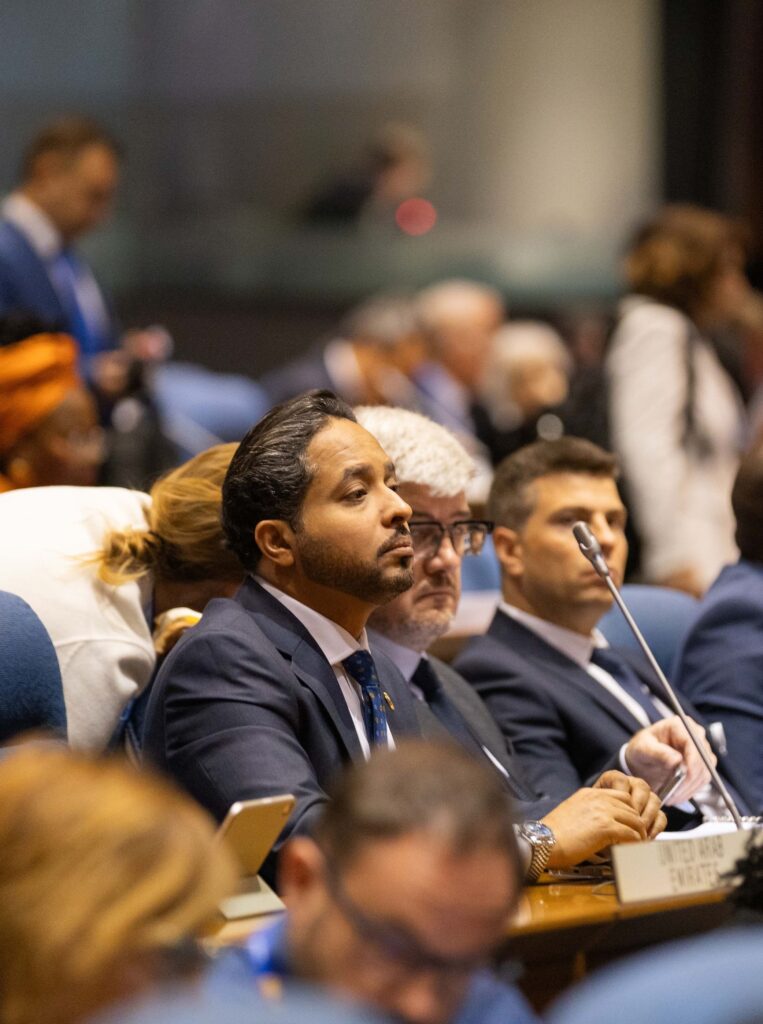
The Council of the International Civil Aviation Organization (ICAO) elected Engineer Saeed Mohammed Al Suwaidi, the UAE’s Permanent Representative to the ICAO, as Vice-President of the Council.
A press release issued today by the General Civil Aviation Authority (GCAA) stated that the election of the UAE’s representative confirms the UAE’s leading position in the international civil aviation sector and reflects the great confidence it enjoys from member states on the ICAO Council, as well as the appreciation for its prominent role in supporting ICAO’s efforts aimed at enhancing the safety, security, and sustainability of the global aviation sector.
His Excellency Saif Mohammed Al Suwaidi, Director General of the GCAA, said that the election of the UAE’s representative to this high-profile position reflects the international appreciation of the country’s contributions to the development of civil aviation policies. It also underscores the UAE’s commitment to enhancing its active participation within the ICAO Council and contributing more strongly to the formulation of decisions affecting the global aviation sector, reflecting its ambitious vision for international cooperation and leadership in this field.
For his part, Engineer Saeed Mohammed Al Suwaidi, the UAE’s representative to ICAO, expressed his pride in this international assignment, stressing that his election represents a significant responsibility and an opportunity to continue strengthening the UAE’s presence within the organization and support international efforts aimed at developing the civil aviation sector according to the highest standards of efficiency and sustainability.
The award was received by Oman’s Ambassador to Japan Dr. Mohammed bin Said Al Busaidi on behalf of the government of Oman.
The University of Tokyo has announced that it has awarded the prestigious Shokomon Award to the government of the Sultanate of Oman in recognition of its contribution to supporting scientific research and academic and cultural exchange in the field of Middle Eastern studies.
The award was received by Oman’s Ambassador to Japan Dr. Mohammed bin Said Al Busaidi on behalf of the government of Oman.
The award was based on the role played by the Sultan Qaboos Chair for Middle Eastern Studies, which was inaugurated at the university in 2011.
It is the highest honor bestowed by the University of Tokyo on individuals and institutions who have made significant and influential contributions to enriching the university’s progress and serving its academic goals.
Oman is the first Arab government to receive it.
The University of Tokyo has a significant academic relationship with Oman, primarily through the University of Tokyo Centre for Middle Eastern Studies (UTCMES), which was established with funding from Oman. The relationship includes academic exchange, research, and events such as seminars, lectures, and exhibitions focusing on Oman.
The university also works with institutions like Sultan Qaboos University and has received book donations from Oman.
UTCMES conducts and disseminates research on the Middle East and organizes events like public lectures, symposia, and exhibitions that focus on Oman.
source/content: arabnews.com (headline edited)
__________
The award was based on the role played by the Sultan Qaboos Chair for Middle Eastern Studies, which was inaugurated at the university in 2011. (Supplied)
Arabs are known for having had numerous contributions to civilizations—notably in the fields of Mathematics (Arabs invented Algebra), Astronomy (Al-Biruni discussed the earth’s rotation centuries before it was confirmed by Galileo), and Medicine (Al Razi was one of the first to diagnose diseases like smallpox and measles).
But Arab achievements didn’t end in the Golden Age and have continuously evolved to modern fields, so we’re here to round up some of the lesser-known greatest modern achievements by Arabs..
Noor Ouarzazte
Morocco is turning the Sahara Desert into the largest concentrated power complex in the world. The project is currently in progress, due to be complete before the end of 2018.
Arabs in Space
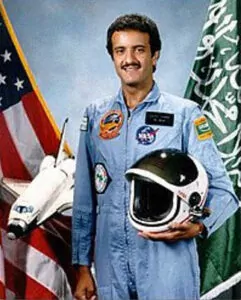
Sultan bin Salman Al Saud became the first Arab in space in 1985 – he was also the first royal astronaut ever. Syrian-born Mohammed Ahmed Faris followed in Al Saud’s footsteps in 1987.
Nobel Peace Prize Winners
Photo credit ODD ANDERSEN/AFP/Getty Images
The Tunisian national dialogue quartet was awarded the Nobel Peace Prize in 2015 for their role in building a democratic state in Tunisia following the Arab Spring.
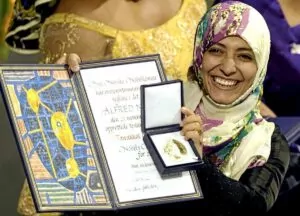
Yemeni journalist and activist Tawakkol Abdel-Salam Karman preceded the Tunisian National Dialogue Quartet in 2011 as Nobel laureate—she became the first ever Yemini and Arab Woman to win the Peace Prize, as well as the second youngest ever.
The ‘Father of Femtochemistry”
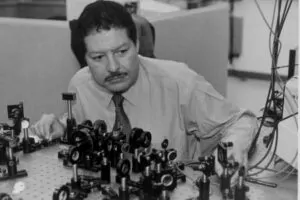
Femtochemistry is probably something too difficult for most of us to understand—but according to Wikipedia it’s “an area of chemistry that studies chemical reactions on extremely short timescales”. Ahmed Hassan Zewail, and Egyptian-American scientist, is known for pioneering a laser technique that allowed for easier analysis of chemical reactions. He even won a Nobel prize for his work in 1999.
Pritzker Architecture Prize Winners
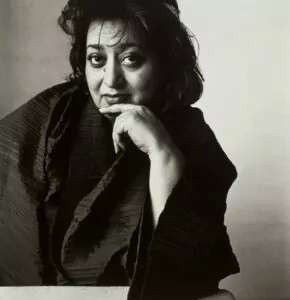
The late Iraqi-British architect Zaha Hadid was an internationally-acclaimed architect, renowned for her sci-fi creations. Having built some of the world’s most innovative spaces. In 2004, she became the first ever woman to win the prestigious Pritzker Architecture Prize—the most prestigious award in architecture.
Inside the first show dedicated to NYC’s Public Library’s Middle Eastern collections .
Outside The New York Public Library’s Stephen A. Schwarzman Building, the unmistakable scent of a halal food cart mingles with the sounds of various Arabic dialects, while two marble lions stand guard over Fifth Avenue. Inside, entire worlds are waiting to be discovered — including the often-overlooked stories of New York’s Middle Eastern and North African communities.
“Niyū Yūrk: Middle Eastern and North African Lives in the City,” the first exhibition dedicated to the Library’s Middle Eastern collections, opened Oct. 4. It will remain on view in the Ispahani-Bartos Gallery until March 8.
Curated by Hiba Abid, the exhibition contains around 60 objects — photos, books, periodicals and audio — dating from the 1850s to 2024. It centers specifically on the library’s own holdings, rather than attempting to tell a comprehensive history of MENA life in New York, Abid tells Arab News.
Drawing from over a century of rare materials the exhibition uses tangible objects to express the intangible: memory, identity and immigrant culture.
“It’s not a love letter. It’s a realistic letter,” Abid says, adding that these communities have long navigated complex questions of belonging, language, and preservation.
“The communities, from the very beginning, were wondering, ‘Where should our kids go to school? If they go to the public New York schools, they would probably lose their language, but we want them to still know Arabic and be aware of our traditions and values,’” she said.
The exhibition is divided into four chronological sections, designed to help guide visitors of all ages, from young children to seasoned scholars.
The first section, “Roads to New York,” focuses on the earliest waves of immigration. One of the first featured figures is Hatchik Oscanyan — later known as Christopher Oscanyan — an Armenian man born in what is now Türkiye. He came to New York in the mid-19th century and sought to educate Americans about the complexity of the Ottoman Empire. He wrote plays and newspaper articles, as well as “The Sultan and His People,” a book that offers insight into the region’s diverse ethnic and religious makeup.
The second section, “A Life in the City,” explores how immigrant communities began to form and thrive in New York, including in what was once known as Little Syria on Manhattan’s Lower West Side — an area that still exists today. They were entrepreneurs who opened restaurants, shops, and began publishing Arabic newspapers.
One of the most groundbreaking was Al-Hoda, founded by Naoum Antoun Mokarzel and his brother Salloum. “In the basement of Al-Hoda Press, they adapted the linotype machine from Latin characters to Arabic characters, which is very hard (because Arabic is) a cursive language,” Abid says. “By this technological innovation, he actually allowed other presses to form and to publish newspapers, periodicals, and books,” which then circulated throughout North and Latin America — and back to the Middle East.
In other words, New York was instrumental in literally building the Arabic press and exporting news to the Middle East.
Abid emphasizes how vital the library’s historical collections are to telling these stories.
“The library has been collecting these materials since the late 19th century,” she says, adding that many of them have been digitized, enabling audiences to interact with them in a new way.
The third section, “Impressions,” flips the gaze, revealing how Middle Eastern immigrants perceived New York and the US.
“Many immigrant groups embraced American values… but many (Arabs) actually didn’t like New York and didn’t like American values and left after a few years here or after a few months.” The exhibit highlights these ambivalences and the tensions of assimilation.
The final section, “In Our Own Skin,” is the most contemporary and, for Abid, the most personal. It includes raw, vulnerable stories that reflect racial identity, Islamophobia, and resistance. Among the most powerful pieces is the short documentary “In My Own Skin,” directed by Jennifer Jajeh and Nikki Byrd, which features interviews with five Arab women in New York, and was filmed just one month after the events of Sept. 11, 2001.
“The interviews are absolutely amazing. Every time I talk about it, I have goosebumps,” Abid says. “The way they talk about it — it is still very relevant today, as if nothing changed much, except that we’re probably more powerful because we are aware of this and we know how to organize and to fight back. We have the vocabulary now, and the community.”
That spirit of organization is embodied by Malikah, a grassroots collective founded by Rana Abdelhamid in 2010 as a self-defense class for Muslim women on Steinway Street in Queens. The movement has since expanded into a larger project of empowerment, healing, and solidarity — and is featured in the exhibit’s final section. The powerful sound of the athan, or call to prayer, has been important to this cultural shift.
While images of the Statue of Liberty — based on an Egyptian woman — didn’t make the cut, but Abid stresses its significance on each guided tour. On this occasion, though, she wanted to focus the visitors on lesser-known gems.
Having lived in New York for the past four years as a Tunisian immigrant who spent much of her life in France, Abid says she finds New York to be more diverse than anywhere else she has ever lived.
“I live on Atlantic Avenue in the Syrian corner. The things I witnessed here and in Middle Eastern parts of New York, like Astoria, I could never see anywhere else — even Paris,” she says. “When you go to the exhibition, you actually think, ‘Damn! We actually did a lot. And we’re here, you know—we’re here.
“It shows how New York was central to all of these struggles and how New York — thanks to its MENA community — was actually connected and aware. It puts New York on a global map, you know? I think New York is incredible terrain for this. It’s the space for it. That’s what this show is about, ultimately.”
source/content: arabnews.com (headline edited)
______________
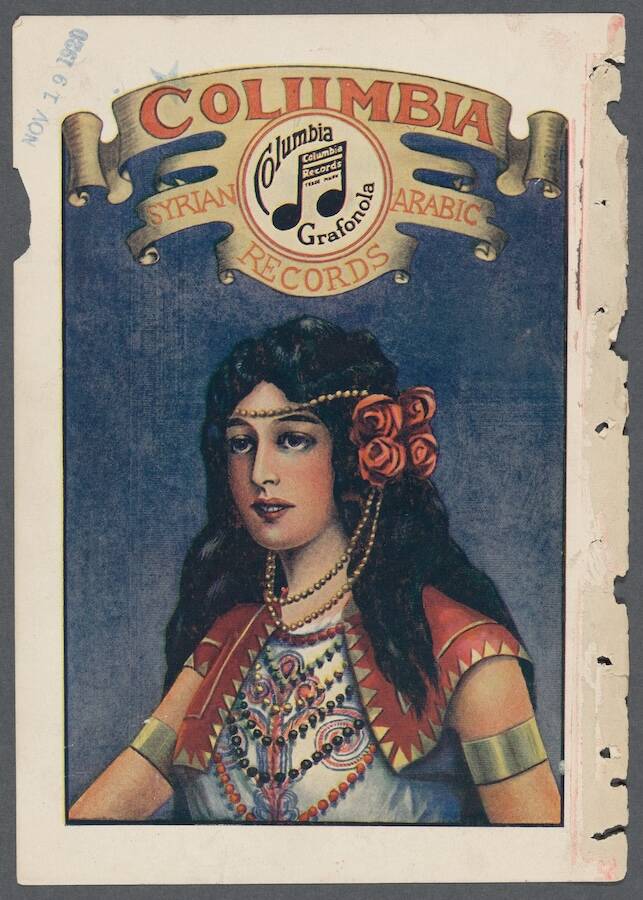
A poster from 1920 promoting Columbia Syrian Arabic Records — Columbia was one of the major American record labels to recognize the commercial potential of ethnic music markets in the US. (Courtesy of The New York Public Library)