Arabs & Arabian Records Aggregator. Chronicler. Milestones of the 25 Countries of the Arabic Speaking World (official / co-official). AGCC. MENA. Global. Ist's to Top 10's. Records. Read & Enjoy./ www.arabianrecords.org
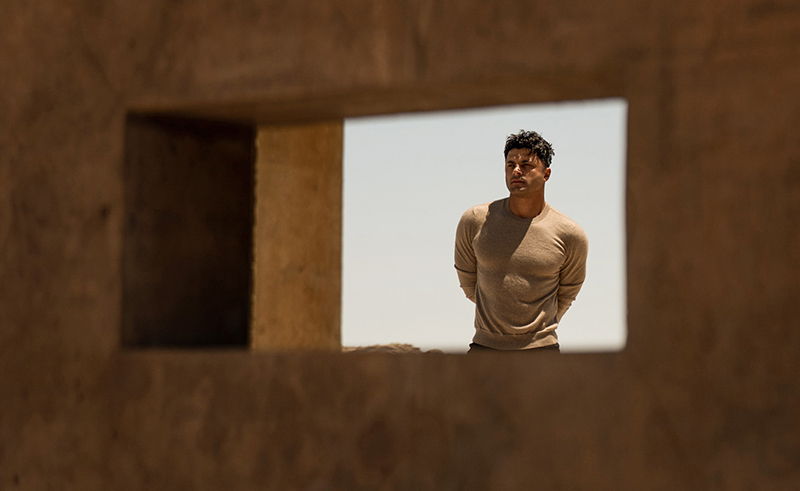
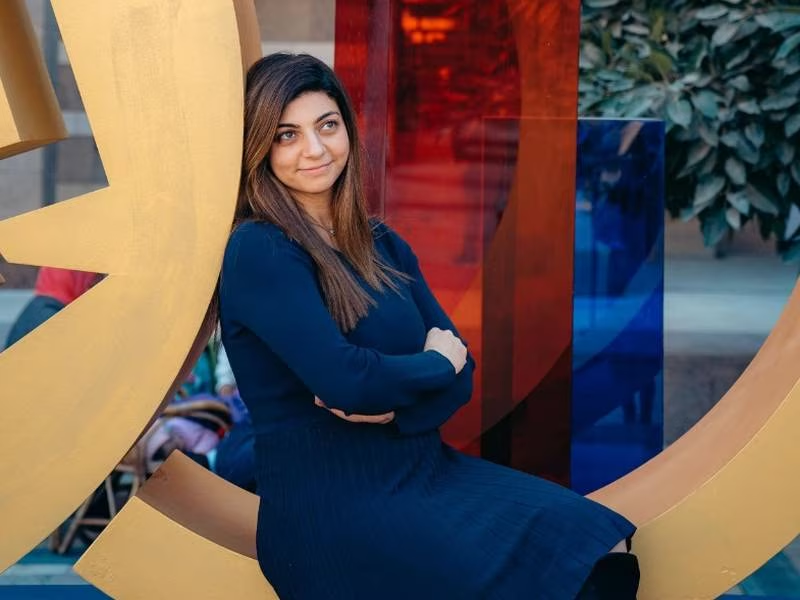
Inspired by his childhood in Amman, Malek AlQadi’s latest project, ‘The Folly Mojave’, injects desert minimalism with sustainable luxury.
Born in Amman, Jordan, raised in Florida, and based in Los Angeles, Jordanian-American architect Malek AlQadi has dedicated his life to his follies. In architecture, a folly is a building that serves no purpose aside from aesthetics. But AlQadi’s follies? They are worlds unto themselves; portals to places only visited in daydreams and memories.
His first folly came about as part of his thesis project, during which he designed and executed a humble, fully self-sustaining stay in California’s Joshua Tree National Park. Though his design language has evolved over the years, his core principles remain the same: sustainability, minimalism, and a reconnection with nature, all rooted in a childhood spent marvelling at Jordan’s deserts.
In Jordan, ancient structures like Petra dominated his early experiences. In Florida, his exposure to contrasting environments shaped his understanding of space, structure and purpose. AlQadi’s obsession with follies finds its roots in his desire to push the boundaries of design. He’s not interested in the grandiosity of skyscrapers or the utility of commercial buildings. Instead, his work delves into the ethereal, focusing on creating spaces that encourage introspection, exploration and escape.
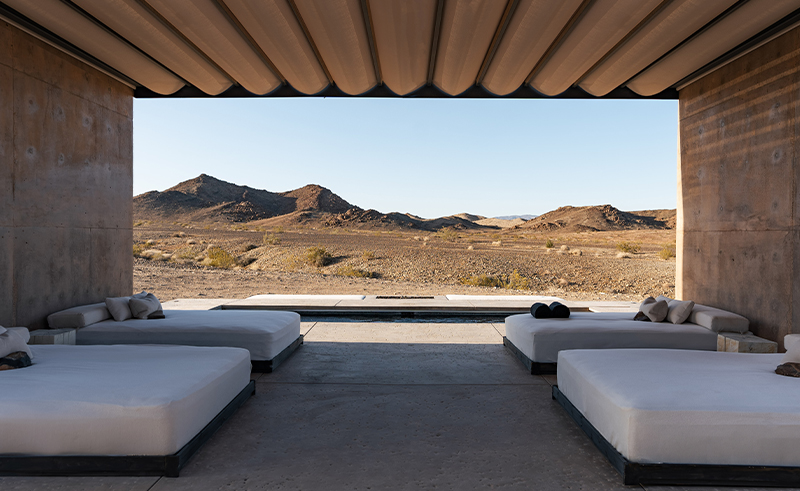
The Folly Mojave, a series of standalone suites dotted across 200 acres at the intersection of The Mojave National Preserve and Joshua Tree National Park, is AlQadi’s most recent and most ambitious project to date. The project is a retreat that blends into the arid environment while providing visitors with an isolated, immersive experience. “A lot of it was navigating childhood memories and connecting them with real-life scenarios and architectural elements, tying vastly different places in the world together, yet still grounded in similar principles and environments.” AlQadi tells SceneHome.
For AlQadi, the desert isn’t just a backdrop. It’s a critical component of the project, shaping the way the Folly Mojave interacts with the land. The retreat’s location in such an extreme environment is intentional; it encourages guests to detach from their everyday lives and engage more fully with their surroundings.
At first glance, the Folly Mojave may appear simple, but its simplicity belies the thoughtfulness of its design. The structure is fully off-grid, powered by solar energy, and equipped with self-sustaining water systems. The retreat is designed for minimal impact on the surrounding environment. Inside, the space is surprisingly open, with large windows that frame the vast desert views.
“A big part of the experience is having less light pollution and being able to see the stars at night. All of that fed into the idea of disconnection,” AlQadi explains. “It’s about having the luxury of time and space to relax and take in nature, which, at its core, is the ultimate healer.”
Malek AlQadi emphasises the “site-responsive” nature of his architectural philosophy. Unlike architects who adhere to a singular aesthetic, AlQadi’s approach is shaped by the environment he works within, adapting to the unique qualities of each location. “No two projects are ever the same,” he explains, yet there’s always a recognisable touch that connects his work. Symmetry, the use of natural materials, and a minimalist design language are core to his style, while he doesn’t shy away from incorporating brutalist elements when appropriate.
For AlQadi, creating spaces that resonate beyond the present – lasting decades or even centuries – is a key part of his architectural philosophy. “Guests often describe the experience as surreal, unique and unplugged,” AlQadi reflects. “Many mention feeling a deep connection while staying there. It’s rewarding to know that people from all walks of life have been able to share in that experience.”
Savaya, a Michigan-based entrepreneur of Iraqi Chaldean descent, was appointed in a statement on Trump’s Truth Social page on Sunday.
United States President Donald Trump has named Detroit businessman and cannabis entrepreneur Mark Savaya as special envoy to Iraq, sparking debate in Baghdad and Washington.
Savaya, a Michigan-based entrepreneur of Iraqi Chaldean descent, was appointed in a statement on Trump’s Truth Social page on Sunday.
“Mark’s deep understanding of the Iraq–US relationship and his connections in the region will help advance the interests of the American people through his diplomatic engagement and direct communication with Iraqi officials as special envoy. As special envoy, he will act as a direct representative for US interests in Iraq, coordinating joint initiatives, maintaining diplomatic negotiations, and ensuring transparent communication between US and Iraqi governments on security, political, and economic priorities,” Trump wrote.
Trump praised Savaya’s contribution to his 2024 campaign, particularly his efforts to mobilise support among Muslim American voters in Michigan.
Savaya, born in Detroit in 1983, owns Leaf and Bud dispensaries and, according to his public profile, has no previous government experience. His family left Iraq for the US in the 1990s.
The appointment has sparked discussion among Iraqi political circles, though the Iraqi Prime Minister has welcomed the move.
On Monday, Iraqi Prime Minister Mohammed Shia al-Sudani described the appointment of US President Donald Trump’s special envoy to Iraq as “an important step,” noting the envoy’s Iraqi roots.
“The appointment of a special envoy by President Trump to Iraq is an important step, especially as he is of Iraqi origin. We wish him success in his mission,” Sudani said during a meeting with Arab and foreign journalists in Baghdad.
In a post on X (formerly Twitter), Savaya said he was “deeply humbled, honoured and grateful” to be appointed and committed to “strengthening the US–Iraq partnership under President Trump’s leadership.”
The announcement came after the release of Elizabeth Tsurkov, an Israeli-Russian doctoral student who was kidnapped in Baghdad in 2023 by the Kataib Hezbollah militia.
Tsurkov, who spent more than 900 days in captivity and was freed on 9 September, wrote on X that Savaya had played “an instrumental role” in securing her release, calling the move “terrible news for anyone serving Iran’s interests in Iraq.”
On his part, Nechirvan Barzani, the President of the Kurdistan Region, welcomed the appointment, describing it as underscoring “The strategic importance of Iraq and the Kurdistan Region in advancing our shared interests and regional stability.”
Senior Kurdistan Democratic Party (KDP) figure and former foreign minister Hoshyar Zebari welcomed the appointment, describing it in a post on the X social media platform as “a bold decision to restore Iraqi sovereignty and independence away from corruption, mismanagement and militia rule.”
Zebari also said Savaya’s appointment, as “an American of Chaldean Christian and Iraqi descent”, reflected recognition in Washington that Iraq’s political situation “is neither stable nor normal”, and called for “decisive measures beyond traditional diplomatic frameworks”.
However, others have questioned the timing and nature of the role.
Iraqi writer and political analyst Falah Al-Mashaal described the decision to appoint a special envoy, rather than a traditional ambassador, as “puzzling” and “unusual under diplomatic norms”.
“A special envoy is usually sent for a specific mission—during a crisis, war, or to deliver a particular message,” he wrote in a post on the X. “Is President Trump planning something unusual for Iraq?”
He linked the appointment to Trump’s recent comments at the Sharm el-Sheikh peace summit in Egypt, where he referred to Iraq’s “vast oil wealth” and accused its leaders of mismanaging it.
“It sounded like an invitation for Trump’s allies in Iraq to sue Prime Minister Sudani for negligence and mismanagement of public funds,” al-Mashaal said.
Some analysts believe the appointment may be connected to Trump’s regional agenda and his longstanding focus on Iraq’s oil sector.
Alex Warkes, a UK-based Iraqi political analyst, said the decision could also have domestic political implications for Baghdad.
“I think the back door of the US embassy will be quite busy with the arrival of Trump’s special envoy,” Warkes said in a post on X. “I believe the appointment was coordinated with Prime Minister Mohamed Shia Al-Sudani’s team, perhaps to support his bid for a second term. We don’t yet know what the exchange might be—but time will tell.”
Warkes also questioned whether Savaya’s appointment had been coordinated with Israel, given that Trump’s Middle East policy “has always prioritised Israeli interests more than any of his predecessors”.
“These are legitimate questions,” he said. “Especially at a time when Iraq’s stability, oil policy, and relations with Iran remain central to the region’s balance of power.”
source/content: newarab.com (headline edited)
____________
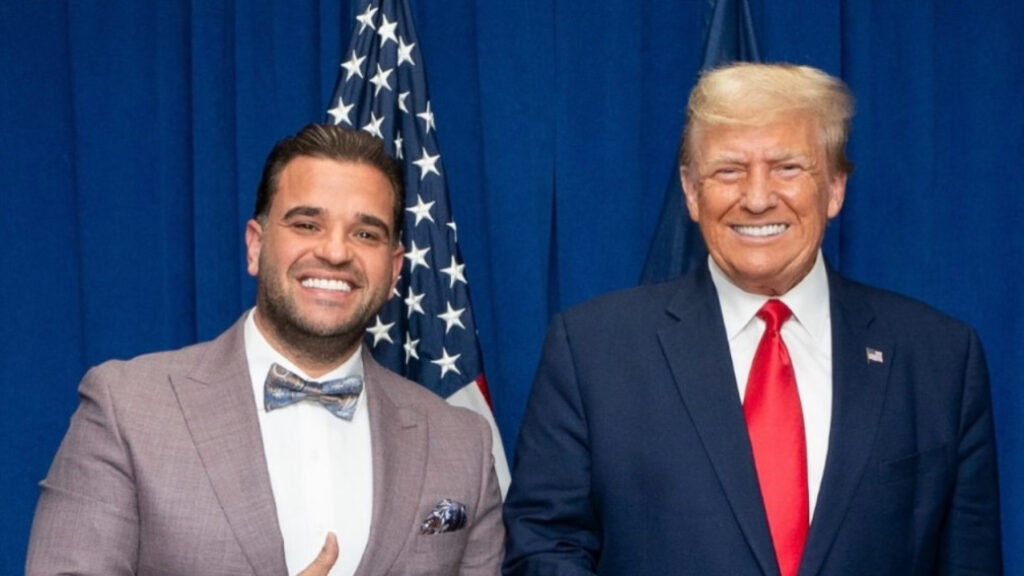
Mark Savaya and US President Donald Trump. [Screengrab from Mark Savaya/Instagram]
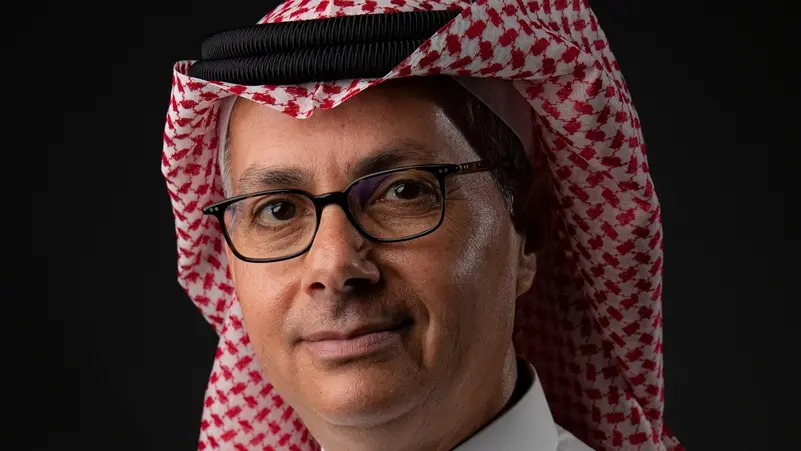
Saudi-American citizen Omar Yaghi, along with scientists Susumu Kitagawa and Richard Robson, has won the 2025 Nobel Prize in Chemistry “for the development of metal–organic frameworks”, the award-giving body said on Wednesday.
Born in Jordan to Palestinian parents, Yaghi was granted Saudi citizenship in 2021 through a royal approval that had been issued to grant Saudi citizenship to several prominent specialists from different fields.
The move was in line with the objectives of Saudi Vision 2030, including encouraging talented individuals to relocate to the Kingdom, localizing foreign investment, and “creating an appropriate social and investment environment,” according to a statement carried by the Saudi Press Agency at the time.
The more than a century-old prize is awarded by the Royal Swedish Academy of Sciences and the winners share 11 million Swedish crowns ($1.2 million), as well as the fame of winning arguably the world’s most prestigious science award.
“Through the development of metal-organic frameworks, the laureates have provided chemists with new opportunities for solving some of the challenges we face,” the award-giving body said in a statement.
The Chemistry Nobel was the third prize announced in this year’s crop of awards, in keeping with tradition, following those for medicine and physics announced earlier this week.
Established in the will of Swedish inventor and businessman Alfred Nobel, the prizes for achievements in science, literature and peace have been awarded since 1901, with a few interruptions mostly due to the world wars.
Nobel was himself a chemist and his developments in that field helped underpin the wealth he amassed from his invention of dynamite in the 19th century. The economics prize is a later addition funded by the Swedish central bank.
Sometimes overshadowed by more famous laureates in the fields of physics, literature and peace, the chemistry awards have still recognized many influential discoveries such as nuclear fission, DNA sequencing techniques, and yeast.
Last year’s chemistry award went to US scientists David Baker and John Jumper and Briton Demis Hassabis for work on decoding the structure of proteins and creating new ones, yielding advances in areas such as drug development.
Saudi-American citizen Omar Yaghi, along with scientists Susumu Kitagawa and Richard Robson, has won the 2025 Nobel Prize in Chemistry “for the development of metal–organic frameworks”, the award-giving body said on Wednesday. (X @SPAregions)
Egyptian-American founder of Affectiva is on a mission to revolutionise the way we connect with our digital devices, and each other, by building in emotional intelligence.
The earliest memory that Rana El Kaliouby can conjure is of standing on a tiny blue plastic chair in a romper suit confidently declaring whatever was on her toddler mind at the time.
She is about three years old, revelling in her father’s attention as he dispenses tips – “look at the audience, enunciate your words” – and records the ramblings for posterity with the first commercially available home video camera.
These regular living room sessions led to El Kaliouby going on to give many accomplished public-speaking performances around the world as an artificial intelligence scientist and entrepreneur, most recently this month at the CogX Festival Deep Tech Summit in London.
Her big message after decades working in technology is that the final frontier lies at the point where AI can be immersed in emotional intelligence , or EI, to revolutionise the human-to-computer experience.
But it’s obvious that the first seeds of that life-fulfilling mission were sown more than 40 years ago in her childhood home in Kuwait where she was first encouraged to get to grips with ideas and machines.
“Our family is really big on education, the thing my parents invested in me and my sisters,” El Kaliouby, 45, tells The National.
“And because they were both in tech, we were always exposed to the latest and greatest gadgets. I was a big Atari game player,” she adds, laughing.
El Kaliouby looks back fondly on those clunky old VHS cassettes and hours the family spent playing Pac-Man as examples of the positive way in which electronic devices can bring loved ones together.
Less happy interactions with latter-day technology, however, brought about the realisation that something was missing – all the rich communication signals provided by non-verbal cues were being lost.
An enterprising mission
Her focus ever since has been on developing artificial intelligence that recognises facial expressions so that people can have better connections with their laptops, and, crucially, with each other.
Born in Egypt after her tech guru father, Ayman, met his future wife, Randa Sabry, on a university campus, it seems almost inevitable that El Kaliouby grew up to be a proud geek pursuing a career in computer science.
“It’s a cute story,” she says. “My dad was teaching COBOL programming, this obsolete language that nobody uses any more but was the programming language in the 70s.
“My mum, who was a business major, decided to explore this thing called computer science, and he was kind of interested in going out with her. She said, ‘I don’t do that. No dating allowed.’ And he was like: ‘Ok, then I’ll propose.’”
Soon after, the newlyweds moved to Kuwait, and her mother became one of the first female computer programmers in the Middle East, until having to flee when Saddam Hussein invaded.
Aiming for the stars
Next stop was Abu Dhabi, where El Kaliouby’s Muslim-Arab upbringing was conventional in many ways, bounded by “lots and lots” of rules that included not making any boy friends while at school.
“I always imagined walking around with a gold star on my forehead. I was a very nice, rule-abiding daughter. I stuck to the strict curfews. I never dated through high school or college and I think, by and large, I was always an A student.
“But, at the same time, it was very empowering. I have two younger sisters and the message was always: ‘You can do anything you want in the world.’”
She continued to meet these expectations into her early 20s, earning undergraduate and master’s degrees in Computer Science at the American University in Cairo, and marrying the founder of a start-up, Wael Amin.
Within a year, though, El Kaliouby was undertaking a PhD 5,000km away at Cambridge University despite both sets of parents saying: “Wait a second, you’re married now and you can’t leave.”
Amin, she says, deserves the credit for supporting her daring dream and agreeing to a long-distance relationship.
“It was really unheard of. I did break rules more as an adult as I explored my passions and my quest for being a researcher and an entrepreneur.
“That’s how I think I pushed the boundaries and definitely made my parents uncomfortable.”
And then? “I like the wording that my life went off the rails. I think that kind of encapsulates it.
“Cambridge opened my horizons. It’s like I discovered the world and it was hard to unlearn that.”
The enthusiasm for her life’s work comes across even through the medium of our Zoom interview, but it’s also clear that this was not an easy time.
El Kaliouby arrived in England a few days after the September 11, 2001 attack in America, a young Arab woman then wearing a hijab.
“I was visibly Muslim. My parents were very concerned about my safety.”
The perpetual smile she adopted by way of a peace offering was also something of a mask, hiding the loneliness and separation from those she loved.
Back then, the technological means for staying in contact across the distance was largely restricted to the kind of messaging that proved a barrier to expressing true feelings, making El Kaliouby all the more determined to humanise technology.
“My PhD was centred around building a machine with emotional artificial intelligence, and I recognised at the time that a lot of the ways I was communicating with my family back home, and especially my husband, was through chat.
“We didn’t have video communication and it was certainly very expensive to make phone calls so we would use texting.
“I often felt I could hide my emotions behind the machine. There were many days where I would be homesick or even in tears, but I’d never communicate that. The best I could do was send a sad face emoji.”
The personal hardships became a driving force for her work. In a career paved with “what if” moments, El Kaliouby began to ask: “What if we could teach technology to understand us in the same way that we understand each other?”
“It’s not even in the choice of words we use. It’s our vocal intonations, our facial expressions, our body posture – and all of that was just getting lost via digitally mediated communications.”
Life was about to take another decisive twist as she received an email that the scientist, inventor and entrepreneur Professor Rosalind Picard was coming to give a talk on campus.
El Kaliouby had long been an admirer of this trailblazing woman in an almost overwhelmingly male-led field, whose book on designing computers to recognise human emotions she read while still in Cairo.
Life-changing encounter
“I often say this is the moment that changed the trajectory of my life,” she says of Picard’s request to meet some of the students.
So impressed was Picard by this intense young woman that she offered El Kaliouby a post-doctorate place on the Affective Computing Research Group at the Massachusetts Institute of Technology Media Lab before their first 20-minute conversation had ended.
“I remember thinking, ‘But I need to go back to Egypt. I have this husband waiting for me.’ And she basically said, ‘Just commute from Cairo. Show up whenever you want to.’’’
By then, El Kaliouby had a daughter, Jana, born in the UK, and a son, Adam, arrived in that other Cambridge in the US, but the constant round trips were becoming unsustainable.
“I was just doing that crazy back and forth. I would say it was OK until it went insanely chaotic when I started the company.”
The company was Affectiva, founded with Picard in 2009 with the goal of creating a commercial applications of emotion-sensing AI.
Growth was fast and it was an exciting time but there was another, darker side. “I was travelling so much, there was very little presence in anything I did,” El Kaliouby says.
Big lesson learnt
“I feel like I was out of balance. I didn’t make any time to sleep well. I would wake up at three in the morning almost every day and fire all these emails to my team. And so these poor people would wake up at six or seven in the morning with a whole slew of notes from me.
“I would go on vacation with my husband and my two young kids, and I’d just be on call all the time. There were zero boundaries, zero balance, and that was a big lesson learnt. There’s always time for self-care. There should always be time to spend with family and loved ones and friends. And, I didn’t do that, you know?”
By 2016, she was a divorced mother of two young children living full-time in America, and decided to bare that vulnerability in her role as chief executive of Affectiva.
Staff could see on El Kaliouby’s calendar that 3.30pm was demarcated to collect her son from school, and she explained to them that a Zumba class each Friday ensured a happier, healthier leader.
“I think it made for a much more authentic environment,” she says.
The family now lives in what El Kaliouby describes as a charming New England home filled with distinctive Middle Eastern touches and often by the aroma of molokhia soup made to her mother’s recipe.
Love for Egypt
“It’s very modern but with a lot of Egyptian things, Arab and Islamic inscriptions. I think of myself as Egyptian American, and very Egyptian in a lot of ways. I love Egypt. A lot of qualities – the Arab warmth, generosity and even intimacy – that’s very much who I am and I would say it’s the same for my kids.
“But I also have embraced what people would call American values. I’m very ambitious, very driven, very globally minded.”
That ambition and drive has taken her far. Affectiva is employed by brands in about 90 countries for market research, but also helps children with developmental difficulties, such as autism , to better interact with those around them.
More recently, the company has developed technology to make driving safer by enabling cars to detect if a motorist is becoming drowsy or distracted.
It was acquired in 2021 by the Swedish AI giant SmartEye for what was said to be about $73 million, with El Kaliouby becoming deputy chief executive.
She has long predicted that the day will come when all devices have an emotion chip and we won’t remember what it was like before screens could comprehend the meaning of us frowning at them.
“When we first started doing this work, we always said this will become ubiquitous and ingrained in every technology. Now, I think it’s more true than ever because AI is becoming a lot more conversational and perceptual.
“You can imagine that the final frontier is this emotional and social intelligence. Initially, my work was very much around human-to-computer interaction, making machines more intelligent, and how they communicate with humans.
“Now it’s back to the human connection. How are AI assistants and AI technologies going to make us better humans, especially better at connecting with each other?”
Along the way, she has learnt that daily affirmations are as integral to life as algorithms, and celebrating the small achievements, such as growing her own tulips, is as important as publishing a best-selling memoir, Girl Decoded.
Among the accolades amassed, El Kaliouby can cite becoming a World Economic Forum Young Global Leader, being listed on the Forbes Top 50 Women in Tech, and receiving the Smithsonian Magazine’s American Ingenuity Award in Technology. Earlier this year, she was invited to ring the opening bell on New York’s Nasdaq exchange as a female pioneer in AI, and was recently made a 2023 Eisenhower Fellow.
None of this seems to have gone to her head, however, perhaps because her family does a good job of keeping her grounded.
When El Kaliouby gave a TED Talk some years ago, she explained that in emotion science all facial muscle movements are measured as action units with specific numbers for each.
Words from the wise
In a throwback to those early guided sessions in the family living room in Kuwait, the night before she walked on stage, her daughter Jana, 12 at the time, helpfully texted: “Good luck mummy!! I’m sure your gonna do awesome. Remember: don’t play with your hair, connect with audience, give them a present, gesture on words, gesture to emphasise.”
The response sent in live time was the old-school 🙂 emoticon but the algorithm that is El Kaliouby’s labour of love would have strongly detected action unit 12, the main component of, in this particular case, a very indulgent smile.
From her parting message to readers of The National, it is clear that she won’t rest until the technology responds just as accurately across the whole gamut of social and emotional states irrespective of people’s age, gender or ethnicity. Going forward, El Kaliouby insists, the watchword has to be inclusivity.
“I’m on this mission to diversify the face of AI. So it’s a call to action to get involved. It’s super exciting and we need a lot of diverse people being part of it.”
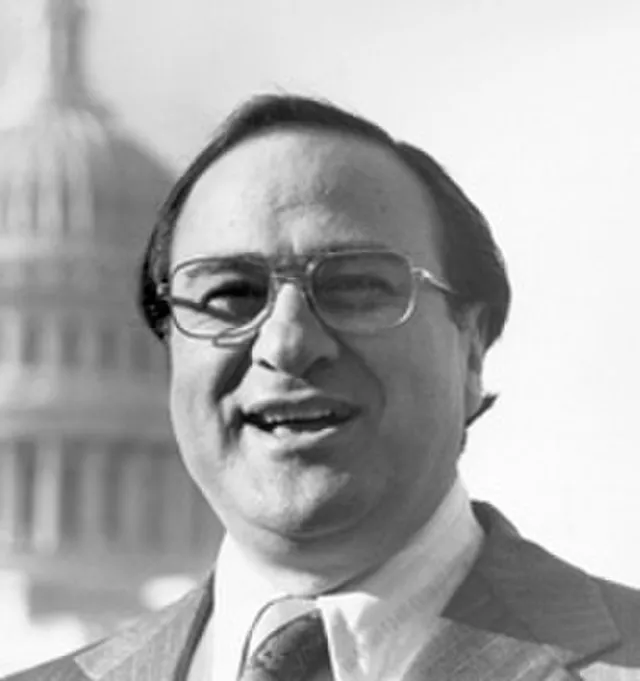
James Abourezk, 1st Arab American US senator, dies at 92.
James Abourezk, attorney and Democratic politician who served as a United States senator and United States representative from South Dakota and co-founder of the American-Arab Anti-Discrimination Committee(ADC), died today on his 92nd birthday.
He was born in Wood, South Dakota, the son of Lena (Mickel), a homemaker, and Charles Abourezk, an owner of two general stores. Both of his parents were Lebanese immigrants. He grew up near Wood on the Rosebud Reservation and has lived in South Dakota most of his life.
Abourezk represented South Dakota in the United States Senate from 1973 until 1979. He was the author of the Indian Child Welfare Act, passed by Congress in 1978 to try to preserve Indian families and tribal culture.
He was instrumental in the creation of both the American Indian Policy Review Commission and the Select Committee on Indian Affairs. He became chairman of the Indian Affairs Committee from its creation in 1977 to 1979.
Abourezk was elected in 1970 as a Democrat to the United States House of Representatives and served from 1971 to 1973. In 1972 he was elected to the U.S. Senate, where he served from 1973 to 1979.
Abourezk was an outspoken critic of Israel and U.S. foreign policy in the Middle East after touring the region and visiting his parents’ hometown in Lebanon as a senator. The position lost him many political allies, and he decided to retire from the Senate after a single term.
In 1980, Abourezk co-founded the American-Arab Anti-Discrimination Committee and traveled throughout the U.S. organizing Arab Americans in the wake of the “Abscam” debacle. Abscam was an FBI sting operation where agents dressed up as “oil-rich sheiks” in the late 1970s and early 1980s that led to the convictions of seven members of the United States Congress, among others, for bribery and corruption.
Abourezk’s marriages to Mary Ann Houlton and Margaret Bethea ended in divorce. In 1991, he married Sanaa Dieb, a restaurateur. They moved to Sioux Falls where she opened an award-winning Arab restaurant.
Survivors include his wife; children Charles Abourezk, Nikki Pipe On Head, and Paul Abourezk from his marriage to Houlton; daughter Alya Abourezk from his third marriage; a stepdaughter; and many grandchildren and great-grandchildren.
Warren David, president of Arab America and a former national president of the American-Arab Anti-Discrimination Committee said, “during a time when discourse regarding the negative portrayal of Arabs and the injustice faced by Palestinians were scarce, he (Abourezk) acted as a pioneer who instilled a sense of immediacy in the Arab American community–he was a trailblazer in that regard.”
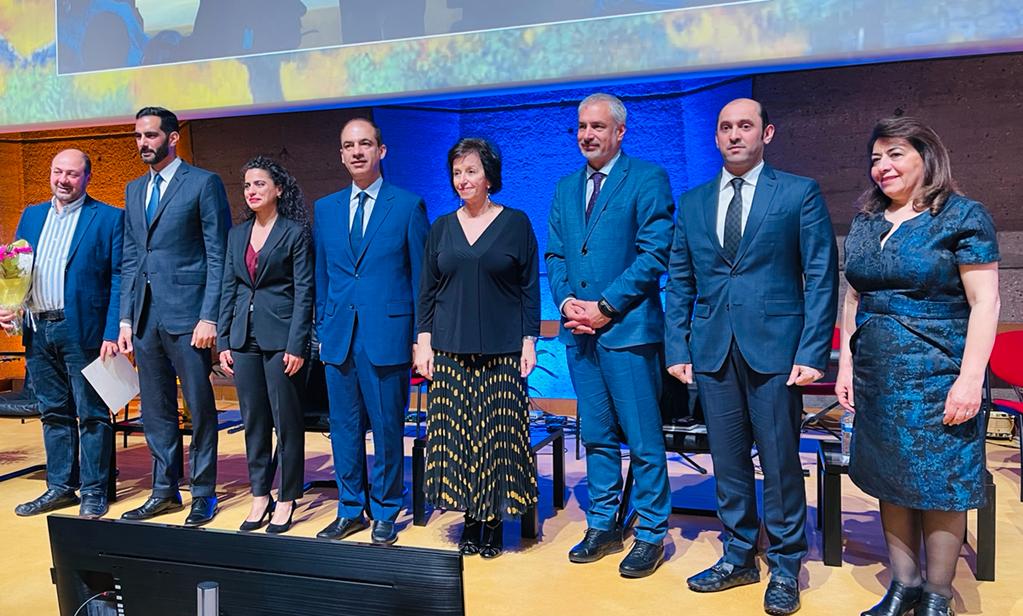
The United Nations Educational, Scientific and Cultural Organisation (UNESCO) headquarters in Paris held a ceremony for the 18th edition of the Sharjah Prize for Arab Culture (SPAC), organised by the Sharjah Department of Culture in cooperation with UNESCO.
The Prize has been awarded to Dunya Mikhail, an American-Iraqi poet, and Helen Al Janabi, a Swedish actress of Syrian-Iraqi origin.
Sheikh Salem Khalid Abdullah Al Qasimi, Deputy Secretary of State for Heritage and Arts Sector, UAE’s Permanent Representative to the UNESCO, along with Professor Mohammed Ibrahim Al Qaseer, Director of Cultural Affairs at the Department, in addition to dignitaries, writers, intellectuals and members of the diplomatic corps accredited to the United Nations.
Ernesto Otuni Ramirez, UNESCO’s Assistant Director-General for Culture, gave a speech in which he expressed his gratitude and appreciation to H.H. Dr. Sheikh Sultan bin Muhammad Al Qasimi, Supreme Council Member and Ruler of Sharjah, and for his cultural and humanitarian renaissance role at the local, regional and global levels.
Afterwards, Abdullah bin Muhammad Al Owais, Chairman of the Sharjah Department of Culture, gave a speech in which he expressed his happiness at the continuation of the UNESCO-Sharjah Prize for Arab Culture editions, appreciating the role of UNESCO in managing the prize and sponsoring many cultural programmes.
Al Owais and Ernesto Ramirez awarded the 18th Sharjah Prize for Arab Culture to Dunya Mikhail and Helen Al Janabi, in addition to honouring the winners of the 17th session.