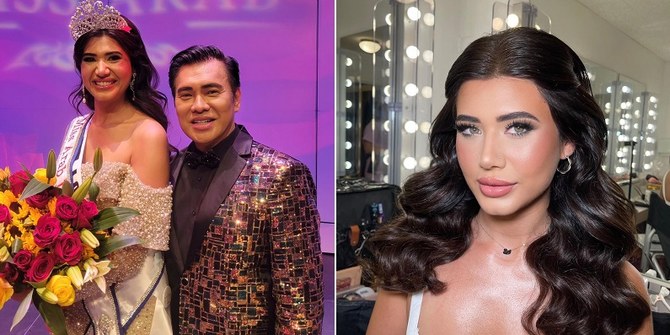
SAUDI ARABIA : King Faisal Prize winners announced for 2026

Pioneering scientist behind revolutionary weight-loss drugs, global scholars, innovators among winners.

The King Faisal Prize 2026 winners were announced at a ceremony in Riyadh on Wednesday night.

The event honored pioneering scientists, global scholars and innovators for their transformative contributions to medicine, science, Arabic language, Islamic studies and the service of Islam.

Prof. Svetlana Mojsov was named winner in the medicine section for her groundbreaking discoveries that are now reshaping how we treat obesity.

Prof. Carlos Kenig was announced as science laureate in the field of mathematics for helping to revolutionize understanding of nonlinear partial differential equations.

Mojsov, the Lulu Chow Wang and Robin Chemers Neustein research associate professor at The Rockefeller University in New York, pioneered research on glucagon-like peptide-1 (GLP-1) that has fundamentally transformed how obesity and diabetes are treated.

She discovered and characterized the biologically active form of GLP-1, a natural intestinal hormone that regulates blood sugar and appetite, and identified its receptors in the human pancreas, heart, and brain.

Through cutting-edge biochemistry and physiological studies, Mojsov demonstrated that GLP-1 powerfully stimulates insulin secretion while reducing hunger and managing glucose levels.

Her groundbreaking work enabled the development of an entirely new class of medications that mimic this natural hormone, sparking a paradigm shift in obesity treatment.

These therapies today provide life-changing benefits for hundreds of millions of people worldwide living with obesity and its complications — a global health crisis affecting 890 million adults and 160 million children and adolescents in 2022 alone, according to the World Health Organization.

Mojsov’s groundbreaking contributions have earned numerous prestigious honors, including Time magazine naming her one of the 100 Most Influential People in 2024.

Kenig was honored for his groundbreaking contributions to mathematical analysis. His work has transformed understanding of nonlinear partial differential equations — the mathematical equations describing how things change and move in the physical world — and provided researchers with a now-ubiquitous set of techniques. His insights have opened new research frontiers with applications spanning fluid mechanics, optical fibers, and medical imaging.

Kenig, the Louis Block distinguished service professor at the University of Chicago, is recognized for applying harmonic analysis techniques across different areas of partial differential equations.

His work on free boundary problems — determining unknown boundaries such as where ice meets melting water or how fluids flow through soil — has been particularly influential.

Kenig has spent three decades figuring out how complex waves behave over long periods of time, especially in tricky situations where they could either spread out peacefully or build up dangerously.

This matters for understanding everything, from ocean waves to light pulses in fiber optics and to how energy moves through different materials.

His work helps explain phenomena in quantum mechanics, optics, and ocean waves. By combining different mathematical techniques, he has solved longstanding problems that had puzzled mathematicians for decades.

In addition to medicine and science, the King Faisal Prize recognized the achievements of outstanding thinkers and scholars in the field of Arabic language and literature, Islamic studies, and exemplary leaders who have played a pivotal role in serving Islam, Muslims, and humanity at large.

Pierre Larcher, an emeritus professor of Arabic linguistics at Aix-Marseille University and emeritus researcher at the Institute for Studies and Research on the Arab and Muslim Worlds, won this year’s King Faisal Prize for Arabic Language and Literature on “Arabic literature in French.”

His novel presentation of Arabic literature to French readers has earned widespread acclaim from critics and specialists, while his rigorous scholarly approach to classical Arabic literature has made it accessible and appropriate for French culture.

His critical translation project of “Al-Mu’allaqat” and rigorous study of pre-Islamic poetry demonstrate exceptional scholarly depth.

For this year’s Islamic Studies Prize, Abdelhamid Hussein Mahmoud Hammouda, the professor of Islamic history and civilization at Fayoum University, and Mohamed Waheeb Hussein, the professor of archaeology and history of art at the Hashemite University, were announced as co-laureates.

Hammouda’s work encompasses the trade routes across the Islamic world — the Mashreq, Iraq and Persia, Arabian Peninsula, Greater Syria, Egypt, Sahara, Maghreb, and Al-Andalus. This expansive scope delivers coherent understanding of Islamic trade trajectories across history, serving as an authoritative reference for both specialized research and broader scholarship.

Hussein’s groundbreaking work uses archaeological surveys, GPS documentation, and analytical mapping to systematically correlate Qur’anic texts with geographical data. His research offers definitive scholarly interpretation, significantly advancing documentation of early Arabian Peninsula trade routes.

Sheikh Abdullatif Al-Fozan and Dr. Mohammad Abou Moussa were announced as co-laureates in the Service to Islam Prize.

Laureates’ names were announced by Prince Turki Al-Faisal and the King Faisal Prize’s Secretary-General Dr. Abdulaziz Alsebail.

Selection committees included experts, specialists, and scholars who met in Riyadh and examined the nominated works. They selected the laureates in an objective and transparent manner, in accordance with the rules and regulations.

The KFP was established in 1977, and was awarded for the first time in 1979 in three categories: service to Islam, Islamic studies, and Arabic language and literature. Two additional categories were introduced in 1981: medicine and science. The first medicine prize was awarded in 1982, and in science two years later.

Since 1979 the KFP has given awards to more than 300 laureates who have made distinguished contributions to different sciences and causes.

Each prize laureate is endowed with $200,000, a 24-carat gold medal weighing 200 grams, and a certificate inscribed with the laureate’s name and a summary of the work that qualified them for the prize.

source/content: arabnews.com (headlines edited) 

_____________
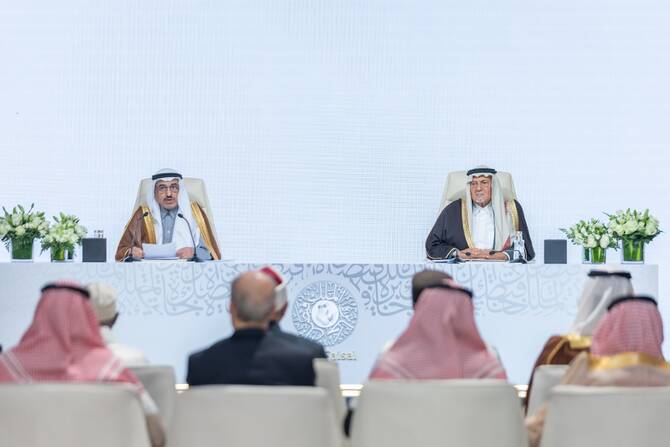
King Faisal Prize laureates’ names for 2026 were announced in Riyadh on Wednesday night by Prince Turki Alfaisal and the Prize’s Secretary General Dr. Abdulaziz Alsebail. (Supplied)

_______________________________________________________

EGYPT / JORDAN / PALESTINE / SAUDI ARABIA (*Arab)
   

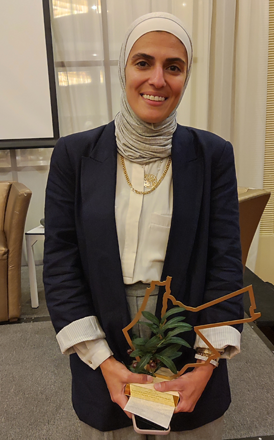
JORDAN : Mohammed Bin Rashid congratulates Jordanian Engineer Sahel Al Hayari for winning ‘Great Arab Minds award 2024’

His Highness Sheikh Mohammed Bin Rashid Al Maktoum, Vice President, Prime Minister and Ruler of Dubai, congratulated architectural engineer Sahel Al Hayari, winner of the Great Arab Minds Award 2024 in the field of architecture and design.

Sheikh Mohammed said on X platform, “Today, we congratulate the winner of the Great Arab Minds Award 2024, Architectural Engineer Sahel Al Hayari from Jordan.”

Sheikh Mohammed said that Architect Al Hayari presents designs which combine heritage and modernity, identity and nature and has excelled in many distinctive architectural projects and participated in teaching architecture and presenting his research and works in the most prominent universities around the world.

Sheikh Mohammed emphasised that Arab architecture has influenced human civilisation through its unique styles and designs throughout history, and that there are many exceptional Arab talents among architects and designers who deserve support, empowerment, and appreciation.

Al Hayari is known for integrating innovative modern design with traditional Arab stonework, and for blending contemporary architectural elements with historical context. He has promoted the presence of Arab stone architecture from Jordan in international circles, and his unique style has created an interactive dialogue between topography and architecture.

Al Hayari holds a Bachelor of Architecture and Fine Arts from the Rhode Island School of Design, and a Master of Architecture in Urban Design from the Harvard Graduate School of Design.

He also conducted postgraduate studies at the School of Architecture at the University of Venice and has lectured at prestigious colleges and universities in the fields of architecture and design around the world, including Columbia University and Harvard University in the United States, the University of Venice in Italy, the Swiss Federal Institute of Technology in Zurich, the American University of Beirut, and the University of Science and Technology in Jordan. His works cover a wide range of design-related disciplines, including urban design, architectural structures, interior design, and exhibition design.

Mohammed Bin Abdullah Al Gergawi, Minister of Cabinet Affairs and Chairman of the Higher Committee for the “Great Arab Minds” Initiative, informed Sahel Al Hayari of his win of the award.

In a video call with him, he praised the unique artistic formula he created by combining architecture, fine arts, and urban design.

It is worth mentioning that the ‘Great Arab Minds’ award is the largest award of its kind in the Arab world, and it celebrates, for the second consecutive year, the achievements of Arab innovators for humanity in these fields.

source/content: gulftoday.ae (headline edited)

______________

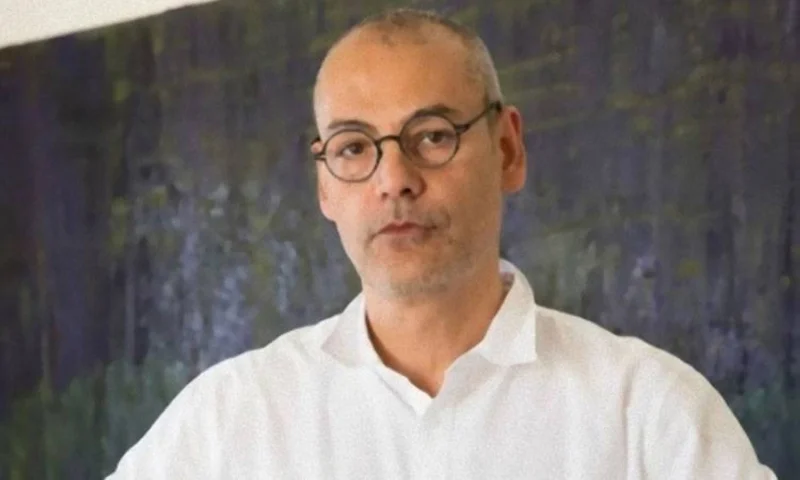
Sahel Al Hayari is known for integrating innovative modern design with traditional Arab stonework

___________

JORDAN

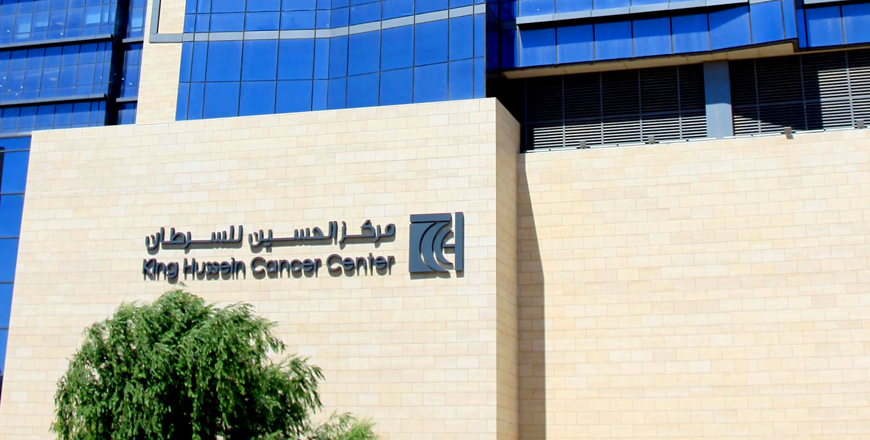
JORDAN / KUWAIT: King Hussein Cancer Centre (KHCC)’s dedication to cancer care earns Kuwait’s prestigious health award 2024 for the ‘Control of Cancer, Cardiovascular Diseases and Diabetes in the Eastern Mediterranean Region’

Kuwait Health Minister Ahmad Awadhi handed over the State of Kuwait Prize for the Control of Cancer, Cardiovascular Diseases and Diabetes in the Eastern Mediterranean Region to King Hussein Cancer Centre (KHCC) Director General Asem Mansour.

The award ceremony took place during the 71st session of the WHO Regional Committee for the Eastern Mediterranean, in recognition of the KHCC’s significant achievements in cancer control.

Mansour stressed that the award reflects the support of the King Hussein Cancer Foundation’s (KHCF) board of trustees, chaired by HRH Princess Ghida Talal, according to the Jordan News Agency, Petra. 

This recognition is the result of the collective efforts of the centre’s team, local and international partners, and most importantly patients, whose resilience in their fight against cancer continues to inspire.

Mansour has served as the centre’s director general since 2012, and currently chairs the executive committee of the Jordan Breast Cancer Programme. 

He is a consultant in diagnostic radiology, specialising in neuroradiology and a fellow of the Royal College of Radiologists (FRCR) in London. His academic qualifications include a master’s degree in healthcare management from Carnegie Mellon University and a master’s degree in public health from Liverpool John Moores University.

The prize is one of the region’s most prestigious medical awards, honouring those who have made significant contributions to cancer control through research, innovation or exceptional medical service.

The event featured the presence of Hanan Balkhy, WHO regional director for the Eastern Mediterranean Region, and Hanan Kuwari, Qatar’s minister of health.

source/content: jordantimes.com (headline edited)

_______________

This recognition is the result of the collective efforts of the centre’s team, local and international partners, and most importantly, the patients (JT File photo)

____________________

JORDAN / KUWAIT

JORDAN: First Jordanian, Arab female Doctor Asil Jallad to enter Gaza hails Gazan women as ‘real heroes’ of war

 Making history by being the first Jordanian and Arab female doctor to enter Gaza, Asil Jallad assisted in delivering 500 babies during her two-month voluntary work in the war-torn Strip. 

Jallad, an obstetrics and gynecology specialist, has volunteered with the International Medical Corps and arrived to Gaza during the sixth week of the Israeli offensive on October 7. 

With a daily workload of 10 to 15 childbirths, Jallad said she was extending medical assistance to Gaza’s most marginalised populations: Women and children. 

Citing a UN report, Jallad said that every 10 minutes, a child is born in Gaza. Currently, between 50,000 to 60,000 women are pregnant, and there are approximately 155,000 women, including pregnant women and wet nurses, in need of medical attention.

Reflecting on her experiences, Jallad hailed the resilience of the women of Gaza, whom she described as the “true heroes amidst the chaos of war”.

“When I decided to go to Gaza, they kept telling me that I am a hero, but when you see the women of Gaza, you realise that you are merely a small heroine compared to the heroes you see every day,” she said.

 In her role at the field hospital in the southern region by the International Medical Corps, Jallad said she had focused on providing comprehensive care for pregnant women, conducting surgeries, and offering consultations on sexual and reproductive health.

Despite grappling with limited medical equipment and resources, the International Medical Corps clinics in the field hospital in Gaza provide medical aid to 700 to 1000 patients every day, with the female clinic alone attending to 100 to 120 patients daily.

Jallad has witnessed firsthand the dire consequences of malnutrition among women in Gaza, leading to blood deficiency, dehydration and reproductive health issues.

She emphasised the “profound” challenges faced by pregnant women, including the dire shortage of postnatal care facilities. “Due to the limited number of beds available, pregnant women are compelled to vacate the center within two hours of giving birth, depriving them of crucial recovery time and support.”

“Pregnant women should have 10.5 hemoglobin levels as minimum, however I saw a pale pregnant woman with 4 hemoglobin level walking on her feet to support her other children in the tent.”

“One of the most touching cases, is when people come to consult to get pregnant, because the six months of war means six months in a woman’s life, and age is considered the most important factor in the pregnancy and birth.”

According to UNFPA, around 155,000 pregnant women and new mothers in Gaza are in desperate need of basic healthcare, while 690,000 women and girls in Gaza lack access to menstrual hygiene supplies and privacy with some reports of contraceptive pills being taken to avoid the unhygienic menstrual conditions.

Jallad said that the dire living conditions of displaced Palestinians, cramped into tiny tents with inadequate facilities, exacerbate the humanitarian crisis.

She decried the scarcity of essential medical supplies and the impact of restrictions on medication entry imposed by Israeli authorities.

As the conflict continues, Jallad warns of the looming threat of chronic health problems and blood clots due to the lack of medical aid delivery to the strip. She stresses the urgent need for increased access to medical care, particularly for pregnant women and new mothers who are struggling to survive amidst the devastation.

“Deformities will be seen in the next few years, or in the next 10-20 years, as we don’t know what are the ingredients used in the bombs.”

Jallad shed light on the mental health toll of the conflict, with many individuals unaware of the whereabouts or well-being of their families. 

Despite recent efforts to improve medical facilities in certain areas, Jallad raised concerns about the neglect of the north, where millions of refugees reside. She underlined the urgent need for sustained international support to address the ongoing medical and humanitarian needs across Gaza.

Seven months since Israeli strikes began in response to October 7 attack, more than 10,000 women have been reportedly killed in Gaza, among them 6,000 mothers. Some 19,000 children have been orphaned, UN Women said. 

The UN agency’s survey of 360 respondents, including 182 women in Rafah, revealed disturbing data that more than six in 10 pregnant women reported complications, including 95 per cent with urinary tract infections and 80 per cent with anemia. In households with nursing mothers, 72 per cent reported challenges in breastfeeding and in meeting the nutritional needs of their babies.

source/content: jordantimes.com (headline edited)

_________

___________

JORDAN

JORDANIAN Fashion Designer Kish Jeane Breaks World Record with outfits for Lebanese Superstar Najwa Karam

Jordanian Fashion Designer Kish Jeane, breaks Guinness World Records by making the longest cape in the world for Lebanese superstar, Najwa Karam.

The cape is 55.7m long, with 118m of fabric and 3m of gold reflective leather used to craft it.

Jeane, who is known for his use of reflective leather in his designs, designed the cape drawing from Greek mythology for inspiration . He also added the name of Najwa’s most recent album “Charisma” in Arabic calligraphy on the back of the cape.

Najwa Karam also wore a gold cage shoulder piece with a white jumpsuit, also designed by Jeane. She wore both outfits to her welcoming event in Jordan, celebrating her participation in the Jerash Festival .

Kish Jeane will also be the first Jordanian designer to participate in New York Fashion Week, as he will be presenting his Spring Summer 2024 Collection there.

source/content: jordannews.jo (headline edited)

_________

(Photos: Handouts Kish Jeane)

___________

JORDAN

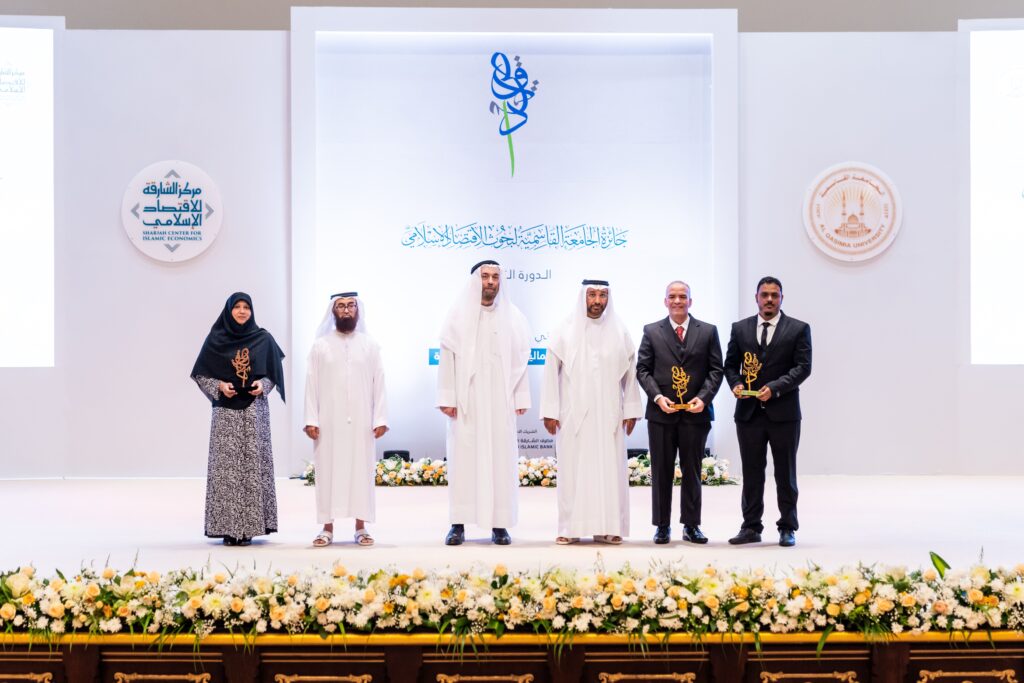
SHARJAH, U.A.E: Al Qasimia University Honours ‘Islamic Economics Research Award’ Winners

Under the patronage of H.H. Dr. Sheikh Sultan bin Muhammad Al Qasimi, Supreme Council Member and Ruler of Sharjah, Sharjah Centre for Islamic Economics (SCIE) at the university organised a ceremony to honour the winners of the Al Qasimia University Award for Islamic Economics Research, held in the university theatre, in the presence of the President of the University, members of the Board of Trustees, the University Rector, deans of colleges, and members of the Academic, and administrative bodies and students.

Professor Jamal Salem Al Tarifi, President of Al Qasimia University, honoured the award winners and congratulated them on the quality of research presented in Islamic economics studies.

Professor Dr. Awad Al Khalaf, Acting Chancellor of the University, expressed his highest thanks and gratitude to the Ruler of Sharjah, and founder of the University, for His Highness’s generous patronage of the award, as this sponsorship adds value to one of the most important scientific activities that contribute to the renaissance of the economic sector, and the dissemination of the principles and values of Islamic economics, according to scientific foundations, and qualitative scientific research taking into consideration the real need of building a solid economy that achieves UAE development.

The list of researchers included honouring Dr. Badr Al Zaman Khamqani, from the Republic of Algeria, winner in the field of economics, in his research entitled: “A proposed strategy to accelerate the pace of digital transformation in Islamic banks.” Dr. Ahmed Abdel Rahman Ahmed Al Majali, from the Hashemite Kingdom of Jordan, won in the field of law, in his research entitled: “blockchain technology compatibility with Islamic financial transactions.” Professor Dr. Aisha Muniza, from the Maldives, won in the field of economics, in her research entitled: “Development of a digital Islamic social stock exchange”.

Dr. Yasser Al Hosani, SCIE Director, announced the launch of the fourth edition of the award under the title “Smart Islamic Financial Engineering”.

source/content: wam.ae (headline edited)

____________

______________________________________________

SHARJAH, UNITED ARAB EMIRATES (U.A.E)

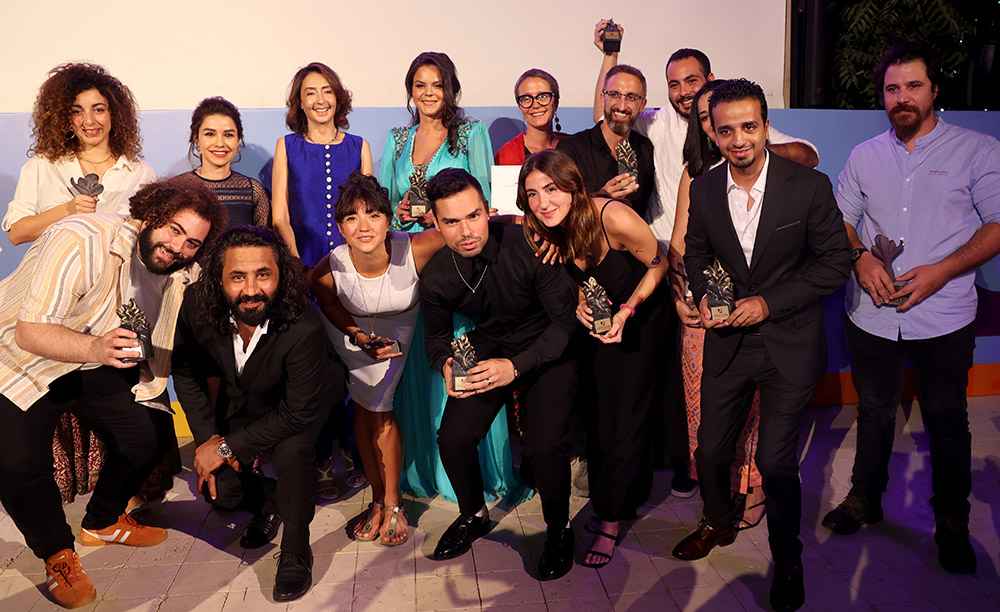
JORDAN: 4th Amman International Film Festival reveals Winners of Black Iris Awards

Algerian period drama The Last Queen and Iraqi film Hanging Gardens were among those recognised.

Films from Palestine, Lebanon, Jordan, Iraq, Morocco, Tunisia and Egypt were among the top winners of this year’s Amman International Film Festival.

The Black Iris Awards ceremony was held on Tuesday at the Royal Film Commission in Amman. The event marked the conclusion of the fourth run of the festival. This year, the festival screened 56 films from 19 countries, including feature narratives, documentaries and short works. The films all marked their Jordanian premiere, with some making their worldwide or regional debut.

Hafreiat by Spanish filmmaker Alex Sarda was the winner of the Black Iris Audience Award for best foreign film. The documentary revolves around a Spanish archeological mission in northern Jordan where local workers excavate the land, working long hours for minute wages. At the centre of the story is Abo Dya, a Palestinian-Jordanian, working tirelessly to provide for his family, hoping to better their lives despite the criminal record that undermines his ambitions.

The Palestinian film Lyd, directed by Rami Younis and Sarah Ema Friedland, was named winner of two awards, including the Jury Award for best Arab feature documentary and the Fipresci Award, held in conjunction with the International Federation of Film Critics.

The film puts a spotlight on Lyd. A city with a 5,000-year history, Lyd was once a Palestinian capital and in the early 20th century was a thriving metropolis. Lyd highlights this rich history while also highlighting the bloodier aspects of its past, namely the massacres and expulsion of Palestinians by Israeli forces in 1948, after which the state of Israel was created and the city became known as Lod.

The documentary interviews survivors of the Nakba, Palestinians living in Lyd, as well as those in exile. The film juxtaposes the real-life footage with animation that treads into sci-fi territory, imagining what Lyd could have been like if not for the bloody events of the Nakba.

The Jury Award for Arab short film was given to two films – Hamza: A Ghost Chasing Me by Palestinian director Ward Kayyaland Trinou by Tunisian filmmaker Nejib KthiriThe Black Iris for best Arab short, meanwhile, was granted to My Girlfriend by Egyptian filmmaker Kawthar Younis.

The Special Mention prize for first-time documentary editor was awarded to Zakaria Jaber, director and editor of Anxious in Beirut. The documentary explores the trauma endured by denizens of the Lebanese capital in a film that aims to find a semblance of coherence within the tumultuous effects that have gripped Beirut.

Fragments from Heavenby Moroccan filmmaker Adnane Baraka was named winner of the Black Iris Award for best Arab feature documentary. The film follows a group of Amazigh nomads in Morocco as they search for bits of a Martian meteorite that landed in the desert in 2013, hoping it would better their lives.

The Special Mention prize for first-time lead actor/actress was awarded to two talents. Lebanese actress Marilyn Naaman was awarded for her lead role in Mother Valley. The film, set in the Lebanese mountains in the mid-20th century, follows a young wife as she faces the pressures of patriarchal society.

Egyptian actress Rana Khattab was also awarded for her role in the film Rat Hole. The feature, directed by Egyptian filmmaker Mohamed El Samman, follows a telemarketer working for a non-profit organisation trying to convince people to donate to various causes. The film pulls the curtain on the darker side of the Egyptian non-governmental organisations that scam people on the pretence of charity donations.

The Special Mention prize for first-time scriptwriter was awarded to Algerian filmmaker Adila Bendimerad, the director of the period drama The Last QueenBendimerad wrote the script for the acclaimed film with Algerian director Damien Ounouri.

The Iraqi film Hanging Gardenswon the Jury Award for Arab feature narrative. Directed by Ahmed Yassin Al Daradji, the film revolves around a 12-year-old boy who scavenges a landfill for sellable metal and plastic. He comes across a human-size doll, presumably brought and left behind by US soldiers. The boy names the doll Salwa and decides to keep and care for it; bathing it and trying to keep it from prying eyes. Soon, however, his secret is revealed, and he is in the crossfire of those who want to take Salwa for themselves, those who seek to commercialise from it, as well as those who want to obliterate it.

Finally, the Black Iris prize for best Arab feature was awarded to Ashkal. Directed by Youssef Chebbi, the crime thriller is set in Tunis and follows two police officers as they try to unravel the mystery behind a series of self-immolation cases.

source/content: thenationalnews.com (headline edited)

___________

pix: aiff.jo

____________

JORDAN

JORDANIAN-AMERICAN: Farah Abu Adeela Crowned Miss Arab USA in Arizona Beauty Pageant

US Jordanian contestant Farah Abu Adeela from the state of Illinois was crowned Miss Arab USA at the beauty pageant’s finale in Arizona over the weekend.

The new Miss Arab USA, who is a model, takes over from 2022’s winner, Moroccan American Marwa Lahlou.

The annual pageant, which returned in 2022 after a two-year hiatus due to the COVID-19 pandemic, was held in Arizona this year. Produced by The Arab American Organization (AAO), the pageant is “founded on the basis of advancing the cause of young ladies of Arab descent,” according to its website.

The swimsuit category does not feature in the pageant, with the stated aim of organizers being to “select an honorable Arab young lady to represent our culture in the US and worldwide for one year.”

This year’s ceremony featured a performance by dance troupe Zeffa of Phoenix.

source/content: arabnews.com (headline edited)

____________

Farah Abu Adeela nabbed the coveted tiara at the 2023 Miss Arab USA pageant. (Instagram)

____________________________

AMERICAN / JORDANIAN

JORDANIAN CEO Hussam Hamo Joins WEF Young Global Leaders

Jordanian CEO and founder of Tamatem Games, Hussam Hamo, has been selected to join the World Economic Forum’s (WEF) Young Global Leaders Forum.

According to a statement issued by Tamatem on Wednesday, Hamo was the only Jordanian entrepreneur selected to join the cohort.

Top publisher

Hamo founded Tamatem in 2013 to provide fun and understandable mobile games for the Arab market.

It is the number-one publisher of mobile games in the Middle East and North Africa and the top publisher of Arabic-language games, with more than 50 games published, 150 million downloads, and 7 million monthly active users.

Forum program

The Forum of Young Global Leaders “connects and inspires members to lead responsibly towards a more inclusive and sustainable world through virtual and in-person programming”, according to the forum’s website.

Through a leadership development program, members are trained in insights, skills, and connections to accelerate their work in the public interest. 

source/content: jordannews.jo

___________

___________

JORDAN

JORDAN: Asma Khader: A Feminist Warrior and Legend of Jordan

In a remote area in the Valley of Jordan, schoolgirls planned for their future debunking the stereotypical roles that society prescribed for women.

In a remote area in the Valley of Jordan, schoolgirls planned for their future debunking the stereotypical roles that society prescribed for women. Some of the girls dreamt of being “spokesperson” of the government. It was the first time Jordan had a government’s spokesperson. And she was a woman: Asma Khader.

The many times in which Khader have inspired women and girls are the moments she recalls with a warm smile. “Girls start to see that their role is not being wives only. They can be ministers and official spokespersons and get involved in politics,” says Khader. In 2003, she was the State’s Minister and the government’s spokesperson. “I was on the TV and the radio everyday talking to the public,” says Khader. She remembers holding press conferences every Monday’s morning in a public space where anyone could attend.

In a region where women could be trapped in the midst of stereotypes, cultural ones and those implied by outsiders, political and social empowerment are necessities when dealing with women’s rights advocacy. It’s a continuous battle in which women celebrate victories and overcome challenges and obstacles. With her dark short hair and formal attire, Khader is one of the warriors in this battle. A mother of three daughters and one son and a grandmother, she raised her kids on principal: gender equality. “The only son was not getting the privilege to enjoy being the only boy,” laughs Khader.

In the midst of busy Amman, Khader is in her office working tirelessly. She had to stop practicing law because of her current position as Commissioner and Vice President at the Independent Election Commission. She helped to launch, established and led several organizations promoting human rights and freedom of expression. I have visited and witnessed the works of two of them: Al-Mizan Legal Group and Sisterhood Is Global Institute Jordan. Both of the groups are nationally active and have a great impact on people’s lives. I have met several active members of SIGI in the different chapters in cities and towns all working together on women’s rights issues. 

Born in 1952, Khader has been a pioneer of women and girls’ rights advocacy since her childhood. She was the eldest of her siblings. In most Arab communities, it’s a tradition to identify parents by the name of their eldest child. For several years, Khader’s parents were known to be “Abu Asma” and “Umm Asma,” Asma’s father and Asma’s mother, until a change happened.

“I was shocked when everybody started to call my parents Abu Sameer and Umm Sameer after my brother was born,” says Khader and she chuckles. “They were known as Abu Asma and Umm Asma because I was the first child and then my sister and my sister. After three children, the boy was born. And in one second everybody started calling them Abu Sameer and Umm Sameer.” It was a matter of a name, but had deep meaning of discrimination against girls. 

The spark of activism was ignited focusing on gender roles in childhood. “I started to prefer going out and playing with children: with boys mainly,” says Khader. Soon, her father noticed her rebellious spirit. He was supportive and backed her activism. Khader mentions that when he noticed her passion in defending girls’ rights at a young age he told her: “You should be sure that I love you and I am proud of you. And I am sure you will be a good citizen, a good person in the society.”

“My father was a very open minded person, very educated, a believer in women and men, and a fighter against discrimination,” reiterating the importance of her father’s support in her life. “My mother was worried but she didn’t prevent me from being active. As a mother I can understand why she was worried all the time.”

Khader’s journey began. At a time when it was rare for women to be involved in politics, Khader took to the streets with her male colleagues protesting against Israeli’s airstrikes on a small village in Khalil near Hebron. She was only 13-years-old chanting while being carried on the shoulders of other protestors. She encouraged her colleagues from the girls’ school to join the demonstration.

That was her early engagement in public life. However, she was active in school, helping and defending other students. “And I think that was the root of my profession later, to be a lawyer,” mentions Khader.

While being in high school, Khader was also active in helping Palestinian refugees. Arts fill Khader’s office, accompanied by her memories. As a member of the Palestinian Women Union, in the late 1960s, Khader travelled to other countries to present Palestine in Folklore activities such as arts and traditional Dabkeh dance, and exhibiting handmade crafts made by women, especially those of the refugee camps.

Surrounded by crowds of people, mainly women, Khader announced: “We are not presenting women as victims.” Khader is one of the three judges of Manara Award for Gender Equality in Jordan, Lebanon and Palestine. She is representing her home country, Jordan.

As she entered the room, women and few men gathered around to greet her and I was one of them. A woman journalist sitting beside me was pleased to see Khader on a seat close to us. “Your excellency, this is my article,” said the journalist while flipping the pages of a magazine to show her the piece.

Despite being occupied with the event, Khader got engaged in a conversation with the journalist. During the event Khader listened to comments and questions, and answered in a professional manner. Being in a non-governmental event and listening to Khader took my imagination to a time when I was not in Jordan: when she was a government’s official having to answer the public. 

The challenge that most activists go throw is making their voice heard through the official channels. Having an official who was an activist could change the equation. It meant having reforms and changes within. Lobbying is something that women’s rights groups in several countries spend a lot of time and energy on. Similarly, in Jordan, a constitutional monarchy, in which non-governmental organizations, opposition and other groups have a chance to demand changes through the existing channels. At times, it is necessary to work with the government in order to achieve rights, gender equality in particular.

Being in a leading position, Khader used her role as a government official and minister to work for gender equality. “When you are in a position where you can impact a decision, it’s very important,” says Khader speaking of her experience in the government. For instance, she was able to push to have shelters, by law, in order to protect vulnerable women. In addition to that, health insurance law was introduced that entitles working women to have the right in including their families in their health insurance plans. Khader also had a stance against death penalty that was frozen until 2014. She was also able to give licenses to independent media organizations, and thus enhancing freedom of expression condition in the country.

“It’s very important to see how problems and achievements and challenges are from the different points of view,” says Khader. “I realize that if there is good lobbying — a group who are really preparing their case well — then the ministries will discuss it and take it seriously. This was also an empowering experience: to be more active in civil society later and to know how to deal with issues and to be more effective.” 

Khader graduated from Damascus University with a law degree in the early 1970s. At that time, there was no faculty of law in Jordan, and therefore, Khader had to travel to Syria. When she returned after successfully graduating, her father died. “It was a sudden death before me being a lawyer,” says Khader and her eyes are tearful. I look around to find a framed letter on her desk. “He wrote this letter to me.”

“I have always pictured you a lawyer…defending the oppressed, and serving the motherland with awareness…I wish you success and prosperity,” Khader’s father wrote. While the father didn’t see his daughter a lawyer, he was certain that she would be and that she would defend human rights. He was right with what he pictured for her.

A life filled with activism and Khader talks with pride about every battle she fought. Taking serious risks is not a choice, but is a necessity in some campaigns such as the one against what’s known as honour crimes. For instance, Khader mentions incidents in which she was threatened that her daughters would be “raped.” Her daughters were safe and she wasn’t deterred from continuing in her work despite the threats.

“Everybody now is fighting honour crimes in the country and the laws were changed and the special court was established and efforts happened,” says Khader. This would not have happened if women’s rights activists and advocates, like Khader, stopped due to threats and obstacles facing them. “Everybody now from the leadership of the country to many officials of the country to even the public opinion [have a stance against honour crimes],” says Khader. “After 20, 30 years, they are changed. So sometimes, it is a long process.”

Based on decades of experience, Khader has advice: to not lose hope if the process is taking a long time. “Reaching leading positions is not easy and is not going to happen smoothly without hard work and seriousness and knowledge based approach to challenge all the obstacles and being ready to spend years after some of the demands, some of the rights and some of the dreams, and some of the achievements you are trying to reach,” insists Khader.

Yusur is a journalist currently working in Jordan. She is board member of Canadian Voice of Women for Peace. This Project was carried out with the aid of a grant from the International Development Research Centre (IDRC), Ottawa, Canada.

Image: www.blog.learningpartnership.org

source/content: rabble.ca (headline edited)

__________

__________

JORDAN