Arabs & Arabian Records Aggregator. Chronicler. Milestones of the 25 Countries of the Arabic Speaking World (official / co-official). AGCC. MENA. Global. Ist's to Top 10's. Records. Read & Enjoy./ www.arabianrecords.org
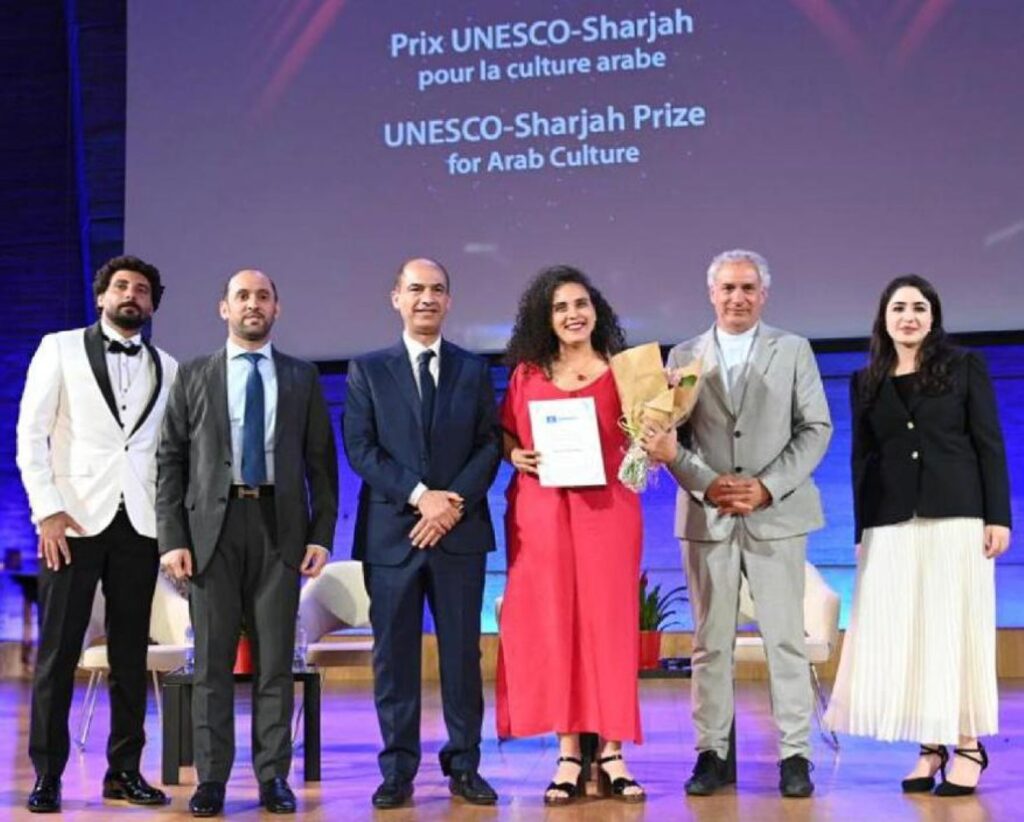
Kassem Istanbouli, Lebanese actor-director, and Hajer Ben Boubaker, French researcher and sound director, were awarded the 19th UNESCO-Sharjah Prize for Arab Culture at an award ceremony at UNESCO Headquarters in Paris on 26th June 2023.
The event, organised by the Sharjah Department of Culture in collaboration with UNESCO, celebrated the achievements of two winners.
The ceremony was attended by Abdullah bin Mohammed Al Owais, Chairman of the Sharjah Department of Culture; Ernesto Ottone Ramirez, Assistant Director-General for Culture at UNESCO; Mohammed Ibrahim Al Qasir, Director of the Department of Cultural Affairs in Sharjah; Ahmed Al Mulla, Deputy Ambassador of the UAE to France, and Aisha Al Kamali, Representative of the Cultural Attaché at the Embassy of the UAE in France, along with dignitaries, writers, intellectuals and accredited diplomats to the United Nations (UN).
Al Owais and Ramirez presented the 19th edition of the UNESCO-Sharjah Prize for Arab Culture to Istanbouli, winner of the Arab Personality Award, and Ben Boubaker, winner of the Non-Arab Personality Award.
The UNESCO-Sharjah Prize for Arab Culture recognizes recipients’ outstanding artistic achievements celebrating Arab art and culture globally. Core to UNESCO’s anti-racism and anti-discrimination agenda, the Prize promotes peace and dialogue to foster intercultural understanding and celebrate diversity.
For this 19th edition of the Prize, the international jury recognized Mr Istanbouli and Ms Ben Boubaker’s extraordinary contributions to promoting the arts and Arab culture and supporting their local communities.
Kassem Istanbouli is a Lebanese actor and director. Since 2014, he has led the rehabilitation of historical cinemas in Lebanon, including Stars Cinema in Nabatieh, and Al-Hamra and Rivoli in Tyre, abandoned or destroyed during civil war.
Mr Istanbouli is involved with several international projects focused on skills enhancement, youth empowerment and collaborative partnerships. In 2020 he co-founded the Arab Culture and Arts Network (ACAN) to design and implement online cultural activities across the Arab region. The Network includes over 700 organizational and individual members from across the world.
Mr Istanbouli is also director and founder of the Lebanese National Theater in Tyre and the Lebanese National Theater in Tripoli and has been a project manager at the Tiro Association for Arts in Lebanon since 2014.
Hajer Ben Boubaker is a French-Tunisian independent researcher and sound director. Her research focuses on a socio-historical analysis of Arab music and the cultural history of the Maghreb community in France and around the world.
In 2018, she created and self-produced the Vintage Arab podcast, which explores Arabic musical heritage. At the intersection of research and art, the podcast allows her to keep a foot in each sphere.
Ms Ben Boubaker is a producer and documentary director for France Culture, where her work questions the sound and political memory of immigration. As a researcher, she is associated with the Arab and Oriental music collection at the Bibliothèque nationale de France, and continues to write for scientific journals, including “Paris, capitale maghrébine: une histoire Populaire” in October 2023.
Created in 1998 and run by UNESCO at the initiative of the United Arab Emirates, the UNESCO-Sharjah Prize awards two laureates per year — individuals, groups or institutions — in recognition of their contribution to Arab art and culture, or for participating in the dissemination of the latter outside the Arab world.
The initiative contributes towards the Organization’s objective of fostering inclusive, resilient and peaceful societies. The Prize carries a monetary value of USD 60,000, which is equally divided between the two laureates.
Americans born in or with ancestral ties to Arab-speaking countries have made countless significant scientific, medical and engineering contributions.
While Americans born in or with ancestral ties to Arab countries have made countless significant scientific, medical and engineering contributions, most have never made it into record books. From cryptography, to the artificial heart, to the iPod, here are a few examples of some of the major advancements by Arab Americans.
1. Television Transmission and LCD Screens
Born in Nabatieh, Lebanon in 1895, Hassan Kamel Al-Sabbah studied and then taught mathematics at the American University of Beirut before immigrating to the United States in 1921. After a brief stint studying at the Massachusetts Institute of Technology (MIT), Al-Sabbah earned a master’s degree in engineering sciences from the University of Illinois, says Lujine Nasralla, communications specialist at the Arab American National Museum in Dearborn, Michigan.
“In 1923, General Electric (GE) hired him to work in its Engineering Laboratory under a contract that awarded him a dollar for each of his patents,” Nasralla explains, noting that between 1927 and 1935, he applied for patents for 52 of his inventions while working at GE. Some of the patents Al-Sabbah was awarded during his time at GE include three for innovations in television transmission technology (granted between 1928 and 1930), and two for cathode ray tubes (1935).
Though Al-Sabbah died in a car accident 1935, GE engineers continued to rely on the technology he invented, including developing the liquid crystal display (LCD) based on one of his patents. Al-Sabbah made numerous other significant contributions to science, technology and engineering, especially in the field of solar energy.
2. Emotion Recognition Technology
RANA EL KALIOUBY, CO-FOUNDER AND CHIEF EXECUTIVE OFFICER OF AFFECTIVA, SPEAKING DURING THE NEW WORK SUMMIT, CALIFORNIA, 2019. / DAVID PAUL MORRIS/BLOOMBERG VIA GETTY IMAGES
While Rana El Kaliouby was completing her doctoral research at the University of Cambridge in England in the early 2000s, she never felt as though she could ever truly connect with her loved ones back home. “Away from her family and friends in Egypt, El Kaliouby wished her computer could better convey her emotional state,” Nasralla says. That’s when she decided to find a way to make more emotionally intelligent technology.
After earning her doctorate, El Kaliouby took a position as a research scientist in the Affective Computing group in the MIT Media Lab. There, she was part of a team that developed an “emotional hearing aid,” as well as a pair of eyeglasses that could read emotions, along with social cues. Officially known as “the Emotional-Social Intelligence Prosthesis,” El Kaliouby and a colleague created the wearable technology in 2006 for people living with autism who have difficulty identifying and processing other people’s emotions as they communicate.
In 2009, El Kaliouby and the same MIT colleague co-founded a company called Affectiva, which used deep learning, computer vision, speech science and vast amounts of real-world data to develop emotion recognition technology. “Her pioneering technology accurately reads minute changes in facial expressions that convey emotions,” Nasralla says, adding that El Kaliouby is a member of the Women in Engineering Hall of Fame.
3. The iPod and iPhone
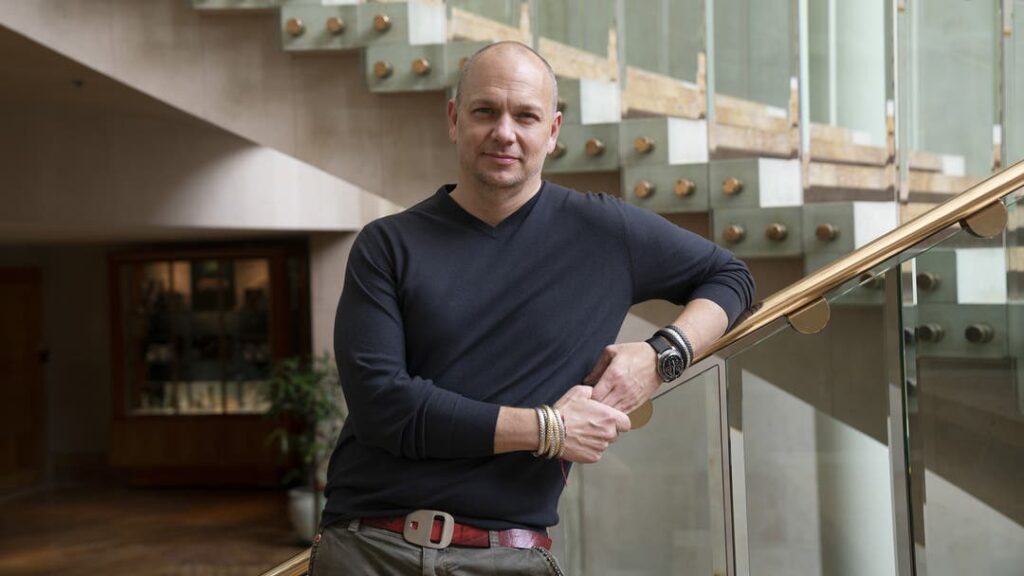
TONY FADELL, WHO OVERSAW THE DESIGN OF THE IPOD AND IPHONE, PHOTOGRAPHED IN SINGAPORE, 2019 / WEI LENG TAY/BLOOMBERG VIA GETTY IMAGES
There was a time in the not-so-distant past when listening to music outside of your home meant bringing the physical album with you on a record, audio cassette or compact disc. And while portable MP3 players existed before 2001, none were popular enough to make the device the standard way of listening to music on the go. That is, until Apple CEO Steve Jobs hired Arab American inventor Anthony “Tony” Fadell and put him in charge of a new special projects group within the company tasked with doing exactly that.
The result was the iPod, which launched in 2001. Fadell, who is now known as “ the father of iPod,” went on to oversee the first 18 iterations of the device before Jobs gave him his next assignment: to create a mobile phone with many of the same features as the iPod.
This time, the end product was the iPhone, which essentially allowed people to carry a highly compact computer with internet capability around at all times, and, in the process, changing the way people access information. Fadell was involved with developing the first three generations of the iPhone.
4. Developments in Surgery
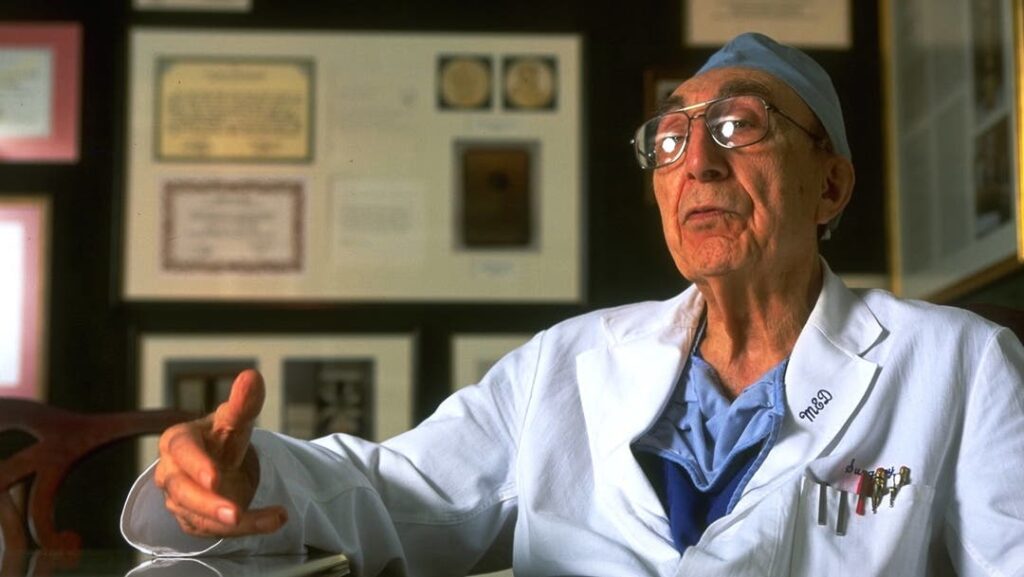
HEART SPECIALIST DR. MICHAEL DEBAKEY, C. 1994. / F. CARTER SMITH/SYGMA/GETTY IMAGES
Born in Lake Charles, Louisiana in 1908 to Lebanese immigrants, Michael DeBakey (the Anglicized form of Debaghi) grew up spending time in his father’s pharmacy and enjoyed sewing, gardening and learning how motors and other machinery work. He earned his medical degree in 1932 and served in the Surgical Consultants Division of the Army Surgeon General’s Office from 1942 to 1946.
It was during this time that DeBakey and his colleagues developed special units dedicated to providing surgical care to soldiers wounded near the front lines. They were first deployed in 1943, though are best known for their work during the Korean and Vietnam conflicts, when they were known as the Mobile Auxiliary Surgical Hospital (MASH) units.
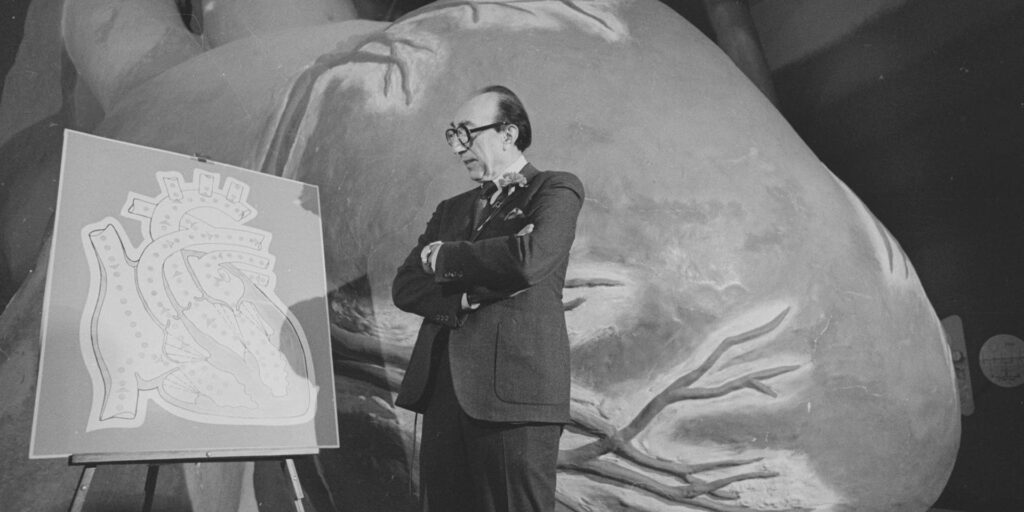
DeBakey’s surgical contributions continued for the next several decades and included performing the first successful removal of a blockage of the carotid artery (1953), developing the concept behind coronary bypass surgery (1963), pioneering the field of telemedicine with the first demonstration of open-heart surgery transmitted overseas via satellite (1965), and being the first to use a partial artificial heart (1966).
5. Internet Security
While internet security is top-of-mind now, that wasn’t the case when Egyptian-born cryptographer Taher Elgamal began his pioneering work in the field in the 1980s. “Elgamal published a paper in 1984, ‘A Public Key Cryptosystem and a Signature Scheme based on Discrete Logarithms,’ which became the basis of the Elgamal Digital Signature algorithm,” says Richard Gardner, a software developer and CEO of Modulus. This work was then utilized in the development of the Digital Signature Algorithm (DSA).”
Elgamal’s work became even more influential after the National Institute of Standards and Technology (NIST) adopted it as the Digital Signature Standard (DSS). “Like the name implies, it became the standard for electronic signatures,” Gardner explains.
And according to Abdulrahman Henedy, an Arab American entrepreneur and founder of Financeive , Elgamal’s invention of the discrete logarithm was also an important milestone in cryptography. “His work inspired other encryption variations and paved the way to create more advanced algorithms, like Advanced Encryption Standard,” he explains.
In addition, Elgamal was the driving force behind the Secure Sockets Layer (SSL), a protocol that keeps online communications like email and instant messaging secure. Because of this major technological development, he is known as the “father of SSL.”
6. The Waffle Cone
Though it may not be the most high-tech invention on the list, the waffle cone stands out not only because it’s delicious, but because not one, but four different Arab Americans claimed to have invented it. And what’s perhaps even more bizarre, is that in an origin story with so many inconsistencies, all four of the men contend that their ice cream innovation was born at the 1904 Louisiana Purchase Exposition—better known as the Saint Louis World’s Fair.
According to Nasralla, Ernest Hamwi, Nick Kabbaz, Abe Doumar and Leon B. Holwey each had their own story about how they came up with the waffle cone in 1904. “We give credit to all four of them, but we don’t recognize any of the stories as more plausible than the others,” she explains. “It remains a mystery to this day!”
But that mystery extends beyond which of the Arab American vendors (if any) deserves credit for the waffle cone. That’s because on top of these four narratives, there are several other origin stories , including some that took place prior to 1904. And though we may never know who first devised a handheld edible ice cream container, it’s safe to say that the 1904 World Fair and its Arab American dessert vendors did have a hand in popularizing what we now know as the waffle cone.
source/content: history.com (headline edited) / Elizabeth Yuko
____________
HEART SURGEON DR. MICHAEL DEBAKEY. CREDIT: BETTMANN ARCHIVE/GETTY IMAGES
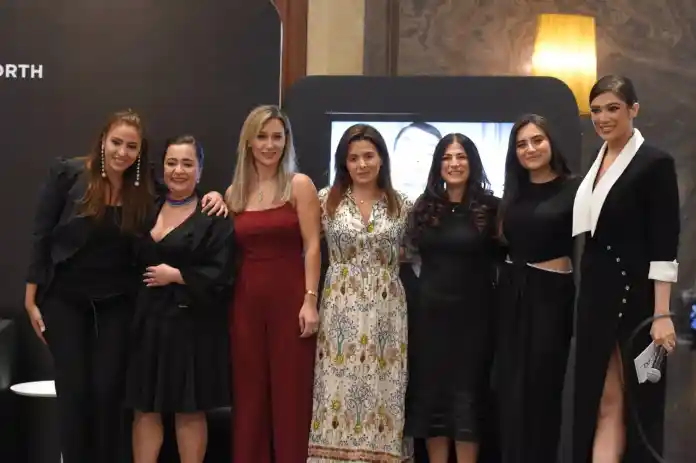
Since 1973, L’Oréal Paris supports each and every woman on her journey to success and self-worth. Through the “Women Of Worth” program, L’Oréal Paris honored 10 leading Lebanese women, who have overcome challenges and achieved greatness in their respective fields, in Lebanon and in the whole world. The awards were delivered during a gala dinner ceremony titled “Walk your Worth”, held on March 28, 2023 at the Middle East Airlines (MEA) Training Center in Beirut.
During the event, Mrs. Emilie Wahab Harb, Managing Director of L’Oréal Liban, said: “As a brand that has always taken on the cause of women’s worth, L’Oréal Paris is proud to recognize and celebrate the outstanding achievements of 10 exceptional Lebanese women who have overcome challenges and achieved greatness in their fields. Their accomplishments inspire future generations and contribute to the development of the Lebanese society, thanks to their passion, dedication, and commitment to excellence.” Moreover, she asserted that “L’Oréal Paris firmly believes that all women are worth it, whereas it’s evident to support their journeys and recognize their successes”, asking all women and those present at the ceremony, to “recognize the power of beauty as a catalyst of self-worth”. She further added: “We are entirely convinced that women’s causes should be celebrated and highlighted. That is the reason why we founded “Women Of Worth” which gathers us tonight, as we follow a journey we started 50 years ago, and which we will firmly continue because women are worth it.”
The honored Lebanese women were chosen by L’Oréal Paris not only for their accomplishments, but also for the values they embody, namely self-confidence, perseverance, resilience:
–Mrs. Nayla Tueni – CEO of An Nahar Newscorp and Editor in Chief of Annahar newspaper. Awarded under the Media category, Mrs. Tueni is a prominent Lebanese journalist.
–Dr. Hiba Al Kawas – President of the Lebanese National Higher Conservatory of Music. Awarded under the arts category. Dr. Kawas is a Lebanese composer, opera singer, scholar, and pioneer of Arab Opera.
–Mrs. Ghida Anani – Founder & Director of ABAAD – Resource Centre for Gender Equality. Awarded under the Social Responsibility category, Ms. Anani led a number of public opinion campaigns, notably the #Undress522 which resulted in the abortion of the article 522 of the Lebanese penal code.
–Captain Rola Hoteit – Airline Pilot at MEA. Awarded under the bravery category, Mrs. Hoteit is an Airbus A320 and A330 Captain, and the first Lebanese female airline captain.
–Mrs. Mireille Hayek – Founder & Owner of Em Sherif: Awarded under the Culinary Category, Mrs. Hayek is well known among the Lebanese and Arab society for her passion for cooking, her dedication and leadership in her restaurant that revives the Lebanese tradition, and which has been a success in Lebanon and abroad such as in London and Monaco.
–Mrs. Yola Zard Noujaim – Architect, Founder of Jabalna Festival & Owner of Al Fundok Hotel. Awarded under the sustainability category, she restored the old school of Maasser el chouf in an understated rural style to become Al Fundok boutique Hotel. This eco hotel is a non-profit community project, which encourages local tourism, creates a sustainable income for the community and promotes environmental, cultural, and culinary estate preservations.
–Mrs. Fadia ElMendelek – Hair Consultant. Awarded under the beauty category, Mrs. ElMendelek is a hair stylist whose talent and creativity earned her many European awards. With an online service and her own line “K by Fadia El Mendelek” of premium all-natural hair care products and extensions, she became the stylist to many celebrities and Arab Royalties.
–Mrs. Danielle Hatem – Founder & CEO of D Does Business. Awarded under the Digital Business category, Mrs. Hatem is an influential blogger who highlights strategic economical facts and figures, with the aim to create awareness about latest business headlines, while influencing and motivating the youth into entrepreneurship and business growth.
–Miss Rana Hayek, Electro-Mechanical Engineer & Car Mechanic. Awarded under the outstanding category, she’s Lebanon’s first female car mechanic. She is a diagnosis engineer at Sigma, the exclusive agent for Seat, Mitsubishi, and Ducati.
–Miss Aleen Sabbagh – Founder & Owner of The Concept. Awarded under the fashion category. What started as a personal devotion to fashion turned into a full-fledged clothing brand. Aleen Sabbagh, the young Lebanese face behind it all, goes from one factory to the other looking to constantly design drop trendy collections that always manage to sell out quickly.
The event was presented and moderated by Ms. Nadine W. Njeim, who discussed with each awardee her journey to success. It was attended by an audience of more than 150 invitees including public figures, the awardees’ families, journalists and representatives of various Lebanese media outlets, bloggers and social media influencers, as well as L’Oréal’s team and partners of L’Oréal Paris in Lebanon.
Lebanese designer represents Moroccan culture and feminine beauty at Maroc Fashion Week.
Maroc Fashion Week ran from March 8 to 11 in the city of Marrakech. The purpose of the event was to represent the Moroccan caftan and to further celebrate International Women’s Day.
Morocco World News spoke with Lebanese fashion consultant and designer Bernard Jabbour about his newly presented collection, Poisonous Beauty.
The esteemed designer has 28 years of experience in the fashion industry, some of Jabbour’s extensive experience includes his work as a consultant for Lebanese fashion designer Elie Saab and Project Runway Middle East. The designer is mostly known for his work at his Lebanon-based fashion studio, in which he specializes in haute couture – high-end, custom, and handmade fashion – including evening and wedding gowns.
Jabbour has visited Morocco twice before, but the most recent visit marks more of an official trip at one of the “biggest events,” hosted at what the designer described as a “beautiful country.” Poisonous Beauty is also the first-ever collection that he has debuted at Maroc Fashion Week.
“They say I’m classic yet with a twist. I try every time to put something new in my designs, but you can always see the touch of Bernard Jabbour. My DNA is always present in my designs,” Jabbour explained.
Enticing and dangerous inspiration
His primary inspiration for all of his collections is the presence of the woman; each collection simply approaches the woman figure a little differently to create a unique design for every season. Poisonous Beauty is one of his more ambitious and “tricky” projects.
The thought process behind the idea relays his thinking that women are a “beautiful poison that … we want to have … Her soul, her look and everything is poisoning us, but we also ask for it.” The designer sees a woman’s figure and aura as something both enticing and dangerous, a familiarity that when studied and analyzed through an artistic lens, appears unique and foreign.
Furthermore, Jabbour explains that he has experimented with “unconventional material” for this very collection as well, with new volumes and calmer color palettes.
Jabbour’s most prized dress in the Poisonous Beauty collection is one that is inspired by Moroccan architecture. It was never intended to be a part of this collection, but Jabbour says that “because I’m here in Morocco Fashion Week, I said no. I have to do one dress dedicated to Morocco.”
In regards to Maroc Fashion Week, Jabbour applauds the beauty and representation of the caftan: “I have … few Moroccan designer friends … [but] I like how they make the caftan. The handwork they put in the caftan, it’s like really magic.”
The designer felt amazed by the multiculturalism that he and other designers were exposed to at Maroc Fashion Week. Jabbour mentioned that the event unites people from across the globe he said, including countries such as “Kazakhstan, Italy, Lebanon, and Palestine.”
Jabbour is one of many international designers who helped in paying tribute to women’s presence and cultural recognition in the ever-developing world of the international fashion industry.
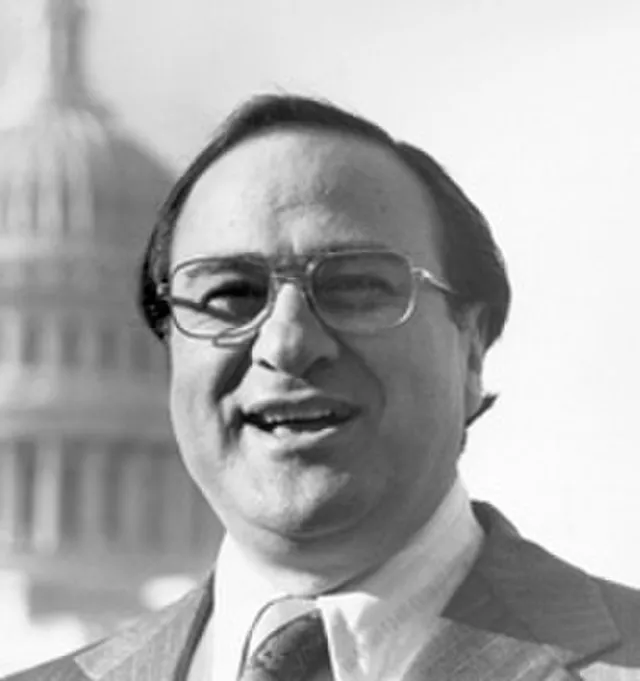
James Abourezk, 1st Arab American US senator, dies at 92.
James Abourezk, attorney and Democratic politician who served as a United States senator and United States representative from South Dakota and co-founder of the American-Arab Anti-Discrimination Committee(ADC), died today on his 92nd birthday.
He was born in Wood, South Dakota, the son of Lena (Mickel), a homemaker, and Charles Abourezk, an owner of two general stores. Both of his parents were Lebanese immigrants. He grew up near Wood on the Rosebud Reservation and has lived in South Dakota most of his life.
Abourezk represented South Dakota in the United States Senate from 1973 until 1979. He was the author of the Indian Child Welfare Act, passed by Congress in 1978 to try to preserve Indian families and tribal culture.
He was instrumental in the creation of both the American Indian Policy Review Commission and the Select Committee on Indian Affairs. He became chairman of the Indian Affairs Committee from its creation in 1977 to 1979.
Abourezk was elected in 1970 as a Democrat to the United States House of Representatives and served from 1971 to 1973. In 1972 he was elected to the U.S. Senate, where he served from 1973 to 1979.
Abourezk was an outspoken critic of Israel and U.S. foreign policy in the Middle East after touring the region and visiting his parents’ hometown in Lebanon as a senator. The position lost him many political allies, and he decided to retire from the Senate after a single term.
In 1980, Abourezk co-founded the American-Arab Anti-Discrimination Committee and traveled throughout the U.S. organizing Arab Americans in the wake of the “Abscam” debacle. Abscam was an FBI sting operation where agents dressed up as “oil-rich sheiks” in the late 1970s and early 1980s that led to the convictions of seven members of the United States Congress, among others, for bribery and corruption.
Abourezk’s marriages to Mary Ann Houlton and Margaret Bethea ended in divorce. In 1991, he married Sanaa Dieb, a restaurateur. They moved to Sioux Falls where she opened an award-winning Arab restaurant.
Survivors include his wife; children Charles Abourezk, Nikki Pipe On Head, and Paul Abourezk from his marriage to Houlton; daughter Alya Abourezk from his third marriage; a stepdaughter; and many grandchildren and great-grandchildren.
Warren David, president of Arab America and a former national president of the American-Arab Anti-Discrimination Committee said, “during a time when discourse regarding the negative portrayal of Arabs and the injustice faced by Palestinians were scarce, he (Abourezk) acted as a pioneer who instilled a sense of immediacy in the Arab American community–he was a trailblazer in that regard.”
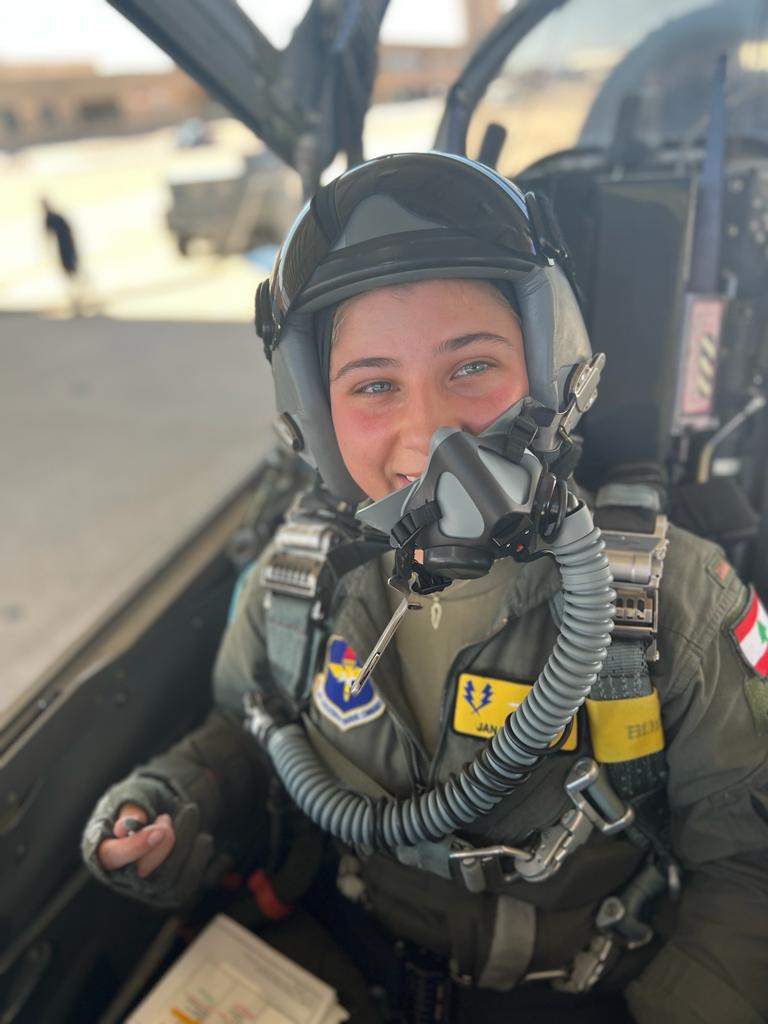
The Lebanese Army confirmed that Cadet Officer Jana Sader has achieved a momentous milestone by becoming the nation’s first-ever fighter jet pilot. Sader finished her training course at Laughlin Air Force Base in Texas, USA, following nearly two years of demanding curriculum and flight training.
As a graduate of the Lebanese Army’s training program, Sader is now ready to embark on a new mission. The A-29 Super Tucano attack aircraft, a sophisticated and formidable aircraft utilized for a variety of missions such as close air support, aerial reconnaissance, and armed surveillance, will be her maiden deployment.
The Lebanese Army said in a Tweet, which also noted and acknowledged her accomplishment that the A-29 Super Tucano has shown to be a dependable and successful aircraft for military operations, and Sader is eager to begin her career with the aircraft.
In her response, Twitter user Leila Hatoum praised Sader for her accomplishment and recalled learning in the 1990s that women aren’t permitted to join the air force: “In the 90s, we went to the Universities and Careers Exhibition. I went to the military stand where an officer and 2 assistants were. I asked him what is needed to become a pilot officer in the Air Force and, without an explanation, told her girls aren’t allowed to serve in the airforce.”
Many others, including the Lebanese army, used Twitter to congratulate the cadet on the achievement, proving that it was cause for celebration. Sader’s new position ushers in a new era for women in Lebanon, where the integration of women into the military has been a long process. According to the Lebanese Army’s website women joined the Lebanese Army Forces for the first time “when the chance emerged in the late 80s,” during Lebanon’s 1975–1990 Civil War, when the army required fresh recruits for its different formations.
In 1991, the government passed a new resolution mandating that 10% of the troops working for the Defense Ministry be female. Female recruits must undergo the same training as male recruits, and they are not just given administrative duties, but also jobs in combat units.
Sader’s accomplishment as a fighter pilot follows that of Captain Rola Hoteit, a pilot for Middle East Airlines, the national airline of Lebanon (MEA). When Hoteit took command of her maiden solo flight to the Jordanian capital of Amman in 2010, she made history as MEA’s first female pilot.
Six of the 190 pilots employed by MEA are now female, and in 2020 Hoteit flew with an all-female crew.
After a decade in the business, Lebanese couturier Jean-Louis Sabaji has dressed some of the biggest celebrities, including Beyoncé and Rita Ora.
His headline-grabbing creations regularly grace red carpet events across the world. Who can forget Cardi B’s purple floor-length gown bursting with feathers at the shoulders she wore to the 2021 American Music Awards? Or Aishwarya Rai Bachchan’s iridescent foiled leather dress at Cannes in 2019.
Sabaji’s fascination with fashion was inherited from his late father Jean, also a designer. He grew up surrounded by beautiful dresses in his father’s atelier, from which he still works today.
“I was named Jean-Louis after the great Jean-Louis Scherrer, a very famous French designer — it was as if I was destined to be a designer from birth,” he says. “As a kid, I used to make miniature dresses for Barbie dolls. My dad encouraged me to keep doing this, unlike others who bullied me for dressing dolls.
Sabaji completed his undergraduate degree in graphic design at the Lebanese American University and later attended the Domus Academy Milano for his master’s degree in fashion design. After completing his master’s with distinction, he came back to Lebanon and worked on his first collection in 2012.
Given that he already had access to an atelier with experienced seamstresses — as well as the fact that fashion had been such a large part of his upbringing — launching his own brand wasn’t too tough. But getting anyone to notice was a different matter.
“Lebanon has a lot of designers, so to stand out in a country with that much talent was hard. Additionally, I’m not very commercial. I target a niche clientele with my conceptual designs, so that made it more challenging,” he says.
He started by diving straight into the haute couture category. He didn’t get into ready-to-wear collections until much later. “I’d been taught that, in fashion, you work from top to bottom,” he explains.
Once his name was well established, both regionally and globally, he branched out into ready-to-wear, producing his first collection in 2021.
“During the pandemic, we understood the market better. We needed to have more clients, so that’s when we launched the ready-to-wear.”
Sabaji loves to push the boundaries when it comes to daring designs. In 2013, he created a gown that looked like it was engulfed in a cloud of smoke — an idea inspired by wildfires in Lebanon that wrecked some of the country’s rural areas. “I used silk organza and airbrushed it to mimic smoke and the effect that ink has when it’s mixed in water,” he says.
Complex garment construction and meticulous hand embroidery are the backbones of his creations. “It’s very important to me that a dress holds the woman’s body properly for her to feel confident. That’s when it comes down to pattern making, the construction and the corsets inside the dresses,” he explains.
Another of Sabaji’s signatures is the use of feathers, which appear in almost all of his collections, whether used sparingly on the sleeves or as an explosion covering the entire dress.
“Feathers are so feminine. The way they move on the body is very romantic,” he says. “Growing up, we had a house in the mountains with a huge garden with a lot of animals and birds. I was always inspired by these beautiful creatures.”
Sabaji is very particular about animal welfare, so the feathers he uses are all natural falls and are ethically sourced from specific farms, he stresses.
Gradually, his contemporary interpretation of classic couture fused with edgy elements and glamour sparked the interest of international stylists. In 2018, Mary J Blige chose a dramatic black-and-white Sabaji gown to wear to the SAG awards — his first major celebrity endorsement. Just months later, Beyoncé wore his ‘Sphinx Abaya’ mini-dress with train for a major gala in Los Angeles. At Cannes the following year, Aishwarya Rai Bachchan’s edgy fluorescent gown was all over the news. Crafted from 18 meters of stiff foiled leather that mimicked snakeskin, the dress took 200 hours to create and came with its own set of challenges.
“Initially, we had some issues with the fit because it was a stiff dress made out of leather, so it wasn’t easy to alter. Up to the last minute, we weren’t sure if she was going to walk the red carpet in the dress, but Aishwarya has a very good team, so, ultimately, they managed to sort it out,” Sabaji says.
2022 has been a remarkable year for the designer. Not only did he celebrate the tenth anniversary of his label’s creation and sign up for a major partnership (details of which are still under wraps — all he will say is that it’s “big”), but he was also the first Middle Eastern designer to collaborate with Mattel for a special Barbie collection which he presented at Arab Fashion Week in Dubai last month — a full-circle moment for the kid who was bullied for dressing up dolls.
“Everyone had a smile on their face watching the show. And for me, it was full of emotions. I had tears in my eyes the entire time backstage,” Sabaji says. “Barbie is a childhood memory, and seeing all this on the runway was so nostalgic.”
source/content: arabnews.com (headline edited)
____________
Sabaji completed his undergraduate degree in graphic design at the Lebanese American University. (Supplied)
‘The Sandman’ star will be the face of its women’s collections in the Middle East.
Building on an already stellar year, Lebanese British actress Razane Jammal has been announced as Dior’s latest ambassador. She will be the face of its women’s collections in the Middle East.
The announcement was complemented by a fashion shoot featuring Jammal in some of the house’s latest creations. She is no stranger to the world of high fashion — the actress was previously an ambassador for Chanel.
“I’m so unbelievably excited to finally announce that I will be joining Dior as a brand ambassador in the Middle East,” Jammal wrote on Instagram.
“Ever since I joined the fashion community, I wanted to collaborate with people I can truly grow with, to join a family that I value as much as it values me. It’s been a long journey but I can confidently say I’ve found my home.
“This is the start of a wonderful collaboration. I cannot wait to embody the timeless creations of @mariagraziachiuri.”
This is yet another mark of Jammal’s upward trajectory. She stars in the highest-grossing film in Egyptian history, Kira & El Gin, and is one of the key characters in Netflix’s hugely popular new show The Sandman.
“It’s been a very crazy couple of years,” she told The National in a recent interview. “But I’m very happy that the hard work has paid off.”
Fluent in Arabic, French and English, Jammal’s first serious foray into acting was in the French-German feature Carlos in 2010. This was followed by Cruel Summer in 2012, a short film by Kanye West, and then Une histoire de fou in 2014 by director Robert Guediguian. All three projects had their world premiere at the Cannes Film Festival.
Based on 1919, the novel by Egyptian writer Ahmed Mourad, and directed by Marwan Hamed, Kira & El Gin is an action drama that chronicles the 1919 revolution against the British occupation of Egypt and Sudan.
The Sandman is based on Neil Gaiman’s groundbreaking graphic novel series.
The experience has been a bittersweet one for Jammal, she told The National, as her mother died last year while The Sandman was being filmed.
“We were filming during Covid-19 in London. We were following very strict Covid-19 protocols and I wasn’t allowed to travel. So I didn’t go back home for eight months after losing my mum. My mum was the most important person in my life. She was a single mum, we had a very close relationship.”
The dance troupe’s victory, which earned them the seven-figure prize , offered a sliver of hope to the country and its population, who continue to battle a flurry of crises and bad news.
“We haven’t shed happy tears in so long in this country and Mayyas made it happen,” says Reem Nasra, 24, a recruiter in Beirut.
Mayyas first made international headlines when they received a golden buzzer from judge Sofia Vergara for their performance during the auditions, securing their spot in the semi-finals.
“There are no words to explain to you what we were feeling over here,” Vergara said at the time. “It was the most beautiful, creative dancing I have ever seen.”
Since then, the Lebanese group put on a series of breathtaking routines as they advanced to the final. And, their journey to the top connected with compatriots around the world.
“They are an example of what a synchronised group of Lebanese are able to achieve,” says Eli Lattouf, 26, a postdoctoral researcher at Harvard Medical School in the US. “Such a win delivers a global message.”
Lebanon is currently facing an economic crisis described as one of the worst in 150 years by the World Bank. According to a UN study, the financial collapse has pushed more than 80 per cent of the population into poverty while inflation and living expenses reached record highs.
The country’s plight has made global news, highlighting everything from its fuel crisis to the deadly Beirut port blast in 2020.
To see Lebanon represented in a different light, as a beacon of art and culture, was refreshing, says Lattouf.
“Most people know the Lebanon they see on the news, which might not be totally misleading, unfortunately,” he tells The National. “This time the world sees not one, but a group of Lebanese, full of art, creativity and discipline.”
Lattouf’s sentiment is echoed by many other Lebanese people, who are proud of the group’s outstanding representation on a global platform.
“This is our Lebanon, the real one,” says Rima Hijazi, 26.
Watching from her home in Choueifat, south-east of Beirut, the agricultural engineer fortunately had electricity overnight to stream the final live. Many other households across Lebanon were without power, which prompted private TV station LBCI to campaign for generator owners to keep the lights on ahead of the show.
Lebanon’s electricity crisis is merely one of the many obstacles Mayyas had to overcome while rehearsing.
Despite the many hindrances, the girls put in long hours of work, determined to grab the title.
According to the group’s founder and choreographer Nadim Cherfan, the team were in the studio on a daily basis and would “only leave when the power goes off”.
“When it’s about art, nothing stands in your way,” he previously told The National.
Their hard work and diligence made them all the more deserving of the win, according to many Lebanese. It is also testament to the country’s potential, despite the odds.
“This win means that despite everything we are going through, our will to live and be successful beats all miseries,” says Yara Youssef, 25, a marketing coordinator in Beirut.
Between pride and hope, Mayyas also evoked a solemn feeling for some.
“It’s a bit sad knowing that if you have potential here in Lebanon, you have to leave in order to reach your goals,” Hijazi tells The National. “We’re in the wrong spot to bloom.”
But despite their international achievement, Mayyas are returning to Lebanon, where they will continue to work on their art.
While Cherfan has been asked why he continues to work in Beirut, he is adamant on going back to where they started.
“I’m never leaving my country because my country has never left me,” he says.
Watch the moment Mayyas won on ‘America’s Got Talent’ here (below):
Medical pioneer was one of the first women from the country to study abroad.
The life of doctor Saniya Habboub is being celebrated by Google’s Doodle on Friday, commemorating her graduation from medical school on June 10, 1931.
Born in 1901 to a Lebanese leather merchant and Turkish mother, Habboub was one of the first female doctors from Lebanon to study medicine abroad, in the US.
When she returned to Beirut she opened her own practice, inspiring other Lebanese girls and women to get an education of their own, according to Google’s description.
In 1926, Habboub was one of the first three students to graduate from the American Junior College for Women in Beirut, going on to study at the American University of Beirut.
In 1931, she received her degree in gynaecology and obstetrics from the Women’s Medical College in Pennsylvania and, in gratitude, left future students with a scholarship in her name.
She started her own practice two years later, in Bab Idriss, and went on to co-found the Lebanese Red Cross Association, as well as served as a board member for the Muslim Orphan’s Home, the Young Women’s Muslim Association and Maqassed Hospital.
In 1982, in honour of her devotion to medical services, the Lebanese government awarded her with a Health Medal of Merit, and there’s even a street in Beirut named after her.
Habboub died aged 82 in September 1983.
“Dr Saniya was an inspiring figure who paved the way for future generations of women to come,” Google says.
Dr William Stoltzfus, former president of Beirut University College, described her life as a “get-started signal” for the professional lives of many Arab women, according to Al–Raida, the bi-annual journal published by the Arab Institute for Women.
The Doodle can be seen on devices across the Middle East and North Africa.
source/content: thenationalnews.com
___________
Dr Saniya Habboub died in 1983 aged 82. Photo: Public DomainGoogle Doodle of Dr Saniya Habboub. Photo: Google