ALGERIA / EGYPT / LEBANON / MOROCCO / PALESTINE / SYRIA / DUBAI, U.A.E : Mohammed bin Rashid honours winners of 2025 edition of Great Arab Minds initiative

His Highness Sheikh Mohammed bin Rashid Al Maktoum, Vice President, Prime Minister and Ruler of Dubai, honoured the six winners of the Great Arab Minds 2025 edition at the Museum of the Future in Dubai.

Great Arab Minds is the largest Arab initiative dedicated to celebrating outstanding Arab achievement, highlighting contributions to advance human civilisation, support the expansion of scientific and knowledge-based endeavours, and showcasing the creative impact of Arab talent across the region and globally.

His Highness affirmed that the Great Arab Minds initiative was designed to expand the horizons for established and emerging Arab talent, nurturing and investing in their potential; recognise Arab achievement across research, development, innovation, technology, culture, and architecture; and to reinforce a culture of pride and sustained support for Arab individuals who have inspired significant progress in key fields.

His Highness Sheikh Mohammed said, “Today, we honour Great Arab Minds in recognition of achievements that advance civilisation and build societies. From the Museum of the Future in Dubai, we reaffirm our support for Arab talent committed to innovation, creativity, and excellence.”

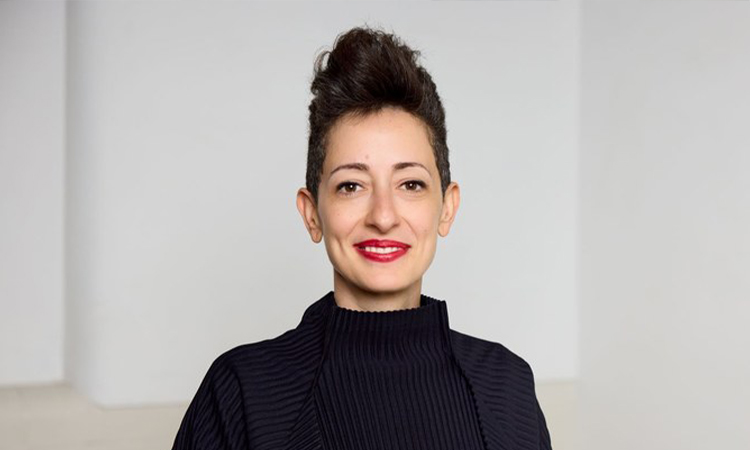
His Highness further said, “We congratulate the winners of the Great Arab Minds 2025: Professor Abbas El Gamal in the Engineering and Technology category, Dr. Nabil Seidah in the Medicine category, Professor Badi Hani in the Economics category, Professor Majed Chergui in the Natural Sciences category, Dr. Suad Amiry in the Architecture and Design category, and Professor Charbel Dagher in the Literature and Arts category. We encourage them to continue their journey of achievement and contribution, serving as true role models for younger generations in our region and around the world, inspiring them to shape a better future through science and knowledge.”

His Highness expressed his confidence in the ability of Arab talent to drive progress in scientific research, knowledge creation, and the cultural sector, supported by expertise, institutional support, and the ambition of young people across the region.

Focused on a better future

Sheikh Mohammed noted that the Great Arab Minds initiative will continue to highlight the achievements of Arab individuals who look to the future with optimism and pursue ambitions that recognise no limits.

The awards ceremony was attended by H.H. Sheikh Maktoum bin Mohammed bin Rashid Al Maktoum, First Deputy Ruler of Dubai, Deputy Prime Minister and Minister of Finance of the UAE; H.H. Sheikh Ahmed bin Mohammed bin Rashid Al Maktoum, Second Deputy Ruler of Dubai and Chairman of the Dubai Media Council; H.H. Sheikh Ahmed bin Saeed Al Maktoum, President of the Dubai Civil Aviation Authority, Chairman of Dubai Airports, and Chairman and Chief Executive of Emirates Airline and Group; His Highness Sheikh Mansoor bin Mohammed bin Rashid Al Maktoum, President of the UAE National Olympic Committee; H.H. Sheikha Latifa bint Mohammed bin Rashid Al Maktoum, Chairperson of the Dubai Culture and Arts Authority (Dubai Culture); and H.H. Sheikh Mohammed bin Rashid bin Mohammed bin Rashid.

Mohammed bin Abdullah Al Gergawi, Minister of Cabinet Affairs and Chair of the Higher Committee for the Great Arab Minds initiative, was among numerous ministers and senior officials in attendance along with scientists, academics and diplomats.

His Excellency Al Gergawi stated that the Great Arab Minds initiative launched by His Highness Sheikh Mohammed represents a profound recognition of Arab achievement across disciplines, and a significant strategic investment in empowering talent and encouraging renewed contributions to Arab intellectual and scientific progress.

He added that the Great Arab Minds initiative embodies Sheikh Mohammed’s vision to inspire confidence in Arab capabilities and motivate individuals to take an active role in shaping their societies and the future of a region that has long contributed to human civilisation through science, literature, thought, and architecture.

‘Powerful message’

He praised the achievements of the Great Arab Minds awardees across medicine, engineering, technology, sciences, architecture, arts, and literature, saying, “Your presence today on the Great Arab Minds 2025 platform at the Museum of the Future sends a powerful message to hundreds of millions of young people to pursue excellence, achievement, and leadership in research, innovation, creativity, and knowledge, and to help shape a brighter future for Arab and human civilisation.”

The award recognised one winner in each of its six categories: Medicine, Economics, Engineering and Technology, Natural Sciences, Architecture and Design, and Literature and Arts.

In Medicine, Dr. Nabil Seidah was honoured for his medical and research achievements in cardiovascular health and cholesterol regulation.

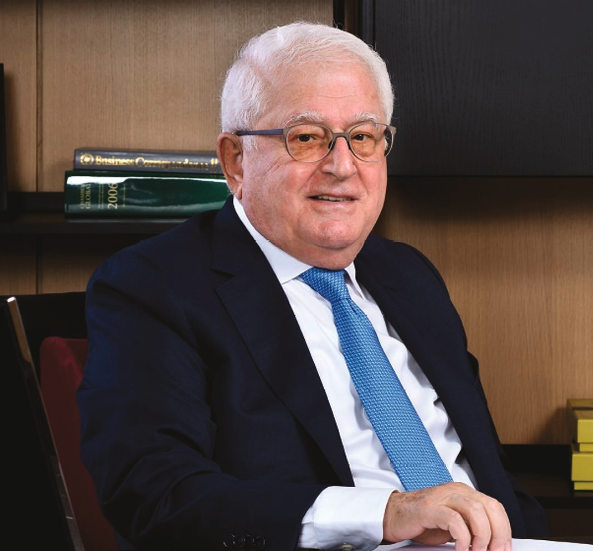
In Economics, Professor Badi Hani was awarded for his pioneering contributions to econometrics and the development of economic analysis tools, particularly in panel data analysis. His work enabled more accurate and in-depth analysis by combining data across multiple time periods and sources.

In Engineering and Technology, Professor Abbas El Gamal was awarded for his pioneering contributions to network information theory.

In Natural Sciences, Professor Majed Chergui was honoured for his contributions to understanding light-matter interactions, developing techniques and applications that enable the study of ultrafast molecular and material dynamics at the atomic level.

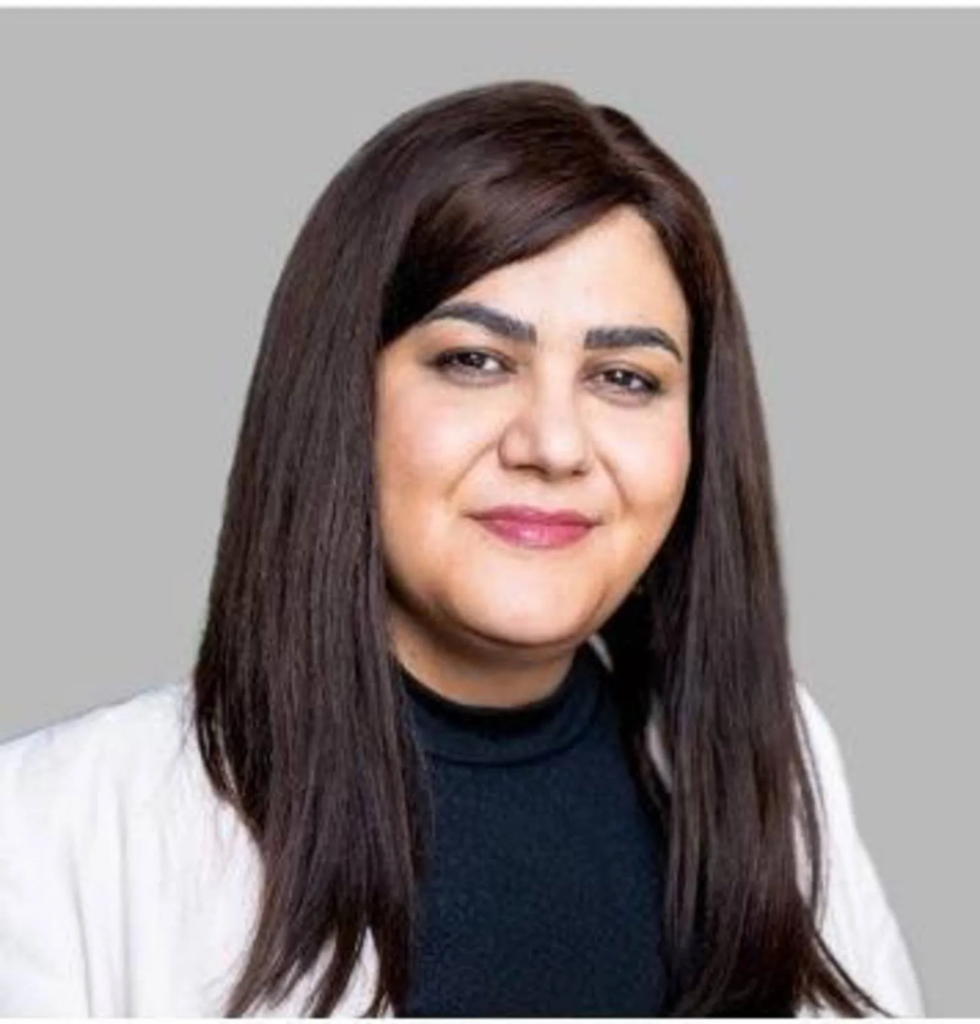
In Architecture and Design, Dr. Suad Amiry was honoured for her contributions to preserving Palestinian architectural heritage through documentation, restoration, and adaptive reuse of historical buildings.

In Literature and Arts, Professor Charbel Dagher was honoured for a body of work that constitutes a key reference in the study of Arab and Islamic arts, Arabic calligraphy, and modern visual arts.

Professor Abbas El Gamal said, “I extend my sincere gratitude to His Highness Sheikh Mohammed bin Rashid Al Maktoum for his vision in launching Great Arab Minds. Being honoured in this way is deeply meaningful to me.”

Professor Majed Chergui said, “I am Algerian of Syrian origin, born in Morocco and raised in Algeria and Lebanon. In this way, the Arab world comes together in who I am. For me personally, this award is not only the highest recognition of my achievements; it touches me deeply because it comes from an Arab country.”

Dr. Suad Amiry said, “In 1981, when I decided to live in the city of Ramallah, my aim was to study traditional architecture in rural Palestine. Ten years later, I founded the Riwaq Centre, which since then has been dedicated to documenting, restoring, and rehabilitating architectural heritage in Palestine. Winning this award is a great honour for me and for the Riwaq Centre.”

Professor Badi Hani said: “This award recognises not only my work, but also the people and places that shaped me, my family, my mentors, my city, and the Arab world that nurtured my earliest aspirations.”

Dr. Nabil Seidah said, “My father’s adage, that knowledge is something no one can ever take away from you, has been the principle that guided me throughout my journey. Your trust represents a powerful motivation for Arab scientists to serve as role models for future generations, and I pledge to continue serving science with the same passion that has always driven me.”

Professor Charbel Dagher said: “Commitment to the Arabic language has remained a defining hallmark of everything I have done: teaching, writing, and research, to the point that I live within Arabic itself. We cannot exist outside our language or our culture. Allow me to share this award with those who supported me, and my gratitude extends to everyone who has worked and continues to work to ensure that Arabic remains a living language of science, knowledge, and culture.”

The awardees were chosen by six high-level specialised committees, one for each category. Abdulla bin Touq Al Marri, Minister of Economy and Tourism, chaired the Economics Committee; Sarah Al Amiri, Minister of Education, chaired the Engineering and Technology Committee; Mohammed Ahmed Al Murr, Chairman of the Board of Directors of the Mohammed bin Rashid Al Maktoum Library Foundation, chaired the Literature and Arts Committee; Dr. Amer Sharif, Chief Executive Officer of Dubai Health and President of the Mohammed Bin Rashid University of Medicine and Health Sciences headed the Medicine Committee; Professor Sehamuddin Galadari, Senior Vice Provost-Research and Managing Director of the Research Institute at New York University Abu Dhabi chaired the Natural Sciences Committee; Professor Hashim Sarkis, Dean of the School of Architecture and Planning at the Massachusetts Institute of Technology chaired the Architecture and Design Committee.

In addition to the committee chairs, the specialised committees also included Essa Kazim, Governor of the Dubai International Financial Center; Dr Mohammed Madhi, Dean of the College of Business and Economics at UAE University; Dr Rabah Arezki, Chief Economist for the Middle East and North Africa (MENA) region at the World Bank and Senior Fellow at Harvard University’s John F. Kennedy School of Government; Ferid Belhaj, Fellow at the Policy Center for the New South; and Dr Jihad Azour, Director of the Middle East and Central Asia Department at the International Monetary Fund.

The committees also included Professor Ismael Al Hinti, President of Al Hussein Technical University; Adel Darwish, Regional Director of the International Telecommunication Union; Dr Ahmed Zayed, Director of the Bibliotheca Alexandria; His Excellency Dr. Alawi Alsheikh-Ali, Director General of Dubai Health Authority; Professor Elias Zerhouni, Professor Emeritus at Johns Hopkins University; Dr Noureddine Melikechi Dean of the Kennedy College of Sciences and Professor of Physics at the University of Massachusetts Lowell; Professor Nader Masmoudi, Professor at the Courant Institute of Mathematical Sciences at New York University Abu Dhabi; Dr Latifa Elouadrhiri Laboratory Directed Research Staff Scientist at the Thomas Jefferson National Accelerator Facility; and Professor Dr Jehane Ragai, Emeritus Professor of Chemistry at The American University in Cairo.

The specialised committees also included Dr Adrian Lahoud, Dean of the School of Architecture at the Royal College of Art; and Professor Ali Malkawi, Professor of Architectural Technology, Director of the Doctor of Design Studies Program, and Founding Director of the Harvard Center for Green Buildings and Cities.

The Nominations Committee included Huda Al Hashimi, Deputy Minister of Cabinet Affairs for Strategic Affairs; Chucrallah Haddad, Partner and Head of Advisory at KPMG Lower Gulf; Abdulsalam Haykal, President and Founder of Majarra Company; Ali Matar, Head of LinkedIn Middle East and North Africa and Emerging Markets in Africa and Europe; and Saeed Al Nazari, Secretary-General of the Great Arab Minds Initiative.

Widely known as the ‘Arab Nobel,’ the Great Arab Minds initiative recognises distinguished Arab achievement and highlights extraordinary contributions that reflect the region’s historic role in advancing knowledge and human progress globally. For a third consecutive edition, the initiative continues to strengthen its position as a platform for celebrating Arab creators and as a point of reference for promising Arab talent, by highlighting achievements that inspire young people and contribute to expanding Arab participation in global knowledge and civilisational advancement.

source/content: wam.ae (headline edited)

________________

__________________________________________________________________

ALGERIA / DUBAI, U.A.E / EGYPT / FRANCE/ LEBANON / MOROCCO / PALESTINE / SWITZERLAND / SYRIA / U.S.A

LEBANON : “A voice for the voiceless”: As-Safir founder and beacon of Arab journalism Talal Salman passes away at 85

Talal Salman, veteran journalist and founder of the iconic As-Safir newspaper, died on 25 August 2023 aged 85 after a long career in which he championed the rights of the oppressed and made his paper a “voice for the voiceless”.

On Friday 25 August, Talal Salman, the founder and publisher of the iconic Lebanese daily newspaper daily newspaper “As-Safir” passed away aged 85.

Salman remains one of the Arab world’s most prominent journalists and As-Safir, rightly, as a shining beacon of Arab journalism in its modern history

He was one of the few Arab journalists who always aspired for journalism to be a medium where opinions could be freely expressed, and made it a place in which he affirmed his commitment to national, nationalist and social issues.

When his dream of establishing an independent newspaper became reality in 1974, he succeeded in making it a genuine platform for Arab issues and the Palestinian cause, and it quickly became one of the largest Arabic-language independent newspapers. 

“Salman remains one of the Arab world’s most prominent journalists and As-Safir, rightly, as a shining beacon of Arab journalism in its modern history”

“As-Safir” became an important laboratory for ideas and opinions. Over more than 40 years, intellectual and political debates flared within its pages, and it became a forum where various intellectual and cultural experiences from the Arab world and Lebanon converged. This made it a rare experiment in Arab journalism, a place where Lebanese, Palestinian, Syrian, Egyptian, Iraqi, Jordanian, and Tunisian voices at various times would come together.

Talal Salman was born in 1938 in the northeastern town of Shmustar. His father was a sergeant in Lebanon’s Internal Security Force (ISF), a job which required him to move with his family to various regions in Lebanon for various postings. Due to this, Salman never settled in one place or attended a fixed school. Perhaps this forced mobility played a role in shaping his political outlook later on, as it allowed him to discover different regions of Lebanon and to develop a broad understanding of Lebanon’s people – their internal divisions and rural nature.

His political awareness began to emerge following Egypt’s 23 July Revolution of 1952, which played a huge role in alerting his attention to politics. Additionally, his presence in the town of Moukhtara in the Chouf district in the early 1950s exposed him to certain aspects of the Lebanese reality.

Moukhtara was the stronghold of the prestigious Jumblatt family, leading figures in Lebanon’s Druze community. While living there he got to know Kamal Jumblatt, who inspired an entire generation of Lebanese youth who aspired for social justice and sought to connect Lebanon with Arab causes, Arab identity, and Palestine.

Salman would become an Arab nationalist without affiliating with any of the nationalist parties, such as the Ba’ath, although later on, he formed close relationships with founders of Arab Nationalist Movement, like George Habash and Hani al-Hindi, in addition to Ghassan Kanafani and Mohsin Ibrahim, who were closely associated with the pan-Arab, left-wing movement.

Salman’s passion for language began in his childhood; he was enchanted by the few books in his parent’s home, and had started writing articles for the magazine al-Anbaa before leaving school. After completing secondary school in 1955, he moved to Beirut with today’s equivalent of $200 from his father and started looking for work at a newspaper.

Passion for language

Salman’s passion for language began in his childhood; he was enchanted by the few books in his parent’s home, and had started writing articles for the magazine al-Anbaa before leaving school. After completing secondary school in 1955, he moved to Beirut with today’s equivalent of $200 from his father and started looking for work at a newspaper.

“Salman would become an Arab nationalist without affiliating with any of the nationalist parties, such as the Ba’ath, although later on, he formed close relationships with founders of Arab Nationalist Movement, like George Habash and Hani al-Hindi”

He initially found a job at Al Sharq newspaper as an unpaid proof reader, before swiftly transitioning to “cutting” – he would cut out stories from other papers in the morning and rewrite them for publishing in Al Sharq in the afternoon.

1956, the year Salman’s journey into the media world began was the year of the Tripartite Aggression against Egypt (the Suez Crisis) – and it was as though this major event was setting the tone for a journalistic career focused on the major Arab issues of the day, such as Arab unity, Palestine, Algeria and social justice.

Nor was it surprising, considering his background living in areas suffering from marginalization, poverty, injustice, and lack of government care, that he developed a clear sensitivity to social injustice and a strong awareness of the need to fight against it.

A meeting of minds

It wasn’t long before Salman moved to another paper, where he was given the crime and accidents beat. Every day he would walk to the police station, the courts, ambulance centres and fire stations to gather the day’s news. Then, he would walk back to his workplace to provide the summary of his day to the editorial secretary.

In 1958, after protests broke out against the rule of then President Camille Chamoun, renowned journalist Salim Lawzi, editor-in-chief of the pro-Nasser Al Hawadeth magazine at the time, was arrested, and held in Karantina Hospital – as more fortunate prisoners were at that time.

By chance, Salman’s father was chief officer at the hospital guard station, and his son visited regularly. This led to the aspiring young man meeting the veteran journalist who had worked in Palestine and Egypt before returning to Lebanon to set up the weekly magazine.

Following their meeting, Salman joined Al Hawadeth, where he was suddenly the colleague of well-known journalists like Shafiq al Hout, Nabil Khoury, and the artist Niazi Jaloul.  He went from proofreading to preparing the readers section, to writing his own column and then moved into the investigations department. It was not long before he was made sub-editor and he wasn’t even 20 – a testimony to both his journalistic talent and his hard work developing the magazine during a period Lawzi was forced into exile.

However, perhaps the most significant event in his professional and personal life was his meeting with President Gamal Abdel Nasser in Damascus in early 1958. His image alongside Nasser remained on proud display in the As-Safir offices for many years afterwards.

Salman’s rapid rise in journalism also saw him become a figure noticed – and targeted – by Lebanon’s authorities. In August 1961 he was arrested, interrogated and held for 20 days by Lebanon’s General Security services, charged with maintaining ties with Ahmed El-Saghir Jaber (representative of the Algerian Liberation Front in Lebanon), smuggling weapons to Algerian revolutionaries, and plotting military coups in some Arab countries.

“Salman’s rapid rise in journalism also saw him become a figure noticed – and targeted – by Lebanon’s authorities”

In the decade before he founded As-Safir, Salman moved between three magazines – Assayad, Al Ahad and Al-Hurriya. He had plenty of opportunity to delve into secrets and the hidden stories and backgrounds of notable figures and events, and became acquainted with many of the most brilliant Arab authors, artists, politicians and activists of the time. All the information he was absorbing would become part of his arsenal when it came to his own project – the As-Safir daily newspaper.

On 26 March 1974 the first issue was published, carrying two slogans: “the newspaper of Lebanon in the Arab world and the newspaper of the Arab world in Lebanon”, and “the voice of the voiceless”.

Almost instantly, the paper was under attack – in its first year 16 lawsuits were raised against it, following a legal challenge mounted by the Banks Association in Lebanon. However, the nature of those targeting the paper only highlighted how effectively it was beginning to champion the rights of the marginalised, and confront the political system and capitalist stakeholders in the country.

Since its early days, As-Safir’s pages carried illustrious names in contemporary Arab thought and literature, and it also opened its pages to myriad intellectual and political trends, such as Nasserism, Baathism, Arab nationalists, Syrian nationalists, secularists, and communists with their various Soviet, Maoist, and Trotskyist tendencies.

When Lebanon’s civil war broke out in 1975, As-Safir adopted an unwavering political stance: a complete rejection of the civil war, and a total distancing from the right-wing political forces who’s destructive policies had led to the outbreak of the fighting.

While it unequivocally rejected the war, As-Safir’s stance of sympathy and solidarity with the programme of the Lebanese National Movement and the Palestinian resistance was staunch. Its writers were made famous for their condemnation of Egyptian President Anwar Sadat’s visit to Jerusalem in November 1977, and its front page on the first day of the visit was headlined: “The Scoundrel visits the Usurper”.

Both the newspaper and Salman were targeted in terrorist attacks multiple times. In 1981, an attempt to destroy his house with four timed rockets, was foiled just minutes before they were set to launch. Explosive devices were placed near As-Safir’s offices on 28 March and 5 April 1984.

That July, there was an assassination attempt on him in front of his house, resulting in injuries to his jaw and various parts of his body. However, neither As-Safir nor its founder were intimidated, and both continued to be faithful to their nationalist and progressive principles.

During Israel’s invasion of Lebanon in 1982, As-Safir was the only Lebanese newspaper that didn’t cease publication. Its daily headlines were rewritten on Beirut’s walls as a form of the city’s resilience and it became known for headlines like “Beirut burns but doesn’t raise the white flags”.

A shining era in the history of Lebanese journalism came to an end in 2017 with the closure of the pioneering, left-wing, pan-Arab experiment which was embodied for over 40 years by the As-Safir newspaper, as well as the end of the liberal, right-wing An Nahar in 2012 with Ghassan Tueni’s death.

Talal Salman’s contribution, both to journalism in Lebanon, and to the country’s political and cultural history, is huge, and he and As-Safir are owed a debt for the bold stances they took countless times and the brilliant, enlightening and incisive content they provided in its pages.

This was Talal Salman, who never stopped brimming with kindness, humility and generosity; and who burned with pain and grief at what the situation of the Arab world has come to, who spent his twilight years continuing to read, research and write in his never-ending pursuit of an Arab renaissance.

This is an edited and abridged translation from our Arabic edition. To read the original article click here.

Translated by Rose Chacko

This article is taken from our Arabic sister publication, Al-Araby Al Jadeed and mirrors the source’s original editorial guidelines and reporting policies. Any requests for correction or comment will be forwarded to the original authors and editors.

source/content: newarab.com (headline edited)

____________

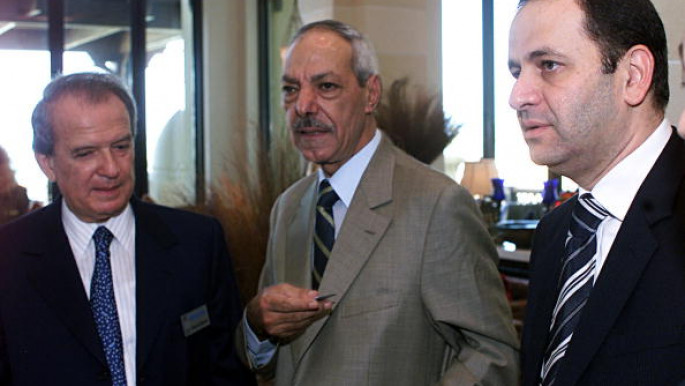
From L to R: Lebanese Minister of Economy and Trade Marwan Hamadeh, Talal Salman and Pierre al-Daher, head of the independent Lebanese Broadcast Corporation (LBC) television attend the opening session of the 2003 Arab Media Summit in Dubai [Nasser Younes/AFP via Getty]

____________

LEBANON

LEBANESE-AMERICAN : Nour Arida is the First Arab Woman to Book a Audemars Piguet Campaign

Model & Lifestyle Influencer Nour Arida Joins Serena Williams in Audemars Piguet Campaign.

When Audemars Piguet picked the faces for its 150th anniversary campaign, it chose icons. Nour Arida was the only Arab woman among them.

In the world of luxury watchmaking, Arab women aren’t often on the moodboard. But this year, that changed.

For its 150th anniversary, Audemars Piguet didn’t just call in the usual faces – it summoned a lineup of global icons. Serena Williams. Winnie Harlow. Tamara Kalinic. And, for the first time ever, an Arab woman: Nour Arida.

Draped in AP’s legacy, the Lebanese model-slash-creative-slash-cultural force owned the frame.

“I always try to push boundaries,” Arida says, in what might be the understatement of the year. “It’s like being part of a real family, being part of the AP family.”

source/content: cairoscene.com (headline edited)

____________

___________________________

AMERICAN – LEBANESE

LEBANESE Prof. Niveen Khashab Wins Great Arab Minds Award in Natural Sciences

Lebanese Professor Niveen Mohammad Ali Khashab won the Great Arab Minds Award-2023 in Natural Sciences, for her contributions in chemistry, bioengineering and biology.

Her research interests focus on applications of programmable, intelligent, engineered nanomaterials and their uses for medical, pharmaceutical, industrial and environmental purposes. Sheikh Mohammed bin Rashid Al Maktoum, vice president, prime minister and ruler of Dubai, said that scientific and cognitive curiosity has been the base of nations’ cultural development throughout history.

The winning announcement was made by Sheikh Mohammed bin Rashid Al Maktoum. Prof. Niveen Khashab is associate dean of Physical Sciences and Engineering Division and Professor of Chemistry at KAUST – Kingdom of Saudi Arabia, given her pioneering contributions in the field of natural sciences and her research in Arab universities.

“Today we announce the winner of the Arab Minds Award in natural sciences, Professor Nevin Khashab, a researcher and academic who inspires a new generation of young scientists in the Arab world and transforms research into advanced innovations in medicine, advanced industries, nanotechnology and sustainable agriculture,” said the Ruler of Dubai.

“Scientific achievement is the basis of civilizational development. We want to preserve scientists, empower them, honor them, celebrate their achievements and provide them with the space they need to transform their ideas and research into reality. Resuming the region’s contribution to human civilization is a comprehensive project and a strategic commitment that focuses on the Arab citizen capable of achievement, creativity and excellence in science and knowledge,” he added.

Khashab is exploring the new opportunities that nano capsules and devices can provide in drugs, gene therapies, medical diagnosis and industries, given their sturdiness, durability and superior thermal resistance.

Khashab is currently experimenting with carbon nanotubes characterized with their exceptional rigidity and strength, as well as electronic properties. She is also testing applications of carbon tubes in smart membranes. Khashab also collaborated on designing smart materials used in biomedical systems based on molecule assemblies at the nanoscale using non-covalent interactions.

The applications of the scientific innovations and smart materials developed by Khashab are diverse, including medical in the fields of sensing and drug, therapeutic and surgical delivery; industrial as in nanocomposites and others; and environmental in sustainable agriculture solutions and platforms.

Mohammad Al Gergawi, chairman of the Committee leading Great Arab Minds, congratulated Khashab on the phone, hailing her contributions in natural sciences and its pioneering research that opened new horizons in the uses of ultra-fine nanomaterials for medical and pharmaceutical purposes and advanced technology applications.

The initiative aims to promote the reverse migration of Arab minds and keep them in the Arab world by celebrating, honoring and highlighting their achievements.

The competition received thousands of nominations in its six categories: engineering and technology, medicine, economics, literature and natural sciences, arts, architecture, and design.

The Great Arab Minds Awards’ winners announced so far are: Dr. Hani Negm from Saudi Arabia in Medicine, Professor Fadel Adib from Lebanon in Engineering and Technology, Dr. Muhammad el-Erian in economics, and Professor Niveen Khashab in natural sciences. The winners in the two remaining categories will be announced later.

source/content: english.aawsat.com / Alsharq Al-Awsat (headline edited)

____________

Lebanese Prof. Niveen Mohammad Ali Khashab. (Asharq Al-Awsat)

______________

LEBANON

LEBANON: Patchi founder and chocolate industry titan Nizar Choucair dies

Founder of the globally recognized Lebanese chocolate brand Patchi, Nizar Choucair, has died, leaving behind a legacy in the industry.

Choucair transformed his childhood love for chocolate into a global brand, boasting more than 200 branches worldwide.

In a message on social media, Patchi announced Choucair’s death, posting: “It is with deep sorrow that we announce the passing of Mr. Nizar Choucair, our beloved founder. Mr. Choucair was a man whose warmth and generosity touched everyone who knew him.”

Patchi added: “His visionary approach transformed chocolate into an art that evokes emotions and creates cherished memories. His legacy lives on through Patchi, a brand that has reached hearts across cultures and celebrations. We honor his memory and the extraordinary heritage he built.” 

Choucair was renowned for saying: “In every piece of chocolate, there is a story to be told and a memory to be made.”

The brand’s story began in 1974 when Choucair, driven by his passion for chocolate since the age of 11, introduced the concept of chocolate gifting.

This approach elevated the food to new dimensions, enhancing customer engagement and brand loyalty.

Born in Beirut, Choucair moved to Kuwait at 18, initially working for a gas manufacturing company before returning to Lebanon to launch Patchi.

In 1990, he received a significant boost when Banque Du Liban gave him an interest-free loan, enabling him to modernize his factory with new machinery.

Starting with a single shop in the Lebanese capital, Beirut, Choucair’s vision and entrepreneurial spirit saw Patchi expand worldwide.

Patchi, now a household name in luxury chocolates, has 203 stores globally, with a strong presence in Lebanon, Saudi Arabia, and Bahrain, as well as Qatar, the UAE, and the UK.

The brand entered the EU market in 1995 with boutiques in Paris and London. By 1999, the company expanded to Africa with a boutique in the Ivory Coast and opened a store in the US in 2000. 

Recognized by Forbes in 2005 as the top luxury brand in the Middle East and the 15th top brand in the region, Patchi continued to grow. 

In 2008, Patchi Silver boutique at Harrods in London was launched, featuring a box of chocolates wrapped in genuine leather and silk, selling for £5,000.

The brand, boasting as many as 62 branches in Saudi Arabia, is celebrated for its premium ingredients and distinctive packaging, all produced in-house. 

In a 2009 interview with The National, Choucair reflected on Patchi’s accessibility: “Our chocolates are not expensive at all. We sell to people who want more expensive, elaborate boxes, but we also sell to the chauffeur who comes to pick it up.”

This inclusive approach helped Patchi become a beloved brand across various demographics, according to Choucair.

The founder’s journey was marked by resilience and adaptability, navigating the challenges of the Lebanese civil war by relocating his family and operations multiple times. Despite these hurdles, his commitment to his brand never wavered. The chocolateries’ expansion continued, with Choucair personally overseeing the opening of new stores worldwide.

Under his leadership, Patchi grew to employ more than 5,000 people, maintaining a family-oriented business ethos. His five children have played active roles in the company, with three of them working alongside him..

Oussama Choucair is currently the CEO of Patchi in the UAE and sits on the board of the company’s conglomerate, which his father founded in Beirut during the 1970s.

Nizar Choucair’s passion for premium chocolate gifting has been passed down to his son, who oversees operations in the crucial UAE market. 

One of Oussama Choucair’s key projects is the construction of a new factory in Dubai Industrial Park, which will become Patchi’s largest manufacturing plant worldwide.

The family remains dedicated to expanding the business into new markets by forming strategic alliances with Armenia, Azerbaijan and Brunei as well as Egypt, Kazakhstan, Kuwait, and East Asia.

In 2012, Patchi launched a new brand identity to refresh its profile and reaffirm its commitment to the values that have made it the top choice for premium chocolate lovers.

The new brand identity was presented in a creative and modern style, reflecting the distinctive and fine quality that Patchi offers through its network of boutiques across Saudi Arabia.

The unveiling event occurred at the Patchi Boutique in Jeddah, attended by Zahid Nuri, then-general manager and co-founder of Patchi in Saudi Arabia.

Nuri stated: “The launch of Patchi’s new identity embodies the company’s dedication to its customers in Saudi Arabia and highlights our commitment to providing the best services, highest quality, and a variety of the most exquisite and finest chocolate gifts. This new identity marks a breakthrough that aligns with Patchi’s significant international expansion, solidifying its position as one of the largest global brands in the chocolate industry.”

source/content: arabnews.com (headline edited)

_________

Nizar Choucair, founder of Lebanese chocolate brand Patchi. Patchi

_____________

LEBANON

LEBANON : Meet Prof. Fadel Adib, the Youngest Professor to Win Dh1-million of UAE’s First-ever ‘Great Arab Minds (GAM) Award

Sheikh Mohammed felicitates Lebanese professor Fadel Adib for his research and innovations in wireless communication.

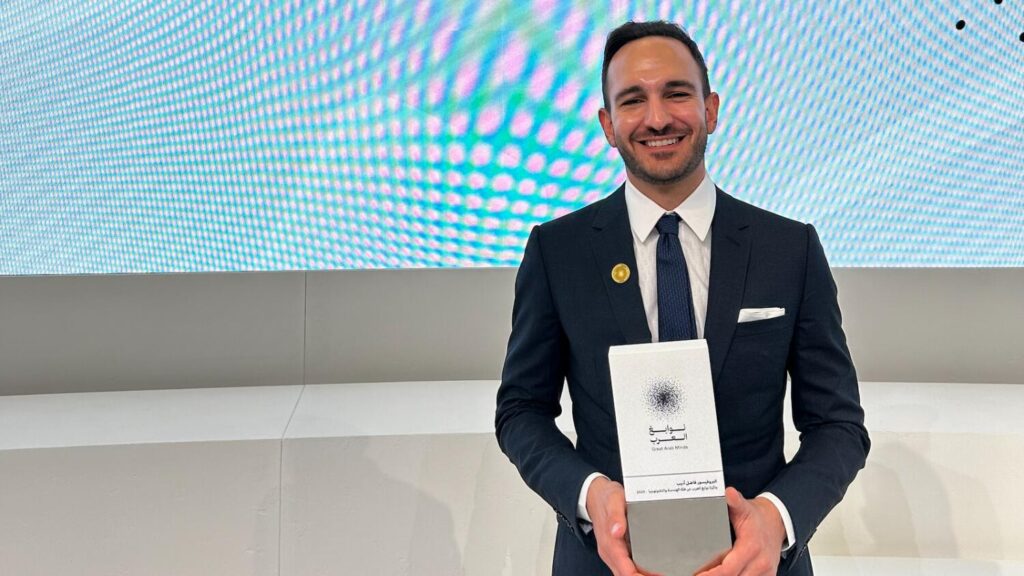
Professor Fadel Adib had his studies in a tumultuous period, while assassinations and car bombings were daily news in Beirut. Undeterred, he pursued his studies. And on Monday, he became the youngest winner of the first ever Great Arab Minds (GAM) award, earning a sum of Dh1 million to continue his work.

Felicitated by His Highness Sheikh Mohammed bin Rashid Al Maktoum, Vice-President and Prime Minister of the UAE and Ruler of Dubai, at a glamorous event held at the Museum of The Future, Fadel said he was humbled by the recognition.

“I feel honoured to be chosen among giants and big names in the field and to sit next to them,” he said. “I feel doubly honoured because this happened in the Arab world.” He also expressed his commitment to giving back to the Arab world and hoped to inspire and encourage more innovation within the region.

Currently an associate professor at the Massachusetts Institute of Technology (MIT), it was Fadel’s research and innovations in wireless communication, particularly in identifying objects and vibrations hidden behind walls and under rubble, that earned him the recognition. According to the judging committee, his discoveries have opened up new possibilities for various industries.

Alongside Fadel, other winners included Algerian novelist Prof Waciny Laredj, Egyptian economist Dr Mohamed El-Erian and Lebanese scientist Prof Niveen Khashab. Each award winner will receive Dh1 million to fund their research and development.

Honouring of Arab minds

In her winning speech, Prof Niveen recalled how she was asked by her colleagues if she was “crazy” for wanting to move back to the Arab World. “In 2008, when I was at Northwestern University in Chicago, I received a call from King Abdullah University of Science and Technology (KAUST) and was offered to be part of the founding academic staff of the university,” she said. “All the colleagues and professors told me: ‘Are you crazy, you cannot launch a scientific career in an Arab country.’ But I accepted this challenge and began my academic career at KAUST. Now, after fifteen years, I am pleased to share with you that the Chemistry Department at my university is not ranked 40th in the world.”

The GAM — the largest scientific movement in the Arab world with a budget of Dh100 million — was designed to seek and identify great minds in the region and reward them for their achievements. The initiative seeks to halt the brain drain trend in Arab nations by incentivising talented individuals to remain in their home countries and utilise available resources. Recognising individuals in six categories — namely natural sciences, architecture and design, engineering and technology, economics, literature and arts and medicine — the award was first announced in 2022.

After a year-long rigorous process, the winners were selected and announced by Sheikh Mohammed on social media platform X in late 2023.

Other winners recognised for their exceptional contributions were:

Dr Hani Najm from the Kingdom of Saudi Arabia, head of the department of adult and paediatric cardiac surgery at Cleveland Clinic Hospital in the United States. Dr Najm was acknowledged in the field of medicine for his groundbreaking work in cardiac surgery.

Dr Mohamed El-Erian, president of Queen’s College, University of Cambridge, received the award in the Economics category. His remarkable insights and contributions have reshaped the understanding of global economic trends.

Professor Niveen Khashab, whose groundbreaking research in the natural sciences earned her the Arab Geniuses Award. Her work has pushed the boundaries of scientific knowledge, particularly in her field of expertise.

Prof Lina Ghotmeh was recognised for her exceptional achievements in the Architecture and Design category. Her innovative designs have reimagined urban landscapes and inspired future generations of architects.

Prof Waciny Laredj was celebrated for his remarkable contributions to the Literature and Arts category. His literary prowess and artistic vision have captivated audiences and enriched cultural heritage.

source/content: khaleejtimes.com (headline edited)

_________

Professor Fadel Adib — Photo by Waad Barakat

____________

LEBANON

LEBANON: Looking back on the life of ‘Lebanese Picasso’ Hussein Madi

Renowned artist who died in Beirut this week spent 2 decades studying and working in Rome, and had his work showcased across the world.

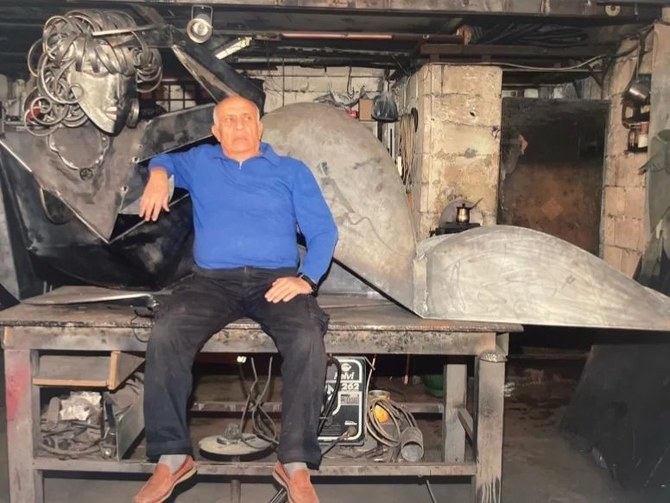
The veteran Lebanese master Hussein Madi, renowned for his vibrant paintings, has died in Beirut. Often called the “Lebanese Picasso,” Madi crafted his own visual language, peppered with bird motifs, curvy women, and geometrical symmetry, that made his bold oeuvre look instantly recognizable amongst Arab art enthusiasts.

Fellow artists and gallerists took to social media to offer their condolences. On Instagram, the Lebanese artist Abed Al-Kadiri posted some old snapshots of Madi in his studio and wrote. “Today at his burial ceremony Madi joined his flock of birds, flying alone, united with himself, just as he always lived.”

Maliha Tabari, founder of Dubai’s Tabari Artspace, said that Madi was the first artist she worked with in 2003, which proved to be an invaluable experience. “I’ll never forget the afternoons that would turn to evenings spent on his balcony in Beirut, delving into intense discussions of form explained by him through the curve of a pomegranate or a bird’s wing,” Tabari posted. “We lost not only a key figure from our region’s art journey, but also a father figure.”

Madi, who was also a sculptor, printmaker, educator and press illustrator, was born in the southern Lebanese town of Shebaa in 1938. While his parents reportedly did not approve of his artistic pursuits, it was his encouraging grandfather that saw potential in Madi. He left his parents’ home at the tender age of 19. He reportedly supported himself financially by submitting caricatures to newspapers in Lebanon and Iraq.

In the early 1960s, Madi was a student at the Lebanese Academy of Fine Arts. He later went on to have an international education, by traveling to the exciting art capital of Rome, in 1963, where he enrolled at the Accademia di Belle Arti. 

He would spend nearly the next two decades of his life in Rome, before returning for good to Lebanon in 1986, while the civil war was still happening. “I bitterly regret not having remained in Rome because of all the frustrations I endured since my return to Beirut. In fact, civil war drastically affected the course of my life,” Madi once said.

In Lebanon, Madi devoted himself to his canvas, showcasing his work in several art galleries in Beirut. For 10 years, starting in 1982, Madi was also president of the Lebanese Art Association. 

Madi’s paintings offer a visually appealing melange of thick lines, repetitive patterns, angular shapes, natural scenes, and bright colors. There is an element of spontaneity, presented in an orderly fashion. His images are also populated with figures, holding a book, a musical instrument — or simply reclining. “Despite all the mishaps, I was deeply happy. My work celebrated life,” he said.

Over the years, Madi’s artworks have been featured in auction sales at Christie’s and Sotheby’s. His works have also been acquired by regional and international art institutions including the Barjeel Art Foundation (Sharjah), Dalloul Art Foundation (Beirut), Mathaf: Arab Museum of Modern Art (Doha), Jordan National Gallery of Fine Arts (Amman), British Museum (London) and Institut du Monde Arabe (Paris).

source/content: arabnews.com (headline edited)

____________

Renowned artist Hussein Madi who died in Beirut this week spent 2 decades studying and working in Rome, and had his work showcased across the world. (Instagram)

_____________

LEBANON

LEBANESE-FRENCH Lina Ghotmeh Awarded Winner of the ‘Great Arab Minds’ (GAM) Awards 2023 in Architecture & Design

His Highness Sheikh Mohammed bin Rashid Al Maktoum, Vice President, Prime Minister and Ruler of Dubai, has announced Prof. Lina Ghotmeh, architect and professor of architecture, as the winner of the first Great Arab Minds (GAM) award in the architecture and design category, in recognition of her timeless contributions to global architecture.

In a tweet published on his official X account, Sheikh Mohammed congratulated Prof. Ghotmeh on winning the first award in this category of GAM, the Arab world’s largest movement launched in 2022 to search for exceptional Arab talents in various fields. Prof. Ghotmeh’s insightful work and research highlight the intimate relationship between architecture and nature.

His Highness Sheikh Mohammed said that architecture and architectural landmarks are the foundation of the distinguishing features that set cities and communities apart, and the building blocks of their identities and values, making them easily recognised. He added that they are also timeless tales of the creative outputs of humanity and the rise of civilisations.

Prof. Ghotmeh has a remarkable track record in her field. She has overseen the development of over 65 global architectural projects, including renowned museums, exhibitions and cultural buildings. More specifically, Ghotmeh conducts in-depth analyses of environments and meticulously selects materials that are not only suitable for each setting but also capable of withstanding harsh conditions. Her unique approach ensures that all her projects are evolved and practical outcomes of her research on coexisting with nature and the surrounding environment.

Among Prof. Ghotmeh’s most notable works is a building near the industrial port of Beirut, which survived the 2020 Beirut explosion, having been designed using innovative techniques and select local materials.

www.linaghotmeh.com

source/contents: wam.ae (headline edited)

__________

______________________

FRANCE / LEBANON

ARAB-AMERICAN: Meet the Arab-American Women Tech Leaders shaping the future

Three entrepreneurs share their stories as well as tips to succeed, regardless of background

Steve Jobs, Tony Fadell of iPod and Nest thermostat fame, and Taher Elgamal, the father of SSL technology, may be some of the most successful Arab Americans the global tech world has seen – but bit by bit, that picture is starting to change.

An emerging group of Arab-American women is increasingly taking up the tech mantle in a host of diverse fields.

A year spent in Kansas as a cultural exchange student at the age of 17 led to Morocco native Yasmine El Baggari feeling a profound need to help people connect.

“Most people [in Kansas] had never met someone from Morocco before. It felt like I was a cultural ambassador for Morocco at every opportunity,” she says.

The experience morphed into something more: a road trip to all 50 US states, during which she stayed with families and taught French and Arabic to get by, and later, a career that has seen her visit more than 45 countries – while securing a degree from Harvard University along the way.

All this led Ms El Baggari to found Voyaj, an online platform that fosters connections between people from diverse backgrounds in all corners of the globe.

“Once you build a human connection with someone, they’re more open to considering different perspectives … which is the basis of the work I continue to do: building and facilitating connections with people around the world,” she says.

Voyaj has collaborated with organisations to bring dozens of students from Africa to California for cultural exchange trips.

In March, Ms El Baggari raised more than $50,000 through a crowdfunding campaign involving more than 260 people from 40 countries to help fund the app.

Recently, Voyaj started working with non-profit Alight to help connect Afghan refugees recently arrived in Minnesota with local residents.

With the number of immigrants from the Middle East and North Africa in the US doubling over the past 20 years to 1.2 million, Arab-American women are set to play an increasing role in the tech and entrepreneurial landscape.

But getting to the top is not easy – just ask serial achiever Sherien Youssef.

Born and raised in Cairo, she emigrated to the US aged 11.

“My parents gave up a lot in Egypt to come here. They were comfortable there, but wanted a better life for their children,” she says.

Now living in a suburb of Washington, Ms Youssef is a senior executive and vice president at CGI, a major IT and consulting multinational that employs more than 90,000 people in about 40 countries.

It has taken serious determination to get to where she is.

“Growing up, being Arab American and being a Muslim, it wasn’t easy to find a person that looked like me [in this industry],” she says.

“It wasn’t very prevalent in my field. When you come as an immigrant, you have a desire to be constantly working harder and proving yourself over and over again.”

Today, her professional life consists of speaking at conferences, working closely with chief executives at partner companies and mentoring staff.

Having raised a family, grown her career and secured an MBA, she says there is still room for change.

“This is still a male-dominated field. We don’t see as many women in the C suites in the IT field,” she says.

Health and wellness is another area Arab-American women are making inroads.

For 12 years, Megan Moslimani was a dedicated public servant, working as a lawyer for the city of Detroit and serving as a board member of the Detroit Bar Association.

But a trip to Los Angeles in 2016 made her realise health care and wellness were industries on the up, and that IV drip therapy could be a game-changer.

“We visited different medical spas for fun and to enjoy the luxury experience. I was impressed with the way you could feel instantly better and hydrated [from using the drips],” she says.

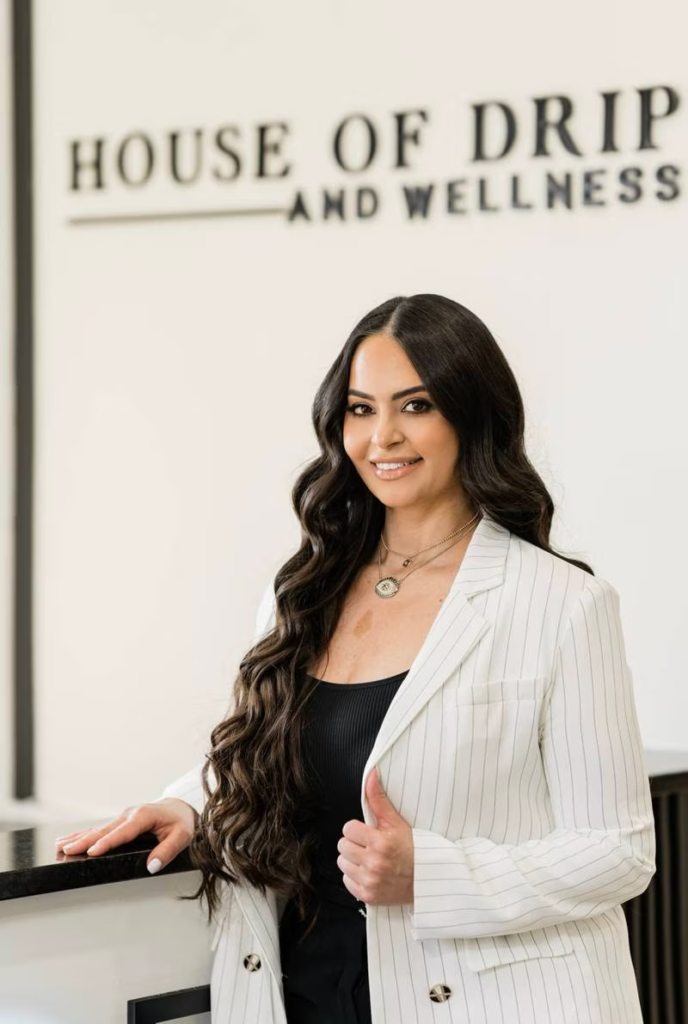
Last spring, Ms Moslimani, whose family arrived in the US from Lebanon in the early 19th century, and her colleague, Biane Bazzy, dove headfirst into their passion, opening the House of Drip & Wellness in Dearborn, Michigan.

American designer brings hijabs to the high street

Made popular by celebrities such as the Kardashians and Hailey Bieber, and appearing in popular TV shows such as Billions, restorative IV drip therapy is a way to get vitamins, electrolytes and other nutrients into the bloodstream quickly.

It is believed to help people recover more quickly from illnesses, jet lag, fatigue and other ailments.

“Clients feel results instantaneously as the drip directly enters the bloodstream, bypassing the digestive tract,” she says.

“People love instant gratification, and I knew all could benefit – athletes, tired mums, overworked professionals.”

Restorative IV drip therapy spas or “drip bars” are springing up in strip malls and neighbourhoods across the US. With the global wellness industry estimated to be worth about $1.5 trillion and expected to grow by 5 per cent to 10 per cent per year, IV drip therapy is set to become an important health recovery tool.

For Arab-American women thinking about starting out in the tech and entrepreneurial worlds, the trio have tips to share.

Ms Moslimani says it is important to be prepared to spend money on the right things to grow your business.

“Look for attorneys offering pro bono hours and get real business law advice,” she says.

Ms El Baggari says getting past the stigma of asking for help is essential to succeeding as an entrepreneur.

“Don’t be afraid to ask for what you need – if people say no, that’s OK,” she says. “You want a clear sense of mission. Understand your ‘why?’”

For Ms Youssef, investing in yourself is key, “whether it’s in degrees and certificates, or in networks”.

“Oftentimes it’s the relationships and connections that you make will be the reason that you get to the next step in your career,” she says.

source/content: thenationalnews.com (headline edited)

_____________

Last spring, Megan Moslimani and a colleague launched the House of Drip & Wellness in Dearborn, Michigan. Photo: Megan Moslimani

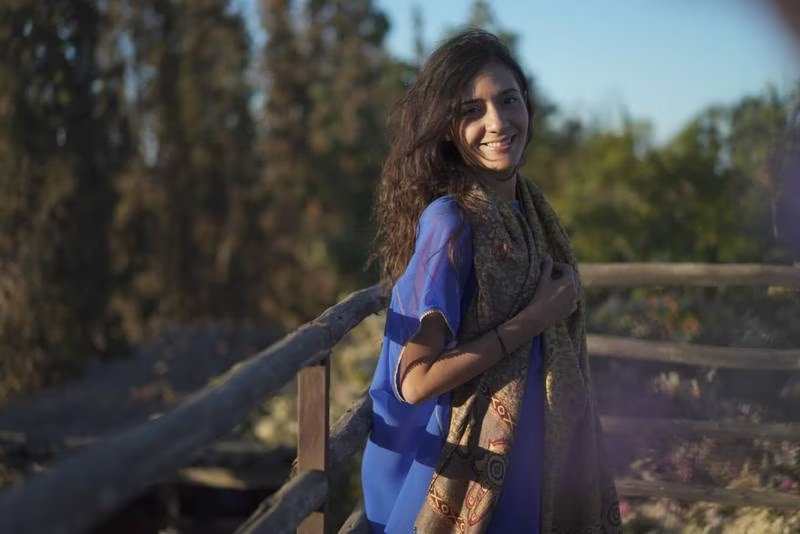
Yasmine El Baggari is the founder of Voyaj, an online platform that fosters connections between people from diverse backgrounds. Photo: Yasmine El Baggari

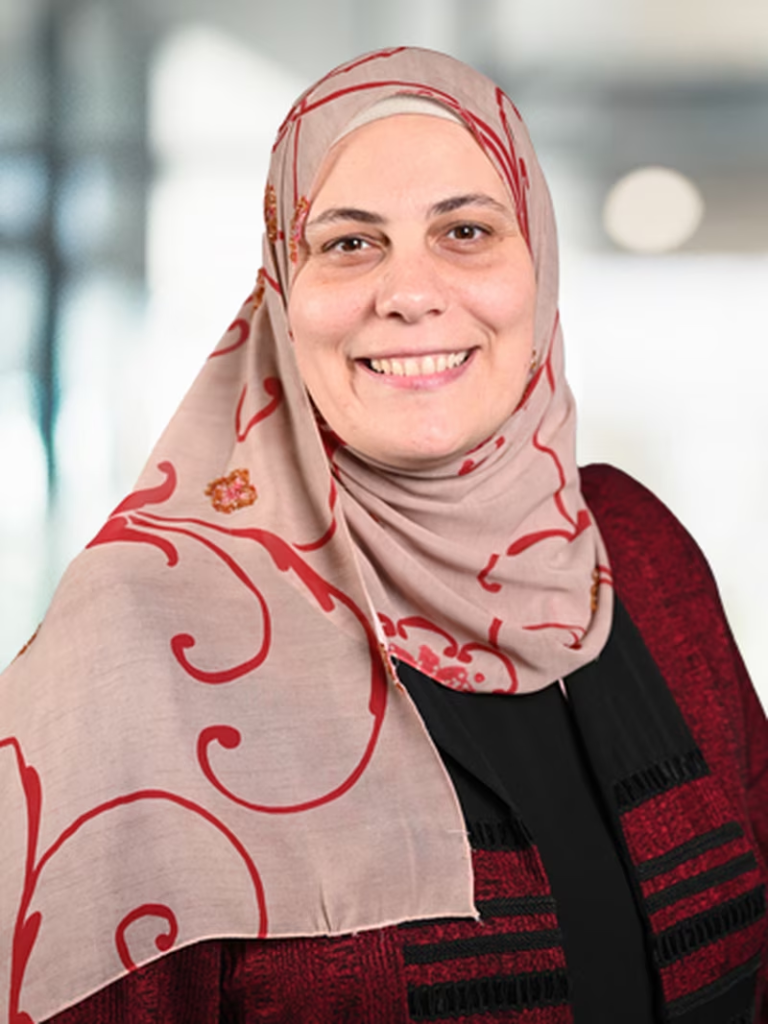
For Sherien Youssef, investing in yourself is key, ‘whether it’s in degrees and certificates, or in networks’. Photo: Sherien Youssef

______________________________________________________

AMERICAN / ARAB / EGYPT / LEBANON / MOROCCO

LEBANESE-BRAZILIAN: Lebanese Descendant Brazilian Henrique Tabchoury Collects Arabic Records in Brazil

Brazilian Henrique Tabchoury has listened to Arabic music records with his Lebanese father since he was a child and saw him get emotional with the songs of his homeland. Jamil Abrão Tabchoury was born in Tripoli, Lebanon, in 1917 and came to Brazil with his family in 1927 when he was nine.

After he died in 1988, Henrique inherited around 300 Arabic records from his father. Since then, he has dedicated his free time to rescuing, collecting, and cataloging Arab music material, many of them recorded in Brazil, as a way of honoring his father and the Arab colony that came to Brazil in the first diaspora in the late 19th century and early 20th.

A trained agronomist, Tabchoury works in agribusiness and, since the 2000s, started buying Arabic records for his collection, which today has around 4,000 pieces – some are not Arabic. He recently received a donation of 22 albums by Arab and Brazilian artists from the Arab Brazilian Chamber of Commerce (ABCC).

Tabchoury searches for Arabic music records in advertisements, used bookstores, antique shops, and websites. He collects Arab discography produced in Brazil and already has around 60 albums by Arab artists who lived and recorded in the country for labels such as Continental, Odeon, Arte-fone, and RCA Victor. The recordings were made between 1927 and 1935, and the collection includes records by artists such as Nagib Hankash and Nagib Mubarak.

“It’s a retrieval of the history of the Arab colony in Brazil; these artists were of fundamental importance for the community; they were an encouragement for the Arabs who came to Brazil,” said Tabchoury to ANBA.

The albums are mainly from Syrian and Lebanese artists. “I guess most are Lebanese artists as many sing odes to Lebanon, and 90% to 95% are Christian Arabs,” said Tabchoury. In his assessment, over half of these are Orthodox Christians, and less than half are Maronite Christians.

Of the 4,000 discs in his collection, he has already cataloged and digitalized around 580, and nearly 400 are Arabic music. “Cataloged, including private and serial recordings, we have 390 Arab 78rpm records produced in Brazil, apart from LP albums (vinyl), compact, and 10-inch records,” he informed. He intends to digitalize his entire collection and later launch a website with the music catalog and information about the artists.

One of his goals is to find all Arabic records of private recordings made in Brazil until the 1970s. After the 1970s, recordings from abroad began to arrive here,” he said. He also wants to find more old Arabic records, whether recorded in Brazil or not.

“Many people keep records for sentimental value, and some don’t know what to do and throw them in the trash. I’m looking for these records in my spare time; I go to other cities and talk to families. I have no commercial interest; my collection has a historical background and is a source of homage to the Arabs in Brazil,” he declared.

Tabchoury has already been to Araxá, Barretos, Uberaba, Goiânia, Curitiba, Porto Alegre, and Pindamonhangaba, among other Brazilian municipalities with Arab communities. “I want people to know I’m building this collection,” he said. He accepts donations and also buys records.

Contact

Henrique Tabchoury
Phone & WhatsApp: +55 (034) 99300-0675
Email: htabchoury@gmail.com
Instagram: @hentabchoury
Facebook: Henrique Tabchoury

Translated by Elúsio Brasileiro

source/content: anba.com (headline edited) / Bruna Garcia Fonseca

______________

______________________

BRAZIL / LEBANON