Arabs & Arabian Records Aggregator. Chronicler. Milestones of the 25 Countries of the Arabic Speaking World (official / co-official). AGCC. MENA. Global. Ist's to Top 10's. Records. Read & Enjoy./ www.arabianrecords.org
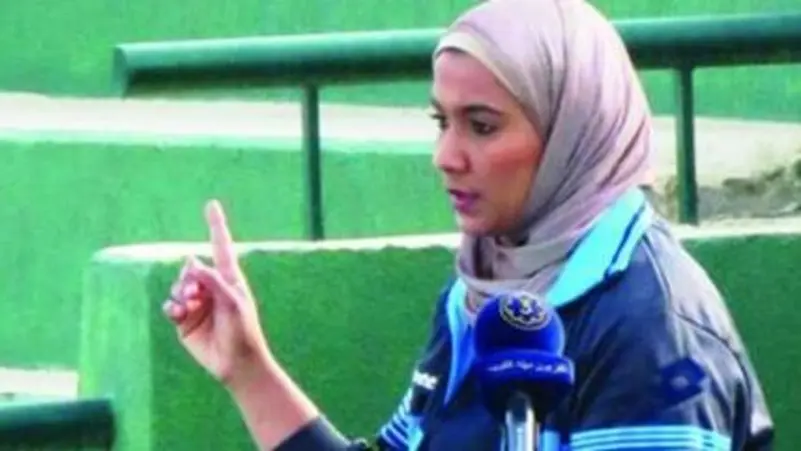
Kuwaiti line umpire Aseel Shaheen was one of the 350 people selected to officiate in the main round of the prestigious tournament.
She is making waves at the All England Club this year after becoming the first Arab woman to officiate in the tournament.
Kuwaiti line umpire Aseel Shaheen was one of the 350 people selected to officiate in the main round of the prestigious tournament.
“It’s an indescribable feeling being here. It’s something big, it’s a challenge. I’m the first female from the Arab world to be an umpire at Wimbledon,” Shaheen, who is on the waiting list for the U.S. Open, told UAE sports paper Sport360.
“I was worried that they wouldn’t accept me because I wear a hijab, but on the contrary, they really accepted me,” she said.
“London is quite open towards hijab, but maybe it’s not too common around the tennis world. But me wearing the hijab and working on court during a tennis match at Wimbledon is a sign that the world is starting to accept us more,” the former swimmer and coach added.
Shaheen, who started officiating classes in 2002 said that reaching her position was a “challenge … because they would always nominate the guys and ignore me.”
“I told them I wanted to be an international umpire, I have the qualification and I have the language skills, because I speak good English. So I went to officiating school and I became a white badge in 2011.”
Last year, Shaheen gained experience of working in the Wimbledon qualifiers.
Nobel Peace Prize nominee was an internationally recognised human rights activist who documented abuses under Ben Ali.
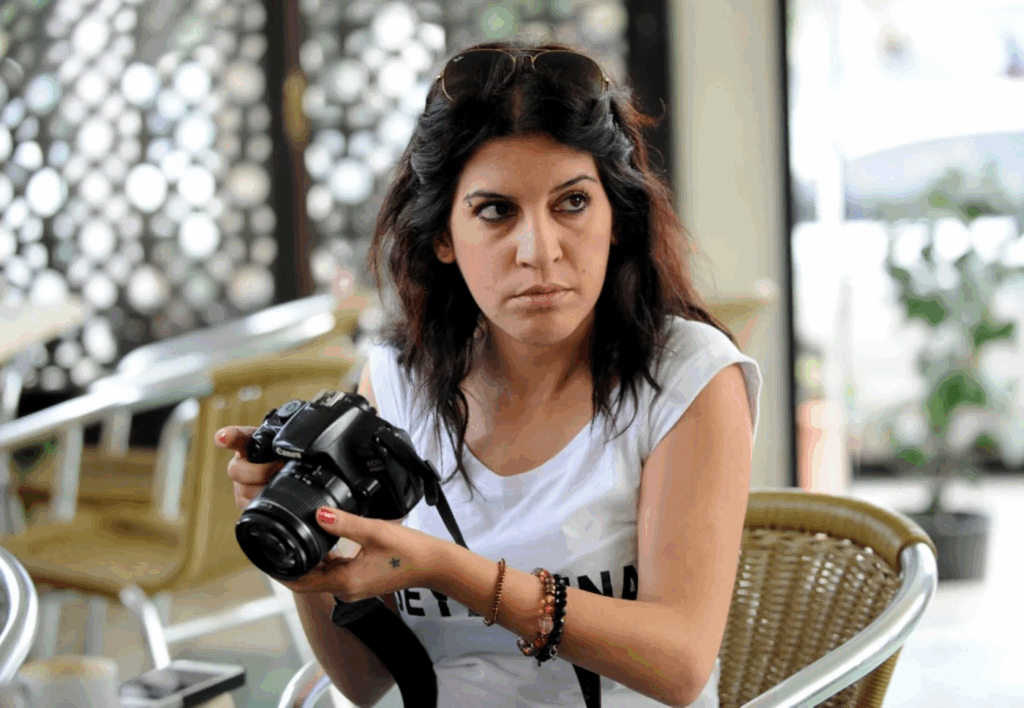
Tributes are pouring in after prominent Tunisian human rights activist and blogger Lina Ben Mhenni, one of the heroes of the 2011 revolution, died in the early hours of Monday from a chronic illness.
The 36-year-old was an English teacher at the University of Tunis. Her father and fellow activist, Sadok Ben Mhenni, was a political prisoner under Habib Bourguiba and one of the founders of the Tunisian branch of rights group Amnesty International.
Her final blog post was published on Sunday morning, in which she took aim at a spat-turned-fracas between MPs in parliament, asking Tunisians to remember their political past and learn from it.
A cyber-dissident, Ben Mhenni became well known for her “A Tunisian Girl” blog and using her real name at great personal risk, documenting human rights abuses under Zine El Abidine Ben Ali. In response, Ben Ali’s government banned her blog in 2007.
But in the 2011 uprising that toppled the longtime autocrat, Ben Mhenni began blogging once again, becoming a vital source of information through her documentation in English, French and Arabic of the violent crackdown on protesters by police, particularly in Sidi Bouzid, Regueb and Kasserine.
Her blog soon gained international recognition. In 2011, she was nominated for a Nobel Peace Prize and received the Best Blog Award at the Deutsche Welle Global Media Forum in Germany’s Bonn.
“I had to ensure that the voices of these people and their families be heard so that they hadn’t died in vain,” she said speaking at the time.
In 2013, following the assassinations of leftist politicians Chokri Belaid and Mohamed Brahmi, she was informed by authorities of being “number 1 on a kill list” drawn up by hardline groups.
Despite her ailing health and being in need of a kidney transplant, in recent years Ben Mhenni participated in many panels and cultural events, most recently at the Arab Women Literature Festival, and she campaigned for Tunisia’s youth and a reading initiative in Tunisian prisons.
Tunisia’s culture ministry expressed “great sorrow” at Ben Mhenni’s death.
US Qatari artist and writer Sophia Al-Maria has been announced as the recipient of the 2025 Frieze Artist Award, one of the art world’s most highly anticipated annual commissions.
The award is part of Frieze London, a leading international art fair that will return to Regent’s Park from Oct. 15-19, bringing together more than 280 galleries from 45 countries.
Presented in partnership with Forma, the award supports early- to mid-career artists in debuting new works. This year, Al-Maria will perform “Wall Based Work (a Trompe LOL),” a live stand-up comedy show held daily inside the fair tent.
The work marks Al-Maria’s first attempt at stand-up, in which she will blend sharp humor with her long-standing interest in mythology, empire and pop culture.
“In partnership with Forma, we are proud to continue supporting artist-centered programming,” said Eva Langret, director of Frieze EMEA. “Al-Maria’s debut stand-up promises a collective experience exploring vulnerability, creativity, shared anxieties and LOLs.”
Meanwhile, Chris Rawcliffe, artistic director at Forma, said: “By wielding humor as a tool for survival, Al-Maria not only provokes reflection but actively reshapes the cultural conversation … Al-Maria is more than an artist and critic, she is a catalyst for change, and an indispensable voice in both the art world and the wider social landscape.”
Al-Maria’s proposal was selected by a jury of leading industry professionals, including curator and museum consultant Lydia Yee and the artistic director of exhibitions at Ikon Gallery, Melanie Pocock, artistic director of exhibitions at Ikon Gallery, as well as Langret and Rawcliffe.
Based in London, Al-Maria works across drawing, collage, sculpture, film and writing. Her practice is unified by a focus on storytelling and mythmaking, often reimagining histories and envisioning speculative futures. Her work has been shown at major institutions and biennales, including the Gwangju Biennale, the New Museum and Whitney Museum in New York, the Venice Biennale, and Tate Britain.
Unveiled during a ceremony in Damascus on Thursday
New emblem reimagines iconic Syrian golden eagle with symbolic elements representing country’s history, geography and post-conflict aspirations
The Syrian Arab Republic has launched a new national visual identity featuring a redesigned golden eagle emblem, in what officials described as a break from the legacy of authoritarianism and a step toward a state defined by service, unity and popular legitimacy.
Unveiled during a ceremony in Damascus on Thursday, the new emblem reimagines the iconic Syrian golden eagle with symbolic elements representing the country’s history, geography and post-conflict aspirations, the Syrian Arab News Agency reported.
The redesign forms the centerpiece of a wider national branding effort aimed at redefining Syria’s image at home and abroad.
The eagle has long held significance in Syrian history, appearing in early Islamic military symbolism, notably in the 7th-century Battle of Thaniyat Al-Uqab, and later as part of the 1945 emblem of Syria.
The new design retains this historic continuity but shifts its meaning, and the combative shield clutched by previous iterations of the eagle has been removed.
Instead, the emblem now features the eagle topped by three stars representing the people symbolically placed above the state.
The redesigned wings are outstretched, balanced rather than aggressive, with seven feathers each to represent Syria’s 14 governorates.
The tail carries five feathers symbolizing the country’s major geographical regions: north, south, east, west, and central Syria — a nod to national unity and inclusivity, SANA reported.
Officials described the design as a “visual political covenant,” aimed at linking the unity of land with the unity of national decision-making.
“The people, whose ambitions embrace the stars of the sky, are now guarded by a state that protects and enables them,” said a statement accompanying the launch. “In return, their survival and participation ensure the renaissance of the state.”
The emblem is designed to signal historical continuity with the original post-independence design of 1945, while also representing the vision of a modern Syrian state born from the will of its people, SANA said.
Officials said the elevation of the stars above the eagle was intended to reflect the empowerment and liberation of the people, and the transition from a combative state to a more civic-minded one.
The symbolism also reinforces Syria’s territorial integrity, with all regions and governorates represented equally. The design, they said, reflects a new national pact, one that defines the relationship between the state and its citizens based on mutual responsibility and shared aspirations.
The new emblem is also intended as a symbolic end to Syria’s past as a security-driven state, replacing a legacy of repression with one of reconstruction and citizen empowerment.
President Ahmad Al-Sharaa, who has positioned his administration as one of reform and renewal, described the change as emblematic of “a government emanating from the people and serving them.”
The visual identity was developed entirely by Syrian artists and designers, including visual artist Khaled Al-Asali, in a deliberate effort to ground the new identity in local heritage and creativity.
Officials said that the process was intended not only as a rebranding exercise but as a reflection of Syria’s cultural and civilizational legacy — and its future potential.
Foreign Minister Asaad Al-Shaibani, speaking at the event, framed the launch as part of a broader transformation in Syrian governance and diplomacy.
“In every encounter, we carried a new face of Syria,” he said. “Our efforts brought Syria back to the international stage — not as a delayed hope, but as a present reality.”
He said the country was now rejecting the “deteriorated reality” inherited from decades of authoritarian rule, and described the new emblem as a symbol of Syria’s emergence as a state that “guards” and empowers its people, rather than controlling them.
Al-Shaibani concluded his remarks by calling the moment “a cultural death” for the former regime’s narrative.
“What we need today is a national spirit that reclaims the scattered pieces of our Syrian identity, that is the starting point for building the future.”
source/content: arabnews.com (headline edited)
____________
The Syrian Arab Republic has launched a new national visual identity featuring a redesigned golden eagle emblem, in what officials described as a break from the legacy of authoritarianism and a step toward a state defined by service, unity and popular legitimacy. (SANA)
The UAE leads the global market in mobile shopping, according to the results of the Global Digital Shopping Index 2025, a joint study by PYMNTS Intelligence and commissioned by Visa Acceptance Solutions.
The study, which surveyed 1,679 consumers and 329 merchants in the country, showed that 67% of UAE consumers used their smartphones for their most recent purchase, a 23% increase compared to 2022.
The UAE also recorded the highest rate of mobile shopping at 37%, ahead of Singapore, the UK, and Brazil.
The country also recorded an advanced global rate of biometric authentication use (32%) when making online purchases, surpassing the global average of 17%. Fifty-three percent of consumers expressed a desire to shop across multiple channels, while 75% preferred rewards programs, 73% preferred free shipping, and 70% preferred price matching.
The report also indicated that 38% of shoppers in the UAE made their recent purchases using a mobile phone or computer, with the option of home delivery.
The results confirmed that consumers in the UAE are increasingly adopting a “mobile first” lifestyle, particularly among millennials, with a usage rate of 73%.
Commenting on the study results, Salima Joteva, Vice President and General Manager, Visa UAE, said, “The UAE’s approach reflects the great potential that can be achieved by uniting efforts to build the future of commerce. At Visa, we are working in partnership with the government and private sectors to offer innovative solutions such as Click to Pay to provide secure and seamless digital payment experiences.
These indicators reflect the country’s advanced regulatory environment and its continued support for the digital business ecosystem, enabling retailers to enhance customer experiences and achieve sales growth by offering flexible and secure payment options.
The Global Digital Shopping Index is based on a survey of 18,468 consumers and 3,464 merchants across eight countries, including the UAE, Saudi Arabia, the United States, the United Kingdom, Singapore, Australia, Mexico, and Brazil, during the period from October to December 2024.
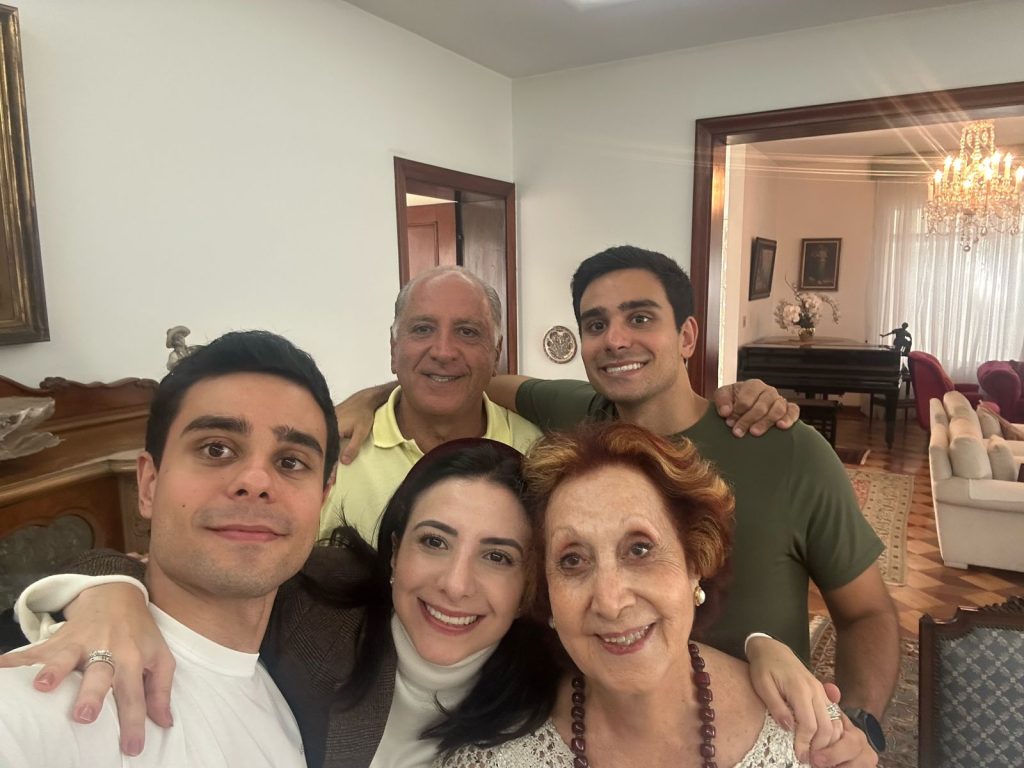
For over two decades, Gabriel Sayegh has worked to keep Arab culture alive in spaces throughout the city of São Paulo.
Born in the southern region of São Paulo city, Gabriel Sayegh, 65, is proud of his Arab heritage. The ancient culture, which comes from both sides of his family and has been part of his life since the beginning, became an essential part of his routine in 1999.
“Since I was a child, I used to go to Esporte Clube Sírio and take part in its cultural activities, and when I was 39, I was invited to become the club’s cultural director. I didn’t think twice and accepted the offer,” says Sayegh.
“It’s very important to keep Arab culture alive because we’re our ancestors. We come from a place that has its own culture, language, and cuisine, and many people don’t know about it. That’s why it’s so important to preserve our culture and make sure others learn about our origins.”
Because of his professional choices, Sayegh would never have been close to Arab culture, but his desire to keep the tradition alive spoke louder. “I always liked math, so I graduated in civil engineering and worked in the field for many years. But I always had the desire to promote the culture of my parents and grandparents, which is why I still work as the cultural director of the club today,” says the engineer.
With a full schedule all month long, the club offers different types of free classes, including Arabic language, belly dancing, and music classes that use traditional Syrian instruments. And at least once a month, there is a lecture given by an important spokesperson from the community.
“We’ve already had writers, politicians, businesspeople, and even the president of the Institute for Arab Culture (ICArabe) here. We also organize sessions to screen Arab films,” says the cultural director of Esporte Clube Sírio.
Despite the effort, the Syrian descendant says he finds it difficult to spread Arab culture among the younger generations. “Culture is no longer as much a part of the younger generations as it was during my youth. Today, there are many things that distract them.”
In addition to working at Esporte Clube Sírio, Gabriel is also involved in two other organizations: the State Parliamentary Council of Communities of Foreign Roots and Cultures (CONSCRE) of the Legislative Assembly of the State of São Paulo (Alesp) and ICArabe.
At CONSCRE, he arrived in 2019, served as president for two terms, and is currently vice president. The São Paulo native has been part of ICArabe since its inception in the early 2000s. He has held several positions within the institute, including vice president, and currently works as financial director.
“In all these places, my work is done voluntarily to help my community. At Alesp, where the space was created to bring together Arab descendants living in São Paulo, we have political ties and try in some way to highlight the culture of my country. At the Institute, the effort is greater. We hold cultural events at different times of the year. The next one will be the Arab film festival to take place in August.”
Very proud of his journey as a promoter of Arab culture, Sayegh is happy to be able to share the richness of his ancestors’ country. “For many years, Arab culture was neglected and ignored by the West, so people still don’t know much about it.”
Culture from the beginning
His mother, Ivete Abdelmalack Sayegh, came to Brazil at the age of 18 with her parents and siblings. His father, Jorge Gabriel Sayegh, is the son of Syrians and lived in São Paulo, where he met Ivete. The family grew when Gabriel’s sister was born and was completed years later when he and his twin brother arrived.
“My parents spoke Arabic when they wanted to say something so we wouldn’t understand, since my maternal grandmother only spoke Arabic. She never really learned to speak Portuguese. Because of that, I ended up speaking Arabic to talk with her,” Sayegh recalls.
Besides the language, Arab food has been and still is part of Sayegh’s and his children’s lives. “I have a daughter from my first marriage and twin sons from my second marriage who love my mother’s cooking; the tradition of Arab food is part of their daily routine. But the culture is more difficult,” Sayegh explains.
“My first wife, who is my cousin, still passed on our heritage to my daughter—however, these younger generations are drifting away from their origins. That’s why I keep stressing how important it is to know your roots. It’s only this way that you can better understand yourself as a human being and learn to respect others.”
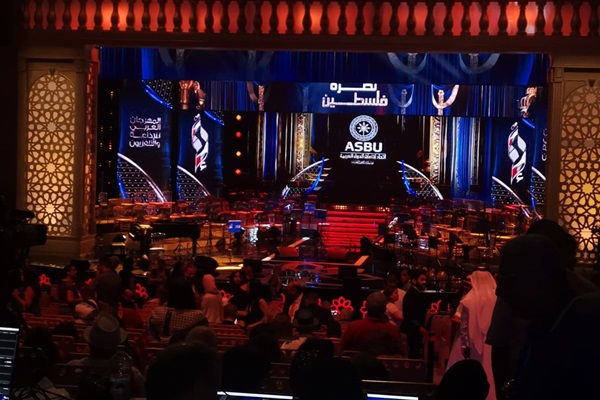
The opening ceremony concluded with a musical performance by Lebanese artist Ragheb Alama, with proceeds dedicated to supporting the people of Palestine.
Abdelrahim Suleiman, Director General of the Arab States Broadcasting Union (ASBU) and Mohammed bin Fahd Al-Harthi, President of ASBU and CEO of Saudi Broadcasting Authority (SBA), presented the awards to the winners of the 24th Arab Radio and Television Festival that was held in Tunis from June 26 to 29.
Part of the Text is Missing, a Kuwaiti TV show won the award for Best Arab TV Programme at the festival.
Saudi Broadcasting Authority (SBA) secured four radio and TV awards, including the second prize in the health programmes category for “Mental Health: Violence in Schools.” In the TV category, Saudi Arabia won three awards, including the second prize in the news category for talk shows, honouring the Saudi street programme on its episode about Vision 2030. Heritage in the Maqam of Hijaz took first prize in the general documentary films and programmes category, while the Saudi social drama series Al-Arbaji 2 secured second place in the social series category.
Additionally, the SBA received the second prize in the 2024 news exchange competition and also, the second prize in the 2024 programme exchange competition. The festival also honoured the judging panels for its radio and television competitions and distributed the exchange awards.
Qatar Media Corporation won three awards. Qatar TV took first prize for the documentary film Museums in Qatar, showcasing the distinctive museums of the country, and secured the second prize for Programme Exchanges of 2023 within the festival’s Arab Radio and Television competition in Tunisia. Qatar Radio won second prize in the “Notable Arab Figures” category.
The Ministry of Information, represented by the Sultanate of Oman Radio and the Sultanate of Oman Television, along with the private media institution Al Wisal, bagged 10 awards. Sultanate of Oman TV won four awards, including the Arab Joint Television Production Award for the documentary Holding Breaths, produced by the Ministry of Information and directed by Issa al Subhi.
Meanwhile, the Palestine Public Broadcasting Corporation (PBC) secured six awards. The radio programme Psychological Counseling in Times of War claimed first prize, while Radio Flash on school violence also earned top honours. Additionally, PBC received first prizes for radio news exchanges and a television report dedicated to the late journalist Mohammad Abu Hattab, a correspondent for Palestine TV killed by Israeli troops in Gaza. Furthermore, PBC was awarded second prize for the cultural programme Sadanat al-Riwaya and another award for the film Noura, produced by Palestine TV.
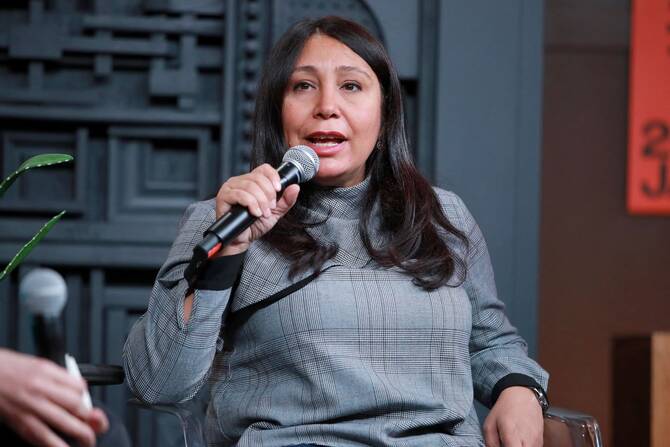
Pioneering Saudi filmmaker Haifaa Al-Mansour has been appointed to the Academy of Motion Picture Arts and Sciences’ Board of Governors, the Red Sea Film Foundation announced on Instagram.
“As one of three newly named governors-at-large, Al-Mansour will represent the Directors Branch and bring her singular voice, vision, and global perspective to the Academy’s leadership for the 2025–2026 term and beyond,” they captioned the post.
“An incredible milestone for one of Saudi Arabia’s most celebrated filmmakers. We’re proud to see her continue shaping the future of cinema on a global stage.” In 2012, Al-Mansour made history as she released her first feature film “Wadjda.” It was the first feature film shot entirely in the Kingdom and the first feature-length film made by a female Saudi director.
Over the years, Al-Mansour has also become one of the most in-demand television directors in Hollywood, helming episodes of hit series including “Archive 81,” “City of Fire,” “Tales of the Walking Dead,” and “Bosch: Legacy.”
In 2019, Al-Mansour’s feature film “The Perfect Candidate” was submitted as Saudi Arabia’s official entry for the International Feature Film Award at the 92nd Academy Awards, but it was not nominated.
The author, imprisoned without charge since 2001, was chosen to share the PEN Pinter prize by 2020’s winner Linton Kwesi Johnson.
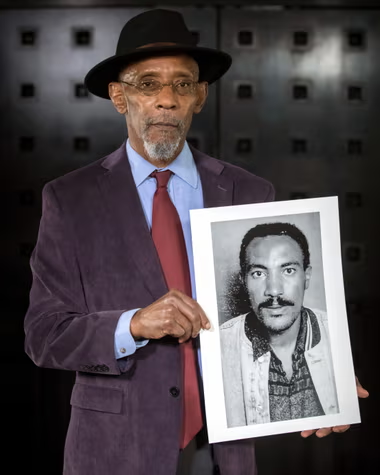
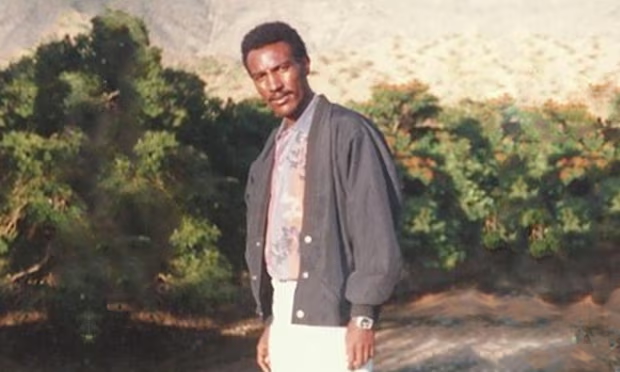
The Eritrean poet Amanuel Asrat, who was arrested in 2001 and is believed still to be detained in a maximum security prison, has been named International Writer of Courage by Linton Kwesi Johnson.
Johnson won the PEN Pinter prize earlier this year, for his “political ferocity” and “tireless scrutiny of history”. Accepting the prize last night, the Jamaican dub poet named Asrat, a poet, critic and editor-in-chief of the newspaper Zemen, as the International Writer of Courage winner with whom he will share his prize. This award goes to a writer who has been persecuted for speaking out about their beliefs, with previous recipients including the Saudi blogger Raif Badawi and Gomorrah author Roberto Saviano.
“Keeping a citizen incarcerated, incommunicado, without charge or trial for nearly 20 years is the kind of egregious brutality that we associate with totalitarian states and dictatorships,” said Johnson. “As a gesture of solidarity from a poet of the African diaspora, I have chosen the Eritrean poet, songwriter, critic and journalist Amanuel Asrat.”
Asrat’s writing looks at the daily life of the underprivileged, exploring themes of war and peace, and the negative side of conflict. He was arrested on 23 September 2001, along with the editors of all privately owned newspapers, as part of the Eritrean government’s campaign to silence its critics, and has not been heard from since.
According to English PEN , Asrat and his fellow writers are believed to have been subjected to torture and other ill-treatment, including lack of access to medical care, while detained in the purpose-built maximum-security prison Eiraeiro. The free speech organisation, which awards the PEN Pinter prizes in memory of the late Harold Pinter, said that it was unknown whether charges have been brought against them or if they have ever been brought to trial.
“Amanuel [has been] suffering under the harsh conditions of the Eiraeiro dungeon for 19 years and counting. His whereabouts are not known. We don’t even know whether he is alive or dead,” said Asrat’s brother, Daniel Mebrahtu. “We wish Amanuel was aware of this prize and honour somehow. We ask the international community to intervene in his case and other prisoners of conscience in Eritrea, and demand their immediate release.”
English PEN has just launched a year-long letter-writing campaign asking people around the world to send messages of solidarity to writers of courage, with Asrat the first featured writer. “We remain hopeful that this year will finally see him released and reunited with his family after almost two decades apart,” said PEN’s Cat Lucas. “In the meantime, we hope that our PENWrites campaign will provide an opportunity to raise greater awareness of his situation, to amplify calls for his release, and to continue to show our support for him and his family.”
source/content: theguardian.com (headline edited)
_____________
Gesture of solidarity … Linton Kwesi Johnson holds a portrait of Amanuel Asrat. Photograph: George Torode
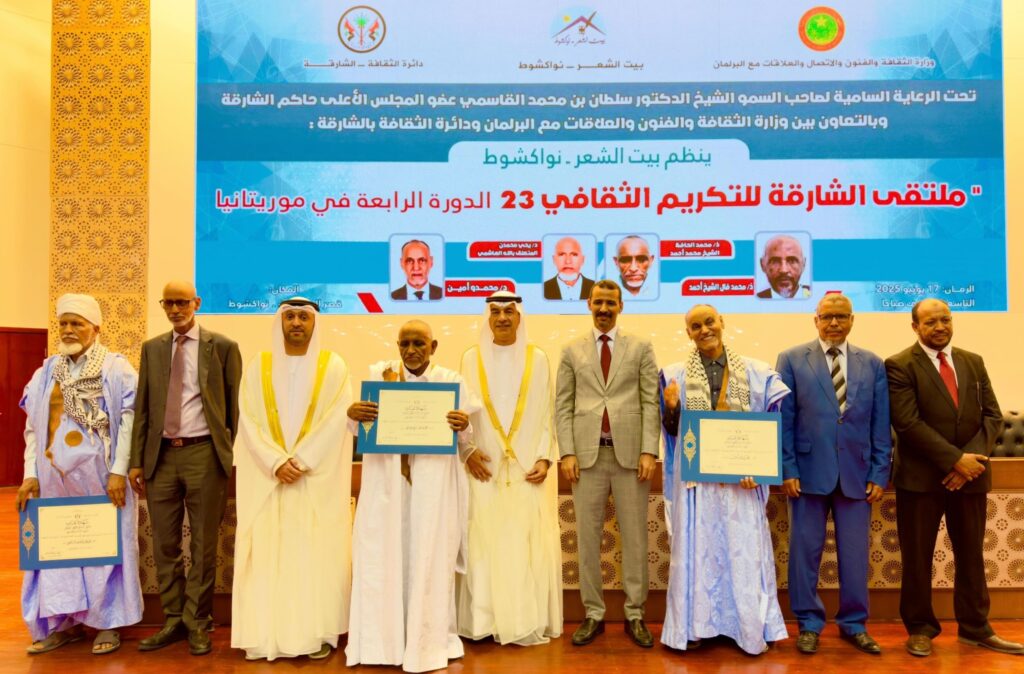
Under the patronage of His Highness Dr Sheikh Dr Sultan Bin Mohammed Al Qasimi, Supreme Council Member and Ruler of Sharjah, the Mauritanian capital, Nouakchott, witnessed a formal and cultural celebration that reinforced the values of loyalty to creative figures and affirmed their status.
The event was held as part of the 23rd edition of the Sharjah Cultural Honouring Forum, organised by the Sharjah Department of Culture in cooperation with the Mauritanian Ministry of Culture, Arts, Communication and Relations with Parliament.
Four prominent figures of Mauritanian literature were honoured in recognition of their contributions to enriching cultural life: poet Mohamed Fall Abdel Latif, linguistics academic Dr Yahya Al Hashemi, language researcher Dr Mohamedou Ameen, and poet Mohamed Al Hafiz Ould Ahmedou.
The forum reflects the directives of the Ruler of Sharjah to honour literary figures who have contributed to contemporary Arab culture. This marks the fourth time the forum is held in Mauritania, where it has previously recognised 12 Mauritanian creatives over past editions.
The award ceremony took place at the Conference Hall in Nouakchott, in the presence of Abdullah bin Mohammed Al Owais, Chairman of the Sharjah Department of Culture; El Houssein Ould Meddou, Minister of Culture, Arts, Communication and Relations with Parliament in Mauritania; Mohammed Ibrahim Al Qaseer, Director of Cultural Affairs at the department; the Governor of Nouakchott-West on behalf of the Mayor of Tevragh-Zeina Municipality; as well as a large audience of Mauritanian intellectuals, academics, writers, and the honourees’ families.
In his speech, Abdullah Al Owais highlighted the significance of the sustained cultural collaboration between Sharjah and Mauritania, saying, “We are pleased to meet today at this distinguished cultural event, which continues the journey of cooperation between the Sharjah Department of Culture and the Ministry of Culture, Arts, Communication and Relations with Parliament. This partnership has led to numerous cultural activities that support Arab culture and reinforce the role of thought and creativity in our Arab societies.”
El Houssein Ould Meddou welcomed the attendees and expressed his sincere thanks and deep gratitude to His Highness the Ruler of Sharjah, saying, “I am honoured to be with you today at this distinguished cultural gathering, celebrating this radiant forum and noble initiative. At the outset, I am pleased to extend my heartfelt thanks and appreciation to His Highness Sheikh Dr Sultan bin Mohammed Al Qasimi, Supreme Council Member and Ruler of Sharjah – this cultured leader who has dedicated his efforts, intellect, and time to serving the Arabic language and its literature, and to supporting the cause of culture and intellectuals throughout our Arab world.”
The honourees expressed their deep gratitude for the recognition, which they considered a badge of pride and an acknowledgment of their cultural and creative journeys. They noted that the Sharjah Cultural Honouring Forum represents a civilised model for celebrating Arab intellectuals and affirms the Emirate’s unwavering commitment to supporting thought and creativity across the Arab world.
They praised the vision of the Ruler of Sharjah in establishing culture as a pillar of development and identity. They emphasised that this recognition is not merely a personal honour, but a celebration of Arab culture and its creative figures across various fields. WAM