Arabs & Arabian Records Aggregator. Chronicler. Milestones of the 25 Countries of the Arabic Speaking World (official / co-official). AGCC. MENA. Global. Ist's to Top 10's. Records. Read & Enjoy./ www.arabianrecords.org
I like the idea of making people dream through creation, says Ali.
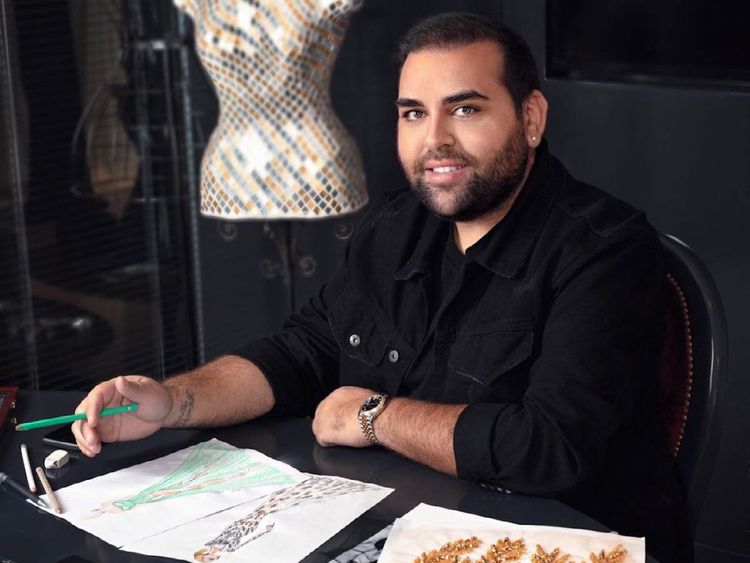
Tunisian designer Ali Karoui is best known for his red carpet haute couture as the favoured creator for fashion icons such as Cristiano Ronaldo’s girlfriend Georgina Rodriguez.
He chatted to The Kurator exclusively about being at the zenith of the world of fashion.
What draws you toward the world of haute couture instead of ready-to-wear?
I like this idea of making people dream through creation… And the rarity and the mystery that surrounds the world of haute couture.
Your interest in fashion began at an early age – how did your upbringing in Tunisia inspire you to go into fashion design?
I was lucky enough to grow up in an environment where women are treated like queens. I was looking at the closets of famous couturiers when I was a child, especially that of my grandmothers and mother, and that’s what gave me the love that I have today for haute couture.
You now dress A-listers and celebrities all over the world – does this create additional pressure to impress and attract attention with your designs?
Yes, of course, it creates a bit of stress because the more we are known the more demand there is on us, and it means more work for me and my team, but it is so enjoyable to see your creations worn by celebrities on the world’s biggest red carpets. It is a consecration for each artist to see his work recognized.
How did you first start collaborating with Georgina Rodriguez and in a way creating her signature look for her?
I met the beautiful Georgina at the Cannes festival in 2019. Her stylist contacted me to try one of my dresses that she saw in a picture. As she said on Netflix, I’m not trying to change her, she fell in love with my work and since then we are inseparable.
Your style can be interpreted as somewhat risqué – has this affected your career early on and did you face resistance in the Arab world of fashion design?
In no case did it affect my career, on the contrary, my style has made me known all over the world. You must believe in your dreams and continue to move forward, that is the key to success.
What kind of influence did Azzedine Alaïa have on you?
Azzedine Alaïa was a visionary. I had the chance to meet him several times. He gave hope to young Tunisian fashion designers, and allowed us all to dream that for us too, it was possible…
Who are some other fashion designers that you respect or that you looked up to early in your career?
There are many… I was in love with the vision of Gianni Versace, Thierry Mugler, Jean Paul Gaultier, and the master, Alaïa. Legends!
Do you keep an eye out on young and up-and-coming designers from the North Africa and Middle East region?
Of course! Many of them have a very bright future
source/content: gulfnews.com
_____________
Tunisian designer Ali Karoui is drawn to the “mystery that surrounds the world of haute couture”.Image Credit: Instagram @alikaroui
Moroccan athlete Salaheddine Benyazide won the bronze medal in the men’s 3000m steeplechase race on Saturday, as part of the Cali 2022 World Athletics U20 Championships, Columbia.
The young athlete was able to snatch the third place with a time of 8 minutes, 40 seconds, and 62 milliseconds, coming right behind the Ethiopians Samuel Duguna and Samuel Firewu.
Duguna achieved a time of 8 minutes, 37 seconds, and 92 milliseconds, while Firewu’s time came in at 8 minutes, 39 seconds, and 11 milliseconds.
The time is Benyazide’s fourth best in this race category, with his personal best being 8 minutes, 19 seconds, and 63 milliseconds, achieved earlier this year in Rabat.
The medal is Benyazide’s first on the world stage. Having been active in Morocco’s athletic scene since 2021, the 19 year-old athlete started participating in international races in 2022.
Celebrations and support have been pouring in following the young Moroccan’s medal, and many have hailed Benyazide’s success on the global stage as an achievement not only for Morocco, but for Arab athletics in general.
As he is participating in more international events this year, the young athlete is widely expected to represent Morocco more often on the world stage in the coming years, following in the footsteps of other Moroccans to preserve the country’s increasingly stellar athletics record.
Ethiopian athletes took the gold and silver medals in the race.
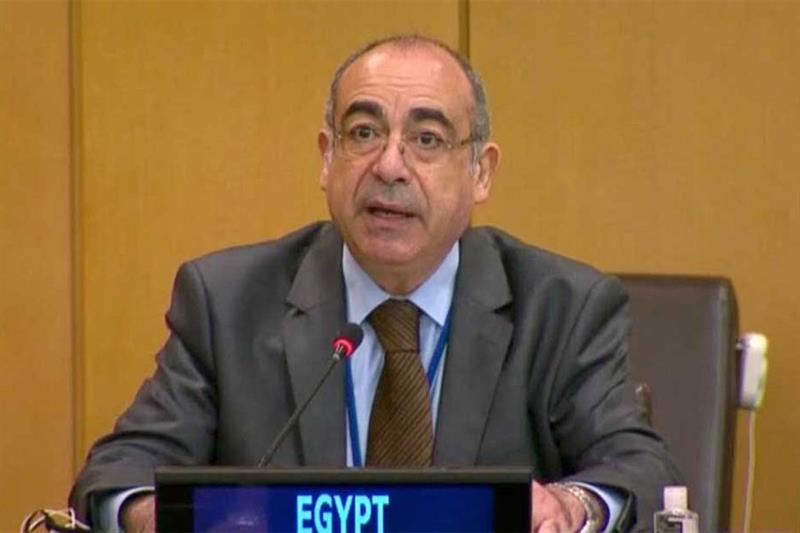
Secretary-General of the United Nations Antonio Guterres has appointed Egypt’s former permanent representative to the UN Mohamed Idris as a member of the Advisory Group of the United Nations Peacebuilding Fund, the Egyptian foreign ministry announced .
The appointment is in appreciation of the Egyptian diplomat’s efforts during Egypt’s 2021 presidency of the UN Peacebuilding Commission and as an affirmation of Egypt’s leadership in enhancing the effectiveness of the UN peacebuilding structure since its establishment in 2005, the foreign ministry said in a statement.
This is the fourth time an Egyptian has been appointed as a member of the Advisory Committee of the United Nations Peacebuilding Fund, representing African countries, it added
The members of the Advisory group have an important role in advising the UN Secretary-General on the programmes and activities of the Peacebuilding Fund in accordance with requests from Member States and overseeing the implementation of the programmes of the Fund, a large part of which is located on the African continent, the ministry said.
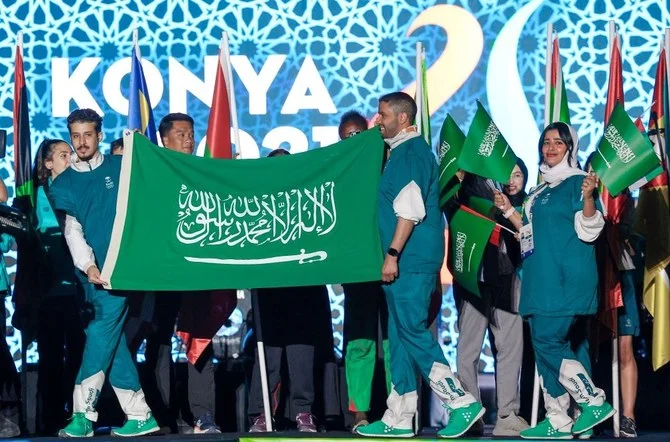
Team Saudi returned home to the Kingdom after collecting a record 24 medals at the 5th Islamic Solidarity Games held in Konya, Turkey, from Aug. 9-18.
They won two gold, 12 silver, and 10 bronze medals. The previous record was 11 medals at the 2017 Islamic Solidarity Games in Baku.
The competition saw the participation of 54 countries and 4,000 athletes.
The Saudi team placed 15th in the overall country standings, and its weightlifting athletes scooped 11 medals between them (one gold, six silver, and four bronze).
Athletics came second with five medals (four silver and one bronze), Karate with three medals (gold and two bronze), table tennis with two medals (one silver and one bronze), Paralympic swimming with one bronze medal, and finally a silver medal in the U23 football competition.
The Saudi weightlifting team won their first medals when Abdullah Al-Biladi delivered three bronzes on the opening day.
Siraj Al-Saleem delivered three silver medals in the 61kg event. On Thursday, Mansour Al-Saleem won gold in the 55kg event. Additional weightlifting medals came from Ali Al-Othman, who delivered a silver and a bronze.
Saudi track and field athlete Yousef Masrahi came second in the 400m race. His teammate Mazin Al-Yasin came third to secure the bronze in the same event.
Karate silver medalist at the Tokyo Olympics, Tarek Hamdi, secured first place on the podium after defeating his Azerbaijani opponent Ismayilov Gurban to win gold.
Hamdi said: “I’m thankful for all the support we get from SOPC (Saudi Olympic and Paralympic Committee) president Prince Abdulaziz and his VP Prince Fahad and all the Saudi karate fans and people who believed in me. I dedicate this success to them, and hopefully, our next goal is (the) Riyadh Asian Games 2034, where we hope to meet you all.”
Saud Al-Bashir and Sultan Al-Zahrani brought the other two bronze medals in Karate.
At the closing ceremony, SOPC vice president Prince Fahd bin Jalawi and the head of the Saudi delegation congratulated all the medal winners.
He also extended his appreciation and thanks to Turkish President Recep Tayyip Erdogan and Minister of Youth and Sports Dr. Muhammad Muharram Kasaboglu for successfully hosting the games.
source/contents: arabnews.com (headline edited)
__________
Saudi’s delegation claimed a total of 24 medals at the 5th Islamic Solidarity Games in Turkey. (SOPC)
Project shines a light on the cultural exchange between Algeria, France and Italy during the 1960s.
Zineb Sedira has outlined plans for her presentation at the French pavilion at this year’s Venice Biennale (23 April-27 November), revealing that the project will focus on Algerian cinema of the 1960s and 1970s and its links to the Italian and French film industries. The subject matter is timely as 2022 is the 60th anniversary of Algeria achieving independence from France. On 5 July 1962, Algeria became a sovereign state after an eight-year war which resulted in the deaths of at least 400,000 Algerians.
Sedira is the first artist of Algerian descent to be selected as the country’s representative. Sedira, who was born in Paris to Algerian parents, attended college in London, completing her undergraduate studies at Central Saint Martins school of art. She is now based in South London.
Sedira revealed her ideas for the cinematographic installation Dreams have no titles in an online press briefing held 18 February, outlining how she initially researched the history of Algerian film for an exhibition at the Jeu de Paume in Paris in 2019. Her passion for cinema was sparked by childhood trips to the local cinema in the 1960s in her home town of Gennevilliers outside Paris (these film outings were made with her father every Thursday when school was closed).
This interest developed further during her time as a student in London. “As part of postcolonial studies, I came across [the philosopher] Frantz Fanon and [the 1966 film] The Battle of Algiers. In France, I never came across those people because The Battle of Algiers was still censored in France [in the late 1970s and early 1980s],” she said. “There were no intellectual role models to me of Algerian origin; in England, I discovered there was a wealth of [Algerian] men, women and filmmakers.”
For the pavilion piece, Sedira carried out research at the Cinémathèque in Algiers, discovering that many films financed by the state of Algeria at the time were also co-produced with Italian and French filmmakers. “So when I was asked to propose an idea for the French pavilion, I thought of the Mostra [Venice Film Festival]. I thought it was interesting to do something around the three countries,” she said. Sedira wants to focus on the cooperation between France, Italy and Algeria— and the solidarity between the trio of nations—though her Venice “project goes beyond that”, the artist stresses.
Sedira visited numerous film archives in Algeria, France and Italy as part of the research process. “In Italy, [we visited] Venice, Turin and Bologna. We discovered a film that had disappeared,” says Yasmina Reggad, the co-curator of the French pavilion, referring to Les Mains Libres made by the Italian director Ennio Lorenzini in 1964.
“It was the first international film collaboration between Algeria and another country [Italy],” said Sedira, but after 1966 Les Mains Libres was lost. She eventually found the forgotten work in a small archive in Rome. “It is an important film for anyone interested in post-1962 Algerian history,” she adds.
The French pavilion project aims to be a starting point for discussions on other topics such as colonialism, collective and individual histories, national identity and the fight against racism. “The notion of a nation begs to be critiqued and challenged. What is a nation at the end of the day? It is a big fiction to believe that when you draw a certain line, everyone who happens to be behind this line is of the same mentality and culture,” said Sam Bardaouil, the co-director of the Hamburger Bahnhof in Berlin along with Till Fellrath (the duo have also co-curated the French pavilion).
“In a sense, a pavilion is an attempt to give a physical form to a fiction, so to use fiction in the language of cinema as a way to critique nation and belonging is such an intelligent and timely way to discuss these issues,” Bardaouil said.
The three pavilion curators will participate in a film to be shown in the pavilion. “We’ll be turned into actors and actresses,” said Reggad. Bringing together an artistic community was paramount, added Sedira, who relished the opportunity “to work with friends, to be surrounded by friends”. The film production will also include members of the crew and her son. “I was playing on the aesthetic and structure in cinema in the 1960s in low-budget films when one would play many roles,” she said
The pavilion project will also include a “conversation” with the UK pavilion artist, Sonia Boyce, and the Swiss representative, Latifa Echakhch. “Sonia was my neighbour for many years and she taught me at one point when I was studying art in London,” said Sedira.
At the briefing, the curators also discussed the three accompanying journals linked to the pavilion project. Each issue refers to a city—Algiers, Venice, and Paris—that has played an integral part in Sedira’s practice. “The journal is an extension of what the project entails inside the pavilion. The cities mark the phases of Zineb’s life, they become entry points to questions that are related to the themes that will be discovered in the film and installation in the pavilion,” said Bardaouil. Contributors include the French artist Laure Prouvost and the actor Nabil Djedouani.“The journal has allowed for a diversity and plurality of voices,” Bardaouil added.
The journal design is based on film magazines of the 1960s and 1970s, added Reggad, and also borrows from militant leaflets of the era. The journals are “doors to an intellectual horizon [with] texts, images and playlists”, said Eva Nguyen Binh, the president of L’Institut Français which is supporting the pavilion. Other sponsors include Arts Council England and the dealer Kamel Mennour who represents Sedira
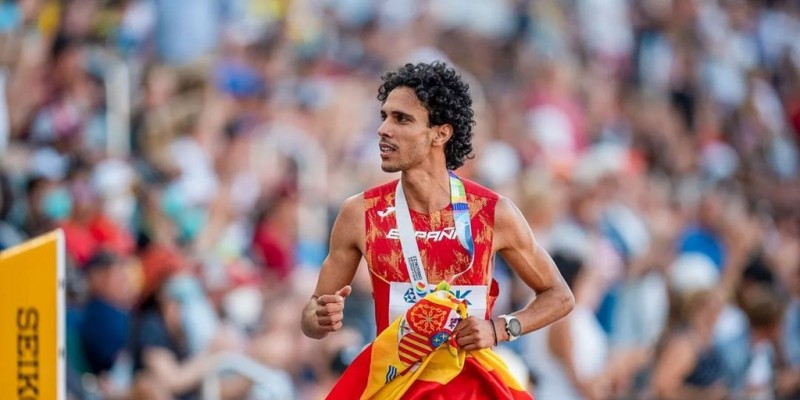
Moroccan-Spanish athlete Mohamed Katir won on Tuesday a silver medal after finishing second in the 5,000 meters final at the European Championships. The tournament is taking place between August 11 and 21 in Munich, Germany.
Katir finished the race in 13 minutes, 22 seconds, and 98 milliseconds, behind the gold medalist Norway’s Jacob Ingebrigsten, who recorded a time of 13 minutes, 21 seconds, and 13 milliseconds. Italy’s Yemanebrhan Crippa finished third with a time of 13 minutes, 24 seconds, and 83 milliseconds.
Nine minutes and 30 seconds into the race, French runner Hugo Hay, who was positioned between fourth and fifth place, fell to the ground and was unable to recover, finishing 19th in the race.
The Moroccan-born holds impressive records in medium and long-distance running competitions. Katir is the 27th all-time fastest runner to ever compete at Golden Gala, an annual track and field event.
The runner won the record after completing 5,000 meters in a personal best time of 12 minutes, 50 seconds, and 79 milliseconds in June 2021.
Last month, Katir claimed a bronze medal in the 1,500 meters race at the World Athletics Championships held in Oregon, the United States.
Katir was born in 1998 in the Moroccan city of Ksar El Kebir but immigrated to Spain with his family when he was a young child. He received Spanish nationality in 2019, allowing him to compete under the Spanish flag since January 1, 2020.
source/contents: moroccoworldnews.com (edited)
_____________
Moroccan-Spanish Mohamed Katir Wins Silver Medal at European Championships
The award recognises AUC’s Rare and Special Books Library as a leading institution in the preservation and restoration of Arabic historical documents.
The American University in Cairo’s Rare and Special Books Library was awarded UNESCO Jikji Memory of The World Prize. This prestigious award places the American University in Cairo next to some of the world’s leading history conservation entities. The award ceremony is set to take place this coming September in Cheongju-si, South Korea.
Founded in 1992, the AUC Rare and Special Books Library plays a fundamental role in restoring and preserving Egyptian history. Starting with just a few collector’s items, the RBSCL then developed to contain historic maps of Egypt, archives of oral recordings, historical magazines and periodicals, and historical AUC archives.
The UNESCO Jikji Memory of the World Prize is a USD 30,000 grant, given every two years, that honours institutions that have made notable contributions to the preservation and accessibility of documented history. The prize also pays close attention to the degree of expertise in treating said documents and the presence of special circumstances in procuring them.
Funded by the Republic of Korea, the prize was created to commemorate the inscription of the ‘Buljo jikji simche yojeol’, the oldest movable metal print in the world.
The $40m Bustanica hydroponic farm near DWC will produce more than a million kilos of greens annually with 95% less water than conventional farming.
Emirates has opened the world’s largest vertical farming plant in Dubai, a $40 million (Dh147m) joint venture with US-based Crop One, as the UAE continues to bolster its food and water security.
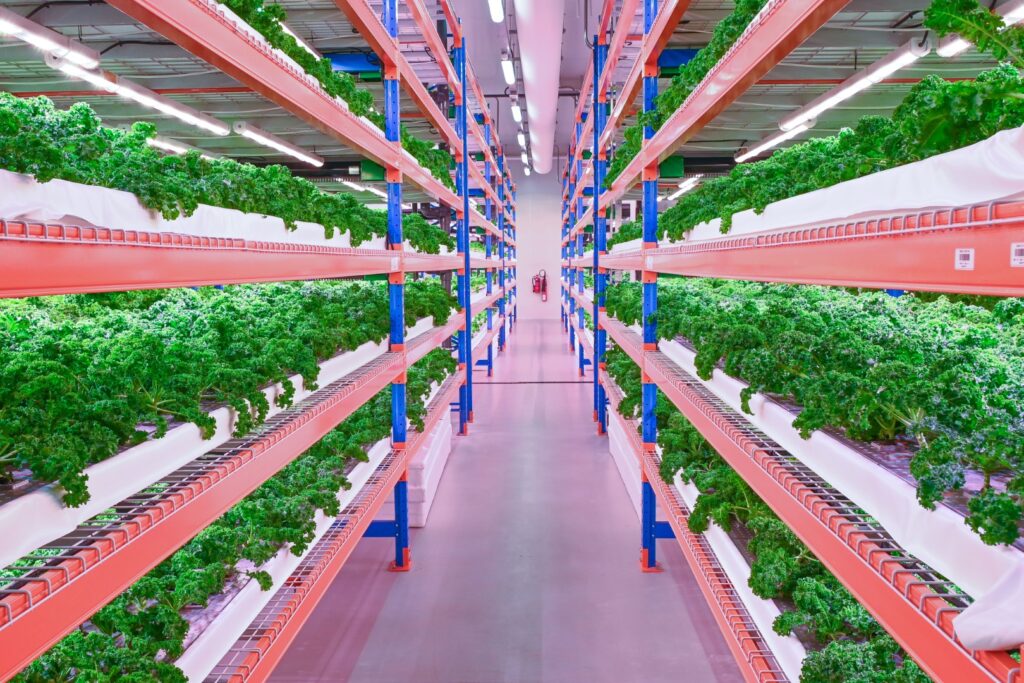
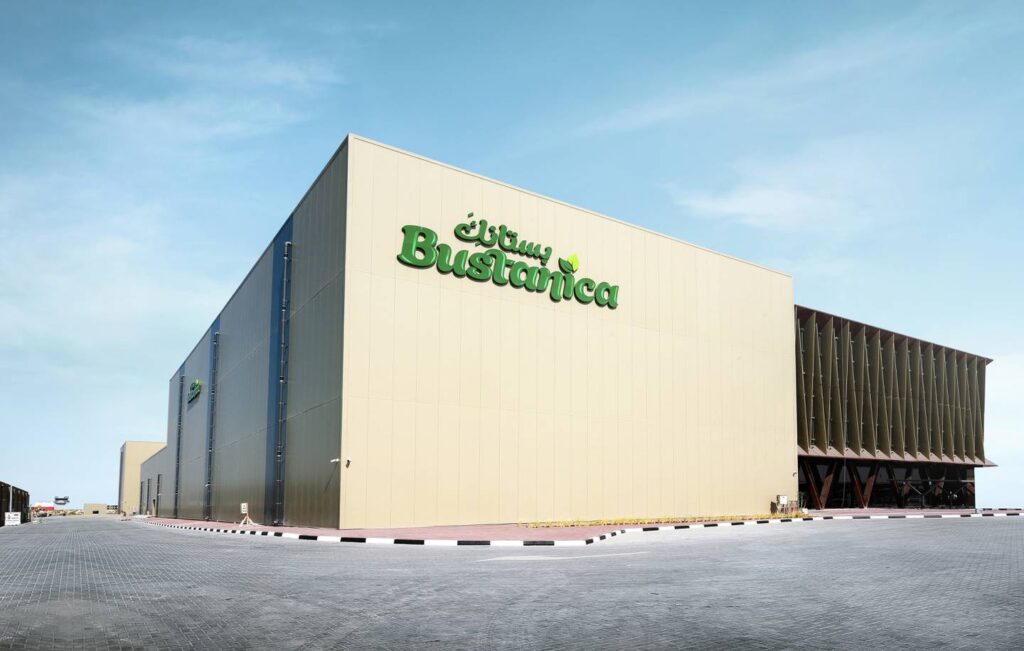
Bustanica, the 330,000 square-foot hydroponic farm located near Al Maktoum International Airport (DWC), is set to grow more than a million kilograms of leafy greens annually, or about 3,000kg per day, Emirates said in a statement on Monday.
Using 95 per cent less water than traditional farming and saving 250 million litres of water, Bustanica will grow fresh produce without pesticides, herbicides or chemicals.
“Long-term food security and self-sufficiency are vital to the economic growth of any country, and the UAE is no exception,” said Sheikh Ahmed bin Saeed Al Maktoum, chairman and chief executive of Emirates Group.
“Bustanica ushers in a new era of innovation and investments, which are important steps for sustainable growth and align with our country’s well-defined food and water security strategies.”
Bustanica is the first facility for Emirates Crop One, a joint venture between Emirates’ flight catering unit and indoor vertical farming firm Crop One.
Emirates Flight Catering, a subsidiary of Emirates group, supplies in-flight food for Emirates and other airlines at Dubai International Airport.
Vertical farming is a technique with a significantly smaller carbon footprint than traditional agriculture. This method grows plants using mineral nutrient solutions, in water and without soil. They are grown in a fully controlled environment — everything from temperature, humidity, lighting, water and nutrients is precisely monitored, maximising growth and yield.
The new farm is in line with the UAE’s National Food Strategy 2051 agenda for reliable year-round crop production and stable supply chain that is independent of weather and attacks by pests or fungus.
Bustanica will rely on machine learning, artificial intelligence and advanced methods — and a specialised in-house team of agronomy experts, engineers, horticulturists and plant scientists — to grow fresh produce.
Passengers on Emirates and other airlines can start consuming these leafy greens, including lettuces, arugula, mixed salad greens and spinach, onboard flights from this month.
UAE consumers will also soon be able to add these greens to their shopping carts at the nearest supermarkets, according to the statement.
Bustanica also plans to expand into the production and sale of fruits and other vegetables.
Bustanica will secure Emirates Flight Catering’s supply chain and reduce its carbon footprint by bringing production closer to consumption and “reducing the food journey from farm to fork”, Sheikh Ahmed said.
The plant opened after “significant planning and construction” and navigating the unforeseen challenges of the Covid-19 pandemic, Craig Ratajczyk, chief executive of Crop One, said.
“It’s our mission to cultivate a sustainable future to meet global demand for fresh, local food, and this first large format farm is the manifestation of that commitment. This new facility serves as a model for what’s possible around the globe.”
The UAE has been accelerating its support of AgriTech companies to reduce reliance on food imports, which is thought to make up nearly 90 per cent of food consumed in the country. Abu Dhabi has launched a number of initiatives, including $41m in grants and incentives worth $545m to support expansion.
UAE residents are already seeing evidence of recent efforts to localise agriculture: locally harvested produce at the market or on dining menus is now a common sight. Much of this has surfaced over the past few years as vertical and hydroponic farming ventures, research and cloud-seeding bear fruit.
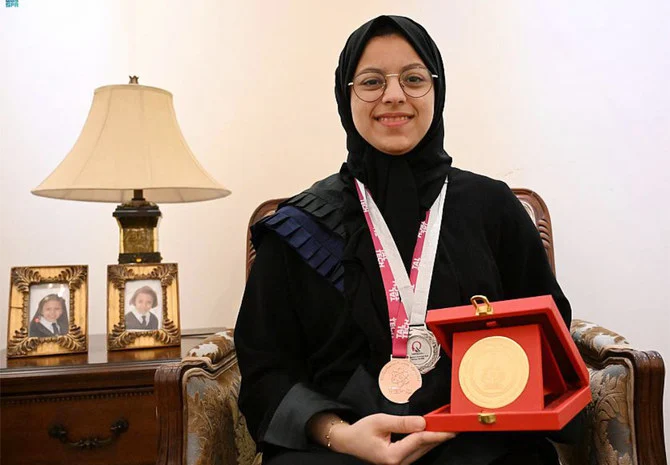
Prizewinning Saudi student Lama Al-Ahdal, who has been scooping medals at Physics Olympiads, says her competition success motivates her to continue with her passion and achieve great things for the Kingdom.
She won gold at the Gulf Physics Olympiad, a bronze at the International Physics Olympiad, and a bronze at the Nordic-Baltic Physics Olympiad.
Al-Ahdal spoke to the Saudi Press Agency about the beginning of her journey in the Physics Olympiad through the Mawhoob Competition, which she took part in several times.
It was her participation in 2018 that led to her nomination to attend training forums, a path that would eventually lead her to victory.
“I started attending basic courses in Jeddah, through which I qualified and passed the required tests. I was nominated for the Winter Forum at Princess Nourah University in Riyadh, then trained with the physics team, from which a number of students in the Kingdom would qualify to form the Saudi team for the Physics Olympiad.
“At the beginning of 2019, we underwent intense eight-hour training, both remotely and at King Abdullah University of Science and Technology, to prepare for international competitions. I learned how to calculate the strength of the Earth’s magnetic field using a string and two pieces of magnets, how electricity can be generated by heating two pieces of metal, how to measure the thickness of a candy wrapper using a laser, and other scientific experiments.
“The top five students were then nominated to represent the Kingdom, and thankfully I made it and snatched the gold medal in the Gulf Physics Olympiad, the bronze medal in the Nordic-Baltic Physics Olympiad, and the bronze medal in the International Physics Olympiad.”
Joining the Saudi physics team and undergoing training helped her to discover that physics was a beautiful subject. “I learned a lot from it and the Olympiad experience.”
Her participation increased her skills and developed her thinking by getting to know competitors from different countries.
“I also developed my time management skills since the training continued even during school days. My father and mother had a major role in helping me achieve my goals and encouraging me to try new things to gain more skills and learn more,” she said.
Setting a specific goal and working to achieve it was the most important thing that motivated her to take up the challenge and try new things.
Her father, Abdul Rahman Al-Ahdal, said his daughter’s journey was full of scientific challenges.
“She has always been a talented child and a bright student, with a promising future ahead of her. God blessed her with a group of highly experienced trainers and supervisors. It is important to focus and draw a plan and work to achieve it.
“I thank King Abdulaziz and His Companions Foundation for Giftedness and Creativity, and everyone responsible for helping the sons and daughters of the Kingdom partake in forums of creativity, innovation and scientific Olympiad, and other scientific activities.”
A Libyan pharmacologist treating HIV patients in South Africa and a Tunisian scientist purifying water in Malaysia.
This is the story of two world-renowned scientists who left their homelands of Libya and Tunisia and went on to achieve great success in South Africa and Malaysia.
Libyan pharmacologist Mohamed Irhuma studied in South Africa but faced a range of challenges when his home country went through its 2011 revolution. He’s achieved success in South African HIV AIDS pharmacology, including award-winning work on drug treatments.
Tunisian chemical engineer Mohamed Kheireddine Aroua is a world expert in material separation, inventing a life-changing water purification machine which benefits remote villages.
Both stories illustrate some of the complexities of being an Arab abroad, and the journeys of two remarkable scientists.