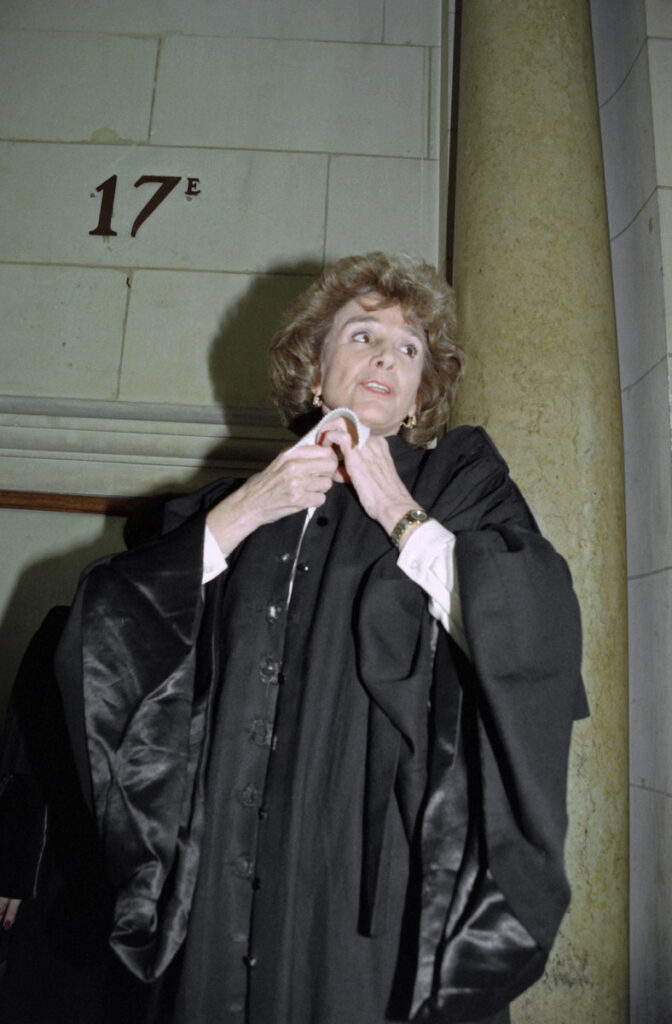
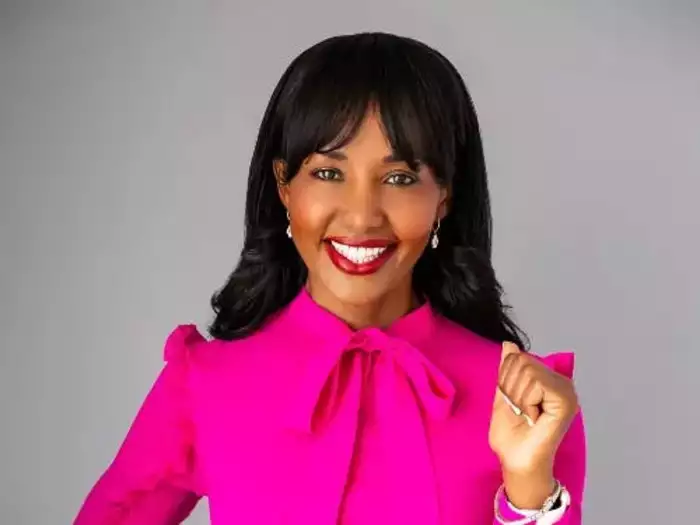
SOMALI-AMERICAN: Dega Nalayeh is one of Bank of America’s Top Advisors to the Ultra-Wealthy. She just Clocked $6.4 billion in Client Assets and is now Climbing Mount Kilimanjaro.

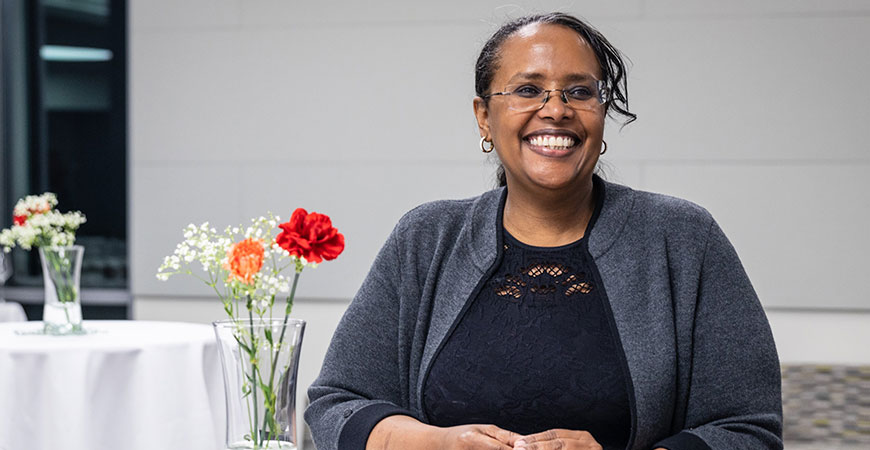
Featuring Dega Nalayeh, a managing director and private-client advisor at Bank of America’s private bank.

Dega Nalayeh told Insider that she’s currently climbing Mount Kilimanjaro. She’s doing it to honor her sister, Somali-Canadian journalist Hodan Nalayeh, who was killed during a terrorist attack at a hotel in Somalia in July 2019.

Dega Nalayeh and 14 other climbers have so far raised more than $ 230,000 for the nonprofit Give to Learn to Grow Foundation. Proceeds help underserved communities in Somaliland.

Today — when not climbing mountains — she is (figuratively) moving them for the ultra wealthy. Nalayeh is a managing director and advisor at Bank of America’s private bank, where she manages $6.4 billion in client assets.

She built that book from scratch, relying on tried-and-tested word-0f-mouth strategies. Her savvy networking capabilities have also come in handy, particularly when she met a professional basketball player with the Atlanta Hawks, whose identity she could not disclose.

Climbing the highest mountain in Africa sounds easy when considering the adversity Nalayeh has faced. She moved to Canada from Somalia at just 11 years of age. While her father worked as a parking attendant, she ran a newspaper route as a teenager.

Later, she moved from Georgia to California for her husband. But when Nalayeh joined BofA’s private bank in 2006, she was divorced with a two-year-old son.

Nalayeh, who is 49, told Insider that she doubted her ability to be a rainmaker for the bank at a time when she was dealing with a divorce and a toddler. But in six months, she landed a high-net-worth client.

The banker leads a team of 13 alongside Avi Cohen, a fellow MD and private client advisor who was once her rival within the bank.

Most of their clients come from the entertainment and media industries, as well as tech, real estate, and healthcare.

Nalayeh is also focused on finding more women clients, including those who are overwhelmed by responsibilities found both at home and in the workplace.

source/content: businessinsider.in (headline edited)

_____________

Dega Nalayeh / Courtesy of Bank of America

_________________________

AMERICAN / SOMALIA

EGYPT: Construction of the Egypt’s First Reactor at El-Dabaa Nuclear Power Plant, Marsa Matrouh Governorate Begins

The plant is located in the northwestern governorate of Marsa Matrouh. 

Minister of Electricity and Renewable Energy Mohamed Shaker and General Director of Russia’s State Atomic Energy Corporation (ROSATOM) Alexei Likhachev attended the ceremony at the plant, giving the green light to start the construction works.

Shaker said that El-Dabaa’s reactors comply with the International Atomic Energy Agency’s (IAEA) safety measurements. They can endure earthquakes and airplane crashes, he noted, adding that the reactor’s operating span may extend to 60 years.

“Building El-Dabaa NPP allows Egypt the chance to achieve a new level of industry and technology. This will be the biggest project between Russia and Egypt since establishing the High Dam project in Aswan. It has been a dream of Egyptians to acquire nuclear energy for more than half a century. ROSATOM is honoured to fulfil it,” the Twitter account of the Russian Embassy in Egypt quoted Likhachev as saying at the ceremony.

The event was attended by Osama Asran, the deputy minister of electricity and renewable energy, CEO of the Egyptian Electricity Holding Company (EEHC) Gaber Desouky, Advisor to the Minister of Electricity Amgad Said, a delegation of senior officials from Russian companies implementing the project, as well as Amgad El-Wakil, the chairman of the NPPA, which organised the event.

El-Wakil told Al-Ahram Arabic news website on Wednesday that El-Dabaa is located on the Mediterranean, 140 kilometres west of Alexandria.

He noted that funding for the project is based on a governmental financial agreement. Loans will be acquired after operating the plant and collecting revenues from electricity generation. 

El-Wakil said the project is expected to generate net revenues of $264 billion for the state treasury over 60 years.

In December 2017, President Abdel-Fattah El-Sisi and Russian President Vladimir Putin  signed an agreement in Cairo to initiate work on the plant at a construction cost of $28.75 billion.

Russia will finance 85 percent of the cost with a loan of $25 billion, while Egypt will provide the remaining 15 percent in the form of installments. The Russian loan is repaid over 22 years, with an annual interest of three percent.

On 30 June 2022, the Egyptian Nuclear and Radiological Regulatory Authority (ENRRA) permitted ROSATOM to start the construction work on El-Dabaa project, which Egypt and Russia signed an agreement to build in November 2015 to generate a total of 4,800 megawatts via four reactors.

Earlier in June, ROSATOM announced that it started the manufacture in Saint Petersburg of electrical components for the plant’s reactor vessel, according to Sputnik news agency.

ROSATOM had submitted a request to establish the first two reactors out of four reactors in January 2019, and received the permission in June 2021, after safety measures were checked and qualified workers and means of conducting safety tests were available.

El-Dabaa NPP is designed according to the latest 3+ Generation which is fully compliant with all post-Fukushima requirements of the International Atomic Energy Agency.

ROSATOM had previously announced that 40% of the cost of Dabaa nuclear power plant is allocated for safety measures.

The four units of the plant are expected to operate at full capacity of 4,800 megawatts by 2030, with the first reactor operating at a capacity of 1,200 Megawatts at the first phase, said El-Wakil.

According to the project’s design, the nuclear plant will have four VVER-1,200 reactor units, with the first unit scheduled for operation in 2026.

In November 2021, Egypt signed a long-term $1 million agreement with the Czech ÚJV Rež Research and Development company to consult on El-Dabaa Nuclear Plant, according to ENRRA Chairperson Sami Shaaban.

According to the contract, ÚJV Rež will provide technical assistance to the ENRRA in licensing the nuclear plant.

source/content: english.ahram.org.eg (headline edited)

__________

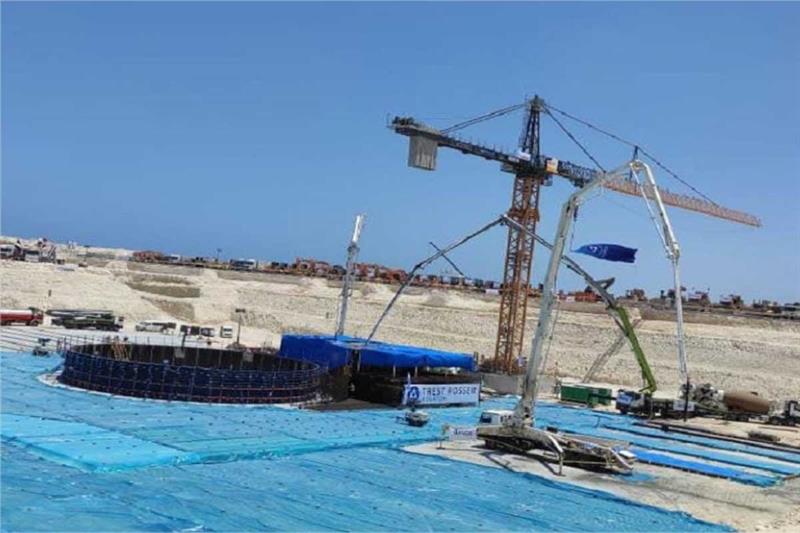
A scene of pouring concrete of the building the 1st reactor of El-Dabaa Nuclear Power Plant on July 20. (Photo courtesy of the official Twitter account of the Russian Embassy in Egypt)

_________

EGYPT

MOROCCO: Engineering Students Create “S-ILK” Innovative Fabric From Expired Milk

With the newly emerging social entrepreneurship movement, Moroccan youth are keen to develop entrepreneurial solutions to respond to local challenges.

Driven by innovation and the spirit of entrepreneurship, a student-led team from Enactus Club at Morocco’s Mohammadia School of Engineering (EMI) has developed a fabric made from milk to reduce dairy waste.

A team of 10 engineering students took the lead to make a positive impact within Moroccan society after observing the alarming amount of milk waste discharged in rivers and lakes. The dumping of milk waste has severe consequences for the balance of marine ecosystems as well as on the quality of drinking water. 

The “S-ILK” project is a promising alternative to classic fabrics, by focusing on creating a tissue based on casein, a protein extracted from milk. 

So far, the team has been able to develop the first prototype of its biodegradable fabric in the form of textile yarns and now seeks to begin mass production.

Speaking to Morocco World News, S-ILK Project Manager Omar Dirane stressed that synthetic fabrics, made from nonrenewable fossil fuels, are often bad for health and the environment. This became the reason why the team decided to use milk as a fabric to make clothes while reducing the pollution of dairy products.

Research quoted by The Guardian has found that 16% of dairy products, approximately 128 million tonnes, is lost or discarded globally each year; an efficient solution is therefore needed to reduce the environmental impacts of this large-scale food waste.

Ghita Dahhou, a project associate, told MWN that their long-term goal consists of making “S-ILK” a startup in which they seek to develop and sell eco-friendly clothes, while also raising awareness about food waste and making people eco-responsible through what they wear.

“The idea of creating a brand of ecological fibers is present and could be a big step for the textile industry in Morocco,” Dahhou said. As eco-responsible alternatives to fast fashion keep growing worldwide, the industry is significantly becoming more competitive. 

Project associate Taoufiq Saaad spoke on the difficulties they could potentially face in implementing their startup in the future, especially as young students without years of experience in the field.

S-ILK team members, however, are keen to keep their optimism and ambitions to achieve their professional aspirations, noting that “our young age will not stop us from being invested in the engineering field and giving everything we have to improve it.”

Social entrepreneurship: challenges and opportunities

Eager to position their product in the Moroccan market, the team has conducted a market study to identify their niche while focusing on customers that support environmental advocacy and are eco-responsible.

Similar customers that follow the ecological trend are harder to find in Morocco due the “traditional mindset” some people still have, Ghita argued. Such a mindset, in addition to societal pressures, hinder young project holders from “taking risks and exploring what is beyond our comfort zone.”

As part of their market research, they also conducted interviews with people in the streets of Rabat. Taoufiq Saaad highlighted that people were “intrigued by the product especially when we told them that the piece will be cheaper than actual silk.”

“As we have been showing a potential to grow, we have been able to find clients who are interested in purchasing our product,” he added.

Supported by Moroccan hypermarket chain Marjane Holdings and Orange Maroc, one of three major licensed telecommunications operators in the country, the project manager expressed the team’s interest in securing more funds to be able to expand their project.

He explained that “Orange digital center” provides them with the tools needed to elaborate their research while “Orange Fab Lab” is where they experiment on their product and work on improving it.

When asked how they manage to finance projects within Enactus EMI, especially those starting from scratch, Dirane underlined that when a project within the EMI network wins a prize, they split it so that all projects can be able to expand.

Meanwhile, Ghita underlined that in recent years, Morocco has been offering several opportunities for young project holders to show their potential, either through financial aid or other facilities that banks provide, in addition to the support and mentoring from several incubators. 

“With over 300 alumni of Enactus EMI, and 66 current members, we have much expertise, and engineers in different industries across Morocco, all coming together to contribute to the growth of innovative projects,” he added.

For Omar, Taoufiq, and Ghita, the project is helping them become the leaders of tomorrow by.being engaged in extracurricular activities to develop soft skills such as teamwork, communication, and problem-solving, among others, while also seeking expertise in the engineering field.

source/content: moroccoworldnews.com (edited)

____________

S-ILK: Moroccan Engineering Students Create Innovative Fabric From Expired Milk

_____________

MOROCCO

EGYPT: Among the Most Powerful CEOs of 2022 – Forbes Highlights Hisham Talaat Moustafa, CEO & MD of the Talaat Moustafa Group

Forbes Middle East has announced its annual list of the 100 Most Powerful CEOs in the Middle East for 2022.

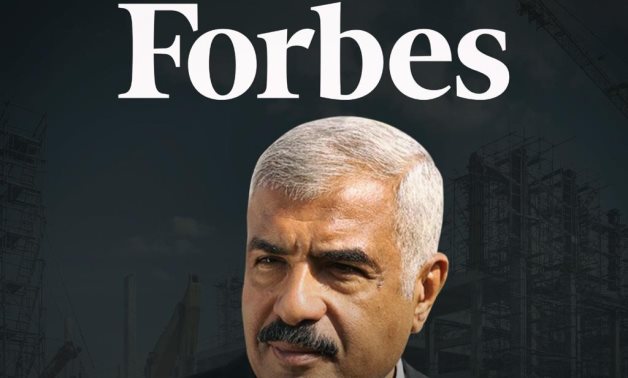
 The American magazine confirmed the status of businessman Hisham Talaat Moustafa, CEO and Managing Director of Talaat Moustafa Holding Group, who ranked 61st, up 6 places from last year’s ranking.

 Forbes Middle East magazine said that Hisham Talaat Moustafa is the youngest son of the founder of the Talaat Moustafa Group, which is currently the largest listed real estate company in Egypt.

 The magazine stated that the assets of Talaat Moustafa Company amounted to 7.5 billion dollars in 2021, while the group owns a portfolio of land with an area of 74 million square meters.

   The group’s revenues amounted to 825 million dollars last year, while the company developed more than 33 million square meters of land, and sold more than 90 thousand housing units.

 Forbes reported that the Talaat Moustafa Group recently launched giant projects, including: Privado – Madinaty, Celia and Noor City.

 The magazine said that the group has extensive investments in the hospitality sector, including: Four Seasons Resort Sharm El Sheikh, Four Seasons Nile Plaza, Four Seasons San Stefano Alexandria, and Kempinski Nile  Cairo.

 About the methodology used in the classification, Forbes indicated that its methodology in preparing the list was based on collecting information from financial market disclosures, industry reports, annual reports of companies, financial statements, and other primary sources.

 As for the classification of CEOs, it is based on several factors: the influence of the CEO and the company on society and the country, the markets they supervise, the CEO’s experience in his current position, as well as his general experience.

 Forbes indicated that the factors affecting the evaluation include: the size of the company in terms of revenues, assets, market value, the CEO’s achievements and performance in the past year, the innovations and initiatives he implemented.

 This year, Forbes magazine’s list of the most powerful CEOs in the Middle East includes 100 business leaders from 26 different nationalities, led by the Emiratis with 19 CEOs, followed by the Egyptians with 16 leaders, and the Saudis with 15 business leaders.

  The CEOs in the banking and financial services sector topped the list with 27 CEOs, followed by the leaders of the communications sector with 8 heads, and then 7 leaders in each of the energy and logistics sector.

  The companies on the list run by CEOs are worth more than 5 trillion dollars, while revenue was more than 1 trillion dollar last year.

source/content: egypttoday.com (headline edited)

_________

Among the most powerful CEOs of 2022 Forbes highlights the CEO of Talaat Moustafa Group

_________

EGYPT

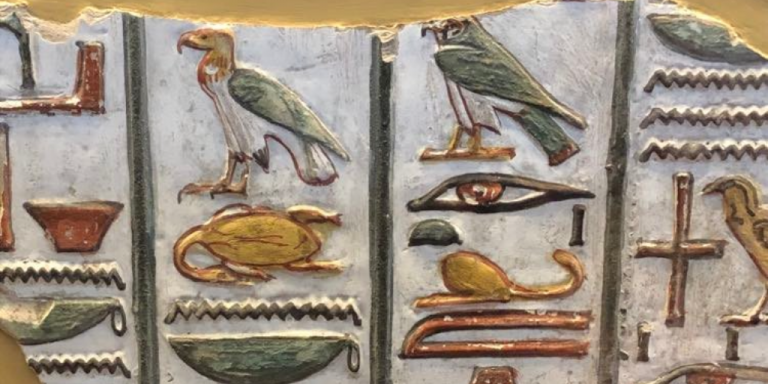
8 Arabic Colloquial Words That Were Originally Ancient Egyptian

Did you know that many of the Egyptian colloquial words Egyptians use on a daily basis are not actually Arabic?

The Egyptian Arabic dialect is fundamentally Arabic, but with the influence of history and local populations, some of the peculiarities that set the Egyptian dialect apart come from the integration of ancient Egyptian, Greek and Coptic words and expressions. Surviving for thousands of years, many commonly used, modern-day Egyptian words and phrases can actually be traced back to the current dialect’s ancient predecessors.

Here are some examples of words Egyptians use, often not knowing their ancient origin, as per the books ‘From Pharaoh’s Lips’ (2003) by Ahmad Abdel-Hamid Youssef, and ‘Al Logha Al Masrreya Al Qadeema’ (Ancient Egyptian Language, 2012 ) by Abdelhaleem Nour El-din.

UMBU (DRINK)

Often, in communication with infants or toddlers, broken down or simplified words are used to allow the news speakers to express themselves without too much difficulty. For example, umbu is the word commonly used by Egyptian children to express their thirst. The ancient Egyptian term simply means “from the water”.

TA TA (STEP BY STEP)

When Egyptian parents try to help their crawling baby how to walk, they use the phrase “ta ta” derived from the ancient Egyptian word “ti ti”. Though Arabic became the primary language in Egypt, the Coptic language was initially still being used in everyday life for the majority of the population. The term “ti ti” was adopted by the Coptic language and modified to “ta ta”, which is used until today.

MAMM (FOOD)

The word Mumm is an Egyptian slang word derived from the ancient Egyptian “my wnm”, which means ‘give to eat’. Many Egyptians, until this day, teach their babies to say “mumm” whenever they are hungry — as it is easy and quick to sound out.

DAHYA TIWADDIH AL AMENDI (MAY A DISASTER SEND HIM TO HELL)

The Egyptian phrase “Dahya tiwaddih al amendi”, is originally ancient Egyptian. The word “amendi” is a Coptic word meaning “hell”, which was derived from the ancient Egyptian word “imntt”, meaning the ‘underworld’.

BIKH (BOO!)

The word “Bikh!”, meaning “Boo!”, is often used in modern day Egypt to sneak up on someone and scare them. The term is an ancient Egyptian word “pa akh” meaning “demon” or “ spirit”.

WAHAWY YA WAHAWAY IYUHA (THE MOON HAS APPEARED)

The Egyptian phrase “Wahawy ya Wahaway iyuha” is part of a song Egyptians sing during the holy month of Ramadan. Families and young children swing their fanoos (lanterns) as they sing the lyrics to Wahawy ya Wahaway iyuha. The popular lyric is believed to be inspired from the ancient Egyptian word “wah” meaning ‘to put’ or ‘appear’, and “iyah” meaning “moon”. Thus, comprising the lyric “the moon has appeared” during the month of Ramadan, which is decided upon according to the lunar calendar in Islam.

KRKR (LAUGHING)

The word “krkr” is used frequently in modern Egyptian day to describe someone who is laughing uncontrollably. The term is originally ancient Egyptian “ķrķr” and was adopted into modern day Egyptian society.

GATEK MAW (MAY A LION FETCH YOU)

The phrase “jak maw” or “gatek maw”, often switched depending on the region it is used in, essentially means “may a lion come to you”. The phrase is an Egyptian expression used as an insult. The ‘maw’ is based on a pun on the words “lion” and “mother”. The expression is often used by mothers bothered by their children.

source/content: egyptianstreets.com

____________

___________

EGYPT

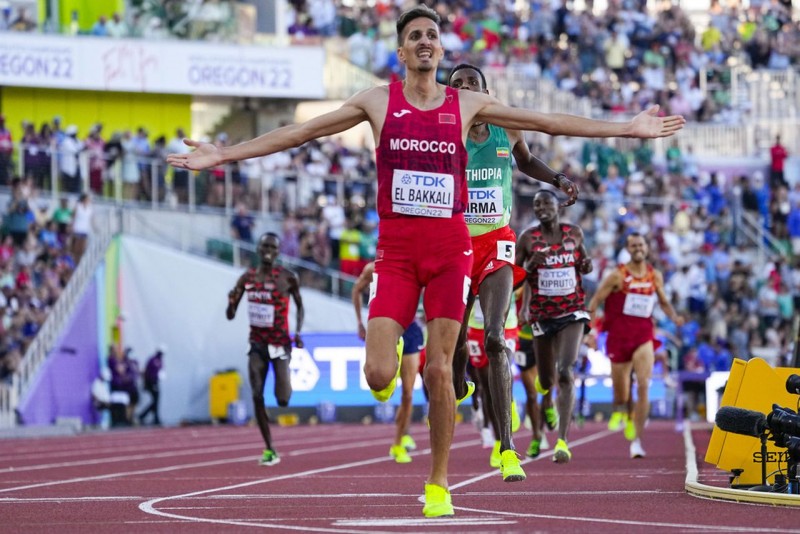
WORLD RECORD: MOROCCO: Soufiane El Bakkali Creates History Wins Gold in Steeplechase at the ‘World Athletics Championships’, Eugene,USA. Creates History- Becomes First Moroccan Athlete to Win Gold in 3,000m Steeplechase at World Championships.

After his recent achievement, El Bakkali became the “king of steeplechase.”.

King Mohammed VI sent on Tuesday a message to Moroccan steeplechase runner Soufiane El Bakkali, congratulating him on winning the gold medal at the World Athletics Championships held in Eugene, US.

The Moroccan athlete brought Morocco its first gold in the 3,000m steeplechase in this year’s World Championships, ending Kenya’s 15-year reign in the discipline at the international competition.

The King expressed his appreciation for El Bakkali’s achievement, saying that the Moroccan athlete “was able, thanks to his competitive spirit and patriotism, to achieve this well-deserved victory.”

“As we commend this well-deserved global crown, with which you raised the flag of Morocco in this prestigious international event, we wish you success in your rich sporting career, covered by our generous sympathy and satisfaction,” the King added.

A teary-eyed El Bakkali raised the Moroccan flag after his triumph, telling the media he was dedicating this win to King Mohammed VI, his parents, and to all the Moroccans who have shown him endless support and encouragement.

Several international media reporting on El Bakkali’s recent achievement described him as the “king of steelechase” after claiming world title.

He added, “After the semi-final I had a good look at the strategy of the Kenyan athletes. I was on my own, the only Moroccan in the race, but I did not limit myself to winning silver nor bronze. Instead I managed to come first in two world league meetings and now the World Championship.”

El Bakkali began earning his first medals at international events at the 2017 World Championship in London, where he placed second, before finishing first in the 2018 Mediterranean Games in Spain.

In August 2021, Soufiane El Bakkali gave Moroccans a moment of pride after his historic achievement at the Olympics, ending Kenya’s dominance over the men’s 3,000m steeplechase and winning the gold medal at Tokyo 2020. 

source/content: moroccoworldnews.com (headline edited)

_____________

_____________

MOROCCO

Omar Sharif: Lawrence of Arabia

July 10 marks the death anniversary of the late iconic international Egyptian actor Omar Sharif. 

On this occasion Egypt Today looks back at some of the milestones that led to his international debut. 

Sharif’s childhood 

Born in Alexandria as Michel Dimitri Chalhoub on April 10, 1932, he was of Lebanese descent, but was born and bred in Egypt. His parents were of good social standards; his father in the wood business and his mother a notable society hostess who often hosted King Farouk to play cards. 

Growing up, Sharif easily became multilingual as he was brought up by his French speaking mother and attended an English boarding school and Victoria College; he also became fluent in Italian, Portuguese and Spanish. 

After graduating from Cairo University with a mathematics and physics degree, he attempted to follow his father’s path of work but quickly receded and went on to London to the Royal Academy of Dramatic Art. 

Sharif realized his passion for acting at the tender age of 13 when he participated in his English boarding school’s theatre program. 

This horrified his father, since it would stop his son from following in his footsteps and becoming a timber merchant. Later, Sharif’s talent overcame all obstacles and he became a world-renowned actor. 

The immortal cinematic and romantic couple Sharif and Hamama 

In 1954, Sharif starred in “The Desert’s Devil” (Shaytan al-Saharaa), but his break was the same year when he acted in “Struggle in the Valley” (Sira’ Fi al-Waady) alongside his wife, the late great Egyptian actress Faten Hamama. 

The love story of Hamama and Sharif began when they worked together in Youssef Chahine’s “Struggle in the Valley.” 

Despite being born Catholic, he changed his name and converted to Islam to marry her in 1955. A marriage that lasted for 20 years, the famed couple were the symbol of love to all the Egyptian audience. 

They portrayed their love in a number of successful movies that will live on for years after their death; movies that taught us the true meaning of love, such as “Ayamna el Helwa” (Our Beautiful Days), “Nahr El Hob” (River of Love), “ Saydet el Kasr” (The Palace Lady), “Sra’a fe El Mena” (Struggle in the Port), among others. 

El Sherif’s international Stardom 

He achieved international stardom in 1962 by acting in Lawrence of Arabia alongside Peter O’Toole. 


He maintained his status as a foreign heartthrob by leading in films like Dr. Zhivago and Funny Girl, which caused outrage in Egypt due to the romance with his leading co-star, Barbara Streisand, who won an Oscar for her role. 

Funny Girl was based on a play with the same title also starring Streisand. This musical comedy drama is a biographic, based on the life of Fanny Brice, a famous female Jewish comedian of the 1900s who dreams of stardom in New York City’s Broadway. 


Against all odds she rises to the top and falls for Nick Arnstein, played by Sharif, a businessman and compulsive gambler. 

While the 60s were the best and busiest years of Sharif’s acting career, they were the ones which took a toll on his marriage with Hamama, and the couple shocked their fans by getting a divorce in 1974. 

A resonating talent 

His impeccable acting skills speak for themselves, but his mastery of contract bridge also precedes him. He wrote books on bridge, his favorite card game, and even established the Omar Sharif Bridge Circus. 

However, his addiction to gambling eventually caused him money troubles, which led to his acting flops and his downward spiral. 

Living alone and with little money, Sharif spent his later days living in hotels in Paris and London until he made a brief comeback with his role in the 2003 French film “Monsieur Ibrahim.” 

The film received positive reviews, and Sharid even won the audience award for Best Actor at the Venice Film Festival. 

Sharif was always keen to support and encourage young talents such as the famed Egyptian actor Mohamed Ramadan, who had a small role in Sharif’s only Egyptian soap opera “Hanan w Hanin” ( Tenderness and Nostalgia). 

Ramadan previously announced in a number of TV interviews that Sharif encouraged him a lot and praised his acting talent, predicting at that time that he will be a superstar in the future. 

“When I first met Omar Sharif, he greeted me as if I was family. He was someone who really loved people; when he found out that we were [both] Egyptian, we bonded instantly. 

The main piece of advice he gave me was to start in Egypt and get that experience under my belt before trying to have a career internationally,” recounted the Egyptian rising international actor Amir El-Masry in an interview with Egypt Today. 

The End 

Sharif moved back to Egypt to spend his final days while struggling with Alzheimer’s disease. Sharif passed away at the age of 83 due to a heart attack on July 10, 2015. Sharif is a cheerful, handsome, talented and iconic artist who will remain forever alive in the hearts of his audience around the world. 

source/content: egypttoday.com

_________

pix: goodreads.com

_________

EGYPT

Egypt Wins First Position with 7 Trophies in the ‘2022 Arab Open Robotics Championship’

Egypt has finished in first place at the 2022 Arab Open Robotics Championship held in Sharm El Sheikh on Monday.

Since 2008, the Arab Open Robotics Championship has been the largest regional robotics tournament held in the Arab world.

The tournament was organized by the Ministries of Youth and Sports, Communications and Information Technology, Bibliotheca Alexandrina, and the Egyptian Federation of Electronic Games.

The tournament included over 650 students ranging in age from four years to the end of the university stage.

The participants represented 136 teams from 12 Arab countries: Egypt, Kuwait, the UAE, Oman, Yemen, Qatar, Jordan, Tunisia, Morocco, Algeria, Iraq, and Libya.

The Arab Robotics Association accredited 100 juries to judge the tournament’s nine robot competitions.

Egypt came first, winning seven trophies. Jordan finished second with two trophies, followed by Iraq, Libya and Qatar in third place.

In addition, the tournament hosted a lively forum for Arab youth on the sidelines.

source/content: arabnews.com

_________

Egypt placed first in 2022 Arab Open Robotics Championship, winning seven trophies. (Source: Egypt State Information Service)

_________

EGYPT

Saudi Aramco becomes First-Ever Middle East & North Africa (MENA) Firm in the American Analytics Company ‘Clarivate’s Top 100 Global Innovators List’

Saudi Aramco has been named one of the top 100 global innovators by American analytics company Clarivate. 

In its report titled “Top 100 Global Innovators 2022,” Clarivate revealed that Saudi Aramco is the first-ever company from the Middle East and North Africa region to be placed in the list. 

“The regional diversity continues to increase, with the first-ever Middle Eastern list entry via energy firm Saudi Aramco,” wrote Clarivate in the report. 

Apart from Saudi Aramco, other new entrants to the list are China’s Alibaba, Germany’s Continental, US’ General Motors, South Korea’s Hyundai Motors and Kia Motors, US’s Philip Morris International, and UK’s Rolls-Royce. 

Clarivate added that companies have been included in the list based on factors like influence, success, globalization, and technical distinctiveness. 

source/content: arabnews.com (headline edited0

____________

Apart from Saudi Aramco, other new entrants to the list are China’s Alibaba, Germany’s Continental, US’ General Motors, South Korea’s Hyundai Motors and Kia Motors, US’s Philip Morris International, and UK’s Rolls-Royce. 

_________________

SAUDI ARABIA

Award-Winning Egyptian Filmmaker Ali El-Arabi finds his Voice through Film

 Nearly 10 years ago, Egyptian filmmaker Ali El-Arabi, the award-winning documentarian behind “Captains of Zaatari,” which hits Netflix this month, made a promise. He was in the Zaatari refugee camp in Jordan, the largest temporary settlement of displaced Syrians in the world, and a teenaged boy he had just met named Fawzi Qatleesh asked if he could speak his truth to the camera.

“On the first day I arrived, he asked me, ‘Ali, can you film me? I want to say something to the people outside of this camp.’ The second he started to talk, I said to myself, ‘This boy is my hero,’” El-Arabi tells Arab News.

As the film hits Netflix this month in the Middle East, El-Arabi is overjoyed. Finally, after seven years of filming and a years-long global festival tour, his promise is fulfilled.

El-Arabi knew what it felt like to have a message that people needed to hear. He was himself once an athlete, a dedicated and successful martial artist, even winning Egypt’s national kickboxing championship. During the Egyptian revolution, however, El-Arabi abandoned any future he might have in sport, instead turning towards filmmaking.

“I started to feel I had something to say, but I couldn’t say it with my voice,” he says. “I realized filmmaking was the way I could say it. I started making small documentaries about what was happening and screening them in the street. One day, the police came and I took my film and I ran. That made me realize the power of what I could say with a camera.” 

El-Arabi left Egypt, partnering with the ZDF TV channel to film documentaries in war zones including Iraq, Syria, Kurdistan and Afghanistan. War reporting, however, was unfulfilling, as it so often stripped away the humanity of those caught in its horrors.

After meeting Qatleesh and his friend Mahmoud Dagher — the two boys he would ultimately follow from the refugee camp in Jordan all the way to an elite soccer program in the Gulf — El-Arabi filmed them for seven years before whittling their story down to a scant 75 minutes, resulting in a story that showed their incredible journey while also refusing to gloss over the realities of refugee life.

Since its limited release in 2021, the film has already transformed the lives of both young men whose story it follows.

While he may be done telling their story, El-Arabi has been hard at work over the last few years on another — “Ashish’s Journey” — about the upcoming FIFA World Cup. It is inspired by a man who approached him in Qatar as he filmed “Captains of Zaatari.” 

The more time El-Arabi spent with the man, the more his innocent aspirations intrigued him, leading him to not only film Ashish in Qatar, but to follow him and his family back to India, even adding fictional elements (with Ashish playing himself) inspired by the classic French satirical novella “Candide” to the docu-film.

“He’s actually a very good actor,” El-Arabi says.

While El-Arabi knows that he will finish filming later this year at the World Cup, chronicling Ashish’s adventures during the games, he does not plan to rush the film out in the immediate aftermath of the event. 

El-Arabi has other projects in the works as well. He’s currently producing a film about Algeria and discussing producing an upcoming project with his best friend Mohamed Diab, the director of Marvel’s “Moon Knight.” Closest to his heart, though, is the fiction film he has in the works between Los Angeles and Egypt, inspired by both his own history in boxing and his relationship with his father. 

While telling Arab stories will remain a key part of El-Arabi’s career moving forward, ultimately what drives him is not capturing his identity — it’s capturing his soul. 

source/content: arabnews.com (edited)

_____________

(From left) Mahmoud Dagher, Ali El-Arabi and Fawzi Qatleesh with the award for Best Arab Documentary Film at El Gouna Film Festival in 2021. (AFP)

________

EGYPT