ALGERIA / EGYPT / LEBANON / MOROCCO / PALESTINE / SYRIA / DUBAI, U.A.E : Mohammed bin Rashid honours winners of 2025 edition of Great Arab Minds initiative

His Highness Sheikh Mohammed bin Rashid Al Maktoum, Vice President, Prime Minister and Ruler of Dubai, honoured the six winners of the Great Arab Minds 2025 edition at the Museum of the Future in Dubai.

Great Arab Minds is the largest Arab initiative dedicated to celebrating outstanding Arab achievement, highlighting contributions to advance human civilisation, support the expansion of scientific and knowledge-based endeavours, and showcasing the creative impact of Arab talent across the region and globally.

His Highness affirmed that the Great Arab Minds initiative was designed to expand the horizons for established and emerging Arab talent, nurturing and investing in their potential; recognise Arab achievement across research, development, innovation, technology, culture, and architecture; and to reinforce a culture of pride and sustained support for Arab individuals who have inspired significant progress in key fields.

His Highness Sheikh Mohammed said, “Today, we honour Great Arab Minds in recognition of achievements that advance civilisation and build societies. From the Museum of the Future in Dubai, we reaffirm our support for Arab talent committed to innovation, creativity, and excellence.”

His Highness further said, “We congratulate the winners of the Great Arab Minds 2025: Professor Abbas El Gamal in the Engineering and Technology category, Dr. Nabil Seidah in the Medicine category, Professor Badi Hani in the Economics category, Professor Majed Chergui in the Natural Sciences category, Dr. Suad Amiry in the Architecture and Design category, and Professor Charbel Dagher in the Literature and Arts category. We encourage them to continue their journey of achievement and contribution, serving as true role models for younger generations in our region and around the world, inspiring them to shape a better future through science and knowledge.”

His Highness expressed his confidence in the ability of Arab talent to drive progress in scientific research, knowledge creation, and the cultural sector, supported by expertise, institutional support, and the ambition of young people across the region.

Focused on a better future

Sheikh Mohammed noted that the Great Arab Minds initiative will continue to highlight the achievements of Arab individuals who look to the future with optimism and pursue ambitions that recognise no limits.

The awards ceremony was attended by H.H. Sheikh Maktoum bin Mohammed bin Rashid Al Maktoum, First Deputy Ruler of Dubai, Deputy Prime Minister and Minister of Finance of the UAE; H.H. Sheikh Ahmed bin Mohammed bin Rashid Al Maktoum, Second Deputy Ruler of Dubai and Chairman of the Dubai Media Council; H.H. Sheikh Ahmed bin Saeed Al Maktoum, President of the Dubai Civil Aviation Authority, Chairman of Dubai Airports, and Chairman and Chief Executive of Emirates Airline and Group; His Highness Sheikh Mansoor bin Mohammed bin Rashid Al Maktoum, President of the UAE National Olympic Committee; H.H. Sheikha Latifa bint Mohammed bin Rashid Al Maktoum, Chairperson of the Dubai Culture and Arts Authority (Dubai Culture); and H.H. Sheikh Mohammed bin Rashid bin Mohammed bin Rashid.

Mohammed bin Abdullah Al Gergawi, Minister of Cabinet Affairs and Chair of the Higher Committee for the Great Arab Minds initiative, was among numerous ministers and senior officials in attendance along with scientists, academics and diplomats.

His Excellency Al Gergawi stated that the Great Arab Minds initiative launched by His Highness Sheikh Mohammed represents a profound recognition of Arab achievement across disciplines, and a significant strategic investment in empowering talent and encouraging renewed contributions to Arab intellectual and scientific progress.

He added that the Great Arab Minds initiative embodies Sheikh Mohammed’s vision to inspire confidence in Arab capabilities and motivate individuals to take an active role in shaping their societies and the future of a region that has long contributed to human civilisation through science, literature, thought, and architecture.

‘Powerful message’

He praised the achievements of the Great Arab Minds awardees across medicine, engineering, technology, sciences, architecture, arts, and literature, saying, “Your presence today on the Great Arab Minds 2025 platform at the Museum of the Future sends a powerful message to hundreds of millions of young people to pursue excellence, achievement, and leadership in research, innovation, creativity, and knowledge, and to help shape a brighter future for Arab and human civilisation.”

The award recognised one winner in each of its six categories: Medicine, Economics, Engineering and Technology, Natural Sciences, Architecture and Design, and Literature and Arts.

In Medicine, Dr. Nabil Seidah was honoured for his medical and research achievements in cardiovascular health and cholesterol regulation.

In Economics, Professor Badi Hani was awarded for his pioneering contributions to econometrics and the development of economic analysis tools, particularly in panel data analysis. His work enabled more accurate and in-depth analysis by combining data across multiple time periods and sources.

In Engineering and Technology, Professor Abbas El Gamal was awarded for his pioneering contributions to network information theory.

In Natural Sciences, Professor Majed Chergui was honoured for his contributions to understanding light-matter interactions, developing techniques and applications that enable the study of ultrafast molecular and material dynamics at the atomic level.

In Architecture and Design, Dr. Suad Amiry was honoured for her contributions to preserving Palestinian architectural heritage through documentation, restoration, and adaptive reuse of historical buildings.

In Literature and Arts, Professor Charbel Dagher was honoured for a body of work that constitutes a key reference in the study of Arab and Islamic arts, Arabic calligraphy, and modern visual arts.

Professor Abbas El Gamal said, “I extend my sincere gratitude to His Highness Sheikh Mohammed bin Rashid Al Maktoum for his vision in launching Great Arab Minds. Being honoured in this way is deeply meaningful to me.”

Professor Majed Chergui said, “I am Algerian of Syrian origin, born in Morocco and raised in Algeria and Lebanon. In this way, the Arab world comes together in who I am. For me personally, this award is not only the highest recognition of my achievements; it touches me deeply because it comes from an Arab country.”

Dr. Suad Amiry said, “In 1981, when I decided to live in the city of Ramallah, my aim was to study traditional architecture in rural Palestine. Ten years later, I founded the Riwaq Centre, which since then has been dedicated to documenting, restoring, and rehabilitating architectural heritage in Palestine. Winning this award is a great honour for me and for the Riwaq Centre.”

Professor Badi Hani said: “This award recognises not only my work, but also the people and places that shaped me, my family, my mentors, my city, and the Arab world that nurtured my earliest aspirations.”

Dr. Nabil Seidah said, “My father’s adage, that knowledge is something no one can ever take away from you, has been the principle that guided me throughout my journey. Your trust represents a powerful motivation for Arab scientists to serve as role models for future generations, and I pledge to continue serving science with the same passion that has always driven me.”

Professor Charbel Dagher said: “Commitment to the Arabic language has remained a defining hallmark of everything I have done: teaching, writing, and research, to the point that I live within Arabic itself. We cannot exist outside our language or our culture. Allow me to share this award with those who supported me, and my gratitude extends to everyone who has worked and continues to work to ensure that Arabic remains a living language of science, knowledge, and culture.”

The awardees were chosen by six high-level specialised committees, one for each category. Abdulla bin Touq Al Marri, Minister of Economy and Tourism, chaired the Economics Committee; Sarah Al Amiri, Minister of Education, chaired the Engineering and Technology Committee; Mohammed Ahmed Al Murr, Chairman of the Board of Directors of the Mohammed bin Rashid Al Maktoum Library Foundation, chaired the Literature and Arts Committee; Dr. Amer Sharif, Chief Executive Officer of Dubai Health and President of the Mohammed Bin Rashid University of Medicine and Health Sciences headed the Medicine Committee; Professor Sehamuddin Galadari, Senior Vice Provost-Research and Managing Director of the Research Institute at New York University Abu Dhabi chaired the Natural Sciences Committee; Professor Hashim Sarkis, Dean of the School of Architecture and Planning at the Massachusetts Institute of Technology chaired the Architecture and Design Committee.

In addition to the committee chairs, the specialised committees also included Essa Kazim, Governor of the Dubai International Financial Center; Dr Mohammed Madhi, Dean of the College of Business and Economics at UAE University; Dr Rabah Arezki, Chief Economist for the Middle East and North Africa (MENA) region at the World Bank and Senior Fellow at Harvard University’s John F. Kennedy School of Government; Ferid Belhaj, Fellow at the Policy Center for the New South; and Dr Jihad Azour, Director of the Middle East and Central Asia Department at the International Monetary Fund.

The committees also included Professor Ismael Al Hinti, President of Al Hussein Technical University; Adel Darwish, Regional Director of the International Telecommunication Union; Dr Ahmed Zayed, Director of the Bibliotheca Alexandria; His Excellency Dr. Alawi Alsheikh-Ali, Director General of Dubai Health Authority; Professor Elias Zerhouni, Professor Emeritus at Johns Hopkins University; Dr Noureddine Melikechi Dean of the Kennedy College of Sciences and Professor of Physics at the University of Massachusetts Lowell; Professor Nader Masmoudi, Professor at the Courant Institute of Mathematical Sciences at New York University Abu Dhabi; Dr Latifa Elouadrhiri Laboratory Directed Research Staff Scientist at the Thomas Jefferson National Accelerator Facility; and Professor Dr Jehane Ragai, Emeritus Professor of Chemistry at The American University in Cairo.

The specialised committees also included Dr Adrian Lahoud, Dean of the School of Architecture at the Royal College of Art; and Professor Ali Malkawi, Professor of Architectural Technology, Director of the Doctor of Design Studies Program, and Founding Director of the Harvard Center for Green Buildings and Cities.

The Nominations Committee included Huda Al Hashimi, Deputy Minister of Cabinet Affairs for Strategic Affairs; Chucrallah Haddad, Partner and Head of Advisory at KPMG Lower Gulf; Abdulsalam Haykal, President and Founder of Majarra Company; Ali Matar, Head of LinkedIn Middle East and North Africa and Emerging Markets in Africa and Europe; and Saeed Al Nazari, Secretary-General of the Great Arab Minds Initiative.

Widely known as the ‘Arab Nobel,’ the Great Arab Minds initiative recognises distinguished Arab achievement and highlights extraordinary contributions that reflect the region’s historic role in advancing knowledge and human progress globally. For a third consecutive edition, the initiative continues to strengthen its position as a platform for celebrating Arab creators and as a point of reference for promising Arab talent, by highlighting achievements that inspire young people and contribute to expanding Arab participation in global knowledge and civilisational advancement.

source/content: wam.ae (headline edited)

________________

__________________________________________________________________

ALGERIA / DUBAI, U.A.E / EGYPT / FRANCE/ LEBANON / MOROCCO / PALESTINE / SWITZERLAND / SYRIA / U.S.A
PALESTINE – JORDAN : AUC press author Ibrahim Nasrallah wins prestigious Neustadt international prize

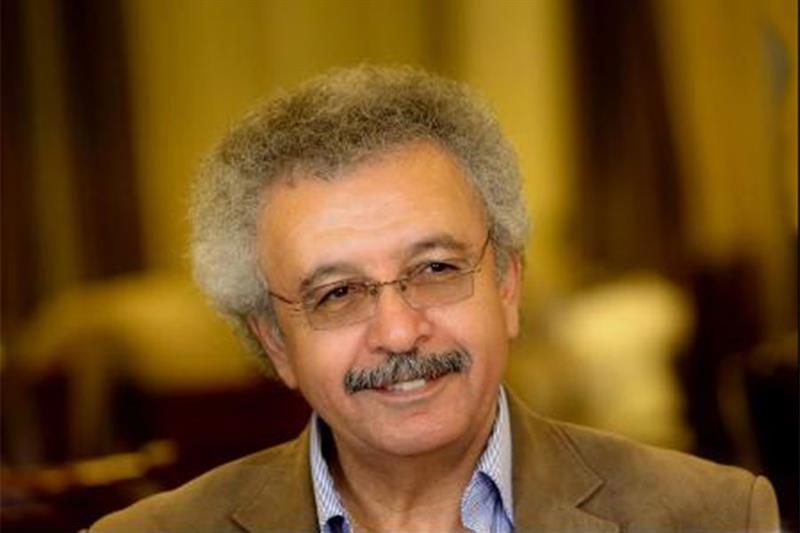
AUC Press author Ibrahim Nasrallah, a Palestinian novelist and poet, has won the prestigious Neustadt International Prize for Literature, announced The American University in Cairo (AUC) Press and its literature imprint, Hoopoe.

Nasrallah is the 29th laureate of the prize, an honour frequently dubbed the “American Nobel.”

Nasrallah’s novel, Time of White Horses (Hoopoe, 2016), published in English translation by Hoopoe, was selected as the representative text for the prize.

The AUC Press “is proud that author Ibrahim Nasrallah and his novel, published under our Hoopoe literary imprint, have received such distinguished recognition,” said AUC Press Executive Director Thomas Willshire.

Time of White Horses tells “a deeply moving story rooted in Palestinian history and identity, exactly the kind of powerful, boundary-crossing narrative that embodies Hoopoe’s mission to bring distinguished voices from the Middle East to readers around the world,” he added.

Hoopoe has published four of Nasrallah’s novels in English, including Time of White Horses (2016), Gaza Weddings (2017), and The Lanterns of the King of Galilee (2015).

As outlined in the Neustadt Prize charter, “Any living author writing in any language is eligible, provided that at least a representative portion of their work is available in English—the language used during the jury deliberations.”

Presented biennially by the University of Oklahoma and World Literature Today, the Neustadt International Prize for Literature recognizes writers of exceptional literary achievement across all genres and languages.

The 2025 winner was announced in October, and the next Neustadt Lit Fest, organized by World Literature Today, will be held in the fall of 2026 in honour of Nasrallah.

Nasrallah was nominated for the prize by Shereen Malherbe, an award-winning novelist and children’s book author.

In her nominating statement, Malherbe said “Nasrallah’s literary works span universal issues and themes woven into the Palestinian struggle that allow readers to connect deeply with Palestine outside of a colonial framework.”

“His work is now more important than ever, considering the plight of Palestinians. It is time the world sees the true Palestine, and Nasrallah’s work can offer this perspective.”

Nasrallah’s powerful storytelling, exploring exile, identity, and resistance, places him alongside past laureates such as Gabriel García Márquez, Edwidge Danticat, and Tomas Tranströmer.

Nadine El-Hadi, senior acquisitions editor at AUC Press, noted that Nasrallah is “a writer of a generation and truly deserving of this prize.”

“Never has it been more important to amplify Palestinian voices such as his,” she added.

A leading Arab literature voice

Born in 1954 to Palestinian parents in a Jordanian refugee camp, Ibrahim Nasrallah has become one of the most important voices in contemporary Arab literature.

He has written fourteen poetry collections and fourteen novels, as well as works of literary criticism.

His writing has been translated into multiple languages, earning him international acclaim for his exploration of exile, identity, resistance, and the human condition.

source/content: english.ahram.org.eg (headline edited)

_____________

_______________________

JORDAN / PALESTINE

SAUDI ARABIA : King Faisal Prize winners announced for 2026

Pioneering scientist behind revolutionary weight-loss drugs, global scholars, innovators among winners.

The King Faisal Prize 2026 winners were announced at a ceremony in Riyadh on Wednesday night.

The event honored pioneering scientists, global scholars and innovators for their transformative contributions to medicine, science, Arabic language, Islamic studies and the service of Islam.

Prof. Svetlana Mojsov was named winner in the medicine section for her groundbreaking discoveries that are now reshaping how we treat obesity.

Prof. Carlos Kenig was announced as science laureate in the field of mathematics for helping to revolutionize understanding of nonlinear partial differential equations.

Mojsov, the Lulu Chow Wang and Robin Chemers Neustein research associate professor at The Rockefeller University in New York, pioneered research on glucagon-like peptide-1 (GLP-1) that has fundamentally transformed how obesity and diabetes are treated.

She discovered and characterized the biologically active form of GLP-1, a natural intestinal hormone that regulates blood sugar and appetite, and identified its receptors in the human pancreas, heart, and brain.

Through cutting-edge biochemistry and physiological studies, Mojsov demonstrated that GLP-1 powerfully stimulates insulin secretion while reducing hunger and managing glucose levels.

Her groundbreaking work enabled the development of an entirely new class of medications that mimic this natural hormone, sparking a paradigm shift in obesity treatment.

These therapies today provide life-changing benefits for hundreds of millions of people worldwide living with obesity and its complications — a global health crisis affecting 890 million adults and 160 million children and adolescents in 2022 alone, according to the World Health Organization.

Mojsov’s groundbreaking contributions have earned numerous prestigious honors, including Time magazine naming her one of the 100 Most Influential People in 2024.

Kenig was honored for his groundbreaking contributions to mathematical analysis. His work has transformed understanding of nonlinear partial differential equations — the mathematical equations describing how things change and move in the physical world — and provided researchers with a now-ubiquitous set of techniques. His insights have opened new research frontiers with applications spanning fluid mechanics, optical fibers, and medical imaging.

Kenig, the Louis Block distinguished service professor at the University of Chicago, is recognized for applying harmonic analysis techniques across different areas of partial differential equations.

His work on free boundary problems — determining unknown boundaries such as where ice meets melting water or how fluids flow through soil — has been particularly influential.

Kenig has spent three decades figuring out how complex waves behave over long periods of time, especially in tricky situations where they could either spread out peacefully or build up dangerously.

This matters for understanding everything, from ocean waves to light pulses in fiber optics and to how energy moves through different materials.

His work helps explain phenomena in quantum mechanics, optics, and ocean waves. By combining different mathematical techniques, he has solved longstanding problems that had puzzled mathematicians for decades.

In addition to medicine and science, the King Faisal Prize recognized the achievements of outstanding thinkers and scholars in the field of Arabic language and literature, Islamic studies, and exemplary leaders who have played a pivotal role in serving Islam, Muslims, and humanity at large.

Pierre Larcher, an emeritus professor of Arabic linguistics at Aix-Marseille University and emeritus researcher at the Institute for Studies and Research on the Arab and Muslim Worlds, won this year’s King Faisal Prize for Arabic Language and Literature on “Arabic literature in French.”

His novel presentation of Arabic literature to French readers has earned widespread acclaim from critics and specialists, while his rigorous scholarly approach to classical Arabic literature has made it accessible and appropriate for French culture.

His critical translation project of “Al-Mu’allaqat” and rigorous study of pre-Islamic poetry demonstrate exceptional scholarly depth.

For this year’s Islamic Studies Prize, Abdelhamid Hussein Mahmoud Hammouda, the professor of Islamic history and civilization at Fayoum University, and Mohamed Waheeb Hussein, the professor of archaeology and history of art at the Hashemite University, were announced as co-laureates.

Hammouda’s work encompasses the trade routes across the Islamic world — the Mashreq, Iraq and Persia, Arabian Peninsula, Greater Syria, Egypt, Sahara, Maghreb, and Al-Andalus. This expansive scope delivers coherent understanding of Islamic trade trajectories across history, serving as an authoritative reference for both specialized research and broader scholarship.

Hussein’s groundbreaking work uses archaeological surveys, GPS documentation, and analytical mapping to systematically correlate Qur’anic texts with geographical data. His research offers definitive scholarly interpretation, significantly advancing documentation of early Arabian Peninsula trade routes.

Sheikh Abdullatif Al-Fozan and Dr. Mohammad Abou Moussa were announced as co-laureates in the Service to Islam Prize.

Laureates’ names were announced by Prince Turki Al-Faisal and the King Faisal Prize’s Secretary-General Dr. Abdulaziz Alsebail.

Selection committees included experts, specialists, and scholars who met in Riyadh and examined the nominated works. They selected the laureates in an objective and transparent manner, in accordance with the rules and regulations.

The KFP was established in 1977, and was awarded for the first time in 1979 in three categories: service to Islam, Islamic studies, and Arabic language and literature. Two additional categories were introduced in 1981: medicine and science. The first medicine prize was awarded in 1982, and in science two years later.

Since 1979 the KFP has given awards to more than 300 laureates who have made distinguished contributions to different sciences and causes.

Each prize laureate is endowed with $200,000, a 24-carat gold medal weighing 200 grams, and a certificate inscribed with the laureate’s name and a summary of the work that qualified them for the prize.

source/content: arabnews.com (headlines edited) 

_____________

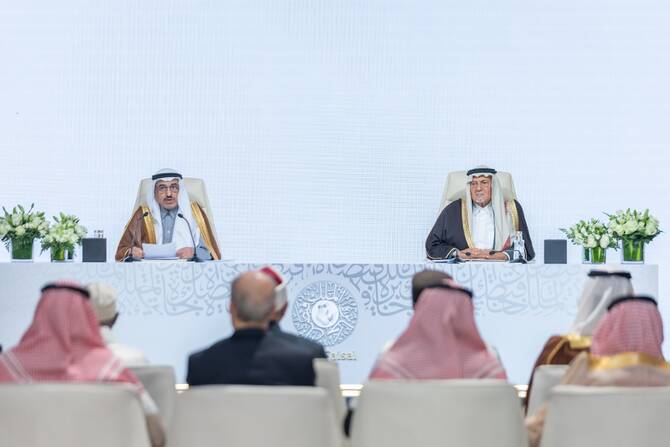
King Faisal Prize laureates’ names for 2026 were announced in Riyadh on Wednesday night by Prince Turki Alfaisal and the Prize’s Secretary General Dr. Abdulaziz Alsebail. (Supplied)

_______________________________________________________

EGYPT / JORDAN / PALESTINE / SAUDI ARABIA (*Arab)


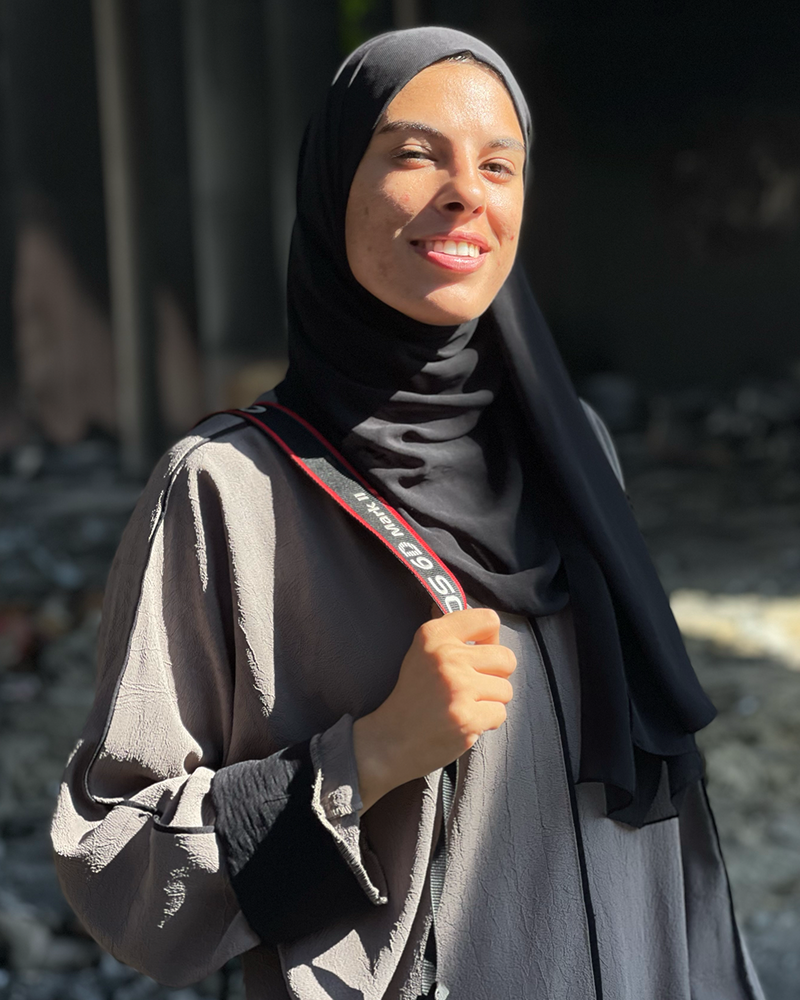
PALESTINIAN : Fatima Hassouna, a photographer who made a difference. Martyred April 16th, 2025

My dearest friend Fatima Hassouna has been martyred.

Writing this feels unreal – as if I am waiting for her familiar voice to echo in my ear.

We had a playful way of saying “hello” to each other. And Fatima had the most magical of laughs.

She could disarm you instantly.

But the silence remains and the void caused by her absence is too vast to comprehend.

Fatima was a photographer and a filmmaker. More importantly – for me – she was an extremely warm human being.

She was strong and – in a good way – stubborn.

I knew Fatima from childhood. But life – as it often does – had pulled us apart for many years.

It wasn’t until Israel launched its genocidal war against Gaza that we became close again. This happened unexpectedly during a film project.

Fatima was behind the camera, and I was there with a pen in order to write articles.

Our reunion – despite the chaotic circumstances – rekindled something profound. Our shared grief and resilience made our friendship deeper.

Fatima was deeply committed to her craft. She never simply documented a moment. She became part of it.

She had a rare ability to earn trust quickly.

The subjects of her photography were not just faces or stories. They were people she befriended.

Fatima’s camera wasn’t a barrier. It was a bridge.

She always said that she wanted not just to carry a message but to show kindness to the people she filmed or photographed.

At Fatima’s core was a sense of purpose. She came from a place of love.

We lived just a street apart in Gaza City all our lives.

After the genocide began, we would walk everywhere together. There were no taxis around and prices were rising ever higher.

Each morning, Fatima would call.

“Wait for me,” she would say. “Let’s walk together.”

And so we did.

Those walks were more than just a means of getting from A to B. They were our little escapes.

We shared everything: sorrows, secrets, silly thoughts.

I never had to pretend to be anything I wasn’t when I was with Fatima.

There were no walls between us. Just warmth and honesty.

Tender rebellion

When Fatima got engaged recently, her happiness was contagious. Despite the hunger, and the overwhelming darkness that Israel’s genocidal war had brought, she lit up like a child planning a birthday party.

We would go to the market almost daily, hunting for clothes that she could wear as she went out with her fiancé.

I remember how excited she was, how we laughed even as we carried heavy bags for long distances.

Her joy in those days amounted to a tender rebellion, a statement that love and life still mattered in the face of devastation.

We developed a ritual with our friends.

Every week, we would gather in one of our homes. We cooked whatever food we had, brewed bitter tea – we had no sugar – and sang.

We sang until the pain dulled and the laughter returned.

Those nights were our anesthesia. They allowed us to breathe in suffocating times.

Fatima was always our anchor.

She told stories, and her laughter filled the room. We could see sorrow in her eyes, but it was mixed with hope.

An unbreakable hope.

Fatima had an enchanting voice when she sang. Like something from heaven.

When the sound of Israel’s drones became too much for me to bear, I would listen to a recording of Fatima singing. Her voice brought me peace.

It served as a reminder that something pure still existed in this world.

Friendships formed – or in this case, revived – during genocide are unlike any other. They are shaped by shared experiences of hunger, sleepless nights and the constant nearness of death.

When Fatima was killed, it was like a limb had been severed from my body. I felt incomplete.

I still do.

Every night, I continue to wait for her call. I wait for the way she would tell me – without preamble – how she was feeling that day.

She would always wish to God that she would never be deprived of me.

But now I am deprived of Fatima. And it hurts more than words can express.

Fatima and I worked as a team. During the genocide, we would go down to al-Yarmouk – the football stadium that has became a huge shelter for displaced people – she with her camera, I with my notebook.

We inspired each other.

Fatima told me that she loved how I put people’s experiences into words.

“I love your ideas,” she said. “They make me want to shoot better.”

I wish that she was still around to tell her how much I loved her eye for a good photograph or image.

How she saw not just the suffering in a person but the soul behind it.

How she brought dignity to every frame.

Last winter, we were working in al-Yarmouk stadium, where the conditions were especially dire. Seeing the suffering around her, Fatima said that we must help.

I asked her to speak with the director of the film project she was working on about distributing blankets. She did and soon we were part of a mission to not only document hardship but to relieve it.

That day, we weren’t just storytellers. We were part of the story.

And Fatima was glowing. She had done something she had always dreamed of: She had made a difference.

Fatima was only 25.

Just 25.

Yet her heart carried the weight of centuries, and her spirit was brighter than a thousand suns. She was childlike and wise, gentle and fierce, brave and vulnerable.

She was exceptional. I carry her memory with me every moment.

I see her in the morning light, in the silence of a street where we once walked, in the stories we still need to tell.

Losing her is unbearable. But remembering her – keeping her voice, her laughter, her vision alive – is my way of holding on.

She was my sister, my confidante, my light.

May the world never forget the name Fatima Hassouna.

May the stories she told outlive the genocide that took her.

And may we all learn from her to live with courage, to work with purpose, and to love – always – with everything we have.

Asmaa Abdu is an academic writer and a project coordinator at the UCAS Technology Incubator in Gaza.

source/content: electronicintifada.net (headline edited)

_____________

Fatima Hassouna (Photo courtesy of Asmaa Abdu) 

_________________

PALESTINIAN

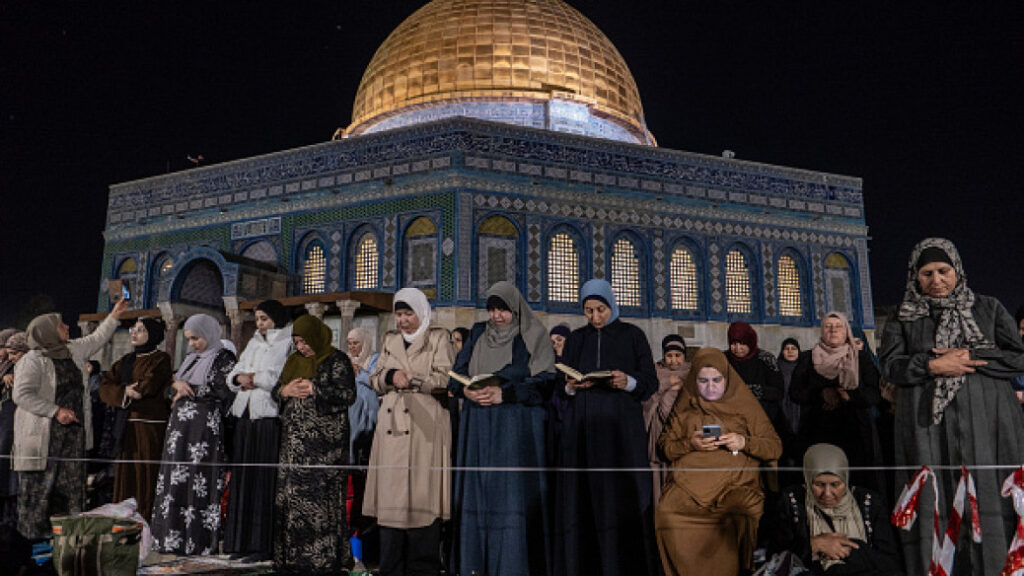
PALESTINE : 26 March 2025: 180,000 Palestinians pray at Jerusalem’s Al-Aqsa mosque for Laylat al-Qadr, despite Israeli restrictions

Palestinians in their thousands prayed at Jerusalem’s Al-Aqsa mosque during Laylat al-Qadr, considered the holiest night in Islam.

Some 180,000 Palestinians performed nighttime and Tarawih prayers at the sacred Al-Aqsa Mosque in occupied Jerusalem on Wednesday despite Israeli restrictions, the Jerusalem Islamic Endowments Department said.

Israeli authorities reportedly prevented scores of West Bank Palestinian worshippers from reaching the holy site, after refusing them entry at the Qalandia and Bethlehem checkpoints, the Palestinian Wafa news agency said.

The Israeli authorities claimed they did not carry valid documentation – a common pretext used to justify such restrictions.

Israeli forces were also deployed in the alleys of the Old City of Jerusalem, turning it into a “military zone,” according to the Palestinian Jerusalem Governorate local authority, obstructing Palestinians’ access to the mosque.

Several other Palestinians were banned from entry at the mosque’s gates, according to the Wadi Hilweh Information Center, a local human rights group, as cited by the Turkish Anadolu agency.

Last year, 200,000 Palestinians performed such prayers at Al-Aqsa, under similar heavy restrictions.

Earlier this month, as Muslims welcomed Ramadan, Israel announced it would only allow children under the age of 12, women above the age of 50 and men above the age of 55. Palestinians who fall under this category are obliged to carry special permits issue issued by authorities.

The prayers took place during Laylat al-Qadr – the holiest night in Islam, which falls during the last 10 days of Ramadan. The night, translated into English as ‘Night of the Power,’ marks when the holy Quran was revealed to the Prophet Muhammad by the angel Gabriel.

Muslims worldwide generally increase acts of prayer, often staying in the mosque between nighttime and dawn prayers, and exercise spiritual retreat, known as I’tikaf during this period.

Muslims also believe that acts of good deeds are multiplied manifold during the period, as the night of power is said to be “better than a thousands months,” according to the Quran .

As prayers were held across the Muslim world and communities, many imams included prayers for the people of Gaza, subject to indiscriminate Israeli attacks which have killed over 62,000 people over the last 16 months.

Journalists barred from Al-Aqsa

Israeli forces have also imposed restrictions on journalists covering events at Al-Aqsa this month. Authorities have reportedly barred at least 13 journalists from entering the Al-Aqsa compound.

Among them was Basem Zidani, who told The New Arab’s sister site, Al-Araby Al-Jadeed, that Israeli forces said that the Shin Bet security service had a secret file showing that his presence at Al-Aqsa Mosque, especially during Ramadan, would “disturb public order”.

Zidani said he was summoned to the Qishleh police station, where he was interrogated by a police officer who then told him that he would be banned from entering Al-Aqsa compound.

The journalist sought to contest this ban through local rights organisations, but to no avail.

“It is clear that I was targeted because of my journalistic work during the war on Gaza, but I do not regret it.”

source/content: newarab.com (headline edited)

____________

Prayers at Al-Aqsa took place in defiance of Israel’s restrictions on Palestinian worshippers [Getty/file photo]

_____________

PALESTINE

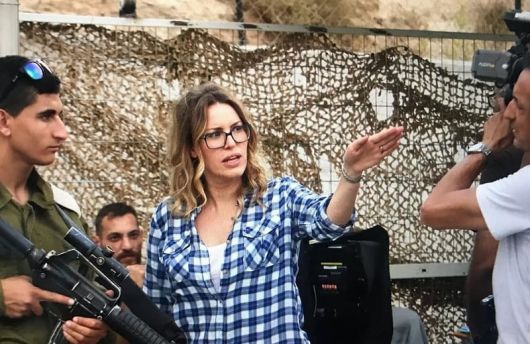
PALESTINIAN-BRITISH : Oscar-Nominated Filmmaker Farah Nabulsi Highlights Palestinian Struggles in New Film

Oscar-nominated and BAFTA award-winning Palestinian-British filmmaker Farah Nabulsi is calling for global empathy towards Palestinians through her debut feature film, The Teacher.

In an interview, Nabulsi emphasized that her film aims to challenge audiences to reflect on the harsh realities Palestinians face under occupation. “I want people to ask themselves: Is this a reality they would accept for themselves? And if it isn’t, why have Palestinians been expected to?” she stated.

Nabulsi, whose film premiered at the Toronto Film Festival in September 2023, expressed that The Teacher offers a deeper human context to the ongoing situation in Palestine, especially as “Israel”’s actions in Gaza intensify.

Born and raised in the UK, Nabulsi’s first visit to Palestine a decade ago profoundly impacted her perspective, as she witnessed firsthand the injustice and discrimination faced by Palestinians. This experience spurred her to use storytelling as a way to process and respond to the issues she encountered.

Filming in the occupied West Bank proved emotionally and logistically challenging. Nabulsi shared that the realities of filming in such a context, alongside a cast and crew deeply affected by these experiences, created an emotional toll.

The film addresses issues such as settler violence, home demolitions, and the mistreatment of children in military courts, with Nabulsi drawing inspiration from real-life conversations and her observations. Through The Teacher, Nabulsi hopes to inspire global empathy for Palestinians and garner support for their struggle for freedom.

source/content: al24news.com (headline edited)

__________

__________________________

BRITISH / PALESTINIAN

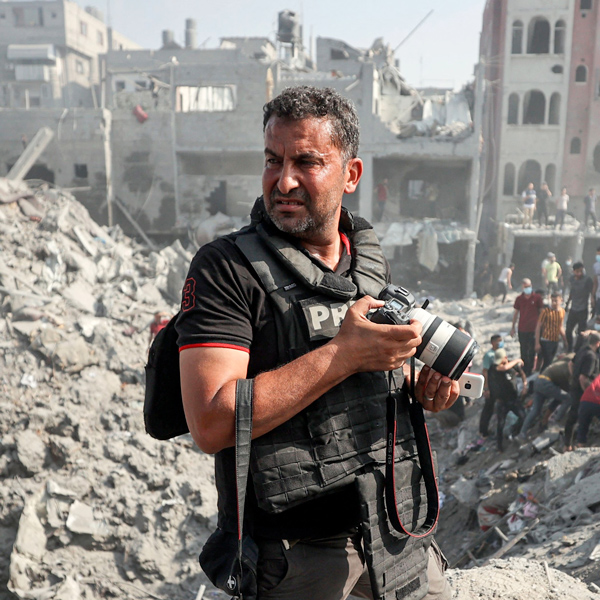
PALESTINIAN AFP Photographer Mahmud Hams Wins Visa d’Or News Award

Palestinian AFP photojournalist Mahmud Hams was awarded the Visa d’Or News prize on Saturday for his coverage of the conflict in Gaza. The prize, one of the most prestigious in the field of photojournalism, is supported by the Visa pour l’Image Association – Perpignan.

Amidst the bombings, with death ever-present and the constant fear of being targeted, Mahmud Hams, who has worked for AFP for over two decades in the Palestinian territories, has relentlessly continued to document the war ignited by Hamas’s attack on Israel on October 7, 2023. 

“I spent my childhood in Gaza, and in 23 years of photojournalism, I have witnessed every war, every conflict there. But this war is unlike any other, without precedent from the very first day,” says Hams. “My colleagues and I have had to face incredibly difficult conditions, with no red lines and no protections for anyone. There were even attacks targeting journalists’ offices, which are supposed to be off-limits in times of war.” 

“Many journalists have been killed; others wounded. I’ve also lost friends and loved ones. We struggled to keep our families safe,” he explains. “Yet, despite the ever-present danger, I continued to cover the conflict because it is my duty, the one I chose when I embraced the profession of journalism.”

“I stayed calm, for my family, and to carry out my mission until the very last moment,” says Hams, who left Gaza with his family in February. “I hope the photos we take show the world that this war, and the suffering, must end,” he adds.

“Mahmud and his colleagues, photographers and journalists from AFP in the Gaza Strip, have carried out extraordinary work in every respect, considering the conditions in which they lived with their families and loved ones,” remarks Éric Baradat, AFP’s Deputy News Director for Photo, Graphics, Data and Archives. “It is staggering and often unimaginable. Their testimony will be recorded in history.”

After October 7, AFP relied on its Gaza bureau, staffed by nine journalists, to cover the war from within the besieged Palestinian territory. On November 2, the office building, which had been evacuated a few days earlier, was badly damaged by a strike, probably caused by Israeli tank fire, according to an investigation conducted by AFP and several international media outlets.

Having remained in Gaza for several months with no way to leave, all AFP staff and their families have since been evacuated. The Agency continues to report on the war through other Palestinian journalists, working closely with its Jerusalem office, which has been leading the coverage since the beginning of the conflict.

_________

Photojournalist Mahmud Hams, aged 44, holds a degree in Journalism and Information from the Islamic University of Gaza. He joined AFP in 2003 and has since covered daily news in the Gaza Strip. He has also reported from Libya and Egypt. Mahmud Hams left Rafah in February 2024 with his family and has since been working for AFP in Qatar. 

AFP’s Gaza-based Palestinian photographer Mahmud Hams. © AFP

Previous Awards:

  • First Prize in the “News Story” category for his coverage of Gaza at the 10th edition of the Istanbul Photo Awards (organised by Anadolu Agency) in April 2024;
  • First Prize in Photography at the 25th Bayeux Calvados-Normandy War Correspondents Award for his photograph of Palestinian protester Saber al-Ashkar, aged 29, throwing stones during clashes with Israeli forces (“Great March of Return”) along the Gaza Strip’s border east of Gaza City on 11th May 2018.This photo also received the Varenne International Photo Award in December 2018.

source/content: afp.com (headline edited)

____________

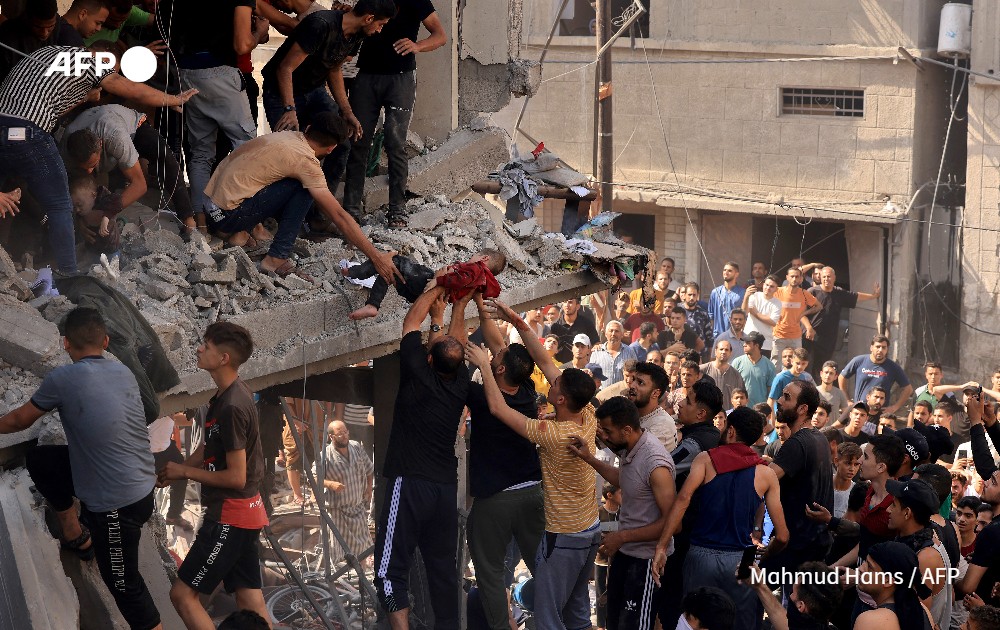
Rescuers pull a child out of the rubble of a building hit in an Israeli air strike in Khan Yunis in the southern Gaza Strip on October 24, 2023. © Mahmud Hams / AFP

Palestinians fleeing the north of Gaza City, walking past Israeli army tanks on November 24, 2023. © Mahmud Hams / AFP

_____________

PALESTINE


PALESTINE’s First ever Olympian Majed Abu Maraheel dies in Gaza from lack of treatment due to Israel’s war

Palestine’s first ever Olympian dies in Gaza from lack of treatment due to Israel’s war.

The first Palestinian athlete to participate in the Olympic games died on Wednesday at the Nuseirat refugee camp in Gaza as a result of kidney failure due to power outages and medical shortages as a result of the ongoing Israeli war and siege of the enclave.

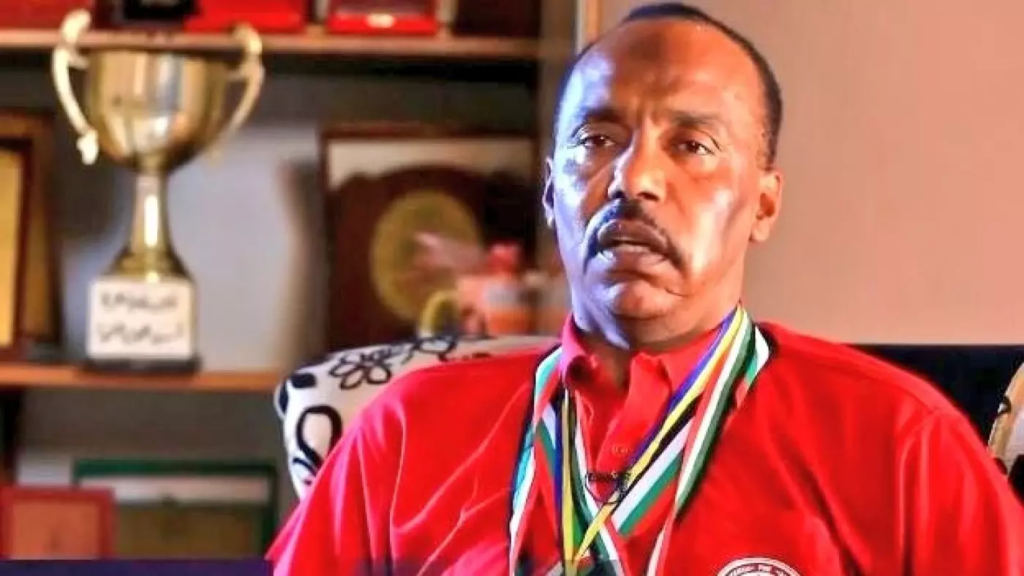
Majed Abu Maraheel, who passed away at the age of 61, became the first athlete to be the flag bearer and represent Palestinians at the Olympic Games in Atlanta in 1996. Being a distance runner, he competed in the 10km race.

Since his breakthrough on the world stage, more than 20 Palestinian men and women have been able to compete at Olympic competitions.

“He was a Palestinian icon, and he will remain as such,” his brother told Paltoday TV after the funeral. 

“We tried to evacuate him to Egypt but then the Rafah crossing was closed (by Israel), and his condition kept deteriorating.” 

In his preparation for the Olympics, Abu Maraheel would often be seen on his daily runs from his home in Gaza to the Erez Crossing with Israel, which Israel closed in October after imposing a full blockade on the Strip. Last month, it was reopened for the first time since then.

He would often have to pass through that crossing for his job as a day labourer in Israel.

After participating in the Olympics, Abu Maraheel went on to become a coach for other Palestinian runners hoping to replicate his presence at the international competition.

He went on to coach Nader el-Masri, another Palestinian from Gaza who competed in the 2008 Olympic games in Beijing.

Abu Maraheel’s death highlights the grim fate of many Palestinians who are facing kidney failure in Gaza.

A report from the Euro-Med Human Rights Monitor in March found that there were between 1,000 to 1,500 patients in Gaza with kidney failure, and that they are facing a “slow death” because of “a lack of medical and therapeutic services, medications and other necessities”.

Since Israel’s war on Gaza began in October, Israeli forces have launched a full siege on the enclave. In addition to killing more than 37,000 Palestinians, they have repeatedly targeted and attacked Gaza’s hospitals and healthcare infrastructure.

A report late last month by the Washington Post said that only four of Gaza’s 36 hospitals have not been damaged by munitions or been raided by Israeli forces.

However, the lack of supplies in the area because of Israel’s blockade has further exacerbated the situation.

Israel denies blocking humanitarian aid into Gaza, though aid agencies say they are not able to get aid in because of Israeli restrictions.

source/content: middleeasteye.net (headline edited)

______________

Majed Abu Maraheel became the first athlete to represent Palestinians at the Olympic Games in Atlanta in 1996 (X)

_____________

PALESTINE

PALESTINE: MEE Gaza journalist Maha Hussaini Wins ‘Courage in Journalism Award’ by the Washington based International Women’s Media Foundation (IWMF)

Recognition from the International Women’s Media Foundation honours Palestinian reporter’s ‘remarkable bravery in the pursuit of reporting’.

Palestinian freelance journalist Maha Hussaini has had her reporting for Middle East Eye on the ongoing Israeli war on Gaza recognised by the International Women’s Media Foundation (IWMF).

Hussaini was one of three recipients of the Courage in Journalism Awards , announced by the Washington-based foundation on Monday, which it says honours remarkable bravery in the pursuit of reporting.

Since the assault began in October, Hussaini has published dozens of stories, including a report uncovering Israeli field executions of Palestinians , which was used as evidence by South Africa at the International Court of Justice in the case accusing Israel of genocide.

Reacting to the award, Hussaini told MEE she was both happy and sad at recognition for her work. 

“I am happy because it is another effort to recognise the work of Palestinian journalists and make them heard and seen,” she said. “But I am saddened because I know the cost of such recognition in a place where over 150 journalists have been killed over the course of eight months.”

The IWMF recognised Hussaini, who was a resident of Gaza City before the war, for working under strenuous circumstances during the conflict. 

The Israeli attacks have posed daily threats to her life, forced her to move location multiple times and to live in desperate conditions, along with almost all of Gaza’s 2.3m Palestinian population. 

At times Hussaini has been forced to work without access to electricity and internet during Israeli-imposed power outages. Her freedom of movement within Gaza, including access to her home, has also been restricted by the Israeli siege and checkpoints.

“Since the beginning of the Israeli war, it has become increasingly clear to me that journalists are targets for the Israeli army. Many of the journalists who have been killed while reporting were colleagues with whom I closely collaborated,” Hussaini told MEE.

She said that each morning she faced the possibility that she could be killed next, and quietly recited the Shahada, the Muslim declaration of faith often pronounced before death, each time she went out to report. 

“I understand that my work carries immense risks, but I cannot say that I’m scared to be a journalist,” Hussaini added. “I have never felt hesitant to go to the field or cover any story. But I however worry that if I am killed, another voice would be silenced, another pen would be broken.”

Hussaini said she hoped that by winning the award, light would be shed on the work done by Palestinian journalists, especially when “many international media outlets choose to overlook their stories and reporting”.

She added that it was particularly important now as Israel bans international journalists from entering Gaza.

‘We need women’s voices in news media’

Hussaini won the award alongside Lauren Chooljian, a senior reporter and producer at American radio NHPR, and Monica Velásquez Villacís, an investigative journalist and presenter at Ecuadorian digital media outlet La Posta . 

“We need women’s voices in news media to keep the press free and we need to fiercely protect women like Lauren, Maha, Mónica, and Shin to ensure that power is held to account and that equitable values survive,” said IWMF Executive Director Elisa Lees Munoz. 

David Hearst, MEE’s Editor in Chief, said: “To live under conditions where there is no safe haven from drones and missiles for eight months is unbearable.

“But to report under conditions where you as a journalist are deliberately targeted, and where you witness your colleagues being killed, is a feat few other journalists can imagine. Maha deserves the highest award for her work.”

Lubna Masarwa, MEE’s Palestine and Israel bureau chief, said no words can describe how much Hussaini deserves recognition. 

“Despite everything she endured – the bombs, displacement, and seeing her colleagues killed – Maha has remained resilient, professional and true to her mission of giving a voice to the Palestinian people,” Masarwa said.

The Israeli military has killed at least 150 journalists out of an estimated 37,000 Palestinians in Gaza since 7 October, according to local officials. The Committee to Protect Journalists (CPJ) has reported that it has been the deadliest period for journalists since the NGO began gathering data in 1992.

“It’s wonderful seeing Maha’s work, and by extension, that of Palestinian journalists in Gaza, being recognised by the world,” Masarwa added. 

“But truly no amount of awards and words can begin to express how much she deserves recognition.” 

Among Hussaini’s stories recognised by the IWMF is a report on the reality of women giving birth at home in Gaza and another featuring a girl who had to carry her paralysed six-year old brother for miles while fleeing bombing.

Hussaini’s decade as reporter

Hussaini began work as a freelance journalist in July 2014 during the Israeli offensive on Gaza, producing, preparing, and presenting reports on the conflict that resulted in the deaths of more than 2,200 Palestinians and around 60 Israelis. 

She has been writing for MEE since 2018 and has covered hundreds of stories focusing on human rights and armed conflict.

In 2020, she won the Martin Adler Prize , awarded by the prestigious Rory Peck Trust, for her reporting for MEE from Gaza.

She was shortlisted for the 2023 Local Reporter Award granted by the Kurt Schork Memorial Fund.  
 
Hussaini also works as the strategy director of the Geneva-based Euro-Mediterranean Human Rights Monitor .

IWMF’a Courage in Journalism Awards is given annually to women journalists who “are not going to step aside, cannot be silenced, and deserve to be recognised for their strength in the face of adversity”. 

Shireen Abu Akleh, a renowned Palestinian-American journalist, posthumously won the award in 2023 after being shot and killed by Israeli forces a year earlier.

source/content: middleeasteye.net (headline edited)

______________

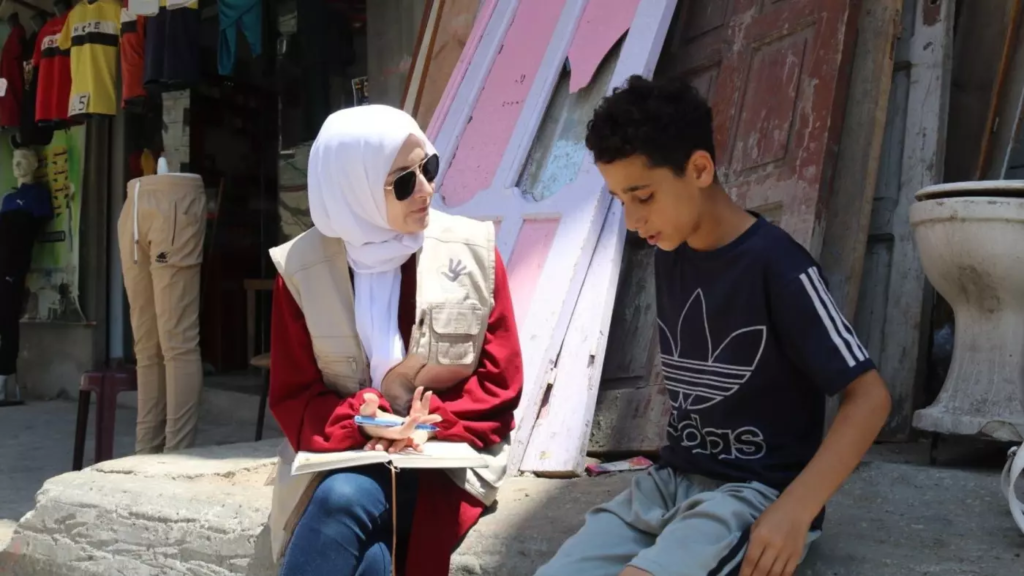
Maha Hussaini (L) interviewing a Palestinian boy in the Gaza Strip in June 2023 (Supplied/Mahmoud Mushtaha)

_______________

PALESTINE

PALESTINE: A new Book Authored by Academic & Historian Nur Masalha ‘ Palestine : A Four Thousand Year History’ becomes a Best-Seller

With Israel and Hamas at war in Gaza, books about the Palestinian issue and its history are in demand. One best-seller, the Palestinian academic and historian Nur Masalha’s “Palestine: A Four Thousand Year History”, argues that there is an urgent need to teach a history of the land and its people based on facts, not myths.

Masalha’s book was published in English in 2018 and was made available in Arabic in 2019 by the nonprofit Centre for Arab Unity Studies, based in Beirut. The author notes on Facebook that the book has topped Amazon best-seller lists in four categories: prehistory, prehistoric archaeology, Bible hermeneutics, and antiquities.

A Hijacked History

Masalha is currently a member of the Centre for Palestine Studies at SOAS, University of London, and is a former director of the Centre for Religion and History at St. Mary’s University, Twickenham.

His book examines Palestine’s distant history and the attempts of Israel’s founders to hijack that history with non-scientific interpretations, changing the names of Palestinian cities and villages to Hebrew ones, and even changing the names of Israel’s founders and leaders from the names they were born with in Russia, Poland, Ukraine, and elsewhere, to Hebrew names.

In his introduction to the Arabic edition, Masalha expresses the hope that his book will “draw attention to the history, heritage, and deep roots of the Palestinians, the indigenous Arab population of Palestine”.

Nur Masalha’s book explores Palestine’s history, identity, and cultures from the Late Bronze Age until the modern era. The author hopes it “challenges the colonial approach to Palestine and the malicious myth of a land without a people.”

The book tells us that “Palestine” was the land’s name throughout ancient history. The name was first documented in the Late Bronze Age, about 3,200 years ago, and later in Greek sources. The name was used between 450 B.C. and 1948 A.D. to describe “a geographical area between the Mediterranean Sea, the Jordan River and various neighbouring lands.”

The book explores Palestine’s evolution, history, identity, languages, and cultures from the Late Bronze Age until the modern era. The author points out that “the history of Palestine is often taught in the West as the history of a land, not as Palestinian history, or the history of a people.” He thus hopes his book “challenges the colonial approach to Palestine and the malicious myth of a land without a people.”

Masalha uses a wide range of evidence and contemporary sources to examine the history of Palestine.

It also seeks to trace the beginnings of the concept of Palestine in geographical, cultural, political, and administrative policies. He argues that the Israelites’ conquest of the land of Canaan, and other basic stories in the Old Testament, are “mythical narratives” that try to establish a false awareness, not an evidence-based history following facts.

Updating History Textbooks

Masalha believes that history textbooks and curricula “must be based on historical facts placed in their context, concrete evidence, and archaeological and scientific discoveries, rather than on traditional opinions, imaginary narratives from the Old Testament, and repeated religious-political doctrines that are narrated for the benefit of influential elites.”

According to the book, some historians have argued that Palestine did not exist as a formal administrative entity until the British Mandate for Palestine was created after World War I. In reality, Masalha says, Palestine has existed as an administrative entity and an official state “for more than a thousand years.”

Masalha believes that history textbooks and curricula “must be based on historical facts placed in their context, concrete evidence, and archaeological and scientific discoveries, rather than on traditional opinions [and] imaginary narratives.”

The book charts the ancient origins of the name “Palestine” among the country’s multiple religious beliefs. Masalha says that, after more than 150 years of excavations in and around Jerusalem, there is still no historical, archaeological, or practical evidence of the “Kingdom of David” around 1000 B.C. The reason there is no material or practical evidence for the “United Kingdom of David and Solomon” and for other comprehensive narratives from the Old Testament, he argues, is simple: “They are invented traditions.”

Hebraised Names

Masalha gives a list of Israeli leaders who were born with Russian and Eastern European names but later adopted names with a Hebrew ring. They include:

  • David Ben-Gurion (1886–1973), Israel’s first prime minister and minister of defence, who used the Israeli army after 1948 to impose general Hebraisation and “purification” of surnames and personal names. Ben-Gurion was born as David Grün in an area of Poland then part of the Russia Empire. His mother’s name was Scheindel. 
  • Moshe Sharett, who became Israel’s foreign minister in 1948 and served as prime minister from 1954 to 1955, was born as Moshe Chertok in 1894 in Kherson, then part of the Russian Empire and now in Ukraine. He chose to Hebraise his surname in 1949, after the establishment of the State of Israel.
  • Golda Meir, who was prime minister of Israel between 1969 and 1974, was born Golda Mabovitch in Kiev in 1898, and became Golda Meyerson by marriage in 1917. It is worth noting that she did not change her surname until she became minister of foreign affairs in 1956.
  • Menachem Begin, founder of the Likud Party and prime minister of Israel from 1977 to 1983, was born Mieczyslaw Begin in 1913 in Brest-Litovsk, then part of the Russian Empire and now Brest, Belarus.
  • Yitzhak Shamir, who served as Israel’s prime minister twice between 1983 and 1992, was born Itzhak Yezernitsky in 1915 in an area that is now part of Belarus.
  • Ariel Sharon, who was prime minister from 2001 to 2006, was born Ariel Scheinerman in colonial Palestine in 1928. His parents, Shmuel and Vera, whose name later became Dvora, emigrated to Palestine from Russia.

Masalha says that until the advent of European Zionism, members of Palestine’s Arabic-speaking Jewish minority were fondly known as “the Jews, children of the Arabs,” and were an integral part of the Palestinian people, Arabic being their language, culture and heritage.

Settler Colonialism

The book also addresses the settler colonialism at the heart of the Palestine conflict. Settler colonialism is a “structure, not an event”, according to Masalha, and is “deeply embedded in European colonialism.” 

He argues that British colonialists, by denying the existence and rights of indigenous peoples, often viewed vast areas of the globe as “terra nullius”, land that belonged to “nobody.”

The author finishes by stressing that “decolonising history and restoring and preserving the ancient heritage and material culture of the Palestinians and in Palestine, are two vital matters.” 

He adds: “There is an urgent need to teach the ancient history of Palestine, and the history of the local Palestinians (Muslims, Christians, Samaritans, and Jews), including the production of new and critical Palestinian textbooks, for schools, institutes, and universities, as well as for millions of exiled Palestinian refugees.” 

He also believes that “this understanding and education must include the new critical archaeology of Palestine, the new critical understanding of antiquities, and the memories of this country.”

source/content: al-fanarmedia.org (headline edited)

______________

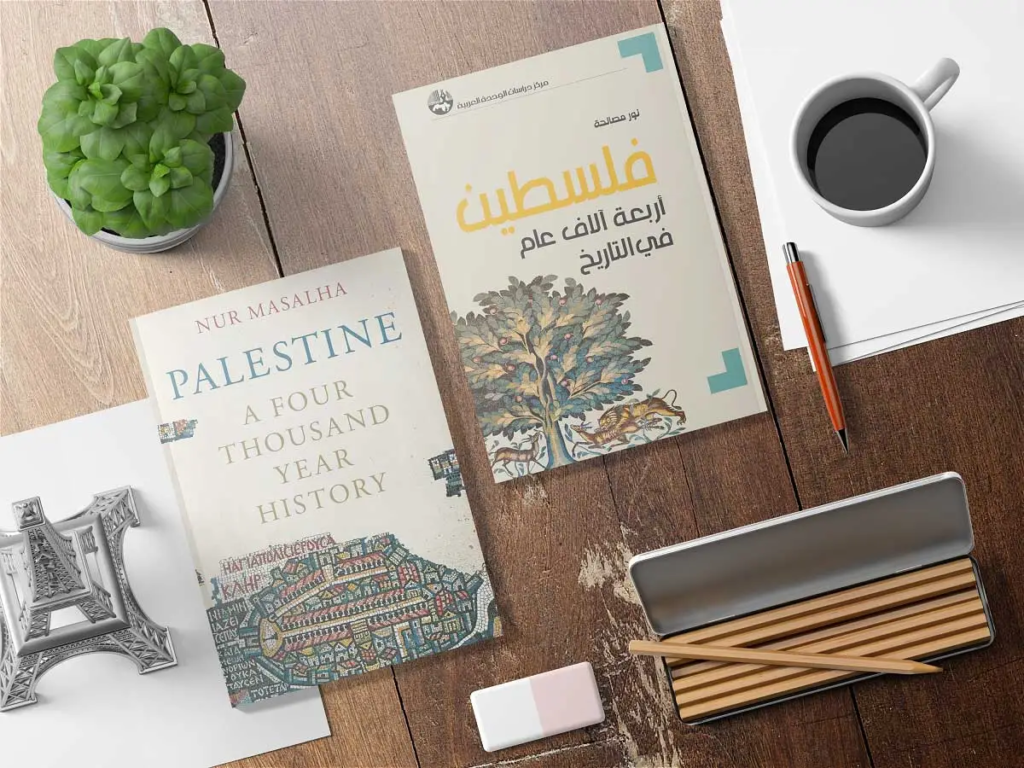
Nur Masalha’s “Palestine: A Four Thousand Year History” challenges the “colonial” approach to Palestine as “a land without a people.”

_____________

PALESTINE