ALGERIA / EGYPT / LEBANON / MOROCCO / PALESTINE / SYRIA / DUBAI, U.A.E : Mohammed bin Rashid honours winners of 2025 edition of Great Arab Minds initiative

His Highness Sheikh Mohammed bin Rashid Al Maktoum, Vice President, Prime Minister and Ruler of Dubai, honoured the six winners of the Great Arab Minds 2025 edition at the Museum of the Future in Dubai.

Great Arab Minds is the largest Arab initiative dedicated to celebrating outstanding Arab achievement, highlighting contributions to advance human civilisation, support the expansion of scientific and knowledge-based endeavours, and showcasing the creative impact of Arab talent across the region and globally.

His Highness affirmed that the Great Arab Minds initiative was designed to expand the horizons for established and emerging Arab talent, nurturing and investing in their potential; recognise Arab achievement across research, development, innovation, technology, culture, and architecture; and to reinforce a culture of pride and sustained support for Arab individuals who have inspired significant progress in key fields.

His Highness Sheikh Mohammed said, “Today, we honour Great Arab Minds in recognition of achievements that advance civilisation and build societies. From the Museum of the Future in Dubai, we reaffirm our support for Arab talent committed to innovation, creativity, and excellence.”

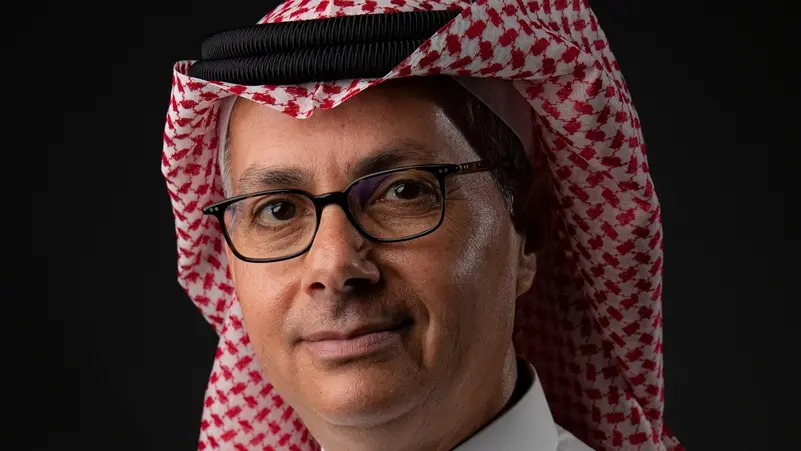
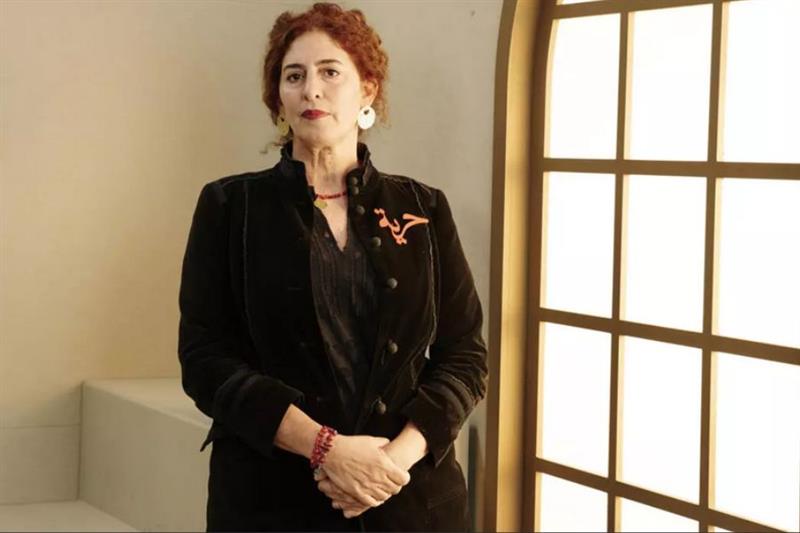
His Highness further said, “We congratulate the winners of the Great Arab Minds 2025: Professor Abbas El Gamal in the Engineering and Technology category, Dr. Nabil Seidah in the Medicine category, Professor Badi Hani in the Economics category, Professor Majed Chergui in the Natural Sciences category, Dr. Suad Amiry in the Architecture and Design category, and Professor Charbel Dagher in the Literature and Arts category. We encourage them to continue their journey of achievement and contribution, serving as true role models for younger generations in our region and around the world, inspiring them to shape a better future through science and knowledge.”

His Highness expressed his confidence in the ability of Arab talent to drive progress in scientific research, knowledge creation, and the cultural sector, supported by expertise, institutional support, and the ambition of young people across the region.

Focused on a better future

Sheikh Mohammed noted that the Great Arab Minds initiative will continue to highlight the achievements of Arab individuals who look to the future with optimism and pursue ambitions that recognise no limits.

The awards ceremony was attended by H.H. Sheikh Maktoum bin Mohammed bin Rashid Al Maktoum, First Deputy Ruler of Dubai, Deputy Prime Minister and Minister of Finance of the UAE; H.H. Sheikh Ahmed bin Mohammed bin Rashid Al Maktoum, Second Deputy Ruler of Dubai and Chairman of the Dubai Media Council; H.H. Sheikh Ahmed bin Saeed Al Maktoum, President of the Dubai Civil Aviation Authority, Chairman of Dubai Airports, and Chairman and Chief Executive of Emirates Airline and Group; His Highness Sheikh Mansoor bin Mohammed bin Rashid Al Maktoum, President of the UAE National Olympic Committee; H.H. Sheikha Latifa bint Mohammed bin Rashid Al Maktoum, Chairperson of the Dubai Culture and Arts Authority (Dubai Culture); and H.H. Sheikh Mohammed bin Rashid bin Mohammed bin Rashid.

Mohammed bin Abdullah Al Gergawi, Minister of Cabinet Affairs and Chair of the Higher Committee for the Great Arab Minds initiative, was among numerous ministers and senior officials in attendance along with scientists, academics and diplomats.

His Excellency Al Gergawi stated that the Great Arab Minds initiative launched by His Highness Sheikh Mohammed represents a profound recognition of Arab achievement across disciplines, and a significant strategic investment in empowering talent and encouraging renewed contributions to Arab intellectual and scientific progress.

He added that the Great Arab Minds initiative embodies Sheikh Mohammed’s vision to inspire confidence in Arab capabilities and motivate individuals to take an active role in shaping their societies and the future of a region that has long contributed to human civilisation through science, literature, thought, and architecture.

‘Powerful message’

He praised the achievements of the Great Arab Minds awardees across medicine, engineering, technology, sciences, architecture, arts, and literature, saying, “Your presence today on the Great Arab Minds 2025 platform at the Museum of the Future sends a powerful message to hundreds of millions of young people to pursue excellence, achievement, and leadership in research, innovation, creativity, and knowledge, and to help shape a brighter future for Arab and human civilisation.”

The award recognised one winner in each of its six categories: Medicine, Economics, Engineering and Technology, Natural Sciences, Architecture and Design, and Literature and Arts.

In Medicine, Dr. Nabil Seidah was honoured for his medical and research achievements in cardiovascular health and cholesterol regulation.

In Economics, Professor Badi Hani was awarded for his pioneering contributions to econometrics and the development of economic analysis tools, particularly in panel data analysis. His work enabled more accurate and in-depth analysis by combining data across multiple time periods and sources.

In Engineering and Technology, Professor Abbas El Gamal was awarded for his pioneering contributions to network information theory.

In Natural Sciences, Professor Majed Chergui was honoured for his contributions to understanding light-matter interactions, developing techniques and applications that enable the study of ultrafast molecular and material dynamics at the atomic level.

In Architecture and Design, Dr. Suad Amiry was honoured for her contributions to preserving Palestinian architectural heritage through documentation, restoration, and adaptive reuse of historical buildings.

In Literature and Arts, Professor Charbel Dagher was honoured for a body of work that constitutes a key reference in the study of Arab and Islamic arts, Arabic calligraphy, and modern visual arts.

Professor Abbas El Gamal said, “I extend my sincere gratitude to His Highness Sheikh Mohammed bin Rashid Al Maktoum for his vision in launching Great Arab Minds. Being honoured in this way is deeply meaningful to me.”

Professor Majed Chergui said, “I am Algerian of Syrian origin, born in Morocco and raised in Algeria and Lebanon. In this way, the Arab world comes together in who I am. For me personally, this award is not only the highest recognition of my achievements; it touches me deeply because it comes from an Arab country.”

Dr. Suad Amiry said, “In 1981, when I decided to live in the city of Ramallah, my aim was to study traditional architecture in rural Palestine. Ten years later, I founded the Riwaq Centre, which since then has been dedicated to documenting, restoring, and rehabilitating architectural heritage in Palestine. Winning this award is a great honour for me and for the Riwaq Centre.”

Professor Badi Hani said: “This award recognises not only my work, but also the people and places that shaped me, my family, my mentors, my city, and the Arab world that nurtured my earliest aspirations.”

Dr. Nabil Seidah said, “My father’s adage, that knowledge is something no one can ever take away from you, has been the principle that guided me throughout my journey. Your trust represents a powerful motivation for Arab scientists to serve as role models for future generations, and I pledge to continue serving science with the same passion that has always driven me.”

Professor Charbel Dagher said: “Commitment to the Arabic language has remained a defining hallmark of everything I have done: teaching, writing, and research, to the point that I live within Arabic itself. We cannot exist outside our language or our culture. Allow me to share this award with those who supported me, and my gratitude extends to everyone who has worked and continues to work to ensure that Arabic remains a living language of science, knowledge, and culture.”

The awardees were chosen by six high-level specialised committees, one for each category. Abdulla bin Touq Al Marri, Minister of Economy and Tourism, chaired the Economics Committee; Sarah Al Amiri, Minister of Education, chaired the Engineering and Technology Committee; Mohammed Ahmed Al Murr, Chairman of the Board of Directors of the Mohammed bin Rashid Al Maktoum Library Foundation, chaired the Literature and Arts Committee; Dr. Amer Sharif, Chief Executive Officer of Dubai Health and President of the Mohammed Bin Rashid University of Medicine and Health Sciences headed the Medicine Committee; Professor Sehamuddin Galadari, Senior Vice Provost-Research and Managing Director of the Research Institute at New York University Abu Dhabi chaired the Natural Sciences Committee; Professor Hashim Sarkis, Dean of the School of Architecture and Planning at the Massachusetts Institute of Technology chaired the Architecture and Design Committee.

In addition to the committee chairs, the specialised committees also included Essa Kazim, Governor of the Dubai International Financial Center; Dr Mohammed Madhi, Dean of the College of Business and Economics at UAE University; Dr Rabah Arezki, Chief Economist for the Middle East and North Africa (MENA) region at the World Bank and Senior Fellow at Harvard University’s John F. Kennedy School of Government; Ferid Belhaj, Fellow at the Policy Center for the New South; and Dr Jihad Azour, Director of the Middle East and Central Asia Department at the International Monetary Fund.

The committees also included Professor Ismael Al Hinti, President of Al Hussein Technical University; Adel Darwish, Regional Director of the International Telecommunication Union; Dr Ahmed Zayed, Director of the Bibliotheca Alexandria; His Excellency Dr. Alawi Alsheikh-Ali, Director General of Dubai Health Authority; Professor Elias Zerhouni, Professor Emeritus at Johns Hopkins University; Dr Noureddine Melikechi Dean of the Kennedy College of Sciences and Professor of Physics at the University of Massachusetts Lowell; Professor Nader Masmoudi, Professor at the Courant Institute of Mathematical Sciences at New York University Abu Dhabi; Dr Latifa Elouadrhiri Laboratory Directed Research Staff Scientist at the Thomas Jefferson National Accelerator Facility; and Professor Dr Jehane Ragai, Emeritus Professor of Chemistry at The American University in Cairo.

The specialised committees also included Dr Adrian Lahoud, Dean of the School of Architecture at the Royal College of Art; and Professor Ali Malkawi, Professor of Architectural Technology, Director of the Doctor of Design Studies Program, and Founding Director of the Harvard Center for Green Buildings and Cities.

The Nominations Committee included Huda Al Hashimi, Deputy Minister of Cabinet Affairs for Strategic Affairs; Chucrallah Haddad, Partner and Head of Advisory at KPMG Lower Gulf; Abdulsalam Haykal, President and Founder of Majarra Company; Ali Matar, Head of LinkedIn Middle East and North Africa and Emerging Markets in Africa and Europe; and Saeed Al Nazari, Secretary-General of the Great Arab Minds Initiative.

Widely known as the ‘Arab Nobel,’ the Great Arab Minds initiative recognises distinguished Arab achievement and highlights extraordinary contributions that reflect the region’s historic role in advancing knowledge and human progress globally. For a third consecutive edition, the initiative continues to strengthen its position as a platform for celebrating Arab creators and as a point of reference for promising Arab talent, by highlighting achievements that inspire young people and contribute to expanding Arab participation in global knowledge and civilisational advancement.

source/content: wam.ae (headline edited)

________________

__________________________________________________________________

ALGERIA / DUBAI, U.A.E / EGYPT / FRANCE/ LEBANON / MOROCCO / PALESTINE / SWITZERLAND / SYRIA / U.S.A
PALESTINE – JORDAN : AUC press author Ibrahim Nasrallah wins prestigious Neustadt international prize

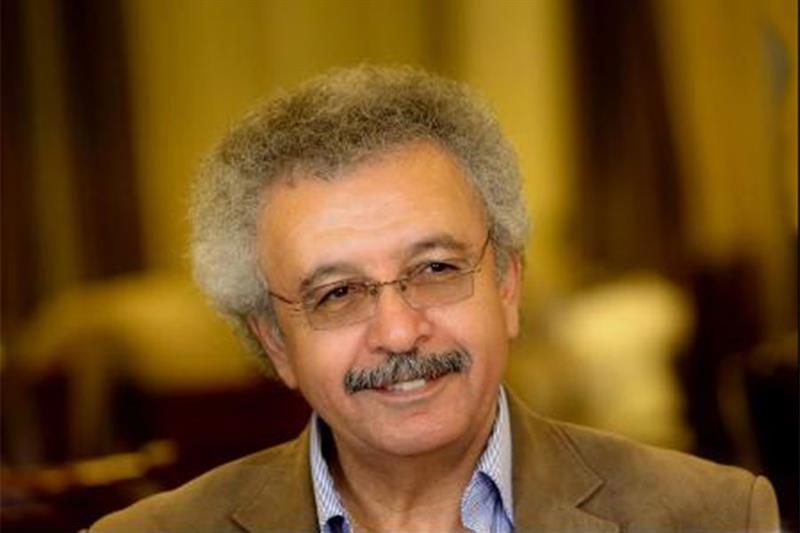
AUC Press author Ibrahim Nasrallah, a Palestinian novelist and poet, has won the prestigious Neustadt International Prize for Literature, announced The American University in Cairo (AUC) Press and its literature imprint, Hoopoe.

Nasrallah is the 29th laureate of the prize, an honour frequently dubbed the “American Nobel.”

Nasrallah’s novel, Time of White Horses (Hoopoe, 2016), published in English translation by Hoopoe, was selected as the representative text for the prize.

The AUC Press “is proud that author Ibrahim Nasrallah and his novel, published under our Hoopoe literary imprint, have received such distinguished recognition,” said AUC Press Executive Director Thomas Willshire.

Time of White Horses tells “a deeply moving story rooted in Palestinian history and identity, exactly the kind of powerful, boundary-crossing narrative that embodies Hoopoe’s mission to bring distinguished voices from the Middle East to readers around the world,” he added.

Hoopoe has published four of Nasrallah’s novels in English, including Time of White Horses (2016), Gaza Weddings (2017), and The Lanterns of the King of Galilee (2015).

As outlined in the Neustadt Prize charter, “Any living author writing in any language is eligible, provided that at least a representative portion of their work is available in English—the language used during the jury deliberations.”

Presented biennially by the University of Oklahoma and World Literature Today, the Neustadt International Prize for Literature recognizes writers of exceptional literary achievement across all genres and languages.

The 2025 winner was announced in October, and the next Neustadt Lit Fest, organized by World Literature Today, will be held in the fall of 2026 in honour of Nasrallah.

Nasrallah was nominated for the prize by Shereen Malherbe, an award-winning novelist and children’s book author.

In her nominating statement, Malherbe said “Nasrallah’s literary works span universal issues and themes woven into the Palestinian struggle that allow readers to connect deeply with Palestine outside of a colonial framework.”

“His work is now more important than ever, considering the plight of Palestinians. It is time the world sees the true Palestine, and Nasrallah’s work can offer this perspective.”

Nasrallah’s powerful storytelling, exploring exile, identity, and resistance, places him alongside past laureates such as Gabriel García Márquez, Edwidge Danticat, and Tomas Tranströmer.

Nadine El-Hadi, senior acquisitions editor at AUC Press, noted that Nasrallah is “a writer of a generation and truly deserving of this prize.”

“Never has it been more important to amplify Palestinian voices such as his,” she added.

A leading Arab literature voice

Born in 1954 to Palestinian parents in a Jordanian refugee camp, Ibrahim Nasrallah has become one of the most important voices in contemporary Arab literature.

He has written fourteen poetry collections and fourteen novels, as well as works of literary criticism.

His writing has been translated into multiple languages, earning him international acclaim for his exploration of exile, identity, resistance, and the human condition.

source/content: english.ahram.org.eg (headline edited)

_____________

_______________________

JORDAN / PALESTINE

SAUDI ARABIA : King Faisal Prize winners announced for 2026

Pioneering scientist behind revolutionary weight-loss drugs, global scholars, innovators among winners.

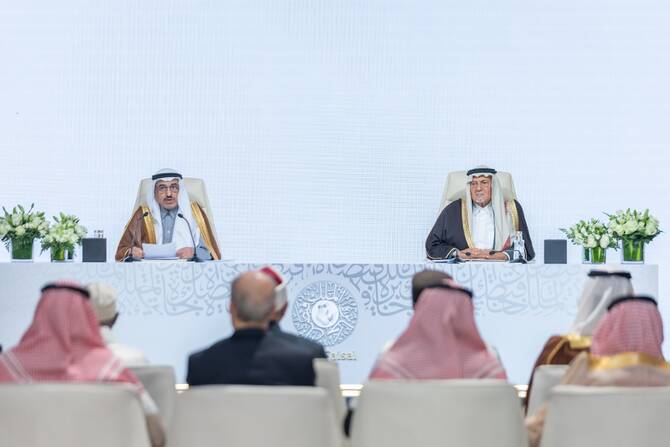
The King Faisal Prize 2026 winners were announced at a ceremony in Riyadh on Wednesday night.

The event honored pioneering scientists, global scholars and innovators for their transformative contributions to medicine, science, Arabic language, Islamic studies and the service of Islam.

Prof. Svetlana Mojsov was named winner in the medicine section for her groundbreaking discoveries that are now reshaping how we treat obesity.

Prof. Carlos Kenig was announced as science laureate in the field of mathematics for helping to revolutionize understanding of nonlinear partial differential equations.

Mojsov, the Lulu Chow Wang and Robin Chemers Neustein research associate professor at The Rockefeller University in New York, pioneered research on glucagon-like peptide-1 (GLP-1) that has fundamentally transformed how obesity and diabetes are treated.

She discovered and characterized the biologically active form of GLP-1, a natural intestinal hormone that regulates blood sugar and appetite, and identified its receptors in the human pancreas, heart, and brain.

Through cutting-edge biochemistry and physiological studies, Mojsov demonstrated that GLP-1 powerfully stimulates insulin secretion while reducing hunger and managing glucose levels.

Her groundbreaking work enabled the development of an entirely new class of medications that mimic this natural hormone, sparking a paradigm shift in obesity treatment.

These therapies today provide life-changing benefits for hundreds of millions of people worldwide living with obesity and its complications — a global health crisis affecting 890 million adults and 160 million children and adolescents in 2022 alone, according to the World Health Organization.

Mojsov’s groundbreaking contributions have earned numerous prestigious honors, including Time magazine naming her one of the 100 Most Influential People in 2024.

Kenig was honored for his groundbreaking contributions to mathematical analysis. His work has transformed understanding of nonlinear partial differential equations — the mathematical equations describing how things change and move in the physical world — and provided researchers with a now-ubiquitous set of techniques. His insights have opened new research frontiers with applications spanning fluid mechanics, optical fibers, and medical imaging.

Kenig, the Louis Block distinguished service professor at the University of Chicago, is recognized for applying harmonic analysis techniques across different areas of partial differential equations.

His work on free boundary problems — determining unknown boundaries such as where ice meets melting water or how fluids flow through soil — has been particularly influential.

Kenig has spent three decades figuring out how complex waves behave over long periods of time, especially in tricky situations where they could either spread out peacefully or build up dangerously.

This matters for understanding everything, from ocean waves to light pulses in fiber optics and to how energy moves through different materials.

His work helps explain phenomena in quantum mechanics, optics, and ocean waves. By combining different mathematical techniques, he has solved longstanding problems that had puzzled mathematicians for decades.

In addition to medicine and science, the King Faisal Prize recognized the achievements of outstanding thinkers and scholars in the field of Arabic language and literature, Islamic studies, and exemplary leaders who have played a pivotal role in serving Islam, Muslims, and humanity at large.

Pierre Larcher, an emeritus professor of Arabic linguistics at Aix-Marseille University and emeritus researcher at the Institute for Studies and Research on the Arab and Muslim Worlds, won this year’s King Faisal Prize for Arabic Language and Literature on “Arabic literature in French.”

His novel presentation of Arabic literature to French readers has earned widespread acclaim from critics and specialists, while his rigorous scholarly approach to classical Arabic literature has made it accessible and appropriate for French culture.

His critical translation project of “Al-Mu’allaqat” and rigorous study of pre-Islamic poetry demonstrate exceptional scholarly depth.

For this year’s Islamic Studies Prize, Abdelhamid Hussein Mahmoud Hammouda, the professor of Islamic history and civilization at Fayoum University, and Mohamed Waheeb Hussein, the professor of archaeology and history of art at the Hashemite University, were announced as co-laureates.

Hammouda’s work encompasses the trade routes across the Islamic world — the Mashreq, Iraq and Persia, Arabian Peninsula, Greater Syria, Egypt, Sahara, Maghreb, and Al-Andalus. This expansive scope delivers coherent understanding of Islamic trade trajectories across history, serving as an authoritative reference for both specialized research and broader scholarship.

Hussein’s groundbreaking work uses archaeological surveys, GPS documentation, and analytical mapping to systematically correlate Qur’anic texts with geographical data. His research offers definitive scholarly interpretation, significantly advancing documentation of early Arabian Peninsula trade routes.

Sheikh Abdullatif Al-Fozan and Dr. Mohammad Abou Moussa were announced as co-laureates in the Service to Islam Prize.

Laureates’ names were announced by Prince Turki Al-Faisal and the King Faisal Prize’s Secretary-General Dr. Abdulaziz Alsebail.

Selection committees included experts, specialists, and scholars who met in Riyadh and examined the nominated works. They selected the laureates in an objective and transparent manner, in accordance with the rules and regulations.

The KFP was established in 1977, and was awarded for the first time in 1979 in three categories: service to Islam, Islamic studies, and Arabic language and literature. Two additional categories were introduced in 1981: medicine and science. The first medicine prize was awarded in 1982, and in science two years later.

Since 1979 the KFP has given awards to more than 300 laureates who have made distinguished contributions to different sciences and causes.

Each prize laureate is endowed with $200,000, a 24-carat gold medal weighing 200 grams, and a certificate inscribed with the laureate’s name and a summary of the work that qualified them for the prize.

source/content: arabnews.com (headlines edited) 

_____________

King Faisal Prize laureates’ names for 2026 were announced in Riyadh on Wednesday night by Prince Turki Alfaisal and the Prize’s Secretary General Dr. Abdulaziz Alsebail. (Supplied)

_______________________________________________________

EGYPT / JORDAN / PALESTINE / SAUDI ARABIA (*Arab)


SAUDI-AMERICAN citizen Omar Yaghi among winners of 2025 Nobel Prize in Chemistry

Saudi-American citizen Omar Yaghi, along with scientists Susumu Kitagawa and Richard Robson, has won the 2025 Nobel Prize in Chemistry “for the development of metal–organic frameworks”, the award-giving body said on Wednesday.

Born in Jordan to Palestinian parents, Yaghi was granted Saudi citizenship in 2021 through a royal approval that had been issued to grant Saudi citizenship to several prominent specialists from different fields.

The move was in line with the objectives of Saudi Vision 2030, including encouraging talented individuals to relocate to the Kingdom, localizing foreign investment, and “creating an appropriate social and investment environment,” according to a statement carried by the Saudi Press Agency at the time.

The more than a century-old prize is awarded by the Royal Swedish Academy of Sciences and the winners share 11 million Swedish crowns ($1.2 million), as well as the fame of winning arguably the world’s most prestigious science award.

“Through the development of metal-organic frameworks, the laureates have provided chemists with new opportunities for solving some of the challenges we face,” the award-giving body said in a statement.

The Chemistry Nobel was the third prize announced in this year’s crop of awards, in keeping with tradition, following those for medicine and physics announced earlier this week.

Established in the will of Swedish inventor and businessman Alfred Nobel, the prizes for achievements in science, literature and peace have been awarded since 1901, with a few interruptions mostly due to the world wars.

Nobel was himself a chemist and his developments in that field helped underpin the wealth he amassed from his invention of dynamite in the 19th century. The economics prize is a later addition funded by the Swedish central bank.

Sometimes overshadowed by more famous laureates in the fields of physics, literature and peace, the chemistry awards have still recognized many influential discoveries such as nuclear fission, DNA sequencing techniques, and yeast.

Last year’s chemistry award went to US scientists David Baker and John Jumper and Briton Demis Hassabis for work on decoding the structure of proteins and creating new ones, yielding advances in areas such as drug development.

($1 = 9.3436 Swedish crowns)

With Reuters

source/content: english.alarabiya.net (headline edited)

___________

Saudi-American citizen Omar Yaghi, along with scientists Susumu Kitagawa and Richard Robson, has won the 2025 Nobel Prize in Chemistry “for the development of metal–organic frameworks”, the award-giving body said on Wednesday. (X @SPAregions)

____________________________________________________

AMERICAN / SAUDI ARABIA / JORDAN / PALESTINE

PALESTINE : ‘Palestine 36’ shines light on Arab revolt against British rule

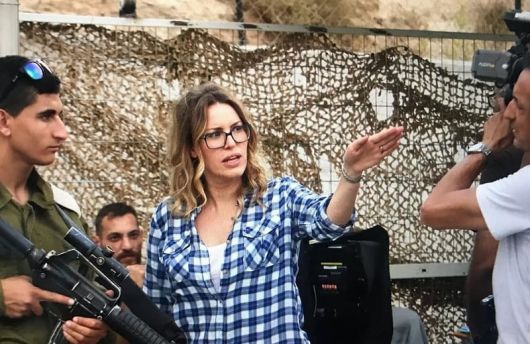
In “Palestine 36,” director Annemarie Jacir recounts a year of Arab revolt against British colonial rule that she says is crucial to understanding current events in the Middle East.

“You can’t understand where we are today without understanding 1936,” Jacir told AFP a day after the film’s world premiere at the Toronto International Film Festival.

The Palestinian filmmaker, who lives in the Israeli city of Haifa, was motivated to make the film, in part, to redress a lack of awareness about the consequences of British policies during the so-called mandate period, before Israel’s creation in 1948.

“I wanted to really point the finger at the British,” she said.

The film features a mostly Arabic-speaking cast, including Hiam Abbass from HBO’s “Succession,” and Jeremy Irons as a British high commissioner unsettled by rising violence and protests against the colonial administration.

With Jewish immigration from Europe increasing and Palestinian villagers concerned about further loss of land, Arab support for armed revolt against the British surges.

The film details the brutal crackdown launched to contain the violence.

Villagers are beaten, people are arrested en masse while soldiers torch homes after searching them for weapons.

They are tactics Jacir said Israel’s army learned from the British and have used since against Palestinians living under occupation.

But Jacir — who was born in Bethlehem in the Israeli-occupied West Bank — told AFP a key goal of the film was to shine a spotlight on the British colonial practice of divide and rule, which was used across the empire.

The narrative in “Palestine 36” builds toward the publication of the Peel Commission’s report, a British inquiry into the causes of Arab and Jewish unrest in Palestine.

The commission recommended Palestine be partitioned — with separate areas for Jews and Arabs — a finding that influenced the United Nations-backed partition plan that coincided with Israel’s creation.

“It was a British policy: first, we’ll bring (Arabs and Jews) together,” Jacir said.

Then “we separate… It was a tactic of control,” she added.

Jacir said the reception for the film at Friday’s world premiere was overwhelming.

“Yesterday was crazy,” she told AFP, an outpouring of support likely tied to widespread outrage over the conflict in Gaza.

She voiced hope that the film could foster broader awareness about the lasting impacts of the British mandate period in Palestine.

“I’m shocked how many people have told me when I tell them about the film, they were like, ‘the British were in Palestine?'”

British rule, she said, was “decisive.”

source/content: english.ahram.org.eg (headline edited)

_____________

Annemarie Jacir, director of “Palestine 36” at The Toronto International Film Festival (Photo: AFP)

______________

PALESTINE

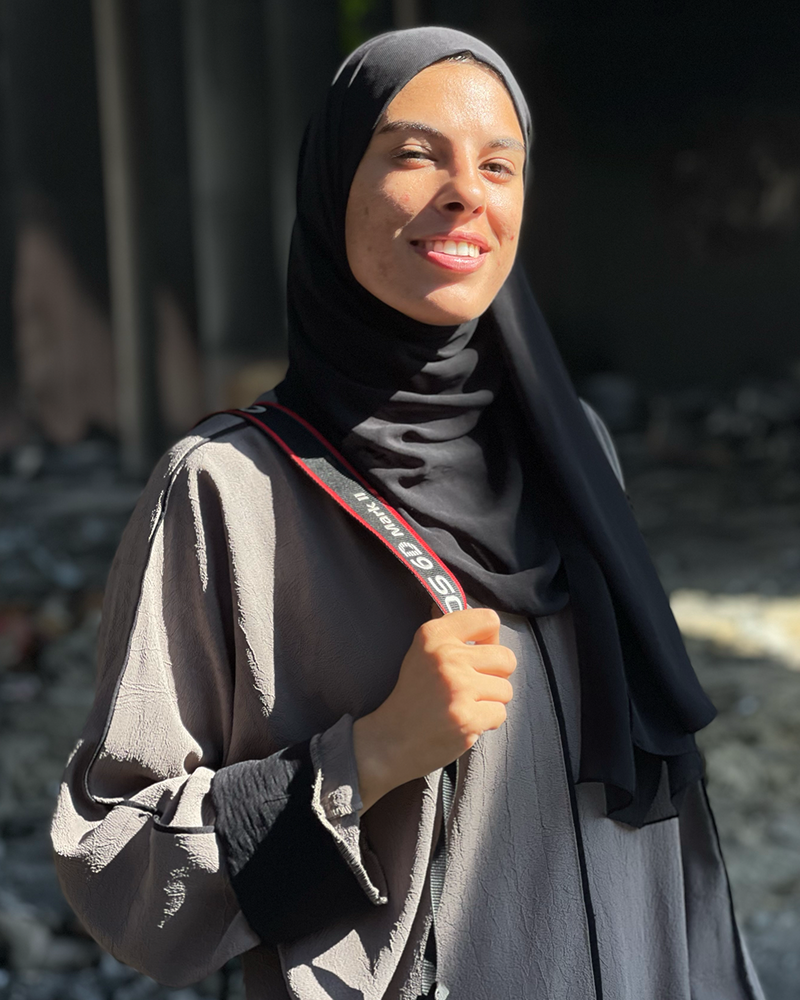
PALESTINIAN : Fatima Hassouna, a photographer who made a difference. Martyred April 16th, 2025

My dearest friend Fatima Hassouna has been martyred.

Writing this feels unreal – as if I am waiting for her familiar voice to echo in my ear.

We had a playful way of saying “hello” to each other. And Fatima had the most magical of laughs.

She could disarm you instantly.

But the silence remains and the void caused by her absence is too vast to comprehend.

Fatima was a photographer and a filmmaker. More importantly – for me – she was an extremely warm human being.

She was strong and – in a good way – stubborn.

I knew Fatima from childhood. But life – as it often does – had pulled us apart for many years.

It wasn’t until Israel launched its genocidal war against Gaza that we became close again. This happened unexpectedly during a film project.

Fatima was behind the camera, and I was there with a pen in order to write articles.

Our reunion – despite the chaotic circumstances – rekindled something profound. Our shared grief and resilience made our friendship deeper.

Fatima was deeply committed to her craft. She never simply documented a moment. She became part of it.

She had a rare ability to earn trust quickly.

The subjects of her photography were not just faces or stories. They were people she befriended.

Fatima’s camera wasn’t a barrier. It was a bridge.

She always said that she wanted not just to carry a message but to show kindness to the people she filmed or photographed.

At Fatima’s core was a sense of purpose. She came from a place of love.

We lived just a street apart in Gaza City all our lives.

After the genocide began, we would walk everywhere together. There were no taxis around and prices were rising ever higher.

Each morning, Fatima would call.

“Wait for me,” she would say. “Let’s walk together.”

And so we did.

Those walks were more than just a means of getting from A to B. They were our little escapes.

We shared everything: sorrows, secrets, silly thoughts.

I never had to pretend to be anything I wasn’t when I was with Fatima.

There were no walls between us. Just warmth and honesty.

Tender rebellion

When Fatima got engaged recently, her happiness was contagious. Despite the hunger, and the overwhelming darkness that Israel’s genocidal war had brought, she lit up like a child planning a birthday party.

We would go to the market almost daily, hunting for clothes that she could wear as she went out with her fiancé.

I remember how excited she was, how we laughed even as we carried heavy bags for long distances.

Her joy in those days amounted to a tender rebellion, a statement that love and life still mattered in the face of devastation.

We developed a ritual with our friends.

Every week, we would gather in one of our homes. We cooked whatever food we had, brewed bitter tea – we had no sugar – and sang.

We sang until the pain dulled and the laughter returned.

Those nights were our anesthesia. They allowed us to breathe in suffocating times.

Fatima was always our anchor.

She told stories, and her laughter filled the room. We could see sorrow in her eyes, but it was mixed with hope.

An unbreakable hope.

Fatima had an enchanting voice when she sang. Like something from heaven.

When the sound of Israel’s drones became too much for me to bear, I would listen to a recording of Fatima singing. Her voice brought me peace.

It served as a reminder that something pure still existed in this world.

Friendships formed – or in this case, revived – during genocide are unlike any other. They are shaped by shared experiences of hunger, sleepless nights and the constant nearness of death.

When Fatima was killed, it was like a limb had been severed from my body. I felt incomplete.

I still do.

Every night, I continue to wait for her call. I wait for the way she would tell me – without preamble – how she was feeling that day.

She would always wish to God that she would never be deprived of me.

But now I am deprived of Fatima. And it hurts more than words can express.

Fatima and I worked as a team. During the genocide, we would go down to al-Yarmouk – the football stadium that has became a huge shelter for displaced people – she with her camera, I with my notebook.

We inspired each other.

Fatima told me that she loved how I put people’s experiences into words.

“I love your ideas,” she said. “They make me want to shoot better.”

I wish that she was still around to tell her how much I loved her eye for a good photograph or image.

How she saw not just the suffering in a person but the soul behind it.

How she brought dignity to every frame.

Last winter, we were working in al-Yarmouk stadium, where the conditions were especially dire. Seeing the suffering around her, Fatima said that we must help.

I asked her to speak with the director of the film project she was working on about distributing blankets. She did and soon we were part of a mission to not only document hardship but to relieve it.

That day, we weren’t just storytellers. We were part of the story.

And Fatima was glowing. She had done something she had always dreamed of: She had made a difference.

Fatima was only 25.

Just 25.

Yet her heart carried the weight of centuries, and her spirit was brighter than a thousand suns. She was childlike and wise, gentle and fierce, brave and vulnerable.

She was exceptional. I carry her memory with me every moment.

I see her in the morning light, in the silence of a street where we once walked, in the stories we still need to tell.

Losing her is unbearable. But remembering her – keeping her voice, her laughter, her vision alive – is my way of holding on.

She was my sister, my confidante, my light.

May the world never forget the name Fatima Hassouna.

May the stories she told outlive the genocide that took her.

And may we all learn from her to live with courage, to work with purpose, and to love – always – with everything we have.

Asmaa Abdu is an academic writer and a project coordinator at the UCAS Technology Incubator in Gaza.

source/content: electronicintifada.net (headline edited)

_____________

Fatima Hassouna (Photo courtesy of Asmaa Abdu) 

_________________

PALESTINIAN

PALESTINIAN : Remembering our grandmother, Nahil Bishara: The Palestinian artist and Renaissance woman who preserved her identity through creativity

In an interview with The New Arab, Nahil Bishara’s grandchildren speak about their grandmother’s artistic legacy and her role in preserving Palestinian identity.

History is full of remarkable yet forgotten women whose stories have yet to be told.

One such case is the late Palestinian artist and designer Nahil Bishara, an active and erudite woman who sought to preserve her Palestinian identity through endless creativity despite living through constant political instability in her homeland.

“Generally, artists at the time created art to sell, but she never created art to sell. She created art to anchor her Palestinianness”

Nearly three decades after Nahil Bishara’s passing, her grandchildren are ready to share her story with the world. 

“She was always up to something artistic,” the artist’s UAE-based grandson, Assad Bishara, told The New Arab.

“She was somebody who wanted to master any kind of artistic medium she could get onto her hands. Whatever she got her hands on, she created something out of it,” Assad added.

Echoing this sentiment is his sister, Talia Bishara, a public relations specialist in culture, who fondly remembers her grandmother as a woman of taste of the Sixties era. 

“She was an elegant woman, whose hair was styled in a chignon with a million pins,” recalled Talia.

“She wanted to project an image. Her persona in society was also very important. Generally, artists at the time created art to sell, but she never created art to sell. She created art to anchor her Palestinianness.”

From Ramallah to Jerusalem 

Nahil was born in Ramallah in 1919, shortly after the end of the First World War, and spent most of her life in Jerusalem, where she nurtured her artistic talent.

In 1940, at the age of 21, the artist married Dr Assad Bishara, a renowned gynaecologist who, as Talia claimed, “a whole generation of Palestinians were born under his hands.”

According to Talia, Dr Assad was open-minded and supportive of his wife’s dreams.

As Talia puts it, “Whenever I speak about my grandmother, I have to speak about my grandfather too. He was a larger-than-life person. He wasn’t the type that restricted her to staying at home and raising a family. She did those things, but on top of that, she was exploring her artistic talent and supporting her community of Palestinian women.”

Beyond her personal achievements, Nahil also lived through important political events of the twentieth century, including the Nakba — the mass displacement of Palestinians — which led to the Israeli occupation in 1948.

‘A force and an avant-gardiste’

During this period, Nahil was offered a rare opportunity to study in England, but she refused, choosing instead to remain in her country as an act of defiance.

A woman who made history, she became the first Arab and Palestinian to study art at the Bezalel School of Arts and Crafts in Jerusalem, which had been founded as a Jewish art institution in the early 1900s.

Interestingly, at the time, Nahil was one of the few Palestinian artists to formally study art. But her education didn’t stop there.

Always striving to expand her mind and skill set, she undertook a design course by correspondence with an American university in Washington, DC. Then, in the 1960s, Nahil found herself in the Italian city of Perugia, where she studied classical painting and ceramics.

Known for always being on the move, Talia shared, “All her life, my grandmother loved art. She was a force and an avant-gardiste. She wanted to be ahead of everyone in her time.”

‘She wanted to constantly create’

To this day, Nahil is remembered as a Renaissance woman.

The educated artist spoke four languages (including Italian and French), tried her hand at stitching, woodworking, and glassblowing, hosted cultured dinners, volunteered at refugee camps, and mastered interior decoration.

Her most significant project was decorating the interior of the Young Men’s Christian Association (YMCA) building in Jerusalem, which was later converted by the Israelis into a hotel called Aelia Capitolina. Today, the hotel is known as the Legacy Hotel.

“People were visiting Jerusalem from all over the world. I think she felt a responsibility to show the world a different image of Palestine”

By using locally sourced materials, Nahil designed its chandelier (made with Palestinian refugees), crafted wooden tables, and donated around 30 of her paintings to the establishment.

“I think she saw that there was power in creation, rather than focusing on destruction. She wanted to constantly create,” explained Talia.

“People were visiting Jerusalem from all over the world. I think she felt a responsibility to show the world a different image of Palestine.”

Another momentous event in Nahil’s career occurred in 1964 when she was commissioned by the Kingdom of Jordan to create a bust of Pope Paul VI in honour of his pilgrimage to Palestine. Today, the bust sits in the Vatican.

‘Capturing everything she could to preserve Palestine’ 

Exploring Nahil’s artistic legacy, she was known for creating religious landscapes, depictions of Palestinian refugees, and floral arrangements, the latter of which her husband particularly enjoyed.

“She was concerned with the preservation of identity because it was being erased” 

Her grandchildren believe that her art carries a strong message beneath the surface, with Assad sharing, “For her, it was about capturing everything she could to preserve Palestine. She was concerned with the preservation of identity because it was being erased.”

During The New Arab’s interview, Talia showed her grandmother’s artwork of female refugees, one of whom is holding a child, painted in 1948.

Talia explained that she was literally holding a piece of history in her hands, adding, “When I watch the news today, it’s like history is repeating itself,” referring to the ongoing bombardment in Gaza.

“A portion of our civil society has been cut off and turned into refugees who live in tents, and this was something that had to be captured,” commented Assad on the theme of displacement in Nahil’s art.

Celebrating a forgotten artist

In 1997, Nahil died of cancer, yet her memory remains alive in the hearts and minds of her family and friends.

Recently, the once-forgotten Nahil has slowly been re-entering the public sphere. Thanks to Talia, Nahil’s name now appears in Google searches, and some of her artworks have found homes in public cultural institutions, such as the Barjeel Art Foundation in the UAE and Dar El Nimer in Lebanon.

According to Talia, some museums have expressed interest in acquiring Nahil’s work since she became more vocal in sharing her grandmother’s story.

For Talia, this recognition has motivated her to one day publish a catalogue of Nahil’s artworks.

“My whole life I wanted to do something for her,” Talia said.

“I didn’t study art but I know its importance and can feel it. I started connecting with art people, but it wasn’t an easy journey. It fuelled me even more after the 7 October attacks,” she added. 

“Everyone should be interested in championing these names and putting them on the stage because you need the past… The past is your present. It’s our role to preserve it.”

source/content: newarab.com (headline edited)/Rawaa Talass

___________

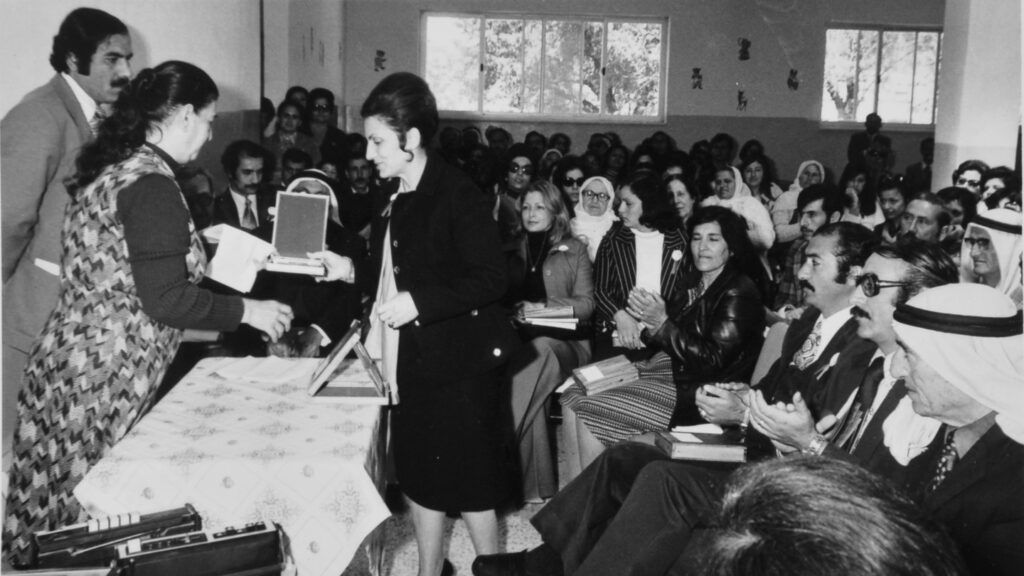
Nahil Bishara being honoured for volunteering work at Inaash Al Usra Association

_______________

PALESTINE

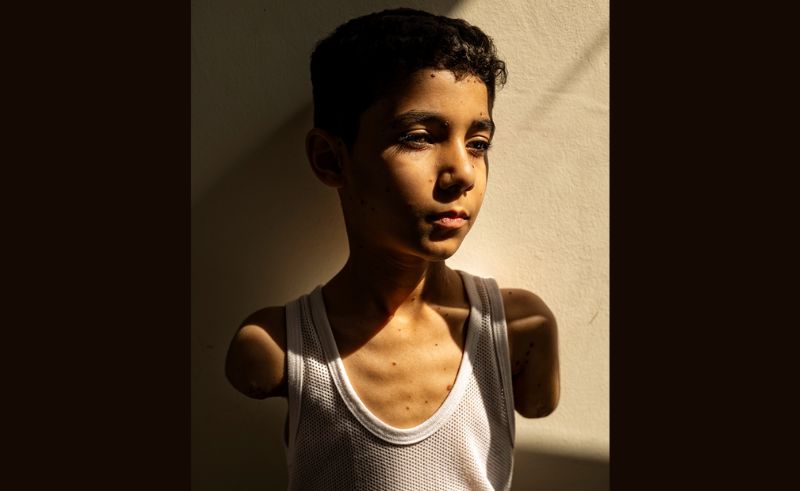
PALESTINIAN Samar Abu Elouf Wins World Press Photo of the Year

The award-winning image captures nine-year-old Mahmoud Ajjour, who lost both arms in an Israeli attack on Gaza, and is now learning to adapt to life in Qatar.

A photograph of nine-year-old Mahmoud Ajjour, a Palestinian child injured in an Israeli airstrike on Gaza City in March 2024, has been named World Press Photo of the Year by the World Press Photo Foundation. The image, taken by Palestinian photojournalist Samar Abu Elouf for The New York Times, offers a harrowing glimpse into the long-term impact of genocide on Palestinian children.

The photograph shows Mahmoud in a clinical setting in Doha, Qatar, where he was evacuated for medical care after losing one arm and suffering severe injuries to the other during an Israeli airstrike. The explosion struck after Mahmoud reportedly turned back to urge others to flee. Since undergoing treatment, he has begun to learn how to use his feet for basic tasks such as writing, playing games on his phone, and opening doors. He still requires support for daily activities such as eating and dressing. His aspiration, the photo caption notes, is simple: to receive prosthetic arms and live as any other child would.

The World Press Photo jury praised the image for its emotional weight and clarity, describing it as “a portrait that speaks to the long-term cost of war, the silences that perpetuate violence, and the role of journalism in exposing these realities.” The jury highlighted how the photo doesn’t flinch from documenting the physical toll of conflict while also humanising the statistics that often dominate war reporting.

The broader context of the photograph adds to its urgency. According to the United Nations Relief and Works Agency (UNRWA), by the end of 2024, Gaza had more child amputees per capita than any other place in the world. The World Health Organization (WHO) reported that by March 2025, over 7,000 injured Palestinians had been evacuated from Gaza for medical treatment, while more than 11,000 critically wounded individuals remained in the Strip, awaiting transfer. Qatar, which has developed its healthcare system in recent years, played a central role in facilitating these evacuations, alongside Egypt, Jordan, and Turkey.

The winning photo forms part of the annual World Press Photo Contest, which celebrates outstanding photojournalism and documentary photography from around the globe. Two other Arab photojournalists were recognised during the World Press Photo Contest: Palestinian photojournalist Ali Jadallah was recognized for his stark documentation of the aftermath of Israel’s invasion of Gaza, while Sudanese photographer, Mosab Abushama offers a jarring juxtaposition of violence and celebration with his photo of a groom at his wedding with a rifle in the background.

source/content: cairoscene.com (headline edited)

____________

______________

PALESTINE

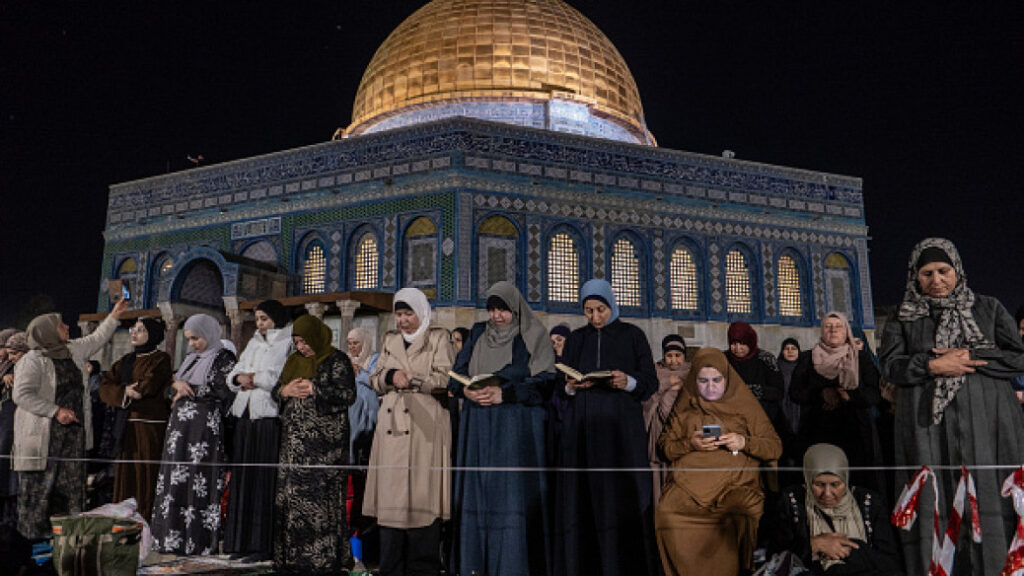
PALESTINE : 26 March 2025: 180,000 Palestinians pray at Jerusalem’s Al-Aqsa mosque for Laylat al-Qadr, despite Israeli restrictions

Palestinians in their thousands prayed at Jerusalem’s Al-Aqsa mosque during Laylat al-Qadr, considered the holiest night in Islam.

Some 180,000 Palestinians performed nighttime and Tarawih prayers at the sacred Al-Aqsa Mosque in occupied Jerusalem on Wednesday despite Israeli restrictions, the Jerusalem Islamic Endowments Department said.

Israeli authorities reportedly prevented scores of West Bank Palestinian worshippers from reaching the holy site, after refusing them entry at the Qalandia and Bethlehem checkpoints, the Palestinian Wafa news agency said.

The Israeli authorities claimed they did not carry valid documentation – a common pretext used to justify such restrictions.

Israeli forces were also deployed in the alleys of the Old City of Jerusalem, turning it into a “military zone,” according to the Palestinian Jerusalem Governorate local authority, obstructing Palestinians’ access to the mosque.

Several other Palestinians were banned from entry at the mosque’s gates, according to the Wadi Hilweh Information Center, a local human rights group, as cited by the Turkish Anadolu agency.

Last year, 200,000 Palestinians performed such prayers at Al-Aqsa, under similar heavy restrictions.

Earlier this month, as Muslims welcomed Ramadan, Israel announced it would only allow children under the age of 12, women above the age of 50 and men above the age of 55. Palestinians who fall under this category are obliged to carry special permits issue issued by authorities.

The prayers took place during Laylat al-Qadr – the holiest night in Islam, which falls during the last 10 days of Ramadan. The night, translated into English as ‘Night of the Power,’ marks when the holy Quran was revealed to the Prophet Muhammad by the angel Gabriel.

Muslims worldwide generally increase acts of prayer, often staying in the mosque between nighttime and dawn prayers, and exercise spiritual retreat, known as I’tikaf during this period.

Muslims also believe that acts of good deeds are multiplied manifold during the period, as the night of power is said to be “better than a thousands months,” according to the Quran .

As prayers were held across the Muslim world and communities, many imams included prayers for the people of Gaza, subject to indiscriminate Israeli attacks which have killed over 62,000 people over the last 16 months.

Journalists barred from Al-Aqsa

Israeli forces have also imposed restrictions on journalists covering events at Al-Aqsa this month. Authorities have reportedly barred at least 13 journalists from entering the Al-Aqsa compound.

Among them was Basem Zidani, who told The New Arab’s sister site, Al-Araby Al-Jadeed, that Israeli forces said that the Shin Bet security service had a secret file showing that his presence at Al-Aqsa Mosque, especially during Ramadan, would “disturb public order”.

Zidani said he was summoned to the Qishleh police station, where he was interrogated by a police officer who then told him that he would be banned from entering Al-Aqsa compound.

The journalist sought to contest this ban through local rights organisations, but to no avail.

“It is clear that I was targeted because of my journalistic work during the war on Gaza, but I do not regret it.”

source/content: newarab.com (headline edited)

____________

Prayers at Al-Aqsa took place in defiance of Israel’s restrictions on Palestinian worshippers [Getty/file photo]

_____________

PALESTINE

PALESTINIAN-BRITISH : Oscar-Nominated Filmmaker Farah Nabulsi Highlights Palestinian Struggles in New Film

Oscar-nominated and BAFTA award-winning Palestinian-British filmmaker Farah Nabulsi is calling for global empathy towards Palestinians through her debut feature film, The Teacher.

In an interview, Nabulsi emphasized that her film aims to challenge audiences to reflect on the harsh realities Palestinians face under occupation. “I want people to ask themselves: Is this a reality they would accept for themselves? And if it isn’t, why have Palestinians been expected to?” she stated.

Nabulsi, whose film premiered at the Toronto Film Festival in September 2023, expressed that The Teacher offers a deeper human context to the ongoing situation in Palestine, especially as “Israel”’s actions in Gaza intensify.

Born and raised in the UK, Nabulsi’s first visit to Palestine a decade ago profoundly impacted her perspective, as she witnessed firsthand the injustice and discrimination faced by Palestinians. This experience spurred her to use storytelling as a way to process and respond to the issues she encountered.

Filming in the occupied West Bank proved emotionally and logistically challenging. Nabulsi shared that the realities of filming in such a context, alongside a cast and crew deeply affected by these experiences, created an emotional toll.

The film addresses issues such as settler violence, home demolitions, and the mistreatment of children in military courts, with Nabulsi drawing inspiration from real-life conversations and her observations. Through The Teacher, Nabulsi hopes to inspire global empathy for Palestinians and garner support for their struggle for freedom.

source/content: al24news.com (headline edited)

__________

__________________________

BRITISH / PALESTINIAN