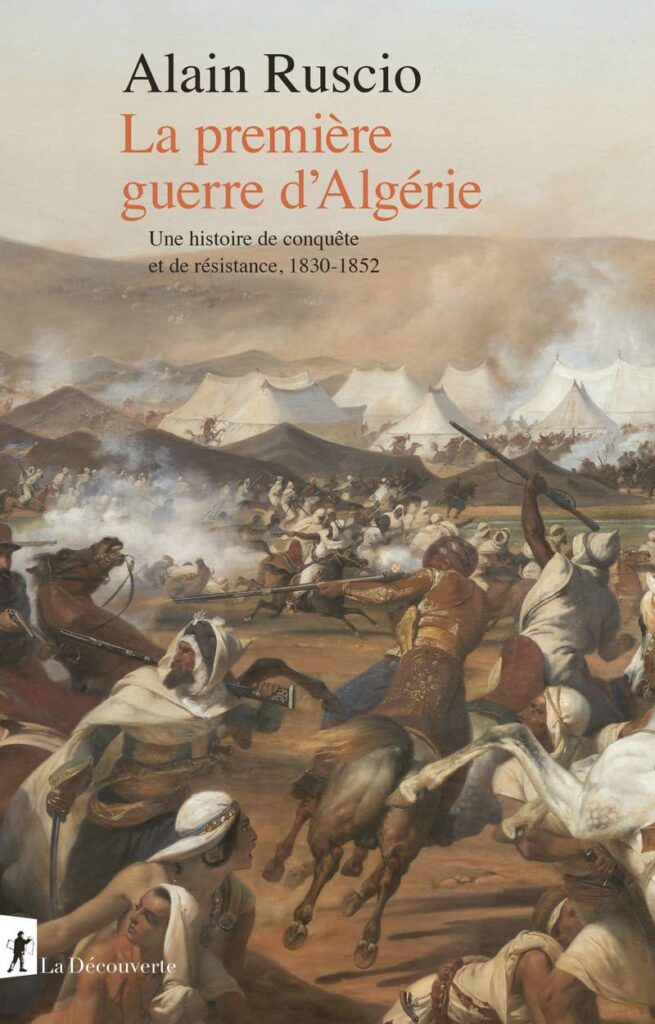
This book demolishes one French myth about Algeria after the other.
Algerian leaders are too prone to dwell on their war for independence, nostalgia for an exalted past cannot help to build a modern nation.
The first twenty years of the French conquest of Algeria (1830-1850) cost 400,000-500,000 natives lives, between ten and 12.5 percent of the population. The First World War, the costliest in lives France ever fought, cost the country an estimated 3.5 to 3.7 percent of the native population. Nothing better illustrates the sheer brutality of France’s conquest of Algeria than these bare statistics. European colonial wars were usually brutal but this one was particularly so, mirrored by an equally bloody war on independence in 1954-62. That Algerian and French modern politics and broader relations should be haunted by the sheer amount of blood spilt, the human brutality and lasting resentment these conflicts provoked should not surprise the modern reader. History offers a useful guide when trying to understand the deep crisis diplomatic relations between France and Algeria have been going through over the past 18 months, the worst crisis since the latter’s independence.
The theory of France’s “civilising” mission to the world remains to this day the mainstay of many TV debates. Where Algeria is concerned it was traditionally the mainstay of public discourse in academic and political circles. That discourse predates the conquest of Algeria by a century and was given new impetus by the French Revolution after 1789 which turned the idea of Revolutionary Enlightenment values into the bedrock of public discourse. Such ideas combined with the missionary discourse of the Catholic church which before 1789 took the form of “rescuing” Christian lives from captivity in the prisons of the “Algerine pirates” in other words the privateering sea captains of the Regency of Algiers which at the height of their power in the 16th and 17th centuries regularly raided the coast of Devon, Ireland and once in 1632, Iceland. By the 19th century the Catholic Church had taken on a novel form, at least in Algeria, that of bringing the native Berbers back to the faith of their ancestors, notably that prince of the early Christian Church St Augustine, bishop of Hippo (modern day Annaba).
he reasons king Charles X invaded Algeria in 1830 are well known but the extent to which such an idea had been discussed in the Paris press is explained in Alain Ruscio’s remarkable book more fully than ever before. The British admiral Lord Exmouth had bombarded Algiers in 1816 after the Congress of Vienna had decided that the activities called “privateering” had to stop. They had virtually disappeared by then but the European powers after their victory against Napoleon felt morally righteous as never before and that righteousness turned, after 1815, against the Ottoman empire and, more broadly, the Muslim world. Greece was about to break loose from Constantinople, Algiers came at the same time though the circumstances of Western intervention were very different.
Continuous warfare in the 20 years after 1830 across the northern region of Algeria witnessed methods of war the native population did not use: the systematic burning of towns, destruction of irrigation works, cutting down of fruit trees and burning of crops. The French miliary commanders enjoyed overwhelming superiority in weapons but they had to fight a tenacious enemy: Abdelkader and Hadj Ahmed Bey are but two of the most famous Algerians who fought the French army with tenacity for years. Eventually outgunned, the first surrendered to the French in 1847, the French generals promptly betrayed their word and imprisoned the Emir in France. It took five years for the new emperor Napoleon III to free Abdelkader and let him leave for the East in 1852.
French settlers were not attracted to Algeria and never were in great numbers. By the mid century the majority of European settlers was not French, but Spanish and Italian. Nor did they care to farm a land the troops had so devastated during the conquest. Most Europeans resided in cities. It was only much later in the 1880s while phylloxera devastated the vineyards of France that Algerian grapes and winemaking prospered.
This book demolishes one French myth about Algeria after the other. It is very well documented and written in chronological order which makes it very pedagogical. The sorry story it tells puts paid to any idea of a French civilising mission but it is one which conservative and radical right wing politicians evoke regularly on TV talk shows, in their view Algeria remains the “barbary state” so beloved of their 18th and 19th century forebears. Nor have attitudes towards Islam changed all that much.
Algerian leaders are too prone to dwell on their war for independence, nostalgia for an exalted past cannot help to build a modern nation. La Première Guerre d’Algérie should be required reading for many French political readers. Clearly written and argued with a wealth of previously difficult to access statistics and references, this book demonstrates once and for all why Algeria is the black box of French history.
source/content: thearabweekly.com /Francis Ghiles (headline edited)
______________
_____________
ALGERIA