Arabs & Arabian Records Aggregator. Chronicler. Milestones of the 25 Countries of the Arabic Speaking World (official / co-official). AGCC. MENA. Global. Ist's to Top 10's. Records. Read & Enjoy./ www.arabianrecords.org
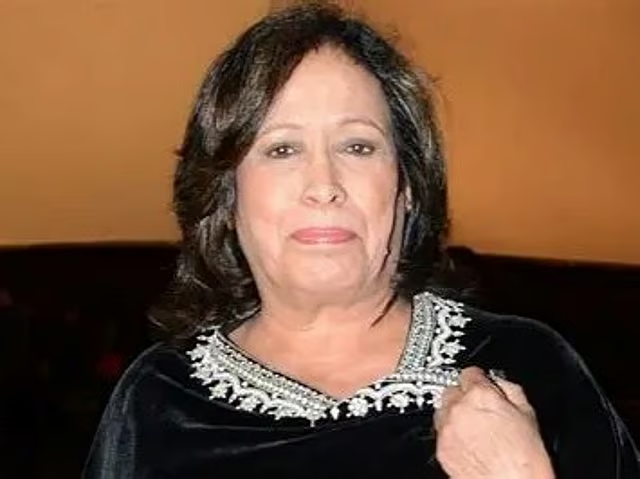
Iconic Kuwaiti actress Hayat Al Fahad, widely known as the “Lady of the Gulf Screen”, has died at the age of 78 after a prolonged illness, in a loss that has reverberated across the Arab artistic community.
The announcement was made on Tuesday via the official account of the Al Fahad Artistic Production Foundation, which paid tribute to her as a towering figure in Gulf drama whose legacy will endure for generations.
Al Fahad had faced recurring health complications in recent months, which kept her away from the screen. Sources close to the family said her condition deteriorated sharply in recent days, leading to her admission to intensive care before her death.
Over a career spanning more than five decades, Al Fahad was not only an actress but also a writer and producer, known for works that explored Gulf society with depth and candour.
Born in Kuwait in 1948, Al Fahad is regarded as one of the Arab world’s most influential television and stage figures. Her career spans acting, broadcasting, writing, and producing, with celebrated credits including the beloved television series Khalti Qumasha, Ruqiya wa Sabika, Jarh Al Zaman, and ‘Ndama Tu’Gany Al Zuho.
Despite advancing age, she remained active in Ramadan productions until her later years, delivering performances marked by experience and enduring passion.
Her death marks the end of a defining chapter in Gulf television, though her work will continue to resonate across the Arab world.
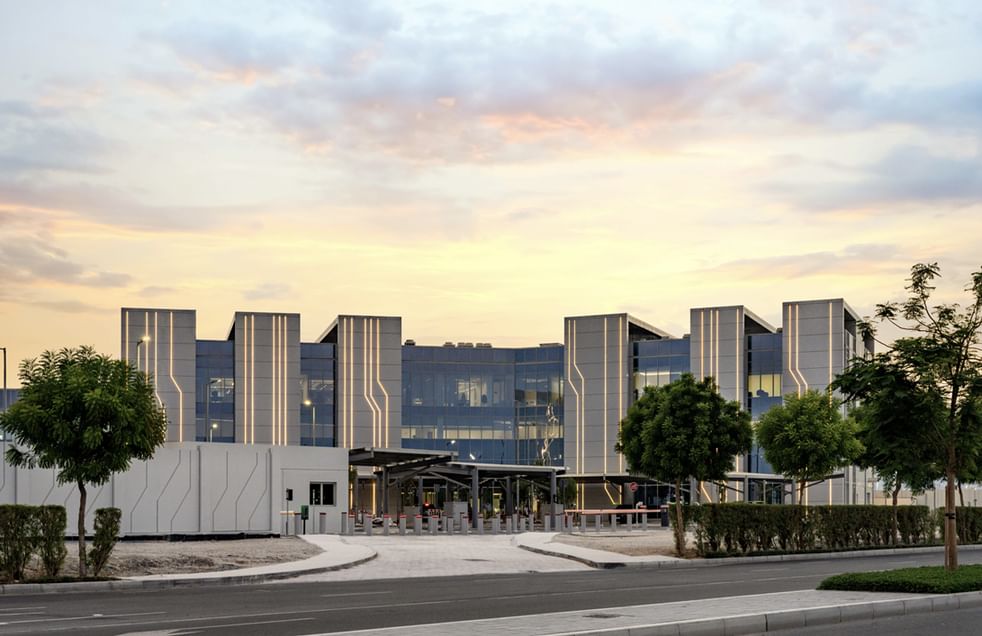
Khazna Data Centres, a global leader in critical AI infrastructure, today announced that its DXB8 facility in Dubai has been awarded the Zero Waste Certification by SCS Global Services, one of the world’s leading third-party sustainability certification bodies. DXB8 is the first data center globally to achieve this certification.
The certification verifies that the DXB8 facility (excluding IT waste from data halls) has achieved 99.55% waste diversion from landfill over a 12‑month audited period, reflecting rigorous operational controls, disciplined waste segregation, and responsible end‑of‑life management across the site.
The independent, third-party audit confirms that the vast majority of waste generated at the facility is diverted through recycling, bottle reuse programs with vendors, resale, and composting, as well as other approved recovery pathways for residual materials, in line with recognized waste-hierarchy best practice.
“This certification is an important milestone in our sustainability journey,” said Elisabetta Baronio, Director – ESG, Khazna Data Centres. “Achieving Zero Waste status is not about a single initiative. It is the result of consistent operational discipline, strong partnerships across our supply chain, and a culture that prioritizes environmental responsibility alongside performance and reliability.”
The certification to the SCS Standard for Zero Waste (SCS-110) was awarded following a comprehensive assessment that reviewed all waste generated by the facility excluding tenant IT waste in data halls (white space). It demonstrates not only the quantity of waste diverted from landfill, but also the strength of the underlying systems, governance, disciplined workplace culture, and continuous improvement processes that drive sustained, long-term waste reduction. For mission‑critical infrastructure such as data centers, where scale, uptime, and complexity present unique sustainability challenges, this level of performance is both rare and meaningful.
The achievement at DXB8 reflects Khazna’s broader ESG strategy, which integrates sustainability into the design, construction, and operation of its facilities worldwide. From resource‑efficient construction and advanced cooling technologies to responsible materials management and operational excellence, Khazna continues to embed environmental stewardship into the core of its growth.
As demand for digital and AI‑ready infrastructure accelerates, Khazna remains committed to enabling the digital economy responsibly by delivering resilient, sovereign-ready data centers, while reducing environmental impact and supporting national and global sustainability objectives.
source/content: wam.ae (headline edited)
______________
___________________________ DUBAI, UNITED ARAB EMIRATES
Leo XIV’s upcoming visit will honour Saint Augustine’s roots and a small Catholic community that shared the nation’s suffering.
For the first time in Catholic history, a pope will make an official visit to Algeria.
From 13 to 15 April, Pope Leo XIV will begin an African tour in the Maghreb country, which will then take him to Cameroon, Angola and Equatorial Guinea.
His trip to Algeria will include two stops: the capital, Algiers, and Annaba, the city of Saint Augustine. The fourth century thinker is a key figure in the pope’s life and in the meaning given to this unprecedented visit.
“I am an Augustinian, a son of Saint Augustine, who once said: ‘With you I am a Christian, and for you I am a bishop’,” Leo said in his first address as Pope to the crowd gathered in St Peter’s Square in Rome in May last year to celebrate his election.
These words sparked enthusiasm in the Algerian media, which emphasised the new Pope’s attachment to the cleric and theologian born in 354 in Thagaste, an Amazigh-Roman city known today as Souk Ahras, in northeastern Algeria.
As bishop of Hippo, the ancient name for the city of Annaba, he profoundly influenced Christian thought.
“Saint Augustine is important to the Pope because he entered the Augustinian Order at a very young age,” Cardinal Jean-Paul Vesco, Archbishop of Algiers, told Middle East Eye.
“From the age of 13, Leo attended a school in the United States [where he was born] run by the Augustinians,” he added.
After studying mathematics and philosophy in Philadelphia, the man then known as Robert Francis Prevost joined the Augustinian order at the age of 22 and rose through the ranks to become prior general of the order.
It was in this capacity that he made his first visit to Algeria, in 2001, to participate in the first international symposium on Saint Augustine at the University of Annaba.
Cardinal Vesco says he convinced the new Pope to visit Algeria in the early days of his pontificate.
On the agenda for his upcoming visit is a public address at the Martyrs’ Monument, erected on the heights of the capital in memory of those killed during the Algerian war of independence, followed by a meeting with the country’s highest authorities at the conference centre of the Great Mosque.
Augustine ‘was born here’
The Algerian authorities are attaching particular importance to this visit, the preparations for which are being personally overseen by President Abdelmadjid Tebboune.
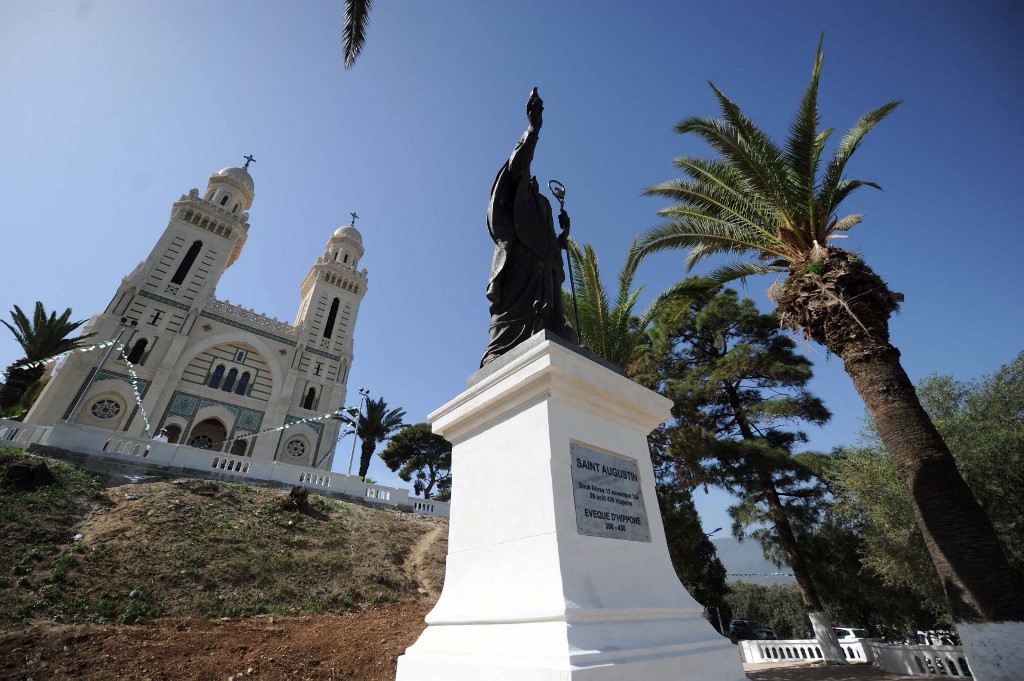
Annaba, in particular, has been transformed into a vast construction site, with asphalting, painting and cleaning of the streets along the road leading to the Basilica of Saint Augustine, which is also undergoing maintenance work.
‘Augustine is a figure rooted in North African geography and culture. Yet, this essential dimension has long been obscured’
– Abdenasser Smail, historian
For historian Abdenasser Smail, who recently published Saint-Augustin, un Nord-Africain universel (Saint Augustine, a Universal North African), the Pope is visiting Algeria and Annaba to pay homage to the philosopher of antiquity but also “because Augustine is not just a Christian figure.
A key element of Augustine’s thought was how he radically internalised the relationship with God in the depths of the self, what he calls the “inner trinity”: memory, intelligence and will.
“He is one of the major thinkers in the history of humanity. Europe embraced him. The Vatican drew inspiration from him. But he was born here,” Smail told MEE.
The pope’s visit, he added, is not only religious: “It is about historical memory.”
According to him, the tribute Leo is paying to Saint Augustine is a way of righting a historical wrong that has long obscured the theologian’s true origins.
“Augustine is a figure rooted in North African geography and culture. Yet, this essential dimension has long been obscured, both in Western representations and in contemporary Algerian national narratives,” Smail said.
In a country with an overwhelming Muslim majority, “an Algerian Muslim can be proud of this,” he added.
“Because being proud of one’s history doesn’t mean adopting another faith. It means recognising that this land has produced multiple great figures. To deny this is not to defend Islam. It is to impoverish our own memory,” he said.
An Algerian Church
Beyond the very symbolism of Saint Augustine, Pope Leo XIV’s visit to Algeria is also a tribute to, and support for, the Algerian Church, “a very small Church in a Muslim world”, as Vesco described it.
“This is the church of that people, the Algerians,” added the archbishop of Algiers, who has lived in the country for nearly 20 years and was naturalised as an Algerian citizen in 2023.
The Catholic Church in Algeria is one of the smallest in the world: barely 4,200 faithful spread across four dioceses – Algiers, Oran, Constantine and Laghouat – out of a population of 46 million.
It has about 60 priests and 100 nuns and monks, primarily from Europe, Africa and Latin America. Its most striking characteristic is its composition: the faithful are overwhelmingly foreign and of sub-Saharan origin, a reality now visible in every parish.
Native Algerian Catholics number only a few hundred; no official figures are available. The number of faithful plummeted dramatically with Algeria’s independence in 1962 and the mass exodus of Europeans from the country.
“Of course, the Church returned to Algeria with [French] colonisation, because it had practically disappeared [after the Arab-Islamic conquest of North Africa in the 7th century],” Vesco said.
However, this Church has become Algerian, he explained, emphasising the essential role of the archbishop of Algiers from 1954 to 1988, Leon-Etienne Duval, in the process.
As early as 1955, a year after the start of the War of Independence that pitted Algerians against the French occupiers, Duval denounced the socio-economic injustices of the colonial system and the torture and massacres of Algerians committed by the French army, while supporting their self-determination.
Naturalised Algerian in 1964 and promoted to cardinal, Duval succeeded in transforming the church in Algeria from a colonial institution into a church officially recognised and supported by a newly independent state where Islam was proclaimed the state religion.
“Our church remains marked by Cardinal Duval’s appeal in 1962 to priests to stay in Algeria [at the end of the war],” Cardinal Vesco said.
‘It is a church that truly serves Algerian society’
– Cardinal Jean-Paul Vesco, archbishop of Algiers
“This is how we kept schools, dispensaries, etc open from independence onward, because it is a church that truly serves Algerian society.”
The position defended by Duval, inherited from decades of struggle by liberal Catholics in Algeria, was supported by the Vatican and contributed to the Catholic Church’s dialogue with the Muslim world.
“By bringing the problems of the ‘Third World’ to the forefront, the Algerian experience also contributed to a profound shift in the Church’s theological and political stance toward Islam,” writes researcher Uriel Gadessaud in the journal Outre-Mers.
“It was during the Second Vatican Council (1962–1965) that the Holy See underwent a true aggiornamento, under the influence of the Algerian War,” he added, referring to the Vatican’s new opening to the world and other religions.
In addition to aspirations for independence, members of the Catholic Church in Algeria shared with local Muslims the sufferings of the “black decade”, the civil war that ravaged the country between 1992 and 2002.
Triggered by the army’s halt to the electoral process in January 1992 after the Islamic Salvation Front (FIS) won the first round of parliamentary elections, the conflict between armed Islamist groups and security forces killed an estimated 200,000 people.
Among them were 19 Christian religious figures killed between 1994 and 1996, including the Bishop of Oran, Pierre Claverie, and the seven monks of Tibhirine, whose abduction and murder in 1996 remain shrouded in mystery.
Declared martyrs by former Pope Francis, they were beatified in December 2018 in Oran – the first beatification ceremony held in a Muslim country. During his upcoming visit to Algiers, Pope Leo is scheduled to pray in the chapel of these 19 “martyrs of Algeria”.
Calls to address human rights
Today, the small Catholic community lives in harmony with a predominantly Muslim Algerian society, and the faith is officially protected and recognised by the authorities, even if non-Muslim religious practices remain confined to specific spaces.
“I live my faith discreetly, as required by the fact that I live in a Muslim society, but I have never received a single derogatory remark,” Simon, an Ivorian student who has been living in Algiers for three years, told MEE.
Every Sunday, he attends mass at the Diocesan Centre in Hydra, an upscale neighbourhood of the capital.
‘I live my faith discreetly, as required by the fact that I live in a Muslim society, but I have never received a single derogatory remark’
– Simon, Ivorian student in Algiers
“Beyond prayer and communion, we meet to organise charitable activities, classes for disadvantaged Algerian children and book clubs,” added Simon, who said he is “proud and happy about the Pope’s visit”.
“It’s a gift, a grace, for our little flock here in Algeria.”
However, the Christian presence in Algeria also has a dark side: the restrictions targeting Protestant worship and its evangelical branch, although freedom of worship is enshrined in the constitution.
Since 2006, a decree “establishing the conditions and rules for the practice of religions other than Islam” requires authorisation for the creation of religious associations, their practices and their use of buildings.
While the Catholic Church in Algeria enjoys the status of an approved association, and its sermons are even broadcast on public radio, this is not the case for the Protestant Church of Algeria, officially recognised since 2011 but whose activities are only authorised within its main headquarters in Algiers.
There are no longer any legally open Protestant places of worship in the country. The authorities closed them because they suspect evangelicals of conducting conversions, which is prohibited by Algerian law. Some pastors are even facing legal action.
Several Christians contacted by MEE declined to express themselves for fear that the authorities would suspect them of being converted evangelicals.
This situation is regularly denounced in the US State Department’s report on religious freedom and by human rights groups.
On Tuesday, three international NGOs urged Pope Leo XIV to raise issues of human rights and religious freedom with the Algerian authorities during his visit to Algeria.
“We ask you to call on the authorities to end discrimination against religious minorities and to respect their right to freedom of religion or belief, including the right to practice their religion freely,” EuroMed Rights, Human Rights Watch and MENA Rights Group said in a letter addressed to the pontiff.
According to the groups, religious minorities “face discriminatory legal and administrative restrictions that limit their ability to practice, organise and express their faith openly”.
In addition to Protestants, they cite Ahmadis, followers of a faith originating in India who consider themselves Muslim but are regarded as heretics by the Sunni majority in Algeria.
The NGOs also urged the Pope to call on Algerian authorities to “release those arbitrarily detained for exercising their human rights”.
“Hundreds of protesters, activists, journalists and human rights defenders have been arbitrarily detained, unjustly prosecuted and sentenced to prison terms for exercising their rights to freedom of expression and peaceful assembly,” they said.
A picture taken on October 19, 2013 shows a statue of Saint-Augustin in front of the Saint-Augustin basilica after its reopening in the Algeria’s eastern city of Annaba. The basilica, built in 1909 during the colonial period, fell into disrepair before being reopened after major restoration works. AFP PHOTO / FAROUK BATICHE (Photo by FAROUK BATICHE / AFP)
It is now nearly seven years since uprisings brought down authoritarian rulers across the Arab world, but only in Tunisia have there been significant achievements in consolidating a new democracy. There are two contradictory conclusions to draw from this. Either the Tunisian political process offers vital insights that might be applicable in other Arab countries, or the transition relies on unique characteristics that make it unlikely to be imitated elsewhere.
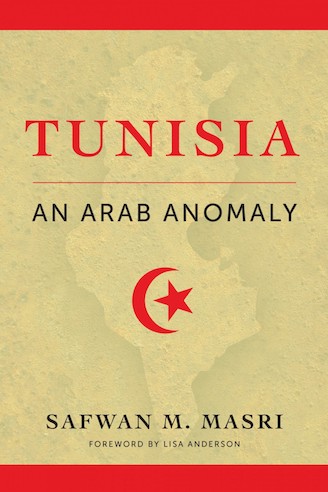
SafwanMasri has written a book revealing his deep affection for Tunisia and its history, but ultimately his Tunisia : An Arab Anomaly argues that these political successes are so particular that they cannot be replicated. It is a surprisingly pessimistic conclusion for a book so admiring of the Tunisian experience.
Masri’s argument is that Tunisia’s democratic achievements are not simply down to well-rehearsed observations like the fact that the population is small and homogenous, that it lacks the curse of petroleum resources, or that it has benefitted from having a small, apolitical military. What has been most important, he argues, is a ‘remarkable culture of reform’ rooted in a progressive and adaptive brand of Islam. This has produced a distinct Tunisian identity, drawn from an amalgam of civilizational experiences, and which is demonstrated by historic achievements in terms of education, women’s rights, religious reform, and civil society. These ingredients made the country ‘predisposed to democracy’, he writes, and reveal what is lacking elsewhere in the Arab world.
In the first third of the book, Masri gives an account of the run-up to the revolution of 2010–11 and the political process that followed. The author draws from interviews he conducted in Tunisia, mostly with political elites, as well as news reports and secondary sources. The book is written as a quest to understand the Tunisian experience rather than as an academic work, and it is very readable. The second section of the book narrates Tunisian history from Dido of Carthage to independence in 1956. Masri identifies what he calls the ‘roots’ of Tunisian identity as the political and intellectual reformist movement which began in the mid-nineteenth century. He argues this moment laid the foundations for the reforms of the newly-independent Tunisian state and, later, of its transition to democracy.
The final third of the book appraises the legacy of Habib Bourguiba, Tunisia’s independence leader and first president. Masri acknowledges that Bourguiba was arrogant, ruthless, and dictatorial, but he considers his reforms essential to explaining the country’s trajectory after 2011. He argues that Bourguiba dealt with religion ‘masterfully’, using Islamic justification for his reforms while also subjugating religion as a domain of the state. He pays detailed attention to reforms in education and the resulting rise in school enrolment. These education policies also constructed a particular Tunisian identity: ‘Toleration and acceptance became deeply rooted in the Tunisian psyche enabling the enlightened progression of the country toward democratization and freedoms not experienced elsewhere in the region.’
One of the most interesting chapters explores how the education system stumbled in the years after Zine al-Abidine Ben Ali seized power in 1987. Though he widened access to school and university, Ben Ali also presided over a sharp decline in educational standards. Universities produced more graduates but failed to equip them for the job market, spreading a sense of worthlessness among young people.
The book provokes interesting questions. Is the Tunisian experience really so different from the rest of the region? After the French protectorate, Tunisia was ruled for decades by a single, mass-party regime. The regime was hit by the economic crisis of the mid-1980s and tried to escape it through a brief, ill-fated political opening. Then Ben Ali reverted to authoritarianism, repressing political opponents and offering a corrupt economic liberalisation in lieu of political change, while clinging to a hollow mantra of ‘reformism’. This is a recent history familiar to many other Arab nations.
Was the Tunisian transition towards democracy quite so pre-ordained? A different version of the proportional representation system chosen in 2011 would probably have produced an outright Islamist majority. Would al-Nahda then have been so ready to compromise its positions? In April 2014, deputies in the assembly defeated by just a single vote a proposal to exclude former ruling party figures from political life. If that vote had gone the other way, would it have still enabled the elite compromise that now characterizes the political process? And how much will the unresolved economic and social crisis erode the country’s political achievements?
For Masri, Tunisia’s key advantage lies in education. Bourguiba’s encouragement of critical analysis in schools, he argues, has avoided the ‘intellectual despotism’ which he sees as typifying other Arab education systems and which makes the region ‘ill prepared for democracy’. But much scholarly work has been done to demonstrate that factors other than a lack of preparation mitigate against democratic transitions. And, as he himself demonstrates, the Tunisian education system has been facing serious problems for at least two decades. Perhaps Tunisia at least offers some guidance as to how political actors elsewhere in the region might negotiate their own paths away from authoritarianism and how the challenges they confront could yet be overcome.
Mohammed bin Abdulkarim Al-Issa also signs 7 pacts on official visit to Asia nation.
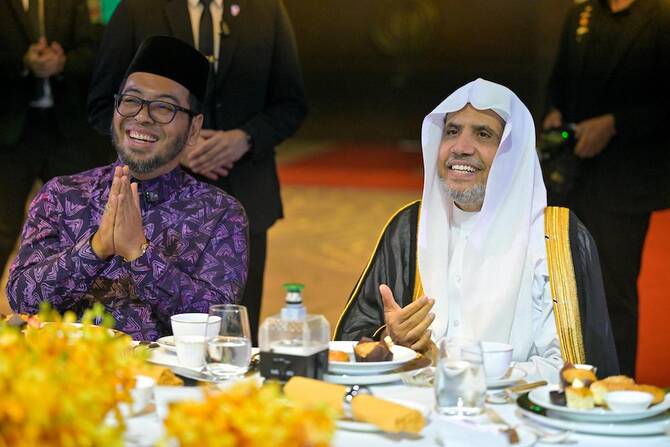
The head of the Muslim World League and chairman of the Association of Muslim Scholars inaugurated a new body, the Global Council for Scientific Miracles in the Holy Qur’an and Sunnah, on Sunday in Kuala Lumpur.
MWL Secretary-General Dr. Mohammed bin Abdulkarim Al-Issa took part in the event as part of an official visit to Malaysia, the organization announced on social media.
During his trip, he also presided over the closing ceremony of the Science and Faith program and competition.
Both events were attended by international scholars, government ministers, and senior university figures.
Malaysia hosted the two international initiatives as a part of its partnership with the MWL in supporting Islamic and education programs.
This cooperation was further strengthened through the signing of seven agreements between the MWL and several Malaysian government and private institutions, including universities, research centers, and academic bodies.
The newly established council is intended to advance scholarly engagement with the Qur’an and Sunnah, while the Science and Faith program aims to promote research and intellectual exchange.
The closing ceremony featured a visual presentation outlining the program’s activities and objectives, alongside the announcement of the MWL’s international awards.
source/content: arabnews.com (headline edited)
_____________
The head of the Muslim World League and chairman of the Association of Muslim Scholars inaugurated the Global Council for Scientific Miracles in the Holy Qur’an and Sunnah on Sunday. (Supplied)
“Houris” (Virgins, in English) focuses of the victims of what Algerians call the “black decade,” when tens of thousands of people were killed as the army fought an Islamist insurgency.
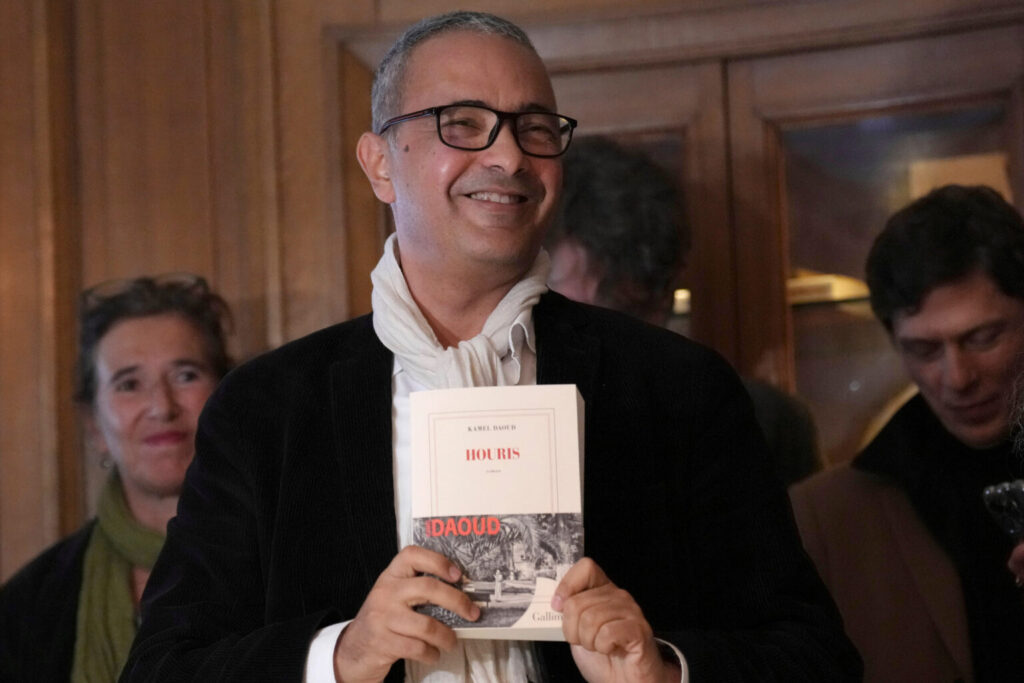
French-Algerian author Kamel Daoud said Wednesday that he has been sentenced to three years in prison in Algeria for his book “Houris,” a recipient of France’s most prestigious literary award.
The writer, who lives in France, announced on X that the verdict was delivered on Tuesday. He said that he was also fined 5 million Algerian dinars ($38,000).
“Houris” (Virgins, in English) focuses of the victims of what Algerians call the “black decade,” when tens of thousands of people were killed as the army fought an Islamist insurgency. The conflict erupted in 1991 after Islamists won a first round of legislative elections, prompting the military-backed government to cancel the second round of voting.
It was awarded the Goncourt Prize, France’s top literary award, in 2024.
Daoud said that he was convicted under what is known as the Charter for Peace and National Reconciliation, a text adopted by referendum in 2005 that offered widespread pardons to both armed Islamists and security forces.
“The text punishes any public mention of the civil war,” Daoud said. “Ten years of war, nearly 200,000 dead according to estimates, thousands of terrorists granted amnesty … and only one guilty party: a writer.”
In addition to the legal action brought by the court in the Algerian city of Oran, Daoud is the target of two international arrest warrants issued by Algeria in May 2025 and is also under threat of being stripped of his Algerian nationality.
Another French-Algerian writer, Boualem Sansal, has faced similar problems.
The author — whose works have been critical of Islam, colonialism and contemporary Algerian leaders — was convicted of undermining national unity and insulting public institutions and was sentenced to five years in prison under Algeria’s anti-terrorism laws.
He was granted a Humanitarian pardon in Algeria after an appeal by Germany’s president, and returned to France last year after serving a year in prison.
Daoud’s book “Houris” tells the story of Aube, a young girl who miraculously survives a nighttime terrorist attack in her village of Had Chekala in western Algeria, despite having her throat slit. Following the novel’s publication, an Algerian woman, Saâda Arbane, accused Daoud of “stealing” her story and using it as the basis for his book.
Arbane previously had been treated by Aicha Dahdouh, Daoud’s wife, a psychiatrist at Oran University Hospital and a specialist in trauma linked to violence during the civil war.
“Kamel Daoud and his wife asked for my permission to use my story, and I refused every time,” she said during several appearances on Algerian television, adding that it constituted “an invasion of her privacy.”
A collective of lawyers was subsequently formed in solidarity to defend Arbane, invoking provisions of the Charter for Peace and National Reconciliation, which prohibits even the mere mention of this painful period in Algeria’s history.
FILE – Algerian-French novelist Kamel Daoud holds his book Houris after being awarded with the Goncourt, France’s most prestigious literary prize, Monday, Nov. 4, 2024 in Paris. (AP Photo/Aurelien Morissard, File)
An Algerian beekeeping company has been awarded two gold medals at the London International Honey Awards (LIHA 2025), a prestigious event for honey producers, processors, and distributors.
The Algerian company, La Miellée, which was established in 2018, received one gold medal for the exceptional quality of its jujube honey and another for its innovative packaging design during this esteemed competition, recognized as one of the most respected international events in the industry.
“This international recognition highlights the capacity of Algerian honey to excel in global markets,” stated the company in a press release issued on this occasion. They further emphasized that “this achievement results from the collective efforts of an innovative young enterprise, its partner beekeepers, the richness of an authentic Algerian terroir, and the loyalty of a devoted clientele.”
Svetlana Mojsov, who laid the foundations for weight-loss drugs such as Ozempic, and mathematician Carlos Kenig, who decoded complex laws of motion, among those honored
The 48th staging of the coveted prize-giving comes as the King Faisal Foundation celebrates its milestone 50th anniversary
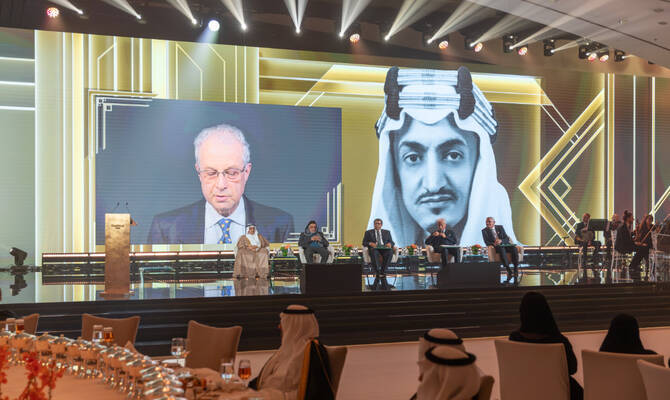
The King Faisal Prize 2026 prize-giving ceremony, which took place in Riyadh on Wednesday night under the patronage of King Salman, honored distinguished experts in medicine, the sciences, the Arabic language, Islamic studies and services to Islam for achievements said to have significantly advanced their fields and enriched all of humanity.
Prince Turki Al-Faisal, acting chairman of the board of trustees of the King Faisal Foundation, and Abdulaziz Alsebail, secretary-general of the King Faisal Prize, took to the stage to honor this year’s recipients in a celebration of exceptional minds whose work echoes far beyond their own laboratories and lecture halls. Other dignitaries at the ceremony included Prince Mohammed bin Abdulrahman bin Abdulaziz, the deputy governor of Riyadh.
The glittering ceremony this year, the 48th staging of the awards, coincided with a landmark milestone: the 50th anniversary of the King Faisal Foundation, which was established in 1976 and handed out its first prizes in 1979.
The honorees this year included distinguished scientists in the fields of medicine and mathematics, including one whose biochemical discovery would ignite a revolution in the field of obesity treatments, and another who delved into the depths of pure mathematics in search of clarity where there was once only chaos.
The King Faisal Prize in Medicine honored a biochemist whose discovery sparked a revolution in treating obesity and diabetes.
Professor Svetlana Mojsov’s early, groundbreaking research on the hormone glucagon-like peptide-1, or GLP-1, laid the biological foundation for what would eventually become the weight-loss drug Ozempic and other obesity therapies.
Her work now lies at the heart of one of the most significant public-health revolutions of our time, touching the lives of hundreds of millions of people worldwide who struggle with their weight.
Mojsov, who works at Rockefeller University in New York, carried out foundational research on GLP-1, a natural hormone that regulates blood sugar and appetite, which laid the scientific groundwork for an entirely new class of medications.
Her discovery of GLP-1’s biologically active form, and identification of its receptors in the pancreas, heart and brain, demonstrated its remarkable ability to stimulate insulin secretion, slow digestion and curb hunger.
Her work was so foundational that she is listed as co-inventor on patents licensed to Novo Nordisk that directly enabled the development of Victoza, Ozempic and Rybelsus, drugs that have become household names in the fights against diabetes and obesity.
The ripple effects of her research were said to be staggering in their scale. In 2022, obesity affected 890 million adults and 160 million children worldwide; today, the therapies her discoveries enabled are transforming lives across the globe, award organizers said.
In her acceptance speech, Mojsov said: “Twenty-five years after we published our findings, Novo Nordisk pharmaceutical company developed long-lasting, injectable GLP-1 analogs for diabetes and obesity.
“I am humbled that my work that started 40 years ago with a hypothesis has benefited the health and lives of millions of people worldwide.”
Her professional journey from basic scientific inquiry to a public-health revolution stands as a testament to the power of foundational research, the award organizers said.
The King Faisal Prize in Science honored a mathematician whose work on equations helped explain ocean waves and fiber optics.
Prof. Carlos Kenig was recognized for his transformative work on nonlinear partial differential equations, described as a stubborn, beautiful aspect of mathematics that govern everything from the crash of ocean waves to the clarity of a medical scan. Where others saw complexity, he found structure that reshaped the very landscape of modern mathematical analysis.
The Louis Block Distinguished Service Professor at the University of Chicago, Kenig built a career making the incomprehensibly complex not only solvable, but useful.
Nonlinear partial differential equations provide the mathematical language that describes how things change, move and evolve in the physical world. By applying harmonic-analysis techniques to these notoriously difficult equations, he helped open up new frontiers in fluid mechanics, optical fibers and medical imaging, award organizers said.
Kenig credited the academic path he has followed to his studies in Chicago and postdoctoral work at Princeton, where he learned from leading mathematicians and further developed his expertise
“I became interested in mathematics at the age of 12 when, in my first year of high school in my native country, Argentina, our math teacher taught us Euclidean geometry, and how to prove rigorously theorems about triangles,” he said during his acceptance speech.
“I was hooked from that time on. I then had the very good fortune to study at the University of Chicago, and to be a postdoc at Princeton University, under some of the most outstanding mathematicians of the 20th century.
“These experiences influenced the direction of my research, which turned to topics in mathematical analysis and, eventually, mostly to the study of the partial differential equations that govern our physical world.”
Professor Pierre Larcher, professor emeritus of Arabic Linguistics at Aix-Marseille University and emeritus researcher at the Institute of Research and Study on the Arab and Muslim Worlds, received the King Faisal Prize for Arabic Language and Literature for his work on Arabic literature in French.
The novel way in which he presents Arabic literature to French readers has earned widespread acclaim from critics and specialists and, in conjunction with his rigorous, scholarly approach to classical Arabic literature, has made it accessible and appropriate for French culture, the award organizers said.
His rigorous study of pre-Islamic poetry and translation of “Al-Mu’allaqat,” a collection of seven such poems, was said to demonstrate exceptional scholarly depth.
The Islamic Studies Prize went to Abdelhamid Hussein Mahmoud Hammouda, professor of Islamic history and civilization at Fayoum University in Egypt, and Mohammed Waheeb Hussein, professor of archaeology and history of art at Hashemite University in Jordan, for their work on historical Islamic trade routes.
Hammouda’s comprehensive work encompasses trade routes across the Islamic world, including the Mashreq, Iraq and Persia, the Arabian Peninsula, Greater Syria, Egypt, the Sahara, Maghreb, and Al-Andalus.
This expansive scope of his work was said to have delivered a coherent understanding of Islamic trade across history, serving as an authoritative reference tool for both specialized research and broader scholarship.
Hussein’s groundbreaking work uses archaeological surveys, GPS data and analytical mapping to systematically correlate Qur’anic texts with geographical data. His research was described as offering a definitive scholarly interpretation of the “Route of Al-Ilaf,” significantly advancing understanding of early trade routes in the Arabian Peninsula.
The Service to Islam Prize was awarded to Sheikh Abdullatif Alfozan, from Saudi Arabia, and Prof. Mohammed Hassanin Aboumousa, from Egypt.
Alfozan was rewarded for his distinctive approach to philanthropic work through support for high-impact initiatives that align with developmental needs, and the establishment of the “Ajwad Endowment” as a community-support tool for the creation and development of humanitarian initiatives.
Aboumousa, a founding member of the Council of Senior Scholars at Al-Azhar, has hosted more than 300 study circles at Al-Azhar Mosque devoted to classical texts, in an effort to strengthen cultural identity among young Muslims.
Established by the foundation in 1977, with the first awards handed out in 1979, the King Faisal Prize has honored 308 laureates from 45 countries over the years in recognition of their outstanding contributions to science and humanitarian causes.
The inaugural prizes in 1979 were awarded in three categories: service to Islam, Islamic studies, and Arabic language and literature. The medicine and science categories were introduced in 1981.
Each of the recipients receives $200,000, a 24-carat gold medal weighing 200 grams, and a commemorative certificate with their name and a summary of the work for which they were honored with a prize described as the most coveted in the Islamic world.
source/content: arabnews.com (headline edited)
_____________
King Faisal Prize 2026 laureates honored at ceremony in Riyadh. (Supplied)
$2.3 billion rail deal to cut transport costs and boost phosphate, potash exports.
The UAE and Jordan have signed a $2.3 billion agreement to build a 360-kilometre railway linking Jordan’s mining hubs to the Port of Aqaba, targeting annual transport capacity of 16 million tonnes of phosphate and potash.
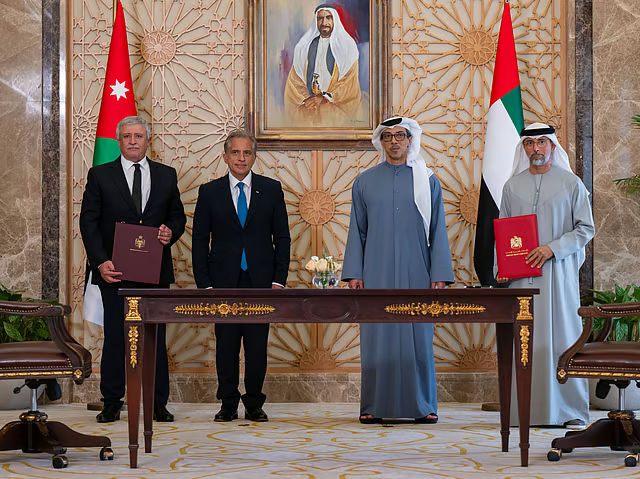
The agreement, witnessed by Sheikh Mansour bin Zayed Al Nahyan and Jordan’s Prime Minister Dr. Jafar Hassan, includes the establishment of the UAE–Jordan Railway Company to oversee construction, operations and maintenance of the network.
The joint venture brings together Abu Dhabi’s L’IMAD Holding and Jordanian stakeholders, with Etihad Rail leading implementation through its role as the UAE’s national railway developer and operator.
Focus on trade flows and costs
The railway will connect Al-Shidiya and Ghor Al-Safi to Aqaba, reducing transport time and logistics costs for key export commodities that form a central part of Jordan’s economy.
Suhail bin Mohamed Al Mazrouei, Minister of Energy and Infrastructure, said the project supports a broader transport partnership aimed at strengthening Jordan’s role in global trade flows and improving connectivity through Aqaba.
Dr. Nidal Al-Qatamin, Jordan’s Minister of Transport, said, “Our longstanding fraternal ties with the UAE are today translating into a tangible reality that serves Jordan’s future. This railway network will mark a qualitative leap in Jordan’s mining sector by significantly reducing transport costs for phosphate and potash, enhancing our global competitiveness, and creating thousands of jobs for Jordanians.”
Investment builds on earlier agreement
The project extends a $5.5 billion investment framework agreed in 2023, reflecting continued economic cooperation between the two countries and a focus on infrastructure-led development.
“This agreement reflects our firm belief that investment in transport infrastructure is the cornerstone of any genuine economic transformation,” said Jassem Mohamed Bu Ataba Al Zaabi, Chairman of the Abu Dhabi Department of Finance and Group CEO of L’IMAD Holding. “In the UAE, we believe that regional prosperity is a shared responsibility, and this project is a clear expression of our commitment to supporting our partners in building a more connected and competitive future regionally and globally.”
Regional integration push
The railway is expected to improve export efficiency, support job creation and strengthen Jordan’s position in global supply chains, while advancing the UAE’s strategy of backing infrastructure projects across the region.
Sheikh Mansour bin Zayed said the agreement reflects strong bilateral ties and a shared focus on economic development and integration, adding that such projects support sustainable growth and regional stability.
The development places transport infrastructure at the centre of economic cooperation between the UAE and Jordan, with execution now moving towards delivery of a network designed to support long-term trade and industrial activity.
source/content: gulfnews.com (headline edited)
___________________________
Sheikh Mansour bin Zayed Al Nahyan, Vice President, Deputy Prime Minister, and Chairman of the Presidential Court, and Dr. Jafar Hassan, Prime Minister of the Hashemite Kingdom of Jordan, today witnessed the signing of an agreement between the UAE and Jordan to develop a railway network in Jordan and establish the UAE–Jordan Railway Company. WAM
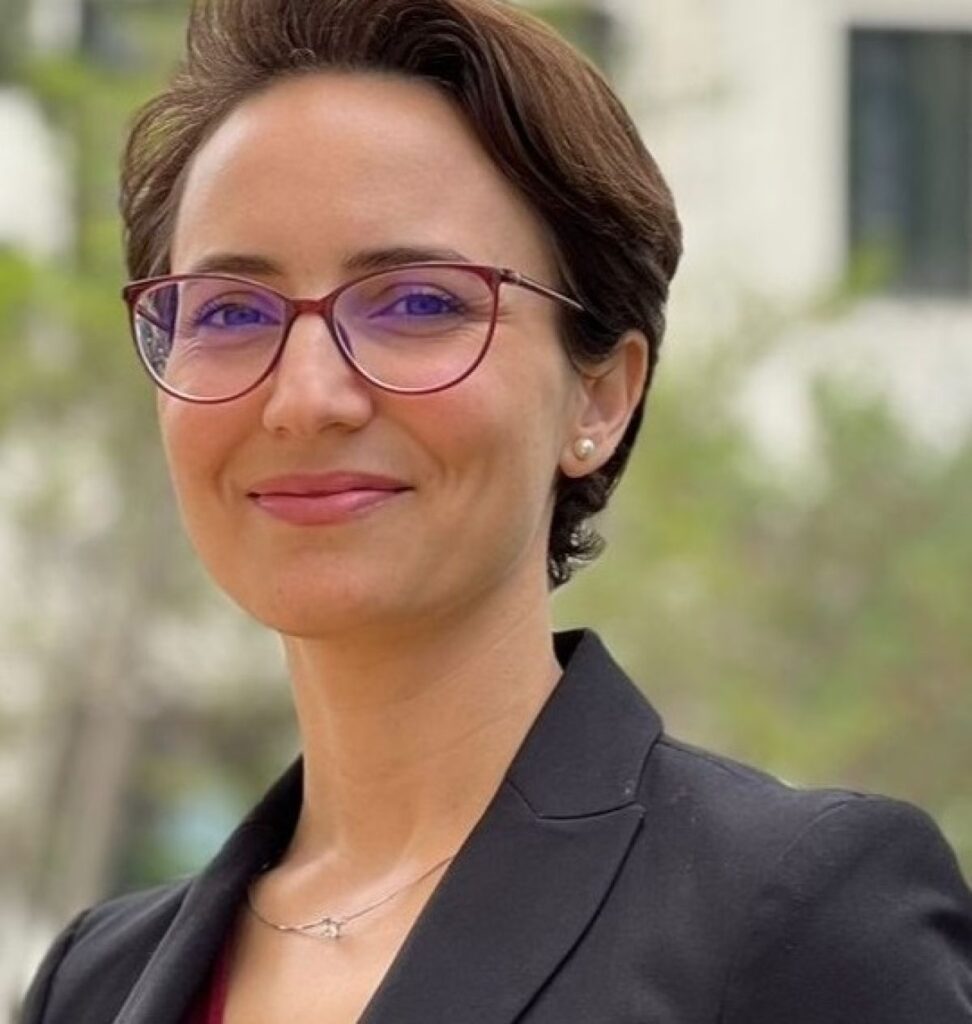
Tunisian researcher Emna Harigua has been honoured with Tunisia’s 2025 Best Female Scientific Achievement Prize for her innovative drug discovery work powered by artificial intelligence (AI).
In recognition of women’s essential contributions to science and innovation, Harigua, who holds a doctorate in biomathematics, bioinformatics and computational biology, was awarded the prestigious prize by Tunisia’s Ministry of Family, Women, Children and Seniors as part of the celebrations for the country’s National Women’s Day, observed on August 13. Her achievements include leading research in AI-powered drug discovery through a national node in the Global South AI for Pandemic and Epidemic Preparedness and Response Network, a global initiative supported by IDRC and the United Kingdom’s Foreign, Commonwealth and Development Office.
Harigua, a scientist at the Institut Pasteur de Tunis, Tunisia, and principal investigator of the BIND project (Bioinformatics and Artificial Intelligence for Infectious Diseases), is leading an AI-powered platform that accelerates research against some of the world’s most persistent infectious agents that pose health risks.
Her research targets neglected tropical diseases such as leishmaniasis and malaria, combining bioinformatics, AI and experimental validation to shorten the drug discovery timeline and reduce costs. The BIND project has already identified nine novel anti-Leishmania drug candidates, with three now in pre-clinical validation. In addition, the team launched CidalsDB, an open-access AI platform for drug identification, marking a step forward in global efforts toward open science and collaborative health research.
“This award is not just a personal milestone — it’s a recognition of the potential of African-led science to tackle global health challenges,” said Harigua.
Beyond her lab, Harigua is a strong advocate for building Africa’s capacity in computer-aided drug discovery and ensuring that cutting-edge technologies serve the health needs of African communities. Her work — presented recently at the International Science Council during a workshop held in Nairobi, Kenya, on the impact of emerging technologies on science systems — underscores a vision where innovation, collaboration and inclusion drive the future of medical research.
source/content: idrc-crdi.ca (headline edited)
____________
Fourat Thamine, Institut Pasteur Tunisia. / Tunisian scientist Emna Harigua receives national recognition for her AI-powered drug discovery platform.