Arabs & Arabian Records Aggregator. Chronicler. Milestones of the 25 Countries of the Arabic Speaking World (official / co-official). AGCC. MENA. Global. Ist's to Top 10's. Records. Read & Enjoy./ www.arabianrecords.org
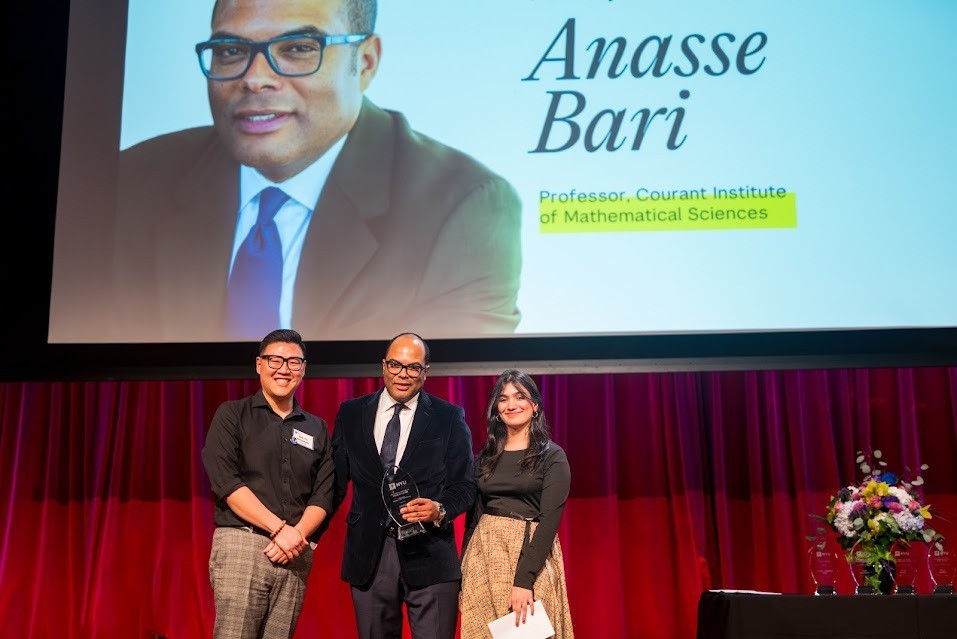
Moroccan professor Anasse Bari has received the Dr. Martin Luther King. Jr. Faculty Award for 2025 at New York University (NYU).
The award recognizes faculty members whose work demonstrates leadership and commitment to justice and fairness, all values that the American civil rights icon Martin Luther King Jr. promoted.
Speaking to Morocco World News, Bari expressed his pride in receiving the award. “I dedicate this award to my fellow Moroccans,” he said.
According to NYU’s website, the award is given to professors whose research and work contribute to positive social change.
“The Dr. Martin Luther King, Jr. Faculty Award recognizes outstanding faculty who exemplify the spirit of Dr. Martin Luther King, Jr.’s scholarship, life, and justice work and who promote the principles and ethos of Dr. King’s extensive global contributions in their research, teaching, leadership, and/or community-building efforts,” the university said.
It added that the process of selecting the faculty awardees involves significant student involvement. This includes students taking part in various stages such as award development, nomination, selection, and recognition.
This means that students play a role in identifying and honoring faculty members who have made a meaningful impact within the classroom, on student research, co-curricular activities, and broader community engagement.
Professor Bari, who leads NYU’s Predictive Analytics and AI Research Lab, has been involved in developing AI tools for healthcare, climate change, misinformation, and pandemic preparedness.
Professor Anasse Bari and his AI researcher at NYU, Sana Sajjad (right) and Dr. Hua-Yu Sebastian Cherng, NTU’s Vice Dean of Research and Equity (left)
During an award ceremony on Wednesday, Bari said this recognition highlights the importance of working to serve communities while holding onto values of fairness and justice.
The Moroccan professor teaches over 700 students annually, with focus on ethical AI and mentoring research projects that apply AI to solve social issues.
“Every day in my classroom, I encourage my students to use the skills they have learned at New York University to serve the world,” Bari said, noting that his students are finding “new ways” to use AI and data science to improve the world.
He explained that his students are using AI to combat misinformation, create automated tutoring tools, assist doctors in pandemic prevention, develop cleaner energy sources, and build “ethical, fair, and privacy-preserving” AI solutions.
“The remarkable work of our NYU students embodies the spirit of service and justice that Dr. King envisioned. This award gives me the opportunity to express my gratitude to my students—not only for their incredible contributions but also for the lessons they have taught me,” Professor Bari concluded.
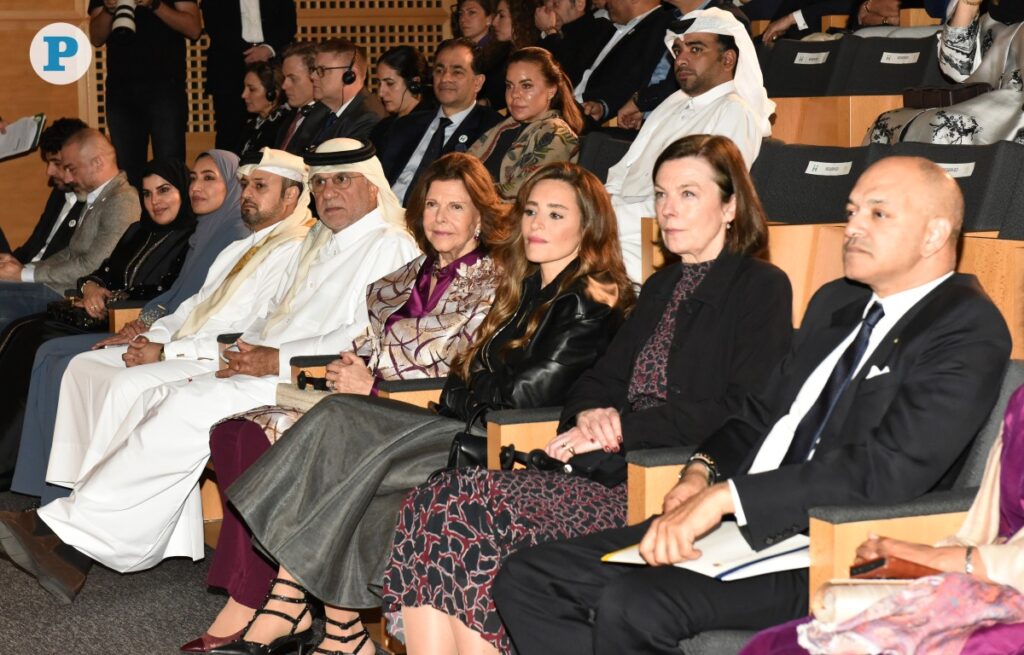
Youth from various Arab countries were honoured in Doha yesterday in recognition of their creative talents, with the presence of HM Queen Silvia of Sweden, President of Mentor International.
Some 12 talented young people aged between 18 and 30, were honoured during the Mentor Arabia’s 5th Youth Empowerment Film and Song Competition Award Ceremony in partnership with the Doha Film Institute and Qatar Museums.
Swedish Ambassador to Qatar H E Gautam Bhattacharyya; Qatar Ambassador to Sweden H E Nadya Ahmad Al Shaibi; CEO of Qatar Museums Mohammed Saad Al Rumaihi and several other dignitaries were present during the ceremony.
Mentor Arabia’s Youth Empowerment Film and Song Competition encourage young people to create artistic works that rise awareness about pressing social and humanitarian issues: as well as the opportunities and challenges they face. The competition also provides a safe space for youth to express their concerns, aspirations, and opinions on urgent social and humanitarian topics.
The fifth edition competitions were held under the theme ‘Towards Sustainable Societies.’
Head of Communication and Fundraising and Deputy CEO at Mentor Arabia, Bechara Ghaoui speaking toThe Peninsulasaid that the initiative aims at encouraging youth to adopt healthy lifestyles, inspiring them to excel in their professional journeys, and providing them with mentorship and guidance opportunities.
“This is very important for young people, for them to unleash their creativity, to let the whole world know about the importance of their voices. So, it’s a platform that can help them towards a better future. It opens for them lots of networking opportunities, give them a platform also to advocate about very important topics that are really addressed internationally,” he said.
The awards ceremony recognised outstanding creators of short narrative films, short documentary films, promotional films, songs, and animated films.
Elle Moon from Lebanon was recognised for her song ‘Prodigy’ an English- Arabic rap song.
“The song is essentially an anthem of empowerment for the Lebanese community during times of suffering. It serves as a reminder that everything we aim to accomplish comes from a place of love and compassion. If we believe in ourselves and continue working hard towards our goals, we will succeed,” she said.
Sarah Bitar from Lebanon won the award for her short film ‘The windows that I hate’ said, “My passion has always been filmmaking and acting. I used to think that this dream was out of reach, so I decided to bring it closer by starting my own YouTube channel and posting short films.”
“At first, it was just a passion project, but then I realised that being recognised by amazing organisations like Mentor Arabia meant I had an opportunity to keep pushing myself further. Nothing is impossible to achieve if you stay focused and keep doing what you love. I was once at a point where I thought a dream was just that—a dream. But now I see that a dream is a purpose,” she added.
Another award winner, Houcem Slouli from Tunisia, was recognised for his short film In Three Layers of Darkness, which explores the theme of freedom of movement around the world. Slouli, as both the director and producer of short films, views the recognition from Mentor Arabia as encouragement to continue pursuing his passion for film making.
Mentor Arabia is a regional non-governmental and non-profit organization dedicated to empowering children and youth and protecting them from harmful behaviors, enabling them to live healthy lives and make sound decisions. Founded in 2006, it is chaired by Prince Turki bin Talal bin Abdulaziz. It is part of Mentor International, established in 1994 and chaired by HM Queen Silvia of Sweden, with branches in Sweden, Latvia, Germany, the United States, and Jordan.
Names of the 12 artists honoured during the Mentor Arabia’s 5th Youth Empowerment Film and Song Competition Award Ceremony:
– Best Director in the Narrative Film Category: Ahmed Khalil for the film “Farikh Al-Asafeer” from Egypt.
-Best Narrative Film: “Fi Zolomat Thalath” (In Three Darkneses) by Houcem Slouli from Tunisia.
-Best Director in the Documentary Film Category: “Ardaha” (Her Land) by Ahed Najib and Mariam Benasser from Morocco.
-Best Documentary Film: “Dhakirat Muhamasha” (Forgotten Memory) by Hayat Laban from Palestine.
-Best Director in the Awareness Film Category: Anas Yahya from Jordan for the film “Taht Al-Ihtilal” (Under Occupation).
-Best Awareness Film: “The Windows That I Hate” by Sarah Bitar from Lebanon.
-Best Director in the Graphic Film Category: Asil Khalifa from Yemen for the film “Bara’a” (Innocence).
-Best Graphic Film: “Majbour” by Ghadeer Abu Jamous from Jordan.
-Best Qatari Film: “Bint Al-Sayyad” (The Fisherman’s Daughter) by Abdulrahman Al-Mana.
-Best Lyrics: “Kohk Sagheer” (A Small Hut) by Fadi Arabini from Syria.
-Best Performance: “Prodigy” by Elle Moon from Lebanon.
-Best Song: “Shu Bhib” (How Much I Love) by Sama Nasr from Lebanon.
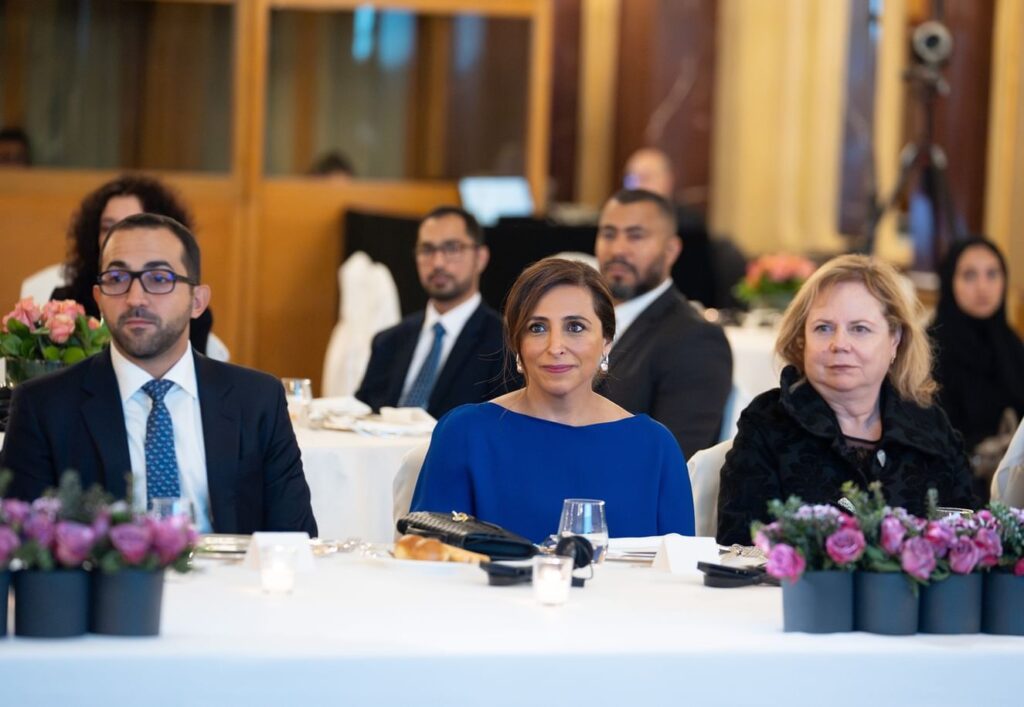
HM Queen Silvia of Sweden, President of Mentor International (fourth right); Swedish Ambassador to Qatar H E Gautam Bhattacharyya (first right); Qatar Ambassador to Sweden H E Nadya Ahmad Al Shaibi (eighth right); CEO of Qatar Museums Mohammed Saad Al Rumaihi (sixth right) and other dignitaries during the Mentor Arabia’s 5th Youth Empowerment Film and Song Competition Award Ceremony held in Doha yesterday. Pic: Salim Matramkot/The Peninsula
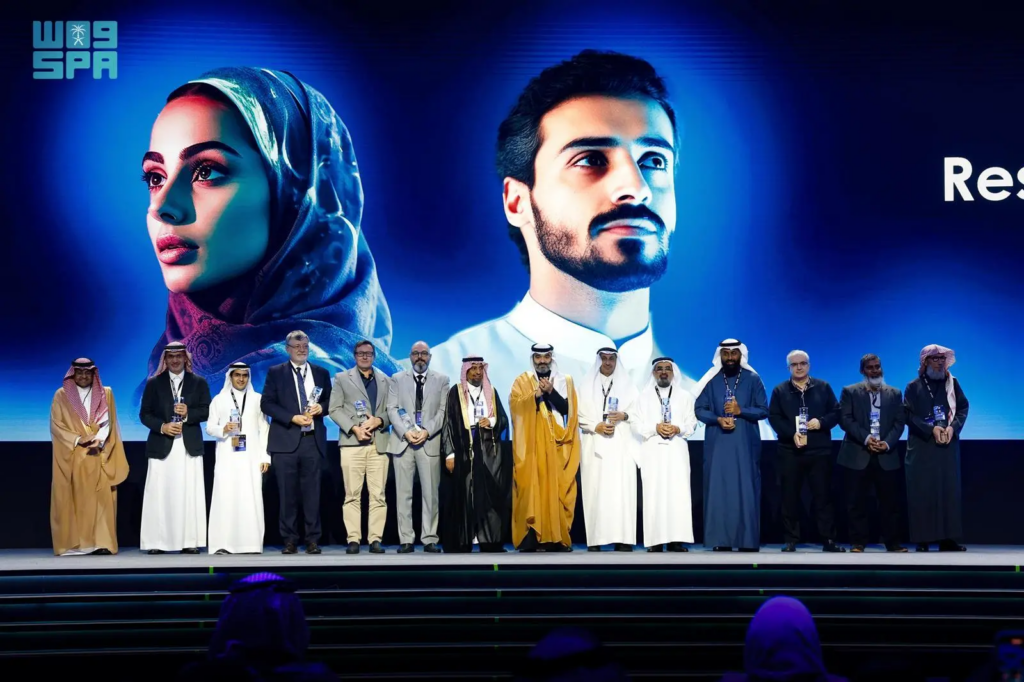
Minister of Communications and Information Technology Abdullah Alswaha honored 12 scientists and innovators with the Research Excellence Award in Future Economies, recognizing outstanding research and innovation efforts aligned with national priorities.
The honorees included Professor Carlos Duarte, Professor Mohamed-Slim Alouini, Professor Ghulam Muhammad, Professor Tareq Al-Naffouri, Professor Bernard Ghanem, Professor Abdullah Abusorrah, Professor Osman Bakr, Professor Saleh Alshebeili, Professor Obaid Al-Saqqaf, Professor Ahmed Al-Qarni, Professor Donal Bradley, and Professor Khalid Al-Mashouq.
During the Innovation in Future Economies event, held alongside the LEAP25 conference in Riyadh, the Research, Development, and Innovation Authority announced the launch of several national initiatives aimed at advancing research and innovation in key economic sectors. These initiatives focus on unifying efforts in future economies and enabling the Kingdom to shape a prosperous economic future. Among the announced initiatives is the development of a general, reliable, and human-centric artificial intelligence by 2050, the creation of a scalable and fault-tolerant quantum computer by 2045, and the establishment of five knowledge cities in Saudi Arabia by 2040, moving beyond traditional smart city concepts.
Additionally, the authority announced the establishment of the first private-sector Center of Excellence in Artificial Intelligence and Data Analysis for health research and development. This initiative, launched in collaboration with Fakih Group, involves an investment of SAR 100 million and aims to position the Kingdom as a global hub for AI-driven healthcare innovation. By strengthening partnerships between academic institutions and the industrial sector, the initiative seeks to accelerate research breakthroughs and maximize their impact.
The Future Economies Innovation event also featured an announcement by the National Semiconductor Hub, unveiling plans for a design center and manufacturing facility for semiconductors in Saudi Arabia. This initiative includes the participation of 10 specialized companies in electronic chip design and a strategic partnership with RCM to develop the first Saudi-designed electronic chip for both local and global markets.
These initiatives, launched by the Research, Development, and Innovation Authority, reflect Saudi Arabia’s commitment to fostering an innovative ecosystem that supports the growth of a knowledge-based economy. By investing in emerging economic fields, the Kingdom continues to strengthen its international position in line with its ambitious national targets for vital sectors.
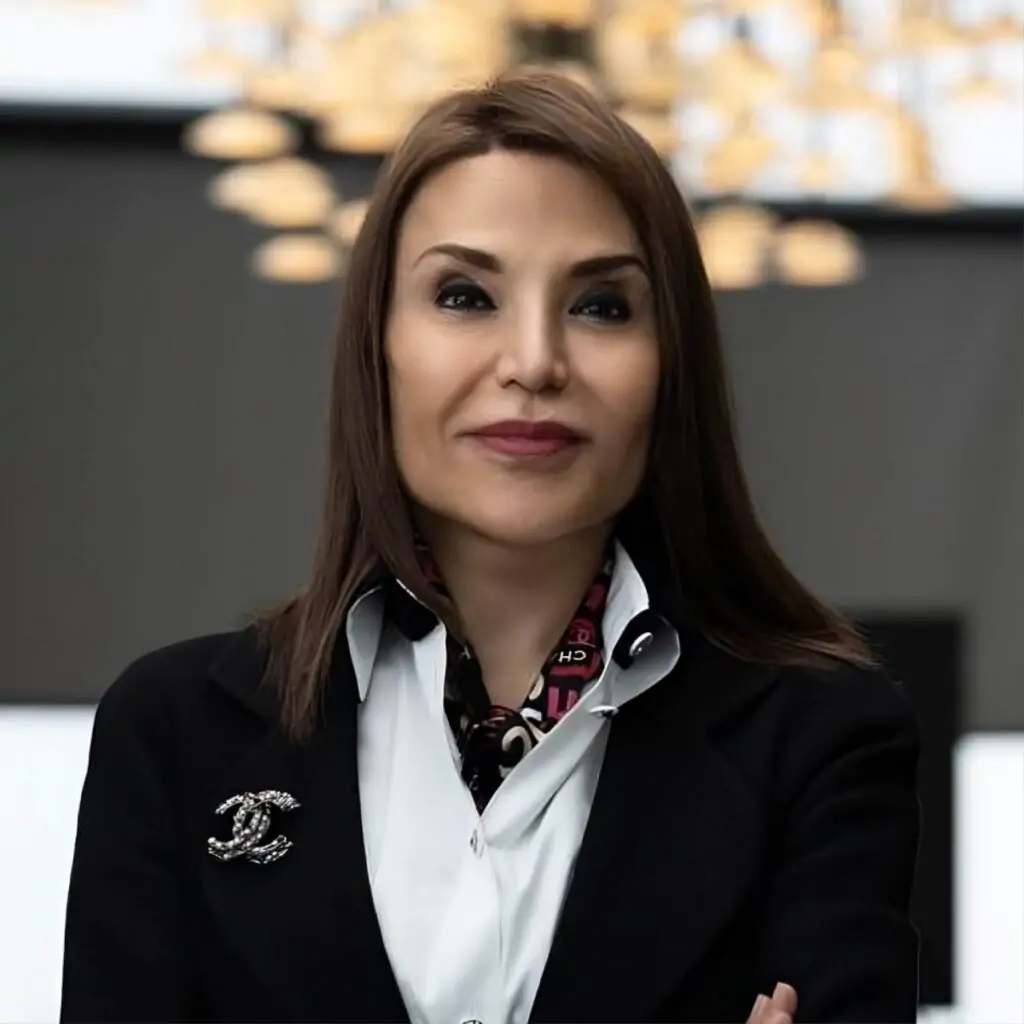
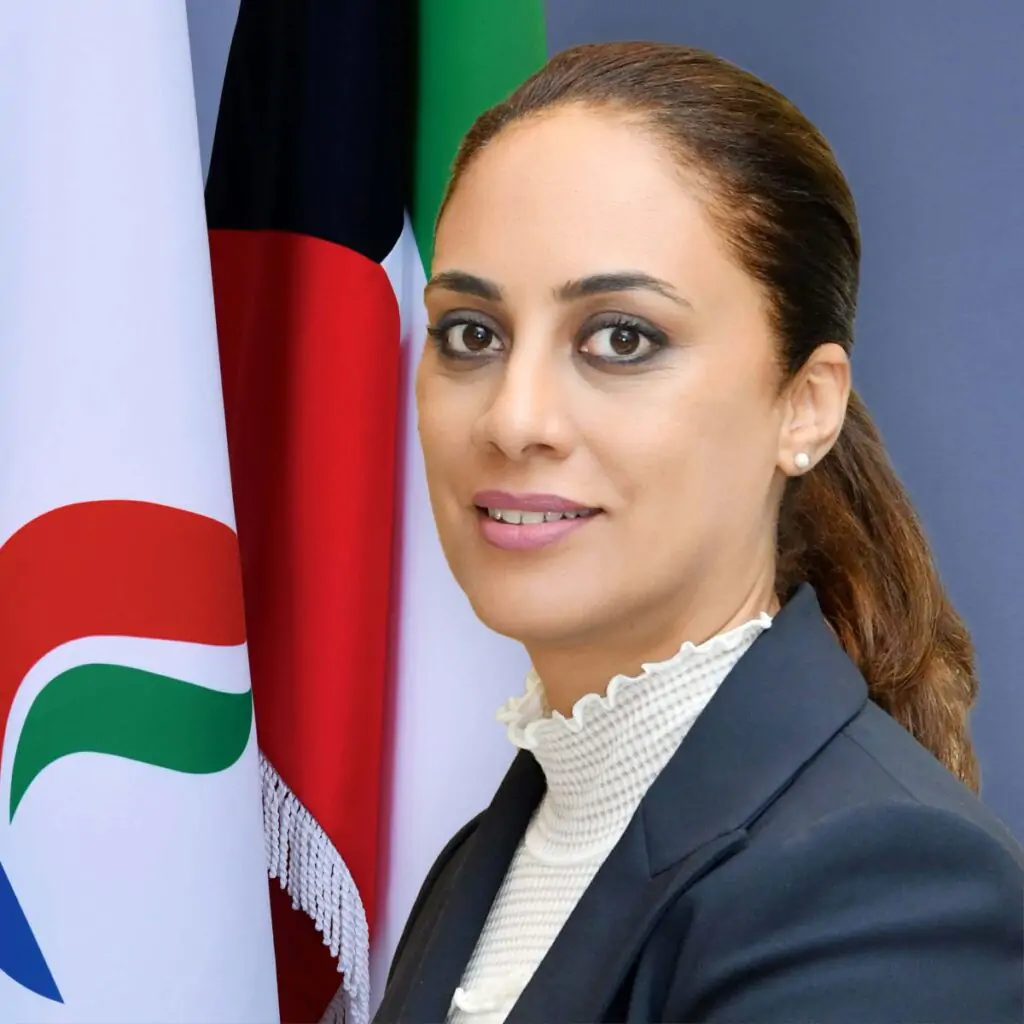
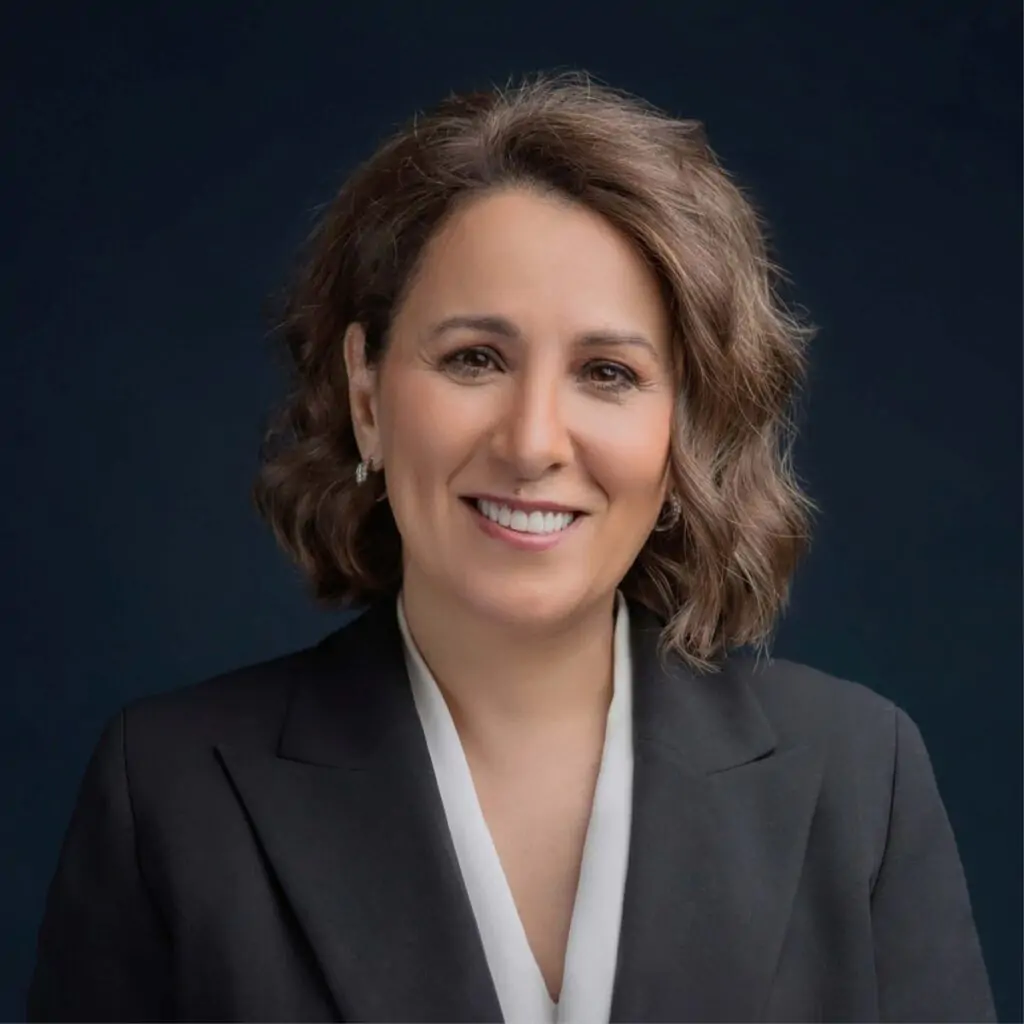
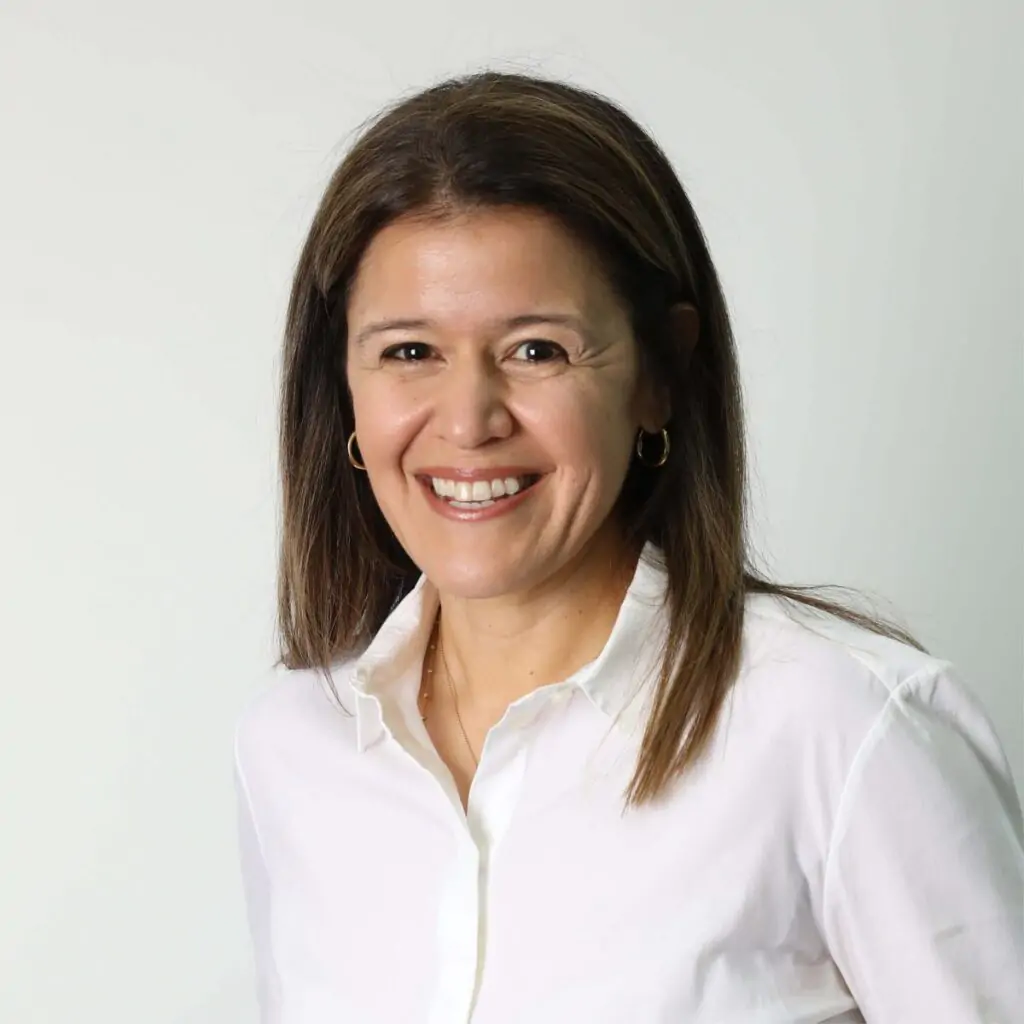
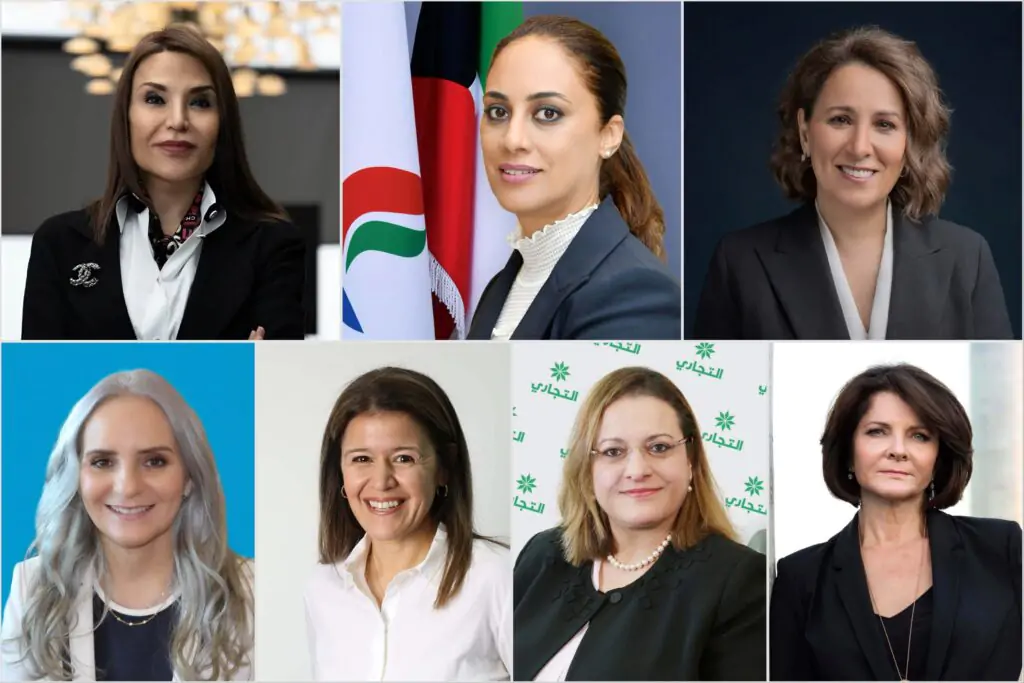
Kuwaiti businesswomen have once again earned recognition on Forbes Middle East’s prestigious list of the 100 most powerful female business leaders in the Middle East for 2025.
Forbes Middle East emphasized the significant and ongoing impact these women have across diverse sectors. Their leadership within prominent local and international companies demonstrates their influence in the region’s business landscape.
Shaikha Khaled Al Bahar
Company: National Bank of Kuwait Group (NBK Group)
Title: Deputy Group CEO
Sector: Banking & Financial Services
Ranking 2nd on the list is Shaikha Khaled Al Bahar who assumed her current role in 2014, where she leads the NBK Group in 13 countries. In the first nine months of 2024, the group reported profits of $1.6 billion and had $128.5 billion in assets. In November 2024, it launched the second edition of NBK RISE, to help empower women in leadership. Al Bahar’s board memberships include the board of trustees of the Al-Ojeiri Scientific Center and the Egyptian Kuwaiti Cooperation Council. She is also the vice chairperson of the Turkish Bank in Türkiye.
Wadha Ahmad Al-Khateeb
Company: Kuwait National Petroleum Company (KNPC)
Title: CEO
Sector: Oil & Gas
Ranking 4th on the list is Wadha Ahmad Al-Khateeb who joined KNPC in 1994 and assumed her role as CEO in 2022. KNPC, a wholly owned subsidiary of Kuwait Petroleum Corporation, owns subsidiaries like the Kuwait Aviation Fueling Company and the Kuwait Aromatics Company. It recorded $41.2 billion in revenues for the fiscal year 2023/24 ending March 2024. Wadha Al-Khateeb is also the acting CEO of the Kuwait Integrated Petroleum Industries Company, and vice chairperson of the Gulf Downstream Association. Before her current position, she was the deputy CEO of Mina Abdullah Refinery.
Dana Nasser Al Sabah
Company: Kuwait Projects Company (Holding) – KIPCO
Title: Group CEO
Sector: Diversified
Ranking 5th on the list is Dana Nasser Al Sabah who joined KIPCO in 2004 and has been a board member since 2020. She was appointed group CEO in January 2022. The company generated profits of $205.7 million in the first nine months of 2024 and had $41.6 billion in assets. In April 2024, KIPCO’s subsidiary, the OSN Group, closed a deal to combine OSN+, OSN’s content streaming platform, with Anghami, after acquiring 55.45% of Anghami. Dana Al Sabah is also the founder and chair of the board of trustees of the American University of Kuwait, and the chairperson of the United Education Company, Jordan Kuwait Bank, and the OSN Group.
Nadia Bader Al-Hajji
Company: Petrochemical Industries Company (PIC)
Title: CEO
Sector: Petrochemicals
Ranking 17th on the list is Nadia Bader Al-Hajji who joined PIC, a subsidiary of the Kuwait Petroleum Corporation, in 2019 and assumed her current role in 2022. PIC recorded a net profit of $127 million in the financial year ending March 2024. Al-Hajji is also the chairman of the EQUATE Group and the Kuwait Olefins Company. She is a board member at the Canada Kuwait Petrochemicals Company, and a board member and treasurer at the Gulf Petrochemicals and Chemicals Association. She is also head of the Diversity and Inclusion Council at the Kuwait Petroleum Company and its subsidiaries, among other roles.
Henadi Al-Saleh
Company: Agility
Title: Chairperson
Sector: Logistics
Ranking 22nd on the list is Henadi Al-Saleh who joined Agility in 2007 to lead investor relations, financial planning, and analysis. She was appointed to her current role in 2014. Agility employs over 65,000 people, with a footprint across six continents. In the first nine months of 2024, it generated $3.7 billion in revenues and had $13.3 billion in assets. In January 2024, its subsidiary Menzies Aviation acquired a 50% stake in Jardine Aviation Services Group in Hong Kong. In May 2024, Agility Global was listed on the Abu Dhabi Securities Exchange. Al-Saleh is also a board member at GWC and part of the Global Board of Advisors of the U.S.-based Council on Foreign Relations.
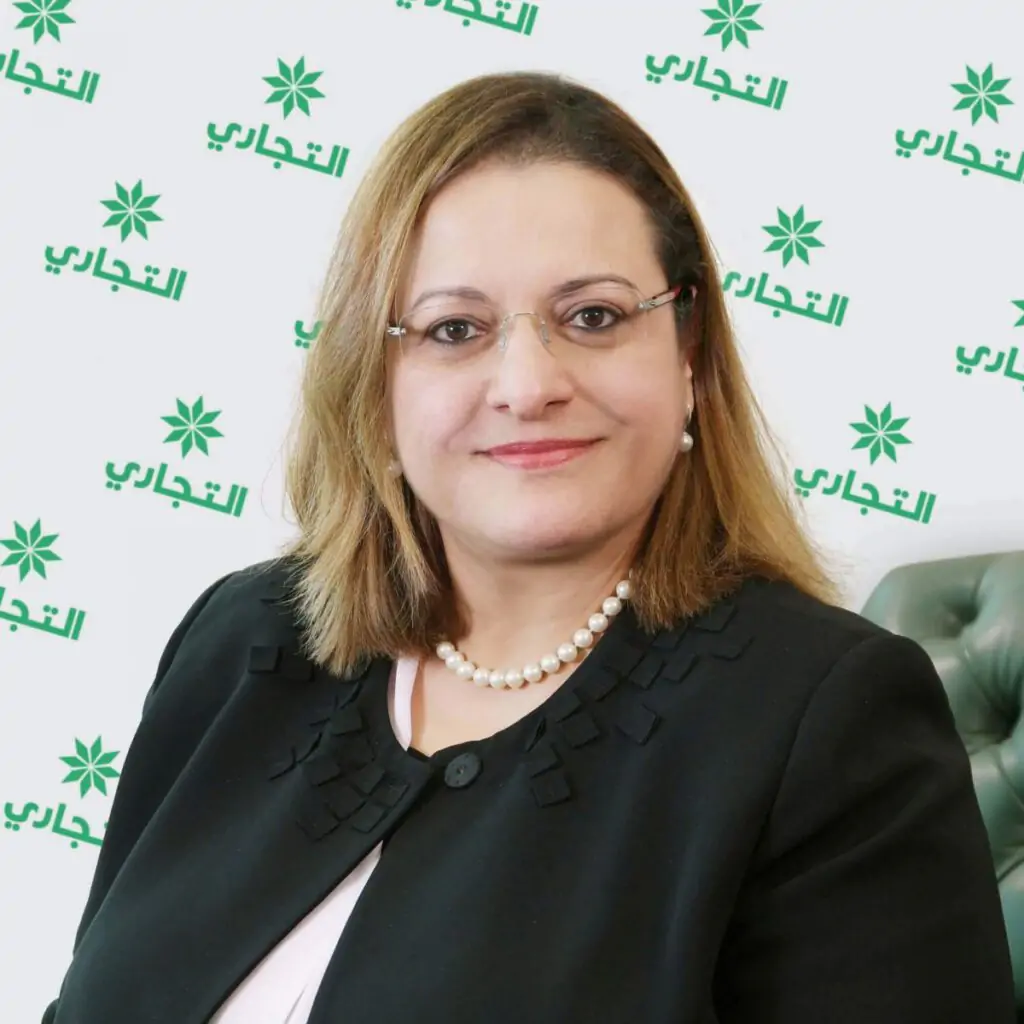
Elham Mahfouz
Company: Commercial Bank of Kuwait (Al-Tijari)
Designation: CEO
Nationality: Egyptian
Sector: Banking & Financial Services
Ranking 54th on the list is Elham Mahfouz who assumed her current role in 2014. In February 2024, Al-Tijari announced a partnership with Network International to aid its ongoing digital transformation, including fraud detection and prevention, tokenization, and cardholder self-serve application. In the first nine months of 2024, the bank had $15.2 billion in assets and recorded net profits of $290.6 million. Mahfouz has held multiple senior executive positions at Al-Tijari since joining the bank in 2000, including general manager in its New York branch.
Donna Sultan
Company: KEO International Consultants
Designation: President & CEO
Sector: Architecture
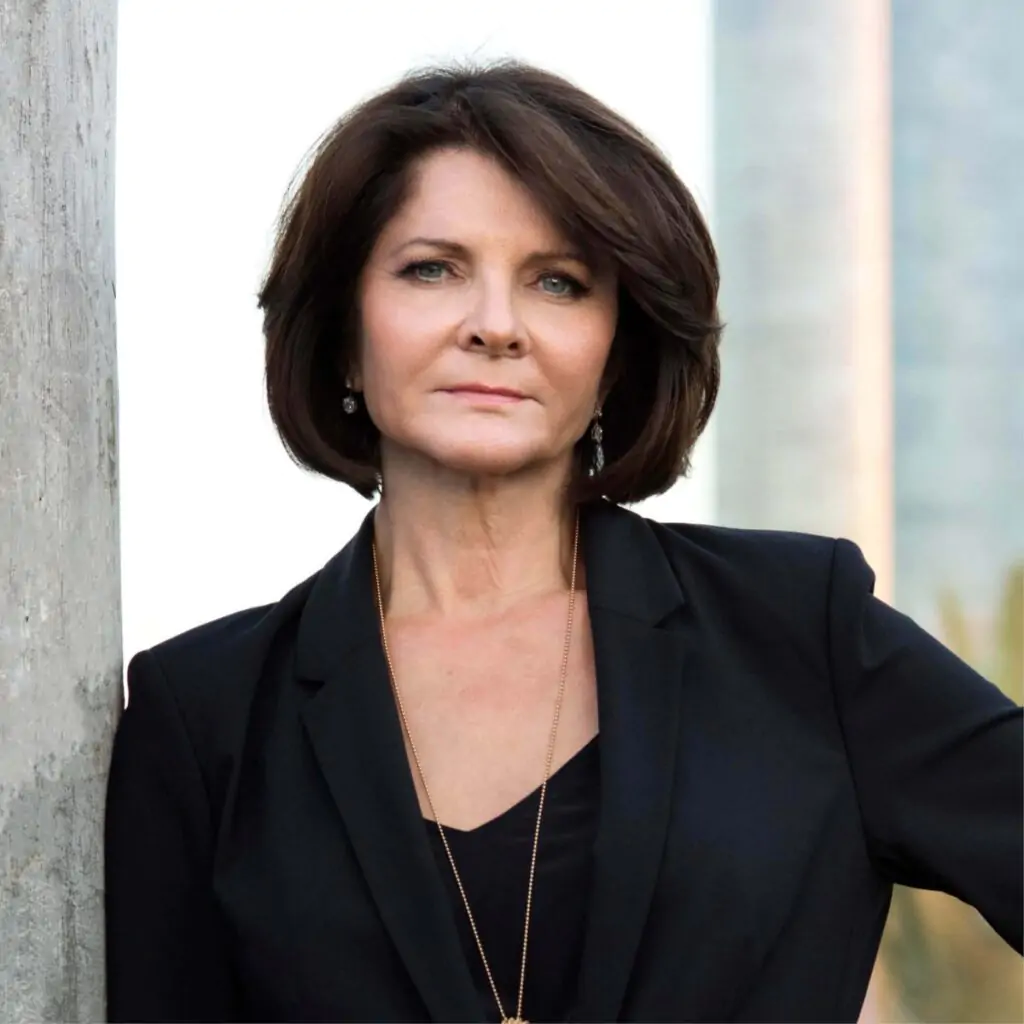
Ranking 58th on the list is Donna Sultan who has been at KEO since 1985, becoming CEO in 1991, then eventually president and CEO in 2016. The company launched OPTIMA, a facility management consultancy, in October 2024, and inaugurated its Jordan office in September 2024. In June 2024, the Kuwait Center for Nephrology and Kidney Transplant, which KEO International Consultants designed, became operational.
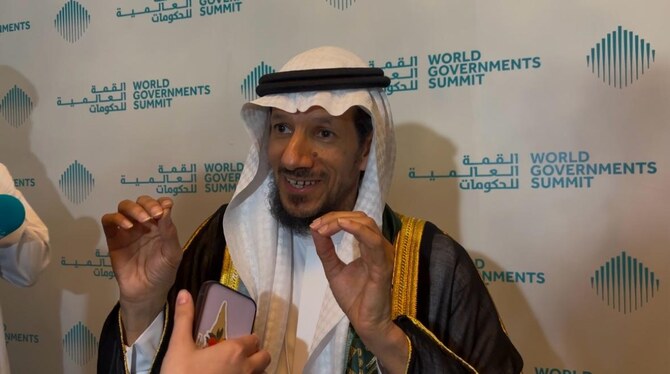
Saudi teacher Mansour Al-Mansour was awarded the Gems Education Global Teacher Prize at the World Governments Summit in Dubai on Thursday.
Al-Mansour received the award at the end of the summit, an annual event that draws leaders from across the globe.
An educator known for his charity work and instructing prisoners, Al-Mansour won the prize of $1 million.
Al-Mansour is also an author and is known for work in his community, including a program that helps ensure people have access to air conditioning maintenance during Saudi Arabia’s scorching summer months.
The prize is awarded by the Varkey Foundation, whose founder, Sunny Varkey, established the for-profit GEMS Education company that runs dozens of schools in Egypt, Qatar and the UAE.
– With inputs from AP
source/content: arabnews.com (headline edited)
__________
Mansour Al-Mansour received the award at the end of the World Governments Summit in Dubai (AN)
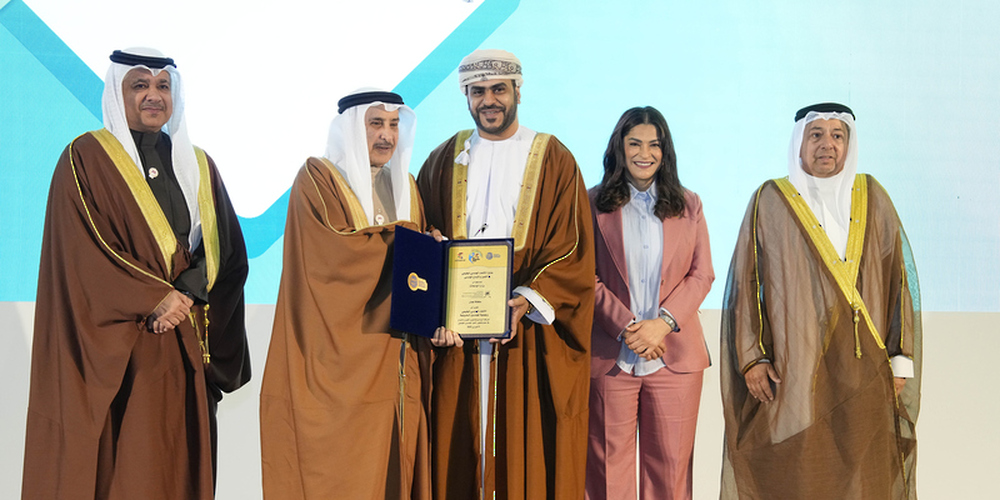
The Sultanate of Oman won the 26th Gulf Engineering Forum’s “Excellence and Innovation Award” through a project titled “Combined Combustion Truck for Carbon Reduction”.
The forum is being held in the Kingdom of Bahrain until 13 February 2025, under the theme “Challenges of Energy Conversion”. Oman is represented at the forum by the Ministry of Transport, Communications and Information Technology.
The project that won the award aims to reduce carbon emissions and promote sustainable mobility. Through this project, Blue Ice Oman is developing a combined combustion engine for trucks, using a blend of hydrogen and diesel. This contributes to 50 percent reduction of emissions. The initiative is in line with Oman’s Zero Neutrality Strategy 2050 to achieve zero emissions.
The 26th Gulf Engineering Forum brings together an elite group of experts specialized in the fields of environment conservation, energy and industry. The forum elaborates on engineering issues related to energy transformation and the challenges posed to this specialty. It seeks to reach the best innovative solutions, technologies and modern designs to address these challenges.
A number of dialogue sessions and workshops will be held during the three days of the forum. The activities will see the participation of a group of engineers, researchers and academics, who will exchange visions on energy transformation, renewable energy, decarbonization, technologies and innovations for devising a clean energy policy.
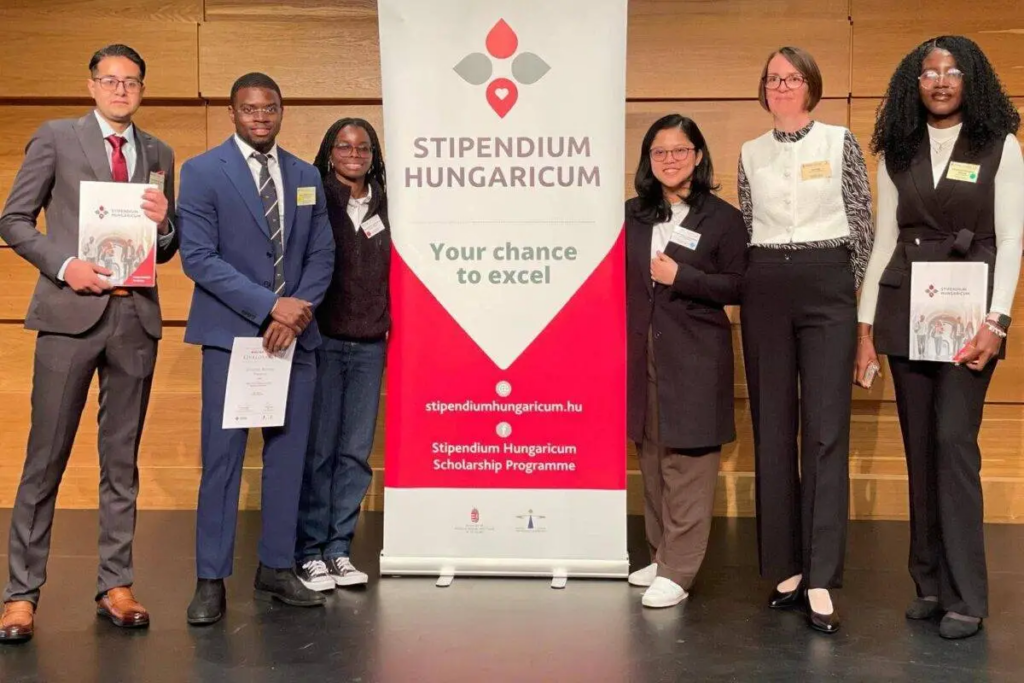
A Palestinian student has received the Stipendium Hungaricum Award for Excellence in the Hungarian Language, a prestigious award granted annually to the top scholarship students in Hungary. Omar Abu Samhoud studies computer science at Nyíregyháza University.
The award in recognition of outstanding academic achievement and proficiency in the Hungarian language, marks a remarkable milestone for the young student, who has overcome immense challenges to excel in a foreign land. He said that his motivation stemmed from a deep desire to alleviate the burdens on his family in Gaza and bring them some joy amid the current dire circumstances.
“My family is still in Gaza, enduring unimaginable hardships every day,” said Abu Samhoud. “I didn’t want to be an extra burden on them. Instead, I wanted to give them something to be proud of, something that brings them happiness, even from afar. This award is for them.”
The dire situation in Gaza, marked by extreme uncertainty, has weighed heavily on Abu Samhoud and many other students in similar circumstances.
However, it has also been the driving force behind their relentless pursuit of excellence, serving as an inspiration to others.
The awards ceremony, held in Budapest, was attended by representatives from the Hungarian Ministry of Foreign Affairs and Trade, including Deputy State Secretary Miklós Lengyel.
Abu Samhoud was also celebrated by the Embassy of the State of Palestine in the Hungarian capital. Ambassador Dr Fadi Elhusseini congratulated him and presented him with a special gift in recognition of his achievement.
“We are extremely proud of him. His family is proud of him. His homeland is proud of him,” said Elhusseini. “This achievement will serve as a motivation for others and a reminder that success always follows those who persevere. Omar Abu Samhoud embodies the resilience and determination of the great Palestinian people and the steadfastness of the youth in rising above all hardships.”
Palestinian student from Gaza Omar Abu Samhoud (far L) receives the Stipendium Hungaricum Award for Excellence in the Hungarian Language, a prestigious award granted annually to the top scholarship students in Hungary.
In medieval times, Arab craftsmen led the world with their sublime, sophisticated building skills. As Paris’s Notre-Dame prepares to reopen, that tradition continues.
Only once in a century does one host Olympic and Paralympic Games, only once in a millennium does one rebuild a cathedral,” declared French President Emmanuel Macron in his 2024 New Year speech.
On 8 December, all eyes will turn once more to France’s iconic landmark Notre-Dame de Paris as it officially reopens to the public following the fire of April 2019 that nearly destroyed it.
How have the French succeeded in completing what had seemed like mission impossible, this gargantuan task, on time and on budget within the five years that Macron first promised on that fateful night of 15 April?
The answer is the same as throughout history. Money and leadership are essential, but the most important thing of all in any prestige building project is the quality of the labour. Top people work fast and produce top results. Mediocre craftsmen, no matter how much time they are given, can only ever produce mediocre results.
At the Notre-Dame rebuilding, great care was taken by the leadership to cast far and wide for the absolute creme de la creme of craftsmen, wherever they were to be found.
As a result, among the 250 companies and hundreds of engineers, masons, carpenters, stained glass specialists and other professionals enlisted to work on the rebuilding, there were people from all over the world.
The master carpenters, for example, working to recreate the wooden beams of the cathedral’s roof trusses, were from the United States, the UK, Spain, Denmark, Bosnia and India, as well as France.
They included Christians, Jews, Hindus and Muslims, all chosen because of their high level of skill in using the traditional medieval methods of craftsmanship, skills now in retreat under the onslaught of computer precision, mass production and the relentless advance of industrial technology.
Deep understanding of geometry
When Europe’s great cathedrals were built over a thousand years ago, they, too, were at the forefront of science. Their size, their height and their sheer complexity were the very embodiment of the latest engineering technology.
Nothing comparable had been seen on the European continent before except in modern Spain and Portugal, where Arab Muslims, originally from Syria, had been ruling for nearly 800 years, and in Sicily, where Arab Muslims originally from Egypt and North Africa, had been ruling for over 250 years.
____________
These men had a deep understanding of geometry, building stresses and vaulting techniques, knowledge that had been widespread across the Islamic world since the eighth and ninth centuries
_____________
In both the caliphate of Cordoba and the emirate of Sicily, the construction world was dominated by Arab Muslim structural engineers and craftsmen, men who were both literate and numerate, unlike their European Christian counterparts.
These men had a deep understanding of geometry, building stresses and vaulting techniques, knowledge that had been widespread across the Islamic world since the eighth and ninth centuries when the great Bayt al-Hikma (House of Wisdom) centre of learning in Baghdad was at its peak.
It is no accident that the first stone vaulted structures appeared in Latin Christendom just 10 years after the fall of Toledo, where the 10th-century ribbed vaulted mosque dome of Bab al-Mardum – today the church of Cristo de la Luz – is still extant and visitable.
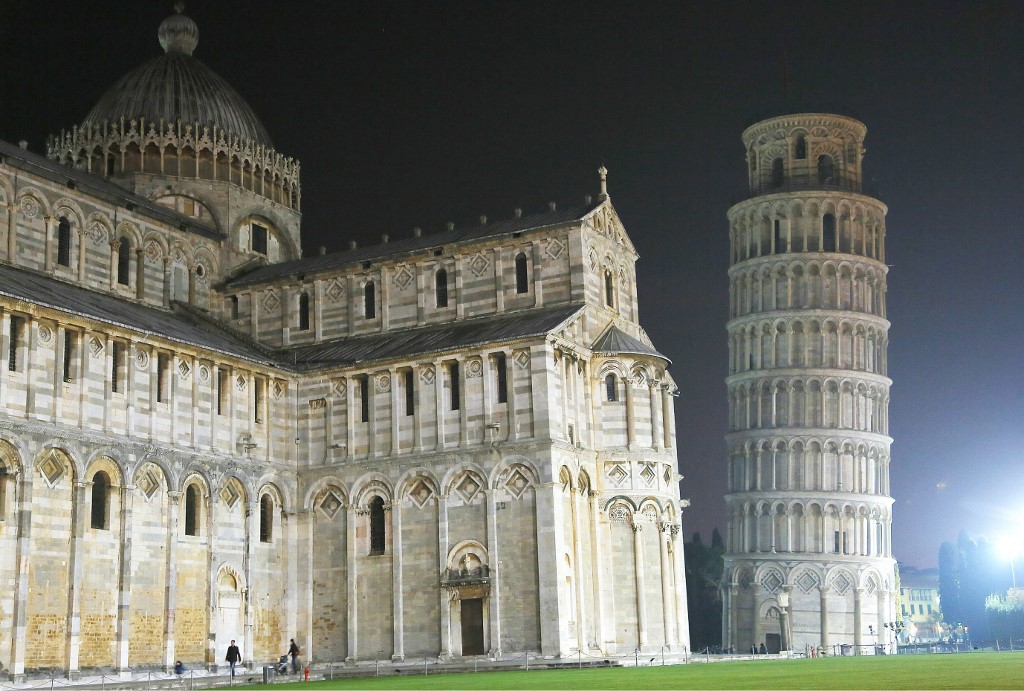
Likewise, in Pisa, where there was no pre-existing local building tradition or school of architecture, Pisa Cathedral (1064) and then the Leaning Tower appeared suddenly on Italian soil soon after the Pisans’ successful military campaigns against the Arab rulers in Sicily.
People walk past the leaning tower of Pisa and the cathedral at night on March 16, 2014 in Pisa. AFP PHOTO / FABIO MUZZI (Photo by FABIO MUZZI / AFP)
Pisa’s original cathedral dome was supported on Islamic-style squinches and slender pointed-arch windows, while the engineering challenges of the tower would have required advanced geometrical knowledge – the famous lean is the result of subsidence, not faulty construction.
Advanced geometrical knowledge
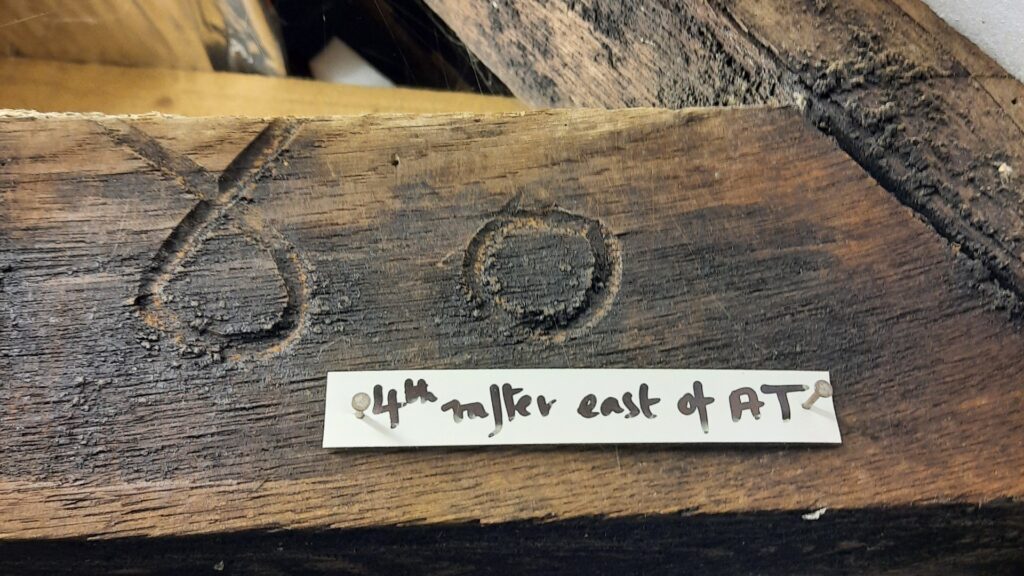
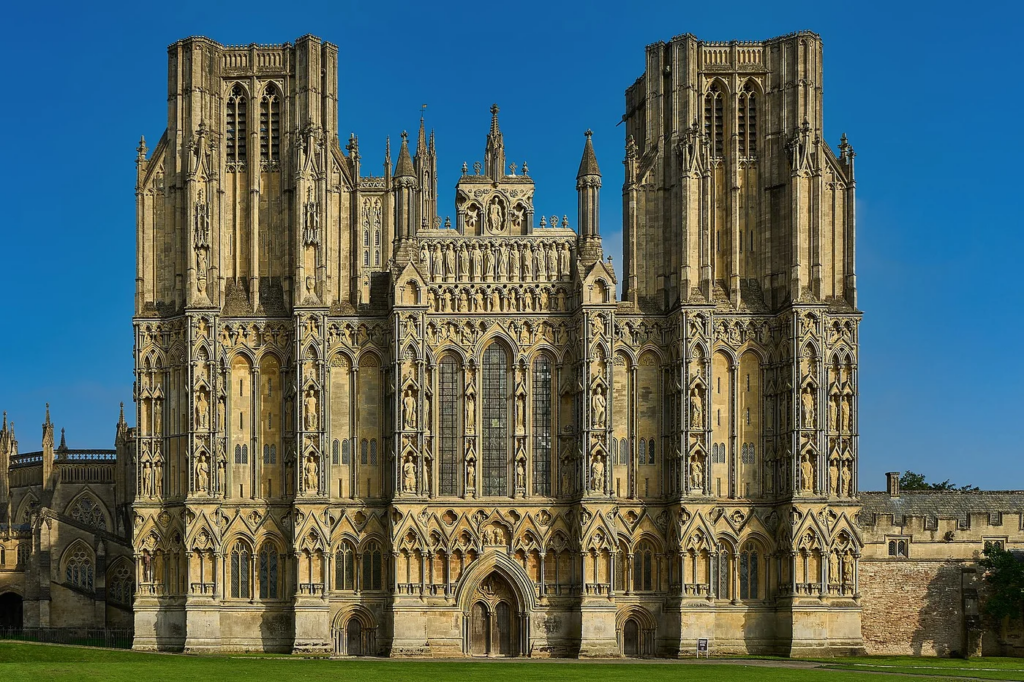
More proof of Arab involvement in churchbuilding comes in the Arabic numerals, with their distinctive cursive shapes, carved as assembly marks, found by chance in the roof timbers at Salisbury Cathedral (1220s) during a dendrochronology study sponsored by English Heritage. They were also an accidental find, carved as position markers on the stone sculptures, on the famous Wells Cathedral West Front (1175).
Since English craftsmen at that time could only manage the simple straight lines of Roman numerals, and Arabic numerals did not enter general use in Britain till several centuries later in the 1500s, the carpenters and masons employing them as early as the 12th and 13th centuries were clearly highly educated foreigners, brought in by wealthy bishops and abbots keen to sponsor the absolute top level of construction money could buy.
Cursive freehand Arabic numerals (4 and 5) carved by the original carpenters in the roof timbers of West Court Farm in Wiltshire, England dated to 1316. [photo by Diana Darke taken 6 June 2019
At Wells Cathedral, construction was halted when the funds allocated for the building were diverted, following the death of the bishop, to pay the huge litigation costs between rival claimants to his bishopric of a court case in Rome at the papal curia.
The masons, no longer being paid, simply marked up their final sculptures with Arabic numbers to indicate their correct niches on the West Front, then moved on to their next commission.
When the dispute was finally resolved 15 years later, local masons were the only ones on the scene to erect the sculptures.
To them, the Arabic symbols were just incomprehensible hieroglyphs, so they put them in the wrong niches, even adjusting the niches to make them fit.
Researchers in the most recent restoration have now established that, had the sculptures been put back in accordance with their original Arabic sequencing, they would have fitted perfectly.
Sophisticated society
The masons’ marks on display on the back wall of the Cordoba Mezquita are overwhelmingly Arab names written in Arabic script, showing how the 10th-century craftsmen were literate centuries ahead of their European Christian counterparts.
They were the products of a sophisticated society where learning was encouraged by the ruler and enjoyed by all, thanks to free education offered by mosque schools. In Christian Europe, only the clergy and a handful of the upper classes could read and write.
Cursive masons’ marks from the 10th century extension of the Cordoba Mezquita, found during restoration, now on display near the mihrab. [photo by Diana Darke taken October 2022]
Names in themselves can be misleading. In the town of Corleone, for example, inland from Palermo, there were Christians called Muhammad, Abdullah, Ahmad and Ali, living alongside Muslims with Greek names, who could pass for Sicilian Christians.
Donation records in Greek during the Norman period in Sicily use phrases like “Roger who was once called Ahmad”, showing how local Muslims adapted their names to fit in better to the new environment and new masters, just as foreign workers arriving in Britain today might adapt their names or be given nicknames that are easier to remember and pronounce. Jews have done the same thing across Europe and America for centuries.
When the names of craftsmen first started to appear in the Latin chronicles, like William of Sens, thought to have worked on Notre-Dame, and much vaunted for introducing six-part rib vaulting to England at Canterbury Cathedral in 1174-77, we cannot assume he was Christian. He might have been Muslim, or Mozarab (an Arabised Christian).
Either way, in order to have had the requisite mathematical and geometrical knowledge for rib vaulting at that time, he must have been schooled in the Islamic tradition.
Great pride
At the recent Notre-Dame rebuilding, a traditional carpentry company called Atelier de la Grande Oye, founded by French Muslim Paul Zahnd, was among those chosen to build the wooden frames supporting the new roof.
In an email to me, he expressed great pride at this honour, a pride likely to have been felt in equal measure by the top Muslim craftsmen working on Christian buildings in medieval times.
“As French Muslims,” he wrote, “we are very proud and happy … to communicate our beautiful crafts and our faith, which are of course perfectly compatible, feeding one another … we prayed all along the work, to bless the trees, our craft, our friendship, the Almighty who allowed us to be part of the project, to bless all the people who work with us, to celebrate the beauty and majesty of our creator … some of us are affirmed Muslims claiming our faith and our joy to rebuild a cathedral.”
pix05
What an irony that across Europe, at the time of writing, there are increasingly loud calls from far-right parties to rid their country of immigrants, especially Muslims, in order to save the “purity” of their own race and culture, evidently unaware that their very civilisation was built on the superior skill of immigrants.
All the evidence has shown that it is not necessary to be a Christian in order to create Christian art, just as people of all faiths and none can enjoy and appreciate church music, church architecture, Islamic decorative styles and mosque architecture.
Muslims could put their expertise to use in churches, just as Christians could build mosques, and indeed have done, throughout history.
The important consideration was not their religion but their skill.
Diana Darke’s new book Islamesque: The Forgotten Craftsmen Who Built Europe’s Medieval Monuments, was published on 21 November 2024, as a sister volume to her earlier Stealing from the Saracens (2020).
The views expressed in this article belong to the author and do not necessarily reflect the editorial policy of Middle East Eye.
_________
Diana Darke is a Middle East cultural expert with special focus on Syria. A graduate in Arabic from Oxford University, she has spent over 30 years specialising in the Middle East and Turkey, working for both government and commercial sectors. She is the author of several books on Turkey, including Eastern Turkey (2014) and The Ottomans (2022) as well as on Middle East society, including My House in Damascus: An Inside View of the Syrian Crisis (2016), The Merchant of Syria (2018), a socio-economic history and “Stealing from the Saracens: How Islamic Architecture Shaped Europe” (2020).
As part of its efforts to build bridges of communication and dialogue with countries and cultures of the world, the Emirate of Sharjah showcased an aspect of its cultural history throughout ancient times in the Italian capital, Rome.
The emirate revealed evidence proving its historical presence as a major commercial and cultural centre on the Spice Route, as well as even older remnants such as Acheulean stone tools from 500,000 years ago and evidence of human migration dating back 210,000 years.
On the sidelines of the exhibition titled ‘From Sharjah to Rome: Along the Spice Route’, organised by Sharjah Archaeology Authority at Rome’s iconic Colosseum, the Department of Government Relations (DGR) in Sharjah hosted a Gala dinner in the presence of Sheikha Bodour bint Sultan Al Qasimi, Chairperson of the Sharjah Investment and Development Authority (Shurooq), and Sheikh Fahim Al Qasimi, Chairman of DGR, alongside prominent diplomatic figures and representatives from Italian and Emirati cultural and academic institutions.
Sheikha Bodour Al Qasimi stressed that the exhibition was a celebration of Sharjah’s historical and cultural heritage.
She said, “Sharjah’s story is one of human connection—of cultures, ideas, and histories interwoven through centuries of trade and exchange. Nowhere is this more apparent than in Al Faya, a site so historically important it’s on the UNESCO World Heritage Tentative List. But beyond the stunning artefacts, this exhibition is an invitation to understand the depth of our shared heritage. By surfacing Sharjah’s role as a vital waypoint on the Spice Route, we reaffirm the value of protecting our cultural legacy while strengthening the ties that bind us over geography and time.”
Sheikh Fahim Al Qasimi, in his welcome address, highlighted the exhibition’s role in enhancing cultural and diplomatic ties between Sharjah and Rome. He said, “The exhibition ‘From Sharjah to Rome: Along the Spice Route’ is more than a retrospective of historical milestones. It is a testament to the power of shared heritage in connecting civilisations. By hosting this event in the heart of Rome, we bring Sharjah’s vision to life by preserving human heritage and presenting it in a contemporary context that strengthens cross-cultural understanding.”
The DGR Chairman added, “Culture is not only a reflection of the past but a foundation for shaping the future. Today, we showcase a tangible example of how heritage can be leveraged to foster dialogue and strengthen cultural and diplomatic relationships.”
As part of the cultural seminar, Issa Yousif, Director General of the Sharjah Archaeology Authority, delivered a lecture titled “Unearthing a shared archaeological heritage,” where he explored Sharjah’s historical role as a major trade and cultural centre in ancient times.
He detailed the emirate’s strategic position along the Spice Route, where caravans and merchant ships transported valuable goods from the Arabian Peninsula to Roman ports in the Mediterranean. Yousif also reaffirmed the Authority’s commitment to preserving Sharjah’s historical legacy through research and studies that promote mutual cultural understanding.
Sharjah’s deep-rooted history took centre stage in Rome through a presentation by Kholoud Al Hooli Al Suwaidi, Director of the Tangible Cultural Heritage Department at the Sharjah Archaeology Authority. In her talk, ‘Sharjah’s Cultural Legacy,’ she explored the emirate’s rich archaeological heritage, particularly discoveries from its central region.
She highlighted key sites, including the Suhaila Archaeological Site, where Acheulean stone tools dating back 500,000 years were uncovered, and Al Faya, a site containing evidence of human migration from 210,000 years ago that is currently considered for UNESCO World Heritage status.
She stressed that Sharjah’s commitment to cultural preservation is evident in the six archaeological sites on UNESCO’s Tentative List. These include rock art sites in Khatm Al Melaha and Khorfakkan, dating back 7,000 years, Wadi Al Helo, a significant centre for copper production during the Bronze Age, and Mleiha, a major pre-Islamic trade hub.
Meanwhile, the exhibition provided attendees with a rare opportunity to explore Sharjah’s historical significance as a key centre of trade and culture along the ancient Spice Route. Through artefacts, interactive digital media, and visual presentations, visitors gained deeper insight into the emirate’s strategic geographical and cultural role throughout history.
Imagine owning a camera so powerful it can take freeze-frame photographs of a moving electron – an object traveling so fast it could circle the Earth many times in a matter of a second. Researchers at the University of Arizona have developed the world’s fastest electron microscope that can do just that.
They believe their work will lead to groundbreaking advancements in physics, chemistry, bioengineering, materials sciences and more.
“When you get the latest version of a smartphone, it comes with a better camera,” said Mohammed Hassan, associate professor of physics and optical sciences. “This transmission electron microscope is like a very powerful camera in the latest version of smart phones; it allows us to take pictures of things we were not able to see before – like electrons. With this microscope, we hope the scientific community can understand the quantum physics behind how an electron behaves and how an electron moves.”
Hassan led a team of researchers in the departments of physics and optical sciences that published the research article “Attosecond electron microscopy and diffraction” in the Science Advances journal. Hassan worked alongside Nikolay Golubev, assistant professor of physics; Dandan Hui, co-lead author and former research associate in optics and physics who now works at the Xi’an Institute of Optics and Precision Mechanics, Chinese Academy of Sciences; Husain Alqattan, co-lead author, U of A alumnus and assistant professor of physics at Kuwait University; and Mohamed Sennary, a graduate student studying optics and physics.
A transmission electron microscope is a tool used by scientists and researchers to magnify objects up to millions of times their actual size in order to see details too small for a traditional light microscope to detect. Instead of using visible light, a transmission electron microscope directs beams of electrons through whatever sample is being studied. The interaction between the electrons and the sample is captured by lenses and detected by a camera sensor in order to generate detailed images of the sample.
Ultrafast electron microscopes using these principles were first developed in the 2000’s and use a laser to generate pulsed beams of electrons. This technique greatly increases a microscope’s temporal resolution – its ability to measure and observe changes in a sample over time. In these ultrafast microscopes, instead of relying on the speed of a camera’s shutter to dictate image quality, the resolution of a transmission electron microscope is determined by the duration of electron pulses.
The faster the pulse, the better the image.
Ultrafast electron microscopes previously operated by emitting a train of electron pulses at speeds of a few attoseconds. An attosecond is one quintillionth of a second. Pulses at these speeds create a series of images, like frames in a movie – but scientists were still missing the reactions and changes in an electron that takes place in between those frames as it evolves in real time. In order to see an electron frozen in place, U of A researchers, for the first time, generated a single attosecond electron pulse, which is as fast as electrons moves, thereby enhancing the microscope’s temporal resolution, like a high-speed camera capturing movements that would otherwise be invisible.
Hassan and his colleagues based their work on the Nobel Prize-winning accomplishments of Pierre Agostini, Ferenc Krausz and Anne L’Huilliere, who won the Novel Prize in Physics in 2023 after generating the first extreme ultraviolet radiation pulse so short it could be measured in attoseconds.
Using that work as a steppingstone, U of A researchers developed a microscope in which a powerful laser is split and converted into two parts – a very fast electron pulse and two ultra-short light pulses. The first light pulse, known as the pump pulse, feeds energy into a sample and causes electrons to move or undergo other rapid changes. The second light pulse, also called the “optical gating pulse” acts like a gate by creating a brief window of time in which the gated, single attosecond electron pulse is generated. The speed of the gating pulse therefore dictates the resolution of the image. By carefully synchronizing the two pulses, researchers control when the electron pulses probe the sample to observe ultrafast processes at the atomic level.
“The improvement of the temporal resolution inside of electron microscopes has been long anticipated and the focus of many research groups – because we all want to see the electron motion,” Hassan said. “These movements happen in attoseconds. But now, for the first time, we are able to attain attosecond temporal resolution with our electron transmission microscope – and we coined it ‘attomicroscopy.’ For the first time, we can see pieces of the electron in motion.”
source/content: eurekaalert.org / University of Arizona / (headline edited)
_________
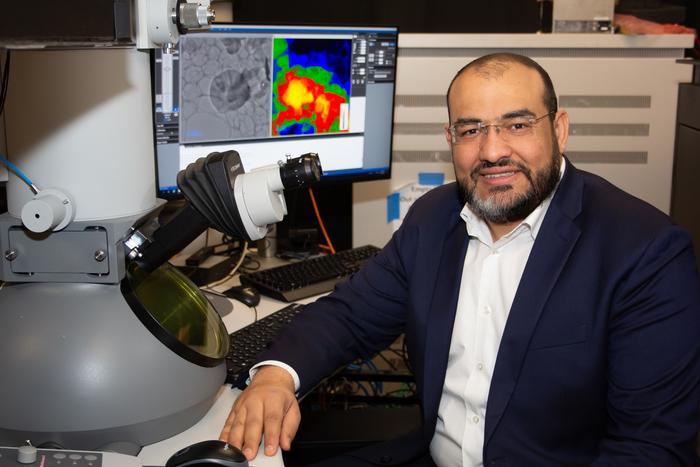
Mohammed Hassan, associate professor of physics and optical sciences, let a group of researchers in developing the first transmission electron microscope powerful enough to capture images of electrons in motion.