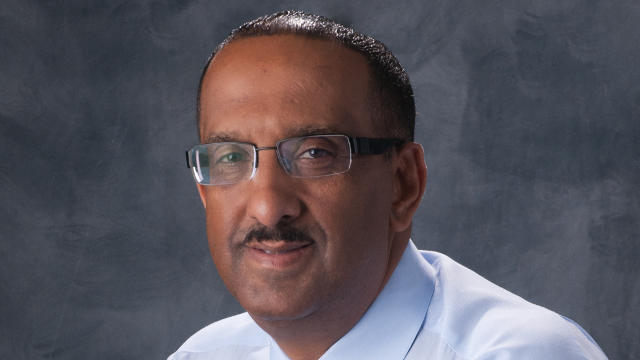
YEMENI-AMERICAN : Dr Nasser H Zawia: An American Scientist & Former Dean born in Yemen

The University of Rhode Island neurotoxicologist and dean came to the U.S. for college in the 1980s. 

Nasser Zawia hails from Al Bayda, a town in the south of Yemen, a country that has long been affected by war and is currently experiencing widespread famine. Zawia traveled to the U.S. in the 1980s to earn an undergraduate degree from the University of Massachusetts Amherst. He stayed in America, obtaining a PhD in pharmacology and toxicology from the University of California, Irvine. But Zawia never planned to stay on in the U.S. permanently. “Like many students who came here in the 80s, the objective was to come to go to school and go back to your home country and serve there,” he told The Scientist. “However, I married an American citizen.”

In 1990, Zawia and his wife moved to Yemen, where he planned to take a job at Sana’a University’s medical school. But the first Gulf War broke out in 1991. “The war was between Kuwait and Iraq,” he said. “But at that time, the position of the Yemeni government was supportive of Iraq. The connections with the U.S. were being threatened. I left during a climate where there was a lot of uncertainty and fear and insecurity as to what might happen.”

Returning to the U.S. in 1991, Zawia used connections he had made in US universities to secure postdoctoral positions at the University of South Florida and then at the National Institutes of Health’s National Institute for Environmental Health Sciences (NIEHS) in Research Triangle Park, North Carolina. After studying environmental toxicology at NIEHS, Zawia landed a faculty position at Meharry Medical College, a historically black college in Nashville, Tennessee, where he studied the developmental effects of lead exposure in minority populations. “I found that to be something where I could serve the underserved,” he said. “I stayed there for five years and then moved to the University of Rhode Island.”

Although he was successfully navigating the halls of academia and earning his citizenship in the early ’90s, life in the U.S. was not easy for Zawia. “The U.S. was not very receptive to people from the Middle East at that time because of the first Gulf War,” he recalled. “Those of us from that region of the world, our life is always punctuated by all kinds of events involving war. Every 10 years it seems like something big happens, which impacts us in many ways.”

The next big event that would have an effect on Zawia and countless other Americans happened on September 11, 2001. “Those of us who are Arab Americans/Muslim Americans in this country have always been dealing with wars and difficulties in our ancestral homes. But we didn’t ever think or expect that someone would come to the U.S. and cause such a catastrophe. And it changed our lives a lot. And everybody else’s,” he said. “But still we were Muslims in the U.S., and we had to deal with the Patriot Act and then the NSEERS [National Security Entry-Exit Registration System] registration for citizens coming from Muslim countries.”

Despite anti-Muslim sentiment spawned by the terrorist attacks of 9/11, Zawia chose to stay. Since setting up his University of Rhode Island (URI) lab in 2000, he’s made seminal discoveries, including research that pointed to a developmental basis for Alzheimer’s disease. He and his colleagues found that early exposure to lead increased the risk of developing Alzheimer’s disease–related pathologies later in life. Zawia is now working on the epigenetics involved in this phenomenon, and said that his team is pursuing clinical trials of a repurposed drug to treat rare types of neurodegenerative disorders in Europe.

Although the Trump administration’s executive orders on immigration have restricted some travel for people from several countries in the Middle East, including Yemen, the policy has not directly affected Zawia, a naturalized US citizen. But both as a scientist who attends international conferences and as an administrator who seeks to entice talented students from all corners of the world to come to URI, he said he is seeing the damage the restrictions are having. “It is a concern for faculty here that were born in one of those seven countries,” he said. “Even though the law might be clear, how it’s applied may have an impact on our mobility.”

Zawia noted that the effects of the new immigration policies appear to be restricting the flow of students to URI and other US academic institutions. “In graduate education—especially in the STEM disciplines . . . we’re very heavily dependent on international students—it looks like huge drops in applications, a lot of concerns among our students on campus,” he said. “It just sends the wrong message. Graduate education is a strategic asset for the United States. Having the best minds come for an education here, staying, and interacting with our faculty and researchers is the secret to us always maintaining our leadership position.”

On top of the uncertainty surrounding his life as an immigrant researcher and administrator in the U.S., Zawia is grappling with an increasingly unstable situation in his home country, where some of his family still live: 19 million Yemenis are on the brink of a catastrophic famine in a country besieged by civil war. “My personal life and my connections to the country and my family have been upside down, to say the least,” he said.

With all that Zawia has witnessed in the U.S. as a Muslim Arab-American, he views the current political and social climate as the most damaging he’s seen. “I feel the impact of what’s going on now is much greater than what we experienced in the ’90s, with first war in Iraq or 9/11,” he says. “What’s going on right now is really very unsettling and very worrisome. Past events and past wars had more of a selective impact on us as Middle Eastern people and Muslim Americans. But the changes this administration is bringing about in many different facets of life is really . . . disrupting a lot.”

source/content: the-scientist.com / bob grant (headline edited)

____________

Image courtesy of Nasser Zawia

________________________

AMERICAN / YEMENI

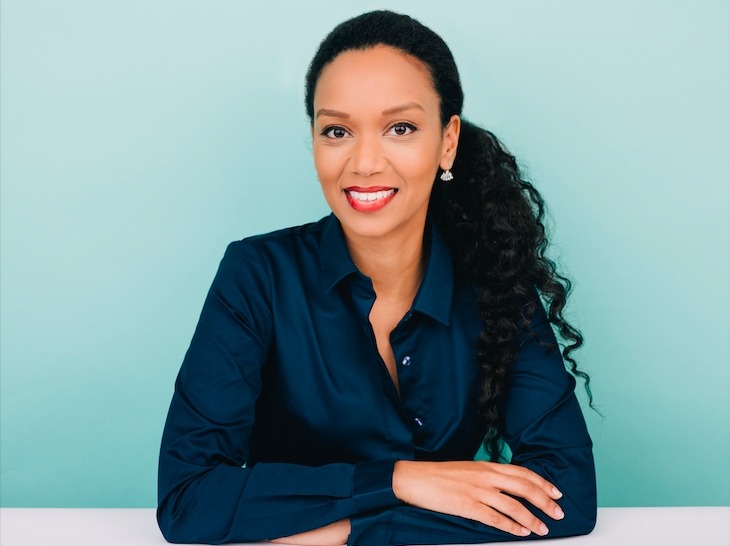
SUDANESE-AMERICAN Iman Abuzeid makes it on Forbes’ Richest Self-Made Women List

Achieving success is no easy feat especially if you are working from the ground up. With passion and skill, a lot of people achieve self-made success. Today we are celebrating one such individual, Sudanese-American physician Iman Abuzeid who is the co-founder and CEO of a digital nurse hiring platform. She just nabbed a spot on Forbes’ ninth annual list of America’s Richest Self-Made Women and for good reason, with an impressive net worth of 350 million US dollars.

Being only one of two Arab women on the Forbes list, Abuzeid’s ranking is placing the Arab identity and voice at the forefront. Beyond that, the 38-year-old doctor is the only self-made millionaire on the list who earns money through the field of medicine on Forbes’ list of America’s Richest Self-Made Women. She achieved her impressive ranking almost a year after her nurse-hiring start-up called Incredible Health was able to raise 80 million US dollars and that helped hike her company’s valuation to 1.65 billion US dollars.

Along with Abuzeid, many other prominent self-made women made it to the Forbes list including TV creator Shonda Rhimes and Insitro founder and CEO Daphne Koller. Also for the sixth consecutive year, the top spot went to building supply distributor Diane Hendricks. With all that being said, knowing the incredible work each of these women achieved acts as a beacon of inspiration for younger girls to follow in their footsteps.

source/content: scoopempire.com (headline edited)

____________

___________________________

AMERICAN / SUDANESE

DUBAI, U.A.E: Expo City’s Dome, Al Wasl Plaza secures Guinness World Record for the ‘Largest Interactive Immersive Dome’

The city’s trophy cabinet has a new addition.

Dubai holds lots of Guinness World Records from being home to the world’s tallest tower, the world’s deepest swimming pool and the world’s tallest landmark sign.

And now, the city can add another accolade to its impressive list of world records as Expo City’s Al Wasl Plaza has secured a Guinness World Record.

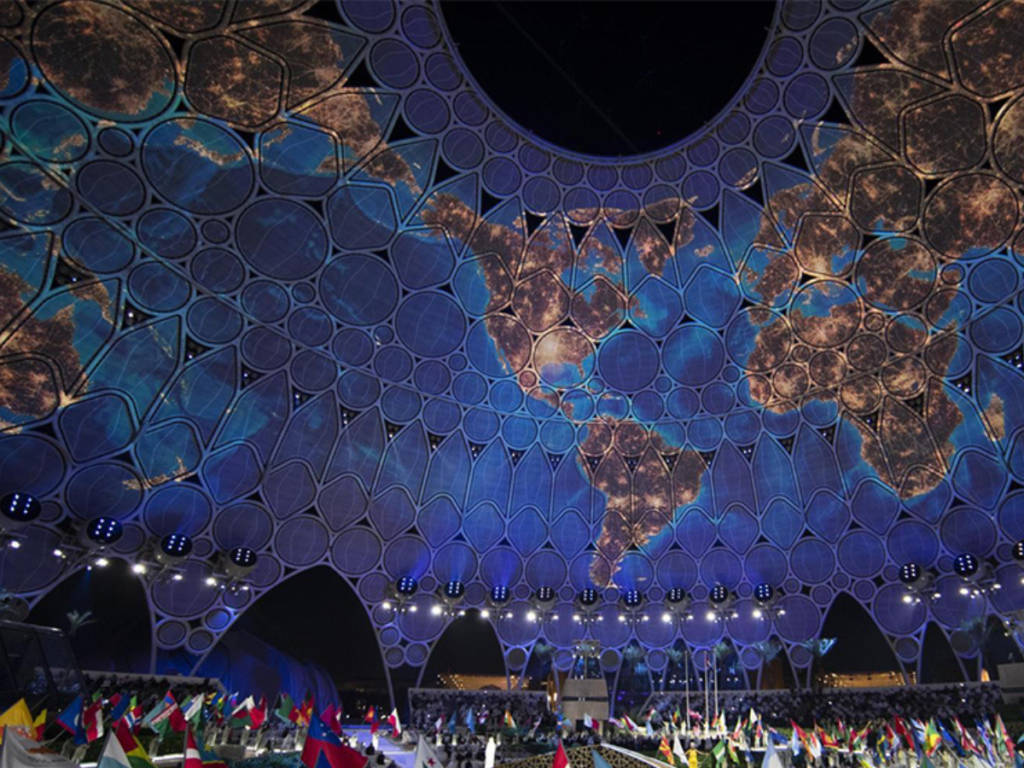
Al Wasl Plaza – Expo City’s dome – has won the Guinness World Record title for the largest interactive immersive dome.

Alwaleed Osman, Official Adjudicator at Guinness World Records, said on the unveiling of the award: “Al Wasl Plaza stands as a testament to architectural excellence and a distinguished structure that resonates with those who have had the privilege of experiencing it.

“Its recognition in Guinness World Records underscores the commitment of Expo 2020, and the subsequent Expo City Dubai, to innovation and excellence.”

The beating heart of Expo City, it’s 130 metres in diameter and over 67 metres tall (that’s big enough to fit the Leaning Tower of Pisa beneath it) and visitors can see immersive 360° videos projected onto the surface of the dome.

Up to 252 laser projectors are used to put images on the architecture that can be viewed from inside or outside of the dome.

Designed by Adrian Smith + Gordon Gill Architecture, Al Wasl Plaza has been built using unique materials that ensure it can be used year-round.

The semi-outdoor space has a trellis framework made out of steel and the pattern is inspired by the logo of the Expo 2020 exhibition. Fun fact: The logo is fully visible at the apex of the dome.

During Expo 2020 Dubai, Al Wasl Plaza was a hub for events from concerts to performances and, next year, it will host the UNTOLD music festival.

Al Wasl Plaza hosts daily projection shows and, upon news of its latest award, has opened the new Al Wasl Plaza Café – a homegrown brand that offers Arabic fusion cuisine.

Expo City Dubai.

source/content: timeoutdubai.com (headline edited)

___________

___________________________________________

DUBAI, UNITED ARAB EMIRATES (U.A.E)

SYRIA’s Rami Al-Ali Becomes First Syrian Acknowledged On Business Of Fashion List

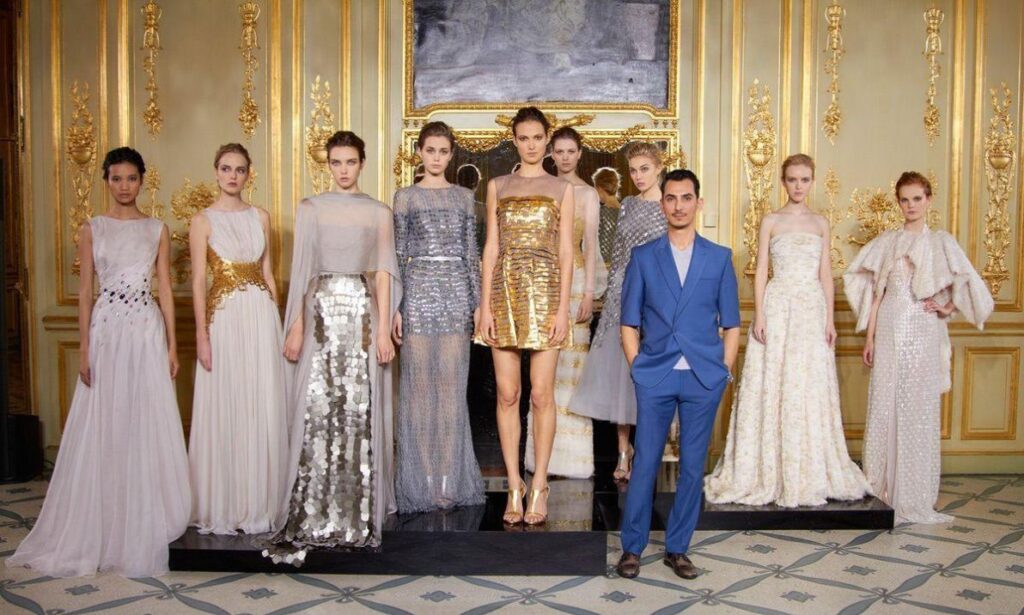
Rami Al-Ali became the first Syrian Fashion designer to be recognized by the Business of Fashion List.

The Dubai-based fashion designer creates couture, bridal, and ready-to-wear collections. Naomi Campbell, Amal Clooney, and Assala are among some of the many celebrities he has dressed. 

In 2001, he established his couture collection in Dubai and made his debut in Paris Couture Week in 2012.

The Business of Fashion is an online Magazine renowned globally for its definitive, explanatory point of view on the fashion world. Their aim is to build fashion’s worldwide community to inform, advise, and connect the Fashion industry. The online publication was founded in 2007 by Imran Amed. 

The BoF 500 list is an index of diverse people molding the fashion world; from designers to entrepreneurs to personalities.

Other Arab figures who made the BoF’s 500 list feature Mohammed Ashi, Saudi’s first designer on the list, Emirati’s Khadija Al Bastaki along Saudi internet personality Amy Roko.

source/content: scoopempire.com (headline edited) / mariam sarhan

________

_________

SYRIA

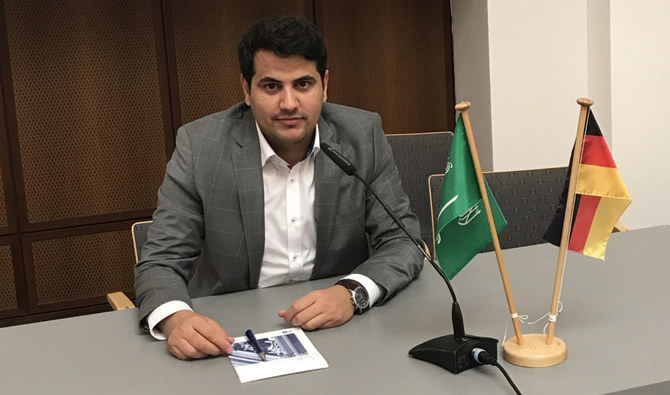
SAUDI ARABIA : Engineer Rakan Al-Shammari — a Saudi Success Story. Teaches on the Railway Industry in Germany

Saudi engineer Rakan Al-Shammari has left an indelible mark on the railway industry in Germany.

His journey began with the pursuit of electrical engineering studies and he later taught at several German universities.

Al-Shammari’s path to success began while working as a project manager at Rail Power System GmbH. His dedication and passion for trains led him to excel in the field. The journey was not without its difficulties, as it required him to learn German, pursue bachelor’s and master’s degrees, and eventually take on teaching responsibilities.

Al-Shammari said: “In 2006, after graduating from high school, I applied for the Custodian of the Two Holy Mosques Foreign Scholarship Program. I spent a year studying the German language, followed by preparatory studies, and then I joined the University of Kassel to major in electrical and communications engineering. During my final year at university, I undertook practical training at the German Railways Company.”

He noted that after completing the practical experience, he pursued further education as a graduate student. “While studying for my master’s, I was offered a position as a lecturer at the university under a contractual arrangement, where I taught electricity to first and second-year students.”

He received a job offer in 2017 and joined a company specializing in railway project management in Germany. “This company managed new construction projects, particularly in infrastructure, as the German Railway Company itself does not execute such projects,” he noted.

Al-Shammari told Arab News that his educational journey began in the desert, where he studied until the third grade of primary school, living in tents and drinking well water. He later attended Al-Yarmouk Primary School in the city of Rafha for grades four to six and completed his secondary education in the city of Al-Uwaiqliyah.

Al-Shammari firmly believes that Saudi Arabia is on the cusp of a transportation revolution and is already reaping the rewards. He emphasized that the Kingdom will emerge as a developed country in the coming years, not solely reliant on oil and energy, but also due to the strength of its people and leadership, and their commitment to continual development and competition.

He expressed pride in having visionary leaders who invest in the talents of their citizens. He also noted Germany’s openness to creative minds and its support for them, attracting skilled individuals from around the world. He believes that effective resource management enhances the economy and strengthens Germany’s global position.

Al-Shammari acknowledged the initial difficulties he faced in studying in Germany, as it was his first experience living outside his familiar surroundings.

His advice to everyone is to embrace their sense of responsibility, seize opportunities, and pursue continuous learning in order to contribute to their country. He also emphasizes the importance of diversifying educational sources and collaborating with experts and scholars to develop a unique persona capable of competing on a global scale.

Finally, Al-Shammari expressed gratitude to the Saudi leadership, his family and friends, and the Saudi Cultural Mission in Germany. He acknowledged the mission’s continuous support, including increased stipends for Saudi students who excelled academically, enabling them to perform to the best of their abilities during their scholarships.

source/content: arabnews.com (headline edited)

___________

Al-Shammari said his educational journey began in the desert, where he studied until the third grade of primary school, living in tents and drinking well water. (Al-Shammari’s Instagram)

__________________

SAUDI ARABIA

TUNISIAN-AMERICAN Muslim Scientist Dr. Moungi Gabriel Bawendi Awarded Nobel Prize In Chemistry For Quantum Dot Breakthrough

Dr. Moungi Gabriel Bawendi, a Tunisian-American scientist and professor at the Massachusetts Institute of Technology (MIT), has been honored with the prestigious Nobel Prize in Chemistry.

Dr. Bawendi, whose familial roots trace back to Tunisia, has risen as a figure of excellence and innovation within the scientific community. His pioneering work in quantum dots has propelled this field to the forefront of modern technology.

This year’s Nobel Prize in Chemistry is jointly awarded to Dr. Bawendi and two other distinguished laureates, Louis Brus and Alexi Ekimov, who, according to the Royal Swedish Academy of Sciences, “planted an important seed for nanotechnology.”

The revolutionary breakthrough that led to this prestigious accolade occurred in 1993 when Dr. Bawendi transformed the chemical production of quantum dots, creating nearly flawless particles. The exceptional quality of these quantum dots became a fundamental requirement for their application across a wide range of domains, from electronics to medicine.

Quantum dots have rapidly evolved to become integral components of cutting-edge technologies. They are currently illuminating computer monitors and TVs through Quantum Dot Light Emitting Diode (QLED) technology, delivering enhanced color and clarity. Furthermore, biochemists and medical professionals utilise quantum dots for precise biological tissue mapping, offering invaluable insights into the human body’s intricacies.

Scientists and engineers envision an exciting future where quantum dots will play pivotal roles in flexible electronics, minuscule sensors, compact solar cells, and secure quantum communication. These tiny, luminous particles hold the potential to revolutionize industries, offering new possibilities for technological advancement.

“The Nobel Laureates … have succeeded in producing particles so small that their properties are determined by quantum phenomena. The particles, which are called quantum dots, are now of great importance in nanotechnology,” the Nobel Committee for Chemistry said in a statement.

“For a long time, nobody thought you could ever actually make such small particles,” Johan Aqvist, the chair of the Academy’s Nobel committee for chemistry, said at a news conference announcing the 2023 laureates. He introduced five colorful flasks, claiming they held liquid solutions of quantum dots, and proclaimed, “This year’s winners achieved success.”

“I wasn’t sure it was true,” said Dr. Bawendi when he received the call informing him of his Nobel Prize, as he shared in an interview with the Nobel Foundation. “It’s quite an honor and quite a surprise.”

The scientist also expressed his deep appreciation for sharing the prestigious award with his former mentor, Dr. Brus, stating, “He molded me as a scientist.”

Before the announcement, Dr. Bawendi had a 9 a.m. class on introductory quantum mechanics scheduled at M.I.T., but the day took an unexpected turn as the lesson transformed into a discussion of his remarkable career leading up to the Nobel Prize. Reflecting on the whirlwind of events, he calmly remarked, “I’m just going to let it ride.”

source/content: theobserverpost.com (headline edited)

______________

_________________________

AMERICAN / TUNISIAN

LIBYAN Khairiya Obaida Ph.D, Wins ‘2020 Scientist of the Year ‘ title in US International Achievement Research Center (IARC) competition for Scientific Research on Breast Cancer Medicine

Libyan doctor Khairiya Ohaida has been awarded the title “Scientist of the Year 2020” in the “Medical and Health Sciences/ Clinical Medicine/ Oncology” category from the US International Achievement Research Center (IARC) for her scientific research on breast cancer medicine.

Dr.Khairiya, a Ph.D. in Tumor biology breast cancer and a faculty member at The Sirte University, told The Libya Observer that her research has been ranked as one of the world’s top 20 scientific papers in oncology.

Dr. Ohaida explained that her project was about discovering a primary breast cancer gene scientifically called galectin-7 in Ductal Carcinoma in-situ (DCIS) and its role in preventing cancer from spreading. 

On the basis of her findings, Dr. Ohaida proposed a multi-step hypothesis for the progression of DCIS to invasive breast cancer, which could be used in the clinic to predict how likely an individual’s DCIS is to progress.

Her findings were considered a “very exciting and entirely novel finding” as it has the potential to stratify patients for a more tailored management of their disease, according to the (IARC).

“Research can make important contributions to scientists’ efforts in controlling oncologic diseases and finding new treatments, Dr. Ohaida said.

She expressed her desire to continue her scientific work, but this would require the interest of the authorities, and in this context, she called on stakeholders to support her in developing her research.

“There is a need to establish research centers throughout Libya, and my hope is to see such a facility in my hometown, Dr. Ohaida added. 


It may be important to note that Dr. Khairiya Ohaida Ahmed is a medical graduate from the  Department of Human Medicine of Sirte University. She obtained her master’s and doctorate degrees from the Queen Mary University of London in 2015.

Dr. Ohaida had also received an award from the Breast Cancer Conference held in Belgium in 2012, as her project was ranked among the world’s top 20 scientific papers on breast cancer.

source/content: libyaobserver.ly (headline edited)

__________

________

LIBYA

TUNISIAN Professor Dr Ines Zaidi Wins Award in 9th edition ‘Francophone Award for Young Researchers in Science and Technology’

Ines Zaidi, Professor of Immunology at the Higher Institute of Medical Technologies at the University of Tunis El Manar, received the science and technology award of the Francophone University Agency during her participation in the ninth edition of the Francophone Award for Young Researchers.

Dr. Inas, a specialist in blood cell biology, excelled in the competition which included 113 candidates from different continents, such as America, Asia and Africa.

Thanks to her immensely advanced research, which demonstrates intelligence, scientific and cognitive abilities. The scholar’s work has also been published in more than 40 international medical articles, which have provided many additions to humanity, health and medicine in general. Zaidi has been awarded the Sadiq Bessour scientific prize for research excellence in 2017, supported by the Sadiq Foundation in collaboration with the University of Montreal and the Ministry of Higher Education and Research in Tunisia.

Regarding the nature and importance of Ines ​Zaidi’s research, the piece of work highlights the inclusion and regulation of HASH-1 molecules in public health diseases, as an added value in the follow-up of pathological conditions, as well as in proposing new therapeutic strategies.

Only three other researchers in the world received the Francophone award from universities in Canada and Morocco, making them 4 international researchers with scientific recognition and utterly significant achievements.

source/content: abouther.com (headline edited)

__________

___________

TUNISIA

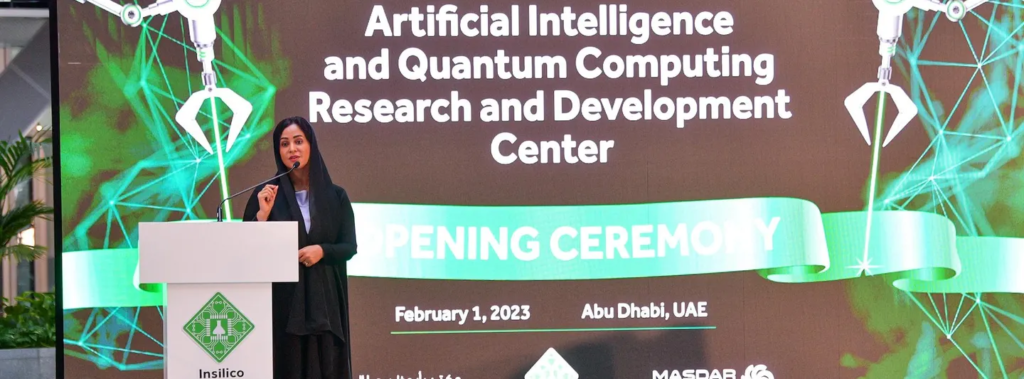
U.A.E: EMIRATI Philanthropist Sheikh Ahmed Bin Faisal Al Qassimi and Ahmed Al Falasi gets Mother Teresa International Award 2023 forCulture Category and Social work

Two more UAE residents, Emirati Sheikh Ahmed Bin Faisal Al Qassimi and British painter Sacha Jafri, receive awards in the culture category.

The Mother Teresa International Awards 2023 celebrated the accomplishments of 18 outstanding individuals, with Emirati philanthropist Ahmed Al Falasi at the forefront for his contributions to social work. Al Falasi, recognised as the Arab Hope Maker in 2020, garnered this honour for his humanitarian efforts in establishing advanced kidney dialysis centres and incubators in Kenya’s Mombasa.

Joining the ranks of awardees were two esteemed UAE residents, Emirati Sheikh Ahmed Bin Faisal Al Qassimi and British painter Sacha Jafri. Both were lauded in the culture category. The accolades were presented during a ceremony held at Dubai’s Conrad Hotel on August 26, which was the 113th birth anniversary of Mother Teresa, a global icon known for her selfless devotion.

These awards were organised by the All-India Minority and Weaker Sections Council, a non-political organisation founded by Late Prafulla Chandra Sen, a former chief minister of West Bengal, and Mr. Anthony Arun Biswas, alongside other dignitaries.

Mother Teresa, beatified by Pope John Paul II as Saint Teresa, was born on August 26, 1910. She founded the Missionaries of Charity, a humanitarian organisation that grew to include over 4,500 nuns serving in 133 countries. Her life’s work revolved around assisting the most impoverished individuals, receiving honours such as the Ramon Magsaysay Peace Prize and the Nobel Peace Prize.

Notably, this marked the first instance of the award ceremony being hosted outside of India. After Saint Teresa’s passing in 1997, the council established the Mother Teresa International and Millennium Award Committee. This committee was entrusted with the task of annually recognising exceptional individuals who have excelled in the fields of education, science, culture, sports, social work, medicine, industry, and politics in India.

Prior to this event, the Harmony Organisation, which also presents awards in Mother Teresa’s name, expressed concerns regarding the August 26 event in Dubai. They asserted that it lacked the endorsement or recognition of the Missionaries of Charity, the Catholic religious institute established by Mother Teresa herself in 1950. This institute, now under the Catholic Church’s recognition as Saint Teresa of Calcutta, exclusively supports Harmony Organisation’s awards, they said, emphasising that any other award ceremony could tarnish the legacy of the revered Saint.

However, the organisers of the Mother Teresa International Awards unequivocally refuted these claims. Dr. T.H. Ireland, Principal of St. James’ School in Kolkata and chairman of the awards committee told Khaleej Times: “Nobody can lay sole claim to Mother Teresa. She was a universal icon. Our award ceremony has a 22-year history of recognising luminaries such as Dr Manmohan Singh, the former Prime Minister of India, and Ms. Sheikh Hasina, the Prime Minister of Bangladesh.”

During a press conference earlier, Indian playback singer Usha Uthup shared her profound connection with Mother Teresa, spanning four decades. She recalled visiting Mother Teresa at the Missionaries of Charity in Kolkata during both her trying and triumphant times. Usha Uthup said she had the privilege of being present during her passing and her canonisation.

Dubai businessman and cricket enthusiast Shyam Bhatia fondly remembered his visits to Mother Teresa and her simple yet powerful message: “We don’t want your money; we want your time.”

Sacha Jafri, the Dubai-based world-renowned artist, who intends to place the first official artwork on the moon, expressed his delight at receiving this prestigious award.

The ceremony’s highlights included dance performances by the mother-daughter actor-artiste duo Indrani Dutta and Rajnandini Paul, as well as Bollywood actor Kalpana Iyer and Usha Uthup, creating a memorable blend of song and dance.

source/content: khaleejtimes.com (headline edited)

__________

___________________________________

UNITED ARAB EMIRATES (U.A.E)
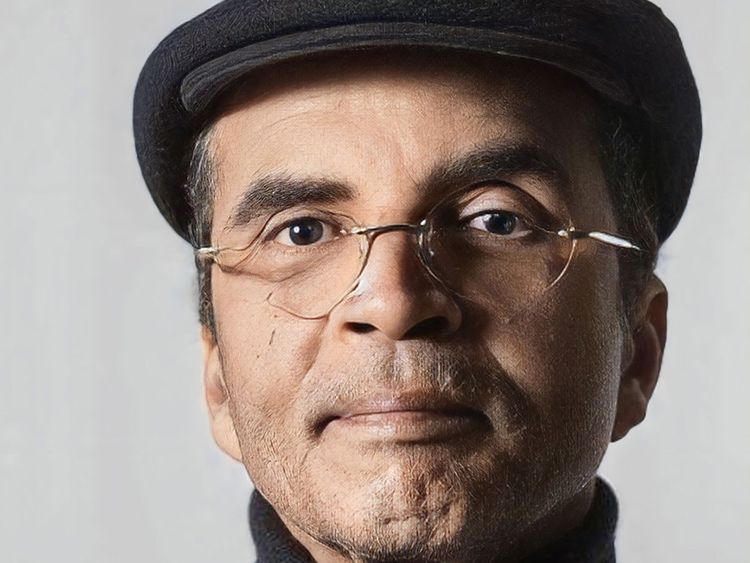
KUWAIT: Arab Media Forum names Kuwait’s Prof. Dr. Mohammad Ghanem Al-Rumaihi as ‘Media Personality of the Year’

Pan-Arab talks bringing together media bodies from across the region have named Kuwait’s Dr. Mohammad Al-Rumaihi as the personality of the year in recognition of his contributions in the field.

As he received his award, Al-Rumaihi, a professor of political sociology at Kuwait University, dedicated the achievement to his compatriots who have made notable contributions in the field of media and journalism, saying the accolade was a “tremendous honor.” He hailed the gathering as a significant initiative that helps propel the field of media and journalism in the region to greater levels, besides shining light on the importance of this crucial sector.

Al-Rumahi has enjoyed a prolific career in the field of journalism, having served as the chief editor of numerous Kuwaiti publications, while he has also authored a number of books delving into Arab social and political affairs.

source/content: kuwaittimes.com(headline edited)

_____________

Dr. Mohammad Al-Rumaihi

__________

KUWAIT