Arabs & Arabian Records Aggregator. Chronicler. Milestones of the 25 Countries of the Arabic Speaking World (official / co-official). AGCC. MENA. Global. Ist's to Top 10's. Records. Read & Enjoy./ www.arabianrecords.org
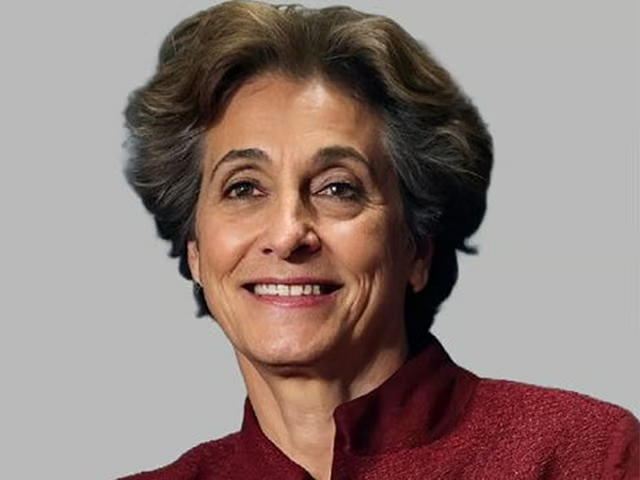
Dr Suad Amiry recognised for decades of heritage conservation work.
His Highness Sheikh Mohammed bin Rashid Al Maktoum, Vice President and Prime Minister of the UAE and Ruler of Dubai, on Sunday congratulated the winner of the 2025 Great Arab Minds Award in the Architecture and Design category.
Sharing his congratulations on social media, Sheikh Mohammed said: “We congratulate the winner of the Great Arab Minds Award in the Architecture and Design category for 2025, Dr Suad Amiry from Palestine, founder of the Riwaq Centre for Architectural Conservation.”
He praised Dr Amiry for her pioneering efforts to preserve Palestinian architectural heritage, highlighting her work in restoring and reusing historic buildings in ways that strengthen urban identity.
Dr Amiry, who leads the Riwaq Centre, was recognised for her role in one of the largest architectural documentation projects in Palestine. The initiative produced a registry of more than 50,000 historic buildings and contributed to the revival of 50 historic centres.
Her projects have also created job opportunities and training for craftsmen working with traditional building materials, while actively involving local communities in restoring their villages.
Sheikh Mohammed extended his “heartfelt congratulations to Dr Suad Amiry for her well-deserved recognition and decades of dedication”. He also prayed for the protection of Palestine, saying: “May God protect Palestine and breathe new life into its historic villages and buildings, ensuring its heritage endures as long as the Arab memory lives on.”
Dr Amiry’s research has been widely recognised for its detailed documentation of traditional Palestinian homes, including stonework, flooring, decorative features and architectural layouts that reflect the richness of the region’s built heritage.
The Great Arab Minds Awards honour influential figures whose work has made a lasting impact on Arab culture, scholarship and society.
Her tenure as Minister of Environment included a modern waste management system, the issuance of the region’s first sovereign green bond, work across protected areas, and nearly 20,000 green jobs.
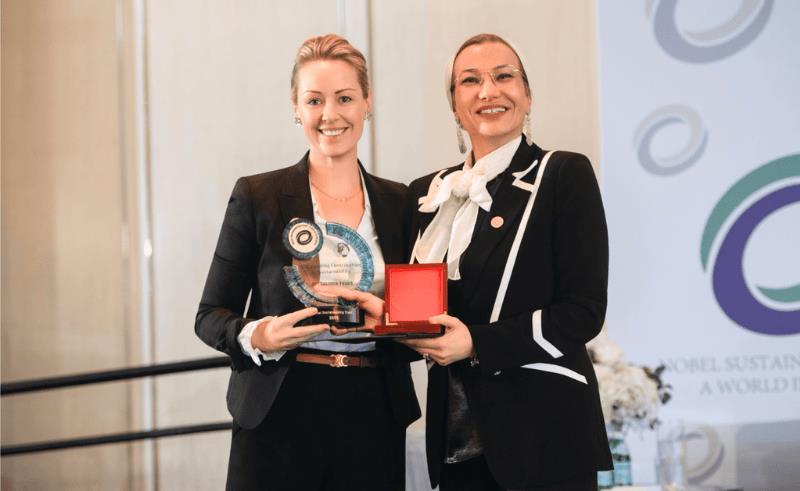
The Nobel Sustainability Trust has selected Dr. Yasmine Fouad to receive the 2025 Nobel Sustainability Medal, an announcement that comes as she concludes her role as Egypt’s Minister of Environment and takes up the position of Executive Secretary of the United Nations Convention to Combat Desertification (UNCCD). Over 26 years, Fouad’s work has moved across environmental policy, climate diplomacy, and sustainable development, from early research on ecological resilience to convening communities, scientists, and policymakers. That human-centred lens has taken her to countries facing climate impacts, meeting pastoralist communities navigating drought, women rebuilding livelihoods after environmental shocks, and youth calling for climate justice. In Egypt, her tenure as minister included a modern waste management system, the issuance of the region’s first sovereign green bond, work across protected areas, and nearly 20,000 green jobs. During COP27 in Sharm El-Sheikh, she put adaptation and resilience at the centre of negotiations, bringing the needs of vulnerable communities into the room. The medal reflects values present in her work — resilience, collaboration, and belief in people’s role in shaping their future — and places attention on the Arab region and Africa within the sustainability conversation. As climate pressures intensify — from water scarcity to land degradation and drought — Fouad often frames sustainability as a human agenda focused on dignity, safety, and livelihoods, with an eye on what future generations will inherit. In her acceptance message, she dedicated the medal “to the women who rebuild their communities, the young people who refuse to inherit despair, the workers who turn scarcity into innovation, and the families who choose hope every day.
Sheikh Mohammed bin Rashid praises novelist’s insights into intricacies of Arab societies.
His Highness Sheikh Mohammed bin Rashid Al Maktoum, Vice President and Prime Minister of the UAE and Ruler of Dubai, congratulated Algerian Professor Waciny Laredj on winning the Great Arab Minds Award in Literature and Arts.
The novelist, short story writer and academic is one of the Arab world’s most prominent literary figures and well-known throughout the Arabic-French speaking countries.
“We congratulate Professor Waciny Laredj on winning the Great Arab Minds Award in Literature and Arts, honouring his exceptional literary contributions. Professor Waciny has presented over 30 novels that delve into the intricacies of Arab societies, culture, and the environment. His impactful works have been translated into more than 20 languages and endorsed by numerous universities worldwide,” Sheikh Mohammed said in a congratulatory message posted on his official X account.
نبارك للبروفيسور واسيني الأعرج فوزه بجائزة نوابغ العرب فئة الأدب والفنون تقديراً لإسهاماته الأدبية الكبيرة .. حيث قدم البرفيسور واسيني أكثر من 30 رواية ترتبط بالمجتمعات العربية وثقافتها وبيئتها .. وتم ترجمة رواياته لأكثر من 20 لغة واعتماد دراستها في عدد من جامعات العالم .. ويشغل… pic.twitter.com/e4FPpAQJkg
“Holding the esteemed position of Chair Professor at the Central University of Algiers and the Sorbonne University in Paris, Professor Waciny’s achievement is a testament to his remarkable dedication to literature. We commend his efforts and deeply appreciate his profound contributions to Arabic literature, enriching the global readership.”
source/content: gulfnews.com (headline edited)
______________
Laredj’s works have been translated into over 20 languages and endorsed by numerous universities worldwideX/@HHShkMohd
This combination of compassion and technology earned Al-Matrudi’s team multiple global awards this year.
For Dalal Al-Matrudi, innovation began not in a lab but at home, watching a loved one battle multiple sclerosis. What started as empathy soon turned into invention, leading her and her team to develop a smart medical device that is now winning awards on international stages.
“Our innovation is a smart medical device designed to assist patients with multiple sclerosis by providing localized muscle massage controlled through a mobile application,” said Al-Matrudi. “It helps relieve pain, reduce muscle stiffness and improve patients’ comfort and daily mobility.”
The device also connects patients directly with their doctors for real-time monitoring. “In emergency situations, it can instantly alert healthcare providers to ensure the patient receives immediate assistance,” she said.
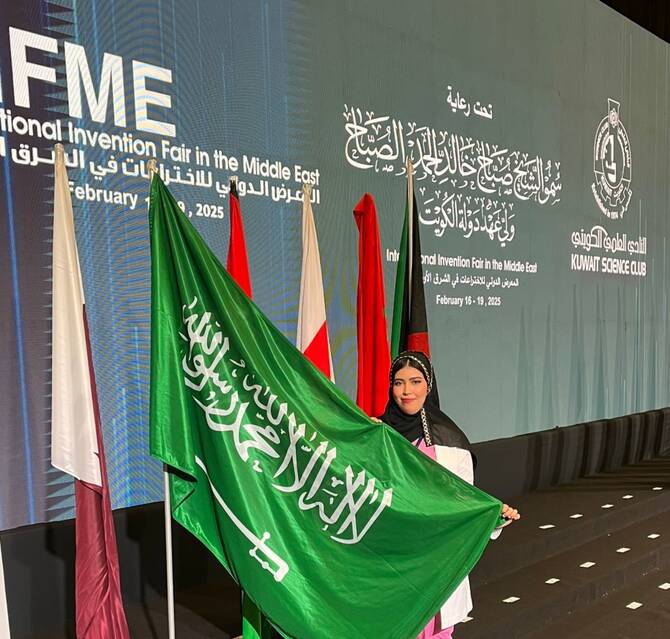
This combination of compassion and technology earned Al-Matrudi’s team multiple global awards this year, including the Gold Medal with Jury’s Honor, the GCC Patent Office Award, and the Grand Prize at the International Invention Fair of the Middle East, or IIFME, hosted by the Kuwait Science Club. The invention was also recognized at the Geneva International Exhibition of Inventions, one of the most prestigious global platforms for innovation.
For Al-Matrudi, 21, who hails from Riyadh, the project was deeply personal. “Our inspiration came from personal experience — one of my family members suffers from multiple sclerosis, and seeing their daily struggle with pain and mobility challenges deeply affected me,” she said.
Together with her teammates, she transformed that emotional drive into a purpose-driven invention. “We wanted to create something practical and compassionate that could truly improve patients’ lives,” she said.
Under the mentorship of Prof. Dr. Kholoud Al-Muqrin, a distinguished professor of nuclear physics known for empowering young Saudi innovators, the team refined their prototype into an award-winning solution. “Her continuous guidance and scientific insight played a vital role in shaping our project and transforming our idea into a tangible, award-winning innovation,” Al-Matrudi said.
She believes the foundation of every great innovation is care. “We believed that technology should serve humanity, and that small ideas born from care can evolve into meaningful advancements that bring relief and hope to many,” she added.
Months of research, design and testing culminated in an unforgettable moment at IIFME 2025.
“The most emotional moment was standing on stage when our team’s name, Team May, was announced as the Grand Prize Winner,” she said. “I remember holding my teammates’ hands tightly, feeling both disbelief and overwhelming pride.”
For Al-Matrudi, the victory symbolized much more than recognition. “It wasn’t just about the prize — it was about realizing that months of dedication, late nights and countless trials were finally worth it,” she said.
She recalls how their mentor’s tears turned the win into a collective triumph. “I could see tears in everyone’s eyes, especially our supervisor’s, which made it even more special,” she said. “That moment reminded me that passion and persistence can turn ideas into achievements that reach beyond borders.”
Although the invention is not directly tied to her academic major, medical physics, Al-Matrudi says her background gave her the edge she needed to design effectively.
“Studying medical physics enhanced my scientific thinking and deepened my knowledge of how the human body interacts with medical devices,” she said. “This understanding helped me design a solution that is both safe and effective.”
She believes the key to meaningful innovation lies in combining technical knowledge with emotional intelligence. “Gaining international recognition encouraged me to continue combining my medical knowledge with creative thinking to develop innovations that make healthcare more compassionate, practical and accessible for all,” she said.
Al-Matrudi’s story reflects a growing wave of young Saudi women who are redefining the global image of innovation.
“I hope my journey shows Saudi women that ambition and creativity have no limits,” she said. “Science and innovation are not exclusive fields — they welcome curiosity, persistence and passion.”
Her experience also underscores how inclusion fuels progress. “When women step into these spaces, they bring empathy and fresh perspectives that drive real progress,” she said.
Her message is simple but powerful: “I want every Saudi girl with a dream to believe that she can represent her country globally, no matter her field. Our achievements are proof that with teamwork, guidance and confidence, Saudi women can lead the way in shaping the future of science and technology.”
Today, Al-Matrudi stands as one of the brightest examples of how Saudi youth are translating Vision 2030’s goals into real-world impact. Through her invention, she’s proving that innovation is not just about devices, it’s about dignity, hope and humanity.
As she proudly waved the Saudi flag on stage in Kuwait, surrounded by fellow inventors and mentors, Al-Matrudi’s message was clear: Saudi women are not just participating in the global innovation movement, they’re leading it.
source/content: arabnews.com (headline edited)
______________
Saudi innovator Dalal Almatrudi proudly holds the Saudi flag after winning the Grand Prize at the International Invention Fair of the Middle East 2025 in Kuwait. (SUPPLIED)
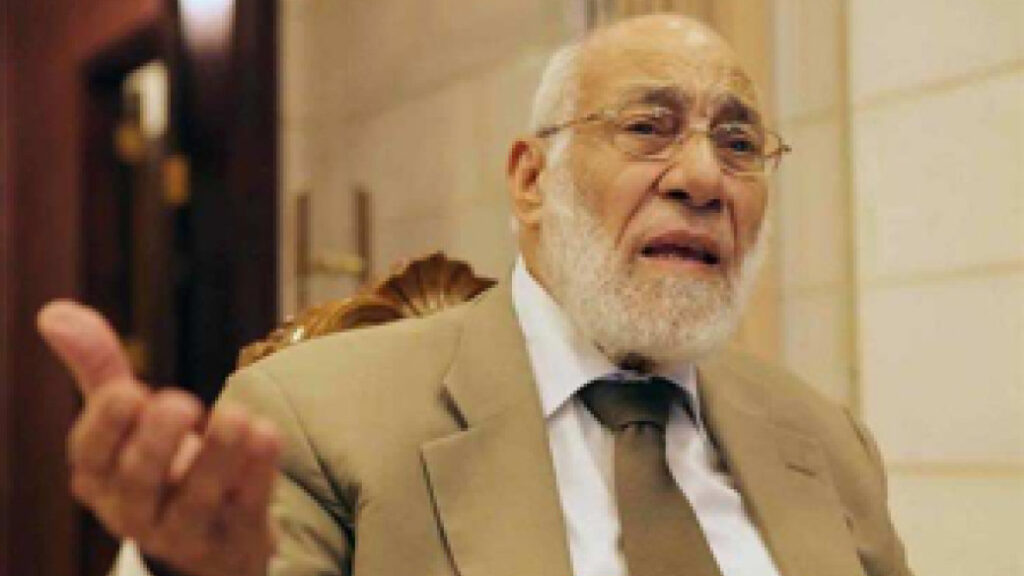
Egyptian Islamic scholar and geologist Zaghloul El-Naggar, a leading figure in the field of scientific interpretation of the Qur’an, has died at the age of 92.
El-Naggar passed away in Amman, Jordan, after a battle with illness, according to statements released on his official social media accounts on Sunday.
His funeral prayer will be held on Monday at Abu Aisha Mosque in Amman, followed by burial at Umm Al-Qutain Cemetery.
Born on 17 November 1933 in the village of Mashal in Egypt’s Gharbia Governorate, El-Naggar showed an early passion for science.
He graduated with honours in geology from Cairo University in 1955, earning the Mustafa Baraka Award in Earth Sciences. He obtained a PhD from the University of Wales in 1963 and became a full professor in 1972.
El-Naggar’s career spanned decades of teaching and research at universities in Egypt, the UK, Saudi Arabia, Qatar, Yemen, Jordan, and the United States.
He chaired the geology department at Qatar University, taught at King Fahd University of Petroleum and Minerals, and served as a visiting professor at UCLA.
He also directed Al-Ahqaf University in Yemen and later taught at the World Islamic Sciences and Education University in Jordan.
He became one of the Arab world’s most recognised voices on the relationship between science and faith, authoring numerous books and delivering hundreds of lectures on what came to be known as the “scientific miracles of the Qur’an and Sunnah”.
His popular TV programme Ayat Bayyinat (“Clear Verses”) aired across Arab channels, exploring Quranic descriptions of natural phenomena.
El-Naggar was a member of the International Commission on Scientific Signs in the Qur’an and Sunnah and was honoured several times for his contributions to promoting scientific understanding within an Islamic framework.
source/content: newarab.com (headline edited)
______________
El-Naggar passed away in Amman, Jordan, after a battle with illness [Al-Araby Al-Jadeed]
This year’s commemoration is especially significant, coming just a week after a UNSC resolution placed Morocco’s autonomy plan at the heart of efforts to resolve the Sahara dispute.
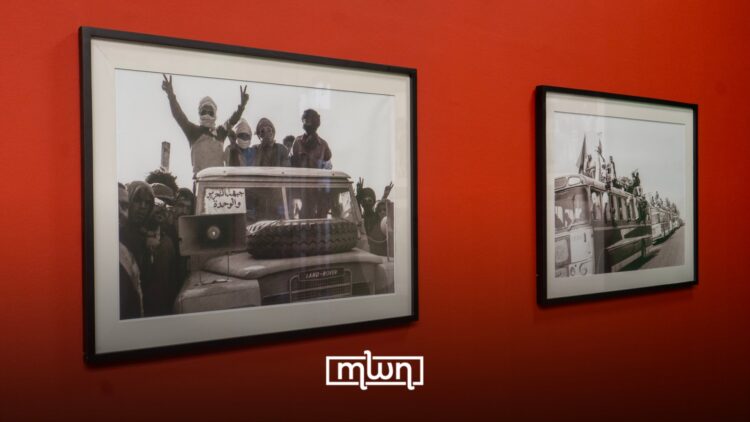
The Mohammed VI Museum of Modern and Contemporary Art in Rabat is commemorating the 50th anniversary of the Green March with a new exhibition titled “50 Years of the Green March: A Memory in Motion.”
The exhibition pays homage to one of Morocco’s most defining moments and invites visitors to reflect on the enduring values of peace, unity, and loyalty that continue to shape the nation’s identity five decades after the historic march.
Opened this week, the exhibition combines historical documentation with contemporary artistic interpretation. The exhibition includes an evocative collection of photographs that aims to reaffirm the strength of visual memory and its role in preserving national heritage. This is a key element in Morocco’s ongoing narrative of sovereignty and unity.
A tribute to a defining moment
Organized by the National Foundation of Museums (FNM), the exhibition brings together works by renowned Moroccan photographer Daoud Oulad-Syad and a selection from the Rencontres de la Photographie de Marrakech (RPM). Together, they offer a visual journey that captures both the emotion and symbolism of the Green March, which represents a cornerstone of Morocco’s modern history.
Nadia Sabri, Director of the Mohammed VI Museum of Modern and Contemporary Art, emphasized the exhibition’s importance as a bridge between generations.
“What we can really emphasize is that this exhibition provides both visual and historical archives for the public,” she told Morocco World News.
“It caters to a wide audience, including younger visitors as well as older ones who may have experienced this historic event but do not necessarily remember its key moments, particularly during the march,” Sabri added.
She noted that the exhibition spotlights major figures in the Moroccan photography scene, like Daoud Oulad-Syad, with a photographic series dedicated to the Sahara and the beauty of the desert.
Through Oulad-Syad’s lens, the exhibition moves beyond mere documentation to celebrate the spirit of a nation united under a shared cause. His photographic series dedicated to the Sahara, showcased in the museum’s second gallery, highlights the region’s natural beauty and its deep cultural and emotional connection to the Moroccan people.
The Green March, which took place on November 6, 1975, was a peaceful mass demonstration that changed the course of Moroccan history. Called for by the late King Hassan II, it saw over 350,000 unarmed volunteers, men and women, from all regions of Morocco march southward to reclaim the territory of Western Sahara, then under Spanish occupation.
Carrying Qurans and Moroccan flags instead of weapons, the marchers symbolized Morocco’s unity and commitment to recovering its southern provinces through peaceful means. The event came shortly after the International Court of Justice (ICJ) issued an advisory opinion affirming that Western Sahara was not “terra nullius” (empty land or unclaimed territory) before colonization and that it had historical and legal ties to Morocco.
The enduring significance of the Green March for Morocco
This year’s commemoration carries added significance, as it comes just a week after the United Nations Security Council adopted a new resolution embracing Morocco’s autonomy plan as the most “serious and credible” framework for achieving a lasting and realistic political solution to the regional dispute over the Sahara.
The resolution is widely seen as a diplomatic success for Morocco, as it reinforces international support for its initiative and paves the way for renewed efforts toward a peaceful settlement.
Mehdi Qotbi, artist and President of the National Foundation of Museums, highlighted this connection in his remarks to MWN at the exhibition.
“We are very happy to be celebrating this anniversary today, here at the Mohammed VI Museum of Modern and Contemporary Art … is not only an occasion to mark the anniversary itself, but also to celebrate the diplomatic success achieved thanks to the foresight of His Majesty King Mohammed VI,” Qotbi said.
For him, this success “paves the way for a definitive resolution of the artificial conflict over the Moroccan Sahara and for a better future for the entire region.” The Moroccan artist added that the Foundation and the Museum are proud to take part in this “popular enthusiasm for this cause, for this victory at the United Nations.”
Beyond commemoration, the “Memory in Motion” exhibition aims to spark dialogue about the meaning of the Green March in contemporary Morocco. For many visitors, especially younger ones, the exhibition is an opportunity to connect with a pivotal chapter in Morocco’s collective memory.
The exhibition includes an evocative collection of photographs that aims to reaffirm the strength of visual memory and its role in preserving national heritage
The United Arab Emirates University announced that it has obtained a new patent from the United States Patent and Trademark Office in the field of environmental science and renewable energy, which is the invention of a carbon nitride graphite compound supported by date syrup.
This patent represents an important step in the development of photocatalytic technologies for converting water into hydrogen using light, which represents a significant advance in sustainable energy technology.
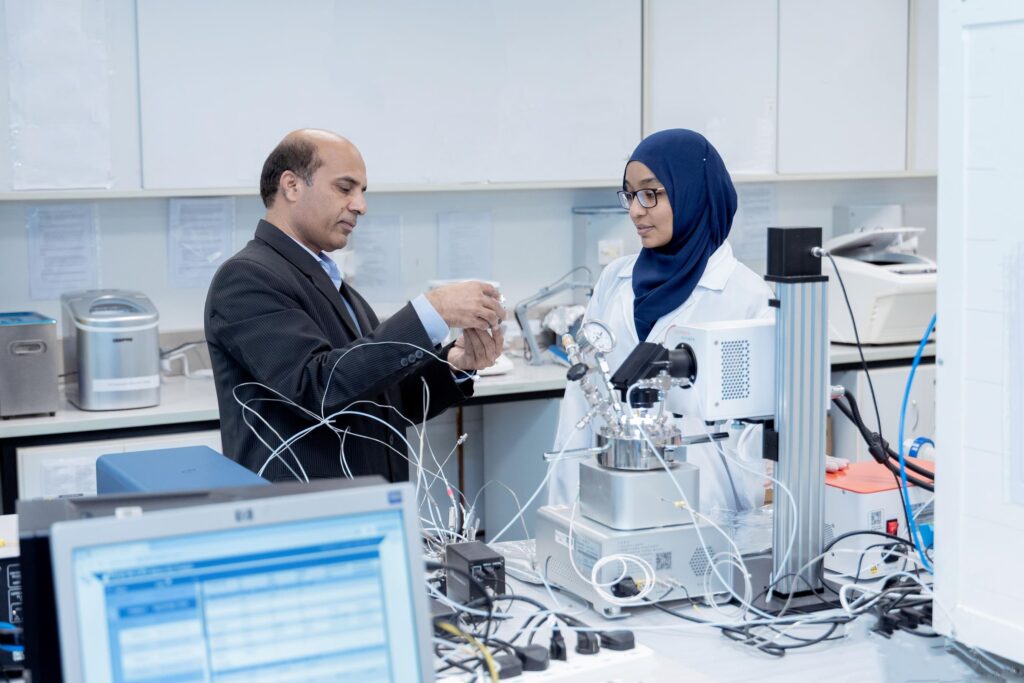
The innovative compound, developed by a team of researchers at the United Arab Emirates University, including PhD student Malath Sulaiman, under the supervision of Dr. Mohammed Taher, Associate Professor in the Department of Chemical and Petroleum Engineering, uses date syrup as an aid to accelerate the photocatalytic process. The compound is manufactured by mixing carbon nitride graphite with date syrup at high temperatures, which improves the efficiency of converting water into hydrogen.
Dr. Mohammed Taher, the project’s principal investigator, explained: “We are proud of this invention, which reflects the United Arab Emirates University’s commitment to innovation in the field of renewable energy. By combining date syrup with carbon nitride graphite, we were able to develop an effective material that can greatly enhance the photocatalytic process, helping to address the challenges of climate change and reduce dependence on fossil fuels.”
This discovery is the result of ongoing efforts by researchers at the United Arab Emirates University, who are working on developing innovative solutions to environmental and energy challenges. Initial studies have confirmed that the new compound is capable of generating hydrogen with high efficiency, opening up new and wide-ranging applications in the field of clean energy and green hydrogen production, and represents a promising step towards enhancing the UAE’s position in the renewable energy sector globally.
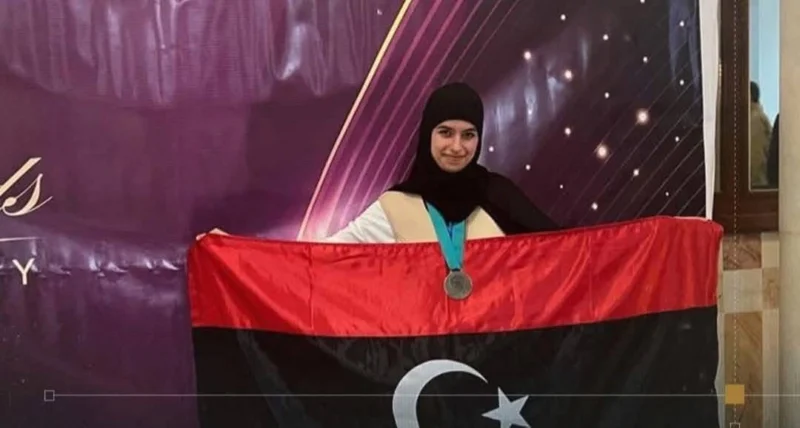
A young Libyan scientist has secured a bronze medal at the International Festival of Science and Technology (I-FEST) 2025 in Tunisia after developing a patented natural antibiotic.
Halima Al-Khazali, 18, from Bayda, claimed third place among 800 international competitors for her invention of an antibiotic derived from wormwood and other herbs. Her achievement adds to Libya’s growing reputation in scientific innovation.
The breakthrough came after five months of rigorous research into a traditional Libyan remedy for dental infections, culminating in Al-Khazali obtaining a patent for her discovery.
This latest success follows her previous gold medal at the Bosnia and Herzegovina Science Olympiad (BOSEPO) 2025, where she finished first among 300 participants.
Al-Khazali’s accomplishments highlight both her exceptional scientific talent and Libya’s potential contributions to global scientific research, making her an inspirational figure for young people across Libya and the broader Arab world.
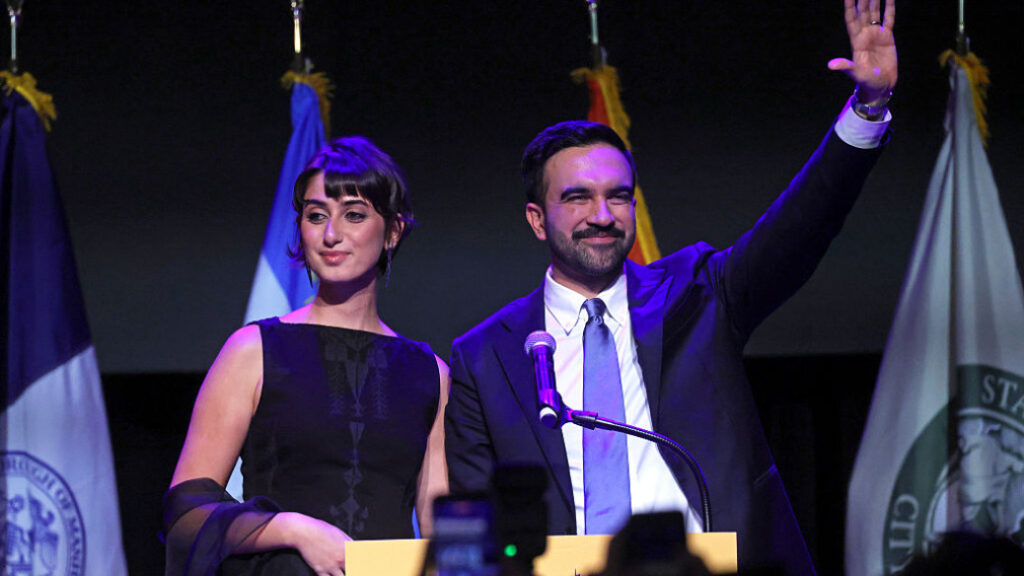
While the world is hailing New York mayor-elect Zohran Mamdani for his win, his artist wife, Rama Duwaji is now also in the spotlight.
With Zohran Mamdani making history on 4 November after being elected New York’s first Indian-American and Muslim mayor, attention has turned to his wife, First Lady Rama Duwaji.
Duwaji was born in Houston, Texas, in the US but her parents are originally from Damascus, Syria, and she spent most of her childhood in Dubai after relocating there. She returned to the US in 2016.
Dubbed a “modern-day Princess Diana”, the 28-year-old works as an illustrator and animator in Brooklyn, New York, graduating from Virginia Commonwealth University in 2019 with a Bachelor of Arts in Communications, then moving to New York City in 2021 to pursue a career in art.
Her work has been featured by Spotify, The New Yorker, The Washington Post, the BBC, Apple, and the Tate Modern in London.
After meeting on dating app Hinge in 2021, while the now-mayor was a member of the state assembly, Duwaji and Mamdani tied the knot in a private Muslim religious ceremony in 2024, followed by a civil ceremony in New York City Hall the following year.
While the illustrator has kept a low profile, reportedly turning down interviews and mostly sharing her work across social media, she paid tribute to Mamdani on Instagram after winning the primary in July.
Mamdani has previously praised his wife as “an incredible artist who deserves to be known on her own terms”.
Pro-Palestine art
Along with Arabic culture and feminist themes, Duwaji frequently uses her art to speak out about current events and politics, including Israel’s war on Gaza and immigration issues, such as the heavy-handed activities of ICE, which has been conducting mass deportation raids in the US since Trump’s appointment.
In May, Duwaji created an animation of a young Palestinian girl holding a large empty pot with the words “not a hunger crisis”, followed by a transition into drawings of several people also holding empty vessels with texts reading “it is deliberate starvation”.
“As I was making this, Israel has been bombing Gaza nonstop with consecutive airstrikes. Keep your eyes on Gaza and support”, the artist said in the caption.
Duwaji had also created an illustration in support of pro-Palestinian activist Mahmoud Khalil, who was detained by ICE over his activism. She called it “an attack on freedom of speech, and sets a scary f**king precedent for anyone who speaks up for what’s right”.
Following her husband’s win, the artist wore a black top made by Palestinian-Jordanian designer Zeid Hijazi on stage as he delivered his winning speech. Hijazi’s designs fuse ancient folklore with Arab futurism.
MAGA supporters were also quick to target Duwaji after she publicly mourned the death of Palestinian influencer Saleh al-Jafarawi, who was accused of “celebrating” the 7 October attacks.
Mandani has been quick to defend his wife against “right-wing trolls”, who are “trying to make this race – which should be about [the people] – about her”.
Attacks by right-wingers
Like her partner, Duwaji has also been subjected to attacks from American right-wing personalities and the media, particularly the New York Post, which described the illustrator as “aloof”, claiming she “quietly steered” her husband’s campaign from behind the scenes.
MAGA supporters were also quick to target the artist after publicly mourning the death of Palestinian influencer Saleh al-Jafarawi, who was accused of “celebrating” the 7 October attacks.
Mandani has been quick to defend his wife against “right-wing trolls”, who are “trying to make this race – which should be about [the people] – about her”.
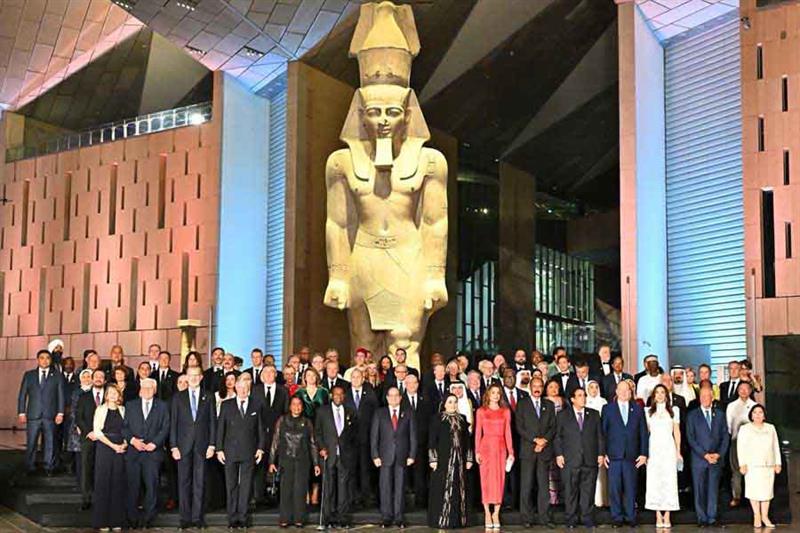
In an evening that blended history, culture and global celebration, President Abdel-Fattah Al-Sisi and First Lady Entissar Al-Sisi presided over the official inauguration of the Grand Egyptian Museum (GEM) on Saturday, marking a milestone in the modern cultural landscape of Egypt and the world. The ceremony was attended by nearly 80 high-level delegations, including kings, presidents, princes, heads of government, and representatives of regional and international organisations.
Among them was German President Frank-Walter Steinmeier, Dutch Prime Minister Dick Schoof, Spain’s King Felipe VI, Queen Rania of Jordan, Prince Albert II of Monaco, and Greek Prime Minister Kyriakos Mitsotakis. Also present were Palestinian President Mahmoud Abbas, Saudi Arabia’s Minister of Culture Badr bin Abdullah, and the crown princes of Oman and Bahrain.
Held at the GEM’s open-air court overlooking the Giza Plateau, the celebration unfolded as a multisensory homage to Egypt’s timeless civilisation. Performances combining music, light, laser projection, and drone choreography traced the evolution of Egyptian architectural genius, from the Giza Pyramids to the modern era, and highlighted the message that civilisations thrive in times of peace.
The façade of the museum became a canvas for immersive light and projection displays, with vast screens illuminating Egypt’s ancient monuments and artistic heritage. Dancers in Pharaonic-inspired costumes, adorned with gold crowns and sceptres, performed to a live international orchestra, while fireworks and synchronised drone formations traced the silhouettes of ancient deities across the night sky.
President Al-Sisi welcomed the distinguished guests and emphasised that the GEM, now the largest museum in the world dedicated to a single civilisation, stands not merely as a showcase of ancient treasures, but as a testament to the creative spirit and enduring legacy of the Egyptian people.
He also described the museum as a new chapter in Egypt’s cultural story, affirming that it stands as a testament to the creativity and legacy of the Egyptian people and as a space for dialogue, knowledge, and exchange.
The ceremony began with the performance “The World Plays One Melody”. The programme featured a laser and drone show illustrating the Orion Belt alignment and its symbolic connection between the museum and the Giza Pyramids, followed by a performance titled “A Journey of Peace in the Land of Peace”.
The sequence highlighted the evolution of Egyptian architectural ingenuity, from the Step Pyramid of Djoser to modern Egyptian design, accompanied by a Coptic hymn of Sufi spiritual singing, and a drone message reading: “Civilisations Flourish in Times of Peace.”
The evening’s performances brought together some of Egypt’s most celebrated voices. Soprano Fatma Said and tenor Ragaaeddin delivered stirring pieces composed by Hisham Nazih, whose music blends contemporary orchestration with the tonal motifs of ancient Egypt, a style previously showcased during the Golden Mummies parade.
Sisters Amira and Mariam Abu Zahra, granddaughters of renowned Egyptian actor Abdel-Rahman Abu Zahra, appeared in stylised Pharaonic attire, performing a violin duet accompanied by the Cairo Opera House Orchestra and international ensemble players under the baton of maestro Nayer Nagui.
The celebration also highlighted Egypt’s cultural diversity. Nubian singer Ahmed Ismail performed in the Nubian language, while Haneen Al-Shater sang in Arabic from a floating stage overlooking the Nile, symbolising Egypt’s enduring identity as a crossroads of civilisations.
Iconic Egyptian actress Sherihan delivered an evocative spoken tribute to ancient Egypt’s artistic legacy, set against sky projections of the Pyramids. She was followed by Sherine Ahmed, the first actress of Egyptian descent to play Eliza Doolittle on Broadway, who gave a powerful musical performance before Islamic chanter Ehab Younis offered a spiritual finale.
On giant screens above, scenes from celebrations in countries all over the world played out against the backdrop of Egypt’s ancient monuments.
Dozens of performers dressed in elaborate white costumes, as a symbol of peace, their foreheads crowned with golden wreaths and sceptres in hand, played traditional tunes as a laser show depicting the Pharaohs and fireworks lit up the night sky above the museum.
As the night drew to a close, a drone light show mapped the sky with hieroglyphs, Pharaonic figures, and the golden mask of Tutankhamun, shimmering above the Giza Plateau, an image that captured both the grandeur of the past and the cultural confidence of the present.
Among the many moments that captured global attention during the GEM’s opening ceremony was the appearance of 12-year-old Asser Ahmed Hamdi, whose poised and expressive performance resonated with viewers across Egypt and beyond. The young performer quickly became one of the most talked about faces of the event, representing a new generation engaging with the country’s cultural narrative.
Asser described his participation in the ceremony as a defining moment in his life. “I was very happy to be there, and proud that my effort represented Egypt in front of the world,” he said, explaining that his preparation for the role involved months of rehearsals and that he had been training in performance and acting for seven years. “When the opportunity came, I felt like a dream had been achieved.”
Performing before President Al-Sisi and dozens of world leaders brought initial nerves, he admitted, but the atmosphere on stage quickly shifted those feelings. “I was nervous backstage, but once I stepped onto the stage, I felt calm,” he said. After the performance, he exchanged a few words with the president, who praised his portrayal linked to the story of Tutankhamun.
Asser spoke with pride about standing before the golden mask of Tutankhamun and the monumental statue of Ramses II inside the museum. “I had seen them only in books and on TV, but standing in front of them at the GEM was something completely different,” he said. “I felt proud to be representing Egypt.”
Reflecting on the journey, he said, “All the effort in rehearsals was worth it. I’m grateful I could present something worthy of Egypt. I will always be proud that I was part of the opening of the GEM.”
Among the creative figures behind the opening night spectacle was Ahmed Essam, the artist and designer responsible for the fireworks and pyrotechnic displays that illuminated the GEM during the ceremony. Speaking about the experience, Essam described it as one of the defining moments of his career, noting that the preparations took several months of planning, rehearsal and technical coordination.
“It was an honour to be part of an event of this scale,” he said, explaining that the ceremony’s postponements provided valuable time to refine the visual narrative and ensure that the display matched the cultural weight of the occasion. Essam highlighted that working in a field he is passionate about has been central to his development. “I travel constantly to learn and experiment with new ideas. When you love what you do, you invest your whole self into it.”
Creating the fireworks show for the GEM opening, he noted, required an approach tailored to the museum’s identity as a celebration of ancient Egyptian civilisation. Colours, rhythms, and sequences were chosen to complement the architectural setting and underscore the narrative themes of heritage and renewal.
He was also quick to highlight the scale of teamwork behind the scenes. “What viewers saw was the result of a coordinated effort involving more than 150 people, from designers and technicians to support staff. Everyone worked with passion and commitment to present Egypt in the best possible light.
“The opening of the GEM is a landmark in Egypt’s cultural journey. The presence of President Abdel-Fattah Al-Sisi and world leaders underscored its importance. We are proud to have contributed to an event that showcased Egypt’s ability to inspire and captivate the world,” Essam added.
Soprano Said, who took the stage as one of the evening’s principal performers, revealed that the concert marked a deeply personal milestone for her as it was her first since becoming a mother.
“I recently gave birth to twins,” she said, “and I wasn’t sure I would be able to perform because the concert came so soon after the delivery. I was a little anxious. But my children gave me the strength and energy to take part in this extraordinary occasion.”
Her appearance added an intimate emotional layer to the celebration, reflecting both the resilience of artists and the symbolic continuity between generations that the museum itself seeks to embody.
Most of the international state leaders expressed their enthusiasm over the grand opening. In a diplomatic gesture that blended cultural appreciation with a touch of modern creativity, Danish Foreign Minister Lars Løkke Rasmussen presented Egypt’s Foreign Minister Badr Abdelatty with a LEGO replica of the Great Pyramid of Khufu, a symbolic gesture marking Denmark’s participation in the GEM’s opening and celebrating Egypt’s architectural heritage.
Zambian Minister of Tourism Rodney Sikumba noted his country’s appreciation for the commemorative gift presented to Zambia on the occasion of the GEM’s opening, a piece representing part of the GEM’s architectural model. He pointed out that the artefact will be placed on a temporary display in one of Zambia’s national museums, accompanied by an explanatory panel narrating its significance. The gesture, he said, reflects Zambia’s pride in taking part in this historic cultural moment and serves as a testament to the growing cultural ties between the two nations.
As with any major cultural event, public reaction to the GEM’s opening ceremony was not uniform. Such occasions naturally invite a spectrum of opinions, shaped by personal taste, expectations, and aesthetic preferences. While some critics viewed the event as more modest than anticipated, others praised its scale and artistic ambition, seeing in it a carefully curated blend of ancient symbolism and modern cultural expression. Supporters argue that the ceremony succeeded in presenting Egypt as both a guardian of a timeless civilisation and a dynamic cultural force in the present day — a duality at the heart of the museum’s identity.
* A version of this article appears in print in the 6 November, 2025 edition of Al-Ahram Weekly