Arabs & Arabian Records Aggregator. Chronicler. Milestones of the 25 Countries of the Arabic Speaking World (official / co-official). AGCC. MENA. Global. Ist's to Top 10's. Records. Read & Enjoy./ www.arabianrecords.org
As a site of historical significance with a prominent role in Islamic history, today it sees a number of visitors who come to perform their prayers.
Madinah is home to a number of mosques and historic Islamic sites, a veritable tourist destination where visitors can explore places from Prophet Muhammad’s life.
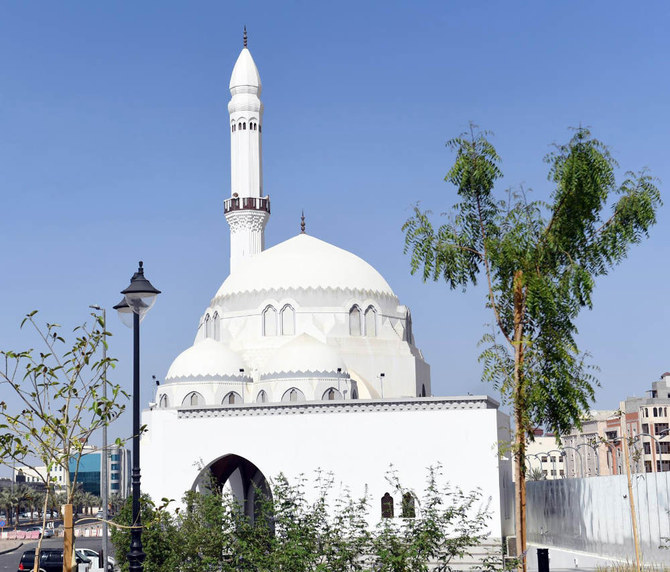
Al-Jum’ah Mosque is one such place, linked to the migration of Prophet Muhammad from Makkah to Madinah.
The mosque is the site where the prophet stopped in the Wadi Ranuna region and performed the Jum’ah, or Friday, prayer.
Al-Jum’ah Mosque holds different names, such as Al-Wadi Mosque and Atikah Mosque.
As a site of historical significance with a prominent role in Islamic history, today it sees a number of visitors who come to perform their prayers.
It is situated southwest of Madinah, near Wadi Ranuna, 900 meters north of the Quba Mosque and 6 kilometers from the Prophet’s Mosque.
It was built with rocks initially then demolished and renovated several times. Before the last expansion, the mosque was built over a small mound, with one dome made of red bricks. Then it was rebuilt and expanded to accommodate 650 pilgrims.
The mosque also includes a minaret, a main dome in the middle of a praying area and four small domes on its sides.
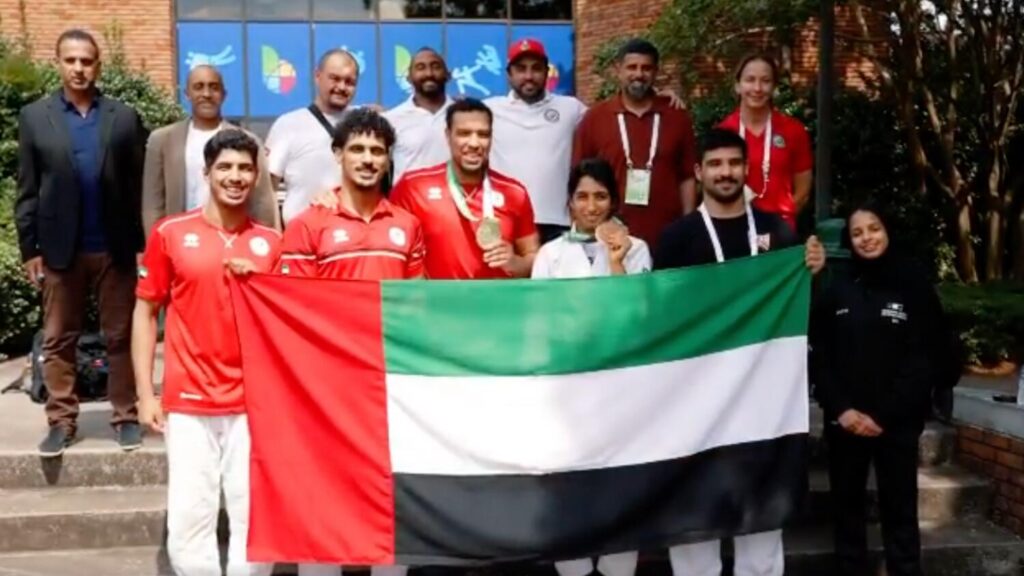
The UAE national jiu-jitsu team of five athletes has added two medals in the 11th edition of the World Games hosted by Birmingham, USA, from 7 to 17 July, 2022, bringing its total harvest to five medals (two gold medals, two bronze and one silver).
UAE’s Faisal Al Ketbi captured the gold medal in the 85kg category, while the 19-year old Shamma Al Kalbani won the bronze in the open weight division, becoming the first Emirati athlete to achieve such a global landmark victory.
A jiu-jitsu squad of five athletes from the UAE qualified for the games, building on an impressive performance at the 2017 Games in Warsaw, Poland. Last time out, Al Ketbi won the gold medal in the under-94kg.
Abdel Moneim Al Hashemi, Chairman of the UAEJJF, and Senior Vice President of the International Jiu-Jitsu Federation (JJIF), called the UAE team to offer his congratulations.
Fahad Ali Al Shamsi, Secretary General of the UAE Jiu-Jitsu Federation (UAEJJF), attended the award-giving ceremony, and congratulated Faisal Al Ketbi and Shamma Al Kalbani on the winning.
Tariq Al-Bahri, Director of the Abu Dhabi Professional Jiu-Jitsu Association, Mubarak Al Menhali, Director of the Technical Department, UAE Jiu Jitsu Federation’s (UAEJJF), and Joachim Thumfart, Director-General of the Jiu-Jitsu International Federation (JJIF), watched the closing day competitions.
Considered a global showpiece for sports yet to be included in the Olympic Games, the prestigious World Games 2022 featured approximately 3,600 participants from 100 nations competing across more than 30 sports.
The Emirati stars included Faisal Al Ketbi (85kg), Muhammad Al Amri (77kg), Muhammad Al Suwaidi (69kg), Shamma Al Kalbani (63kg) and Balqees Abdelkareem (48 kg).
Time Out magazine ranks Marrakech 7th among top 53 cities. List also includes Dubai, Abu Dhabi, Doha
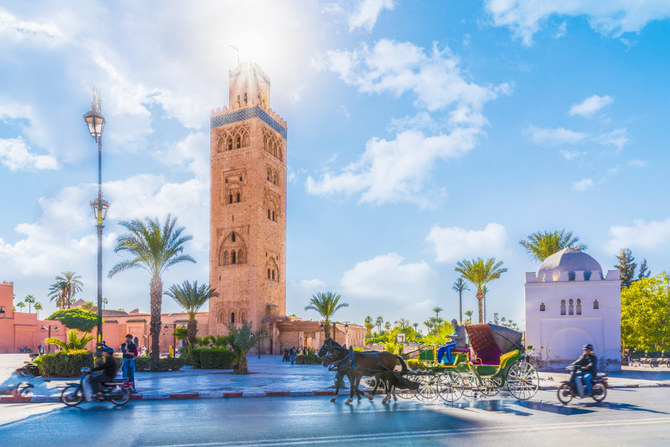
Marrakech has been ranked seventh in a new list of the world’s 53 best cities, compiled by British events magazine Time Out.
Dubai (40), Abu Dhabi (45) and Doha (53) were the other Arab cities receiving plaudits for their offerings in nightlife, liveability, and practical issues such as walkability and sustainability.
The magazine’s annual ranking this year was the first since 2019 to not revolve around resilience to the COVID-19 pandemic, instead focusing on the fun and practical frills that each city has to offer.
Time Out said it had “added extra weight to the things that make cities great places to visit as well as to live.”
It added: “Our top cities this year are the ones with thriving nightlife, amazing food and drink, and art, culture and museums galore.
“We’ve highlighted places that aren’t boring or overly expensive or overrated, and we’ve ensured that our top picks also score well for practical stuff like walkability, good public transport and safety, as well as sustainability.”
The editors were charmed by the “community, creativity and faith in the future” that made Marrakech “come roaring out of the pandemic with a new lease of life.”
Time Out spoke to local guides and experts to get a feel for what is particularly excellent about each urban hub.
Highlighting the new international storytelling festival in February, it said post-pandemic Marrakech has attracted “big players like La Mamounia” that were “sporting sassy new looks.”
The Moroccan cultural capital was described as “thriving,” with the magazine pointing to a range of exhibitions.
It added that El-Fenn had launched “the hottest Sunday music nights in town,” with visitors desperate to return.
Time Out said Dubai “has all the stuff you’d want from a travel destination — from incredible restaurants and buzzing nightlife to some of the world’s best shopping and simply stunning beaches.”
It also pointed to its modernity and cleanliness, highlighting that 97 percent of the locals say the city is clean.
Dubbed “a city of superlatives,” Time Out pointed to the emirate boasting the world’s highest infinity pool, tallest building and largest manmade island. Dubai heard the phrase “go big or go home” and truly took it to heart.
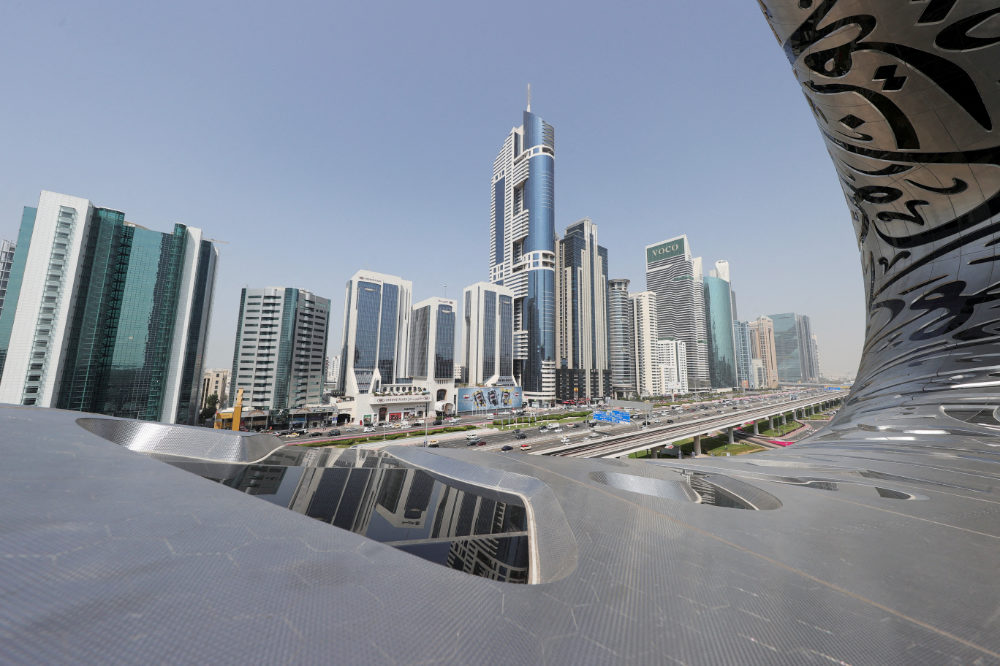
But while those “world’s largest” structures are static, the city is anything but. A vibrant events scene has introduced the newly opened Museum of the Future, with Time Out recommending that you follow your visit “with a beach club crawl along the rapidly expanding Palm West strip and a DJ set at Electric Pawn Shop.”
Time Out noted that Emirati capital Abu Dhabi is also the “unofficial arts and culture capital” of the UAE.
Pointing out that the city’s safety and cleanliness made it popular with expats, the magazine referenced the constant stream of exciting things to do, “from cutting-edge restaurant openings to major new museums including the Guggenheim Abu Dhabi and the National History Museum Abu Dhabi,” both of which are on the horizon.
Local expert Heather Cichowski, from Time Out Abu Dhabi, said the city “ranks among the least dirty, stressful and rude. In short, it’s an all-round comfortable and pleasant place to live and work.”
Like Dubai and Abu Dhabi, Doha was similarly praised for its cleanliness, but locals and expats have also lapped up the Qatari capital’s stream of events and activities.
As Doha gears up to host this year’s FIFA World Cup, the pinnacle of the world’s most popular sport, the city has been promoting its local events for every taste and persuasion.
Time Out said: “There’s loads of great stuff to see and do here, whether you fancy heading out to one of the city’s many cafés for breakfast (and we mean many, Doha’s coffee-and-cake culture is absolutely thriving), touring public art spots from Al Sadd Metro Station to Katara Cultural Village, or visiting a bar after hours.”
Boasting a slower and less stressful pace of life, the city is pouring attention into its arts scene.
The magazine said from now until the turn of 2023, some 17 new exhibitions are set to open, including an “immersive light installation from Pipiliotti Rist at the National Museum of Qatar,” which it described as “particularly stunning.”
source/content: arabnews.com
_____________
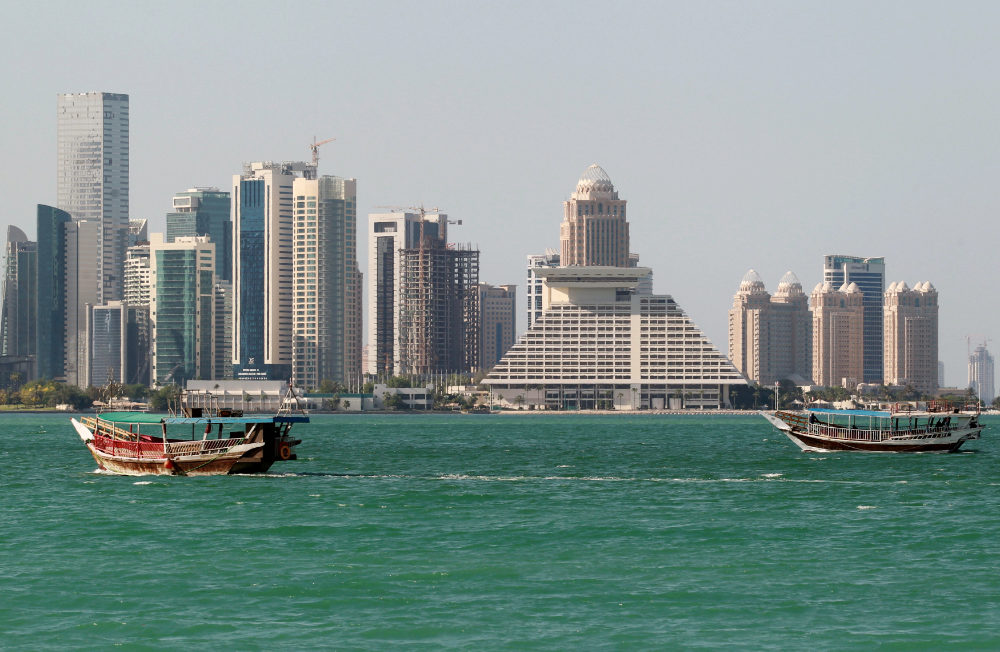
Marrakech. (Shutterstock)A view of the downtown skyline is seen from the Museum of the Future in Dubai, United Arab Emirates, February 23, 2022. (REUTERS)Buildings are seen on a coast line in Doha, Qatar. (REUTERS)
Dr Samiha Sinan worked as an internal medicine doctor for 43 years in several Saudi hospitals
Saudi Minister of Health Fahad Al-Jalajel has named 65-year-old retired doctor and volunteer Dr. Samiha Sinan the “Mother of Volunteers.”
“One retires from office work, not from serving pilgrims,” Al-Jalajel said, praising Sinan’s efforts in providing health care to pilgrims.
Sinan told Arab News that volunteering to serve pilgrims is a work of great honor if done sincerely and honestly.
She worked as an internal medicine doctor for 43 years in several Saudi hospitals, retiring four years ago.
As soon as the pandemic hit across the world, placing great pressure on the health sector, Sinan jumped back into the field to help out.
“I am still able to give, and I tried to think of how a person could serve their religion, country and king, so I submitted a request on the volunteer platform at the Ministry of Health. I was afraid I would be rejected given my age, but my instinct told me to apply because I wanted to give and serve. The Ministry of Health approved my request, and I immediately decided to get back in the field and fight the pandemic,” she said.
Sinan added: “The Makkah health authorities tried to put my comfort first and asked me to work in a small medical clinic in Makkah, but I refused since the pandemic was growing stronger. I headed directly to a COVID-19 center in an isolated area in Al-Masfalah, in Makkah. No one was allowed to enter or leave, but we worked in a comfortable environment thanks to the measures the state had taken to support citizens. I volunteered there for two years, 12 hours a day, seven days a week.”
Even though COVID-19 has witnessed a steady decline in the Kingdom over the past few months, Sinan still volunteers in one of the squares at the Grand Mosque by providing medical care to injured pilgrims.
source/content: arabnews.com (headline edited)
________
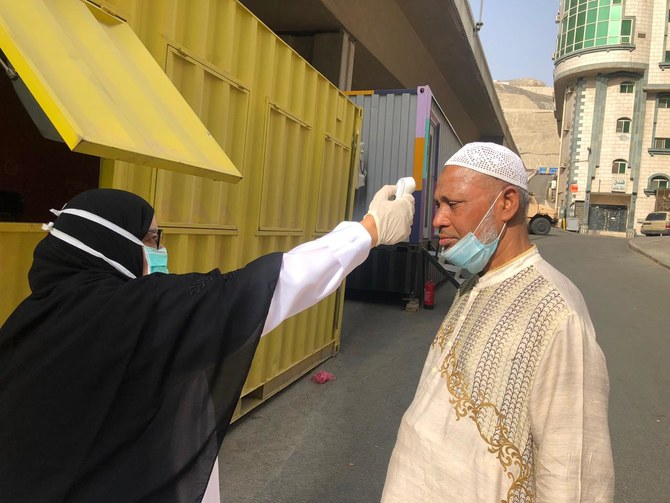
Dr Samiha Sinan volunteers by providing medical care to injured pilgrims at the Grand Mosque. (Supplied)
Medical pioneer was one of the first women from the country to study abroad.
The life of doctor Saniya Habboub is being celebrated by Google’s Doodle on Friday, commemorating her graduation from medical school on June 10, 1931.
Born in 1901 to a Lebanese leather merchant and Turkish mother, Habboub was one of the first female doctors from Lebanon to study medicine abroad, in the US.
When she returned to Beirut she opened her own practice, inspiring other Lebanese girls and women to get an education of their own, according to Google’s description.
In 1926, Habboub was one of the first three students to graduate from the American Junior College for Women in Beirut, going on to study at the American University of Beirut.
In 1931, she received her degree in gynaecology and obstetrics from the Women’s Medical College in Pennsylvania and, in gratitude, left future students with a scholarship in her name.
She started her own practice two years later, in Bab Idriss, and went on to co-found the Lebanese Red Cross Association, as well as served as a board member for the Muslim Orphan’s Home, the Young Women’s Muslim Association and Maqassed Hospital.
In 1982, in honour of her devotion to medical services, the Lebanese government awarded her with a Health Medal of Merit, and there’s even a street in Beirut named after her.
Habboub died aged 82 in September 1983.
“Dr Saniya was an inspiring figure who paved the way for future generations of women to come,” Google says.
Dr William Stoltzfus, former president of Beirut University College, described her life as a “get-started signal” for the professional lives of many Arab women, according to Al–Raida, the bi-annual journal published by the Arab Institute for Women.
The Doodle can be seen on devices across the Middle East and North Africa.
source/content: thenationalnews.com
___________
Dr Saniya Habboub died in 1983 aged 82. Photo: Public DomainGoogle Doodle of Dr Saniya Habboub. Photo: Google
The Jamarat Bridge project is a massive structure built to save pilgrims’ lives and facilitate a crucial Hajj ritual.
Pilgrims gather in this place to throw stones at the devil in a symbolic act as part of their Hajj. Without this act, their pilgrimage is incomplete and considered to be unaccepted.
The concept of stoning the devil began when Prophet Ibrahim intended to sacrifice his son Ismael upon Allah’s order. The devil tried to dissuade the prophet three times from carrying out the order.
On each of the three occasions, the prophet pelted the devil with seven small pebbles to drive him away, after which the devil disappeared. This act has become a symbolic ritual and an integral part of Hajj.
It takes place over two or three days, from the 10th day of Dhul Hijjah until before sunset on the 13th.
The three pillars were previously built of stone and mud with low barriers surrounding them. They were then covered with cement, with the size of the pillars remaining unchanged for years.
However, the increasing number of pilgrims called for a project to help manage the hundreds of thousands of worshippers gathering in one place.
According to Mohammed Idris, former vice dean of The Custodian of the Two Holy Mosques Institute for Hajj and Umrah Research, the three pillars were surrounded by circular walls until 1975.
“A substantial enlargement of the area took place in 1987, and other expansions followed to upgrade the Jamarat area’s capacity to ease pilgrim movement and avoid accidents. The exit points and entrances to the pillars were amended, and the curved paths to the Jamarat were made straight,” he told Arab News.
The Jamarat Bridge was originally a pedestrian structure built in 1963 to facilitate the stoning ritual. Since then, it has been expanded several times to accommodate the increasing number of pilgrims.
A substantial enlargement of the bridge took place in 1974, and other expansions followed to upgrade the bridge’s capacity to ease pilgrim movement and avoid accidents.
Despite this, the structure witnessed several deadly incidents owing to actions of pilgrims who violated instructions, thereby sparking stampedes and deaths.
In 1990, over 1,400 pilgrims were killed by trampling and suffocation in Al-Ma’aisim pedestrian tunnel, which led from Makkah to Mina. Between 1994 and 2006, more than 1,030 pilgrims were killed in stampedes while trying to stone the pillars. Around 470 others were injured.
The worst stoning-related incident in recent memory occurred on Sept. 25, 2015, when more than 700 pilgrims died and another 800 were injured when pilgrims surged toward the intersection of Street 204 and Street 223.
A doctor at an emergency department of a Mina hospital told Arab News at the time that most of the pilgrims died of asphyxiation.
A Saudi interior ministry spokesman had blamed the stampede on “unprecedented high numbers of pilgrims” as compared to previous years, plus the fact that a majority of the victims had descended onto a pathway during a time that they were not allowed to enter it.
Witnesses to the tragedy had confirmed that a large group of Iranian pilgrims passed through Souq Al-Arab Street and refused to return, ignoring Hajj guidelines.
__________
FASTFACTS
• Stampedes and surges caused thousands of deaths at the Jamarat Bridge before the infrastructure was upgraded.
• The project, to alleviate overcrowding and avoid tragedies, cost $1.12 billion.
_________
Regardless of the causes of the tragedies, they prompted the Saudi government to devise a solution that could save lives. After the 2015 incident, Saudi Arabia’s King Salman offered condolences and immediately ordered an urgent review of the Hajj plan.
Over four years, Saudi authorities studied and researched the site before the old structure was completely removed and replaced by the existing engineering marvel known as the Jamarat Bridge.
The new project details were approved by top engineering and architectural committees consisting of local experts and highly experienced US, German, and British engineers. The opinion of senior Muslim scholars was taken into consideration for the religious position on the project details.
“In 2005, the circular walls around the pillars were reshaped, making them elliptical to facilitate the movement of the pilgrims,” Idris told Arab News.
“ In 2007 the old Jamarat project was discarded, and work on the new project began. A year later, one floor as per the project was fully constructed. In 2009, the second floor was made ready to serve pilgrims. By 2010, the entire planned construction was fully complete.”
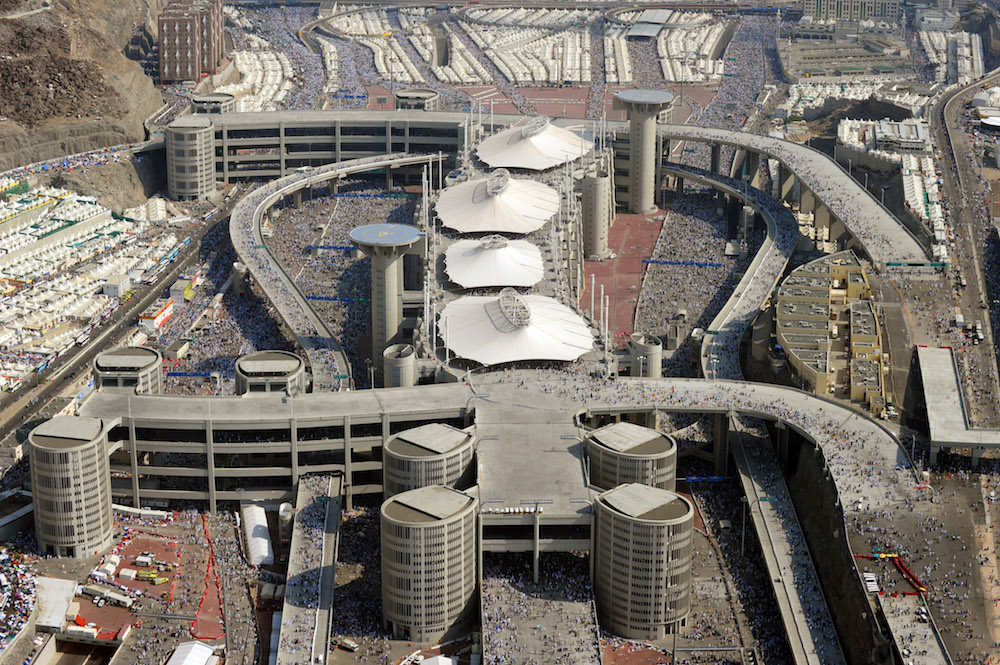
The bridge, which was constructed over three years by more than 11,000 workers, is 950 meters long and has six floors, including the basement, with a height of 12 meters per floor. Each floor can absorb up to 120,000 pilgrims per hour.
Its foundation was constructed to withstand 12 floors to accommodate 5 million pilgrims by 2030.
On the fifth level, umbrellas cover the site of the three Jamarat to enhance the comfort of pilgrims and protect them from the sun and heat.
The Hajj infrastructure showpiece, which has won several local and global awards, was built at a cost of over SR4.2 billion ($1.12 billion).
It has 12 entrances, 12 exit roads from four directions, two tunnels, 19 ramps, escalators, emergency exits, helipads, six service buildings, and an air-conditioning system with water sprinklers to cool the atmosphere and reduce the area’s temperature to 29 degrees Celsius.
The building also contains three electric stations and a standby generator that automatically supplies electricity in case of any temporary power cut.
Unlike the old circular shape of the walls around the three pillars, the new oval design has contributed to a better pilgrim flow. It has also assisted in increasing the bridge’s capacity for pilgrim numbers.
The new bridge was designed by Dar Al-Handasah and constructed by the Saudi Binladin Group. It features a wider and column-free interior space, longer Jamrah pillars, additional ramps and tunnels for easier access, large canopies to cover each of the three pillars to protect pilgrims from the sun, and ramps adjacent to the pillars to speed up evacuation in the event of an emergency.
No casualties have been reported at the Jamarat sites in six years. However, both Saudi Hajj and health authorities are prepared for any scenario. This year, 17 emergency centers will be present at Jamarat Bridge to assist in any emergencies — from crowd surges and falls to illness — that pilgrims may face on their Hajj journey.
source/contents: arabnews.com (headline edited)
___________
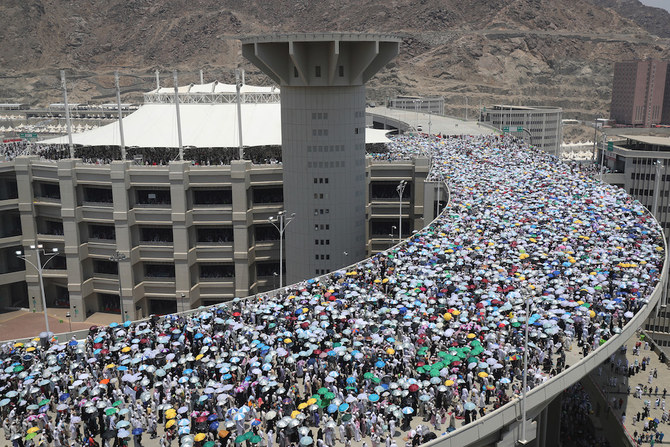
The walkway leading to the symbolic stoning of the devil, the oval design has contributed to better pilgrim flow and boosted the structure’s capacity for accommodating people. (AFP)A substantial enlargement of the bridge took place in 1974, and other expansions followed to upgrade the bridge’s capacity to ease pilgrim movement and avoid accidents. (AFP/File Photo)
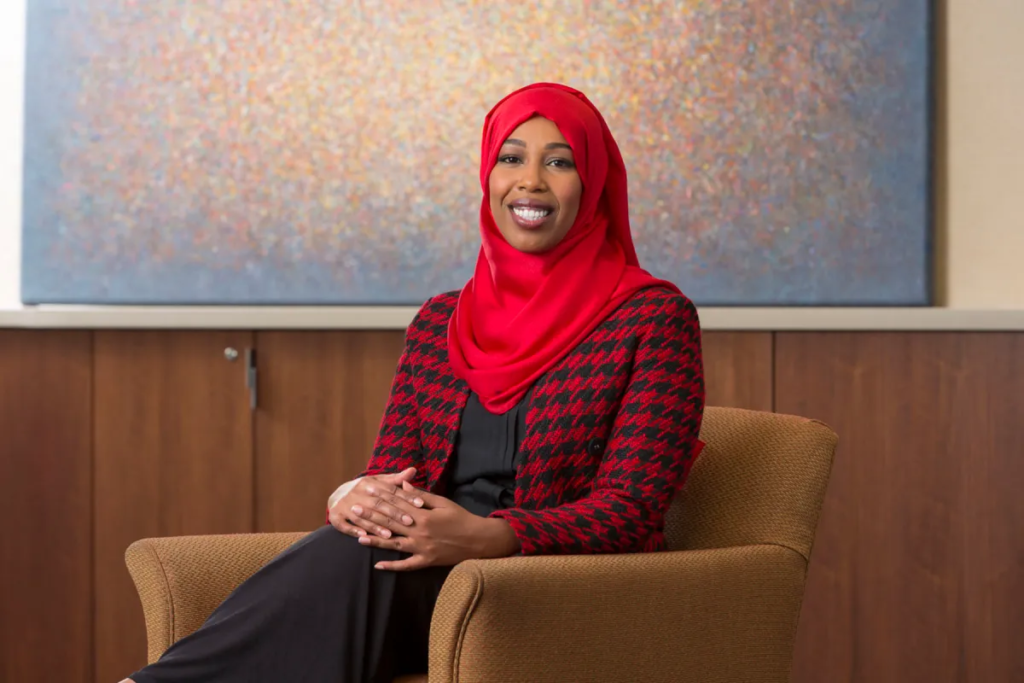
Co-founder of the Somali American Bar Association. President of the Minnesota Association of Black Lawyers. Amran has used her professional success to create opportunities for other Somali attorneys—and the people they serve.
Amran Farah has had a busy past year.
A few weeks after achieving that professional success, she accepted an invitation to help select the next U.S. Attorney and U.S. Marshal in Minnesota, The U.S. Attorney represents the United States in federal criminal cases. The U.S. Marshal serves as the enforcement arm of the courts and is involved in most law enforcement initiatives. Both posts typically turn over when a new president takes office, and together they exert great influence over what types of law enforcement take priority in Minnesota.
The second week of February, U.S. Senators Amy Klobuchar and Tina Smith announced the members they invited to join the Federal Law Enforcement Selection Committee. Chaired by Ramsey County Attorney John Choi, the seven-member committee reviews applications and recommends candidates to the senators. Klobuchar and Smith will then bring those selections to President Joe Biden for consideration and approval.
Smith praised the selection committee that includes Amran: “These Minnesota community leaders will help run an inclusive and fair selection process to name top federal law enforcement candidates in Minnesota,” Smith said in a statement.
Amran said she hopes to ensure the selection of candidates who will serve all Minnesotans, especially those who come from the same communities as Amran. This new connection to the workings of government marks another step in Amran’s rapid rise in the legal profession. Throughout her still-young career, Amran has used her personal success to create opportunities for other Somali attorneys—and the people they serve.
‘I come to this work differently’
Amran was born in Somalia and arrived in the United States as a child. She said she has always held a strong presence in her community since she comes from a large family. Amran has 10 siblings and 34 nieces and nephews. Add that crew to her network of in-laws, Amran joked, and the whole family could make up a voting bloc.
That connection to extended family—and community—also inspired Amran’s commitment to create opportunity for immigrants and people of color.
Amran began to take an active role in the Somali community while studying at what is now called the Mitchell Hamline School of Law. There, she helped create the Somali American Bar Association, an organization for Somali American law students and attorneys. She graduated law school in 2013. Amran next served as the president of the Minnesota Association of Black Lawyers. Through this role, Amran got involved in helping protesters over the summer.
“If I felt like the reason the senators were inviting me is so they can just check off the boxes—oh, we have a Black person, we have a Muslim person, we have a Somali person, we have a woman—if I really truly felt that, then I would not be part of it.”
Making law partner in three years
A large part of Amran’s public standing comes from her rapid professional rise. In 2018, Amran started work at Greene Espel, a boutique firm that represents prominent local companies like 3M, Ecolab, and the Minnesota Vikings. This winter, she became a partner—after just three years at Greene Espel.
According to Guled Ibrahim, the current president of the Somali American Bar Association, Amran is the first Somali attorney in the state to become a partner at a major law firm.
“The culmination of Amran’s achievements is her recent achievement of becoming partner,” Guled said. “She’s a trailblazer. And now we have an image of what it means to be a partner at a top law firm.”
A legal connector for George Floyd protestors
In April, Amran had a baby boy—during a pandemic. It’s been difficult not spending time with her large family and having to maintain social distancing. Her siblings hadn’t seen Amran’s son until he was about 6 months old. Some of her nieces and nephews didn’t believe her son was real, Amran joked.
Amran’s day starts at about 8:30 when her son wakes up. She begins working and takes breaks for the baby throughout the day. She wraps her work up by 6 p.m. and spends time with her husband and her son. Then, when her son falls asleep in the evening, Amran logs back on for the night.
Then-Officer Derek Chauvin killed George Floyd in May. During the uprising that followed, protesters on the ground struggled to get legal representation after being arrested. Because she was the president of the Minnesota Association of Black Lawyers, she started receiving texts and emails calling for her help. Amran doesn’t practice criminal law, but she helped arrange legal help to protesters by acting as a liaison between her own organization and other local legal rights groups.
Getting everyone into the room
Amran hasn’t just assumed the responsibilities of leadership roles; she’s helped create them.
She served as the president and co-founded the Somali American Bar Association which, at first, brought together Somali law students, attorneys, professors, and judges throughout North America. Eventually, the organization shifted its focus solely to Somali American members: Today, the group includes about 20 attorneys from Minnesota and a growing number of law students.
Guled joined Amran and other law students in creating the organization to unite Somali people in the field, but also to serve as a resource for their own community. From the beginning, Guled said he’s seen the ways Amran uplifts people.
“On the committee, my role is going to be to make sure that the senators and the candidates know that this is an act of service for all Minnesotans,” Amran said. “That includes, Black Minnesotans, Muslim Minnesotans, Somali Minnesotans.”
source/content: sahanjournal.com (edited)
____________
Recently appointed partner at Greene Espel, Amran Farah will help select the next U.S. Attorney and U.S. Marshal in Minnesota. Credit: Greene Espel
A new stop on Egypt’s Holy Family Trail will soon be inaugurated in the Upper Egyptian governorate of Minya after development and restoration work.
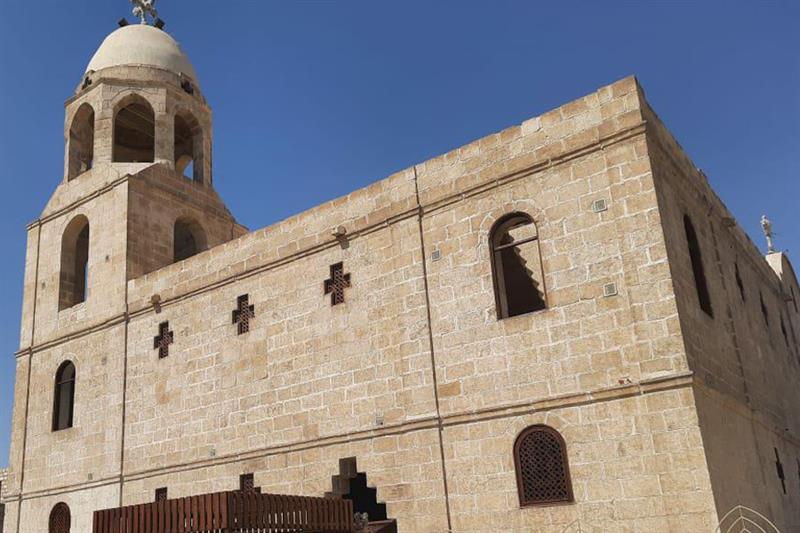
On top of the Gabal Al-Teir cliffs in the Upper Egyptian governorate of Minya stands the rock-hewn Monastery and Church of the Virgin Mary, with its distinguished architecture and wonderful view of the Nile Valley giving onto carefully cultivated fields and lush palm groves.
According to tradition, the area is called Gabal Al-Teir, meaning Mountain of the Birds, because of the thousands of birds living and nesting in the cliffs. It is one of the locations the Holy Family visited and stayed in for three days during their journey in Egypt in the early first century CE.
According to historian of Christian monasteries and churches in Egypt Abul-Makarim, while passing by the place in a small boat during the Holy Family’s visit, the Virgin Mary noticed an enormous rock coming loose from the mountain and about to fall on the boat.
But the infant Jesus extended his hand and stopped the rock from falling, and the shape of his palm was imprinted on the rock. In 1168 CE, the then ruler of Jerusalem removed the part of the rock bearing the imprint and took it with him to Syria.
Osama Talaat, head of the Islamic, Coptic, and Jewish Antiquities Sector at the Ministry of Tourism and Antiquities, said that the Church of the Virgin Mary at Gabal Al-Teir was built in 328 CE by the Byzantine empress Helena (mother of the emperor Constantine) in memory of the passage of the Holy Family in Egypt.
In 1938, Severus, the bishop of Minya, restored the church and removed the original stone roof in order to enlarge it.
The church consists of a nave with three sanctuaries and two side aisles and a western return aisle separated from each other by 10 rock-cut columns. On the south side of the church, the baptismal font is carved out of a column. The area in front of the middle sanctuary serves as a choir.
Hisham Samir, assistant to the minister of tourism and antiquities for archaeological projects, said that work on the restoration project at the monastery and church had begun in 2018 after the approval of the Permanent Committee of Islamic, Coptic, and Jewish Antiquities. The work was carried out in two phases, the first phase covering the western corridor and being completely finished. The second phase includes the southern corridor and is to be completed soon for the official inauguration.
The work has included the restoration of the walls and ceiling of the church, removing cracks, consolidating the walls, repairing the bell in the church tower, and its four arcades and domes. The façades of the church were mechanically cleaned, and the modern mosaic set up in 1987 on the eastern wall of its southern entrance has been replaced with another mosaic showing the journey of the Holy Family.
Fine restoration has been carried out on all the decorations and icons in the church as well as the icon frames. New lighting and fire-security systems have been installed as well as electronic gates. To enhance the visitor experience, new services have been provided, including information signs, new paths, sunshades and seats.
Facilities around the church are also being upgraded and infrastructure installed to assist visitors following the route of the Holy Family’s sojourn in Egypt. The goal of the larger Holy Family Trail includes developing poorer areas and communities in the Delta and Upper Egypt, restoring archaeological sites, and creating suitable services for visitors at sites along the trail.
This is all part of the ministry’s desire to develop spiritual tourism that can appeal throughout the year and not just during special seasons.
THE HOLY FAMILY IN EGYPT: The Holy Family travelled in Egypt for around three years and six months, with their sojourn in the places they visited varying from a few days to a few months.
The Holy Family’s flight to Egypt is associated with archaeological sites from Sinai to the Delta and Assiut in Upper Egypt. The Ministry of Tourism and Antiquities in collaboration with Egypt’s Coptic Church has carried out a number of restoration and development projects at churches and monasteries on the route.
These include the restoration and inauguration of the Abu Serga Church in Old Cairo, the St Abba Noub Church in Sammanud, monks’ cells and other structures at the Wadi Al-Natroun Monasteries, and now the Virgin Mary Church at Gabal Al-Teir.
The late Coptic pope Shenouda III approved itineraries drawn up for Christian pilgrims visiting Egypt to follow the route in 2000. During an audience in St Peter’s in Rome in 2017, Roman Catholic Pope Francis blessed an icon by a Vatican artist representing the Holy Family’s flight into Egypt and effectively gave his blessing to the millions of Christians around the world who may want to follow in the Holy Family’s footsteps.
The Holy Family’s flight to Egypt is associated with many archaeological sites, Osama Talaat noted. They journeyed south from Palestine across the wilderness, avoiding main roads for fear of capture. They entered Egypt at modern-day Rafah, where a lone sycamore tree is said to have survived on the site since their visit.
The Holy Family reached Arish, and from there they followed the old Horus Road along the Mediterranean coast to Zaraniq, where the Byzantines later built three churches. They continued to Al-Mohamediya, and their last station in Sinai was on the northwest coast near the edge of the Delta at the city of Pelusium, now the sprawling ruin of Tel Al-Farama. Here, archaeologists have discovered traces of several Roman churches.
They then travelled south along the Pelusiac branch of the Nile, which has long since dried up. They stayed in the city of Bubastis, now the ruin of Tel Al-Basta near the modern city of Zagazig. They then went on to Mostorod, where the Virgin is said to have bathed Jesus. There is a church in Mostorod named after the Virgin Mary that was built in the 12th century and that has been recently restored.
They then turned north again towards the town of Bilbeis, travelling northwest across the Delta. When they reached Damietta, they embarked on a ferry which took them to Sammanud. The Holy Family then continued north to Borollos. The next stop was Sakha in the western Delta. Here, the Virgin Mary is believed to have held her son against a rock which retained his footprint. A relic in the church dedicated to the Virgin in the area bears this mark.
The Holy Family then moved on to the Western Desert, eventually reaching Wadi Al-Natroun, where monastic settlements were later established. They then headed for what is now Cairo, where they stopped at Ain Shams and Matariya, where they sheltered under a sycamore tree, now known as the Virgin Mary Tree. One story says that when the Virgin Mary sat there, a spring of water gushed out of the ground.
The next stop for the Holy Family was Al-Zeitoun, and then Al-Zweila. Travelling south, they reached Old Cairo and hid in a cave that is now the crypt of the Church of Saint Sergius. In what is now Maadi, they went to the place now named the Virgin’s Church of the Ferry. From there, the Family took a ferry across to Memphis and embarked on a boat that carried them to Upper Egypt.
Their first stop there was on the west bank of the Nile near a village now called Ashnein Al-Nassara at a place called Al-Garnous where a monastery was later built. A church dedicated to the Virgin was built at Deir Al-Garnous in the 19th century, on the west side of which is a well that is believed to have provided the family with water.
The journey continued towards Al-Bahnasa, Samalout, and then Gabal Al-Teir, where a monastery now stands. The Holy Family took shelter in a cave that is now covered by an ancient church. They travelled to Al-Ashmounein, Armant, and Dairout, and then crossed the river again and reached the town of Al-Qusseya.
They travelled east into the desert to Mount Qussqam, perhaps the most important of all their stations, where they stayed for six months and 10 days. This place was later called Al-Muharraq, which means “burnt”, as there was an abundance of grass there which had to be burned so food could be grown in its place.
Mount Qussqam is sometimes called “the second Bethlehem”, and its church is held to be the first ever built in Egypt. The cave in which the family sheltered later became the altar of the Church of the Virgin Mary.
According to Ahmed Al-Nemr, a member of the ministry’s scientific office, an angel of the Lord appeared to Joseph in Assiut and told him to return to Palestine because king Herod was dead. The family then went back through Assiut and then probably sailed down the Nile to Memphis, landing at what is now Al-Badrashin near the ancient capital.
Once again, they may have passed through Maadi, Babylon, and Heliopolis before crossing the desert to Palestine and finally reaching their home town of Nazareth. “Not all of these places are archaeological sites, but they all share religious, social, and cultural rituals which derive from the holy journey,” Talaat said.
The places at which the Holy Family stopped that house archaeological sites are the Virgin Mary Tree in Matariya, the Church of St Sergius in Old Cairo, the Monasteries of Wadi Al-Natroun, the Church of the Virgin Mary at Gabal Al-Teir in Minya, and the Al-Muharraq Monastery in Assiut.
*A version of this article appears in print in the 7 July, 2022 edition of Al-Ahram Weekly.
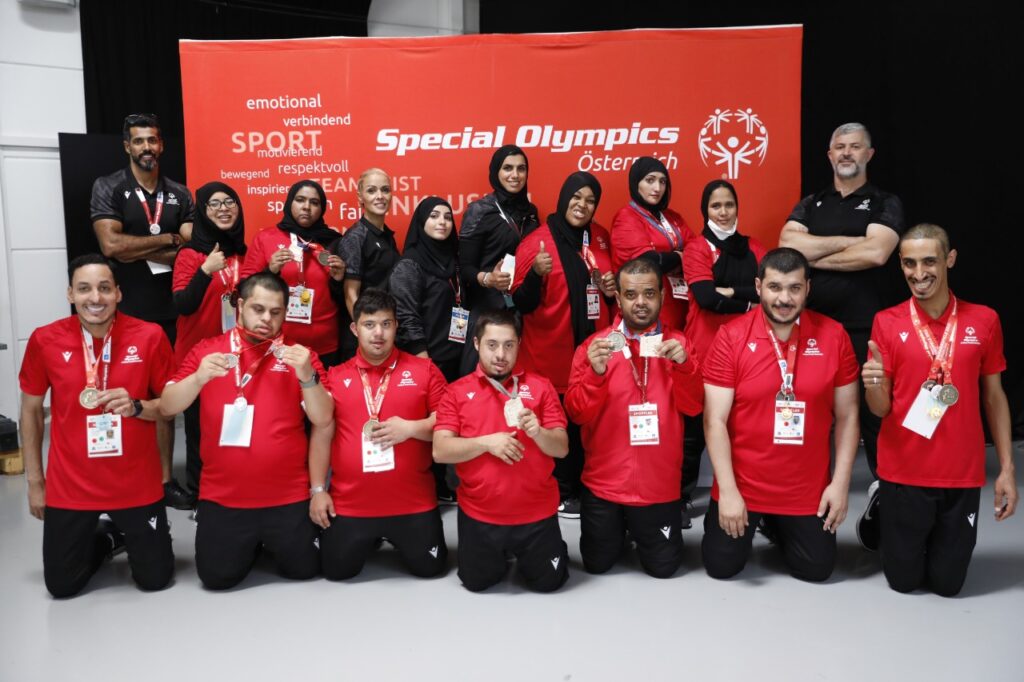
Special Olympics UAE Athletes won 16 medals during their participation at the Special Olympics National Games Austria 2022, which was held in Burgenland from June 23-28, 2022.
Special Olympics UAE was invited to participate with six other countries, as part of the Building Bridges between UAE and Austria programme, launched in 2018.
Special Olympics UAE Athletes excelled in powerlifting, DanceSport, and table tennis, bringing back memories of their outstanding success at the Special Olympics World Games Abu Dhabi 2019. 11 Special Olympics UAE Athletes won 16 medals, including eight gold, two silver and six bronze in the National Games Austria 2022.
In powerlifting, Abdul Rahman Al Hosani won four gold medals and Mohammed Al Mazmi won two silvers, while Ibrahim Al Hammadi secured four bronze medals.
Khuloud Al Shehhi and Nadia Al Falasi each secured first place at their respective table tennis categories, and in the doubles competitions (males), Mohammad Al Mas and Qais Al Qubaisi also won first place. In the individual DanceSport competitions, Ahmad Al Jailani came first, and Ghanem Al Maamari came third.
Special Olympics National Games Austria 2022 gathered 1600 Athletes from seven countries: Germany, Luxembourg, Slovenia, Slovakia, and Hungary, in addition to Austria and the United Arab Emirates. Further to the sports where Special Olympics UAE Athletes participated, the Games included judo, swimming, tennis, bocce, golf, bowling, and football.
On this occasion, Sheikh Suhail bin Butti Al Maktoum, Executive Director of the Sports Development Sector at the General Sports Authority, said, “We are proud of the achievements of the Special Olympics UAE Athletes and their determination to win and raise their nation’s flag in the regional and international competitions, which reflects the efforts of Special Olympics UAE and its partners from both government and sports sectors, who share the goal of empowering People of Determination and strengthening their sports performances.”
Talal Al Hashemi, National Director of Special Olympics UAE, noted, “We are proud of the continuous achievements of the Special Olympics UAE Athletes internationally, after winning 16 medals in Malta, Special Olympics UAE Athletes went to win another 16 medals in Austria. Special Olympics UAE and Special Olympics Austria have enjoyed a strong relationship since the launch of the Building Bridges Programme between Abu Dhabi and Austria in 2018.
The Building Bridges Between Abu Dhabi and Austria Programme launched in 2018, where a Memorandum of Understanding was signed between Abu Dhabi and the Republic of Austria, strengthening the ties between both Special Olympics institutions.
Special Olympics UAE’s delegation comprised 19 members, including 12 athletes, four coaches and a medic from the National Ambulance to ensure Athletes’ health and safety throughout their participations.
Egypt has finished in first place at the 2022 Arab Open Robotics Championship held in Sharm El Sheikh on Monday.
Since 2008, the Arab Open Robotics Championship has been the largest regional robotics tournament held in the Arab world.
The tournament was organized by the Ministries of Youth and Sports, Communications and Information Technology, Bibliotheca Alexandrina, and the Egyptian Federation of Electronic Games.
The tournament included over 650 students ranging in age from four years to the end of the university stage.
The participants represented 136 teams from 12 Arab countries: Egypt, Kuwait, the UAE, Oman, Yemen, Qatar, Jordan, Tunisia, Morocco, Algeria, Iraq, and Libya.
The Arab Robotics Association accredited 100 juries to judge the tournament’s nine robot competitions.
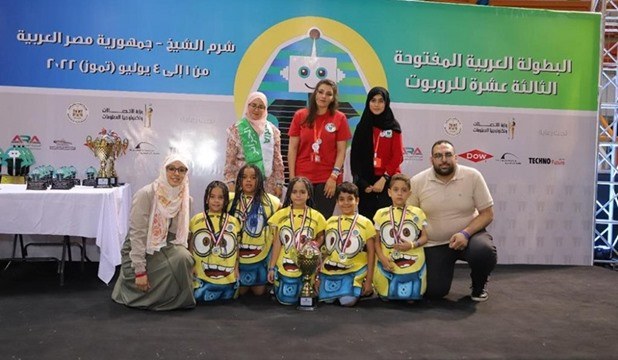
Egypt came first, winning seven trophies. Jordan finished second with two trophies, followed by Iraq, Libya and Qatar in third place.
In addition, the tournament hosted a lively forum for Arab youth on the sidelines.
source/content: arabnews.com
_________
Egypt placed first in 2022 Arab Open Robotics Championship, winning seven trophies. (Source: Egypt State Information Service)