SAUDI ARABIA : Sarah Taibah stars in campaign for US luxury jewelry house

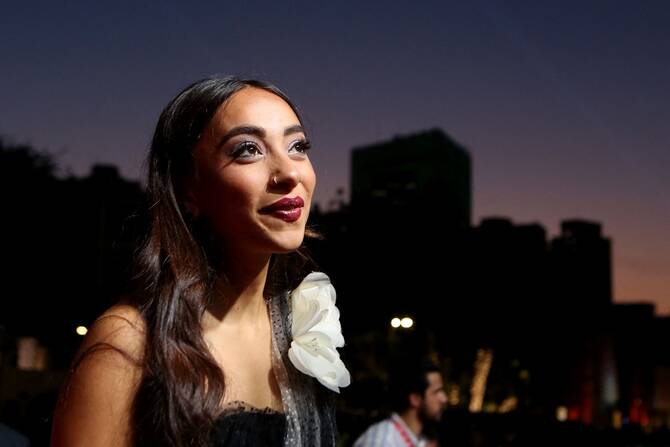
Saudi Arabia actress and filmmaker Sarah Taibah has nabbed a role in a social media campaign for US luxury jewelry house Tiffany & Co.

The actress shared a post on her Instagram account, in which she goes about her day adorned in various pieces by Tiffany & Co.

“Sketchbook in hand, eternal sunshine of a stormy mind, and days rarely slow down. Absolutely in (love) with HardWear by @Tiffanyandco, it’s been my little talisman throughout,” she captioned the short clip.

https://www.instagram.com/reel/DO3J-dpDUXC/?utm_source=ig_embed&ig_rid=cc5a9f54-8680-4305-b858-002859b785ff

The HardWear collection draws on a design from 1962, according to the brand.

“HardWear is an expression of love’s transformative strength. Like New York, the city in which it was born, the collection embodies an enduring resilience and ability to be free,” the label wrote on its website.

The collection features necklaces, bracelets and earrings with interlocked links, veering into a more industrial aesthetic than the dainty jewelry the house is known for.

Taibah shows off a pair of diamond encrusted earrings, along with a necklace and watch from the collection that was handcrafted in Switzerland.

Taibah shot to fame for her show “Jameel Jeddan,” the first local production that was wholly created and starred in by a Saudi Arabia woman.

The plot of the 2022 release was anything but typical. Strong-headed Jameel wakes up from a five-year coma and is forced to finish her last year in high school and rejoin an unfamiliar society.

As a coping mechanism, she begins to experience glitches in the form of an animated alternative reality.

Taibah is working on an offbeat Saudi romcom “A Matter of Life and Death,” which she wrote. The film is being directed by Anas Batahaf and will star Taibah and Yaqoub Al-Farhan.

Her collaboration with Tiffany & Co. is not the first time she has worked with a global luxury brand.

In February, Spanish fashion house Loewe unveiled a Ramadan campaign directed by Lebanese-Sudanese auteur Dana Boulos and starring Taibah and Saudi Arabia Olympic rower Husein Alireza.

The cast included Omani artist Mays Almoosawi, Kuwaiti visual artist Najd Al-Taher, Emirati film director Sarah Al-Hashimi, Kuwaiti DJ Cascou and Bahraini contemporary artist Salman Al-Najem.

source/content: arabnews.com (headline edited)

____________

Sarah Taibah shot to fame for her show “Jameel Jeddan.” (File/ AFP)

___________________

SAUDI ARABIA
DUBAI – U.A.E : Dubai ranks among world’s top five, leads Arab World in Shipping Centre Development Index 2025

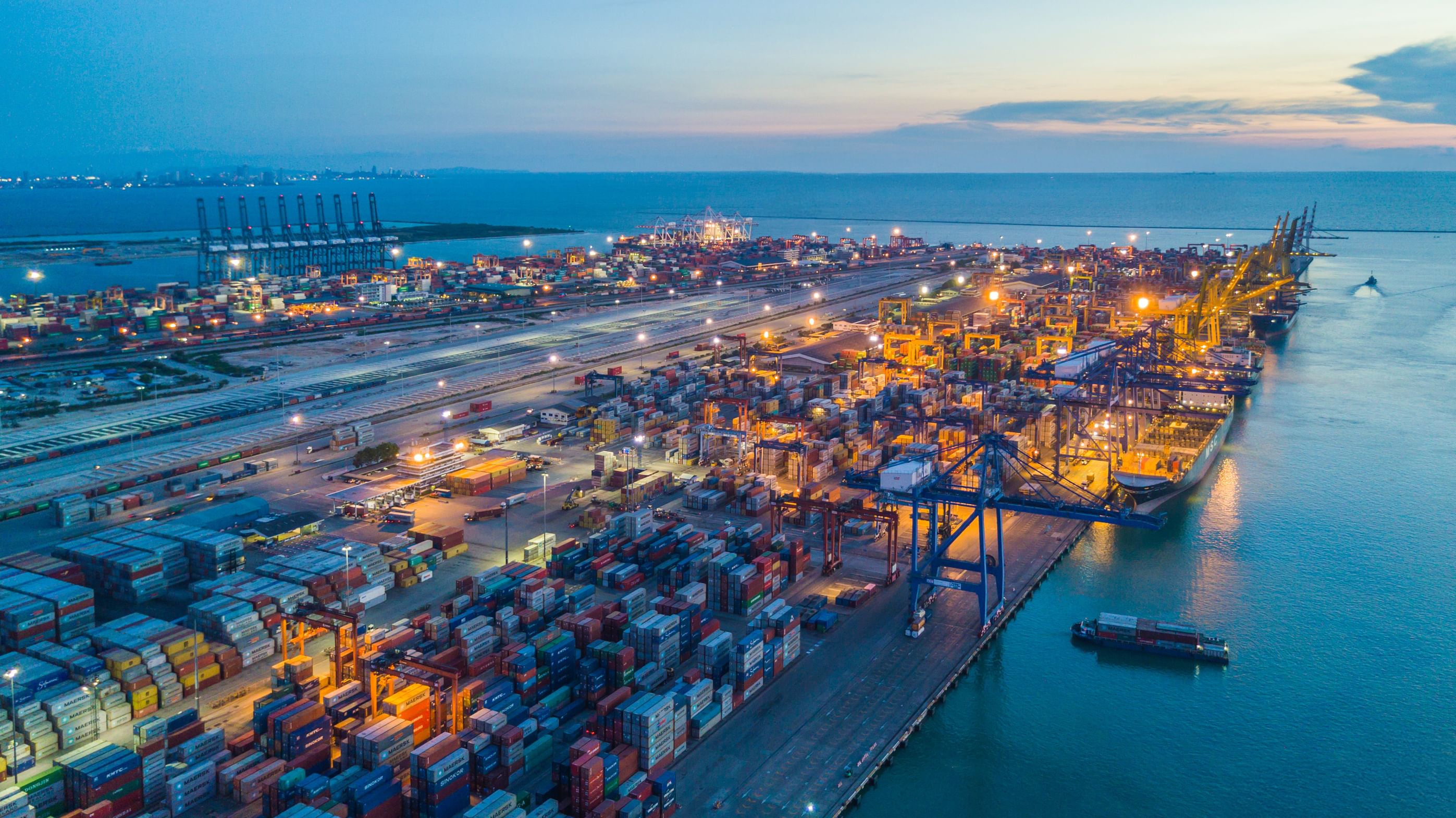
Dubai has reinforced its status as a leading global maritime hub, earning the title of “the crown jewel of the Middle East’s maritime sector,” according to the 2025 International Shipping Centre Development Index report, issued by Xinhua News Agency in collaboration with the Baltic Exchange. The report ranks Dubai among the top five global shipping centres and first in the Arab region.

Sheikh Dr. Saeed bin Ahmed bin Khalifa Al Maktoum, CEO of the Dubai Maritime Authority, part of the Ports, Customs, and Free Zone Corporation, hailed the achievement stating: “Dubai’s ranking as fifth globally and first in the Arab world in the 2025 International Shipping Centre Development Index reflects the vision of our leadership, as well as the effective coordination between strategic partners and maritime sector companies in the emirate.

We remain committed to continuous development, delivering world-class services, adopting global maritime best practices, implementing innovative solutions, updating regulations, and fostering a thriving maritime business environment to position Dubai as an innovative and sustainable global centre for shipping and logistics.”

The report highlights Dubai’s comprehensive maritime ecosystem, offering navigation services, shipbuilding and repair, and capacity to handle the increasing number of vessels. It also emphasised the Dubai Maritime Transport Plan 2030, aligned with the Dubai Economic Agenda D33, which aims to expand maritime transport usage, enhance the network of marine transportation, and develop Dubai Maritime City.

The report specifically praised Jebel Ali Port for its strategic role as a regional shipping hub, underpinned by continuous investment in infrastructure and services. In 2024, the port handled 15.5 million twenty-foot equivalent units (TEUs), the highest since 2015, accounting for 18% of the total 88.3 million TEUs managed by DP World, the port operator.

On sustainability, the report highlighted Jebel Ali Port’s initiatives to reduce emissions, including the provision of biofuel for ships, installation of 50,000 m² of solar panels for renewable energy, and the use of electric vehicles for container handling—contributing to an annual reduction of 2,000 tons of CO₂ emissions.

Captain Ibrahim Al Blooshi, Executive Director of Dubai Ports Authority, commented: “We take pride in this achievement, which underscores Dubai’s strong position as a global maritime hub. Jebel Ali Port, operated by DP World under the Ports, Customs, and Free Zone Corporation, continues to excel at both regional and international levels.

Dubai Ports Authority is committed to proactive measures to enhance the maritime sector’s contribution to the strategic objectives of the Dubai Economic Agenda D33, through its three ports—Jebel Ali, Port Rashid, and Hamriyah—despite global economic challenges and market fluctuations. We are dedicated to preserving the emirate’s marine environment and ensuring the highest operational safety standards in the maritime sector.”

source/content: wam.ae (headline edited)

_______________

________________

DUBAI, U.A.E.

IRAQ : Hasan Hadi becomes first Iraqi to win Cannes Best Feature Debut

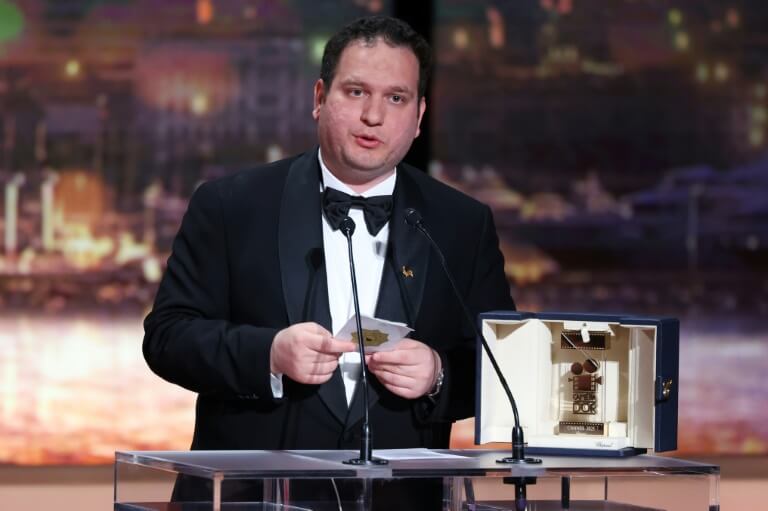
Hasan Hadi, the first filmmaker from Iraq to be selected for the prestigious Cannes Festival, on Saturday won a top prize for his childhood adventure under economic sanctions in “The President’s Cake”.

His first feature-length film follows nine-year-old Lamia after her school teacher picks her to bake the class a cake for President Saddam Hussein’s birthday or risk being denounced for disloyalty.

It is the early 1990s, the country is under crippling UN sanctions, and she and her grandmother can barely afford to eat.

The pair set off from their home in the marshlands into town to try to track down the unaffordable ingredients.

Hadi dedicated his Camera d’Or award, which honours first-time directors, to “every kid or child around the world who somehow finds love, friendship and joy amid war, sanctions and dictatorship.

“You are the real heroes,” he said.

He later shared the stage with dissident Iranian filmmaker Jafar Panahi, who won the festival’s Palme D’Or top prize for his “It Was Just an Accident”, the tale of five ordinary Iranians confronting a man they believed tortured them in jail. 

“The President’s Cake” has received excellent reviews since premiering last week in the Directors’ Fortnight section. Cinema bible Variety called it a “tragicomic gem”.

Deadline said it was “head and shoulders above” some of the films in the running for the festival’s Palme d’Or top prize, and “could turn out to be Iraq’s first nominee for an Oscar”.

– Palestinian films –

Also from the Middle East, Palestinian director Tawfeek Barhom received his award for his short film “I’m Glad You’re Dead Now”.

After giving thanks, he took the opportunity to mention the war in Gaza.

“In 20 years from now when we are visiting the Gaza Strip, try not to think about the dead and have a nice trip,” he said.

US President Donald Trump sparked controversy this year by saying he wanted to turn the war-ravaged Palestinian territory into the “Riviera of the Middle East”.

Outside the main competition, Gazan twin brothers Arab and Tarzan Nasser on Friday received a directing award in the Certain Regard parallel section for “Once Upon A Time In Gaza”.

One of them dedicated the award to Palestinians, especially those living in their homeland of Gaza, which they left in 2012.

He said that, when they hesitated to return to Cannes to receive the prize, his mother had encouraged him to go and tell the world about the suffering of people in Gaza.

“She said, ‘No, no, no, you have to go. Tell them to stop the genocide’,” he said.

Amnesty International last month said Israel was carrying out a “live-streamed genocide” against Palestinians in Gaza, claims Israel dismissed as “blatant lies”.

source/content : iraqinews.com (headline edited)

__________

Iraqi filmmaker Hasan Hadi in Cannes, France

___________

IRAQ

MOROCCO : ‘Arab Youth Pioneers’ Selects Bouthaina Boujarda for Water-Powered Car Invention

The initiative aims to strengthen the global presence of Arab youth leaders and connect them with investors and decision-makers.

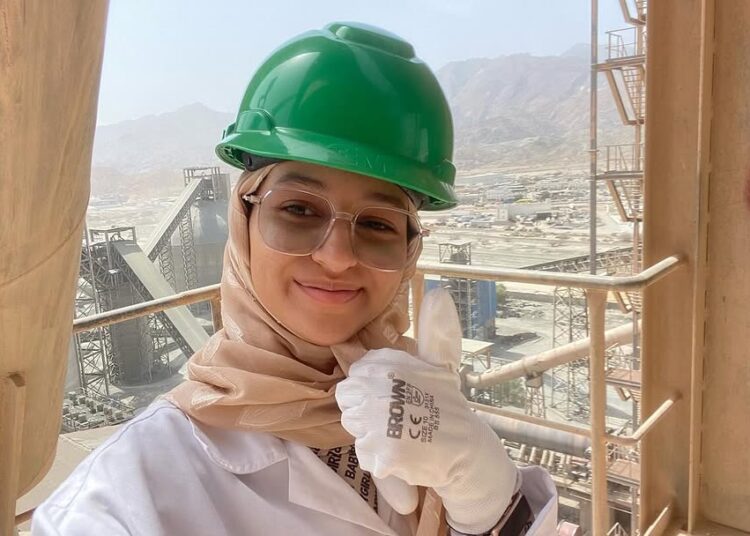
Moroccan young innovator Bouthaina Boujarda has been selected for the fourth edition of the “Arab Youth Pioneers” initiative, which started on Sunday in Abu Dhabi. The initiative celebrates young people across the Arab world who have achieved remarkable accomplishments in various fields.

The young Moroccan woman, known for inventing a water-powered car, is participating in the “Industries and Innovation” track. 

“Being selected as part of the fourth edition of Arab Youth Pioneers is a tremendous honor. I feel a great sense of responsibility toward all Arab youth,” Boujarda said.

For her, being among this “elite” group is not only a recognition, but also a “mission … to promote the Arabic language and the achievements of Arabs around the world, and to empower them to become leaders on a global scale.”

Boujarda spoke of how significant every moment is when she feels that she is making a real impact or when a colleague tells her she is capable of creating change. “These are the moments that fill me with pride, moments when I feel that I have genuinely contributed to Arab society,” she stated.

The young innovator hopes that her achievements are not just for herself and that she is not just a name that passes by and is forgotten. “I hope that I can truly be one of the prominent figures who leave a lasting impact on future generations.”

In addition to the Industries and Innovation track, the initiative features nine other specialized tracks, including Community Service, Scientific Research, Space and Technology, Medicine and Health Sciences, Sustainability and Environment, Entrepreneurship, Education, Engineering, and Media and Digital Citizenship. A total of 40 young pioneers from 13 Arab countries are participating.

The event runs until September 19 and is organized by the Arab Youth Center in partnership with the Abu Dhabi Youth Business Council, with the support of the Anwar Gargash Diplomatic Academy and the Emirates Foundation, along with leading entrepreneurs and strategic partners.

The initiative aims to strengthen the global presence of Arab youth leaders and connect them with investors and decision-makers to provide more opportunities for funding, mentorship, and idea development. It also seeks to expand cooperation between the public and private sectors to support and develop youth-led projects.

UAE Minister of State for Youth Affairs and Vice President of the Arab Youth Center, Sultan Al Neyadi, said the initiative is an exceptional platform to help young people turn their ideas into impactful achievements that contribute to the development of their communities.

source/content: moroccoworldnews.com (headline edited0

_______________

_____________

MOROCCO

TUNISIA : Chanting ‘Free Palestine’: The Voice of Hind Rajab receives record ovation in Venice Film Festival

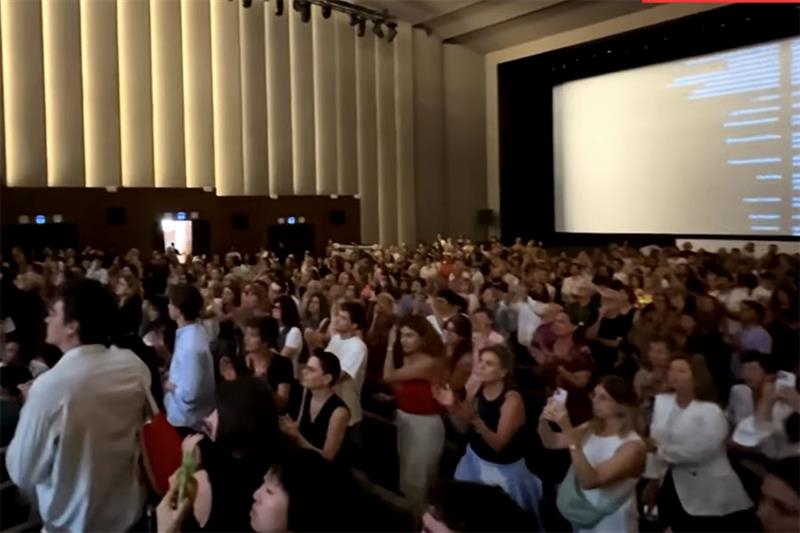
Following its screening, Kaouther Ben Hania’s film The Voice of Hind Rajab (2025) received a 22-minute-long standing ovation — the longest in the Venice Film Festival’s history – culminating in theatre-wide chants to “Free Palestine.”

The film had its world premiere at the 82nd edition of the renowned Venice Film Festival, which runs until 6 September.

The film is also Tunisia’s official submission to the 98th Academy Awards.

The first screening of the film was completely sold out hours before its showing.

Several artists from the film’s cast and crew attended the screening, including lead actor Motaz Malhees, who held a photo of Hind Rajab on the red carpet and raised the Palestinian flag on the stage of the theatre after the film’s conclusion.

The film’s unprecedented success was reflected in the longest standing ovation in the festival’s history, with chants of “Free Palestine” resonating across the hall.

The Tunisian-French co-production also stars Amer Hlehel, Clara Khoury, and Saja Kilani.

“Film anchored in truth”

In a post-screening press conference, Kilani declared that “the Voice of Hind Rajab does not need our defence. This film is not an opinion or a fantasy; it is anchored in truth. Hind’s story carries the weight of an entire people.” 

Film director Ben Hania also commented on Trump’s plans to turn Gaza’s coastline into a “Riviera,” saying, “When I think about Hind playing on the beach, and I think about this project, [I find myself asking] in what world do we live in?”

Hind Rajab
 

The film recounts the events of 29 January 2024, when Red Crescent volunteers received an emergency call. A six-year-old girl named Hind Rajab was trapped in a car under fire in Gaza, pleading for rescue. 

While trying to keep her on the line, they do everything they can to get an ambulance to her. 

The film uses real-life voice recordings between Hind and the Red Crescent correspondents, who attempted to rescue her from the unrelenting Israeli attack.

Explaining her vision for the film, Ben Hania said, “What I wanted was to focus on the invisible: The waiting, the fear, the unbearable sound of silence when help doesn’t come. Sometimes, what you don’t see is more devastating than what you do. At the heart of it is something very simple, and very hard to live with. I cannot accept a world where a child calls for help and no one comes. That pain, that failure, belongs to all of us.”

Kaouther Ben Hania 
 

Kaouther Ben Hania is one of the most acclaimed filmmakers of the Arab World, known for her bold storytelling and cinematic innovation. 

Her 2023 film, Four Daughters, won the L’Oeil d’Or at Cannes and was nominated for Best Documentary at the 2024 Academy Awards. 

Her 2020 feature, The Man Who Sold His Skin, was nominated for Best International Feature and won Best Actor at Venice’s Horizons Section. 

Earlier works like Beauty and the Dogs (2017), Zaineb Hates the Snow (2026), and Le Challat de Tunis (2012) also earned international acclaim.

source/content: english.ahram.org.eg (headline edited)

_____________

The Voice of Hind Rajab gets record 23-minute ovation at Venice premiere

___________

TUNISIA

ALGERIAN Professor Yasmine Belkaid named ‘Great Arab Minds’ winner in medicine

Sheikh Mohammed congratulates Belkaid on her made exceptional contributions to immunology.

His Highness Sheikh Mohammed bin Rashid Al Maktoum, Vice President and Prime Minister of the UAE and Ruler of Dubai, has congratulated Algerian Professor Yasmine Belkaid on winning the ‘Great Arab Minds’ Award in Medicine for 2024.

In a post shared on his X account, Sheikh Mohammed wrote: “Today, we congratulate the winner of the ‘Great Arab Minds’ Award in the category of medicine for the year 2024, Algerian Professor Yasmine President of the Pasteur Institute in France. She has made exceptional contributions to immunology and to studies on the role of microbes in boosting immunity and preventing diseases. Professor Yasmine Belkaid has published more than 220 scientific papers in the fields of infection and immunology.”

Great Arab Minds

The Great Arab Minds initiative honours exceptional Arab individuals whose remarkable achievements have helped drive progress and enrich knowledge both within the Arab world and globally.

Heralded as the ‘Arab Nobel Prize’ for its singular efforts to recognise Arabs who have made extraordinary contributions to humanity, the initiative aims to reignite the Arab world’s remarkable spirit of scientific enquiry and leadership in such quests throughout history.

Under the patronage of Sheikh Mohammed bin Rashid, the UAE recently launched the second edition of the Great Arab Minds initiative.

The awards’ six categories encompass medicine, engineering and technology, economics, natural sciences, architecture and design, and literature and arts.

source/content: gulfnews.com (headline edited)

______________

Algerian Professor Yasmine Belkaid named ‘Great Arab Minds’ winner in medicine

___________________________

ALGERIA / DUBAI, U.A.E

MOROCCAN Doctor Youssef El-Azouzi Invents First Device to Filter Blood Inside Vessels

The groundbreaking invention aims to aid those with immune deficiencies and provide treatment for chronic infections in intensive care units where antibiotics are ineffective.

Youssef El Azouzi, a Moroccan neurologist, has announced the successful development of the world’s first device capable of filtering blood from within blood vessels.

The revolutionary invention can direct inflammatory cells and certain white blood cells, potentially helping millions of people suffering from immune deficiencies and improving organ transplant success rates.

In a Facebook post, El Azouzi explained that his device “will contribute to treating tens of millions of people suffering from immune deficiencies and chronic infections in intensive care units where antibiotics are ineffective.” He added that it would “help in organ transplantation without fear of new organ rejection.”

The invention works by redirecting inflammatory cells flowing in the blood away from vessels that nourish newly transplanted organs, preventing rejection.

This mechanism was successfully tested on a 75-kilogram pig in an American laboratory, where the device demonstrated its ability to direct immune cells from the left leg to the right leg without any negative effects on the animal.

“The experiment showed that the device was able to direct immune cells from the left leg to the right leg,” El Azouzi explained in a video documenting his journey to America to register the invention. “This is the first device that controls cell direction from within the vessel itself.”

The scientific experiment involved injecting both thighs of the pig to induce inflammation before placing the device. The device’s role was to direct inflammation-causing cells to only one side, concentrating them there compared to the other side. This would demonstrate the device’s actual control over the pathways of white blood cells flowing in the blood.

El Azouzi revealed that the project cost approximately $250,000 as of March, not including effort and time. “All these resources were provided by benefactors, with no contribution from any public institution or organization,” he noted.

The Moroccan doctor is no stranger to innovation. In 2019, he won the title of best inventor in the Arab world in the 11th season of “Stars of Science” competition in Qatar. His winning invention then was a stent that regulates blood flow for heart patients, offering a potential low-cost alternative to current solutions like heart pumps.

Born in 1991, El Azouzi studied at the American School in Rabat before attending Oxford University for three years. He later moved to Boston University and eventually studied medicine in English at Turkish universities. He is the son of Mustapha El Azouzi, a Moroccan neurosurgeon.

He currently serves as CEO of Aorto Medical Company in the US, where he has been developing this latest invention through three years of hard work, design, and manufacturing.

This Moroccan invention marks a major breakthrough in modern medicine, potentially offering an effective tool for addressing immune deficiency problems and chronic inflammations, while improving the success of organ transplantation procedures.

source/content: moroccoworldnews.com (headline edited)

______________

Youssef El Azouzi, a Moroccan neurologist, has announced the successful development of the world’s first device capable of filtering blood from within blood vessels.

____________________

U.S.A / MOROCCO

GLOBAL / SAUDI ARABIA : Chaad National Mohammad Adam Mohamed Wins SAR 500,000 at 45th King Abdulaziz Quran Contest Makkah 2025

Chaad National, Mohammad Adam Mohamed has won the top prize at the 45th Edition of the King Abdulaziz International Holy Quran Competition or 2025 Makkah Quran Contest for Memorization, Recital and Explanation held at the Grand Mosque.

Makkah Quran Contest 2025: Chaad National, Mohammad Adam Mohamed has won the top prize at the 45th Edition of the King Abdulaziz International Holy Quran Competition or 2025 Makkah Quran Contest for Memorization, Recital and Explanation held at the Grand Mosque.

At a glittering ceremony held at Makkah Grand Mosque after Isha prayers Wednesday August 20, 2025, the Chaad national was awarded a cash prize of 500,000 Saudi Riyals or SAR 0.5 million prize.

The prize distribution ceremony was attended by all Imams of Masjid al Haram Makkah along with Deputy Governor of the Makkah Region Prince Saud bin Mishal bin Abdulaziz.

45th King Abdulaziz International Holy Quran Competition – List of Winners

The Makkah Quran contest 2025 was held in five categories. The winners of the first and most coveted category are as follows,

  1. Mohammed Adam Muhamed (Chaad): Prize Money SAR 500,000
  2. Anas bin Majid Abdulla Al Hazmi (Saudi Arabia): Prize Money SAR 450,000
  3. Sanusi Bukhari Idrees (Nigeria): Prize Money SAR 400,000

5 categories

The competition was divided into five categories:

  • Memorization of the entire Holy Qur’an, with accurate recitation and intonation following the seven rules of recitation
  • Memorization of the Qur’an along with interpretation of its terms
  • Memorization of 15 juz (parts) of the Qur’an with proper recitation and intonation
  • Memorization of five juz with correct recitation and intonation
  • A category for shorter lengths of memorization with corresponding recitation and intonation requirements.

Other winners

The total value of the competition’s prizes is around SR4 million ($1.07 million), in addition to SR1 million that will be apportioned out to all participants.

Mansoor bin Mutab Awad Al Harbi of Saudi Arabia won the top prize of SAR 300,000 in the second category. Mohamed Damaj Al Shuway’i of Yemen won the top prize of SAR 200,000 in the 3rd category.

Eyptian Nasr Abdel Majeed Abdul Hameed Amir won the top prize of SAR 150,000 in the 4th category. The top prize money SAR65,000 for the 5th category was conferred on Anwa Intarat of Thailand.

The 2025 Quran Competition brought together 179 contestants from 128 countries, the largest number since its inception. In 2024, a total of 174 contenders representing 123 countries participated in the 44th edition of the contest held in 5 categories.

Makkah Qurant Contest 2025 Final Round

The final rounds of the 2025 King Abdulaziz International Competition for Memorizing, Reciting, and Interpreting Holy Quran began last Saturday August 09th, 2025

The final round of the Quran contest continued till Thursday August 14, 2025 when a total of 27 contestants recited Quran as per the contest competition guidelines.

The 27 contestants were from Mauritania, the Philippines, Japan, Guinea-Bissau, France, the United States of America, New Zealand, South Africa, Barbados, Ivory Coast, Cameroon, Guinea, Germany, Zambia, Guyana, Comoros, Uzbekistan, Kyrgyzstan, Finland, Rwanda, Bangladesh, and Myanmar.

As part of the competition package, the participants visited different historical places of religeous and architectural importance. The participants on Saturday August 16 left for visit to The Prophet (PBUH) Mosque in Madinah.

Electronic Judging System

The highlight of the 2025 Quran Contest which ran through six days was electronic judging system. Since its introduction in 2019, the electronic platform has replaced traditional paper-based methods, increasing accuracy and transparency.

The Ministry of Islamic Affairs, Dawah and Guidance said it enhanced and upgraded the electronic judging system for the 45th King Abdulaziz International Competition for Memorizing, Reciting, and Interpreting the Holy Quran held this year.

The enhanced system is designed to improve the efficiency and fairness of the final rounds, bolster transparency, and support the ministry’s digital transformation efforts in line with Saudi Vision 2030.

Watch: Winners Reaction

source: youtube.com

The latest improvements to the system include faster and more accurate scoring, with results calculated more precisely and linked to a real-time electronic control panel for instant monitoring by the judging committee.

An electronic question bank is now used to draw questions from a comprehensive digital repository covering all five branches of the competition, ensuring diversity and fairness. The system also features automated processes that track verse sequences, sort and rank contestants, and issue results instantly, while documenting and analyzing competition data in real time.

The 44th edition of the King Abdulaziz International Competition for Memorization, Recitation, and Interpretation of Holy Quran was also held with the same schedule. Saudi National, Saad bin Ibrahim bin Hamd had won the top prize of the 2024 Makkah Quran Contest.

source/content: ummid.com

_______________

___________________________

GLOBAL / SAUDI ARABIA

EGYPT announces Winners of ‘State Cultural Awards 2025’

The Supreme Council of Culture (SCC), headed by Minister of Culture Ahmed Fouad Hano, has officially revealed the recipients of the 2025 State Awards.

The announcement, made via an official statement on the Ministry of Culture’s Facebook page on Tuesday, follows a comprehensive voting process that recognised individuals for their profound impact on Egypt’s cultural and intellectual spheres.

The distinguished awards include the Nile Award, the State Appreciation Award, the Excellence Award, and the Encouragement Award.

The selection process involved a meeting attended by leading intellectuals, academics, heads of cultural institutions, and representatives from professional unions.

Nile Award

The prestigious Nile Awards were granted to:

  • Arts category: Architect Dr. Saleh Lamai
  • Literature category: Dr. Ahmed Darwish
  • Social Sciences category: Dr. Ahmed Zayed
  • Nile Award for Arab Creators: Palestinian artist Suleiman Anis Mansour

Appreciation Award

The State Appreciation Awards were granted to:

  • Arts category: Theatre director Shaker Abdel Latif, visual artist Abdel Wahab Abdel Mohsen, and cinematographer Samir Farag.
  • Literature category: Poet Ahmed El-Shahawi, critic and writer Dr. Khayri Douma, and writer Fatma El-Maadoul.
  • Social Sciences category: University professors Dr. Anas Gaafar, Dr. Mohamed Sameh Amr, Dr. Mona Haggag, and Dr. Nevine Massad.

Excellence Award

The State Awards for Excellence were granted to:

  • Arts category: Artist Nazli Madkour and, posthumously, the late internationally renowned Egyptian pianist Dr. Moshira Eissa.
  • Literature category: Poet Masoud Shoman and Dr. Khaled Abou El-Leil.
  • Social Sciences category: Dr. Samah Fawzy, Dr. Atiya El-Tantawy, and Dr. Nahla Imam.

Encouragement Award

When it comes to the 2025 Encouragement Awards, 32 creatives were honoured across arts, literature, social sciences, and legal/economic studies.

Arts Category (8 prizes; 6 awarded, 2 withheld)

  • Piano Performance: Naghamaya Safwat for her rendition of Shostakovich’s Piano Concerto No. 2 with the Cairo Symphony Orchestra.
  • Film Script: Mahmoud Zein for Wala Azaa’ Lil Sayedat.
  • Children’s Book Illustration: Heidi Fawzy for Ta’aqqal… Ya Marah.
  • Theatrical Scenography: Nehad El-Sayed for Shatat.
  • Digital Media & Architecture: Mostafa Salem for an awareness series on heritage preservation.
  • Painting: Dr. Islam El-Reihany for The Music of the Body.
  • Withheld: Prizes for “E-marketing for handicrafts” and “Fiber Art”.

Literature (8 prizes)

  • Historical Novel: Doaa Gamal El-Bady for Crows That Don’t Eat the Dead.
  • Short Story Collection: Ahmed Yasser Fathy for A Very Lonely City.
  • Classical Poetry: Mohamed Refai for The Cry of a Coin.
  • Colloquial Poetry: Ibrahim Abou Samra for Balta Shi’r.
  • Computational Linguistics: Marwa Mostafa Amin for Functions of the Electronic Dictionary.
  • Narrative Criticism: Aly Kotb for Singing and Music in the Literature of Naguib Mahfouz.
  • Translation (Turkish-Arabic): Sousana Sayed Mohamed for A Strange Woman by Leyla Erbil.
  • Translation (Arabic to Asian/African languages): Shared by Dina Mohamed Bayoumi (Suspense and Horror Between China and Egypt) and Mohamed Abdelrahman Farag (Al-Mukhtasar Al-Shafi fi Al-Iman Al-Kafi).

Social Sciences

  • History, Archaeology & Heritage (shared):
    • Dr. Ahmed Ma’arouf for Walls with Gates: Political Borders in Islamic Historical Heritage.
    • Dr. Sherif Imam for Saad Zaghloul in Gramsci’s Mirror.
  • Geography & Environment: Dr. Shaimaa Mohamed Wehba for research on water pollution and income inequality in Egypt.
  • Philosophy & Anthropology: Irene Samir Hakim for The Many Faces of Female Genital Mutilation.
  • Educational Sciences: Dr. Mohamed Abdel Khaleq for Dimensions of Global Education in Stoic Philosophy.
  • Media: Student team (Ramaj Osman, Gharib Reda, Farah Abdelkarim, etc.) for the film Hayy Falasteen, directed by Martina Wagdy.
  • Administrative Sciences: Dr. Islam Abdel Bari for Decoding Buy Now, Pay Later in Egypt.
  • Documentation & Publishing: Dr. Alaa Jaafar Al-Sadiq for research on local journal indexing.
  • Digital Culture: Dr. Ahmed Magdy for How AI Has Changed the Film Industry.

Legal and Economic Sciences (6 prizes awarded, 2 withheld)

  • Inflation in the Egyptian Economy: Dr. Gehan Abdel Salam Mahmoud for Tackling Inflation amid Global Crises.
  • Climate Change: Dr. Ahmed Mohamed Okasha for Climate Change and Economic Sustainability.
  • Russian–Ukrainian War & International Relations: Shared by Dr. Raghda El-Beheiry, Dr. Adnan Moussa, and Mr. Mahmoud Kassem.
  • Geopolitical Shifts: Ahmed Abdel Fattah Askar for Strategic Transformations in the Horn of Africa (2020–2024).
  • Right to Privacy: Dr. Mohamed Mesbah El-Naghy for Constitutional Guarantees for Genetic Privacy.
  • Cultural Diversity Management: Dr. Mahmoud Hussein Abou Seif for The Principle of Non-Refoulement in European Human Rights Law.
  • Withheld: Prizes for “Personal Data Protection under Cyber Law” and “Citizenship Through Investment”.

Minister Hano emphasised that these awards represent one of the highest forms of recognition granted by the Egyptian state, describing them as the culmination of long and distinguished careers marked by creativity and dedication.

Hano reaffirmed the state’s continued commitment to supporting intellectuals and creators who contribute to strengthening Egypt’s cultural identity and promoting values of diversity, openness, and awareness, the statement pointed out.

source/content: english.ahram.org.eg (headline edited)

___________

__________

EGYPT

LEBANON : “A voice for the voiceless”: As-Safir founder and beacon of Arab journalism Talal Salman passes away at 85

Talal Salman, veteran journalist and founder of the iconic As-Safir newspaper, died on 25 August 2023 aged 85 after a long career in which he championed the rights of the oppressed and made his paper a “voice for the voiceless”.

On Friday 25 August, Talal Salman, the founder and publisher of the iconic Lebanese daily newspaper daily newspaper “As-Safir” passed away aged 85.

Salman remains one of the Arab world’s most prominent journalists and As-Safir, rightly, as a shining beacon of Arab journalism in its modern history

He was one of the few Arab journalists who always aspired for journalism to be a medium where opinions could be freely expressed, and made it a place in which he affirmed his commitment to national, nationalist and social issues.

When his dream of establishing an independent newspaper became reality in 1974, he succeeded in making it a genuine platform for Arab issues and the Palestinian cause, and it quickly became one of the largest Arabic-language independent newspapers. 

“Salman remains one of the Arab world’s most prominent journalists and As-Safir, rightly, as a shining beacon of Arab journalism in its modern history”

“As-Safir” became an important laboratory for ideas and opinions. Over more than 40 years, intellectual and political debates flared within its pages, and it became a forum where various intellectual and cultural experiences from the Arab world and Lebanon converged. This made it a rare experiment in Arab journalism, a place where Lebanese, Palestinian, Syrian, Egyptian, Iraqi, Jordanian, and Tunisian voices at various times would come together.

Talal Salman was born in 1938 in the northeastern town of Shmustar. His father was a sergeant in Lebanon’s Internal Security Force (ISF), a job which required him to move with his family to various regions in Lebanon for various postings. Due to this, Salman never settled in one place or attended a fixed school. Perhaps this forced mobility played a role in shaping his political outlook later on, as it allowed him to discover different regions of Lebanon and to develop a broad understanding of Lebanon’s people – their internal divisions and rural nature.

His political awareness began to emerge following Egypt’s 23 July Revolution of 1952, which played a huge role in alerting his attention to politics. Additionally, his presence in the town of Moukhtara in the Chouf district in the early 1950s exposed him to certain aspects of the Lebanese reality.

Moukhtara was the stronghold of the prestigious Jumblatt family, leading figures in Lebanon’s Druze community. While living there he got to know Kamal Jumblatt, who inspired an entire generation of Lebanese youth who aspired for social justice and sought to connect Lebanon with Arab causes, Arab identity, and Palestine.

Salman would become an Arab nationalist without affiliating with any of the nationalist parties, such as the Ba’ath, although later on, he formed close relationships with founders of Arab Nationalist Movement, like George Habash and Hani al-Hindi, in addition to Ghassan Kanafani and Mohsin Ibrahim, who were closely associated with the pan-Arab, left-wing movement.

Salman’s passion for language began in his childhood; he was enchanted by the few books in his parent’s home, and had started writing articles for the magazine al-Anbaa before leaving school. After completing secondary school in 1955, he moved to Beirut with today’s equivalent of $200 from his father and started looking for work at a newspaper.

Passion for language

Salman’s passion for language began in his childhood; he was enchanted by the few books in his parent’s home, and had started writing articles for the magazine al-Anbaa before leaving school. After completing secondary school in 1955, he moved to Beirut with today’s equivalent of $200 from his father and started looking for work at a newspaper.

“Salman would become an Arab nationalist without affiliating with any of the nationalist parties, such as the Ba’ath, although later on, he formed close relationships with founders of Arab Nationalist Movement, like George Habash and Hani al-Hindi”

He initially found a job at Al Sharq newspaper as an unpaid proof reader, before swiftly transitioning to “cutting” – he would cut out stories from other papers in the morning and rewrite them for publishing in Al Sharq in the afternoon.

1956, the year Salman’s journey into the media world began was the year of the Tripartite Aggression against Egypt (the Suez Crisis) – and it was as though this major event was setting the tone for a journalistic career focused on the major Arab issues of the day, such as Arab unity, Palestine, Algeria and social justice.

Nor was it surprising, considering his background living in areas suffering from marginalization, poverty, injustice, and lack of government care, that he developed a clear sensitivity to social injustice and a strong awareness of the need to fight against it.

A meeting of minds

It wasn’t long before Salman moved to another paper, where he was given the crime and accidents beat. Every day he would walk to the police station, the courts, ambulance centres and fire stations to gather the day’s news. Then, he would walk back to his workplace to provide the summary of his day to the editorial secretary.

In 1958, after protests broke out against the rule of then President Camille Chamoun, renowned journalist Salim Lawzi, editor-in-chief of the pro-Nasser Al Hawadeth magazine at the time, was arrested, and held in Karantina Hospital – as more fortunate prisoners were at that time.

By chance, Salman’s father was chief officer at the hospital guard station, and his son visited regularly. This led to the aspiring young man meeting the veteran journalist who had worked in Palestine and Egypt before returning to Lebanon to set up the weekly magazine.

Following their meeting, Salman joined Al Hawadeth, where he was suddenly the colleague of well-known journalists like Shafiq al Hout, Nabil Khoury, and the artist Niazi Jaloul.  He went from proofreading to preparing the readers section, to writing his own column and then moved into the investigations department. It was not long before he was made sub-editor and he wasn’t even 20 – a testimony to both his journalistic talent and his hard work developing the magazine during a period Lawzi was forced into exile.

However, perhaps the most significant event in his professional and personal life was his meeting with President Gamal Abdel Nasser in Damascus in early 1958. His image alongside Nasser remained on proud display in the As-Safir offices for many years afterwards.

Salman’s rapid rise in journalism also saw him become a figure noticed – and targeted – by Lebanon’s authorities. In August 1961 he was arrested, interrogated and held for 20 days by Lebanon’s General Security services, charged with maintaining ties with Ahmed El-Saghir Jaber (representative of the Algerian Liberation Front in Lebanon), smuggling weapons to Algerian revolutionaries, and plotting military coups in some Arab countries.

“Salman’s rapid rise in journalism also saw him become a figure noticed – and targeted – by Lebanon’s authorities”

In the decade before he founded As-Safir, Salman moved between three magazines – Assayad, Al Ahad and Al-Hurriya. He had plenty of opportunity to delve into secrets and the hidden stories and backgrounds of notable figures and events, and became acquainted with many of the most brilliant Arab authors, artists, politicians and activists of the time. All the information he was absorbing would become part of his arsenal when it came to his own project – the As-Safir daily newspaper.

On 26 March 1974 the first issue was published, carrying two slogans: “the newspaper of Lebanon in the Arab world and the newspaper of the Arab world in Lebanon”, and “the voice of the voiceless”.

Almost instantly, the paper was under attack – in its first year 16 lawsuits were raised against it, following a legal challenge mounted by the Banks Association in Lebanon. However, the nature of those targeting the paper only highlighted how effectively it was beginning to champion the rights of the marginalised, and confront the political system and capitalist stakeholders in the country.

Since its early days, As-Safir’s pages carried illustrious names in contemporary Arab thought and literature, and it also opened its pages to myriad intellectual and political trends, such as Nasserism, Baathism, Arab nationalists, Syrian nationalists, secularists, and communists with their various Soviet, Maoist, and Trotskyist tendencies.

When Lebanon’s civil war broke out in 1975, As-Safir adopted an unwavering political stance: a complete rejection of the civil war, and a total distancing from the right-wing political forces who’s destructive policies had led to the outbreak of the fighting.

While it unequivocally rejected the war, As-Safir’s stance of sympathy and solidarity with the programme of the Lebanese National Movement and the Palestinian resistance was staunch. Its writers were made famous for their condemnation of Egyptian President Anwar Sadat’s visit to Jerusalem in November 1977, and its front page on the first day of the visit was headlined: “The Scoundrel visits the Usurper”.

Both the newspaper and Salman were targeted in terrorist attacks multiple times. In 1981, an attempt to destroy his house with four timed rockets, was foiled just minutes before they were set to launch. Explosive devices were placed near As-Safir’s offices on 28 March and 5 April 1984.

That July, there was an assassination attempt on him in front of his house, resulting in injuries to his jaw and various parts of his body. However, neither As-Safir nor its founder were intimidated, and both continued to be faithful to their nationalist and progressive principles.

During Israel’s invasion of Lebanon in 1982, As-Safir was the only Lebanese newspaper that didn’t cease publication. Its daily headlines were rewritten on Beirut’s walls as a form of the city’s resilience and it became known for headlines like “Beirut burns but doesn’t raise the white flags”.

A shining era in the history of Lebanese journalism came to an end in 2017 with the closure of the pioneering, left-wing, pan-Arab experiment which was embodied for over 40 years by the As-Safir newspaper, as well as the end of the liberal, right-wing An Nahar in 2012 with Ghassan Tueni’s death.

Talal Salman’s contribution, both to journalism in Lebanon, and to the country’s political and cultural history, is huge, and he and As-Safir are owed a debt for the bold stances they took countless times and the brilliant, enlightening and incisive content they provided in its pages.

This was Talal Salman, who never stopped brimming with kindness, humility and generosity; and who burned with pain and grief at what the situation of the Arab world has come to, who spent his twilight years continuing to read, research and write in his never-ending pursuit of an Arab renaissance.

This is an edited and abridged translation from our Arabic edition. To read the original article click here.

Translated by Rose Chacko

This article is taken from our Arabic sister publication, Al-Araby Al Jadeed and mirrors the source’s original editorial guidelines and reporting policies. Any requests for correction or comment will be forwarded to the original authors and editors.

source/content: newarab.com (headline edited)

____________

From L to R: Lebanese Minister of Economy and Trade Marwan Hamadeh, Talal Salman and Pierre al-Daher, head of the independent Lebanese Broadcast Corporation (LBC) television attend the opening session of the 2003 Arab Media Summit in Dubai [Nasser Younes/AFP via Getty]

____________

LEBANON