Arabs & Arabian Records Aggregator. Chronicler. Milestones of the 25 Countries of the Arabic Speaking World (official / co-official). AGCC. MENA. Global. Ist's to Top 10's. Records. Read & Enjoy./ www.arabianrecords.org
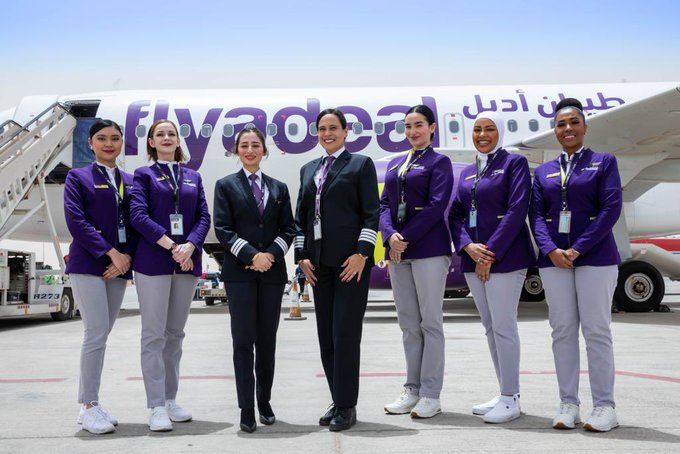
Saudi Arabia’s first flight with an all-female crew took off this weekend May 2022, completing a short domestic journey and passing a milestone for women’s empowerment, officials said.
The flight was operated by flyadeal, the budget subsidiary of flag carrier Saudia.
“For the first time in Saudi aviation history,” the airline wrote on Twitter on Friday, “#flyadeal operated the first flight with an all-female crew, the majority of which are Saudis, by the newest A320 aircraft. Flight 117, flew from #Riyadh to #Jeddah.”
Most of the seven-member crew hail from Saudi Arabia, according to spokesman Emad Iskandarani, including the first officer, Yara Jan, who is also reportedly the youngest Saudi female pilot.
The country’s civil aviation authority, which confirmed the announcement, has been working towards expanding roles for women in the sector for years.
In 2019, Yasmeen Al Maimani , then 29, became the first female first officer to fly a mainstream commercial plane in the kingdom.
The Saudi woman piloted Nesma Airlines flight ATR 72-600 from Hail to Al Qassim on June 9.
“I thought it was going to be hard, being a female pilot based in Hail but it hasn’t been,” she said at the time. “I feel so comfortable with everyone else here, and the way they treat me. It’s like they are all my brothers, it’s a good feeling.”
Last year, figures showed female participation in the kingdom’s workforce rose to 33 per cent at the end of 2020, from 19 per cent in 2016, according to data from the General Authority for Statistics.
Saudi Arabia aims to generate 356 billion riyals ($95bn) of investment into its aviation sector by 2030.
Its National Aviation Sector Strategy is working to increase connections from Saudi Arabia to 250 destinations, reaching 330 million passengers.
The kingdom also plans to launch another airline to complement its existing national carriers, including Saudia, and to build a major international airport in Riyadh, in addition to eight more regional airports.
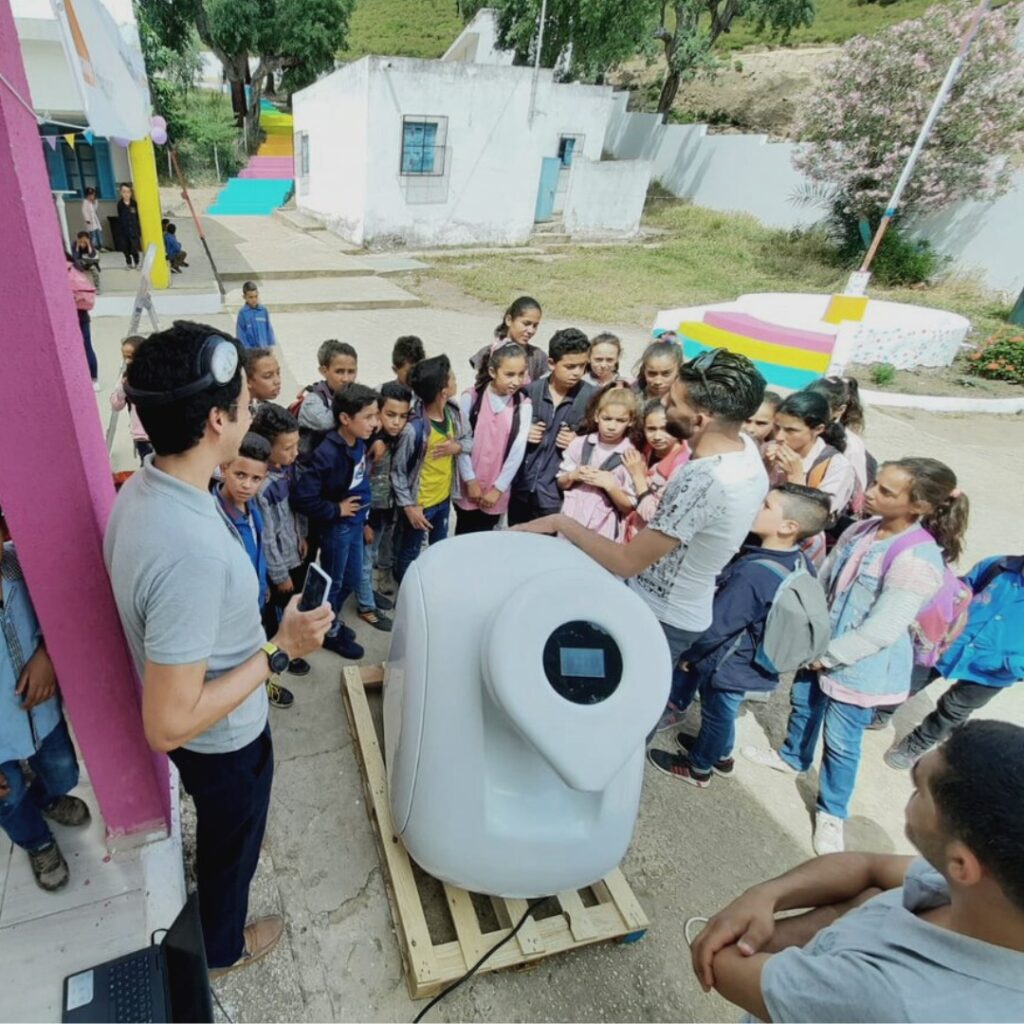
Tunisian start-up “Kumulus Water” has provided assistance to a school deprived of drinking water in Makhtar in the region of Siliana (north-west of Tunisia) through a technical solution “Kumulus 1”, designed to generate water from the ambient air.
It came to support its expertise in water technology, the efforts of the Tunisian NGO “WallahWeCan”, which campaigns for the improvement of living conditions of students in schools and educational environments in Tunisia, especially in disadvantaged areas.
Thanks to atmospheric water generators, each producing 20 to 30 litres of healthy drinking water per day, 570 students of the chosen school will now be able to benefit from a regular supply of drinking water.
Technically, the atmospheric water generator is a device designed to produce water from the ambient air. It sucks in the air and dusts it, then dehumidifies it by lowering its temperature to the dew point to create condensation. The condensed water in the machine then passes through four filters to remove impurities.
The smart machine can fit into a 1m3 cube and can be equipped with a solar pack, making it fully autonomous and independent, the startup says. “It offers mobile control options via a dashboard and an app designed by the six-person team at startup Kumulus Water. It also offers features that ensure water is delivered sustainably and economically,” its creators explain.
According to Kumulus Water, co-founded and led by Iheb Triki, there is 6 times more water in the air than in rivers. This water can be extracted by cooling the air below its dew point and exposing it to moisture absorbers or pressurizing it to make the water drinkable.
Kumulus was also installed at the Bayadha school (Delegation of Ghar Dimaou in the governorate of Jendouba).
According to Regional Commissioner of Education Rim Maaroufi, this is a project developed by a young Tunisian engineer and funded by the Orange Foundation in cooperation with the association “a child, smiles”.
In a statement to TAP, Maaroufi said that Bayadha School, where the Kumulus was installed, suffers from a lack of drinking water due to a lack of connection with the distribution network. Water tanks were installed in advance to provide drinking water to the students and teachers. The machine produces about 20 to 30 litres of drinking water per day.
In Tunisia as in many other countries in the world, access to drinking water is one of the most imminent threats facing humanity. According to the WHO, out of 7 billion people, 2.1 billion do not have satisfactory access to drinking water. The demand for water will increase further with the population growth and the increase in living standards.
In 2021, the co-founder of the Tunisian start-up Iheb Triki was selected by the prestigious Choiseul Institute as one of the 100 Young African Leaders.
Also, the start-up has been selected as the second-best impact investment opportunity in the prestigious competition (MBA Impact Investing Network & Training) “Turner MIINT 2022”.
The young Tunisian company managed to snatch second place among 40 start-ups from the best American business schools, having participated in the global competition Turner MIINT.
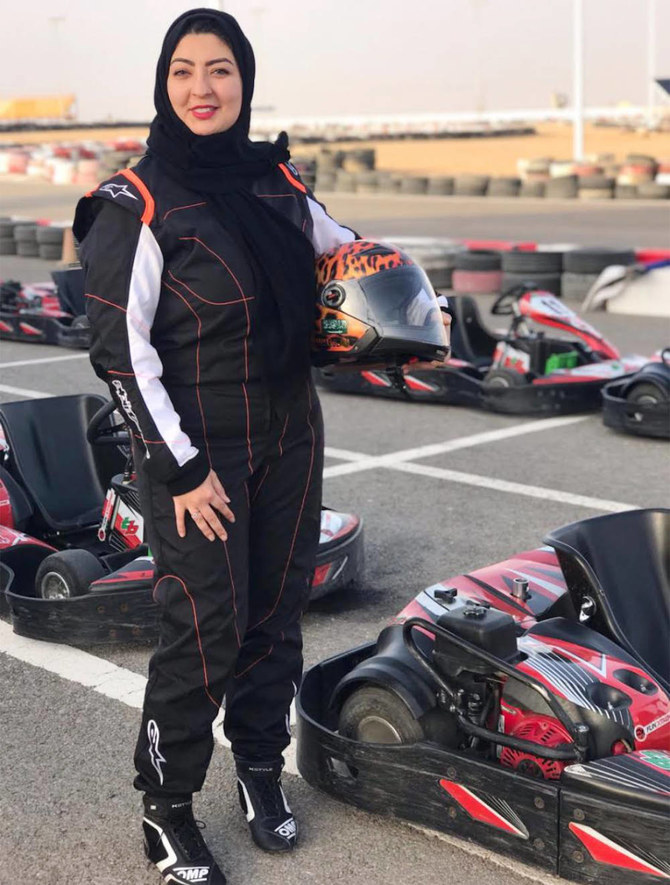
After a number of years of competing in various local autocross competitions, Afnan Almarglani recently became the first Saudi woman to hold an autocross and safe driving skills trainer license.
Her journey in the sport began when her motor sports-mad brother brought home a brand new PlayStation when they were growing up. The two competed in video games such as Gran Turismo 3, a racing title.
“From when I was young, I used to see my older brother Fahd interested in sports cars, modifying them and buying car parts from abroad. We used to race with each other in video games. I was so fascinated by cars, by the shape of the cars, the sound of engines and how they were driven incredibly fast. I played the game every day until it got to the point that I couldn’t beat my own fastest lap times,” she said.
Almarglani works in biomedical engineering. She previously took part in the first women’s race in Saudi Arabia during time off from her work at a project management office at the Ministry of Health.
Her blending of roles as a biomedical engineer and racer makes her unique, and her talent in both careers has allowed her to take opportunities that most women do not have.
Almarglani, who holds a master’s degree in biomedical engineering from a US university, told Arab News that her love and passion led her to work with sports cars, and that she chose to enter the field to gain experience.
“Alhamdulillah, we live in a great country with the decision to allow women to drive. So, I participated in the first women’s autocross championship and won second place in the qualifying round,” she added.
After her first foray into the sport, Almarglani took part in various local autocross championships held in Riyadh, Jeddah and Alkhobar. “After gaining experience and skills, I moved to a higher level in the autocross racing, which enabled me to take part in the Toyota Autocross Championship in Alkhobar, and I was able to win the best time in the women’s category.”
She also competed in the Speed Madness (Autocross) Championship in Riyadh’s Dirab Park, placing first.
The other biggest challenge for Almarglani is finding sponsorship opportunities. “Motor sports is an expensive sport and finding a sponsor is very difficult, so to maintain that training and to have a good team, and a good car, requires a lot of investment and you need both if you want to do well. The way to find sponsorship is through exposure and by winning races,” she said.
Almarglani is often asked how her parents feel about the dangers of her sport. She said: “Of course, at first, they were concerned about me, especially that motor sports has risks, so the level of safety in it is high, and it is expensive in terms of preparing the driver and the car. After I explained to my family all the means of protection and safety, and after they observed my passion and happiness after each race, they supported me and told me to continue, and they were always in the first ranks to encourage me.”
Recently, the official account of the Saudi Automobile and Motorcycle Federation, via Twitter, congratulated Almarglani for obtaining a training license.
Almarglani’s goal is to support every woman who wants to enter motor sports and to build a professional women’s motor sports team to represent Saudi Arabia in the world championships. “To achieve this goal, I hope there will be sponsorships offered to me as well as other Saudi female drivers in order to participate locally and regionally, to represent our beloved country.”
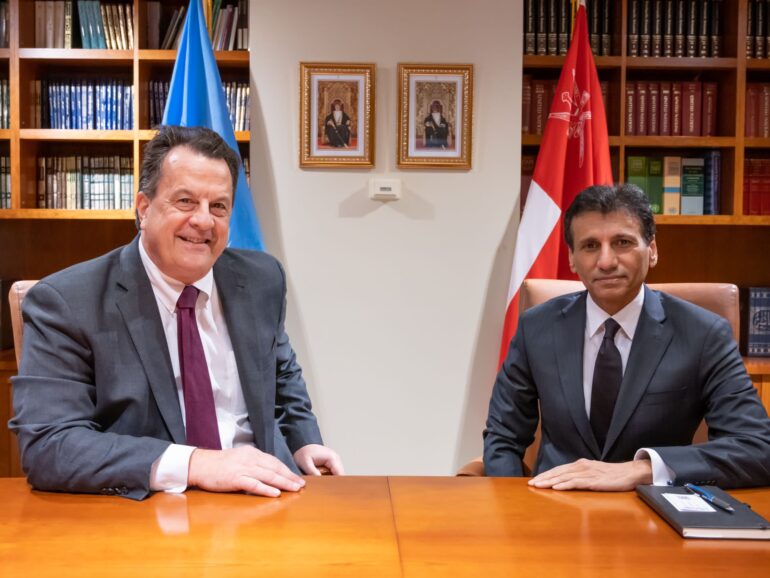
The United Nations General Assembly has elected Oman’s Permanent Representative to the world body as chairman of its Special Political and Decolonisation Committee.
In his speech to the 77th session of the General Assembly, H E Dr Mohammed bin Awadh al Hassan, the sultanate’s Permanent Representative, stated that Oman is keen to chair the Special Political and Decolonisation Committee, owing to its belief in the freedom of peoples and their independence, as well as the importance of ending colonisation in line with the UN’s related decisions.
The Special Political and Decolonization Committee also known as Fourth Committee considers a broad range of issues covering a cluster of five decolonization-related agenda items, the effects of atomic radiation, questions relating to information, a comprehensive review of the question of peacekeeping operations as well as a review of special political missions, the United Nations Relief and Works Agency for Palestinian Refugees in the Near East (UNRWA), Israeli Practices and settlement activities affecting the rights of the Palestinian people and other Arabs of the occupied territories, and International cooperation in the peaceful uses of outer space.
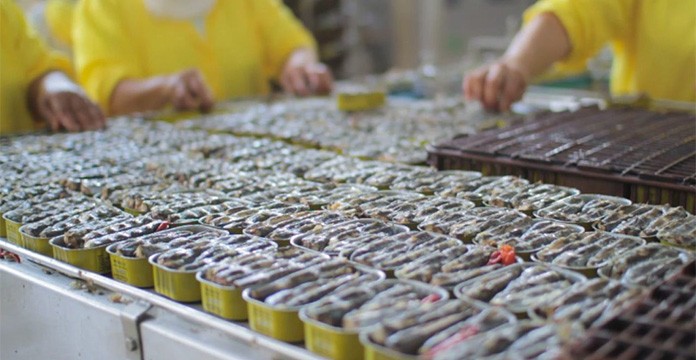
Morocco exports 90% of its sardines to 100 countries.
With a 3,500-kilometer-long coastline, Morocco produces half of all canned sardines available in supermarkets worldwide.
Mehdi Dhaloomal, Executive Manager of Moroccan canned sardine producer MIDAV, recently reportedthat the North African country annually produces 1.4 million tonnes of seafood, with sardines making up 850,000 of the collected seafood.
The Moroccan businessman stressed that Morocco has “exclusive” access to the sardina pilchardus walbaum which is a type of sardine that is only available in Bretagne, France, and southern Morocco.
Morocco notably fishes 60% of the sardina pilchardus walbaum that is primarily directed to exports – 90% of local sardines are exported.
Earlier this year, the Moroccan Ministry of Fisheries stated that canned sardines represented 53% of total seafood exports in 2021.
Besides sardines, frozen octopus and squid, as well as fishmeal, represent most of the 778,000 tonnes of Moroccan exported seafood, valued at MAD 24.2 billion ($2.46 billion).
Yet canned sardines remain a major food export of Morocco and Dhaloomal considers the country to be a “leader in the valorization” of sardines.
He further noted that the canned food sector in Morocco consists of roughly 50 Moroccan and international companies that are based along the country’s coastline.
Currently, the industrial zone of Sali delivers 30% of Moroccan production of sardines that is primarily exported to 100 countries. Export destinations include European countries such as the United Kingdom market, where 60% of consumed canned sardines come from Morocco.
Dhaloomal shared the prior statements at the first edition of the Safi Investor Day. The May 25 event gathered Moroccan and foreign investors operating or interested in the Marrakech-Safi region with the objective of celebrating the region and its assets, as well as attracting additional Moroccan and foreign capital.
source/content: moroccoworldnews.com
___________
Morocco Produces Half of All Canned Sardines Worldwide
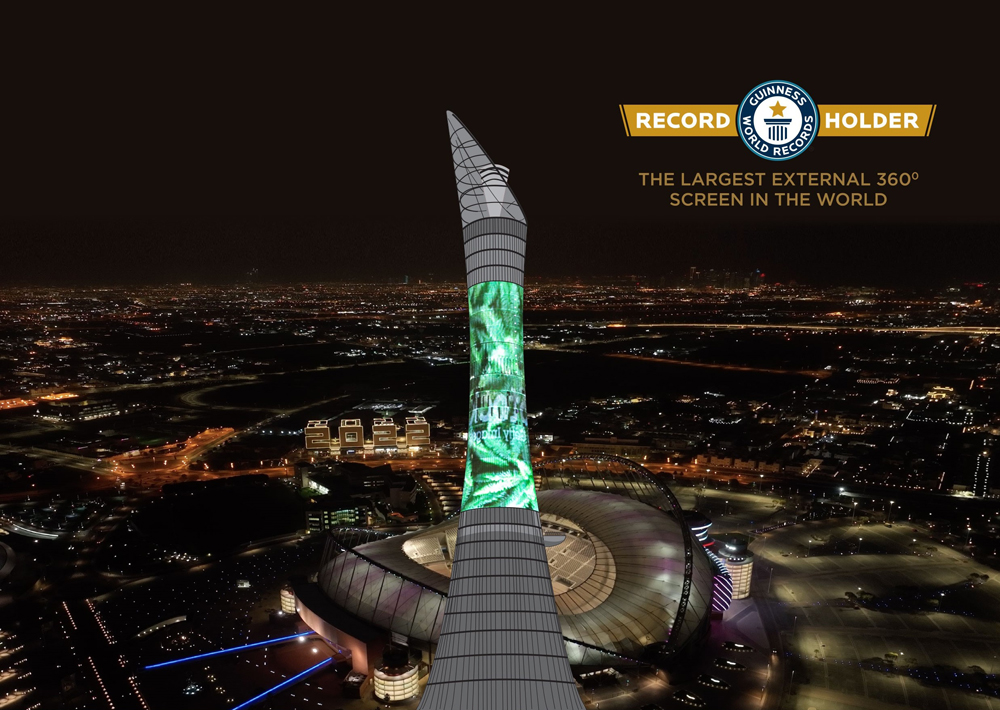
Torch Tower set the Guinness World Record for being the largest external 360 degree screen in the world.
Aspire Zone Foundation announced that it will officially launch the screen on June 6, 2022 between 7pm to 9pm.
Situated at 300m high and with 360° panoramic views across the city, the Torch Doha is the result of comprehensive architectural, engineering and technical design, formerly shaped to represent a colossal torch for the duration of the 15th Asian Games in 2006 held its symbolic flame.
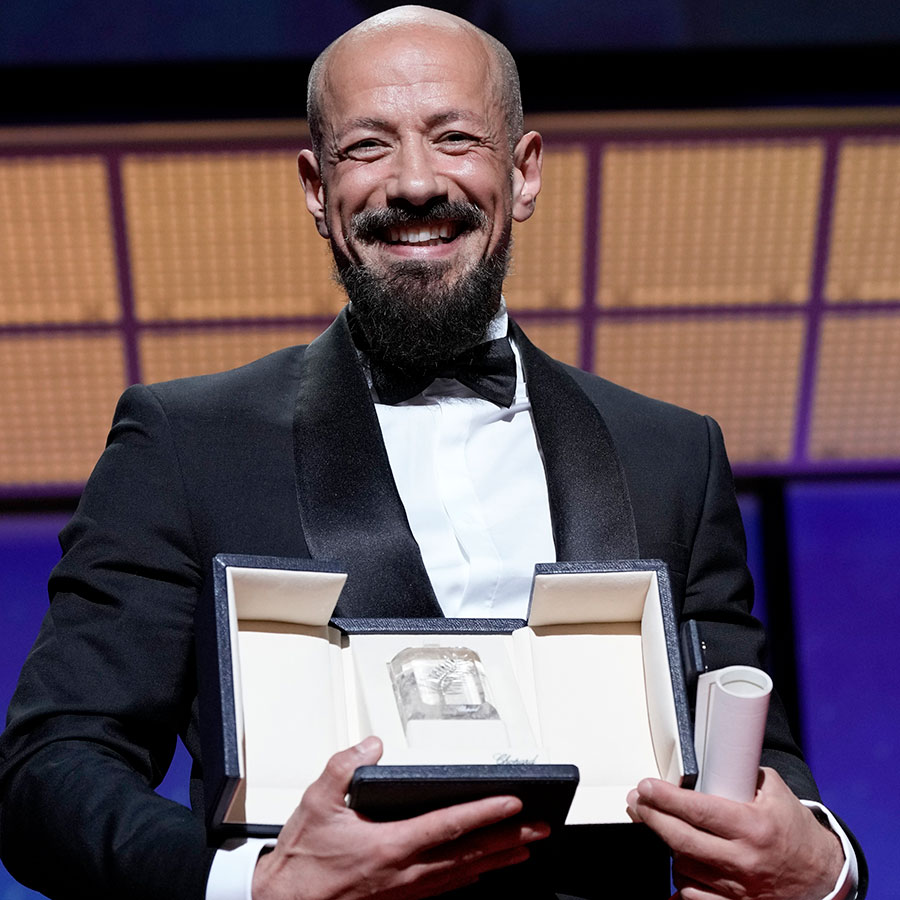
Tarik Saleh — an experienced Swedish-Egyptian filmmaker — clinched the Best Screenplay Award at the 75th Cannes Film Festival’s closing ceremony on Saturday for his latest feature film, ‘Boy from Heaven’ (‘Walad Min El-Janna’).
The filmmaker — who started his career as a journalist — also received the Prix François Chalais Award for his film’s “dedication to the values of life-affirmation.”
Boy from Heaven reportedly caused controversy amid Cannes’ Egyptian attendees after the premier, as its plot — which takes place in Al-Azhar University in Cairo — tackles the relationship between the country’s authorities and the Islamic organisation.
The film is produced by Atmo, Kristina Rikberg, and Fredrik Zander.
Previously, Saleh’s ‘Metropia’ (2009) won the Future Film Festival Digital Award of the Venice Film Festival, and his ‘Nile Hilton Incident’ (2017) — which was also set in Egypt — brought home the Grand Jury Prize from the 2017 edition of the Sundance Film Festival.
The winners of the 75th Cannes Film Festival are as follows:
– Palme d’Or: Ruben Ostlund for ‘Triangle of Sadness’ (Sweden, Germany, France, the UK)
– Grand Prix: Shared by Lukas Dhont for ‘Close’ (Belgium, the Netherlands, France) and Claire Denis for ‘Stars at Noon’ (France)
– Best director: Park Chan-wook for ‘Decision to Leave’ (South Korea)
– Best actress: Zar Amir Ebrahimi for ‘Holy Spider’ (Denmark, Germany, Sweden, France)
– Best actor: Song Kang-ho for ‘Broker’ (South Korea)
– Best screenplay: Tarik Saleh for ‘Boy from Heaven’ (Sweden, France, Finland, Denmark)
– Jury prize: Shared by Jerzy Skolimowski for ‘EO’ (Poland) and Charlotte Vandermeersch and Felix van Groeningen for ‘The Eight Mountains’ (Italy, Belgium, France, Britain)
– Camera d’Or for best first film: Riley Keough and Gina Gammell for ‘War Pony’ (The US)
– Best short film: Jianying Chen for ‘The Water Murmurs’ (China)
source/content: english.ahram.org.eg
________________
Swedish-Egyptian director Tarik Saleh poses during a photocall after he equally won the Best Screenplay prize for the film Boy From Heaven (Walad Min Al Janna) during the closing ceremony of the 75th edition of the Cannes Film Festival in Cannes (Photo: AFP)
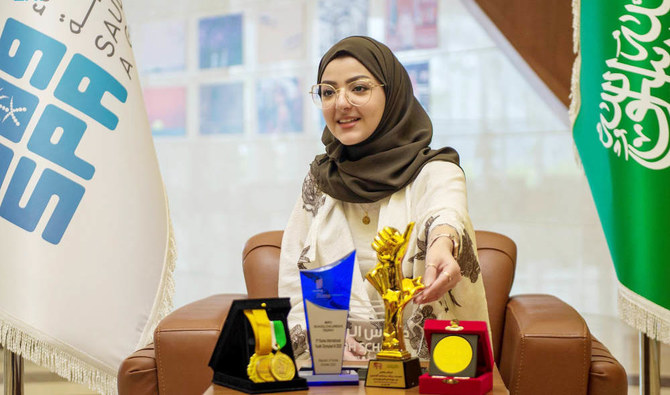
A Saudi medical student has won a string of an international awards for an invention that opens up a new world for hearing impaired or deaf drivers by dramatically improving their safety behind the wheel.
Renad bint Musaed Al-Hussein, a student at the College of Medicine at King Saud University, developed special sensors that operate as soon as they detect sounds outside the vehicle.
Sound frequencies are sent to a device inside the car, which then identifies and displays a description, image and color of the sound source visually, alerting the driver to any possible risk.
Her innovation has won several global awards and medals, including best invention at the World Intellectual Property Organization Cup and a gold award in the international invention competition as part of the Korea International Youth Olympiad.
The awards honor outstanding inventors, creators and innovative firms from around the world.
Al-Hussein said that her invention will reduce the risks facing hearing impaired drivers and may also help to save lives.
“One of the things that prompted me to come up with this invention is that some countries prevent hearing impaired or deaf people from driving because they are unable to hear important sounds. This invention will contribute to reducing the risks they face,” she said.
The Saudi inventor said that her invention could allow more than 466 million deaf people worldwide to drive, while also improving road safety by protecting their lives and the lives of others.
source/content: arabnews.com (edited)
_____________
Renad Al-Hussein said that her invention will improve road safety by protecting the lives of deaf drivers. (SPA)
Born in Larache in 1969, a young and driven Souad El Markhous found herself in a position where she had to lead a double life in Amsterdam for three years. Her struggle to grow from a young ambitious Moroccan girl to an owner of a Dutch construction company is a story that captures the listener’s heart.
Determination and perseverance were key in El Markhous’ uncanny journey, and her story reflects the resilience of Moroccan women in the face of social expectations either at home or/and beyond. Still, she conveys an overwhelming sense of gratitude. For her, her story would not have been possible without Allah (God) and rdat walidin (parental blessings).
She left Larache in 1990 to settle down with her cousin in Amsterdam without telling her father. Unfamiliar with the Dutch language and culture, she soon had to look for a job to sustain herself.
Her neighbor secured a job for her as a cleaner at the construction company De Combi, on the condition of keeping a low profile since the company was only hiring men cleaners.
Boss: from a ‘monster’ to a father-figure
Although she was afraid of getting caught, El Markhous had to clean the director’s office on Wednesday when he had a day off to spend quality time with his family.
Despite the risk of being exposed, she used to sit in the director’s office and run her fingers through the keyboard, pretending to be working there.
“I wanted to dream. I wanted to be like them, work,” she told Morocco World News.
One day her fear came true. The director, Appelman, came to the office on his day off since his children and wife went on a vacation. He entered the office and found her there. They were stunned to see each other.
From the stories she heard about him, she imagined a well-built and ruthless man who looked more like a “monster.” He met her expectations at first glance, physically at least. Yet he turned out to have a good heart and he became a father figure for her in a foreign country where she barely knew anyone.
Bucket list check
“What are you doing here?” Appelman asked Souad on that fateful day in his office. Surprised and disoriented, she tried to communicate with him in broken English and French. He quickly ordered his secretary to look for a school for her. She was aged 19 at the time. “You have to learn,” he had said.
For the following years, she secretly learned the Dutch language at Joke Smit College in Amsterdam (1990-1992) before pursuing an MBA in modern business administration at Schoevers in the University of Amsterdam between 1993 and 1996.
El Markhous pretended to work overtime to attend school, while Appelman supported her cover story.
Her father’s words after hearing about her departure and her work as a cleaner were engraved in her heart. Disappointed and sad, her father asked her if he ever mistreated her or starved her to the point that she would clean toilets for Dutch people.
These words would stay with Souad for much of her formative years in the Dutch capital, motivating her, in a sense, to do her best to make her parents proud.
Hit by reality and new beginnings
She accepted to have an arranged marriage with the hope of continuing her studies. Her future husband, also of Moroccan-descent, agreed to support her studies.
Before her departure, Appelman handed her a letter in Dutch addressed to her father. In Larache, she opened and read the letter to her father. The letter, which essentially said that Appelman was her second father in the Netherlands, reassured El Markhous’ father.
As she returned to the Netherlands, she continued her studies and gradually built up her career with the support of her husband. Now married for 20 years, they have raised two daughters together and established a happy family.
Over the years, El Markhous rose through the ranks at De Combi, moving from cleaner to telephone operator to the head of administration at the Dutch construction company. She then became a member of the workers’ council, representing her fellow colleagues who all helped her through her journey of settling and integrating into her adoptive country.
Turning point
In 2014, De Combi was on the edge of bankruptcy. At the time, the construction firm had hundreds of employees and 11 branches across the Netherlands. Four branches closed down and others were sold like in Tilburg and Amsterdam. The buyers made it clear that they would cut jobs.
Feeling responsible for protecting the familial nest she had made for herself at Combi, El Markhous was determined to find a solution to prevent the company from sinking. And buying a branch was one of the few options available.
So she decided to buy the Amsterdam branch without hesitation. But then again, not having enough money, she was faced with the impossible feat of making the acquisition within a 24-hour deadline.
Along with her husband, she started to call friends and acquaintances to collect the money. The workers also contributed with their savings. At the end of the day, she made it and saved the lives of her team members. At the time, De combi workers were unpaid for three months and had to fill in for government support.
In the following meeting of the workers’ council, she announced her ownership over the Amsterdam branch in front of 600 workers. This made her the first woman to own a construction company in the Netherlands. For the next five years, she managed the company along with the business director Willie van Dijk before establishing Markhous Beheer BV in 2019
Incomplete joy
After she bought De Cambi’s Amsterdam branch, El Markhous’ story gained tremendous public and media interest. Proud of her achievement, she collected all newspaper articles and documents that commended her work and returned home to share her joy with her parents.
“I hadn’t seen my parents for three years,” she said. Excited to reunite with her family, she entered her home to learn that her father was diagnosed with Al Alzheimer’s. “He couldn’t recognize me,” she told us with teary eyes and a shaking voice.
Souad’s father passed away in 2016, two years after that visit. Until his last moment, he was unable to recognize his daughter or learn about her success story.
In 2018, El Markhous would be awarded the Ethnic Business Woman among 45 candidates. Months later, she received the Diwan award for her inspiring story and accomplishments.
A year later, she obtained a gift of appreciation and gratitude from the Moroccan embassy in the Netherlands.
She also featured in the Dutch series “Vrouwen die Bouwen” or “women who build.” Her story was further documented by Cor de Graag in a book titled “Ondernemers zijn net mensen,” which translates into English as “Entrepreneurs are just people.” The book is based on 50 interviews with inspiring entrepreneurs in the Netherlands.
Committed to helping others
With her growing success, El Markhous has committed to helping other women to achieve their dreams. Despite her busy schedule, she has accepted numerous invitations from NGOs, schools, and other organizations to share her stories but also inspire young women to be brave and pursue their dreams.
In 2015, she received a call from a young Ethiopian woman living in the Netherlands who wanted to become an engineer. The young woman asked her over the phone to convince her father.
Later on, the father and daughter visited El Markhous’ office. The father was surprised to see her in the office of a director, particularly that of a construction company.
Souad managed to convince the girl’s father. Three years later, she received a call from the same girl who told her that she now had a job in an engineering company.
The story touched the Moroccan-Dutch entrepreneur, prompting her to commit further to supporting other women as they struggle to establish themselves in male-dominated professions in the construction or STEM sectors.
Following in the footsteps of Appelman, El Markhous is becoming the guardian angel of numerous girls and women in Morocco and Europe.
Souad El Markhous’s legacy in the Netherlands and Morocco is in the making as she aspires to invest in her home country. Her dedication, determination, and resilience can be a source of inspiration for every girl and woman around the world.
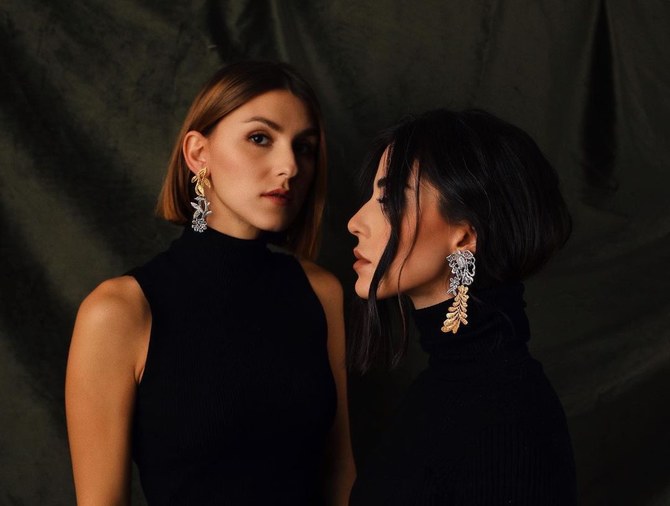
Lebanese designer Alexandra Hakim has revealed her natural approach to her sustainable jewelry brand.
The mastermind behind the label Alexandra Hakim, told Arab News that she started the brand as a student, finding inspiration from materials in her studio such as sandpaper and matchsticks in ashtrays.
The jewelry maker tried to recreate the elements and turn them into wearable sparkly jewels to give each item a “different and completely unique touch.
She said: “I made my first collection at school based on matchsticks and I found beauty in the way that they are consumed every time in different ways. I took those fragile wooden pieces and I tried to transform them into earrings and create unique pieces of playful earrings and necklaces.”
Hakim also speaks to local workers in Lebanon to support different crafts.
“I have talked to fishermen, farmers, and different craftsmen about their work, and I try to integrate it into mine. So, for example, I would take any rubbish that a fisherman I met called Bob would find in his nets – because there is barely any fish left in the sea today. So, I made a collection based on that.
“I also used pearls to make the connection between the rubbish from the sea and the jewels,” she added.
Describing her brand as a mix of luxury and contemporary jewelry, Hakim said: “I feel like my brand is about inclusivity, sustainability. It’s about making jewelry that is good for the planet. It’s about limiting waste and making women and men feel empowered.”
One of her most recent collections, the “Good Karma Capsule,” was based on horoscopes.
“I asked people around me from different backgrounds and places if they wanted their portraits taken depending on their horoscopes. So, I found a Scorpio, a Gemini, and it all kind of came together.
“People felt so empowered wearing their horoscope and felt like the earrings were a lucky charm and a token of positivity,” she added.