Arabs & Arabian Records Aggregator. Chronicler. Milestones of the 25 Countries of the Arabic Speaking World (official / co-official). AGCC. MENA. Global. Ist's to Top 10's. Records. Read & Enjoy./ www.arabianrecords.org
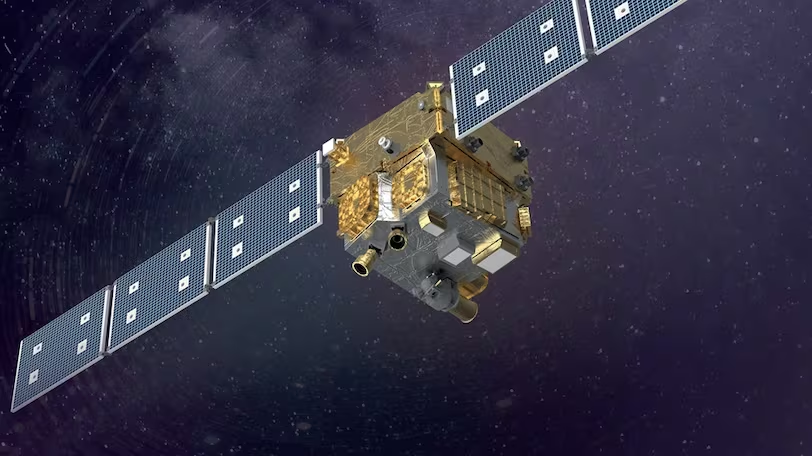
A satellite jointly built by Arab nations is a step closer to launch, with lift-off preparations complete.
More than 30 engineers from the United Arab Emirates University in Al Ain and engineers and researchers from 11 other Arab countries helped to develop the 260kg Earth observation satellite called 813.
It was expected to be launched in June from China aboard a ride-share carrier rocket, but it is now scheduled for the last quarter of this year, according to state news agency Wam.
The project was announced in 2019 with the intention of bringing Arab nations together and increasing their space sectors’ capabilities.
The satellite is named after 813AD. That was the year that Baghdad’s House of Wisdom became a public academy and library. It would attract the finest minds and usher the Arab world into a period of intellectual advancement known as the Islamic Golden Era.
Engineers from the UAE, Saudi Arabia, Egypt, Jordan, Bahrain, Sudan, Kuwait, Oman and Lebanon have taken part in the satellite’s development.
Amar Vora, head of space for Serco Middle East, told The National in an earlier interview that the project was a “powerful signal from the Arab world”.
“Much like Europe’s model under the European Space Agency, where long-standing co-operation has transformed Europe into a space leader, this satellite shows that Arab nations can also leverage collective strength to advance strategic capabilities,” he said.
“It brings together engineers, scientists, researchers and policymakers across the region in a way that builds not only hardware, but human capital, sovereign capability and institutional trust.”
The satellite will enter a sun-synchronous orbit at an altitude of 550km to 650km, where it will help to capture data on agriculture, natural resource management and environmental monitoring around the world.
Engineers installed a hyperspectral imaging payload system in the satellite, which will allow in-depth analysis of soil conditions, water quality, crop health, land cover changes and pollution levels.
All stages of the satellite, including its design, assembly, integration and environmental and functional testing, were completed at the university’s National Space Science and Technology Centre.
It has also developed an operational system on campus so that data from the satellite can be received, processed and converted into maps and scientific resources that will be available for researchers and university students.
Pioneering scientist behind revolutionary weight-loss drugs, global scholars, innovators among winners.
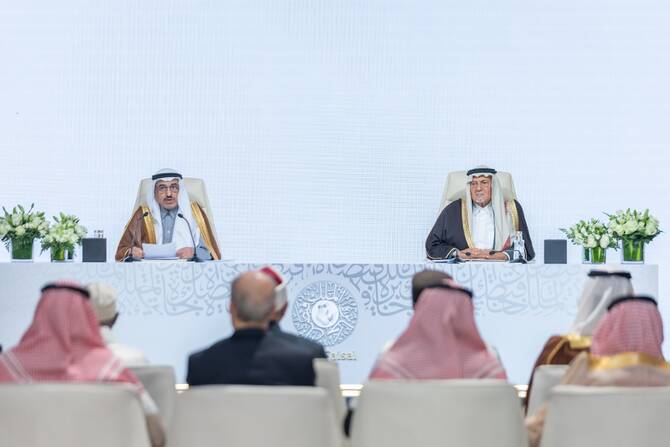
The King Faisal Prize 2026 winners were announced at a ceremony in Riyadh on Wednesday night.
The event honored pioneering scientists, global scholars and innovators for their transformative contributions to medicine, science, Arabic language, Islamic studies and the service of Islam.
Prof. Svetlana Mojsov was named winner in the medicine section for her groundbreaking discoveries that are now reshaping how we treat obesity.
Prof. Carlos Kenig was announced as science laureate in the field of mathematics for helping to revolutionize understanding of nonlinear partial differential equations.
Mojsov, the Lulu Chow Wang and Robin Chemers Neustein research associate professor at The Rockefeller University in New York, pioneered research on glucagon-like peptide-1 (GLP-1) that has fundamentally transformed how obesity and diabetes are treated.
She discovered and characterized the biologically active form of GLP-1, a natural intestinal hormone that regulates blood sugar and appetite, and identified its receptors in the human pancreas, heart, and brain.
Through cutting-edge biochemistry and physiological studies, Mojsov demonstrated that GLP-1 powerfully stimulates insulin secretion while reducing hunger and managing glucose levels.
Her groundbreaking work enabled the development of an entirely new class of medications that mimic this natural hormone, sparking a paradigm shift in obesity treatment.
These therapies today provide life-changing benefits for hundreds of millions of people worldwide living with obesity and its complications — a global health crisis affecting 890 million adults and 160 million children and adolescents in 2022 alone, according to the World Health Organization.
Mojsov’s groundbreaking contributions have earned numerous prestigious honors, including Time magazine naming her one of the 100 Most Influential People in 2024.
Kenig was honored for his groundbreaking contributions to mathematical analysis. His work has transformed understanding of nonlinear partial differential equations — the mathematical equations describing how things change and move in the physical world — and provided researchers with a now-ubiquitous set of techniques. His insights have opened new research frontiers with applications spanning fluid mechanics, optical fibers, and medical imaging.
Kenig, the Louis Block distinguished service professor at the University of Chicago, is recognized for applying harmonic analysis techniques across different areas of partial differential equations.
His work on free boundary problems — determining unknown boundaries such as where ice meets melting water or how fluids flow through soil — has been particularly influential.
Kenig has spent three decades figuring out how complex waves behave over long periods of time, especially in tricky situations where they could either spread out peacefully or build up dangerously.
This matters for understanding everything, from ocean waves to light pulses in fiber optics and to how energy moves through different materials.
His work helps explain phenomena in quantum mechanics, optics, and ocean waves. By combining different mathematical techniques, he has solved longstanding problems that had puzzled mathematicians for decades.
In addition to medicine and science, the King Faisal Prize recognized the achievements of outstanding thinkers and scholars in the field of Arabic language and literature, Islamic studies, and exemplary leaders who have played a pivotal role in serving Islam, Muslims, and humanity at large.
Pierre Larcher, an emeritus professor of Arabic linguistics at Aix-Marseille University and emeritus researcher at the Institute for Studies and Research on the Arab and Muslim Worlds, won this year’s King Faisal Prize for Arabic Language and Literature on “Arabic literature in French.”
His novel presentation of Arabic literature to French readers has earned widespread acclaim from critics and specialists, while his rigorous scholarly approach to classical Arabic literature has made it accessible and appropriate for French culture.
His critical translation project of “Al-Mu’allaqat” and rigorous study of pre-Islamic poetry demonstrate exceptional scholarly depth.
For this year’s Islamic Studies Prize, Abdelhamid Hussein Mahmoud Hammouda, the professor of Islamic history and civilization at Fayoum University, and Mohamed Waheeb Hussein, the professor of archaeology and history of art at the Hashemite University, were announced as co-laureates.
Hammouda’s work encompasses the trade routes across the Islamic world — the Mashreq, Iraq and Persia, Arabian Peninsula, Greater Syria, Egypt, Sahara, Maghreb, and Al-Andalus. This expansive scope delivers coherent understanding of Islamic trade trajectories across history, serving as an authoritative reference for both specialized research and broader scholarship.
Hussein’s groundbreaking work uses archaeological surveys, GPS documentation, and analytical mapping to systematically correlate Qur’anic texts with geographical data. His research offers definitive scholarly interpretation, significantly advancing documentation of early Arabian Peninsula trade routes.
Sheikh Abdullatif Al-Fozan and Dr. Mohammad Abou Moussa were announced as co-laureates in the Service to Islam Prize.
Laureates’ names were announced by Prince Turki Al-Faisal and the King Faisal Prize’s Secretary-General Dr. Abdulaziz Alsebail.
Selection committees included experts, specialists, and scholars who met in Riyadh and examined the nominated works. They selected the laureates in an objective and transparent manner, in accordance with the rules and regulations.
The KFP was established in 1977, and was awarded for the first time in 1979 in three categories: service to Islam, Islamic studies, and Arabic language and literature. Two additional categories were introduced in 1981: medicine and science. The first medicine prize was awarded in 1982, and in science two years later.
Since 1979 the KFP has given awards to more than 300 laureates who have made distinguished contributions to different sciences and causes.
Each prize laureate is endowed with $200,000, a 24-carat gold medal weighing 200 grams, and a certificate inscribed with the laureate’s name and a summary of the work that qualified them for the prize.
source/content: arabnews.com (headlines edited)
_____________
King Faisal Prize laureates’ names for 2026 were announced in Riyadh on Wednesday night by Prince Turki Alfaisal and the Prize’s Secretary General Dr. Abdulaziz Alsebail. (Supplied)
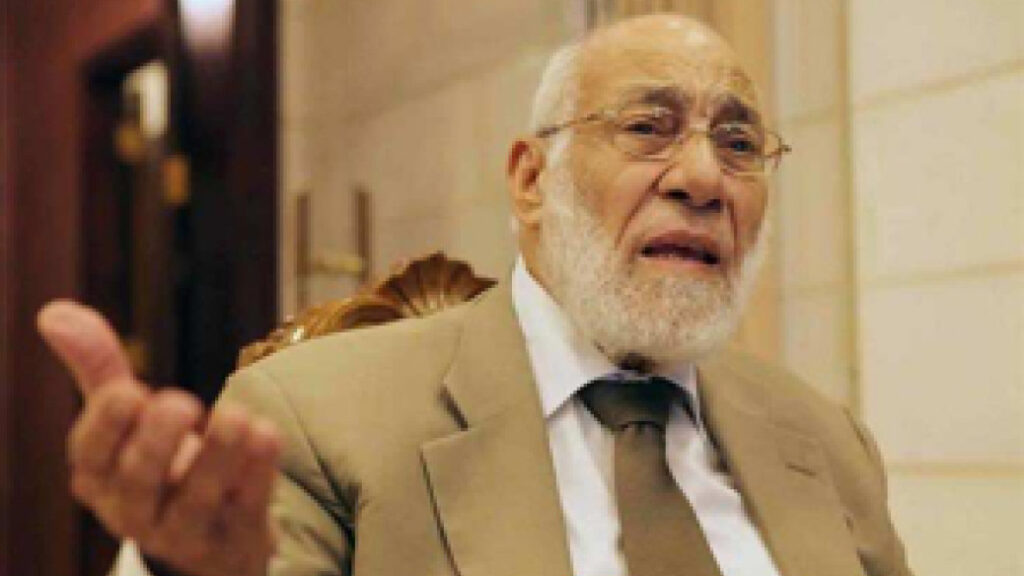
Egyptian Islamic scholar and geologist Zaghloul El-Naggar, a leading figure in the field of scientific interpretation of the Qur’an, has died at the age of 92.
El-Naggar passed away in Amman, Jordan, after a battle with illness, according to statements released on his official social media accounts on Sunday.
His funeral prayer will be held on Monday at Abu Aisha Mosque in Amman, followed by burial at Umm Al-Qutain Cemetery.
Born on 17 November 1933 in the village of Mashal in Egypt’s Gharbia Governorate, El-Naggar showed an early passion for science.
He graduated with honours in geology from Cairo University in 1955, earning the Mustafa Baraka Award in Earth Sciences. He obtained a PhD from the University of Wales in 1963 and became a full professor in 1972.
El-Naggar’s career spanned decades of teaching and research at universities in Egypt, the UK, Saudi Arabia, Qatar, Yemen, Jordan, and the United States.
He chaired the geology department at Qatar University, taught at King Fahd University of Petroleum and Minerals, and served as a visiting professor at UCLA.
He also directed Al-Ahqaf University in Yemen and later taught at the World Islamic Sciences and Education University in Jordan.
He became one of the Arab world’s most recognised voices on the relationship between science and faith, authoring numerous books and delivering hundreds of lectures on what came to be known as the “scientific miracles of the Qur’an and Sunnah”.
His popular TV programme Ayat Bayyinat (“Clear Verses”) aired across Arab channels, exploring Quranic descriptions of natural phenomena.
El-Naggar was a member of the International Commission on Scientific Signs in the Qur’an and Sunnah and was honoured several times for his contributions to promoting scientific understanding within an Islamic framework.
source/content: newarab.com (headline edited)
______________
El-Naggar passed away in Amman, Jordan, after a battle with illness [Al-Araby Al-Jadeed]
The award was received by Oman’s Ambassador to Japan Dr. Mohammed bin Said Al Busaidi on behalf of the government of Oman.
The University of Tokyo has announced that it has awarded the prestigious Shokomon Award to the government of the Sultanate of Oman in recognition of its contribution to supporting scientific research and academic and cultural exchange in the field of Middle Eastern studies.
The award was received by Oman’s Ambassador to Japan Dr. Mohammed bin Said Al Busaidi on behalf of the government of Oman.
The award was based on the role played by the Sultan Qaboos Chair for Middle Eastern Studies, which was inaugurated at the university in 2011.
It is the highest honor bestowed by the University of Tokyo on individuals and institutions who have made significant and influential contributions to enriching the university’s progress and serving its academic goals.
Oman is the first Arab government to receive it.
The University of Tokyo has a significant academic relationship with Oman, primarily through the University of Tokyo Centre for Middle Eastern Studies (UTCMES), which was established with funding from Oman. The relationship includes academic exchange, research, and events such as seminars, lectures, and exhibitions focusing on Oman.
The university also works with institutions like Sultan Qaboos University and has received book donations from Oman.
UTCMES conducts and disseminates research on the Middle East and organizes events like public lectures, symposia, and exhibitions that focus on Oman.
source/content: arabnews.com (headline edited)
__________
The award was based on the role played by the Sultan Qaboos Chair for Middle Eastern Studies, which was inaugurated at the university in 2011. (Supplied)
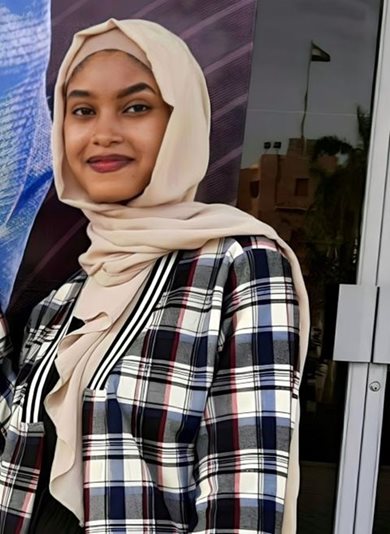
Sara Albagir Abdalla Mohammed is many things—a student, a scientist, an ASM Young Ambassador—but, above all, she is unstoppable. Amid ongoing socio-political upheaval and conflict in her home of Sudan, she is determined to advance her own microbiology journey and ensure others can do the same.
“The challenges I’ve faced have ultimately shaped me into a more resilient and adaptable microbiologist,” Albagir Abdalla Mohammed said. “These experiences have strengthened my commitment to making science accessible to those in resource-limited settings and finding innovative ways to promote scientific development, even in the face of adversity.”
Her penchant for tackling scientific challenges predates her academic activities. As a child, Albagir Aballa Mohammed wanted to find treatments for “untreatable” diseases, though it was during her high school biology classes—where she learned about the intricate complexities of the human body—that her interest in health sciences blossomed. She took that interest and ran with it, going on to pursue a degree in medical laboratory sciences at the University of Khartoum.
Albagir Abdalla Mohammed began her college career by diving head-first into disciplines ranging from hematology to clinical chemistry, though medical microbiology and immunology really drew her in. “I became particularly interested in how such tiny beings [i.e., microbes] could have massive impacts on global health systems. This contrast between the micro and the macro fueled my desire to understand how microbiology could contribute to solving some of the world’s most pressing problems,” she shared. Her experience training in laboratories at Ibn Sina Specialized Hospital—one of Sudan’s largest hospitals for liver diseases, including those caused by microbes like hepatitis B virus—solidified her decision to specialize in medical microbiology.
But, as certain as Albagir Abdalla Mohammed was about her chosen educational path, external circumstances have made the road difficult to navigate. The Sudanese December Revolution shut down the education system in Sudan for almost 2 years; the COVID-19 pandemic tacked on another year. Then, in April 2023, as Albagir Abdalla Mohammed neared the end of earning her degree, conflict broke out in her home of Khartoum, Sudan’s capital. The conflict has displaced over 10 million people, with Albagir Abdalla Mohammed—who was forced to relocate to a rural area—among them.
“Over the past year and a half, I’ve faced ongoing disruption, displacement and uncertainty,” she shared. “This was an especially difficult time, as I was so close to completing my education and reaching my long-awaited goal of graduation. My academic journey, originally planned to take 4 years, [has] stretched into over 6 due to these repeated interruptions.”
Yet, for each obstacle thrown in her path, Albagir Abdalla Mohammed has found ways to continue her scientific development. “I refused to let my educational journey come to a complete halt. I have continued learning, even under challenging conditions with poor internet connectivity in the rural area I’m in,” she said, noting that she has completed various online programs and specializations in public health, epidemiology and data analytics.
What’s striking about Albagir Abdalla Mohammed is that she is not just concerned about her own scientific advancement. She is also invested in the future of countless scientists facing similar circumstances. When universities in war-affected regions of Sudan closed, she watched as her peers lost hope and disengaged from their academic paths. For Albagir Abdalla Mohammed, this was a call to action. “I was determined to keep microbiology alive in Sudan, even amid these challenges.”
Fueled by this determination, she founded MicroGen, an online initiative aimed at empowering early-career microbiologists in Sudan through career guidance, professional development and capacity-building opportunities. Now with a community of 5,000 students and professionals from over 50 Sudanese universities and institutions, MicroGen has hosted informational sessions about various microbiology career paths, highlighting connections between the diverse scientists, disciplines and roles spanning the microbial sciences.
Such interconnectivity has been foundational to Albagir Abdalla Mohammed’s efforts. She considers a strong network of peers and collaborators instrumental for navigating obstacles and creating new opportunities, and credits the ASM Young Ambassador program, with its vast global community of scientists, with helping her build that network. As Young Ambassador to Sudan (an appointment she considers one of the most pivotal moments of her career), Albagir Abdalla Mohammed has focused on leveraging her platform to “increase the engagement of Sudanese microbiologists within ASM and promote its mission of advancing the microbial sciences.”
To say she has been successful in this mission is an understatement. A free online Bioinformatics Workshop she organized in the summer of 2024 attracted a whopping 1,144 participants—over 700 from Sudan and the rest from 32 other countries—and resulted in 865 new ASM members. Albagir Abdalla Mohammed designed the workshop to meet the needs of Sudanese microbiologists who are unable to conduct lab-based research. “By focusing on in silico research, participants were empowered to use computational tools to simulate biological processes, analyze large datasets and conduct meaningful research without the need for fully equipped laboratories,” she said.
Feedback from the event, where participants learned everything from how to analyze microbial genomes, to the ins and outs of bioinformatic data interpretation, was overwhelmingly positive. One participant from Sudan wrote that the workshop was “comprehensive and nicely delivered, even with the war running in the background,” adding that they no longer “feel really stuck, nor [that] the world is steps ahead of me.”
For her part, Albagir Abdalla Mohammed learned that “with the right approach, it is possible to sustain research momentum even in the most difficult circumstances, and that the scientific spirit of curiosity and perseverance can thrive in adversity.”
In many ways, she embodies this spirit of curiosity and perseverance. This is evident not just from her work with MicroGen and the ASM Young Ambassador program, but also from other endeavors. Case in point: Albagir Abdalla Mohammed was behind the effort that led to a collaboration between the non-profit organizations HealthGoes Global and Partners for World Health . The partnership resulted in the shipment of over $340,000 worth of essential medical supplies to aid Sudan’s overwrought health care system. She was also recently appointed a Champion for the Microbiological Society in the U.K. and is currently organizing Sudan’s first national symposium on antimicrobial resistance (AMR), aimed at fostering collaboration among Sudanese microbiologists and health care professionals to address the AMR crisis.
The throughline here? Albagir Abdalla Mohammed is a force, a passionate science advocate. She may be early in her career, but that hasn’t stopped her from taking on leadership roles to enact change. She encourages other future and early-career scientists to adopt a similar outlook.
“Never underestimate your abilities and know that leadership isn’t confined to titles or seniority; it’s about how you contribute, collaborate and support others, regardless of your career stage,” she said. “Often, early-career scientists feel they need to wait for a certain level of experience or recognition before stepping into leadership roles, but that’s not the case. Leadership comes from taking initiative, sharing your ideas and offering guidance—even as a student or young professional.”
Still, while showing initiative as a young scientist is crucial for advancement, Albagir Abdalla Mohammed acknowledged barriers that can slow forward motion. She pointed specifically to the limited number of mentorship and training opportunities for undergraduates like her, as many are geared toward graduate students and advanced professionals. Investments in these advanced scientists is imperative, she noted, but such focus means young scientists at formative stages of their development can get left behind. This is felt strongly in countries like Sudan, where political instability and conflict can extend an undergraduate degree to 6-8 years.
“These delays hinder access to mentorship and resources, and the lack of available opportunities further reinforces these existing barriers, leaving talented students behind and limiting their ability to participate in the global scientific community,” Albagir Abdalla Mohammed explained. “Addressing this gap is essential to fostering a truly inclusive STEM field. Empowering undergraduates, particularly those from underrepresented regions, will not only cultivate diverse talent, but also enrich the global scientific dialogue with fresh perspectives and ideas,” all of which are paramount for propelling science forward to solve big problems.
To that end, Albagir Abdalla Mohammed, who is Sudanese, Muslim, identifies as African and speaks Arabic as her native language, considers diversity in all its forms the cornerstone of innovation. She advised scientists at every career stage to view their background as an asset, not a limitation, highlighting that all the pieces that make her who she is have inspired her work. “My faith emphasizes the values of compassion, community and social responsibility, motivating me to uplift marginalized voices and create inclusive spaces where everyone has the opportunity to contribute and thrive,” she shared.
It doesn’t take much to see that Albagir Abdalla Mohammed is a bright light—and the future of microbiology is brighter because of her. Wherever her path takes her next, one thing is certain: she won’t give up. And she encourages other young scientists not to give up either. “The journey in science will likely present challenges, including systemic barriers, limited resources or unexpected disruptions. In those moments, persistence and resilience are key. Let the obstacles you face shape you into a stronger, more adaptable version of yourself.”
Saif Karam, a student at the Government Model High School and a member of the Rubu’ Qarn Foundation for Creating Leaders and Innovators, won first place globally in the Chemistry Awards category. He participated with the national delegation, sponsored by the Rubu’ Qarn Foundation for Creating Leaders and Innovators, in partnership with the Ministry of Education, at the International Science and Engineering Fair (ISEF 2025), hosted by Ohio, USA.
Saif Karam received the award from the American Chemical Society (ACS), one of the world’s largest scientific societies supporting chemistry research, for his project, “Developing a Classification of New Materials Used to Convert Carbon Dioxide into Valuable Multi-Carbon Compounds, Opening Broad Horizons for Application and Use in the Fields of Industry and Sustainable Energy.
Member and Ruler of Sharjah, and his wife, Her Highness Sheikha Jawaher bint Mohammed Al Qasimi, Chairperson of the Rubu’ Qarn Foundation for Creating Leaders and Innovators, regarding the importance of building generations that innovate in all fields to preserve the richness and diversity of human production. It also embodies the prominent pioneering role of the Rubu’ Qarn Foundation in empowering future generations to lead the future.
It also comes as a culmination of the concerted efforts, constructive cooperation, and effective partnership that brought together the Rubu’ Qarn Foundation for Creating Leaders and Innovators and the Ministry of Education, which is keen to cooperate with all its partners to highlight their talents and scientific capabilities in international forums. Saif completed his project with academic support from the University of Sharjah, while he was introduced to performing theoretical calculations on high-performance computing (HPC) systems.
Khalifa University played a pivotal role in enabling Saif Karam to complete his project and experiments. He worked under the direct supervision of Dr. Sharmarke Mohammed, Associate Professor of Chemistry and Head of the Chemical Crystallography Laboratory (CCL) at Khalifa University, along with his team in the University’s Chemistry Department, who provided comprehensive academic supervision during the preparation of the scientific paper.
This included the implementation of computational and experimental research aspects completed in the university laboratories, including performing theoretical calculations using density functional theory (DFT) on high-performance computing (HPC) systems.
Jassim Al Balushi, Member of the Board of Trustees of the Rubu’ Qarn Foundation for Creating Leaders and Innovators, and Mohammed Abdul Qader, Acting Assistant Undersecretary for the Strategy Sector at the Ministry of Education, received Saif Karam and the national delegation participating in the ISEF 2025 exhibition in appreciation of them.
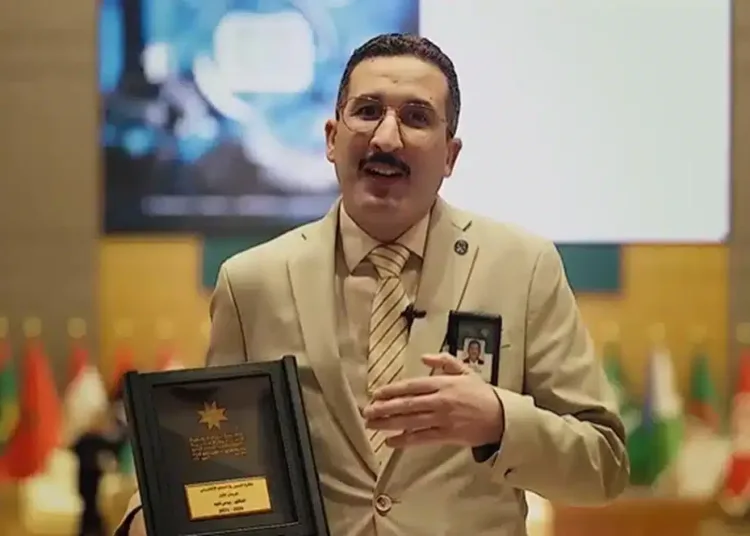
The award is in recognition of the professor’s efforts in scientific research, teaching, and online learning.
Moroccan scholar and researcher Younes Nafid received this week the Excellence Award in Online Learning from Naif Arab University for Security Sciences in Saudi Arabia.
He received the award on Thursday, recognizing his academic excellence and efforts in scientific research, teaching, and learning.
Nafid is a professor in the Department of Criminal Law at the College of Criminal Justice and Forensic Sciences in Riyadh. He also serves as an advisor for scientific research and innovation at the same university.
The Moroccan scholar authored various books and studies, and also supervised research projects and doctoral theses.
A PhD in Criminal Law and Forensic Sciences from Mohammed First University in Oujda, Nafid previously worked in Moroccan universities as a professor, including Cadi Ayyad University and Chouaib Doukkali University.
At the award ceremony, the Saudi university celebrated the Moroccan professor and his fellows, honoring the “outstanding efforts in the fields of scientific research, teaching, and online learning, in line with the university’s strategic vision to enhance the academic environment and support the Arab security system.”
In addition to Nafid, several Moroccan professors and teachers were honored on an international scale for their efforts, contributing to enhancing research, teaching, and learning.
In January, Messaoud Ariba, a Moroccan teacher, received an award at the Global Teacher Awards in New Delhi.
Ariba was the sole representative of both North Africa and the Arab world at large, earning recognition from thousands of applicants during the ceremony.
“For me, this is not just about personal achievement but about honoring the incredible work of all those shaping education in the country,” Ariba said.
In February, Moroccan professor Anasse Bari received the Dr. Martin Luther King Jr.Faculty Award for 2025 at New York University. The award recognizes leadership work and commitment to justice and fairness.
In a statement to Morocco World News, Bari said he dedicates the award to his fellow Moroccans.
“Every day in my classroom, I encourage my students to use the skills they have learned at New York University to serve the world,” Bari said, noting that his students are finding “new ways” to use AI and data science to improve the world.
All 4 Saudi contestants won awards, including a silver medal and a bronze
This year’s competition was held in Pristina, Kosovo, on April 11-17
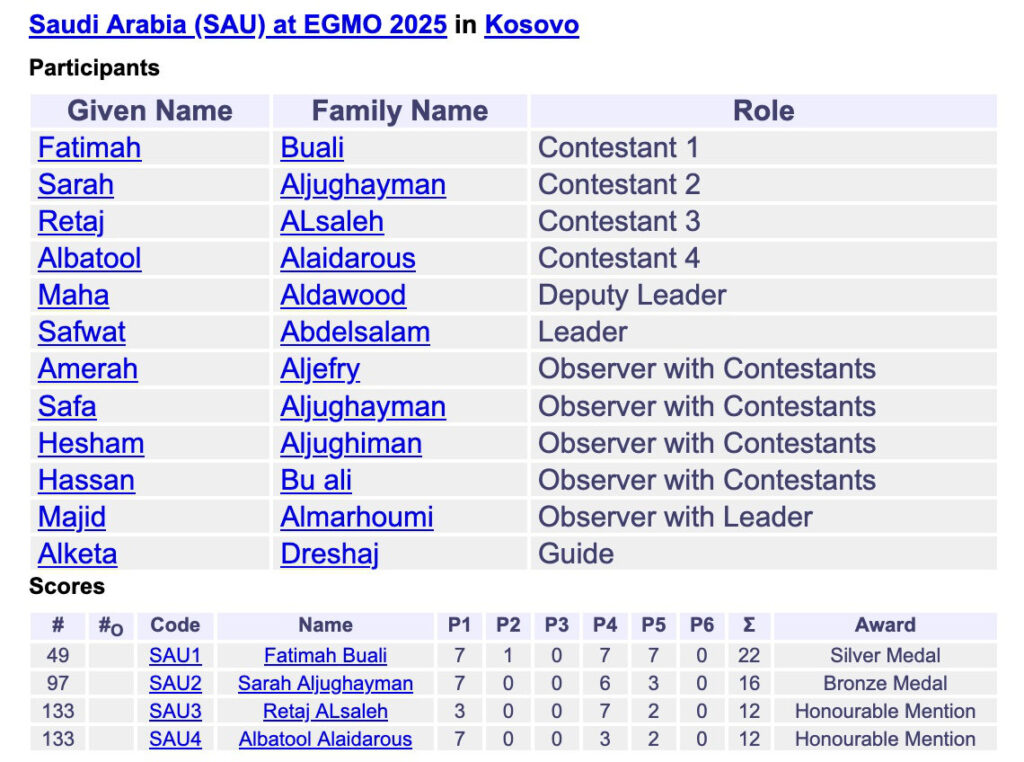
Saudi Arabia’s math team won four awards in the recently concluded 2025 European Girls’ Mathematical Olympiad (EGMO).
The April 11-17 competition, hosted this year in Pristina, Kosovo, featured 217 female students representing 56 countries.
All four Saudi contestants won awards, with Fatimah Buali capturing a silver medal, Sarah Aljughayman winning a bronze, and Retaj Alsaleh and Albatool Alaidarous both garnering an honorable mention, according to the EGMO site.
The latest score has raised the Kingdom’s medals tally in the annual competition to 36 awards, including 2 gold medals, 7 silver medals, 15 bronze medals, and 12 certificates of appreciation.
The Kingdom was represented by the King Abdulaziz and His Companions Foundation for Giftedness and Creativity (Mawhiba), which screens and prepares Saudi children in international scientific competitions and Olympiads.
Saudi Arabia is among the non-European countries that have regularly participated in annual EGMO event, which started in 2012. Among the other regular participants are Japan, China, Australia, Brazil and the United States.
It features an exhibition, seminars, training courses, linguistic proficiency tests, and student competitions in partnership with Spanish universities and academic institutions.
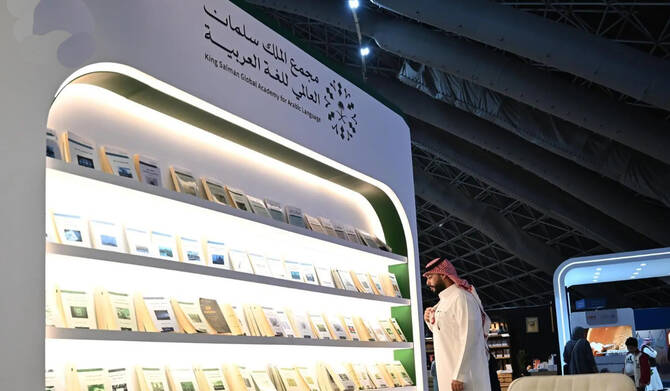
The King Salman Global Academy for the Arabic Language is hosting the Arabic Language Month program in Spain throughout April, the Saudi Press Agency reported.
The event is a comprehensive initiative aimed at developing Arabic language curricula, promoting the language, and highlighting Saudi Arabia’s efforts in this field.
The progeam is designed to strengthen academic and educational ties between Saudi Arabia and international institutions, the SPA reported.
It features an exhibition, seminars, training courses, linguistic proficiency tests, and student competitions in partnership with Spanish universities and academic institutions.
As part of the academy’s global Arabic teaching program, the initiative has been implemented in countries such as Uzbekistan, Indonesia, China, India, France, Brazil, Thailand and Malaysia, expanding its international reach and fostering global partnerships.
source/content: arabnews.com (headline edited)
______________
The program is designed to strengthen academic and educational ties between Saudi Arabia and international institutions. (SPA)
His team’s research benefits industries such as automotive, power grids, satellites, military, and healthcare.
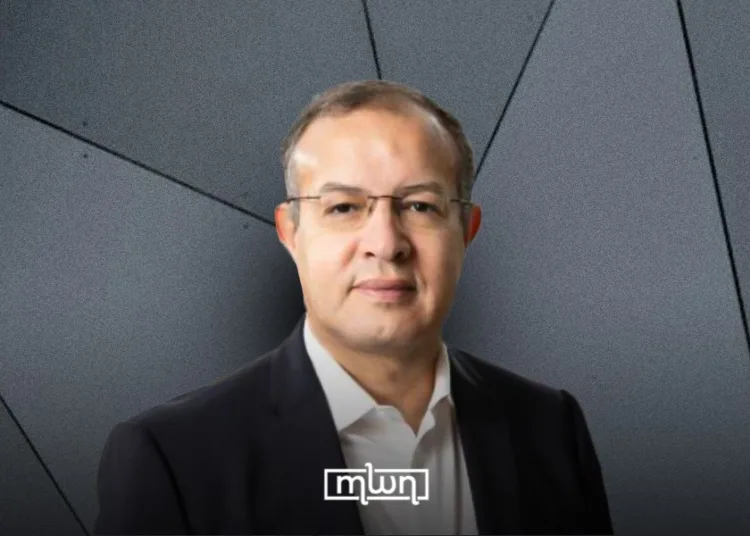
Khalil Amine, a Moroccan materials scientist, has been elected to the National Academy of Engineering of the United States for his contributions to battery and energy storage technologies.
The recognition comes for his leadership in the field of materials science, specifically in the development of batteries and energy storage devices.
Amine, who also serves as a professor at the University of Chicago, is among 128 members and 22 international members inducted into the NAE class of 2025.
“I am very delighted to be selected as a member of the National Academy of Engineering,” said Amine. “This is a recognition not only for me, but also for all my co-workers and collaborators around the world, as well as Argonne, which has provided an unmatched, state-of-the-art capability to do excellent work.”
Amine leads the Advanced Battery Technology team at Argonne, where his research focuses on the development of advanced chemistries, materials, and battery systems. His team’s work spans several industries, including automotive, power grids, satellites, military, and medical applications.
A key focus of Amine’s research is the creation of new cathodes, anodes, solid-state electrolytes, and additives for lithium-ion batteries, as well as exploring “beyond-lithium” batteries that use alternative chemistries for energy storage.
Amine’s significant contributions to the field of battery technology have made him a leading figure in materials science. He holds more than 200 patents or patent applications in the field, and he was for 23 years the most cited scientist in battery technology globally.
His accomplishments have earned him numerous accolades, including the prestigious Global Energy Prize in 2019. Amine is also a member of several prestigious scientific organizations, including the National Academy of Inventors, the European Academy of Sciences, and the Electrochemical Society, among others.
Born in Morocco, Amine earned degrees in chemistry and materials science from the University of Bordeaux. After his academic training, he joined Argonne in 1998, bringing with him experience gained from research positions in Belgium and Japan.
His innovative work has played a pivotal role in advancing energy storage technologies that have far-reaching applications in today’s technological landscape.
The National Academy of Engineering, founded in 1964, provides independent analysis and advice on engineering matters, offering leadership and insight into complex global challenges. Amine, along with other members of the NAE class of 2025, will be formally inducted at the Academy’s annual meeting in October.