Arabs & Arabian Records Aggregator. Chronicler. Milestones of the 25 Countries of the Arabic Speaking World (official / co-official). AGCC. MENA. Global. Ist's to Top 10's. Records. Read & Enjoy./ www.arabianrecords.org
Category: Non-Resident / PAO (Persons of Arab Origin / Descent)
Melliti, 23, plays a 17-year-old in a coming-of-age tale centred on a teenage Muslim girl in Paris who faces a struggle with her identity and religion.
French artist of Maghrebi descent Nadia Melliti won the best actress award at the Cannes film festival for her first-ever performance in a film, “The Little Sister” by Hafsia Herzi.
Melliti, 23, plays a 17-year-old in a coming-of-age tale centred on a teenage Muslim girl in Paris who faces a struggle with her identity and religion.
She beat Hollywood star Jennifer Lawrence in “Die My Love” by Lynne Ramsay, Japanese child revelation Yui Suzuki in “Renoir” by Chie Hayakawa and Elle Fanning in “Sentimental Value” by Joachim Trier.
“It’s a huge honour to be here tonight and to have been able to take part in this very beautiful project,” she said clutching her award on stage.
“I have such a feeling gushing through me right now. I can’t describe it but it’s really incredible,” she said as the director sobbed in the audience.
“Thank you Mum. I know you’re watching and I hope you are very proud and happy,” she said.
Melliti is a French student and amateur football player who was spotted in the street.
Before walking the red carpet for the premiere of Hafsia Herzi’s “The Little Sister”, she was preparing for exams.
In the coming-of-age tale, she plays 17-year-old Fatima, a Muslim girl in Paris struggling with her identity and religion as she explores her sexuality.
“I’ve never done any theatre or cinema,” she said.
But she said she immediately empathised with the character when she read the script, based on a partly autobiographical novel of the same name by French writer Fatima Daas.
“I identified hugely with Fatima, her surroundings and origins. My mother hails from an immigrant background,” she said.
“My roots are Algerian. I also have sisters.”
Melliti said she specifically related to the film’s theme of “emancipation” in the film.
“When I was younger I wanted to play football. I still do today,” said the actor. “I wanted to take up the sport, one people say is masculine and in which men are over-represented.
“And when I took that home, there was this emancipation, even if for Fatima it was different, more linked to her intellect and sexuality,” she added.
Melliti said she could not believe her luck when she was spotted by a casting agent in the street near a large shopping mall in central Paris.
“I was walking in the street and (she) called out to me,” she said.
At first “I thought she was a tourist and I wondered if my English would be up to scratch.”
Nadia Melliti, winner of the Best Actress award for her role in the film La petite dernière (The Little Sister), poses during a photocall after the closing ceremony of the 78th Cannes Film Festival in Cannes, France, May 24, 2025. REUTERS
We often come across news reports about Egyptians abroad who have attained prominent leadership positions, yet we rarely give them a second thought – unless, of course, they are movie stars like Rami Malek or football legends like Mohamed Salah.
During a recent visit to Canada, I was struck by how many university presidents and faculty deans were of Egyptian origin of whom, for the most part, we have never heard.
A couple of days ago, my attention was caught by two items that were headline news everywhere, while we barely paid them any heed. The first is the appointment of the Egyptian-American Sherif Soliman as the New York City budget director. This is in the global capital of finance, home to Wall Street and the New York Stock Exchange, the largest stock exchange in the world. Soliman is a highly regarded economist with more than thirty years of financial experience. In the course of his career, he has rescued several major commercial institutions from bankruptcy and succeeded in reducing the debt of others by record proportions.
The recently elected New York mayor, Zohran Mamdani, said that Soliman far surpassed rival candidates for budget direct. Soliman, for his part, said, “I feel a deep sense of pride joining the administration of the first Muslim mayor of the city of New York.” He will be managing a budget of approximately $121 billion – one of the largest municipal budgets in the world.
Soliman was born to Egyptian parents who emigrated to New York 45 years ago. He is married to the Egyptian Hanan Thabet. They have two children, Lina and Ziad.
At around the same time, on the other side of the Atlantic, the British Muslim Laila Cunningham announced her intent to run for Mayor of London in the British capital’s 2028 mayoral race. She will be the first candidate of Egyptian origin to seek the post. Born in London to parents who emigrated from Egypt in the 1960s, she studied law and joined the Conservative Party, then switched to Reform UK. A controversial figure, she advocates empowering and increasing the police force to curb crime, which she claims has turned London into an unsafe city. She also calls for combating what she terms “Islamic terrorism.” She is married to an American and is the mother of seven children.
* A version of this article appears in print in the 15 January, 2026 edition of Al-Ahram
His Highness Sheikh Mohammed bin Rashid Al Maktoum, Vice President, Prime Minister and Ruler of Dubai, honoured the six winners of the Great Arab Minds 2025 edition at the Museum of the Future in Dubai.
Great Arab Minds is the largest Arab initiative dedicated to celebrating outstanding Arab achievement, highlighting contributions to advance human civilisation, support the expansion of scientific and knowledge-based endeavours, and showcasing the creative impact of Arab talent across the region and globally.
His Highness affirmed that the Great Arab Minds initiative was designed to expand the horizons for established and emerging Arab talent, nurturing and investing in their potential; recognise Arab achievement across research, development, innovation, technology, culture, and architecture; and to reinforce a culture of pride and sustained support for Arab individuals who have inspired significant progress in key fields.
His Highness Sheikh Mohammed said, “Today, we honour Great Arab Minds in recognition of achievements that advance civilisation and build societies. From the Museum of the Future in Dubai, we reaffirm our support for Arab talent committed to innovation, creativity, and excellence.”
His Highness further said, “We congratulate the winners of the Great Arab Minds 2025: Professor Abbas El Gamal in the Engineering and Technology category, Dr. Nabil Seidah in the Medicine category, Professor Badi Hani in the Economics category, Professor Majed Chergui in the Natural Sciences category, Dr. Suad Amiry in the Architecture and Design category, and Professor Charbel Dagher in the Literature and Arts category. We encourage them to continue their journey of achievement and contribution, serving as true role models for younger generations in our region and around the world, inspiring them to shape a better future through science and knowledge.”
His Highness expressed his confidence in the ability of Arab talent to drive progress in scientific research, knowledge creation, and the cultural sector, supported by expertise, institutional support, and the ambition of young people across the region.
Focused on a better future
Sheikh Mohammed noted that the Great Arab Minds initiative will continue to highlight the achievements of Arab individuals who look to the future with optimism and pursue ambitions that recognise no limits.
The awards ceremony was attended by H.H. Sheikh Maktoum bin Mohammed bin Rashid Al Maktoum, First Deputy Ruler of Dubai, Deputy Prime Minister and Minister of Finance of the UAE; H.H. Sheikh Ahmed bin Mohammed bin Rashid Al Maktoum, Second Deputy Ruler of Dubai and Chairman of the Dubai Media Council; H.H. Sheikh Ahmed bin Saeed Al Maktoum, President of the Dubai Civil Aviation Authority, Chairman of Dubai Airports, and Chairman and Chief Executive of Emirates Airline and Group; His Highness Sheikh Mansoor bin Mohammed bin Rashid Al Maktoum, President of the UAE National Olympic Committee; H.H. Sheikha Latifa bint Mohammed bin Rashid Al Maktoum, Chairperson of the Dubai Culture and Arts Authority (Dubai Culture); and H.H. Sheikh Mohammed bin Rashid bin Mohammed bin Rashid.
Mohammed bin Abdullah Al Gergawi, Minister of Cabinet Affairs and Chair of the Higher Committee for the Great Arab Minds initiative, was among numerous ministers and senior officials in attendance along with scientists, academics and diplomats.
His Excellency Al Gergawi stated that the Great Arab Minds initiative launched by His Highness Sheikh Mohammed represents a profound recognition of Arab achievement across disciplines, and a significant strategic investment in empowering talent and encouraging renewed contributions to Arab intellectual and scientific progress.
He added that the Great Arab Minds initiative embodies Sheikh Mohammed’s vision to inspire confidence in Arab capabilities and motivate individuals to take an active role in shaping their societies and the future of a region that has long contributed to human civilisation through science, literature, thought, and architecture.
‘Powerful message’
He praised the achievements of the Great Arab Minds awardees across medicine, engineering, technology, sciences, architecture, arts, and literature, saying, “Your presence today on the Great Arab Minds 2025 platform at the Museum of the Future sends a powerful message to hundreds of millions of young people to pursue excellence, achievement, and leadership in research, innovation, creativity, and knowledge, and to help shape a brighter future for Arab and human civilisation.”
The award recognised one winner in each of its six categories: Medicine, Economics, Engineering and Technology, Natural Sciences, Architecture and Design, and Literature and Arts.
In Medicine, Dr. Nabil Seidah was honoured for his medical and research achievements in cardiovascular health and cholesterol regulation.
In Economics, Professor Badi Hani was awarded for his pioneering contributions to econometrics and the development of economic analysis tools, particularly in panel data analysis. His work enabled more accurate and in-depth analysis by combining data across multiple time periods and sources.
In Engineering and Technology, Professor Abbas El Gamal was awarded for his pioneering contributions to network information theory.
In Natural Sciences, Professor Majed Chergui was honoured for his contributions to understanding light-matter interactions, developing techniques and applications that enable the study of ultrafast molecular and material dynamics at the atomic level.
In Architecture and Design, Dr. Suad Amiry was honoured for her contributions to preserving Palestinian architectural heritage through documentation, restoration, and adaptive reuse of historical buildings.
In Literature and Arts, Professor Charbel Dagher was honoured for a body of work that constitutes a key reference in the study of Arab and Islamic arts, Arabic calligraphy, and modern visual arts.
Professor Abbas El Gamal said, “I extend my sincere gratitude to His Highness Sheikh Mohammed bin Rashid Al Maktoum for his vision in launching Great Arab Minds. Being honoured in this way is deeply meaningful to me.”
Professor Majed Chergui said, “I am Algerian of Syrian origin, born in Morocco and raised in Algeria and Lebanon. In this way, the Arab world comes together in who I am. For me personally, this award is not only the highest recognition of my achievements; it touches me deeply because it comes from an Arab country.”
Dr. Suad Amiry said, “In 1981, when I decided to live in the city of Ramallah, my aim was to study traditional architecture in rural Palestine. Ten years later, I founded the Riwaq Centre, which since then has been dedicated to documenting, restoring, and rehabilitating architectural heritage in Palestine. Winning this award is a great honour for me and for the Riwaq Centre.”
Professor Badi Hani said: “This award recognises not only my work, but also the people and places that shaped me, my family, my mentors, my city, and the Arab world that nurtured my earliest aspirations.”
Dr. Nabil Seidah said, “My father’s adage, that knowledge is something no one can ever take away from you, has been the principle that guided me throughout my journey. Your trust represents a powerful motivation for Arab scientists to serve as role models for future generations, and I pledge to continue serving science with the same passion that has always driven me.”
Professor Charbel Dagher said: “Commitment to the Arabic language has remained a defining hallmark of everything I have done: teaching, writing, and research, to the point that I live within Arabic itself. We cannot exist outside our language or our culture. Allow me to share this award with those who supported me, and my gratitude extends to everyone who has worked and continues to work to ensure that Arabic remains a living language of science, knowledge, and culture.”
The awardees were chosen by six high-level specialised committees, one for each category. Abdulla bin Touq Al Marri, Minister of Economy and Tourism, chaired the Economics Committee; Sarah Al Amiri, Minister of Education, chaired the Engineering and Technology Committee; Mohammed Ahmed Al Murr, Chairman of the Board of Directors of the Mohammed bin Rashid Al Maktoum Library Foundation, chaired the Literature and Arts Committee; Dr. Amer Sharif, Chief Executive Officer of Dubai Health and President of the Mohammed Bin Rashid University of Medicine and Health Sciences headed the Medicine Committee; Professor Sehamuddin Galadari, Senior Vice Provost-Research and Managing Director of the Research Institute at New York University Abu Dhabi chaired the Natural Sciences Committee; Professor Hashim Sarkis, Dean of the School of Architecture and Planning at the Massachusetts Institute of Technology chaired the Architecture and Design Committee.
In addition to the committee chairs, the specialised committees also included Essa Kazim, Governor of the Dubai International Financial Center; Dr Mohammed Madhi, Dean of the College of Business and Economics at UAE University; Dr Rabah Arezki, Chief Economist for the Middle East and North Africa (MENA) region at the World Bank and Senior Fellow at Harvard University’s John F. Kennedy School of Government; Ferid Belhaj, Fellow at the Policy Center for the New South; and Dr Jihad Azour, Director of the Middle East and Central Asia Department at the International Monetary Fund.
The committees also included Professor Ismael Al Hinti, President of Al Hussein Technical University; Adel Darwish, Regional Director of the International Telecommunication Union; Dr Ahmed Zayed, Director of the Bibliotheca Alexandria; His Excellency Dr. Alawi Alsheikh-Ali, Director General of Dubai Health Authority; Professor Elias Zerhouni, Professor Emeritus at Johns Hopkins University; Dr Noureddine Melikechi Dean of the Kennedy College of Sciences and Professor of Physics at the University of Massachusetts Lowell; Professor Nader Masmoudi, Professor at the Courant Institute of Mathematical Sciences at New York University Abu Dhabi; Dr Latifa Elouadrhiri Laboratory Directed Research Staff Scientist at the Thomas Jefferson National Accelerator Facility; and Professor Dr Jehane Ragai, Emeritus Professor of Chemistry at The American University in Cairo.
The specialised committees also included Dr Adrian Lahoud, Dean of the School of Architecture at the Royal College of Art; and Professor Ali Malkawi, Professor of Architectural Technology, Director of the Doctor of Design Studies Program, and Founding Director of the Harvard Center for Green Buildings and Cities.
The Nominations Committee included Huda Al Hashimi, Deputy Minister of Cabinet Affairs for Strategic Affairs; Chucrallah Haddad, Partner and Head of Advisory at KPMG Lower Gulf; Abdulsalam Haykal, President and Founder of Majarra Company; Ali Matar, Head of LinkedIn Middle East and North Africa and Emerging Markets in Africa and Europe; and Saeed Al Nazari, Secretary-General of the Great Arab Minds Initiative.
Widely known as the ‘Arab Nobel,’ the Great Arab Minds initiative recognises distinguished Arab achievement and highlights extraordinary contributions that reflect the region’s historic role in advancing knowledge and human progress globally. For a third consecutive edition, the initiative continues to strengthen its position as a platform for celebrating Arab creators and as a point of reference for promising Arab talent, by highlighting achievements that inspire young people and contribute to expanding Arab participation in global knowledge and civilisational advancement.
Inspired by his childhood in Amman, Malek AlQadi’s latest project, ‘The Folly Mojave’, injects desert minimalism with sustainable luxury.
Born in Amman, Jordan, raised in Florida, and based in Los Angeles, Jordanian-American architect Malek AlQadi has dedicated his life to his follies. In architecture, a folly is a building that serves no purpose aside from aesthetics. But AlQadi’s follies? They are worlds unto themselves; portals to places only visited in daydreams and memories.
His first folly came about as part of his thesis project, during which he designed and executed a humble, fully self-sustaining stay in California’s Joshua Tree National Park. Though his design language has evolved over the years, his core principles remain the same: sustainability, minimalism, and a reconnection with nature, all rooted in a childhood spent marvelling at Jordan’s deserts.
In Jordan, ancient structures like Petra dominated his early experiences. In Florida, his exposure to contrasting environments shaped his understanding of space, structure and purpose. AlQadi’s obsession with follies finds its roots in his desire to push the boundaries of design. He’s not interested in the grandiosity of skyscrapers or the utility of commercial buildings. Instead, his work delves into the ethereal, focusing on creating spaces that encourage introspection, exploration and escape.
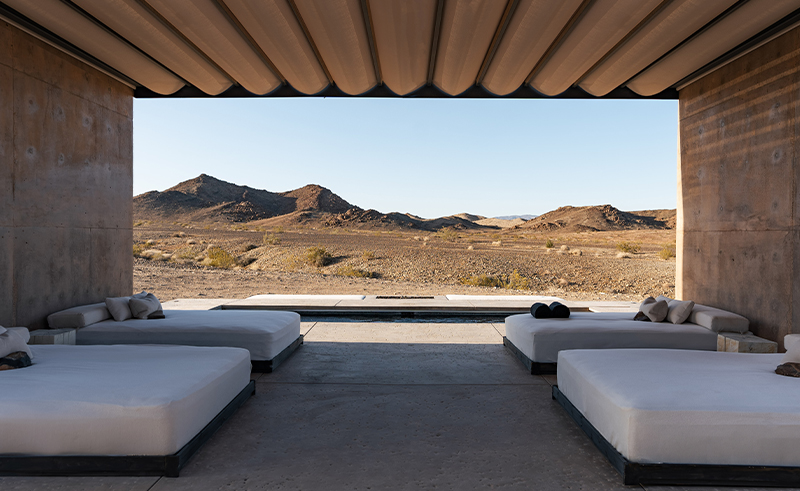
The Folly Mojave, a series of standalone suites dotted across 200 acres at the intersection of The Mojave National Preserve and Joshua Tree National Park, is AlQadi’s most recent and most ambitious project to date. The project is a retreat that blends into the arid environment while providing visitors with an isolated, immersive experience. “A lot of it was navigating childhood memories and connecting them with real-life scenarios and architectural elements, tying vastly different places in the world together, yet still grounded in similar principles and environments.” AlQadi tells SceneHome.
For AlQadi, the desert isn’t just a backdrop. It’s a critical component of the project, shaping the way the Folly Mojave interacts with the land. The retreat’s location in such an extreme environment is intentional; it encourages guests to detach from their everyday lives and engage more fully with their surroundings.
At first glance, the Folly Mojave may appear simple, but its simplicity belies the thoughtfulness of its design. The structure is fully off-grid, powered by solar energy, and equipped with self-sustaining water systems. The retreat is designed for minimal impact on the surrounding environment. Inside, the space is surprisingly open, with large windows that frame the vast desert views.
“A big part of the experience is having less light pollution and being able to see the stars at night. All of that fed into the idea of disconnection,” AlQadi explains. “It’s about having the luxury of time and space to relax and take in nature, which, at its core, is the ultimate healer.”
Malek AlQadi emphasises the “site-responsive” nature of his architectural philosophy. Unlike architects who adhere to a singular aesthetic, AlQadi’s approach is shaped by the environment he works within, adapting to the unique qualities of each location. “No two projects are ever the same,” he explains, yet there’s always a recognisable touch that connects his work. Symmetry, the use of natural materials, and a minimalist design language are core to his style, while he doesn’t shy away from incorporating brutalist elements when appropriate.
For AlQadi, creating spaces that resonate beyond the present – lasting decades or even centuries – is a key part of his architectural philosophy. “Guests often describe the experience as surreal, unique and unplugged,” AlQadi reflects. “Many mention feeling a deep connection while staying there. It’s rewarding to know that people from all walks of life have been able to share in that experience.”
While the world is hailing New York mayor-elect Zohran Mamdani for his win, his artist wife, Rama Duwaji is now also in the spotlight.
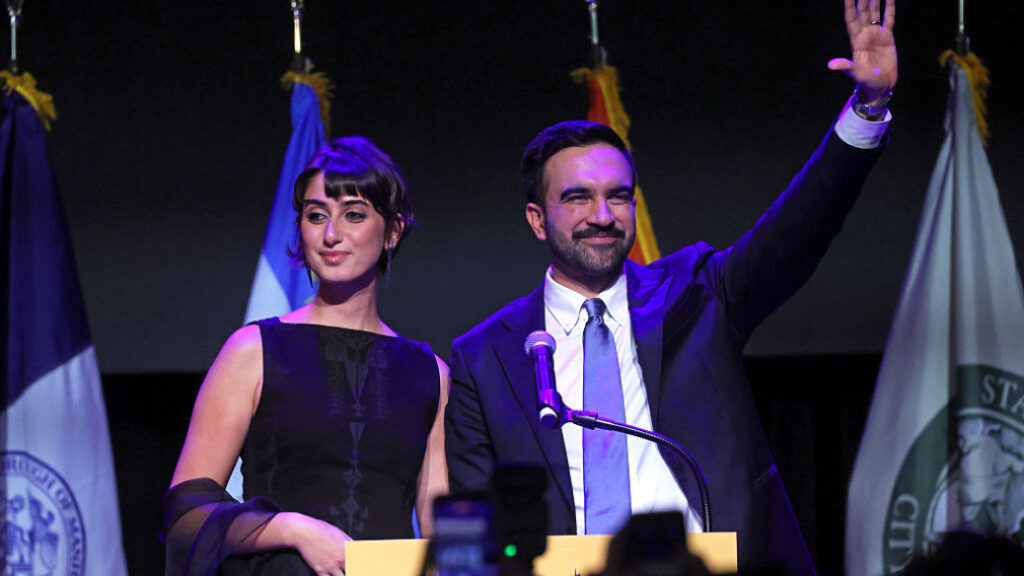
With Zohran Mamdani making history on 4 November after being elected New York’s first Indian-American and Muslim mayor, attention has turned to his wife, First Lady Rama Duwaji.
Duwaji was born in Houston, Texas, in the US but her parents are originally from Damascus, Syria, and she spent most of her childhood in Dubai after relocating there. She returned to the US in 2016.
Dubbed a “modern-day Princess Diana”, the 28-year-old works as an illustrator and animator in Brooklyn, New York, graduating from Virginia Commonwealth University in 2019 with a Bachelor of Arts in Communications, then moving to New York City in 2021 to pursue a career in art.
Her work has been featured by Spotify, The New Yorker, The Washington Post, the BBC, Apple, and the Tate Modern in London.
After meeting on dating app Hinge in 2021, while the now-mayor was a member of the state assembly, Duwaji and Mamdani tied the knot in a private Muslim religious ceremony in 2024, followed by a civil ceremony in New York City Hall the following year.
While the illustrator has kept a low profile, reportedly turning down interviews and mostly sharing her work across social media, she paid tribute to Mamdani on Instagram after winning the primary in July.
Mamdani has previously praised his wife as “an incredible artist who deserves to be known on her own terms”.
Pro-Palestine art
Along with Arabic culture and feminist themes, Duwaji frequently uses her art to speak out about current events and politics, including Israel’s war on Gaza and immigration issues, such as the heavy-handed activities of ICE, which has been conducting mass deportation raids in the US since Trump’s appointment.
In May, Duwaji created an animation of a young Palestinian girl holding a large empty pot with the words “not a hunger crisis”, followed by a transition into drawings of several people also holding empty vessels with texts reading “it is deliberate starvation”.
“As I was making this, Israel has been bombing Gaza nonstop with consecutive airstrikes. Keep your eyes on Gaza and support”, the artist said in the caption.
Duwaji had also created an illustration in support of pro-Palestinian activist Mahmoud Khalil, who was detained by ICE over his activism. She called it “an attack on freedom of speech, and sets a scary f**king precedent for anyone who speaks up for what’s right”.
Following her husband’s win, the artist wore a black top made by Palestinian-Jordanian designer Zeid Hijazi on stage as he delivered his winning speech. Hijazi’s designs fuse ancient folklore with Arab futurism.
MAGA supporters were also quick to target Duwaji after she publicly mourned the death of Palestinian influencer Saleh al-Jafarawi, who was accused of “celebrating” the 7 October attacks.
Mandani has been quick to defend his wife against “right-wing trolls”, who are “trying to make this race – which should be about [the people] – about her”.
Attacks by right-wingers
Like her partner, Duwaji has also been subjected to attacks from American right-wing personalities and the media, particularly the New York Post, which described the illustrator as “aloof”, claiming she “quietly steered” her husband’s campaign from behind the scenes.
MAGA supporters were also quick to target the artist after publicly mourning the death of Palestinian influencer Saleh al-Jafarawi, who was accused of “celebrating” the 7 October attacks.
Mandani has been quick to defend his wife against “right-wing trolls”, who are “trying to make this race – which should be about [the people] – about her”.
Saudi-American citizen Omar Yaghi, along with scientists Susumu Kitagawa and Richard Robson, has won the 2025 Nobel Prize in Chemistry “for the development of metal–organic frameworks”, the award-giving body said on Wednesday.
Born in Jordan to Palestinian parents, Yaghi was granted Saudi citizenship in 2021 through a royal approval that had been issued to grant Saudi citizenship to several prominent specialists from different fields.
The move was in line with the objectives of Saudi Vision 2030, including encouraging talented individuals to relocate to the Kingdom, localizing foreign investment, and “creating an appropriate social and investment environment,” according to a statement carried by the Saudi Press Agency at the time.
The more than a century-old prize is awarded by the Royal Swedish Academy of Sciences and the winners share 11 million Swedish crowns ($1.2 million), as well as the fame of winning arguably the world’s most prestigious science award.
“Through the development of metal-organic frameworks, the laureates have provided chemists with new opportunities for solving some of the challenges we face,” the award-giving body said in a statement.
The Chemistry Nobel was the third prize announced in this year’s crop of awards, in keeping with tradition, following those for medicine and physics announced earlier this week.
Established in the will of Swedish inventor and businessman Alfred Nobel, the prizes for achievements in science, literature and peace have been awarded since 1901, with a few interruptions mostly due to the world wars.
Nobel was himself a chemist and his developments in that field helped underpin the wealth he amassed from his invention of dynamite in the 19th century. The economics prize is a later addition funded by the Swedish central bank.
Sometimes overshadowed by more famous laureates in the fields of physics, literature and peace, the chemistry awards have still recognized many influential discoveries such as nuclear fission, DNA sequencing techniques, and yeast.
Last year’s chemistry award went to US scientists David Baker and John Jumper and Briton Demis Hassabis for work on decoding the structure of proteins and creating new ones, yielding advances in areas such as drug development.
Saudi-American citizen Omar Yaghi, along with scientists Susumu Kitagawa and Richard Robson, has won the 2025 Nobel Prize in Chemistry “for the development of metal–organic frameworks”, the award-giving body said on Wednesday. (X @SPAregions)
While researching connections between African Americans and the Sudan, University of Washington history professor came upon a name from the school’s past: Andrew Brimmer.
Born in Louisiana in the 1920s, Brimmer made his way to the Pacific Northwest when he joined the U.S. Navy during World War II and came to Bremerton, Washington. From there, he earned two degrees from the UW, where he studied economics before moving on to Harvard Business School.
Then, in 1966, Brimmer’s phone rang.
“I got a call in my office from [William] Marvin Watson who’s [President Lyndon B.] Johnson’s appointment secretary who said ‘the boss wants to see you,’ Brimmer recalled, according to The History Makers. “And I went over to the White House.”
Johnson was about to appoint him to the board of governors for the Federal Reserve, a powerful position that helps set the country’s economic policy. He would become the first African American in that role.
Brimmer’s trailblazing career in public service — and a connection to the Sudan — is something that’s fascinated Tounsel, who heads the African Studies Program at UW.
“As an African American, I asked myself, ‘Well, you know, whose shoulders am I standing on? You know, whose kind of genealogy am I a part of?’ I can’t be the only African American ever, right, who’s been interested in modern Sudan and has traveled to the Sudan? And so that really kind of sparked my interest,” Tounsel said.
“Historically, the Sudan has always had a really important role in African American pride.,” Tounsel continued.
“There was an ancient civilization just south of Egypt called Kush. And people like historian Michael Gomez have talked about the fact that Kush represented this example, of a kind of, pre-transatlantic slave trade example of African glory. The whole ‘We come from kings and queens’ narrative. But it’s one thing for ancient Sudan to have such a prominent place in kind of African American thought, but what about modern Sudan?”
Sudan won its independence from Great Britain and Egypt in 1956. Brimmer was subsequently invited to join a U.S. delegation to travel to the Sudan to explore the idea of building the country’s first post-colonial national bank.
As part of his research, Tounsel got a chance to page through Brimmer’s diary, in which Brimmer describes how many of the Sudanese were taken aback when they met him. Here was someone who looked like them, Brimmer wrote, but came from such a different place.
“You’ve got this, you know, Black man from Jim Crow, Louisiana, engaging with these, you know, formerly colonized, but now newly independent Sudanese citizens,” Tounsel said. “And so I just think that those moments in the archive where he’s talking about that are just so rich.”
Calling Brimmer a “kind of economic genius,” Tounsel described him as a civil servant who entered into and navigated corridors of power.
“Throughout his career, he was really keen on exploring Black economics, in particular,” said Tounsel, reflecting on Brimmer’s contributions as a member of the Reserve’s Board of Governors.
“He was not what, you know, Cornel West has called, kind of, ‘a Black face in a high place’…who is good for the optics, but is not really thinking about how one can use their power and influence in that role to help those disenfranchised people who look like them.”
Brimmer lived to be 86 years old before he died in 2012.
Tounsel profiled Brimmer in his latest book, Bounds of Blackness: African Americans, Sudan, and the Politics of Solidarity, which is due out later this year.
source/content: knkx.org /NPR – Emil Moffat, Freddie Monares (headline edited)
____________
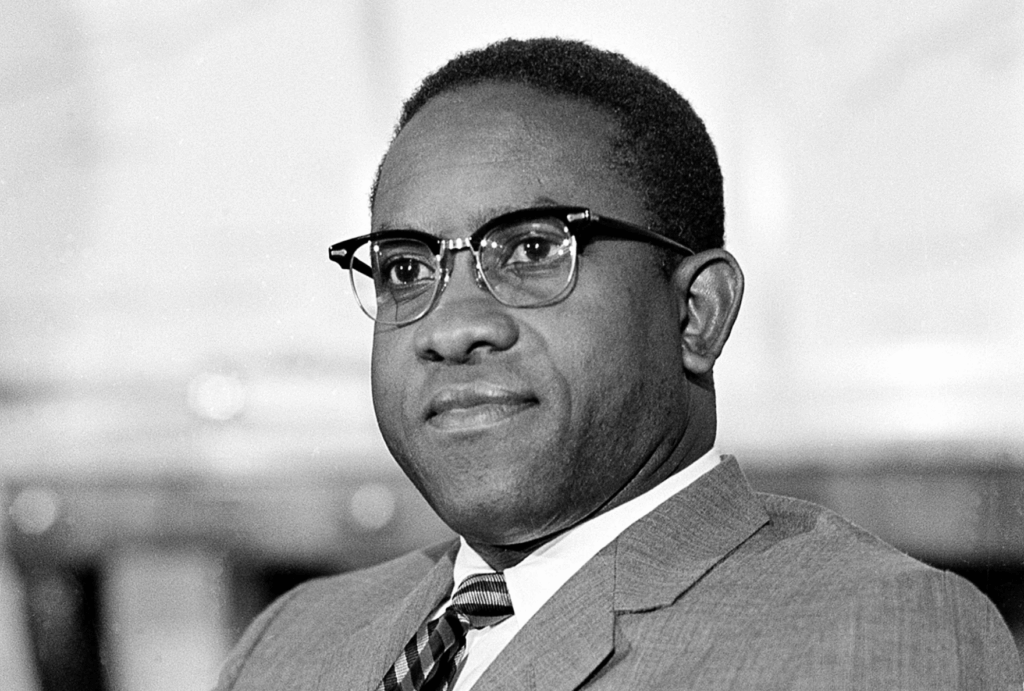
Dr. Andrew F. Brimmer, Harvard graduate and the only Black member of the Board of Governors of the Federal Reserve System, is shown in New York City in 1970.
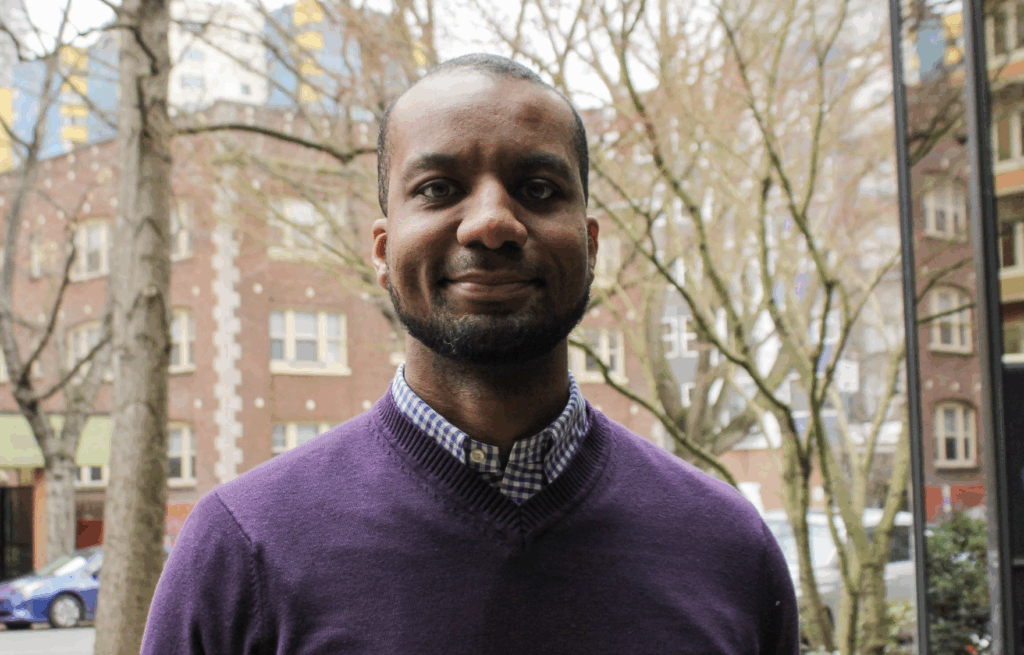
Emil Moffatt / KNKXUW History Professor Christopher Tounsel has written extensively on the connection between African-Americans and Sudan
Arabs are known for having had numerous contributions to civilizations—notably in the fields of Mathematics (Arabs invented Algebra), Astronomy (Al-Biruni discussed the earth’s rotation centuries before it was confirmed by Galileo), and Medicine (Al Razi was one of the first to diagnose diseases like smallpox and measles).
But Arab achievements didn’t end in the Golden Age and have continuously evolved to modern fields, so we’re here to round up some of the lesser-known greatest modern achievements by Arabs..
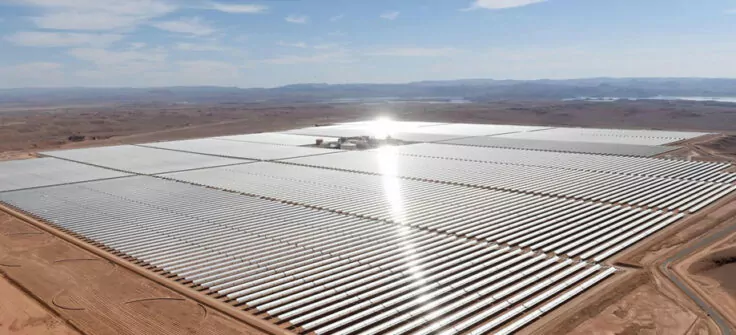
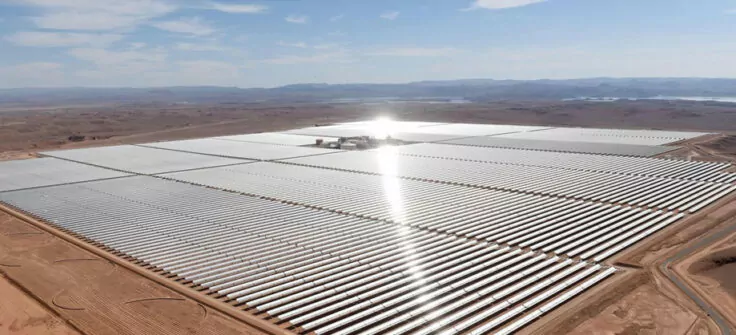
Noor Ouarzazte
Morocco is turning the Sahara Desert into the largest concentrated power complex in the world. The project is currently in progress, due to be complete before the end of 2018.
Arabs in Space
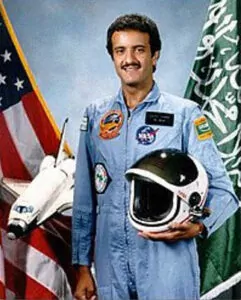
Sultan bin Salman Al Saud became the first Arab in space in 1985 – he was also the first royal astronaut ever. Syrian-born Mohammed Ahmed Faris followed in Al Saud’s footsteps in 1987.
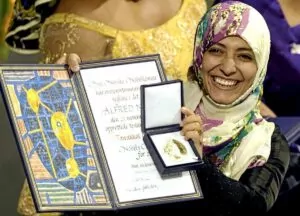
Nobel Peace Prize Winners
Photo credit ODD ANDERSEN/AFP/Getty Images
The Tunisian national dialogue quartet was awarded the Nobel Peace Prize in 2015 for their role in building a democratic state in Tunisia following the Arab Spring.
Yemeni journalist and activist Tawakkol Abdel-Salam Karman preceded the Tunisian National Dialogue Quartet in 2011 as Nobel laureate—she became the first ever Yemini and Arab Woman to win the Peace Prize, as well as the second youngest ever.
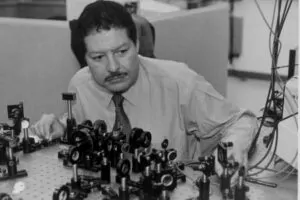
The ‘Father of Femtochemistry”
Femtochemistry is probably something too difficult for most of us to understand—but according to Wikipedia it’s “an area of chemistry that studies chemical reactions on extremely short timescales”. Ahmed Hassan Zewail, and Egyptian-American scientist, is known for pioneering a laser technique that allowed for easier analysis of chemical reactions. He even won a Nobel prize for his work in 1999.
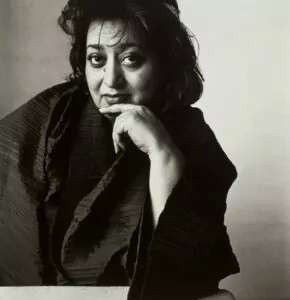
Pritzker Architecture Prize Winners
The late Iraqi-British architect Zaha Hadid was an internationally-acclaimed architect, renowned for her sci-fi creations. Having built some of the world’s most innovative spaces. In 2004, she became the first ever woman to win the prestigious Pritzker Architecture Prize—the most prestigious award in architecture.
Inside the first show dedicated to NYC’s Public Library’s Middle Eastern collections .
Outside The New York Public Library’s Stephen A. Schwarzman Building, the unmistakable scent of a halal food cart mingles with the sounds of various Arabic dialects, while two marble lions stand guard over Fifth Avenue. Inside, entire worlds are waiting to be discovered — including the often-overlooked stories of New York’s Middle Eastern and North African communities.
“Niyū Yūrk: Middle Eastern and North African Lives in the City,” the first exhibition dedicated to the Library’s Middle Eastern collections, opened Oct. 4. It will remain on view in the Ispahani-Bartos Gallery until March 8.
Curated by Hiba Abid, the exhibition contains around 60 objects — photos, books, periodicals and audio — dating from the 1850s to 2024. It centers specifically on the library’s own holdings, rather than attempting to tell a comprehensive history of MENA life in New York, Abid tells Arab News.
Drawing from over a century of rare materials the exhibition uses tangible objects to express the intangible: memory, identity and immigrant culture.
“It’s not a love letter. It’s a realistic letter,” Abid says, adding that these communities have long navigated complex questions of belonging, language, and preservation.
“The communities, from the very beginning, were wondering, ‘Where should our kids go to school? If they go to the public New York schools, they would probably lose their language, but we want them to still know Arabic and be aware of our traditions and values,’” she said.
The exhibition is divided into four chronological sections, designed to help guide visitors of all ages, from young children to seasoned scholars.
The first section, “Roads to New York,” focuses on the earliest waves of immigration. One of the first featured figures is Hatchik Oscanyan — later known as Christopher Oscanyan — an Armenian man born in what is now Türkiye. He came to New York in the mid-19th century and sought to educate Americans about the complexity of the Ottoman Empire. He wrote plays and newspaper articles, as well as “The Sultan and His People,” a book that offers insight into the region’s diverse ethnic and religious makeup.
The second section, “A Life in the City,” explores how immigrant communities began to form and thrive in New York, including in what was once known as Little Syria on Manhattan’s Lower West Side — an area that still exists today. They were entrepreneurs who opened restaurants, shops, and began publishing Arabic newspapers.
One of the most groundbreaking was Al-Hoda, founded by Naoum Antoun Mokarzel and his brother Salloum. “In the basement of Al-Hoda Press, they adapted the linotype machine from Latin characters to Arabic characters, which is very hard (because Arabic is) a cursive language,” Abid says. “By this technological innovation, he actually allowed other presses to form and to publish newspapers, periodicals, and books,” which then circulated throughout North and Latin America — and back to the Middle East.
In other words, New York was instrumental in literally building the Arabic press and exporting news to the Middle East.
Abid emphasizes how vital the library’s historical collections are to telling these stories.
“The library has been collecting these materials since the late 19th century,” she says, adding that many of them have been digitized, enabling audiences to interact with them in a new way.
The third section, “Impressions,” flips the gaze, revealing how Middle Eastern immigrants perceived New York and the US.
“Many immigrant groups embraced American values… but many (Arabs) actually didn’t like New York and didn’t like American values and left after a few years here or after a few months.” The exhibit highlights these ambivalences and the tensions of assimilation.
The final section, “In Our Own Skin,” is the most contemporary and, for Abid, the most personal. It includes raw, vulnerable stories that reflect racial identity, Islamophobia, and resistance. Among the most powerful pieces is the short documentary “In My Own Skin,” directed by Jennifer Jajeh and Nikki Byrd, which features interviews with five Arab women in New York, and was filmed just one month after the events of Sept. 11, 2001.
“The interviews are absolutely amazing. Every time I talk about it, I have goosebumps,” Abid says. “The way they talk about it — it is still very relevant today, as if nothing changed much, except that we’re probably more powerful because we are aware of this and we know how to organize and to fight back. We have the vocabulary now, and the community.”
That spirit of organization is embodied by Malikah, a grassroots collective founded by Rana Abdelhamid in 2010 as a self-defense class for Muslim women on Steinway Street in Queens. The movement has since expanded into a larger project of empowerment, healing, and solidarity — and is featured in the exhibit’s final section. The powerful sound of the athan, or call to prayer, has been important to this cultural shift.
While images of the Statue of Liberty — based on an Egyptian woman — didn’t make the cut, but Abid stresses its significance on each guided tour. On this occasion, though, she wanted to focus the visitors on lesser-known gems.
Having lived in New York for the past four years as a Tunisian immigrant who spent much of her life in France, Abid says she finds New York to be more diverse than anywhere else she has ever lived.
“I live on Atlantic Avenue in the Syrian corner. The things I witnessed here and in Middle Eastern parts of New York, like Astoria, I could never see anywhere else — even Paris,” she says. “When you go to the exhibition, you actually think, ‘Damn! We actually did a lot. And we’re here, you know—we’re here.
“It shows how New York was central to all of these struggles and how New York — thanks to its MENA community — was actually connected and aware. It puts New York on a global map, you know? I think New York is incredible terrain for this. It’s the space for it. That’s what this show is about, ultimately.”
source/content: arabnews.com (headline edited)
______________
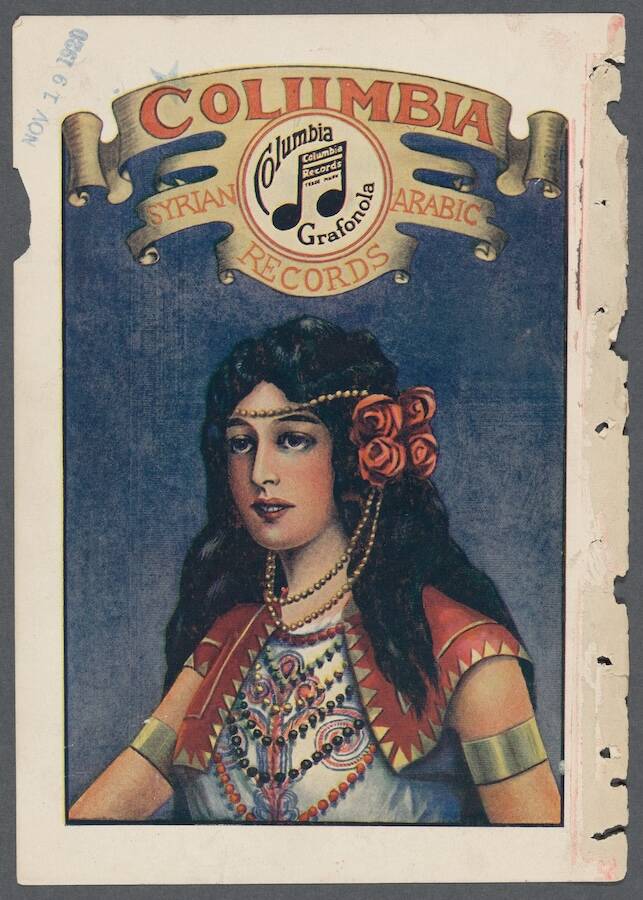
A poster from 1920 promoting Columbia Syrian Arabic Records — Columbia was one of the major American record labels to recognize the commercial potential of ethnic music markets in the US. (Courtesy of The New York Public Library)
The groundbreaking invention aims to aid those with immune deficiencies and provide treatment for chronic infections in intensive care units where antibiotics are ineffective.
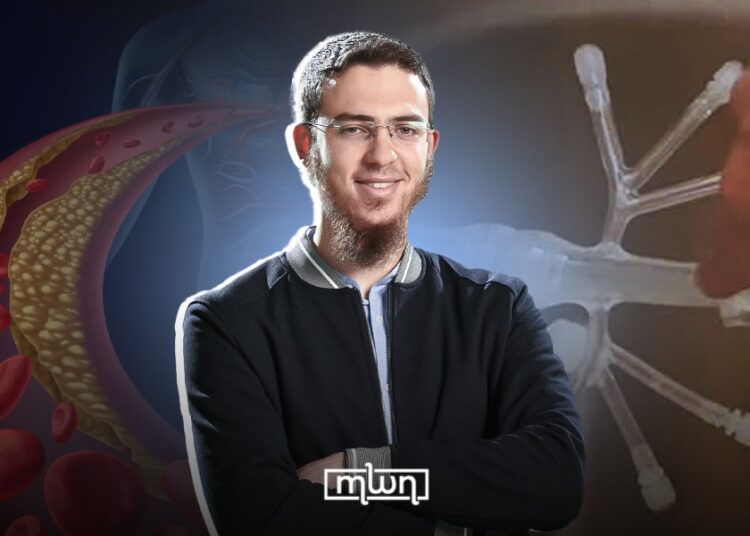
Youssef El Azouzi, a Moroccan neurologist, has announced the successful development of the world’s first device capable of filtering blood from within blood vessels.
The revolutionary invention can direct inflammatory cells and certain white blood cells, potentially helping millions of people suffering from immune deficiencies and improving organ transplant success rates.
In a Facebook post, El Azouzi explained that his device “will contribute to treating tens of millions of people suffering from immune deficiencies and chronic infections in intensive care units where antibiotics are ineffective.” He added that it would “help in organ transplantation without fear of new organ rejection.”
The invention works by redirecting inflammatory cells flowing in the blood away from vessels that nourish newly transplanted organs, preventing rejection.
This mechanism was successfully tested on a 75-kilogram pig in an American laboratory, where the device demonstrated its ability to direct immune cells from the left leg to the right leg without any negative effects on the animal.
“The experiment showed that the device was able to direct immune cells from the left leg to the right leg,” El Azouzi explained in a video documenting his journey to America to register the invention. “This is the first device that controls cell direction from within the vessel itself.”
The scientific experiment involved injecting both thighs of the pig to induce inflammation before placing the device. The device’s role was to direct inflammation-causing cells to only one side, concentrating them there compared to the other side. This would demonstrate the device’s actual control over the pathways of white blood cells flowing in the blood.
El Azouzi revealed that the project cost approximately $250,000 as of March, not including effort and time. “All these resources were provided by benefactors, with no contribution from any public institution or organization,” he noted.
The Moroccan doctor is no stranger to innovation. In 2019, he won the title of best inventor in the Arab world in the 11th season of “Stars of Science” competition in Qatar. His winning invention then was a stent that regulates blood flow for heart patients, offering a potential low-cost alternative to current solutions like heart pumps.
Born in 1991, El Azouzi studied at the American School in Rabat before attending Oxford University for three years. He later moved to Boston University and eventually studied medicine in English at Turkish universities. He is the son of Mustapha El Azouzi, a Moroccan neurosurgeon.
He currently serves as CEO of Aorto Medical Company in the US, where he has been developing this latest invention through three years of hard work, design, and manufacturing.
This Moroccan invention marks a major breakthrough in modern medicine, potentially offering an effective tool for addressing immune deficiency problems and chronic inflammations, while improving the success of organ transplantation procedures.
Youssef El Azouzi, a Moroccan neurologist, has announced the successful development of the world’s first device capable of filtering blood from within blood vessels.