Arabs & Arabian Records Aggregator. Chronicler. Milestones of the 25 Countries of the Arabic Speaking World (official / co-official). AGCC. MENA. Global. Ist's to Top 10's. Records. Read & Enjoy./ www.arabianrecords.org
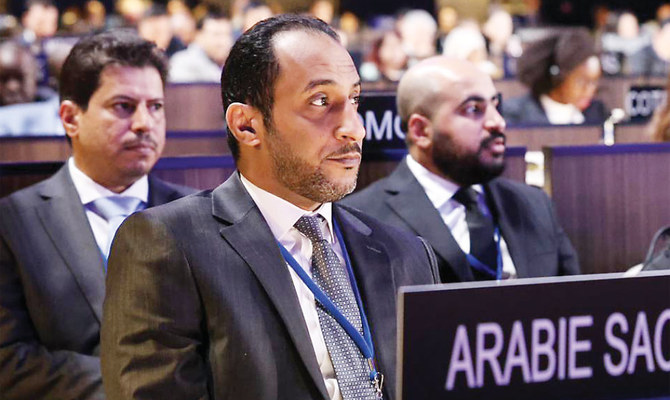
Saudi Arabia was elected vice president of the UNESCO International Convention Against Doping in Sport through 2025 during a meeting at the UN Educational, Scientific, and Cultural Organization headquarters in Paris on Friday.
The meeting was attended by representatives from 191 countries.
Abdulaziz Al-Massaad, undersecretary of the Saudi Ministry of Sports and Youth Affairs, who will fill the UNESCO post, praised the unlimited support of sports offered by the Saudi leadership, and highlighted the directives of Minister of Sports and President of the Saudi Olympic and Paralympic Committee Prince Abdulaziz bin Turki Al-Faisal.
Al-Massaad emphasized that the Saudi leadership is keen to ensure the Kingdom’s participation in various international sporting forums and events.
Al-Massaad thanked the Kingdom’s ambassador to France, Fahd bin Mayouf Al-Ruwaili; the secretary-general of the Saudi National Commission for Education, Culture, and Science Ahmed bin Abdulaziz Al-Bulahid; and the staff of the Kingdom’s permanent delegation to UNESCO for their efforts.
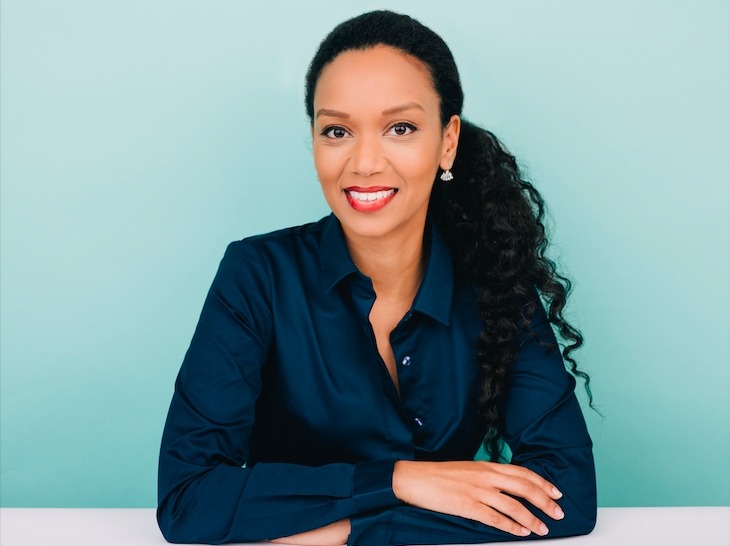
Emirati doctor Mona Tahlak, Executive Director of Medical Affairs at Dubai Academic Health Corporation (DHC), Vice Chancellor for Medical Affairs and Executive Director of Mohammed Bin Rashid University of Medicine and Health Sciences (MBRU) for Medical Affairs and Executive Director of Latifa Hospital for Women and Children, was elected President of the International Hospital Federation (IHF) during the World Hospital Congress held in Lisbon, to be the first Arab woman to hold this high international position in the International Hospital Federation since its inception, in a new achievement added to the record of achievements of Emirati women thanks to The support provided by the wise leadership in all sectors.
Dr. Mona Tahlak expressed her gratitude for the support of the wise leadership and her happiness at being chosen as the President of the International Hospital Federation and extended her sincere thanks and appreciation to the wise leadership for its firm commitment to empowering Emirati women, who have excelled in high-level roles in various fields, thanks to the great confidence and opportunities given to them to enhance their progress and excellence in various sectors, especially in the medical sector.
She said that her election in this position not only highlights the progress achieved by Emirati women, but also reflects the distinguished position of the health sector in the UAE, and I am honored to represent the UAE in this great international forum, and to continue the development of the International Hospital Federation with our global expertise.”
During her tenure with the International Hospital Federation (IHF) over the past seven years, Tahlak has highlighted the excellence and success of the UAE’s hospital sector, showcasing the experience and contributions of Emirati women in this field on a global scale.
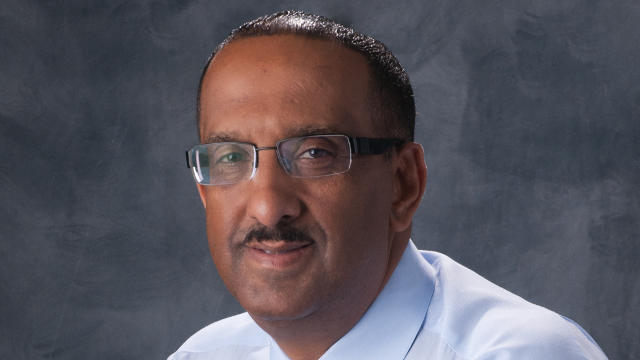
Dr. Amer Sharif, CEO of Dubai Academic Health Corporation, congratulated Mona Tahlak on her well-deserved selection as President of the International Hospital Federation, noting her exceptional leadership, experience and valuable contributions to the healthcare system in Dubai and beyond.
He expressed his pride in her achievements in particular, and his appreciation for the exceptional talents of Emirati women on the global stage, in general. Sharif added that this selection is a great success for all workers within the health sector at the level of the UAE, and a new evidence of the distinguished position reached by Emirati women, and their ability to excel in all fields, especially the medical field, and their responsibility side by side with men in building the renaissance of the UAE.
The IHF’s Board of Directors elects Dr. Mona Tahlak as the new President of the Federation, ending her term as President-designate and starting her two-year term as President-elect of the Federation, succeeding Deborah J. Bowen, CEO of the American College of Healthcare Executives.
source/content: wam.ae (headline edited)
__________
دبي في 27 أكتوبر/وام/ تم انتخاب الطبيبة الإماراتية منى تهلك، المدير التنفيذي للشؤون الطبية في مؤسسة دبي الصحية الأكاديمية نائب مدير جامعة محمد بن راشد للطب والعلوم الصحية للشؤون الطبية المدير التنفيذي لمستشفى لطيفة للنساء والأطفال، رئيساً للاتحاد الدولي للمستشفيات خلال المؤتمر العالمي للمستشفيات الذي عقد في لشبونة، لتكون أول إمرأة عربية تتولى هذا المنصب الدولي الرفيع في الاتحاد الدولي للمستشفيات منذ تأسيسه وذلك في إنجاز جديد يضاف إلى سجل إنجازات المرأة الإماراتية بفضل الدعم الذي توفره لها القيادة الرشيدة في القطاعات كافة.
وعبرت الدكتورة منى تهلك عن امتنانها لدعم القيادة الرشيدة وسعادتها باختيارها لرئاسة للاتحاد الدولي للمستشفيات وتقدمت بجزيل الشكر والتقدير للقيادة الرشيدة على التزامها الراسخ بتمكين المرأة الإماراتية التي تفوقت في أدوار رفيعة المستوى في مختلف المجالات وذلك بفضل الثقة الكبيرة والفرص التي منحتها إياها لتعزيز تقدمها وتفوقها ضمن مختلف القطاعات، لا سيما في القطاع الطبي”.
وقالت إن انتخابها بهذا المنصب لا يسلط الضوء على التقدم الذي حققته المرأة الإماراتية فحسب، بل يعكس أيضاً المكانة المتميزة للقطاع الصحي في دولة الإمارات، ويشرفني أنا وزميلاتي الإماراتيات أن نمثل دولة الإمارات في هذا المحفل الدولي الكبير، والعمل على مواصلة مسيرة تطوير الاتحاد الدولي للمستشفيات بما نتمتع به من خبرات عالمية “.
وخلال فترة عملها مع الاتحاد الدولي للمستشفيات على مدى السنوات السبع الماضية سلّطت تهلك الضوء على تميز ونجاح قطاع المستشفيات في دولة الإمارات، وعرض تجربة ومساهمات المرأة الإماراتية في هذا المجال على نطاق عالمي.
وهنأ الدكتورعامر شريف، المدير التنفيذي لمؤسسة دبي الصحية الأكاديمية منى تهلك باختيارها المستحق رئيساً للاتحاد الدولي للمستشفيات، منوهاً بقيادتها الاستثنائية وخبرتها ومساهماتها القيمة في منظومة الرعاية الصحية في دبي وخارجها.
وعبر عن فخره واعتزازه بما قدمته من إنجازات بشكل خاص، وتقديره للمواهب الاستثنائية للمرأة الإماراتية على الساحة العالمية، بشكل عام.
وأضاف شريف أن هذا الاختيار يُعد نجاحاً كبيراً لجميع العاملين ضمن القطاع الصحي على مستوى دولة الإمارات، ودليلاً جديداً على المكانة المتميزة التي وصلت إليها المرأة الإماراتية، وقدرتها على التميز في جميع المجالات، لاسيما المجال الطبي، وتحملها المسؤولية جنباً إلى جنب مع الرجل في بناء نهضة الإمارات.
وبانتخاب مجلس إدارة الاتحاد الدولي للمستشفيات للدكتورة منى تهلك رئيساً جديداً للاتحاد، تنهي بذلك فترة رئاستها كرئيسة معيّنة للاتحاد وتبدأ فترة ولايتها لمدة عامين رئيسة منتخبة للاتحاد خلفًا لديبورا ج بوين، الرئيس التنفيذي للكلية الأمريكية للمديرين التنفيذيين في الرعاية الصحية.
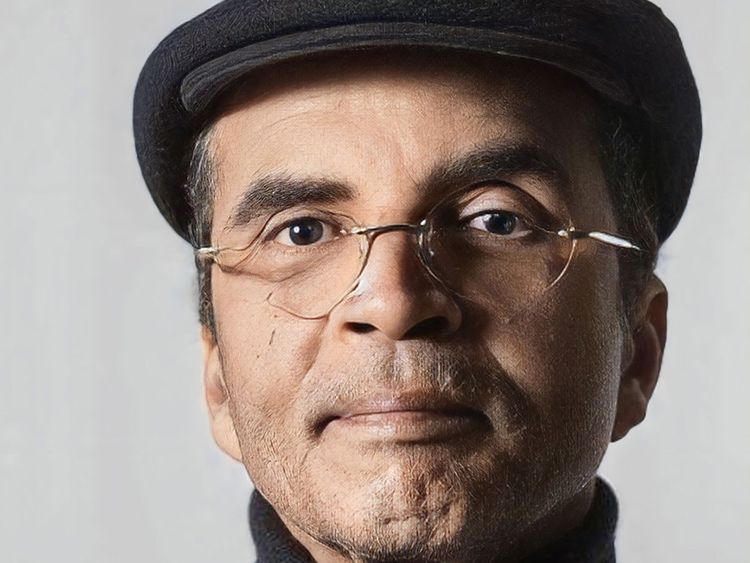
The 87-year-old was recently appointed honorary chancellor of the British University in Egypt and his foundation will soon open heart centres in Cairo and Kigali, Rwanda.
Renowned Egyptian-British heart surgeon Sir Magdi Yacoub, 87, made his mark a long time ago.
In 1980, he established what was to become one of the world’s largest and most successful heart transplant units, at Harefield Hospital in west London; in 1983, he performed the UK’s first combined heart and lung transplant; in 1992, he was knighted; and in 2014, he was awarded the Order of Merit by Queen Elizabeth II.
But that is just the shortlist and most recently he became honorary chancellor of the British University in Egypt (BUE).
As a professor of cardiothoracic surgery at Imperial College London for 20 years, Prof Yacoub was also lecturing, researching, publishing and mentoring.
He has founded several charities, starting with Chain of Hope in 1995, which treats children in developing countries who have life-threatening heart conditions. The Magdi Yacoub Heart Foundation’s Aswan centre has earned him an affectionate nickname, Egypt’s King of Hearts.
“Now … I’m like a butterfly, who flies in between all of these things”, Prof Yacoub tells The National.
“I almost work harder, although obviously, my energy is not the same. I used to not sleep for two or three nights and read all the journals and come back in the morning. But I still sleep four hours or so and wake up in the night,” he says.
He says he still wants to address healthcare inequality, chase a cure for heart failure and pass on the baton to the next generation in every way he can.
The BUE is a private institution that was formally inaugurated in 2006 by King Charles, who was Prince of Wales at the time, and Egypt’s former first lady, Suzanne Mubarak.
“I was there at its birth,” says Prof Yacoub, who is also a member of the university’s board of trustees. “I accepted [the role] because I identify with what they’re doing for young people, for the country, for the world … but also university life and its values are very important to me.”
The enthusiasm with which Prof Yacoub mentors young people stems from an appreciation of the influence of his own mentors, starting with his surgeon father, Habib Yacoub.
Prof Yacoub was born in 1935 in Bilbeis, a town in the Nile Delta about 60km north-east of Cairo, to a Coptic Christian family. He spent his childhood moving around Egypt due to his father’s profession.
Both his father and the death of his aunt from uncorrected mitral stenosis (a narrowing of the heart valve) inspired him to study medicine and cardiology.
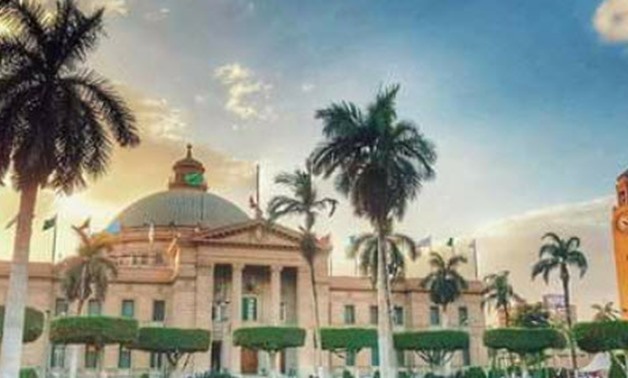
After graduating in medicine from Cairo University in 1957, in the early 1960s he moved to the UK for further training.
He worked under the late British chest and heart surgeon Lord Russell Brock, one of the pioneers of modern open-heart surgery.
“I knew of him before I ever came to the UK and I targeted him as a young boy,” Prof Yacoub says. “I learnt so much from him on how to think, how to be a better cardiologist than anybody, how to make decisions for yourself.”
Prof Yacoub’s early work includes repairing heart valves with the late South African-born British cardiothoracic surgeon Donald Ross. He adapted the Ross Procedure, where the diseased aortic valve is replaced with the person’s own pulmonary valve.
A job rejection from the Royal Brompton Hospital prompted him to move to the US in 1968, where he became an assistant professor at the University of Chicago for a year. He was “extremely disappointed and upset” at the time, but “in the long run, it was the best thing that happened to me”, Prof Yacoub says.
“Although I was bent on having the job at the Royal Brompton, which was a huge hospital, it was actually so much better for me to come back to a peripheral hospital because I was allowed to do what I wanted and I was more creative,” he says.
He became a consultant cardiothoracic surgeon at Harefield Hospital in Uxbridge in 1969 and immediately shook up the place.
“When I was appointed as the only heart surgeon there and they were doing one case every week, sometimes one open-heart every two weeks, I said, ‘no, no, we’re going to do nine to 13 every week’,” Prof Yacoub says. “They said, ‘you’re not serious.’ I said ‘I am serious’.”
He went on to become the founder and director at Harefield’s Heart Science Centre, and was also a consultant cardiothoracic surgeon at Royal Brompton from 1986 until his retirement from National Health Services practice in 2001 at the age of 65.
Over the course of his career, Prof Yacoub has performed more than 40,000 open heart surgeries and conducted more than 2,000 heart transplants.
From 1986 to 2006, he held the position of British Heart Foundation professor of cardiothoracic surgery at Imperial College, where he supervised more than 20 higher-degree students.
He credits other mentors along his journey as well, such as the late Sir Peter Medawar, the half-British, half-Lebanese, Brazilian-born immunologist who won the Nobel Prize in 1960.
“He is regarded as the father of transplantation and he has saved so many people around the world,” Prof Yacoub says. “I was very lucky to meet him in Chicago first when I was there and then when he came back to the UK at Oxford.”
The next two centres on the horizon are the Magdi Yacoub Global Heart Centre in Cairo, which is scheduled to be completed in 2024, and the Rwanda Heart Care and Research Foundation in Kigali.
Funded by Dubai-based charity foundation Mohammed bin Rashid Global Initiatives, the 22,000-square-metre, 300-bed Cairo centre will be the largest specialised facility for cardiovascular treatment and research in the Mena region.
Once completed, it will conduct 12,000 heart surgeries a year, of which 60 per cent will target children.
All of Prof Yacoub’s centres focus on three pillars of medical care, research and training: to serve, learn and teach.
“I’m very proud to see that [the new generation is] surging ahead and carrying the message, which I care about most, which is serving humanity, serving science, in the best way and advancing medicine,” he says.
There is one thing, however, that has so far eluded Prof Yacoub: finding a cure for heart failure.
“There are now tools, which are just becoming available to reverse heart failure at the genetic level, biochemical level and metabolic level,” he says. “So we do have tools, but are we going to achieve it within my lifetime? I don’t think so. But we have to keep trying.”
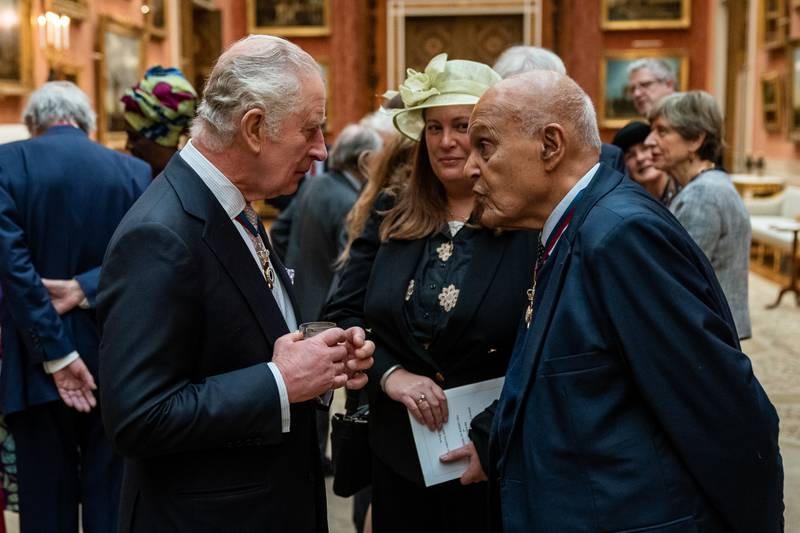
LONDON, UNITED KINGDOM – NOVEMBER 24: King Charles III talks with Professor Magdi Yacoub during a luncheon for Members of the Order of Merit at Buckingham Palace on November 24, 2022 in London, England. (Photo by Aaron Chown – WPA Pool / Getty Images)
Saudi Arabia will also host UNWTO General Assembly in 2025.
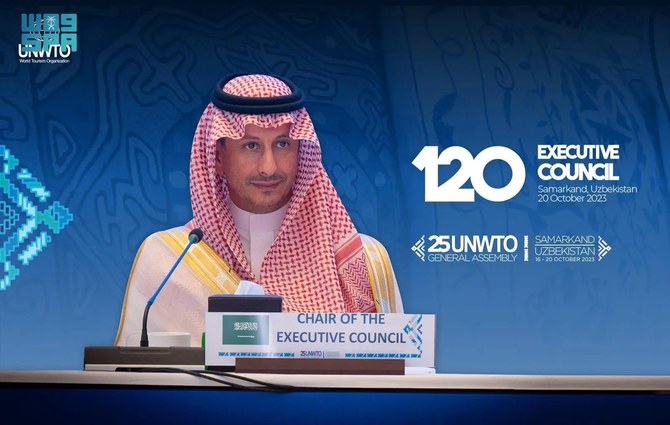
The Executive Council of the UN World Tourism Organization has endorsed the re-election of Saudi Arabia as its president for 2024.
The decision was taken during the council’s meeting in Samarkand, Uzbekistan, this week.
Saudi Minister of Tourism and Chairman of the Executive Council Ahmed Al-Khateeb said: “During the period of the first presidency of the Kingdom in 2023, plenty of initiatives that comprised partnership, innovation, and progress were launched, and the achievements during that period were based on a common vision, cooperation and firm commitment among all members of the organization.
“We have all paved the way to build a vision for a resilient tourism sector, and we look forward to continuing our leadership role in 2024.
“We recall the aspirations and hopes of all member states, and we will strive to implement the goals in a way that ensures the tourism sector continues to achieve economic exchange and cultural and humanitarian rapprochement between countries,” Al-Khateeb added.
He noted the unlimited support of the tourism sector from the Kingdom’s leadership, including the provision of “important international initiatives aimed at promoting sustainable development,” such as the establishment of the Sustainable Tourism Global Center announced by Crown Prince Mohammed bin Salman during the Saudi Green Initiative in October 2021.
Al-Khateeb explained that the center had recently announced the launch of an international research center, intended to be a high-level reference body to help accelerate the tourism sector’s transition to climate neutrality.
The minister said that, in alignment with the Kingdom’s vision and commitment to shaping the future of global travel, it had, during its presidency of the Executive Council in 2023, taken a “pioneering role in the tourism sector,” based on a carefully implemented plan. This vision gave priority to global cooperation and formed the basis for “pioneering initiatives that aim to reimagine the tourism sector.” He cited the outline of “a clear and comprehensive roadmap aimed at supporting global cooperation and pioneering initiatives” as an example.
The UNWTO also announced that Saudi Arabia has been selected to host the 26th session of its General Assembly in 2025. It will be the first UN General Assembly to be held in the Kingdom.
That announcement came during Al-Khateeb’s participation in the 25th session in Samarkand, which ran from Oct. 16 to 20.
Saudi Arabia is “determined to reshape the global tourism scene,” Al-Khateeb said. The General Assembly’s session in Saudi Arabia will feature a variety of activities aimed at raising awareness of the role of tourism in promoting sustainable development and peace in the world, he added, and will also provide an opportunity for the Kingdom to showcase its tourism and cultural developments and “enhance international cooperation in this important sector.”
On his official X account, Al-Khateeb wrote: “It’s my upmost honor to announce that the Kingdom of Saudi Arabia has been selected to host the 26th General Assembly of the UNWTO in 2025. We will continue to ascend and positively impact the tourism sector in order to achieve the global needs and aspirations.”
In another post, the minister said: “The election of Saudi Arabia to chair the Executive Council of the UN World Tourism Organization for a second term is an affirmation of our commitment to the world to empower the tourism sector globally, and support the ambitious development plans to create promising opportunities.”
Princess Haifa bint Mohammed Al-Saud, Saudi Arabia’s vice minister for tourism, also posted on X, saying: “As we continue to move forward with vision and purpose, the Kingdom proudly steps into the global spotlight once again. Happy to share that Riyadh will host the 26th session of the UN World Tourism Organization General Assembly in 2025.”
source/content: arabnews.com (headline edited)
________
The Executive Council of the UN World Tourism Organization has endorsed the re-election of Saudi Arabia as its president for 2024. (SPA)
Regragui received the award in recognition of the Moroccan national team’s historic achievements under his leadership.
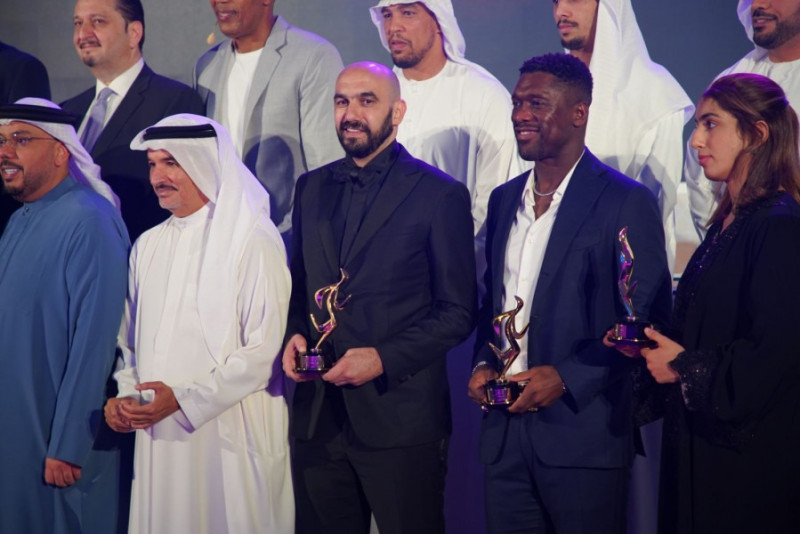
Morocco’s Head Coach Walid Regragui was named the “Best Arab and International Manager” during an award ceremony organized by Sky News Arabia on Sunday.
Regragui received the trophy at the “Legends Night 2023,” the Ramadan evening during which the Abu Dhabi-based news channel hosts and honors renowned sports legends.
Speaking at the ceremony, Wydad AC’s former coach Regragui extended his thanks to Muslims, Arab, and African people for their unconditional and consistent support for Morocco throughout the 2022 Qatar World Cup.
He stressed that his mission was to prove to the world that an African or Middle Eastern team can win the World Cup. “With your trust and support, we will achieve this,” he stressed.
“Next time inshallah we do it,” Regragui said, reiterating that the Atlas Lions are capable of becoming the first African and Arab team to win the global tournament.
In addition, he extended his thanks to King Mohammed VI for supporting the national team throughout their journey in Qatar.
Under the leadership of Regragui, the Moroccan squad managed to defy all odds and achieve the unexpected, becoming the first Arab and African team to reach the World Cup’s semi-finals in 2022.
After not having qualified for the round of 16 since 1986, Morocco not only broke the 36-year-long curse, but also managed to beat and send home some of the world’s top football giants, including Belgium, Spain, and Portugal.
Morocco eventually finished fourth after losing to Croatia in the third place play-off. However, the Moroccan national team’s heroics were widely celebrated among football fans from across the world, with many attributing their success to Regragui’s great leadership and tactics.
The widely-celebrated coach has become a national icon and the pride of millions of Moroccans across the world, having led the team to unprecedented success after only a few months in the position.
Besides Regragui, the award ceremony also honored the Moroccan Royal Football Federation (FRMF), naming it the Best Arab Federation in recognition of its achievements at both team and club levels.
Libyan novelist has written 81 books which have been translated into 40 languages.
The Sharjah Book Authority (SBA) has named Ibrahim Al-Koni, Libyan writer and novelist, as the ‘Cultural Personality of the Year’ for the 42nd edition of the Sharjah International Book Fair (SIBF). The fair, which will open on November 1, will run till November 12.
The authority said the honour is in recognition of his profound impact on both the Arab and global cultural and literary spheres and his invaluable contributions. Al-Koni’s exceptional efforts have enriched the literary world and has been instrumental in spotlighting Arab authors on the global stage, with his literary works being translated into over 40 languages, finding a place in the curricula of universities worldwide, including those in Europe, America, Japan, and beyond.
The choice of Al-Koni for this accolade aligns with SBA’s mission to celebrate distinguished individuals in the realms of thought, literature, history and the arts. These notable figures have not only enhanced the cultural heritage but have also created impactful works that have left a lasting imprint on both the Arab and global stages across a spectrum of literary and intellectual domains, the SBA said.
Ahmed bin Rakkad Al Ameri, CEO of SBA, said, “The authority believes that honouring cultural and literary figures is an important step in building the cultural identity of any civilisation and nation. Thanks to the vision of His Highness Sheikh Dr. Sultan bin Mohammed AlQasimi, Member of the Supreme Council and Ruler of Sharjah, the emirate has become a platform for honouring Arabs whose thought and literary contributions have become a cornerstone of literature and knowledge. This includes the Libyan writer and novelist Ibrahim Al-Koni, whose recognition today asserts the strength of literature, culture, and knowledge in presenting the Arab identity to the world’s cultures.
“This recognition introduces the younger Arab generations to a prominent figure who has a significant and influential presence in the Arab and global cultural scene. Al-Koni’s portfolio includes more than 80 books in the fields of novels, literary studies, criticism, linguistics, history, and politics, serving as a source of inspiration and pride for Arabs. They are a testament to his strength and ability to compete in the realms of knowledge and culture, earning high recognition as one of the most prominent influencers in the Arab cultural landscape and one of the most widely recognised Arab authors in the world.”
81 books in 40 languages
Al-Koni was born in Ghadames, Libya, in 1948. He is among the most prominent contemporary Arab novelists and has been a candidate for the Nobel Prize in Literature on several occasions. He obtained his bachelor’s and master’s degrees in literary and critical sciences in 1977 from the Maxim Gorky Literature Institute in Moscow. He has worked in various journalistic and diplomatic roles around the world, with his most recent being a diplomatic advisor at the Libyan Embassy in Switzerland. Al-Koni is proficient in eight languages, including Tamasheq, Arabic, Russian, English, Polish, German, Spanish, and Latin.
The prolific Libyan writer has authored 81 books in various fields, and has been translated into more than 40 languages. He was selected by the French Lire Magazine as one of the top 50 contemporary world novelists, and received wide acclaim from cultural, critical, academic, and official circles around the globe.
Al-Koni has received numerous regional and international awards, including the Sharjah Award for Arab Creativity in 2008.
source/content: arabnews.com (headline edited)
___________
Ibrahim Al-Koni, Libyan writer and novelist, who has been named as the ‘Cultural Personality of the Year’ for the 42nd edition of the Sharjah International Book Fair. Image Credit: Supplied
A total of 79 scientists from Cairo University are among a list of 160,000 scientists whose practical opinions are cited in various specializations with a (2 percent).
President of Cairo University Dr. Mohamed Othman Elkhosht received a report on Stanford University’s announcement of a list of scientists whose practical opinions are cited in various specializations with a (2 percent), featuring about 160,000 scientists from 149 countries, based on the Scopus database, in 22 scientific specializations, and 176 sub-specialization for distinguished researchers.
Dr. Elkhosht announced that the Stanford list included a large number of Cairo University scientists, with a total of 79 scientists on the two lists, whether the total from 2011 to 2022, or the latest version 2023, as this year’s list included scientists from 11 colleges (an increase of 8% over the previous year).
Number of scholars featured from Cairo University in the report’s 2022 edition was 73 scholars, representing 9 of the university’s faculties, and compared to the number of 74 and 55 scholars during the previous years (2021 and 2020, respectively), Cairo University thus leads all Egyptian universities and research centers in all years from 2020 until now.
Dr. ElKhosht explained that the annual Stanford University report is an objective, external indicator of the progress of scientific research at Cairo University.
It is also a quantitative indicator for the university to identify the number of distinguished faculty members in research and a reflection of the university’s methodology, plan, applied practices, and the support that the university provides to its employees from the various colleges and institutes affiliated with it.
Dr. Mahmoud Al-Saeed, Vice President of the University for Postgraduate Studies and Research, pointed out that the report reflects the strengthening of the confidence of the international scientific and research community in our scientists in all fields and specializations, and that the results of the classification this year included two lists, the first of which is specific to the list of the total practical years 2011 – 2022 (with a total of 417 scientists), While the second included the list of last year, 2022, with a total of 817 scientists, adding that this year’s list (2023 edition) contained 926 Egyptian scientists, while last year’s list (2022 edition) included 680 Egyptian scientists from various universities and research centers, compared to 605 and 396 during the years 2021 and 2020, respectively.
Stanford University used the Scopus database of the international publisher Elsevier to extract various indicators in this list, including global scientific publishing, the number of citations, the H index, and co-authorship, all the way to the composite citation index.
source/content: egypttoday.com (headline edited)
_________
Image processed by CodeCarvings Piczard ### FREE Community Edition ### on 2019-05-12 11:20:32Z | http://piczard.com | http://codecarvings.com
The University of Rhode Island neurotoxicologist and dean came to the U.S. for college in the 1980s.
Nasser Zawia hails from Al Bayda, a town in the south of Yemen, a country that has long been affected by war and is currently experiencing widespread famine. Zawia traveled to the U.S. in the 1980s to earn an undergraduate degree from the University of Massachusetts Amherst. He stayed in America, obtaining a PhD in pharmacology and toxicology from the University of California, Irvine. But Zawia never planned to stay on in the U.S. permanently. “Like many students who came here in the 80s, the objective was to come to go to school and go back to your home country and serve there,” he told The Scientist. “However, I married an American citizen.”
In 1990, Zawia and his wife moved to Yemen, where he planned to take a job at Sana’a University’s medical school. But the first Gulf War broke out in 1991. “The war was between Kuwait and Iraq,” he said. “But at that time, the position of the Yemeni government was supportive of Iraq. The connections with the U.S. were being threatened. I left during a climate where there was a lot of uncertainty and fear and insecurity as to what might happen.”
Returning to the U.S. in 1991, Zawia used connections he had made in US universities to secure postdoctoral positions at the University of South Florida and then at the National Institutes of Health’s National Institute for Environmental Health Sciences (NIEHS) in Research Triangle Park, North Carolina. After studying environmental toxicology at NIEHS, Zawia landed a faculty position at Meharry Medical College, a historically black college in Nashville, Tennessee, where he studied the developmental effects of lead exposure in minority populations. “I found that to be something where I could serve the underserved,” he said. “I stayed there for five years and then moved to the University of Rhode Island.”
Although he was successfully navigating the halls of academia and earning his citizenship in the early ’90s, life in the U.S. was not easy for Zawia. “The U.S. was not very receptive to people from the Middle East at that time because of the first Gulf War,” he recalled. “Those of us from that region of the world, our life is always punctuated by all kinds of events involving war. Every 10 years it seems like something big happens, which impacts us in many ways.”
The next big event that would have an effect on Zawia and countless other Americans happened on September 11, 2001. “Those of us who are Arab Americans/Muslim Americans in this country have always been dealing with wars and difficulties in our ancestral homes. But we didn’t ever think or expect that someone would come to the U.S. and cause such a catastrophe. And it changed our lives a lot. And everybody else’s,” he said. “But still we were Muslims in the U.S., and we had to deal with the Patriot Act and then the NSEERS [National Security Entry-Exit Registration System] registration for citizens coming from Muslim countries.”
Despite anti-Muslim sentiment spawned by the terrorist attacks of 9/11, Zawia chose to stay. Since setting up his University of Rhode Island (URI) lab in 2000, he’s made seminal discoveries, including research that pointed to a developmental basis for Alzheimer’s disease. He and his colleagues found that early exposure to lead increased the risk of developing Alzheimer’s disease–related pathologies later in life. Zawia is now working on the epigenetics involved in this phenomenon, and said that his team is pursuing clinical trials of a repurposed drug to treat rare types of neurodegenerative disorders in Europe.
Although the Trump administration’s executive orders on immigration have restricted some travel for people from several countries in the Middle East, including Yemen, the policy has not directly affected Zawia, a naturalized US citizen. But both as a scientist who attends international conferences and as an administrator who seeks to entice talented students from all corners of the world to come to URI, he said he is seeing the damage the restrictions are having. “It is a concern for faculty here that were born in one of those seven countries,” he said. “Even though the law might be clear, how it’s applied may have an impact on our mobility.”
Zawia noted that the effects of the new immigration policies appear to be restricting the flow of students to URI and other US academic institutions. “In graduate education—especially in the STEM disciplines . . . we’re very heavily dependent on international students—it looks like huge drops in applications, a lot of concerns among our students on campus,” he said. “It just sends the wrong message. Graduate education is a strategic asset for the United States. Having the best minds come for an education here, staying, and interacting with our faculty and researchers is the secret to us always maintaining our leadership position.”
On top of the uncertainty surrounding his life as an immigrant researcher and administrator in the U.S., Zawia is grappling with an increasingly unstable situation in his home country, where some of his family still live: 19 million Yemenis are on the brink of a catastrophic famine in a country besieged by civil war. “My personal life and my connections to the country and my family have been upside down, to say the least,” he said.
With all that Zawia has witnessed in the U.S. as a Muslim Arab-American, he views the current political and social climate as the most damaging he’s seen. “I feel the impact of what’s going on now is much greater than what we experienced in the ’90s, with first war in Iraq or 9/11,” he says. “What’s going on right now is really very unsettling and very worrisome. Past events and past wars had more of a selective impact on us as Middle Eastern people and Muslim Americans. But the changes this administration is bringing about in many different facets of life is really . . . disrupting a lot.”
source/content: the-scientist.com / bob grant (headline edited)
Achieving success is no easy feat especially if you are working from the ground up. With passion and skill, a lot of people achieve self-made success. Today we are celebrating one such individual, Sudanese-American physician Iman Abuzeid who is the co-founder and CEO of a digital nurse hiring platform. She just nabbed a spot on Forbes’ ninth annual list of America’s Richest Self-Made Women and for good reason, with an impressive net worth of 350 million US dollars.
Being only one of two Arab women on the Forbes list, Abuzeid’s ranking is placing the Arab identity and voice at the forefront. Beyond that, the 38-year-old doctor is the only self-made millionaire on the list who earns money through the field of medicine on Forbes’ list of America’s Richest Self-Made Women. She achieved her impressive ranking almost a year after her nurse-hiring start-up called Incredible Health was able to raise 80 million US dollars and that helped hike her company’s valuation to 1.65 billion US dollars.
Along with Abuzeid, many other prominent self-made women made it to the Forbes list including TV creator Shonda Rhimes and Insitro founder and CEO Daphne Koller. Also for the sixth consecutive year, the top spot went to building supply distributor Diane Hendricks. With all that being said, knowing the incredible work each of these women achieved acts as a beacon of inspiration for younger girls to follow in their footsteps.
Dubai holds lots of Guinness World Records from being home to the world’s tallest tower, the world’s deepest swimming pool and the world’s tallest landmark sign.
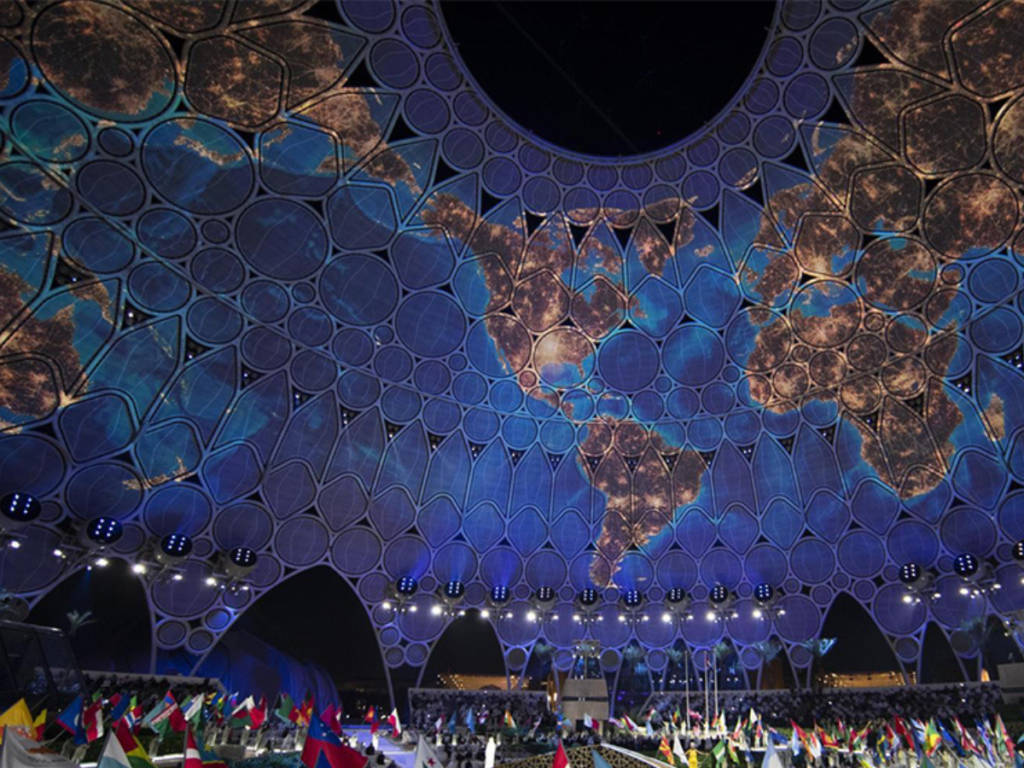
And now, the city can add another accolade to its impressive list of world records as Expo City’s Al Wasl Plaza has secured a Guinness World Record.
Al Wasl Plaza – Expo City’s dome – has won the Guinness World Record title for the largest interactive immersive dome.
Alwaleed Osman, Official Adjudicator at Guinness World Records, said on the unveiling of the award: “Al Wasl Plaza stands as a testament to architectural excellence and a distinguished structure that resonates with those who have had the privilege of experiencing it.
“Its recognition in Guinness World Records underscores the commitment of Expo 2020, and the subsequent Expo City Dubai, to innovation and excellence.”
The beating heart of Expo City, it’s 130 metres in diameter and over 67 metres tall (that’s big enough to fit the Leaning Tower of Pisa beneath it) and visitors can see immersive 360° videos projected onto the surface of the dome.
Up to 252 laser projectors are used to put images on the architecture that can be viewed from inside or outside of the dome.
Designed by Adrian Smith + Gordon Gill Architecture, Al Wasl Plaza has been built using unique materials that ensure it can be used year-round.
The semi-outdoor space has a trellis framework made out of steel and the pattern is inspired by the logo of the Expo 2020 exhibition. Fun fact: The logo is fully visible at the apex of the dome.
During Expo 2020 Dubai, Al Wasl Plaza was a hub for events from concerts to performances and, next year, it will host the UNTOLD music festival.
Al Wasl Plaza hosts daily projection shows and, upon news of its latest award, has opened the new Al Wasl Plaza Café – a homegrown brand that offers Arabic fusion cuisine.