Arabs & Arabian Records Aggregator. Chronicler. Milestones of the 25 Countries of the Arabic Speaking World (official / co-official). AGCC. MENA. Global. Ist's to Top 10's. Records. Read & Enjoy./ www.arabianrecords.org
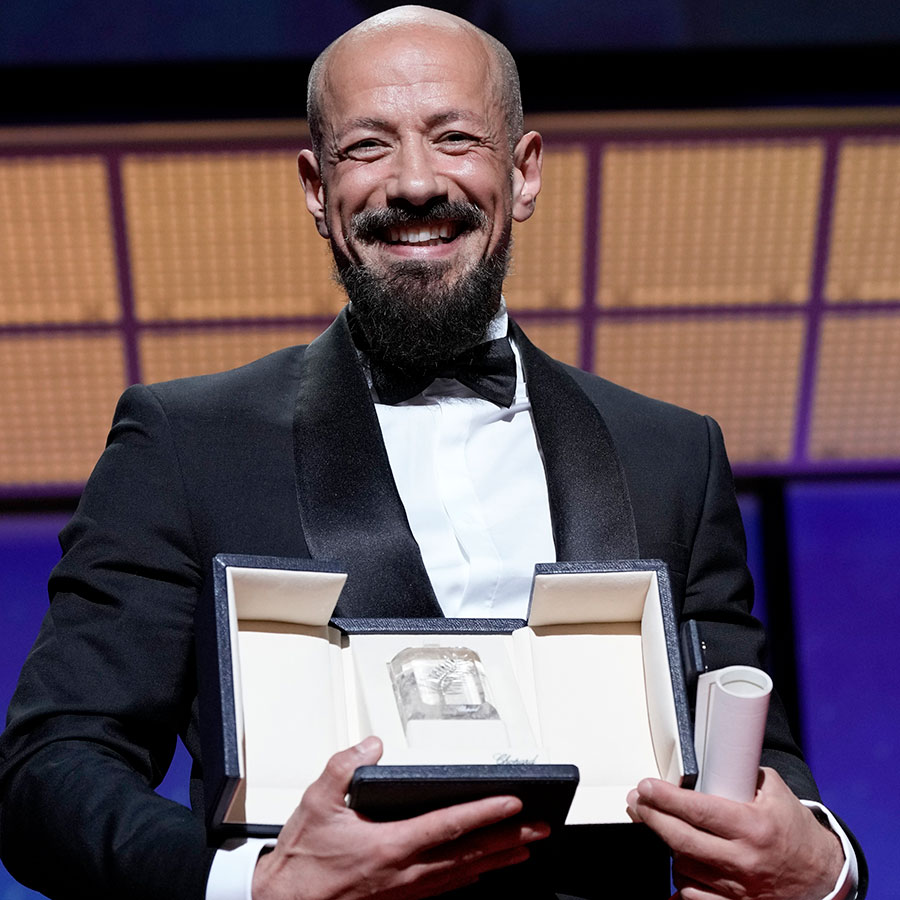
Tarik Saleh — an experienced Swedish-Egyptian filmmaker — clinched the Best Screenplay Award at the 75th Cannes Film Festival’s closing ceremony on Saturday for his latest feature film, ‘Boy from Heaven’ (‘Walad Min El-Janna’).
The filmmaker — who started his career as a journalist — also received the Prix François Chalais Award for his film’s “dedication to the values of life-affirmation.”
Boy from Heaven reportedly caused controversy amid Cannes’ Egyptian attendees after the premier, as its plot — which takes place in Al-Azhar University in Cairo — tackles the relationship between the country’s authorities and the Islamic organisation.
The film is produced by Atmo, Kristina Rikberg, and Fredrik Zander.
Previously, Saleh’s ‘Metropia’ (2009) won the Future Film Festival Digital Award of the Venice Film Festival, and his ‘Nile Hilton Incident’ (2017) — which was also set in Egypt — brought home the Grand Jury Prize from the 2017 edition of the Sundance Film Festival.
The winners of the 75th Cannes Film Festival are as follows:
– Palme d’Or: Ruben Ostlund for ‘Triangle of Sadness’ (Sweden, Germany, France, the UK)
– Grand Prix: Shared by Lukas Dhont for ‘Close’ (Belgium, the Netherlands, France) and Claire Denis for ‘Stars at Noon’ (France)
– Best director: Park Chan-wook for ‘Decision to Leave’ (South Korea)
– Best actress: Zar Amir Ebrahimi for ‘Holy Spider’ (Denmark, Germany, Sweden, France)
– Best actor: Song Kang-ho for ‘Broker’ (South Korea)
– Best screenplay: Tarik Saleh for ‘Boy from Heaven’ (Sweden, France, Finland, Denmark)
– Jury prize: Shared by Jerzy Skolimowski for ‘EO’ (Poland) and Charlotte Vandermeersch and Felix van Groeningen for ‘The Eight Mountains’ (Italy, Belgium, France, Britain)
– Camera d’Or for best first film: Riley Keough and Gina Gammell for ‘War Pony’ (The US)
– Best short film: Jianying Chen for ‘The Water Murmurs’ (China)
source/content: english.ahram.org.eg
________________
Swedish-Egyptian director Tarik Saleh poses during a photocall after he equally won the Best Screenplay prize for the film Boy From Heaven (Walad Min Al Janna) during the closing ceremony of the 75th edition of the Cannes Film Festival in Cannes (Photo: AFP)
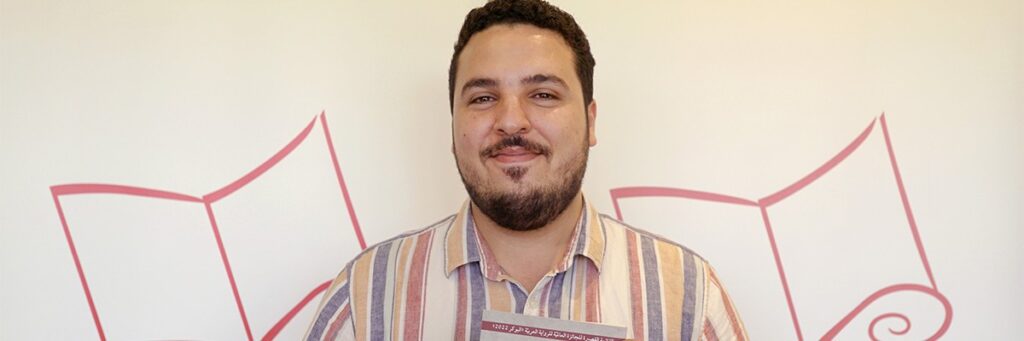
Bread on Uncle Milad’s Table by Libyan debut novelist Mohamed Alnaas was announced as the winner of the 2022 International Prize for Arabic Fiction (IPAF).
The novel, published by Rashm, was named as this year’s winner by Chair of Judges Shukri Mabkhout during a ceremony in Abu Dhabi that was also streamed online.
In addition to being awarded USD $50,000, funding will be provided for the English translation of Bread on Uncle Milad’s Table, and Mohamed Alnaas can expect to see an increase in book sales and international recognition.
Shukri Mabkhout, Chair of the 2022 Judges, said: “The winning novel is written in the form of confessions of personal experience. Its plethora of details is deftly unified by a gripping narrative, which offers a deep and meticulous critique of prevailing conceptions of masculinity and femininity and the division of work between men and women, and the effect of these on both a psychological and social level.”
He added that the novel, falls into the category of novels which question cultural norms about gender; however, it is embedded in its local Arab context, and steers away from trivial projections or an ideological treatment of the issues, which would be contrary to the relativism of fiction and its ability to present multiple points of view.
Bread on Uncle Milad’s Table is a unique story based in Libya. In the closed society of his village, Milad strives to live up to the definition of ideal masculinity, as his society views it. However, after all his best efforts, he fails to be ‘a man’, and after meeting his sweetheart and wife-to-be, Zeinab, decides to forget about this definition and be himself. Living at home, he performs the tasks which his society reserves for women, while Zeinab works and supports the family. Milad is unaware of how he is mocked in the village until his nephew breaks it to him. Bread on Uncle Milad’s Table questions static ideas of gender and champions the individual in the face of destructive ideas adopted by the majority.
Mohamed Alnaas, is a short story writer and journalist from Libya, born in 1991. He obtained a BA in Electrical Engineering from the University of Tripoli in 2014, and his short story collection Blue Blood was published in 2020. Bread on Uncle Milad’s Table (2021) is his first novel and he wrote it in just six months during lockdown and whilst Tripoli was under bombardment. He says writing the book was his “refuge from insanity” amidst the news of Covid and war.
At 34, Alnaas is the second youngest writer to win the International Prize for Arabic Fiction and the first Libyan. Bread on Uncle Milad’s Table was published with support from the Libyan Arete Foundation.
Bread on Uncle Milad’s Table was chosen by the judges as the best work of fiction published in Arabic between 1st July 2020 and 30th June 2021. It was chosen from a shortlist of six novels by authors from Egypt, Kuwait, Libya, Morocco, Oman and, for the first time, the UAE. The shortlisted finalists — Khalid Al-Nassrallah, Tareq Imam, Reem al-Kamali, Bushra Khalfan and Mohsine Loukili — will each receive USD $10,000.
The panel of five judges was chaired by Tunisian novelist, academic and previous IPAF winner (The Italian, 2015) Shukri Mabkhout. Joining him on the judging panel were Libyan doctor, poet and translator Ashur Etwebi, Lebanese writer and PEN International board member Iman Humaydan, Kuwaiti poet and critic Saadiah Mufarreh and Bulgarian academic and translator Baian Rayhanova.
Once a creator of skyscrapers, the artist and activist has scaled-down his work – but not his ambitions – to enshrine the calamity in his homeland using elaborate models
The sound of a muezzin exhorting Muslim worshippers to hurry to salvation is not one that could often have been heard within the former Regency church of Holy Trinity in the seaside resort of Brighton.
Right on cue, though, the distinctive chant echoes out, filling every nook and cranny of the 200-year-old building, from the galleries to the arched stained-glass windows and timber-clad chancel at either end.
It comes as Mohamad Hafez is recounting the day he fell under the spell of his birthplace, Damascus, having returned to it as a teenager after a 14-year absence.
“Walking down the old city streets looking at mosques right next to churches, and synagogues next to secular galleries and nude sculptures … I went there from a very conservative culture in Saudi Arabia,” Hafez, 37, tells The National.
“Seeing the bustling city life, with merchants and calls to prayer,” he says, pausing to smile at the perfectly timed adhan issuing out of a loudspeaker hidden in one of his artworks, “and bells ringing together with children playing and the car horns, it was very hard not to fall in love with this collective celebration of diversity.”
The recording of the busy streetscape is clearly audible even over the hustle and hammering of the team assembling Hafez’s ‘Journeys from an Absent Present to a Lost Past’ exhibition in the historic residence of the visual arts organisation Fabrica.
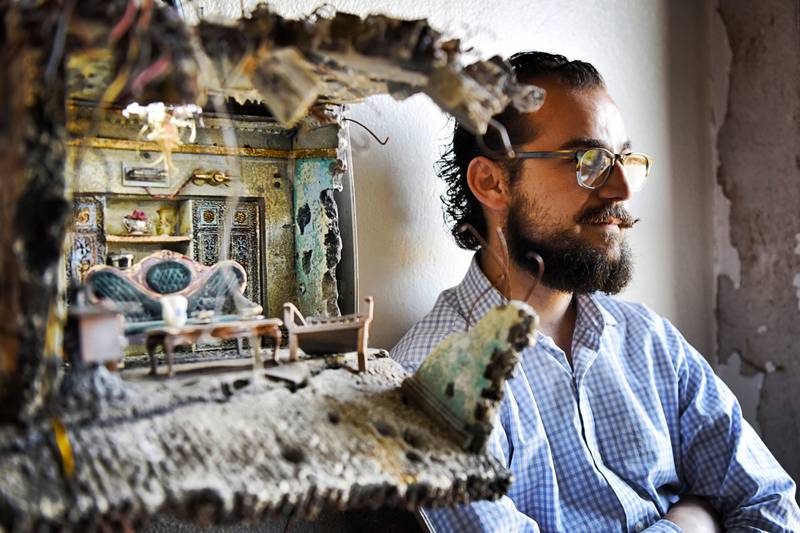
Art handlers wearing blue surgical gloves have already carefully opened the dozen or so timber shipping crates to decant the series of miniature dioramas of his native Syria now hanging on the walls.
Each box was stencilled with FRAGILE in black lettering but the romantic snippets of memories and sounds of a bygone era contained within Framed Nostalgia #3 might arguably have warranted a more strongly worded warning.
It occupies an extra special place in the heart of Hafez — and that of his new wife, Luisa. “That’s the only piece I don’t own,” he says. “It’s owned by her, and I told the guys that if they damage it, they ruin my marriage. Anything else is fair game.”
His immersive process involves the study of photographs of Damascus from before and during the civil war, dimming the lights, brewing Arabic coffee, burning bakhour and incense, and putting on acoustic Middle Eastern music.
What emerges from the induced sentimental state as if, as Hafez puts it, he were a 3D printer are scenes of urban fabric that draw on his training as a corporate architect but come with a political charge.
“I really don’t remember much of the detail, how it comes together,” he says. “It’s a weird feeling. What I enjoy most is that I am discovering this detail as though I am a spectator seeing it for the first time, and that’s very, very fulfilling.”
Frustrated at prevailing narratives, Hafez took a sabbatical from architecture three years ago to focus fully on using his mix of street art, sculpture and activism to respond to thorny issues such as the atrocities in the ongoing conflict or dehumanisation of refugees.
“It is my foot in the door,” he says. “The more the sabbatical continues, the more I’m realising the urgency of the message and sense of agency because there are thousands of architects who can build skyscrapers , thousands.
“But how many of them are Syrian, Arab, Middle Eastern, practising Muslims, raised in Saudi Arabia, educated in the Midwest of the United States, and can talk the talk that will build bridges between people?”
Hafez says the crisis in his homeland has caused a spiritual awakening within him. Which may explain what he was doing on a three-week retreat in Malaysia when he heard news of a concert being held nearby in the capital by the ensemble Al Firdaus that he often listens to in his art studio while working.
Particularly captivated by the cellist Luisa Gutierrez, it wasn’t long before Hafez engineered a visit by Al Firdaus to Yale University, in New Haven, Connecticut, where he is a Silliman College Fellow.
He hosted the ensemble for dinner and invited them to his studio crammed full of paraphernalia, shelves and bins overflowing with scaled-down furniture and toys, dried plants and jewellery, Christmas ornaments and shells, electrical appliance innards and paints.
There, Hafez engaged all the musicians in conversation except for Luisa, who, overwhelmed by the atmosphere, was sitting on a chair staring at the artist’s latest labour of love — Framed Nostalgia #3 — and listening to the evocative audio with tears in her eyes.
“I think what happened is that she clicked into the street scene,” he says. “It’s common for people to come out crying from my exhibitions. Well, fast forward and that became her dowry for our wedding last year.”
Though Hafez was born in Syria, his own tale deviated early on when the family moved to a military compound in Al-Kharj in central Saudi Arabia, where he spent many happy hours supervising the construction of buildings out of whatever he and his playmates could lay their hands on.
Other than the lengthy commute to the elite Najd National School by bus 100 kilometres away in Riyadh, Mohamad never ventured outside the base where his father was head surgeon in the attached hospital.
“There was no need. It was a protected bubble in all respects, and really gave me a true childhood like building forts using found objects. I would boss my friends around, saying ‘No, no, this way, let’s put a window here, you see?’ Twenty years later, I’m going ‘You idiot, you’ve been doing architecture since you were 6 years old.’”
Hafez returned to his birthplace intermittently for holidays that were mostly whiled away in swimming pools, and only properly at the age of 15 when his father took early retirement.
Presided over by his sociable mother, the household became a “cultural salon” that inspired his latest architectural endeavour, Pistachio Cafe , below his studio on the northern shore of Long Island Sound.
It offers the experience of being hosted in what his domicile might have been like, transporting customers with mosaic tables and vintage radios, and bounty made by refugee chefs and cooks such as “the lady who makes shawarma for me from her kitchen at home”.
He is as entranced now with the world’s oldest continuously inhabited city as he was back then when his teenage self would wander its souqs and alleyways with sketch book in hand at any available opportunity.
But for a pupil hitherto accustomed to rubbing shoulders with the upper echelons of Saudi Arabian society, the move to a public school with military uniform and regular training exercises was shocking.
Consequently, Hafez has a deep connection to the words he has spray painted across a vast swathe of black plastic sheeting stretched around several pillars in his exhibition for the Brighton Festival.
This section of “Journeys” replicates the sense of exile felt by those in the refugee and migrant encampment known as the Calais Jungle. Above an evocative stanza borrowed from the Nairobi-born, Somali-British poet Warsan Shire — “No one leaves home unless home is the mouth of a shark” — he has put: I AM JUST A NUMBER.
“I think the whole experience at that school was so traumatic,” he recalls. “I had lost myself. No one cared about ‘What do you want to be?’ I think it’s a big part of me, who I am and why I like working with a lot of universities and high school kids, just to push that fire inside them and make them believe in their intuition.”
The result was that he undertook a course in electrical engineering at Damascus University before following his older siblings to study in the United States when it finally dawned that “every inch of my body was meant to be an architect”.
Hafez would go on to celebrate his first skyscraper at the precocious age of 30, becoming project head designer on an ambitious 48-storey glass and steel office tower in downtown Houston, Texas.
But throughout his studies, a single-entry visa precluded him from visiting Syria because of a travel ban imposed on the citizens of 27 countries after the 9/11 attacks, and later came the Arab uprisings.
Surrounded by the cornfields of Iowa, a homesick Hafez lapsed into depression and was wrought by anxiety. His way of dealing with it, as he explains in ‘A Broken House, the Jimmy Goldblum documentary about his life shortlisted for this year’s Oscars, was deciding that if he couldn’t go home then why not make home?
By night, for a long time, he modelled the destruction of Syria as a sanity-saving outlet to be able to get up and build glistening edifices in his day job with colleagues complaining about the coffee being cold. “‘This is your dilemma right now?’,” Hafez remembers thinking.
It is little wonder that he quotes with conviction the observation of Cesar Cruz, Dean of the Secondary Schools Programme at Harvard, that art should comfort the disturbed and disturb the comfortable.
“With skyscrapers, we design every last detail until the cows come home years before the building sees the light of day. With these,” he gestures around the gallery, “I can break free in my artistic expression. I don’t plan. I work on six or seven pieces at a time so as not to commit too much memory to any one piece, jumping from one to another.”
His store of memories of home is precious and finite. There is no portrait of the four siblings and parents together since 1999, the last time they were all under the same roof. He has been back to Damascus only once, just before the war began in earnest in 2011, when his architectural firm sent Hafez to pitch a project in neighbouring Lebanon.
There has been no other chance to experience the everyday occurrences or family occasions — the funeral of his beloved grandmother, the marriage of a sister, the births that made him an uncle — he has had to miss or risk enforced military service.
Yet, sustained by an inner peace, Hafez conveys hope in person and through the use of verses from the Quran in his art that are intended to counsel patience and raise spirits in dark times.
When asked to translate a particular bit of Arabic script he has incorporated into a scene, he looks gleeful. “Happiness Bakery this way 200 metres,” he explains, laughing. “People have no qualms whatsoever spray painting on a 2,000-year-old wall, putting the advertisement for their shop on a Roman column!”
The humour abounds with graffiti elsewhere saying “I love you”, “Where’s Dad?” and then there’s one in English. Again, it sets Hafez off. “It’s supposed to be ‘No parking’ but with the Arabic accent I’m making fun of our people with ‘No barking please’.”
Accents offer an endless source of amusement to him. One of the consequences of his childhood in the military compound in Saudi Arabia was picking up a multitude of Arabic dialects that Hafez employs on his travels.
“I engage people with their own native dialect, and they go, ‘Whoa, whoa, who are you?’ I love messing with Arabs because nobody can tell that I am Arab. I’m this weird object … I have this curly artist’s moustache, I have a beard, and a little [pony]tail. Then I wear a fancy shirt or a Malaysian garment, and they’re like, ‘Is he Italian? Pakistani? Bosnian? No, he’s Iranian.’”
As a master of misdirection, he concedes that he likes to sneak up on people in the same way that crises do. Audiences are lured in by the beauty of his work, such as Tower of Dreams that features intricate mosaics and floats above a tapestried rug, until the “hot moment when they realise that it looks like an RPG shooting people’s lives and memories into an abyss”.
Perhaps it is the habit of a lifelong outsider but he is also, be warned, a consummate eavesdropper, honing the skill during that side trip to Damascus from Lebanon 12 years ago.
Like a sponge, Hafez took to the streets once again, using his phone to record taxi journeys, calls to prayer, the chattering of locals in cafes that would eventually end up as the multimedia embedded in his works.
“My favourite, favourite, favourite part in everything I do is when I’m a fly on the wall,” he says. “If nobody recognises me around my exhibits, I can just eavesdrop to see how people are reacting. Or you’ll find me in Pistachio Cafe mopping floors, sweeping, putting myself at the service of people, and I observe them enjoying my product, my architectural creation.”
He ends the interview with a short guided tour of his dioramas, pointing out a pleasing crackle or patina here or some rust that has developed there, then stopping at a surveillance camera poking out of one of the facades.
“That’s Big Daddy watching always,” Hafez notes, without the slightest hint of recognition that it would be fair to say much the same of him.
‘Journeys from an Absent Present to a Lost Past’ by Mohamad Hafez is at Fabrica, Brighton, until May 29
http://www.mohamadhafez.com/
source/content : thenationalnews.com (edited)
____________
It has become an obsession in ‘undoubtedly xenophobic, divided times’ for Mohamad Hafez to use his mix of street art, sculpture and activism as a response to thorny issues such as the atrocities of the conflict in Syria or the dehumanisation of refugees. Photo: Fabrica
The friendship between a former Olympian and the college kid he took under his wing shows the power of mentoring — to make both individuals’ lives all the richer.
This story comes to you from the Star Tribune, a partner with Sahan Journal. We will be sharing stories between Sahan Journal and Star Tribune.
In Mohamed Abdi Mohamed’s childhood, Abdi Bile was like a folk hero.
“My mom told me all these stories,” says Mohamed, 26, who was born in Somalia and grew up in a refugee camp. “She told me there’s a Somali who went to America and basically conquered America.”
Bile was a world champion runner, dominating the 1,500-meter race in the late 1980s. He’s also a national legend and the most decorated athlete in the history of Somalia, where a certain make of pickup truck has been dubbed the “Abdi Bile” for its speed. In 2019, Bile quietly moved from Virginia to Minnesota to coach runners and help develop youth in Minneapolis.
But all Mohamed knew was that there was a hero living in his midst when he worked the phones in Minnesota’s Somali American community to get hold of Bile’s cell number. At the time, he was a junior at Macalester College in St. Paul and at the lowest point of his five years in the United States. Homesickness, grief and plummeting grades were leading him to question if coming here on an academic scholarship was worth it.
On a gamble, Mohamed called Abdi Bile.
Shockingly, Abdi Bile picked up.
Mohamed could hardly spit out the words as he told Bile he had just started running for Macalester’s track team — and — would the coach be interested in meeting him one day?
“If I was lucky, I would get to see him even once,” Mohamed remembers thinking.
The next day, Bile showed up at Mohamed’s doorstep in St. Paul. That encounter started a friendship that the two say will continue for the rest of their lives.
When I sat down with them near the home of the Loppet Foundation, where Bile directs competitive running programs, organizes walks for seniors, and introduces Somali American families to cross-country skiing, the 59-year-old former Olympian assured me that the story I wanted to tell — about the power of mentoring — was not just about him.
“Mohamed’s journey is very interesting, from where he started to where he is today — it’s just incredible,” Bile says. “You just see the resiliency of human beings, the struggles they go through, and how they survive if they don’t give up.”
But Bile’s story is remarkable, too. Once a teen standout soccer player, he decided on a whim to join some nearby runners who were training for the 400-meter. He beat them to the finish line, but felt so woozy afterward that he threw up.
Within a week, however, he learned two things about running: If you were good enough, you could win a scholarship to attend college in the United States — and even advance to this thing called the Olympics. When he quit the soccer team, Bile told his coach: “I’m going to the Olympics. I’m going to get a scholarship. I’m going to America. Goodbye!”
Killer workouts and his initial disdain for running did not deter Bile. “I hated it. But I just saw an opportunity: This is my way out. This is my meal ticket.”
Within just a few years, he cashed in on that ticket. He ran on an athletic scholarship at George Mason University in Virginia and competed in his first Olympics — the 1984 games in Los Angeles.
More than 35 years later, he saw echoes of himself — the dedication, the sense of purpose — when he got that phone call from the kid at Macalester.
Mohamed’s journey
Growing up in the sprawling Dadaab refugee camp in Kenya, Mohamed used to walk 4 kilometers to fetch water for his family. Whenever a blinking red light in the sky soared past, his mom used to point to the airplane and tell her son this would be his ride out of the camp.
And a scholarship was the only way to catch that ride.
With some diligence and luck, Mohamed earned a scholarship through Blue Rose Compass, a nonprofit that affords gifted young refugees a shot at a university education. It was through this gift that he was able to attend an international boarding school in New Mexico and then Macalester.
Unlike Bile, Mohamed never knew of Somalia’s idyllic beaches or peaceful past, a land rich in history and culture. He was a kid born into civil war, only to learn of his homeland’s halcyon days through stories imparted by his mom and dad.
“In their minds exists a grand country,” he says. “And at the center of this country is Coach Abdi Bile.”
“At least I had a country, a stable life,” Bile muses. “This kid just grew up in a refugee camp. What hope do you have in a refugee camp? A refugee camp is a prison. You have to do whatever it takes to get out of those four walls.”
When Mohamed first called Bile, he was on the cusp of giving up and going home. The second eldest of eight kids, he hadn’t seen his family in five years. He was mourning the death of his uncle, who was struck by a stray bullet in Mohamed’s hometown of Kismayo. His grades were slipping, and he was almost put on academic probation.
“I was starting to feel sorry for myself,” Mohamed recalls. “I was questioning the decisions I made. It feels like you’re living in a virtual reality — you have everything you need, but your family is still living in a refugee camp. I was willing to throw everything away.”
With Bile he forged the kind of connection he couldn’t find anywhere else. “What I needed was some tough love,” Mohamed says.
“He needed my help,” Bile says. “Right away, I could relate to what he’s crying for, what his issues and problems are. Sometimes it’s not a lot — sometimes the person just needs someone to talk to.”
The hardest lap
Bile told Mohamed about his first days in the United States as a college student, so poor he couldn’t cobble together the coins to do his laundry. Bile reminded Mohamed of all the people who were in his corner and invited Mohamed to Bile’s training program for elite runners so he could meet other young Somalis working toward big dreams.
“In running, the hardest is the last lap,” Bile tells me, recalling how he almost abandoned the sport because of injuries. After healing his body through yoga and acupuncture, Bile won a world championship in 1987.
“Sometimes people who quit, they don’t know how close they were to the finish line,” the coach adds.
Mohamed listened to his mentor: — Look what you came from. You’re almost there. You’re here, you’re doing it. This is nothing compared to how far you’ve traveled — and kept putting one foot in front of the other.
His internships and work-study jobs helped pave the way for his family to leave the refugee camp and find an apartment in Nairobi. His siblings now are receiving the kind of education he had only dreamed of while in the camp.
And what about the kid who came so close to throwing it all away? Mohamed graduated from Macalester in December. No one in his family could be at the ceremony, but Abdi Bile, the hero of his parents’ stories, showed up to watch Mohamed cross the stage. Bile says he wouldn’t have missed it for anything.
Mohamed is now reverse-mentoring his coach, encouraging Bile to start an Instagram account so he may ignite a spark for other young people. This week, the recent college grad also started a job as a tech analyst for a global consulting firm with offices in Minneapolis.
As the two recap the highs and lows of the past couple of years, Bile dabs his wet eyes with a carefully folded tissue.
“You did it,” he tells Mohamed. “You have a good job. You’re going to take good care of your brothers and sisters.”
The coach says he wants other young people, those who can trace a whiff of opportunity, to learn from this young man — that they should go ahead and be brave with their lives.
“Mohamed’s story is a good story for our kids here,” Bile adds.
“And so is a world champion helping his people,” Mohamed counters. “How many people can say they have the greatest athlete in the history of their country rooting for them?”
source/content: sahanjournal.com
____________
Mohamed Abdi Mohamed, right, stands for a portrait with his mentor Abdi Bile, the most decorated athlete in Somalia’s history. Bile, who directs a running program through the Loppet Foundation in Minneapolis, is coaching Mohamed not only in running but in life. Credit: Anthony Souffle | Star Tribune
In a partnership with the Arab Brazilian Chamber, the Immigration Museum held an event celebrating the Day of the Arab Community in Brazil on Saturday (26). The program featured a project and a survey presentation and short-film screenings, as well as many tales of immigration.
On Saturday (26) the Immigration Museum in São Paulo was the venue for Arab descendants to look back at the stories of their ancestors. The museum held in partnership with the Arab Brazilian Chamber of Commerce (ABCC) an event celebrating the Day of the Arab Community in Brazil, whose official date is March 25.
The program featured the launch of a link that provides access to records of the history of Arab immigration, the presentation of data from a survey on the Arab presence in Brazil, and the screening of short films. The focus of the event was the recollection of life stories of parents and grandparents. They were present both in documentaries and speeches by the leaders and members of the projects presented.
Unlike the Europeans, who came to Brazil with government subsidies to work in farms, the Arabs moved here on their own, especially in search of opportunities. Most of them worked with commerce. The date of the Day of the Arab Community in Brazil was chosen after the name of the 25 de Março Street in São Paulo, where they established their first shops.
In the event at the museum, ABCC president Osmar Chohfi told a brief story about his two grandfathers who came to Brazil from Syria, where they were peddlers. One of them opened a store, while the other first worked as a traveling salesman. “All of us Syrian and Lebanese and Palestinian descendants have stories similar to my families’,” he said.
ABCC cultural director Silvia Antibas also recalled facts from her own family. Her father’s suitcase from when he was a traveling salesman had been donated to the Immigration Museum. She said that upon arrival, an immigrant would receive instructions on the local currency and goods to sell. “My father did that when he was seven. He was told about the currency and set off to sell balloons. He had landed in Niterói,” she said.
The coordinator of the Digitization Project of the Memory of Arab Immigration in Brazil, Heloisa Dib, called the attendees to help keep the stories of immigration alive by preserving pictures, documents and journals. The materials contain information on how the immigrants traveled, how they lived in their countries of origin, what they did back there. “We only know what they told us, and that was not much,” she says.
The attendees got to learn the size of the Arab community in Brazil. ABCC and H2R Pesquisas Avançadas director Alessandra Frisso said they account for 6% of the Brazilian population and amount to 12 million people. The data comes from a survey carried out by H2R and research firm IBOPE Inteligência commissioned by the ABCC. The Arabs and descendants play a leading role in the Brazilian society, the survey says. Amongst the leaders of associations in Brazil, the Arabs account for 26%.
Launch of project
The event marked the official launch of the access to 100,000 pieces digitized by the Digitization Project of Arab Immigration in Brazil. They are pictures and journal pages created by the first Arab immigrants to Brazil that were digitized by the project. Researchers and interested parties can access the collection catalog on this link and request the materials by sending an email to reference@usek.edu.lb.
The initiative is part of a project by the Holy Spirit University of Kaslik (USEK) in Lebanon aimed at preserving the memory of Arab immigration in Latin America through the Latin American Studies and Cultures Center (CECAL) directed by historian Roberto Khatlab. In Brazil, USEK has partnered up with the ABCC to take the project forward. The access to the collection of materials from other countries in Latin America is open, too.
Films
In the short-film screenings the attendees got to know more about the history of Arab immigration in Brazil. The films brought stories about Arab ancestors and the history of immigration. The films were selected in a contest held by the ABCC. On Sunday, as part of the celebration, the play Cartas libanesas [Lebanese Letters] will stream on the YouTube channel of the Immigration Museum.
Immigration Museum
Immigration Museum executive director Alessandra Almeida said she hopes that the partnership with the ABCC in the celebrations of the Day of the Arab Community in Brazil goes on. “I hope that in the coming years we continue to host this event, given the celebration that the Arabs have given to the development of Brazil,” she said.
The Immigration Museum’s Research, Preservation and Reference Center manager Henrique Trindade Abreu said that the Arabs weren’t so present at the Immigrant Inn – a building in São Paulo that used to welcome the immigrants to São Paulo and now hosts the museum – but hundreds of them stayed there.
Translated by Guilherme Miranda
source/contents: anba.com.br (edited)
___________
Osmar Chohfi, President, ABCC (C) and representatives of the museum
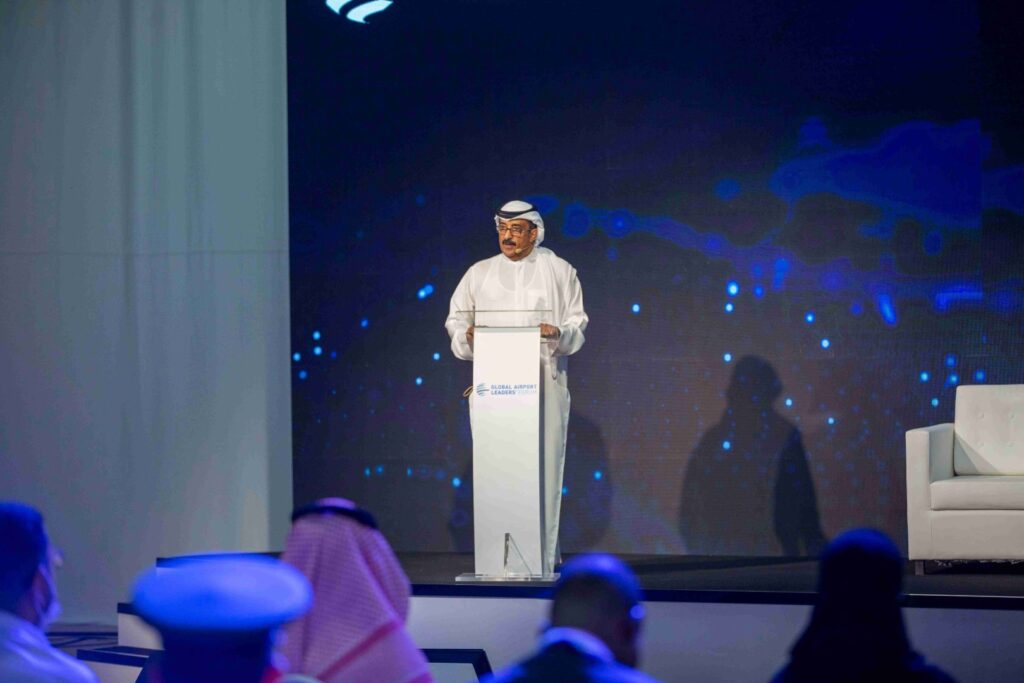
Dubai Airport is on the right track, having retained its position as the world’s busiest international airport with 29.1 million passengers, and just last week, announcing its busiest quarter since 2020, said Jamal al Hai, Deputy CEO of Dubai Airports.
Jamal al Hai made this statement while delivering the welcome address at the Airport Innovation and Development Conference at the Gulf Airport Leaders’ Forum (GALF) held alongside the 21st edition of the Airport Show in Dubai.
Welcoming the delegates, he said the GALF is organised in person after two years of the pandemic, marking a new healed era of aviation.
“This is, in fact, the outcome of a successful handling of the crisis and what you see in Dubai today is the outcome of a flawless response to the pandemic achieved through a balance between protecting the health and well-being of the people while minimising the impact on business and economy.”
Delivering the welcome address, Ibrahim Ahli, Deputy CEO of Dubai Air Navigation Services (dans) said Dubai is galloping in all economic and social sectors, attracting businesses, talents, investors and tourists in hordes. Dubai is fast becoming the Future City of the world, driven by the maximum embrace of technology, relaxed regulations and reforms. All this will result in increased traffic, and it underscores the need for enhancing the safety, capacity and efficiency of the airspace of Dubai, where dans plays a crucial role.
Khalid Aljabir, Senior Vice President, Operations, dans, read out Ahli’s speech in his absence.
“We had proved our mettle when dans efficiently managed more than 1,338 aircraft movements daily through Dubai airports, before the COVID-19 pandemic. dans manages the air traffic through Dubai International, which has ranked first in the world for international passengers since 2014, and it had handled about 1.115 billion passengers on more than 7.47 million flights since the airport started operating in 1960,” he said.
“We take pride in implementing the region’s first procedures for Enhanced Wake Turbulence Separation (eWTS) Minima within the controlled zone. The Dubai RECAT-Enhanced Wake Turbulence Separation is part of the vision to make Dubai the airport for the world, enhance its airspace and the efficiency of airports along with the profitability of carriers.”
In his keynote address titled “Standardising Regulations Regionally and Globally”, Mohammed Faisal al Dossari, Senior Director, Air Navigation and Aerodromes Department, UAE General Civil Aviation Authority (GCAA), said that post-COVID the industry must work across all aspects of aviation to standardize regulations and spur growth.
The UAE is expected to develop draft regulations on Vertiport in the first quarter of 2023 and publish them in the fourth quarter of 2023 to be implemented in the first quarter of 2024.
Al Dossari said the number of GCAA registered commercial drone organisations is increasing. “Up to 2022, we have registered 20,000 private drone users, 870 commercial drones, and 181 commercial drone organisations to operate drones.”
Future developments include Unmanned Traffic Management, Scheduled UA operations, Night Operations, Multiple Unmanned Aircraft Operations, Autonomous Unmanned Aircraft Operations, Urban Air Mobility, Unmanned Aircraft Delivery, High-Speed Unmanned Aircraft and High Altitude Unmanned Aircraft.
Yahya Abdalla Al Hammadi, CEO, Global Air Navigation Services (GANS), in his keynote address “Disrupting ATM to support the recovery of the industry,” said Air Traffic Control could play a huge role in reducing carbon emissions by adopting new technologies that can help airlines plan more efficient routes and work with other stakeholders to help reduce the overall carbon footprint.
The Airport Show, the world’s largest annual airport event, was opened by H.H. Sheikh Ahmed bin Saeed Al Maktoum, President of the Dubai Civil Aviation Authority, Chairman of Dubai Airports, and Chairman and Chief Executive of Emirates Airline and Group, under whose patronage the event is held.
Organised by RX Global, the world’s largest airport industry B2B platform has a sharp focus on sustainability to help the aviation industry achieve a more sustainable airport industry that aims to reduce the carbon footprint year on year.
The Airport Show is supported by Dubai Airports, Dubai Police, Dubai Civil Aviation Authority (DCAA), dnata (part of Emirates Airline and Group), Dubai Aviation Engineering Projects (DAEP), Global Air Navigation Services (GANS), and dans.
The award saw a high turnout from authors around the world, with more than 3,000 applications submitted from more than 55 countries, including 20 Arab countries.
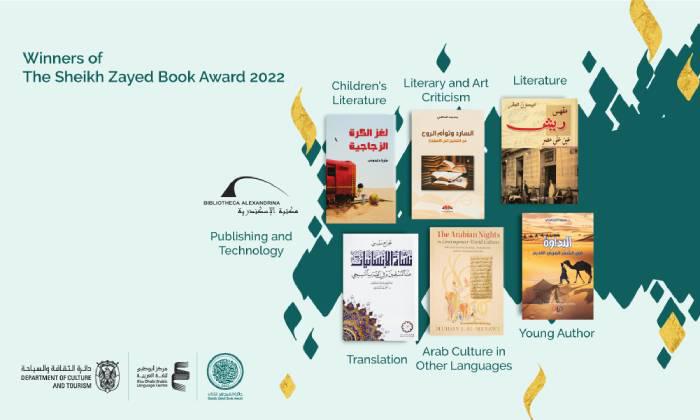
Sheikh Zayed Book Award (SZBA) announced on Monday the winners for its 16th edition across seven categories, selecting six literary figures, intellectuals and translators, along with Egypt’s Bibliotheca Alexandrina, for top honours.
Over the years, the Sheikh Zayed Book Award has managed to expand and become one of the most prestigious events in the Arab world, allowing for the development of cultural dialogue and the creation of new opportunities for authors and translators around the world.
This year’s winner in the young author category is Tunisian professor Mohamed al-Maztouri with his book Al Badawa fi al She’er al Arabi al Qadeem (Bedouinism in Ancient Arabic Poetry).
“The author of this book, Mohamed al-Maztouri, presents a serious academic study of bedouinism in ancient Arabic poetry,” the Zayed programme commented.
Adding that Maztouri “discusses its diverse concepts and many manifestations, describing it as a culture with special landmarks and a lifestyle inseparable from its place, environment, and geography.”
From pre-Islamic times the Arabian Peninsula has been home to world-class poetry that is deeply connected to values of bravery, nobility, eloquence and at times sensitivity.
Throughout the centuries, poetry’s popularity has only grown in the region, attracting new audiences in both the Arabian Peninsula and other Arab countries in North Africa and the Levant.
Today, the trend has been further boosted by Emirati initiatives and competitions.
The translation award went to Egyptian translator and author Ahmed Aladawi for his translation of the American author, George Makdisi, book “ The Rise of Humanism in Classical Islam and the Christian West” into Arabic.
Each winner receives a life-changing prize of AED 750,000 (USD 204,190/GBP165,220).
Winners will also be honoured in a ceremony at the Abu Dhabi International Book Fair later this year.
The Cultural Personality of the Year winner will be presented with a gold medal and a certificate of merit, as well as a Dh1 million prize.
source/content: thearabweekly.com
______________________
Full list of winners of the Sheikh Zayed Book Award 2022:
Literature
Maq’ha Riche, Ain Ala Massr (Eye on Egypt: Cafe Riche) by Maisoon Saqer. Published by Nahdet Misr Publishing
Children’s Literature
Loghz al Kora al Zujajiya (The Mystery of the Glass Ball) by Maria Daadoush. Published by Dar Al-Saqi
Young Author
Al Badawa fi al She’er al Arabi al Qadeem (Bedouinism in Ancient Arabic Poetry) by Mohamed Al-Maztouri. Issued by the Faculty of Literature, Arts and Humanities at Manouba University and the GLD Foundation
Translation
Nash’at al Insaniyat Einda al Muslimeen wa fi al Gharb al Maseehi (The Rise of Humanism in Classical Islam and the Christian West) by Ahmed Aladawi. Published by Madarat for Research and Publishing.
Art and Literary Criticism
Al Sarid wa Taw’am al Rooh: Min al Tamtheel ila al Istinaa (The Narrator and the Soulmate: From Acting to Faking) by Mohamed Aldahi. Issued by Le Centre Culturel du Livre.
Arab Culture in Other Languages
The Arabian Nights in Contemporary World Cultures: Global Commodification, Translation, and the Culture Industry by Muhsin J. Al-Musawi. Cambridge University Press.
Vatican envoy to UN presents royal couple with 2022 Path to Peace award at gala event
Queen Rania praised for focus on education, prioritization of young people
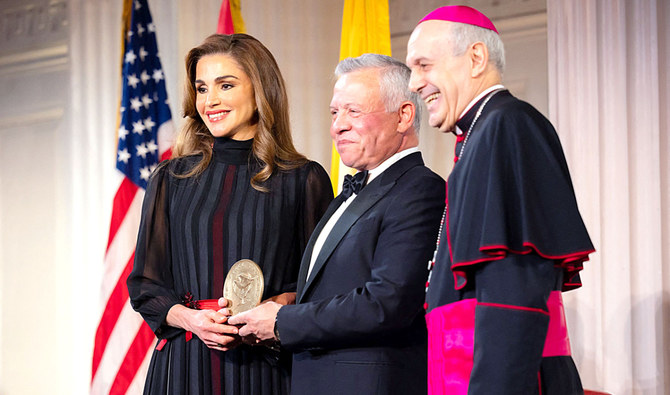
The Vatican’s Path to Peace Foundation has presented Jordan’s King Abdullah and Queen Rania with the 2022 Path to Peace award for their promotion of interfaith harmony and dialogue.
Commending the royal couple for a “years-long effort” in promoting peace and interfaith cooperation in the Middle East, Vatican Ambassador to the UN Archbishop Gabriele Caccia made the presentation at the foundation’s 29th annual gala in New York.
The envoy singled out the queen’s focus on education and the prioritization of young people in her work.
He said: “She has long shown concern for the questions of education, connectivity, and cross-cultural dialogue, as well as sustainability, the environment, and migration, which places young people at the heart of solutions and is imbued with a sense of hope.”
King Abdullah said he accepted the award on behalf of “Jordanians, men and women, young people and elders, Muslims and Christians alike.”
Noting that Jerusalem was also home to many Arab Christians, part of the oldest Christian community in the world, he noted that “our journey to peace must travel through Jerusalem,” describing the city as “key to the future and stability that we all seek.”
He added: “Jerusalem should be an anchor for peace and coexistence, not for fear and violence.
“The (world’s most difficult challenges) will be met by drawing on our faith in God, our common humanity, and our will to jointly defeat poverty and despair, and end occupation and injustice.
“(Also), to help refugees everywhere return home, ready to rebuild shattered communities, and renew the hope that young people everywhere so desperately need.”
The monarch called on the international community to work toward a just and lasting peace in the Holy Land through a two-state solution with East Jerusalem as the capital of an “independent, sovereign, and viable Palestinian state … living side-by-side with Israel.”
source/content: arabnews.com (edited)
_________
Jordan’s King Abdullah and Queen Rania receive the Path to Peace Award in New York for their promotion of interfaith harmony and dialogue. (AFP)
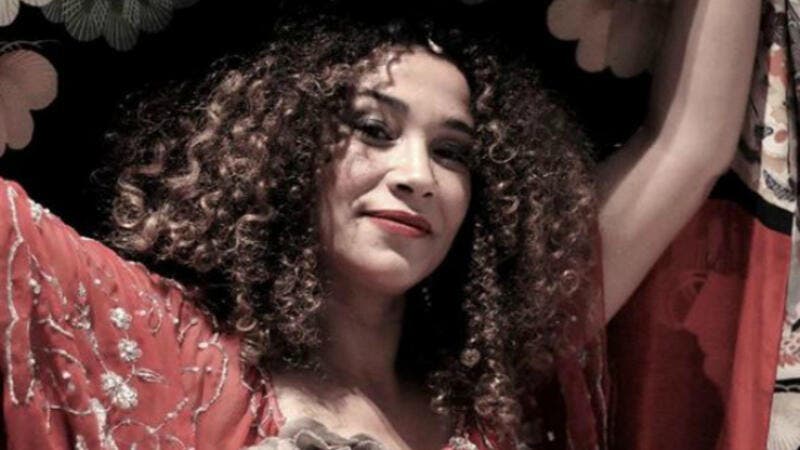
Ghalia Benali is a Tunisian poet, writer, and songwriter best known for dabbling in multiple music genres, multiculturalism, and defining contemporary Arabic music. She is also an actress and a graphic designer, a talent that goes hand-in-hand with her literature works such as “Romeo and Leila.”
Although born in Brussels in 1968, Benali was raised in Zarzis, in southeastern Tunisia, where she got her early exposure to songs and dances, with her mother being her personal music teacher. Growing up, she was exposed to the world of Egyptian and Indian films, as well as the voices of Arab singers such as Adib AlDayikh, Oum Kalthoum, and Sabah Fakhri, all of which influenced her multicultural style of singing growing up.
By the age of 19, Benali returned to Belgium to study graphic design at the Institut Saint-Luc of Graphic Arts where she would begin to sing and perform professionally. Her early performances would include collaborations with live bands and fellow musicians in 1993, a tour in Portugal in 1994, and a live performance with the band “Timna,” in Brussels, in 1999.
From 2001, she released a number of loved albums such as “Wild Harissa,” “Nada,” and “Romeo and Leila.” However, the very album that put her on the map was “Ghalia Benali Sings Umm Kulthum.” In fact, it was a smashing hit, earning her the title Ambassador of Arab Culture in Europe in 2009. By the following year, Benali would be featured on television across several Arab countries.
Benali is also renowned for her poetry, some of which centered around works by famous poets, Sufism, and Persian mystics. She is also known for her acting, winning an award from Women for Africa Foundation for her role in “As I Open My Eyes” in 2016, and nominated by Les Magrittes du Cinema for “Best Hope Actress” in 2017. She had played recent roles in the films “Fatwa,” and “A Tale of Love and Desire.”
Finally, Benali is credited for launching the Brussels-based MWSOUL Art Foundation. Having had to deal with unorganized management, she took it upon herself to launch her very own platform, a non-profit organization that brings awareness through art. You can follow them on Instagram for featured artworks and photography.
NamX’s prototype was unveiled earlier this week. Yet the car will not be available in the market until 2025.
Morocco-French businessman Faouzi Annajah, founder of NamX, has co-created the world’s first car partially powered by a patented removable hydrogen tank system.
NamX’s patented technology consists of a fixed hydrogen tank and six removable capsules.
Set to be released in 2025, NamX responds to the rising demand for hydrogen and hybrid cars amid an increasingly prevailing shift towards clean energy sources and decarbonization worldwide.
“Our double ambition is to become a new reference in the world of zero-emission cars, and to constantly explore new territories to facilitate mobility of our consumers,” Faouzi ANNAJAH, Founder and President of NAMX said in a press release. “ NAMX is a collective project built with the best industrial and technical partners in Europe and Africa.”
The European-African project gathered the support of renowned stakeholders on both continents including Ibrahima Sissoko, founder of over 30 companies, Pierre-Yves Geels, former VP strategy of Matra automotive, Alain Diboine, former Director of the R&D Division at Renault, Mustapha Mokass, clean energy and carbon finance expert, and Raphaël Schoetgen, former Chairman of Hydrogen Europe and international hydrogen expert.
NamX was co-designed by Thomas de Lussac, co-founder of NamX, and Kevin Rice, Chief Creative Officer of Italian car design firm Pininfarina. Inspired by science fiction and American designs of the 50s and 60s, Lussac “chose to give the vehicle’s shape the cutting edge of the coming era.”
NamX is the first car designed by Pininfarina that was created from the back to the front with an eye-catching feature, an X-shaped chassis.
Commenting on the hydrogen SUV, Paolo Pininfarina, President of the Italian design firm, said that “the NAMX HUV [hybrid utility vehicle] is simply at the heart of our DNA: inventing the best driving experience to infinite mobility, with style.”
Upon its release in the final quarter of 2025, NamX will be marketed in two different versions including an entry-level rear-wheel drive with a regulated top speed of 200 km/h and acceleration from 0 to 100 km/h in 6.5 seconds. The second option provides a four-wheel drive with a regulated top speed of 250 km/h and acceleration from 0 to 100 km/h in 4.5 seconds.
The two versions will have a price tag ranging between €65,000 and €95,000.
The NamX prototype was first unveiled on May 11 in the Pininfarina headquarters in Cambiano. The public will have a glimpse of NamX at the upcoming Paris Motor Show scheduled between October 17 and 23, 2022.
As Annajah’s home country, Morocco might host the production operations of NamX, the founder told a Moroccan news outlet, promising future announcements on the matter.
As a leading African automotive hub, Morocco has attracted renowned international automotive manufacturers including ones interested in developing hybrid and electric cars.
source/content: moroccoworldnews.com
________
Faouzi Annajah: Moroccan-French Businessman Behind Hydrogen SUV NamX