Arabs & Arabian Records Aggregator. Chronicler. Milestones of the 25 Countries of the Arabic Speaking World (official / co-official). AGCC. MENA. Global. Ist's to Top 10's. Records. Read & Enjoy./ www.arabianrecords.org
Rami Al-Ali has become the first Syrian designer to join France’s prestigious Federation de la Haute Couture et de la Mode as a guest member, giving him the chance to showcase his Autumn/Winter 2025 collection on the official haute couture calendar.
The invitation signifies Al-Ali’s entry into fashion’s upper echelons — to qualify, fashion houses must meet rigorous “haute couture” or “high fashion” standards and the title is legally protected under French law.
Al-Ali joins the likes of Chanel, Dior, and Schiaparelli on the official calendar next month. His latest collection will be presented on July 10, according to the provisional calendar.
It is a “historical milestone, celebrating a lifelong devotion to craftsmanship, culture, and creative expression, rooted in heritage and elevated by vision,” the fashion house posted on Instagram.
Originally from Damascus, Al-Ali honed his fashion skills in Dubai and Beirut before founding his label, Rami Al-Ali Couture, in 2001.
His creations have been worn by a variety of celebrities, including Amal Clooney, Eva Longoria, Jennifer Lopez, and Jessica Chastain.
Al-Ali’s work has been praised for seamlessly blending his Middle Eastern heritage with Western sensibilities. He is known for designing flowing silhouettes adorned with intricate, playful embellishments—creations that are both timeless and runway-worthy.
Al-Ali is one of just a handful of Arab designers on the official haute couture calendar. The lineup also includes Lebanese designers Georges Hobeika, Elie Saab, and Zuhair Murad, as well as Saudi couturier Mohammed Ashi.
Ashi, founder of Paris-based label Ashi Studio, became the first designer from the Gulf region to join the exclusive group in 2023 as a guest member. His designs have also been worn by global celebrities such as Beyonce, Anna Kendrick, and Jennifer Hudson.
“This appointment is the highlight of my career,” Ashi said in a statement posted on Instagram when the announcement was made in 2023. “I will honor it in the memory of the great couturiers who came before me and whom I now join in the pursuit of this grand tradition of excellence in creativity and savoir-faire.
source/content: arabnews.com (headline edited)
__________
Rami Al-Ali has become the first Syrian designer to join France’s prestigious Federation de la Haute Couture et de la Mode as a guest member. (Getty Images)
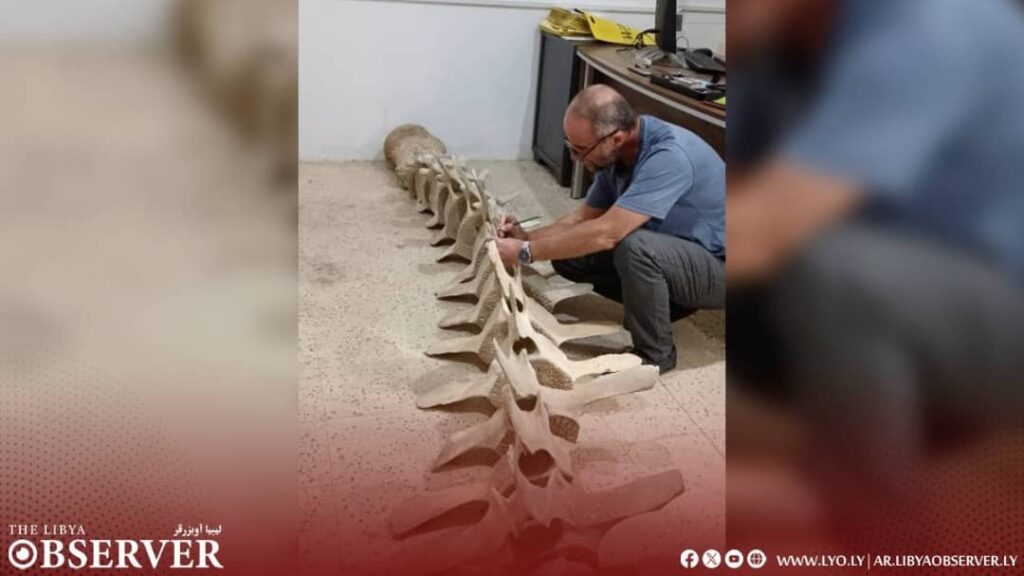
The Benghazi Department of Antiquities is preparing to begin restoration and display work on a whale skeleton belonging to the baleen whale group, previously discovered in the Qasr Al-Sahabi area, approximately 100 kilometres south of Ajdabiya.
The department stated that it has formed a scientific team tasked with cleaning and reinforcing the skeleton to preserve its structure ahead of a scientifically sound and safe relocation to its permanent exhibition site.
Officials noted that the discovery will be a significant addition to the city’s future museum and will help raise environmental and scientific awareness among visitors and enthusiasts.
The fossilized skeleton is estimated to be around five million years old, dating back to the Miocene epoch, making it one of the rarest geological discoveries in the region.
Al-Dahas highlighted the significance of Namirah Mosque in Arafat, where the Prophet delivered his sermon during the Farewell Pilgrimage.
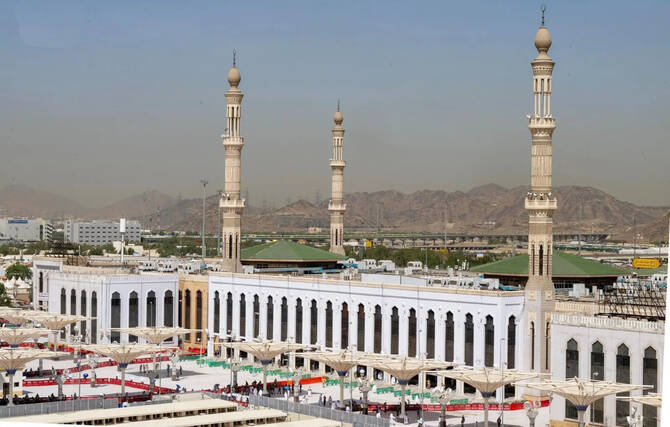
In Makkah, the holiest city in Islam, spiritual significance extends far beyond the Grand Mosque. Scattered throughout the city are historic mosques that witnessed pivotal moments in Islamic history.
Yet, amid the dense crowds and the rapid pace of modern development, many pilgrims and Umrah performers remain unaware of these sacred sites, quietly tucked away within the city’s expanding urban landscape.
Fawaz Al-Dahas, professor of history at Umm Al-Qura University, said that Makkah is home to several mosques of profound historical and religious value, yet they remain largely overlooked, receiving neither the media attention nor the organized religious visits they merit.
Al-Dahas highlighted the significance of Namirah Mosque in Arafat, where the Prophet delivered his sermon during the Farewell Pilgrimage. He said that this mosque was not merely a physical structure, but a sacred site where the foundational principles of Islam were proclaimed. He also referenced the Bay’ah Mosque in Mina, which commemorates the pivotal moment when the Ansar pledged allegiance to the Prophet, paving the way for the Hijrah and the establishment of the Islamic state.
According to Al-Dahas, the importance of these mosques transcends their geographic locations, reflecting their profound political and religious significance in Islamic history.
Al-Dahas shed light on Al-Rayah Mosque: “Located in the Jarwal neighborhood, where the Prophet’s banner was raised on the day of the Conquest of Makkah, a powerful symbol of victory tempered by forgiveness.”
He also drew attention to Al-Hudaibiya Mosque, situated west of Makkah, where the historic Bay’at Al-Ridwan pledge took place, an event referenced in the Holy Qur’an. He said that while the mosque still stands on the original site of the Treaty of Hudaibiya, it remains largely unknown, with few visitors aware of its exact location.
Mohammed Al-Joud, a Hajj and Umrah specialist, said that these mosques were not merely historical structures, but vital educational landmarks that enrich a pilgrim’s understanding of the deeper spiritual dimensions of Hajj. He pointed to Al-Khayf Mosque in Mina, where the Prophet and prophets before him are believed to have prayed, as a powerful symbol of the continuity of prophethood: “Yet, many pilgrims remain unaware of its significance outside the Hajj season.”
Al-Joud also highlighted Al-Mashar Al-Haram Mosque in Muzdalifah, which is mentioned in the Holy Qur’an, emphasizing that awareness of such sacred sites bridges the rituals of Hajj with their Qur’anic and historical roots, enhancing the spiritual journey.
Al-Joud also drew attention to Al-Kabsh Mosque in Mina, linked to the story of the sacrifice of Ismail. He explained that the mosque symbolizes the values of sacrifice and obedience, yet remains largely overlooked in media coverage and excluded from most pilgrimage programs. He described it as an essential part of a broader, interconnected network of sacred sites that trace the prophetic journey — from revelation to migration, and from peace to conquest.
Al-Dahas underscored the importance of launching awareness initiatives to shed light on these mosques and restore their rightful standing. He said that safeguarding Makkah’s Islamic heritage was not limited to preserving its prominent landmarks, but also required reviving these historically significant mosques, which once stood as pivotal markers along the journey of the prophetic message.
He said that reconnecting pilgrims with these sacred sites revived the educational and historical depth of Hajj, enriching the journey with a more profound, informed, and spiritually immersive experience.
source/content: arabnews.com (headline edited)
__________________
Scattered throughout the city are historic mosques that witnessed pivotal moments in Islamic history. (SPA)
In the holy city of Makkah, pilgrims visit Jabal Al-Nour, whose name means “Mountain of Light”.
As pilgrims complete the sacred rites of Hajj, many embark on a deeper spiritual journey by exploring historic Islamic sites across Saudi Arabia to connect with the roots of their faith.
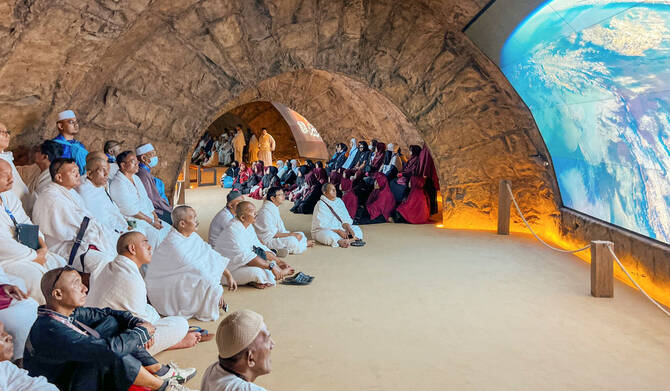
In the holy city of Makkah, pilgrims visit Jabal Al-Nour, whose name means “Mountain of Light.” At its peak lies the Cave of Hira, where the first verses of the Qur’an were revealed through the Angel Jibreel.
The mountain’s distinctive camel-hump shape makes it a striking landmark, especially with the nearby Hira Cultural District, where the Revelation Gallery offers pilgrims to learn the story of divine revelation and history.
Ahmed Khan, a private tour guide said: “There’s something unexplainable about standing where it all began. When I take pilgrims to Jabal al-Nour, many of them are moved to tears it’s not just a climb, but it’s a spiritual awakening.”
To the south lies Jabal Thawr, the mountain that cradled the Prophet and his companion Abu Bakr as-Siddiq in its cave during their migration to Madinah. The story of divine protection, where a spider’s web and a dove’s nest concealed their presence from their pursuers, resonates deeply with pilgrims.
Another frequently visited site is Jabal Abu Qubays, believed in some traditions to be the first mountain placed on Earth. As the closest peak to the Grand Mosque, it resonates with the early public da’wah and the great spiritual responsibility.
FAST FACTS
• Al-Qiblatain Mosque, where revelation changed the direction of prayer from Jerusalem to Makkah, remains a must-visit site for pilgrims.
• Programs like ‘Hala,’ launched by Al-Bait Guests Co., are curating journeys for pilgrims to explore with knowledgeable guides.
Nearby, the modest yet historically significant Al-Bay’ah Mosque marks the location of the Pledge of Aqabah, where the Ansar of Madinah pledged allegiance to the Prophet Muhammad.
Built during the Abbasid era, it symbolizes early Muslim unity and commitment to the new faith. A short distance away in Al-Hajun district is Jabal Al-Sayyidah, at the base of which lies the revered Al-Ma’la Cemetery, resting place of Khadijah, the Prophet’s beloved wife. Her grave remains a focal point of deep reverence.
“Pilgrims love visiting these places and it helps them to understand the sacrifices of the people who shaped Islam,” Khan added.
Madinah has its own timeless legacy. Al-Qiblatain Mosque, where revelation changed the direction of prayer from Jerusalem to Makkah and marked a defining shift in Muslim identity and remains a must-visit site for pilgrims.
Hussain Rauff, regional director of Madinah Hotels at Elaf Al-Taqwa, said: “We’re planning to organize guided tours across Madinah to help pilgrims explore the city’s rich Islamic heritage. It’s a meaningful way to extend their spiritual journey beyond the rituals of Hajj.”
Further west of the Prophet’s Mosque lies the cluster known as the Seven Mosques, each linked to events from the Battle of the Trench. Among them are Al-Fath Mosque and those named after figures such as Fatimah, Ali ibn Abi Talib, and Salman Al-Farsi. These mosques are rich in historical memory and serve as reminders of hardship during one of Islam’s critical battles.
Mount Uhud rises just north of Madinah city, its slopes reminds of the Battle of Uhud and the place where the Prophet’s uncle, Hamza ibn Abdul Muttalib, and 70 companions were martyred. Today, pilgrims pause at the Uhud Martyrs Cemetery indicating the modesty found in victory and the strength drawn from loss.
Equally powerful is a visit to Baqi’ Al-Gharqad Cemetery, the resting place of many of the Prophet’s family members and companions. Located near the Prophet’s Mosque, the cemetery has long served as a site for prayer and remembrance, offering pilgrims a moment of intimate connection with those who stood beside the Prophet during Islam’s formative years.
Beyond the holy cities, other destinations continue to attract pilgrims in search of spiritual enrichment. Northwest of Madinah lies Khaybar, the site of a pivotal military campaign that showcases both the strategic and ethical dimensions of the Prophet’s leadership. Its volcanic terrain and ancient fortifications tell stories etched in stone.
Fatima Al-Mutairi, a pilgrim from Kuwait: “I am planning to visit these places in Jeddah and Taif after my Hajj. I am planning to visit the Tomb of Hawa in Jeddah and in Taif, I look forward to visiting Masjid Abdullah ibn Abbas, to pay tribute to one of the great scholars whose work in Qur’anic interpretation and Hadith continues to inspire many seekers of knowledge.”
Recognizing the growing desire for such experiences, programs like “Hala,” launched by Al-Bait Guests Co., are curating immersive journeys for pilgrims to explore these sacred sites with knowledgeable guides and spiritual context.
Mohammed Al-Shahrani, experience officer in Hajj and Umrah sector said: “Our aim is to enrich the post-Hajj experience. We want pilgrims to understand that the journey of faith continues, and Saudi Arabia is opening its heritage for those who wish to walk in the footsteps of the Prophet.”
source/content: arabnews.com (headline edited)
______________
Beyond the holy cities, other sacred destinations continue to attract pilgrims in search of spiritual enrichment. (Supplied/File photo)
Global airlines are projected to record a net profit of $36 billion, with total industry revenue reaching $979 billion
Saudi Arabia and the UAE continue to bolster the industry as part of their economic diversification efforts
Middle East airlines are forecast to post the world’s highest net profit margin in 2025 of 8.7 percent, outpacing global peers, according to the latest industry report.
The forecast, released by the International Air Transport Association during its 81st Annual General Meeting in New Delhi, also projects that airlines operating in the Middle East will generate a net profit of $6.2 billion this year — slightly up from $6.1 billion in 2024. The region is also expected to earn $27.20 per passenger.
Globally, airlines are projected to record a net profit of $36 billion, with total industry revenue reaching $979 billion — below IATA’s earlier $1 trillion estimate, due in part to macroeconomic uncertainties and supply constraints.
The growth of the aviation sector in the Middle East reflects broader regional expansion, as countries such as Saudi Arabia and the UAE continue to bolster the industry as part of their economic diversification efforts.
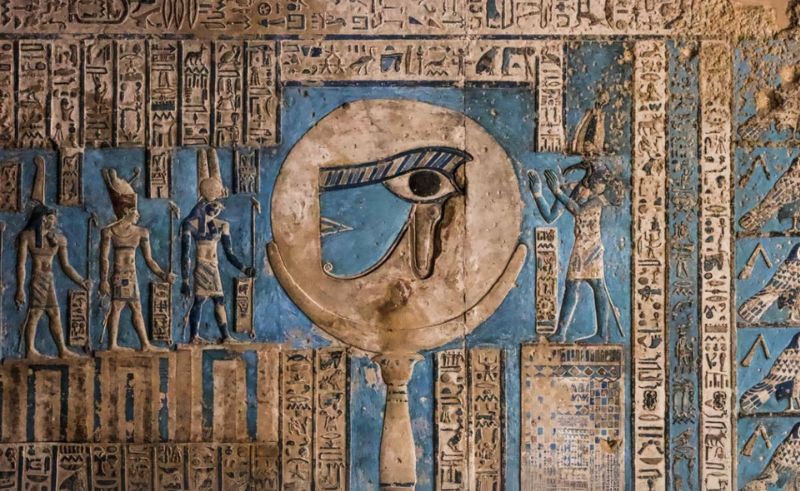
Researchers at Washington State University have revived Egyptian blue—the world’s first synthetic pigment.
A team of researchers from Washington State University, in collaboration with the Carnegie Museum of Natural History and the Smithsonian’s Museum Conservation Institute, has successfully recreated Egyptian blue, the oldest known synthetic pigment in the world. Originally developed over 5,000 years ago, the pigment was commonly used in ancient Egyptian art, tombs, and architecture.
The scientists tested 12 different methods to reproduce the pigment, adjusting materials and heating times to mirror ancient techniques. They discovered that a rich, vivid blue could be achieved even when only half of the mixture’s colour-bearing component was used—challenging previous assumptions about how the pigment was made. Small variations in temperature and ingredients also caused the colour to shift, from pale greens to intense blues and even greys.
Beyond its historic value, Egyptian blue has properties that make it relevant for modern technology. It absorbs visible light and emits infrared radiation, which can be applied in biomedical imaging, telecommunications, and anti-counterfeiting technologies.
The recreated pigment is now on display at the Carnegie Museum of Natural History in Pittsburgh.
Model & Lifestyle Influencer Nour Arida Joins Serena Williams in Audemars Piguet Campaign.
When Audemars Piguet picked the faces for its 150th anniversary campaign, it chose icons. Nour Arida was the only Arab woman among them.
In the world of luxury watchmaking, Arab women aren’t often on the moodboard. But this year, that changed.
For its 150th anniversary, Audemars Piguet didn’t just call in the usual faces – it summoned a lineup of global icons. Serena Williams. Winnie Harlow. Tamara Kalinic. And, for the first time ever, an Arab woman: Nour Arida.
Draped in AP’s legacy, the Lebanese model-slash-creative-slash-cultural force owned the frame.
“I always try to push boundaries,” Arida says, in what might be the understatement of the year. “It’s like being part of a real family, being part of the AP family.”
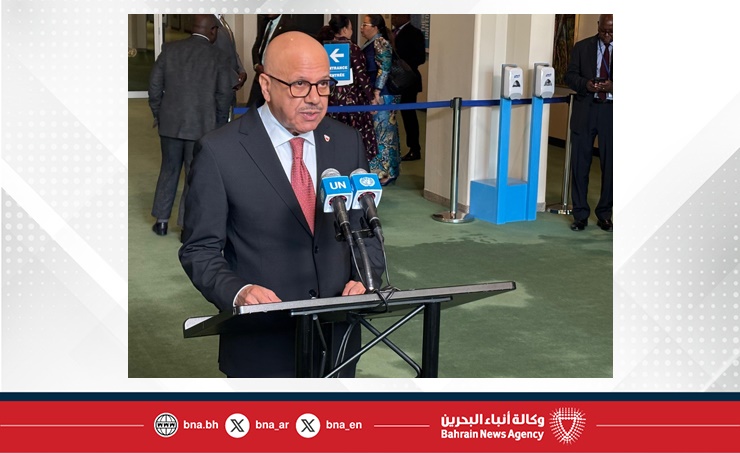
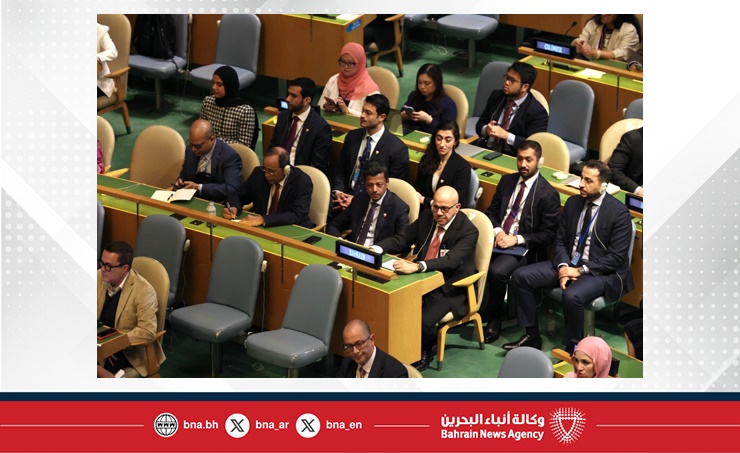
The Kingdom of Bahrain has secured a non-permanent seat on the United Nations Security Council for the 2026–2027 term, following a vote at the UN General Assembly in New York, where it received an overwhelming 186 out of 187 votes (99.5%).
Dr. Abdullatif bin Rashid Al Zayani, Minister of Foreign Affairs, congratulated His Majesty King Hamad bin Isa Al Khalifa, His Royal Highness Prince Salman bin Hamad Al Khalifa, the Crown Prince and Prime Minister, and the people of Bahrain on this achievement. He noted that the near-unanimous support is a testament to the leadership of His Majesty the King and HRH the Crown Prince and Prime Minister, and a clear recognition of global confidence in Bahrain’s foreign policy and its commitment to peace, cooperation, and international stability.
Dr. Al Zayani emphasised Bahrain’s dedication to upholding the UN Charter, promoting multilateralism, and engaging constructively with Security Council members to address global challenges.
He said that Bahrain’s approach during its Security Council term will be guided by its core values of dialogue, coexistence, mutual respect, and consensus building. He added Bahrain’s intention to serve as a voice for diplomacy, a bridge for understanding, and a champion of solutions that reflect the aspirations of peoples for a future of peace, stability, and prosperity.
Dr. Al Zayani also commended the Kingdom’s Permanent Mission to the UN, led by Ambassador Jamal Al Rowaiei, as well as all officials at the Ministry of Foreign Affairs and members of the Mission, for their dedicated work in the spirit of “Team Bahrain.” He commended their tangible efforts and outstanding diplomatic work that contributed to this significant milestone and expressed gratitude to UN member states for their support.
Bahrain’s election was met with congratulations from Arab and international delegates, who extended best wishes for a successful term on the Council.
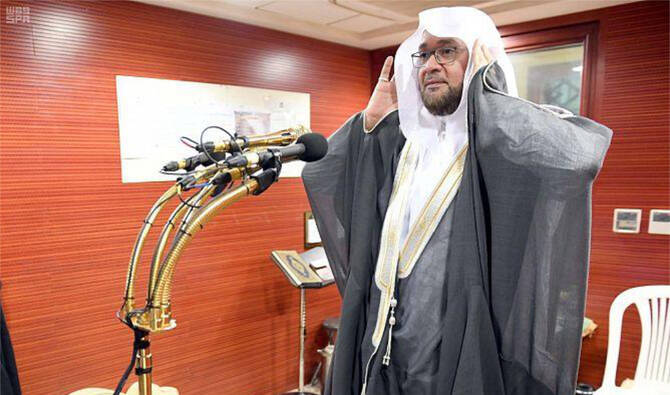
The King Abdulaziz Foundation for Research and Archives, known as Darah, has released a new book on the history of the adhan (call to prayer) and biographies of the muezzins of the Two Holy Mosques throughout the centuries.
The book was authored by Sheikh Dr. Saleh bin Abdullah bin Humaid, member of the Council of Senior Scholars and imam and preacher at the Grand Mosque.
It meticulously examines the adhan ritual in the Two Holy Mosques, covering its origins, virtues, and significance, the Saudi Press Agency reported.
The book is divided into three sections: the adhan’s history, biographies of 95 Grand Mosque muezzins, and 147 Prophet’s Mosque muezzins.
It presents biographies of muezzins who have issued the call to prayer from the time of Prophet Muhammad to the present, the SPA reported.
Drawing on credible historical sources and interviews, the author used a scientific approach to document the evolution of adhan tools and the relationship between the muezzin and the mosque.
The book also highlights the Saudi government’s support in selecting skilled muezzins and using advanced audio technology for local and global broadcasts.
This publication enriches the foundation’s collection, serving as a vital resource for researchers and those interested in the history of the Two Holy Mosques and Islamic rituals.
Egypt’s presence at Cannes Film Market wins top honour for design, programming, and industry engagement.
The Egyptian pavilion at Cannes Film Market, headed by a joint cooperation between El Gouna Film Festival, Cairo International Film Festival and the Egyptian Film Commission, has won the award for Best Pavilion Design Award during the 78th Cannes Film Festival.
Designed by cinematic set designer Shereen Farghal, and recognised over competing pavilions from 150 nations, the Egyptian pavilion was awarded for its design, curated programming, and strategic networking opportunities offered to Arab and international filmmakers.
“This award is a global recognition of the position Egyptian cinema occupies today, and of the continuous efforts we make to represent it in international contexts,” Hussein Fahmy, President of Cairo International Film Festival, said. “We made sure that the pavilion reflects the spirit of cooperation and openness to the world through a program full of dialogue, and cultural and artistic interaction, and represents a new step for Egypt’s presence in the global film industry.”
Held annually in parallel with the Cannes Film Festival, Marché du Film is a key space for co-productions, distribution deals, and film financing.