Arabs & Arabian Records Aggregator. Chronicler. Milestones of the 25 Countries of the Arabic Speaking World (official / co-official). AGCC. MENA. Global. Ist's to Top 10's. Records. Read & Enjoy./ www.arabianrecords.org
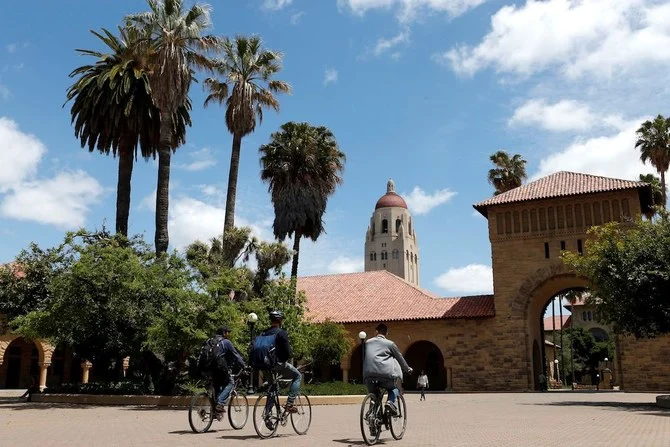
Stanford University, one of the world’s leading research and teaching institutions, published its annual “World’s Top 2% Scientists” list — featuring the most widely cited scientists in different disciplines — this week.
It included five faculty members from Riyadh’s Imam Mohammad bin Saud Islamic University: Dr. Rafiq Muhammad Choudhry and the late Dr. Hisham El-Dessouky from the department of engineering; Dr. Kamal Abdul Jawad Buradah and Dr. Ahmed Al-Khayyat from the department of science; and Dr. Qaisar Abbas from the department of computer science.
_________________
Highlight:
The ‘World’s Top 2% Scientists’ list includes Dr. Rafiq Muhammad Choudhry and the late Dr. Hisham El-Dessouky from the department of engineering; Dr. Kamal Abdul Jawad Buradah and Dr. Ahmed Al-Khayyat from the department of science; and Dr. Qaisar Abbas from the department of computer science.
______________
The university’s president, Dr. Ahmed bin Salem Al-Amri, said that the university’s recognition is a sign of the support that education and research receives from the Kingdom’s leaders.
“The leadership gives special attention to scientific research as a key pillar of the university’s success and a developmental and community-based necessity to transform universities into (places) that serve the development of the knowledge economy, by improving scientific research and its quality and outcomes in order to positively impact the economy and society,” he said.
In recent years, the university has dedicated “specialized programs and quality initiatives as part of its strategic plan to achieve the goals of scientific research and innovation,” and to improve the Kingdom’s ranking in the Global Competitiveness Index, thus achieving the goals of Saudi Vision 2030, Al-Amri explained.
source/content: arabnews.com (headline edited)
___________
Stanford University, one of the world’s leading research and teaching institutions, published its annual “World’s Top 2% Scientists” list. (Reuters/File Photo)
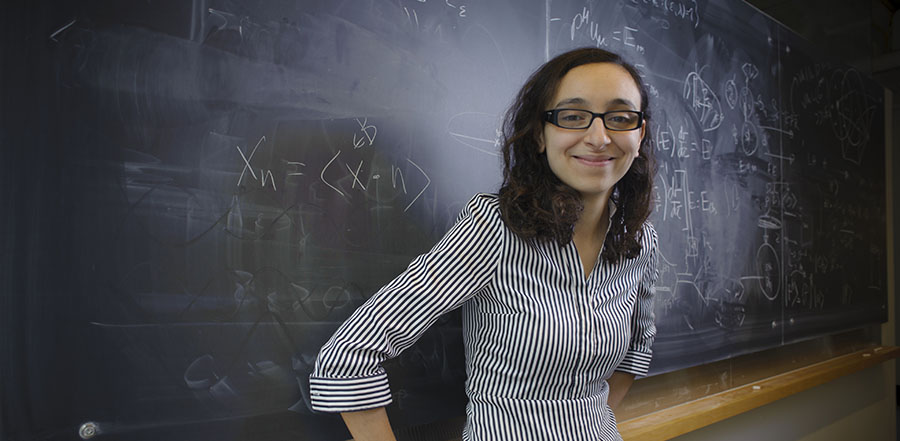
As a child in Tunisia, Lina Necib watched the 1997 film “Contact” and decided to become an astrophysicist. Now at MIT, she studies dark matter’s shadowy clues.
Lina Necib is on the hunt for something invisible.
“It’s a little bit like detective work,” she says. “We have a lot of observational types of evidence, and we’re trying to put all of it together into one picture.”
Necib, an assistant professor of physics at the Massachusetts Institute of Technology, studies dark matter, the elusive stuff that makes up most of the universe’s mass but doesn’t reflect, emit, or absorb light. For her work, Necib has won the 2023 APS Valley Prize, which recognizes early-career physicists for research expected to have a dramatic impact in the field.
In 2020, Necib and her colleagues reported their discovery of a massive stellar stream, a ribbon of stars left over when a galaxy is torn and stretched, orbiting on the outskirts of the Milky Way. Dark matter tugs at these streams, leaving behind fingerprints — evidence of its existence.
Necib believes the stream, dubbed “Nyx” after the Greek goddess of night, might be the remnant of a dwarf galaxy that collided with the much larger Milky Way billions of years ago. To study the stream, her team merged particle physics with cosmological simulations, data from star catalogs, and machine learning — a groundbreaking combination of tools. They published their results in Nature Astronomy.
Necib credits a few other physicists for her successes — “in particular, several women,” including Anna Frebel and Tracy Slatyer at MIT and Mariangela Lisanti at Princeton University.
Mentors as much as colleagues, these women helped Necib adjust to her new faculty role at MIT, which she started during the pandemic and with a newborn baby, she says.
Necib grew up in Tunisia, a small country on Africa’s northern coast, where she says she regularly faced sexist expectations for girls’ behavior and ambitions. One night, when Necib was 8 years old, her family settled in for a movie. The selection? “Contact,” starring Jodie Foster, who plays a scientist searching for aliens. The film opened Necib’s eyes not only to the field of astrophysics, but to a world in which a woman could do astrophysics.
By the end of the movie, Necib had made up her mind: “I’m going to do that!”
She set her sights on college in the U.S. As an undergraduate at Boston University, she leapt into diverse research opportunities, conducting resonance testing of graphene and even joining the search for the Higgs boson at CERN. Her interest in dark matter grew.
During her senior year, at an open house hosted by MIT’s physics doctoral program, Necib struck up a conversation with Jesse Thaler, a theoretical particle physicist. By the end of the chat, Necib knew she wanted to be at MIT.
Necib ultimately asked Thaler to be her dissertation advisor. “He was so enthusiastic about the work that he did. He loved it so much — it was kind of contagious,” she says. “Having an advisor who really put in the time and effort to help me become the physicist that I am changed my life.” Necib earned her doctorate in 2017.
Now in her second year as an assistant professor at MIT, Necib hopes to change cultural attitudes about science careers in Tunisia, where certain professions are given more weight. She wryly summarizes this ranking, starting with the best: “Doctor, engineer, lawyer, failure.”
To topple these perceptions, Necib recently teamed up with Rostom Mbarek, another Tunisian physicist and the Neil Gehrels Prize Postdoctoral Fellow at the Joint Space-Science Institute. The duo just launched an astrophysics podcast entirely in Tunisian Arabic.
In her MIT classroom, Necib strives to debunk outdated perspectives on who does physics.
“I did this experiment last year in one of my first-year physics classes where I asked my students to name physicists,” she recalls. “And all the names they came up with were Nobel Prize winners, but they were also all the same old, Albert Einstein-like examples.”
After that session, Necib had her class learn about more recent work, including the contributions of women and scientists of color to the field.
One of Necib’s “students” is particularly young. Her 17-month-old son can’t yet say “dark matter,” but he has the children’s book “Astrophysics for Babies,” and they go on excursions to Boston’s Museum of Science. He’s a bit young for the exhibits — “he’s just impressed with the escalator,” she says — but she hopes that early exposure will instill in him a love for science.
Meanwhile, her search for dark matter continues. She says that, if someone else solves the mystery of dark matter before she does, it won’t phase her. For her, being a physicist is “really about the people,” like her colleagues, mentors, and students.
“I know amazing people that are doing incredible work,” she says. “Feeling that my work is recognized fills me with so much joy. I hope to pay it forward.”
Bahrain’s GHF Financial Group has acquired a second US medical clinics portfolio at $400 million, as the firm continues its US expansion.
According to a press release, the newly acquired portfolio comprises 11 assets spread across four states: California, Texas, Maryland and Louisiana.
The new investment capitalizes on GFH’s joint venture partnership with Big Sky Medical, an asset management firm focused on medical assets.
Over the past six months, GFH, along with Big Sky Medical, has acquired assets worth $500 million.
To date, GFH has built a portfolio of assets in the US medical office building sector valued at $1 billion.
“We are pleased to announce the acquisition of this prime, income-yielding medical clinic portfolio as part of GFH’s ongoing expansion in the medical office building sector in fast-growing cities across the US,” said Nael Mustafa ,co-chief investment officer for real estate at GFH.
He added: “We believe strongly in the long-term fundamentals in the health care sector and the dynamics that are supporting an increase in demand for high-quality medical office space.”
source/content: arabnews.com (headline edited)
____________
To date, GFH has built a portfolio of assets in the US medical office building sector valued at $1 billion. (Shutterstock)
Mohammad Abdullah Al Gergawi, Minister of Cabinet Affairs, Chairman of the Committee leading Great Arab Minds, and Secretary-General of the Mohammed Bin Rashid Al Maktoum Global Initiatives (MBRGI), highlighted the details of “The Great Arab Minds” initiative.
Launched by His Highness Sheikh Mohammed bin Rashid Al Maktoum, Vice President, Prime Minister and Ruler of Dubai, in January 2022, the initiative is the Arab world’s largest movement designed to search for exceptional talents among Arab scientists, thinkers, and innovators across key fields.
The Great Arab Minds initiative, under the MBRGI, aims to identify, support and acknowledge leading thinkers in the region, amplify their impact and inspire future generations. One of its main purposes is to reduce the emigration of Arab scientists, specialists, intellectuals, doctors, and engineers.
He affirmed that “The Great Arab Minds” initiative reflect His Highness’ vision in reigniting the Arab World’s Civilisation Drive, support great Arab minds and acknowledge their work and achievements, in service of humanity.
Mohammad Al Gergawi pointed out the importance of the Arab Reading Challenge initiative launched by His Highness Sheikh Mohammed bin Rashid Al Maktoum, among many other development projects, serving more than 91 million beneficiaries.
A study conducted by KPMG, showed that ignorance costs the Arab world more than US$2 trillion. The Great Arab Minds initiative aims to change this reality and contribute to shaping a brighter future for Arab generations.
During an event organised in the Museum of the Future to announce the details of the initiative, Mohammad Al Gergawi witnessed the signing of four partnerships between “The Great Arab Minds” initiative and KPMG, LinkedIn, Meta, and Majarra.
The initiative’s mission is to search for exceptional talents among Arab scientists, thinkers, and innovators across key fields, aiming to identify, support and acknowledge leading thinkers in the region, amplify their impact and inspire future generations.
Over a 5-year period, “The Great Arab Minds” will reward scientists, thought leaders, scholars, and innovators across 6 categories: Natural Sciences (Physics and Chemistry), Medicine, Literature and Arts, Economics, Technology and Engineering, and Architecture & Design.
The initiative includes the “Mohammed bin Rashid Medal for Great Arab Minds”, which will be awarded to 6 winners of six categories each year.
The Great Arab Minds initiative aims to facilitate the recognition of Arab thought leaders, scholars, scientists, geniuses, and transforming their ideas to real-life breakthroughs and solutions. It also aims at empowering cluster of Arab scientists and thinkers and building a network of Arab thinkers, scientists, and exceptional talents in various fields to work as one team to drive the Arab world’s intellectual renaissance.
Saudi engineer Mishaal Ashemimry is the newly elected vice president of the International Astronautical Federation, becoming the first Saudi woman to hold the position after receiving 14 majority votes from international representatives.
Her role as one of the federation’s 12 vice presidents enables her to further the development of the space sector globally and consolidate the direction of the IAF.
As a Saudi woman and the first aerospace engineer in the Gulf Cooperation Council, her position strategically places the Kingdom at the forefront of the industry and highlights the country as a global leader in the field.
Since September 2021, Ashemimry has served as special advisor to the CEO of the Saudi Space Commission Mohammed Al-Tamimi, a position in which she consults on developing a national space strategy, creates and leads space programs, and advises leadership on direction and execution.
Ashemimry was previously a space nuclear technology consultant at the aerospace and defense company Northrop Grumman. She also conducted research funded by the NASA Marshall Space Flight Center during her time as a research assistant at the Florida Institute of Technology
At 26 years old, the engineer was also president and CEO of her own aerospace company, MISHAAL Aerospace, established in 2010.
The company developed space rockets, designed and launched its own line of cost-effective rockets titled the “M-rocket” series, completed static tests for hybrid rocket propulsion systems and provided global consultation.
In 2015, Ashemimry won the Inspirational Woman of the Year Award at the Arab Women Awards and in 2018 was awarded for her scientific achievements by King Salman.
She received her bachelor’s degree in applied mathematics and aerospace engineering in 2006 and her master’s degree in aerospace engineering in 2007, both from the Florida Institute of technology.
She is a certified Nitrox, rescue and open water diver, a commercial pilot and is trained in real space flight conditions of zero-gravity.
Ashemimry is an expert in aerodynamics, missile and rocket stage separation analysis, vehicle design, wind tunnel testing, simulations and analysis, and computational tool development.
After three years of research during and after the Covid-19 pandemic, the Kuwaiti researchers Ammar Bahman and Nasser Al-Sayegh have come up with an invention that could help reduce energy consumption in power plants.
Bahman is an assistant professor in the department of mechanical engineering at Kuwait University, and Al-Sayegh is an associate research scientist at the Kuwait Institute for Scientific Research.
Their idea, which has been registered with the U.S. Patent Office, revolves around the creation of a device that can calculate the physical state of nanoparticles dispersed in advanced thermal fluids called nanofluids.
The significance of Bayman and Al-Sayegh’s invention lies in contributing directly to the improvement of thermal systems used in Kuwait for power generation and water desalination. The invention will allow scientists to test the qualities of a nanofluid before offering it as an alternative to the conventional fluids currently used.
The researchers used virtual Internet meetings to continue working together throughout the Covid-19 curfews in Kuwait, moving through stages of clarifying the problem, discussing solutions, describing and illustrating their idea, and sending off the patent for examination.
Practical Benefit of the Invention
Bahman, who obtained a Ph.D. in mechanical engineering from Purdue University in the United States four years ago, told Al-Fanar Media that his work on this invention came from a desire to find solutions to common problems between different disciplines.
He explained that the invention is based on the scientific and practical benefit of using nanofluids to improve the efficiency of the cooling processes, because nanofluids have higher thermal properties than traditional liquids. Bahman said the invention offers a solution to a problem facing nanofluids, which is that the suspended nanoparticles are prone to settle under the liquid over time. This means that these liquids eventually lose their advanced thermal properties.
The new invention calculates the percentage of a nanofluid that has lost its thermal properties, and the time it takes for the nanofluid to complete the precipitation process. Such calculations are vital to the research and industrial sector, Bahman said, because they allow scientists, companies, and decision-makers to know the sustainability of energy-generation and conservation devices when used with nanofluids.
Al-Sayegh said the real benefit of the invention would be seen at power plants and water desalination plants, because they depend on heat transfer. The patent will allow specific nanofluids to be introduced to increase the plants’ efficiency by reducing the fuel used, thus saving electrical energy consumption, he told Al-Fanar Media.
Al-Sayegh said creating a device capable of characterising the physical state of particles suspended in nanofluids would revolutionise Kuwait’s thermal systems systems in terms of operational efficiency and fuel consumption challenges.
Research Environment in the Arab World
With the Patent Office at Kuwait University, Bahman plans to employ research results in the country’s industrial sector.
He wants to establish an energy centre affiliated with Kuwait University to conduct scientific and experimental research, offer consultations to the public and private sectors, and provide training opportunities for students, technicians, and specialist engineers.
He believes that to encourage innovation, researchers need an appropriate research environment and access to knowledge and human resources.
Bahman also thinks scientific criticism should be included in school curricula, along with the presentation of scientific problems to encourage innovative solutions. This could be achieved through joint scientific programmes with international universities and student exchange programmes, he said.
Current conditions in the Arab world “do not stimulate scientific research,” Bahman said. “The research process requires great focus, effort and time from the researcher, as well as a stable environment for those conducting scientific research. This can only be achieved when there is abundant financial support.”
Al-Sayegh added that he and Bahman were trying to establish a company to market their inventions, and turn them into practical products that serve a large number of people.
source/content: al-fanarmedia.org (for text -headline edited), (pixs: ovpr.ku.edu.kw)
Nujoud Fahoum Merancy started the Twitter hashtag ‘YallaToTheMoon’ to support latest mission.
A Palestinian-American woman is one of the leaders of the Artemis missions, a programme by Nasa that aims to fly astronauts to the Moon.
Nujoud Fahoum Merancy, 43, is the chief of exploration mission planning at the US space agency and has been working in the space sector for more than two decades.
She started the Twitter hashtag ‘YallaToTheMoon’ to support the Artemis 1 mission, which is scheduled for another launch attempt on Saturday, from Florida’s Kennedy Space Centre. ‘Yalla’ is an Arabic word that translates to ‘let’s go’ or ‘come on’.
Before the historic event, Ms Merancy spoke to The National about her Palestinian roots and her involvement in the Artemis programme.
A stellar career
The Artemis 1 mission is an unmanned flight around the Moon that will test the performance of the Space Launch System rocket and Orion spacecraft.
If successful, it would pave the way for Nasa to launch Artemis 2 and 3, crewed flights around the Moon and the first human lunar landing mission under the programme.
“As a Palestinian-American, I’m very excited to be a part of this programme,” she said.
“And, really, Nasa and Artemis, it is a much more diverse workforce than it was during the Apollo era.
“It’s important to me and to a lot of us that it represents all of humanity and Artemis itself is international because we have international partners.”
Ms Merancy, a mother-of-two, earned her bachelor’s degree in aerospace engineering from the University of Washington in Seattle.
From there, she joined the aerospace company Boeing to work on the International Space Station.
She then started working on the development of Orion, the spacecraft launching on top of Nasa’s mega Moon rocket on Saturday that will fly around the Moon — and one day carry astronauts.
“From that, I’ve transitioned into the mission planning for Artemis, which is designing and integrating the missions across all the programmes for Artemis, and that’s my current role,” she said.
Connecting with her Palestinian roots
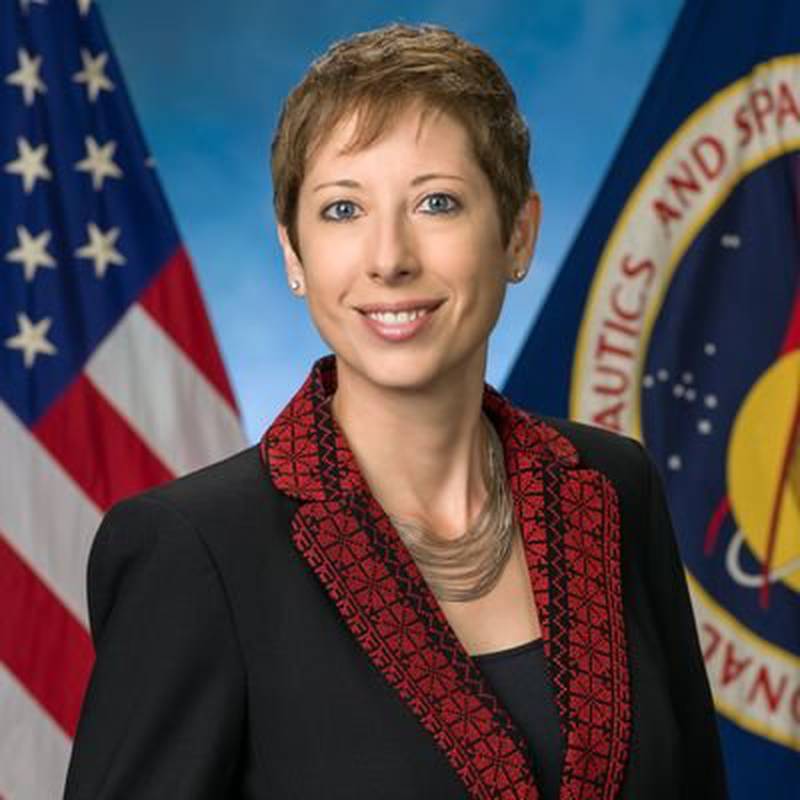
Ms Merancy went viral on the internet in 2019 when she posted her official Nasa photo, in which she wore a blazer embroidered with Palestinian tatreez, a traditional cross-stitch, that she bought during a visit to her father’s home town of Nazareth.
Her father moved to the US more than 40 years ago to go to college.
Although she was born in the US and does not speak fluent Arabic, she said her Palestinian roots were important to her.
“I don’t speak Arabic, unfortunately, it’s one of those regrets that I’ll always have,” she said.
“I know the basics, a few words here and there, and the polite greetings.
“But I do enjoy the food and that is something I grew up on. And then as an adult, I started cooking.
“So, I have a whole bunch of Palestinian cookbooks just to learn other recipes that my family didn’t teach me.
“I do like to cook Palestinian food and that’s probably the biggest connection to the culture that I have.”
Palestinian presence in the space sector
Other Palestinians are involved in the Artemis programme or are making a name for themselves in the US space sector through other projects.
Soha Alqeshawi, born and raised in Gaza city with her seven siblings, currently works for Lockheed Martin as a software engineering associate manager and looks after Orion’s back up-flight software.
And Loay Elbasyouni is a Palestinian-American electrical engineer who helped design Nasa’s Mars rover, Perseverance.
“My parents did their best to provide me and my siblings with a good education and shield us from the effects of the continuous horrific conflict that Gaza has been living under,” Ms Alqeshawi told Portuguese journalist Margarida Santos Lopes in 2015.
“Living under constant fear and despair where everything is uncertain and basic life necessities such as electricity and sometimes water are unavailable for most of the day.
“Although I was the only one in my family who had the opportunity to leave Gaza for the US to study and work, all of my brothers and sisters are college-educated with degrees in science, engineering and business.”
“Going to school was sometimes a dangerous journey that could have death waiting at any step of the way.
“However, that made us more determined to achieve our dreams in receiving an education.’
Nujoud Fahoum Merancy went viral in 2019 when she posted her official Nasa photo, in which she wore a blazer embroidered with Palestinian tatreez, a traditional cross-stitch that she purchased during a visit to her father’s hometown of Nazareth. Photo: @nujoud
The Iraqi scholar Suhad Yasin has waged a long battle against financial and administrative obstacles to continue her work on purifying polluted water.
Her graduate studies started later than most and became a long journey over 13 years of dropping out and restarting, but she persevered. Two years ago, the University of Duhok awarded her a doctorate in polymer chemistry.
Now Yasin works from an independent laboratory she set up at the University of Duhok, where she and her students use cheap, available materials to treat polluted water.
Iraq, like many Arab countries, suffers from water scarcity and stress. One study predicts the Tigris and Euphrates rivers will dry up completely by 2040.
Apart from the scarcity issue, some Iraqi waterways also face problems with contamination by heavy metals like aluminum, cadmium and chromium, adding urgency to research like Yasin’s.
An Interrupted Academic Journey
In an interview with Al-Fanar Media, Yasin described her career in industry and academe.
After obtaining her bachelor’s degree in chemistry at the University of Mosul in 1993, she joined a laboratory in a local pharmaceutical factory, eventually becoming production manager.
As violence increased in Mosul over the next decade, however, Yasin was forced to return to her family’s home city of Duhok in 2006. She got an administrative job at the Ministry of Industry of the Kurdistan Region of Iraq.
But she did not find administrative work satisfying, Yasin said, so she took a competitive exam to study for a master’s degree at the University of Duhok.
By then a wife and mother, Yasin faced challenges in studying at the University of Duhok, both with learning in English and in overcoming the skepticism of some academics. Her thesis supervisor questioned her ability to complete the work. “He told me, ‘I regret being involved in the supervision of your thesis. It will be difficult for you to complete your studies at your age because of your family responsibilities.’”
But Yasin said his words only increased her motivation. “I needed to prove to my supervisor and myself that I was not a problem, but an energetic researcher who had missed an opportunity,” she said.
Yasin got her master’s degree with excellence in 2009 with a thesis on removing chromium from water using modified pomegranate peel .
Starting from Scratch on a Ph.D.
She then applied to transfer from her job at the ministry to work as an assistant teacher in the chemistry department of the University of Duhok’s Faculty of Science.
She taught at the University of Duhok for six years but was not given an opportunity to pursue a Ph.D. because the university lacked facilities and funds for research in her specialisation. Throughout this time, she continued her research on purifying polluted water.
In 2015, the university offered her an opportunity to pursue a doctorate and she took it. There was considerable opposition to her studying for a Ph.D. at the age of 50, but she managed to convince the head of the department.
Based on the advice of her master’s supervisor, who had changed his mind about her ability, she chose nanofiber technology as the subject of her doctorate. Her new supervisor initially opposed the idea, saying the university could not afford the materials required for research on this topic. But he finally relented when she persisted.
Yasin said she had nothing but the lab walls when she started her doctoral research: no equipment, devices, or “cofactors”, molecular compounds needed in certain chemical reactions. “The resources were almost zero,” she said. “I had to buy everything myself and start from scratch.”
Lining up Support
Yasin contacted professors and scholars from various Arab countries to ask for help. By chance, she heard of a physics professor at the University of Basrah who had designed a device that would help her with her research. “I contacted the professor at the University of Basrah immediately and she agreed to help me,” Yasin said.
Yasin then had to convince her dean at the University of Duhok to manufacture a similar device so she could work. He agreed, but she still needed funding for her research.
She wrote to several international organisations asking for financial support and eventually received a three-year grant of about $207,000 from the National Academy of Sciences in the United States, in 2018. She used the money to establish an independent laboratory at the University of Duhok to conduct her research on using nanomaterials to treat water.
Yasin acknowledges that funding scientific research is a general problem in Arab countries, but she insists that scholars themselves have a duty to find funding for their research.
“We must not stand idly by. I work day and night to get new financial support,” she said. “With each refusal, I realise that I have to work more.”
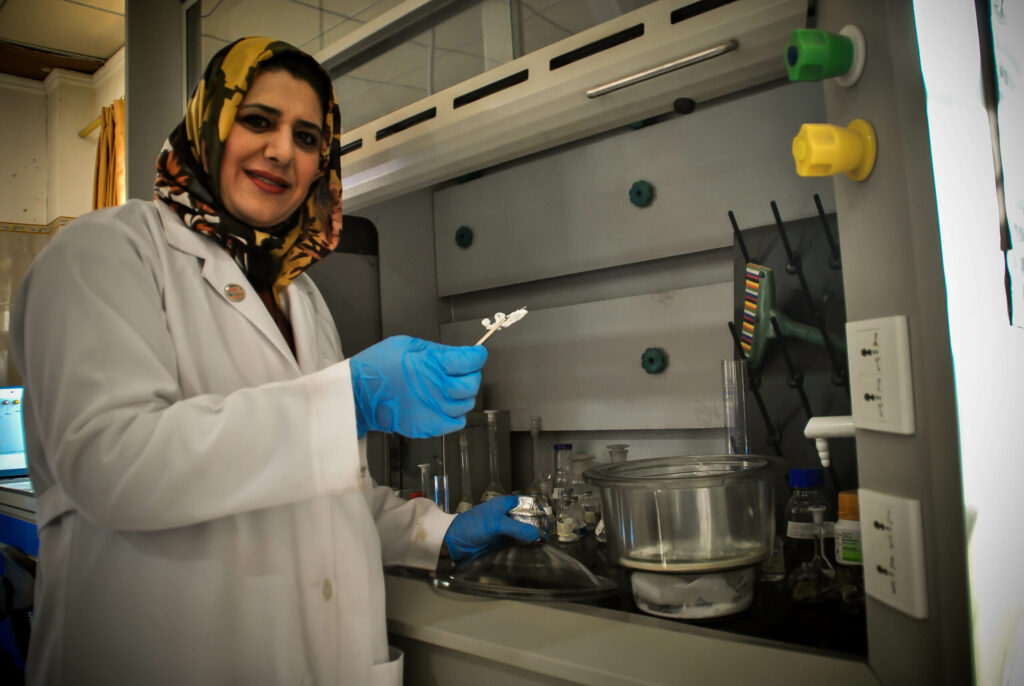
Suhad Yasin, of the University of Duhok, overcame many obstacles during 13 years of interrupted graduate study to continue her research on purifying polluted water. (Photo courtesy of Suhad Yasin)
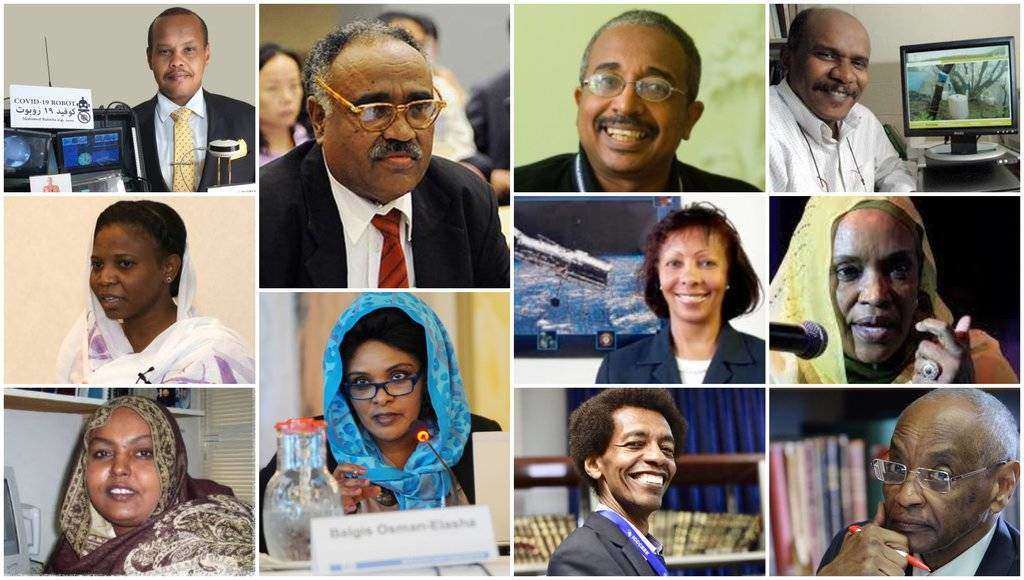
Scientists play one of the most significant roles in our world, most importantly today as we deal with a pandemic that has taken the lives of more than 300,000 people. Throughout history, there have been many accomplished and inspiring Sudanese scientists who have changed our understanding of the world around us with their research, discoveries and tangible impact.
Here are some internationally acclaimed Sudanese scientists in Sudan and across the world that you should know about:
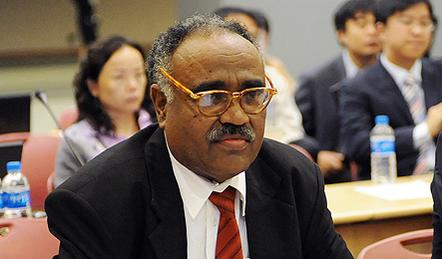
Ismail Abdel Rahim El Gizouli
Image source: Ismail El Gizouli
Ismail Abdel Rahim El Gizouli is an energy and environment specialist. He was member of the bureau of the Intergovernmental Panel on Climate Change (IPCC) from 2002 to 2008 and was re-elected for another term from 2008 to 2015. He then acted as interim chairman of the IPCC in 2015. In addition, he was the vice-chair of the Facilitative Branch of the Compliance Committee of the UNFCCC from 2005 to 2007 and was the Chair of the Facilitative Branch and Co-Chair of the Compliance Committee of UNFCCC from 2007 to 2009.
He received a Bachelor of Science in Mathematic and Physics from the University of Khartoum in 1971 and a Master of Science in Operation Research & Statistics from the University of Aston in Birmingham, UK in 1980.
El Gizouli worked as a freelancer and conducted many consultancies for the African Development Bank, World Bank, UNEP, FAO and African Energy Policy Research Network (AFREPRN). In 1998, he joined The Higher Council for Environment and Natural Resources in Sudan as a consultant on all UNDP-Government joint climate change projects.
He has participated in many international, regional and national conferences, meetings and symposiums in industry planning, sustainable development, energy, environment and climate change. In addition, he published many papers and is one of four authors of two energy-related books published by ZED Books England. He also contributed as Review Editor to many IPCC Reports including Safeguarding the Ozone Layer and the Global Climate System, Carbon Dioxide Capture and Storage (Main Report and Technical Summary), Working Group III contribution to the Fourth Assessment Report (Mitigation of Climate Change) and Fourth Assessment Synthesis Report.
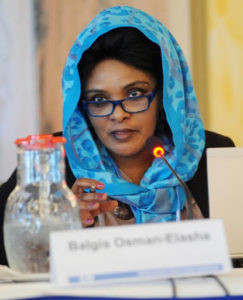
Dr Balgis Osman Elasha
Dr Balgis Osman-Elashais senior scientist at the forefront of global research on climate change. She has been a climate change expert at the Compliance and Safeguards Division at the African Development Bank (AfDB) since 2009. She holds a PhD in Forestry Science, a master’s degree in Environmental Science, and a Bachelor of Science with honour in Forestry and Agricultural Science. She has more than 17 years of experience in the field of climate change with a special focus on vulnerability and adaptation assessment related to African countries and the Middle East, emphasising the human dimension of global environmental changes.
Dr Osman-Elasha has reviewed a number of scientific papers to Elsevier and other highly reputable journals as well as a guest editor to a number of scientific publications. Before joining the African Development Bank, she was a senior researcher at the Higher Council for Environment and Natural Resources (HCENR)-Sudan. Her research focuses on vulnerability and adaptation assessment in drought-prone in Africa.
Dr Osman-Elasha is the winner of the UNEP Champions of the Earth Award for outstanding environmentalists and the winner of Lead Authors-Nobel Peace Prize. She is also a member of the International Panel on Climate Change (IPCC).
Professor Elfatih Eltahir
Professor Elfatih Eltahir is the Breene M Kerr Professor of Hydrology and Climate at Massachusetts Institute of Technology (MIT) with a focus on sustainable development in Africa. Elfatih earned a Bachelor of Science in civil engineering from the University of Khartoum, a Master of Science in hydrology from the National University of Ireland, and a Master of Science in meteorology and a Doctor of Science (Sc.D) in Hydroclimatology from MIT.
Professor Eltahir received the US Presidential Early Career Award in 1997. He is an elected fellow of the American Geophysical Union, and a member of the Sudanese National Academy of Science. He is a member of the Scientific Council of the International Center of Theoretical Physics in Trieste, Italy. In 1999, Professor Eltahir received the Kuwait Prize in Applied Sciences for his work on Climate Change, making him the youngest person to receive this prestigious prize, offered to scientists from Arab countries. In 2017, Professor Eltahir received the Hydrologic Sciences Award from the American Geophysical Union.
Dr Hiba Salah-Eldin Mohamed
Image source: iend.org
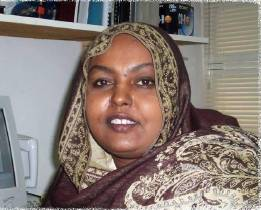
Dr Hiba Salah-Eldin Mohamed is a molecular biologist at the University of Khartoum. She studied zoology at the university, earning a bachelor’s degree in 1993, followed by a master’s degree in 1998. She then received her PhD from the University of Cambridge Institute for Medical Research (CIMR) in Cambridge, the UK in 2002. Her doctoral research, “The Role of Host Genetics in Susceptibility to Kala-azar in Sudan”, was under the supervision of Jenefer Blackwell, a well-known Professor of Molecular Parasitology. Mohamed remained at the CIMR as a postdoctoral fellow. She, along with Professor Blackwell, were later awarded the Wellcome Trust Research Development Award (2004-2007). She then moved back to Sudan and joined the University of Khartoum to be a professor in the Department of Molecular Biology.
Mohamed was awarded the 2007 Royal Society Pfizer Award for her research on understanding the genetics of kala-azar, which is also known as Visceral Leishmaniasis (VL). In 2010, Mohamed was appointed a Fellow of the Global Young Academy.
Dr Abdel Rahman’s breakthrough in growing sugar cane method involved taking cells from plant leaves, shoots or roots and growing them in a liquid culture to produce artificial seeds able to germinate. Her results and patented techniques garnered global attention and attracted interest from huge research and production companies across the world. The breakthrough led to cheaper and more productive cultivation in developing countries.
Dr Abdel Rahman passed away in 2015 at the age 59 in the UK after a fight against cancer.
Professor Mohamed H A Hassan
Image source: TWAS
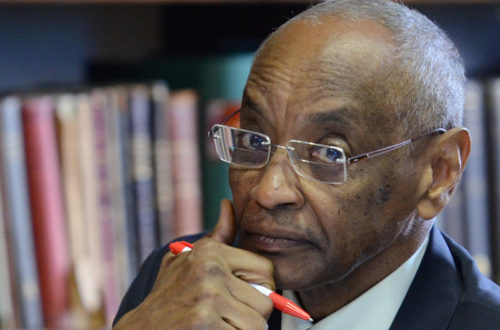
Professor Mohamed H A Hassan is co-chair of the InterAcademy Partnership (IAP), a global network of science academies, and Chairman of the Council of the United Nations University (UNU).
He received his higher education in the UK from Newcastle University and University of Oxford. After obtaining his Doctor of Philosophy in Mathematics from the University of Oxford, he returned to Sudan to lecture at the University of Khartoum. He later became the Dean of the School of Mathematical Sciences at the university.
Professor Hassan has published several articles in Theoretical Plasma Physics and Fusion Energy; Wind Erosion, Dust and Sand Transport in Dry Lands; and Science and Technology in the Developing World.
He was the founding Executive Director of The World Academy of Sciences (TWAS), President of the African Academy of Sciences, and Chairman of the Honorary Presidential Advisory Council for Science and Technology in Nigeria.
He also serves on a number of boards of international organisations worldwide, including Global Change System for Analysis, Research and Training (START) in the USA; Bibliotheca in Alexandrina in Egypt; the Council of Science and Technology in Society (STS) Forum in Japan; the International Science Programme in Sweden; the Science Initiative Group (SIG) in the USA; and the Centre for International Development (ZEF) in Germany. He is a member of several merit-based academies of science, including TWAS; the African Academy of Sciences; Islamic World Academy of Sciences; Academia Colombiana deCiencias Exactas, ísicas y Naturales; AcadémieRoyale des Sciences d’Outre-Mer, Belgium; Pakistan Academy of Sciences; Academy of Sciences of Lebanon; Cuban Academy of Sciences; and Academy of Sciences of South Africa.
Mohamed Osman Baloola
Image source: Mohamed Osman Baloola’s Facebook page
Engineer Mohammed Osman Baloola is a Sudanese scientist and inventor who was named among The World’s 500 Most influential Arabs in 2012 and 2013 for his work on diabetes ‘remote monitoring and control system for diabetes symptoms’. He has been a Teaching Assistant of Biomedical Engineering at the Ajman University of Science and Technology since 2010. Baloola won a science and innovation award at the Arabian Business Awards 2011 in Dubai. In addition, he won AED40,000 (USD11,000) during a Sharjah Television competition for his invention of a remote monitoring and control system for diabetes patients via mobile phone.
Baloola received a Bachelor of Science in Biomedical Engineering from Ajman University of Science and Technology in 2009. He later joined Ajman University as a Teaching Assistant in the faculty of Engineering.
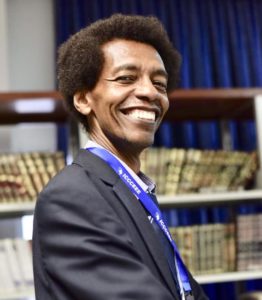
Dr Muntaser Ibrahim
Image source: Research Gate
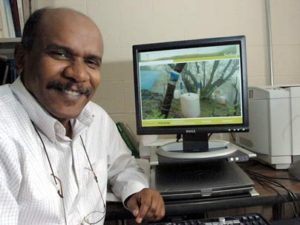
Dr Muntaseer Ibrahim is a Sudanese geneticist and professor of molecular biology at the University of Khartoum, where he leads its Institute of Endemic Diseases, a research and training centre on endemic diseases in the university. His research focuses on human genetic diversity in Africa. Dr Ibrahim is a founding member of the African Society of Human Genetics and co-founded the Sudanese National Academy of Science (SNAS). He is also a member of The World Academy of Sciences. He has co-authored more than 180 original peer-reviewed research publications, including work published in Science, Proceedings of the National Academy of Sciences, Nature, Nature Genetics, and other major journals.
Dr Nashwa Abo Alhassan Eassa
Image source: Picuki
Dr Nashwa Abo Alhassan Eassa is an assistant professor of physics at Al-Neelain University in Khartoum. She received a Bachelor of Science in physics from the University of Khartoum, a Master of Science in nanotechnology and materials physics from Sweden’s Linköping University, followed by a PhD from Nelson Mandela Metropolitan University (NMMU) in South Africa.
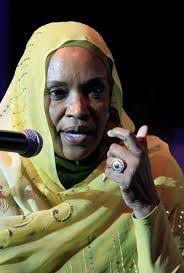
Dr Eassa founded the non-governmental organisation ‘Sudanese Women in Sciences’ and is a member of Organization for Women in Science for the Developing World’s South African Institute of Physics. In 2015, Dr Eassa won the Elsevier Foundation Award for Early Career Women Scientists in the Developing World. She has been a candidate as Arab Countries Vice-President for Organization for Women in Science for the Developing World.
Professor Widad Ibrahim Elmahboub
Professor Widad Ibrahim Elmahboub is a great scientist and astrophysicist. She has proved herself as a distinguished and competent scholar and scientist in her field. Having finished her college studies in applied mathematics and astrophysics in Sudan and Egypt, she was received a master’s degree in Engineering Physics by Wisconsin-Madison University, followed by a doctorate degree in astrophysical engineering.
Prof Elmahboub started her scientific career as a professor of astrophysics and remote sensing systems at Hampton University. Then she moved on to the research and analysis of planetary components at NASA with the main focus on enhancing the accuracy of satellite-based remote sensing imaging and data. Prof. Elmahboub has introduced a highly accurate computer-simulated mathematical model followed by the implementation of the algorithm and atmospheric correction method which enabled scientists and astrophysicists to obtain much more accurate and refined satellite images of Mars surface. Additionally, Prof Elmahboub has authored, co-authored and edited many articles in scientific journals and periodicals on remote sensing imaging technology, spectroscopy and simulated mathematical modelling.
Professor Sharief Babiker
Image source: ICCEEE’s Facebook page
Professor Sharief Babiker is a professor in the Electronics Department at the University of Khartoum and a Chairman of the world’s largest professional association dedicated to advancing technological innovation and excellence for the benefit of humanities ‘IEEE_sudan’ Subsection.
Prof Babiker received his bachelor’s degree in electrical and electronic engineering at the University of Khartoum, a master’s degree in telecommunications and information systems obtained in Essex University, the UK, followed by a nanoelectronics PhD degree at Glasgow University, Scotland. By the end of 2000, Prof Babiker was working on submicron semiconductor devices research at the Nanoelectronics Research Centre, University of Glasgow as well as on aerospace projects at Thales Avionics, the UK.
The Jordanian pharmacologist Nancy Hakooz has been chosen as the first recipient of a prestigious new prize for a scientist from a developing country, given by the International Society for the Study of Xenobiotics.
The society, known as ISSX, is the premier scientific organisation for researchers who study how organisms metabolise and dispose of xenobiotics. Xenobiotics are compounds that are foreign to an organism or are not part of its normal nutrition. Examples include drugs, food additives, and environmental pollutants.
The new prize, called the Award for Outstanding Achievement in Xenobiotic Research by a Scientist from an Underrepresented Nation, will honour researchers either for a single major contribution to research in the field of xenobiotics, or for significant sustained contributions over time.
Hakooz, a professor of pharmacogenetics in the University of Jordan’s School of Pharmacy, was chosen to receive the inaugural award “in appreciation of her efforts in studying the effect of genes on drug response, and her studying the genes of genetically isolated peoples such as the Circassians and Chechens in Jordan.”
She will receive the award at the society’s international conference in Seattle in September
In an interview with Al-Fanar Media, Hakooz said it was important for Arab scientists to be represented in international scholarly societies like the ISSX. “We have distinguished research in this field, despite the lack of capabilities,” she said.
A Practical Element in Her Research
During her research career, Hakooz has focused on practical aspects of the topics she studies, such as how genetics affect the appropriateness of certain drugs for specific patients.
“Not all patients benefit from the same drug or the same dose, since there are genetic differences between people,” she said.
“If we can study the effect of these differences on the effectiveness of a drug in patients, then the prescription for each drug will be different from one person to another,” she said. “This is called personalising medicine, meaning that the drug is provided in accordance with each patient’s condition.”
Studying a Subject She Loved
Hakooz says she chose to study pharmacy “out of love and conviction.” She had many choices of what to study at university, she said, because her excellent grades in high school. “However, I was satisfied to study what I really loved.”
After she received her bachelor’s degree in pharmaceutical sciences from the University of Jordan in 1992, Hakooz worked for a year as a teaching assistant in the School of Pharmacy. She then got a scholarship to study for a doctorate at the University of Manchester, in the United Kingdom.
She obtained her Ph.D. four years later, specialising in drug metabolism and pharmacokinetics, the branch of pharmacology concerned with the movement of drugs within the body.
Challenges for Arab Researchers
After returning to the University of Jordan in 1997, Hakooz tried to work on research similar to her studies at the University of Manchester, but she ran into difficulties for lack of funding and support. She needed lab animals, she said, but their cost was very high, and it was not easy to obtain them in Jordan at that time.
The lack of sustained funding is one of the major challenges facing scientific research in Jordan, she said. Others include the lack of a group research culture, in which scientists exchange advice and knowledge.
When she first returned from abroad, Hakooz said, she found researchers working on isolated “islands”. However, things have become better in the last ten years, with much better collaboration among research groups, she said.
To have a group culture, she tells young researchers, it is not a requirement that all of them do the same type of research, but that they support each other through research participation, each in their own discipline.
Medicinal Clinical Trials in Jordan
Despite these challenges, Hakooz believes Jordan has a great opportunity to become a regional centre for clinical studies of new drugs. Jordan has distinguished, globally recognised research centres that could participate in such studies, she said.
Pharmaceutical companies need to conduct clinical trials of new medicines in more than one place to collect data on a drug’s effectiveness and safety, Hakooz said.
An important question, she said, is, “How similar are the genetics of the people who participate in drug trials?”
Being able to answer that question will allow researchers to say whether the drug will be just as effective when it is widely circulated, she said. “The answer may be positive or negative. In order to be sure, we must participate in those experiments.”
Women in Higher Education
In addition to conducting research, Hakooz has held several administrative positions in her academic career.
She served as the founding dean of the Faculty of Pharmacy at Zarqa University, in northern Jordan, between 2010 and 2016. She was also a vice president of the university for three years during the same period.
In 2016, she returned to her alma mater, the University of Jordan’s School of Pharmacy. Four years later, she become the head of the college’s department of biological and clinical pharmacy.
On women’s leadership in Arab higher education institutions, she said: “In our country, administrative positions are granted, not acquired, and are not open to competition.”
“At the University of Jordan, for example, we have one female vice president compared to four male vice presidents, and three female deans compared to 21 college deans,” she said.
“Academic leadership positions in public universities are governed by a permanent factor, which is personal acquaintances because they are governed by appointment.”
“Administrative positions in academia come and go,” she added. “My genuine passion is teaching and seeing my students’ eyes shine when they catch a new idea.”
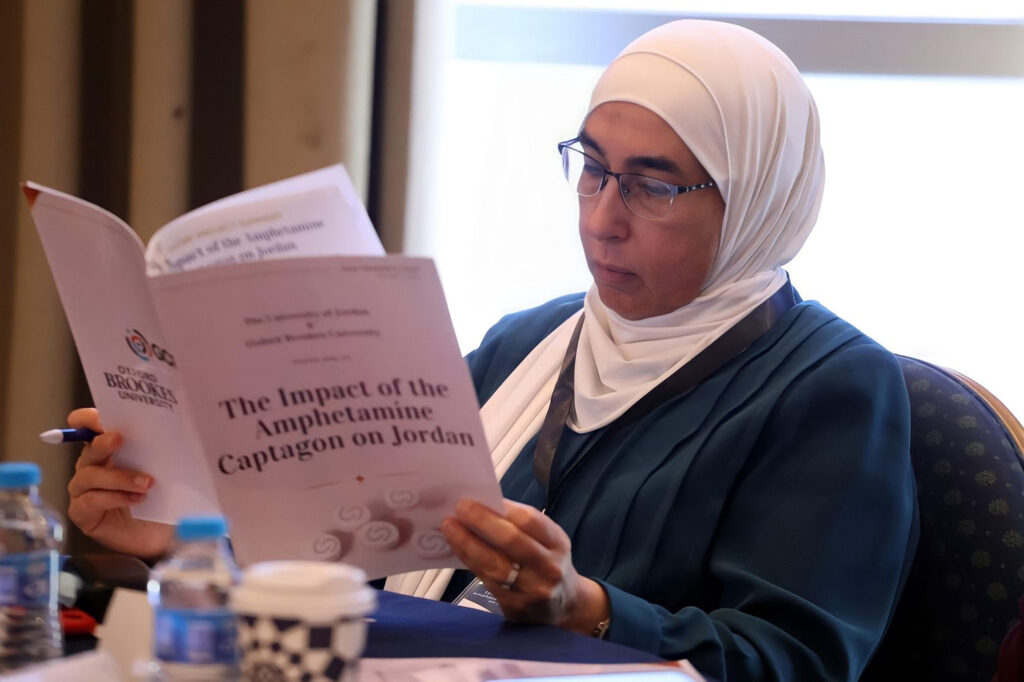
After being chosen for a prestigious international award, the Jordanian scientist talked to Al-Fanar Media about her work and the challenges for researchers in the Arab region. (Photo: Nancy Hakooz).