UNITED ARAB EMIRATES(U.A.E) :ADNOC Sends First-ever Low-Carbon Ammonia Shipment from the UAE to Germany

 Abu Dhabi National Oil Company (ADNOC) announced, today (September 01) that its first shipment of low-carbon ammonia has left the United Arab Emirates (UAE) bound for Hamburg, Germany. This is the first ever cargo of low-carbon ammonia to be shipped to Germany.

The demonstration cargo will be delivered to Aurubis, a leading global provider of non-ferrous metals and one of the largest copper recyclers worldwide, that has its headquarters in Hamburg. On arrival in Germany, Hamburger Hafen und Logistik AG (HHLA), one of Europe’s leading logistics companies will handle the cargo.

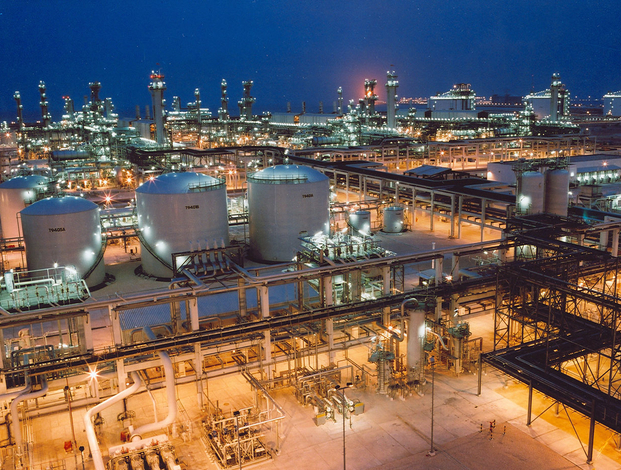
Produced by Fertiglobe, a partnership between ADNOC and OCI, at its Fertil plant in Abu Dhabi’s Ruwais industrial complex, the demonstration cargo is the first of several test cargoes sold to customers in Germany as ADNOC expands its strategic energy partnership across the hydrogen value chain. The cargo follows a number of similar low-carbon ammonia sales that have been made to customers in Asia. Aurubis plans to utilize the low-carbon ammonia as a feedstock in its wire rod plant, testing its application as an additional, lower-carbon energy source for industial ulilization. The hydrogen it contains has the potential to be a low-carbon energy alternative for the energy-intensive processes in multi-metal production.

This is another important milestone in the planned scale-up of hydrogen and low-carbon ammonia production capabilities in Abu Dhabi, where ADNOC is developing a new world-scale 1 million tons per annum low-carbon ammonia plant at TA’ZIZ, the chemicals, industrial services and logistics hub in the Ruwais Industrial Complex.

His Excellency Dr. Sultan Ahmed Al Jaber, UAE Minister of Industry and Advanced Technology and ADNOC Managing Director and Group CEO, said: “This demonstration cargo of low-carbon ammonia builds upon the longstanding bilateral relationship between the UAE and Germany and our growing partnership in clean energy. It highlights ADNOC’s expanding role as a trusted exporter of low-carbon fuels, as the UAE focuses on the industrial growth opportunities within the energy transition.

“Our collaboration with customers in Germany also underlines ADNOC’s ambitious growth plans for the production of clean hydrogen, and its carrier fuels such as ammonia, which will play a critical role in decarbonizing hard-to-abate industrial sectors. We are committed to accelerating and deepening private and public sector collaboration in clean hydrogen projects that will reduce carbon emissions and the carbon intensity of the energy that supports our everyday lives.”

Roland Harings, CEO of Aurubis, said: “As the most efficient and sustainable smelter network in the world, Aurubis provides metals that are key for megatrends such as renewable energies, electric mobility and digitalization and hence for decarbonization. To guarantee stable processes at our sites, we are expanding our portfolio of reliable energy sources and thus investing in the decarbonization of our production at the same time. This first trial shipment of low-carbon ammonia from ADNOC represents an important milestone in our long-term vision for hydrogen solutions that will help meet our decarbonization goals.”

Angela Titzrath, CEO of HHLA, said: “With its experience in port handling and logistic of containerized dangerous goods, its vast network of seaport terminals, hinterland connections and intermodal hubs across Europe, HHLA is pleased to facilitate the import of hydrogen and its derivates to Germany and Europe as part of the strategic energy partnership.”

H.E. Michael Westhagemann, Hamburg Senator for Economy and Innovation, said: “I very much welcome the fact that our international and national partners in business and the port are leading the way with these real-world trials for decarbonizing industry. We need these real-world findings and commitment to support the ramp-up of a Green Hydrogen Economy. Hamburg as an industrial location and as a European distribution port is a blueprint for this transformation and is therefore also in the German focus.”

During the visit of H.E. Dr. Robert Habeck, Germany’s Vice Chancellor and Federal Minister for Economic Affairs and Climate Action to the UAE in March 2021, ADNOC signed agreements with a number of German companies to explore opportunities for collaboration in low-carbon and renewable hydrogen derivatives.

Building on its position as an early mover in the production of hydrogen, ADNOC plans to significantly grow its hydrogen production in support of the UAE’s ambition to supply up to 25% of imported hydrogen in key global markets. Germany’s national hydrogen strategy expects an import demand for clean hydrogen of approximately 3 million tons per annum (mtpa) by 2030 and up to 15 mtpa by 2050 when, according to research from the Hydrogen Council, hydrogen could meet up to 18% of the world’s energy demand.

Low-carbon ammonia is the most promising at-scale hydrogen carrier and potential clean fuel for a wide range of applications, including transportation, power generation and industrial, including steel, cement, and fertilizer production. It is made from nitrogen and clean hydrogen derived from natural gas feedstocks, with the carbon dioxide by-product from hydrogen production captured and stored.

Collaboration with end-user Aurubis and logistics company HHLA underscores expanding role of ADNOC as a trusted exporter of low-carbon fuels as the UAE focuses on industrial growth opportunities within the energy transition

ADNOC plans to significantly grow its hydrogen production in support of the UAE’s ambition to supply up to 25 per cent of hydrogen demand in key global markets.

source/contents: adnoc.ae (headline edited)

________________

_________________________________________________

ABU DHABI, UNITED ARAB EMIRATES (U.A.E.)
QATAR: Microsoft Opens First Global Datacenter Region in Qatar, bringing New Opportunities for a Cloud-First Economy

The new cloud datacenter region launches with Microsoft Azure and Microsoft 365, giving organizations access to hundreds of scalable, highly available and resilient cloud services.

Today, Microsoft announced the launch of its new datacenter region in Qatar, marking a major milestone for Microsoft as the first hyperscale cloud provider to deliver enterprise-grade services in the country. The new world-class datacenters are open for business with Microsoft Azure and Microsoft 365 available today.

The continued investment is in response to Qatar’s growing demand for high performance computing, and fast and reliable access to Microsoft services. The new datacenter region will play a pivotal role in providing access to scalable, highly available, and resilient cloud services to accelerate the digital transformation and advance intelligent cloud adoption of businesses, customers, and partners across Qatar.

Speaking at the opening ceremony, H.E. Mr. Mohammed bin Ali Al Mannai, Minister of Communications and Information Technology, said: The launch of the Data Centre today is considered an important milestone in the process of transforming the State of Qatar into an advanced and pioneering digital center in the Middle East and the world. This journey was inspired by the Qatar National Vision 2030, which aims to establish a diversified and competitive national economy.”

His Excellency continued: “These pioneering projects in the field of digital transformation, communications and information technology would not have been achieved without the ambitions of the country’s wise leadership and its vision to this vital sector, believing in its crucial role in the development of other economic sectors. Legislative and legal regulation of the sector and enhance its attractiveness.

Microsoft has more datacenter regions than any other cloud provider and today we are proud to deliver the first hyperscale cloud datacenter region to Qatar. This development will increase opportunities for organizations of all sizes and across all sectors to leverage our trusted cloud to innovate, better serve their customers and achieve their business goals – ultimately supporting continued economic growth that benefits all residents. said Ralph Haupter, President of Microsoft EMEA.

Providing new opportunities for customers and partners

The Qatar cloud data center region will drive growth and scale for Microsoft customers and partners in the country. Microsoft customers across multiple industries, including the Ministry of Communication and Information technology, TASMU PLATFORM, the Supreme Committee for Delivery & Legacy, and many others, have already embraced the Microsoft Cloud to develop digital capabilities and innovate in their industries. Microsoft partners such as EY, Ooredoo, Vodafone, QDS, PWC, ICT,  Malomatia, Intel, Mannai, Meeza, Starlink, and Veeam are delivering transformative solutions across the Microsoft Cloud to drive customer success.

 Building future-ready skills for employability

Earlier this year, Microsoft, in partnership with the Ministry of Communications and Information Technology (MCIT), launched the National Skilling Program, with the goal to upskill over 50,000 people in Qatar through providing digital skills acquisition programs over the next four years. To date, the program had benefited over 14,000 people.

Microsoft has also established a first-of-its kind Digital Center of Excellence to help bridge the skills gap amongst the IT community and help accelerate digital transformation, in collaboration with leading universities such as MIT xPro, the European Institute of Business Administration (INSEAD) and HEC Paris.

Delivering reliable, trusted, and resilient cloud, securely

Businesses of all sizes and industries can now host their cloud workloads in Microsoft’s Qatar datacenter, taking advantage of enterprise-grade reliability and performance. Customers can begin leveraging Microsoft Azure to develop advanced applications using AI, data and analytics, IoT and hybrid capabilities with advanced digital security and more, as well as Microsoft 365, the world’s productivity cloud that delivers best-of-breed productivity apps delivered seamlessly through cloud services.

With over 100 compliance offerings – the broadest set of compliance offerings and programs of any public cloud provider – the Microsoft cloud significantly empowers customers to meet local compliance and policy requirements. This includes the National Information Assurance Certification issued by the National Cyber Security Agency, which Microsoft received earlier this year.

With its longstanding history as an early adopter of technology, Qatar has completely embraced cloud solutions and revolutionized entire industries to develop a new, advanced digital economy. Today’s announcement will enable the country to take these groundbreaking innovations to the world, showcase its standing as a leader in digital transformation and cement Qatar’s place as a global hub for innovation,” said Lana Khalaf, Microsoft Country Manager.

To learn more about the Microsoft cloud datacenter region in Qatar, please visit the website.

source/content: news.microsoft.com

____________

_______________________

MICROSOFT / QATAR

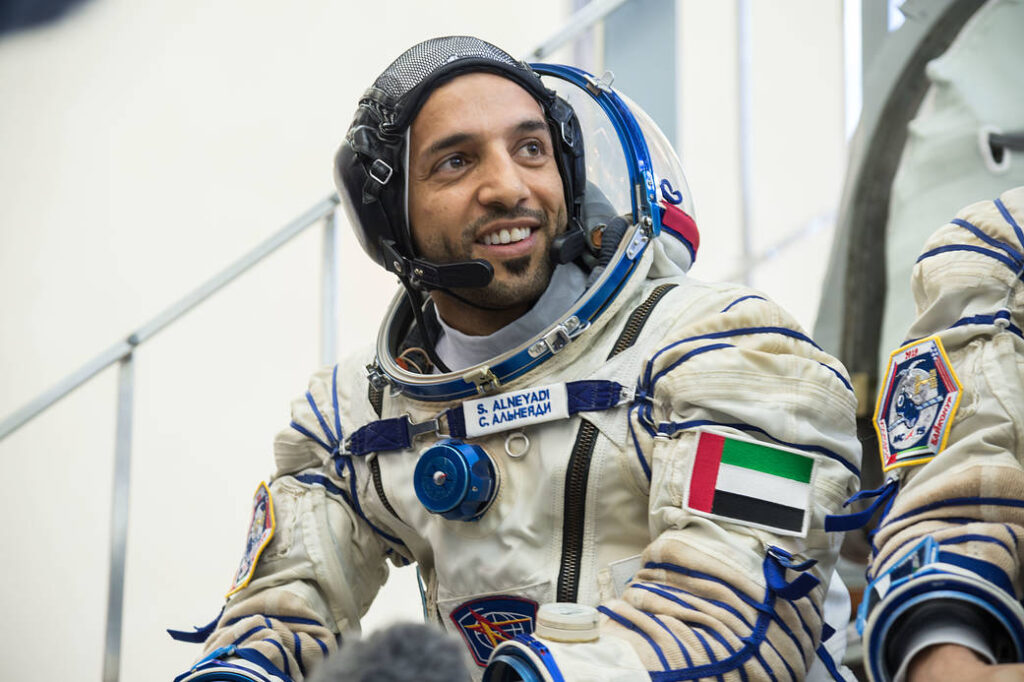
UNITED ARAB EMIRATES (U.A.E): Sultan Al Neyadi Chosen As First Arab To Go On 6-Month Mission To Space

The United Arab Emirates (UAE) became the third Middle Eastern nation to send a man into space in 2019 when it launched Hazza Al Mansouri to the International Space Station, making him the nation’s first astronaut according to catapult. The UAE then rose to the position of the 40th spacefaring nation. Now, Sultan Al Neyadi is another astronaut embarking on a new journey to set new records. An announcement was made earlier last week that UAE’s Al Neyadi will be flying to the orbiting lab on SpaceX’s Crew-6 mission, which is expected to launch in the first half of 2023 from Florida’s Kennedy Space Centre in the U.S. His participation was arranged through a previously disclosed agreement with Axiom Space, a Texas-based aerospace company.

Al Neyadi was chosen among a group of Emirati astronauts to serve as the first Arab astronaut on a protracted space mission to the International Space Station (ISS). The Crew-6 mission will be launched by NASA and SpaceX. Al Neyadi will carry out numerous intricate and sophisticated scientific experiments throughout the flight as a part of the UAE Astronaut Program.

Last year, the UAE made history with its unmanned Hope Probe to Mars by becoming the first Arab country and the fifth globally to reach the Red Planet. The mission has since discovered a new type of aurora on Mars, challenging scientists’ understanding of the planet, which was thought not to possess auroras at all. It is clear that the UAE is looking for possibilities to utilize advanced satellite communications, and use cutting-edge space technology on Earth. Therefore, the UAE established the National Space Fund which is an AED 3 billion fund from UAE Space Agency.

The fund will promote innovative initiatives that assist foreign and Emirati businesses in working together on applications in the engineering, sciences, and research fields related to space. A constellation of sophisticated remote sensing satellites using radar technologies will be the fund’s first project to be sent into orbit and will offer unmatched imaging capabilities.

This fund is crucial since it has made other projects possible and enabled economic diversification. A unifying factor among many of the Gulf Region’s nations is the transition away from an economy reliant on the production and sale of oil. In addition to the UAE, other nations like Saudi Arabia, Bahrain, and Kuwait are currently investing billions of dollars in research and development to open up new businesses, which has gradually raised regional interest in space.

The UAE’s trajectory is one that is ambitious to expand its space sector which was made official In March 2019. This is when the UAE Government launched the National Space Strategy 2030, which sets the general framework for the UAE’s space industry and activities carried out by public and private sectors for the years leading up to 2030.

source/content: scoopempire.com

_____________

pix: nasa.gov / NASA/Beth Weissinger

___________________________________

UNITED ARAB EMIRATES (U.A.E.)

QATAR to Build World’s Largest ‘Blue’ Ammonia Plant

QatarEnergy will build the world’s largest “blue” ammonia plant, which is expected to come online in the first quarter of 2026 and to produce 1.2 million tons per year, Saad Al-Kaabi, chief executive and state minister for energy, said .

While conventional ammonia production emits CO2 if it is made with fossil fuel, during the production of blue ammonia any carbon dioxide generated is captured and stored.

The facility, the Ammonia-7 project, will cost $1.156 billion to build and capture and sequester 1.5 million tons of carbon dioxide a year through the manufacturing process, he added.

“We see an increasing interest in using ammonia as fuel, driven by the need to reduce CO2 emissions in the energy ecosystem,” Al-Kaabi said.

Ammonia is mainly made from hydrogen produced from natural gas and nitrogen from the air. It does not emit CO2 when burned.

It is principally used as a raw material for fertilizer and chemicals, but it can also be used as a low-carbon fuel in power stations.

Thyssenkrupp and Consolidated Contractors Co. are the contractors of the project.

source/content: arabnews.com

___________

While conventional ammonia production emits CO2 if it is made with fossil fuel, during the production of blue ammonia any carbon dioxide generated is captured and stored.

_________

QATAR

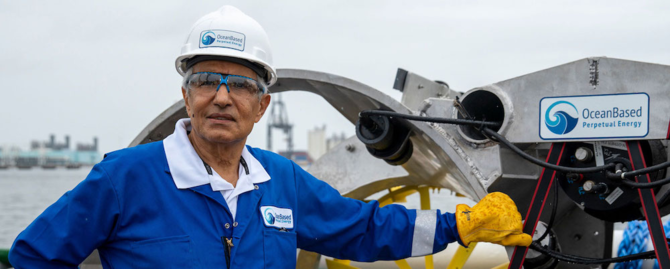
SAUDI ARABIA: Inventor Nasser Al-Shemaimry Reveals Method to Harness Energy from Oceans

 Saudi inventor Nasser Al-Shemaimry showed a method to harness energy from ocean currents using turbines at a press conference at the Movenpick hotel in Jeddah on Wednesday.

The press conference was attended by Prince Abdulaziz bin Nasser, who served at the Ministry of Interior for more than 40 years.

Al-Shemaimry, CEO of OceanBased Perpetual Energy, founded in Miami, signed a memorandum of understanding with Prince Abdulaziz.

“This memorandum will be presented to the inventor Nasser Al-Shemaimry for engineering supplies and most office services,” he told Arab News. “And to connect with ministries, and we will help him with anything he needs.”

Al-Shemaimry’s project was first used in south Florida to harness the Florida Gulf Stream current and convert it to clean and renewable power.

“Oceans and seas have some currents that go from one direction to another, the current varies in speed, but the current we are using is 5 to 6 miles per hour,” he told Arab News.

“Five-six miles per hour is enough to make the propellers turn, and our propeller is 64 meters long, so as it turns, it turns the turbines inside of the cowling, and that turbine rotates the generator, which produces electricity,” he said.

He said that his project takes the electricity from the generator to a substation then the substation regulates the electricity to what is needed.

“Then it goes to the shore and we connect it to the main substation on shore, then it is up to the city hall or the people who are in charge of the town, city or country to take it from there and take it to the power lines,” he said.

Highlighting how it compares to other sustainable power sources such as solar or wind, he said the ocean provided a continuous and uninterrupted supply of energy.

For solar energy requirements, he said as long as the sun was up the panels would work and charge batteries.

“Each energy source has its own advantages and disadvantages. Solar energy has been around forever, it works and serves its purpose, it’s inexpensive and on land,” he said.

“Windmills are everywhere, but the difference in my opinion is that our energy is perpetual; it doesn’t stop, it works 24/7 and 365 days a year.”

Since the launch of the Kingdom’s Vision 2030 in 2016, Saudi Arabia has made effective efforts to protect the environment and reduce the effects of climate change to achieve sustainability.

Extensive studies within the Green Saudi Initiative revealed a reduction of carbon emissions by more than 4 percent, and efforts to provide 50 percent electricity through renewable energy projects by the year 2030.

source/content: arabnews.com (headline edited)

___________

Saudi inventor Nasser Al-Shemaimry, CEO of OceanBased Perpetual Energy. (Supplied)

_________________

SAUDI ARABIA

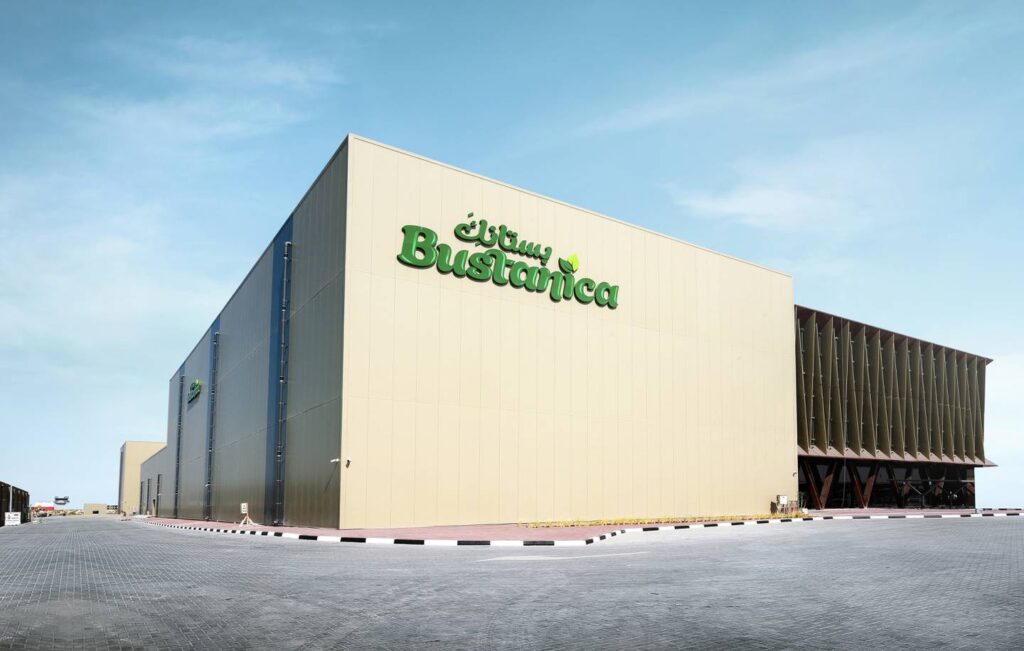
WORLD RECORDS: UAE: Emirates Flight Catering unit opens ‘Bustanica” the World’s Biggest Vertical Farm in Dubai

The $40m Bustanica hydroponic farm near DWC will produce more than a million kilos of greens annually with 95% less water than conventional farming.

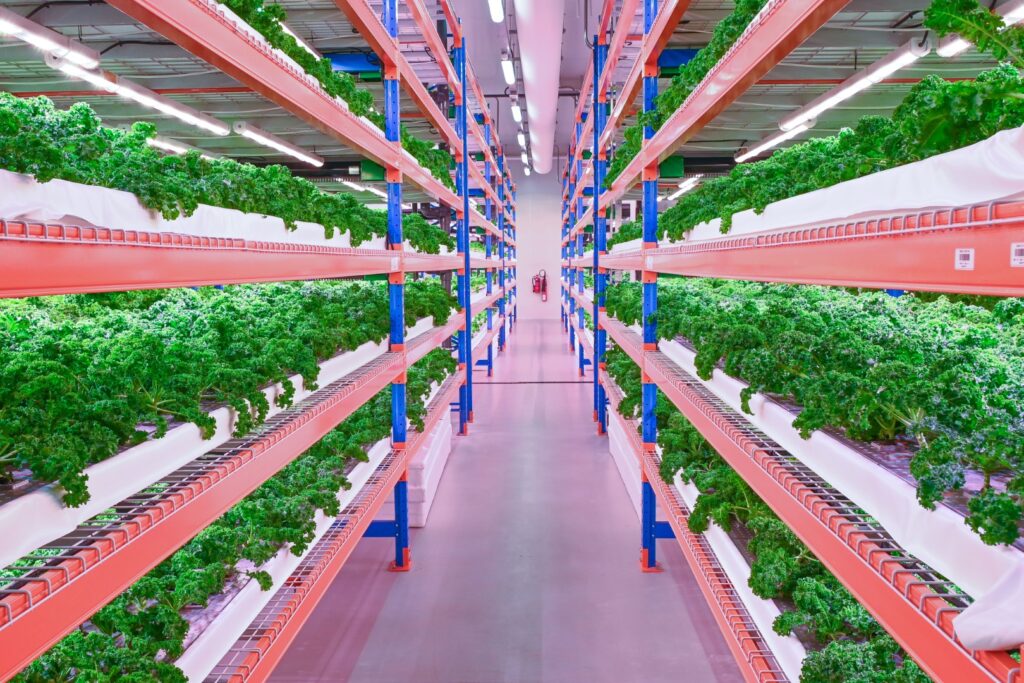
Emirates has opened the world’s largest vertical farming plant in Dubai, a $40 million (Dh147m) joint venture with US-based Crop One, as the UAE continues to bolster its food and water security.

Bustanica, the 330,000 square-foot hydroponic farm located near Al Maktoum International Airport (DWC), is set to grow more than a million kilograms of leafy greens annually, or about 3,000kg per day, Emirates said in a statement on Monday.

Using 95 per cent less water than traditional farming and saving 250 million litres of water, Bustanica will grow fresh produce without pesticides, herbicides or chemicals.

“Long-term food security and self-sufficiency are vital to the economic growth of any country, and the UAE is no exception,” said Sheikh Ahmed bin Saeed Al Maktoum, chairman and chief executive of Emirates Group.

“Bustanica ushers in a new era of innovation and investments, which are important steps for sustainable growth and align with our country’s well-defined food and water security strategies.”

Bustanica is the first facility for Emirates Crop One, a joint venture between Emirates’ flight catering unit and indoor vertical farming firm Crop One.

Emirates Flight Catering, a subsidiary of Emirates group, supplies in-flight food for Emirates and other airlines at Dubai International Airport.

Vertical farming is a technique with a significantly smaller carbon footprint than traditional agriculture. This method grows plants using mineral nutrient solutions, in water and without soil. They are grown in a fully controlled environment — everything from temperature, humidity, lighting, water and nutrients is precisely monitored, maximising growth and yield.

The new farm is in line with the UAE’s National Food Strategy 2051 agenda for reliable year-round crop production and stable supply chain that is independent of weather and attacks by pests or fungus.

Bustanica will rely on machine learning, artificial intelligence and advanced methods — and a specialised in-house team of agronomy experts, engineers, horticulturists and plant scientists — to grow fresh produce.

Passengers on Emirates and other airlines can start consuming these leafy greens, including lettuces, arugula, mixed salad greens and spinach, onboard flights from this month.

UAE consumers will also soon be able to add these greens to their shopping carts at the nearest supermarkets, according to the statement.

Bustanica also plans to expand into the production and sale of fruits and other vegetables.

Bustanica will secure Emirates Flight Catering’s supply chain and reduce its carbon footprint by bringing production closer to consumption and “reducing the food journey from farm to fork”, Sheikh Ahmed said.

The plant opened after “significant planning and construction” and navigating the unforeseen challenges of the Covid-19 pandemic, Craig Ratajczyk, chief executive of Crop One, said.

“It’s our mission to cultivate a sustainable future to meet global demand for fresh, local food, and this first large format farm is the manifestation of that commitment. This new facility serves as a model for what’s possible around the globe.”

The UAE has been accelerating its support of AgriTech companies to reduce reliance on food imports, which is thought to make up nearly 90 per cent of food consumed in the country. Abu Dhabi has launched a number of initiatives, including  $41m in grants and incentives worth $545m to support expansion.

UAE residents are already seeing evidence of recent efforts to localise agriculture: locally harvested produce at the market or on dining menus is now a common sight. Much of this has surfaced over the past few years as vertical and hydroponic farming ventures, research and cloud-seeding bear fruit.

source/content: thenationalnews.com (headline edited)

____________

pix; wam.ae
Bustanica Exterior, Emirates Flight Catering Opens World’s Largest Vertical Farm in Dubai. Emirates

____________________________________________

DUBAI, UNITED ARAB EMIRATES (U.A.E.)
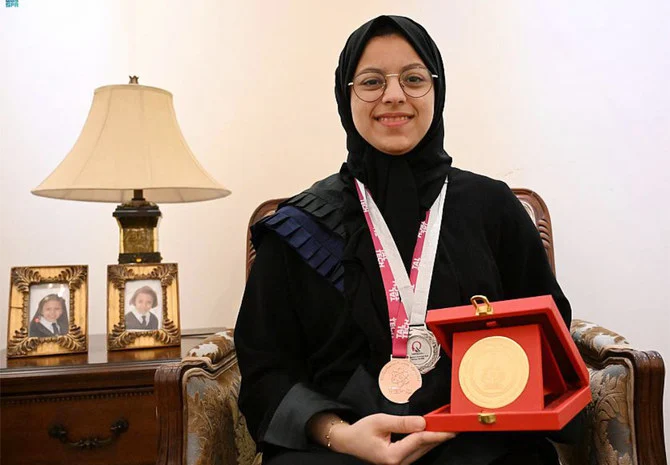
SAUDI ARABIA: Lama Al-Ahdal Prizewinning Student Speaks of her Journey to the Physics Olympiads Competition Success

Prizewinning Saudi student Lama Al-Ahdal, who has been scooping medals at Physics Olympiads, says her competition success motivates her to continue with her passion and achieve great things for the Kingdom.

She won gold at the Gulf Physics Olympiad, a bronze at the International Physics Olympiad, and a bronze at the Nordic-Baltic Physics Olympiad.

Al-Ahdal spoke to the Saudi Press Agency about the beginning of her journey in the Physics Olympiad through the Mawhoob Competition, which she took part in several times.

It was her participation in 2018 that led to her nomination to attend training forums, a path that would eventually lead her to victory.

“I started attending basic courses in Jeddah, through which I qualified and passed the required tests. I was nominated for the Winter Forum at Princess Nourah University in Riyadh, then trained with the physics team, from which a number of students in the Kingdom would qualify to form the Saudi team for the Physics Olympiad.

“At the beginning of 2019, we underwent intense eight-hour training, both remotely and at King Abdullah University of Science and Technology, to prepare for international competitions. I learned how to calculate the strength of the Earth’s magnetic field using a string and two pieces of magnets, how electricity can be generated by heating two pieces of metal, how to measure the thickness of a candy wrapper using a laser, and other scientific experiments.

“The top five students were then nominated to represent the Kingdom, and thankfully I made it and snatched the gold medal in the Gulf Physics Olympiad, the bronze medal in the Nordic-Baltic Physics Olympiad, and the bronze medal in the International Physics Olympiad.”

Joining the Saudi physics team and undergoing training helped her to discover that physics was a beautiful subject. “I learned a lot from it and the Olympiad experience.”

Her participation increased her skills and developed her thinking by getting to know competitors from different countries.

“I also developed my time management skills since the training continued even during school days. My father and mother had a major role in helping me achieve my goals and encouraging me to try new things to gain more skills and learn more,” she said.

Setting a specific goal and working to achieve it was the most important thing that motivated her to take up the challenge and try new things.

Her father, Abdul Rahman Al-Ahdal, said his daughter’s journey was full of scientific challenges.

“She has always been a talented child and a bright student, with a  promising future ahead of her. God blessed her with a group of highly experienced trainers and supervisors. It is important to focus and draw a plan and work to achieve it.

“I thank King Abdulaziz and His Companions Foundation for Giftedness and Creativity, and everyone responsible for helping the sons and daughters of the Kingdom partake in forums of creativity, innovation and scientific Olympiad, and other scientific activities.”

source/content: arabnews.com (headline edited)

_____________

_________________

SAUDI ARABIA

ARABS ABROAD: The Libyan Pharmacologist Mohamed Irhuma and the Tunisian Scientist Mohamed Kheireddine Aroua

A Libyan pharmacologist treating HIV patients in South Africa and a Tunisian scientist purifying water in Malaysia.

This is the story of two world-renowned scientists who left their homelands of Libya and Tunisia and went on to achieve great success in South Africa and Malaysia.

Libyan pharmacologist Mohamed Irhuma studied in South Africa but faced a range of challenges when his home country went through its 2011 revolution. He’s achieved success in South African HIV AIDS pharmacology, including award-winning work on drug treatments.

Tunisian chemical engineer Mohamed Kheireddine Aroua is a world expert in material separation, inventing a life-changing water purification machine which benefits remote villages.

Both stories illustrate some of the complexities of being an Arab abroad, and the journeys of two remarkable scientists.

source/content: aljazeera.com (headline edited)

____________

__________________

LIBYA / TUNISIA

EGYPT: Engineer Sara Sabry becomes the First Egyptian and simultaneously the First Female Egyptian to Travel to Space on Blue Origin Flight

Sara Sabry – Mechanical and Biomedical Engineer. The first female Egyptian Analog Astronaut

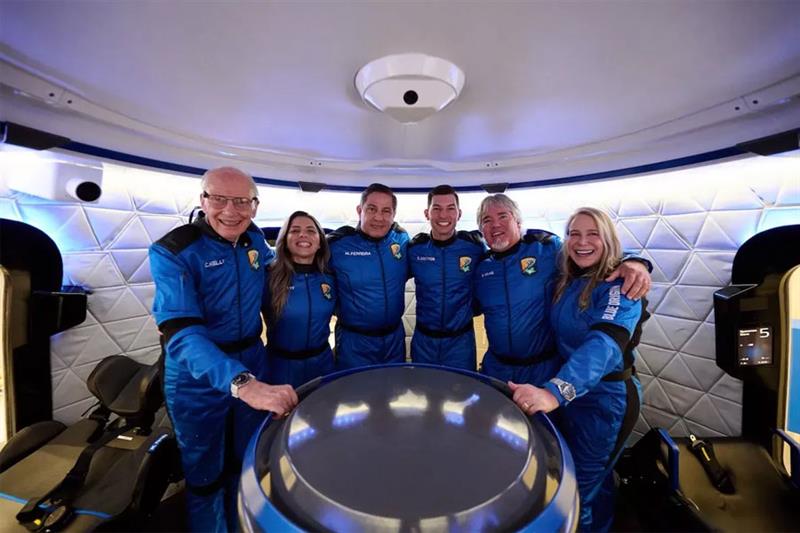
Engineer Sara Sabry has become the first Egyptian to travel on a suborbital flight, after New Shepard’s 22nd space flight (NS-22) – operated by the American private aerospace manufacturer Blue Origin – carried her and five others to the edge of space before returning to Earth.

Launched from Corn ranch, West Texas in the US, the New Shepard stayed for 11 minutes at 106 km above the ground.

The 29-year-old Sabry flew with entrepreneur Mário Ferreira, the first person from Portugal to fly to space; British-American mountaineer Vanessa O’Brien; American technology leader Clint Kelly III; telecommunications executive Steve Young; and Coby Cotton, cofounder of the YouTube channel Dude Perfect.

Sabry earned her bachelor’s degree in mechanical engineering at the American University in Cairo and her master’s degree in biomedical engineering at Italy’s Polytechnic University of Milan.

She is also currently preparing for her PhD in aerospace sciences with a focus on space suit design, according to Blue Origin.

Sabry’s seat on NS-22 is sponsored by the Colorado-based nonprofit Space for Humanity (S4H), which is concerned with increasing access to space for all of humanity.

According to the official website of Space for Humanity, its “citizen astronauts” are chosen from among “change-makers who are currently serving a community leadership role.”

Sabry is S4H’s second “citizen astronaut” to fly on board the NS-22 after Katya Echazarreta in June.

Blue Origin has not announced how much it charges for seats on its space flights, and neither has S4H revealed how much it paid to book seats for its “citizen astronauts.”

According to some news reports, however, the price possibly ranges from zero to $28 million based on several factors including who the passenger’s social status. 

This is the sixth trip by Blue Origin since its launch by US billionaire and Amazon founder Jeff Bezos in 2015.

source/content: english.ahram.org.eg (edited)

___________

_________

EGYPT

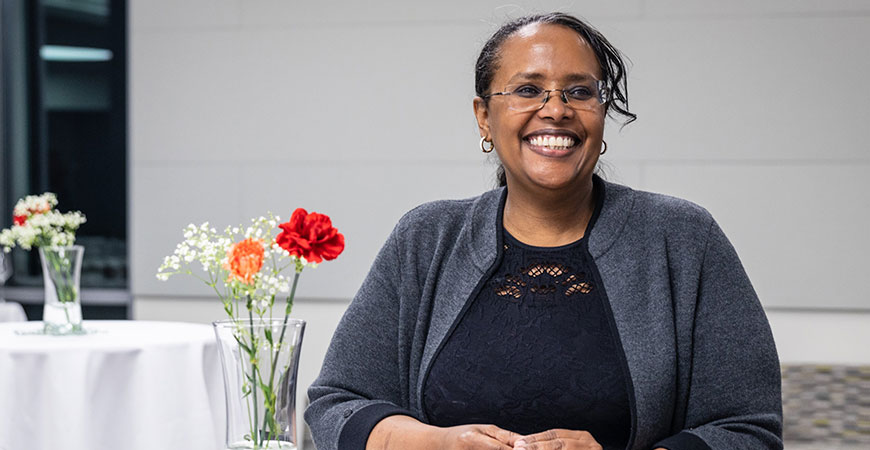
ERITREAN-AMERICAN: U.S. Senate Confirms Prof. Asmeret Asefaw Berhe as the Director, Office of Science, Federal Department of Energy

The U.S. Senate today confirmed UC Merced Professor Asmeret Asefaw Berhe to be the new director of the Office of Science in the federal Department of Energy.

The Department of Energy’s Office of Science is the lead federal agency supporting fundamental scientific research for energy, and the nation’s largest supporter of basic research in the physical sciences.

President Joe Biden nominated Berhe last April. She is a renowned professor of soil biogeochemistry in the Department of Life and Environmental Sciences in the School of Natural Sciences; the Ted and Jan Falasco Chair in Earth Sciences and Geology ; and the interim associate dean for Graduate Education .

“It is an incredible honor for me to be nominated, and now confirmed by the U.S. Senate, to serve as President Biden’s director of the Office of Science at the Department of Energy,” Berhe said. “I thank the president and Secretary of Energy Jennifer Granholm, for trusting me to help lead the next chapter in the great scientific success story of the Office of Science.”

Berhe will serve in Washington, D.C., taking a leave of absence from campus. She will hold the director position for the duration of Biden’s term.

Her research is at the intersection of soil science, global change science and political ecology with an emphasis on how the soil system regulates the Earth’s climate and the dynamic two-way relationship between the natural environment and human communities.

“I hold the Office of Science and DOE National labs with highest regard as since the time I was a graduate student and until now, DOE funding and national labs have played important role in my own scientific training and research, and the training of my mentees. Further, as a soil and global change scientist who has studied and worked in public institutions of higher learning, I have always taken my responsibility to serve the public very seriously. I believe publicly funded science and technology is critical for pushing the frontiers of science forward and inspiring the next generation of scholars,” Berhe said. “I am excited to join the Department of Energy’s Office of Science to contribute to the Office’s mission of expanding human knowledge, driving discovery, and fostering innovation, technology development and economic progress.”

“This is fabulous news and so well deserved,” Interim Vice Chancellor for Research and Economic Development Marjorie Zatz said. “Professor Berhe is highly respected as a researcher and thought leader by her colleagues nationally and internationally, as well as by those of us at UC Merced. She will be a terrific director for the Office of Science and a strong voice for inclusive excellence within the scientific community and beyond.”

“The School of Natural Sciences is immensely proud of Professor Berhe’s appointment to this important and influential office,” Dean Betsy Dumont said. “She is an immensely talented scientist who will bring a holistic, innovative and practical perspective to the challenges of energy and climate change.”

“Professor Berhe is an international leader in environmental sciences and climate change research, and a champion for underrepresented people in STEM,” Professor Peggy O’Day said. “We are excited by her appointment and the impact she will have on the national agenda in addressing energy and climate issues.”

Berhe is widely recognized for her research, including having been an invited speaker at the TED conference in 2019, and for her advocacy for inclusion, anti-harassment and anti-bullying. She previously served as the chair of the U.S. National Committee on Soil Science at the National Academies; was a leadership board member for the Earth Science Women’s Network; and is a co-principal investigator in the ADVANCEGeo Partnership — a National Science Foundation funded effort to empower (geo)scientists to respond to and prevent harassment, discrimination, bullying and other exclusionary behaviors in research environments. She is a fellow of the American Geophysical Union and the Geological Society of America, and a member of the inaugural class of the U.S. National Academies New Voices in Science, Engineering and Medicine.

Berhe was born and raised in Asmara, Eritrea, and lives in Merced with her husband, Professor Teamrat A. Ghezzehei, and their two children. She earned a B.Sc. in soil and water conservation from the University of Asmara, an M.Sc. in political ecology from Michigan State University and a Ph.D. in biogeochemistry from UC Berkeley. In 2020, she was named a Great Immigrant, Great American by the Carnegie Corporation of New York.

source/content: news.ucmerced.edu (UCMERCED) (edited)

____________

Professor Berhe. Photo by Veronica Adrover.

________________________________

AMERICAN (USA) / ERITREAN