ARAB REGION secures $351bn in foreign renewable energy projects: report

The Arab world attracted 360 foreign renewable energy projects between January 2003 and December 2024, with investments surpassing $351 billion and generating more than 83,000 jobs, according to a new report from the Arab Investment and Export Credit Guarantee Corp., known as Dhaman.

Five countries — Egypt, Morocco, the UAE, Mauritania and Jordan — accounted for 248 projects, or 69 percent of the total, with a combined investment value of $291 billion. These projects alone created nearly 68,000 jobs, representing 82 percent of employment in the sector.

The UAE led regional renewable energy investment over the past two decades, attracting 57 projects worth $88.5 billion, equivalent to a quarter of total investment and generating over 16,000 jobs.

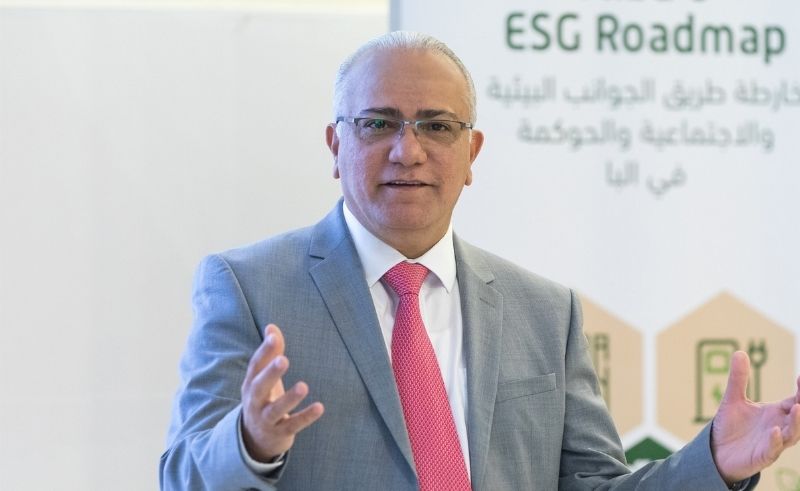
At the corporate level, Saudi Arabia’s ACWA Power topped the list by project volume with 20 initiatives, while UAE-based Infinity Power led in value, with projects totaling $34 billion.

Dhaman’s report also highlighted cross-border cooperation, noting that Saudi Arabia, the UAE, Bahrain, Jordan and Egypt invested in 90 interconnected projects worth $113 billion, accounting for a quarter of all foreign-backed activity and creating 22,000 jobs.

Looking ahead, electricity generation across 15 Arab countries is projected to expand by 4.2 percent, exceeding 1,500 terawatt-hours in 2025 and rising to 1,754 terawatt-hours by 2030. Production will remain concentrated in Saudi Arabia, Egypt, the UAE, Iraq and Algeria, which together represent nearly three-quarters of output.

Consumption is expected to climb 3.5 percent to 1,296 terawatt-hours in 2025, led by Saudi Arabia, Egypt, the UAE, Algeria and Kuwait.

Trade in electricity and power generation equipment also surged, with foreign trade in the sector up 8 percent to $39.2 billion in 2024. Exports increased 9 percent to $7.6 billion, while imports rose 7.8 percent to $31.5 billion. Saudi Arabia, the UAE, Morocco, Iraq and Qatar accounted for 81 percent of this trade.

Turkiye emerged as the region’s top electricity exporter at $446 million, while the US dominated power equipment supply at $6.6 billion. On the import side, Libya was the largest regional buyer of electricity at $59 million, while France topped power equipment imports at $593 million.

Headquartered in Kuwait, Dhaman was established in 1974 as a joint Arab entity owned by member states and four regional financial institutions. Its latest report is the second 2025 sectoral study focused on electricity and renewable energy in Arab economies.

source/content: arabnews.com (headline edited)

______________

At the corporate level, Saudi Arabia’s ACWA Power topped the list by project volume with 20 initiatives, while UAE-based Infinity Power led in value, with projects totaling $34 billion. File

_________________

ARAB REGION

QATAR , international partners launch Global Autism Alliance at UN General Assembly

The initiative aims to ensure that individuals with autism can access meaningful opportunities and social integration worldwide.

Qatar, in collaboration with international partners, has launched the Global Autism Advocacy Coalition (GAAC), calling on the global community to join forces in supporting people with autism and their families.

The initiative, announced during the 80th session of the United Nations General Assembly, aims to move beyond awareness and promote concrete collective action for a more inclusive future worldwide.

The GAAC, led by Qatar Foundation (QF) alongside the World Health Organization (WHO), UNICEF, and Autism Speaks, was unveiled during the UN’s High-Level Meeting on the prevention and control of non-communicable diseases and the promotion of mental health and well-being.

Current estimates suggest that around 80 million people globally, approximately one percent of the world’s population, are on the autism spectrum, highlighting the urgent need for coordinated international support.

The coalition seeks to advance autism on the global agenda, encouraging governments, NGOs, charities, and private sector partners to allocate resources, develop inclusive policies, and share knowledge across research, education, technology, and community engagement.

Minister of Public Health, Mansoor bin Ebrahim bin Saad Al Mahmoud, described the coalition as “a beacon of what can be achieved when nations unite for good. By working together, we can improve the lives of millions of individuals with autism, helping them reach their full potential and showing the world that collective action delivers hope, dignity, and opportunity,” according to the Ministry of Social Development and Family’s press release.

Buthaina bint Ali Al Nuaimi, Minister of Social Development and Family, highlighted Qatar’s pioneering role in autism support.

“This moment reflects the vision of Her Highness Sheikha Moza bint Nasser, whose leadership has long advanced dignity, inclusion, and opportunity for individuals with autism. In 2017, Qatar launched its first national autism strategy, creating a foundation for inclusive policies and services. Since then, Qatar has championed the rights of the autistic community through early diagnosis, education, and community services, ensuring inclusion at every stage of life,” she said.

She added, “Looking ahead, innovation must remain central to continued progress. For us, innovation is not only about technology, but also about re-imagining how social systems, family support, and community engagement work together so every individual can contribute meaningfully to society.”

Associate Professor Dena Al Thani, Co-Founder of the Autism Sensing Center of Excellence at Hamad Bin Khalifa University, emphasised priority areas for international cooperation, including early diagnosis, investment, and technological innovation in autism assessment and intervention.

Hilal Lashuel, Research, Development, and Innovation Advisor at QF, said: “Having a global voice for autism and launching supportive platforms for individuals with autism has become a global necessity, not a choice. Autism is a worldwide challenge that requires a global response and resources beyond the capacity of any single country or institution. One of the coalition’s main objectives is to strengthen integrated international collective action across all fields, translating decades of hope, investment, and progress into tangible solutions that positively impact individuals with autism and their families.”

Sheikha Moza bint Nasser, Chairperson of Qatar Foundation, has long championed global autism awareness. She said in a post on X: ““I welcome the launch of the Global Autism Advocacy Coalition, marking a milestone that shifts our efforts beyond awareness to collective action. This platform urges the international community to embrace its shared responsibility in addressing autism. As the first coalition of its kind, it will ensure autism becomes an international priority.”

She added, “The State of Qatar’s commitment to the causes of autism extends beyond its national border and is rooted in our belief that every individual deserves the opportunity to thrive and lead a fulfilling life. On this occasion, I urge governments, stakeholders, and development partners to move beyond awareness and commit to concrete collective action, including the meaningful allocation of necessary resources.”

Sheikha Moza’s leadership has been instrumental in raising international attention to autism, with her 2007 proposal leading to the UN General Assembly’s adoption of World Autism Awareness Day, held annually on 2 April.

Through Qatar Foundation programmes, including the Renad Academy, and the newly launched Autism Strategy 2025-2035, Qatar continues to expand inclusivity, research, and support services for individuals with autism, setting a global example for collaboration and meaningful action.

source/content: dohanews.co (headline edited)

____________

___________

QATAR

ARAB THEATRES : Reel Histories of the Arab World’s Oldest Theatres

Long before streaming took over, these film theatres shaped how the Arab world fell in love with cinema. Some still stand, holding stories of generations past.

In 1895, cinema was born. In the French coastal town of La Ciotat along the Mediterranean, the Lumière brothers screened ‘L’arrivée d’un train en gare de La Ciotat’ at the Eden Theatre – now considered the oldest purpose-built cinema still in operation. This moment marked the public birth of film as both an art form and a collective experience. And it didn’t stay in France for long. Crossing oceans and borders, it found new audiences around the globe. Everything started to change, rapidly, violently, and so quickly. Films stormed every means of expressionism out there and, in the process, changed how we literally view life. 

The Middle East and North Africa – dreamy, reflective, and rich in storytelling, qualities that are evident in our folklore – embraced this new medium with open arms. In a time when much of the Arab world was under the plague of colonialism, a factor that ironically accelerated cinema’s arrival, films offered a glimpse of hope and a window into other possibilities. Film theatres began to appear, and audiences were obsessed with these ‘moving pictures’. Just a year after the Lumières’ screening, one of the earliest film showings in the world took place in Egypt, at the Zawani Café in Alexandria, in January 1896. 

Since then, our love for cinema has been undeniable. The buildings that housed these films became places where we shared our deepest fears, hopes, and desires. So, we’ve taken the opportunity to rewind and take a look at some of the oldest film theatres across the Middle East and North Africa, from Al Maghreb to Egypt to the Levant, where some of these spaces still stand…

Diana Palace Cinema, Cairo

Originally opened in 1932 as Diana Palace, the cinema was once one of Cairo’s most luxurious and expansive movie theatres, with a grand hall that could seat up to 1,500 people. Designed by Italian architect Gaston Rossi, it quickly became a cultural fixture in the city. The building was damaged during the Cairo fire of 1952 but reopened in 1960 under a new name – Cinema Diana. Located at the intersection of Al-Alfi Street and Bustan Al-Dikka in the Azbakeya district of Downtown Cairo, the cinema has since shifted into the category of second-run theatres. Still, it remains one of the oldest standing film venues in Egypt, a familiar presence tied to the city’s deep-rooted cinematic history.

Empire Cinema, Beirut

Originally built as a hotel, the building was converted into a theatre in 1920 by George Haddad and Nicola Kattan, who saw its potential as a cultural space. Just nine years later, in 1929, it was transformed into a film theatre, r. Since then, it has screened countless films from around the world and has remained a cherished destination for generations of moviegoers. Today, Empire stands as one of the oldest surviving cinemas in Lebanon, and a witness to the country’s long love affair with cinema.

Cinema Rialto, Casablanca

Cinema Rialto is one of Casablanca’s most iconic landmarks, opened in 1929 during the French colonial era. Known for its striking Art Deco architecture and 1,350-seat hall, it was once the go-to spot for moviegoers in Morocco. Over the years, it hosted everything from blockbuster films to live performances by international stars like Edith Piaf and Josephine Baker. Though its popularity has faded with time and multiplexes, Cinema Rialto still stands—and occasionally screens films—offering a nostalgic glimpse into Casablanca’s cinematic golden age.

Cinema Dimashq, Damascus

Cinema Dimashq opened its doors in 1943 and quickly became a landmark in Damascus, bringing the magic of cinema to Syrian audiences. With 1,500 seats, it was one of the biggest single-room theaters in the Arab world. After shutting down in 2005, it made a comeback in 2009 as Cinema City – renovated, and rebranded. Today, it houses four mid-sized screening rooms and remains the only cinema in Syria that regularly screens new American and European releases.

Cinema Le Palace, Tunis

Cinema Le Palace, originally opened in 1903 as Politeama Rossini, was built as a theatre for Tunisia’s Italian community. Located on Avenue Habib Bourguiba in Tunis, the venue was converted into a furniture store in 1923, before later becoming a cinema. In 2002, the building’s historic façade was restored by the Association for the Protection of the Medina of Tunis as part of wider beautification efforts along the avenue. Today, it continues to operate as a movie theatre.

Ciné-Palace Theater, Marrakech

Built in 1926 by architect Serge Escharavil during the French protectorate, Ciné-Palace in Marrakech was the vision of Monsieur Friggeri, who dreamed of creating an artistic, multicultural cinema. Throughout the 1930s, it hosted renowned performers like Nat King Cole and Rita Hayworth. Often seen as Marrakech’s answer to France’s Eden Theatre, Ciné-Palace stood as a cultural hub for nearly four decades before closing in 1984, eventually overshadowed by the rise of luxury hotels.

Metro Cinema, Alexandria

Metro Cinema in Alexandria opened in 1950 as part of the Metro-Goldwyn-Mayer chain, bringing international films and studio prestige to the city’s growing cinema scene. It stood out for its sleek design and strong programming mix, showing both local and foreign titles. While it’s no longer the draw it once was, its presence remains part of Alexandria’s film-going history – less nostalgia, more cultural fixture.

Al Hussein Cinema, Amman

Cinema Al-Hussein opened in 1959 in downtown Amman, Jordan, and quickly became a major cultural hotspot. Designed by Egyptian architect Sayed Karim, it stood out for its bold Art Deco style and modern design. It screened major international films and was popular through the 1960s and ’70s. But with the rise of suburban cinemas and shifting city life, it eventually closed. Today, the building still stands – empty and neglected.

source/content: cairoscene.com (headline edited)

_____________

_________________

ARAB THEATRE

SAUDI ARABIA elected to IAEA Board of Governors 2025

Saudi Arabia was elected to the Board of Governors of the International Atomic Energy Agency (IAEA) during the organization’s 69th General Conference in Vienna on Friday.

The Kingdom will serve as a member of the 35-member Board for the next term, running until 2027, the Saudi Press Agency reported.

———————–

Just in from #IAEAGC:

The countries newly elected to serve on the IAEA’s 35-member Board of Governors for 2025–2026 are:

Belgium

Chile

Jordan

Lithuania

Niger

Peru

Philippines

Portugal

Romania

Saudi Arabia

Togo

Congratulations!… pic.twitter.com/sRDA89AWOT

— IAEA – International Atomic Energy Agency (@iaeaorg) 

September 19, 2025

———————-

The IAEA board is a key decision-making body, overseeing sensitive issues such as safeguards, which involve verifying the peaceful use of nuclear energy by States Parties to the Treaty on the Non-Proliferation of Nuclear Weapons.

The board also reviews the agency’s program, budget, and financial statements, and makes recommendations to the General Conference.

Saudi Arabia previously held a seat on the Board from 2022 to 2024.

Its election reflects international confidence in the Kingdom’s constructive role in promoting global cooperation and using atomic energy to support development and peace, SPA added.

source/content: arabnews.com (headline edited)

______________

__________________

SAUDI ARABIA

UAE leads ‘Dubai Strategy’, assumes chairmanship of UPU Council of Administration

The 28th Universal Postal Congress – Dubai 2025, hosted by the UAE over the past two weeks, concluded today with member countries unanimously adopting the Universal Postal Union’s (UPU) 2026–2029 Strategy, also known as the ‘Dubai Strategy’, serving as a global roadmap for the future of the postal industry and reaffirming its critical role in promoting trade and communication in light of the rapid transformation shaping the global logistics and eCommerce sectors.

The ‘Dubai Strategy’ reflects UPU member nations’ shared vision of an integrated, inclusive and sustainable global society empowered by a seamless, smart and innovative postal system that promotes social and economic development and supports the achievement of the Sustainable Development Goals (SDGs).

The strategy is the result of the most comprehensive consultation process in UPU history, which involved over 2,200 participants from all 192 member countries as well as other public and private sector organisations. The collaborative process reflects broad consensus around the strategy and strengthens its inclusivity.

The UAE has also been appointed to supervise the implementation of the new strategy through the ‘Dubai Business Plan’ in its capacity as Chair of the UPU Council of Administration (CA) over the next four years. The Council, comprising 41 member states elected during the Congress, oversees the Union’s activities and addresses organisational, administrative, and legal matters, ensuring effective governance for the future of the global postal sector.

Furthermore, the UAE has won membership in the UPU’s Postal Operations Council (POC) for the 2026–2029 cycle after achieving 144 votes from member countries, marking another significant achievement that underscores its leading status on the international stage.

The UAE was elected as one of 48 member states of the POC, selected from among the Union’s 192 member countries. The POC is the UPU’s specialised technical body, responsible for supervising the development of key operational policies and postal services, unifying standards, improving quality and enhancing coordination among global postal networks to build a more efficient and sustainable international postal system.

Badr Al-Olama, Chairman of 7X, said, “The UAE’s election to the UPU Postal Operations Council represents a clear affirmation of our nation’s leadership in shaping the future of postal and logistics services worldwide. Hosting the 28th Universal Postal Congress in Dubai and spearheading the implementation of the 2026–2029 Strategy with the chairmanship of the Council of Administration, further demonstrates the UAE’s commitment to fostering consensus that delivers tangible improvements in connectivity, sustainability, and efficiency.

“This new mandate gives us a decisive voice at the heart of the UPU’s key decision-making processes, enabling us to guide the next phase of technologies and policies that will define the future of this critical industry. Guided by our leadership’s vision, we will continue to strengthen the UAE’s role as a platform where sustainable solutions and digital tools are developed and deployed, in collaboration with the global postal sector.”

The Congress re-elected UPU Director General Masahiko Metoki and Deputy Director General Marjan Oswald for a new four-year term, reflecting member countries’ satisfaction with their leadership and trust in the Union’s institutional development trajectory.

Masahiko Metoki, Director-General of the Universal Postal Union, said, “This Congress has been more than a gathering. It has been a moment of transformation, during which we faced challenges head-on, redefined our role in a rapidly changing world, and reaffirmed the values that unite us. I would like to extend my deepest appreciation to the Government of the United Arab Emirates for generously hosting this important assembly of postal decision makers.”

The comprehensive ‘Dubai Strategy’ aims to enhance member countries’ dedication to quality standards, expand access to postal services, and strengthen the rules-based global postal system by establishing national regulatory frameworks.

The strategy also prioritises accelerating innovation and digital transformation by developing new customer-centric products and services, adapting to shifts in the eCommerce sector, and offering digital services at postal access points. Additionally, the vision aims to reinforce cooperation through regional capacity building, technical collaboration, and stakeholder engagement platforms that facilitate postal development.

By modernising regulations, enhancing cross-border supply chains, and ensuring greater compliance with quality standards, the ‘Dubai Strategy’ aims to leverage the single postal territory made possible through an effective, rules-based global postal system.

During the closing session, Tariq Al Wahedi, 28th Congress Chair and GCEO of 7X, stated, “The ‘Dubai Business Plan’ represents a significant transition in the way the global postal sector operates, enabling member countries to curate services in line with their national priorities while ensuring combined efforts at a global level. In the upcoming phase, we seek to create a more efficient, innovative and sustainable postal network that contributes to enabling trade, promoting digital integration and enhancing the quality of life of communities.”

Al Wahedi added, “By chairing the Council of Administration and overseeing the plan implementation, we seek to achieve strategic outcomes such as improved, market-relevant, multilateral systems that guarantee the provision of quality, accessible, affordable, viable postal services. We will make conscious efforts to strengthen customer-focused postal products, encourage innovation in products and services, and fortify cross-border postal supply chains. By expanding partnerships, strengthening regional integration and modernising the postal infrastructure through collaboration and technical assistance, we will also work to solidify the sector’s role in advancing national economic and social objectives and actively contributing towards achieving Sustainable Development Goals.”

The 2026–2029 Strategy includes KPIs, such as increasing the percentage of member countries with comprehensive postal regulatory frameworks aligned with UPU standards and guidelines; boosting the annual growth rate of postal access points to ensure seamless access for all; raising annual nominal growth in operating revenue (SDR); increasing the percentage of international postal items delivered end-to-end in accordance with applicable UPU quality of service standards; and raising the proportion of member countries that integrate the postal sector into their national development plans.

As a result of the significant international momentum that accompanied the adoption of this strategy, the Congress witnessed the signing of multiple memoranda of understanding between member countries, alongside bilateral and multilateral meetings, and the introduction of qualitative policy documents on governance, innovation and sustainability. By strengthening its global footprint and emulating the Congress’ theme, ‘Leading the Change, Creating the Future,’ the UAE further solidifies its position as an active partner in driving the future of the global postal industry, and a major contributor to achieving the Union’s vision in the coming years.

source/content: wam.ae (headline edited)

_______________

____________________________________

UNITED ARAB EMIRATES (U.A.E)

MOROCCO Breaks Tomato Export Record With 745,000 Tons, Ranks 3rd

Tomatoes make up over 30% of Morocco’s fruit and vegetable export earnings, ranking the country third in global tomato exports behind Mexico and the Netherlands.

 Despite Morocco’s challenging circumstances of drought and worker shortages, the North African country succeeded in exporting 745,000 tons of tomatoes in 2024/25, setting a new record.

Morocco earned nearly $1.2 billion from tomato sales during the period from July 2024 to June 2025, according to EastFruit data from Morocco’s Foreign Exchange Office.

While dealing with long-term drought and insufficient farm workers, Morocco’s exports jumped 8.3% from the previous year and beat the 2022/23 record by four percent. 

Tomatoes top Morocco’s farm exports

Tomatoes make up over 30% of Morocco’s fruit and vegetable export earnings, ranking the country third in global tomato exports behind Mexico and the Netherlands.

Morocco ships tomatoes year-round, but exports the majority between November and March. In November 2024, with a monthly shipment of 105,000 tons.

In May 2025, the country’s tomato exports to Norway alone reached a milestone, Morocco sent 5,000 metric tons of the Moroccan produce from July 2024 to March this year.

Where Morocco sells its tomatoes

France buys nearly half of Morocco’s tomato exports, and the UK comes in second place with over 15% of the total

The Netherlands and Spain buy more Moroccan tomatoes each year to fill gaps in their own export seasons. Germany and Portugal also increased Morocco’s tomatoes their purchases.

Sales to West African countries like Mauritania and Senegal continue to grow.

New markets expand fast

Belgium nearly quadrupled its tomato imports from Morocco in just two years, while Denmark and Norway have bought record amounts for three straight years.

Over the last three years, Sweden, Ireland, and Finland’s tomato exports  have increased significantly.

source/content: moroccoworldnews.com (headline edited)

________________

Tomatoes make up over 30% of Morocco’s fruit and vegetable export earnings, ranking the country third in global tomato exports behind Mexico and the Netherlands.

_____________

MOROCCO

ARAB : 6 Arab films submitted to the Oscars

Several Arab countries and filmmakers of Arab origin have submitted entries to the 98th Academy Awards, which will be held on March 15 next year.

 01- ‘All That’s Left of You’

This multigenerational drama by Palestinian filmmaker Cherien Dabis follows the struggles and memories of a Palestinian family from 1948 to the present day.

02 –  ‘Happy Birthday’

Directed by Egyptian filmmaker Sarah Goher, the film follows an 8-year-old child maid striving to make her wealthy friend’s birthday a success in Cairo.

03 – ‘The Voice of Hind Rajab’

This reconstruction of the tragic events of January 2024, when 6-year-old Hind Rajab was killed by the Israeli military while fleeing Gaza City by car, is by Tunisian director Kaouther Ben Hania.

 04 – ‘Calle Malaga’

Directed by Moroccan filmmaker Maryam Touzani, the story follows Maria Angeles, a woman determined to keep her childhood home in Morocco after her daughter decides to sell it.

 05 – ‘The President’s Cake’

From Iraqi director Hasan Hadi comes the story of 9-year-old Lamia, who must bake a birthday cake for the president or face punishment.

06 –  ‘Eagles of the Republic’

Created by Swedish Egyptian director Tarik Saleh, the movie centers on a fictional Egyptian actor whose reputation collapses in the public eye.

source/content: arabnews.com (headline edited)

_____________

_________

ARAB

QATAR : Ammar Ismail records Asia’s fastest 400m time of 2025

Team Qatar’s Ammar Ismail delivered a standout performance at the Voor Mon Meeting in Belgium, clocking 44.90 seconds in the men’s 400m. 

The result marked not only his season’s best but also the fastest Asian time of the year, underscoring his rise as one of the region’s premier sprinters.

Ammar finished second behind USA’s Bryce Deadmon (44.86 secs) on Saturday. 

The achievement highlights Ismail’s strong preparation ahead of the World Championships in Tokyo, where he is expected to compete as a serious contender. 

source/content: thepeninsulaqatar.com (headline edited)

_________

_________

QATAR

EGYPT : Cairo climbs global innovation rankings to enter world’s top 100 clusters

Cairo has secured a place among the world’s top 100 innovation clusters for the first time, rising 12 spots to 83rd in the Global Innovation Index (GII) 2025, published by the United Nations’ (UN) World Intellectual Property Organization (WIPO).

The Egyptian capital is the only cluster in both the Arab world and Africa to feature in the rankings, which measure patent activity, scientific publishing, and venture capital deals.

According to the report, Cairo recorded seven international patent applications (PCT) over the past five years, published 1,115 scientific articles, and secured 21 venture capital (VC) deals per million inhabitants.

Collectively, the top 100 clusters account for approximately 70 percent of global PCT filings and VC activity, as well as half of all scientific publishing.

Cairo University (24%), Ain Shams University (14%), and the National Research Centre (13%) were cited as the main contributors to academic output.

Syware Systems, the American University in Cairo, and the state-owned Engineering for Petroleum and Process Industries (Enppi) led patent activity.

Nearly a quarter of Cairo’s patents were co-filed with inventors in global tech hubs such as San Francisco and London, while almost 40 percent of its research papers were co-authored with partners in Riyadh, Islamabad, and Beijing.

Egypt’s higher education ministry hailed the achievement as evidence of growing international collaboration and pointed to its “National Policy for Sustainable Innovation 2030”, issued earlier this year, as part of efforts to link universities more closely with industry.

The Global Innovation Index ranks clusters based on their concentration of inventors, researchers, and entrepreneurs.

The top hubs remain dominated by North America, Europe, and East Asia, led by Shenzhen–Hong Kong–Guangzhou, Tokyo–Yokohama, and Silicon Valley.

Cairo’s move up the rankings, from 95th last year, highlights its emerging role as a regional centre for science and technology.

source/content: english.ahram.org.eg (headline edited)

__________

__________

EGYPT

KUWAITI researchers secure U.S. patent for innovative sleep apnea test

In a landmark achievement for national research and innovation, a team from the Dasman Diabetes Institute — established by the Kuwait Foundation for the Advancement of Sciences (KFAS) in collaboration with the Ministry of Health — has been granted a patent by the United States Patent and Trademark Office (USPTO) for a groundbreaking diagnostic test for sleep apnea.

The patented test, a qualitative blood-based method, enables early detection of sleep apnea, a widespread condition linked to serious complications such as type 2 diabetes, hypertension, and cardiovascular diseases including angina and heart attacks. This milestone marks the first of three patents currently under development by the institute.

The invention is the product of extensive collaboration led by Dr. Abdul Mohsen Ibrahim Al-Turki, Consultant Otorhinolaryngologist and Head and Neck Surgeon at the Ministry of Health, who worked closely with the Dasman Diabetes Institute’s research team under the supervision of Professor Fahad Al-Mulla, Chief Scientific Officer. Their efforts were further supported by Dr. Faisal Hamed Al-Refaei, Acting Director General of the Institute.

This success highlights the strength of institutional cooperation, particularly between the Dasman Diabetes Institute and the Sabah Al-Ahmad Center for Giftedness and Creativity, both operating under the umbrella of KFAS.

Together, they are advancing an integrated strategy to support Kuwaiti researchers, empower young talent, and launch pioneering programs that raise the quality of scientific research. These efforts not only enhance public health but also reinforce Kuwait’s position in regional and global scientific communities.

source/content: timeskuwait.com (headline edited)

____________

____________

KUWAIT