Arabs & Arabian Records Aggregator. Chronicler. Milestones of the 25 Countries of the Arabic Speaking World (official / co-official). AGCC. MENA. Global. Ist's to Top 10's. Records. Read & Enjoy./ www.arabianrecords.org
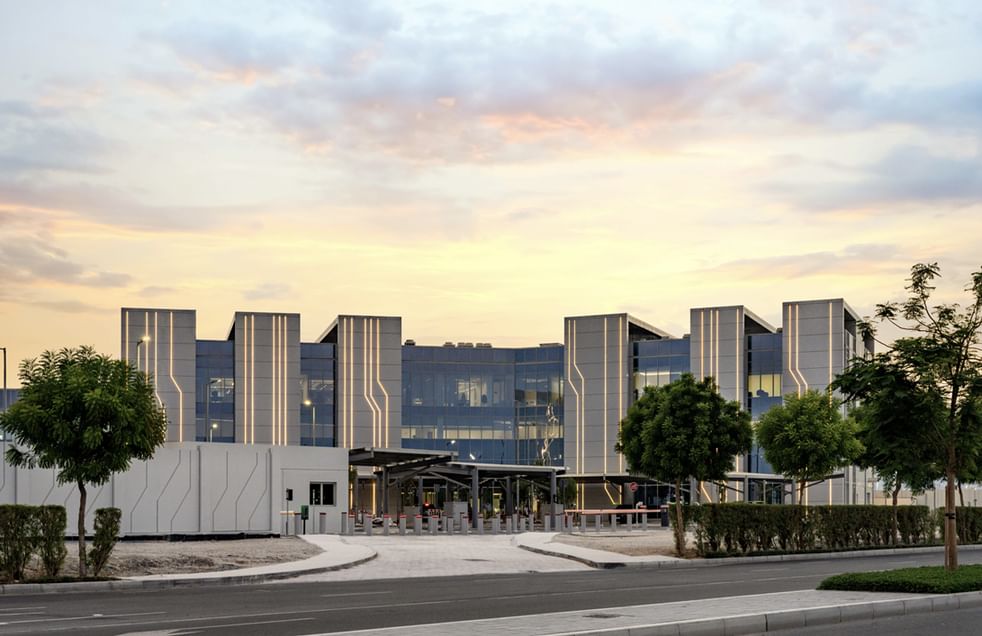
Khazna Data Centres, a global leader in critical AI infrastructure, today announced that its DXB8 facility in Dubai has been awarded the Zero Waste Certification by SCS Global Services, one of the world’s leading third-party sustainability certification bodies. DXB8 is the first data center globally to achieve this certification.
The certification verifies that the DXB8 facility (excluding IT waste from data halls) has achieved 99.55% waste diversion from landfill over a 12‑month audited period, reflecting rigorous operational controls, disciplined waste segregation, and responsible end‑of‑life management across the site.
The independent, third-party audit confirms that the vast majority of waste generated at the facility is diverted through recycling, bottle reuse programs with vendors, resale, and composting, as well as other approved recovery pathways for residual materials, in line with recognized waste-hierarchy best practice.
“This certification is an important milestone in our sustainability journey,” said Elisabetta Baronio, Director – ESG, Khazna Data Centres. “Achieving Zero Waste status is not about a single initiative. It is the result of consistent operational discipline, strong partnerships across our supply chain, and a culture that prioritizes environmental responsibility alongside performance and reliability.”
The certification to the SCS Standard for Zero Waste (SCS-110) was awarded following a comprehensive assessment that reviewed all waste generated by the facility excluding tenant IT waste in data halls (white space). It demonstrates not only the quantity of waste diverted from landfill, but also the strength of the underlying systems, governance, disciplined workplace culture, and continuous improvement processes that drive sustained, long-term waste reduction. For mission‑critical infrastructure such as data centers, where scale, uptime, and complexity present unique sustainability challenges, this level of performance is both rare and meaningful.
The achievement at DXB8 reflects Khazna’s broader ESG strategy, which integrates sustainability into the design, construction, and operation of its facilities worldwide. From resource‑efficient construction and advanced cooling technologies to responsible materials management and operational excellence, Khazna continues to embed environmental stewardship into the core of its growth.
As demand for digital and AI‑ready infrastructure accelerates, Khazna remains committed to enabling the digital economy responsibly by delivering resilient, sovereign-ready data centers, while reducing environmental impact and supporting national and global sustainability objectives.
source/content: wam.ae (headline edited)
______________
___________________________ DUBAI, UNITED ARAB EMIRATES
Mohammed bin Abdulkarim Al-Issa also signs 7 pacts on official visit to Asia nation.
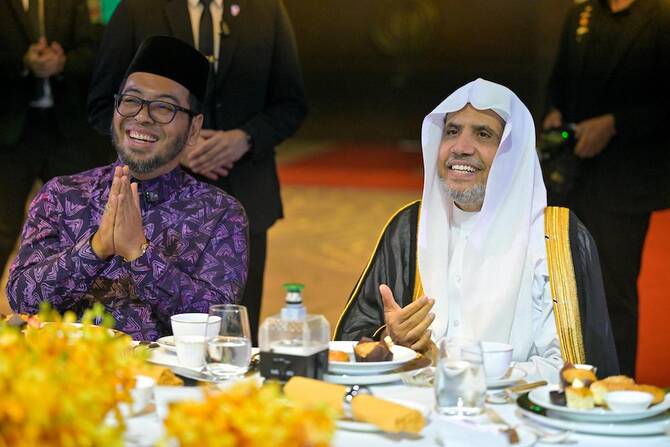
The head of the Muslim World League and chairman of the Association of Muslim Scholars inaugurated a new body, the Global Council for Scientific Miracles in the Holy Qur’an and Sunnah, on Sunday in Kuala Lumpur.
MWL Secretary-General Dr. Mohammed bin Abdulkarim Al-Issa took part in the event as part of an official visit to Malaysia, the organization announced on social media.
During his trip, he also presided over the closing ceremony of the Science and Faith program and competition.
Both events were attended by international scholars, government ministers, and senior university figures.
Malaysia hosted the two international initiatives as a part of its partnership with the MWL in supporting Islamic and education programs.
This cooperation was further strengthened through the signing of seven agreements between the MWL and several Malaysian government and private institutions, including universities, research centers, and academic bodies.
The newly established council is intended to advance scholarly engagement with the Qur’an and Sunnah, while the Science and Faith program aims to promote research and intellectual exchange.
The closing ceremony featured a visual presentation outlining the program’s activities and objectives, alongside the announcement of the MWL’s international awards.
source/content: arabnews.com (headline edited)
_____________
The head of the Muslim World League and chairman of the Association of Muslim Scholars inaugurated the Global Council for Scientific Miracles in the Holy Qur’an and Sunnah on Sunday. (Supplied)
$2.3 billion rail deal to cut transport costs and boost phosphate, potash exports.
The UAE and Jordan have signed a $2.3 billion agreement to build a 360-kilometre railway linking Jordan’s mining hubs to the Port of Aqaba, targeting annual transport capacity of 16 million tonnes of phosphate and potash.
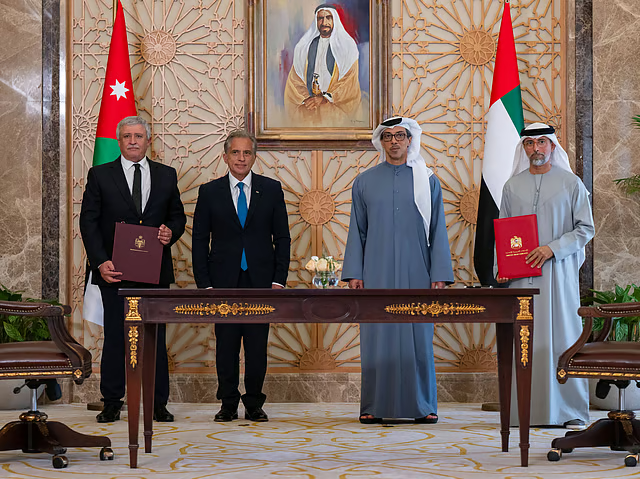
The agreement, witnessed by Sheikh Mansour bin Zayed Al Nahyan and Jordan’s Prime Minister Dr. Jafar Hassan, includes the establishment of the UAE–Jordan Railway Company to oversee construction, operations and maintenance of the network.
The joint venture brings together Abu Dhabi’s L’IMAD Holding and Jordanian stakeholders, with Etihad Rail leading implementation through its role as the UAE’s national railway developer and operator.
Focus on trade flows and costs
The railway will connect Al-Shidiya and Ghor Al-Safi to Aqaba, reducing transport time and logistics costs for key export commodities that form a central part of Jordan’s economy.
Suhail bin Mohamed Al Mazrouei, Minister of Energy and Infrastructure, said the project supports a broader transport partnership aimed at strengthening Jordan’s role in global trade flows and improving connectivity through Aqaba.
Dr. Nidal Al-Qatamin, Jordan’s Minister of Transport, said, “Our longstanding fraternal ties with the UAE are today translating into a tangible reality that serves Jordan’s future. This railway network will mark a qualitative leap in Jordan’s mining sector by significantly reducing transport costs for phosphate and potash, enhancing our global competitiveness, and creating thousands of jobs for Jordanians.”
Investment builds on earlier agreement
The project extends a $5.5 billion investment framework agreed in 2023, reflecting continued economic cooperation between the two countries and a focus on infrastructure-led development.
“This agreement reflects our firm belief that investment in transport infrastructure is the cornerstone of any genuine economic transformation,” said Jassem Mohamed Bu Ataba Al Zaabi, Chairman of the Abu Dhabi Department of Finance and Group CEO of L’IMAD Holding. “In the UAE, we believe that regional prosperity is a shared responsibility, and this project is a clear expression of our commitment to supporting our partners in building a more connected and competitive future regionally and globally.”
Regional integration push
The railway is expected to improve export efficiency, support job creation and strengthen Jordan’s position in global supply chains, while advancing the UAE’s strategy of backing infrastructure projects across the region.
Sheikh Mansour bin Zayed said the agreement reflects strong bilateral ties and a shared focus on economic development and integration, adding that such projects support sustainable growth and regional stability.
The development places transport infrastructure at the centre of economic cooperation between the UAE and Jordan, with execution now moving towards delivery of a network designed to support long-term trade and industrial activity.
source/content: gulfnews.com (headline edited)
___________________________
Sheikh Mansour bin Zayed Al Nahyan, Vice President, Deputy Prime Minister, and Chairman of the Presidential Court, and Dr. Jafar Hassan, Prime Minister of the Hashemite Kingdom of Jordan, today witnessed the signing of an agreement between the UAE and Jordan to develop a railway network in Jordan and establish the UAE–Jordan Railway Company. WAM
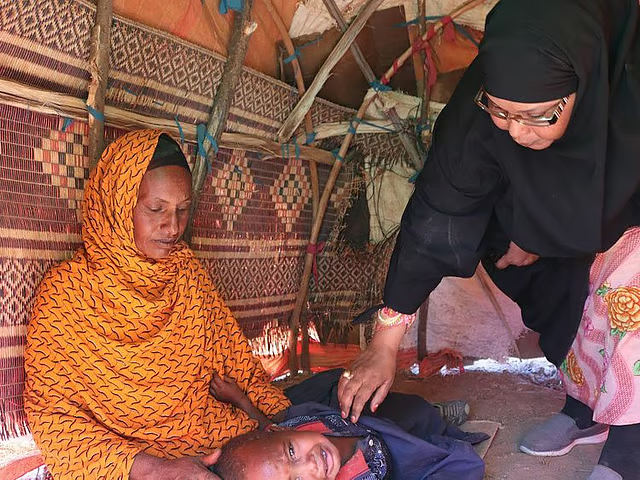
Emirates Red Crescent has saved thousands of lives in Somalia, reeling from the aftermath of a devastating famine that killed about 260,000 people between 2010-2012. Half of the victims were children under the age of five.
The humanitarian crisis was named the worst in 25 years, according to a 2013 report by the United Nations and the US-funded Famine Early Warning Systems Network.
Moved by the plight of people, Somali national Zahra Hassan Farah decided to take things in her hands. Farah is a nominee in Arab Hope Makers 2020, which will conclude on February 20 in Dubai. Arab Hope Makers is an annual award ceremony launched in 2017 to honour people who start humanitarian projects that improve their communities. In the previous round, over 87,000 entries were recorded; five finalists took home Dh1 million in each round to support their humanitarian projects.
She provided food, water and clothes to children left orphaned by the famine. But it was not enough to secure their future.
Farah wanted to empower these young victims but for that she needed a centre where the children could educate themselves and learn skills which could shape their future.
So she began contacting charity foundations, non-profit organisations and independent donors for support to purchase a land for the proposed centre. With direct support from the Emirates Red Crescent, the ‘Khadija Foundation,’ a Somaliland-based NGO, she was able to acquire 100 hectares of land.
Besides providing a home that nurtures and educates orphans, the foundation continued to provide humanitarian support and emergency and disaster relief for disadvantaged communities in Somalia in collaboration with Khalifa bin Zayed Al Nahyan Foundation, Emirates Red Crescent and Africa Educational Trust.
It also builds schools across the country, provides healthcare services and training to empower women, youth and people of determination.
Until today, ‘Khadija Foundation’ has benefitted over 14,000 orphans, empowered 75 children of determination and supported 732 disadvantaged families. Since its inception, the foundation has provided emergency assistance to over 32,000 families and supplied meals to more than 200,000 displaced people affected by natural disasters, drought and conflict.
The foundation continues to build schools, with three already completed, to empower children to become active participants in Somalia’s development and growth towards the better. Its services have reached 32 villages across Somalia from sustainable water infrastructure, schools and mosques to healthcare services and support for small enterprises to help families achieve financial independence.
Farah has shown how one person can make a lasting impact. She continues to collaborate with NGOs including Allocation aux Adultes Handicapes to empower people of determination, Africa Educational Trust, Emirates Red Crescent besides other local educational initiatives and independent donors.
“For as long as I live, I will continue my journey of growing the foundation to give hope for my people for a better future,” says Farah “Education is the greatest form of empowerment to enable youth to determine their own future in full confidence and independence,” she added.
source/content: gulfnews.com (headline edited)
______________
Woman builds home for orphans against famine in Somalia
Four Qatari match officials were selected for the 2026 World Cup, alongside four referees chosen for AFC Champions League finals, highlighting Qatar’s growing officiating profile.
Four Qatari match officials have been selected for the FIFA World Cup 2026, in a further boost to the country’s growing presence in global football officiating.
Abdulrahman Al Jassim will serve as a referee, Saoud Al Maqaleh and Taleb Al Marri as assistant referees, and Khamis Al-Marri as a video match official.
The announcement comes as four Qatari referees were also selected by the Asian Football Confederation to officiate the final stages of the AFC Champions League Elite, set to take place in Jeddah from 16 to 25 April.
Al Jassim and Salman Falahi will serve as referees in the continental competition, while Ramzan Al Nuaimi and Taleb Al Marri have been named assistant referees, highlighting continued confidence in Qatari officiating at the Asian level.
The selections coincide with the ninth meeting of the Referees Committee of the Qatar Football Association, held on Thursday, to review performance and discuss plans for the remainder of the season and beyond.
During the meeting, the committee assessed recent work, identifying key strengths and challenges to further enhance refereeing standards, and reviewed upcoming activities and programmes through to the end of the current sporting season.
Preparations for the next season were also discussed, including scheduling referees’ annual leave, setting the date for the resumption of activities, and organising the annual pre-season training camp aimed at improving physical and technical readiness.
The continued presence of Qatari officials at both global and continental levels reflects their growing reputation and role in developing refereeing standards across international football.
Paper won 2 merit awards in print category, 1 digital merit award for documentary marking newspaper’s 50th anniversary.
Arab News has picked up three merit awards from The Society of Publication Designers as it continues its streak of recent accolades.
Saudi Arabia’s first English-language daily won two merit awards in the print category: a 2025 year-end opinion page on predictions for 2026 — featuring a dove holding an olive branch atop a globe-shaped hand grenade — and a spotlight page focusing on children’s education being caught in the crossfire of conflict, illustrated with a child-like hand-drawn image of books and students amid the bombs.
Arab News also received a digital merit award for its documentary marking the newspaper’s 50th anniversary.
Omar Nashashibi, head of design at Arab News, said: “It’s always an honor to win awards, especially in design competitions as prestigious as the SPDs. These awards wouldn’t be possible without the talented teams across Arab News, and the brilliant partners we collaborated with for our ‘Rewriting Arab News’ documentary and illustration for ‘The year that could be’ opinion piece.”
Founded in 1965, the SPD celebrates “anyone contributing to the creation of visual stories” and is dedicated to promoting excellence in editorial design, photography and illustration across print and digital platforms.
This year’s competition included entries from The Atlantic, Foreign Policy, Wired, Eater, and The Economist.
The total number of accolades won by Arab News has now reached 163 under the leadership of Editor-in-Chief Faisal J. Abbas, who has overseen the newspaper’s digital transformation.
Past recognition includes special projects such as Arab News’ 50th anniversary edition, “The Kingdom vs. Captagon” deep dive and the “Paris 2024 Olympic Games” special edition.
Launched in 2025, the Art Basel Awards are dedicated to recognizing excellence across the contemporary art world
Medalists are evaluated on: vision and innovation, skill and execution, engagement, and broader impact.
The Diriyah Biennale Foundation has been named as a medalist in the 2026 Art Basel Awards.
Selected as part of the Museum and Institution category alongside The Brick in Los Angeles and SAVVY Contemporary in Berlin, Diriyah Biennale Foundation has been recognized as a “key platform for regional artistic development” by the leading Swiss art fair.
“The Diriyah Biennale Foundation has been committed to bringing together artists, communities, and ideas across geographies,” said the foundation’s CEO Aya Al-Bakree in a statement.
“This award affirms that Saudi Arabia has a vital role to play in the global cultural conversation.”
Launched in 2025, the Art Basel Awards are dedicated to recognizing excellence across the contemporary art world.
Medalists are evaluated on: vision and innovation, skill and execution, engagement, and broader impact.
“Through this initiative, Art Basel reaffirms its role as a global platform for the advancement, discovery and production of art — not only recognizing excellence but actively creating the conditions for it to grow,” said Vincenzo de Bellis, chair of the award’s jury and chief artistic officer and global director of Art Basel Fairs.
“We are deeply grateful to our jury, nominators and the many experts whose insight and commitment make this process both rigorous and collaborative. It is this community-driven approach that defines the awards, reflecting the breadth and complexity of today’s cultural landscape.”
Founded in 2020 and chaired by Minister of Culture Prince Bader bin Abdullah bin Farhan, the Diriyah Biennale Foundation has emerged as a transformative force in the international cultural landscape.
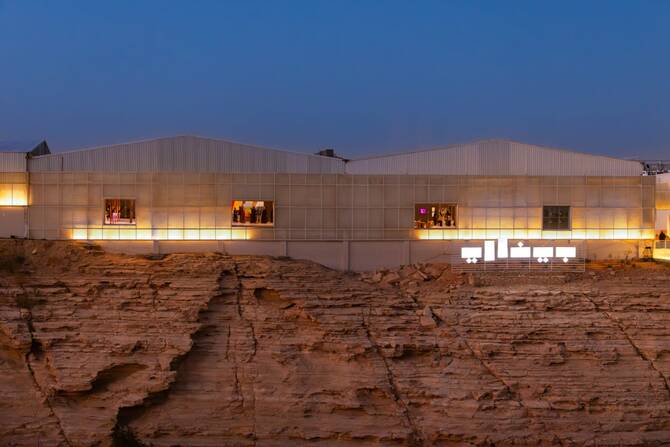
Through its two flagship recurring events, the Diriyah Contemporary Art Biennale in Diriyah and the Islamic Arts Biennale in Jeddah, alongside the stewardship of the JAX creative district in Riyadh, the Diriyah Biennale Foundation is a force that drives cultural exchange between Saudi Arabia and the world.
“In Interludes and Transitions,” the third edition of the Diriyah Contemporary Art Biennale and the fifth Biennale organized by the Diriyah Biennale Foundation, is open until May 2, 2026 at JAX District.
source/content: arabnews.com (headline edited)
_________________
In Interludes and Transitions,” the third edition of the Diriyah Contemporary Art Biennale and the fifth Biennale organized by the Diriyah Biennale Foundation, is open until May 2, 2026 at JAX District. (Supplied)
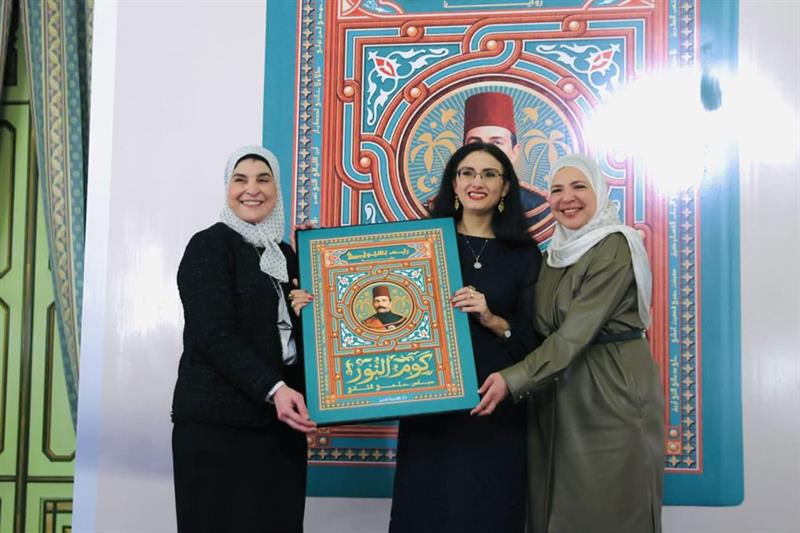
Egyptian author and academic Reem Bassiouney launched her latest novel, Kom El-Nour: Abbas Helmy II, at a book-signing ceremony held at the Marriott Hotel in Cairo on 1 April, presenting a historical work that revisits the reign of Egypt’s last Khedive.
The event, organized by Nahdet Misr Publishing House, was attended by Minister of Social Solidarity Maya Morsy, American University in Cairo (AUC) President Ahmad Dallal, Egyptian Red Crescent (ERC) Executive Director Amal Imam, jewellery designer Azza Fahmy, as well as several public figures, media representatives, and readers.
Kom El-Nour takes readers into one of the most consequential periods in Egypt’s modern history, focusing on the rule of Khedive Abbas Helmy II, son of Khedive Tawfiq and grandson of Khedive Ismail, who governed Egypt from 1892 to 1914.
The novel presents Abbas Helmy II from a different perspective, portraying him as a ruler who grew up among Egyptians, shared aspirations for the country’s advancement, and sought to resist British occupation through development and reform.
It highlights his efforts to modernize agriculture, support national institutions, and contribute to the formation of an educated elite capable of expressing society’s aspirations and defending its rights.
The book also explores the ongoing struggle between Abbas Helmy II and the British occupation, as well as the political pressures that ultimately led to his removal from power and exile in 1914. He spent the rest of his life in Europe until he died in 1944.
Despite his forced departure, the novel argues that Abbas Helmy II remained present in Egypt’s national memory, even as colonial authorities sought to erase his legacy and marginalise his role in historical narratives.
Through an engaging literary narrative, Kom El-Nour: Abbas Helmy II re-examines history from a fresh angle and invites readers to reconsider the events and figures that helped shape Egypt’s national consciousness. It also raises broader questions about how history is written and understood, particularly as certain patterns continue to echo across time.
Speaking at the launch, Dalia Ibrahim, Chairperson of Nahdet Misr Publishing House, said the novel reflects the role literature can play in revisiting history and reshaping public awareness.
“At Nahdet Misr, we believe literature has a real role in reshaping consciousness, especially when it revisits history from different perspectives,” Ibrahim explained.
“Kom El-Nour: Abbas Helmy II is an example of the kind of work that does not merely recount events, but encourages readers to think and re-examine what is often taken for granted. We are very proud of our partnership with Reem Bassiouney and of continuing to publish works of such depth and impact.”
The novel also reflects the continued partnership between Nahdet Misr Publishing House and Bassiouney, whose literary output now includes 13 works of fiction. The publishing house has become the principal publisher of her novels, beginning with the reissue of her debut novel, The Scent of the Sea, in January and continuing with Kom El-Nour.
According to the publisher, the collaboration aims to bring distinguished literary works to a wider readership in Egypt and abroad.
Shams is part of the Artemis II program that aims to accelerate scientific innovation .
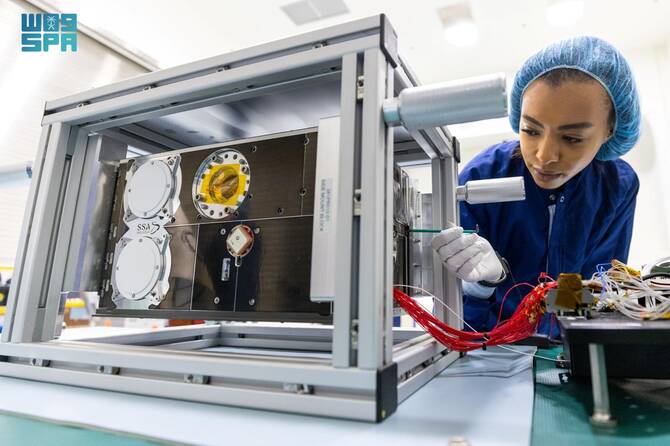
The Saudi Space Agency announced the successful launch and initial communication with the Saudi satellite Shams, which was deployed aboard the Space Launch System as part of the Artemis II mission.
With this achievement, the Kingdom becomes the first Arab nation to participate in a space mission under the historic Artemis program, which aims to accelerate scientific innovation and foster high-impact international partnerships that contribute to shaping the future of space for humanity, the Saudi Press Agency reported.
Artemis II represents the second phase of the Artemis program, led by the National Aeronautics and Space Administration in collaboration with international partners.
The mission aims to return humans to the vicinity of the moon for the first time in more than five decades, paving the way for future missions to Mars. It carries a crew of four astronauts on the first crewed lunar flyby mission aboard the Orion spacecraft, powered by the Space Launch System, the most powerful launch vehicle ever developed.
The mission also carries the Saudi satellite Shams as part of its scientific payload.
The Shams satellite will operate in a highly elliptical orbit, ranging from approximately 500 km to 70,000 km above Earth.
This orbit enables broad coverage for monitoring solar and radiation activity, enhancing space weather research, providing an advanced scientific environment, and supporting critical applications associated with it.
Shams represents a multi-first achievement. It is the first Arab mission launched as part of the Artemis program and the first national mission dedicated to space weather monitoring, underscoring the Kingdom’s progress in advanced space technologies.
The satellite was developed domestically by Saudi talent, supported by initiatives under the National Industrial Development and Logistics Program, one of the key enablers of Saudi Vision 2030.
The mission aims to study space weather and monitor the effects of solar and radiation activity on Earth through four main scientific domains: space radiation, solar X-rays, Earth’s magnetic field, and high-energy solar particles.
This scientific mission contributes to enhancing the reliability and sustainability of critical sectors linked to space, such as communications, aviation, and navigation, by providing data that supports operational readiness and strengthens the security of the technical infrastructure relied upon globally in daily life.
Acting CEO of the Saudi Space Agency Dr. Mohammed bin Saud Al-Tamimi said: “This milestone reflects the Kingdom’s scientific and technological advancement under Vision 2030 and underscores its active role in developing advanced technologies and shaping the future of space for humanity.”
CEO of the National Industrial Development and Logistics Program Jameel bin Ahmed Al-Ghamdi stated that developing the Shams satellite within the Kingdom reflects the impact of the program’s initiatives in localizing advanced technologies and building competitive national industrial capabilities.
source/content: arabnews.com (headline edited)
____________
The Saudi Space Agency announced the successful launch and initial communication with the Saudi satellite Shams, which was deployed aboard the Space Launch System as part of the Artemis II mission. (SPA)
For Ahmad Nabil, paranormal encounters are real. If they weren’t, the entire Arab world would have to be insane.
There is a word in Arabic -al-hātif- that means the telephone. It also means a disembodied voice, and it can refer to the unseen caller: the jinn who summons you from somewhere beyond sight. It could be that Arabs named their phones after a supernatural entity, and almost nobody finds this strange.
Luckily, Ahmad Nabil finds it extraordinary.
“The root of jinn,” he tells CairoScene, speaking across a bad phone line from Jerusalem to Alexandria, “means to hide, to be concealed from the senses. From that root you get majnūn: madness, being overtaken, possessed. You get janna, paradise. You get janīn, the embryo, that which is still hidden inside. And you also get the genie – English borrowed that one from us.”
Ahmad Nabil studies the supernatural in our region, pulling back the surface of the Arabic-speaking world to reveal what runs beneath it. And once you lift a stone in that garden, an entire ecosystem waits.
He is 37 years old and lives and works in Beit Safafa, a Palestinian town southwest of Jerusalem. In his telling, it has always felt slightly outside of everywhere: isolated enough in the 1990s that the roads were dirt, children eventually manufactured their own entertainment, and jinn had plenty of room to roam.
Nabil is a visual artist, researcher, and educator, and the founder of Majlis al-Khayal, The Fiction Council, a Palestinian nonprofit dedicated to preserving and reviving Palestinian and Arab mythology and paranormal folklore. Since 2015, he has been collecting these stories, illustrating them, and insisting that imagination is not a luxury.
“Without imagination,” he says, “we can’t build better societies for ourselves. And we end up with others building them for us.”
Nabil’s childhood was not one of comfortable distance from the world. It was shaped by occupation, constant constraint, and the particular texture of Palestinian life in Jerusalem. But it was also expansive in the imagination.
“The lack of entertainment made us create our own,” he says. “We had self-generating input. We didn’t have as much external influence as kids do these days.”
As an adult, after studying design and applied arts in Jordan and later throwing himself into art training in Jerusalem, he kept encountering children with unusually vivid and imaginative minds.
“You know the one,” Nabil laughs. “The child in every classroom who talks about black holes and space-time, who has their own theories about mythical creatures at seven years old. The kid who gets either revered or relentlessly bullied depending on which room they’re in.”
Those were his people.
In 2015, he founded Majlis al-Khayal from a small studio, and one of its main projects was gathering exactly those children. Twelve of them eventually joined, each one arriving in a familiar way: a mother calling, exasperated, saying her son wouldn’t stop talking about things nobody understood, that his imagination was out of control, that she didn’t know what to do with him.
“I would meet the child and tell him: you’re not alone. I knew you’d bring your monsters with you.”
Those 12 are young adults now, university students: artists, designers, developers, scientists. But Nabil tended their imaginations for as long as he could.
In 2019, through The Fiction Council, Ahmad Nabil launched Darb al-Ghilan, ‘Road of the Ghūls’. The project maps ghoul folklore village by village across Palestine and documents encounters with jinn.
Its first field trip took place in early 2020, in Rahat in the Naqab desert of southern Palestine.
“Every Palestinian village has its own ghoul,” Nabil explains. “And the creature’s characteristics vary according to the topography, geography, and the relationship between that community and its land. The ghoul of a coastal village is not the ghoul of a hilltop village. The ghoul of a farming community is not the ghoul of a shepherding one.”
The ghoul (ghūl) in Arabic folklore is a malevolent, flesh-eating jinn-like creature classically associated with luring travellers to their deaths in the desert. It also helped shape the Western idea of the zombie, particularly through American pop culture and Antoine Galland’s 18th-century French translation of ‘One Thousand and One Nights’, which added cemetery-roaming and cannibalistic elements that were less emphasised in the Arabic original.
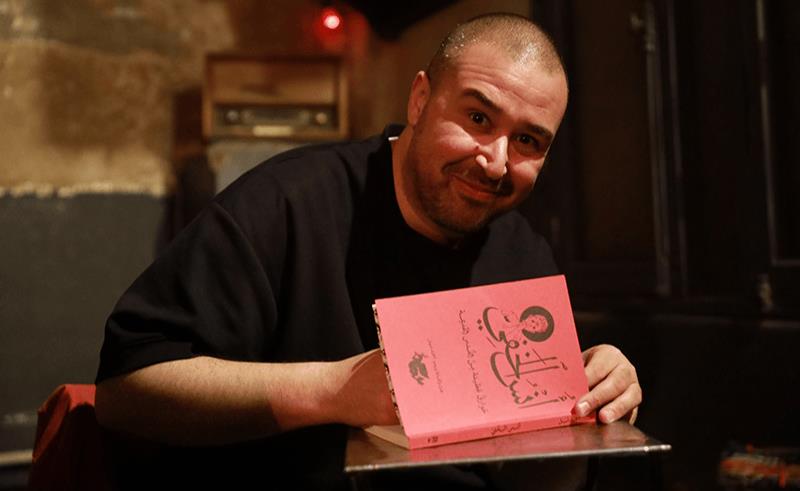
So far, ‘Uns al-Khafi’ is the first published output of Road of the Ghūls. ‘Uns al-Khafi’, or ‘Hidden Companions: Paranormals from the Old City of Jerusalem’, was published in August 2022. It was researched, written, and illustrated by Ahmad Nabil, designed by Omaima Dajani, and edited by Nairouze Khaldy. The book draws on interviews with 60 people and more than 35 hours of recorded testimony.
It sold out in less than 10 months. A second edition appeared in 2024 and is nearly gone. An English translation is now underway, and Nabil himself no longer owns a copy of the first edition.
“I titled the book ‘Uns al-Khafi’ because during my fieldwork I noticed that people in the Old City were profoundly at ease with the idea of jinn,” Nabil says. “They greet them in the morning and the evening.”
The book documents white-clad faceless figures, righteous jinn performing wudu at dawn, mischievous presences, and ghostly encounters linked to Mamluk-era houses with subterranean caves beneath them.
“People don’t want to be judged,” Nabil says. “They don’t want to be thought of as fabricating stories. They have to trust you first, and trust that you believe them.”
Interestingly, Nabil does not classify these encounters as mythology.
“I do not consider these legends,” he says. “I do not consider them khurafat, superstition. I consider them khawāriq, supernatural occurrences. Whether you believe in them or not is entirely your business.”
For Muslims, jinn are not mythological at all; they are theological. An entire surah of the Qur’an is named after them.
“They are accountable creatures, as humans are,” Nabil says. “There are doctors among them. Engineers. Pilots. And the sayyi’in, the delinquents, just as we have delinquents.”
Sorcerers might deal with those delinquents. Poets might receive inspiration from jinn poets whispering lines in the night.
“The Bible, on the other hand, has no jinn,” Nabil says. “Christian Palestinians might use the word spirits, but their framework is good versus evil. There’s no room for the specific, intimate social world of the jinn, who live among us with their own behaviours, hierarchies, and reasons for appearing or disappearing.”
It is this world, its textures, its site-specific stories, the particular jinn of a particular well in a particular village, that Nabil guides people into on foot.
One October evening at dusk, in the village of Qalandia north of Jerusalem, he gathered a group and began walking.
Qalandia is not, on the surface, an obvious setting for a supernatural tour. Today it is best known for one of the most heavily militarised crossing points in the West Bank, a daily humiliation that has grotesquely become shorthand for the occupation itself.
But Qalandia also once had maqamat: shrines of holy men and women scattered across the Jerusalem rural side.
The tour, Dastour ya Ahl al-Maqam (‘Permission, O Residents of the Shrine’), was a collaboration with Riwaq, the Centre for Architectural Conservation. The walk moved through the village’s memory: the byar, the wells, and the stories attached to them. They touch on the paranormal encounters said to have happened there, the relationships between women and the wells, men and the harvest, and the lament tradition known as tenwih, which Nabil describes as “wounds the heart.”
The destination was Sittna al-Mabrouka, Our Blessed Lady, a maqam that, at the time of the walk, existed only as a playground for children, with a pile of stones beside it.
In one story connected to the site, the Blessed Lady appears to someone who has wronged her and walks toward them without speaking, her back always turned, until the moment of confrontation.
Nabil placed a performer along the route, standing with her back to the walkers at a particular corner, waiting.
“When you bring the experience as close to the participants as possible,” he tells me, “it lingers in their minds.”
The tour ends at the candlelit stones of Sittna al-Mabrouka.
“You know your stories matter,” Nabil says, “because when Israeli forces first raided Qalandia in 1967, soldiers came to a local man with a map and asked him to point out the location of this maqam. It’s the first thing they always do. Strike the sacred.”
The English translation of Uns al-Khafi is nearly complete, with a New York book tour planned for May through June 2026.
After that, Nabil hopes to renovate his family home in Beit Safafa, a building more than 130 years old, into a full research and documentation center for Palestinian mythology, imagination, and the paranormal.
“I do this because an empty place is a vulnerable place,” he says. “If we are not present there, in that density of life and story, others move in. In fact, many of our old stone reservoirs, settlers have started swimming in them.”