Arabs & Arabian Records Aggregator. Chronicler. Milestones of the 25 Countries of the Arabic Speaking World (official / co-official). AGCC. MENA. Global. Ist's to Top 10's. Records. Read & Enjoy./ www.arabianrecords.org
Famous for its “fog harvesting” project in southern Morocco, the nonprofit Dar Si Hmad for Development, Education and Culture also carries out other projects to build the capacities of local populations and provide educational training projects for young people.
The fog-harvesting project, in the Sidi Ifni region of southern Morocco, uses specially designed nets to capture water droplets suspended in the fog covering mountain peaks. The fog-water drips off the nets and is channeled into a filtration system, thus providing clean water to residents of areas suffering from severe water shortages.
The project is a boon for women in the region because it frees them from having to carry water long distances, and also provides jobs and training for them.
Development Projects
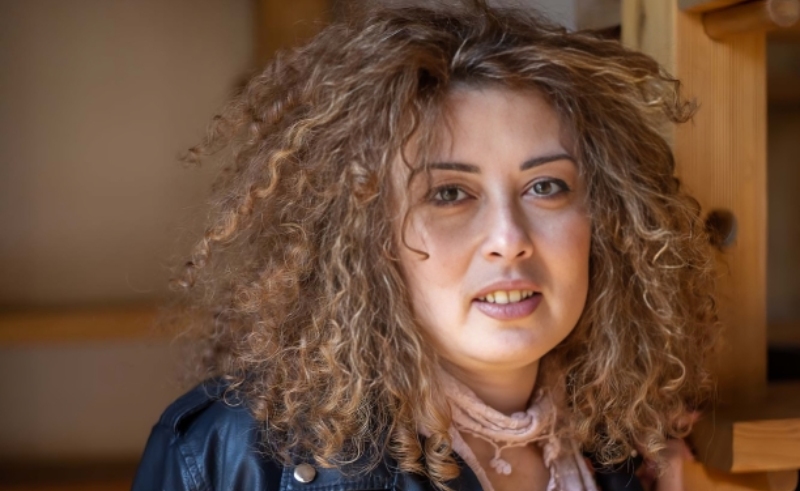
Established in 2010, Dar Si Hmad for Development, Education and Culture is run by Jamila Bargach, a cultural anthropologist, and her husband, Aissa Derham , a mathematician who holds a Ph.D. from Laval University in Canada.
Bargach studied at Mohammed V University in Rabat and obtained a Ph.D. in anthropology from Rice University in the United States. She has worked for several nongovernmental organisations in Morocco and abroad.
In the region, Bargach is nicknamed “The Bride of the Fog” in reference to a local Amazigh legend of a princess named Teslet who did her best to make rain to save her village from drought.
Over the past years, the fog-harvesting project has received numerous international honours, notably an Innovation in Sustainabilty award from the GoAbroad Foundation in 2017 and a Momentum for Change award presented at the COP22 Climate Summit in Marrakech in 2016.
Programmes for American Students
Fond of southern Morocco, Bargach believes that the region provides unique opportunities for students to learn more about the kingdom, especially in terms of how development projects are accomplished in complex and special contexts.
Many of Dar Si Hmad’s educational programmes center on the fog-harvesting project, Bargach told Al-Fanar Media. “This enables students to learn and develop their abilities through practical and field education.”
She added that the association receives students from American universities who come to southern Morocco. Over the years, it has hosted more than 54 student missions from different American universities.
The organisation provides these students with opportunities to meet with Moroccan students from Ibn Zohr University, in Agadir, and to participate in various educational programmes. These include the RISE Programme, the Ethnographic Field School and the Water School, as well as job programmes targeting women in rural areas.
Environment-Friendly Entrepreneurship
The RISE Programme aims to build capacities and promote environment-friendly entrepreneurship among students of colleges and higher schools in Agadir. The programme is a set of integrated workshops presented by experts, and meetings with employers, with the aim of exchanging experiences and creating opportunities for networking. Each participant is also required to have a project idea that benefits the local environment, besides the need to commit to attending all scheduled events.
The Ethnographic Field School promotes cross-cultural understanding and exchange through interpersonal interaction with local communities. During their time in southern Morocco, participants learn about local issues like sustainable practices in the argan oil industry , which employs many rural Amazigh women, or languages like darija (Moroccan Arabic) and Tachelhit (the local form of Tamazight).
The Water School programme is directed to students of rural schools in the Aït Baamrane region in southern Morocco. The programme is based on lessons inspired by local reality, with openness to other horizons and cultures. The Water School brings together volunteers, environmental trainers, and other partners. Everyone is committed to building a comprehensive and ethical foundation for the benefit of environmental education, the organisation’s leaders say.
Bargach says that the success of the fog-harvesting project motivated and inspired the educational programmes’ students. She adds that they are working to transfer knowledge to young people who are passionate about more work and innovation in searching for alternative sources of water and serving the environment in southern Morocco.
Skill-Building Experiences
Nadia El-Aissaoui, who holds a master’s degree in tourism and communication from Ibn Zohr University’s Faculty of Arts and Humanities, worked in Dar Si Hmad’s Ethnographic Field School this year. She said the experience helped her develop professional skills. “I have benefited greatly from this experience,” she said. “I worked as a fixer (‘speaking partner’) for students coming from American universities to work on field research projects.”
The programme transferred her from university halls to field research, she said. “This experience enriched my professional path,” she added. “I learned a lot of things, such as focusing on tasks, time management, documentation, interpretation methods, besides exposing me to the American mentality and working ways.”
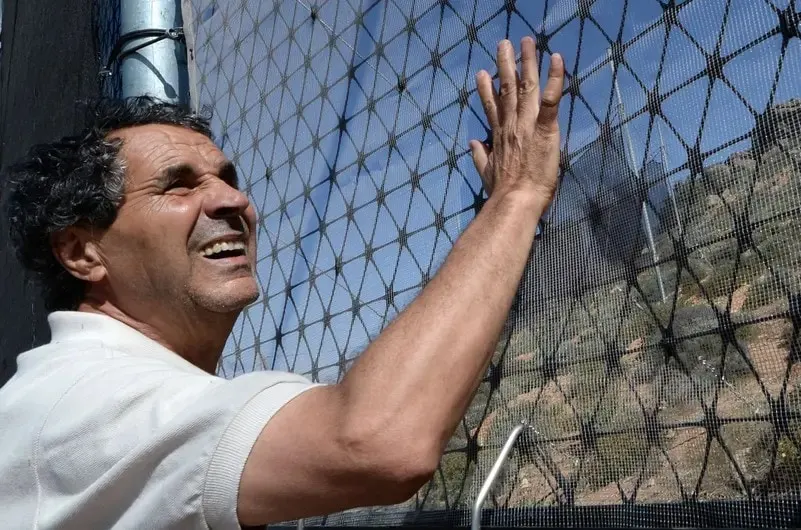
Aissa Derham checks a net used in the fog-harvest project. He and Jamila Bargach co-founded the nonprofit Dar Si Hmad for Development, Education and Culture, which runs several capacity-building and educational programmes in southern Morocco. (Photo courtesy of the organisation)
The new annual celebration aims to celebrate the origins of Saudi Arabia.
Wednesday, February 22, marks Saudi Arabia’s Founding Day, a new annual holiday to commemorate the founding of the first Saudi state in Arabia.
The holiday was established with a royal decree issued by King Salman last year through the official Saudi Press Agency. It said the move is meant to commemorate the history of Saudi rule dating back hundreds of years.
It is a different event to Saudi National Day, which is marked on September 22.
What does Founding Day commemorate?
Saudi Arabia’s new annual holiday commemorates the ascendancy to power of Mohammed bin Saud, who founded the First Saudi State.
In February 1727, bin Saud inherited leadership over the central Arabian town of Diriyah, which had been established by his ancestors back in the 15th century.
He oversaw the expansion of Diriyah from a city-state to an emirate, conquering territories in central Arabia and uniting them under his family’s rule.
His dynasty became known as the Al Saud, named after his father, Saud bin Mohammed Al Muqrin, who had ruled Diriyah from 1720, the date often cited as the founding of the dynasty.
Founding Day commemorates these origins and aims to highlight the important part the Al Saud dynasty has played in the history of Arabia.
What was the First Saudi State?
Although Mohammed bin Saud came to power in Diriyah in 1727, the establishment of the First Saudi State is usually dated to 1744.
It was in this year that he allied with Mohammed bin Abdul Wahab, a religious scholar who led a movement that called for a return to the “true” version of Islam.
This alliance was at the heart of the First Saudi State, also known as the Emirate of Diriyah, the first of three Saudi states.
From Diriyah, the Al Saud dynasty quickly expanded to conquer much of the Arabian Peninsula, including the Hejaz region, home to the holy cities of Makkah and Madinah.
This expansion was seen as a threat by the Ottoman Empire, the region’s major power, which sought to restore its influence in Arabia.
After a seven-year war, Ottoman-allied forces led by Egypt’s Ibrahim Pasha defeated the Al Saud and destroyed Diriyah, bringing an end to the First Saudi State in 1818.
From the First Saudi State to the modern kingdom
The Al Saud re-established their state six years later with a new capital at Riyadh, close to Diriyah.
Throughout the 19th century, they competed with the rival Al Rashid dynasty for supremacy over central Arabia. Internal conflicts and military defeats eventually weakened the Al Saud position, leading to the capture of Riyadh by the Al Rashid in 1891 and the end of the Second Saudi State.
Imam Abdulrahman Al Saud, who led the Al Saud at the time, sought refuge with the local Bedouin in the deserts of the Empty Quarter before taking his family to Kuwait.
His son, Abdulaziz, recaptured Riyadh in 1902 in a raid, laying the foundations for the expansion of Saudi rule across Arabia. In 1932, Abdulaziz formalised his reign by establishing the Kingdom of Saudi Arabia, with himself as its first king.
His sons, including the current King Salman, have ruled the kingdom since.
How is Saudi Arabia’s National Day different from its Founding Day?
Saudi National Day is celebrated annually on September 23. It marks the 1932 decree, issued by King Abdulaziz, which renamed the Kingdom of Najd and the Hejaz as the Kingdom of Saudi Arabia.
The unification of the kingdom took place on the 21st of Jumada Al Awwal in 1351 H — which corresponds to September 23, 1932.
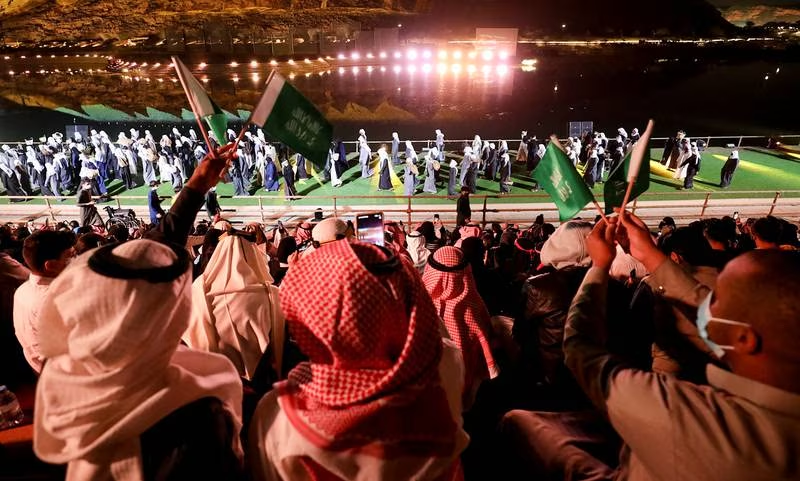
Today, National Day is celebrated through fireworks displays, ceremonies and parades.
What will happen on Founding Day? Events to show off traditional crafts, culture and heritage are planned across the kingdom.
Live music and dance performances are scheduled in cities including Riyadh, Jeddah and Dammam.
Festivities are expected to last several days, with students given a long weekend until February 27.
Trailblazing Jordanian-British research fellow reveals that her prescription for success requires dispensing – but only with tradition.
Most Damascene moments are dramatic by definition but few occur, as Atheer Awad’s did, on an actual road that leads to the Syrian capital.
Her own turning point came when the vehicle she was travelling in with her family to register for university in Amman blew a tyre, hit an electricity pole and flipped several times.
The accident meant that Awad ended up in hospital and missed the window to sign up to study medicine. By the time she was discharged, the only degree option still open to her was pharmacy.
Though bitterly disappointed at the time, she has come to believe that there were greater forces at work on the day of the crash on Jordan Street.
“Let’s just say we put our car to the test,” Awad tells The National. “It was a complete wreck. We are lucky to be alive.
“But it wasn’t meant to be that I should study medicine. I took the car accident as a sign that the future held better things for me.”
As a result, she was steered into an unexpected career in which the eventualresearch fellow at University College London would amass numerous accolades: the Journal of Clinical Medicine‘s 2021 PhD Thesis award; an appearance on the Forbes 30 Under 30 list for Europe; reaching the finals in the Women of the Future awards 2022 in the science category; named as an International Pharmaceutical Federation FIPWise Rising Star for 2022 as well as one of the top 15 outstanding innovators under the age of 35 by the MIT Technology Review.
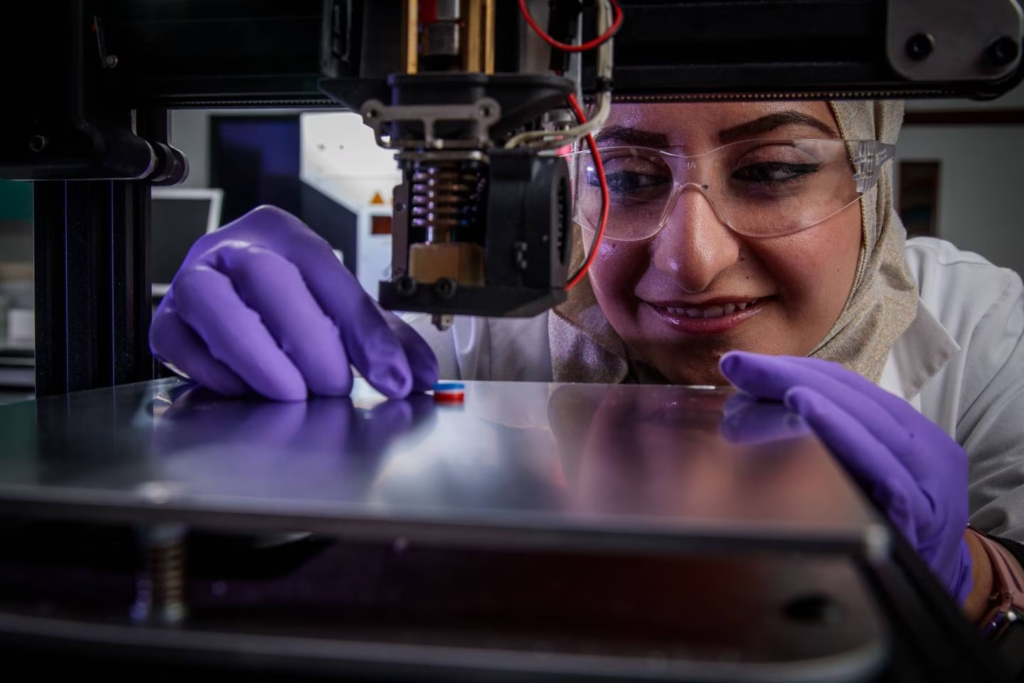
Her groundbreaking research is paving the way towards the creation of personalised medication that can be 3D-printed in patients’ homes via smartphone — a potentially transformative innovation for those who find it hard to gain access to health care or don’t suit a one-size-fits-all service.
Born in Abu Dhabi and raised in Dubai by Jordanian parents, her hand was always first in the air in class when volunteers were sought to dissect animals at Al Mawakeb School in Garhoud.
It was an early display of Awad’s enthusiasm for the sciences, particularly biology, and a prelude to her ambition of becoming a heart surgeon.
“I was so determined to make a difference and medicine is one of those industries that has a greater impact when it comes to changing people’s lives,” she says.
“There is never a boring day with science because every day is a new learning experience.
“You come across things that you haven’t discovered before or create new stuff by just playing around with things in the lab and mixing them together. It’s that sort of curiosity that motivates me.”
Back then, holidays were regularly spent visiting Jordan — trips that Awad still makes annually to catch up with extended family, go to weddings and indulge a soft spot for the local food.
“I love those traditional connections,” she says, “and still follow as many of these practices as I can, wherever I am.
“My faith helps a lot. But it isn’t easy trying to keep a balance between sticking to faith and being able to live in a foreign country.”
Moving to England wasn’t as daunting as it might have been without the unwavering support of her parents and four older siblings — a pharmacist, a consultant with whom she lived until recently, an IT specialist and a doctor.
“It is rare for all of us to be in the same country at the same time,” she says, laughing. “We travel between the three countries and there is always at least one of us living in each of the three. That makes it interesting for my parents, who get to travel everywhere.”
Awad herself, now 29, is a keen traveller and has put on her bucket list the wish to visit every country in Europe before turning her sights to other continents.
She fell in love with Turkey after a trip to Cappadocia, the semi-arid central region known for its “fairy chimney” rock formations, and particularly enjoys explorations on foot.
London, however, holds a special place in her heart, where there is, she points out, a big Jordanian community.
“I have a lot of friends I consider my second family. They’re a mixture of scientists, people outside work, and others with Jordanian or Arab heritage. That keeps me connected to my roots and it is one of the beauties of London — it’s international.”
But she calls Dubai home and makes many happy returns to Living Legends, a newly developed 14 million-square-foot community on the outskirts of the city where her parents still live.
Part of the appeal of the emirate, it should be said, is the chance to hit the luxury shops. Dior and Prada are favourites — her handbag collection alone extends to “about 40 or 50 … I’ve lost count” — and the Swarovski-encrusted mobile phone she takes everywhere is a particularly prized purchase.
Invariably, though, one of the first stops is to fill up on luqaimat, known as awama in the Levant. She has sampled the sugary doughnuts wherever she finds them but maintains that the ones whipped up for as long as Awad can remember by her mum, Hanan Swais, “are the best”.
They were an abiding taste of a childhood in which the extroverted Awad, left to explore her own interests by her father, Jamal, an electronics retailer, and Hanan, a homemaker, played the piano exuberantly if not with any notable proficiency and went on Scouting expeditions.
There was never an expectation that she would follow in the footsteps of any of her siblings but the desire to pursue medicine was strong nonetheless.
“It wasn’t until we were discharged from hospital [after the car accident] that I realised I had missed the deadline,” she says. “There was no going back in time. I just thought: ‘What’s the next best option?’
“That’s why I always say I did not choose pharmacy — it chose me.”
Despite a reluctant start, Awad’s enthusiasm grew throughout a five-year degree at the private Applied Science University in Amman as she gained insight into the extent of what pharmacists could actually do.
“I started looking at pharmacy as having a bigger impact than I had previously thought,” she says.
“People sometimes look at pharmacists as if they are beneath or less important than doctors when, in fact, they do most of the work behind the scenes.”
Little by little, with the consolidation of hours of satisfying sessions spent researching in laboratories or learning about the differences in the properties of various drugs, it dawned on Awad that she had stumbled across her calling.
Which is not to say that she appreciated being treated as little more than a saleswoman while doing work experience in a community pharmacy during the degree course.
“People assume that the pharmacist just takes the prescription and gets the medication without doing anything else,” she says. “There is a misconception.”
The experience hardened Awad’s resolve to focus on research rather than the direct, community-facing side of the profession.
After graduation in 2015, she embarked on a master’s in pharmaceutics and drug design at UCL, where she learnt about 3D printing during an end-of-year project with her professor, Abdul Basit.
She was inspired to keep working with the Basit Research Group within the School of Pharmacy to undertake a doctorate specialising in using the drug-delivery technology in the manufacture of medicines.
“I’ve always been interested in technology so it grabbed my interest immediately,” says Awad, who is still a research fellow with the group.
Weekends when she is not working are spent dining with friends, indulging her obsession for Harry Potter — “I’ve watched all the films multiple times” — and baking. Coffee cake is her speciality and made a well-received appearance at her professor’s 50th birthday.
“I do like experimenting with baking and cooking. I think there are similarities between baking and science.”
She doesn’t rule out applying to appear on The Great British Bake Off television show but, for now, Awad’s ambitions are confined to the lab.
“I want to make a change,” she says. “I don’t want 3D printing to stay a theory. I want to see it being implemented and taken up by healthcare agencies.”
Most recently, Awad has been printing tablets with Braille and moon patterns on their surfaces for visually impaired patients, or changing their shape, size and colour so that children or those with limited capacity find them easier to take. She has also been researching how to combine several medications into a single pill.
One of her team’s successes has been in creating tablets that can be swallowed without water. Manufactured in partnership with pharmaceutical 3D-printing specialist FabRx by melting powder particles with a laser beam and using heat, the porous product dissolves on the tongue.
She talks about how 3D printing allows alterations of a fraction of a milligram, making medication much more tailored and precise than the standard variety available off the shelf.
“Every person is different and our bodies do not react the same,” Awad says. “The requirements when it comes to medication differ, and sometimes they differ within the same person, depending on the disease progression.
“We can also take patients’ preferences into consideration. That’s important when it comes to children or elderly patients. Often children refuse to take medicine because they don’t like the taste, the shape isn’t appealing or the pill might be too big.”
While 3D printing for customised pharmaceuticals has yet to be introduced commercially in the UK, Awad’s UCL team has managed to convert a smartphone into an on-demand 3D drug printer with an app that could be used in remote GP surgeries and even at home.
“We’re not far from the industry adopting 3D printing, probably in the next two to five years,” she says. “Approval will have to be on a medication-by-medication basis because each medicine could behave differently to the same technology, depending on its properties, and the 3D-printing technologies themselves differ.”
Awad’s passion for her work is tangible. The British-American analytics company Clarivate clearly thought so when last month listing her on its influential Highly Cited 2022. It was a remarkable achievement for such a young scientist to appear among fewer than 0.1 per cent of the world’s researchers across 21 fields.
Such recognition is welcome but, she says, the many “titles are more of an assurance that I am on the right track and that my work is important”.
“That’s the driving force to keep me moving forward and become even more ambitious to try new things,” she says.
One of her guiding principles is that researchers should be brave and adopt different approaches because even the most “ridiculous” ideas can be turned into brilliant inventions or innovations.
As she has been known to opine, not all scientific breakthroughs happen through planned research: “Sometimes, you come across things by accident.”
Given the route into her career in pharmaceuticals, it could be said that Awad started very much as she meant to continue.
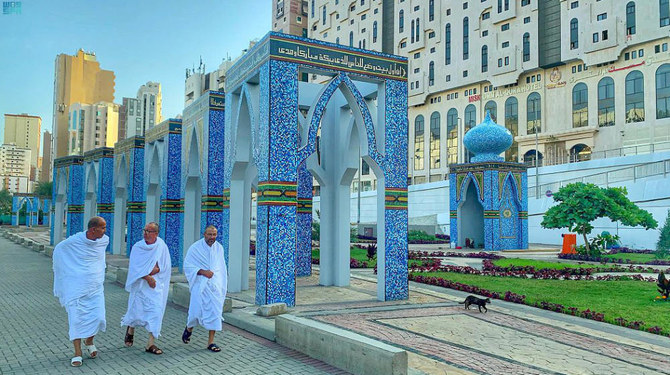
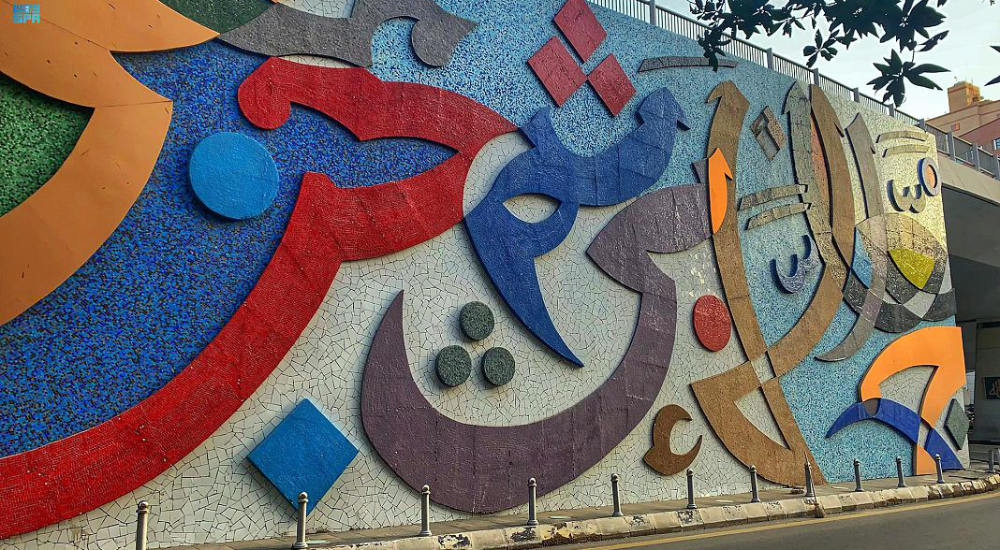
The world’s longest calligraphic mural has been installed on the road leading to Makkah’s Grand Mosque, in the latest beautification of the holy city.
The 75-meter mural, designed by artist Amal Felemban, joins a host of sculptures and installations already adorning Makkah in a project run by local authorities to boost its visual appeal and depict Saudi heritage and culture for pilgrims.
Felemban told Arab News that it was important to retain and promote the ancient art of mural painting, as it portrays Saudi culture and aesthetics and links the old world with the modern.
“In the modern era, they brighten up streets and cover some of the ugliness of the gray buildings,” she said, adding that murals and sculptures reflected the true spirit of the city.
“My mural tells the story of the urban heritage in the holy capital, as it received a wonderful echo of this authentic Hijazi art, and it is different from the rest of the murals near large mosques,” she said.
HIGHLIGHTS
• The Municipality of Makkah installed the longest calligraphic mural in the world on King Abdul Aziz Street, the road that leads to the Grand Mosque.
• Artist Amal Felemban shared that murals are one of the oldest forms of art that can beautify the streets and show local culture and heritage to pilgrims and visitors.
“Mine are not letters or poetic verses, but were rather inspired by the authentic urban culture of this country.
“Many pilgrims do not have a sufficient knowledge about Saudi Arabia, nor about our culture and civilization, so we need to show it through arts, murals and sculptures.”
Felemban said that the municipalities in all Saudi regions must pay great attention to this form of art, which reflects Saudi culture and attracts more tourists.
“Millions of visitors from all over the world will flock to our beloved Kingdom, which requires us to show our heritage and culture properly.”
My mural tells the story of urban heritage in the holy capital.
Amal Felemban, Artist
Artist Badr Al-Sulaimani said that the murals and sculptures in the holy city bring joy and pleasure to the hearts of pilgrims from all over the world.
He added that they helped highlight many creative artists from inside and outside the Kingdom in various competitions and bring a historical dimension to contemporary art.
“This proves the importance of employing arts and creating an attractive artistic environment, using all the techniques that contribute to providing a cultural and artistic dose for passers-by,” Al-Sulaimani said.
The Municipality of Makkah organizes competitions for painting murals and drawing Arabic calligraphy, which it describes as one of the most significant written and visual arts which is associated with the Holy Quran.
A team from Umm Al-Qura University’s Department of Visual Arts is also participating in improving the city’s landscape.
source/content: arabnews.com (headline edited)
_____________
The beautification of Makkah continues with new murals adorning street walls on the way to the Grand Mosque. (SPA photos)The murals feature Arabic calligraphy, a pillar of Islamic art. (SPA)
UNESCO added Tunisia’s spicy and most famous national condiment Harissa to its list of intangible cultural heritage, saying it was part of the North African country’s identity.
UNESCO placed the Tunisian condiment Harissa to its list of intangible cultural heritage, citing its significance to the identity of the North African nation.
The cultural agency of the United Nations is meeting in Morocco to consider proposals for its list of Intangible Cultural Heritage, which strives to safeguard cultural traditions, practices, and knowledge.
It tweeted “Just inscribed on the #IntangibleHeritage List: Harissa, knowledge, skills, and culinary and social practices.”
Tunisia’s Spicy Harissa
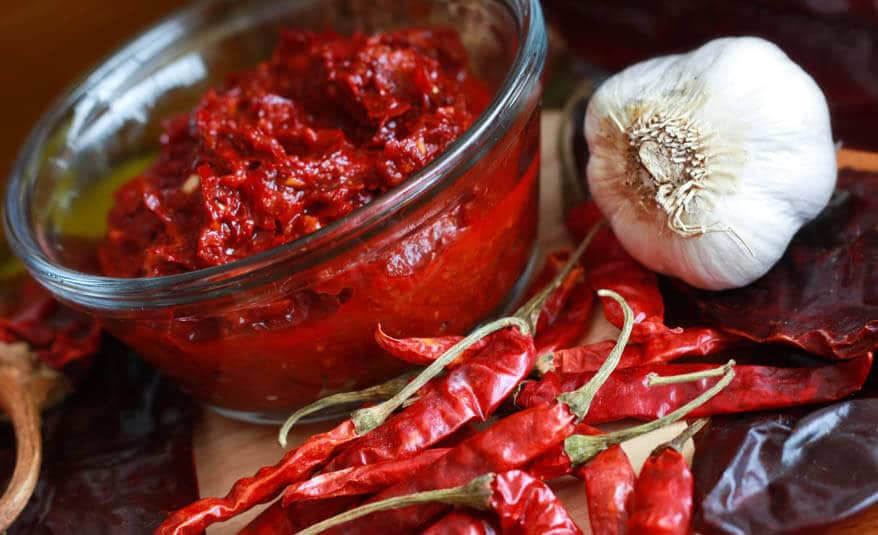
Harissa is a paste made from sun-dried hot peppers, freshly prepared spices, and olive oil, which preserves and slightly tones down its intensity. It is served in nearly every restaurant in Tunisia and is also exported internationally.
The condiment is wonderfully spicy, smoky, and packed with rich, deep flavors. It’s also extremely versatile, as it pairs well with sandwiches, different dishes, and even plain olive oil.
Harissa is “an integral part of domestic provisioning and the everyday culinary and dietary traditions of Tunisian culture,” according to Tunisia’s application for the status. It is typically cooked by families and communities.
“Harissa is used as a condiment, an ingredient, and even as a dish in its own right, and is well-known throughout Tunisia, where it is consumed and manufactured, particularly in the regions where chilli peppers are farmed,” the source explained.
It is regarded as a distinguishing part of national culinary heritage and a role in social cohesiveness.
The 2003 Convention for the Safeguarding of the Intangible Cultural Legacy seeks to protect and increase awareness of the “intangible cultural heritage of the communities, groups, and individuals involved.”
UNESCO emphasizes that the list recognizes traditions, practices, and knowledge as “human treasures” that must be safeguarded.
Wednesday, the organization also recognized French baguettes, bringing the total number of goods on the list to over 530.
Award-winning Egyptian filmmaker Ayten Amin will be part of the GWFF Best First Feature Award’s three-person jury.
Award-winning Egyptian filmmaker Ayten Amin will be a part of the jury line-up during the Berlin Film Festival. Amin is the only Arab and Egyptian artist participating in the acclaimed festival’s jury, and will be one of three people on the panel for the GWFF Best First Feature Award, which was founded in 2006 to support emerging filmmakers.
Ayten Amin is best known for her feminist cinematic works, and for tackling controversial social issues through her storytelling. Her Egyptian series ‘Sabea Gar’ (2017), which she wrote and directed alongside Heba Youssry and Nadine Khan, was praised for its authentic representation of Egyptian family dynamics and its diverse, multidimensional female characters.
More recently, her feature film ‘Souad’ (2020), a coming-of-age story that explored womanhood, social media performance and suicide, won multiple awards and was part of the Cannes Film Festival’s official selection, as well as the Tribeca Film Festival’s International Competition. ‘Souad’ also won the best feature film award at IndieLisboa International Independent Film Festival, and was selected for Berlin Film Festival’s Panorama section.
H.H. Sheikh Hamdan bin Mohammed bin Rashid Al Maktoum, Crown Prince of Dubai and Chairman of Dubai Executive Council, today inaugurated the green data centre of Data Hub Integrated Solutions LLC (Moro Hub), a subsidiary of Digital DEWA, the digital arm of the Dubai Electricity and Water Authority (DEWA).
Recognised as the world’s largest solar-powered data centre by the Guinness World Records, the facility is located at the Mohammed bin Rashid Al Maktoum Solar Park, the largest single-site solar park in the world.
The opening event featured the signing of agreements between Moro Hub and its key technology partners and customers including Dell Technologies, Microsoft, Huawei, VMWare, Emirates NBD, Digital Dubai Authority, and Dubai Islamic Bank.
Sheikh Hamdan bin Mohammed was welcomed at the site of the green data centre by Saeed Mohammed Al Tayer, Managing Director and CEO of DEWA.
Following the inauguration, Sheikh Hamdan bin Mohammed toured the green data centre. He was briefed by Saeed Mohammed Al Tayer on the facility’s integrated solutions designed to provide next-generation services in the areas of digital transformation, cloud and hosting services, cybersecurity, smart cities, IoT services and professional and managed services, as well as Moro services supported by ChatGPT technology.
“The development of the world’s largest solar-powered data centre was guided by the vision of His Highness Sheikh Mohammed bin Rashid Al Maktoum, Vice President, Prime Minister and Ruler of Dubai, for advancing sustainable development, The new centre is yet another achievement that raises the UAE’s profile as a leading global player in advancing sustainability and the green economy. The centre provides an exceptional model for combining digital technologies with energy technologies. With a world-class low-carbon information technology infrastructure powered by solar energy, the data centre supports the goal of the Dubai Clean Energy Strategy 2050 and the Dubai Net Zero Emissions Strategy 2050 to generate 100 percent of its energy production capacity from clean energy sources by 2050,” Al Tayer said.
“Moro Hub’s solar-powered data centre also supports our efforts to achieve the targets of the Net Zero by 2050 strategic initiative. This initiative is particularly significant since it comes in a year in which the UAE is hosting the largest international climate conference, the Conference of the Parties to the United Nations Framework Convention on Climate Change (COP 28). The new data centre reflects our commitment to support the development of a sustainable economy and our efforts to transform Dubai into a global green economy hub. Moro Hub has always been a frontrunner in promoting digital transformation and sustainability as well as enhancing its integrated solutions to help organisations and companies reach net-zero carbon emissions,” Al Tayer added.
Moro Hub’s green data centre features ground-breaking solutions from Dell Technologies, Microsoft and Huawei including the latest advances in Internet of Things (IoT), Cybersecurity, Digital Twin Technologies, Artificial Intelligence (AI), Cyber Recovery as a Service, Consulting & Professional Services, Managed Services, Residency Services, Network as a Service, Moro Open Cloud and more.
Using 100 percent renewable energy, the Uptime TIER III-Certified data centre, , has a capacity exceeding 100 megawatts (MW). Its area will exceed 16,000 square metres.
Hamad Obaid Al Mansoori, Director-General of Digital Dubai, said, “The launch of the green data centre embodies Dubai and the UAE’s commitment to harness innovation and adopt the principles of sustainability in providing services to citizens and residents. It also reflects the significant role played by public-private partnerships in Dubai’s strategic projects. The project is a bright sign in Dubai’s journey towards a sustainable future that takes into account environmental needs. We at Digital Dubai support this approach as part of our leadership of the digital transformation process in the emirate, which has made the city a global model for adopting creative ideas and projects that contribute to a bright future for humanity.”
“We are glad to sign strategic cooperation with Moro Hub to jointly provide solutions that will elevate and accelerate the region towards digital transformation. Dell Technologies has always been at the forefront of intelligent solutions, and we are confident that our ground-breaking solutions will continue to create opportunities for customers to adapt to digital transformation easily,” Walid Yehia, General Manager, UAE at Dell Technologies, stated.
An exemplary model for combining cutting-edge digital and power electronic technologies to create an advanced green ICT infrastructure powered by renewable energy, the green data centre offers digital products and services using Fourth Industrial Revolution technologies, such as cloud services, the Internet of Things (IoT) and Artificial Intelligence (AI), among others.
“Microsoft remains committed to leading the march towards sustainable digital transformation. Our partnership with Moro Hub is another endeavour to accelerate the growth of sustainable digitisation in the country, driven by our best-in-class technologies. Our digital solutions will enable businesses to avail greater flexibility for managing their operations and strengthen their infrastructure, thereby protecting them from any potential risks that arise from cyber threats,” Naim Yazbeck, General Manager, Microsoft UAE, added.
The introduction of Moro Hub’s new solar-powered data centre will further drive the digital transformation of government and private organisations in the UAE, reinforcing their efforts to upgrade their infrastructure to keep pace with new Fourth Industrial Revolution trends. “Huawei has always been committed to supporting its partners with innovative solutions that will help them accelerate digital transformation across sectors. Our longstanding partnership with Moro Hub is an effort to enhance the experience for their customers, offer higher reliability and help contribute effectively to their vision of transforming the UAE business landscape into a sustainable digital model,” Jiawei Liu, CEO of Huawei UAE, commented.
Moro Hub’s solar-powered data centre aims to establish a global benchmark for energy efficiency and use of green technologies. By using smart and eco-friendly technologies, the facility will enable business enterprises in the region to unlock new efficiencies.
“It is a pleasure to collaborate with Moro Hub’s solar-powered data centre. At Emirates NBD, sustainable digitisation is the core of our operations, and by utilising the state-of-the-art technology available at the data centre, we will not only be able to enhance our operations, but also manage our customer expectations well. This also gets us a step closer to accelerating the UAE’s goals of net zero carbon by 2050,” Hesham Abdulla Al Qassem, Vice Chairman and Managing Director, Emirates NBD Group, said.
The new solar-powered data centre will help organisations in the country accelerate the pace of its progress and create innovative and productive work environments while ensuring high levels of productivity.
“We are glad to associate with Moro Hub’s largest solar powered data centre to host our IT workloads. As a leading provider of transformative digital solutions, this partnership will certainly fortify our drive to achieving sustainability, as well as position us a step ahead in the financial industry. We look forward to working together with them and are optimistic that this will be a new chapter that will bring positive results to both parties in the long run,” Yahya Saeed Ahmed Nasser Lootah, Vice Chairman, Board of Directors, Dubai Islamic Bank, explained.
Ahmed Auda, Vice President and General Manager, Middle East, Turkey and North Africa, VMware, said, “Through this collaboration with Moro Hub, VMware will help empower young talent with the cloud skills and training they need to support digitisation across the UAE in line with initiatives including UAE Digital Government Strategy 2025 and the Dubai Economic Agenda D33, which aims to double the size of Dubai’s economy over the next decade and strengthen its position as one of the top three global cities. As the UAE cements its position as a global technology leader, VMware and Moro Hub will give young people access to the technical skills they need to support the transformation plans of both public and private sector organisations.”
The solar-powered data centre will play a major role in developing a new sustainable ecosystem featuring the latest solar energy and storage technologies, AI systems, and sustainability practices. It will also enable global hyper-scalers to access carbon-free computing and help organisations reduce their carbon footprint.
Dr Bnar Talabani, who received award for combatting Covid-19 misinformation, says British monarch showed keen interest in her background.
A doctor who arrived in the UK as a child refugee from Iraq has received a top award from King Charles III for her prominent role in combatting Covid-19 misinformation throughout the pandemic.
Dr Bnar Talabani beamed as the monarch, 74, pinned the ribbon of the Member of the Most Excellent Order of the British Empire (MBE) on her dress during a ceremony at Windsor Castle on Thursday.
She said the monarch, 74, was “really interested” to hear about her background.
The immunology scientist shared photos of their meeting on social media.
“Investiture at Windsor Castle: I met His Majesty the King who was really interested in my background as a former refugee and was utterly delightful to talk to,” she wrote.
“Really special day celebrating with my wonderful family.”
The king could be seen shaking Dr Talabani’s hand and pinning a red ribbon on her dress, in the pictures.
As congratulations poured in for the outspoken doctor, she said she felt “really overwhelmed by everyone’s kind responses”.
Dr Talabani was born in 1988 in northern Iraq to a Kurdish family.
As a toddler, she left her homeland for Iran along with her mother and younger brother to escape Saddam Hussein’s regime. Her father and grandfather remained behind to fight against the dictator.
After making their way to Syria, the Talabanis were recognised as refugees and welcomed to the UK.
Dr Talabani went on to graduate from medical school and pursue a career as a kidney and transplant hospital doctor and immunology scientist at Cardiff University.
She also works as a guide for Team Halo, a global group of scientists and healthcare professionals working to dispel misinformation about the coronavirus.
During the height of the public health crisis she made a name for herself on TikTok.
Dr Talabani used her platform on social media to reach followers, many of them young people, to challenge false and inaccurate claims about Covid.
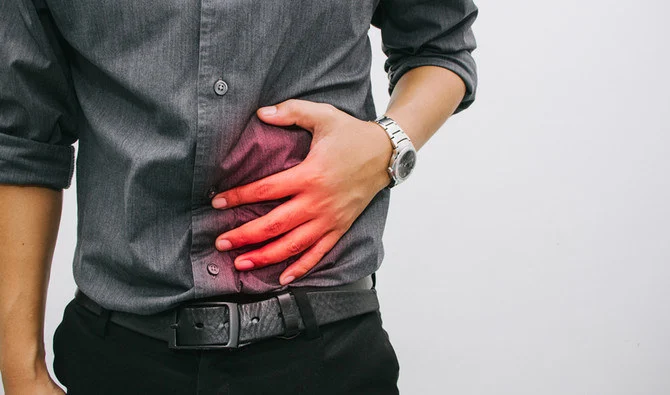
A group of researchers led by a professor at NYU Abu Dhabi has developed a non-invasive system to aid in the diagnosis and treatment of gastrointestinal motility disorders.
Researchers have produced 3D magnetic field gradients using high-frequency electromagnetic coils to track the movement of an ingestible smart pill through the gastrointestinal tract, NYUAD said on Tuesday.
The ingestible wireless device measures and transmits the field magnitude to determine its precise location, which is then sent to a smartphone via Bluetooth technology.
It reportedly allows for a more accurate evaluation of the movement of food from the mouth through the throat, esophagus, stomach, intestines and out of the body.
The system has been modeled using the digestive systems of large animals.
Existing smart pills do not offer the large field-of-view, high spatial resolution and fully wireless operation that the 3D magnetic field gradient developed by the researchers allows for, WAM reported.
“The smart pill our team has developed represents a more accessible and efficient approach to assessing GI motility that can benefit both patients and medical providers,” Khalil Ramadi, NYUAD assistant professor of bioengineering, said.
“This is a new frontier for medical diagnosis and evidence-based treatment and has the potential, with further research and refinement, to revolutionize how we can most effectively address health challenges that impact millions of people worldwide,” Ramadi added.
It is estimated that more than one-third of the world’s population suffers from gastrointestinal disorders.
source/content: arabnews.com (headline edited)
_____________
The new non-invasive system aims to aid in the diagnosis and treatment of gastrointestinal motility disorders. (Shutterstock)
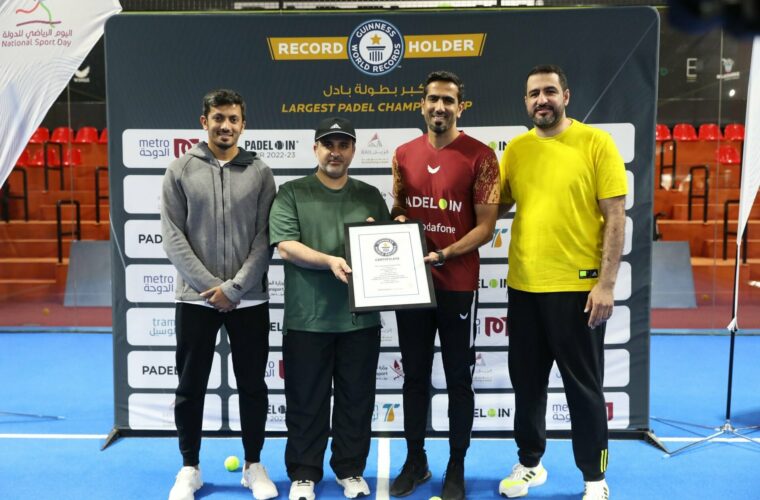
Qatar Rail has announced that MD & CEO H.E Dr. Abdulla Al-Subaie received the Guinness Records certificate for the Largest Padel Championship in the World.
The achievement was announced on the day of Qatar’s National Sport Day, 14 February 2023.
The event was organized by Qatar Rail in partnership with Padel In Qatar and witnessed the participation of 800 players.