How South Americans with Middle Eastern Roots are Transforming Arabic Cuisine

In a region where the first Arab immigrants arrived in the 19th century and an estimated 18 million people have Middle Eastern roots, Arabic food has become an integral part of the local cuisine in several Latin American countries. A new generation of Arabs on the continent is now seeking to expand the concepts and possibilities of their culinary traditions.

In Brazil, where researchers estimate that at least 10 million people are of Syrian or Lebanese descent, kibbeh and sfiha have become so popular that many people have forgotten their Levantine origin. “Sfiha was mainly brought to Brazil by Armenians from Aleppo,” Lebanese-born chef Georges Barakat told Arab News.

When he arrived in the city of Sao Paulo in 2004, he realized that Brazilians were very interested in Arabic food. Since he opened his restaurant Shahiya in 2012, he has been reinventing Lebanese dishes, giving them contemporary attributes without making them lose their roots.

“As with any other cuisine, the Arabic one can be transformed, but always keeping its essence,” he said.

“I try to offer my clients nostalgic recipes that remind them of the food they used to eat with their grandmothers, but with a modern touch.”

Both in Shahiya, located in an upscale area of Sao Paulo, and in his work as a culinary consultant at the Mount Lebanon Club — one of the most traditional institutions of the Lebanese community in the city — Barakat offers high-level food presentation and a sumptuous atmosphere.

His experiments include grape-leaf rolls stuffed with Portuguese cod, a fusion of the traditional Lebanese dish with a popular filling in Brazil. “I want to please different tastes. Nobody will lose anything with that effort,” he said.

Brazilians have transformed sfiha into their own dish, and now make sausage and even chocolate versions. In Mexico, the historical presence of Arab immigrants has also generated a curious synthesis with the local cuisine. The most notorious example is the taco arabe, a fusion between the Arabic shawarma and the Mexican taco.

It was a creation of Assyrian-Chaldean immigrants who settled in the city of Puebla at the beginning of the 1920s.

“My grandfather and his brother realized that it wasn’t easy to find pita bread, so they began using tortillas,” Zacarias Galiana, the heir of Tacos Bagdad — the pioneering restaurant in the production of tacos arabes — told Arab News.

“They also replaced the yogurt with chipotle sauce, and the preferred meat became pork.”

Galiana, who manufactures the chipotle sauce that his grandfather created, also serves a more Arabized version of the taco, using a tortilla more similar to pita bread and traditional shawarma fillings such as yogurt and onions. “We’re totally connected, and fusion food is a natural consequence,” he said.

In Chile, where at least 600,000 Palestinians form their largest community outside the Middle East, the new generation seems to be eager to innovate.

Jad Alarja, a 33-year-old Palestinian-born chef in the capital Santiago, is a culinary instructor at the online platform Ochomil.cl, and has been teaching viewers how to make traditional Arabic dishes. He is not afraid of experimenting with new flavors and textures.

“The new generations are willing to have new food experiences, but we Arabs tend to be stuck with the same old ways of doing things,” he told Arab News. Alarja’s classes have been shared on social media by Chile’s Palestinian community. At times, he receives negative feedback.

“Once I taught how I prepare tabbouleh and a person said, ‘I come from a family with five generations of cooks, and that isn’t how tabbouleh should be done’,” he said.

“Why do people prefer to compete over who makes things more traditionally instead of creating new things?”

Alarja said during the COVID-19 pandemic, many Arab Chileans began cooking and selling food, something that may contribute to expanding the reach of Arabic cuisine in the country.

The expansion of Arabic food in Latin America is also a result of the influx of Syrian refugees, who have been coming to the region for the last 10 years due to humanitarian visas distributed by countries such as Brazil and Argentina.

Some of them opened restaurants and have been serving the food they used to prepare in Syria, which can at times surprise Latin Americans used to a specific Arabic cuisine.

Haneen Nasser, a 30-year-old Syrian who came to Argentina six years ago, married a Lebanese Argentinian and settled in Santa Rosa, a small city in La Pampa province.

There, they began cooking in 2018 and soon caused some surprise among their clients. “The city doesn’t have a large Lebanese community like Buenos Aires and Cordoba, but people have their established ideas about Arabic food. At times we impact them,” she told Arab News.

That was the case with the mint and cheese sfiha, a traditional dish in her hometown Latakia but until then unknown in Argentina.

“Even my Lebanese mother-in-law didn’t know it. Now it’s a success, especially among vegetarians and kids,” Nasser said.

A graduate in English studies, she never cooked professionally in Syria but fell in love with the idea in Argentina. At time, she asks for help from her mother and aunt in Syria with some recipes.

“We’re now starting a small restaurant with the idea of not only serving food, but also presenting our culture to the people,” Nasser said. “It’s our life project for the future.”

Barakat said: “Many Arab chefs go to Europe for training and end up becoming chefs of foreign food. I’m the opposite: I want to be an ambassador of Lebanese — and Arabic — food all over the world.”

source/contents: arabnews.com

_____________

___________________________________

ARAB WORLD / SOUTH AMERICA

LEBANON: Journalism Student Yasmina Zaytoun Crowned Miss Lebanon 2022

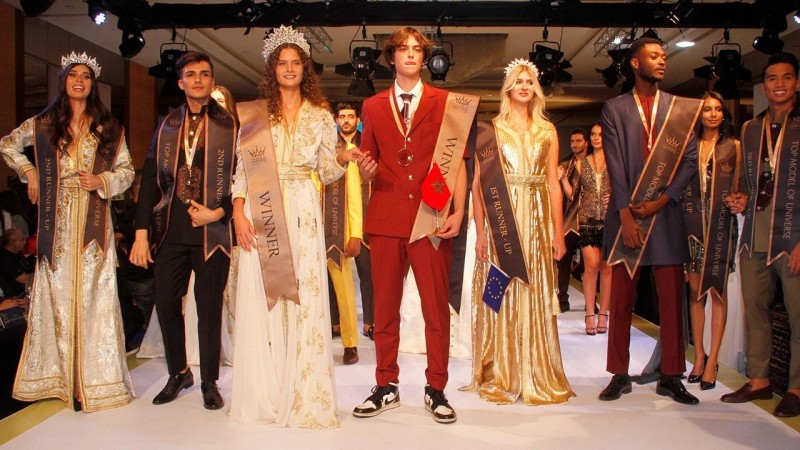
The Forum de Beyrouth played host to a glittering showcase of Lebanese talent on Sunday night as model, journalism student and show host Yasmina Zaytoun was crowned Miss Lebanon 2022, almost four years after the last edition of the pageant.

The host of the educational online platform the @WITHYASMINASHOW beat out fellow contestants Maya Abou El-Hassan, who finished as first runner-up, Jacintha Rashed, who was named second runner up, and Lara Hraoui and Dalal Hoballah who were voted in fourth and fifth place, respectively.

Zaytoun is from the village of Kfarchouba in southern Lebanon and is currently studying at Notre Dame University — Louaize. She hosts an Instagram show titled the “With Yasmina Show,” where she interviews media and sports personalities, including politician Paula Yacoubian and actress Enjy Kiwan.

Delayed by years of crises in Lebanon, the much anticipated the show featured 17 candidates from various cities and regions who wowed a judging panel consisting of music composer Michel Fadel, influencer Karen Wazen, General Manager of IP Studios Mohamad Yehya, Miss World 2022 Karolina Bielawska, General Manager of Al-Nahar and Al-Nahar Al-Arabi Nayla Tueni, Caracala dance theatre director Ivan Caracala, TV host Hilda Khalife, and Miss Lebanon 1993 Samaya Chedrawi, who was on hand to represent the Ministry of Tourism.

“Tonight, we’re celebrating Lebanon, not just Miss Lebanon,” Tueni said, explaining the importance of the event.

“Celebrating Lebanon that we miss, the beautiful country, the life in Lebanon. This is the most beautiful image of the real people, the real Lebanese that are suffering and trying to survive. This is a very important message, and I hope that Lebanon will rise again with a very positive message. We will stay strong because we love Lebanon,” she added, noting that the new beauty queen has to “be the voice of the Lebanese people.”

Hosted by Lebanese actress and TV host Aimee Sayah, the event also featured a performance by Lebanese singing icon Nancy Ajram, who started with a rendition of “Ila Beirut Al Ontha” in a tribute to the city, before surprising her fans with “Salmat Salamat” and a performance of her new song “Sah Sah,” which was produced by US DJ Marshmello.

Ajram invited her audience to support Lebanon in the “good and the bad,” adding: “I never thought about how to love Lebanon. There’s no rule as to how you can love your country. I love Lebanon till the end.”

Sayah was dressed by famed Lebanese designer Georges Hobeika, fresh off his runway presentation at Paris Haute Couture Week in July while contestants showed off a number of glamorous looks, including evening gowns and bathing suits, and also demonstrated their ability to keep a cool head under pressure by addressing a range of social issues on stage.

Those issues included divorce, fragmented families, women abuse and violence — both verbal and physical — access to healthcare and education, and women’s empowerment, among others.

The lucky few hit the stage after being prepped and primped by the best in the business, including celebrity makeup artist Bassam Fattouh and hairstylist Wassim Morkos.

Previous Miss Lebanon Maya Reaidy, who was crowned in September 2018, passed the title and the tiara on to her successor, bringing her almost four-year-reign to an end after a series of crises forced the event to be postponed.  

In the run up to the event, billboards dotted roads in Beirut and beyond with the slogan “We missed celebrating Lebanon’s beauty,” which played into the wider #WeMissLebanon campaign touted by the event organizers, The Lebanese Broadcasting Corporation International (LBCI) and The Ministry of Tourism.

Organizers also released a glamorous advert featuring a number of the contestants posing in daring outfits, with stunning aerial views of Lebanese tourist hotspots interspersed throughout the 48-second video.

The ceremony reflected the same celebration of the country through the music, which was chosen by Fadel, the setup and decoration with take home flowers.

Chairman and CEO of the Miss World organization Julia Morley, Miss World 2021 Karolina Bielawska from Poland, the first runner-up Miss USA Shree Saini, and Miss World 2019 Toni-Ann Singh from Jamaica and Miss World Events Director Stephen Douglas Morley were also in attendance.

“I have travelled quite a lot and I find that the people are the heart of every country. I can honestly say that Lebanese people are so beautiful and so warm, and even though I’m miles away from my own country Jamaica I feel at home,” Singh said.

The winner was selected from a pool of candidates chosen for their beauty and brains at auditions held between December 2021 and February 2022, with Lebanese young women aged between the ages of 18 and 27 invited to participate.

source/content: arabnews.com

__________

Journalism student and host of @WITHYASMINASHOW Yasmina Zaytoun with her Miss Lebanon 2022 crown. (Arab News/ Alex Spoerndli)

____________

LEBANON

EGYPT: Among the Most Powerful CEOs of 2022 – Forbes Highlights Hisham Talaat Moustafa, CEO & MD of the Talaat Moustafa Group

Forbes Middle East has announced its annual list of the 100 Most Powerful CEOs in the Middle East for 2022.

 The American magazine confirmed the status of businessman Hisham Talaat Moustafa, CEO and Managing Director of Talaat Moustafa Holding Group, who ranked 61st, up 6 places from last year’s ranking.

 Forbes Middle East magazine said that Hisham Talaat Moustafa is the youngest son of the founder of the Talaat Moustafa Group, which is currently the largest listed real estate company in Egypt.

 The magazine stated that the assets of Talaat Moustafa Company amounted to 7.5 billion dollars in 2021, while the group owns a portfolio of land with an area of 74 million square meters.

   The group’s revenues amounted to 825 million dollars last year, while the company developed more than 33 million square meters of land, and sold more than 90 thousand housing units.

 Forbes reported that the Talaat Moustafa Group recently launched giant projects, including: Privado – Madinaty, Celia and Noor City.

 The magazine said that the group has extensive investments in the hospitality sector, including: Four Seasons Resort Sharm El Sheikh, Four Seasons Nile Plaza, Four Seasons San Stefano Alexandria, and Kempinski Nile  Cairo.

 About the methodology used in the classification, Forbes indicated that its methodology in preparing the list was based on collecting information from financial market disclosures, industry reports, annual reports of companies, financial statements, and other primary sources.

 As for the classification of CEOs, it is based on several factors: the influence of the CEO and the company on society and the country, the markets they supervise, the CEO’s experience in his current position, as well as his general experience.

 Forbes indicated that the factors affecting the evaluation include: the size of the company in terms of revenues, assets, market value, the CEO’s achievements and performance in the past year, the innovations and initiatives he implemented.

 This year, Forbes magazine’s list of the most powerful CEOs in the Middle East includes 100 business leaders from 26 different nationalities, led by the Emiratis with 19 CEOs, followed by the Egyptians with 16 leaders, and the Saudis with 15 business leaders.

  The CEOs in the banking and financial services sector topped the list with 27 CEOs, followed by the leaders of the communications sector with 8 heads, and then 7 leaders in each of the energy and logistics sector.

  The companies on the list run by CEOs are worth more than 5 trillion dollars, while revenue was more than 1 trillion dollar last year.

source/content: egypttoday.com (headline edited)

_________

Among the most powerful CEOs of 2022 Forbes highlights the CEO of Talaat Moustafa Group

_________

EGYPT

8 Arabic Colloquial Words That Were Originally Ancient Egyptian

Did you know that many of the Egyptian colloquial words Egyptians use on a daily basis are not actually Arabic?

The Egyptian Arabic dialect is fundamentally Arabic, but with the influence of history and local populations, some of the peculiarities that set the Egyptian dialect apart come from the integration of ancient Egyptian, Greek and Coptic words and expressions. Surviving for thousands of years, many commonly used, modern-day Egyptian words and phrases can actually be traced back to the current dialect’s ancient predecessors.

Here are some examples of words Egyptians use, often not knowing their ancient origin, as per the books ‘From Pharaoh’s Lips’ (2003) by Ahmad Abdel-Hamid Youssef, and ‘Al Logha Al Masrreya Al Qadeema’ (Ancient Egyptian Language, 2012 ) by Abdelhaleem Nour El-din.

UMBU (DRINK)

Often, in communication with infants or toddlers, broken down or simplified words are used to allow the news speakers to express themselves without too much difficulty. For example, umbu is the word commonly used by Egyptian children to express their thirst. The ancient Egyptian term simply means “from the water”.

TA TA (STEP BY STEP)

When Egyptian parents try to help their crawling baby how to walk, they use the phrase “ta ta” derived from the ancient Egyptian word “ti ti”. Though Arabic became the primary language in Egypt, the Coptic language was initially still being used in everyday life for the majority of the population. The term “ti ti” was adopted by the Coptic language and modified to “ta ta”, which is used until today.

MAMM (FOOD)

The word Mumm is an Egyptian slang word derived from the ancient Egyptian “my wnm”, which means ‘give to eat’. Many Egyptians, until this day, teach their babies to say “mumm” whenever they are hungry — as it is easy and quick to sound out.

DAHYA TIWADDIH AL AMENDI (MAY A DISASTER SEND HIM TO HELL)

The Egyptian phrase “Dahya tiwaddih al amendi”, is originally ancient Egyptian. The word “amendi” is a Coptic word meaning “hell”, which was derived from the ancient Egyptian word “imntt”, meaning the ‘underworld’.

BIKH (BOO!)

The word “Bikh!”, meaning “Boo!”, is often used in modern day Egypt to sneak up on someone and scare them. The term is an ancient Egyptian word “pa akh” meaning “demon” or “ spirit”.

WAHAWY YA WAHAWAY IYUHA (THE MOON HAS APPEARED)

The Egyptian phrase “Wahawy ya Wahaway iyuha” is part of a song Egyptians sing during the holy month of Ramadan. Families and young children swing their fanoos (lanterns) as they sing the lyrics to Wahawy ya Wahaway iyuha. The popular lyric is believed to be inspired from the ancient Egyptian word “wah” meaning ‘to put’ or ‘appear’, and “iyah” meaning “moon”. Thus, comprising the lyric “the moon has appeared” during the month of Ramadan, which is decided upon according to the lunar calendar in Islam.

KRKR (LAUGHING)

The word “krkr” is used frequently in modern Egyptian day to describe someone who is laughing uncontrollably. The term is originally ancient Egyptian “ķrķr” and was adopted into modern day Egyptian society.

GATEK MAW (MAY A LION FETCH YOU)

The phrase “jak maw” or “gatek maw”, often switched depending on the region it is used in, essentially means “may a lion come to you”. The phrase is an Egyptian expression used as an insult. The ‘maw’ is based on a pun on the words “lion” and “mother”. The expression is often used by mothers bothered by their children.

source/content: egyptianstreets.com

____________

___________

EGYPT

How British-Sudanese Basketball Player Asma Elbadawi Shakes Things Up Both On And Off The Court

The hijab is a part of a woman’s faith and identity. At the end of the day, it’s about choice”

Risk it for the biscuit. I first came across the term when researching British-Sudanese basketball player and activist Asma Elbadawi, an athlete who doesn’t shy away from adversity when championing change and inclusivity within her sport. While all players possess the ability to take calculated risks, both on and off the court, what’s truly remarkable about Asma is that she seems to thrive when it comes to pushing the boundaries, shining brightest when challenging exclusion and sticking up for what’s right.

In 2017 Asma was at the forefront of social change, where she and other women convinced 130,000 individuals to sign an online petition to overturn FIBA’s (International Basketball Federation) ban on religious headgear in professional basketball – a feat that made the sport not only accessible to hijabi women, but anyone who chooses to cover their head due to their faith . “At the time, it felt a bit surreal. Because it was a bunch of girls that got together and decided to take on a huge governing body,” she says, looking back at the David and Goliath-esque moment which overturned the ban in 2018. “And when they listened to us, it just felt like such a relief, but also for me, personally, it felt like if I can do something like that, then I can do anything that I want.”

Fast forward four years later. While she’s still championing inclusivity in sport and being a role model for young basketball players, Asma is also a published author, multifaceted creative (she studied Photography, Video and Digital Imaging at the University of Sunderland) and the face of adidas’ Impossible is Nothing campaign – which was recently shot in Dubai on a glow-in-the-dark rooftop basketball court on the Palm Tower.

“It aligns with a lot of my values in terms of feeling like nothing is off limits, and that I can continue to push my own boundaries in any way that I can,” she says, touching on how it also extends to her artistic endeavours – something which she has put on the front burner in recent years.

A spoken word poet and playwright – who happens to have dyslexia – she shares the somewhat unusual way she fell in love with prose. “I always used to have red markings in my school books, because of my spelling,” she says, referring to her teachers constant corrections when she was growing up in Bradford, West Yorkshire. “When we learned about poetry, I was just so fascinated by its potential. I love daydreaming and I have such a wild imagination. With poetry, you can almost take other people on that adventure with you.”

For many years she kept her writing private, eventually including it within her photography work throughout her degree, a side dish of poems to go along with the visual feast.

“Eventually, I felt like I wanted to see what that was like by itself,” she says, touching on how she made the jump into performing her word. “I’d seen a lot of poetry camps when I was growing up and I felt like there was a lot of power in standing on a stage, in front of people and sharing your words without any distractions.”

Despite her success, the game of fighting for inclusivity within the sporting world – and beyond – is far from being finished business. As lawmakers in countries like France and India continue to propose banning the hijab and other religious headgear in public spaces, Asma admits she can’t help but feel concerned and frustrated. “It’s just such an annoying thing to have to deal with it every few years, regurgitating the idea that the hijab doesn’t affect the players’ safety. The hijab is a part of a woman’s faith and identity. At the end of the day, it’s about choice,” she says, touching on how the “our way or the highway” mentality of some legislatures is a step back.

Nevertheless, she still has some solid advice for female hijabi players looking to go pro: while foregoing the status quo may seem intimating, taking a risk and venturing beyond your comfort zone is the key to success.

“Go out into your community, into your city and find out which coaches are out there, that are coaching the sport that you really love – and then find out how to get into those spaces where scouts are actually going and selecting players, so you can move forward,” she advises. “Don’t worry about being the first person [like yourself] in a space. Often, if you’re a person of colour, you might play a sport that not a lot of people from your community play. Go and stay, and eventually, someone [else] will arrive there and they’ll see you.” She pauses, and then says, with conviction “And then they’ll feel like they belong also – and then, eventually, there’ll be more than just you. You’re the starting point of a bigger movement.”

With great risk often comes great reward; and nobody understands it better than Asma herself.

source/content: harpersbazaararabia.com

___________

Images courtesy of Adidas and supplied /From Harper’s Bazaar Arabia’s June 2022 issue.

___________________________________

UNITED KINGDOM (U.K) / SUDAN

WORLD RECORD: QATAR: Mutaz Barshim turns on the style to Win Third Straight World High Jump Gold Medal at the ‘World Athletics Championships, Eugene,USA

Qatari dominated his rivals to retain his title with a winning jump of 2.37 metres.

Qatar’s Mutaz Barshim turned on the style to win his third straight world high jump gold medal on Monday after clearing a world-leading 2.37 metres with ease.

Barshim, who famously shared Olympic gold with Italy’s Gianmarco Tamberi last year, jumped beautifully all night at Hayward Field in Eugene, Oregon to go well beyond his own season’s best of 2.30m.

The title was just about secure after he cleared 2.35m but he then eased over 2.37m looking almost in slow motion. With the gold medal then in the bag he had one attempt at a championship record 2.42m but failed.

“The target for me for today was gold medal, if even the world record is the only thing I still miss,” said Barshim, whose best of 2.43m is second only to Javier Sotomayor’s 2.45m set in 1993.

“Three worlds golds in a row is something that has never have been done before. I feel like I have a name in our sport, but I have been never felt like the greatest one in the field,” added the modest Qatari, who also has two Olympic silvers and a world silver to his name.

World indoor champion Woo Sang-hyeok of South Korea needed three attempts to get over 2.33m but then also cleared 2.35m at the second attempt to take silver. Ukraine’s Andriy Protsenko collected bronze on the back of his 2.33m clearance.

Tamberi had a nervous path into the final, twice failing at 2.25m and then twice again at 2.28m in Friday’s heats. In the final he failed twice at 2.30m but then cleared 2.33m at the second attempt before bowing out at 2.35m to finish fourth.

source/content: thenationalnews.com (edited)

___________

Mutaz Barshim celebrates after winning the men’s high jump final at the World Athletics Championships at Hayward Field in Eugene, Oregon, USA, on July 18 2022. EPA

_________

QATAR

WORLD RECORD: EMIRATES (U.A.E) : NYU Abu Dhabi Research Scientist to Publish the World’s First Arabic Mars Atlas

NYU Abu Dhabi research scientist Dr. Dimitra Atri has produced the world’s first ever Mars atlas in Arabic, Emirates News Agency reported.

The atlas uses data from the UAE’s Emirates Mars Mission (EMM) — also known as Hope or Al-Amal — in order to make the findings of the probe more accessible to both the UAE’s Arabic-speaking population and the rest of the world.

The Mars Atlas Project combines various images from the Hope probe to map the planet’s surface.

The end result is a comprehensive view of Mars and stunning images of a planet that once had similar atmospheric conditions to Earth.

Dimitra Atri used data from UAE’s Hope probe to map the red planet.

Atri and his team compiled the atlas by processing observational data from EMM’s Emirates eXploration Imager, one of three instruments onboard the orbiter. The device will also assist the team in showing how the planet changes over the course of one Mars year, which is roughly equivalent to two Earth years.

As more data from the Hope probe becomes available, the atlas will be gradually updated.

The data will help scientists gain a better understanding of the planet’s atmospheric thinning, which has caused it to cool and dry over the last 4 billion years.

Atri predicts that the collected data will be used to answer unsolved scientific questions about the erosion of Mars’ atmosphere.

The findings could help the international scientific community to better understand Earth’s atmospheric processes, he said.

source/content: arabnews.com (headline edited)

____________

______________________________________________

ABU DHABI, UNITED ARAB EMIRATES (U.A.E)

WORLD RECORD: MOROCCO: Soufiane El Bakkali Creates History Wins Gold in Steeplechase at the ‘World Athletics Championships’, Eugene,USA. Creates History- Becomes First Moroccan Athlete to Win Gold in 3,000m Steeplechase at World Championships.

After his recent achievement, El Bakkali became the “king of steeplechase.”.

King Mohammed VI sent on Tuesday a message to Moroccan steeplechase runner Soufiane El Bakkali, congratulating him on winning the gold medal at the World Athletics Championships held in Eugene, US.

The Moroccan athlete brought Morocco its first gold in the 3,000m steeplechase in this year’s World Championships, ending Kenya’s 15-year reign in the discipline at the international competition.

The King expressed his appreciation for El Bakkali’s achievement, saying that the Moroccan athlete “was able, thanks to his competitive spirit and patriotism, to achieve this well-deserved victory.”

“As we commend this well-deserved global crown, with which you raised the flag of Morocco in this prestigious international event, we wish you success in your rich sporting career, covered by our generous sympathy and satisfaction,” the King added.

A teary-eyed El Bakkali raised the Moroccan flag after his triumph, telling the media he was dedicating this win to King Mohammed VI, his parents, and to all the Moroccans who have shown him endless support and encouragement.

Several international media reporting on El Bakkali’s recent achievement described him as the “king of steelechase” after claiming world title.

He added, “After the semi-final I had a good look at the strategy of the Kenyan athletes. I was on my own, the only Moroccan in the race, but I did not limit myself to winning silver nor bronze. Instead I managed to come first in two world league meetings and now the World Championship.”

El Bakkali began earning his first medals at international events at the 2017 World Championship in London, where he placed second, before finishing first in the 2018 Mediterranean Games in Spain.

In August 2021, Soufiane El Bakkali gave Moroccans a moment of pride after his historic achievement at the Olympics, ending Kenya’s dominance over the men’s 3,000m steeplechase and winning the gold medal at Tokyo 2020. 

source/content: moroccoworldnews.com (headline edited)

_____________

_____________

MOROCCO

RECORDS: SAUDI ARABIA: Al-Jum’ah Mosque in Madinah, where the Prophet (pbuh) Performed the First Friday Prayer after Migration from Makkah

As a site of historical significance with a prominent role in Islamic history, today it sees a number of visitors who come to perform their prayers.

Madinah is home to a number of mosques and historic Islamic sites, a veritable tourist destination where visitors can explore places from Prophet Muhammad’s life.

Al-Jum’ah Mosque is one such place, linked to the migration of Prophet Muhammad from Makkah to Madinah.

The mosque is the site where the prophet stopped in the Wadi Ranuna region and performed the Jum’ah, or Friday, prayer.

Al-Jum’ah Mosque holds different names, such as Al-Wadi Mosque and Atikah Mosque.

As a site of historical significance with a prominent role in Islamic history, today it sees a number of visitors who come to perform their prayers.

It is situated southwest of Madinah, near Wadi Ranuna, 900 meters north of the Quba Mosque and 6 kilometers from the Prophet’s Mosque.

It was built with rocks initially then demolished and renovated several times. Before the last expansion, the mosque was built over a small mound, with one dome made of red bricks. Then it was rebuilt and expanded to accommodate 650 pilgrims.

The mosque also includes a minaret, a main dome in the middle of a praying area and four small domes on its sides.

source/content: arabnews.com (headline edited)

_________

Al-Jum’ah Mosque in Madinah. (SPA)

_________________

SAUDI ARABIA

UAE National Jiu-Jitsu Team Harvests Five Medals in ‘World Games Competition 2022’ in Alabama, USA

The UAE national jiu-jitsu team of five athletes has added two medals in the 11th edition of the World Games hosted by Birmingham, USA, from 7 to 17 July, 2022, bringing its total harvest to five medals (two gold medals, two bronze and one silver).

UAE’s Faisal Al Ketbi captured the gold medal in the 85kg category, while the 19-year old Shamma Al Kalbani won the bronze in the open weight division, becoming the first Emirati athlete to achieve such a global landmark victory.

A jiu-jitsu squad of five athletes from the UAE qualified for the games, building on an impressive performance at the 2017 Games in Warsaw, Poland. Last time out, Al Ketbi won the gold medal in the under-94kg.

Abdel Moneim Al Hashemi, Chairman of the UAEJJF, and Senior Vice President of the International Jiu-Jitsu Federation (JJIF), called the UAE team to offer his congratulations.

Fahad Ali Al Shamsi, Secretary General of the UAE Jiu-Jitsu Federation (UAEJJF), attended the award-giving ceremony, and congratulated Faisal Al Ketbi and Shamma Al Kalbani on the winning.

Tariq Al-Bahri, Director of the Abu Dhabi Professional Jiu-Jitsu Association, Mubarak Al Menhali, Director of the Technical Department, UAE Jiu Jitsu Federation’s (UAEJJF), and Joachim Thumfart, Director-General of the Jiu-Jitsu International Federation (JJIF), watched the closing day competitions.

Considered a global showpiece for sports yet to be included in the Olympic Games, the prestigious World Games 2022 featured approximately 3,600 participants from 100 nations competing across more than 30 sports.

The Emirati stars included Faisal Al Ketbi (85kg), Muhammad Al Amri (77kg), Muhammad Al Suwaidi (69kg), Shamma Al Kalbani (63kg) and Balqees Abdelkareem (48 kg).

source/contents: wam.ae (edited)

__________

Photo: @uaejjf/Instagram

____________________________________

UNITED ARAB EMIRATES (U.A.E.)