Arabs & Arabian Records Aggregator. Chronicler. Milestones of the 25 Countries of the Arabic Speaking World (official / co-official). AGCC. MENA. Global. Ist's to Top 10's. Records. Read & Enjoy./ www.arabianrecords.org
Dalila’ will join ‘Mousa’ as part of director Peter Mimi’s action-packed cinematic universe, ‘The Underdogs’.
Actress Yasmine Sabri is suiting up as Egyptian cinema’s first female superhero!
Peter Mimi – the director of famed Ramadan series ‘Al Ikhtiyar’ (The Choice) – is expanding on the superhero cinematic universe he created for his 2021 action film ‘Mousa’ starring Karim Mahmoud Abdelaziz and Eyad Nasser, in which a shy engineering student creates a powerful robot to avenge his father.
Joining ‘Mousa’ as part of Mimi’s ‘The Underdogs’ franchise will be ‘Dalila’, where Yasmine Sabri will star as a badass motorcyclist on a mission for justice. Filming for ‘Dalila’ has already begun, with Sabri currently undergoing intense physical training and motorcycle training to prepare for the film’s intense action sequences (which, if ‘Mousa’ was anything to go by, will be absolutely explosive). The Avengers who?
While Sabri is working on her super stunts, the actress has already wrapped up filming for ‘Bo’ Bo’ starring Ami Karar and ‘Abou Nasab’ starring Mohamed Emam, both of which will come out during the Eid al-Adha holiday.
‘Dalila’ is set to hit movie theatres in 2023, although details on the rest of the cast has yet to be announced.
The King Salman Global Academy for Arabic Language has launched the “Khawalid” initiative, an audio platform that aims to record 1,000 selected poems from the pre-Islamic era, in line with the Ministry of Culture’s Year of Arabic Poetry.
Abdullah Al-Washmi, secretary-general of KSGAFAL, told Arab News that the initiative, which translates to “living forever,” aimed at enriching Arabic content in various media.
He said: “Strengthening the role of the Arabic language is part of the set of goals from which the King Salman Global Academy for Arabic Language stems.”
One of its goals is to highlight the scientific, cultural and civilizational status of the Arabic language. It aims to create a platform that helps preserve Arabic content in the field of poetry.
Al-Washmi added that it will also make poetry, especially Arabic poems from the pre-Islamic era, more accessible to the public.
He said: “It highlights the value of the Arabic language, which expresses the linguistic depth in Saudi Arabia, to bring it closer to the public and endear them to it, to deepen its status, and to raise awareness of it as an integral part of the identity of the Arab person.”
The initiative will focus on the era that began approximately 150 to 200 years before Islam, and the KSGAFAL will direct work over all stages.
Its task will involve verifying work and its attribution to its author, along with determining the meaning and integrity of the content.
The selection will be limited to poems that are no less than 10 verses, taking into account the diversity of the poets and the selected works.
Al-Washmi said: “Poetry in the pre-Islamic era constitutes an important literary material that can be invested in building linguistic knowledge, enriching the artistic and aesthetic experience, and contributing to linking the contemporary generation with its authentic literary heritage.
“This initiative confirms the KSGAFAL’s interest in the culture and arts of the Arabic language, in addition to its great care in planning, teaching and computerizing it, striving in all of this to achieve its goals, which are a target of the Human Capacity Development Program, one of the Saudi Vision 2030 initiatives.”
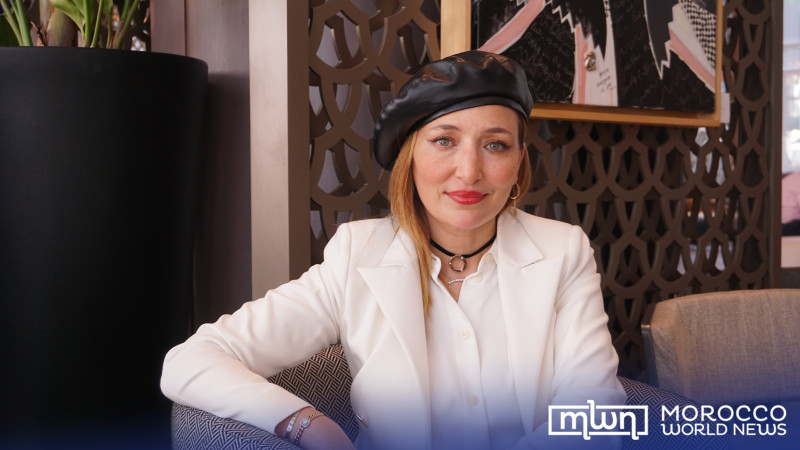
Gueddari’s art portrays the strength, resilience, and beauty of Moroccan women, in addition to advocating for their equal representation and recognition in society.
Houda Gueddari’s exhibition has captivated art enthusiasts at an ongoing art fair in the vibrant and culturally rich city of Rabat, with the artist’s work unveiling the remarkable artistic journey of a prominent Moroccan painter. Entitled “My Art, My Path,” the exhibition tackles pressing special issues as the artist uses her paintbrush as a weapon to create change.
In an exclusive interview with the gifted painter, Morocco World News had the opportunity to delve into her creative journey, discovering the personal anecdotes, challenges, as well as triumphs that have shaped her distinctive artistic style.
Between art and a more conventional career
Pursuing an artistic career, however, has not been easy for Gueddari, as she encountered many obstacles along the way. Faced with the pressure of pursuing a more conventional path, the Moroccan artist made a compromise and chose a paramedical career in dental prosthetics that still incorporated artistic elements.
But her passion for art remained unwavering. “I couldn’t let go of my dream,” she said. “I continued to seek opportunities to refine my skills, attending workshops and joining artist associations. These experiences opened doors to my first exhibitions and invaluable connections within the art community.”
The year 2016 marked a pivotal moment in Gueddafi’s artistic journey. With determination and vision, she founded the first art gallery in Fez, a space that showcased her own creations as well as supported and promoted fellow local artists.
“The gallery became a vibrant hub of artistic expression,” she reminisced, adding that “it was a joy to witness the dialogue and appreciation it fostered among art enthusiasts and collectors.”
When the COVID-19 crisis hit Morocco, it brought about unanticipated challenges, necessitating the temporary closure of the gallery amid a nationwide lockdown.
Yet, Gueddari did not allow this setback to extinguish her artistic spirit. “I adapted to the circumstances … I sought alternative ways to share my work with the world,” she said.
This includes the artist’s active presence on social media, notably her Instagram page with nearly 100k followers. Gueddari’s social media platforms serve as a medium for her to share her paintings, inspirations, and thoughts with art enthusiasts.
International recognition
Gueddari has made a name for herself as a renowned artist in Morocco, especially in the city of Fez where she lives.
In addition, her talent shone on the international stage with various achievements, including being selected as a finalist in a prestigious competition in Dubai. She also received acclaim for her work in Florence in 2022, winning the Leonardo Da Vinci international prize.
She fondly recalled her participation in the renowned Biennale art exhibition in Venice, Italy, and exhibiting at the Museum of Modern Art in Barcelona.
As travel restrictions were imposed worldwide, Gueddari redirected her focus toward promoting art within Morocco. In collaboration with the Marriott Hotel in Rabat, she orchestrated the ongoing “My Art, My Path” exhibition.
Speaking about her artworks, she said that she draws inspiration from various movements, including cubism and surrealism. “A little bit Picasso, a little bit Dali … I was inspired by several artists, but the truth is I really just try to be myself,” she explained.
Gueddari sees herself as a “committed artist.” She said: “When I paint, I paint my emotions, I lose my life, I paint everything that happens around me.”
Through her art, Gueddari tackles various themes and social issues, including women’s rights and the crucial role they play in Moroccan society.
“Women play an integral role in society, and their contributions should never be underestimated or undervalued. It is essential to create an environment where women have equal opportunities to thrive, express themselves, and pursue their dreams,” she said.
The “My Art, My Path” exhibition merges traditional and contemporary expressions, embodying the Moroccan artist’s profound connection to her homeland and its rich artistic heritage. “I am very proud to be Moroccan … I am very proud to represent my country as an artist,” she said.
Art as a constant quest for growth, self-discovery
Discussing the obstacles artists worldwide face, Gueddari acknowledged the challenges they have to endure, saying: “The life of a painter demands unwavering dedication and perseverance.”
“It is a constant quest for growth and self-discovery,” she stressed, underlining that these challenges serve as golden opportunities for artists to achieve personal and artistic growth, as well as push the boundaries of their creativity and inspire others along the way.
Despite the difficulties that artists encounter, Gueddari argued that the artistic journey is extremely rewarding. “The world of art teaches us tolerance, acceptance, openness to the other, and openness to the world.”
Through her work and her online presence, the Fez-based artist actively promotes art in Morocco, seeking to deepen the understanding and appreciation of the artist’s spirit and the nation’s artistic landscape.
Talking about the future of art in Morocco, she said that she is “very optimistic,” especially since the government has been giving more importance to art and culture.
After her exhibition in Rabat comes to an end, Gueddari will embark on another journey, with plans to hold exhibitions in various Moroccan cities, including Marrakech and Agadir.
When asked about her message to aspiring Moroccan artists, Gueddari shared a heartfelt, encouraging piece of advice. “Never settle for what you already know,” she said. “Embrace versatility, expand your knowledge, and explore different artistic domains. Stay true to yourself, and draw inspiration from other artists.”
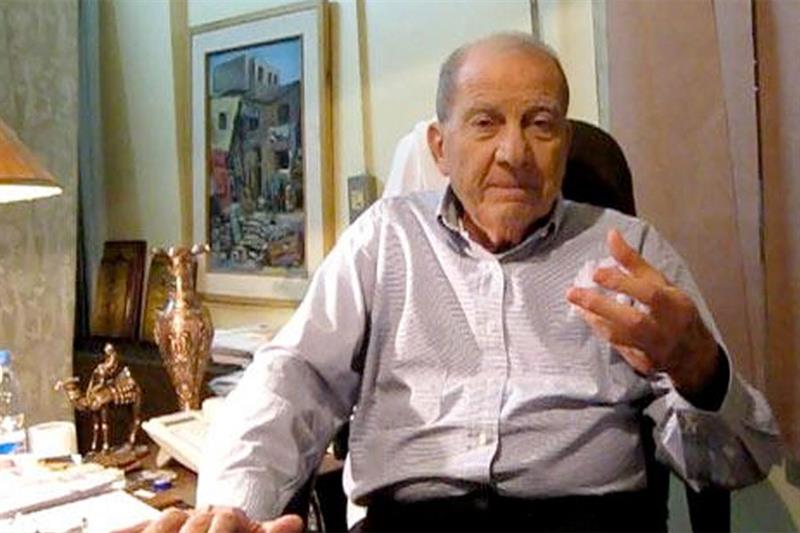
Prominent Egyptian gynaecologist and author Mohamed Abul-Ghar won on Sunday the State Nile Award in Science and Advanced Technological Sciences.
Minister of Higher Education and Head of the Scientific Research and Technology Academy Mohamed Ashour announced that Cairo University’s Professor at the Faculty of Medicine Dr Mohamed Abul-Ghar and Mansoura University’s professor at the Faculty of Medicine Dr Hassan Abul-Enein won the State Nile Award in Science and Advanced Technological Sciences.
“It is the state’s recognition of scientists’ efforts in advancing the nation and building the new republic and knowledge economy,” Ashour said on Sunday in a press conference at the New Administrative Capital.
Abul-Ghar started, with a group of medical doctors, Egypt’s first-ever centre for in vitro fertilisation (IVF).
Abul-Ghar, 82, received the Egyptian National Award for Scientific Excellence in 1999. He also received honourary membership of the European Society for Human Reproduction and Embryology in 2004 and honourary membership in the International Federation of Fertility Societies in 2000.
Abul-Ghar has also been active politically as he established, with other university professors, the 9 March Movement for the Independence of Universities during the rule of the late President Mubarak. He was also among the spokespersons of the National Association of Change.
Following the ouster of Mubarak in February 2011, Abul-Ghar was among the founders of the left-liberal Egyptian Social Democratic Party.
Aside from his medical scientific career and political activism, the prominent gynaecologist established himself in recent years as a bestselling non-fiction author with a special interest in the modern history of Egypt, specifically the pre-1952 liberal era.
Among his bestselling books are Egyptian Jews in the 20th Century, The Egyptian Legion and The Pandemic that Killed 180,000 Egyptians.
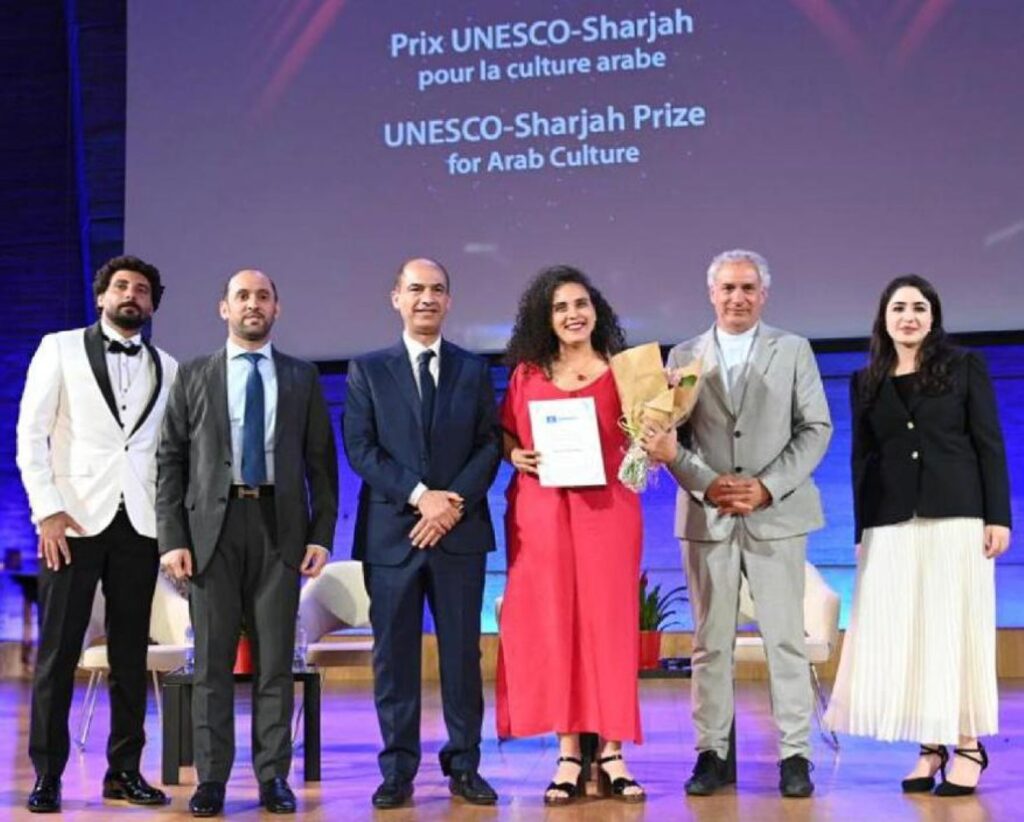
Kassem Istanbouli, Lebanese actor-director, and Hajer Ben Boubaker, French researcher and sound director, were awarded the 19th UNESCO-Sharjah Prize for Arab Culture at an award ceremony at UNESCO Headquarters in Paris on 26th June 2023.
The event, organised by the Sharjah Department of Culture in collaboration with UNESCO, celebrated the achievements of two winners.
The ceremony was attended by Abdullah bin Mohammed Al Owais, Chairman of the Sharjah Department of Culture; Ernesto Ottone Ramirez, Assistant Director-General for Culture at UNESCO; Mohammed Ibrahim Al Qasir, Director of the Department of Cultural Affairs in Sharjah; Ahmed Al Mulla, Deputy Ambassador of the UAE to France, and Aisha Al Kamali, Representative of the Cultural Attaché at the Embassy of the UAE in France, along with dignitaries, writers, intellectuals and accredited diplomats to the United Nations (UN).
Al Owais and Ramirez presented the 19th edition of the UNESCO-Sharjah Prize for Arab Culture to Istanbouli, winner of the Arab Personality Award, and Ben Boubaker, winner of the Non-Arab Personality Award.
The UNESCO-Sharjah Prize for Arab Culture recognizes recipients’ outstanding artistic achievements celebrating Arab art and culture globally. Core to UNESCO’s anti-racism and anti-discrimination agenda, the Prize promotes peace and dialogue to foster intercultural understanding and celebrate diversity.
For this 19th edition of the Prize, the international jury recognized Mr Istanbouli and Ms Ben Boubaker’s extraordinary contributions to promoting the arts and Arab culture and supporting their local communities.
Kassem Istanbouli is a Lebanese actor and director. Since 2014, he has led the rehabilitation of historical cinemas in Lebanon, including Stars Cinema in Nabatieh, and Al-Hamra and Rivoli in Tyre, abandoned or destroyed during civil war.
Mr Istanbouli is involved with several international projects focused on skills enhancement, youth empowerment and collaborative partnerships. In 2020 he co-founded the Arab Culture and Arts Network (ACAN) to design and implement online cultural activities across the Arab region. The Network includes over 700 organizational and individual members from across the world.
Mr Istanbouli is also director and founder of the Lebanese National Theater in Tyre and the Lebanese National Theater in Tripoli and has been a project manager at the Tiro Association for Arts in Lebanon since 2014.
Hajer Ben Boubaker is a French-Tunisian independent researcher and sound director. Her research focuses on a socio-historical analysis of Arab music and the cultural history of the Maghreb community in France and around the world.
In 2018, she created and self-produced the Vintage Arab podcast, which explores Arabic musical heritage. At the intersection of research and art, the podcast allows her to keep a foot in each sphere.
Ms Ben Boubaker is a producer and documentary director for France Culture, where her work questions the sound and political memory of immigration. As a researcher, she is associated with the Arab and Oriental music collection at the Bibliothèque nationale de France, and continues to write for scientific journals, including “Paris, capitale maghrébine: une histoire Populaire” in October 2023.
Created in 1998 and run by UNESCO at the initiative of the United Arab Emirates, the UNESCO-Sharjah Prize awards two laureates per year — individuals, groups or institutions — in recognition of their contribution to Arab art and culture, or for participating in the dissemination of the latter outside the Arab world.
The initiative contributes towards the Organization’s objective of fostering inclusive, resilient and peaceful societies. The Prize carries a monetary value of USD 60,000, which is equally divided between the two laureates.
The Sudanese filmmaker gave up a comfortable career in Bahrain to make movies that could shed light on his homeland’s deep divides. He’s now a Cannes award-winner .
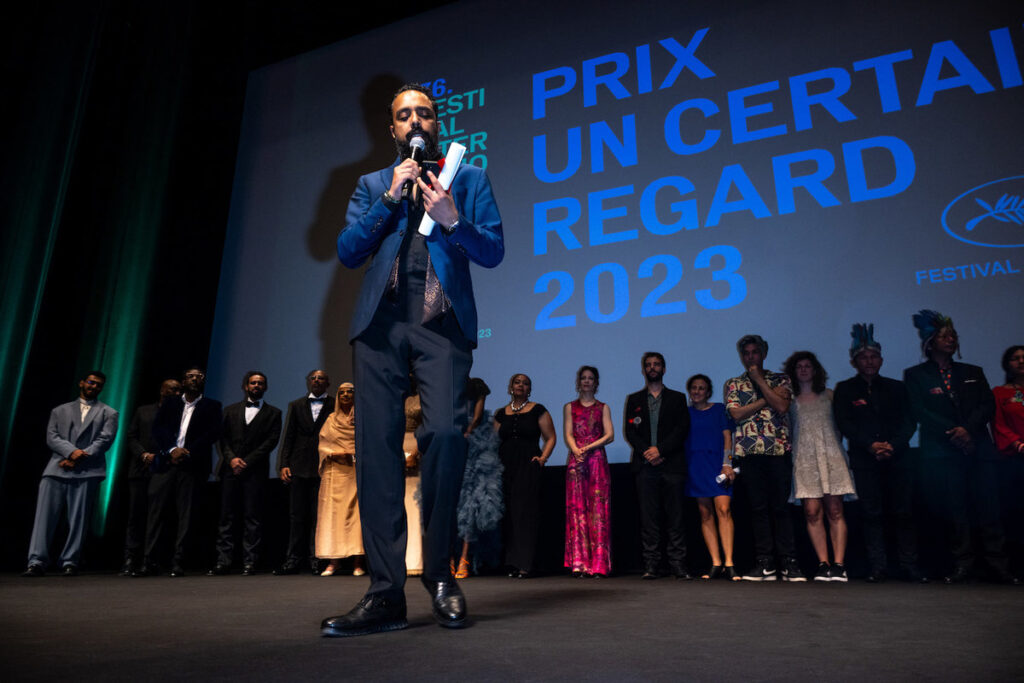
Great art often raises more questions than answers. In the case of “Goodbye Julia,” the Saudi-backed film that won the first-ever Freedom Award at the Cannes Film Festival last month, those questions were born in a single historic moment.
It was February 7, 2011, and Sudanese filmmaker Mohamed Kordofani was sitting with his family in Khartoum as they read out the results to the South Sudanese independence referendum. His country was quite literally split in two and, as his shock turned to shame, a long search for truth began — one that would upend his entire life and turn him into one of the region’s most promising storytellers.
“Something sparked inside of me. Why would 99 percent of a whole nation vote to separate? I couldn’t fathom it, and I began to question everything — about my society, my upbringing, and even myself,” Kordofani tells Arab News.
“I was brought up in a typical Eastern Sudanese household, and the traditions and norms I inherited from previous generations made me think that racism was just a normal part of life. I hadn’t realized the true damage that everyday hate could cause. I had been so confident in my ignorance. I told myself, ‘No more.’ And I’m a better person now because of it,” he continues.
Truth be told, Kordofani had never wanted to be a filmmaker. In fact, at the time of the secession, he was working in Bahrain as an aircraft engineer, settled in a seemingly comfortable life in which he could safely start a family. He was never a cinephile and had no great interest in the artform. But as he wrestled with the deep flaws within himself and his home country, his ideas began to take narrative shape.
“It’s funny to me that I found myself at Cannes when I didn’t come from a cinema background like so many of my peers. I have impostor syndrome about this — wondering why I’m here when so many others are not. Growing up, I watched movies like everyone else, sure, but that was it,” says Kordofani. “I wrote stories for myself in university, but no one would ever read what I wrote. I didn’t know anything about cinema, but I chose filmmaking because I realized it was a tool I could use to tell my stories to biggest audience possible.”
For years, Kordofani led a double life. He would use his annual leave and dip into his savings to make short films, screening them for the local community to great acclaim before traveling back to his workaday life in Manama. By 2020, he realized he had to make a choice: continue with the life that had been prescribed him, or follow what had become his passion. He chose the latter.
“When you’re married and have kids, switching careers can be very scary, but, honestly, I was miserable,” he says. “I said, ‘You only live once’ and, at age 37, I left engineering behind to start a production company at a time when there was no film industry in Sudan. I burned all my bridges, cancelled my engineering license, and put myself on a new path.”
By that time, his efforts to make “Goodbye Julia” were well underway. The idea had come to him at home in Bahrain one night, as he and his wife argued over whether they should get a live-in maid to help around the house. The idea repulsed Kordofani.
“I thought the whole setup was unfair. These people work for a long time, often have no off-days, and it all sounded to me like slavery. It took me back to growing up in Sudan, and the help that we had around the house that wasn’t much different — always made up of people from the south of the country. It made me think back to the separation in 2011, and the plot started forming in my mind,” he explains.
The film follows two women from the north and south of Sudan respectively — Mona, a retired singer racked with guilt for causing a man’s death, and another named Julia, the man’s widow. Mona offers Julia — who doesn’t know about Mona’s involvement in her late husband’s death — a job as her maid in order to atone for her misdeeds, against the wishes of her husband Akram, who is open in his resentment of southerners.
In early drafts, Kordofani was unsatisfied with how one-dimensional all the characters felt. “I was writing with my engineering mentality,” he says. “All of them were binary — zero or one, black or white. It wasn’t until draft three or four that I actually felt I understood that the film wasn’t just about separation. I had to not only delineate their differences, but reconcile them, and reconciliation is about understanding.
“I had to learn to stop judging them, and empathize. That was not hard to do, because they are me,” he continues. “Each of them, from the conservative husband Akram to the socially progressive wife Mona, were a reflection of my own points of view at one time in my life or another, back when I felt I was a victim of my society. And they turned from black-and-white to gray, and that turned them into a good catalyst for dialogue.”
As his script progressed, Kordofani began pitching the film internationally, but found that the predominantly white decisionmakers couldn’t fathom the racial divide of his home nation.
“In one pitch session in Portugal, the first question was, ‘I don’t understand. You are black. And the southerners are black as well. So you’re talking about black-on-black racism? How does that work?’ I responded, ‘Yeah, if this were a comedy, we’d call it “50 Shades of Black,”’ Kordofani says wryly.
The film has found instant success coming off its Cannes debut — it is the first Sudanese film ever to screen at the storied festival — scoring big deals for theatrical releases in countries across the world. Ultimately, though, Kordofani made the film with Sudanese audiences in mind.
After all, part of the reason that he imbued the film with so much complexity — why he asks hard questions without reaching for easy answers — is that he wants to inspire discussion in Sudan, hoping to bridge the divides that continue to plague the country as it verges on a civil war that Kordofani believes is caused by the same underlying social illness as the 2011 secession was.
“We’re a divided people. Political division, ethnic division, and tribal division have always been the root cause of all our problems,” he says.
Kordofani, meanwhile, has begun to accept that he truly is a filmmaker, and a stamp of approval from Cannes could mean he’ll be able to tell stories for the rest of his life. He’s come to terms with the fact that he doesn’t have the answers, whether in politics or his art, and that his journey to find them will continue for years to come. Indeed, accepting his own imperfections may be the big answer he was always looking for.
“When I finished the final scene, I cried so much. We were we were on a bus from Kosti to Khartoum, a five-hour ride, and I think I cried the whole ride,” he says. “It hit me that my intention was to make a film that may change people. And I found out that I was the one who was changed the most by making this film. I feel I finally understood myself.”
source/content: arabnews.com (headline edited)
___________
TKordofani addresses the crowd after receiving the Freedom Award for ‘Goodbye Julia’ at the Cannes Film Festival on May 26. (AFP)
Jordanian CEO and founder of Tamatem Games, Hussam Hamo, has been selected to join the World Economic Forum’s (WEF) Young Global Leaders Forum.
According to a statement issued by Tamatem on Wednesday, Hamo was the only Jordanian entrepreneur selected to join the cohort.
Top publisher
Hamo founded Tamatem in 2013 to provide fun and understandable mobile games for the Arab market.
It is the number-one publisher of mobile games in the Middle East and North Africa and the top publisher of Arabic-language games, with more than 50 games published, 150 million downloads, and 7 million monthly active users. Forum program
The Forum of Young Global Leaders “connects and inspires members to lead responsibly towards a more inclusive and sustainable world through virtual and in-person programming”, according to the forum’s website.
Through a leadership development program, members are trained in insights, skills, and connections to accelerate their work in the public interest.
Panthera co-founder Thomas Kaplan told Arab News the resolution will boost the work of wildlife champions worldwide, as well as those in the Kingdom
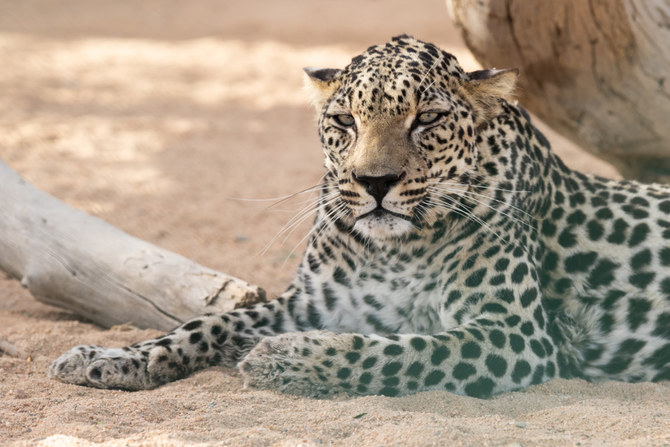
The Arabian Leopard has been etched into Saudi consciousness for thousands of years, he said, but is the most persecuted of all big cats and critically endangered
When the UN General Assembly voted this month to adopt a resolution designating Feb. 10 as International Day of the Arabian Leopard, Thomas S. Kaplan’s reaction was one of “absolute delight.”
The leopard has been etched into Saudi consciousness for thousands of years, he said, with the petroglyphs on AlUla’s ancient walls that depict the animal bearing witness to its significance to the Saudi people and their ancestors.
Having the importance of the Arabian Leopard now finally enshrined by the UN General Assembly is therefore “a major triumph for the Saudi people and for the Kingdom of Saudi Arabia itself,” Kaplan added during an exclusive interview with Arab News.
As co-founder of Panthera, the global wild cat conservation organization, and founder and chairperson of the Global Alliance for Wild Cats, Kaplan in 2019 signed an agreement with Prince Badr bin Abdullah, the Saudi minister of culture and governor of the Royal Commission for AlUla, to support regional and international conservation initiatives, at the heart of which is the Arabian Leopard Initiative to protect the critically endangered animal, which is indigenous to AlUla.
“The Arabian leopard is the most persecuted of all the big cats,” Kaplan said. “So having a champion like Saudi Arabia helping us to do the work that we do so passionately is really a gift from God.”
The UN resolution enshrining an International Day of the Arabian Leopard is “a clear win, both for the leopard and for the Kingdom,” he added. “It is in many respects a beautiful affirmation of one of the most ambitious environmental and conservation initiatives in generations: The restoration of AlUla as a cultural center point for the new Saudi Arabia is complemented by one of the most significant environmental restoration programs in the world.”
Wild cats play a critical role in ecosystems. They are considered an “umbrella species” when making conservation-related decisions, because efforts to protect them also indirectly protect many other species. They represent “Apex Predator Strategy Opportunities.” What this means is that a thriving wild cat population can help ensure the survival of its entire habitat.
Even the human population can benefit when the animals thrive, because they help boost tourism and shine a light on local communities. In the case of Saudi Arabia, such communities can become important parts of the Kingdom’s broader development agenda, leading to better local amenities and opportunities.
“In places where we have gone in to save leopards or jaguars or other animals that are part of the local tourist industry, we have always brought with (us) increased medical attention, building schools, building clinics, (showing) the local communities that not only do they have nothing to fear, but they have everything to gain by a thriving cat population, (and that) because of the leopard, there will be socioeconomic opportunities for their children,” said Kaplan.
“If in its own way the Arabian Leopard Initiative is something that not only gives people national pride, but gives those who live in the same habitat as the leopard even greater opportunities for their children, then this is a huge win.
“So the success of the Arabian Leopard Initiative becomes a signal to the Kingdom, and to the rest of the world, that Saudi Arabia has been successful in restoring the landscape. For these reasons, I believe that AlUla is one of the most transformational initiatives in the preservation of cultural and environmental heritage for future generations.”
None of this would have been possible, he said, without “the passion and commitment” of Crown Prince Mohammed bin Salman; Prince Badr; and Princess Reema bint Salman, the Kingdom’s ambassador to the US. “The revolution from above that has been implemented by the crown prince is the catalyst for all (the reforms that) followed, and the Arabian leopard is no exception,” said Kaplan.
“I have personal experience in engaging with the Crown Prince on the Arabian leopard and leopard conservation globally. He is truly committed not only to the Arabian leopard but also to advancing the cause of leopard conservation in other countries that are not necessarily playing catch-up like Saudi Arabia, but trying to stay ahead of the curve.
Regarding Prince Badr’s role, Kaplan said “everyone knows that (he is) the initiator of the Arabian leopard process. He is, in many respects, the father of the Arabian leopard program, for which I think he will go down in the history books.” Kaplan also had nothing but praise of Princess Reema.
“Anyone who has come into contact with Princess Reema in Washington DC, or elsewhere, immediately is presented with the passion of what the Arabian leopard means for the Kingdom,” he said.
“It’s not simply because the Arabian leopard is, in my mind, to Saudi Arabia what the panda is to China, an instrument of soft power, it’s much more than that. “The crown prince, Prince Badr and Princess Reema understand that the Arabian leopard is a symbol of national unity for Saudi Arabia. It is something that goes back thousands of years.”
The UN recognition of the animal’s importance will help boost the efforts of conservationists to save the leopard, Kaplan said.
“Being able to show the buy in of the international community allows us the freedom to show to environmental activists all over the world the significance of this initiative,” he added.
“It allows us to be able to evidence that the reintroduction of the Arabian leopard is real, that it has the full support of Saudi Arabia, that it is not some form of power exercise but it’s the product of passion.
“This in turn allows people such as myself on the international stage to be able to recruit the highest-quality experts to work with us in our field.”
Kaplan said the UN resolution will also aid the work of Saudi environmental and wildlife champions, including Catmosphere, a foundation established by Princess Reema to assist big-cat conservation efforts worldwide.
“Catmosphere has the potential to be the most important cat-conservation awareness program ever undertaken, not simply in the Middle East, but globally, and that was originated by a Saudi, by Princess Reema,” he said.
“It’s an extraordinary story. The impact that it can have on cat conservation is very obvious but, at the same time, the impact that can have on our agenda, which is to get people to see the Arabian Leopard as being Saudi Arabia’s panda, as being a symbol of commitment to the best practices in wildlife conservation, this is absolutely enormous.”
“When you combine the work that Prince Badr is doing at the Royal Commission of AlUla with the work of Catmosphere, what you see is an organic, Saudi-generated initiative and campaign to save the Arabian leopard and, as the crown prince asked us to do, to be able to help countries around the world save their leopards, so that rather than playing catch-up, they’re getting ahead of the curve, and are not in the same situation.
“This is an act of generosity to the world, and it’s coming from Saudi Arabia.”
source/content: arabnews.com (headline edited)
____________
Arabian leopard(s) at the Arabian Leopard Conservation Breeding Center of Taif, Kingdom of Saudi Arabia. March 2023. / Panthera and Saudi Arabia signed an agreement in 2019 to protect the Arabian leopard, which is said to be “the most persecuted of all the big cats” in the world. (Photo courtesy of Arabian Leopard Breeding Center)
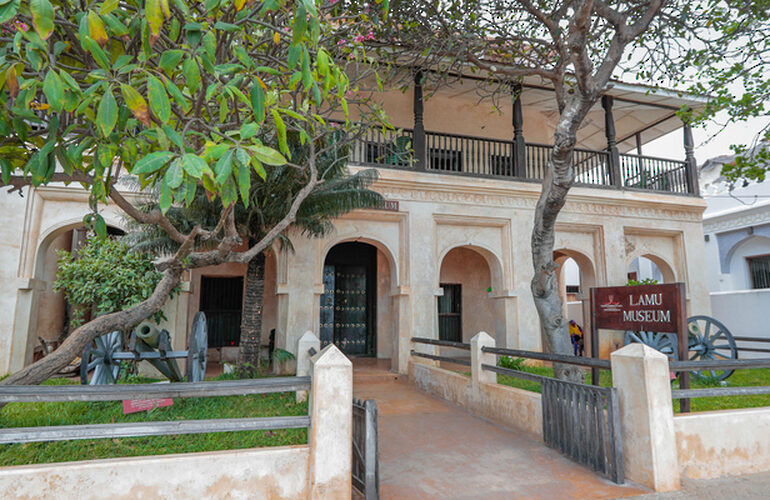
The National Records and Archives Authority (NRAA) will open a permanent museum-cum-exhibition for records and antiques pertaining to Oman’s historical presence in East Africa next on Friday, February 10. The exhibits also highlight the common history shared by Oman and Kenya in the province of Lamu.
Once restoration tasks are completed and final improvements made, the archival exhibition will be inaugurated in coordination with the Embassy of the Sultanate of Oman in Kenya and the Kenyan Ministry of Tourism, Wildlife and Heritage.
The project constitutes one of the archaeological and architectural landmarks, and aims to play a variety of cultural roles.
Besides affirming Omani presence in the province of Lamu and the depth of the two countries’ historical relations, the exhibition consolidates noble Omani values and reflects the sultanate’s keenness to preserve various aspects of its heritage, culture and civilisation.
The permanent exhibition is established within the framework of cooperation between the NRAA and the Kenyan Ministry of Tourism, Wildlife and Heritage, following a Memorandum of Understanding signed earlier by the two countries.
Through the project, the NRAA seeks to spread awareness about Oman’s history and civilisation in East Africa, notably among the local community and visitors to Lamu Island.
In 2017, the NRAA restored some parts of Mombasa Fort in the Republic of Kenya so that the monument could house a permanent museum-cum-exhibition. The facilities are named as follows: ‘Omani House’, ‘Al Mazrouei Hall’ and ‘Fort Museum’. They all serve as testimony to Omani presence in Mombasa.
Gulf Food Production Company “Raw’a“, one of the leading companies in the State of Qatar in dairy production, won the Fine Taste Award for the year 2023, which is one of the most prestigious awards in the field of food and beverage industry worldwide, presented by the International Taste Company Institute in Brussels, Belgium. The evaluation was conducted by a committee of more than 200 international chefs with 86 Michelin Stars awarded to the finest chefs and restaurants around the world after competing with more than 120 international products.
136 hours of blind tasting
Rawa is the first Qatari dairy company to receive the award for good taste, after it was subjected to an organoleptic assessment that includes the visual, aromatic, flavour and textural aspects, in addition to the final mouth texture. The evaluation process took place over 136 hours of blind tasting conducted on hundreds of products from around the world, with the aim of selecting the best among them.
Award-winning product
The award-winning product is yogurt consisting of four grains and fruits containing (wheat – barley – oats – rye – apple fruit – coconut fruit). It is a healthy choice full of wholesome fruits and grains . It is the consumer’s first choice in market’s and best seller.
Mr. Mohammad Ali Al-Kuwari CEO of Raw’a, stated that Gulf food Co. pursues a strict strategy related to the quality and safety of its products and revolves around adopting several practices in its factories, including, for example, the activation of several internal audits on dairy products. In addition, the quality of these products is periodically tested.
The company is always keen to perform the above in order to ensure the safety of its products and their compliance with the highest standards of quality and taste before they reach the consumer.
It also pays great attention to developing its products with the support of a specialized research and development team to ensure that the company is compatible with the latest technologies that guarantee quality and taste while maintaining the characteristics that Qatari consumer is accustomed to in our range of products.