Arabs & Arabian Records Aggregator. Chronicler. Milestones of the 25 Countries of the Arabic Speaking World (official / co-official). AGCC. MENA. Global. Ist's to Top 10's. Records. Read & Enjoy./ www.arabianrecords.org
Arab American filmmaker Ruby Malek is shining a spotlight on Saudi talent in the 10-episode docuseries “Herstory” which follows the journeys of Saudi’s modern-day female music stars.
“We were just fascinated by the amount of talent because a lot of these artists are self-taught. And, you know, there were no music schools that they went to. There wasn’t like a piano teacher that would teach these women,” said Malek to Arab News.
“A lot of these artists actually didn’t show their identity, didn’t show their faces, and weren’t really out there… We’re still talking about 2020 now, so it wasn’t like now in 2023.”
Chronicling these artists’ struggles, triumphs and their place in the cultural history of the Kingdom, the series blends the passion for music-infused storytelling Ruby honed making music videos and her skills as a documentarian.
“I’m the generation that grew up watching MTV, VH1, so I was very into the various reality shows, and that’s what I kind of fell into. I fell into creating reality shows and formats, and so went from music videos to reality shows, documentaries. And then one thing led to another,” said Malek.
Motivated by the positive changes of Saudi Vision 2030, Malek sought to showcase a side of Saudi Arabia that she had not seen in the West. With the series having opened doors for the creator, she’s excited to continue working in the Kingdom.
“I actually have been back to Saudi. I shot a show for Vice, and yes, I would definitely (work there again). I mean, as a producer, there’s so much potential and there’s so many stories to be told that I think I will be going there more often and very soon,” she said.
source/content: arabnews.com (headline edited)
__________
Arab American filmmaker Ruby Malek is shining a spotlight on Saudi talent in the 10-episode docuseries “Herstory” which follows the journeys of Saudi’s modern-day female music stars.
Here are six powerful fiction books by Palestinian authors.
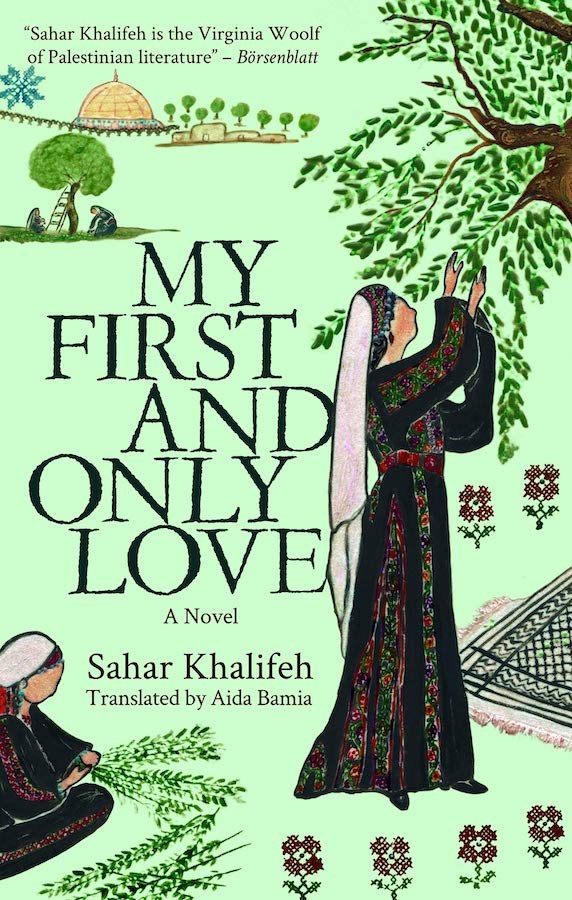
01. ‘My First and Only Love’
Sahar Khalifeh’s book is a deeply poetic account of love and resistance through a young girl’s eyes.
02.‘Minor Detail’
Adania Shibli’s book is a searing novel meditating on war, violence and memory. It was longlisted for the 2021 International Booker Prize.
03. ‘Where the Bird Disappeared’
This lyrical novel, by Ghassan Zaqtan, is set in the surroundings of the Palestinian village of Zakariyya. It weaves a narrative rich in sensory detail yet troubled by the porousness of memory.
04. ‘Trees for the Absentees’
Ahlam Bsharat’s novel moves delicately between a young woman growing up and the occupation that looms overhead.
05. ‘Against the Loveless World’
Susan Abulhawa’s book follows Nahr, a young Palestinian woman who fights for a better life for her family as she travels as a refugee throughout the Middle East. It was among the finalists for the 2020 Athenaeum of Philadelphia Literary Award.
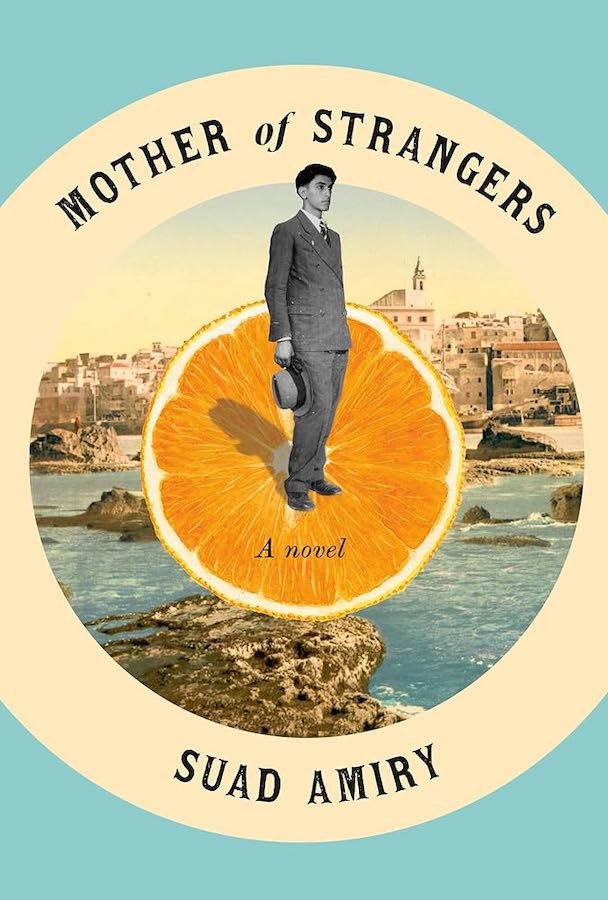
06. ‘Mother of Strangers’
Based on the true story of two Jaffa teenagers in the late 1940’s, “Mother of Strangers” by Suad Amiry follows the daily lives of Subhi, a 15-year-old mechanic, and Shams, the 13-year-old student he hopes to marry one day.
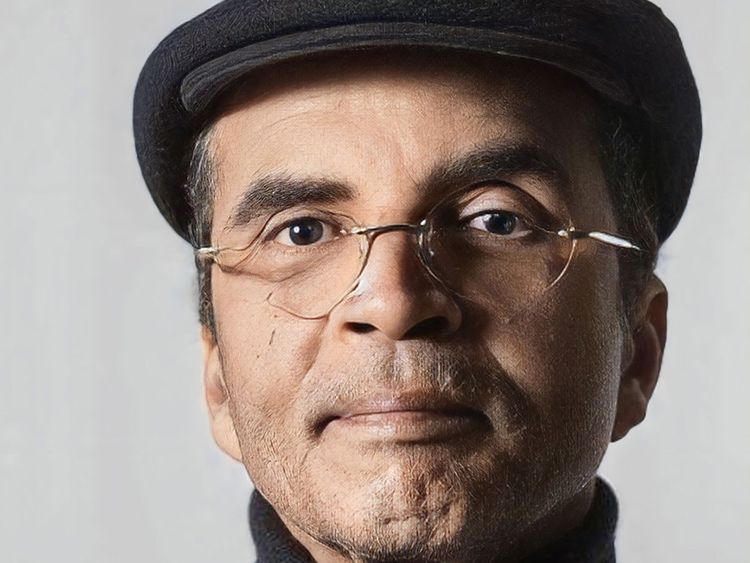
Libyan novelist has written 81 books which have been translated into 40 languages.
The Sharjah Book Authority (SBA) has named Ibrahim Al-Koni, Libyan writer and novelist, as the ‘Cultural Personality of the Year’ for the 42nd edition of the Sharjah International Book Fair (SIBF). The fair, which will open on November 1, will run till November 12.
The authority said the honour is in recognition of his profound impact on both the Arab and global cultural and literary spheres and his invaluable contributions. Al-Koni’s exceptional efforts have enriched the literary world and has been instrumental in spotlighting Arab authors on the global stage, with his literary works being translated into over 40 languages, finding a place in the curricula of universities worldwide, including those in Europe, America, Japan, and beyond.
The choice of Al-Koni for this accolade aligns with SBA’s mission to celebrate distinguished individuals in the realms of thought, literature, history and the arts. These notable figures have not only enhanced the cultural heritage but have also created impactful works that have left a lasting imprint on both the Arab and global stages across a spectrum of literary and intellectual domains, the SBA said.
Ahmed bin Rakkad Al Ameri, CEO of SBA, said, “The authority believes that honouring cultural and literary figures is an important step in building the cultural identity of any civilisation and nation. Thanks to the vision of His Highness Sheikh Dr. Sultan bin Mohammed AlQasimi, Member of the Supreme Council and Ruler of Sharjah, the emirate has become a platform for honouring Arabs whose thought and literary contributions have become a cornerstone of literature and knowledge. This includes the Libyan writer and novelist Ibrahim Al-Koni, whose recognition today asserts the strength of literature, culture, and knowledge in presenting the Arab identity to the world’s cultures.
“This recognition introduces the younger Arab generations to a prominent figure who has a significant and influential presence in the Arab and global cultural scene. Al-Koni’s portfolio includes more than 80 books in the fields of novels, literary studies, criticism, linguistics, history, and politics, serving as a source of inspiration and pride for Arabs. They are a testament to his strength and ability to compete in the realms of knowledge and culture, earning high recognition as one of the most prominent influencers in the Arab cultural landscape and one of the most widely recognised Arab authors in the world.”
81 books in 40 languages
Al-Koni was born in Ghadames, Libya, in 1948. He is among the most prominent contemporary Arab novelists and has been a candidate for the Nobel Prize in Literature on several occasions. He obtained his bachelor’s and master’s degrees in literary and critical sciences in 1977 from the Maxim Gorky Literature Institute in Moscow. He has worked in various journalistic and diplomatic roles around the world, with his most recent being a diplomatic advisor at the Libyan Embassy in Switzerland. Al-Koni is proficient in eight languages, including Tamasheq, Arabic, Russian, English, Polish, German, Spanish, and Latin.
The prolific Libyan writer has authored 81 books in various fields, and has been translated into more than 40 languages. He was selected by the French Lire Magazine as one of the top 50 contemporary world novelists, and received wide acclaim from cultural, critical, academic, and official circles around the globe.
Al-Koni has received numerous regional and international awards, including the Sharjah Award for Arab Creativity in 2008.
source/content: arabnews.com (headline edited)
___________
Ibrahim Al-Koni, Libyan writer and novelist, who has been named as the ‘Cultural Personality of the Year’ for the 42nd edition of the Sharjah International Book Fair. Image Credit: Supplied
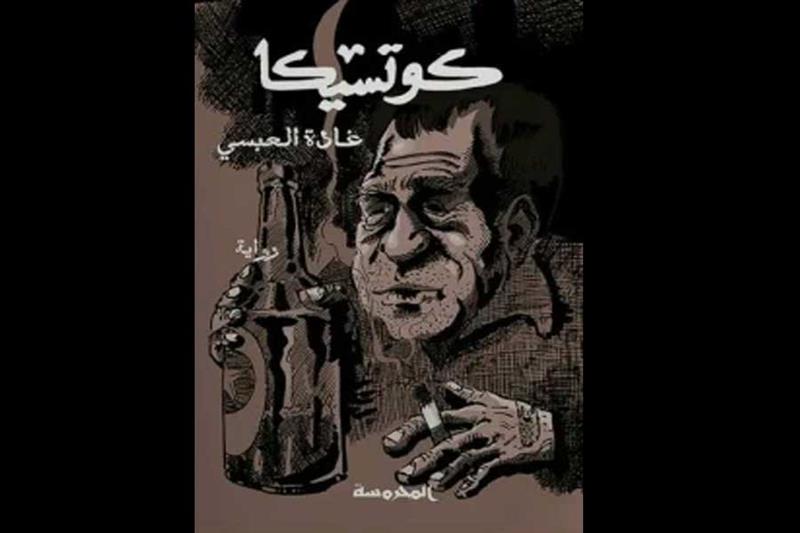
In her historical novel Cotissica, Ghada El-Absy depicts the story of the Greek adventurer and entrepreneur Theochari Kozzika (Egyptians pronounce the name in an Italian manner) and – in contrast – the life of a working-class Egyptian family.
Overwhelmed with dreams of wealth and prestige, Theochari arrives in Alexandria just after the Orabi Revolution (1879-1882) to live with his uncle Yanni and his wife.
Yanni does not help Theochari much except to give him advice, the most prominent is “middlemen are the new [Greek] gods.”
Theochari’s insatiable desire for money is evident when he allocates his uncle’s ships to repatriate Greeks from Alexandria during the bloody civil strife that erupted between foreigners and Egyptians in 1882 that culminated in the British bombardment of Alexandria and their ensuing conquest of Egypt.
El-Absy describes in detail an incident in which the British Consul’s Maltese servant, Francisco Zamit, starts a fight with an Egyptian coachman, stabbing him and taking shelter with the Maltese and the Greeks.
This is followed by fighting between the foreign communities in Alexandria, armed with pistols and guns, and Egyptians, carrying cudgels and sticks. The foreigners were driven by hatred and arrogance towards Egyptians, who in turn, felt humiliated in their own land until the Orabi Revolution awakened their wounded dignity.
One of the most unforgettable scenes in the novel is when a brave Egyptian man kills one of his countrymen who menaces a group of female Greek swimmers. The man leads the girls to safety, only to be shot by both the father and brother of one of the girls, who think that he is the one threatening them! One of the girls he saves, Angeliki, becomes Theochari’s wife later on and does charity, hoping to compensate the countrymen of this unknown hero.
Following the British occupation of Egypt, Theochari is joined by his younger brother, Polichronis.
Soon, Polichronis proved to be an indispensable partner for his elder brother through his exceptional skills in influencing and persuading people. Thus, Theochari decided to lay the plans and leave the execution of them to his younger brother.
Theochari took charge of providing the British troops with supplies during their Sudan campaign (1881-1899). He leaves Alexandria, establishing two factories in Tora, Cairo. One is for making alcohol for medical uses and the other is a brewery for making beer.
He makes the decision to move to Tora in order to be far away from both the greedy eyes of the British, who insist on taking a cut from every big business, and from the big Greek competitors, such as Gianaclis, owner of the famous wine factory.
El-Absy also provides a narrative from another universe, that of the family of Abdel-Alim, an Egyptian who works in Kozzika’s brewery.
This profession is a source of conflict within Abdel-Alim’s family. Whenever a male baby dies, his wife, Sabra, pours curses on him due to his profession, which is prohibited by Islam. In order to appease her, he gives her false promises that he will stop working in the brewery. He swings between staying and leaving until his best friend and co-worker takes him to hear a budding songstress, none other than Oum Kalthoum!
Abdel-Alim’s family is mired in superstitions and ignorance. For instance, Sabra asks a young man to put alms money, which she begged for, in a bundle and throw it in the street after walking for a while in order to make her son Talaat live, unlike his previous brothers.
El-Absy, who is a medical doctor, narrates an unbelievable story in which the jealous mother-in-law of Shawqia, Sabra’s most intimate friend and midwife, pays another midwife to let Shawqia’s baby die during delivery and then inserts a weasel into her womb to make her bleed and give her a hysterectomy.
Theochari and his brother begin to accumulate wealth, and all the while Abdel-Alim and his family are in a state of misery.
This misery is compounded by the inexplicable death of the husband of Abdel-Alim’s eldest daughter, Wedad, just ten days following the marriage. Following this calamity, Wedad resigns herself to sit beside the window for decades to become a clairvoyant. The rest of the daughters feel that their house is damned and join their mother in asking Abdel-Alim to stop working in the brewery so they can get married.
Throughout the novel, the author excessively merges Greek mythology with the minds, ideas, and words of Greek characters. For instance, after two and a half pages of engaging with and projecting mythological figures, the author says that Theochari was not that romantic!
El-Absy provides two friends and co-workers for Abdel-Alim: the Christian Anton and Samaan the Jew (this name is actually an error, as the Jewish name for Samaan is Sham’oon). These three characters are meant to convey the multi-confessional character of Egypt, with the three different religions working in the brewery in spite of it being taboo, at least for Muslims and Jews.
El-Absy, who is also a singer, devotes pages to Oum Kalthoum’s singing and the lyrics of her songs. It is this music that helps Abdel-Alim enter a phase of transcending intoxication and overcome his marital troubles.
However, one unconvincing scene is when Abdel-Alim, who is apparently illiterate, compares the establishment of the Tora Prison to the big prison in which Egypt is incarcerated.
The story of the Kozzika brothers continues through Theodore, Polichronis’ son. Theodore proves more than capable of managing the family business. He also has a much-publicized romantic affair with the American silent star Pearl White for the last ten years of her life.
Meanwhile, two of Abdel-Alim’s daughters marry, while the youngest, Set Abooha, shuns marriage, pursuing her studies and becoming a medical doctor. However, the only surviving son grows up, becomes a drug addict, kills one of his sisters, and steals her jewelry.
There are two scenes that were absolutely unnecessary. The first depicts Saad Zaghloul, the leader of the 1919 Revolution, in a dialogue with Sir Reginald Wingate, the British high commissioner. The second depicts Ahmed Aboud Pasha, the prominent Egyptian industrialist, talking to an unseen interlocutor about his career and his ambitions to seize the Kozzika brewery.
By this time, the winds had changed and the majority of foreigners had left Egypt after selling their businesses. This includes Theodore Kozzika, who sells his brewery and alcohol factory to Abboud Pasha, who converts them into a starch and glucose factory.
The novel consists of 35 chapters that are devoted either to the Kozzika or Abdel-Alim families, except in the final chapter where both families are mentioned together.
From the very first page, the author focuses on the mania of giving birth to male offspring among the Egyptian working classes represented by Sabra and her husband Abdel-Alim.
Ironically, the same tendency was also found in the Greek upper classes, albeit for totally different reasons, namely because the bride’s father paid the dowry.
This is demonstrated in a scene where Theochari’s wife, Angeliki, boils with jealousy when she learns that Polichronis’ French wife has given birth to a boy, while she gave birth to a girl.
Besides his Elaqsa Watches and the newly launched Lion Watch, Fouad Zrhari unveiled plans to launch a third brand in 2024 that is entirely Moroccan.
In the world of horology, where time is measured with precision and elegance is crafted into every tick of the clock, Moroccan watchmaker Fouad Zrhari managed to fuse passion and craftsmanship and create meticulously designed pieces.
In an interview with Morocco World News, Zrhari shared his journey, one that transformed his love for watchmaking into a brand that blends the artistry of Arabic calligraphy and Morocco’s rich heritage.
A Passion ignited by chance
Zrhari’s love for watchmaking began by chance, as he describes it as “just a coup de foudre,” love at first sight.
It was the charm of timepieces that captured his heart and the idea of creating an instrument capable of measuring time, with its intricate mechanical diversity, was simply fascinating.
“The idea of creating an instrument that measures time fascinates me,” he said, adding that “the precision of tiny pieces fitting together one by one until they tell the time is just incredible.”
Like many young individuals searching for their path in life, Zrhari initially found himself at a crossroads. He stumbled upon an opportunity to attend a school for micro-mechanics, a choice that would become instrumental in shaping his destiny.
Little did he know that this decision would later lay the foundation for his future world of watchmaking. “The effort I exerted during that time serves me well today in the world of watchmaking,” he underlined.
“The school of micro-mechanics brought me immense value because it shares many similarities with instruments of measurement and calculation” which are used in watchmaking, he explained.
With his newfound skills, Zrhari went on to work with prestigious names in the industry, including Franck Muller, Roger Dubuis, and Jaeger-LeCoultre, which became his training ground. He reminisced about those days when celebrities graced the workshops.
Within these workshops, Zrhari undertook various roles, each offering a unique perspective on the art of watchmaking.
Through various roles and tasks, he learned the intricacies of the watchmaking process and emphasized the importance of the diverse trades within the industry. “This experience taught me about the entire process of watchmaking,” he said.
Turning a Dream into Reality
Yet, the defining moment of Zrhari’s journey came when he decided to take a leap of faith. Despite the challenges and strict regulations of designing watches while employed in Switzerland, he chose to work discreetly from his own home.
It was a risk, but it was fueled by a dream. “I saw many Arab personalities visiting the workshops and ordering their own models,” Zrhari recalled. “I turned to my friend and asked, ‘Why don’t Arabs manufacture their own watches?’ I didn’t understand it. Even though it might not be easy, I felt we should at least try.”
The response he received was one of doubt and skepticism. “Impossible,” his friend responded as he laughed. “It’s very difficult to gain recognition, very difficult to sell, and very difficult to invest in, as it demands a significant amount of money and time,” his friend told him.
However, Zrhari embraced this skepticism as a challenge, one he was determined to overcome.
That’s when Zehari decided to craft timepieces that are more than mere instruments that tell time, but a reflection of his heritage and a celebration of Arab culture.
Championing Arab Heritage in Watchmaking
Zrhari has infused his watches with a distinctive signature that pays homage to his Moroccan origins. “Arabic calligraphy, whether subtly concealed or prominently displayed, and Indo-Arabic numerals adorning the dial are the hallmarks of my creations,” Zrhari proudly said.
His watches stand as unique works of art, capturing the essence of his Moroccan roots.
These watches are not just timekeeping instruments; they are an embodiment of his identity, designed to be “recognizable from a distance,” Zrahri said.
What sets them apart further is their exclusivity. Zrhari’s watches are exceptionally limited in number, with the ultra-exclusive Elaqsa Watches, and the newly launched Lion Watch offering affordability to a wider audience.
Zrhari’s promise of a third brand, entirely Moroccan, in 2024 hints at an exciting future, where Zrhari’s artistry and Moroccan heritage will shine brightly in the world of horology.
Today, Zrhari’s journey has evolved into a mission. His passion for watchmaking has become more than just a hobby, as it is now a driving force with a clear purpose.
“There is a huge market and enthusiasm in this business,” Zrhari emphasized as he spoke of his ambition to establish a watchmaking training center in Morocco. This endeavor is not just about creating timepieces; it’s about creating added value for the African continent, he noted.
In addition, Zrahri conveyed an important message of perseverance and ambition to the youth.
“Don’t give up, even when faced with difficulties,” Zrhari advised. “Failure is not a setback; it’s an opportunity to become even stronger.”
He encouraged young individuals to transform their passion into a profession, regardless of the field they choose. With faith and determination, success will eventually come their way, he concluded.
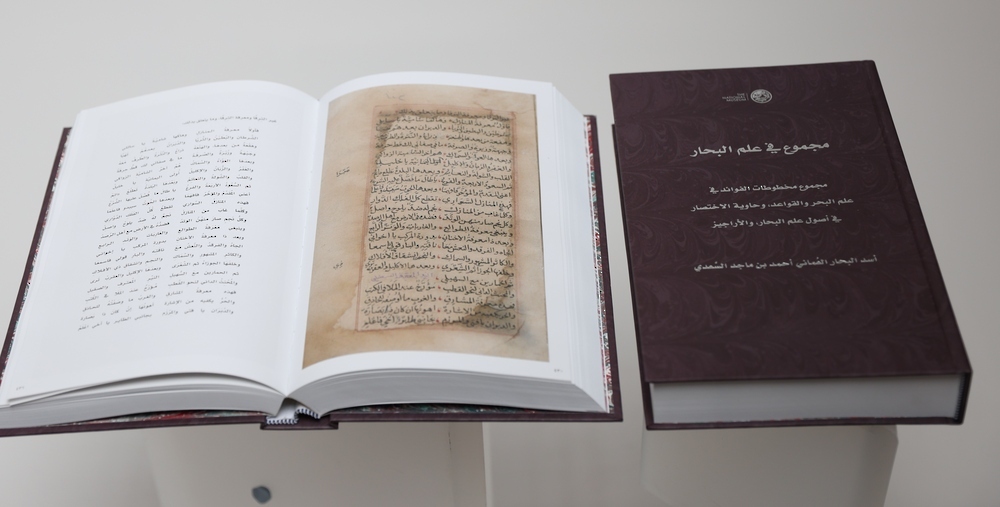
The National Museum has issued a special edition titled ‘Collection in Marine Science.’
The issue documents the greatness of Omani navigator Ahmed bin Majid Al Saadi, reviving his marine prowess and navigational creativity.
The collection documents the origin of the manuscript titled “Kitab al-Fawa’id fi ‘Ilm al-Bahr wa al-Qawa’id” (Collection of Manuscripts of Benefits in the Science of the Sea and Rules, as well as the abbreviation container in the origins of marine science and Arajiz), which has been on loan from Al Assad National Library in the Syrian Arab Republic to the National Museum since 2019.
In the opening speech of the publication, Jamal Hassan al Moosawi, Secretary General of the National Museum, said, “The display of the original manuscript ‘Collection in the Science of the Seas’ by the author Ahmed bin Majid al Saadi at the National Museum is an affirmation of the Omani identity of this unique scientific and historical personality.
This display comes in the context of the existing cooperation between the National Museum and the Ministry of Culture of the Syrian Arab Republic as part of the cultural diplomacy pursued by the National Museum.”
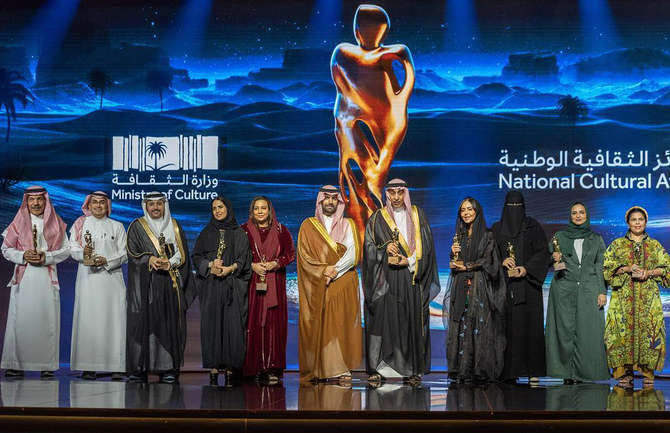
The winners of the third National Cultural Awards were honored in a ceremony held in Riyadh on Saturday. The event was a night dedicated to celebrating cultural creativity and promising ambition.
Minister of Culture Prince Badr bin Abdullah bin Farhan presented the awards to the winners in the presence of Minister of Education Yousef Al-Benyan and Minister of Media Salman Al-Dossary. The ceremony was also attended by a distinguished group of intellectuals, writers and media figures.
The National Cultural Awards, an annual initiative by the Ministry of Culture, aims to recognize and showcase the talents of individuals within the country.
The awards also serve to promote their cultural products both locally and internationally, while providing financial and moral support to encourage their continued growth and success.
The winners were nominated for awards in 16 different categories, covering a range of areas including literature, music, architecture and design, nonprofits and film.
Prince Badr said: “We are happy to honor innovators in our beloved capital,” adding that the initiative aims to “shed light on talents, celebrate achievements, honor innovators and encourage cultural production.”
He said: “The newly launched business owner award for this year reflects the cultural system’s appreciation for the contributions of supporters of cultural activity across all cultural sectors, and acknowledges their vital role as an integral part of the efforts made by the cultural system entities.”
Prince Badr added: “The international cultural excellence award celebrates international cultural personalities and institutions contributing to enriching the contemporary international cultural landscape, in addition to celebrating the significant efforts in the field of international cultural exchange on a global level.”
He concluded by congratulating the winners of the National Cultural Awards for this year, urging them to continue their efforts and wishing everyone a future filled with arts and culture.
Author Abu Abdulrahman Al-Dhaheri received the cultural pioneer award for his extensive contributions to literature and culture. He has produced a diverse collection of publications in languages, literature, philosophy, art, Shariah sciences and history.
Businessman Abdulrahman bin Mahfouz won the business owner award for supporting cultural activity. The International Alliance for the Protection of Heritage in Conflict Areas received the international cultural excellence award.
In addition, Lubna Al-Khamis, a Saudi journalist, won the youth cultural award. The cultural institutions award was given to the Saudi Research and Media Group in the private sector and the Abdulrahman Al-Sudairy Cultural Center in the nonprofit sector.
The ceremony also recognized winners in other cultural sectors. Mohammed Ibrahim Yaacoub, a poet, received the literature award, and Adab Publishing won the publishing award.
Maha Al-Faleh was honored with the translation award, and Charmaleena Jewellery received the fashion award. Dr. Abdullah Al-Masri, a historian, won the national heritage award, and Bateel International was recognized with the culinary arts award.
Artist Manal Al-Dowayan was given the visual arts award, and the Riyadh Band received the theater and performing arts award.
Abdulrahman Mohammed won the music award, while Ibrahim Al-Hsawi won the film award. Kholoud Attar was recognized with the architecture and design award.
source/content: arabnews.com (headline edited)
_____________
/Saudi Minister of Culture Prince Badr bin Abdullah bin Farhan with the winners of the third National Cultural Awards in Riyadh. (SPA)
The Minister of Islamic Affairs, Call and Guidance, Sheikh Dr Abdullatif bin Abdulaziz Al Al-Sheikh has approved the results and names of the winners in the 43rd edition of King Abdulaziz International Competition for Memorization, Recitation and Interpretation of the Holy Qur’an.
The competition, held at the Grand Mosque, witnessed the participation of 166 contestants representing 117 countries, competing in all five categories of the competition, with the total prize amount for this edition reaching SAR4,000,000.
In the first category, Ayoub bin Abdulaziz Al-Wahibi from the Kingdom of Saudi Arabia secured first place and received a prize of SAR500,000. Saad bin Saadi Sleim from Algeria came in second place, earning SAR450,000, while Abu Al-Hasan Hassan Najm from Chad achieved the third position, receiving a prize of SAR400,000.
In the second category, Ammar bin Salem Al-Shahri from the Kingdom of Saudi Arabia claimed the first position and was awarded a prize of SAR300,000. Mohammed bin Adnan Al-Omari from Bahrain secured second place, receiving a prize of SAR275,000. The third position went to Abdulaziz bin Malik Atli from Syria, who received a prize of SAR250,000.
In the third category, the winners include Mohammed bin Ibrahim Mohammed from Somalia, who clinched first place and received a prize of SAR200,000. Second place went to Shuaib bin Mohammed Hassan from Sweden, who was awarded SAR190,000 while Faisal Ahmed from Bangladesh secured the third position, earning SAR180,000 Saudi Riyals, and Mohammed Mufid Al-Azza from Indonesia claimed the fourth spot and received SAR170,000. Siraj Al-Din Muammar Kandi from Libya rounded off the top five, receiving a prize of SAR160,000.
Regarding the fourth category, the winners are as follows: Mohammed Ghai from Senegal secured the top position, earning a prize of SAR150,000. Hatem Abdulhamid Falah from Libya claimed the second spot, receiving an award of SAR140,000 and Yassin Abdulrahman from Uganda achieved the third position, with a prize of SAR130,000. Mashfiqur Rahman from Bangladesh attained the fourth position and was granted SAR120,000 while rounding off the top five, Abdulkader Yousef Mohammed from Somalia received a prize of SAR110,000.
As for the fifth category, Elias Abdou from the country of Larionion secured the first position, earning a prize of SAR65,000 while the second place went to Ibrahim Shahbandari from India who was awarded SAR60,000. Marwan bin Shalal from the Netherlands achieved the third position, receiving SAR55,000 and Mustafa Sinnanovic from Bosnia and Herzegovina attained the fourth position and received SAR50,000. Lastly, Hassib Amrullah from North Macedonia took fifth place, earning a prize of SAR45,000.
Algerian period drama The Last Queen and Iraqi film Hanging Gardens were among those recognised.
Films from Palestine, Lebanon, Jordan, Iraq, Morocco, Tunisia and Egypt were among the top winners of this year’s Amman International Film Festival.
The Black Iris Awards ceremony was held on Tuesday at the Royal Film Commission in Amman. The event marked the conclusion of the fourth run of the festival. This year, the festival screened 56 films from 19 countries, including feature narratives, documentaries and short works. The films all marked their Jordanian premiere, with some making their worldwide or regional debut.
Hafreiat by Spanish filmmaker Alex Sarda was the winner of the Black Iris Audience Award for best foreign film. The documentary revolves around a Spanish archeological mission in northern Jordan where local workers excavate the land, working long hours for minute wages. At the centre of the story is Abo Dya, a Palestinian-Jordanian, working tirelessly to provide for his family, hoping to better their lives despite the criminal record that undermines his ambitions.
The Palestinian film Lyd, directed by Rami Younis and Sarah Ema Friedland, was named winner of two awards, including the Jury Award for best Arab feature documentary and the Fipresci Award, held in conjunction with the International Federation of Film Critics.
The film puts a spotlight on Lyd. A city with a 5,000-year history, Lyd was once a Palestinian capital and in the early 20th century was a thriving metropolis. Lyd highlights this rich history while also highlighting the bloodier aspects of its past, namely the massacres and expulsion of Palestinians by Israeli forces in 1948, after which the state of Israel was created and the city became known as Lod.
The documentary interviews survivors of the Nakba, Palestinians living in Lyd, as well as those in exile. The film juxtaposes the real-life footage with animation that treads into sci-fi territory, imagining what Lyd could have been like if not for the bloody events of the Nakba.
The Jury Award for Arab short film was given to two films – Hamza: A Ghost Chasing Me by Palestinian director Ward Kayyaland Trinou by Tunisian filmmaker Nejib Kthiri. The Black Iris for best Arab short, meanwhile, was granted to My Girlfriend by Egyptian filmmaker Kawthar Younis.
The Special Mention prize for first-time documentary editor was awarded to Zakaria Jaber, director and editor of Anxious in Beirut. The documentary explores the trauma endured by denizens of the Lebanese capital in a film that aims to find a semblance of coherence within the tumultuous effects that have gripped Beirut.
Fragments from Heavenby Moroccan filmmaker Adnane Baraka was named winner of the Black Iris Award for best Arab feature documentary. The film follows a group of Amazigh nomads in Morocco as they search for bits of a Martian meteorite that landed in the desert in 2013, hoping it would better their lives.
The Special Mention prize for first-time lead actor/actress was awarded to two talents. Lebanese actress Marilyn Naaman was awarded for her lead role in Mother Valley. The film, set in the Lebanese mountains in the mid-20th century, follows a young wife as she faces the pressures of patriarchal society.
Egyptian actress Rana Khattab was also awarded for her role in the film Rat Hole. The feature, directed by Egyptian filmmaker Mohamed El Samman, follows a telemarketer working for a non-profit organisation trying to convince people to donate to various causes. The film pulls the curtain on the darker side of the Egyptian non-governmental organisations that scam people on the pretence of charity donations.
The Special Mention prize for first-time scriptwriter was awarded to Algerian filmmaker Adila Bendimerad, the director of the period drama The Last Queen. Bendimerad wrote the script for the acclaimed film with Algerian director Damien Ounouri.
The Iraqi film Hanging Gardenswon the Jury Award for Arab feature narrative. Directed by Ahmed Yassin Al Daradji, the film revolves around a 12-year-old boy who scavenges a landfill for sellable metal and plastic. He comes across a human-size doll, presumably brought and left behind by US soldiers. The boy names the doll Salwa and decides to keep and care for it; bathing it and trying to keep it from prying eyes. Soon, however, his secret is revealed, and he is in the crossfire of those who want to take Salwa for themselves, those who seek to commercialise from it, as well as those who want to obliterate it.
Finally, the Black Iris prize for best Arab feature was awarded to Ashkal. Directed by Youssef Chebbi, the crime thriller is set in Tunis and follows two police officers as they try to unravel the mystery behind a series of self-immolation cases.
Brazilian Henrique Tabchoury has listened to Arabic music records with his Lebanese father since he was a child and saw him get emotional with the songs of his homeland. Jamil Abrão Tabchoury was born in Tripoli, Lebanon, in 1917 and came to Brazil with his family in 1927 when he was nine.
After he died in 1988, Henrique inherited around 300 Arabic records from his father. Since then, he has dedicated his free time to rescuing, collecting, and cataloging Arab music material, many of them recorded in Brazil, as a way of honoring his father and the Arab colony that came to Brazil in the first diaspora in the late 19th century and early 20th.
A trained agronomist, Tabchoury works in agribusiness and, since the 2000s, started buying Arabic records for his collection, which today has around 4,000 pieces – some are not Arabic. He recently received a donation of 22 albums by Arab and Brazilian artists from the Arab Brazilian Chamber of Commerce (ABCC).
Tabchoury searches for Arabic music records in advertisements, used bookstores, antique shops, and websites. He collects Arab discography produced in Brazil and already has around 60 albums by Arab artists who lived and recorded in the country for labels such as Continental, Odeon, Arte-fone, and RCA Victor. The recordings were made between 1927 and 1935, and the collection includes records by artists such as Nagib Hankash and Nagib Mubarak.
“It’s a retrieval of the history of the Arab colony in Brazil; these artists were of fundamental importance for the community; they were an encouragement for the Arabs who came to Brazil,” said Tabchoury to ANBA.
The albums are mainly from Syrian and Lebanese artists. “I guess most are Lebanese artists as many sing odes to Lebanon, and 90% to 95% are Christian Arabs,” said Tabchoury. In his assessment, over half of these are Orthodox Christians, and less than half are Maronite Christians.
Of the 4,000 discs in his collection, he has already cataloged and digitalized around 580, and nearly 400 are Arabic music. “Cataloged, including private and serial recordings, we have 390 Arab 78rpm records produced in Brazil, apart from LP albums (vinyl), compact, and 10-inch records,” he informed. He intends to digitalize his entire collection and later launch a website with the music catalog and information about the artists.
One of his goals is to find all Arabic records of private recordings made in Brazil until the 1970s. After the 1970s, recordings from abroad began to arrive here,” he said. He also wants to find more old Arabic records, whether recorded in Brazil or not.
“Many people keep records for sentimental value, and some don’t know what to do and throw them in the trash. I’m looking for these records in my spare time; I go to other cities and talk to families. I have no commercial interest; my collection has a historical background and is a source of homage to the Arabs in Brazil,” he declared.
Tabchoury has already been to Araxá, Barretos, Uberaba, Goiânia, Curitiba, Porto Alegre, and Pindamonhangaba, among other Brazilian municipalities with Arab communities. “I want people to know I’m building this collection,” he said. He accepts donations and also buys records.