Arabs & Arabian Records Aggregator. Chronicler. Milestones of the 25 Countries of the Arabic Speaking World (official / co-official). AGCC. MENA. Global. Ist's to Top 10's. Records. Read & Enjoy./ www.arabianrecords.org
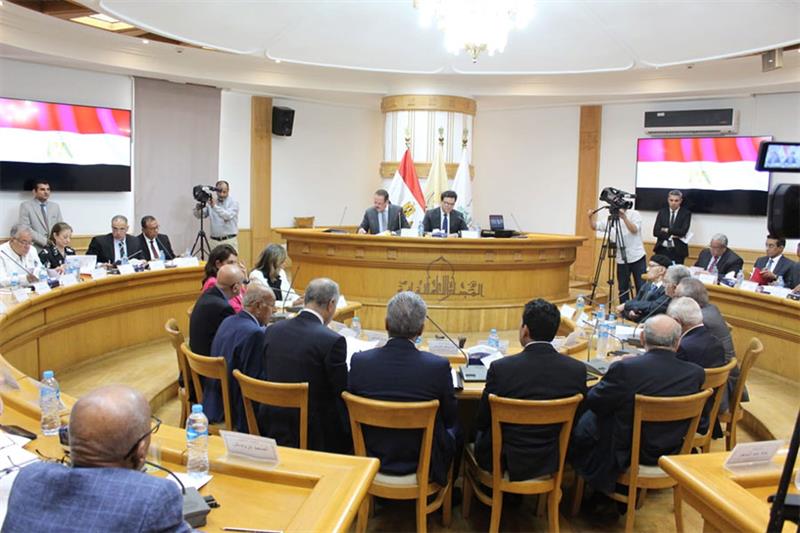
The Supreme Council of Culture (SCC), headed by Minister of Culture Ahmed Fouad Hano, has officially revealed the recipients of the 2025 State Awards.
The announcement, made via an official statement on the Ministry of Culture’s Facebook page on Tuesday, follows a comprehensive voting process that recognised individuals for their profound impact on Egypt’s cultural and intellectual spheres.
The distinguished awards include the Nile Award, the State Appreciation Award, the Excellence Award, and the Encouragement Award.
The selection process involved a meeting attended by leading intellectuals, academics, heads of cultural institutions, and representatives from professional unions.
Nile Award
The prestigious Nile Awards were granted to:
Arts category: Architect Dr. Saleh Lamai
Literature category: Dr. Ahmed Darwish
Social Sciences category: Dr. Ahmed Zayed
Nile Award for Arab Creators: Palestinian artist Suleiman Anis Mansour
Appreciation Award
The State Appreciation Awards were granted to:
Arts category: Theatre director Shaker Abdel Latif, visual artist Abdel Wahab Abdel Mohsen, and cinematographer Samir Farag.
Literature category: Poet Ahmed El-Shahawi, critic and writer Dr. Khayri Douma, and writer Fatma El-Maadoul.
Social Sciences category: University professors Dr. Anas Gaafar, Dr. Mohamed Sameh Amr, Dr. Mona Haggag, and Dr. Nevine Massad.
Literature category: Poet Masoud Shoman and Dr. Khaled Abou El-Leil.
Social Sciences category: Dr. Samah Fawzy, Dr. Atiya El-Tantawy, and Dr. Nahla Imam.
Encouragement Award
When it comes to the 2025 Encouragement Awards, 32 creatives were honoured across arts, literature, social sciences, and legal/economic studies.
Arts Category (8 prizes; 6 awarded, 2 withheld)
Piano Performance: Naghamaya Safwat for her rendition of Shostakovich’s Piano Concerto No. 2 with the Cairo Symphony Orchestra.
Film Script: Mahmoud Zein for Wala Azaa’ Lil Sayedat.
Children’s Book Illustration: Heidi Fawzy for Ta’aqqal… Ya Marah.
Theatrical Scenography: Nehad El-Sayed for Shatat.
Digital Media & Architecture: Mostafa Salem for an awareness series on heritage preservation.
Painting: Dr. Islam El-Reihany for The Music of the Body.
Withheld: Prizes for “E-marketing for handicrafts” and “Fiber Art”.
Literature (8 prizes)
Historical Novel: Doaa Gamal El-Bady for Crows That Don’t Eat the Dead.
Short Story Collection: Ahmed Yasser Fathy for A Very Lonely City.
Classical Poetry: Mohamed Refai for The Cry of a Coin.
Colloquial Poetry: Ibrahim Abou Samra for Balta Shi’r.
Computational Linguistics: Marwa Mostafa Amin for Functions of the Electronic Dictionary.
Narrative Criticism: Aly Kotb for Singing and Music in the Literature of Naguib Mahfouz.
Translation (Turkish-Arabic): Sousana Sayed Mohamed for A Strange Woman by Leyla Erbil.
Translation (Arabic to Asian/African languages): Shared by Dina Mohamed Bayoumi (Suspense and Horror Between China and Egypt) and Mohamed Abdelrahman Farag (Al-Mukhtasar Al-Shafi fi Al-Iman Al-Kafi).
Social Sciences
History, Archaeology & Heritage (shared):
Dr. Ahmed Ma’arouf for Walls with Gates: Political Borders in Islamic Historical Heritage.
Dr. Sherif Imam for Saad Zaghloul in Gramsci’s Mirror.
Geography & Environment: Dr. Shaimaa Mohamed Wehba for research on water pollution and income inequality in Egypt.
Philosophy & Anthropology: Irene Samir Hakim for The Many Faces of Female Genital Mutilation.
Educational Sciences: Dr. Mohamed Abdel Khaleq for Dimensions of Global Education in Stoic Philosophy.
Media: Student team (Ramaj Osman, Gharib Reda, Farah Abdelkarim, etc.) for the film Hayy Falasteen, directed by Martina Wagdy.
Administrative Sciences: Dr. Islam Abdel Bari for Decoding Buy Now, Pay Later in Egypt.
Documentation & Publishing: Dr. Alaa Jaafar Al-Sadiq for research on local journal indexing.
Digital Culture: Dr. Ahmed Magdy for How AI Has Changed the Film Industry.
Legal and Economic Sciences (6 prizes awarded, 2 withheld)
Inflation in the Egyptian Economy: Dr. Gehan Abdel Salam Mahmoud for Tackling Inflation amid Global Crises.
Climate Change: Dr. Ahmed Mohamed Okasha for Climate Change and Economic Sustainability.
Russian–Ukrainian War & International Relations: Shared by Dr. Raghda El-Beheiry, Dr. Adnan Moussa, and Mr. Mahmoud Kassem.
Geopolitical Shifts: Ahmed Abdel Fattah Askar for Strategic Transformations in the Horn of Africa (2020–2024).
Right to Privacy: Dr. Mohamed Mesbah El-Naghy for Constitutional Guarantees for Genetic Privacy.
Cultural Diversity Management: Dr. Mahmoud Hussein Abou Seif for The Principle of Non-Refoulement in European Human Rights Law.
Withheld: Prizes for “Personal Data Protection under Cyber Law” and “Citizenship Through Investment”.
Minister Hano emphasised that these awards represent one of the highest forms of recognition granted by the Egyptian state, describing them as the culmination of long and distinguished careers marked by creativity and dedication.
Hano reaffirmed the state’s continued commitment to supporting intellectuals and creators who contribute to strengthening Egypt’s cultural identity and promoting values of diversity, openness, and awareness, the statement pointed out.
Talal Salman, veteran journalist and founder of the iconic As-Safir newspaper, died on 25 August 2023 aged 85 after a long career in which he championed the rights of the oppressed and made his paper a “voice for the voiceless”.
On Friday 25 August, Talal Salman, the founder and publisher of the iconic Lebanese daily newspaper daily newspaper “As-Safir” passed away aged 85.
Salman remains one of the Arab world’s most prominent journalists and As-Safir, rightly, as a shining beacon of Arab journalism in its modern history
He was one of the few Arab journalists who always aspired for journalism to be a medium where opinions could be freely expressed, and made it a place in which he affirmed his commitment to national, nationalist and social issues.
When his dream of establishing an independent newspaper became reality in 1974, he succeeded in making it a genuine platform for Arab issues and the Palestinian cause, and it quickly became one of the largest Arabic-language independent newspapers.
“Salman remains one of the Arab world’s most prominent journalists and As-Safir, rightly, as a shining beacon of Arab journalism in its modern history”
“As-Safir” became an important laboratory for ideas and opinions. Over more than 40 years, intellectual and political debates flared within its pages, and it became a forum where various intellectual and cultural experiences from the Arab world and Lebanon converged. This made it a rare experiment in Arab journalism, a place where Lebanese, Palestinian, Syrian, Egyptian, Iraqi, Jordanian, and Tunisian voices at various times would come together.
Talal Salman was born in 1938 in the northeastern town of Shmustar. His father was a sergeant in Lebanon’s Internal Security Force (ISF), a job which required him to move with his family to various regions in Lebanon for various postings. Due to this, Salman never settled in one place or attended a fixed school. Perhaps this forced mobility played a role in shaping his political outlook later on, as it allowed him to discover different regions of Lebanon and to develop a broad understanding of Lebanon’s people – their internal divisions and rural nature.
His political awareness began to emerge following Egypt’s 23 July Revolution of 1952, which played a huge role in alerting his attention to politics. Additionally, his presence in the town of Moukhtara in the Chouf district in the early 1950s exposed him to certain aspects of the Lebanese reality.
Moukhtara was the stronghold of the prestigious Jumblatt family, leading figures in Lebanon’s Druze community. While living there he got to know Kamal Jumblatt, who inspired an entire generation of Lebanese youth who aspired for social justice and sought to connect Lebanon with Arab causes, Arab identity, and Palestine.
Salman would become an Arab nationalist without affiliating with any of the nationalist parties, such as the Ba’ath, although later on, he formed close relationships with founders of Arab Nationalist Movement, like George Habash and Hani al-Hindi, in addition to Ghassan Kanafani and Mohsin Ibrahim, who were closely associated with the pan-Arab, left-wing movement.
Salman’s passion for language began in his childhood; he was enchanted by the few books in his parent’s home, and had started writing articles for the magazine al-Anbaa before leaving school. After completing secondary school in 1955, he moved to Beirut with today’s equivalent of $200 from his father and started looking for work at a newspaper.
Passion for language
Salman’s passion for language began in his childhood; he was enchanted by the few books in his parent’s home, and had started writing articles for the magazine al-Anbaa before leaving school. After completing secondary school in 1955, he moved to Beirut with today’s equivalent of $200 from his father and started looking for work at a newspaper.
“Salman would become an Arab nationalist without affiliating with any of the nationalist parties, such as the Ba’ath, although later on, he formed close relationships with founders of Arab Nationalist Movement, like George Habash and Hani al-Hindi”
He initially found a job at Al Sharq newspaper as an unpaid proof reader, before swiftly transitioning to “cutting” – he would cut out stories from other papers in the morning and rewrite them for publishing in Al Sharq in the afternoon.
1956, the year Salman’s journey into the media world began was the year of the Tripartite Aggression against Egypt (the Suez Crisis) – and it was as though this major event was setting the tone for a journalistic career focused on the major Arab issues of the day, such as Arab unity, Palestine, Algeria and social justice.
Nor was it surprising, considering his background living in areas suffering from marginalization, poverty, injustice, and lack of government care, that he developed a clear sensitivity to social injustice and a strong awareness of the need to fight against it.
Talal Salman, founder of Lebanon’s Assafir daily passed away in Beirut. He was a prominent journalist whose legacy won’t be forgotten. pic.twitter.com/EfFt9GNbYg
It wasn’t long before Salman moved to another paper, where he was given the crime and accidents beat. Every day he would walk to the police station, the courts, ambulance centres and fire stations to gather the day’s news. Then, he would walk back to his workplace to provide the summary of his day to the editorial secretary.
In 1958, after protests broke out against the rule of then President Camille Chamoun, renowned journalist Salim Lawzi, editor-in-chief of the pro-Nasser Al Hawadeth magazine at the time, was arrested, and held in Karantina Hospital – as more fortunate prisoners were at that time.
By chance, Salman’s father was chief officer at the hospital guard station, and his son visited regularly. This led to the aspiring young man meeting the veteran journalist who had worked in Palestine and Egypt before returning to Lebanon to set up the weekly magazine.
Following their meeting, Salman joined Al Hawadeth, where he was suddenly the colleague of well-known journalists like Shafiq al Hout, Nabil Khoury, and the artist Niazi Jaloul. He went from proofreading to preparing the readers section, to writing his own column and then moved into the investigations department. It was not long before he was made sub-editor and he wasn’t even 20 – a testimony to both his journalistic talent and his hard work developing the magazine during a period Lawzi was forced into exile.
However, perhaps the most significant event in his professional and personal life was his meeting with President Gamal Abdel Nasser in Damascus in early 1958. His image alongside Nasser remained on proud display in the As-Safir offices for many years afterwards.
Salman’s rapid rise in journalism also saw him become a figure noticed – and targeted – by Lebanon’s authorities. In August 1961 he was arrested, interrogated and held for 20 days by Lebanon’s General Security services, charged with maintaining ties with Ahmed El-Saghir Jaber (representative of the Algerian Liberation Front in Lebanon), smuggling weapons to Algerian revolutionaries, and plotting military coups in some Arab countries.
“Salman’s rapid rise in journalism also saw him become a figure noticed – and targeted – by Lebanon’s authorities”
In the decade before he founded As-Safir, Salman moved between three magazines – Assayad, Al Ahad and Al-Hurriya. He had plenty of opportunity to delve into secrets and the hidden stories and backgrounds of notable figures and events, and became acquainted with many of the most brilliant Arab authors, artists, politicians and activists of the time. All the information he was absorbing would become part of his arsenal when it came to his own project – the As-Safir daily newspaper.
On 26 March 1974 the first issue was published, carrying two slogans: “the newspaper of Lebanon in the Arab world and the newspaper of the Arab world in Lebanon”, and “the voice of the voiceless”.
Almost instantly, the paper was under attack – in its first year 16 lawsuits were raised against it, following a legal challenge mounted by the Banks Association in Lebanon. However, the nature of those targeting the paper only highlighted how effectively it was beginning to champion the rights of the marginalised, and confront the political system and capitalist stakeholders in the country.
Since its early days, As-Safir’s pages carried illustrious names in contemporary Arab thought and literature, and it also opened its pages to myriad intellectual and political trends, such as Nasserism, Baathism, Arab nationalists, Syrian nationalists, secularists, and communists with their various Soviet, Maoist, and Trotskyist tendencies.
When Lebanon’s civil war broke out in 1975, As-Safir adopted an unwavering political stance: a complete rejection of the civil war, and a total distancing from the right-wing political forces who’s destructive policies had led to the outbreak of the fighting.
While it unequivocally rejected the war, As-Safir’s stance of sympathy and solidarity with the programme of the Lebanese National Movement and the Palestinian resistance was staunch. Its writers were made famous for their condemnation of Egyptian President Anwar Sadat’s visit to Jerusalem in November 1977, and its front page on the first day of the visit was headlined: “The Scoundrel visits the Usurper”.
During the civil war that ended over 30 years ago, people have survived shelling and clashes, but they now fear even worse from Lebanon's worst economic crisis in decadeshttps://t.co/3jEvCQySsJ
Both the newspaper and Salman were targeted in terrorist attacks multiple times. In 1981, an attempt to destroy his house with four timed rockets, was foiled just minutes before they were set to launch. Explosive devices were placed near As-Safir’s offices on 28 March and 5 April 1984.
That July, there was an assassination attempt on him in front of his house, resulting in injuries to his jaw and various parts of his body. However, neither As-Safir nor its founder were intimidated, and both continued to be faithful to their nationalist and progressive principles.
During Israel’s invasion of Lebanon in 1982, As-Safir was the only Lebanese newspaper that didn’t cease publication. Its daily headlines were rewritten on Beirut’s walls as a form of the city’s resilience and it became known for headlines like “Beirut burns but doesn’t raise the white flags”.
Talal Salman, RIP The passing of one of Arab journalism's greats By Abdel Bari Atwanhttps://t.co/CzHZ0TDKgS
A shining era in the history of Lebanese journalism came to an end in 2017 with the closure of the pioneering, left-wing, pan-Arab experiment which was embodied for over 40 years by the As-Safir newspaper, as well as the end of the liberal, right-wing An Nahar in 2012 with Ghassan Tueni’s death.
Talal Salman’s contribution, both to journalism in Lebanon, and to the country’s political and cultural history, is huge, and he and As-Safir are owed a debt for the bold stances they took countless times and the brilliant, enlightening and incisive content they provided in its pages.
This was Talal Salman, who never stopped brimming with kindness, humility and generosity; and who burned with pain and grief at what the situation of the Arab world has come to, who spent his twilight years continuing to read, research and write in his never-ending pursuit of an Arab renaissance.
This is an edited and abridged translation from our Arabic edition. To read the original article click here.
Translated by Rose Chacko
This article is taken from our Arabic sister publication, Al-Araby Al Jadeed and mirrors the source’s original editorial guidelines and reporting policies. Any requests for correction or comment will be forwarded to the original authors and editors.
source/content: newarab.com (headline edited)
____________
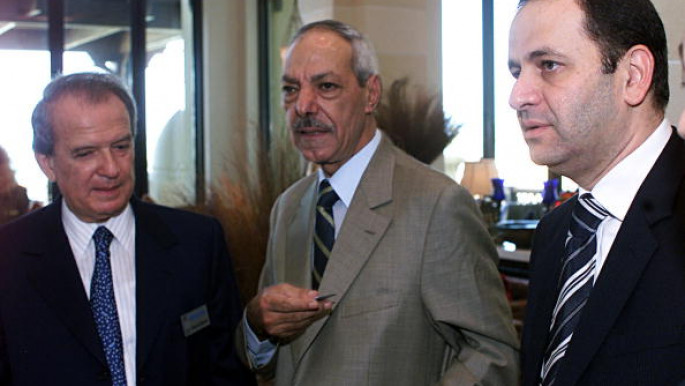
From L to R: Lebanese Minister of Economy and Trade Marwan Hamadeh, Talal Salman and Pierre al-Daher, head of the independent Lebanese Broadcast Corporation (LBC) television attend the opening session of the 2003 Arab Media Summit in Dubai [Nasser Younes/AFP via Getty]
Since its launch in 2006, the Sheikh Zayed Book Award has established itself as one of the most prominent literary and cultural awards in the Arab world, and one of the most important international awards in terms of value and influence. This embodies the UAE’s vision of making culture a pillar of sustainable development and a tool for building bridges of dialogue and communication between civilizations.
The award, named after the late Sheikh Zayed bin Sultan Al Nahyan, may God rest his soul in peace, has transformed from a national initiative celebrating knowledge into a prestigious international platform that celebrates creativity and creative individuals, contributing to highlighting the civilized face of Arab culture on the global stage.
Over the course of nineteen years, the award has attracted more than 33,000 entries from nearly 80 countries, honoring 136 winners across ten categories covering diverse intellectual, literary, and cultural fields. These include children’s and young adult literature, young authors, translation, literature, arts and critical studies, manuscript editing, development and nation-building, Arab culture in other languages, and publishing and cultural technologies. The award also includes the “Cultural Personality of the Year” category, which recognizes distinguished contributions to the cultural field. The categories have contributed to strengthening the Arab presence on the international cultural map by honoring writers, thinkers, and publishers who have made a clear impact on the literary and intellectual scene and have contributed to consolidating the concepts of identity, openness, and diversity.
The award’s first cycle began in 2007 with 1,220 nominations. The title of “Cultural Personality of the Year” was awarded to British translator Dr. Denys Johnson-Davies, in recognition of his contribution to the translation of Arabic literature into English.
In the second edition in 2008, the award received 731 entries, and the “Cultural Personality of the Year” award went to former Moroccan Minister of Culture, Mohamed Benaissa.
The third edition in 2009 saw 621 entries, and the prize was won by Spaniard Pedro Martinez Montavez.
The fourth edition, in 2010, honored His Highness Sheikh Dr. Sultan bin Muhammad Al Qasimi, Member of the Supreme Council and Ruler of Sharjah, with the “Cultural Personality of the Year” award. The number of nominations at the time reached 693.
In its fifth edition in 2011, the award received 715 entries, and Chinese orientalist Zhong Jikun won in recognition of his scholarly career in service to the Arabic language.
In the sixth session in 2012, 560 nominations were submitted, and UNESCO won the award in recognition of its role in promoting cultural dialogue.
The seventh session in 2013 saw 1,262 nominations, and the title of “Cultural Personality of the Year” went to His Eminence the Grand Imam Dr. Ahmed El-Tayeb, Sheikh of Al-Azhar.
The eighth edition, in 2014, received 1,482 entries, and the award was presented to the late Saudi King Abdullah bin Abdulaziz Al Saud.
In 2015, the ninth edition registered 1,024 entries, and His Highness Sheikh Mohammed bin Rashid Al Maktoum, Vice President and Prime Minister of the UAE and Ruler of Dubai, may God protect him, won the “Cultural Personality of the Year” award.
In its tenth edition in 2016, the award received 1,169 entries from 33 countries, and French-Lebanese writer Amin Maalouf was named “Cultural Personality of the Year.”
In 2017, the eleventh edition received 1,175 entries from 54 countries, and the award was given to Moroccan thinker Dr. Abdullah Laroui.
The twelfth edition, in 2018, received 1,191 entries, and the “Cultural Personality of the Year” award went to the Arab World Institute in Paris.
In 2019, there were 1,500 nominations from 35 countries, and the award was awarded to academics Dr. Jaroslav Stetkevych and Dr. Susan Stetkevych.
The fourteenth edition in 2020 received 1,900 entries, with the late Palestinian poet and translator Dr. Salma Al-Khadra Al-Jayyousi winning. The fifteenth edition in 2021 saw 2,349 nominations, rising to more than 3,000 nominations from 55 countries in the sixteenth edition in 2022. The award was awarded to critic Dr. Abdullah Al-Ghadami.
The 17th edition, in 2023, received 3,151 nominations from 60 countries, with Egyptian musician Omar Khairat winning the Cultural Personality of the Year award. The 18th edition, in 2024, received 4,240 nominations from across various continents, with the award awarded to the Casa Árabe Foundation in Spain.
The 19th edition, in 2025, saw more than 4,000 nominations from 75 nationalities. The “Cultural Personality of the Year” award went to world-renowned Japanese novelist Haruki Murakami, in recognition of his cross-cultural literary contributions that have helped build bridges of dialogue between East and West.
The 19th edition alone saw the participation of 75 Arab and foreign countries, including five countries participating for the first time: Albania, Bolivia, Colombia, Trinidad and Tobago, and Mali. Egypt topped the list of participating countries, followed by Iraq, Morocco, and Saudi Arabia, while the United States, Britain, and France led the list of foreign countries.
In terms of branches, the Young Author branch came first with 1,034 entries (26%), followed by the Literature branch with 1,001 entries (25%), then the Children’s and Young Adult Literature branch with 439 entries (11%), followed by the Arts and Critical Studies, Development and State Building, Translation branch, Arabic Culture in Other Languages, Manuscript Verification, Publishing and Cultural Technologies, and Cultural Personality of the Year branches.
In 2013, the award established the “Arab Culture in Other Languages” category to honor works published in foreign languages about Arab culture.
In 2023, it launched the “Manuscript Verification” branch, which represents a qualitative addition to supporting heritage.
In 2018, the Translation Grant was launched. From 2019 to mid-2025, it contributed to the publication of 48 translations into 12 languages of prominent literary and intellectual works, such as “The Dinoraf,” “Autumn of Innocence,” and “In the Footsteps of Enayat Al-Zayyat.” These translations have received critical acclaim at international exhibitions and events.
Women’s participation increased significantly by 17% in just three editions, with female nominations rising from 1,042 in the seventeenth edition to 1,218 in the nineteenth. Female authors also won in multiple categories, and female names were included on judging panels and academic councils, further strengthening women’s presence in the cultural landscape.
At the international level, the award has organized more than 200 events in global cities such as Paris, Frankfurt, New York, Tokyo, New Delhi, Madrid, and London, in collaboration with publishing houses, universities, and research centers. It has also developed an advanced electronic platform for receiving nominations and judging, and published periodic reports that support transparency and enhance institutional performance.
The total value of the award is AED 7,750,000 and is granted across ten categories covering literature, translation, children’s literature, young authors, arts and critical studies, Arab culture in other languages, manuscript editing, development and nation-building, publishing and cultural technologies, and the Cultural Personality of the Year. The award is independent and impartial, rewarding excellence and supporting Arab and international creators. Today, nearly two decades after its launch, the Sheikh Zayed Book Award continues its journey as an incubator for creativity and a platform for Arab culture, embodying the UAE’s vision of building a sustainable cultural future.
Moroccan actress Nisrin Erradi will represent Morocco at the 10th edition of the Sotigui Awards.
The Academy of African and Diaspora Cinematic Arts announced the list of nominees, featuring Erradi as Morocco’s representative, for this prestigious celebration of African cinema, which takes place from November 12-15 in Ouagadougou, Burkina Faso.
Erradi competes alongside representatives from 19 other nations for the Sotigui d’Or, the ceremony’s top honor. Her nomination also puts her in contention for the 2025 African Public Sotigui Award.
Rising star of Moroccan cinema
Born on August 6, 1989, Erradi has built an impressive career in both Moroccan and international cinema, starting her performance in theater at age six and later studying at the High Institute of Theatrical Arts and Cultural Animation (ISADAC) in Rabat.
Erradi’s experience in ISADAC allowed her to discover her passion for cinematic storytelling through the works of American playwright Tennessee Williams.
The actress has earned recognition across multiple international film festivals.
Most recently, her role in “Everybody Loves Touda,” directed by Nabil Ayouch, earned her the “Artistic Expression” award at the 30th MedFilm Festival in Rome.
Erradi’s breakthrough came with notable performances in films including “Adam” in 2019, “Catch the Wind” in 2017, and “Jahilya” in 2018.
Her international acclaim extends beyond Europe. Erradi cemented her reputation as one of Morocco’s most promising cinematic talents by winning the Best Actress Award at the Durban International Film Festival in South Africa.
This year’s edition of Sotigui Awards focuses on the theme “African Cinema Facing the Challenges of Sexual Harassment: From Indignation to Action.” The theme demonstrates the ceremony’s commitment to addressing important social issues through the film industry.
Festival director Apolline Traoré said: “For the 10 years of the Sotigui Awards, there will be many surprises. We invite you in November to see the innovations. It will be something extraordinary.”
For Erradi, the nomination represents another milestone in a career that continues to bridge Moroccan and international cinema, reflecting the growing influence of North African talent on the global stage.
He played the Devil, challenged shame, and made Arab cinema speak. On his birthday, we revisit Youssef Wahbi – the man who dared to redefine the rules of the screen and stage.
Youssef Wahbi broke every mould – actor, director, and pioneer of Arabic cinema. On his birthday, we honour a legend who shaped generations of stage and screen.
Wahbi’s love for acting started when he first watched the Lebanese artist Salim Al-Qardahi’s troupe in Sohag. Since then, he started delivering monologues and performing theatrical acts at Al Ahly Club and at school. But at the time, acting was seen as shameful, and his father disapproved. Refusing to bend, Wahby fled to Italy and studied acting under the Italian actor Cantoni. He didn’t come back until after his father’s death in 1921 and used all his inheritance to establish a theatrical troupe named Ramses, which was also the name given to him during his stay in Europe.
In 1923, the troupe premiered with a successful play called ‘Al Magnoun’. But Wahby wasn’t done breaking ground. Later, in 1930, he established his film production company, Ramses Film, which produced the very first speaking film in the history of Arabic cinema, ‘Awlad El Zawat’. The movie was adapted from one of his successful plays, as he wrote the script and starred in the film.
Throughout his prolific career, Youssef Wahbi wrote, directed, or starred in over 300 theatrical plays and contributed to more than 60 films. Among this vast body of work, a few standout titles have become milestones in the history of Arabic drama and cinema…
Awlad El Zawat (1932)
‘Awlad El Zawat’ tells the story of Hamdi, who marries a French woman only to discover she’s cheating on him. In a powerful scene, he confronts her with the line: “You woman of all men… you garbage of history.” In a rare interview, Youssef Wahbi revealed that he insisted on making ‘Awlad El Zawat’ as the first Arabic-speaking film to defend the image of the East, after Western narratives described the region as barbaric and trivial, particularly during the trial of a woman who had murdered an Egyptian young man.
Safir Gohannam (1945)
‘Safir Gohannam’ follows Abd Elkhallak, a humble professor worn down by life’s hardships and became a bitter and resentful man. His shaky faith opens the door for the Devil (played by Youssef Wahbi) to lead him astray, tempting him with a false paradise to ruin his life, destroy his children, and tear his family apart. The film marks the first-ever portrayal of the Devil in Egyptian cinema.
Bayoumi Effendi (1949)
‘Bayoumi Effendi’ is considered one of Wahbi’s most powerful socially driven films, tackling the issue of children born out of wedlock. The film calls for compassion toward these individuals, emphasising that they should not be treated as criminals for a sin they did not commit.
Hayah Aw Mout (1954)
‘Hayah Aw Mout’ – one of the most famous films in Egyptian cinema – follows the story of a man who suffers a heart attack and sends his daughter to fetch his medicine, only for the pharmacist to realise he accidentally gave her poison. As the police, led by Wahbi’s character, race to save him, a dramatic city-wide radio broadcast becomes his only hope. This is the film that gave us the famous line: “لا تشرب الدواء الذي أرسلت بنتك لشرائه…الدواء فيه سم قاتل.” (“Do not drink the medicine your daughter was sent to fetch; the medicine contains deadly poison.”)
Esha’et Hob (1960)
‘Esha’et Hob’ is one of the most memorable comedy films in Egyptian cinema. Starring Omar El Sherif, Soad Hossny and Youssef Wahbi, it follows the story of Hussein, a shy young man in love with his cousin Samia, who prefers her charming cousin Lucy ‘Ibn Tante Fakeeha’. To help him win her heart, Hussein’s uncle Abdel Qader comes up with a clever plan: spread a rumour about a love story between Hussein and the famous actress Hind Rostom.
The trailblazing artist, son of legendary Fairuz and composer Assi Rahbani, was also a playwright, pianist and political provocateur.
Lebanese musician and composer Ziad Rahbani, son of the iconic singer Fairuz and a pioneer of fusion jazz, has died at the age of 69 of a heart attack.
“On Saturday at 9:00am, the heart of the great artist and creator Ziad Rahbani stopped beating,” said a statement from the hospital where he was being treated in the capital, Beirut, on Saturday.
Rahbani influenced generations of Lebanese people with his songs and especially his plays, whose lines are known by heart by both young and old.
He was the son of Fairuz, the last living legend of Arabic song – and one of the most famous Arab women worldwide – and composer Assi Rahbani, who, along with his brother Mansour, modernised Arabic song by blending classical Western, Russian, and Latin American pieces with Middle Eastern rhythms.
“I admire the music of composers like Charlie Parker, Stan Getz and Dizzy Gillespie,” Rahbani once said. “But my music is not Western, it’s Lebanese, with a different way of expression.”
Fairouz also became an icon for young people when Rahbani composed songs for her influenced by jazz rhythms – he called it “oriental jazz”.
Lebanon’s leaders paid a heartfelt tribute to the Lebanese composer, who was also a playwright, pianist and political provocateur.
President Joseph Aoun called Rahbani “a living conscience, a voice that rebelled against injustice, and a sincere mirror of the oppressed and marginalised”.
“Lebanon has lost an exceptional and creative artist, a free voice that remained faithful to the values of justice and dignity” and who said “what many did not dare to say”, said Prime Minister Nawaf Salam.
Rahbani’s works reflected the hybrid heritage of Lebanon, which, until the civil war erupted in 1975, was a cultural melting pot. It also reflected the ensuing sectarian strife, which involved bloody street battles between rival militias and three years of violent Israeli occupation after the 1982 invasion.
While Fairuz transcended the powerful sectarian divides in the country, her son chose to be resolutely left-wing and secular, denouncing Lebanon’s longstanding divisions. His breakout play, Nazl el-Sourour (Happiness Hotel), premiered in 1974 when he was only 17, portrayed a society disfigured by class inequality and repression.
The play follows a group of workers who take over a restaurant to demand their rights, only to be dismissed by the political elite.
In another play, Bennesbeh Labokra Chou? (What About Tomorrow?), he plays a jaded bar pianist in post-civil war Beirut. The work features some of Rahbani’s most poignant music and biting commentary, including the famous line, “They say tomorrow will be better, but what about today?”
Rahbani was also a composer of staggering range. He infused traditional Arabic melodies with jazz, funk and classical influences, creating a hybrid sound that became instantly recognisable. His live performances were legendary, when he often played piano in smoky clubs in Hamra, one of Beirut’s major commercial districts.
In recent years, Rahbani appeared less in the public eye, but younger generations rediscovered his plays online and sampled his music in protest movements. He continued to compose and write, speaking often of his frustration with Lebanon’s political stagnation and decaying public life.
“I feel like everything is over, I feel like Lebanon has become empty,” wrote Lebanese actress Carmen Lebbos, his former partner, on X.
Rahbani is survived by his mother, now 90, his sister Reema and brother Hali.
Source: News Agencies
source/content: aljazeera.com (headline edited)
______________
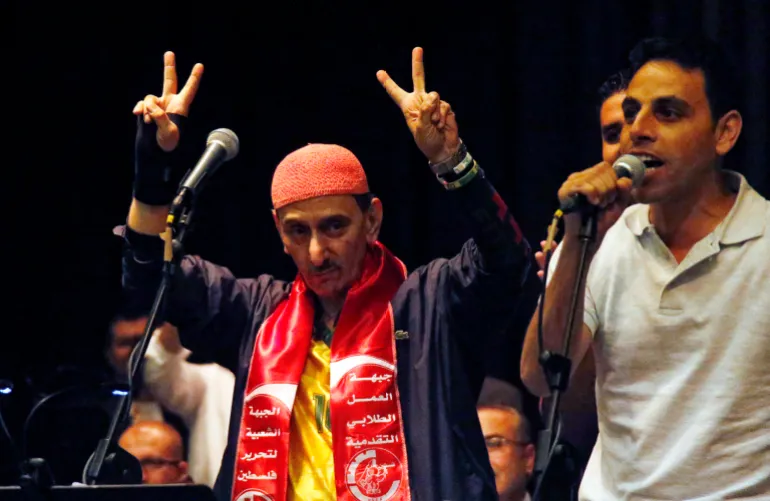
Ziad Rahbani gestures while wearing a scarf of the left-wing Popular Front for the Liberation of Palestine group, during a concert in Sidon, southern Lebanon, October 9, 2014 [File: Ali Hashisho/Reuters]
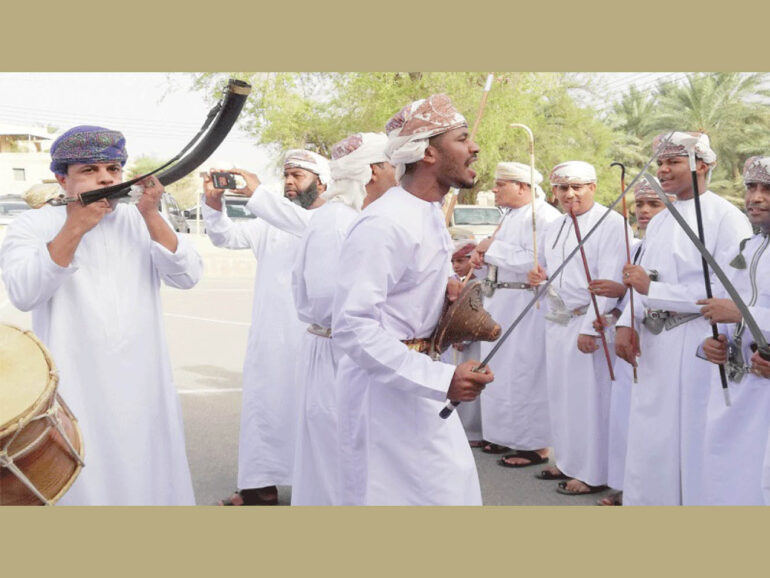
Ministry of Culture, Sports and Youth (MCSY) is intensifying efforts to document and publish the country’s oral history as part of a strategy to preserve intangible cultural heritage and reinforce national identity. The initiative aligns with Oman Vision 2040 and aims to promote Omani culture in global forums.
Fahd bin Mahmoud al Rahbi, Head of Oral History Department at the ministry’s Literary Forum, said the initiative reflects Oman’s commitment to protect its oral traditions and cultural expressions. These include stories, biographies, folk tales, customs, performing arts, traditional crafts and the knowledge systems associated with these.
“Oral history forms an integral part of Oman’s intangible cultural heritage. It is a crucial source of historical knowledge, especially in areas not captured by written records,” Rahbi said. “Our aim is to preserve this history through research, documentation and publication, as well as through public engagement and international cooperation.”
According to Rahbi, Oman’s geographical location has historically made it a crossroads of civilisations. This has contributed to the country’s rich and diverse cultural heritage. Several elements of Oman’s intangible heritage are already inscribed with Unesco, highlighting the global relevance of these preservation efforts.
Since 2006, MCSY has undertaken multiple field projects to record oral history across the governorates and wilayats. Local researchers have worked with elders, artisans and tradition bearers to document narratives, customs and knowledge passed down through generations.
The ministry has published several books as part of this initiative. Notable among these is Omani Traditional Musical Instruments, which documents the styles of Omani music, and Omani Traditional Musical Arts, a comprehensive reference on music and performance arts. Together, these publications offer a detailed record of Omani musical traditions.
Newer works include The Diving Craft in the Popular Traditions of the Batinah Coastal Community by Saeed Abdullah Mubarak al Farsi, which explores the oral traditions associated with coastal livelihoods, and The Craft of Tabsil in South Batinah by Wadha bint Mohammed al Shukaili, which chronicles the history and cultural significance of the palm-based food preservation craft.
MCSY has also supported research on frankincense traditions, culminating in the publication Frankincense and Cultural History, a collaborative project involving multiple Omani scholars.
Another recent work, Radio in the Interior of Oman, by Rana bint Nasser al Abri, explores the development of radio broadcasting in Dakhliyah from the 1940s to the 1980s, viewed through oral narratives. The Bahla Wall: The Wristband of Civilisation by Saeed bin Abdullah al Shaqsi examines the architectural and historical relevance of one of Oman’s iconic defensive structures.
“Preserving our oral history is not just about protecting the past,” Rahbi said. “It is about shaping national identity, supporting cultural diplomacy and preparing for a future that values heritage.”
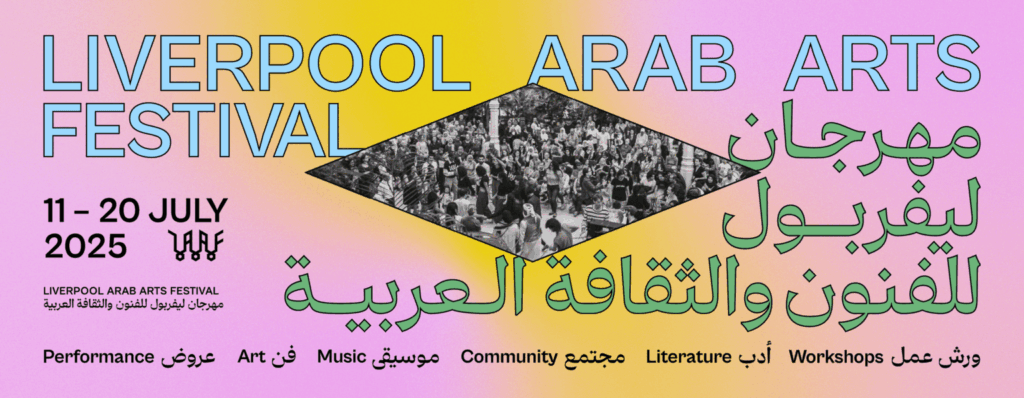
The Liverpool Arab Arts Festival, or LAAF, the UK’s longest-running annual celebration of Arab arts and culture, returns this month with a theme that feels both timely and timeless: “Nostalgia.”
Now two decades in, the festival has grown from grassroots beginnings into an internationally recognized celebration.
Running through to July 20, this year’s program explores how memory, heritage and longing shape artistic expression across the Arab world and its diasporas.
The dynamic, bilingual line-up spans film, music, literature, performance, food and family activities — all underscored by deeper reflections on identity, loss and cultural continuity.
Arab News spoke with Taher Qassim, originally from Yemen, who founded LAAF in 1998 as a community-led effort to foster cultural pride and preserve Arab identity in Liverpool.
“The theme of ‘nostalgia’ is a reflection of both how far we’ve come and where we began,” Qassim said. “Twenty-three years ago, we set out on a path that was uncertain but filled with excitement and purpose. We knew we wanted to create something that represented the Yemeni and Arab presence in Liverpool, but we didn’t yet know how to express it.”
What began as a handful of cultural activations has since evolved into a platform for Arab artists. “From those humble beginnings … the festival began to blossom,” he said. “Today, we proudly offer a platform to artists from across the Arab world, Europe, the US, and beyond — something we could only have dreamed of.”
Two events stand out for him: ‘Arabs Are Not Funny’ and ‘The Book of Sanaa.’ The former, he says, “directly challenges the long-held stereotype that Arabs lack a sense of humor. It’s refreshing, bold and liberating — exactly what the festival stands for.”
The latter brings together literature, poetry, food, and a model of Yemen’s historic capital.
“The richness of this event would’ve felt like a fantasy to us two decades ago. Now, it’s a reality — something we’ve made possible through years of dedication and community.”
Qassim, who was awarded an MBE (Member of the Order of the British Empire) in 2008 for services to community cohesion, handed over the festival’s leadership to his daughter, Afrah, who now steers LAAF with the same vision and care.
Today, LAAF is no longer seen solely as a festival for the Arab community. “That perception has shifted dramatically,” Qassim said. “People from all backgrounds and ages attend and engage. The festival has become a space for dialogue, curiosity and connection.” As he put it, “Conversations happen naturally — before, during and after events.”
One event he hopes visitors will not miss is the now-iconic “Family Day” at the Palm House in Sefton Park. “It’s become the signature event of the Liverpool Arab Arts Festival — our legacy day,” he said. “Families travel from across the UK, Europe, and even further afield to be part of it. The atmosphere is joyful, welcoming, and truly inclusive … a vibrant, heartwarming celebration of Arab culture at its best.”
Some events require tickets, but “Family Day” — an afternoon of music, crafts, performances and community — is the grand finale and free to all.
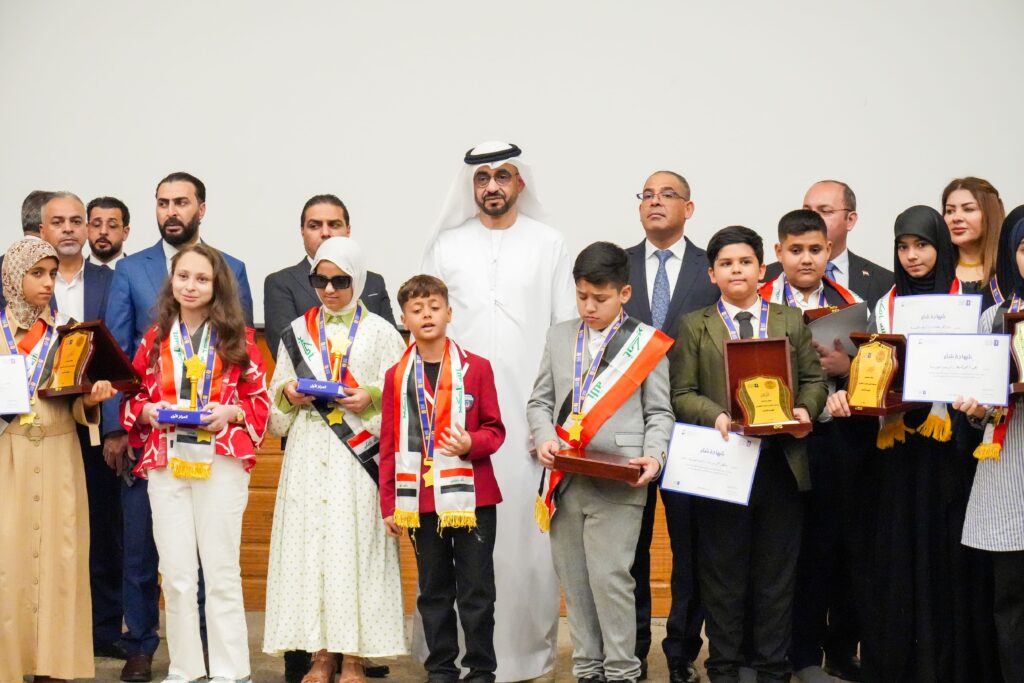
Student Aisha Nizar Nazim won the title of champion of the ninth edition of the Arab Reading Challenge in Iraq, after qualifiers in which 1,339,270 students from 38,100 schools participated, under the supervision of 16,310 supervisors, who contributed to the success of the ninth edition of the largest reading event of its kind in the Arabic language in the world, organized by the Mohammed bin Rashid Al Maktoum Global Initiatives Foundation since its launch in 2015.
Student Aisha Nizar Nazim, a seventh-grade student at Zaha Hadid School for Excellence in Nineveh, was announced as the winner during the closing ceremony of the ninth edition of the Arab Reading Challenge, which was held in the Iraqi capital, Baghdad, in the presence of His Excellency Dr. Ibrahim Namis Al-Jabouri, Minister of Education; Dr. Adnan Al-Sarraj, Advisor to the Prime Minister for Education Affairs; Mohammed Dayea Al-Azzawi, Undersecretary of the Ministry of Education for Administrative Affairs and Chairman of the Higher Committee; and Mr. Mohammed Saleh Al-Taniji, Acting Charge d’Affaires.
At the UAE Embassy in Baghdad, Dr. Fawzan Al Khalidi, Director of Programs and Initiatives at the Mohammed bin Rashid Al Maktoum Global Initiatives Foundation, participated, along with a number of officials and educators in charge of the Arab Reading Challenge initiative, and a large crowd of parents of the participating students.
The closing ceremony also witnessed the announcement of Maria Hassan Ajeel, a fifth-grade student at Al Fara’a Girls School in the Salah al-Din district, as the winner of first place in the People of Determination category, out of 450 students who participated in the qualifiers
The list of the top ten finalists from which the judging committees selected student Aisha Nizar Nazim as the champion of the ninth Arab Reading Challenge at the level of the Republic of Iraq, included: Muntadhar Ahmed Mardan from the fifth grade at Al-Insaf School in the Karbala region, Akram Khalil Abdullah from the tenth grade at Al-Dhakirin Intermediate School (Kirkuk), Fatima Muhammad Abdul-Amir from the eleventh grade at Shams Al-Hurriyah Preparatory School (Najaf), Yusr Hamza Farhan from the eleventh grade at Al-Nabaa Al-Azim Secondary School (Qadisiyah), Rawan Muntadhar Mansour from the tenth grade at Haifa Intermediate School for Girls (Babylon), Hadi Hassan Hadi from the eleventh grade at Al-Nahrawan School for Boys (Rusafa 3), Aya Ziad Subhi from the eleventh grade at Al-Rafidain School (Kirkuk), Hussein Ali Ahmed from the tenth grade at Al-Dhakirin School (Kirkuk), and Haider Ali Abdul-Aziz from the seventh grade at Al-Muhwebin School (Najaf).
The ninth edition of the Arab Reading Challenge initiative achieved a record participation of 32 million and 231 thousand students from 50 countries representing 132,112 schools, under the supervision of 161,004 supervisors. His Excellency Professor Ibrahim Namis Al-Jabouri, Minister of Education of the Republic of Iraq, praised the vital role played by the Mohammed bin Rashid Al Maktoum Global Initiatives Foundation in empowering new Arab generations to acquire the knowledge, sciences, and skills necessary to build the future. He pointed to the successive successes achieved by the Arab Reading Challenge initiative in this context, and its tangible impact in spreading the culture of reading and developing the potential of Arab students.
He said: “We are proud of this new participation in the Arab Reading Challenge initiative. 133,920 students, through their interaction with this knowledge competition and their outstanding performance, have proven the development of the educational and cultural landscape in Iraq and the effectiveness of the plans put in place by the Ministry of Education to advance students’ levels and enhance the status of the Arabic language, in line with our rich cultural heritage and the creativity of the people of Iraq in various fields, thus strengthening our confidence in a brighter tomorrow for our country and the Arab nation.
Dr. Ibrahim Al-Jubouri extended his congratulations to student Aisha Nizar Nazim, all the winners, participating students and their families, as well as to the schools and educational staff across Iraq. He extended his thanks to the Mohammed bin Rashid Al Maktoum Global Initiatives Foundation and everyone who contributed to the success of the ninth round’s qualifiers.
Dr. Fawzan Al Khalidi affirmed that the Arab Reading Challenge initiative continues to fulfill its mission of spreading the culture of knowledge, providing the means for rising Arab generations to enhance their capabilities, hone their talents, and strengthen their connection to the Arabic language, thus providing them with the visions and tools necessary to revive Arab civilization and contribute effectively to the development of Arab societies.
The Director of Programs and Initiatives at the Mohammed bin Rashid Al Maktoum Global Initiatives Foundation praised the wide Iraqi participation in the qualifying rounds of the ninth edition of the Arab Reading Challenge, saying: “We greatly appreciate the participation of more than 1.3 million students in the ninth edition, which reflects the great efforts made by the Ministry of Education in the sisterly Republic of Iraq, and those concerned with cultural affairs and Iraqi society to motivate students to read. These efforts represented a significant contribution to the achievement of the ninth edition, in which more than 32.2 million students from 50 countries around the world participated.”
On behalf of the Mohammed bin Rashid Al Maktoum Global Initiatives Foundation and the Arab Reading Challenge, Dr. Fawzan Al Khalidi congratulated the ninth edition’s champions in Iraq and all the participants. He also thanked the Iraqi Ministry of Education and everyone who helped the students advance to the ninth edition’s qualifying rounds.
The Arab Reading Challenge, launched in the 2015-2016 academic year under the directives of His Highness Sheikh Mohammed bin Rashid Al Maktoum, Vice President and Prime Minister of the UAE and Ruler of Dubai, aims to foster a comprehensive reading and knowledge movement, instill a culture of reading in Arabic as a language capable of keeping pace with all forms of literature, science, and knowledge, and encourage young generations to use Arabic in their daily interactions. It also aims to develop mechanisms for understanding and self-expression in fluent Arabic, and foster creative thinking skills.
The challenge seeks to enhance the importance of cognitive reading in building self-learning skills and fostering a value system for young people by exposing them to the values, customs, and beliefs of other cultures. This instills the principles of tolerance, coexistence, and acceptance of others, and encourages dialogue and cultural and human openness.
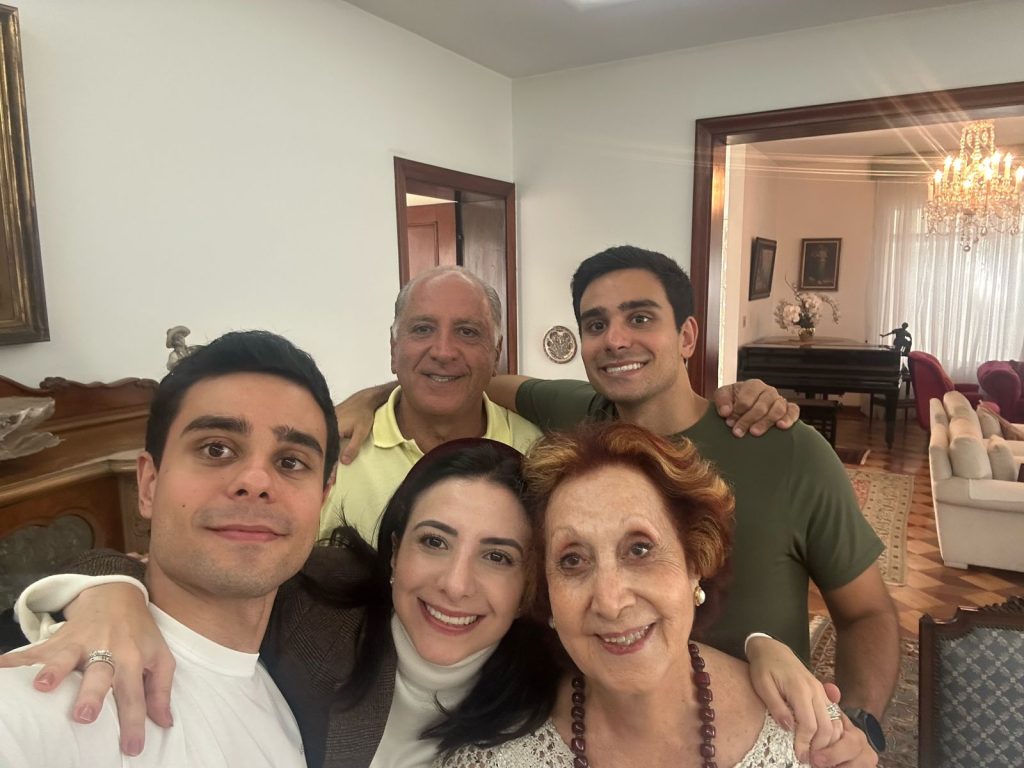
For over two decades, Gabriel Sayegh has worked to keep Arab culture alive in spaces throughout the city of São Paulo.
Born in the southern region of São Paulo city, Gabriel Sayegh, 65, is proud of his Arab heritage. The ancient culture, which comes from both sides of his family and has been part of his life since the beginning, became an essential part of his routine in 1999.
“Since I was a child, I used to go to Esporte Clube Sírio and take part in its cultural activities, and when I was 39, I was invited to become the club’s cultural director. I didn’t think twice and accepted the offer,” says Sayegh.
“It’s very important to keep Arab culture alive because we’re our ancestors. We come from a place that has its own culture, language, and cuisine, and many people don’t know about it. That’s why it’s so important to preserve our culture and make sure others learn about our origins.”
Because of his professional choices, Sayegh would never have been close to Arab culture, but his desire to keep the tradition alive spoke louder. “I always liked math, so I graduated in civil engineering and worked in the field for many years. But I always had the desire to promote the culture of my parents and grandparents, which is why I still work as the cultural director of the club today,” says the engineer.
With a full schedule all month long, the club offers different types of free classes, including Arabic language, belly dancing, and music classes that use traditional Syrian instruments. And at least once a month, there is a lecture given by an important spokesperson from the community.
“We’ve already had writers, politicians, businesspeople, and even the president of the Institute for Arab Culture (ICArabe) here. We also organize sessions to screen Arab films,” says the cultural director of Esporte Clube Sírio.
Despite the effort, the Syrian descendant says he finds it difficult to spread Arab culture among the younger generations. “Culture is no longer as much a part of the younger generations as it was during my youth. Today, there are many things that distract them.”
In addition to working at Esporte Clube Sírio, Gabriel is also involved in two other organizations: the State Parliamentary Council of Communities of Foreign Roots and Cultures (CONSCRE) of the Legislative Assembly of the State of São Paulo (Alesp) and ICArabe.
At CONSCRE, he arrived in 2019, served as president for two terms, and is currently vice president. The São Paulo native has been part of ICArabe since its inception in the early 2000s. He has held several positions within the institute, including vice president, and currently works as financial director.
“In all these places, my work is done voluntarily to help my community. At Alesp, where the space was created to bring together Arab descendants living in São Paulo, we have political ties and try in some way to highlight the culture of my country. At the Institute, the effort is greater. We hold cultural events at different times of the year. The next one will be the Arab film festival to take place in August.”
Very proud of his journey as a promoter of Arab culture, Sayegh is happy to be able to share the richness of his ancestors’ country. “For many years, Arab culture was neglected and ignored by the West, so people still don’t know much about it.”
Culture from the beginning
His mother, Ivete Abdelmalack Sayegh, came to Brazil at the age of 18 with her parents and siblings. His father, Jorge Gabriel Sayegh, is the son of Syrians and lived in São Paulo, where he met Ivete. The family grew when Gabriel’s sister was born and was completed years later when he and his twin brother arrived.
“My parents spoke Arabic when they wanted to say something so we wouldn’t understand, since my maternal grandmother only spoke Arabic. She never really learned to speak Portuguese. Because of that, I ended up speaking Arabic to talk with her,” Sayegh recalls.
Besides the language, Arab food has been and still is part of Sayegh’s and his children’s lives. “I have a daughter from my first marriage and twin sons from my second marriage who love my mother’s cooking; the tradition of Arab food is part of their daily routine. But the culture is more difficult,” Sayegh explains.
“My first wife, who is my cousin, still passed on our heritage to my daughter—however, these younger generations are drifting away from their origins. That’s why I keep stressing how important it is to know your roots. It’s only this way that you can better understand yourself as a human being and learn to respect others.”