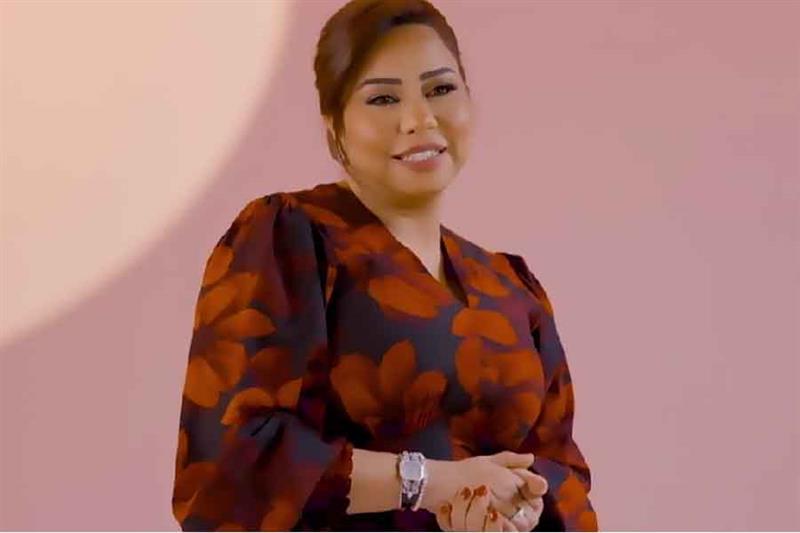
EGYPT: Sherine Abdel-Wahab First Arab Artist Awarded at ‘Billboard Women in Music’

Egyptian singer Sherine Abdel-Wahab became the first Arab artist to be awarded at the Billboard Women in Music Awards.

Sherine, 43, claimed the title of Billboard Arabia, a partnership between Billboard and SRMG, a Saudi-integrated media group.

She became one of seven winners of the Global Force Awards at Billboard Women in Music, part of the Billboard Awards held at the YouTube Theatre in Los Angeles on 7 March.

Global Force also included Annalisa (Billboard Italy), Maria Becerra (Billboard Argentina), Sarah Geronimo (Billboard Philippines), Nini Nutsubidze (Billboard Georgia), Tia Ray (Billboard China), and Luísa Sonza (Billboard Brasil).

Sherine was awarded for her Kalam Eineh at No. 1 and El-Watar El-Hassas at No. 2 which topped Billboard Arabia’s global flagship charts.

In her acceptance speech, Sherine expressed her appreciation for Billboard, saying “I am very proud you enjoyed my work, and of course, I am thrilled and proud that there is a music award specially for women. I hope that my work will always reach the entire world.”

Billboard Arabia was launched in June 2023 to shed light on Arab artists, while pledging “to be the premiere global destination for artists with Arab roots.”

According to Billboard Arabia, the platform follows the well-established parameters set by Billboard over eight decades, drawing data from leading digital streaming platforms like Spotify, Anghami, YouTube, and Apple Music, reflecting Arab music preferences globally.

In its inaugural year, Billboard Arabia included ElGrandeToto, Marwan Pablo, Amr Diab, and Ahmed Saad in its top five Arab artists.

source/content: english.ahram.org.eg (headline edited)

___________

Still from Sherine Abdel-Wahab s acceptance speech

__________

EGYPT

DUBAI, U.A.E / BAHRAIN / LIBYA: Sheikh Mansoor honours Winners of 27th Dubai International Quran Award 2024

Sheikha Hind bint Maktoum named Islamic Personality of the Year.

Sheikh Mansoor bin Mohammed bin Rashid Al Maktoum, Chairman of Dubai Sports Council, has honoured Her Highness Sheikha Hind bint Maktoum bin Juma Al Maktoum, wife of His Highness Sheikh Mohammed bin Rashid Al Maktoum, Vice President and Prime Minister of the UAE and Ruler of Dubai, with the Islamic Personality of The Year award.

The award was coferred at the closing ceremony of the 27th edition of The Dubai International Quran Award in recognition of her efforts and contributions in supporting Islamic, humanitarian, charitable and social causes.

The award was received on behalf of her by Sheikh Saeed bin Mohammed bin Rashid Al Maktoum during a the ceremony held at The Cultural and Scientific Association in Dubai.

Sheikh Mansoor bin Mohammed also honoured members of the award jury alongside 10 awardees.

Mohammed Al Ammri from Bahrain took top honours during the awards ceremony, followed by Naji bin Sliman from Libya, while Sheikh Tijan Ambi from Gambia took third place.

source/content: gulfnews.com (headline edited)

______________

The grand ceremony of the 27th edition of The Dubai International Quran Award in Dubai.Image Credit: DMO/X

_______________________________________________________

DUBAI, UNITED ARAB EMIRATES / BAHRAIN / LIBYA

SAUDI ARABIA: UK’s Victoria and Albert Museum names Saudi Academic Ghadah Al-Harthi as ‘Ambassador of Youth Patrons’

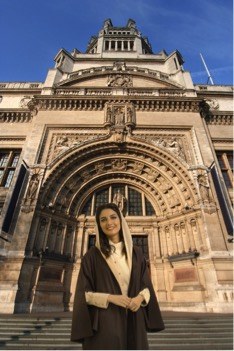
Saudi academic Ghadah Al-Harthi has been appointed ambassador of young patrons by the London-based Victoria and Albert Museum, one of the leading museums in the world.

Al-Harthi, who is based in the UK, is an associate professor at Central Saint Martins; a consultant at the London-based cultural consultancy Barker Langham; and an adviser at Chatham House, an international think tank.

Following her appointment, she said: “I am happy to be chosen as an ambassador by this prestigious museum that has a significant influence on the international cultural scene.”

She added: “My efforts will be focused on education and innovation to ensure the participation of the youth in cultural influence.

“My academic and consulting experience in innovation and culture with British universities and companies will allow me to support the museum’s senior management to develop global cultural communication methods and diversify cultural and art projects across the Middle East and Europe.”

The Young Patrons Group is an effective and important circle that supports the museum in achieving its goals. It includes leading patrons and donors supporting arts and culture at an international level.

The Victoria and Albert Museum, the world’s largest museum of applied arts and decorative arts, was founded in 1852 as a public institution, and is sponsored by the UK government’s Department for Digital, Culture, Media and Sport.

It contains a collection of 4.5 million varied items, including 20,000 of the most important Islamic pieces in the Middle East. At least 2 million people visit the museum annually.

source/content: arabnews.com (headline edited)

_____________

She added: “My efforts will be focused on education and innovation to ensure the participation of the youth in cultural influence. (Supplied)

_________________

SAUDI ARABIA

SHARJAH Ruler releases last “Sultan of History” Encyclopaedia titled – ‘History of Oman from Human Settlement to the End of the Ibadi State’

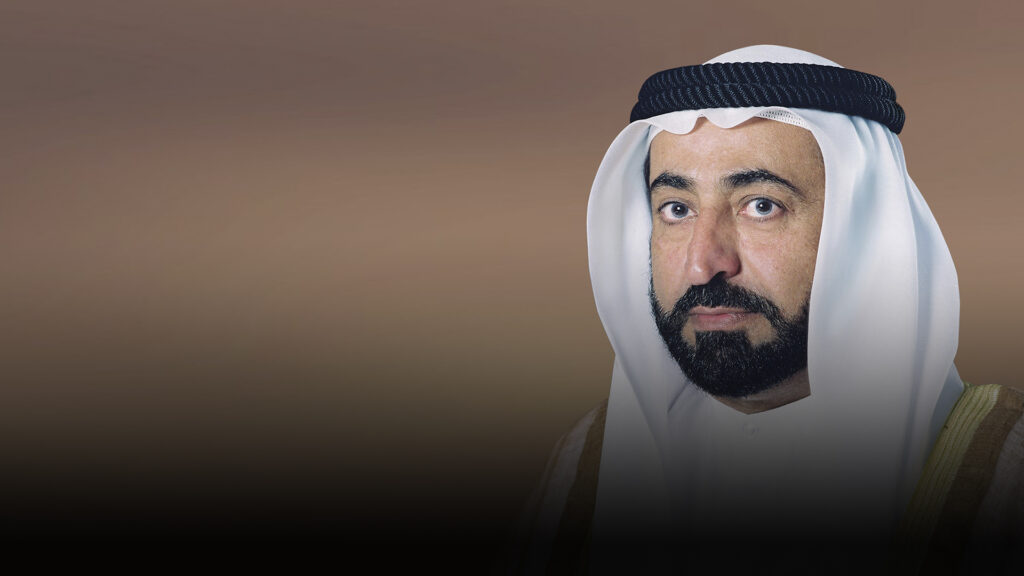
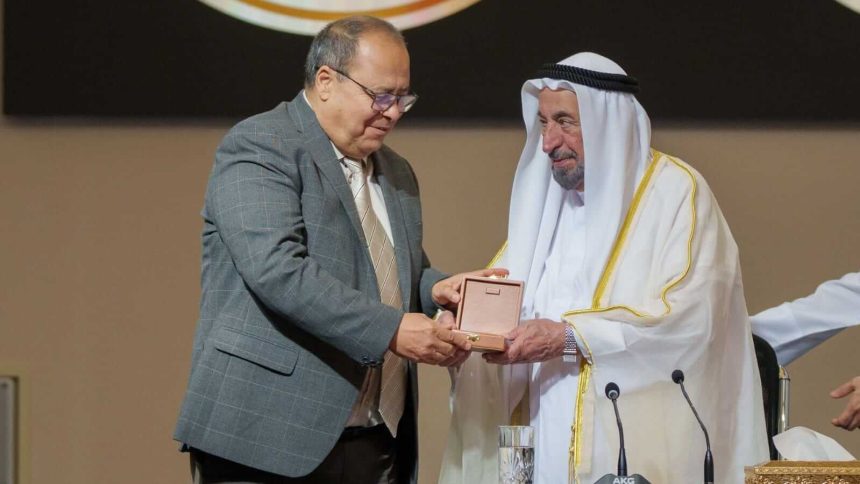
The last book of the “Sultan of History” encyclopaedia, titled “History of Oman from Human Settlement to the End of the Ibadi State,” was launched by His Highness Sheikh Dr Sultan bin Mohammad Al Qasimi, Member of the Supreme Council and Ruler of Sharjah.

This volume completes the encyclopaedia, which is a thorough and authoritative study of Oman’s history. This is the 84th edition of His Highness’s varied works, encompassing several realms of study, including history, biography, literature, theatre, and more.

The latest volume, “History of Oman from Human Settlement to the End of the Ibadi State” is a chapter of Oman’s historical encyclopaedia. His Highness selected a name for the Oman Historical Encyclopaedia that has precise connotations and profound allusions. He titled it the “Sultan of History” encyclopaedia, which means “Authoritative Reference to History.” The “Sultan of History” encyclopaedia is now complete with the current release.

The “Sultan of History” encyclopaedia is divided into four main parts: Part One covers Oman’s history from human settlement until the end of the Ibadi state. Part Two tells the story of Oman’s Nabhani monarchs from 1154 to 1622 AD. Part Three details the history of Oman’s Yarubid dynasty from 1622 to 1747 AD. Part Four of the encyclopaedia covers the history of the Al Bu Said imams in Oman from 1749 to 1856 AD.

Sheikh Dr Sultan bin Mohammed Al-Qasimi, Member of the Supreme Council and Ruler of Sharjah, delved into the history of Oman from its first settlement until the end of the Ibadhi state in his current volume of the “Sultan of History” encyclopaedia.

The 84th volume of publications has been divided into five chapters and five appendices. The first chapter focuses on human settlement in Oman, while the second delves into the history of Oman’s Azd monarchs. The third part focuses on Oman’s position throughout the early Islamic period and succeeding periods. The fourth and fifth chapters deal with Oman’s first and second Ibadhi states. Rare papers, one-of-a-kind maps, and significant archaeological objects discovered in Sharjah round out the encyclopaedia.

Three years of thorough research and historical study went into this piece of work. His Highness Sheikh Dr Sultan Al-Qasimi meticulously tackled Oman’s past, incorporating his extensive understanding of history, geography, and archaeology with his extensive field experience.

He also drew from his own library, which contained rare books, rare references, and priceless manuscripts, as well as historical records and maps. The encyclopaedia “Sultan of History” is a valuable historical resource, revealing major events and archaeological locations, and historical facts that add to our understanding of Oman’s past.

source/content: sharjah24.ae (headline edited)

_____________

______________________________________________

SHARJAH, UNITED ARAB EMIRATES (U.A.E)

ALGERIA inaugurates Mosque ‘Djamaa El Djazair’ ahead of Ramadan 2024 with World’s Tallest Minaret and the 3rd Largest Mosque in the World

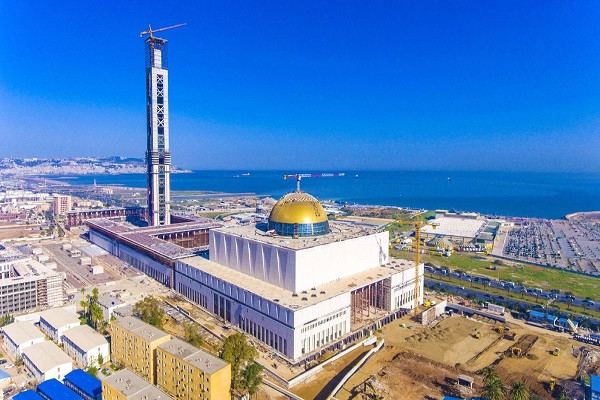
Algeria has finally inaugurated Africa’s largest mosque featuring world’s tallest minaret after years of delay.

The mosque with a minariet standing at 265 metres (869 feet) is being inaugurated ahead of the holy Muslim month of Ramadan.

Known as Djamaa El Djazair, the mosque reportedly cost close to $900m to build and was constructed by a Chinese firm.

The mosque is the the third largest in the world after the holiest sites in Makkah and Madinah and the largest in Africa.

It is located in the al-Mohammadiya area of Algiers and extends to an area of 200,000 square meters. The area of the prayer halls alone will be about 215,000 square feet.

The Great Mosque will also have a library, a conference center, a house of Quran, a museum and a research center.

source/content: cceonlinenews.com (headline edited)

___________

___________

ALGERIA

EGYPT : The record-breaking Freedivers of Egypt

Masters of relaxation: The record-breaking freedivers of Egypt.

When the countdown began, Khaled Elgammal took one final, deep breath before descending without any breathing equipment into the ocean. One minute and 29 seconds later, still holding his breath, the Egyptian athlete had free-fallen to 102 metres (335 feet) – a national record.

But for it to count, he had to reach the surface again. He turned at the bottom of the line and began his ascent – focusing on deep relaxation and the feelings of the surrounding water. In all, he had held his breath for two minutes and 50 seconds.

Elgammal is Egypt’s deepest freediver, and his remarkable achievement set a new national record at the Sharm el-Sheikh competition in October 2023.

“When I came to the surface, it was bliss. It felt amazing,” Elgammal recalls.

Freedivers like Elgammal rely solely on the ability to hold their breath while diving underwater. Through training, these divers master relaxation to slow down their heart rate, allowing them to stay beneath the surface without breathing equipment for minutes at a time. Very deep dives like the one he did recently usually require divers to hold their breath for around three minutes at a time.

The practice of freediving can be traced back to traditional fishing in communities like Asia’s Bajau people, where coastal groups have used freediving to hunt underwater for 200 years. As a sport, freediving is now undergoing record growth, attracting people looking to connect with the ocean and better understand their body’s abilities.

As for Elgammal, he says he was captivated by the unique sensations of diving with a single breath.

“I always say that scuba diving is everything in slow motion; you’re moving slow, breathing slow, and the sound of the bubbles is hypnotising, so everything is in slow motion. Freediving is like you’ve paused… and are the only thing moving down there. So you give yourself the chance to sink within.”

The sport is now growing in popularity around the world. According to AIDA International rankings, 2,889 freedivers registered to compete in competitions in 2023, more than twice the number a decade earlier.

The freediving organisation told Al Jazeera that around 20,000 people have become certified freedivers in recent years. Scuba Schools International (SSI) has similarly seen a steady 10 percent annual rise in the number of people earning their first freediving certification.

Many of these certifications are awarded in Dahab, a bohemian enclave on Egypt’s Red Sea coastline which has become home to numerous freediving schools and elite instructors. Dahab featured a shoreline of palm trees and traditional Bedouin homes just a few decades ago. While still considered a small town today, it boasts a thriving beachfront of Egyptian and international restaurants and attracts a growing crowd from Cairo, Europe and Asia. A handful of luxury hotels have emerged but Dahab still maintains an authentic charm – with herds of goats freely roaming the streets.

It’s also one of the world’s best-known freediving hotspots due to its year-round water conditions and proximity to Egypt’s Blue Hole. Just 20 minutes away by car, the Blue Hole is a famous reef-lined sinkhole accessible from the shore.

Here, divers can descend to around 90 metres (295 feet) – almost the height of the Statue of Liberty.

A heightened state of self-awareness

But what has contributed to the rise of freediving?

The sport is linked to several mental and therapeutic benefits. A 2013 study by academics at ​​Atilim University in Turkey, found that freedivers tend to exhibit lower stress and anxiety levels than non-freedivers.

Carlos Diezel, the manager of Dahab Freedivers, a school that trains divers, explained that much of this is down to “breathwork”.

“The fact that we have to pay attention to our breath, our mind and relaxation when we go down teaches us awareness,” he says. “I believe that part of the problem, statistically speaking, for mental health issues is related to the lifestyle in modern society, that’s leading people to forget or block any kind of self-awareness.”

This heightened state of self-awareness is something that dedicated freedivers like Elgammal strive for. “I’m always aware now of what I’m feeling, what I’m sensing,” he says. “Freediving helped me to connect with myself.”

Freediving’s connection with nature and immersion in water may also contribute to its mental health benefits. Diezel says the most common reasons people sign up for freediving courses are a fascination with the ocean and learning more about themselves.

“They grasp this connection with themselves when you hold your breath and go deep,” he said, adding that students consider it “a ‘deep’ experience – sorry for the pun”.

Social media equally plays a role in bringing freediving to the forefront. Many freediving pictures allude to a sense of freedom, featuring divers among marine life and colourful reefs. The hashtag #freediving has amassed more than 3.5 million mentions on Instagram so far. “It’s getting a lot of attention as it’s quite photographic. Some videos are just mesmerising,” Diezel adds.

Diving safely

Within the existing freediving community, the sport’s surge in popularity brings added responsibility. Considered an “extreme sport”, freediving can be risky if safety protocols aren’t followed, or divers push themselves beyond their physical limits. They can experience oxygen deficiency symptoms like hypoxia and blackouts, as well as pressure-related risks like a ruptured eardrum, an example of a barotrauma.

Contrary to portrayals such as Netflix’s The Deepest Breath, divers losing consciousness – known as blackouts – are relatively uncommon, particularly in recreational diving at shallower depths.

Freedivers are also trained to rescue a fellow diver safely as part of their earliest training, learning to monitor each dive, spot signs of distress and how to react. Under the buddy system, which helps to ensure freedivers remain safe, divers never dive alone.

Tamsyn Signe is a professional freediver who champions safety whenever she enters the water. She has worked as a safety freediver in multiple competitions, and it’s her role to ensure the competing divers make it to the surface safely. Last year, she saved a diver’s life 30 metres (98 feet) underwater in a rare example of a deep rescue.

“As he got in front of me, the lights went out,” Signe recalls, describing the moment the ascending freediver just stopped moving after losing consciousness. At 30 metres below the surface, Signe was also holding her breath. However, she wasn’t thinking about the carbon dioxide building in her body – she had a job to do.

“Everything really slowed down,” she says. “I knew I was his best shot at being ok.” As she’s trained to do, Signe closed his airways with her hands and started finning (swimming up with flippers) with him toward the surface – a tricky job with the added weight of another diver. The competitor regained consciousness after reaching the surface, partly thanks to Signe’s quick thinking and supportive team. He would later reach out and thank her for saving his life.

Signe says the rescue changed her life too, making her more observant and prepared for unexpected risks, but it’s part of the job. Most freedivers believe that practising safety in freediving, such as never diving alone and being trained for rescue, is crucial to the sport’s survival.

But this is not just a tick-box exercise; safety also forges close bonds within the community. “When you go through an experience with people where you could potentially die, there’s some sort of connection that happens that is way deeper and intimate than normal. And those friendships do last a lifetime,” Signe adds.

Responsibilities beyond the breath-hold

Alongside valuing safety, Zahraa El-Husseiny, a freediving instructor and Egyptian national record holder, believes that protecting our oceans is also an important responsibility which comes with freediving. Many freedivers collect plastic they find floating in the water; others, like Diezel, stopped eating seafood after learning about the human impact of overfishing.

As Earth’s oceans face increasing pressures from pollution and global warming, those who rely on the sea will play a vital role in future conservation. First drawn to freediving because she was fascinated with marine life, El-Husseiny tries to teach others about respecting the ocean through her sport.

“We are very connected to the ocean, and we owe it to this to protect it. We know how essential it is to move freely underwater, so… we need to protect it,” she says.

For many, freediving offers a path for self-discovery and a deeper connection to the natural world. As a sport, it’s poised for continued growth in the future.

Freediving isn’t reserved for a select few either, and freediving communities are expanding in many coastal locations. “Everyone can learn how to hold their breath,” El-Husseiny adds.

“Everyone can learn how to enjoy the ocean and the peacefulness of diving. I would like people to know that this is something they can do, learn and progress in”, she says.

Passing on the love of this sport is something many freedivers take seriously. When Elgammal isn’t training for record-breaking dives, he’s working as an instructor and coach. He similarly urges those interested in the sport to “be curious”.

“Relax, enjoy, trust. Think about what you like and try to visualise that feeling.”

source/content: aljazeera.com (headline edited)

____________

___________

EGYPT
TUNISIAN Poet Abdelaziz Hammami Triumphs with Al Qawafi Award at Sharjah Arab Poetry Festival 2024

Tunisian poet Abdelaziz Hammami’s words resonated through the prestigious Sharjah Arab Poetry Festival, earning him the coveted Al Qawafi award. Held from January 8th to 14th in the UAE, the festival witnessed a celebration of Arabic poetry from across the region.

Hammami, already a seasoned voice in the poetry world with works published in various newspapers and magazines, stood out amongst the diverse talent. This is reported by TAP, a partner of TV BRICS.

Hammami’s journey with poetry began in his hometown of Kairouan, where he played a pivotal role in establishing the city’s first literary club in the late 1960s. His passion for the craft extended beyond writing, as he also served as a correspondent for the TAP news agency and collaborated with national radio and Tunisian television. This win at the Sharjah festival marks a crowning achievement for a poet who has dedicated his life to the beauty of language.

Hammami is not the only Tunisian celebrating at the festival. His compatriot, Moncef Ouhaibi, had earlier bagged the “Sharjah Prize for Poetic Criticism.” This double triumph signifies a potent resurgence of Tunisian poetry on the international stage.

With 12 awards bestowed upon deserving poets and critics from across the Arab world, the 20th Sharjah Arab Poetry Festival reaffirmed its position as a beacon for literary excellence. Hammami’s victory, in particular, underscores the enduring power of poetry to transcend borders and touch hearts.

source/content: dailynewsegypt.com (headline edited)

____________

___________

TUNISIA

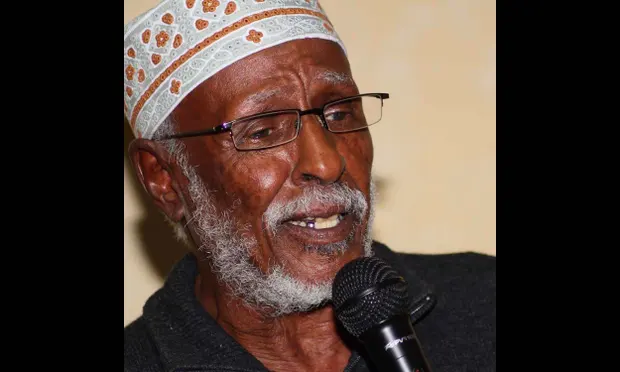
SOMALIA: Mohamed Ibrahim Warsame, one of Somalia’s greatest Poets

Mohamed Ibrahim Warsame, one of Somalia’s greatest poets, dies aged 79.

Somali social media has been flooded with tributes to the man better known as ‘Hadraawi’.

Messages of condolences continue to pour in from around the world following the death of Mohamed Ibrahim Warsame, regarded as one of Somalia’s greatest poets.

Warsame, known as “Hadraawi”, died in Hargeisa, in Somaliland, on Thursday at the age of 79.

Social media has been flooded with tributes and praise for his contribution to Somali language and culture.

“I’m heartbroken to inform you our giant Mohamed Ibrahim Warsame Hadraawi has passed away. Might Allah bless him and grant him Jannah,” Ayan Mahamoud, founder of Kayd Somali Arts and Culture , said on Twitter.

“We will treasure his legacy and the rich scholarly work he left behind,” added Said Salah Ahmed, a poet and playwright who teaches the Somali language at the University of Minnesota in the US.

Hadraawi, which means the “master, or father, of speech”, was regarded as a pillar of modern Somali literature and a strong advocate of peace and democracy.

In 1973, he was imprisoned for five years by the president, Siad Barre, who ruled Somalia until 1991, for speaking against the revolution. His work was banned but he continued to compose poetry upon his release, which were was passed on through word of mouth.

The songs and verses he wrote are full of imagery and metaphor, open to interpretation, which made it hard for the military regime to control. A verse from his poem The Killing of the She-Camel resulted in his imprisonment without trial.

The snake sneaks in the castle:

although it’s carpeted with thorns

still the coward casts off his curses

so the courageous must stretch out his neck;

the cob stallion sells his values

in order to cut a fine figure.

When such cockiness struts forth

and even laughter becomes a crime

our country has unfinished business.

In the early 1990s he called for an end to the civil war, which caused thousands of people to flee Somalia. In 2004, he travelled throughout the country on a “peace march” urging warring parties to stop the violence. His message of reconciliation resonated with Somalis at home and abroad.

He retired a few years ago.

“Poet Mohamed Ibrahim Warsame (Hadraawi) was a symbol of unity and peace,” said the Somali president, Hassan Sheikh Mohamud, in a statement. “He was one of key pillars of Somalia’s art and literature who took a leading role in preserving the Somali culture and promoting the Somali language. His death is felt in every Somali household.”

The EU, Norway, the UK and other friends of Somalia sent condolences and tributes.

“Sending my heartfelt condolences to the people of Somaliland and to all Somalis for the loss of Mohamed Ibrahim Warsame “Hadraawi”, an iconic poet and one of the most eminent and beloved Somali poets of all time,” tweeted Lizzie Walker, head of the Foreign, Commonwealth and Development Office in Hargeisa.

Hadraawi had been called the “Somali Shakespeare”, but Somali singer and songwriter Aar Maanta said: “Hadraawi wasn’t the ‘Somali Shakespeare’ he was the Somali Hadraawi. He was more than a poet; he was a philosopher and a freedom fighter who spent many years in jail for his stance against injustice and dictatorship.

“He wrote some of the most beautiful love songs and poems that Somalis in the Horn of Africa and beyond use as a benchmark.”

Ahmed, who knew Hadraawi since late 1960s, added: “Hadraawi was one of the kindest people I have ever met. His poetry speaks for the voiceless and calls out oppression against the people …. he will be missed so dearly but we will treasure his legacy and the rich scholarly work he left behind.”

Known as a “nation of poets”, poetry is woven into the fabric of Somali society with centuries of oral history, as the Somali language was only written in 1972.

Contemporary Somali poetry, including the works of Hadraawi, has been preserved in books and translated into English.

source/content: theguardian.com (headline edited)

_____________

___________

SOMALIA

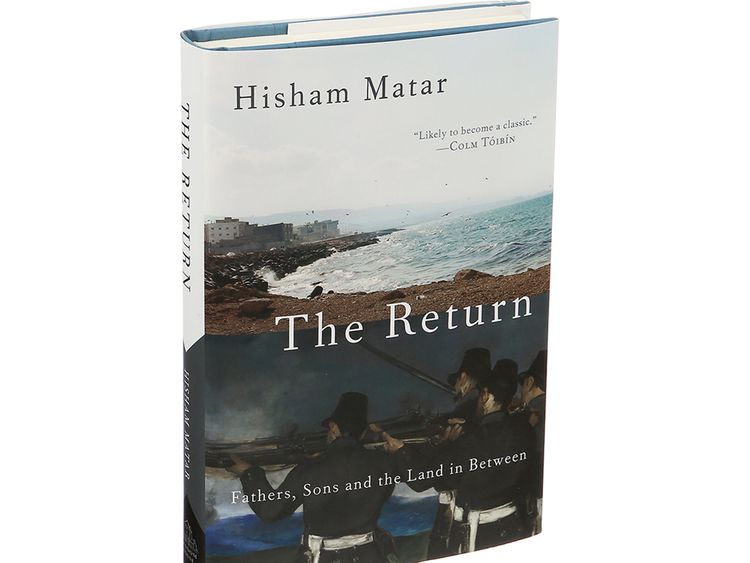
LIBYAN-AMERICAN: Hisham Matar’s powerful Memoir ‘The Return’ Chronicles a haunting journey

“The Return” is a meditation on human condition, an exploration of the bonds of family.

In his poignant and deeply affecting memoir, “The Return,” Hisham Matar invites readers on a journey into the heart of his native Libya, a journey marked by love, loss, and the relentless pursuit of truth.

As the acclaimed author of “In the Country of Men,” Matar brings his exquisite storytelling prowess to bear on the exploration of his own family’s harrowing ordeal amid the turbulent political landscape of their homeland.

The narrative begins with a pivotal moment in Matar’s life, when at the tender age of nineteen, his world was shattered by the abduction of his father, a courageous man. The elder Matar’s disappearance cast a long shadow over the family, leaving them grappling with uncertainty and anguish.

Yet, amid the darkness, Matar clung to a flicker of hope, a stubborn belief that his father may yet be found. It is this unwavering hope that propels him forward, driving him to embark on a decades-long quest for answers.

Against the backdrop of upheaval and societal transformation, Matar chronicles his return to Libya, a homeland he once fled as a child. With his mother and wife by his side, he confronts the ghosts of his past and navigates the complexities of a country in flux.

Through evocative prose and piercing insight, Matar captures the essence of a nation on the cusp of profound change, grappling with the weight of its history and the promise of its future.

“The Return” transcends the confines of a mere memoir; it is a meditation on the human condition, an exploration of the enduring bonds of family and the resilience of the human spirit.

Nature of love and loss

Matar’s storytelling takes the readers to the heart of Libya, immersing them in its sights, sounds, and emotions. With each turn of the page, we are drawn deeper into the labyrinth of Matar’s inner world, as he grapples with questions of identity, belonging, and the nature of love and loss.

At its core, “The Return” is a testament to the power of storytelling to illuminate the darkest corners of our collective experience, offering solace, catharsis, and ultimately, redemption.

Matar paints a poignant portrait of the human spirit’s capacity to endure and find solace in the face of uncertainty. Beyond mere memoir, “The Return” stands as a testament to the strength of hope, offering inspiration to all who confront life’s tribulations.

source/content: gulfnews.com /ahmad nazir (headline edited)

____________

pix: wikipedia.com

_________

AMERICAN / LIBYAN

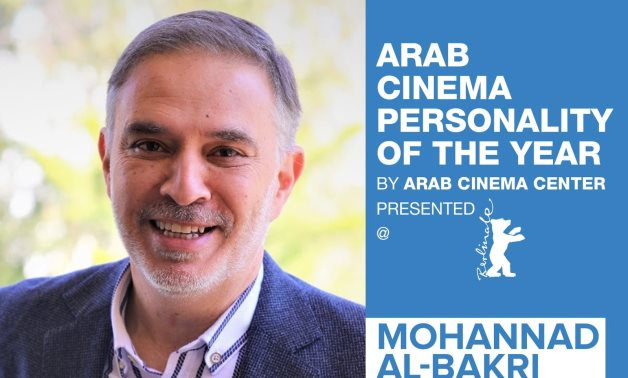
JORDAN: Arab Cinema Center names Mohannad Al-Bakri ‘Arab Cinema Personality of the Year’

In recognition of his distinguished work in revitalizing and sustaining Jordanian and Arab cinema, the Arab Cinema Center (ACC) is bestowing its 5th Arab Cinema Personality of the Year Award to Mohannad Al-Bakri,the Managing Director of the Jordanian Royal Film Commission (RFC) during the 74th Berlin International Film Festival, which will run from February 15th to 25th.

The award, which coincides with the ACC’scelebration of its own 10th anniversary, is designed to honor and highlight prominent industry figures whosepersistent contributions have helped elevate the Arabfilm industry in the eyes of the international filmmaking community as a whole.

Al Bakri has been instrumental in rousing the country’s film industry from its slumber sinceassuming his position in 2009 through his development of the commission’s funding and training programs, as well as building local production capacity with the opening of Jordan’s first dedicated film studio complex. Under his guidance,Jordan has become a competitive and enticing destination for filmmakers through a combination of extraordinary landscapes, universally praised production services and its cost-effectiveness as ashooting location.

After starting out at the RFC in 2007 as a capacity-building manager, Al-Bakri quickly rose to the title ofmanaging director by 2009. Before that, he kickstarted his professional career at the Hashemite Fund for Human Development where he developed dynamic programs promoting the active role of youths in society.

In addition to his work for the RFC, he was also appointed as Regional Managing Director of Luminus Media – Jordan (SAE Institute) from 2012 until 2015 before joining New York University in Abu Dhabi as director of External Relations and Partnerships from2015 until 2019.

“We take immense pride in honoring Mohannad Al-Bakri, the Managing Director of the Jordanian Royal Film Commission (RFC) with the Arab CinemaPersonality of the Year Award. Since assuming his position, he has made enormous and noteworthy efforts to advance the Jordanian film industry,” saidAlaa Karkouti and Maher Diab — Co-founders ofArab Cinema Center — in a joint statement.

“This is evidenced by the outstanding successJordanian films have achieved so far both locally andinternationally, including INSHALLAH A BOY,which world premiered at Cannes’ 62nd Critics Week,winning two unprecedented awards in the history of Jordanian cinema,” they added.

Last year, the Arab Cinema Center gave its ArabCinema Personality of the Year Award to Mouhamad Keblawi the Founder and Head of Malmö Arab Film Festival in Sweden. Other recipients of the Award include Chiraz Latiri, former general director of theCentre National du Cinema et de l’Image, andrenowned producer and screenwriter Mohamed Hefzy— the Founder of Film Clinic. The inaugural award went to both Abdulhamid Juma and Masoud Amralla Al Ali, chairman and artistic director, respectively, ofthe now-shuttered Dubai International Film Festival.

Established by MAD Solutions, the ACC is a nonprofit organization registered in Berlin. The ACC provides networking opportunities with representatives ofcompanies and institutions involved in co-production,international sales and distribution, film festival,commercial exhibition and industry events.

The organization’s activities include hosting filmmarket stands, networking sessions, one-on-onemeetings, welcome parties, panel discussions andmeetings with international organizations and festivals. It also publishes the Arab Cinema Magazine, which itdistributes at leading international film festivals andmarkets.

A newsletter subscription is now available on theACC’s website, allowing users to obtain digital copies of  the Arab Cinema Magazine, as well as news on theACC’s activities, notifications of application dates forgrants, festivals and offers from educational andtraining institutions, updates on Arab films participating at festivals, exclusive news on the Arab Cinema LAB, and highlights from the ACC’s partnersand their future projects.

Additionally, the ACC launched the Arab Cinema Directory in English on its website, the first time that users from both within and outside the Arab-speaking world have easy access to information on Arab cinemaall in one place. 

source/content: egypttoday.com (headline edited)

_____________

_________

JORDAN