Arabs & Arabian Records Aggregator. Chronicler. Milestones of the 25 Countries of the Arabic Speaking World (official / co-official). AGCC. MENA. Global. Ist's to Top 10's. Records. Read & Enjoy./ www.arabianrecords.org
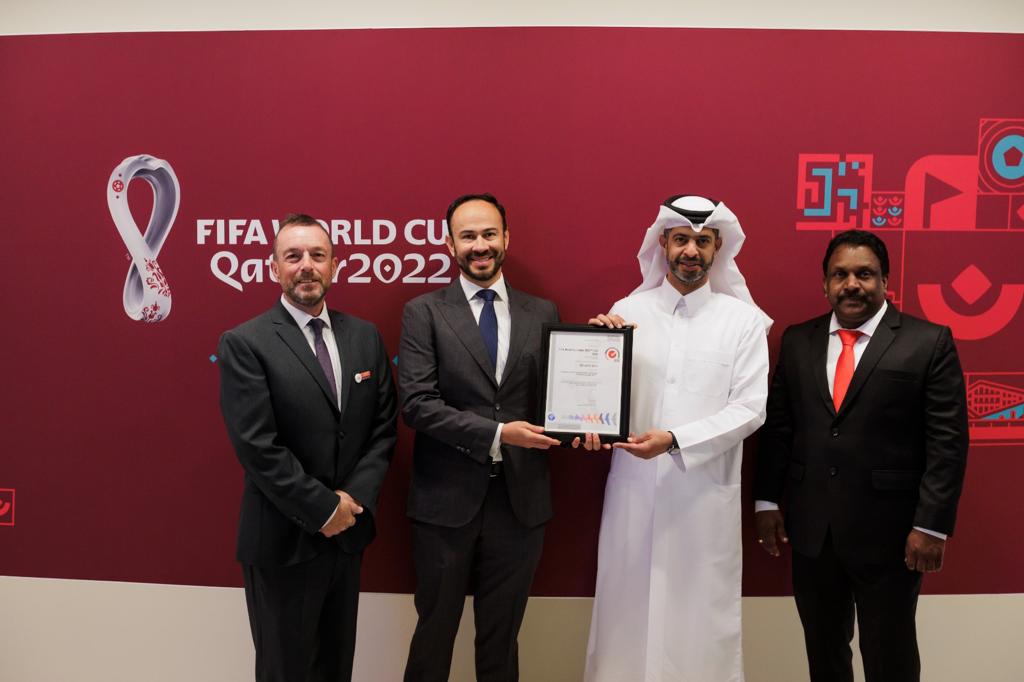
The FIFA World Cup Qatar 2022 LLC (Q22) – the operational arm of FIFA and the Host Country for the delivery of the tournament – has achieved ISO 20121 certification, the international standard that sets requirements for developing and implementing an effective management system to deliver a sustainable event.
The certification was granted after an extensive audit process that was initiated during the FIFA Arab Cup Qatar 2021 – which was held exactly a year before the first FIFA World Cup in the Middle East and Arab world.
Nasser Al Khater, CEO, Q22, said: “Sustainability has been at the heart of Qatar 2022 from the start, and the independent recognition of the delivery of best practices reflects our enduring commitment to it.
José Retana, Sustainability Senior Manager, Q22, said: “We are proud to become the first FIFA World Cup in history to obtain the ISO 20121 certification. This demonstrates that according to the evaluation by a third-party accredited entity, world-class management practices are being implemented to deliver an inclusive, green and legacy-oriented event.”
SGS carried out the extensive audit process. It is a world-leading testing, inspection and certification company that has a wealth of experience in certifying mega-sport event organisers against ISO 20121 requirements, including the Olympic and Paralympic Games, and the French Open tennis tournament.
Sustainability management mechanisms assessed during the FIFA Arab Cup™ audit included:
Accessibility infrastructure and services for disabled fans, including seating, mobility assistance and innovative features such as audio descriptive commentary
Waste minimisation and recycling, including staff training, segregation and awareness-raising activities carried out with the support of sustainability volunteers
Sustainable procurement of items required for the delivery of the tournament, including uniforms made from recycled plastics and the use of compostable food packaging
Social and environmental audits to ensure supplier compliance with the FIFA World Cup Qatar 2022™ Sustainable Sourcing Code
Incident reporting and resolution during tournament time, including governance arrangements and gathering of lessons learned
Chris Meakin, General Manager of SGS Qatar, said: “The FIFA World Cup Qatar 2022 has effectively applied and demonstrated best practices under the framework of the Event Sustainability Management System (ISO 20121) to manage the event successfully. They have met the set benchmarks for global sustainability development and to control the event’s social, economic and environmental impact.”
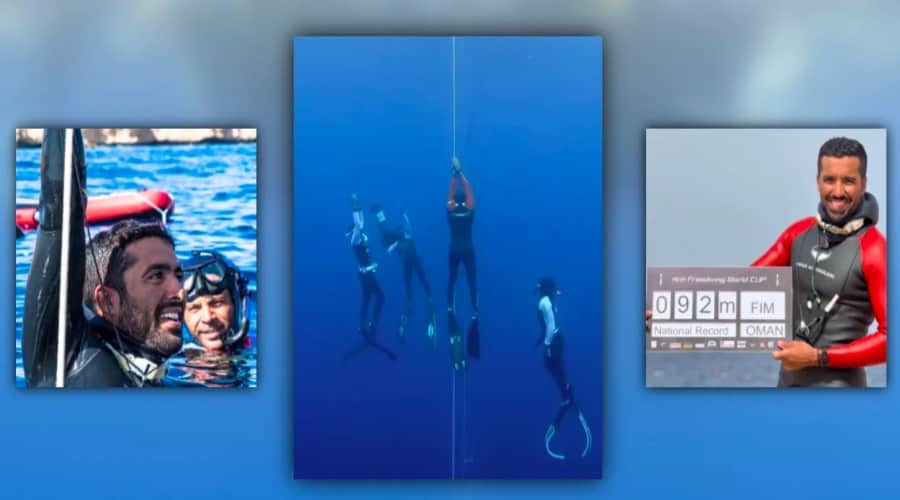
Omani diver Omar Al Ghailani achieved the deepest Asian record for the third time in the dual fins specialty with a depth of 92m CWTB in the diving championship held in Sharm El Sheikh in Egypt – AIDA Freediving world cup – May.
Omar Al-Ghilani said that he is determined to achieve more national numbers in the coming days, noting that the feeling is different every day in the atmosphere of the tournament.
Al-Ghilani said: Every day I develop a plan and scenario for the next day, but changes occur that can change everything, explaining: Sometimes there are unexpected waves or the water temperature changes, and these are some conditions that can affect concentration and readiness to dive.
Al-Ghilani confirmed that his diving experience made him ready to perform better and enjoyable despite all circumstances, adding: I am still learning and developing myself in this field.
Omani diver Omar Al Ghailani achieved a national record on the second day of the championship, as he managed to dive to 92 meters in free diving.
It is worth noting that the Omani champion Omar Al Ghailani is the world record holder in free diving and has strengthened the position of the Sultanate of Oman in regional and international forums.
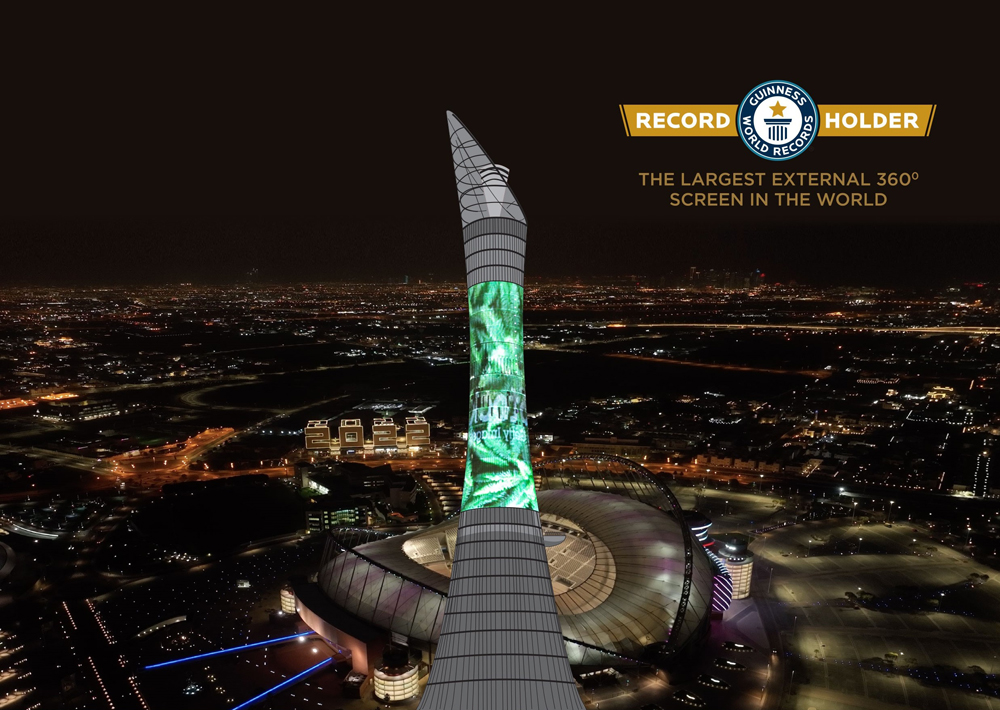
Torch Tower set the Guinness World Record for being the largest external 360 degree screen in the world.
Aspire Zone Foundation announced that it will officially launch the screen on June 6, 2022 between 7pm to 9pm.
Situated at 300m high and with 360° panoramic views across the city, the Torch Doha is the result of comprehensive architectural, engineering and technical design, formerly shaped to represent a colossal torch for the duration of the 15th Asian Games in 2006 held its symbolic flame.
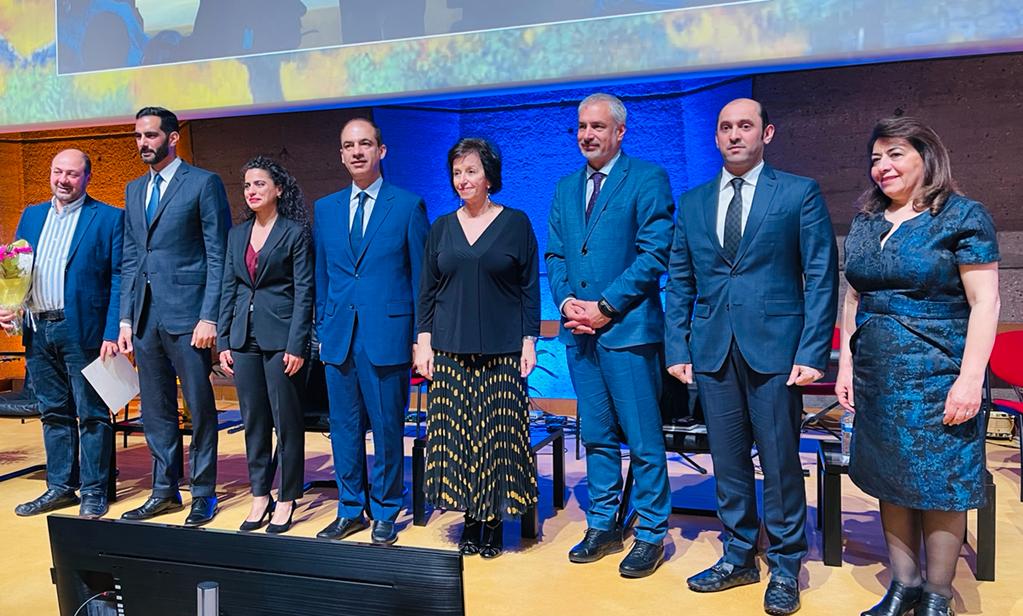
The United Nations Educational, Scientific and Cultural Organisation (UNESCO) headquarters in Paris held a ceremony for the 18th edition of the Sharjah Prize for Arab Culture (SPAC), organised by the Sharjah Department of Culture in cooperation with UNESCO.
The Prize has been awarded to Dunya Mikhail, an American-Iraqi poet, and Helen Al Janabi, a Swedish actress of Syrian-Iraqi origin.
Sheikh Salem Khalid Abdullah Al Qasimi, Deputy Secretary of State for Heritage and Arts Sector, UAE’s Permanent Representative to the UNESCO, along with Professor Mohammed Ibrahim Al Qaseer, Director of Cultural Affairs at the Department, in addition to dignitaries, writers, intellectuals and members of the diplomatic corps accredited to the United Nations.
Ernesto Otuni Ramirez, UNESCO’s Assistant Director-General for Culture, gave a speech in which he expressed his gratitude and appreciation to H.H. Dr. Sheikh Sultan bin Muhammad Al Qasimi, Supreme Council Member and Ruler of Sharjah, and for his cultural and humanitarian renaissance role at the local, regional and global levels.
Afterwards, Abdullah bin Muhammad Al Owais, Chairman of the Sharjah Department of Culture, gave a speech in which he expressed his happiness at the continuation of the UNESCO-Sharjah Prize for Arab Culture editions, appreciating the role of UNESCO in managing the prize and sponsoring many cultural programmes.
Al Owais and Ernesto Ramirez awarded the 18th Sharjah Prize for Arab Culture to Dunya Mikhail and Helen Al Janabi, in addition to honouring the winners of the 17th session.
Bread on Uncle Milad’s Table by Libyan debut novelist Mohamed Alnaas was announced as the winner of the 2022 International Prize for Arabic Fiction (IPAF).
The novel, published by Rashm, was named as this year’s winner by Chair of Judges Shukri Mabkhout during a ceremony in Abu Dhabi that was also streamed online.
In addition to being awarded USD $50,000, funding will be provided for the English translation of Bread on Uncle Milad’s Table, and Mohamed Alnaas can expect to see an increase in book sales and international recognition.
Shukri Mabkhout, Chair of the 2022 Judges, said: “The winning novel is written in the form of confessions of personal experience. Its plethora of details is deftly unified by a gripping narrative, which offers a deep and meticulous critique of prevailing conceptions of masculinity and femininity and the division of work between men and women, and the effect of these on both a psychological and social level.”
He added that the novel, falls into the category of novels which question cultural norms about gender; however, it is embedded in its local Arab context, and steers away from trivial projections or an ideological treatment of the issues, which would be contrary to the relativism of fiction and its ability to present multiple points of view.
Bread on Uncle Milad’s Table is a unique story based in Libya. In the closed society of his village, Milad strives to live up to the definition of ideal masculinity, as his society views it. However, after all his best efforts, he fails to be ‘a man’, and after meeting his sweetheart and wife-to-be, Zeinab, decides to forget about this definition and be himself. Living at home, he performs the tasks which his society reserves for women, while Zeinab works and supports the family. Milad is unaware of how he is mocked in the village until his nephew breaks it to him. Bread on Uncle Milad’s Table questions static ideas of gender and champions the individual in the face of destructive ideas adopted by the majority.
Mohamed Alnaas, is a short story writer and journalist from Libya, born in 1991. He obtained a BA in Electrical Engineering from the University of Tripoli in 2014, and his short story collection Blue Blood was published in 2020. Bread on Uncle Milad’s Table (2021) is his first novel and he wrote it in just six months during lockdown and whilst Tripoli was under bombardment. He says writing the book was his “refuge from insanity” amidst the news of Covid and war.
At 34, Alnaas is the second youngest writer to win the International Prize for Arabic Fiction and the first Libyan. Bread on Uncle Milad’s Table was published with support from the Libyan Arete Foundation.
Bread on Uncle Milad’s Table was chosen by the judges as the best work of fiction published in Arabic between 1st July 2020 and 30th June 2021. It was chosen from a shortlist of six novels by authors from Egypt, Kuwait, Libya, Morocco, Oman and, for the first time, the UAE. The shortlisted finalists — Khalid Al-Nassrallah, Tareq Imam, Reem al-Kamali, Bushra Khalfan and Mohsine Loukili — will each receive USD $10,000.
The panel of five judges was chaired by Tunisian novelist, academic and previous IPAF winner (The Italian, 2015) Shukri Mabkhout. Joining him on the judging panel were Libyan doctor, poet and translator Ashur Etwebi, Lebanese writer and PEN International board member Iman Humaydan, Kuwaiti poet and critic Saadiah Mufarreh and Bulgarian academic and translator Baian Rayhanova.
The friendship between a former Olympian and the college kid he took under his wing shows the power of mentoring — to make both individuals’ lives all the richer.
This story comes to you from the Star Tribune, a partner with Sahan Journal. We will be sharing stories between Sahan Journal and Star Tribune.
In Mohamed Abdi Mohamed’s childhood, Abdi Bile was like a folk hero.
“My mom told me all these stories,” says Mohamed, 26, who was born in Somalia and grew up in a refugee camp. “She told me there’s a Somali who went to America and basically conquered America.”
Bile was a world champion runner, dominating the 1,500-meter race in the late 1980s. He’s also a national legend and the most decorated athlete in the history of Somalia, where a certain make of pickup truck has been dubbed the “Abdi Bile” for its speed. In 2019, Bile quietly moved from Virginia to Minnesota to coach runners and help develop youth in Minneapolis.
But all Mohamed knew was that there was a hero living in his midst when he worked the phones in Minnesota’s Somali American community to get hold of Bile’s cell number. At the time, he was a junior at Macalester College in St. Paul and at the lowest point of his five years in the United States. Homesickness, grief and plummeting grades were leading him to question if coming here on an academic scholarship was worth it.
On a gamble, Mohamed called Abdi Bile.
Shockingly, Abdi Bile picked up.
Mohamed could hardly spit out the words as he told Bile he had just started running for Macalester’s track team — and — would the coach be interested in meeting him one day?
“If I was lucky, I would get to see him even once,” Mohamed remembers thinking.
The next day, Bile showed up at Mohamed’s doorstep in St. Paul. That encounter started a friendship that the two say will continue for the rest of their lives.
When I sat down with them near the home of the Loppet Foundation, where Bile directs competitive running programs, organizes walks for seniors, and introduces Somali American families to cross-country skiing, the 59-year-old former Olympian assured me that the story I wanted to tell — about the power of mentoring — was not just about him.
“Mohamed’s journey is very interesting, from where he started to where he is today — it’s just incredible,” Bile says. “You just see the resiliency of human beings, the struggles they go through, and how they survive if they don’t give up.”
But Bile’s story is remarkable, too. Once a teen standout soccer player, he decided on a whim to join some nearby runners who were training for the 400-meter. He beat them to the finish line, but felt so woozy afterward that he threw up.
Within a week, however, he learned two things about running: If you were good enough, you could win a scholarship to attend college in the United States — and even advance to this thing called the Olympics. When he quit the soccer team, Bile told his coach: “I’m going to the Olympics. I’m going to get a scholarship. I’m going to America. Goodbye!”
Killer workouts and his initial disdain for running did not deter Bile. “I hated it. But I just saw an opportunity: This is my way out. This is my meal ticket.”
Within just a few years, he cashed in on that ticket. He ran on an athletic scholarship at George Mason University in Virginia and competed in his first Olympics — the 1984 games in Los Angeles.
More than 35 years later, he saw echoes of himself — the dedication, the sense of purpose — when he got that phone call from the kid at Macalester.
Mohamed’s journey
Growing up in the sprawling Dadaab refugee camp in Kenya, Mohamed used to walk 4 kilometers to fetch water for his family. Whenever a blinking red light in the sky soared past, his mom used to point to the airplane and tell her son this would be his ride out of the camp.
And a scholarship was the only way to catch that ride.
With some diligence and luck, Mohamed earned a scholarship through Blue Rose Compass, a nonprofit that affords gifted young refugees a shot at a university education. It was through this gift that he was able to attend an international boarding school in New Mexico and then Macalester.
Unlike Bile, Mohamed never knew of Somalia’s idyllic beaches or peaceful past, a land rich in history and culture. He was a kid born into civil war, only to learn of his homeland’s halcyon days through stories imparted by his mom and dad.
“In their minds exists a grand country,” he says. “And at the center of this country is Coach Abdi Bile.”
“At least I had a country, a stable life,” Bile muses. “This kid just grew up in a refugee camp. What hope do you have in a refugee camp? A refugee camp is a prison. You have to do whatever it takes to get out of those four walls.”
When Mohamed first called Bile, he was on the cusp of giving up and going home. The second eldest of eight kids, he hadn’t seen his family in five years. He was mourning the death of his uncle, who was struck by a stray bullet in Mohamed’s hometown of Kismayo. His grades were slipping, and he was almost put on academic probation.
“I was starting to feel sorry for myself,” Mohamed recalls. “I was questioning the decisions I made. It feels like you’re living in a virtual reality — you have everything you need, but your family is still living in a refugee camp. I was willing to throw everything away.”
With Bile he forged the kind of connection he couldn’t find anywhere else. “What I needed was some tough love,” Mohamed says.
“He needed my help,” Bile says. “Right away, I could relate to what he’s crying for, what his issues and problems are. Sometimes it’s not a lot — sometimes the person just needs someone to talk to.”
The hardest lap
Bile told Mohamed about his first days in the United States as a college student, so poor he couldn’t cobble together the coins to do his laundry. Bile reminded Mohamed of all the people who were in his corner and invited Mohamed to Bile’s training program for elite runners so he could meet other young Somalis working toward big dreams.
“In running, the hardest is the last lap,” Bile tells me, recalling how he almost abandoned the sport because of injuries. After healing his body through yoga and acupuncture, Bile won a world championship in 1987.
“Sometimes people who quit, they don’t know how close they were to the finish line,” the coach adds.
Mohamed listened to his mentor: — Look what you came from. You’re almost there. You’re here, you’re doing it. This is nothing compared to how far you’ve traveled — and kept putting one foot in front of the other.
His internships and work-study jobs helped pave the way for his family to leave the refugee camp and find an apartment in Nairobi. His siblings now are receiving the kind of education he had only dreamed of while in the camp.
And what about the kid who came so close to throwing it all away? Mohamed graduated from Macalester in December. No one in his family could be at the ceremony, but Abdi Bile, the hero of his parents’ stories, showed up to watch Mohamed cross the stage. Bile says he wouldn’t have missed it for anything.
Mohamed is now reverse-mentoring his coach, encouraging Bile to start an Instagram account so he may ignite a spark for other young people. This week, the recent college grad also started a job as a tech analyst for a global consulting firm with offices in Minneapolis.
As the two recap the highs and lows of the past couple of years, Bile dabs his wet eyes with a carefully folded tissue.
“You did it,” he tells Mohamed. “You have a good job. You’re going to take good care of your brothers and sisters.”
The coach says he wants other young people, those who can trace a whiff of opportunity, to learn from this young man — that they should go ahead and be brave with their lives.
“Mohamed’s story is a good story for our kids here,” Bile adds.
“And so is a world champion helping his people,” Mohamed counters. “How many people can say they have the greatest athlete in the history of their country rooting for them?”
source/content: sahanjournal.com
____________
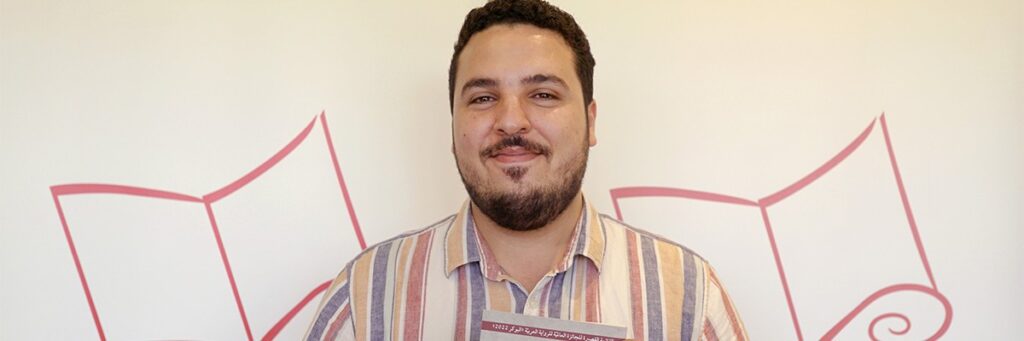
Mohamed Abdi Mohamed, right, stands for a portrait with his mentor Abdi Bile, the most decorated athlete in Somalia’s history. Bile, who directs a running program through the Loppet Foundation in Minneapolis, is coaching Mohamed not only in running but in life. Credit: Anthony Souffle | Star Tribune
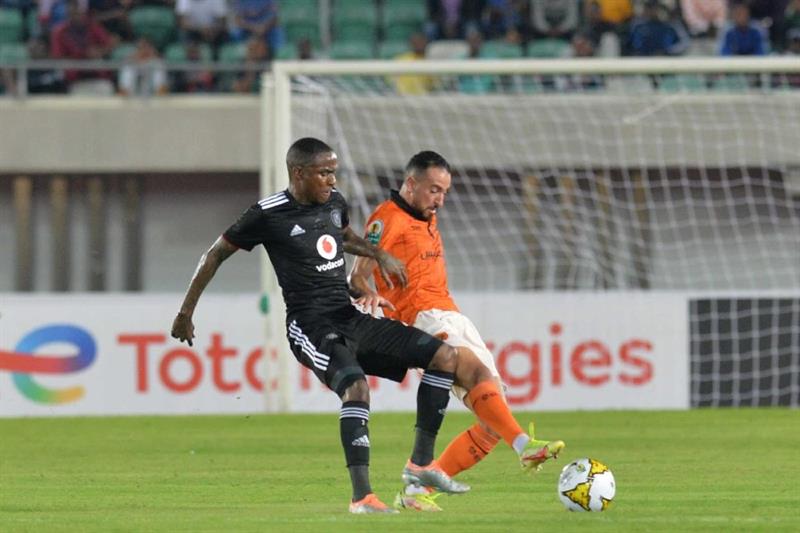
Moroccan side RS Berkane won their second African Confederation Cup title in three years after beating South Africa’s Orlando Pirates 5-4 on penalties following a 1-1 draw at Nigeria’s Godswill Akpabio Stadium on Friday 20th May.
Brahim El Bahraoui scored the winning penalty after Pirates keeper Richard Ofori, who had scored his side’s fourth spot kick, failed to save any of Berkane’s efforts.
Winger Thembinkosi Lorch turned from hero to zero as Pirates missed out on their maiden Confederation Cup triumph after also losing in the 2015 final.
He scored a bizarre 117th-minute equaliser to cancel out Youssef El Fahli’s penalty in the first half of extra time but had his effort blocked by keeper Hamza Hamiani in the shootout.
Hamiani was Berkane’s standout performer, producing some superb saves to keep his side in the game as Pirates looked the better side throughout.
Berkane lost on penalties to Egypt’s Zamalek in the 2019 final but won the trophy a year later. Another Moroccan side, Raja Casablanca, clinched the title last year.
Key saves
Hamiani kept out a low, angled effort from striker Kwame Peprah on 34 minutes before producing an even better save to smother a close-range effort from Deon Kavendji early in the second half, denying Orlando a certain goal.
He also comfortably collected a tame shot from Lorch, who was well-positioned to score following some slack defending.
Berkane, who rarely threatened, took the lead in the 97th minute when Pirates substitute Thabang Monare, who had just been on the pitch for a few minutes, clumsily stuck out a leg to foul an opponent following a corner.
El Fahli sent keeper Ofori the wrong way with a low effort as Berkane thought they had the match dead and buried.
But Pirates did not give up, with Tshegofatso Mabasa heading just wide from a corner before Lorch brought them level three minutes from the end of extra time.
After his initial effort was blocked by the defence, Mabasa collected the loose ball just inside the area and sent a stray pass that somehow eluded all defenders and found its way into the bottom corner past Hamiani, who had been unsighted by his own defence.
But Berkane had the last laugh in the shootout, converting all of their kicks, as Moroccan teams made it a hat-trick of straight Confederation Cup triumphs.
source/content: english.ahram.org.eg
_____________
Morocco s RS Berkane beat Orlando Pirates in the African Confederation Cup final on Friday (Photo: Pirates official Twitter account)
Dubai Airport is on the right track, having retained its position as the world’s busiest international airport with 29.1 million passengers, and just last week, announcing its busiest quarter since 2020, said Jamal al Hai, Deputy CEO of Dubai Airports.
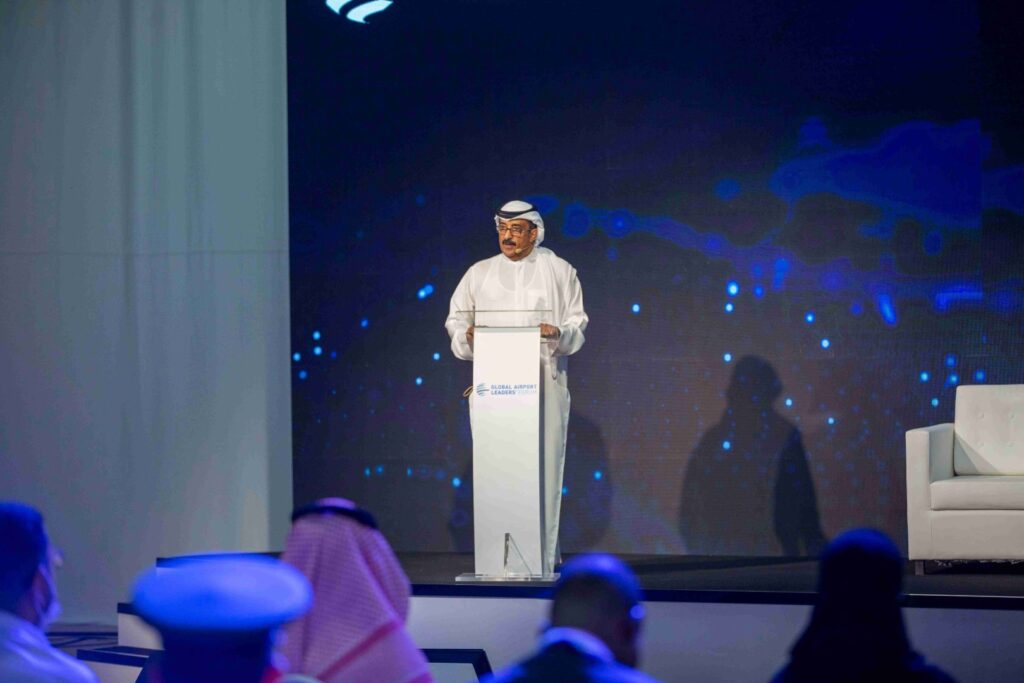
Jamal al Hai made this statement while delivering the welcome address at the Airport Innovation and Development Conference at the Gulf Airport Leaders’ Forum (GALF) held alongside the 21st edition of the Airport Show in Dubai.
Welcoming the delegates, he said the GALF is organised in person after two years of the pandemic, marking a new healed era of aviation.
“This is, in fact, the outcome of a successful handling of the crisis and what you see in Dubai today is the outcome of a flawless response to the pandemic achieved through a balance between protecting the health and well-being of the people while minimising the impact on business and economy.”
Delivering the welcome address, Ibrahim Ahli, Deputy CEO of Dubai Air Navigation Services (dans) said Dubai is galloping in all economic and social sectors, attracting businesses, talents, investors and tourists in hordes. Dubai is fast becoming the Future City of the world, driven by the maximum embrace of technology, relaxed regulations and reforms. All this will result in increased traffic, and it underscores the need for enhancing the safety, capacity and efficiency of the airspace of Dubai, where dans plays a crucial role.
Khalid Aljabir, Senior Vice President, Operations, dans, read out Ahli’s speech in his absence.
“We had proved our mettle when dans efficiently managed more than 1,338 aircraft movements daily through Dubai airports, before the COVID-19 pandemic. dans manages the air traffic through Dubai International, which has ranked first in the world for international passengers since 2014, and it had handled about 1.115 billion passengers on more than 7.47 million flights since the airport started operating in 1960,” he said.
“We take pride in implementing the region’s first procedures for Enhanced Wake Turbulence Separation (eWTS) Minima within the controlled zone. The Dubai RECAT-Enhanced Wake Turbulence Separation is part of the vision to make Dubai the airport for the world, enhance its airspace and the efficiency of airports along with the profitability of carriers.”
In his keynote address titled “Standardising Regulations Regionally and Globally”, Mohammed Faisal al Dossari, Senior Director, Air Navigation and Aerodromes Department, UAE General Civil Aviation Authority (GCAA), said that post-COVID the industry must work across all aspects of aviation to standardize regulations and spur growth.
The UAE is expected to develop draft regulations on Vertiport in the first quarter of 2023 and publish them in the fourth quarter of 2023 to be implemented in the first quarter of 2024.
Al Dossari said the number of GCAA registered commercial drone organisations is increasing. “Up to 2022, we have registered 20,000 private drone users, 870 commercial drones, and 181 commercial drone organisations to operate drones.”
Future developments include Unmanned Traffic Management, Scheduled UA operations, Night Operations, Multiple Unmanned Aircraft Operations, Autonomous Unmanned Aircraft Operations, Urban Air Mobility, Unmanned Aircraft Delivery, High-Speed Unmanned Aircraft and High Altitude Unmanned Aircraft.
Yahya Abdalla Al Hammadi, CEO, Global Air Navigation Services (GANS), in his keynote address “Disrupting ATM to support the recovery of the industry,” said Air Traffic Control could play a huge role in reducing carbon emissions by adopting new technologies that can help airlines plan more efficient routes and work with other stakeholders to help reduce the overall carbon footprint.
The Airport Show, the world’s largest annual airport event, was opened by H.H. Sheikh Ahmed bin Saeed Al Maktoum, President of the Dubai Civil Aviation Authority, Chairman of Dubai Airports, and Chairman and Chief Executive of Emirates Airline and Group, under whose patronage the event is held.
Organised by RX Global, the world’s largest airport industry B2B platform has a sharp focus on sustainability to help the aviation industry achieve a more sustainable airport industry that aims to reduce the carbon footprint year on year.
The Airport Show is supported by Dubai Airports, Dubai Police, Dubai Civil Aviation Authority (DCAA), dnata (part of Emirates Airline and Group), Dubai Aviation Engineering Projects (DAEP), Global Air Navigation Services (GANS), and dans.
“While people are proud of their achievements, we are proud of being the children of Sheikh Zayed, and while people talk of their history, we speak of the history of giving that began with the formation of the UAE,” said the late His Highness Sheikh Khalifa bin Zayed Al Nahyan, epitomising the nations’s approach from the first day it was established to its phase of empowerment, ushering in the birth of a powerful and successful nation.
On 4th November, 2004, Sheikh Khalifa assumed power and, up until his passing, helped the country, whose track record of achievements spans nearly 35 years, progress from the foundation phase to the empowerment stage.
Over this short period, the UAE has topped international competitiveness indexes and has become the second-largest economy in the Arab region, despite its small area and population.
Moreover, the UAE is the first Arab and Islamic nation to reach the planet Mars and one among few countries with significant achievements in the space sector.
The UAE’s achievements during the empowerment phase are reflected on the lives of its people and business community, making it the dream destination of anyone seeking success, stability, and wellbeing.
After assuming power, the late Sheikh Khalifa launched the first strategic plan of the UAE Government to achieve balanced and sustainable development and ensure the wellbeing of UAE residents.
In 2009, he was re-elected as the President of the country, and thanks to his wise leadership, the UAE overcame the financial crises and political issues facing the region due to his active foreign policy, which also enhanced the regional and international stature of the country.
How did the UAE manage to accomplish significant achievements during the empowerment phase? The Emirates News Agency (WAM) monitors these milestones and challenges in the following report:
1. The Health Sector.
The UAE’s leadership has prioritised the health sector and increased public spending on the sector, amounting at times to seven percent of the federal budget.
This fact is highlighted by the spending on the sector in 2016, 2017, 2018, 2019 and 2020, which amounted to AED3.83 billion, AED4.2 billion, AED4.5 billion, AED4.4 billion and AED4.84 billion, respectively.
This policy also proved successful when the sector faced the coronavirus (COVID-19) pandemic, demonstrating a high level of efficiency supported by the many well-equipped public and private hospitals.
The sector’s efficiency was further supported by the country’s efforts to establish media cities, including Khalifa City in Abu Dhabi, Dubai Medical City and Sharjah City.
Coinciding with these achievements, most Emirati hospitals are internationally accredited, and the country has become a leading medical destination, underpinned by the rising number of hospitals, which increased from 16 in 1975 to 169 in 2020.
These hospitals are managed by highly qualified medical staff, numbering 8,995 in 2020 in the government sector and 17,136 in the private sector, compared to 792 doctors in 1975.
The number of nurses also reached 56,045 working in the government sector in 2020, increasing 252 percent compared to 1975.
The country has prioritised health insurance and provided it to citizens for free, in addition to comprehensive medical coverage for all segments of society, especially the elderly and people of determination.
In 2017, the UAE established the first cancer treatment centre utilising proton technology in the Middle East and Gulf Cooperation Council (GCC) region.
The Emirates was also one of the first countries to use robotics in the pharmaceutical sector.
Smart rooms were established to provide entertainment services to patients and link their medical files with hospitals to provide comprehensive and effective care.
The Ministry of Health and Prevention has been keen to integrate artificial intelligence (AI) in medical services, used in over 100 facilities nationwide.
The UAE ranks first in the world in the number of accredited facilities, and more than 85 percent of Emirati hospitals have international accreditation.
2. Education Sector.
The UAE’s spending on the health and education sectors underscores the leadership’s belief in the importance of these two sectors to achieving sustainable development, with spending from 2016 to 2020 accounting for between 20 percent and 22 percent respectively of the federal budget.
With the budget allocated to the national education sector standing at AED10.41 billion, AED10.46 billion, AED10.40 billion, AED10.2 billion and AED6.536 billion for 2016, 2017, 2018, 2019 and 2020, respectively, the average share of the federal budget is 15 percent.
The UAE believes that the education system is the driver of development and ensures the right to free education for all citizens. From 2012, education became mandatory for everyone over the age of six until secondary education, which was reinforced by issuing the Children’s Rights Law (Wadeema).
The UAE’s education strategy confirms the establishment of an educational system based on the skills of the 21st century. It aims to provide higher education that can compete with the world’s best universities.
The Mohammed bin Rashid Smart Learning Initiative, launched in 2012, is an ideal model covering all schools in the country and creates a new educational environment in schools that includes smart classes.
In 1973, the country had 110 schools with 40,000 students, while in 2007, the percentage of educated citizens reached 88.7 percent of the population.
The UAE Vision 2021 highlighted the need to advance education in the country to the highest in the world and adopt a smart system as a primary goal.
The vision also confirmed that the upcoming years would witness comprehensive transformations in learning and education, led by smart education.
The national education strategy aims to ensure equal education, maintain the quality and efficiency of institutional education, promote scientific research, encourage students to enrol in higher education, achieve innovation, and support smart education.
Subsequently, the National Strategy for Higher Education 2030 affirms the importance of improving the scientific and technical skills of students, to support the growth of the economy.
At the same time, the UAE has kept pace with the latest innovations in the health sector. The government has launched many initiatives that encourage innovation in general and innovation in the medical field in particular.
The UAE is one of the few countries that utilises medical robotics technology when conducting major surgeries.
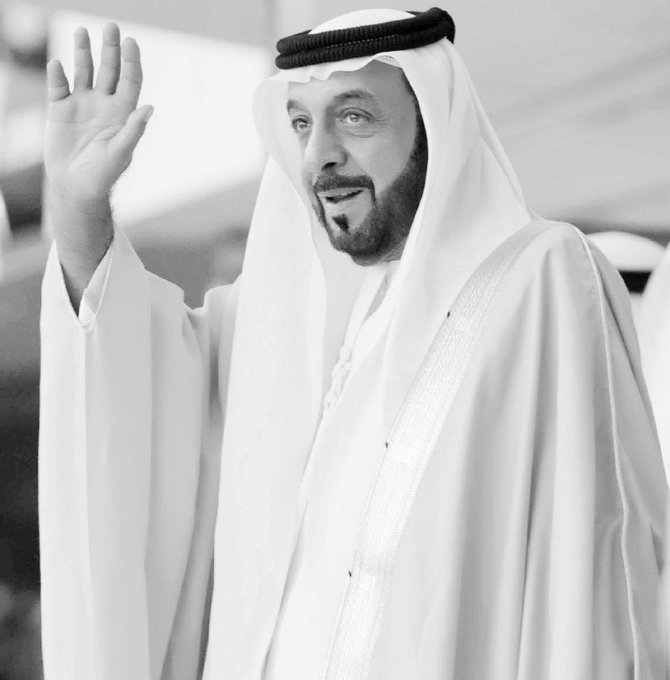
President Khalifa bin Zayed passed away on Friday, May 13th, 2022
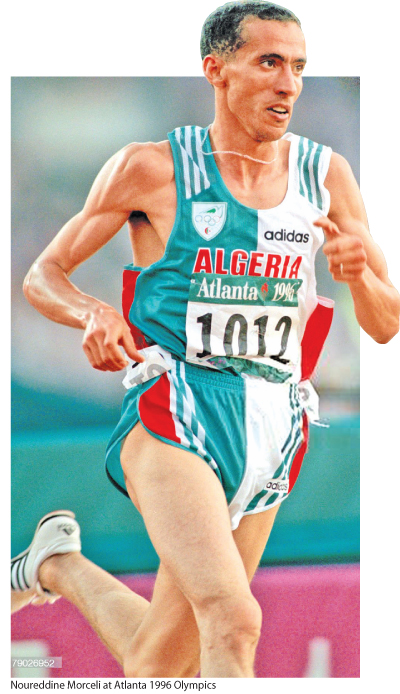
Noureddine Morceli is an Algerian middle-distance runner and a gold medalist in the 1500 metres at the Atlanta 1996 Summer Olympic Games. He won three straight gold medals at that distance at the World Championships. He also set world records in the 1500m, mile and the 3000 metres in the 1990s.
Morceli was twice the gold medalist in the mile at the 1994 and 1998 Goodwill Games, the Arab champion in the 1500m in 1988, the Millrose Games champion in the mile in 1992 and 1993, the 1500m winner at the 1994 IAAF World Cup, and the overall champion in the 1994 IAAF Grand Prix series. Besides, he was Algerian national champion in the 1500m in 1989.
In international competitions, middle-distance events include the 800 metres, the 1500 metres and the 3000 metres. In English-speaking countries, until the second half of the 20th century, the 880 yards and the mile were run as the equivalents of the 800 metres and the 1500 metres.
An early favourite among middle-distance races was the mile, which in the first half of the 20th century was run in times exceeding four minutes. Breaking the “four-minute barrier” was considered unlikely.
On May 6, 1954, however, the 25-year Roger Bannister of Great Britain set a record of 3:59.4 in a dual meet at Oxford. With increasingly controlled climatic and surface conditions and increasingly accurate timing devices, however, the record was lowered many times thereafter.
Birth and Career
Born on February 28, 1970 in Tenes, Noureddine Morceli attended Riverside Community College in Riverside, California, throughout his career, in winter, he would return there to enjoy the mild climate and train.
At the age of seven Morceli was inspired by his brother Abderrahmane, a world-class runner who finished fourth in the 1500 metres in the 1977 World Cup and represented Algeria at Moscow 1980 and at Los Angeles 1984Summer Olympic Games. Later, his brother would become Morceli’s coach.
In the early 1980s, Morceli came to idolize Said Aouita, a Moroccan who won the gold in the 5000 metres in the 1984 Summer Olympic Games. By age 17, Morceli had taken second place in the 1500 metres in the World Junior Championships.
Morceli rose to athletic prominence after winning the silver medal in the 1500m at the 1988 World Junior Championships in Sudbury, Canada, clocking 3:46.93. A year later, he enrolled at Riverside Community College in California, renowned for its coaching and track facilities. He spent two years there, at the end of which he had run the world’s fastest 1500 metres for 1990.
At the age of 20, he was ranked first in the world in the 1500 metres. In 1990, he moved up to senior class and set the season’s best mark of 3:37.87 in 1500m. He continued this dominance into 1991, when he broke the world indoor record for 1500m at Seville, Spain on February 28, setting a new mark of 3:34.16. Only nine days later, on the same track, he won the 1500m title at the 1991 World Indoor Championships with a time of 3:41.57.
Throughout the outdoor season 1991, Morceli remained undefeated over 1500m. At several Grand Prix meetings, he ran times around 3:31. At the World Championships in Tokyo, Japan, Morceli was already a clear favourite for the 1500m and he won the gold easily setting a new World Championships record of 3:32.84.
In the beginning of 1992, Morceli ran a new 1000m indoor world record of 2:15.26. There seemed to be no greater certainty for a gold medal at the Olympic Games in Barcelona later that year than Morceli. But prior to the Olympic Games Morceli lost unexpectedly to Gennaro di Napoli in Rome and David Kibet in Oslo. There were signs that he was not in the same shape as the year before.
However, in the Olympic semi-final he looked strong. The Olympic final was run at a woefully slow pace, with the field passing through the 800m mark in a slower time than in the women’s final. That was not the sort of pace to which Morceli had become accustomed, or that he was comfortable with, and when the frantic sprint for home began, he found himself unable to respond, eventually finishing a disappointing seventh clocking 3:41.70.
However, after just three days Morceli set a world season’s best in Monaco and a week later he broke his personal best to win in Zurich in 3:30.76. In September 1992, Morceli set a new 1500m world record of 3:28.86 in Rieti.
In 1993, Morceli narrowly missed his own world record when he won the Mediterranean Games in Narbonne in 3:29.20. By that time Morceli had set himself a new aim: to break Steve Cram’s eight-year-old record over the Mile. In Monaco, he narrowly missed the 3000m world record. There was even talk that he might skip the World Championships in order to concentrate fully on the world-record hunt. However, in the end he decided to take part.
At the 1993 World Championships in Stuttgart, Germany, the final of 1500m started at a relatively slow pace, but Morceli was always in complete control, sprinting away in the last lap to win easily and retain his world title with a time of 3:34.24. In the following weeks, he failed twice to set a new world record over the Mile in Berlin and Brussels. But just two days after the race in Brussels he astonished everyone by crushing the record with a time of 3:44.39.
In 1994, he set the new 3000m world record, clocking 7:25.11. He also experimented successfully with the 5000m. In Zurich, he out-sprinted the rest of the field to take the victory and also won the 5000m in Rieti, Italy. Morceli broke the 2000m world record in the following season, setting a new mark of 4:47.88.
Nine days later Morceli set the last world record of his magnificent career, when he lowered his own 1500m record to 3:27.37 in Nice. Only a few days after this he almost broke the record again when he triumphed in 3:27.52 in Monaco. He easily defended the 1500 m World Champion title in Gothenburg. Shortly after, Morceli tried to improve on his Mile record in Zurich but did not succeed.
World Records
Standing 172 cm and weighing 60 kg, he added the outdoor world record for the 1500 metres in 1992, the mile in 1993, and the 3000 metres in 1994. By the end of 1994, the Algerian track star’s accomplishments had reached even greater proportions. In August, after breaking the outdoor world record for 3,000 metres (7:25.11), he could claim five middle-distance world records, which also included (outdoor) the 1500 metres (3:28.86) and the mile (3:44.39) and (indoor) the 1,000 metres (2:15.26) and the 1500 metres (3:34.16).
Morceli was named Athlete of the Year by Track & Field News in 1993 and 1994 and by the International Athletic Foundation in 1994. In that two-year period, he lost only once, at 800 metres. As he set his sights on more records, most notably the 800-metre, 2000-metre, and 5000-metre events, his driving force was a deeply rooted dedication to bring glory to his country. A devout Muslim, during the sacred holy days of Ramadan he would fast from sunrise to sunset despite the rigours of training.
As Morceli looked forward to the 1995 season, sportswriters unabashedly proclaimed him the greatest runner in the world or even the greatest of all time. Perhaps his spirit was best exemplified by his winning performance in the 1994 Grand Prix. Racked with flu, weakened and hacking, he not only ran but left the field behind at the finish.
Morceli was soon tested by a new challenger, Moroccan Hicham El Guerrouj. Morceli bested El Guerrouj in the 1500 metres at the 1995 outdoor World Championships clocking 3:33.73; however, the 1500metres race at the 1996 Olympic Games in Atlanta the following year was considered one of the most dramatic contests in athletics history.
Morceli and El Guerrouj led the field with 400 metres to go when the young Moroccan tripped on his rival’s heel and fell to the ground, allowing Morceli to capture the gold medal in that event. At the Grand Prix final in Milan later that year, however, Morceli lost the 1500metres event for the first time in years to El Guerrouj. Morceli competed in subsequent events, including the 2000 Games in Sydney 2000 Olympic Games, before his eventual retirement.
Atlanta 1996 Summer Olympics
At the start of the 1996 season, Morceli set a world season’s best of 3:29.50. However, a new and serious opponent suddenly appeared on the scene, when Hicham El Guerrouj won in Hengelo in a time of 3:29.51.
The 1500m at 1996 Olympics was the 23rd appearance of the event and one of 12 athletics events to have been held at every Summer Olympics. All three medalists of the previous edition, Fermín Cacho of Spain, Rachid El Basir of Morocco, and Mohamed Suleiman of Qatar returned, along with seventh-place finisher Noureddine Morceli of Algeria and ninth-place finisher Graham Hood of Canada. Morceli had been favored in Barcelona, and was again a favorite in Atlanta; he had won the last three world championships and broken the world record twice.
Hicham El Guerrouj of Morocco was a rising star expected to challenge Morceli; he had come in second at the 1995 World Championships and would go on to win the next four and break the world record himself. Venuste Niyongabo of Burundi would have been another contender but chose not to enter in order to focus on the 5000 metres.
Burundi, Dominica, the Maldives, the Solomon Islands, and Ukraine each made their first appearance in the event. The United States made its 22nd appearance, most among all nations, having missed only the boycotted 1980 Games.
The competition was again three rounds (used previously in 1952 and since 1964). The “fastest loser” system introduced in 1964 was used for both the first round and semifinals. The 12-man semifinals and finals introduced in 1984 and used again in 1992 were followed.
There were five heats in the first round, each with 11 or 12 runners. The top four runners in each heat, along with the next four fastest overall, advanced to the semifinals. The 24 semifinalists were divided into two semifinals, each with 12 runners. The top five men in each semifinal, plus the next two fastest overall, advanced to the 12-man final.
At the time men’s 1500 metres took place at the 1996 Summer Olympic Games in Atlanta, Georgia, the standing world record was 3:27.37, established at Nice, France on July 12, 1995 by Noureddine Morceli. The Summer Olympic Games record belonged to Sebastian Coe of the Great Britain at 3:32.53 established in Los Angeles, United States on August 11, 1984.
There were 57 competitors from 37 nations. The maximum number of athletes per nation had been set at 3 since the 1930 Olympic Congress. The event took place on July 29, 31 and August 3. The event was won by Noureddine Morceli of Algeria. Fermín Cacho of Spain was unable to repeat as gold medalist, but took silver to become the fourth man to win two medals in the event.
At the 1996 Summer Olympic Games, Morceli was under enormous pressure. The final was run at an average pace when his main rival, Hicham El Guerrouj, fell down on the final lap. Morceli accelerated and crossed the line first ahead of the defending Olympic champion, Fermín Cacho.
Morceli had dominated the 1500 metres for five years, holding the world record and winning the previous three world championships. But Hicham El Guerrouj, from neighboring Morocco was the rising star, who had chased Morceli in the most recent world championships. This was expected to be the match race. While Morceli had led the semi-finals in close to Olympic Games record time, the final race was much slower and entirely strategic.
Approaching the bell at the end of the third lap, Morceli had moved into the lead with El Guerrouj sprinting up to his shoulder. Morceli held him off with El Guerrouj having to concede position and move in behind Morceli squeezing in front of defending champion, master tactician Fermin Cacho who was perfectly positioned directly behind Morceli. Two strides later, El Guerrouj tripped and fell.
Morceli took off sprinting at the same moment the rest of the field had to evade El Guerrouj’s body on the track. Cacho was forced to leap over the fallen El Guerrouj, almost stepping on him. Next in line Abdi Bile had to jump off the track to the infield. Morceli opened up 2 metres in the process, which he widened to 5 metres down the backstretch.
Cacho and Bile held that gap onto the final straight. Bile faded while Cacho held on until he could see it was futile to catch Morceli, jogging in for silver. Stephen Kipkorir led two other Kenyan teammates around Bile to take bronze. After quickly staggering to his feet, El Guerrouj chased the field but shocked and disheartened, he was unable to catch anybody.
At the end of 1996, Morceli suffered his first 1500m defeat in four years at the hands of El Guerrouj in Milan. In the 1997 World Championships at Athens, Morceli was fourth in 1500m with a time of 3:37.37 and in 1999 at Seville, he qualified for his fifth straight 1500m final at a World Championships, where he dropped out at the bell while well out of medal contention. Morceli’s last appearance at a major international championship was at the 2000 Olympic Games in Sydney where he could manage only the 24th position with a time of 4:00.78.
Ambassador of Sport
His Personal Best performances: 800 metres – 1:44.79; 1500 metres – 3:27.37 at Nice, France on July 12, 1995; Mile – 3:44.39 at Rieti, Italy on September 6, 1993; 3000 metres – 7:25.11 at Monte Carlo, Monaco on August 2, 1994; 5000 metres – 13:03.85.
In January 2020, he was appointed Secretary of State for Elite Sport, reporting to the Minister of Youth and Sports in the new government chosen by Algerian President Abdelmadjid Tebboune after the presidential election of December 2019. Morceli has no political affiliation to any party in Algeria and was chosen as an independent member in the first Djerad government.
Currently, Morceli serves as an ambassador of the sport by assisting with the International Olympic Commission, the African Games, as well as assisting the development of young track and field athletes in Algeria.
(The author is an Associate Professor, International Scholar, winner of Presidential Awards and multiple National Accolades for Academic pursuits. He possesses a PhD, MPhil and double MSc. His email is shemal1216@gmail.com)