Arabs & Arabian Records Aggregator. Chronicler. Milestones of the 25 Countries of the Arabic Speaking World (official / co-official). AGCC. MENA. Global. Ist's to Top 10's. Records. Read & Enjoy./ www.arabianrecords.org
Technology and artificial intelligence were the most popular of the four tracks, attracting 168 entries, followed by healthcare with 144.
More than 400 applicants have joined the fourth Hajjathon, an innovation initiative aimed at developing practical solutions to improve services for Hajj and Umrah pilgrims and visitors.
The first stage of Hajjathon, held as part of the 26th Scientific Forum for Hajj, Umrah and Visit Research, attracted 405 applicants, including 304 women and 101 men.
Technology and artificial intelligence were the most popular of the four tracks, attracting 168 entries, followed by healthcare with 144.
The awareness and crowd management track received 69 entries, while engineering and infrastructure recorded 24.
Wadi Makkah Technology Co., the investment arm of Umm Al-Qura University, is participating as the forum’s innovation sponsor.
The company said its involvement aims to support the development of creative ideas into scalable projects and solutions that can strengthen the Hajj and Umrah services ecosystem and improve the experience of pilgrims and visitors.
It is also seeking to promote the use of emerging technologies and AI in developing services, in line with Saudi Arabia’s efforts to build a knowledge- and innovation-based economy.
The forum will be organized by Umm Al-Qura University through the Custodian of the Two Holy Mosques Institute for Hajj and Umrah Research on Sept. 2 and 3 under the theme “Excellence and Integration in the Hajj and Umrah Services Ecosystem.”
Mentoring sessions for Hajjathon began on Aug. 18 as part of the initiative’s second stage.
The sessions were designed to help participants refine their ideas, better understand challenges within their respective tracks and develop solutions using scientific and innovative approaches.
Participants also received technical and specialist guidance, aimed at helping them develop projects that can improve service quality, raise operational efficiency and enhance the overall experience of pilgrims and visitors.
The mentoring stage is also intended to strengthen links between academic expertise and operational needs by moving promising ideas closer to practical implementation.
Organizers said Hajjathon serves as a platform to attract creative talent and encourage participants to develop solutions to challenges linked to Hajj, Umrah and visits, the Saudi Press Agency reported.
The initiative supports research, development and innovation while contributing to efforts to improve services for pilgrims and visitors in line with Saudi Vision 2030 and the Pilgrim Experience Program.
source/content: arabnews.com (headline edited)
_____________
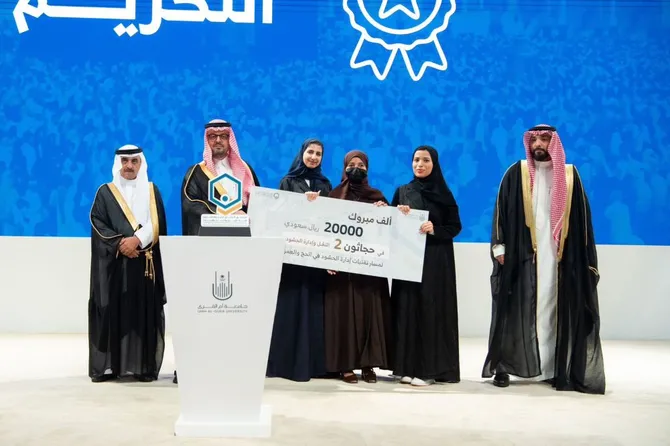
Shaheen project by female Students from King Abdulaziz University’s College of Computing and Information Technology wins first place in the Hajj and Umrah Transport Management Technologies Track at the second “Hajjathon” Challenge in 2024. (X: @kauedu_sa)
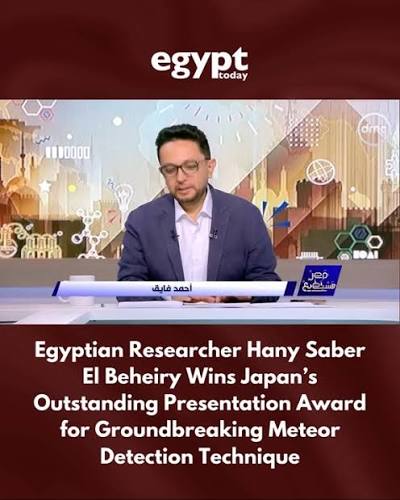
Egyptian researcher Hany Saber El Beheiry, a PhD student at Kochi University of Technology in Japan, has achieved a remarkable international scientific milestone by winning the Outstanding Presentation Award at Japan’s largest Earth sciences conference, outperforming more than 1,000 researchers from around the world.
El Beheiry successfully developed a highly precise technique for detecting meteors and fireballs that could pose a threat to Earth. The Egyptian researcher explained that his study is based on analyzing infrasound waves generated when meteoroids penetrate the Earth’s atmosphere and integrating them with seismic waves recorded by ground-based monitoring stations.
Speaking via Zoom on the television program Masr Tastate (Egypt Can), hosted by Ahmed Fayek on DMC TV, El Beheiry explained that infrasound waves are an exceptionally powerful monitoring tool. Because they propagate through the atmosphere at very low frequencies, they can travel thousands of kilometers without significant attenuation.
He added, “The new technique outperforms conventional cameras and optical observation systems, which often fail to detect meteors during daylight hours. By relying on acoustic monitoring, our method enables accurate, around-the-clock detection both day and night making it a more powerful and effective tool for tracking these violent cosmic phenomena, which can illuminate the night sky for only a few seconds while causing measurable geological effects.”
Reflecting on his award-winning achievement, El Beheiry noted that the conference attracted more than 9,000 participants, with approximately 1,000 researchers competing for the award. He emphasized that the prize is not awarded solely for presentation skills but is based on a comprehensive evaluation conducted by an international panel of judges. The assessment considers several rigorous criteria, including the scientific significance of the research, the accuracy and consistency of the results, the quality of the presentation, and the ability to answer complex scientific questions with clarity and rigor.
Despite the conference’s international nature and the participation of researchers from around the world, El Beheiry explained that the strongest competition came from researchers in East Asia particularly Japan and China given that the conference was held in Tokyo. Nevertheless, the Egyptian researcher won the award in his category, demonstrating the excellence of Egyptian scientists on the international stage while contributing a more advanced early-warning tool to help protect humanity against potential extraterrestrial hazards.
El Beheiry spoke about his scientific journey, the challenges he faced, and the secret behind the success of Egyptian researchers abroad.
El Beheiry, who works as an assistant researcher at the National Research Institute of Astronomy and Geophysics and is a graduate of the Faculty of Science at Mansoura University, expressed his deep pride in his affiliation with Egypt’s scientific institutions. He emphasized that Egyptian researchers who pursue their studies abroad discover the strength of their scientific capabilities and academic foundations, which enables them to compete strongly for prestigious international awards.
The researcher credited his success to professors at Egyptian universities and research institutes, describing the National Research Institute of Astronomy and Geophysics as “a great scientific institution that is home to outstanding professors.” He also pointed out that many of his colleagues have won prestigious international awards thanks to the solid academic foundation they received in Egypt.
Discussing the challenges of living and studying in Japan, El Beheiry explained that having previously earned his master’s degree in Japan and having lived there for more than three years made it easier for him to adapt to the culture. Nevertheless, he acknowledged the initial difficulties he faced, particularly the long and demanding working hours. He said he eventually adapted to the strict work environment and became capable of working and achieving results under different pressures and circumstances.
El Beheiry also highlighted the absence of the “fatherly and family-like” relationship between professors and students that is characteristic of Egypt. He explained that his Japanese supervisor, Professor Yamamoto, provides him with tremendous scientific and practical support and guides him as a “great mentor,” whom he considers a father figure, but “within the framework of work only.”
The researcher added that the Japanese work environment is characterized by fewer personal emotions and a strong emphasis on professionalism, with communication largely limited to the workplace and no meetings or social relationships outside it, reflecting the principle of “work is work.”
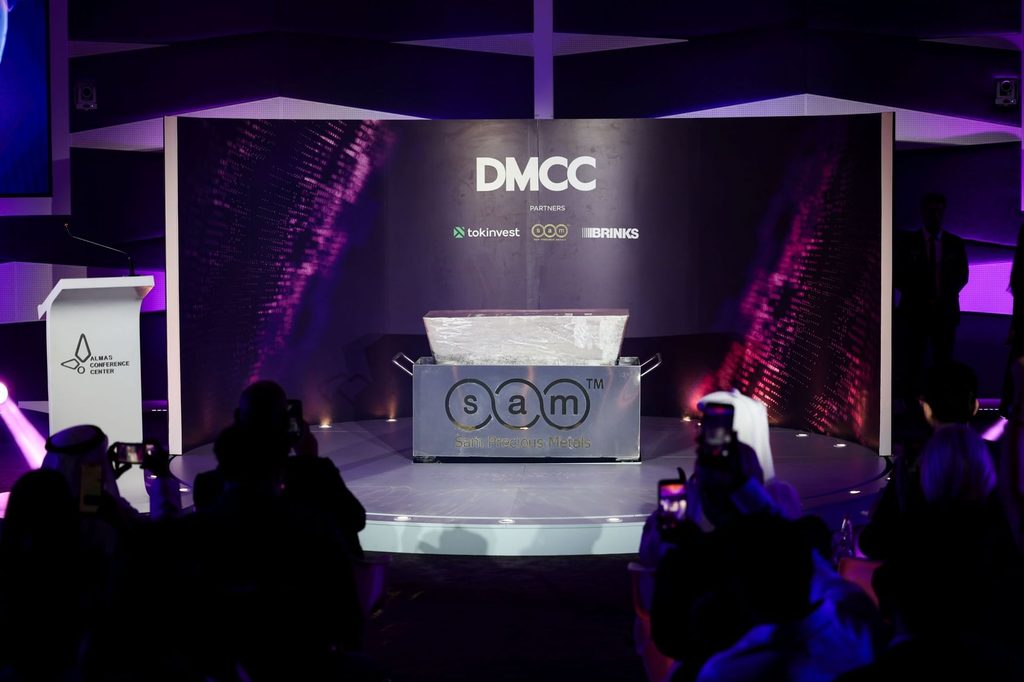
DMCC has launched the world’s largest silver bar as the first tokenised commodity asset under the DMCC-VARA tokenisation framework, enabling eligible investors to acquire fractional digital interests linked to the 1,971kg Guinness World Record asset.
Tokinvest, a Dubai-based platform regulated by the Virtual Assets Regulatory Authority (VARA), will issue the interests as an Asset-Referenced Virtual Asset (ARVA), with tokens deployed on BNB Chain. Regulated secondary-market trading is scheduled to follow the initial issuance, subject to applicable regulatory and platform requirements.
The launch fulfils plans announced at the Dubai Precious Metals Conference in November 2025, where the bar was unveiled following recognition by Guinness World Records. Manufactured in the UAE by SAM Precious Metals from 99.9 percent pure silver, it commemorates 1971, the country’s founding year.
The bar is registered and verified through DMCC Tradeflow, which records possession and ownership of commodities stored in UAE-based facilities, and is securely held by Brink’s. Tokinvest will manage the regulated issuance, distribution and subsequent secondary-market trading of the digital interests.
Ahmed Bin Sulayem, Executive Chairman and Chief Executive Officer of DMCC, said, “This launch demonstrates Dubai’s ability to connect established commodities infrastructure with digital technology and specialist expertise.”
He added that DMCC’s work with VARA and industry partners creates practical routes for physical assets to enter the digital economy while retaining a clear connection to the underlying commodity.
Paul Boots, Senior Director and Head of Sector Development at VARA, said, “The Silver Bar ARVA marks an important milestone as the first tokenised commodity asset issued under the DMCC-VARA framework.”
He said the project combines commodities infrastructure, regulated issuance, institutional custody and blockchain technology to turn tokenisation into an investable product.
Scott Thiel, Co-Founder and CEO of Tokinvest, said eligible investors, including retail investors, could access the Silver Bar ARVA through the platform from 7th September, with secondary-market trading expected after issuance.
He said tokenisation broadens access to fractional interests in a unique physical asset, supported by Dubai’s regulatory framework.
Sami Abu Ahmad, Principal CEO of SAM Precious Metals, said the bar reflects the strength of the UAE’s precious metals industry and the significance of 1971. Its tokenisation demonstrates how established infrastructure can support new investment and ownership models, he added.
Nader Antar, Executive Vice President and President of Brink’s Rest of World and Brink’s Global Services (BGS), highlighted the role of secure transportation, vault storage and ongoing custody in protecting the physical asset and supporting confidence in tokenisation.
The launch forms part of DMCC’s strategy to connect commodities, capital and technology. Its business district hosts more than 1,500 gold and precious metals companies, supported by trading, storage, finance and ownership registration services.
The DMCC Tech ecosystem includes more than 4,000 companies, with over 750 members at the DMCC Crypto Centre. These activities are complemented by DMCC FinX, which is developing opportunities in digital trade, tokenised real-world assets and trade finance.
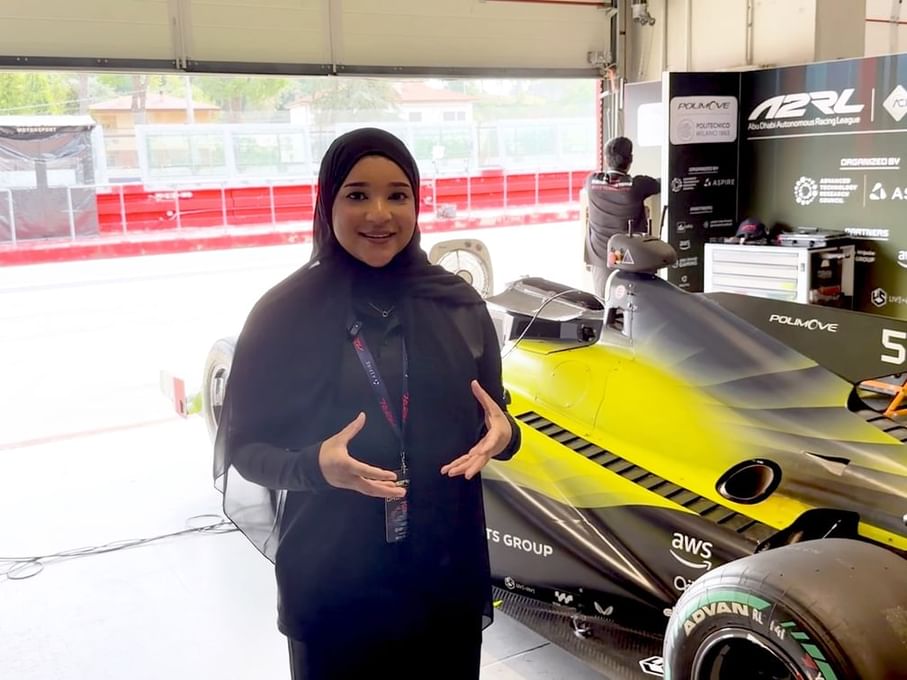
Emirati race car mechanic Amna Almarzooqi is taking part as a member of the technical team of the Abu Dhabi Autonomous Racing League (A2RL), which is operated by ASPIRE under the Advanced Technology Research Council, as the championship holds its third edition at Italy’s renowned Imola circuit on Saturday.
Almarzooqi, the only Emirati on the technical team, said her responsibilities focus on the mechanical and technical aspects of the race cars, including preparing them for testing and competition, carrying out inspections and maintenance, and handling technical requirements that arise during track operations with speed and efficiency.
She told the Emirates News Agency (WAM) during preparations for the race, “I am proud of what I am doing in service of my country and of being part of the team taking part internationally outside Abu Dhabi for the first time. I aim to apply my engineering skills to maintaining and developing autonomous Super Formula race cars.”
Almarzooqi added that her role also includes managing and preparing all spare parts and components, overseeing inventory, and ensuring that the required parts and equipment are ready for use during testing and events.
She also works to ensure that all cars are fully prepared and maintained to the highest possible level of uniformity, so that the real challenge remains focused on software and artificial intelligence applications.
Speaking about her career, Almarzooqi said she began after graduating from the Higher Colleges of Technology with a degree in aeronautical engineering, before her passion for advanced technology led her to join ASPIRE and work on racing and Formula projects.
She said she joined A2RL around a year and a half ago, initially working as a car mechanic before her responsibilities expanded to include managing workshop components and spare parts and preparing all components required for use in the cars.
On the main challenges she faces, Almarzooqi said the fast-paced working environment requires a high degree of flexibility and an ability to adapt to changing circumstances, whether related to the cars or track conditions.
She said taking a project that began in the UAE to Italy represents an important milestone reflecting the success of the Emirati experience.
“I am proud to be part of a team that helps showcase what Abu Dhabi is doing to the world,” she said.
Almarzooqi added that A2RL began in Abu Dhabi and aspires to expand to more international circuits.
“Our goal is to take what we are doing in Abu Dhabi to the world, highlight how Abu Dhabi invests in research and advanced technology, and consolidate its position as a source of innovation in this field,” she concluded.
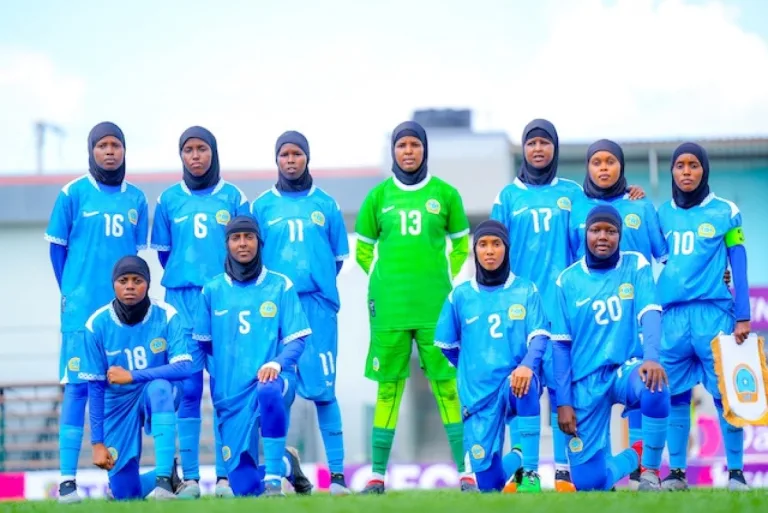
Somalia’s football story this week has extended beyond the headlines surrounding World Cup refereeing to a landmark moment for the country’s women’s game.
While attention has focused on Somali referee Omar Artan and reports that he was unable to travel to the United States to officiate at a FIFA tournament — a missed opportunity that would have marked a first World Cup finals involvement for Somalia — the country’s women’s Under-17 team has quietly made history of its own.
Competing at the CECAFA Women’s U-17 Championship in Dar es Salaam, Tanzania, Somalia fielded its first-ever women’s team in an international football competition.
Although the side exited at the group stage, their final match delivered a series of milestones that marked a significant moment for football development in the country.
Somalia recorded the biggest victory in the nation’s football history with an 8–2 win over Sudan and celebrated the first international hat-trick scored by a Somali player in a debut tournament appearance.
Sundus Mohamed scored twice, including Somalia’s first-ever goal in women’s international tournament football, while Najmo Mohamed claimed a hat-trick. Captain Halimo Isse, Maryan Osoble and Hibo Salad also found the net.
Shortly after the match, Somali Football Federation president Ali Abdi Mohamed called the squad to congratulate the players and coaching staff.
“You did well and I was sure you can,” he told the team, while praising captain Halimo Isse for her leadership throughout the tournament.
Reflecting on the wider significance of the team’s debut, Mohamed described the performance as an encouraging sign for the future of women’s football in Somalia.
“Somalia is a developing nation recovering from decades of civil war and we are very new to the women’s football environment, but we are improving,” he said.
“If our first international appearance was such a positive experience, I am sure we are developing and we will do much better in the months and years to come.”
Mohamed also acknowledged support from international football bodies.
“I would like to thank FIFA and CAF for their constant financial assistance, education and guidance. Without them we could not have achieved such progress,” he said.
He added that the federation plans to continue investing in the women’s game.
“We have spent significant time, money and energy on women’s football and I am fully committed to increasing our investment. Our women and girls are doing an excellent job and I am very proud of them.”
Somalia’s participation in the tournament has extended beyond the playing squad. Two Somali female match officials — referee Fadumo Mohamed Nor and assistant referee Iqara Ali Ahmed — remain in Tanzania after continuing to receive appointments during the competition.
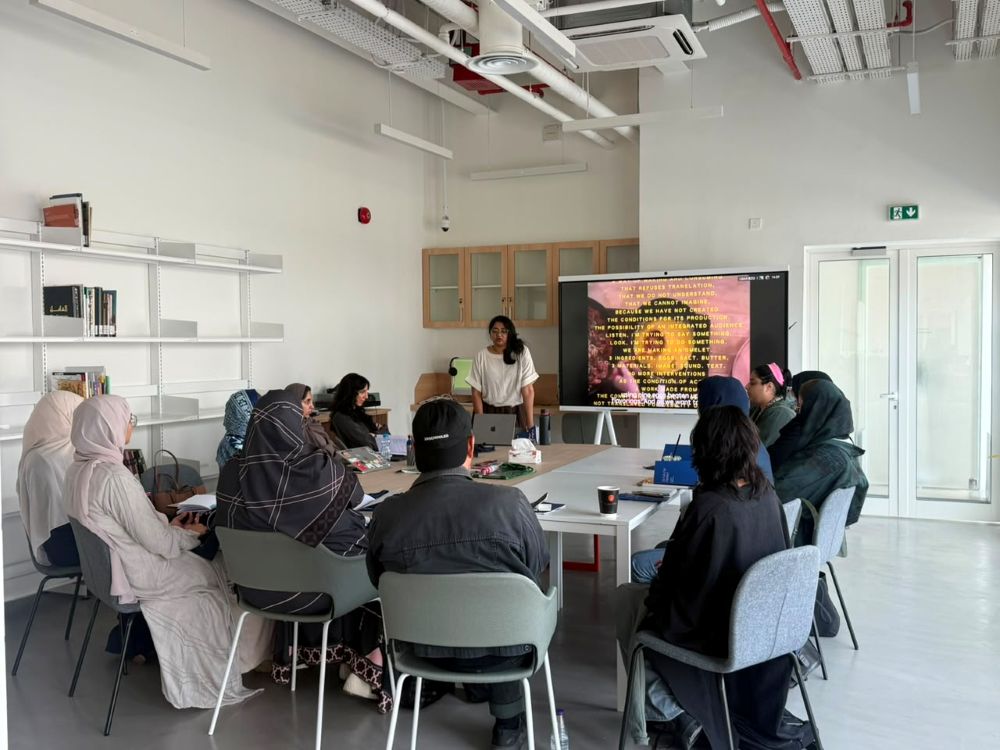
The Task of the Translator Research Lab, developed and facilitated by artist and editor Sarasija Subramanian, runs until Aug. 30
Brings participants together for collective reading, watching and listening sessions, alongside exercises exploring language, accessibility, subjectivity and the idea of the original
A research lab at Jameel Library is inviting people to take a broader view of translation — as a way of moving between languages, images, sounds, experiences and different forms of knowledge.
The Task of the Translator Research Lab, developed and facilitated by artist and editor Sarasija Subramanian, runs until Aug. 30. It brings participants together for collective reading, watching and listening sessions, alongside exercises exploring language, accessibility, subjectivity and the idea of the “original.”
“The starting point for us was the idea of translation as something much bigger than moving from one language to another,” said Khaled Al-Qahtani, library and research coordinator at Jameel Library.
“We are constantly translating between languages, but also between images and words, between what we see and what someone else might experience, between different ways of knowing and understanding.”
The week-long program explores what happens when an image is described for someone who cannot see it, when sound is translated into words, or when an experience is communicated through another form.
Al-Qahtani said: “We wanted the lab to create a space where we could slow down and actually examine those processes. What happens when you describe an image for someone who cannot see it? What happens when you translate sound into words, or an experience into another form? What is gained, what is lost, and what kinds of new meanings can emerge?”
For Subramanian, the project comes from her interest in “expanded translation,” a concept that considers movement between mediums as translation.
“The lab comes from my own interest as an artist and editor in the field of expanded translation, where translation is not only about moving from one language to another, but also thinking of information and ideas moving from one medium to another,” she said.
Subramanian works with drawing and tracing as forms of translating images, while her publishing house, Reliable Copy, works with artists to translate their ideas and research into books.
“The primary drive of the lab is to be able to consider these kinds of shifts between mediums as translation, and consequently to question translation’s need to be faithful to the ‘original’, and to rethink the mandate that we must be objective and impersonal during the process,” she said.
The lab also examines accessibility through tools including alt-text, audio descriptions and closed captions.
Subramanian said such tools were often viewed as additional accommodations for visually impaired audiences but could also encourage people with sight to look more closely.
“When we write alt-text for a painting, or audio-descriptions for a film, we see the image or the video through a very different point of view, which reveals to us details and nuances that we would otherwise overlook,” she said.
She compared translating an image to translating a text from English into Arabic, where every word, punctuation mark and piece of context must be considered.
“It is the same with an image, or a video,” she said, adding: “As such, the lab as a whole is to look at material we encounter on a daily basis closely, and rethink the ways in which we communicate and share.”
Subramanian said this approach also challenges the idea of a single, fixed interpretation, allowing different perspectives to become part of the process: “The question then, or the task, is to be able to use these subjectivities as a tool and an aid, instead of seeing them as inherently wrong.”
For Al-Qahtani, Jameel Library was a natural setting for the project because libraries already bring together different languages, histories and forms of knowledge.
“Libraries are already spaces of translation in a way,” he said.
The project, he added, sought to make the library more than a place for presenting research, turning it into a space where research could unfold collectively through experimentation, conversation and making.
Accessibility also requires cultural institutions to question assumptions about how audiences are expected to look, listen, read or participate.
“We often design cultural experiences around an assumed audience and an assumed way of looking, listening, reading or participating,” Al-Qahtani said. “Accessibility asks us to question those assumptions.
“For me, accessibility is not something that should come at the end of a process, as an additional service or adjustment. It can actually change the way we think about the work from the beginning.”
Guest lecturer Sara H. Hammami, a librarian, book artist and poet, sees translation as closely connected to culture and human connection.
She said translation could create movement toward understanding, curiosity and respect, but that this required openness from everyone in a multilingual environment.
“In any multilingual space this requires a curiosity regardless of the language one is starting in/moving towards it must be reciprocated by everybody for the kind of fluidity and warmth that can be brought forward from a space of translation,” she said.
Her work across libraries and translation has also shaped her view of accessibility. Cultural institutions, she said, have a responsibility to make audiences feel welcome: “The more people are given the opportunity and chance to attend and participate in these conversations and spaces, the stronger and more imaginative we become as a cultural landscape,” Hammami said.
In Saudi Arabia, she sees language equity as an important starting point.
“I feel language equity in a multilingual space is one of the first and most accessible ways to start building accessibility for our public,” she said. “I wonder what it might do for us and our language if we were to enter more cultural landscapes and find materials not only in Arabic, English, or French, but also in Tagalog, Urdu, or Bengali. I imagine a future in which everyone feels invited to these spaces and moments.”
Artist Park McArthur also approaches translation through questions of access, language and power.
“Translation and access could be shared phenomenon known by different names,” McArthur said, adding that stories and ideas move between languages through translation, whether through curiosity or other forces: “The power dynamics of language and access make something like force hard to pin down, actually. Power is an element of language and access.”
McArthur said language also extends beyond the linguistic.
“Artistic traditions and experimentation teach me that language is linguistic, while it is also a way of doing things, a means of gathering, a ritual, a performance,” she said.
She wants audiences to reconsider the traditional relationship between an original work and its translation. She also argued that the original also depends on translation for its circulation and continued use.
“We are perhaps more accustomed to approaching the act of translation as ‘dependent upon’ an originary text. An originary text is dependent upon versioning and translation for its circulation, its use, for its ongoing care,” she said.
Her own contribution to the program illustrates that relationship. An artistic experiment describing a day at the beach as a space for gathering was translated from English into Arabic by Al-Qahtani.
“Khaled’s translation, which I have no linguistic access to, extends this gathering, this day at the beach, which I dream of,” McArthur said.
While the lab is designed for participants who responded to the open call, its wider public programming opens the conversation to a broader audience.
source/content: arabnews.com (headline edited)
______________
A research lab at Jameel Library is inviting people to take a broader view of translation — as a way of moving between languages, images, sounds, experiences and different forms of knowledge. (Supplied)
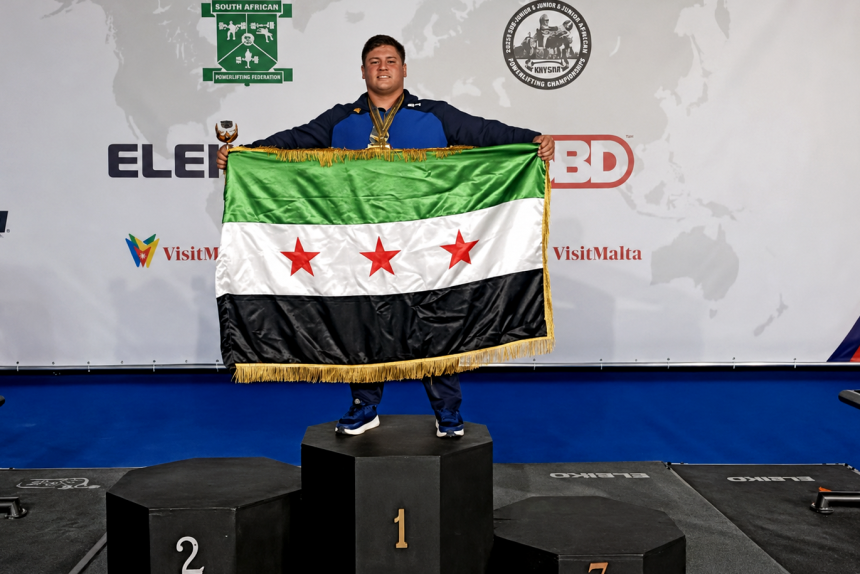
Mohamed Safwamar began powerlifting at the age of 12. Seven years later, the Syrian athlete has built a career spanning national, Arab and regional titles, capped by four gold medals at the World Championships in South Africa.
The 19-year-old’s rise has been marked by steady progress through successive competitions, with each event providing an opportunity to improve his performance and lifting totals.
“I started powerlifting when I was 12 and have worked over the past several years to improve my performance and establish a strong presence in competitions,” Safwamar told SANA.
His early success came at home, where he won the Syrian championship and claimed the Syrian Champion of Champions title in the men’s category three times.
Safwamar then moved onto the regional stage, winning the Arab Championship, the West Asian Championship and the West Asian Champion of Champions title.
His career reached a new milestone at the World Championships in South Africa, where he competed in the over-120 kg category and swept four gold medals in the squat, bench press, deadlift and overall total.
“It is an achievement I am proud of, and it gives me additional motivation to continue training and improving my performance,” he said.
Safwamar has been ranked Syria’s top powerlifter by the Syrian Arab Powerlifting Federation and was crowned a world champion in 2026.
Despite his growing medal collection, Safwamar is already looking to the next stage of his career. He aims to break world records and win the world championship title in the men’s category, goals he says will require sustained training as well as greater support and sponsorship.
The Syrian Powerlifting Federation is looking to Safwamar as one of its leading prospects for further success on the international stage.
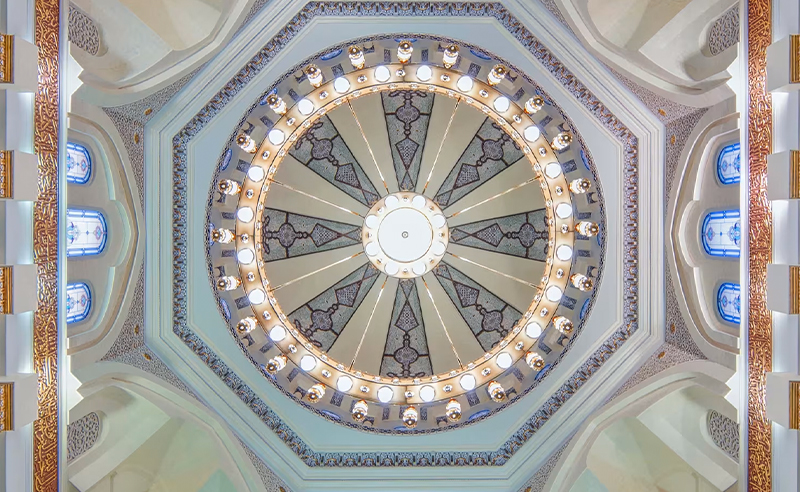
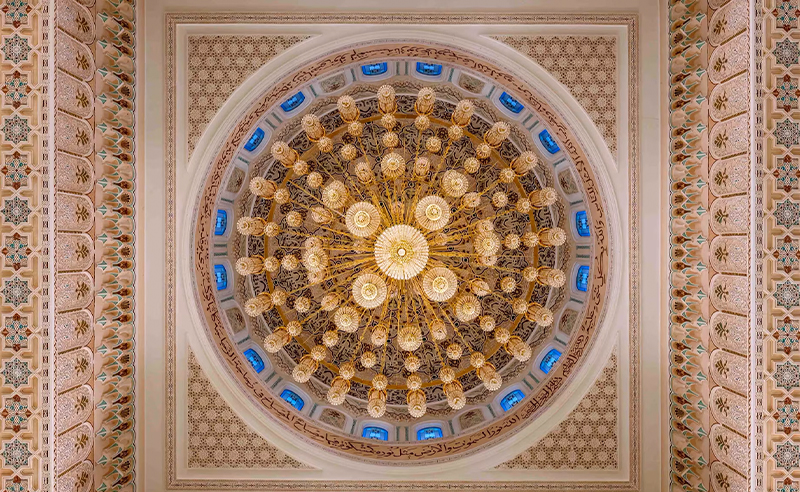
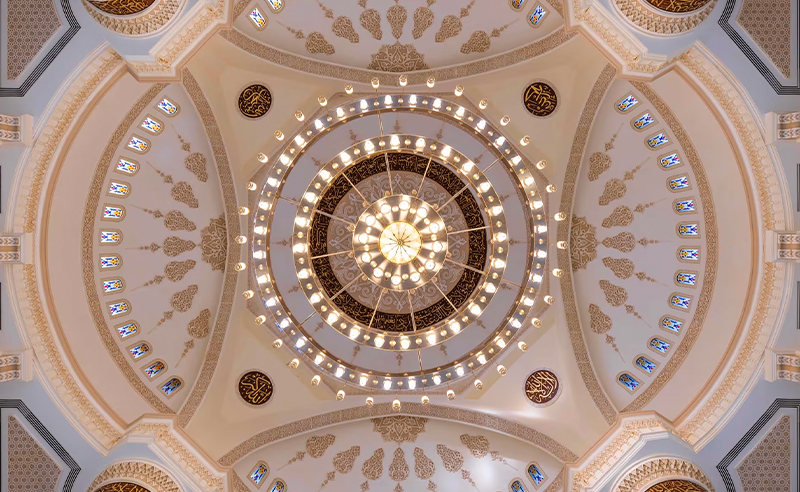
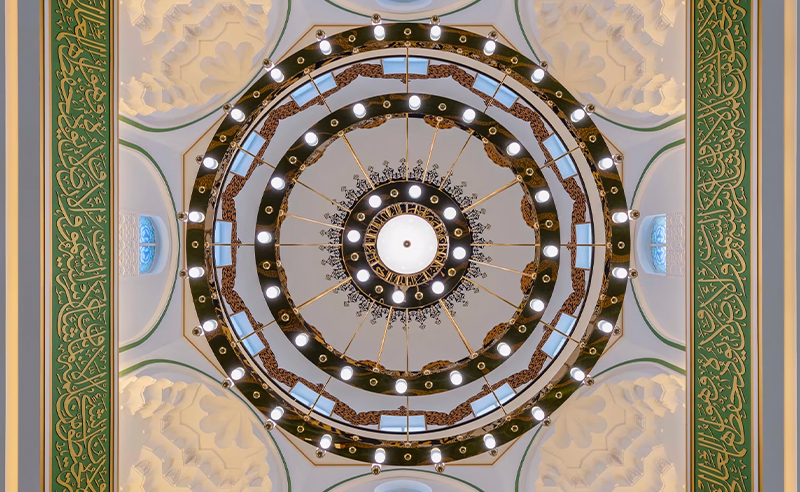
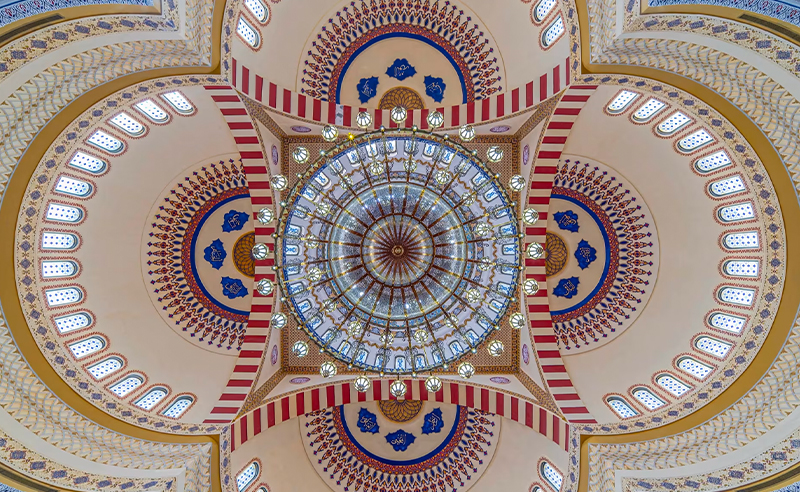
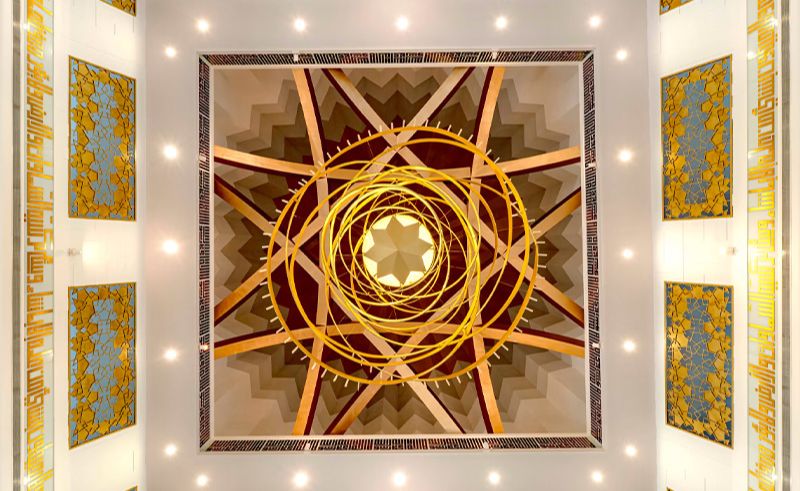
Through his lens, the Syrian photographer reveals the intricate artistry and harmony of mosque ceilings across the UAE.
An image may capture a moment, but for Syrian photojournalist Imadeddin Alaeddin, it is a portal to something deeper. His latest work, ‘Mosques of the UAE: A Harmony of Art and Spirituality’, showcased at Xposure 2025 International Photography Festival in Sharjah, explores the often-overlooked beauty of mosque domes.
“Attending the Xposure Photography Exhibition last year sparked an idea for a project that goes beyond simply capturing images. I wanted to document the beauty of mosques from a fresh perspective, and in the domes of UAE mosques, I found a unique harmony of art and spirituality,” Alaeddin tells SceneHome.
Over a journey spanning 30 mosques across the UAE, Alaeddin’s lens turned skyward, revealing the intricate floral motifs, Quranic inscriptions, and stained glass illuminations that often go unnoticed. His images frame these ceilings as celestial compositions, where geometry and craftsmanship converge in quiet reverence.
Roaming from Dubai to Sharjah, he uncovered the forgotten details of Islamic architecture. “I sought to present a different vision of Islamic architecture, where artistic details blend with spiritual depth, making the exhibition an opportunity for visitors to discover a new perspective on these sacred spaces,” he reflects.
Photographing these domes came with challenges. Restricted prayer times meant limited access, while fluctuating lighting conditions required adaptability. “Some mosques rely on programmed lighting systems that activate only at specific times, so I had to make the most of natural light,” Alaeddin explains. “I considered using laser devices to fine-tune angles, but out of respect for the sanctity of the space, I chose to rely solely on my eye and experience.”
His photographs capture a world of colour and light, where crimson and deep blue hues pulse against pale cream backdrops, creating a mesmerising interplay of contrast. Each dome tells a story—its patterns, calligraphy, and muqarnas whispering the legacy of those who built them…
The dome of Al Muherabah Mosque in Dubai
Adorned with gilded Arabic calligraphy, its inscriptions encircling the space in a rhythmic embrace. Soft blue hues filter through the stained-glass windows, casting a tranquil glow of natural light.
Sheikh Mohammed bin Rashid Al Maktoum Mosque in Dubai
An ocean of geometric carvings unfolds within a meticulously structured composition, where the pendentive, drum, and dome align in perfect harmony. Hanging pendants appear to defy gravity—as if suspended mid-fall—yet, when captured upside down, they create an uncanny sensation of descent, pulling the viewer into the depths of the celestial expanse above.
AlRushd Mosque in Al Dhaid, Sharjah
Here, sections of the columns supporting the dome appear to lean toward a singular perspective, drawing the eye inward. The overall cream palette exudes serenity, while deep crimson calligraphic bands introduce a striking contrast—infusing the space with a quiet intensity and a sense of warmth.
Al Dhaid Mosque in Al Dhaid, Sharjah
A luminous green band of gilded calligraphy encircles the dome, its vibrancy heightened by the delicate interplay of light and shadow. Yet, the true marvel lies in the muqarnas bridging the drum and the dome—cascading like snow-capped peaks dissolving into the pale eggshell palette. Against this serene backdrop, the bold green creates a striking contrast. Suspended at the heart of it all, a traditional metal chandelier descends, its dark tones amplifying the depth of the dome, framing it in mesmerizing concentric circles.
Sheikha bint Saeed Al Maktoum Mosque in Dubai
An octagonal drum dome reveals a harmonious transition from the square base to the triangular squinches, followed by the octagon and finally the dome. This visual layering unfolds like a cascading symphony, where geometry orchestrates a delicate balance of structure and ornamentation. The spotlights arranged around may have altered how it appears in the photograph, yet they still shine like constellations in perfect alignment.
Al Farooq Omar bin Al Khattab Mosque in Dubai
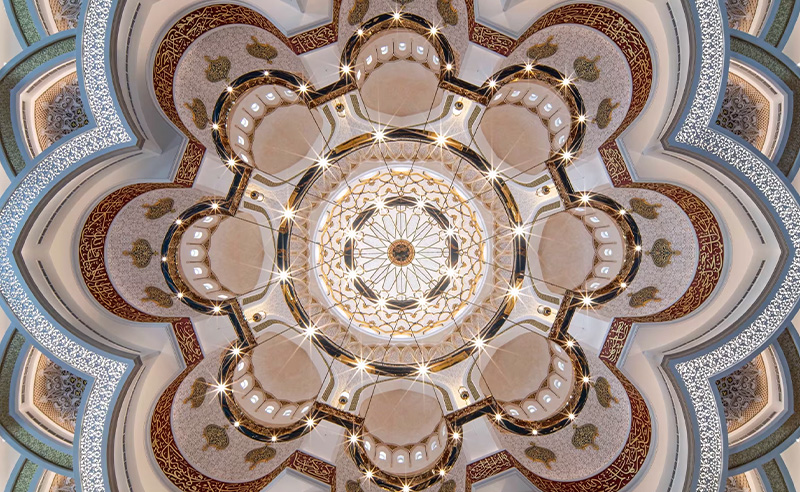
Four half-domes converge seamlessly into the central dome, creating a harmonious architectural crescendo. The vivid color palette transforms the sacred into something unexpectedly jubilant—bright mustard yellow and deep red infuse the space with an electrifying contrast, where surprise and awe intertwine. Together, the domes form a floral-like composition, culminating in the central dome, where stained glass windows encircle the drum, casting ethereal light across the space.
Al Noor Mosque in Sharjah
A whisper of timeless Ottoman mosques lingers here, yet within, golden carvings elegantly drape the ceiling before unveiling the dome’s radiant white expanse. Four half-domes converge seamlessly into the central dome, their pristine grandeur exuding a profound sense of calm and serenity. Artificial lights, arranged in concentric circles, intensify this feeling of infinity, drawing you into a luminous reverie.
Sharjah Grand Mosque in Sharjah
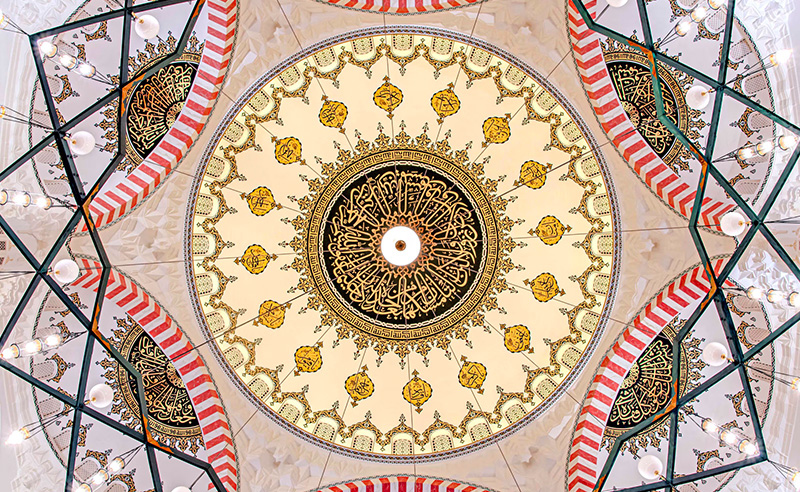
Gazing upward, the dome reveals a masterpiece where art and spirituality intertwine. Thuluth calligraphy flows across its surface, framing Quranic verses with the Names of Allah, creating a sense of divine rhythm. Gilded floral and geometric patterns echo Ottoman elegance, while striped arches introduce a striking contrast. A grand chandelier hangs at the center, casting a warm glow that enhances the mosque’s tranquil beauty.
Mary the Mother of Jesus Mosque in Abu Dhabi
What sets this mosque apart is not just its architectural splendor but its profound message of tolerance and coexistence, after the mosque’s name was changed from Mohammed Bin Zayed Mosque in 2017. Graceful calligraphy and intricate blue patterns weave across the dome, where light filters through geometric windows, casting a tranquil glow.
Sheikh Rashid bin Mohammed bin Rashid Al Maktoum Mosque in Dubai
The dome’s intricate floral geometry stretches endlessly, its layers unfolding like a lotus in bloom. Seen from beneath, it feels infinite—a vanishing point so profound, it’s like gazing at the horizon itself, only framed by sacred symmetry.
Khor Kalba Mosque in Sharjah
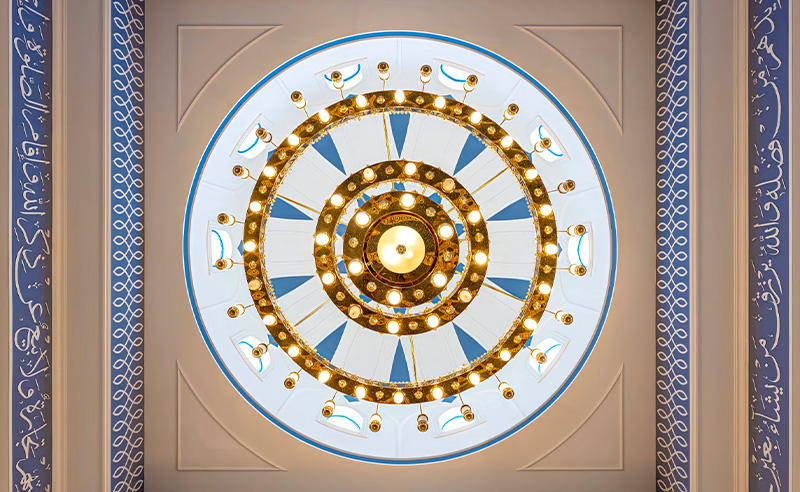
Beige and blue unfold beneath the dome, evoking a sense of serenity and transcendence—like the sky meeting the clouds in a seamless embrace. A band of calligraphy frames the base, grounding the composition. Yet, it is in the quiet interplay of these hues, in the restraint of ornamentation, that the true opulence reveals itself—where absence speaks as powerfully as presence.
Amina bint Ahmed Al Ghurair Mosque in Ajman
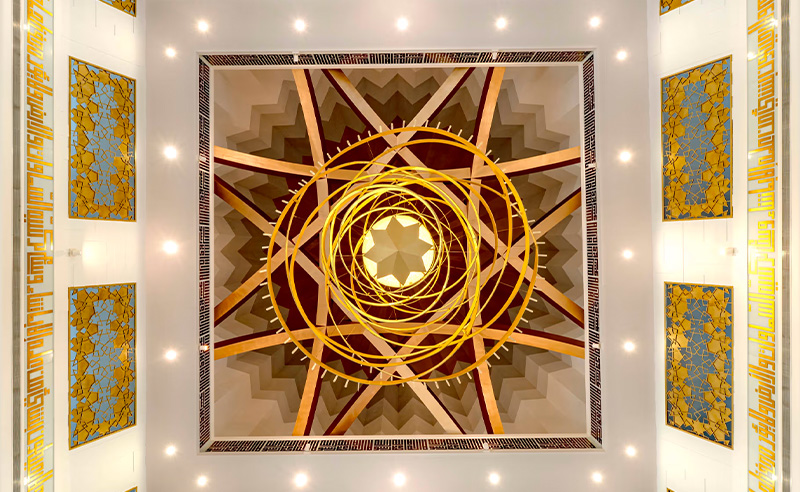
A masterpiece of harmony, this dome weaves intricate geometry with the richness of golden Kufic calligraphy, encircling the space with a quiet grandeur. Light filters through, casting shifting shadows that bring the patterns to life, creating an atmosphere where structure and ornamentation merge into a seamless expression of devotion.
English club — founded by Kuwaitis Faisal Al-Serbel and Fahad Obaid in 2025 — has secured a spot in the 12th tier of English football.
The West Midlands Regional League Division 1 — situated in the 12th tier of the English football pyramid — has just welcomed its latest addition. Birmingham Albion FC, incorporated in 2025, have officially secured their status as one of English football’s newest clubs.
Unusually, this is a side founded by two Kuwaitis with a passion for the game — Faisal Al-Serbel and Fahad Obaid.
The two businessmen have taken an unusual path. While investment from the Middle East into English clubs is no longer a novel concept, the idea of starting a football club from scratch is rare.
“The idea gained a lot of attention from the media because of how unusual it is,” Al-Serbel told Arab News. “You rarely find Arabs founding a club from scratch.
“We are more associated with acquiring, or buying an existing club — which is an idea we considered — but ultimately, we chose the path of starting a new club,” he added.
This is the first time a Kuwaiti has founded a new club in England, but not the first time a club has been owned by a Kuwaiti. Nottingham Forest were owned by the Al-Hasawi family between 2012 and 2017, while Ebbsfleet United were owned by Dr. Abdullah Al-Humaidi’s KEH Sports between 2013 and 2026.
Andover Town — also in the 12th tier of English football, but in the Hampshire Premier League Division 1 — was recently acquired by Mohammed Al-Kanderi. Higher up the pyramid, Salisbury FC (6th tier) is owned by Ali Al-Hamad, Bristol Rovers (4th tier) by Hussain Al-Saeed and MK Dons (3rd tier) by the Al-Ghanim family.
Birmingham Albion FC have hit the ground running in recent months, securing a ground-share agreement with Coton Green Football Club for the use of facilities at the Dave Henderson Memorial Ground for the 2026/27 season, alongside bringing in Approach as the club’s official shirt sponsor, with jerseys available on their official app.
Approach is a multi-service marketplace app based in Kuwait — illustrating how the club intends to bridge its community focus in Birmingham with ties back to Kuwait.
“Starting a club from scratch back in the Middle East is considered an unusual decision,” Al-Serbal said, “but if you acquire a big club, the decision would be applauded.”
Football in the Arab world often struggles to see clubs outside the traditional big sides break into the upper echelons without significant financial support. Notable recent examples include Al-Qadsiah in Saudi Arabia and Al-Hussein in Jordan, both of whom have begun to upset the status quo.
“What is special about clubs in the lower leagues is that everyone in the community cares about them — it truly feels like their club,” Al-Serbel explained.
“As soon as we started the club we had a lot of volunteers willing to join us, but of course, there were some negative voices surrounding our background and why we were not English.
“But, we are focused on bringing something good to the community in Birmingham, whether through programs, academies or cultural events.”
Recent social media reports suggested that Birmingham Albion FC were aiming to sign Kuwaiti players.
“We did suggest to players in the Kuwaiti League that they join us for a sort of live-in period during the international breaks,” Al-Serbel said, “but there are rules here — you cannot play in the division if you are not a full-time resident or citizen. That means we cannot sign players from the Kuwaiti League.
“However, we still want them to come to the club and train in England from time to time and see how football works, even at the lower rungs of the pyramid.”
That lower rung of the pyramid is an interesting challenge for the avid “Football Manager” player, who would salivate at the idea of taking a club from the 12th tier to European glory. But Al-Serbel outlined the team’s five-year targets — and none of them were that ambitious.
“Our five-year goal is to be promoted across two divisions at most, and one division at minimum,” he said. “Aiming for four divisions as a maximum and two divisions as a minimum — that is not realistic in football.
“We also have a plan to have our own stadium by 2027, and God willing, we will achieve it.”
Birmingham Albion FC may not make the same fireworks as other Arab-acquired clubs like Paris Saint-Germain and Newcastle United in the near future. They may never even make it out of non-league football. And yet, this is where the story becomes even more compelling.
For too long, the lack of development at grassroots and community level has represented a missing piece in the growth of football as an industry in the Arab world. Certain individual clubs have found great success, but never the whole ecosystem.
The success of a club like Birmingham Albion FC — not necessarily in terms of results — could be a game-changer for the Arab world.
It could show people back home that football clubs are not just what they have become in the modern era: entities driven purely by financial goals. A success story like this can spark a mindset shift toward the idea that football clubs exist for the community before anything else.