Arabs & Arabian Records Aggregator. Chronicler. Milestones of the 25 Countries of the Arabic Speaking World (official / co-official). AGCC. MENA. Global. Ist's to Top 10's. Records. Read & Enjoy./ www.arabianrecords.org
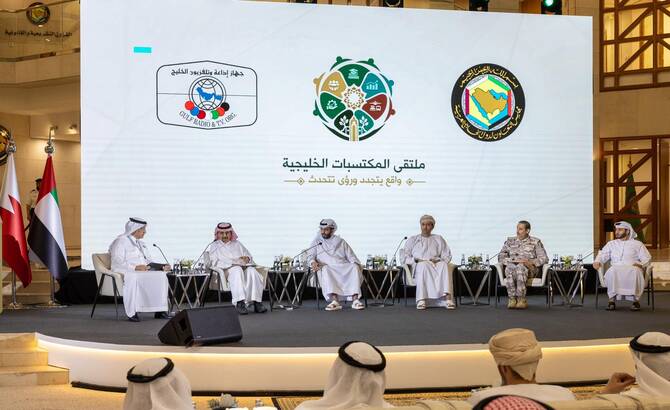
The Gulf Radio and Television Organization hosted the “Gulf Achievements Forum,” at GCC headquarters in Riyadh on Monday to showcase the milestones of joint Gulf action, enhance public awareness of regional achievements and explore the strategic future of Gulf integration.
The event aimed to “enhance awareness of the achievements that have directly reflected on the quality of life of the Gulf citizen, and to strengthen the position of the Cooperation Council regionally and internationally,” said secretary-general of the Gulf Cooperation Council, Jasem Al-Budaiwi.
During his opening remarks, the secretary-general affirmed that the Gulf Cooperation Council had transformed challenges into opportunities through integration across all areas of joint Gulf action, “directly impacting the quality of life for Gulf citizens, enhancing their well-being, and strengthening the GCC’s regional and international standing.”
He also stressed that the GCC was no longer just a regional bloc joined by geography and history, but has become a global strategic power where opportunities were created, and models of development, prosperity, security and stability were built.
Al-Badawi said that rapid regional and international changes had proven that the strength of the GCC lay in its “unity and cohesion.”
He stressed that joint Gulf action was no longer merely a developmental choice but a strategic necessity dictated by the nature of the current regional security requirements, global economic shifts and accelerating global challenges.
He added that the GCC states had adopted a specific strategy to combat money laundering, noting the high level of coordination among the interior ministers of the GCC countries to unify their anti-drug strategy.
“The GCC achievements reviewed today are a reflection of an ambitious strategic vision, continuous coordination and a firm political will among the GCC countries,” he said.
Al-Badawi underlined that 95 percent of the traffic connectivity between the Gulf Cooperation Council countries had been completed.
The secretary-general highlighted several qualitative achievements he took pride in, including political integration, military and security cooperation, economic infrastructure, digital transformation, education, health, media, electrical interconnection and food security.
The forum opened with remarks from senior GCC officials, including the secretary-general and the director general of the Gulf Radio and Television Organization, Dr. Abdulrahman bin Abdulaziz Al-Hazzaa.
In his address, Al-Hazzaa emphasized that the event shed light on unifying the media message to amplify the achievements of joint Gulf action.
Al-Hazzaa said that the citizens of the GCC countries were living in “prosperity and stability,” stressing that joint Gulf action was prospering under a clear vision that enhanced development and integration among the GCC countries.
The forum also featured panel sessions and keynotes from key stakeholders on topics such as media, AI, countering money laundering, and connectivity.
“The future of the GCC is not measured only by the scale of the achievements made, but by our ability to build upon them and transform them into sustainable gains that meet the aspirations of our peoples and future generations,” Al-Budaiwi said.
The forum was held as the region prepares to celebrate the 45th anniversary of the founding of the GCC on May 25.
“The next phase requires intensified joint Gulf efforts, strengthened integration across all fields, and the building of a Gulf economy capable of competing globally, thereby consolidating the position of the GCC countries as an influential global partner in shaping the economy of the future and sustainable development,” Al-Budaiwi said.
source/content: arabnews.com (headlines edited)
_____________
Al-Badawi said that rapid regional and international changes had proven that the strength of the GCC lay in its “unity and cohesion.” (Supplied)
‘Gaza: Doctors Under Attack’ won the current affairs category after being dropped by the BBC over impartiality concerns, and was later picked up by Channel 4
BBC reportedly broadcasted an edited version of the acceptance speech that removed remarks about Israel
The filmmakers behind “Gaza: Doctors Under Attack” criticized the BBC over its decision to shelve the documentary during their acceptance speech at the BAFTA TV Awards on Sunday.
The film won in the current affairs category after being dropped by the BBC over impartiality concerns, and was later picked up by Channel 4.
Accepting the award, journalist and presenter Ramita Navai said that the film highlighted findings from an investigation into attacks on Gaza’s healthcare system.
“These are the findings of our investigation that the BBC paid for but refused to show,” she said. “But we refuse to be silenced and censored. We thank Channel 4 for showing this film.”
Navai said that more than 1,700 Palestinian doctors and healthcare workers had been killed and more than 400 detained during Israel’s war on Gaza.
She dedicated the award to Palestinian medical workers held in Israeli prisons.
Gaza: Doctors Under Attack wins a BAFTA Award
Executive Producer Ben de Pear, "Just a question for the BBC, given you that you dropped our film will you drop us from the BAFTA TV screening later on tonight?"
According to local reports, the BBC did not air Navai’s speech in full and instead broadcast an edited version that removed her remarks about Israel, reigniting criticism of the corporation’s handling of Gaza-related coverage.
The BAFTA awards are broadcast on BBC One after a two-hour delay.
The documentary, which features firsthand accounts from Palestinian health workers in Gaza, was honored at London’s Royal Festival Hall nearly a year after the BBC declined to air it.
Executive producer Ben de Pear also used the acceptance speech to thank Jaber Badwan and Osama Al-Ashi — the journalists behind the film — before addressing the BBC directly.
“Finally, just a question for the BBC: Given you dropped our film, will you drop us from the Bafta screening later tonight?”
The BBC commissioned the documentary from independent production company Basement Films more than a year ago, but delayed its release while reviewing another Gaza-related documentary, “Gaza: How to Survive a War Zone.”
It later said that it would not air “Gaza: Doctors Under Attack,” arguing that the film risked creating “a perception of partiality that would not meet the high standards that the public rightly expect of the BBC.” The broadcaster also said that impartiality remained “a core principle of BBC News.”
The film was later acquired and broadcast by Channel 4 in July.
source/content:arabnews.com (headline edited)
______________
The documentary, which features firsthand accounts from Palestinian health workers in Gaza, was honored at London’s Royal Festival Hall nearly a year after the BBC declined to air it. (Getty/File)
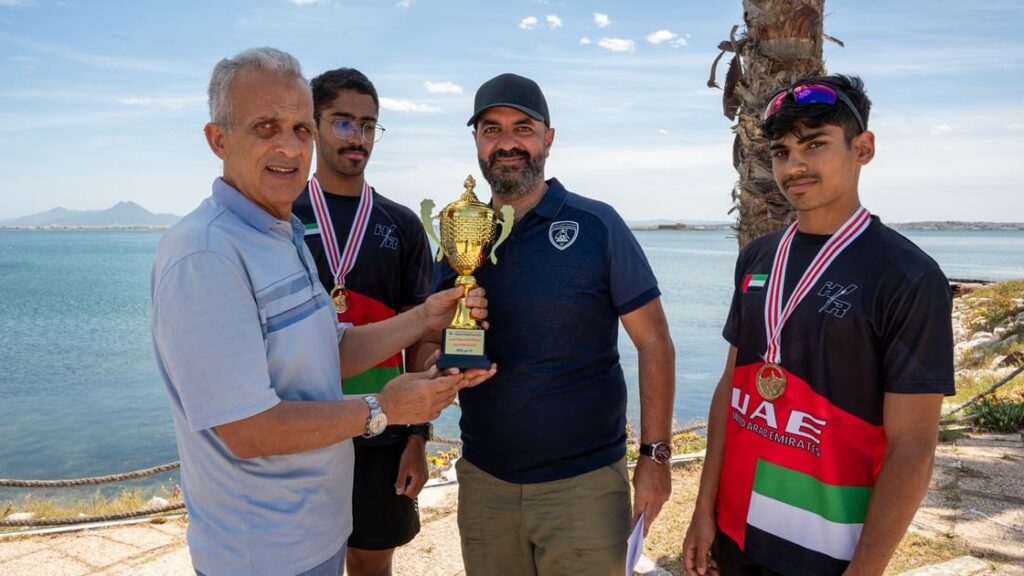
Al Hamriyah modern rowing team claimed a gold medal at the Tunisian Classic Rowing Championship, held on Lake Tunis from 5th to 10th May 2026, with the participation of nine clubs.
Al Hamriyah secured the gold medal through rowers Hamad Abdullah Al Hosani and Salem Al Mansouri in the under-19 double sculls category.
Salem Al Khayyal, Board Member of Al Hamriyah Club and Head of the Individual Games and Talent Development Committee, congratulated the athletes and coach Captain Sayed Ali Wadhah on the achievement, highlighting the advanced level reached by the team.
The two rowers and their coach expressed pride in the achievement and affirmed their determination to continue working hard to raise the name of Al Hamriyah Club in regional and international competitions.
As country debates easing return of treasures, attention turns to regional pieces still held in its national collections.
French lawmakers are debating a new bill aimed at simplifying the return of colonial-era cultural objects to their countries of origin, drawing renewed attention to artefacts still held in France’s national collections, which number in the tens of thousands.
The draft legislation was unanimously approved by the Senate in January and now requires backing from the lower house, the Assemblee Nationale, before it can become a law.
While not all cases are at the same stage, these five objects from Algeria, Egypt and Jordan sit within that broader restitution debate, whether through formal state requests, public campaigns or long-standing calls for their return.
1. Baba Merzoug, Algeria
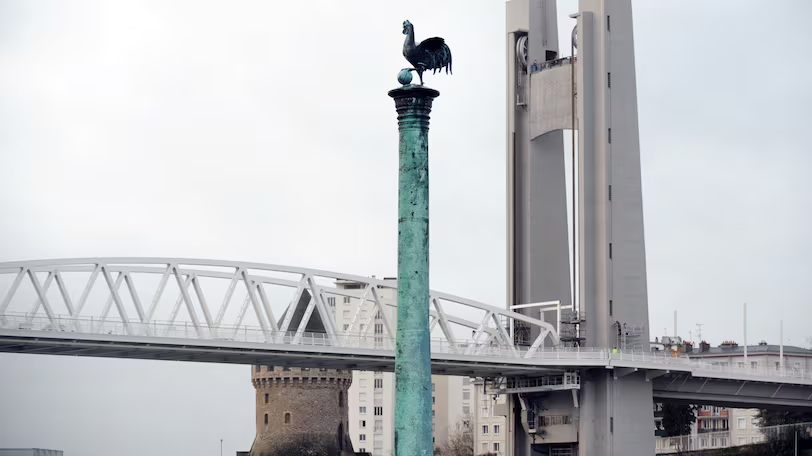
The 16th-century cannon known as Baba Merzoug at the Arsenal of Brest in western France. AFP
The 16th-century bronze cannon from the Ottoman era in Algiers is housed at the naval base in the French coastal city of Brest after being taken by French forces in 1830 following the capture of Algiers.
While seized as a spoil of war, the cannon remains a politically charged symbol of French colonial rule in Algeria. The Algerian government formally requested its return in 2012, and the cannon was explicitly cited during the April 2026 parliamentary debate over France’s proposed restitution framework.
2. Emir Abdelkader’s effects, Algeria
Rather than a single object, this refers to personal items associated with the 19th-century Algerian leader Emir Abdelkader, who led the resistance against French invasion before his surrender in 1847.
Held across French collections including at Musee de l Armee in Paris and Musee Conde in Chantilly, the objects include a steel sabre, pistol, ceremonial cloak and related belongings linked to Abdelkader’s life and leadership.
Algeria has included these effects on a formal restitution list submitted to French authorities in 2021, and they remain a sensitive part of the wider dispute over colonial-era holdings.
3. Dendera Zodiac, Egypt
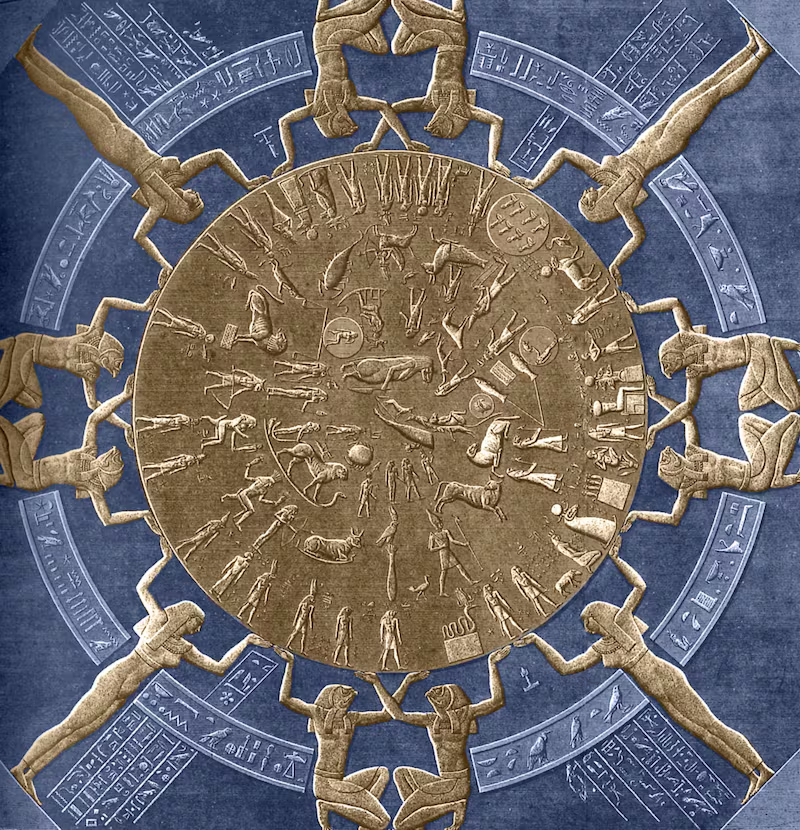
The Dendero Zodiac is an ancient bas-relief that formed part of the ceiling of the Temple of Hathor in Upper Egypt and is now held at the Louvre in Paris.
Removed in the early 19th century, it has been part of the Louvre collection since 1822 and has become one of the most recognisable Egyptian antiquities in a French museum.
While there is no verified formal Egyptian state request for its return, the object has been repeatedly cited in public repatriation campaigns, including those led by archaeologist and former antiquities minister Zahi Hawass.
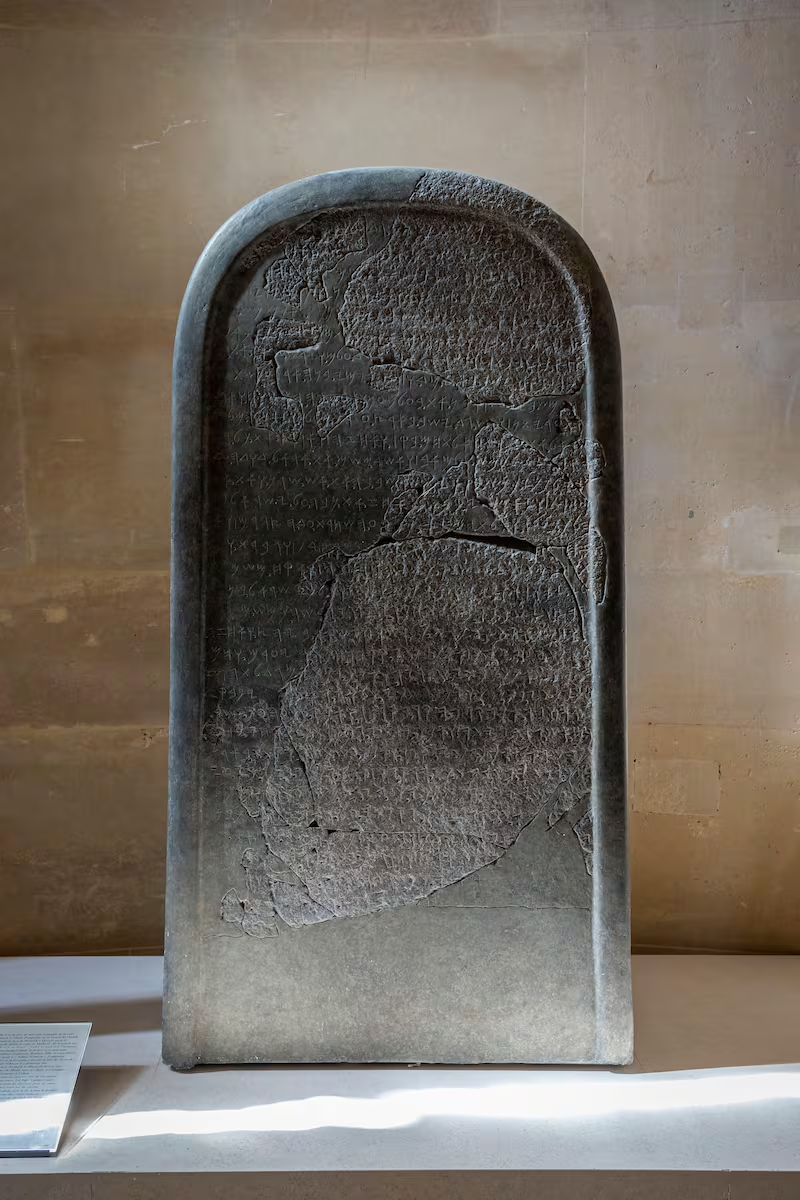
4. Mesha Stele, Jordan
Also known as the Moabite Stone, the Mesha Stele is a 9th-century BC basalt monument from present-day Jordan and is considered one of the most important inscriptions from the ancient Levant.
Discovered in 1868 by the Anglican missionary Frederick Augustus Klein at Dhiban, it was later shattered by the Bani Hamida tribe over an ownership dispute, before the fragments were recovered and reassembled in France.
In June 2014, non-governmental Mesha Centre for Studies and Human Rights delivered an official request for the stele’s return to the French embassy in Amman.
The Jordan Times reported in 2015 that French ambassador Caroline Dumas discussed the request with representatives and said she would convey their public appeal to the French government. No formal response has been reported.
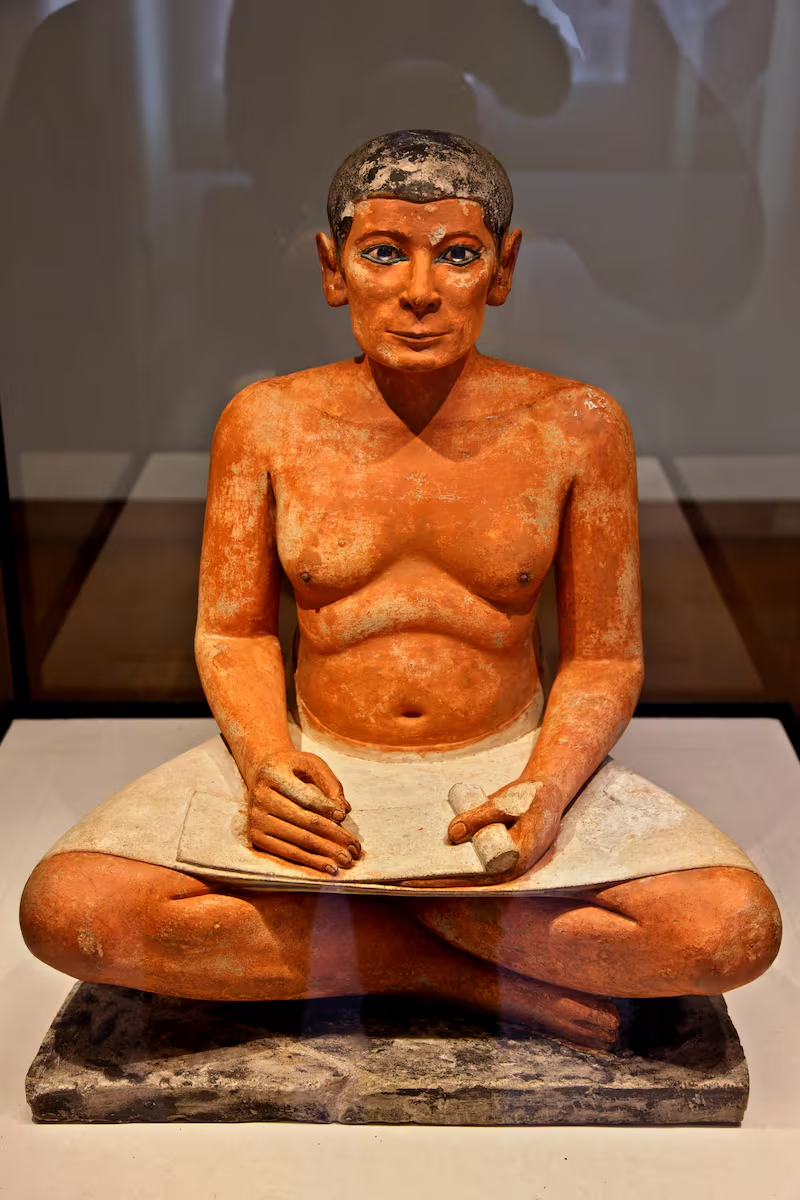
5. The Seated Scribe, Egypt
One of the Louvre’s most famous Egyptian works, the Seated Scribe is a painted limestone sculpture from the Old Kingdom, dating back to circa 2600BC-2350BC. It is famed for its striking realism and remarkably preserved features.
Found at Saqqara in the 19th century by the French archaeologist Auguste Mariette, it is among the most celebrated masterpieces of the Louvre’s Department of Egyptian Antiquities.
While the Egyptian government has not included the Seated Scribe on any formal restitution lists, it has appeared in broader public discussion in Egyptian cultural circles around the recovery of major artefacts held abroad.
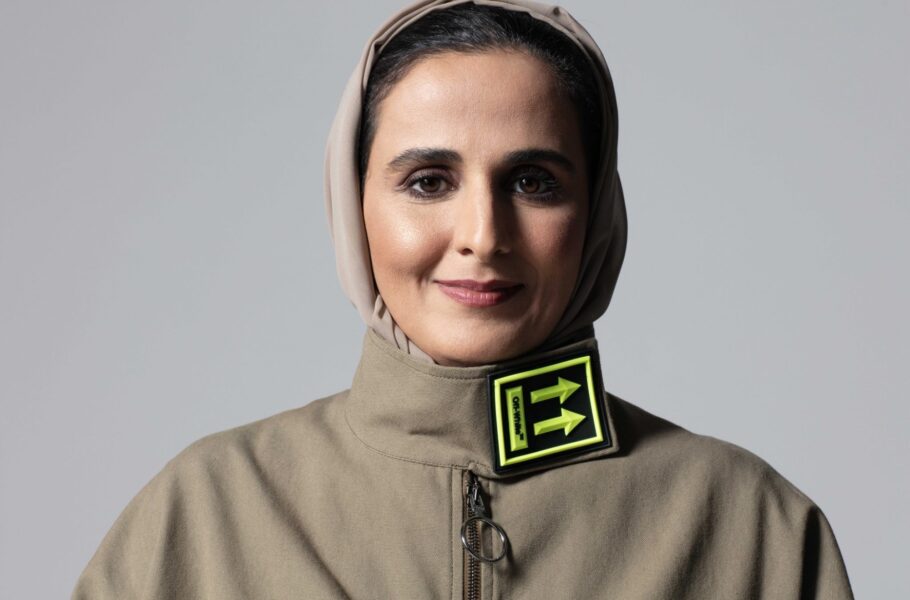
H.E. Sheikha Al Mayassa bint Hamad bin Khalifa Al Thani, Chairperson of Qatar Museums, has been ranked second globally in the 2025 ArtReview Power 100 list.
She first appeared on the Power 100 in 2011 at No. 90, quickly rising to No. 11 in 2012 before reaching the top position at No. 1 in 2013.
The Power 100 is compiled by a panel of around 30 individuals from across the globe, and from all parts of the artworld, who propose those people who have shaped the art that has emerged in their locality over the past year. The criteria for inclusion are that each person on the Power 100 has had an influence on the art being made and shown now; that they have been active in the last 12 months; and that their presence stretches beyond a local scene (while many act locally, the influence of that local action can reverberate internationally).
What emerges is a means of capturing an artworld that is not purely an economic system, or an aesthetic one, but a complex social system. Through this list, ArtReview gives a portrait of the network of relationships that shaped the art of 2025.
Adhwan Al-Ahmari, chairman of the Saudi Journalists Association, was elected at the federation’s International Press Congress in Paris
Seat strengthens Saudi presence within international media institutions, opens the door to a larger role in shaping journalism worldwide
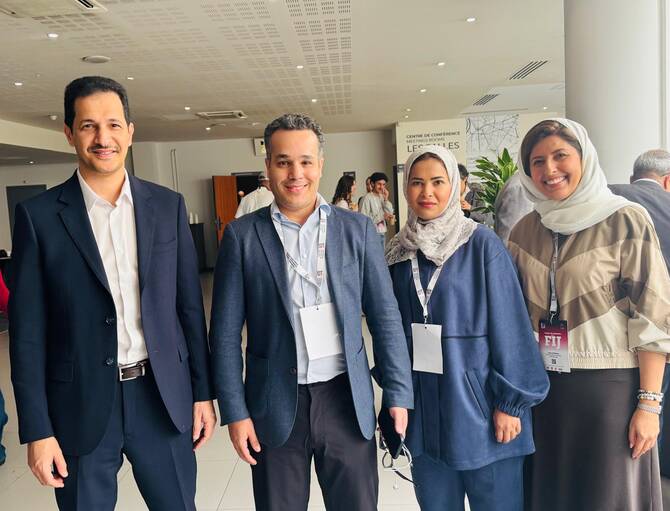
Saudi Arabia has won a first-ever seat on the executive committee of the International Federation of Journalists, the world’s largest journalists’ organization, after Adhwan Al-Ahmari, chairman of the Saudi Journalists Association, was elected at the federation’s International Press Congress in Paris.
Al-Ahmari said the result reflected the confidence of international professional unions in the Saudi Journalists Association, which was founded in 2003.
“This achievement represents the work of my colleagues on the board of directors and in the general secretariat,” he said.
“We have already established an international presence through our presidency of the Executive Office for West Asian Journalists and today we take that further,” he added, saying the association would continue working to expand Saudi Arabia’s presence on the world stage.
The result marks a milestone for the Kingdom’s presence in global media institutions at a time when it is playing a larger role in international bodies, including in the media and communications sphere.
Only 16 candidates secured seats on the committee, which was contested by representatives from more than 148 countries.
Saudi Arabia’s victory gives it a voice in shaping the direction of the federation over the next four years and strengthens its standing within international journalist circles.
Established in 1926, the IFJ is the world’s largest journalists’ organization, representing 600,000 media professionals from 187 trade unions and associations in more than 140 countries.
The executive committee helps steer the federation’s priorities and shape its response to issues affecting journalists globally, making Saudi Arabia’s first-ever presence on the body a notable development for the Kingdom’s media diplomacy.
The Saudi delegation to the congress was led by Al-Ahmari and included board members Lama Al-Shethry, Mai Al-Sharif and Hamed Al-Shehri.
source/content: arabnews.com (headline edited)
____________
The result marks a milestone for the Kingdom’s presence in global media institutions at a time when it is playing a larger role in international bodies, including in the media and communications sphere. (Supplied)
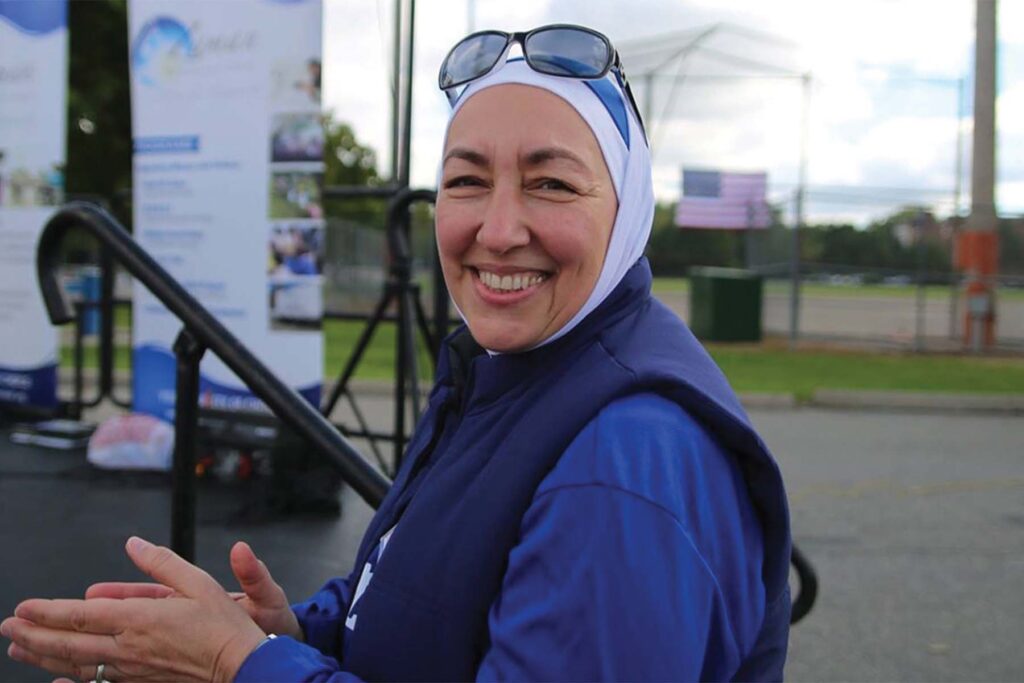
Just recently CNN revealed the Top 10 CNN Heroes of 2019 – these are men and women that are changing the world by helping families affected by the tragedy, cleaning up the environment, protecting neglected animals, and so much more. They were nominated by CNN to receive a ten thousand dollar cash prize with the Hero of the Year to receive one hundred thousand dollars. One of the nominees is Najah Bazzy, an Arab-American who changed the lives of thousands of women and children in the Detroit Metropolitan Area.
Background
Najah learned to navigate through attitudes and beliefs that were conflicting very early in life. Born in a neighborhood that was predominantly Arab and Muslim – Dearborn, Michigan – she refers to herself as ‘a new thing’ – a by-product of a merger between being Arab, American, and Muslim all at once. She believes these are not mutually exclusive identities, even in a post 9/11 America.
They are, which is now having the largest concentration of Arab Americans in the United States, back then was a hub of immigrants. In an interview, Najah says: “It was the people from Poland, Italy, Macedonia, Mexico, and others that we learned about their traditions and their different faiths. That’s why I love diversity so much. Neighbors sat on the front porch and they shared food while their children would go from house to house visit other children and play. The amount of care that people had for each other was tremendous, and this is where I learned to love my neighbor.”
However, she also felt a different attitude towards Muslims after the September 11 attacks. “I’ve had death threats. I’ve had to have protection placed on me. It’s an uncomfortable feeling,” she shares. “To know that you can put out love, and other people judge that love saddens me. I want to make every breath count, so I can’t fear those who choose hate. I can only control the love I have in my heart and choose that love.”
Cause
Najah is the founder of Zaman International, a non-profit organization, which has the mission to facilitate change and advance the lives of marginalized women and children of different backgrounds in the Detroit area; she has been doing it by enabling them to meet essential needs common to all humankind. The group’s 40,000-square-foot warehouse offers for free aisles of food, rows of clothes, and furniture to those in need.
The history of the organization is truly inspirational. In 1996, when a three-month-old infant was with a terminal diagnosis, Najah Bazzy, a Transcultural Clinical Nurse Specialist, provided clinical, spiritual and cultural support to his parents who were new arrivals to the United States. She helped them face the reality that no treatment would save their child.
After visiting the family at their home, Najah was shocked by their living conditions. Instead of a refrigerator, the family used a picnic cooler to house their limited food supply and baby formula. Instead of a stove, a portable propane stove was used for cooking. The infant’s bed was a laundry basket piled high with towels, and the infant only had the hospital’s receiving blanket to keep him warm. When the infant passed away and the family was unable to pay for a funeral, Najah raised funds from the community to provide him with a proper burial. This was the beginning of Plots for Tots, Zaman’s signature program which provides dignified burial support for families that have lost a fetus or infant.
Witnessing this family’s sorrowful experience and shocking living conditions, Najah was inspired and determined to harness the community’s efforts to help struggling families. She asked community members to donate furniture, food, clothing, and household goods. The support and need for such efforts quickly increased, encouraging Zaman to formalize as an organization committed to using community support to address community needs.
Impact
In 2018, Zaman distributed 170,400 pounds of food, collected 886,950 pounds of clothing, provided over 7,750 hours of job skills and literacy instruction to more than 90 women, and gave 268 winter coats and 895 school supply-filled backpacks to local children. Meanwhile, it partnered with 444 community partners on a range of initiatives and funded overseas relief projects, bringing safe water and humanitarian relief to more than 431,900 people.
Now that Zaman’s mission has been shared with the world, Bazzy is encouraging interested readers to help by donating through the CNN Heroes program, for which a CrowdRise donation page has been set up.
“What I’m most proud of this year is that Zaman is 94 cents on the dollar (which has been audited financially), she said, and it goes to programs,” she said about the percentage of donation dollars used to help fund its operations to serve those in need.
“We really encourage people to go to the website and to donate any amount that they can, anything helps.”
Dr Hawa Abdi Dhiblawe, prominent human rights activist, founder and chairperson of the Dr Hawa Abdi Foundation and one of Somalia’s first female obstetricians has passed away in Mogadishu. She was 73.
She died Wednesday morning, but the circumstances surrounding her death remain unestablished at the moment.
Dr Abdi affectionately referred to as the Mother Theresa of Somalia, was a Nobel Peace Prize nominee. Her work is credited for saving the lives of thousands during some of Somalia’s darkest moments. She cared for the wounded, the sick – often for free – at a hospital, she established on her family’s land in 1983. What began as a humble one-room operation would eventually care for close to 90,000 people during Somalia’s catastrophic drought in 2011.
While caring for her patients, Dr Abdi famously faced down nearly 750 militants from Hizbul Islam who laid siege to her compound in 2011. She heroically told them at the time, “I’m not leaving my hospital. If I die, I will die with my people and my dignity.’ She yelled at the young gunmen, “You are young, and you are a man, but what have you done for your society?”. The militants were met with fierce resistance from the locals who gathered around the hospital demanding to see Dr Hawa and mounting international pressure. After a week, the second-in-command came to Dr Hawa with a signed apology letter written in both Somali and English.
When the civil war broke out in 1991, Dr Abdi’s grandmother implored her to stay behind and use her skills to assist the most vulnerable. She witnessed firsthand the devastation that occurred in Somalia early after the collapse of the government.
“During those dark days of 1992, starvation set in, and I sold my family’s gold to buy enough food to sustain the vulnerable children and give the gravediggers enough strength to work. Even when we were burying 50 people per day, I was still able to provide free land, security, and medical treatment. We clung to one another, and we survived, but the fighting continued. Now, again, we see famine—not caused by drought alone, but by the conflict that continues to ravage Somalia,” she said in an interview.
Dr Hawa Abdi was born in Mogadishu in 1947 and attended local elementary, intermediate and secondary academies.
In 1964 she travelled to the Kiev to study gynaecological medicine with the help of a Soviet scholarship. In 1971, she began her medical career as one of Somalia’s first female gynaecologists working in Mogadishu’s most prominent hospital. She quickly recognized the lack of resources for a hospital birth outside the capital. She decided in 1983 to open her clinic known as the Rural Health Development Organisation (RHDO) in the outskirts of Mogadishu. She focused primarily on the treatment of women from non-urban areas.
Dr Hawa told the New York Times that her dream to become a doctor began when she was 12 after her mother died during childbirth.
She was also an author; her moving memoir, Keeping Hope Alive: How One Somali Woman Changed 90,000 lives was published in 2013 and was well-reviewed.
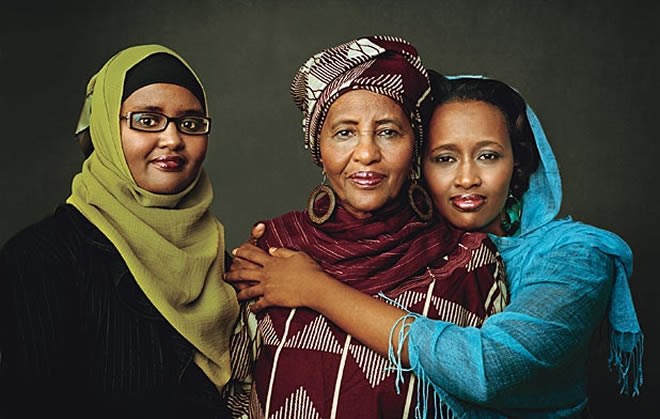
Her unwavering commitment to the downtrodden has earned her recognition worldwide. She and her daughters whom Glamour Magazine named Women of the Year in 2010 and described as ‘Saints of Somalia’ have been running the clinic and Dr Hawa Abdi Foundation. She was nominated for a Nobel Peace Prize in 2012. In that same year, she was honoured with the BET’s Social Humanitarian Award, Women of Impact Award from the WITW Foundation, and the John Jay Medal for Justice. In 2014, she received the Medal from Want award from the Roosevelt Foundation. She was awarded the 2013 Vital Voices’ Women of the Year Award. In 2015, she was the recipient of the Pilosio Building Peace Award. Most recently, she was honoured by Harvard University with an honorary Doctors of Law degree in May 2017.
source/content: hiraan.com (headline edited)
____________
A Family Affair: From left: Dr. Amina Mohamed, Dr. Hawa Abdi and Dr. Deqo Mohamed, photographed during a business trip to Geneva, Switzerland, on September 18, 2010. Hair and makeup: Mitzi for Visage Management
Academics are sceptical about whether the ancient Semitic language can ever be accurately reconstructed but a group on Discord have taken up the challenge.
In 2016, archaeologists unearthed a 3,700-year-old lice comb at an archaeological site in what is now northern Israel that would later be determined to contain the oldest inscription in the Canaanite language discovered to date.
Found at Tel El Duweir, near the Yarmuk River in Galilee, the site was once a strategic Canaanite city state.
The comb bears a seven-word inscription in early Canaanite, which translates as “May this tusk root out the lice of the hair and the beard”.
It is significant as the first full sentence found in the Canaanite language, which itself was the first to use an alphabet as we understand it today.
While Sumerian Cuneiform and Egyptian hieroglyphics are older, they used pictographs, not individual letters.
Canaanite, a semitic tongue, is long extinct. With the exception of Hebrew, which was resurrected by the Zionist movement in a modern form, none of its descendants, including the ancient Phoenician language survive.
Once spoken on the Levantine coast, North African varieties descended from Phoenician, known as Punic developed with the settlement of Phoenician traders, most notably at Carthage in modern Tunisia.
That vast heritage across the region has inspired a group of digital linguists to try to revitalise the original Phoenician Canaanite dialects millennia later.
Discord servers and YouTube channels
Several notable attempts at increasing Phoenician language awareness currently exist online.
YouTube has a number of channels dedicated to Phoenician-language reconstruction, including LearnPhoenician, which is run by Algerian linguist Mohamed Amine Slimani, who even published his own dictionary.
Another is Adoon, founded in 2021 by Lebanese musicians Youssef Helayel and Tony Elk.
The music published by Adoon blends Arabic Oud and electric guitar melodies with Phoenician poetry and features animated videos of cobblestone cities and cedarwood ships.
Another linguistics channel, Ilovelanguages, showcases numbers, phrases and prayers in the language.
One other popular outlet is the Phoenicia server on Discord, a messaging server initially used by video gamers but now also by hobby groups separated geographically but brought together online.
The server is run by two Lebanese users, named Hanni and Adon*, whose interests are in Levantine culture.
They say their server is non-political, educational and dedicated to revitalising Phoenician, and that anyone is welcome to join.
That said, membership of the server is only through an invite link, which Hanni says filters out “non-serious individuals”.
The server has more than 863 members and is teaching is in English, Arabic, French and German.
“We teach the language, help with reading and understanding sentences, and with how words are spoken within certain stages of the language,” Hanni says.
Thanks to the internet and social media, says Adon, Phoenician language materials are now more readily available than ever before.
Such initiatives indicate the blossoming of a niche hobby into a vibrant movement aimed at making language learning more accessible beyond academic circles.
Phoenicia and the West
Phoenician belongs to the Northwestern Canaanite branch of the Semitic family, meaning it is also related to Aramaic and Arabic, both languages spoken today in the Middle East.
In the first millennium BCE, it spread throughout the Mediterranean Sea through Phoenician expansion, but became extinct as a vernacular around the 2nd century CE.
A significant factor was societal collapse after military defeats of Phoenicians by Alexander the Great and Rome.
In the case of Punic, after Hannibal’s campaign against Rome, which nearly resulted in its conquest, the Romans suppressed Carthaginian culture and carried out what is considered by historians to be the first documented genocide.
Nevertheless, Phoenician had already made its mark on Roman culture through Greek civilisation.
Greek myths were heavily influenced by Levantine legends and the Latin script was ultimately derived from Phoenician letters.
Phoenician therefore plays an important part in the development of western cultures.
Hobbyist scholarship and its limits
The modern day reconstruction of Canaanite and Phoenician by enthusiasts is not without its limitations.
George Handal Handal, a retired industrial electronics engineer from Palestine who owns the Star of Bethlehem Winery, exhibits Canaanite stone tablets worldwide and is a member of the Phoenicia server.
His visits to Native American reservations inspired him to learn more about indigenous Levantine language.
While he is critical of the extent of Arabic language instruction on the server, he says studying and translating inscriptions with the group has deepened his understanding of the Phoenician language.
He says it is important “we know at least a little about the hidden history that we don’t learn in schools here in Palestine since we live under [Israeli] occupation”
Maroun Khreich, an associate professor at the Lebanese University, welcomes the renewed interest in Canaanite languages but cautioned that the challenge for digital linguists is formidable.
Khreich, who is also co-director of the Chair of Phoenician Studies at University Saint Joseph of Beirut, said incomplete records of the language reveal a very limited number of words spanning 14 centuries, making periodisation – the process of dividing its history into distinct, named chronological stages – difficult.
Any reconstruction based on existing word databases would therefore feature words from several different eras.
Khreich argues that the results of hobbyists’ efforts will remain “shallow” due to the lack of a thorough academic approach.
Professor Roland Tomb, the co-founder of the Chair of Phoenician Studies, was just as critical.
He studied Semitic languages, including Phoenician, at various European and Lebanese universities and is currently translating a Phoenician grammar book written by the late Italian scholar Maria Giulia Amadazzi Guzzo into French, English and Arabic.
Tomb said the efforts by hobbyists have “no accuracy at all because Phoenician is a dead language … transmitted by scripts, [almost] all of which are lost forever”.
This is partly because Phoenicians wrote on papyrus, a material that easily disintegrates during Lebanon’s humid summers.
Other obstacles
While the Phoenician grammar, phonology and its evolutionary stages are mostly understood, many surviving inscriptions are brief or duplicates, while others are lost.
Also complicating revitalisation efforts, Adon says, is that for most Lebanese, Phoenician heritage is largely symbolic.
“They teach you at school that the Phoenicians were behind the invention of the alphabet, which is a great source of pride in Lebanon, but it doesn’t go beyond that… It’s just a sort of slogan,” Tomb explains.
Compounding the problem, Khreich notes, is that there are very few published linguistic scholarly works on the language.
Adon admits “we are forced to self-study to find such papers and put all the things together”.
Despite these obstacles, our knowledge of its phonology and grammar comes from comparative analysis of surviving inscriptions of Phoenician, especially bilingual ones, to related languages, such as Hebrew, Ugaritic, and Edomite and later stages, like Punic, which slightly outlived its sister language.
The main obstacles, however, lie in the unrecorded invisible vowels and the fact that surviving inscriptions are narrow in scope and do not cover everyday terms essential for daily conversation in the language or only mention terms once.
Based on the more than 10,000 surviving inscriptions since the 14th century, Hanni says, what is certain is that the Phoenician abjad (alphabet) was purely consonantal, having no vowels, and has one of the fewest number of consonants among Semitic languages at just 22.
Phoenician had more consonants in its older stages, but gradually reduced them to 22.
Hanni describes Phoenician phonology as “very innovative” compared to other conservative nomadic languages.
Some attested dialects include Byblos, Tyrian, and South Phoenician.
Hanni believes successful language revitalisation requires more proactive efforts from governments and schools alongside grassroots initiatives.
A glimmer of hope
The relative success of projects for Hawaiian and Wampanoag, a Native American language, in producing new speakers show revitalisation is possible.
Another promising trend for the project, says Hanni , is that most members are under the age of 30, primarily from Lebanon, North Africa, and their related diasporas.
Handal adds many people in Palestine are also eager to rediscover the language.
“The Canaanite and Aramaic alphabets belong to us… the inhabitants of Palestine, because we are descendants of the Canaanites and Aramaeans,” says Handal.
These server members do not see Phoenician as a language disconnected from their modern heritage but as an inherent part of it.
For example, countless place names and words in Levantine Arabic are derived from Phoenician, such as “Beirut”, from the term “be rut” meaning “wells”, and “Baalbek”, from the Canaanite deity “Baal”.
Even the word “Lebanon” itself comes from the word “lbn” meaning “white”, referencing its snow-capped mountains during winter.
Khreich says that because Phoenicians are “the only culture of which Lebanon was the centre, not the periphery, it’s our duty as Lebanese to preserve this culture” but revitalisation efforts must address sectarianism within Lebanese society.
In a paper he published for a French journal, Tomb argues that while interest in Phoenician heritage in Lebanon was initially a purely Christian one, a movement called Al-Harakat al-Finiqiyya [“the Phoenician movement” in Arabic] is composed primarily of Druze and Shia Muslims.
A now-obsolete variant of Lebanese nationalism during the First World War emphasised shared Phoenician ancestry to counter sectarianism.
Tomb compares it to similar shifts he observed during his visits to Gulf Arab states, where he was surprised to see huge investments in research on pre-Islamic Arabian heritage, and languages such as Mehri and Jiballi.
Universities in Lebanon have already begun teaching Phoenician in French-language instruction, but as a reconstructive, archaic language (often using Punic examples).
“We already started giving courses at the universite pour tous [University for All at St Joseph University of Beirut], which is open for everybody … from all academic levels, not necessarily [just] university students,” says Khreich.
He taught his first course last year, with a turnout of 48 students, and intends to continue.
When Tomb first taught Phoenician as an elective while dean of the Faculty of Medicine, he says more than a hundred students enrolled each year.
Aside from the University for All, the Lebanese University, and formerly the American University in Beirut, have offered courses, both of which Khreich taught.
More recently, Tomb’s friend from the Ecole Pratique des Hautes Etudes (Practical School of Higher Studies) in Paris, Professor Robert Hawley, also taught the language.
Tomb says universities actively collaborate to avoid “closed systems”. He adds that motivations among his students vary, ranging from pure curiosity to historical or political interest.
The youth-led digital movement to revitalise Phoenician, whether through Discord or YouTube, indicates renewed interest in the region’s indigenous languages, albeit with a mixed reception and practical obstacles.
Hanni and Adon hope that someday, Phoenicia server members, such as Handal, will teach the language themselves.
*Editor’s note: Hanni and Adon requested that Middle East Eye use pseudonyms
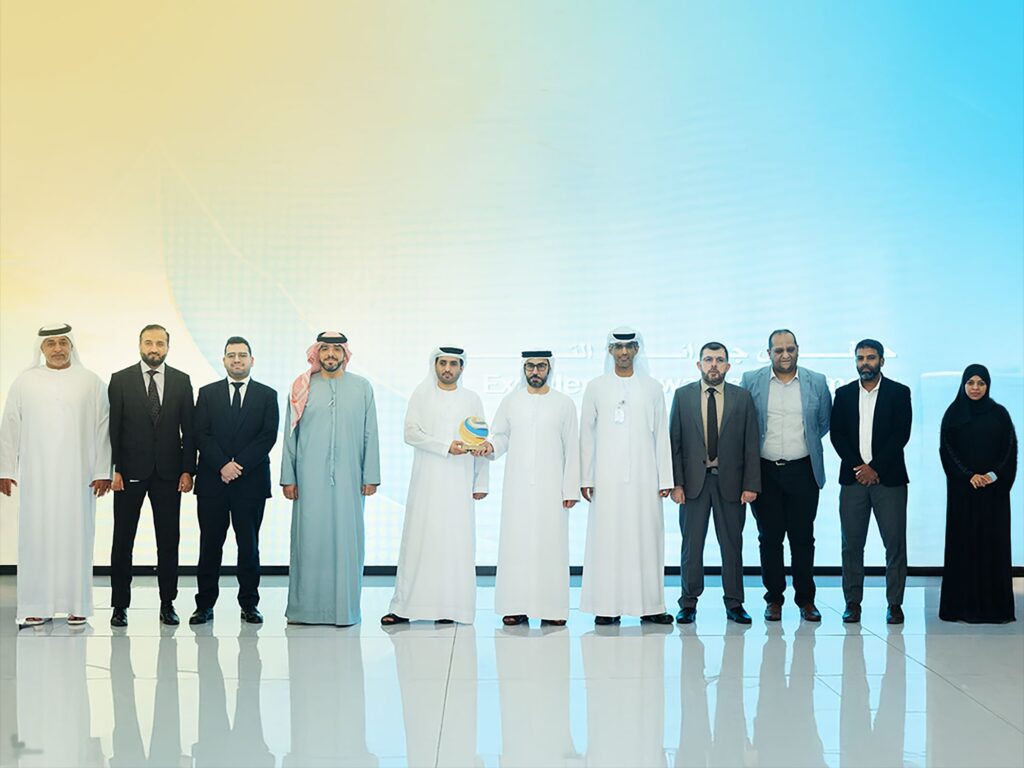
Dubai Customs has continued its excellence in service innovation by obtaining three prestigious international accreditations from the Global Innovation Institute in the United States. This milestone once again highlights its ability to develop an advanced customs ecosystem built on innovation, proactivity and value creation.
The three accreditations covered high-impact projects representing a qualitative leap in service development: automation of vehicle clearance certificates, the mega X-ray scanner and the attestation service in collaboration with the Ministry of Foreign Affairs. Two projects were classified at Level 2, which focuses on enhancing services to increase competitive value, while the third achieved Level 3—the institute’s highest classification—due to its strategic value in expanding service scope and strengthening long-term sustainability.
Atiq Al Mehairi, Executive Director of the Customs Development Division at Dubai Customs, stated that this global achievement reflects the organisation’s ability to translate its strategic vision into tangible results. By adopting advanced digital solutions, Dubai Customs has improved operational efficiency, accelerated procedures and enhanced trade flow. The accredited projects also represent a leading model in leveraging technology to support the business environment and reinforce Dubai’s position as a pivotal global hub in supply chains and international trade.
He added that Dubai Customs continues to develop an integrated suite of digital services that keeps pace with global changes and supports the competitiveness of the national economy. Investment in innovation and institutional capability development remains a fundamental pillar for achieving global leadership and strengthening Dubai’s position as a leading trade and logistics hub.
Dr. Hussam Juma, Director of Service Innovation Department at Dubai Customs, affirmed that this achievement is a significant addition to the organisation’s record and reflects renewed international confidence in its ability to develop services in line with the highest standards. He noted that Dubai Customs is steadily enhancing its global presence by investing in talent and fostering a work environment that encourages creativity and supports the adoption of innovative solutions.
He further emphasised that Dubai Customs continues to implement ambitious development initiatives based on adopting the latest technologies and automating customs procedures. These efforts contribute to improving operational efficiency, increasing customer satisfaction and supporting the Dubai Government’s direction towards delivering proactive and innovative services that meet future expectations.
Dubai Customs previously achieved a major milestone by obtaining the Certified Government Organisation – Excellence Level accreditation from the same institute in 2023. It became the first government entity in Dubai and the first customs authority globally to receive this prestigious classification, further confirming its leadership in delivering innovative government services aligned with global best practices.