Arabs & Arabian Records Aggregator. Chronicler. Milestones of the 25 Countries of the Arabic Speaking World (official / co-official). AGCC. MENA. Global. Ist's to Top 10's. Records. Read & Enjoy./ www.arabianrecords.org
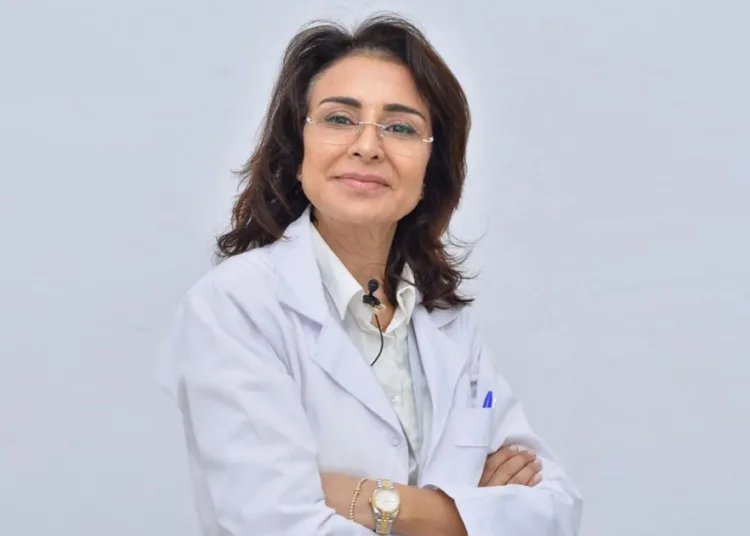
Zouaki made history in 2023 as the first Moroccan to join the Royal Academy of Pharmacy in Catalonia.
Moroccan biologist Jinane Zouaki has been appointed as an academic corresponding member of the Ibero-American Academy of Pharmacy.
Her appointment marks a big milestone, as she is the first Moroccan, Arab, and African woman to receive this honor. The official ceremony took place on Tuesday at the Faculty of Pharmacy in Granada, Spain. The event gathered many scientists from Spain, Portugal, Latin America, and Morocco.
In her speech to the academy, Zouaki spoke about her history of pharmacy in Morocco. She outlined the country’s recent efforts to strengthen its health sovereignty under the leadership of King Mohammed VI.
She explained that this national strategy has helped Morocco become a leading industrial hub and a strong, competitive player in both regional and international healthcare sectors.
Speaking to Morocco’s state news agency MAP, Zouaki shared her pride and gratitude for joining such a prestigious institution. She said the recognition is not only a personal achievement, but also a proud moment for Moroccan women and for the country as a whole.
This recognition contributes to Morocco’s scientific presence on the international stage, she added.
Originally from the northern city of Tetouan, Zouaki holds a doctorate in pharmacy. In 2022, she became the first Moroccan and African to receive the Medal of Privilege from the University of Granada, a high honor that celebrates her long journey in education and biomedical research.
Zouaki also made history as the first Moroccan to join the Royal Academy of Pharmacy of Catalonia.
During the COVID-19 pandemic, she volunteered to help medical teams. At her molecular biology lab in Saniat Rmel Hospital in Tetouan, she worked on COVID-19 testing and helped train healthcare workers.
The author, imprisoned without charge since 2001, was chosen to share the PEN Pinter prize by 2020’s winner Linton Kwesi Johnson.
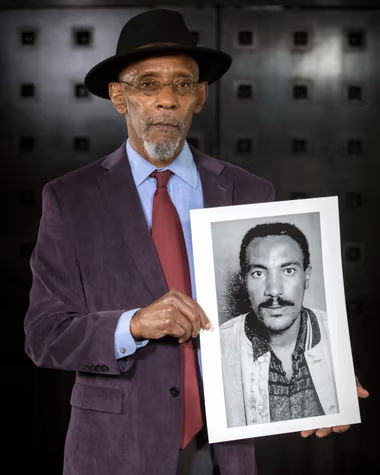
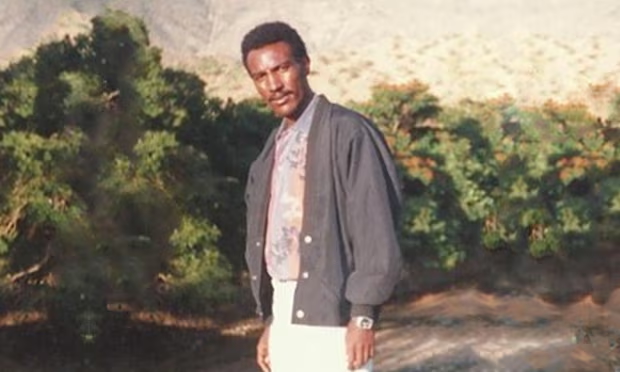
The Eritrean poet Amanuel Asrat, who was arrested in 2001 and is believed still to be detained in a maximum security prison, has been named International Writer of Courage by Linton Kwesi Johnson.
Johnson won the PEN Pinter prize earlier this year, for his “political ferocity” and “tireless scrutiny of history”. Accepting the prize last night, the Jamaican dub poet named Asrat, a poet, critic and editor-in-chief of the newspaper Zemen, as the International Writer of Courage winner with whom he will share his prize. This award goes to a writer who has been persecuted for speaking out about their beliefs, with previous recipients including the Saudi blogger Raif Badawi and Gomorrah author Roberto Saviano.
“Keeping a citizen incarcerated, incommunicado, without charge or trial for nearly 20 years is the kind of egregious brutality that we associate with totalitarian states and dictatorships,” said Johnson. “As a gesture of solidarity from a poet of the African diaspora, I have chosen the Eritrean poet, songwriter, critic and journalist Amanuel Asrat.”
Asrat’s writing looks at the daily life of the underprivileged, exploring themes of war and peace, and the negative side of conflict. He was arrested on 23 September 2001, along with the editors of all privately owned newspapers, as part of the Eritrean government’s campaign to silence its critics, and has not been heard from since.
According to English PEN , Asrat and his fellow writers are believed to have been subjected to torture and other ill-treatment, including lack of access to medical care, while detained in the purpose-built maximum-security prison Eiraeiro. The free speech organisation, which awards the PEN Pinter prizes in memory of the late Harold Pinter, said that it was unknown whether charges have been brought against them or if they have ever been brought to trial.
“Amanuel [has been] suffering under the harsh conditions of the Eiraeiro dungeon for 19 years and counting. His whereabouts are not known. We don’t even know whether he is alive or dead,” said Asrat’s brother, Daniel Mebrahtu. “We wish Amanuel was aware of this prize and honour somehow. We ask the international community to intervene in his case and other prisoners of conscience in Eritrea, and demand their immediate release.”
English PEN has just launched a year-long letter-writing campaign asking people around the world to send messages of solidarity to writers of courage, with Asrat the first featured writer. “We remain hopeful that this year will finally see him released and reunited with his family after almost two decades apart,” said PEN’s Cat Lucas. “In the meantime, we hope that our PENWrites campaign will provide an opportunity to raise greater awareness of his situation, to amplify calls for his release, and to continue to show our support for him and his family.”
source/content: theguardian.com (headline edited)
_____________
Gesture of solidarity … Linton Kwesi Johnson holds a portrait of Amanuel Asrat. Photograph: George Torode
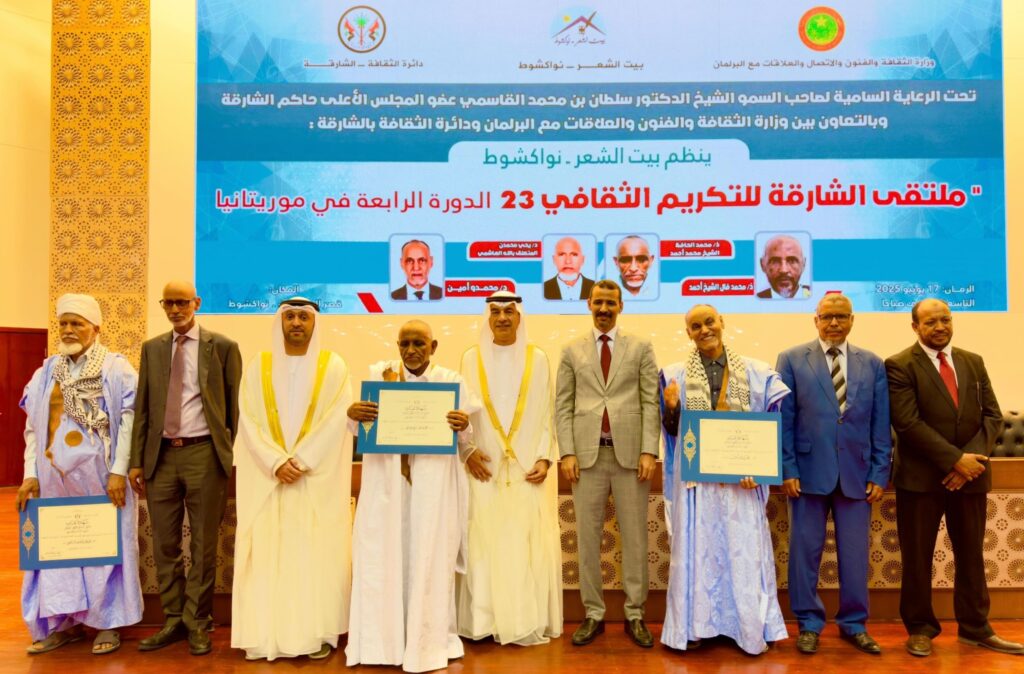
Under the patronage of His Highness Dr Sheikh Dr Sultan Bin Mohammed Al Qasimi, Supreme Council Member and Ruler of Sharjah, the Mauritanian capital, Nouakchott, witnessed a formal and cultural celebration that reinforced the values of loyalty to creative figures and affirmed their status.
The event was held as part of the 23rd edition of the Sharjah Cultural Honouring Forum, organised by the Sharjah Department of Culture in cooperation with the Mauritanian Ministry of Culture, Arts, Communication and Relations with Parliament.
Four prominent figures of Mauritanian literature were honoured in recognition of their contributions to enriching cultural life: poet Mohamed Fall Abdel Latif, linguistics academic Dr Yahya Al Hashemi, language researcher Dr Mohamedou Ameen, and poet Mohamed Al Hafiz Ould Ahmedou.
The forum reflects the directives of the Ruler of Sharjah to honour literary figures who have contributed to contemporary Arab culture. This marks the fourth time the forum is held in Mauritania, where it has previously recognised 12 Mauritanian creatives over past editions.
The award ceremony took place at the Conference Hall in Nouakchott, in the presence of Abdullah bin Mohammed Al Owais, Chairman of the Sharjah Department of Culture; El Houssein Ould Meddou, Minister of Culture, Arts, Communication and Relations with Parliament in Mauritania; Mohammed Ibrahim Al Qaseer, Director of Cultural Affairs at the department; the Governor of Nouakchott-West on behalf of the Mayor of Tevragh-Zeina Municipality; as well as a large audience of Mauritanian intellectuals, academics, writers, and the honourees’ families.
In his speech, Abdullah Al Owais highlighted the significance of the sustained cultural collaboration between Sharjah and Mauritania, saying, “We are pleased to meet today at this distinguished cultural event, which continues the journey of cooperation between the Sharjah Department of Culture and the Ministry of Culture, Arts, Communication and Relations with Parliament. This partnership has led to numerous cultural activities that support Arab culture and reinforce the role of thought and creativity in our Arab societies.”
El Houssein Ould Meddou welcomed the attendees and expressed his sincere thanks and deep gratitude to His Highness the Ruler of Sharjah, saying, “I am honoured to be with you today at this distinguished cultural gathering, celebrating this radiant forum and noble initiative. At the outset, I am pleased to extend my heartfelt thanks and appreciation to His Highness Sheikh Dr Sultan bin Mohammed Al Qasimi, Supreme Council Member and Ruler of Sharjah – this cultured leader who has dedicated his efforts, intellect, and time to serving the Arabic language and its literature, and to supporting the cause of culture and intellectuals throughout our Arab world.”
The honourees expressed their deep gratitude for the recognition, which they considered a badge of pride and an acknowledgment of their cultural and creative journeys. They noted that the Sharjah Cultural Honouring Forum represents a civilised model for celebrating Arab intellectuals and affirms the Emirate’s unwavering commitment to supporting thought and creativity across the Arab world.
They praised the vision of the Ruler of Sharjah in establishing culture as a pillar of development and identity. They emphasised that this recognition is not merely a personal honour, but a celebration of Arab culture and its creative figures across various fields. WAM
19 June marks 7th death anniversary of Amal Farid (1938-2018), an iconic Egyptian actress who captured hearts with her elegance and innocence.
Amal Farid was born on 12 February 1938 in Cairo’s Abbassiya district.
Farid’s career was launched at the hands of Baba Sharo (Mohamed Mahmoud Shaaban) in the early 1950s, when she was hired to work on his children’s radio show.
She was recommended by writers Mostafa Amin and Anis Mansour to appear in her first movie Mawed Maa El-Saada (A Date with Happiness), with mega star Faten Hamama in 1954.
This was soon followed by roles alongside the greatest stars of her time—most notably Abdel Halim Hafez, with whom she shared the screen in the classic film Layali El-Hob (Nights of Love, 1955), marking beginning of a connection that stirred rumors of a relationship between the two.
The starlets for whom Abdel-Halim sang in movies were very few. Amal Farid was among them, however, and she was envied by almost every girl in the Arab world for decades after Abdel-Halim sang Kefaya Norak Alaya in the film, where he and Farid danced in an iconic romantic scene.
Farid said in interviews that it was Abdel-Halim who asked for her by name to star alongside him in the movie.
Farid, who was known for her elegant and convincing acting style, worked most frequently alongside Ahmed Ramzy and the famous comedian Ismail Yassin.
She was fortunate to find directors who were able to utilise her talent in various roles. Such directors include Fateen Abdel-Wahab, Salah Abou Seif, Kamal El-Sheikh and Hussein Helmy El-Mohandes.
Farid was not always the main starlet in movies, but her presence was always felt, and she always made her mark with her convincing performance.
Director Henry Barakat brought Farid out of the pure girl role in Banat El-Yom (1957), where she embodied the personality of a spoiled, selfish girl. In the film, she provokes the hatred of the audience when she tries to spoil her sister’s love affair a nobleman played by Abdel-Halim, whom she accuses of trying to rape her out of jealousy.
The role was a surprise when the movie came out in 1957, but critics appreciated her performance and recognised the talented, capable and credible actress.
Farid’s filmography includes Banat El-Yom (1957), Seraa Maal Hayat (1957), Min Agl Emraa (1959), Ismail Yassin Fil Tayaran (1959), Banat Bahri (1961), Zekrayat El-Talmaza (1965), and Geziret El-Oshak (1968).
Farid gave up on her acting career in the late 1960s and moved to live with her husband in Moscow. She returned to Egypt a decade later and received a number of smaller roles, but her film career never picked up with the same strength.
Farid spent her final years in a home for the elderly in Cairo, and went through surgery months before her passing on 19 June 2018 at the age of 80.
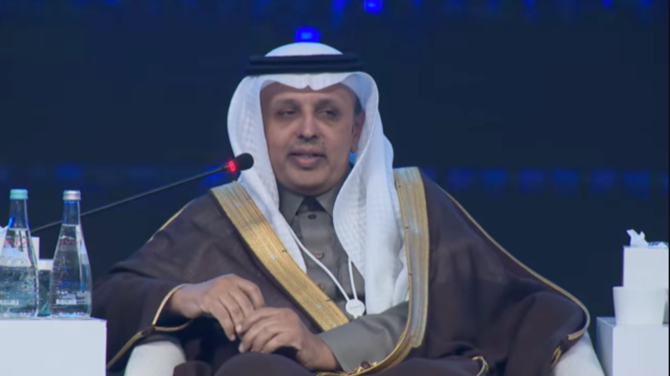
Rumaih bin Mohammed Al-Rumaih was selected in a vote during the International Association of Public Transport’s summit in Hamburg
Al-Rumaih was selected for his expertise in developing modern transport systems, leading national projects and representing Saudi Arabia in international forums
The acting president of Saudi Arabia’s Public Transport Authority has been elected president of the International Association of Public Transport for the MENA region.
Rumaih bin Mohammed Al-Rumaih was selected in a vote during the association’s summit in Hamburg, Germany, this week. He will occupy the role until 2028.
Al-Rumaih was selected for his expertise in developing modern transport systems, leading national projects and representing Saudi Arabia in international forums, the Saudi Press Agency reported.
Having previously served as CEO of the Saudi Railway Company and president of the Transport General Authority, Al-Rumaih has a track record of working to improve the sustainability and quality of transport in urban settings.
“I am delighted to be with you today, and to start this new phase of work with a distinguished team that brings together a number of leaders and professionals,” he said during the conference.
“I believe that public transport is not just about infrastructure, but about experience, justice, accessibility, and sustainability.
Al-Rumaih highlighted the success of the Riyadh Metro system, which became fully operational earlier this year.
He said that the metro is witnessing high rates of usage and is changing commuter behavior in the capital.
“When we provide appropriate transportation services that are clean, safe, accessible, and reliable, people respond to and adapt to them,” he said.
Al-Rumaih also spoke about how building sustainable and people-centered transport systems requires collaboration between governments, operators, the private sector, and civil society.
“The International Association of Public Transport has always been a driver of this collaboration and will grow in importance in the years to come.”
Al-Rumaih also highlighted the findings of the MENA Transport Report 2025, which assessed trends in the industry in 40 cities across 14 countries in the region.
source/content: arabnews.com (headline edited)
___________
Vice Minister of Transport and Logistic Services Rumaih bin Mohammed Al-Rumaih. (Screengrab)
Rami Al-Ali has become the first Syrian designer to join France’s prestigious Federation de la Haute Couture et de la Mode as a guest member, giving him the chance to showcase his Autumn/Winter 2025 collection on the official haute couture calendar.
The invitation signifies Al-Ali’s entry into fashion’s upper echelons — to qualify, fashion houses must meet rigorous “haute couture” or “high fashion” standards and the title is legally protected under French law.
Al-Ali joins the likes of Chanel, Dior, and Schiaparelli on the official calendar next month. His latest collection will be presented on July 10, according to the provisional calendar.
It is a “historical milestone, celebrating a lifelong devotion to craftsmanship, culture, and creative expression, rooted in heritage and elevated by vision,” the fashion house posted on Instagram.
Originally from Damascus, Al-Ali honed his fashion skills in Dubai and Beirut before founding his label, Rami Al-Ali Couture, in 2001.
His creations have been worn by a variety of celebrities, including Amal Clooney, Eva Longoria, Jennifer Lopez, and Jessica Chastain.
Al-Ali’s work has been praised for seamlessly blending his Middle Eastern heritage with Western sensibilities. He is known for designing flowing silhouettes adorned with intricate, playful embellishments—creations that are both timeless and runway-worthy.
Al-Ali is one of just a handful of Arab designers on the official haute couture calendar. The lineup also includes Lebanese designers Georges Hobeika, Elie Saab, and Zuhair Murad, as well as Saudi couturier Mohammed Ashi.
Ashi, founder of Paris-based label Ashi Studio, became the first designer from the Gulf region to join the exclusive group in 2023 as a guest member. His designs have also been worn by global celebrities such as Beyonce, Anna Kendrick, and Jennifer Hudson.
“This appointment is the highlight of my career,” Ashi said in a statement posted on Instagram when the announcement was made in 2023. “I will honor it in the memory of the great couturiers who came before me and whom I now join in the pursuit of this grand tradition of excellence in creativity and savoir-faire.
source/content: arabnews.com (headline edited)
__________
Rami Al-Ali has become the first Syrian designer to join France’s prestigious Federation de la Haute Couture et de la Mode as a guest member. (Getty Images)
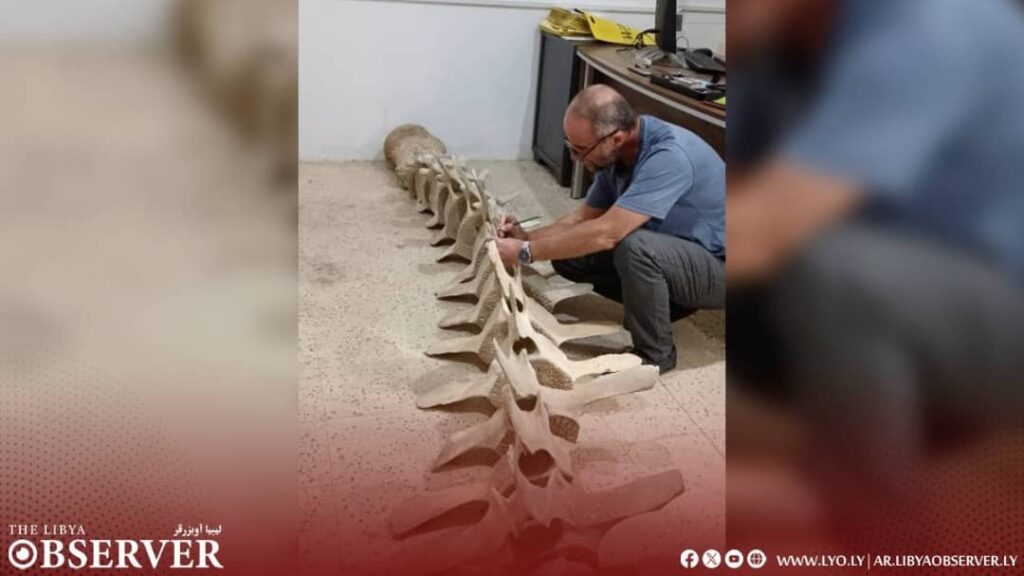
The Benghazi Department of Antiquities is preparing to begin restoration and display work on a whale skeleton belonging to the baleen whale group, previously discovered in the Qasr Al-Sahabi area, approximately 100 kilometres south of Ajdabiya.
The department stated that it has formed a scientific team tasked with cleaning and reinforcing the skeleton to preserve its structure ahead of a scientifically sound and safe relocation to its permanent exhibition site.
Officials noted that the discovery will be a significant addition to the city’s future museum and will help raise environmental and scientific awareness among visitors and enthusiasts.
The fossilized skeleton is estimated to be around five million years old, dating back to the Miocene epoch, making it one of the rarest geological discoveries in the region.
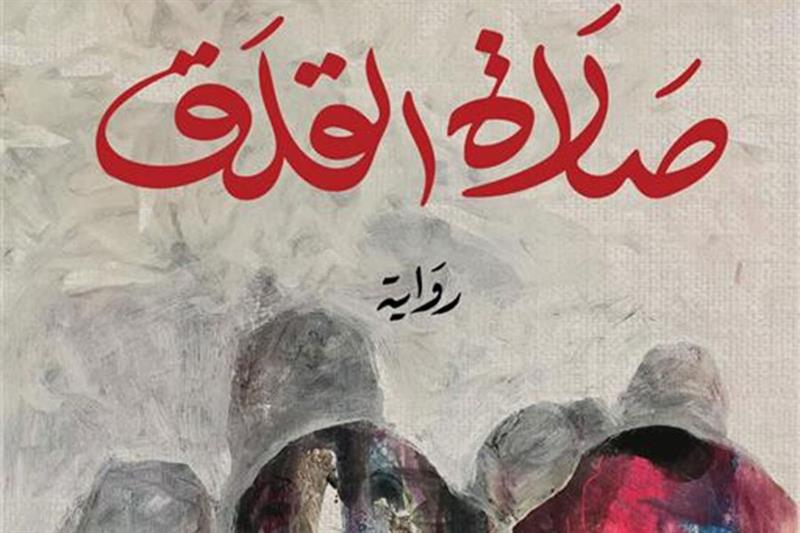
On 25 April, Egyptian author Mohamed Samir Nada was awarded the 2025 International Prize for Arabic Fiction (IPAF) for his novel The Prayer of Anxiety, a darkly allegorical tale set in a secluded village in Upper Egypt.
This marks the third time an Egyptian writer has won the prestigious literary award, following Youssef Zidan’s Azazel in 2009 and Bahaa Taher’s Sunset Oasis in 2008.
Nada’s novel, published by the Tunisian press Masciliana, was chosen from a six-title shortlist.
In a televised interview earlier this year, Nada revealed that he had turned to Masciliana after three Egyptian publishers declined to print the manuscript.
Set in the fictional hamlet of Nag’ Al-Manassi — literally “the village of forgetfulness” — the novel unfolds in a reality suspended in misinformation and fear.
Its inhabitants believe a minefield surrounds them and are still at war with Israel decades after the 1967 conflict.
Their only contact with the outside world is Khalil Al-Khoja, a local authority figure who produces the village newspaper, controls access to goods and maintains the illusion of unending war.
When a mysterious object falls from the sky, triggering an illness among villagers, the local sheikh responds by creating a new ritual prayer—The Prayer of Anxiety.
The plot evolves against the backdrop of national icons, culminating in the 1977 death of Abdel-Halim Hafez, a singer synonymous with the era of Gamal Abdel-Nasser.
Told through eight character “sessions,” each beginning with a nightmare and dreamlike awakening, the novel functions as both a dystopian fable and a meditation on collective delusion.
Nada’s characters offer confessional narratives haunted by guilt and helplessness. The result is a richly layered text that explores how fear and propaganda can distort memory and shape reality.
Mona Baker, chair of this year’s IPAF judging panel, praised the novel for “transforming anxiety into an aesthetic and intellectual experience that resonates with the reader and awakens them to pressing existential questions.”
Yasser Suleiman, Chair of the IPAF Board of Trustees, highlighted the novel’s “gripping poetic language” and its “clever use of symbolism,” calling it a powerful reflection on life under tyranny and the mechanisms that uphold it.
Yet the novel’s success has not gone without controversy.
Some critics have criticized its handling of Egypt’s modern history, especially its allusions to Abdel-Nasser’s legacy.
Literary critic Reda Attiya publicly dismissed The Prayer of Anxiety as “poorly structured” and accused the prize committee of rewarding a novel that “takes aim at Nasser,” calling it a “conspiracy against Egypt.”
Others pushed back. Novelist Mohamed Mawafai likened such attacks to the 1994 stabbing of Nobel laureate Naguib Mahfouz by a young man who admitted to never reading his work.
“Both are acts of incitement,” Mawafai said. “There is no difference between one and the other.”
Nada’s novel joins a growing wave of dystopian fiction in the Arab world.
In a recent study of the genre, Syrian novelist and critic Shahla Al-Ogaily argued that dystopian literature has gained traction in post-2011 Arab societies to confront painful political and social realities.
“This genre represents the inability to forgive,” she wrote, “and a confrontation with the hallucinations and phobic fears that emerged after the revolutions failed to deliver on their promises.”
Al-Ogaily traced the rise of Arabic dystopian writing to the translation of authors like Franz Kafka and George Orwell, whose works explored the horrors of surveillance, repression, and modernity.
The influence is evident in Nada’s novel — from Kafka’s The Metamorphosis, echoed when a village sheikh wakes up to find his head missing, to Orwell’s 1984, in the depiction of total narrative control and a fearful, manipulated public.
At its heart, The Prayer of Anxiety critiques political, religious, and media-driven systems that manufacture obedience and stifle thought.
Through poetic language and surreal events, Nada lays bare the quiet complicity that enables authoritarianism.
One of the novel’s characters voices the core dilemma:
“How many shooting stars must fall before we gain a new memory? How many men must die in war for old women to tell a different story?”
Despite occasional tonal inconsistencies—particularly between the elevated language and the characters’ rural backgrounds—the novel’s literary ambition, conceptual depth, and striking imagery have resonated widely.
The IPAF, launched in 2007 with support from the Emirates Foundation, awards $50,000 to the winner and $10,000 to each shortlisted author. This year’s judges included Said Bengrad, Maryam Al Hashimi, Bilal Orfali, Sampsa Peltonen, and chair Mona Baker.
With The Prayer of Anxiety, Nada has delivered a novel that provokes, unsettles, and — crucially — invites deeper engagement with the structures of power that shape the Arab world’s past and present.
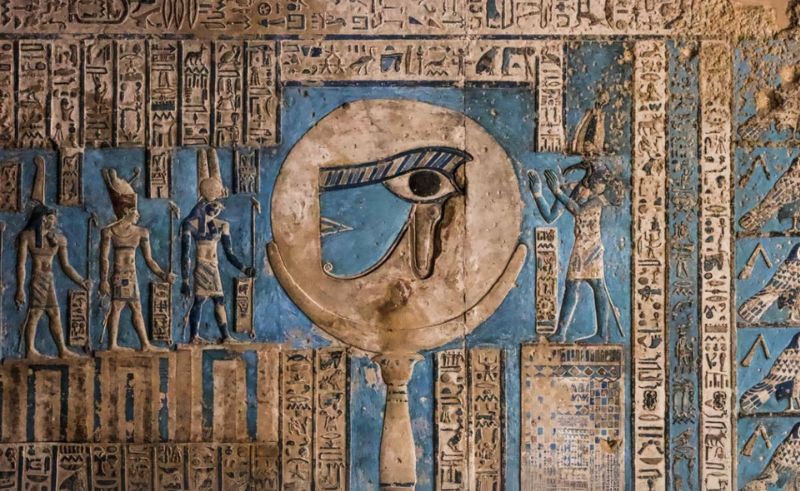
Researchers at Washington State University have revived Egyptian blue—the world’s first synthetic pigment.
A team of researchers from Washington State University, in collaboration with the Carnegie Museum of Natural History and the Smithsonian’s Museum Conservation Institute, has successfully recreated Egyptian blue, the oldest known synthetic pigment in the world. Originally developed over 5,000 years ago, the pigment was commonly used in ancient Egyptian art, tombs, and architecture.
The scientists tested 12 different methods to reproduce the pigment, adjusting materials and heating times to mirror ancient techniques. They discovered that a rich, vivid blue could be achieved even when only half of the mixture’s colour-bearing component was used—challenging previous assumptions about how the pigment was made. Small variations in temperature and ingredients also caused the colour to shift, from pale greens to intense blues and even greys.
Beyond its historic value, Egyptian blue has properties that make it relevant for modern technology. It absorbs visible light and emits infrared radiation, which can be applied in biomedical imaging, telecommunications, and anti-counterfeiting technologies.
The recreated pigment is now on display at the Carnegie Museum of Natural History in Pittsburgh.
Model & Lifestyle Influencer Nour Arida Joins Serena Williams in Audemars Piguet Campaign.
When Audemars Piguet picked the faces for its 150th anniversary campaign, it chose icons. Nour Arida was the only Arab woman among them.
In the world of luxury watchmaking, Arab women aren’t often on the moodboard. But this year, that changed.
For its 150th anniversary, Audemars Piguet didn’t just call in the usual faces – it summoned a lineup of global icons. Serena Williams. Winnie Harlow. Tamara Kalinic. And, for the first time ever, an Arab woman: Nour Arida.
Draped in AP’s legacy, the Lebanese model-slash-creative-slash-cultural force owned the frame.
“I always try to push boundaries,” Arida says, in what might be the understatement of the year. “It’s like being part of a real family, being part of the AP family.”