Arabs & Arabian Records Aggregator. Chronicler. Milestones of the 25 Countries of the Arabic Speaking World (official / co-official). AGCC. MENA. Global. Ist's to Top 10's. Records. Read & Enjoy./ www.arabianrecords.org
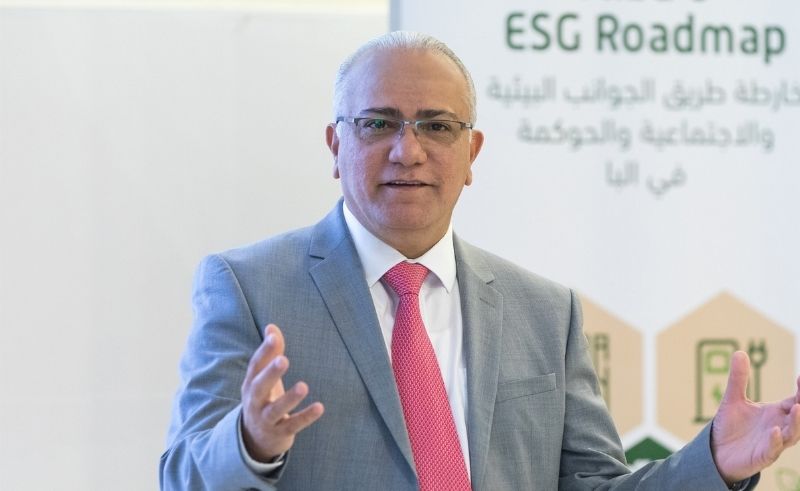
Aluminium Bahrain (Alba), a Bahrain-based aluminium producer, has agreed to acquire France’s Aluminium Dunkerque for approximately $2.2 billion, in one of the largest international industrial acquisitions undertaken by a Bahraini company.
Announced during the Choose France Summit in Paris, the transaction forms part of Alba’s strategy to build a global low-carbon aluminium platform and expand its international footprint.
Located in northern France, Aluminium Dunkerque is the European Union’s largest aluminium smelter, producing around 300,000 tonnes of aluminium annually for customers across Europe.
The acquisition will provide Alba with direct access to the European aluminium market and a manufacturing base in one of the continent’s key industrial regions. The facility’s industrial infrastructure and automation systems are also expected to strengthen the company’s operational capabilities.
The transaction will be financed through a consortium of Alba’s banking partners. Upon completion, Alba will acquire full ownership of Aluminium Dunkerque.
France’s public investment bank, Bpifrance, is expected to invest €100 million for a 6% stake in the company and take a seat on its board, subject to regulatory approvals.
The deal comes as manufacturers across Europe seek secure supplies of lower-carbon industrial materials and reflects a broader trend of Gulf industrial companies pursuing international expansion to gain market access, increase scale and strengthen technological capabilities.
On 28 August 2024, the Royal Society, the world’s oldest scientific academy, awarded the prominent Tunisian mathematics professor, Ali Baklouti, the Africa Prize for his contribution to science. As part of his groundbreaking works, Baklouti developed new mathematical approaches to solve two long-standing mathematical problems.
These problems are referred to as conjectures in his field. A conjecture is a mathematical statement, hypothesis or proposition that has not been proven. Once proven, a conjecture becomes a theorem or a mathematical statement with a definitive conclusion based on proven facts.
Baklouti’s work on the Corwin-Greenleaf conjecture and the polynomial conjecture for nilpotent restrictions helps push scientific frontiers by opening the way for them to be applied in various scientific and technological domains.
University World News spoke to the award-winning professor about his work, his fears about the significant challenges of teaching maths in Africa that he says could affect the future of scientific and technological progress on the continent, and his commitment to his community.
UWN:When and how did your interest in mathematics start?
AB: My interest in mathematics began at a very young age. I was always fascinated by numbers and logical puzzles, and I would spend hours solving maths problems just for fun. While I wasn’t considered a prodigy, I had a natural affinity for mathematics and enjoyed tackling complex challenges.
Although there were no mathematicians in my family, my parents always encouraged my curiosity and supported my academic pursuits. This support, combined with my passion, naturally led me to a career in mathematics.
UWN:Where did you study and what impact did it have on you?
AB: I graduated from the University of Metz [now part of the University of Lorraine] in France in 1995. My time there had a profound impact on my academic and professional development. The rigorous training and exposure to advanced mathematical concepts during my studies laid a strong foundation for my future work.
After completing my degree, I quickly joined the Tunisian university system, where I rapidly advanced through the academic and scientific ranks. This early integration into the academic community allowed me to contribute significantly to both research and teaching in Tunisia.
UWN:Apart from harmonic analysis, what other branches of mathematics are you grounded in and why do they appeal to you?
AB: I am also well-versed in Lie groups and Fourier analysis. These areas of mathematics appeal to me because they offer powerful tools for understanding symmetries and transformations, which are fundamental concepts in many areas of mathematics and physics.
The rich structures in Lie groups and the versatility of Fourier analysis in breaking down complex functions into simpler components have always fascinated me. The deformation theory comes also as a very important related subject and has many meaningful aftermaths. These fields not only complement my work in harmonic analysis but also provide a broader perspective on how different mathematical concepts interconnect.
UWN:What does it take to be a good mathematician?
AB: It takes a combination of curiosity, persistence and creativity. Curiosity drives the desire to explore new problems and understand the underlying principles of mathematics. Persistence is crucial because solving complex problems often requires sustainable effort and the willingness to embrace challenges and setbacks. Creativity is needed to think outside the existing methods and ideas and to develop innovative solutions or new approaches.
Additionally, a good mathematician must have a solid foundation in mathematical theory, the ability to communicate ideas clearly, and a passion for continuous learning and discovery.
UWN:What do you consider your major mathematical breakthroughs?
AB: One of my major mathematical breakthroughs was proving two long-standing conjectures, the Corwin-Greenleaf and the polynomial conjecture for nilpotent restrictions. These achievements were the result of years of dedicated research and collaboration with other mathematicians. By solving these problems, we were able to unlock new insights and open further avenues of exploration in the field.
My work has contributed to humanity by advancing our understanding of complex mathematical concepts, which can have applications in various scientific and technological domains. Although my contributions may seem abstract, they play a crucial role in the broader progress of knowledge and innovation.
UWN:What do you think of mathematics teaching at African universities?
AB: The teaching of mathematics at African universities faces significant challenges, one of which is the decreasing interest in mathematics-related fields among students. This trend is alarming, as it could affect the future of scientific and technological progress in the region.
To address this issue, it is essential to cultivate a love for mathematics in children from a young age. Creating a positive and engaging experience with mathematics early on can help prevent later reluctance or avoidance of the subject. Strategic solutions and innovative teaching methods are needed to make mathematics more appealing and relevant. This can include incorporating hands-on activities, real-world applications and interactive learning experiences that highlight the importance of mathematics in everyday life.
Additionally, improving the overall quality of mathematics education, investing in resources, and supporting teachers are crucial steps in reversing this trend and ensuring that more students recognise the value and potential of pursuing mathematics.
UWN:You championed your university collaboration with a Japanese institution. Are there any other collaborations? What is the importance of university collaborations?
AB: I have been deeply involved in fostering collaboration between my university and Japanese institutions. We organise a Tunisian Japanese conference every two years, with the most recent one held in 2023 in Monastir, where nearly 30 Japanese participants joined us to exchange ideas. This ongoing partnership has been highly productive and has greatly enriched our academic environment.
In addition to our work with Japan, we have also established collaborations with institutions in France, Germany, India, Morocco, Saudi Arabia and Indonesia. These partnerships are crucial for several reasons. They facilitate the exchange of knowledge and ideas, enhance research opportunities, and provide valuable international perspectives that can drive innovation and academic excellence. Such collaborations help broaden the scope of our research, improve educational outcomes and strengthen our global academic network.
UWN:During the 25th Annual Congress of the Tunisian Mathematical Society that you helped organise, there was an exhibition of women in mathematics in the world. Why do we have so few female mathematicians and what needs to be done to usher more women into this field?
AB: Acting as president, I had the privilege of helping to organise the conference. We featured an exhibition highlighting women in mathematics from around the world. This exhibition aimed to shed light on the achievements of female mathematicians and inspire more women to enter the field. The underrepresentation of women in mathematics is a multifaceted issue.
Historically, societal stereotypes and biases have discouraged women from pursuing careers in mathematics. These biases can manifest in various ways, from subtle discouragements to a lack of female role models and mentors. To increase the number of women in mathematics, several key actions are necessary. Encourage girls to pursue mathematics from an early age by providing positive reinforcement and challenging them to engage. Highlight the achievements of female mathematicians and provide mentorship programmes to support young women. Seeing successful women in the field can inspire and motivate others to follow in their footsteps.
UWN:Is there a relationship between maths and the empirical world; any examples from your work?
AB: Yes, there is a significant relationship between mathematics and the empirical world. Mathematics provides a framework for understanding and solving real-world problems, and its applications are found in numerous fields. For example, in artificial intelligence (AI), mathematical concepts such as algorithms, probability, and linear algebra are fundamental. These mathematical principles are used to develop models that can recognise patterns, make predictions, and improve decision-making processes.
Distortion of geometric shapes in nature can occur due to various external factors. Many naturally occurring geometric shapes exhibit significant beauty but can be altered by factors. To organise and understand these distortions, we can take several approaches, like use mathematics to describe and explain how environmental factors affect geometric shapes. For example, differential equations can be employed to model erosion or weathering processes and how they alter shapes over time.
UWN:The job of mathematicians is to help solve problems, but some mathematical problems have been unsolvable. Why?
AB: This deeply depends on the nature and the complexity of the problems. The resolution of difficult problems depends also upon the human capacities interested in the related subjects.
UWN:Which books have you written and how are they used?
AB: I have authored several important books that are used at advanced levels in mathematics:
• Representation theory of solvable Lie groups and related topics [part of the Springer Monographs in Mathematics series and co-authored by Hidenori Fujiwara and Jean Ludwig, published in 2021]. This book is aimed at researchers and advanced graduate students, focusing on the representation theory of solvable Lie groups. It offers an in-depth exploration of theoretical aspects, making it a key resource in this field.
• Deformation theory of discontinuous groups [De Gruyter Expositions in Mathematics series, published in 2022] targets graduate students and researchers with an interest in group theory, particularly in the deformation theory of discontinuous groups. It provides comprehensive coverage of the topic, both theoretically and practically.
These books are essential resources for those involved in advanced mathematical research and study.
UWN:You were born in Sfax, Tunisia, and you still live and work there. The brain drain has cost Africa some of its most brilliant minds. What has kept you at home?
AB: Indeed, I was born in Sfax and served as the vice president of the University of Sfax from 2020-24. Currently, I am a professor in the faculty of sciences.
What has kept me at home is a deep sense of responsibility and commitment to my community. I believe in the potential of our institutions and the importance of contributing to their growth. My goal has always been to make a difference here, where my roots are, and to inspire others to do the same.
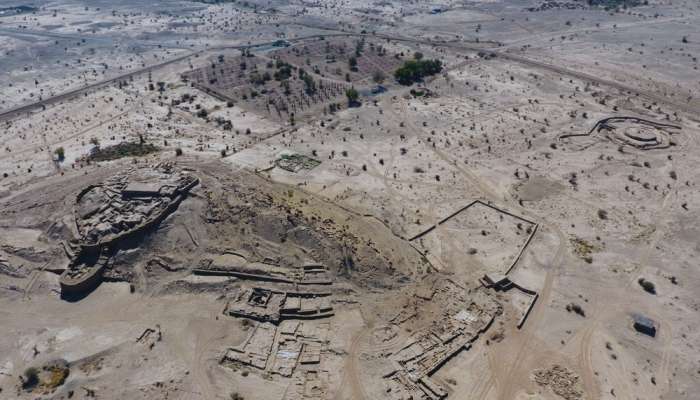
The archaeological oasis of Bisya and Salut, nestled between the banks of Wadi Saifam and Wadi Bahla in A’Dakhiliyah Governorate, constitutes an extraordinary cultural treasure, with archaeological evidence spanning from the Bronze Age through the Iron Age and into the Islamic era, representing an organized human settlement of profound historical importance.
Ibtisam Abdullah Al Maamari, Director of the World Heritage Department at the Ministry of Heritage and Tourism, told Oman News Agency that the Bisya and Salut site in the Wilayat of Bahla embodies criteria of outstanding universal value, representing a unique and exceptional global artistic masterpiece. The site eloquently expresses human creativity, reflects a significant exchange of human values, bears witness to enduring cultural traditions, and occupies a landscape of remarkable natural beauty encompassing environments rich in biodiversity.
She further elaborated that the Ministry of Heritage and Tourism, in partnership with relevant stakeholders, is actively working to enhance the representation of Oman’s historical sites on the UNESCO World Heritage List. The nation is currently in the advanced stages of preparing the nomination file for the Bisya and Salut site, to be submitted under the title “Salut: An Iron Age Settlement.” The designated expert tasked with preparing the dossier will concurrently develop a comprehensive site management plan to accompany the nomination submission. The endeavour is expected to require approximately two years of concerted effort and strategic planning until its culmination.
Ahmed bin Mohammed Al Tamimi, Director of the Bisya and Salut Archaeological Site Department, affirmed the exceptional richness of the site, first documented in 1973. Archaeological missions have been conducting excavations since the early 1980s, with a succession of international teams contributing to its exploration. Presently, the Italian mission from the University of Milan is engaged in excavating the archaeological tombs at Bisya, seeking to unravel the mysteries enshrouding these ancient burial structures. Concurrently, a mission from the Sorbonne University in France is conducting excavations at the archaeological sites of “Fal” and “Al-Dhabi.” Both missions are diligently working to determine the chronology of the sites under investigation, complete previous excavation efforts, and develop a comprehensive vision and deeper understanding of these archaeological expanses, whose habitation traces back to the late fourth millennium BC.
Al Tamimi highlighted the ongoing endeavours of the Ministry of Heritage and Tourism, channelled through the Bisya and Salut Visitor Center, to introduce and promote this historical site. Since its inauguration in February 2023 until the close of December 2025, the site has welcomed over 16,400 visitors, encompassing citizens, residents, and international tourists.
Promotional initiatives include an annual programme of events executed in collaboration with the local community, with dedicated outdoor spaces allocated for hosting diverse activities. These include programs organized by Omani Women’s Association branches, sports teams affiliated with Bahla Club, civil society institutions, and community libraries. Among the events realized are poetry evenings, productive family exhibitions, children’s activities, and art exhibitions, fostering community engagement and cultural enrichment.
He further elaborated that the Visitor Center at the Bisya and Salut archaeological complex features comprehensive exhibition panels delineating the history of archaeological investigation in the region, diverse patterns of human settlement, typological classifications of ancient tombs, and the commercial networks that connected this civilization with neighboring polities. The center annually welcomes a cohort of scholars and researchers who independently visit the site to pursue scientific inquiry across multiple disciplines, thereby advancing the Ministry’s ongoing mandate of archaeological survey and documentation.
He added that the center incorporates a dedicated repository for archaeological artifacts, tasked with receiving and preserving objects from the moment of their discovery during excavation campaigns. These artifacts subsequently undergo systematic registration, archival documentation, and secure storage. Selected items proceed to conservation and restoration laboratories at either the Ministry of Heritage and Tourism headquarters or the on-site Visitor Center facilities, while others are designated for museum exhibition. Numerous significant finds from the Bisya and Salut excavations have been displayed at the National Museum and the Oman Across Ages Museum, underscoring the site’s national archaeological importance.
He affirmed that the site constitutes an exceptionally rich archaeological landscape, encompassing thousands of Bronze Age funerary monuments, the imposing Salut Fortress with its adjacent urban settlement, third-millennium BCE towers, extensive cemeteries spanning both Bronze and Iron Ages, and a remarkable corpus of rock art. The archaeological hinterland extends to the nearby villages of Al-Dhabi, Fal, and Al-Ma’mur, revealing a densely occupied cultural landscape. The settlement of Salut itself represents a particularly significant urban center, attesting to intensive occupation and human agency during the first millennium BCE. The fortress, serving as an administrative nucleus, confirms the existence of sophisticated governance structures and an economic foundation built upon agriculture and the aflaj irrigation systems.
Regarding ongoing research initiatives, he stated: “The Bisya and Salut Archaeological Site Department, operating through the Visitor Center, coordinates various research activities. We engage external researchers through collaborative projects as circumstances warrant. During the current year, 2026, we inaugurated a comprehensive project to inventory and document the rock art corpus distributed throughout the Bisya and Salut region, enlisting local community guides possessing intimate knowledge of the drawings’ locations across mountainous terrain, valleys, and rocky outcrops. Upon completion of this documentation phase, we will undertake analytical studies to establish chronological frameworks for these artistic expressions.”
Addressing site development initiatives launched with the February 2023 opening of the Visitor Center, he noted: “Visitor pathways have been upgraded and paved to provide access to principal archaeological features, including Salut Fortress, the Bronze and Iron Age necropolises, the ancient urban core of Salut, and the third-millennium tower. During the current year, we will enhance visitor stopping points with interpretive panels presenting scientific information in accessible formats. Since the second half of 2025, we have conducted comprehensive rehabilitation, maintenance, and restoration operations at multiple locations, continuing through February 2026 at Salut Fortress, along the visitor circuit, and within the urban precinct adjacent to the fortress. A local Omani enterprise is finalizing the design and production of multimedia installations for the Visitor Center’s display systems, scheduled for completion this month, February 2026. These technological enhancements will facilitate information dissemination and showcase previously unexhibited archaeological discoveries through interactive screens. Furthermore, a field classroom has been established within the palm grove situated within the site’s protected perimeter, designated for programs integrating theoretical instruction with practical field applications. Since the center’s inauguration through the conclusion of 2025, we have conducted 79 educational programs and cultural events, serving 6,230 participants spanning all age demographics.”
He further detailed the programs and events scheduled for implementation during 2026, including the UNESCO Associated Schools Forum, the second edition of the Salut Photography Forum, in addition to numerous community-engaged activities, training workshops, and artistic initiatives designed to promote the archaeological site, introduce the Visitor Center and its surrounding antiquities, facilitate the exchange of expertise, and explore diverse experiential methodologies.
It is noteworthy that archaeological discoveries unearthed at the Bisya and Salut site collectively attest to the profound civilizational interconnections between Oman and the ancient world. Among the most significant finds are seals bearing stylistic influences from the Indus Valley Civilization, serpent figurines, various anthropomorphic and zoomorphic terracotta artifacts reflecting Indus Valley cultural traditions, and an assemblage of ceramic vessels. Particularly remarkable discoveries from the 2024/2025 excavation season include a collection of charred dates and date stones unearthed at the Al-Dhabi site, meticulously dated to the third millennium BCE, providing invaluable evidence of ancient agricultural practices and trade networks.
“Islam” and “feminism” are two words most people in Western society wouldn’t usually associate with one another. But recent developments in the historically conservative Persian Gulf region, and in Kuwait in particular, suggest that may be changing.
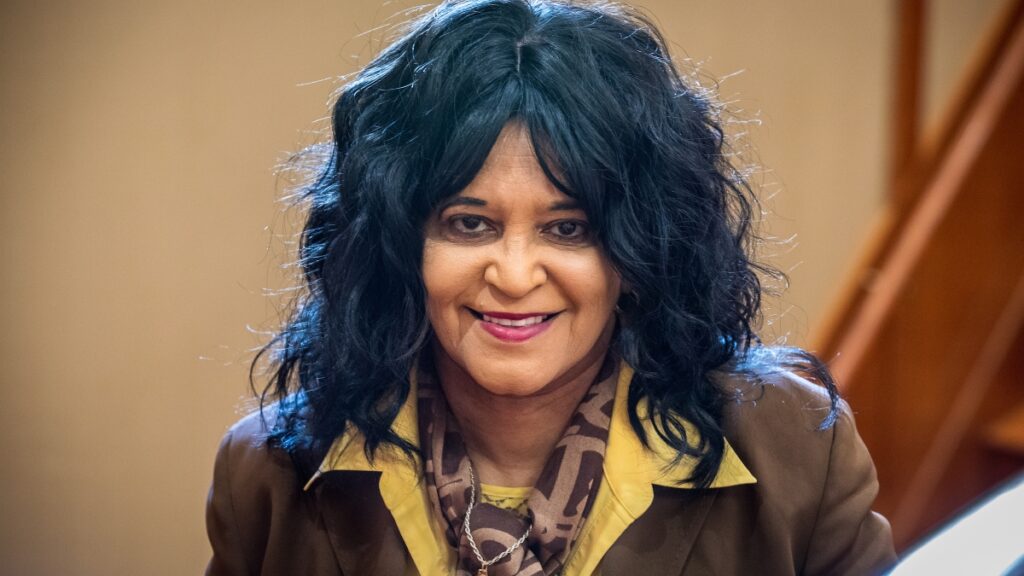
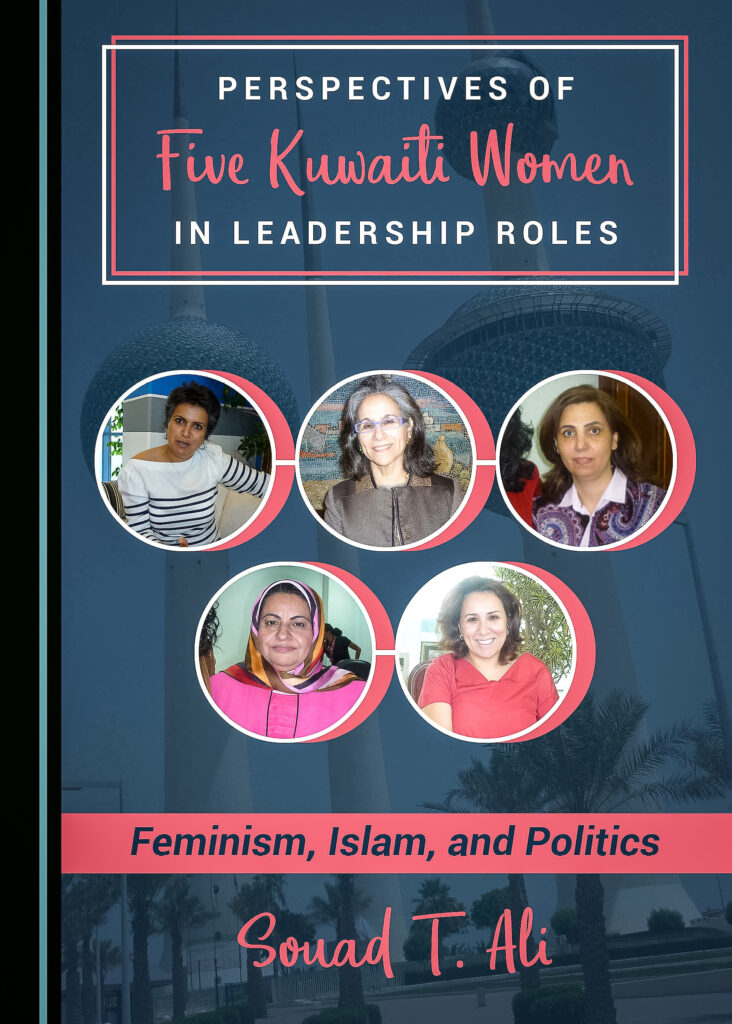
In 2005, Kuwait, a country that is more than 90% Muslim, passed laws granting women both the right to vote and the right to run in elections. In her new book, “Perspectives of Five Kuwaiti Women in Leadership Roles: Feminism, Islam and Politics” ASU Professor and Founding Chair of the Council for Arabic and Islamic Studies Souad T. Ali reveals how these and other advancements have affected them on an individual and societal level.
A native of Sudan who became a naturalized U.S. citizen after the 1989 Sudanese coup d’état replaced her original home country’s newly elected democratic government with a totalitarian regime, Ali was inspired to write “Perspectives” during her 2009–2010 Faculty Fulbright Fellowship at the American University of Kuwait.
“I admire the fact that Kuwaiti women are very outspoken,” Ali said. “They’re very interested in improving their society and they don’t fear speaking out against what they see as oppressive aspects of their society.”
Based on ethnographic research and in-depth interviews with five women, Ali’s new book discusses these women’s work in diverse leadership roles. They include Rola Dashti, a leading Kuwaiti economist, politician and human rights activist who was among the first four women elected to the Kuwaiti parliament; Sheikha Hussah Sabah al-Salem al-Sabah, a patron of Islamic art and museums; Sara Akbar, an oil industry engineer leader and co-founder of Kuwait Energy; Sheikha Dana Nasser Sabah Al-Ahmed Al-Sabah, founder of the American University of Kuwait and an established businesswoman; and Safa al-Hashem, a powerful Kuwaiti politician and entrepreneur who is currently the only elected female member of the Kuwaiti parliament.
Ali, who serves as head of Middle Eastern and classics studies, and coordinator of Arabic studies, turned down an offer from Princeton in order to build ASU’s Arabic studies program from the ground up. Since joining ASU in 2004, she has established three concentrations, including a certificate in Arabic studies, the Arabic studies minor and most recently the Arabic studies bachelor’s degree concentration.
She also is the author of more than 25 articles and three books, including “Perspectives,” and she has participated in more than 100 scholarly presentations and academic conferences in her fields of Middle Eastern studies and Islamic studies. Her forthcoming book, an edited volume with colleague Emily Silverman will explore subjugated voices in religion.
Ali has been active nationally and internationally representing ASU as president of the American Academy of Religion/Western Region branch; as president of the Sudan Studies Association of North America; as a Fulbright Scholar in Kuwait and the Persian Gulf; and as a State Department’s speaker and specialist in Senegal on issues including Islam and democracy, Sufism and religious freedom.
ASU Now sat down with Ali to talk about her new book and how Islam and feminism aren’t as disparate as you might have thought.
Question: How does the feminist movement in Kuwait compare to other countries in the Persian Gulf region?
Answer: From my perspective, the issue of women’s rights is just one issue. But there are many brands of feminism, given the fact that women come from different cultures and have different backgrounds and different histories. Kuwaiti women have a marginal freedom within their government, which is a parliament. There isn’t any other parliamentary government anywhere else in the Gulf region. I discuss feminism in Islam in much detail in the last chapter of my book, highlighting the fact that it emphasizes the inclusion of Muslim women in the religious sphere, with no conflict with their call for their political rights or their active participation in public life. There have been several Muslim women elected as prime ministers in their countries, for example.
Q: What are some of the issues you discussed with the women in your book?
A: The book discusses multiple issues addressed by these women in their leadership roles. These include women’s rights, the issue of reform, political change, equality, gender segregation, veiling, etc., and how these women view feminism and their similar or different perspectives therein. This of course includes the issue of interpretation in Islam that affects how people view issues such as veiling and whether or not it is required by the religion, the need to respect difference in interpretation as much as it does not infringe on others’ perspectives and freedom of expression, and most importantly, respecting women’s agency.
Q: What accounts for the lack of understanding of Muslim women’s rights?
A: I would say the majority, or at least 50% of Muslim women, don’t know their rights, if they don’t read the Qur’an directly. Many of them depend on the male interpretation. And the Qur’an, for the past 14 centuries, has been interpreted by men projecting male perspectives to the exclusion of women’s voices. Only recently has it begun to be interpreted by women. I have been teaching a very popular class at ASU since 2007 titled Qur’an Text and Women. Among the texts we read are “ Qur’an and Woman: Rereading the Sacred Text froma Woman’s Perspective,” by Amina Wadud; “Believing Women; in Islam: Un-reading Patriarchal Interpretations of theQur’an,” by Asma Barlas; and “Woman’s Identity and the Qur’an : A New Reading” by Nimat Hafez Barazangi, among others. These women are among the first Muslim American women to interpret the Qur’an. There were some earlier female interpretations of the Qur’an in the region. However, those were seen by many as appeasing to the male interpretation.
Q: Are there aspects of feminism in Islam?
A: Yes, except they didn’t call it feminism at that time. My research on “a focus on the egalitarian message of the Qur’an” can help answer this question. I discuss the issue of feminism in Islam in detail in the last chapter. Further, feminism is not a monolithic concept and can differ based on women’s history, background and culture, as I and several other scholars — including Barbara Christian — argued. Based on historical records, several aspects of Islam, in their correct interpretation, speak to women’s rights, despite other controversial aspects. In her book, “Women and Gender in Islam: Historical Roots of a Modern Debate,” Dr. Leila Ahmed, a professor at the Harvard Divinity School, argues that the prophet Muhammad’s wife Aisha contributed 2,210 Hadith narratives. The Hadith is the second source of Islamic law, next to the Qur’an. She maintains that women in seventh century Arabia were sought out by the prophet’s companions and included their testimonies into the Hadith. At the society level, the prophet’s marriage story with his first wife Khadija, who was 15 years his senior and a very wealthy merchant, could be interpreted and seen through the prism of those egalitarian aspects. At first, she employed him because she perceived him to be an honest person, then she proposed to marry him. This was in the seventh century, and at that point, the pre-Islamic society was very misogynistic. They remained married within a monogamous situation for 25 years until her death. She was also the first person to embrace religion of Islam.
Q: Why is this something everyone around the world should care about?
A: The fact that there are so many misconceptions about women and women’s rights in Islam. The book gives readers the opportunity to see facts that have been distorted. For example, Muslims in general, but especially Muslim women, are perceived to be oppressed by their religion, which is a fallacy. They are oppressed by their society, by tradition, by governments and politics. Several of these oppressive measures are in fact criticized in the Qur’an itself, such as female infanticide — used as basis for the so-called “honor-killing” in some countries. Polygamy, that had existed before the advent of religion and had existed in all monotheistic religions, including Islam that inherited it, is very much discouraged in the Qur’an with clear verses within the context of a fair interpretation. Although there are other controversial aspects of Islam that we continue addressing as scholars, Muslim feminists draw attention to the importance of emphasizing those egalitarian aspects of Islam that have largely been neglected by male interpretations that endured for centuries, unfortunately. I cordially invite the audience to read the entire book to help them learn more of these aspects on women in Islam, and Kuwaiti women, the focus of the book.
Islamic Ministry begins distribution of 1.9 million editions across the Kingdom’s air, land, sea ports.
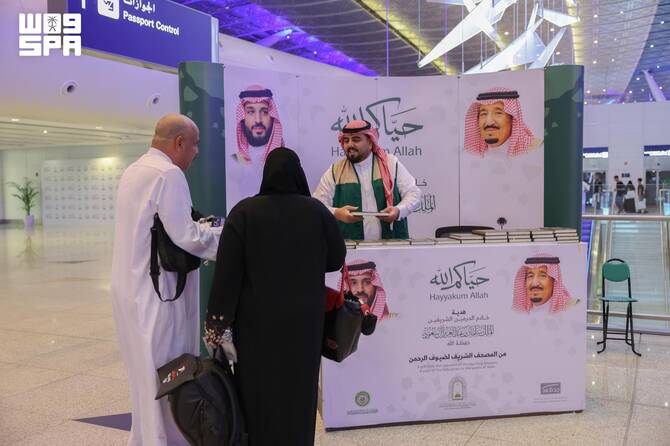
The Ministry of Islamic Affairs has begun distributing King Salman’s gift of the Holy Qur’an and its translated editions to departing pilgrims and seasonal field workers.
Distribution started in the departure halls of King Abdulaziz International Airport in Jeddah, ensuring international pilgrims receive their copies before boarding return flights.
The campaign includes 1.9 million copies produced by the King Fahd Complex for Printing the Holy Qur’an in Madinah, the Saudi Press Agency reported on Saturday.
Available in more than 80 languages, the translated editions enable returning pilgrims to study the Qur’an in their native languages.
The ministry said that distribution will continue around the clock at all air, land and sea ports in the coming days, the SPA added.
Minister of Islamic Affairs Sheikh Abdullatif Al-Alsheikh said the gift reflects the leadership’s commitment to spreading the message of the Holy Qur’an worldwide.
He added that the ministry has mobilized all logistical and human resources to ensure smooth, efficient and accessible distribution for departing pilgrims.
The Passports Department at Jeddah airport has processed departure procedures for the first outbound flights of pilgrims returning home after completing Hajj.
The General Directorate of Passports confirmed its highest level of operational readiness at the Kingdom’s land, air and sea ports to manage post-Hajj departures, urging international pilgrims to adhere to their scheduled travel times.
According to official statistics, 1,707,301 pilgrims performed Hajj this year, up 2.04 percent from 2025. Of the total, 1,546,655 arrived from outside the Kingdom, including 1,485,729 who traveled by air, while 160,646 were citizens or residents of Saudi Arabia.
source/content: arabnews.com (headline edited)
______________
Distribution started in the departure halls of King Abdulaziz International Airport in Jeddah (SPA)
The Doha Historical Dictionary of the Arabic Language is one of the largest projects for the Arab Center for Research and Policy Studies.
Cornell University in the United States and the University of British Columbia in Canada have included the Doha Historical Dictionary of the Arabic Language in their digital library collections.
Cornell University in the United States and the University of British Columbia in Canada are ranked among the world’s leading institutions.
In a statement by the Arab Center for Research and Policy Studies on Tuesday, Mohammed Al-Obaidi, Executive Director of the Doha Historical Dictionary of the Arabic Language, said that this provides researchers worldwide with unique historical material on the Arabic language for the first time.
“Making the dictionary available openly is a translation of the identity of the project, as it is a national project, and one of its most important priorities is to provide researchers wherever they are with the unique historical dictionary material that is available for the first time in the history of this ancient language,” said Al-Obaidi.
In the details, the American Cornell University included the Doha Dictionary in its electronic library, within a hierarchical classification that includes the following titles: Near Eastern Studies, Arabic Literature, Dictionaries, and Dictionaries of Synonyms and Acronyms.
The university also assigned a special subtitle to the dictionary, Arabic Ontology, with a description that provides a tool for comparative research across dictionaries and, in its final form, aims to document the semantic transformation of each word in its blog.
The Doha Historical Dictionary of the Arabic Language is one of the largest projects of the Arab Center for Research and Policy Studies.
It was officially launched on 25 May 2013, and development continued for more than 12 years.
It was completed on 22 December 2025, with more than 500 researchers from across the Arab world contributing to its development. The project is also open to the public for comments, corrections and proposals.
For its part, the University of British Columbia in Canada has added the Doha Historical Dictionary to its library with a different hierarchical classification: Research Guide – Literature, Humanities and Social Sciences – Middle East Studies – Free and Open Sources – Dictionaries.
The description of the dictionary on the University Library reads: “The Doha Historical Dictionary of the Arabic Language is an ongoing project of the Arab Center for Research and Policy Studies located in Doha, Qatar. The first and second phases of the project covered the history of the Arabic language from the earliest written document to the fifth century AH…”
Al-Obaidi welcomed this step, expecting that more universities in the Arab world and beyond will follow suit.
“For more than a decade, we have been keen to adjust the scientific material of the dictionary according to the highest possible academic standards, and then we have made it available through a free electronic portal to be a help for researchers in all fields of humanities and social sciences,” said Al-Obaidi.
Al-Obeidi called on Arab universities and academic institutions to make the dictionary available to students and researchers.
He also invited Arab researchers, “wherever they are, to conduct studies that deal with the dictionary or employ its material.”
This is the month in which Palestinians commemorate the Nakba, a catastrophe often described in historical accounts as having displaced some 750,000 people.
It is true that Israel expelled this number of Palestinians from the territories it occupied unlawfully during the 1948 War. Yet the victims of Israel’s seizure of lands that had not been allocated to it under the UN Partition Plan — territories it appropriated by force during the conflict — are many times that number. Official statistics indicate that nearly 5.9 million Palestinian refugees are registered with the United Nations Relief and Works Agency (UNRWA), in addition to countless Palestinians who settled in other Arab or foreign countries and became part of their host societies, so they are no longer officially classified as refugees.
All of these people are victims of the Nakba that befell the Palestinian people as a result of the establishment of a Jewish state on Palestinian land. This reality makes the Nakba far more than a passing historical episode. It represents a profound transformation that redrew the map of the Middle East and altered the destiny of an entire people.
When we look at the images commonly associated with the Nakba, they usually depict masses of Palestinians leaving their homes and carrying their belongings on their backs, as though the tragedy unfolded in a single day. But this is misleading. Photographs capture only the instance in which they are taken, whereas the Nakba was never a single moment or an isolated event in Palestinian history. It was a prolonged process that began during the British Mandate in Palestine and continued long after its end.
Throughout this process, more than 500 Palestinian towns and villages were destroyed. The Deir Yassin massacre, for example, took place even before the outbreak of the 1948 War, claiming the lives of more than 110 men, women and children. When we speak of the Nakba, therefore, we are speaking of the systematic dismantling of an entire society that had once been stable and deeply rooted in its land, a deliberate project aimed at erasing a people’s geographic and civilisational identity.
That project, moreover, has never truly ceased. What happened in Gaza, and what is now unfolding in the West Bank, reflects the continuation of the same logic: emptying the land of its inhabitants through expulsion, displacement or killing; transforming the identity of the place; and erasing its cultural character. This confirms that the Nakba was not confined to the war of 1948. It is an ongoing process that began before the war and continues to this day.
* A version of this article appears in print in the 28 May, 2026 edition of Al-Ahram Weekly
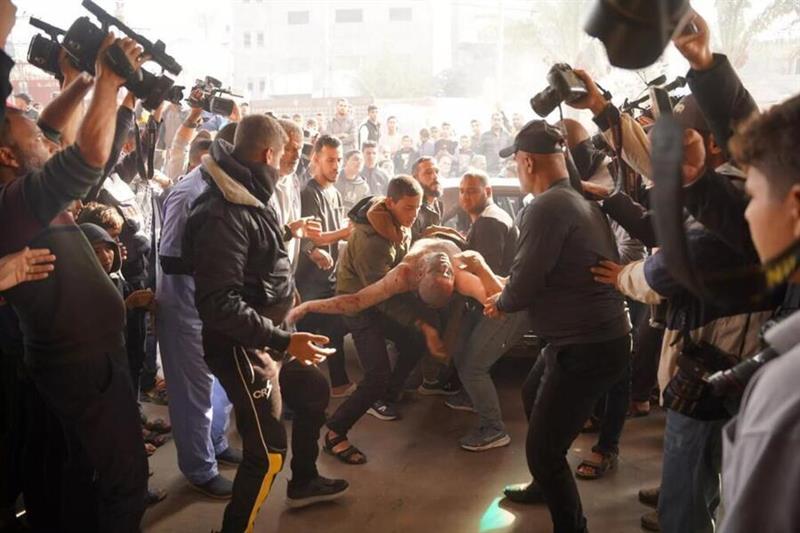
Professional photo and video journalists working in Gaza are to receive an annual press freedom award on Monday for risking their lives to report on the war, an association of publishers has said.
The 2026 Golden Pen of Freedom will be handed to representatives of global news agencies still operating in Gaza — Agence France-Presse, The Associated Press and Reuters — “whose local journalists continue to provide consistent, professional coverage under extremely challenging conditions”, said the World Association of News Publishers (WAN-IFRA).
“For over two and a half years, journalists in Gaza have recorded death, destruction, and human suffering in unparalleled terms,” reads the citation of the award.
“They are as much victims of the conflict as they are chroniclers of a war that erupted — and continues — around them.”
Since October 2023, Israel’s war on Gaza — documented by international experts as a genocide against the Palestinian people — has killed over 72,819, wounded 172,894 others, and forcibly displaced 90 percent of the population. The military campaign and crippling blockade have reduced the entire territory to rubble, destroying much of Gaza and sparking a severe humanitarian crisis in the strip that has at times crossed into famine.
To suppress the truth, Israel has systematically targeted the journalists documenting these atrocities.
Media rights group Reporters Without Borders (RSF) says Israeli forces have killed more than 220 journalists, at least 70 of whom were killed in the context of their professional duties.
AFP photographer Mohammed Abed, who worked in Gaza until April 2024 before joining its Cairo bureau, will be among those at the ceremony in the French city of Marseille.
The award “acknowledges the sacrifice and endurance of local Palestinian media professionals living and working in a war zone,” said WAN-IFRA, which holds its 2026 World News Media Congress from Monday to Wednesday.
“It also recognises colleagues injured and killed in the course of doing their job.”
The Israeli government has barred foreign journalists from independently entering the blockaded territory since the war began.
Despite the October 2025 ceasefire, Israel has continued near-daily attacks on the defenceless Palestinian population, killing at least 877 and injuring over 2,602 while refusing to lift its blockade or withdraw forces occupying up to 60 percent of the strip.
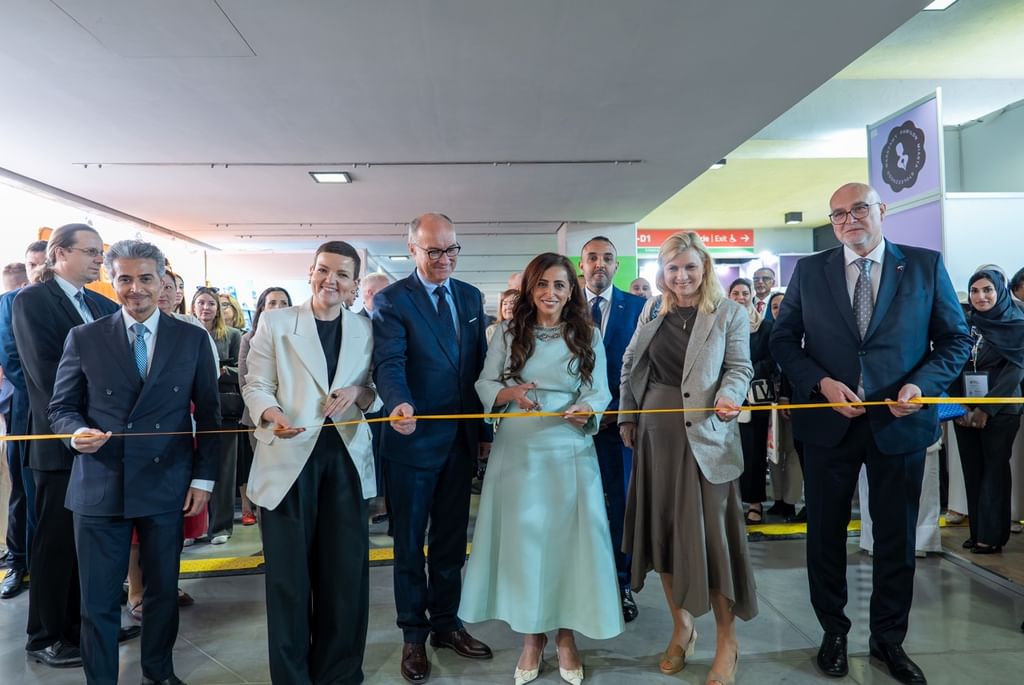
In the presence of Sheikha Bodour bint Sultan Al Qasimi, Chairperson of the Sharjah Book Authority (SBA), Sharjah officially opened its participation on Thursday as the first Arab Guest of Honour in the history of the Warsaw International Book Fair.
The emirate has brought to the European city a cultural project it has built over five decades, presenting a contemporary image of Emirati and Arab culture at one of Central Europe’s leading cultural events.
Sheikha Bodour Al Qasimi joined Włodzimierz Czarzasty, Marshal of Sejm of the Republic of Poland; the lower house of the Polish parliament, Marta Cienkowska, Poland’s Minister of Culture and National Heritage; Dorota Malinowska-Grupińska, Chairwoman of the Warsaw City Council, and Małgorzata Kidawa-Błońska, Marshal of the Polish Senate; at the opening ceremony of the fifth edition of the fair, which runs until 31 May at the National Stadium in Warsaw.
Following the ribbon-cutting, Sheikha Bodour Al Qasimi attended the opening ceremony, where she conveyed the greetings of His Highness Sheikh Dr. Sultan bin Mohammed Al Qasimi, Supreme Council Member and Ruler of Sharjah, and his wishes for the fair’s continued success.
She said His Highness has devoted his life to culture because he believes books create the kind of dialogue that allows civilisations to meet with dignity and depth. She recalled the Sharjah Ruler’s words: “Dialogue between civilisations is not an option, but a necessity. And culture is not an inheritance we keep to ourselves, but a noble bridge through which we connect with others.”
Sheikha Bodour added that Sharjah is proud to be the Guest of Honour in a country that understands language as memory, identity and continuity. Describing Warsaw as a city shaped by history and renewed by culture, she said it reminds us that culture does not merely survive history, but has the power to transform it.
She added that Arab and Polish cultures share a deep understanding of literature’s role, noting that poetry in both traditions remains central to how societies understand themselves and express memory, values and belonging across generations.
Sheikha Bodour said Sharjah’s theme at the fair, “Two Civilisations. One Language of Letters”, celebrates difference and reflects the belief that civilisations do not have to resemble one another to understand one another; they only need to approach each other with patience, curiosity and empathy.
In closing, she said that Sharjah comes to Warsaw not only with its stories but also with an open invitation to read one another, translate one another, and imagine together. She expressed hope that the fair would spark a dialogue that continues long after its conclusion and grows stronger between Warsaw and Sharjah.
Włodzimierz Czarzasty, Marshal of the Sejm of the Republic of Poland, said it was a cultural honour to welcome Sharjah as the Guest of Honour of Warsaw International Book Fair 2026, and described the emirate’s participation as a valuable cultural contribution that reflects the growing ties between Poland and the UAE.
He said books remain a powerful tool for fostering understanding and dialogue between cultures, while publishers continue to play a vital role in preserving and sharing knowledge across societies.
In her keynote, Marta Cienkowska, Poland’s Minister of Culture and National Heritage, thanked Sheikha Bodour for her remarks at the opening ceremony and praised Sharjah’s appreciation of Polish culture and history. She said cultural exchange remains a powerful means of fostering dialogue and understanding between peoples, adding that the Warsaw International Book Fair plays a vital role in connecting readers, writers and publishers with Poland’s cultural scene.
Dorota Malinowska-Grupińska, Chairwoman of the Warsaw City Council, said Sharjah’s participation as Guest of Honour highlights the role of books and publishing in fostering cultural dialogue and mutual understanding. As a publisher herself, she said books serve not only as cultural products but also as a means of human connection and exchange, adding that Sharjah’s presence in Warsaw brings a new dimension to dialogue with the Arab world.
For his part, Jacek Oryl, Director of the Warsaw International Book Fair, said Sharjah’s selection as Guest of Honour marks a significant moment in the fair’s history and reflects growing cultural ties between Poland and the UAE. He added that the emirate’s participation offers visitors insight into Arab and Emirati culture through its literature, arts, thought and living heritage.
Sheikha Bodour led an official tour of the Sharjah pavilion alongside Ahmed bin Rakkad Al Ameri, CEO of SBA, joined by distinguished guests including Dr. Tomasz Makowski, Director of the National Library of Poland; and Grzegorz Jankowicz, Director of the Polish Book Institute, alongside publishers and representatives of cultural institutions from Poland and across Europe.
During the tour, visitors were introduced to key initiatives and programmes that reflect Sharjah’s cultural project, including works presented by Emirati publishers, initiatives led by the emirate’s cultural institutions, and heritage and artistic activities featured as part of Sharjah’s participation in the fair.
The fair’s inaugural day featured the IKAR Publishing Season Awards ceremony, organised by the fair. This year’s Ikar Award was presented to Polish author Professor Stefan Chwin in recognition of his literary and humanitarian contributions, and his role in defending human values and cultural memory in contemporary Polish literature.
The IKAR Publishing Season Awards also honoured Piotr Dobrołęcki, who received the Author award for his contributions to Poland’s cultural and literary scene, while Wydawnictwo Czarne received the Publisher award for its role in enriching the country’s publishing industry and bringing influential literary and intellectual works to readers. The Bookstore award went to Księgarnia Artystyczna Firmin w Gdańsku for its efforts to promote reading culture and strengthen the presence of books in community life.
This year’s Warsaw International Book Fair features more than 1,200 cultural and professional events, reinforcing its position as one of Central Europe’s leading cultural platforms. Sharjah’s participation as Guest of Honour presents a model for Arab cultural engagement built on dialogue, openness and the strengthening of connections between peoples through literature, arts, and knowledge.
Over four days, Sharjah is presenting on its 400-square-metre pavilion, an institutional and creative presence reflecting the diversity of the UAE’s cultural landscape, with the participation of 21 cultural, academic and media institutions, 36 Emirati writers, poets, academics and artists, alongside 15 Polish participants, in a programme based on direct dialogue between Arab and Polish cultural experiences and placing books at the heart of exchange between peoples.
Sharjah’s participation includes 35 cultural events, featuring 28 panel discussions, four poetry evenings, and three children’s workshops, held across the fairgrounds, the University of Warsaw, and the Grochoteka Public Library, in addition to 18 musical performances by the Sharjah National Band at the Warsaw National Theatre. These performances introduce fair visitors and audiences across Warsaw to the elements of traditional Emirati arts through a programme that links written knowledge with immersive cultural experience.
Sharjah will also be activating public spaces, libraries and theatres, transforming Warsaw into an open platform introducing audiences to the history and contemporary Emirati and Arab culture.
As a key part of the programme, the project Tasawurat (“Visions”) brings together 10 artists and designers from the UAE and Poland to produce works inspired by Arabic and Polish poetry, exploring themes including humanity, nature, the sea, and existential reflection. It combines elements of Arabic poetic tradition with poster art, a defining feature of Poland’s visual culture.
The emirate’s pavilion comprises a showcase of cultural and academic institutions.